17 Results for "

JNK+pathway

" in MedChemExpress (MCE) Product Catalog:
Products (17)

17 Results for "JNK+pathway" in MCE Product Catalog:

4
4 Cited Publications
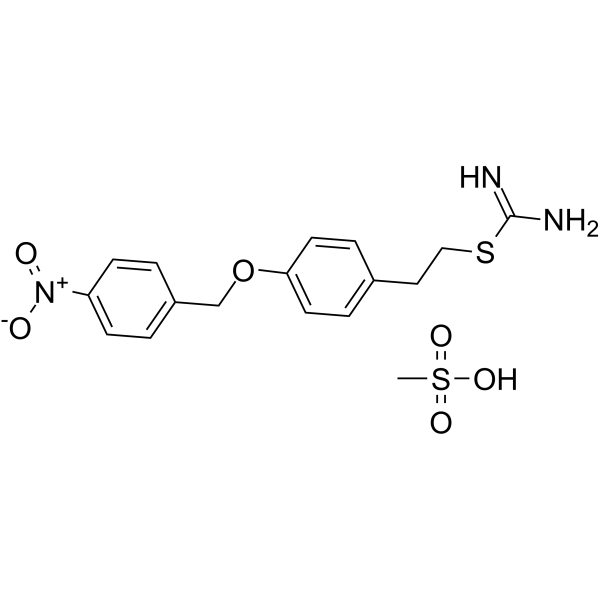
Cat. No.: HY-15415
CAS No.: 182004-65-5
Purity:  99.16%
Research Areas:  

Cancer

KB-R7943 mesylate is a widely used inhibitor of the reverse Na +/Ca 2+ exchanger (NCXrev) with IC50 of 5.7±2.1 μM. KB-R7943 mesylate induces cancer cell death via activating the JNK pathway and blocking autophagic flux.
loading...
    loading...
1
1 Cited Publications
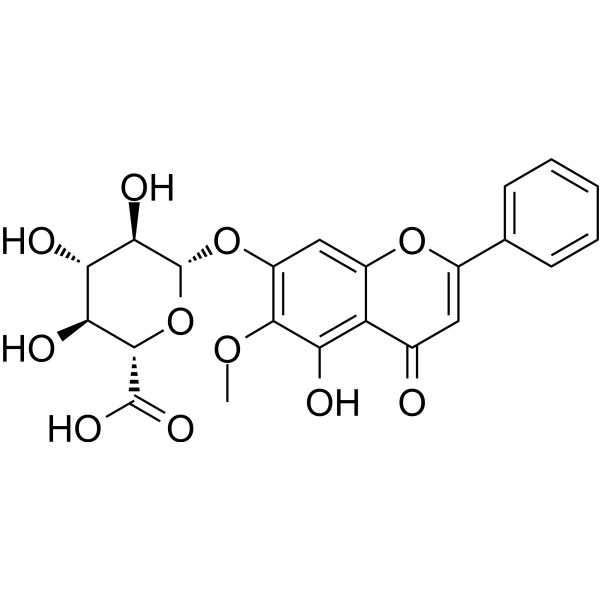
Cat. No.: HY-N2481
CAS No.: 36948-76-2
Synonyms: Oroxyloside; Oroxylin A-7-O-β-D-glucuronide
Oroxylin A-7-O-glucuronide (oroxyloside) is an orally active flavonoid glucuronide and metabolite of Oroxylin A (HY-N0560). Oroxylin A-7-O-glucuronide can be extracted from the dried root of Scutellaria baicalensis. Oroxylin A-7-O-glucuronide exhibits prolyl oligopeptidase inhibitory activity. Oroxylin A-7-O-glucuronide inhibits the JNK pathway, upregulates PPARγ, and inhibits NF-κB p65 nuclear translocation. Oroxylin A-7-O-glucuronide reduces cytokine (IL-1β, IL-6) production. Oroxylin A-7-O-glucuronide exhibits anti-angiogenic, anti-tumor (glioma, liver cancer), anti-inflammatory, and hepatoprotective activities .
loading...
    loading...
1
1 Cited Publications
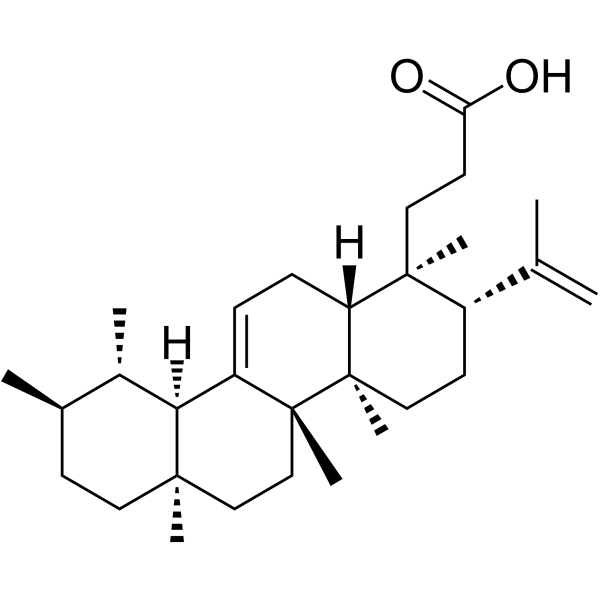
Cat. No.: HY-N0481
CAS No.: 6812-81-3
Roburic acid acts as an anti-inflammatory, anti-tumor and osteoclastogenesis inhibitor, with a Ki of 7.066 μM against human TNF, an IC50 of 9 μM against human COX-2, and an IC50 of 5 μM against ovine COX-1. Roburic acid reduces the production of inflammatory mediators such as NO and IL-6 in macrophages by inhibiting the NF-κB and MAPK (p38/JNK) pathways. By competitively inhibiting the TNF-TNF-R1 interaction, Roburic acid blocks the downstream NF-κB signaling pathway, thereby inducing cell cycle arrest and apoptosis in cancer cells. Roburic acid specifically inhibits osteoclastogenesis and bone resorption by suppressing the RANKL/TRAF6/NF-κB/NFATc1 axis. Roburic acid can be used in research related to osteolytic diseases such as osteoporosis, colorectal cancer and inflammatory diseases .
loading...
    loading...
1
1 Cited Publications
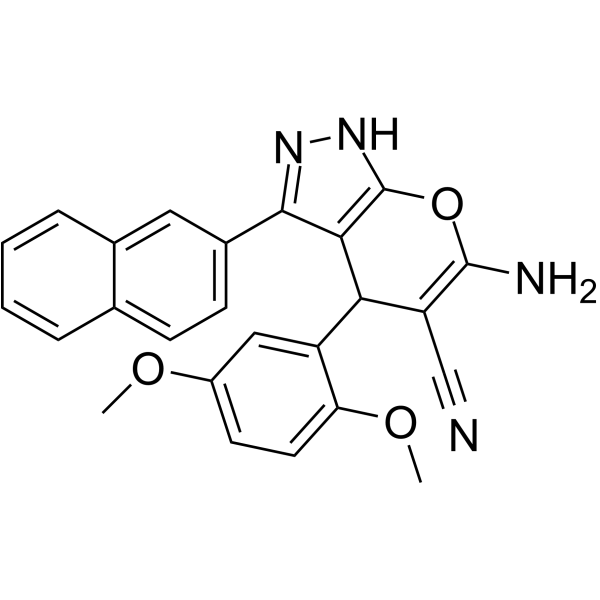
Cat. No.: HY-12873
CAS No.: 361185-42-4
Purity:  ≥98.0%
Target:  

Ras p38 MAPK JNK

Research Areas:  

Cancer

RBC8 is a selective and allosteric RALA and RALB inhibitor. RBC8 stabilizes the inactive GDP-bound state of Ral, preventing its activation. RBC8 promotes the phosphorylation of proteins related to the MAPK/JNK pathway. RBC8 has the activity of inhibiting tumor cell proliferation, migration and invasion. RBC8 is used in the study of various cancers such as lung cancer, gastric cancer, and multiple myeloma .
loading...
    loading...
Cat. No.: HY-114332
CAS No.: 1620573-48-9
Purity:  99.86%
Target:  

MAP3K JNK

GNE-8505 is an orally active, blood-brain barrier-permeable selective dual leucine zipper kinase (DLK) inhibitor. GNE-8505 has an IC50 of 0.144 μM for pJNK, and EC50 of 0.457 μM for DRG. GNE-8505 inhibits the DLK/JNK pathway, reduces stress-induced c-Jun phosphorylation levels, decreases neuronal death and suppresses axonal degeneration. GNE-8505 reduces phosphorylated c-Jun levels in the retina, spinal cord and brain tissues of mice. GNE-8505 is applicable to research related to Alzheimer's disease and amyotrophic lateral sclerosis (ALS) .
loading...
    loading...
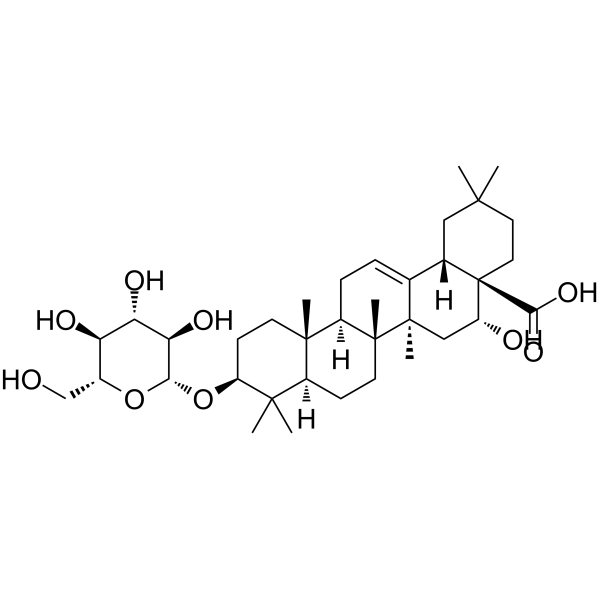
Cat. No.: HY-N1508
CAS No.: 78285-90-2
Ecliptasaponin A is an orally active pentacyclic triterpenoid saponin. Ecliptasaponin A exerts anti-tumor activity by activating ASK1/JNK pathway, inducing apoptosis and autophagy in lung cancer cells. Ecliptasaponin A exerts anti-inflammatory/anti-fibrotic effects and protects the cardiovascular system by inhibiting the HMGB1/TLR4/NF-κB pathway, and the expression of COX-2 and MMP-9. Ecliptasaponin A can enhance SOD activity, reduce MDA levels, and alleviate oxidative stress damage. Ecliptasaponin A exerts chondroprotective effects by inhibiting the expression of MMP13 and regulating inflammatory factors. Ecliptasaponin A improves ovarian function and regulates sex hormones by upregulating the expression of ESR1 receptors .
loading...
    loading...
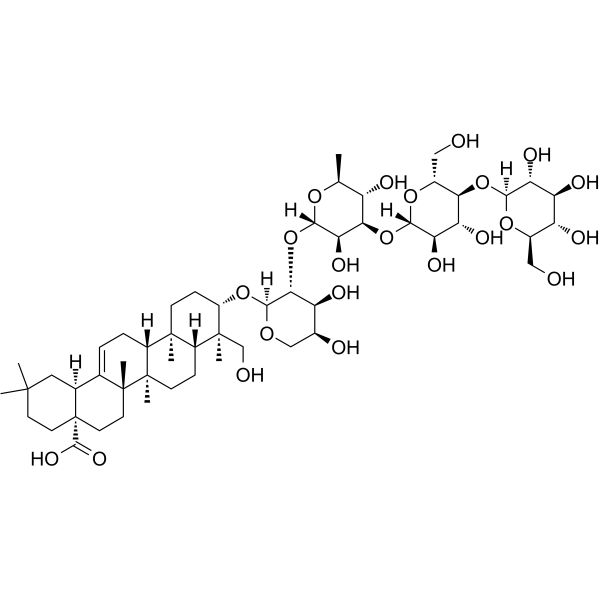
Cat. No.: HY-N5008
CAS No.: 146100-02-9
Macranthoside B is an apoptosis inducer with in vitro and in vivo anticancer activity. Macranthoside B induces autophagy and ferroptosis in cancer cells. Macranthoside B induces intracellular ROS accumulation, activates AMPK, inhibits mTOR and P70S6 kinase phosphorylation, and modulates Bcl-2/Bax expression. Macranthoside B activates caspase-3, caspase-9, and the intrinsic caspase cascade, induces PARP cleavage/degradation, and inhibits NRF2 signaling. Macranthoside B disrupts iron homeostasis via NCOA4-dependent ferritinophagy, up-regulates Lip-ROS, reduces mitochondrial membrane potential, and activates the JNK pathway. Macranthoside B can be used for the research of ovarian cancer, hepatoma, gastric carcinoma, breast carcinoma, colon carcinoma, glioma, melanoma, adenocarcinoma of the esophagogastric junction, and cervical cancer .
loading...
    loading...
Cat. No.: HY-N2481R
CAS No.: 36948-76-2
Synonyms: Oroxyloside (Standard); Oroxylin A-7-O-β-D-glucuronide (Standard)
Oroxylin A-7-O-glucuronide (Standard) is the analytical standard of Oroxylin A-7-O-glucuronide (HY-N2481). This product is intended for research and analytical applications. Oroxylin A-7-O-glucuronide (oroxyloside) is an orally active flavonoid glucuronide and metabolite of Oroxylin A (HY-N0560). Oroxylin A-7-O-glucuronide can be extracted from the dried root of Scutellaria baicalensis. Oroxylin A-7-O-glucuronide exhibits prolyl oligopeptidase inhibitory activity. Oroxylin A-7-O-glucuronide inhibits the JNK pathway, upregulates PPARγ, and inhibits NF-κB p65 nuclear translocation. Oroxylin A-7-O-glucuronide reduces cytokine (IL-1β, IL-6) production. Oroxylin A-7-O-glucuronide exhibits anti-angiogenic, anti-tumor (glioma, liver cancer), anti-inflammatory, and hepatoprotective activities .
loading...
    loading...
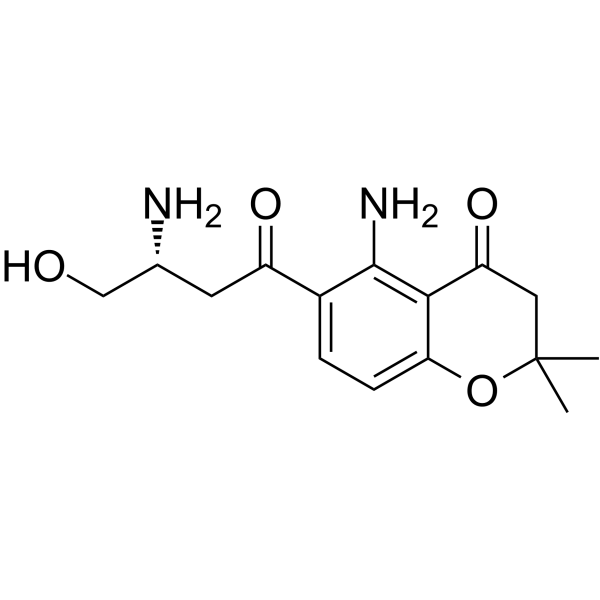
Cat. No.: HY-136901
CAS No.: 802915-53-3
Synonyms: FC-101
Fusarochromanone (FC-101) is a fungal metabolite with potent anti-angiogenic and anti-cancer activity . Fusarochromanone-activated JNK pathway is attributed to induction of reactive oxygen species (ROS) .
loading...
    loading...
Cat. No.: HY-105178A
CAS No.: 140637-82-7
Synonyms: DA 125
Galarubicin hydrochloride (DA 125) is a novel Anthracycline derivative. Galarubicin hydrochloride shows high-affinity DNA binding and topoisomerase II inhibitory activities. Galarubicin hydrochloride induces Apoptosis. Galarubicin hydrochloride exerts cytotoxicity via JNK pathway. Galarubicin hydrochloride can be used in the research of hepatocellular carcinoma .
loading...
    loading...
Cat. No.: HY-179217
Target:  

JNK Apoptosis

Research Areas:  

Cancer

GSTP1/M2-IN-1 is a GSTP1/GSTM2 inhibitor(IC50 = 1.56 μM/0.09 μM). GSTP1/M2-IN-1 can activate the JNK pathway and induce cell apoptosis. GSTP1/M2-IN-1 can be used for the study of breast cancer and pancreatic cancer .
loading...
    loading...
Cat. No.: HY-123647
CAS No.: 53126-64-0
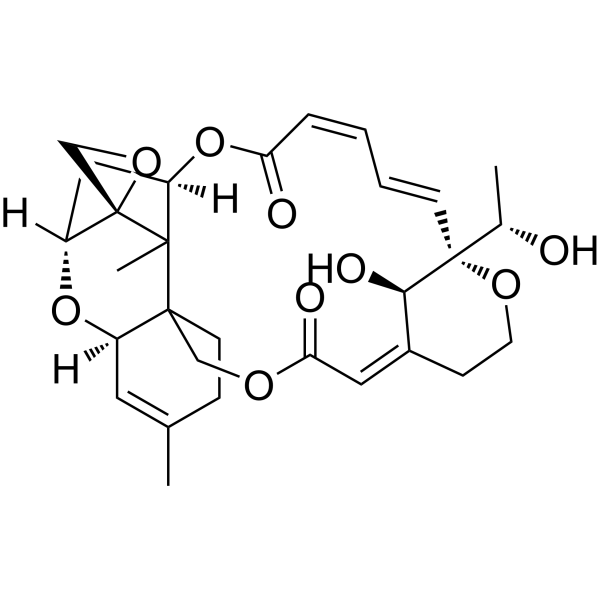
Satratoxin H is a toxic metabolite of Stachybotrys atra. Satratoxin H induces caspase-3 and PARP cleavage via p38 MAPK and JNK pathways, stimulates JNK, ERK, and p38 MAPK phosphorylation, and activates JNK and p38 MAPK in a glutathione-sensitive manner. Satratoxin H induces DNA double-stranded breaks, apoptotic body formation, intracellular reactive oxygen species generation, and endoplasmic reticulum stress via ATF6, PERK, and IRE1 pathways. Satratoxin H can be used for the research of central nervous system disorders and melanoma .
loading...
    loading...
Cat. No.: HY-179044
CAS No.: 3100092-62-1
Research Areas:  

Cancer

MKK7-JNK activator 1 (Compound 10) is a MKK7-JNK pathway activator. MKK7-JNK activator 1 effectively inhibits the proliferation and migration of MDA-MB-468 cells, induces G2/M phase arrest and caspase -dependent apoptosis (independent of ROS production). MKK7-JNK activator 1 significantly increases the levels of p-MKK7 and p-JNK, but does not affect p-ERK or p-p38. MKK7-JNK activator 1 can be used for the study of triple-negative breast cancer (TNBC) .
loading...
    loading...
Cat. No.: HY-N1508R
CAS No.: 78285-90-2
Ecliptasaponin A (Standard) is the analytical standard for Ecliptasaponin A (HY-N1508). Ecliptasaponin A is an orally active pentacyclic triterpenoid saponin. Ecliptasaponin A exerts anti-tumor activity by activating ASK1/JNK pathway, inducing apoptosis and autophagy in lung cancer cells. Ecliptasaponin A exerts anti-inflammatory/anti-fibrotic effects and protects the cardiovascular system by inhibiting the HMGB1/TLR4/NF-κB pathway, and the expression of COX-2 and MMP-9. Ecliptasaponin A can enhance SOD activity, reduce MDA levels, and alleviate oxidative stress damage. Ecliptasaponin A exerts chondroprotective effects by inhibiting the expression of MMP13 and regulating inflammatory factors. Ecliptasaponin A improves ovarian function and regulates sex hormones by upregulating the expression of ESR1 receptors.
loading...
    loading...
Cat. No.: HY-N0481R
CAS No.: 6812-81-3
Roburic acid (Standard) is the analytical standard of Roburic acid. This product is intended for research and analytical applications. Roburic acid acts as an anti-inflammatory, anti-tumor and osteoclastogenesis inhibitor, with a Ki of 7.066 μM against human TNF, an IC50 of 9 μM against human COX-2, and an IC50 of 5 μM against ovine COX-1. Roburic acid reduces the production of inflammatory mediators such as NO and IL-6 in macrophages by inhibiting the NF-κB and MAPK (p38/JNK) pathways. By competitively inhibiting the TNF-TNF-R1 interaction, Roburic acid blocks the downstream NF-κB signaling pathway, thereby inducing cell cycle arrest and apoptosis in cancer cells. Roburic acid specifically inhibits osteoclastogenesis and bone resorption by suppressing the RANKL/TRAF6/NF-κB/NFATc1 axis. Roburic acid can be used in research related to osteolytic diseases such as osteoporosis, colorectal cancer and inflammatory diseases.
loading...
    loading...
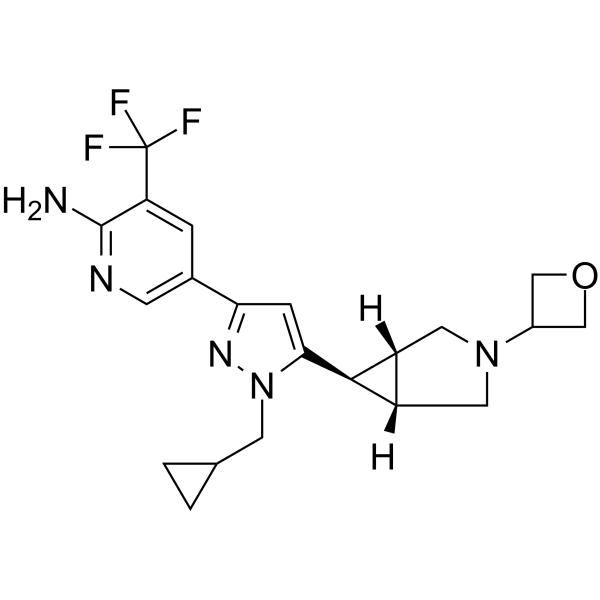
Cat. No.: HY-179517
Target:  

ASK1 JNK p38 MAPK

ASK1-IN-12 is an ASK1 inhibitor with an IC50 of 6.3 nM. ASK1-IN-12 inhibits TNF-α-induced activation of the ASK1-p38/JNK pathway. ASK1-IN-12 can reduce free fatty acid-induced cholesterol increase, lipid droplet accumulation and improves hepatocellular steatosis. ASK1-IN-12 can be used for the research of non-alcoholic steatohepatitis (NASH) .
loading...
    loading...
Cat. No.: HY-P705931
Purity:  ≥ 90%, as determined by reducing SDS-PAGE.
Synonyms: DUSP22; JNK-Stimulatory Phosphatase-1; Dual Specificity Phosphatase 22; MAP Kinase Phosphatase X; JKAP; LMW-DSP2; JSP1; LMWDSP2; MKPX; MKP-X; Low Molecular Weight Dual Specificity Phosphatase 2; JSP-1; JNK Pathway Associated Phosphatase; Homolog Of Mouse
Species:  
Source:  
loading...
    loading...
  • 1

