



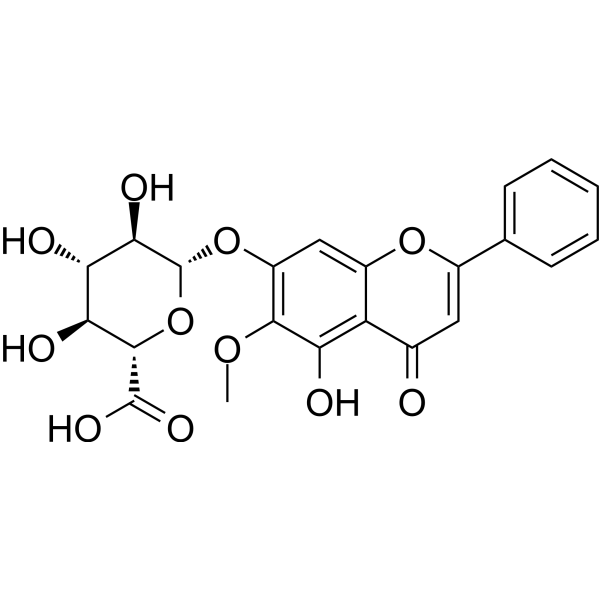
Oroxylin A-7-O-glucuronide
Based on 1 publication(s) in Google Scholar
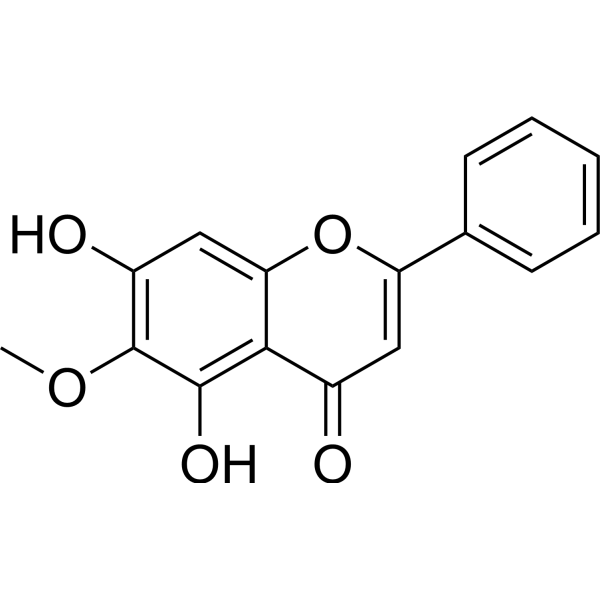
Oroxylin A-7-O-glucuronide (oroxyloside) is an orally active flavonoid glucuronide and metabolite of Oroxylin A (HY-N0560). Oroxylin A-7-O-glucuronide can be extracted from the dried root of Scutellaria baicalensis. Oroxylin A-7-O-glucuronide exhibits prolyl oligopeptidase inhibitory activity. Oroxylin A-7-O-glucuronide inhibits the JNK pathway, upregulates PPARγ, and inhibits NF-κB p65 nuclear translocation. Oroxylin A-7-O-glucuronide reduces cytokine (IL-1β, IL-6) production. Oroxylin A-7-O-glucuronide exhibits anti-angiogenic, anti-tumor (glioma, liver cancer), anti-inflammatory, and hepatoprotective activities.
For research use only. We do not sell to patients.
- Purity : 99.83%
- CAS No.: 36948-76-2
- Formula: C22H20O11
- Molecular Weight:460.39
-
Storage:Powder -20°C, 3 years , 4°C, 2 years ; In solvent -80°C, 6 months , -20°C, 1 month

To place orders, for customer services and technical support, please contact: MedChemExpress USA
Tel: 609-228-6898 E-mail: [email protected] [email protected]


-
 Biological Activity
-
Chemical Information
-
Solvent & Solubility
- Purity & Documentation
- References
-
 Help & FAQs


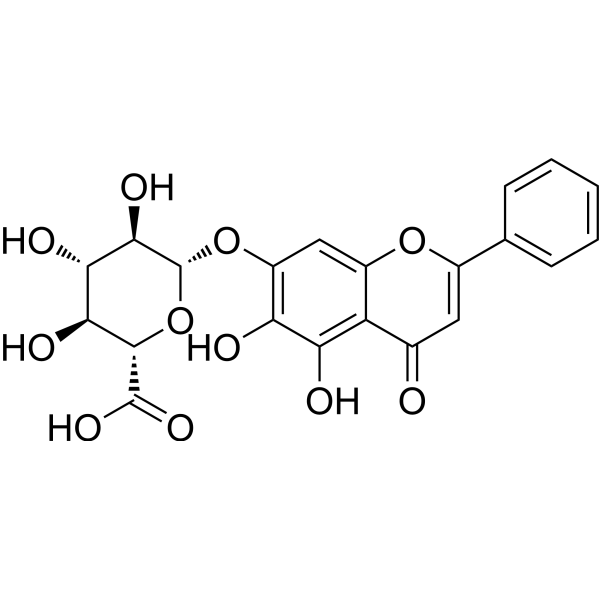
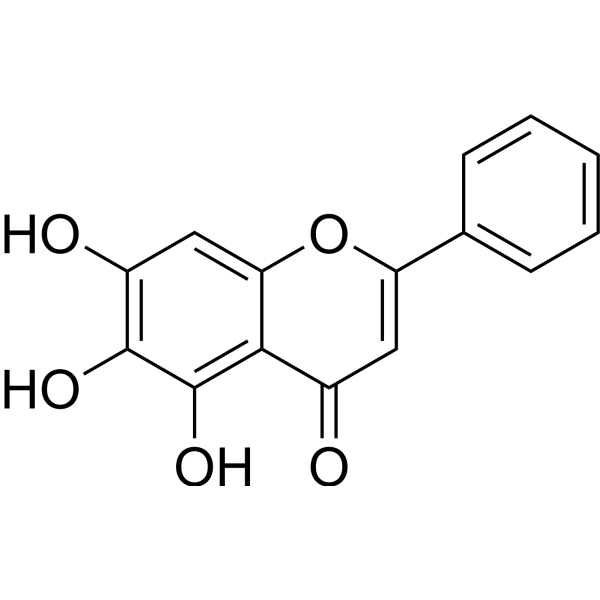
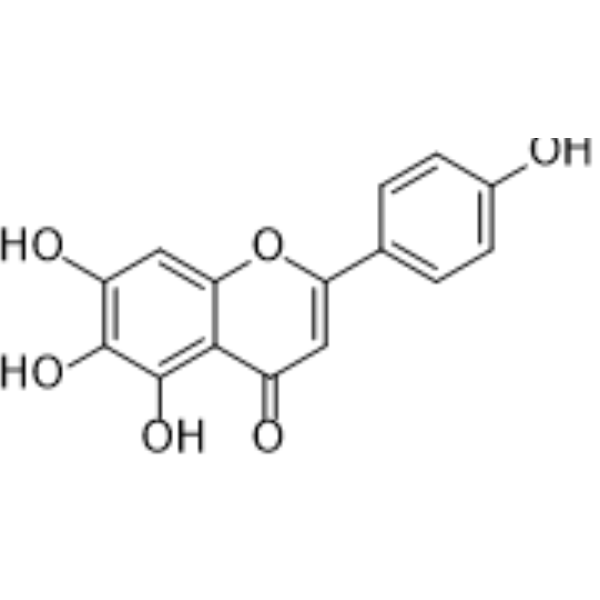
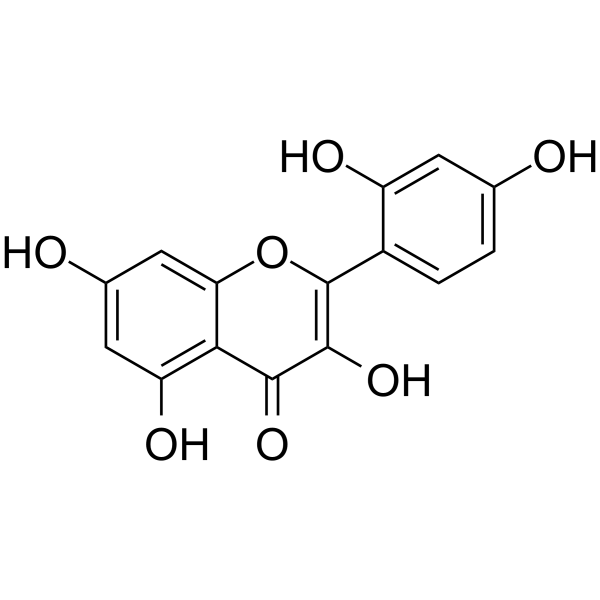
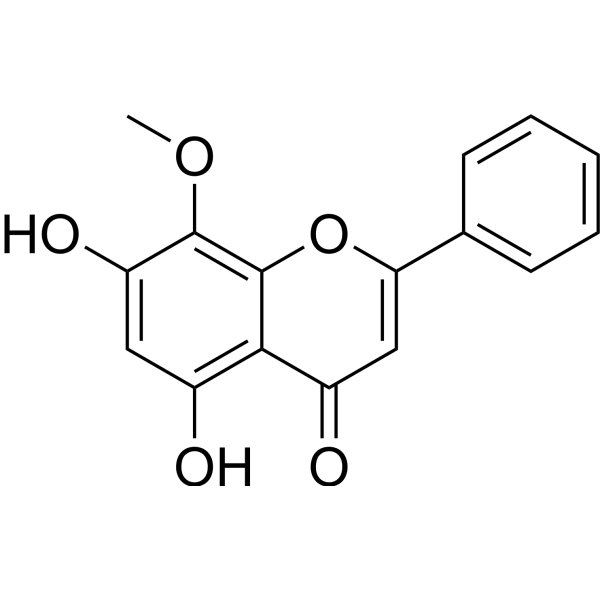
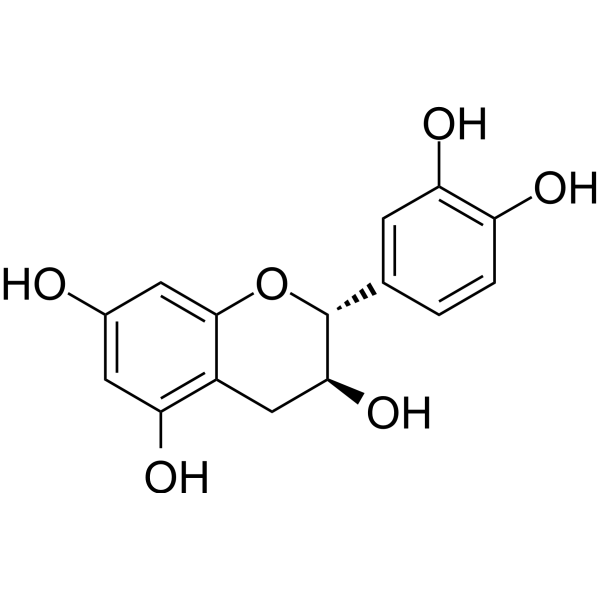
Publications Citing Use of MedChemExpress (MCE) Oroxylin A-7-O-glucuronide
More

Biological Activity
Description
|
PPARγ |
IL-6 |
IL-1β |
In Vitro
Oroxylin A-7-O-glucuronide (40-160 μM; 24 h) inhibits the viability and invasion ability of EA.hy926 cells[1].
Oroxylin A-7-O-glucuronide (5-100 μM; 24 h) significantly suppresses the glioma cell proliferation in a dose-dependent manner in U87-MG, U251-MG, U138-MG and SHG44 cells, with IC50 values of 36.87, 52.36, 59.67 and 56.39 μM, respectively[2].
Oroxylin A-7-O-glucuronide (100 μM; 24 h) reduces APAP (HY-66005)-induced apoptosis and necroptosis in L02 and AML12 cells by inhibiting JNK pathway[3].
Oroxylin A-7-O-glucuronide (2-100 μM; 24 h) decreases LPS-induced pro-inflammatory cytokines in RAW264.7 and BMDM via PPARγ-mediated NF-κB inhibition[4].
Oroxylin A-7-O-glucuronide (50 μM) reduces H2O2-induced IL-6 production in L02 and LX2 cells through autophagy activation[5].
MedChemExpress (MCE) has not independently confirmed the accuracy of these methods. They are for reference only.
-
Cell Line:EA.hy926
-
Concentration:40 μM, 80 μM, 160 μM
-
Incubation Time:24 h
-
Result:Inhibited the migration and invasion of EA.hy926 cells in a concentration-dependent manner, and the inhibitory rates were 10.2%, 48.0% and 73.4%, respectively.
-
Cell Line:EA.hy926
-
Concentration:40 μM, 80 μM, 160 μM
-
Incubation Time:24 h
-
Result:Reduced phosphorylation of VEGFR2 at pY1214, pY951, pY1175.
In Vivo
Oroxylin A-7-O-glucuronide (10-40 mg/kg; p.o.; daily; 4 weeks) suppresses U87-MG xenograft tumor growth in athymic nude mice without affecting body weight and organ function [2].
Oroxylin A-7-O-glucuronide (100 mg/kg; i.g.) ameliorates APAP (HY-66005)-induced hepatotoxicity in C57BL/6 mice by reducing serum ALT/AST and liver inflammation[3].
Oroxylin A-7-O-glucuronide (20-80 mg/kg; p.o.; 10 days) alleviates DSS-induced colitis in C57BL/6 mice by reducing colon damage and pro-inflammatory cytokines [4].
Oroxylin A-7-O-glucuronide (20-80 mg/kg; i.g.; every other day) inhibits CCl4-induced liver fibrosis and DEN (HY-N7434) + CCl4 (HY-Y0298)-induced hepatocarcinogenesis in C57BL/6 and Atg5Hep-/- mice[5].
MedChemExpress (MCE) has not independently confirmed the accuracy of these methods. They are for reference only.
-
Animal Model:Female nude mice (6-8 weeks old, 18-22 g) with A549 xenografts[1]
-
Dosage:40 mg/kg, 80 mg/kg
-
Administration:Intravenous injection, every two days
-
Result:Decreased tumor volume and weight.
Reduced microvessel density (CD31 staining) and hemoglobin content in Matrigel plugs.
Decreased pY1214 VEGFR2 and increased R-Ras, VE-cadherin in tumors.
Showed no significant change in body weight or organ damage.
-
Animal Model:Female C57BL/6 mice (35-40 days old, 18-22 g) with DSS-induced colitis[4]
-
Dosage:20 mg/kg, 40 mg/kg, 80 mg/kg
-
Administration:Intragastric administration, 10 dayss
-
Result:Attenuated body weight loss, colon shortening and DAI score.
Reduced MPO, iNOS activity and CD11b+ cell infiltration.
Decreased IL-1β, IL-6, TNF-α in serum and colon; up-regulated PPARγ and inhibited NF-κB p65 nuclear translocation.


Chemical Information
-
CAS No. 36948-76-2
-
Appearance Solid
-
Molecular Weight 460.39
-
Formula C22H20O11
-
Color Off-white to yellow
-
SMILES
OC1=C2C(OC(C3=CC=CC=C3)=CC2=O)=CC(O[C@@H]4O[C@@H]([C@@H](O)[C@H](O)[C@H]4O)C(O)=O)=C1OC
-
Synonyms
Oroxyloside; Oroxylin A-7-O-β-D-glucuronide
-
Structure Classification
-
Initial Source
-
Shipping
Room temperature in continental US; may vary elsewhere.
-
Storage
Powder -20°C 3 years 4°C 2 years In solvent -80°C 6 months -20°C 1 month


Publications (1)
-
Journal Impact Factor
-
Most Recent
-
Cells
Identification of Natural Compounds Triggering MRGPRX2-Mediated Calcium Flux and Degranulation in RBL-2H3 Cells. [Abstract]2026 Feb 3;15(3):287. PMID: 41677650


Solvent & Solubility
In Vitro:
DMSO : 50 mg/mL (108.60 mM; Need ultrasonic; Hygroscopic DMSO has a significant impact on the solubility of product, please use newly opened DMSO)
Please refer to the solubility information to select the appropriate solvent. Once prepared, please aliquot and store the solution to prevent product inactivation from repeated freeze-thaw cycles.
Storage method and period of stock solution: -80°C, 6 months; -20°C, 1 month. When stored at -80°C, please use it within 6 months. When stored at -20°C, please use it within 1 month.
Please refer to the solubility information to select the appropriate solvent. Once prepared, please aliquot and store the solution to prevent product inactivation from repeated freeze-thaw cycles.
Storage method and period of stock solution: -80°C, 6 months; -20°C, 1 month. When stored at -80°C, please use it within 6 months. When stored at -20°C, please use it within 1 month.
Concentration (start) × Volume (start) = Concentration (final) × Volume (final)
In Vivo:
Select the appropriate dissolution method based on your experimental animal and administration route.
- For the following dissolution methods, please ensure to first prepare a clear stock solution using an In Vitro approach and then sequentially add co-solvents:
- To ensure reliable experimental results, the clarified stock solution can be appropriately stored based on storage conditions. As for the working solution for In Vivo experiments, it is recommended to prepare freshly and use it on the same day.
- The percentages shown for the solvents indicate their volumetric ratio in the final prepared solution. If precipitation or phase separation occurs during preparation, heat and/or sonication can be used to aid dissolution.
Add each solvent one by one: 10% DMSO 40% PEG300 5% Tween-80 45% Saline
Solubility: ≥ 2.08 mg/mL (4.52 mM); Clear solution
This protocol yields a clear solution of ≥ 2.08 mg/mL (saturation unknown).
Taking 1 mL working solution as an example, add 100 μL DMSO stock solution (20.8 mg/mL) to 400 μL PEG300, and mix evenly; then add 50 μL Tween-80 and mix evenly; then add 450 μL Saline to adjust the volume to 1 mL.
Preparation of Saline: Dissolve 0.9 g sodium chloride in ddH₂O and dilute to 100 mL to obtain a clear Saline solution.
Add each solvent one by one: 10% DMSO 90% (20% SBE-β-CD in Saline)
Solubility: ≥ 2.08 mg/mL (4.52 mM); Clear solution
This protocol yields a clear solution of ≥ 2.08 mg/mL (saturation unknown).
Taking 1 mL working solution as an example, add 100 μL DMSO stock solution (20.8 mg/mL) to 900 μL 20% SBE-β-CD in Saline, and mix evenly.
Preparation of 20% SBE-β-CD in Saline (4°C, storage for one week): 2 g SBE-β-CD powder is dissolved in 10 mL Saline, completely dissolve until clear.
In Vivo Dissolution Calculator
Please enter the basic information of animal experiments:
-
-
-
-
Recommended: Prepare an additional quantity of animals to account for potential losses during experiments.
Please enter your animal formula composition:
-
%DMSO +
Recommended: Keep the proportion of DMSO in working solution below 2% if your animal is weak.
-
%+
-
+%Tween-80 + +
-
%Saline +
The co-solvents required include: DMSO, . All of co-solvents are available by MedChemExpress (MCE). , Tween 80. All of co-solvents are available by MedChemExpress (MCE).
Working solution concentration: 0.22 mg/mL
Method for preparing stock solution: mg drug dissolved in μL DMSO. Stock solution concentration: mg/mL.
1. Take μL DMSO stock solution;
2. Add μL .
μL , mix evenly;
3. Then add μL Tween 80, mix evenly;
4. Then add μL
Please ensure that the stock solution in the first step is dissolved to a clear state, and add co-solvents in sequence. You can use ultrasonic heating (ultrasonic cleaner, recommended frequency 20-40 kHz), vortexing, etc. to assist dissolution.


Purity & Documentation
-
Data Sheet (284 KB)
-
SDS (393 KB)
- English - EN (393 KB)
- Français - FR (393 KB)
- Deutsch - DE (393 KB)
- Norwegian - NO (393 KB)
- Español - ES (393 KB)
- Swedish - SV (393 KB)
- Italian - IT (393 KB)
- Korean - KR (393 KB)
- Portuguese - PT (393 KB)
-
Handling Instructions (2659 KB)
References
[1]. Zhao K, et al. Oroxyloside inhibits angiogenesis through suppressing internalization of VEGFR2/Flk-1 in endothelial cells. J Cell Physiol. 2018 Apr;233(4):3454-3464. [Content Brief]
[2]. Xu ZF, et al. Oroxyloside inhibits human glioma progression by suppressing proliferation, metastasis and inducing apoptosis related pathways. Biomed Pharmacother. 2018 Jan;97:1564-1574. [Content Brief]
[3]. Liao Y, et al. Oroxyloside ameliorates acetaminophen-induced hepatotoxicity by inhibiting JNK related apoptosis and necroptosis. J Ethnopharmacol. 2020 Aug 10;258:112917. [Content Brief]
[4]. Wang X, et al. Oroxyloside prevents dextran sulfate sodium-induced experimental colitis in mice by inhibiting NF-κB pathway through PPARγ activation. Biochem Pharmacol. 2016 Apr 15;106:70-81. [Content Brief]
[5]. Liu Y, et al. Oroxyloside inhibits liver fibrosis and hepatocarcinogenesis dependent on hepatocyte-specific knockout of Atg5. Phytomedicine. 2025 Sep;145:157053. [Content Brief]
[6]. Marques MR, et al. Flavonoids with prolyl oligopeptidase inhibitory activity isolated from Scutellaria racemosa Pers. Fitoterapia. 2010 Sep;81(6):552-6. [Content Brief]


Complete Stock Solution Preparation Table
Please refer to the solubility information to select the appropriate solvent. Once prepared, please aliquot and store the solution to prevent product inactivation from repeated freeze-thaw cycles.
Storage method and period of stock solution: -80°C, 6 months; -20°C, 1 month. When stored at -80°C, please use it within 6 months. When stored at -20°C, please use it within 1 month.
| Optional Solvent | Concentration Solvent Mass | 1 mg | 5 mg | 10 mg | 25 mg |
|---|---|---|---|---|---|
| DMSO | 1 mM | 2.1721 mL | 10.8604 mL | 21.7207 mL | 54.3018 mL |
| 5 mM | 0.4344 mL | 2.1721 mL | 4.3441 mL | 10.8604 mL | |
| 10 mM | 0.2172 mL | 1.0860 mL | 2.1721 mL | 5.4302 mL | |
| 15 mM | 0.1448 mL | 0.7240 mL | 1.4480 mL | 3.6201 mL | |
| 20 mM | 0.1086 mL | 0.5430 mL | 1.0860 mL | 2.7151 mL | |
| 25 mM | 0.0869 mL | 0.4344 mL | 0.8688 mL | 2.1721 mL | |
| 30 mM | 0.0724 mL | 0.3620 mL | 0.7240 mL | 1.8101 mL | |
| 40 mM | 0.0543 mL | 0.2715 mL | 0.5430 mL | 1.3575 mL | |
| 50 mM | 0.0434 mL | 0.2172 mL | 0.4344 mL | 1.0860 mL | |
| 60 mM | 0.0362 mL | 0.1810 mL | 0.3620 mL | 0.9050 mL | |
| 80 mM | 0.0272 mL | 0.1358 mL | 0.2715 mL | 0.6788 mL | |
| 100 mM | 0.0217 mL | 0.1086 mL | 0.2172 mL | 0.5430 mL |


Oroxylin A-7-O-glucuronide Related Classifications
HY-N2481 Related Classifications
 Powered by Bioz