1. Search Result
Search Result
Results for "

LAM

" in MedChemExpress (MCE) Product Catalog:

28

Inhibitors & Agonists

1

Biochemical Assay Reagents

13

Natural
Products

5

Recombinant Proteins

4

Antibodies

4

Oligonucleotides

Cat. No. Product Name Target Research Areas Chemical Structure
  • HY-14644
    Apilimod
    35+ Cited Publications

    STA 5326; LAM-002A free base; AIT-101

    Interleukin Related PIKfyve Inflammation/Immunology Cancer
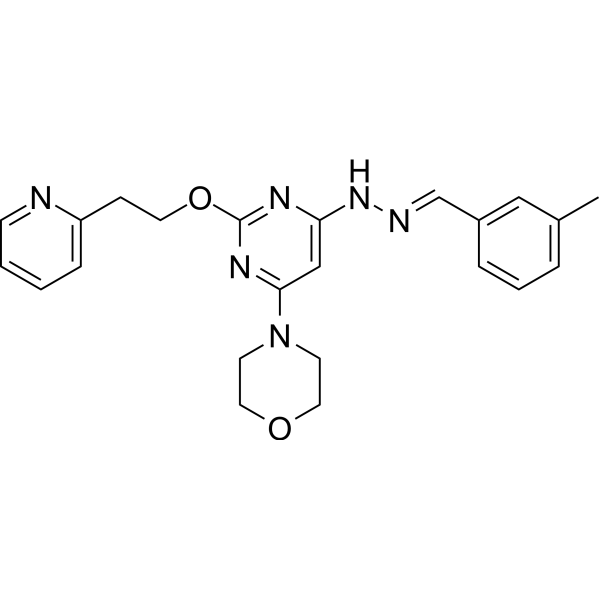
    Apilimod (STA 5326) is a potent IL-12/IL-23 inhibitor, and strongly inhibits IL-12 with IC50s of 1 nM and 2 nM, in IFN-γ/SAC-stimulated human PBMCs and SAC-treated monkey PBMCs, respectively . Apilimod is a potent and highly selective PIKfyve inhibitor.
    Apilimod
  • HY-14644A
    Apilimod mesylate
    35+ Cited Publications

    STA 5326 mesylate; LAM-002A; AIT-101 mesylate

    Interleukin Related PIKfyve Inflammation/Immunology Cancer
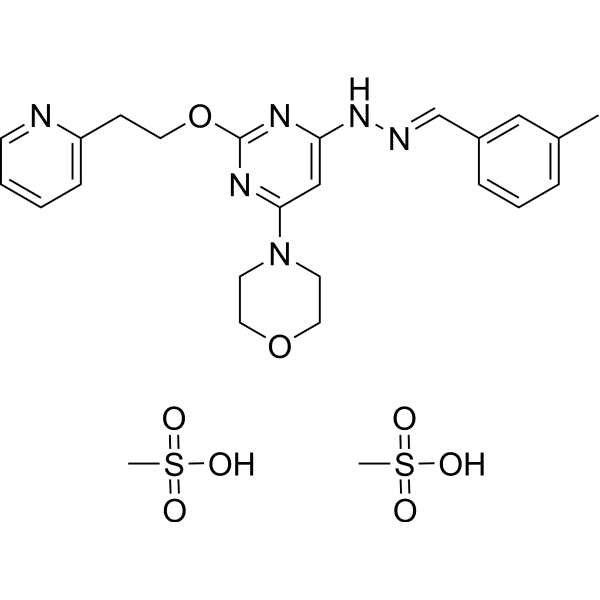
    Apilimod (STA 5326) mesylate is a potent IL-12/IL-23 inhibitor, and strongly inhibits IL-12 with IC50s of 1 nM and 2 nM, in IFN-γ/SAC-stimulated human PBMCs and SAC-treated monkey PBMCs, respectively . Apilimod is a potent and highly selective PIKfyve inhibitor.
    Apilimod mesylate
  • HY-129467

    2-Hydroxyoleic acid; 2-OHOA; LAM561

    Apoptosis Cancer
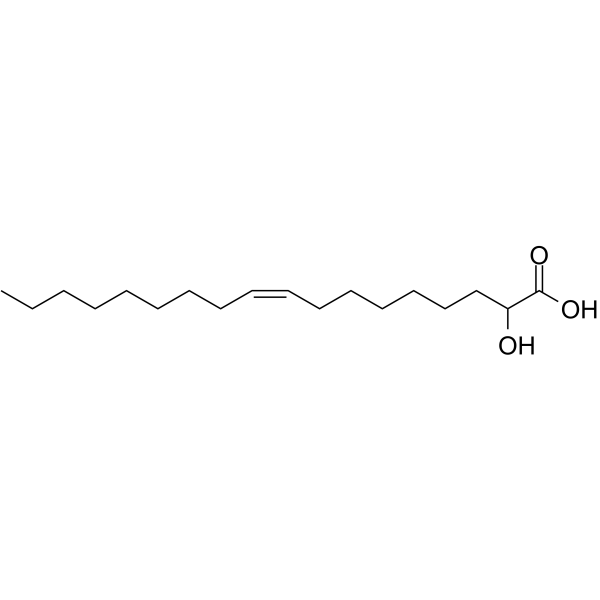
    (Rac)-Idroxioleic acid (2-Hydroxyoleic acid) is a synthetic oleic acid (OA) derivative that binds to the plasma membrane and alters lipid organization. (Rac)-Idroxioleic acid has anti-tumor effect .
    (Rac)-Idroxioleic acid
  • HY-150229

    Liposome Cancer
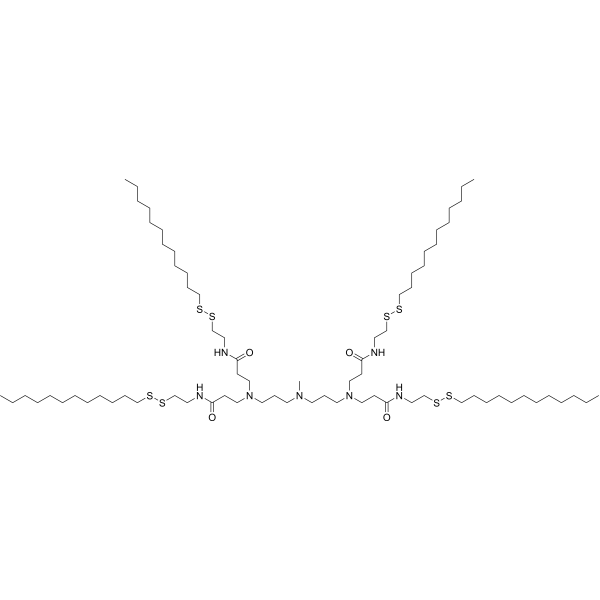
    306-N16B is a selective lung-targeted lipid nanoparticle that reversibly targets lung endothelial cells and specific immune cells through selective adsorption of a protein corona mediated by differences in tail structure (such as fibrinogen β/γ chain). 306-N16B binds to specific plasma proteins in the blood to form a protein corona, which guides the particles to be enriched in the lungs, releases mRNA and promotes target cell gene expression, exerts efficient lung cell transfection activity, and can precisely regulate gene delivery of different cell types in the lungs (such as endothelial cells and macrophages). 306-N16B can be used in gene therapy technologies for hereditary lung diseases including pulmonary lymphangioleiomyomatosis (LAM), restoring tumor suppressor function by delivering Tsc2 mRNA, and can also be used for lung-specific mRNA vaccines and gene editing therapies .
    306-N16B
  • HY-N8503

    Others Others
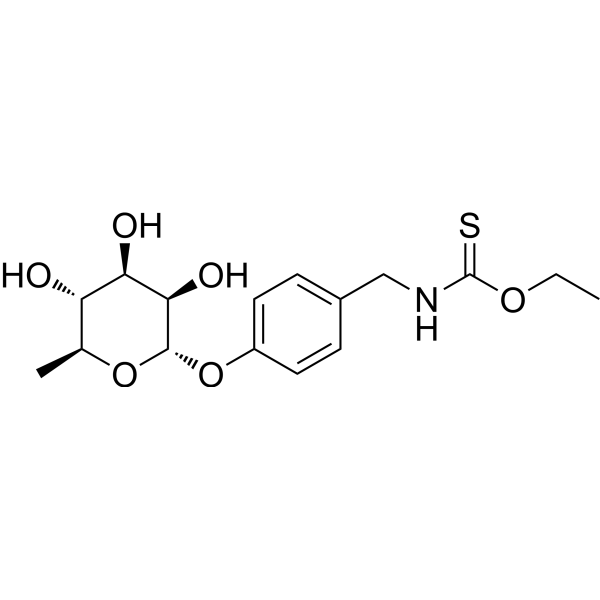
    Niazimicin can be isolated from seeds and leaves of Moringa oleifera Lam. Niazimicin is thiocarbamate compound .
    Niazimicin
  • HY-N10803

    Others Others
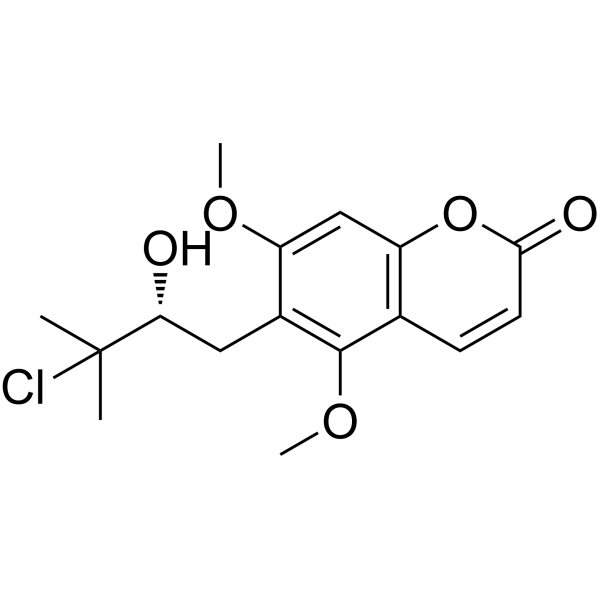
    (+)-6-(3-Chloro-2-hydroxy-3-methylbutyl)-5,7-dimethoxycoumarin is a nature product that could be isolated form the root bark of Toddalia asiatica (L.) LAM .
    (+)-6-(3-Chloro-2-hydroxy-3-methylbutyl)-5,7-dimethoxycoumarin
  • HY-N10842

    Others Others
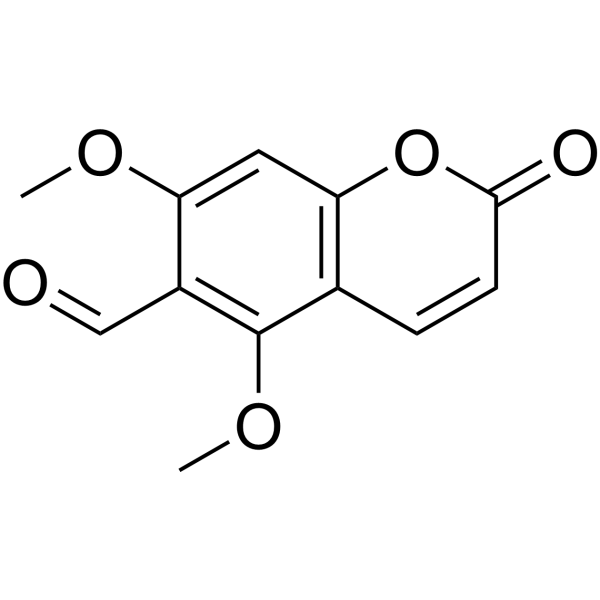
    6-Formyllimetin is a natural product isolated from the root bark of T. asiatica LAM .
    6-Formyllimetin
  • HY-164915

    Bacterial Metabolic Disease
    5-InoAz is an inositol analogue used as a metabolic probe for labeling the mycobacterial cell envelope. 5-InoAz integrates into cell envelope glycolipids [phosphatidylinositol mannoside (PIM), PIM-anchored lipomannan (LM), and lipoarabinomannan (LAM)] .
    5-InoAz
  • HY-N9097

    Reactive Oxygen Species (ROS) SOD Glutathione Peroxidase PKC NADPH Oxidase Metabolic Disease Inflammation/Immunology
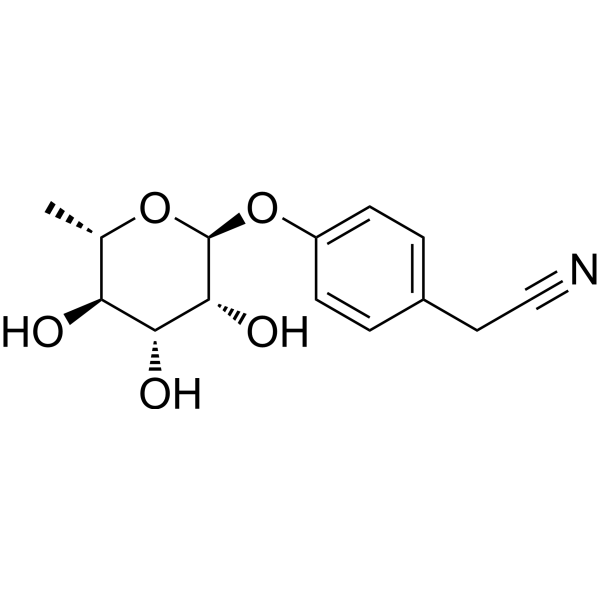
    Niazirin is an orally active antioxidant. Niazirin can be isolated from Moringa oleifera Lam. Niazirin reduces the production levels of ROS and MDA, while increasing the levels of superoxide dismutase SOD and glutathione peroxidase GPx. Niazirin also abolishes high glucose-induced PKCζ activation and inhibits Nox4 protein expression. Niazirin exhibits excellent free radical scavenging activity. Niazirin significantly inhibits high glucose-induced proliferation of vascular smooth muscle cells. Niazirin can be used in the research of diabetic atherosclerosis .
    Niazirin
  • HY-N0080

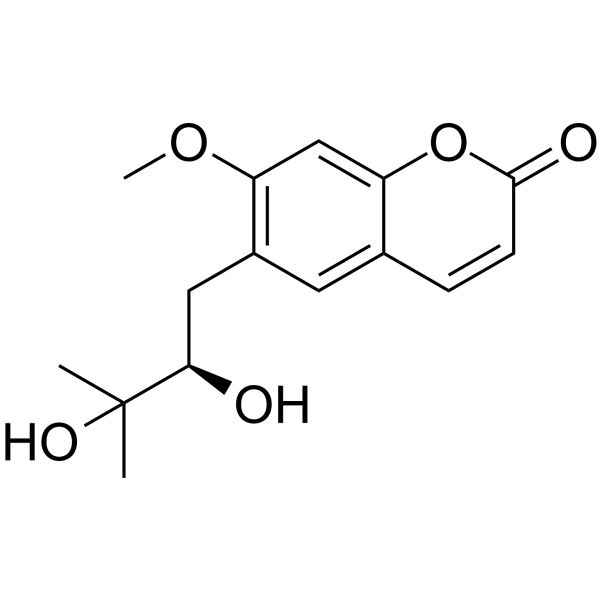
    Peucedanol methyl ether

    Bacterial Fungal Infection
    Ulopterol is a coumarin isolated from the leaves of Toddalia asiatica (L.) Lam with potent antibacterial and antifungal activities .
    Ulopterol
  • HY-14644B

    STA 5326 hydrochloride; LAM-002A free base hydrochloride; AIT-101 hydrochloride

    NOD-like Receptor (NLR) Infection Inflammation/Immunology
    Apilimod (STA 5326) hydrochloride is a PIKFYVE kinase inhibitor that promotes NLRP3 inflammatory vesicle activation and IL-1β secretion. Apilimod hydrochloride has been shown to inhibit host cell proteases, which may prevent viral invasion but also block antiviral immune responses, potentially exacerbating immunosuppression in COVID-19.
    Apilimod hydrochloride
  • HY-N3652

    Fungal Infection
    Cuspidiol (compound 3) is a CH2Cl2 extract of Fagara zanthoxyloides Lam. Cuspidiol has antifungal and antioxidative activity .
    Cuspidiol
  • HY-RS15131

    Small Interfering RNA (siRNA) Others

    TSC1 Human Pre-designed siRNA Set A contains three designed siRNAs for TSC1 gene (Human), as well as a negative control, a positive control, and a FAM-labeled negative control.

    TSC1 Human Pre-designed siRNA Set A
    TSC1 Human Pre-designed siRNA Set A
  • HY-RS15132

    Small Interfering RNA (siRNA) Others

    TSC2 Human Pre-designed siRNA Set A contains three designed siRNAs for TSC2 gene (Human), as well as a negative control, a positive control, and a FAM-labeled negative control.

    TSC2 Human Pre-designed siRNA Set A
    TSC2 Human Pre-designed siRNA Set A
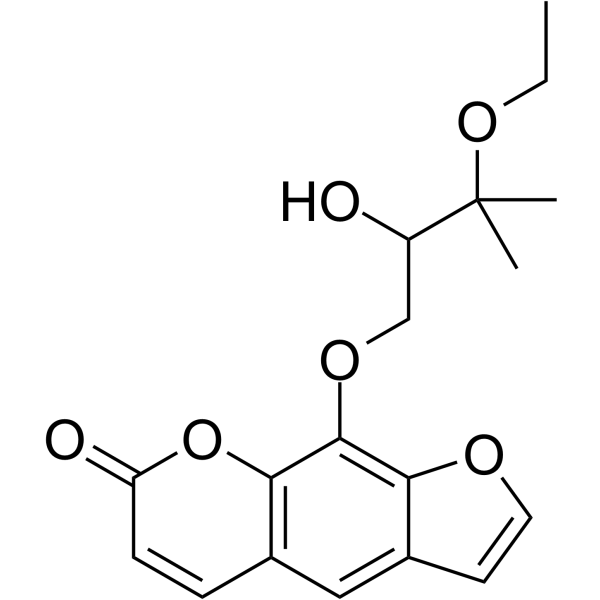
  • HY-N9538

    Others Others
    8-(3-Ethoxy-2-hydroxy-3-methylbutyloxy)psoralen is a coumarin that can be found in Heracleum pyrenaicum Lam.
    8-(3-Ethoxy-2-hydroxy-3-methylbutyloxy)psoralen
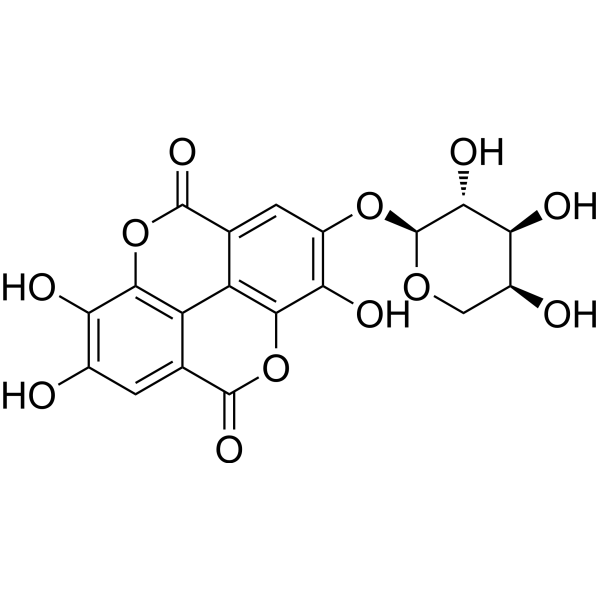
  • HY-N12351

    Others Others
    Ellagic acid 4-O-α-L-arabinopyranoside, isolated from longan Dimocarpus longan Lour, syn. Euphoria longan Lam. has antioxidative activity .
    Ellagic acid 4-O-α-L-arabinopyranoside
  • HY-RS21636

    Small Interfering RNA (siRNA) Others

    Lsamp Mouse Pre-designed siRNA Set A contains three designed siRNAs for Lsamp gene (Mouse), as well as a negative control, a positive control, and a FAM-labeled negative control.

    Lsamp Mouse Pre-designed siRNA Set A
    Lsamp Mouse Pre-designed siRNA Set A
  • HY-129467A

    2-Hydroxyoleic acid sodium; 2-OHOA sodium; LAM561 sodium

    Apoptosis Cancer
    (Rac)-Idroxioleic acid (2-Hydroxyoleic acid) sodium is a synthetic oleic acid (OA) derivative that binds to the plasma membrane and alters lipid organization. (Rac)-Idroxioleic acid sodium has anti-tumor effect .
    (Rac)-Idroxioleic acid sodium
  • HY-139784

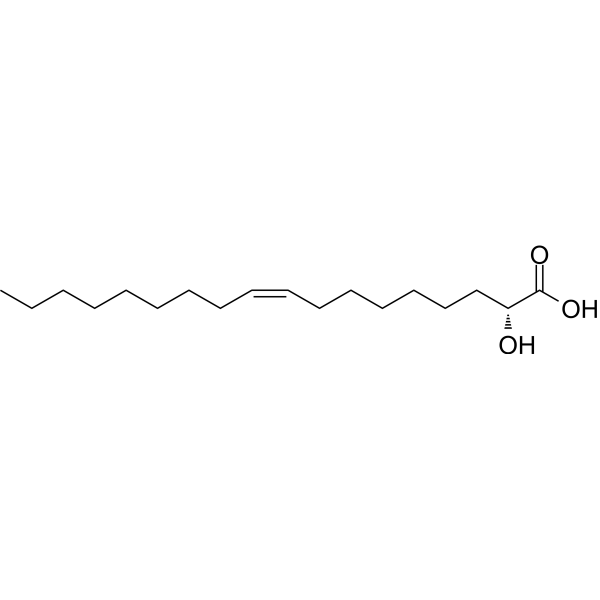
    (R)-2-Hydroxyoleic acid; (R)-2-OHOA; (R)-LAM561

    Endogenous Metabolite Cancer
    Idroxioleic acid ((R)-2-Hydroxyoleic acid; (R)-2-OHOA), the R enantiomer of (Rac)-Idroxioleic acid, is an orally active fatty acid that modulates the lipid composition and structure of the membranes. Idroxioleic acid has antitumor activities .
    Idroxioleic acid
  • HY-129467R

    2-Hydroxyoleic acid (Standard); 2-OHOA (Standard); LAM561 (Standard)

    Reference Standards Apoptosis Cancer
    (Rac)-Idroxioleic acid (Standard) is the analytical standard of (Rac)-Idroxioleic acid. This product is intended for research and analytical applications. (Rac)-Idroxioleic acid (2-Hydroxyoleic acid) is a synthetic oleic acid (OA) derivative that binds to the plasma membrane and alters lipid organization. (Rac)-Idroxioleic acid has anti-tumor effect[1].
    (Rac)-Idroxioleic acid (Standard)
  • HY-118362

    Bacterial Infection
    Netzahualcoyonol is a quinone methyl triterpene isolated from the roots of Salacia multiflora (Lam.) DC. Netzahualcoyonol exhibits antibacterial and anti-biofilm activities. Netzahualcoyonol inhibits Gram-positive bacteria (MIC=3.26–52 μM). Additionally, Netzahualcoyonol demonstrates cytotoxicity against Hep G2 cells (IC50 = 1.95 μM) but exhibits low toxicity towards Vero cells .
    Netzahualcoyonol
  • HY-E70691

    CDK Cancer
    CLK1 is one of the dual specificity kinases and is the founding member of the 'LAMMER' family of kinases. CLK1 activity is positively regulated by phosphorylation on either tyrosine residues or serine/threonine residues, and is negatively regulated by steric constraints mediated by the N-terminal domain, as well as, by phosphorylation on a subset of serine/threonine residues within the catalytic domain. CLK1 Recombinant Human Active Protein Kinase is a recombinant CLK1 protein that can be used to study CLK1-related functions .
    CLK1 Recombinant Human Active Protein Kinase
  • HY-W722084

    Others Others
    3,7-Dimethylnonane is a saturated aliphatic hydrocarbon compound found in the leaves of silver acacia (Leucaena leucocephala (Lam.) De Wit) .
    3,7-Dimethylnonane
  • HY-N19680

    Others Others
    Dihydroxanthyletin (Compound 8), a coumarin, is a natural product found in the fruits of Ammi majus, Cassia pumila Lam., and Seseli tortuosum L.B.S. Eur. .
    Dihydroxanthyletin
  • HY-N15692

    Others Others
    1-Desmethylchrysoobtusin 2-β-D-glucoside is an anthraquinone. 1-Desmethylchrysoobtusin 2-β-D-glucoside can be isolated from Cassia siamea Lam.
    1-Desmethylchrysoobtusin 2-β-D-glucoside
  • HY-N19688

    Bacterial Infection
    Glucomoringin, a structurally unusual glucosinolate found in seeds of Moringa oleifera Lam., is an antimicrobial agent. Glucomoringin permits to maximize it's power when bioactivated with myrosinase. Glucomoringin can be used for the research of bacterial infections .
    Glucomoringin
  • HY-N17637

    Drug Intermediate Others
    Machaeric acid is a triterpenoid and triterpene sapogenin, which serves as the aglycone of Senegaloside A; it can be isolated from the seeds of Caragana microphylla Lam. and Acacia senegal(Mimosaceae). Machaeric acid exhibits remarkable biosafety, and even at concentrations as high as 200 μM, it does not induce cytotoxicity or reduce the viability of H4IIE rat hepatoma cells .
    Machaeric acid
  • HY-180407

    Bacterial Infection
    UGM-IN-1 (compound 107) is a selective competitive inhibitor of Mycobacterium tuberculosis UDP-Galp mutase (UGM), encoded by Rv3809c. UGM-IN-1 inhibits the conversion of UDP-galactopyranose (UDP-Galp) to UDP-galactofuranose (UDP-Galf), thereby blocking the synthesis of key components of the mycobacterial cell wall, including mycolic acid-arabinogalactan (mAG) and liparabinomannan (LAM), leading to anti-mycobacterial activity against Mycobacterium tuberculosis. UGM-IN-1 is useful for research on tuberculosis, including drug-resistant tuberculosis .
    UGM-IN-1

Inquiry Online

Your information is safe with us. * Required Fields.

Salutation


Country or Region *

Applicant Name *


Organization Name *

Department *


Email Address *


Product Name *

Cat. No.


Requested quantity *

Phone Number *


Remarks

Inquiry Online

Inquiry Information

Product Name:
Cat. No.:
Quantity:
MCE Japan Authorized Agent:

