

71 Results for "

MC38 cell

" in MedChemExpress (MCE) Product Catalog:
Products (71)

71 Results for "MC38 cell" in MCE Product Catalog:

25
25 Publications Verification
Cat. No.: HY-P1731C
Synonyms: LY3298176 sodium
Tirzepatide sodium (LY3298176 sodium) is a dual glucose-dependent insulinotropic polypeptide (GIP) and glucagon-like peptide-1 (GLP-1) receptor agonist. Tirzepatide sodium exerts anti-apoptotic and pro-differentiation effects via the pAkt/CREB/BDNF cascade and miRNA in neurons; in the heart, it promotes BCAA catabolism and inhibits the mTOR pathway by mediating the dephosphorylation of BCKDHA; meanwhile, it effectively reduces insulin and leptin levels and suppresses inflammatory responses at the systemic level. Tirzepatide sodium can be used for research on myocardial infarction, colon cancer, diabetes, diabetic cognitive impairment, neurodegeneration, diabetes-related neuropathy, and obesity .
loading...
    loading...
3
3 Cited Publications
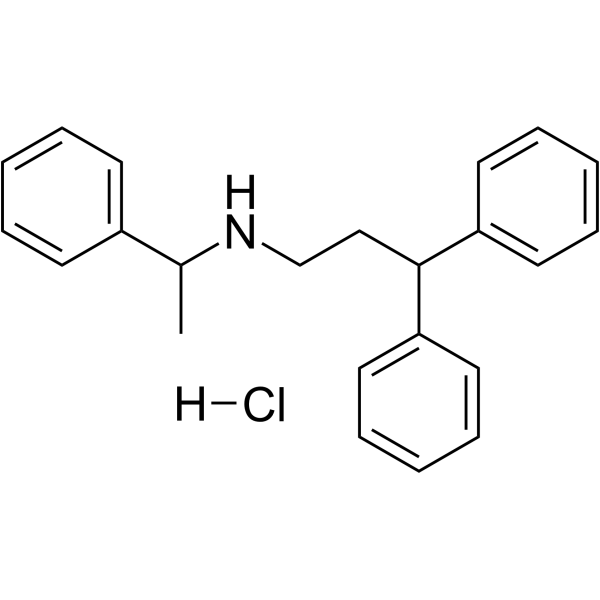
Cat. No.: HY-B0984
CAS No.: 13636-18-5
Fendiline hydrochloride, a diphenylalkylamine type of antianginal agent, is an L-type calcium channel blocker (IC50 of 17 µM). Fendiline hydrochloride is also a selective K-Ras inhibitor, and has no effect on H-Ras and N-Ras. Fendiline hydrochloride inhibits K-Ras plasma membrane localization (IC50 of 9.64 μM), inhibits K-Ras signal output and blocks the proliferation of pancreatic, colon, lung, and endometrial cancer cell lines expressing oncogenic mutant K-Ras. Fendiline hydrochloride is a STING agonist and is able to inhibit the growth of multiple refractory cold tumors (MC38, CT26 and B16F10) .
loading...
    loading...
3
3 Cited Publications
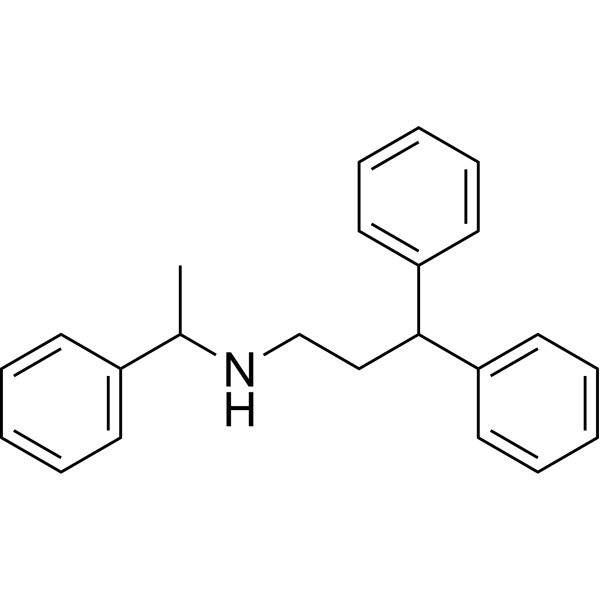
Cat. No.: HY-B0984A
CAS No.: 13042-18-7
Fendiline, a diphenylalkylamine type of antianginal agent, is an L-type calcium channel blocker (IC50 of 17 µM). Fendiline is also a selective K-Ras inhibitor, and has no effect on H-Ras and N-Ras. Fendiline inhibits K-Ras plasma membrane localization (IC50 of 9.64 μM), inhibits K-Ras signal output and blocks the proliferation of pancreatic, colon, lung, and endometrial cancer cell lines expressing oncogenic mutant K-Ras. Fendiline is a STING agonist and is able to inhibit the growth of multiple refractory cold tumors (MC38, CT26 and B16F10) .
loading...
    loading...
1
1 Cited Publications
Cat. No.: HY-P990680
Anti-Mouse CD40 Antibody (FGK4.5/FGK45) is an agonistic rat-derived IgG2a monoclonal antibody targeting mouse CD40. Anti-Mouse CD40 Antibody (FGK4.5/FGK45) enhances T cells responses, dendritic cells maturation and NK cells activation. Anti-Mouse CD40 Antibody (FGK4.5/FGK45) can be used for the researches of cancer, infection, inflammation and immunology, such as CT26 tumor, vesicular stomatitis virus (VSV) infection and transplantation .
loading...
    loading...
Cat. No.: HY-P990117
Target:  

Integrin

Research Areas:  

Cardiovascular Disease Cancer

Anti-Mouse/Rat/Human Osteopontin/SPP1 Antibody (MPIIIB10) is a mouse-derived Osteopontin/SPP1 IgG1 κ type antibody inhibitor. Anti-Mouse/Rat/Human Osteopontin/SPP1 Antibody (MPIIIB10) blocks Angiotensin II (HY-13948)-induced DNA synthesis and collagen gel contraction in cardiac fibroblasts. Anti-Mouse/Rat/Human Osteopontin/SPP1 Antibody (MPIIIB10) significantly inhibits tumor growth in CT26 or MC38 tumors mice models .
loading...
    loading...
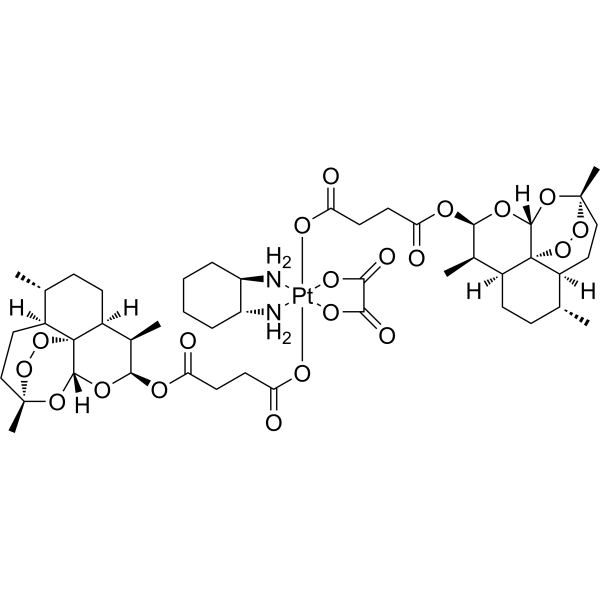
Cat. No.: HY-160421
CAS No.: 2000236-36-0
Target:  

Apoptosis

Research Areas:  

Inflammation/Immunology Cancer

TREM2-IN-1 (OPA) is a TREM2 inhibitor derived from oxaliplatin and artesunate. TREM2-IN-1 can relieves immunosuppressive tumor microenvironment and enhancing chemical anticancer efficiency. TREM2-IN-1 deters the tumor growth in mice models bearing MC38 colorectal tumor by reducing the number of CD206 + and CX3CR1 + immunosuppressive macrophages. TREM2-IN-1 also promotes the expansion and infiltration of immunostimulatory dendritic, cytotoxic T and natural killer cells .
loading...
    loading...
Cat. No.: HY-P99379
CAS No.: 2171061-85-9
Synonyms: CAN04; Anti-IL-1RAP/IL-1R3 Reference Antibody (nidanilimab)

Target:  

Interleukin Related

Research Areas:  

Cancer

Nidanilimab (CAN04) is a fully humanized monoclonal anti-IL1RAP antibody with a Kd value of 1.10 pM. Nidanilimab blocks IL1α and IL1β signaling and stimulates the immune system to destroy tumour cells. Nidanilimab can be used in research of non-small lung cancer (NSCLC) and pancreatic ductal adenocarcinoma (PDAC) .
loading...
    loading...
Cat. No.: HY-153358
CAS No.: 2935964-98-8
Purity:  99.91%
Target:  

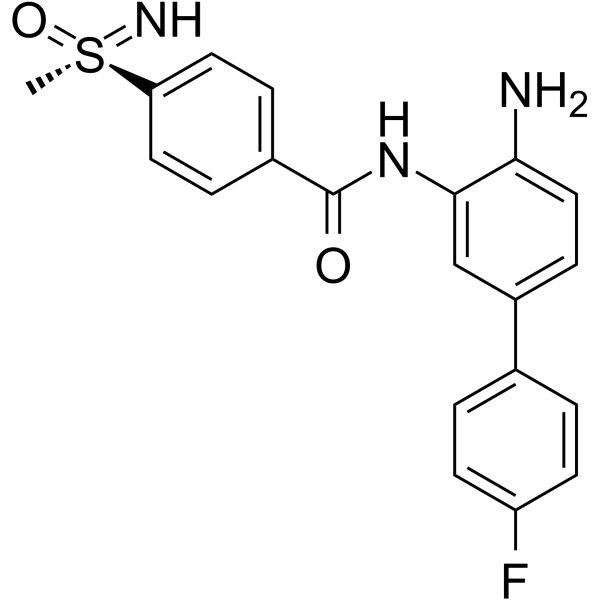
HDAC

Research Areas:  

Cancer

TNG260 is a selective, orally effective inhibitor of HDAC1 and CoREST complex, with a 10-fold selectivity for HDAC1 over HDAC3 and a 500-fold selectivity for CoREST complex over NuRD and Sin3 complex. TNG260 reshapes the tumor immune microenvironment, reduces immunosuppressive neutrophil infiltration, promotes effector T cell recruitment, and reverses anti-PD-1 resistance caused by STK11 deficiency by inhibiting the activity of the CoREST-HDAC1 complex. TNG260 induces durable tumor regression in combination with α-PD1 in MC38 tumor-bearing mice with STK11 mutations, and has lower toxicity to bone marrow cells than non-selective HDAC inhibitors .
loading...
    loading...
Cat. No.: HY-178193
Research Areas:  

Cancer

Chem-0199 is an Adipocyte Enhancer-Binding Protein 1 (AEBP1) inhibitor. Chem-0199 can disrupt the interaction between AEBP1 and CKAP4, thereby enhances antitumor immunity. Chem-0199 can inhibit Akt phosphorylation (p-Akt) and downregulates PD-L1 expression. Chem-0199 can be used for the research of cancer, such as colon cancer .
loading...
    loading...
Cat. No.: HY-N6579
CAS No.: 65247-27-0
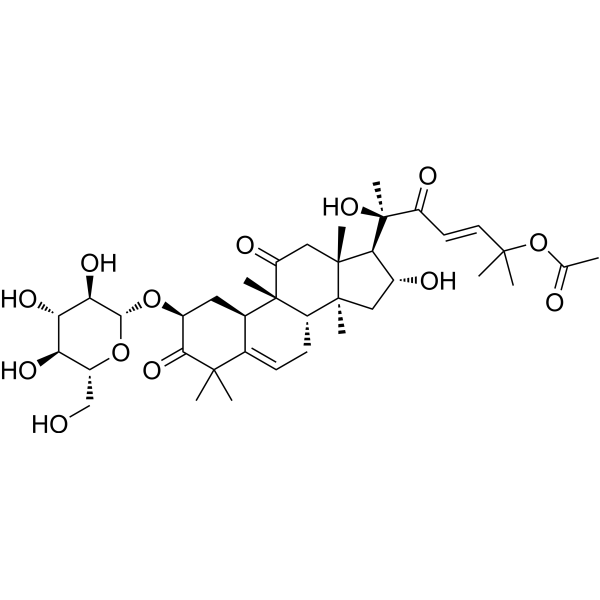
Arvenin I is a natural cucurbitacin glucoside that activates T cells within the cancer-competitive environment. Arvenin I covalently reacts with and hyperactivates MKK3, thereby reviving the mitochondrial fitness of exhausted T cells through the activation of the p38MAPK pathway . Arvenin I exhibits broad-spectrum antiproliferative against cancer cells . Arvenin I enhances antitumor effects both as a monotherapy and in combination with immune checkpoint inhibitors in mice . Arvenin I can be used for cancer research, such as colon cancer, breast cancer, lung cancer, and ovarian cancer [1][2].
loading...
    loading...
Cat. No.: HY-173189
CAS No.: 65954-93-0
Synonyms: 2′,5′-ApApA; 2′,5′-trioligoadenylate; 5'-O-Triphosphoryladenylyl-(2'→5')-adenylyl-(2'→5')-adenosine
Target:  

RSV DNA/RNA Synthesis

2-5A (2′,5′-ApApA) is a 5'-triphosphorylated (2',5') oligoadenylate. When covalently linked to an antisense molecule complementary to the target sequence, 2-5A activates RNase L, which subsequently degrades the target RNA bound to the 2-5A chimera. 2-5A can be used in research related to respiratory syncytial virus infection, colorectal adenocarcinoma and melanoma .
loading...
    loading...
Cat. No.: HY-173189A
Synonyms: 2′,5′-ApApA pentasodium; 2′,5′-trioligoadenylate pentasodium; 5'-O-Triphosphoryladenylyl-(2'→5')-adenylyl-(2'→5')-adenosine pentasodium
Target:  

RSV DNA/RNA Synthesis

2-5A pentasodium solution (100 mM) (2′,5′-ApApA pentasodium solution (100 mM)) is a 5'-triphosphorylated (2',5') oligoadenylate. When covalently linked to an antisense molecule complementary to the target sequence, 2-5A pentasodium solution (100 mM) activates RNase L, which subsequently degrades the target RNA bound to the 2-5A pentasodium solution (100 mM) chimera. 2-5A pentasodium solution (100 mM) can be used in research related to respiratory syncytial virus infection, colorectal adenocarcinoma and melanoma .
loading...
    loading...
Cat. No.: HY-P990914
CAS No.: 2865822-82-6
Synonyms: GS-1811; JTX-1811

Target:  

CCR

Research Areas:  

Inflammation/Immunology Cancer

Denikitug (GS-1811; JTX-1811) is a humanized monoclonal antibody against CCR8 receptor with a KD of 16.8 pM. Denikitug specifically binds to human CCR8, inhibits CCL1-induced downstream CCR8 signaling. Denikitug selectively depletes cells expressing CCR8 via antibody-dependent cellular cytotoxicity (ADCC). Denikitug promotes anti-tumor immunity and can be used for the research of cancer and immunology .
loading...
    loading...
Cat. No.: HY-P11060
Synonyms: Adpgk peptide
Target:  

MHC

Research Areas:  

Cancer

MC38 SLP Adpgk (Adpgk peptide) is an H-2 K b-restricted colorectal cancer neoantigen peptide. MC38 SLP Adpgk is formulated into PCNP nanocomplexes together with CpG ODN. PCNP vaccines significantly enhance the co-delivery efficiency of neoantigens and adjuvants to lymphoid organs, and activate cytotoxic T cells. PCNP vaccines not only protect mice from MC-38 colorectal tumor invasion, but also exhibit anti-tumor efficacy in established colorectal tumor models and significantly prolong the survival of tumor-bearing mice .
loading...
    loading...
Cat. No.: HY-164864
CAS No.: 3053413-58-1
Target:  

PROTACs STAT

Research Areas:  

Cancer

DU-14 (PTP1B/TC-PTP PROTAC) is a potent and selective PTP1B and TC-PTP dual PROTAC degrader. DU-14 (PTP1B/TC-PTP PROTAC) has the IC50 for PTP1B and TC-PTP phosphatase activity of 24.2 nM and 30.1 nM, respectively. DU-14 (PTP1B/TC-PTP PROTAC) enhances IFN-γ signaling, promotes T cell activation, and has anti-tumor activity .
loading...
    loading...
Cat. No.: HY-B0984R
CAS No.: 13636-18-5
Fendiline (hydrochloride) (Standard) is the analytical standard of Fendiline (hydrochloride). This product is intended for research and analytical applications. Fendiline hydrochloride, a diphenylalkylamine type of antianginal agent, is an L-type calcium channel blocker (IC50 of 17 µM). Fendiline hydrochloride is also a selective K-Ras inhibitor, and has no effect on H-Ras and N-Ras. Fendiline hydrochloride inhibits K-Ras plasma membrane localization (IC50 of 9.64 μM), inhibits K-Ras signal output and blocks the proliferation of pancreatic, colon, lung, and endometrial cancer cell lines expressing oncogenic mutant K-Ras. Fendiline hydrochloride is a STING agonist and is able to inhibit the growth of multiple refractory cold tumors (MC38, CT26 and B16F10) .
loading...
    loading...
Cat. No.: HY-P990820
Anti-Mouse TIM-4 Antibody (RMT4-53) is a rat-derived IgG2b κ type antibody inhibitor, targeting to mouse TIM-4. Anti-Mouse TIM-4 Antibody (RMT4-53) can block T cell immunoglobulin and mucin domain 4 (TIM-4). Anti-Mouse TIM-4 Antibody (RMT4-53) can inhibit the engulfment of apoptotic cells and T cell proliferation. Anti-Mouse TIM-4 Antibody (RMT4-53) can be used for the researches of cancer, immunology and metabolic disease, such as MC38 tumor and graft .
loading...
    loading...
Cat. No.: HY-155848
Purity:  98.09%
Target:  

Phosphatase

Research Areas:  

Cancer

LYP-IN-4 (compound D14) is a reversible and selective inhibitor of lymphotyrosine phosphatase (LYP) (Ki=1.34 μM, IC50=3.52μM). LYP-IN-4 inhibits LYP to regulate TCR signaling, up-regulates PD-1/PD-L1 expression, and enhance anti-tumor immunity. LYP-IN-4 activates T cells and inhibits M2 macrophage polarization, inhibits tumor growth in MC38 isogenic mouse models.
loading...
    loading...
Cat. No.: HY-161982
CAS No.: 3079468-41-7
Target:  

TNF Receptor

Research Areas:  

Cancer

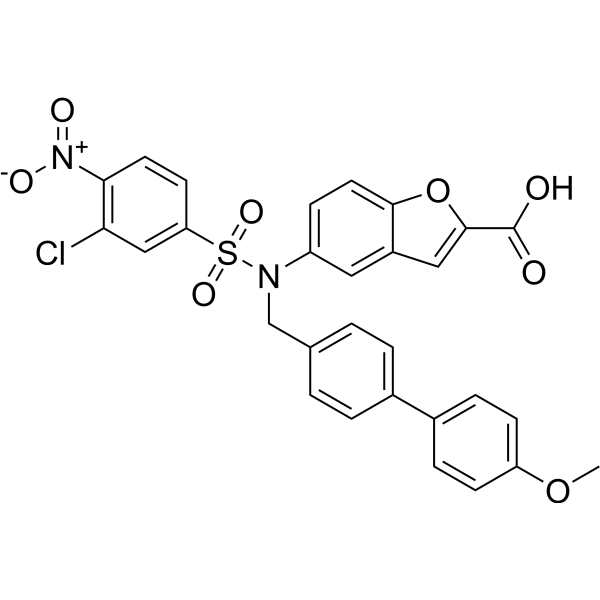
JNU-0921 is a potent and orally active CD137 agonist. JNU-0921 increases the mRNA expression of IFN-γ and GZMB. JNU-0921 induces luciferase activity with an EC50 value of 64.07 nM.JNU-0921 enhances effector and memory function of cytotoxic CD8 + T cells (CTLs) and alleviates their exhaustion. JNU-0921 also skews polarization of helper T cells toward T helper 1 type and enhances their activity to boost CTL function. JNU-0921 shows anticancer activity .
loading...
    loading...
Cat. No.: HY-P990175
Anti-Mouse OX40L/CD134L Antibody (RM134L) is an anti-mouse OX40L/CD134L IgG2b monoclonal antibody. Anti-Mouse OX40L/CD134L Antibody (RM134L) reduces immune response by inhibiting the OX40/OX40L signaling pathway. Anti-Mouse OX40L/CD134L Antibody (RM134L) can inhibit plasma cell differentiation and antibody secretion. Anti-Mouse OX40L/CD134L Antibody (RM134L) can prolong the survival time of cell transplantation by inhibiting CD4 + T cells. Anti-Mouse OX40L/CD134L Antibody (RM134L) can be used for researches on inflammation and cancer such as graft versus host disease (GVHD), allergic reaction, lupus nephritis and hepatocellular carcinoma (HCC) .
loading...
    loading...

