32 Results for "

Microtubule destabilization

" in MedChemExpress (MCE) Product Catalog:
Products (32)

32 Results for "Microtubule destabilization" in MCE Product Catalog:

8
8 Publications Verification
Cat. No.: HY-B0413
CAS No.: 43210-67-9
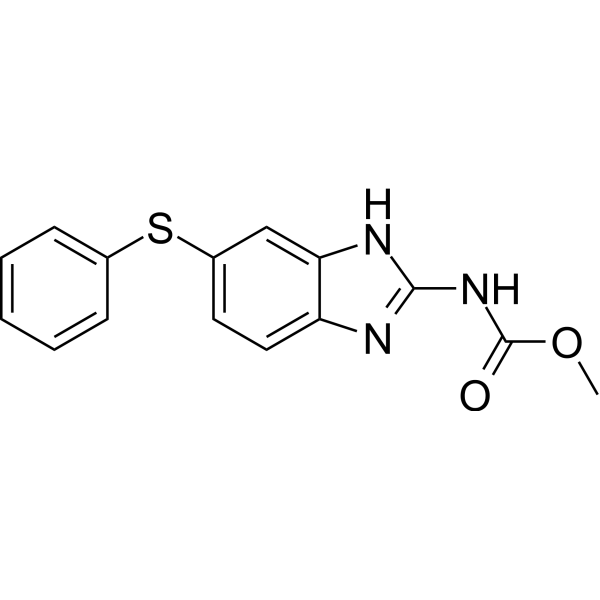
Fenbendazole is an orally active benzimidazole anthelmintic agent, with a broad antiparasitic range. Fenbendazole is a microtubule destabilizing agent and acts on helminthes primarily by binding to tubulin and disrupting the tubulin microtubule equilibrium. Fenbendazole stabilizes the transcriptional activator HIF-1α. Fenbendazole possesses an efficient anti-proliferative activity and induces apoptosis. Fenbendazole causes cell-cycle arrest and mitotic cell death, and has antitumor activity in mice xenografted with wild-type p53 .
loading...
    loading...
8
8 Publications Verification
Cat. No.: HY-115364
CAS No.: 14255-87-9
Purity:  99.87%
Synonyms: SKF 29044
Research Areas:  

Infection

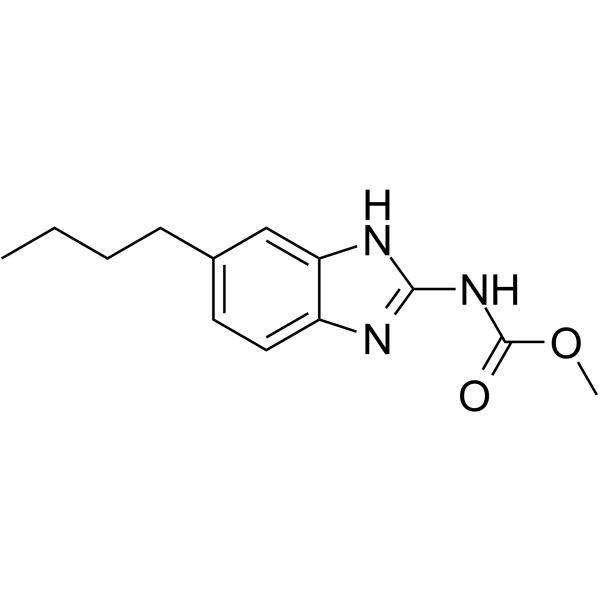
Parbendazole is a potent inhibitor of microtubule assembly, destabilizes tubulin, with an EC50 of 530 nM, and exhibits a broad-spectrum anthelmintic activity.
loading...
    loading...
6
6 Cited Publications
Cat. No.: HY-B0413S
CAS No.: 1228182-47-5
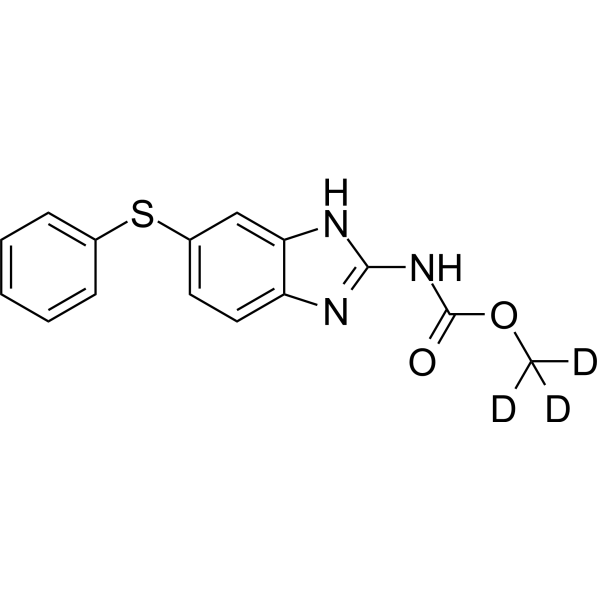
Fenbendazole-d3 is a deuterium labeled Fenbendazole. Fenbendazole-d3 is a HIF-1α agonist and activates the HIF-1α-related GLUT1 pathway. Fenbendazole is an orally active benzimidazole anthelmintic agent, with a broad antiparasitic range. Fenbendazole is a microtubule destabilizing agent. Fenbendazole causes cell-cycle arrest and mitotic cell death, and has antitumor activity in mice xenografted with wild-type p53 .
loading...
    loading...
2
2 Cited Publications
Cat. No.: HY-N2438
CAS No.: 74805-91-7
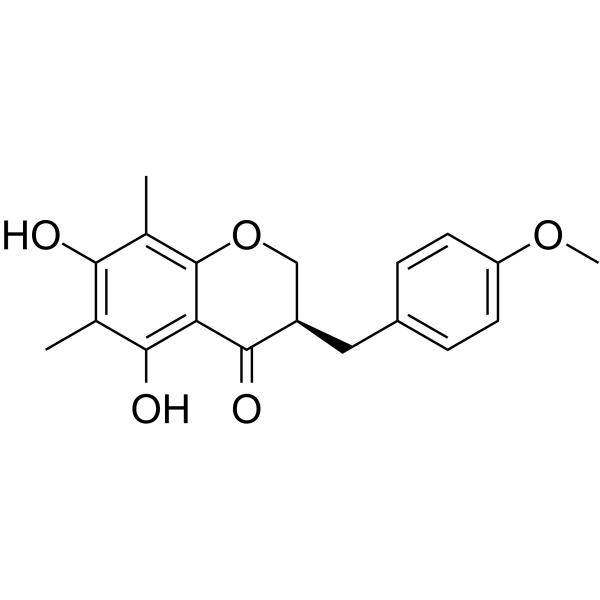
Methylophiopogonanone B is a homoisoflavonoid compound. Methylophiopogonanone B can be isolated from O. japonicus root. Methylophiopogonanone B promotes Rho activation and Tubulin depolymerization. Methylophiopogonanone B significantly increases GTP-Rho, but not GTP-Rac or GTP-CDC42. Methylophiopogonanone B induces cell morphological change via melanocyte dendrite retraction and stress fiber formation. Methylophiopogonanone B exhibits strong antioxidant activity. Methylophiopogonanone B can be used in the research of cervical cancer .
loading...
    loading...
1
1 Cited Publications
Cat. No.: HY-129126
CAS No.: 1352090-52-8
Synonyms: Cbz-Lys(Acr)-PEG2-dansyl
Research Areas:  

Others

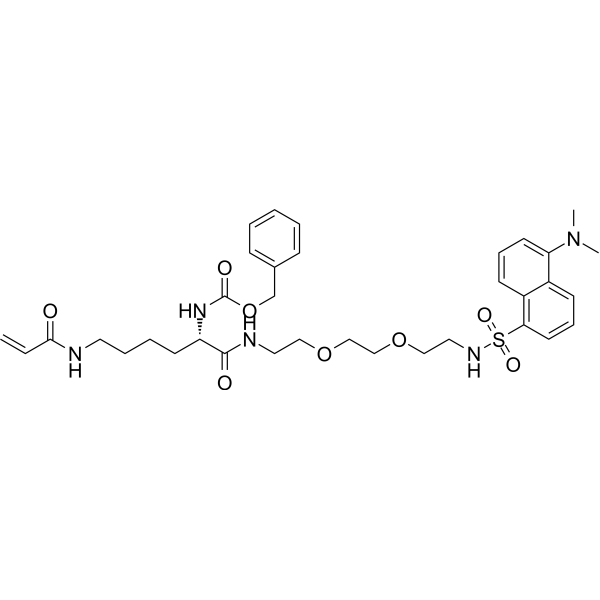
NC9 (Cbz-Lys(Acr)-PEG2-dansyl) is an irreversible transglutaminase (TG) inhibitor. NC9 inhibits osteoblast differentiation and mineralization. NC9 destabilizes microtubules. NC9 can be used for the research of osteoblast differentiation .
loading...
    loading...
Cat. No.: HY-128914
CAS No.: 1943604-24-7
Purity:  99.53%
Research Areas:  

Cancer

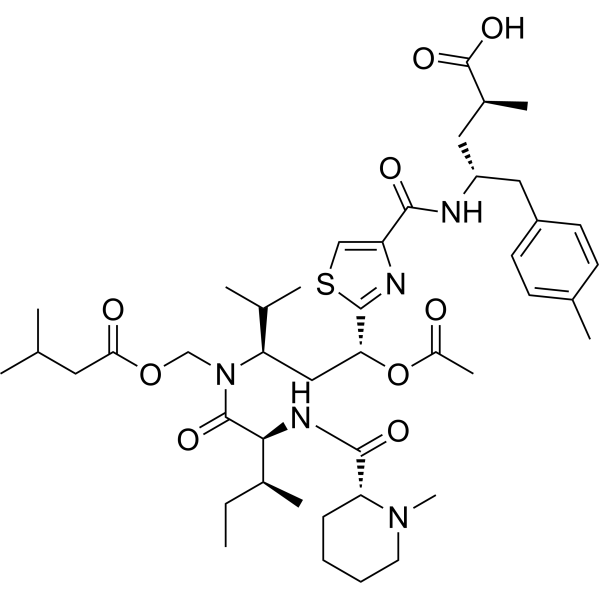
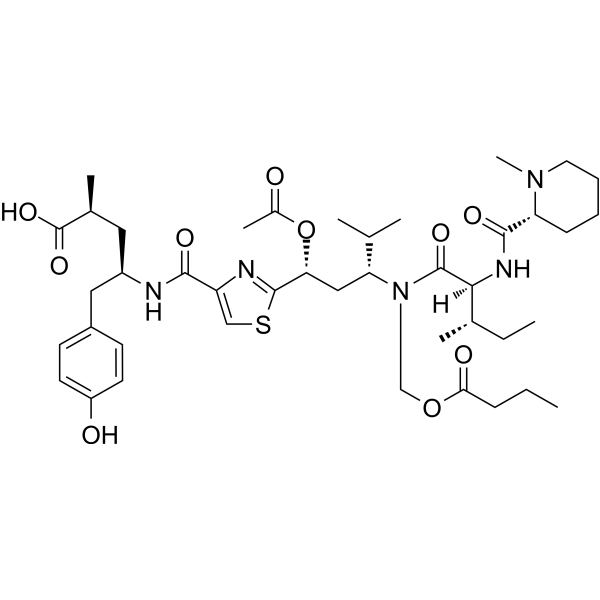
Tubulysin is a microtubule destabilizer that binds to the β-tubulin peptide site adjacent to the vinca alkaloid binding site and inhibits tubulin polymerization. Tubulysin induces apoptosis and exhibits antiproliferative activity against a variety of human cancer cells, including multidrug-resistant strains. Tubulysin can be conjugated to antibodies via a disulfide-containing quaternary ammonium linker for ADC synthesis . Tubulysin is applicable to tumor-related research .
loading...
    loading...
Cat. No.: HY-141860
CAS No.: 2748039-79-2
Purity:  99.52%
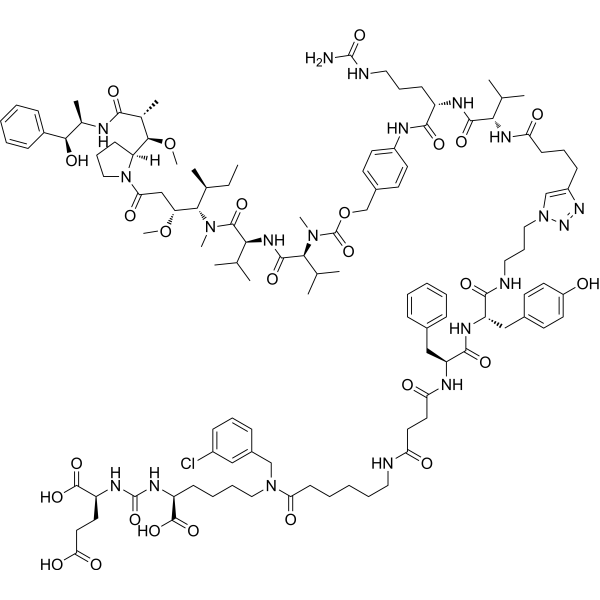
PSMA-Val-Cit-PAB-MMAE is a small-molecule conjugate targeting PSMA, with Monomethyl auristatin E (MMAE) (HY-15162) as its cytotoxic payload. PSMA-Val-Cit-PAB-MMAE binds to PSMA, thereby being delivered into PSMA-expressing prostate cancer cells. Subsequently, the Val-Cit linker is cleaved under the mediation of cathepsin B, releasing active MMAE. PSMA-Val-Cit-PAB-MMAE inhibits CYP3A4 activity (IC50 = 11.2 μM), induces intracellular ROS production and oxidative stress, disrupts the cytoskeleton through microtubule destabilization, and induces prostate cancer cell death. PSMA-Val-Cit-PAB-MMAE can be used in research related to prostate cancer .
loading...
    loading...
Cat. No.: HY-122236
CAS No.: 342595-74-8
Purity:  99.52%
Research Areas:  

Cancer

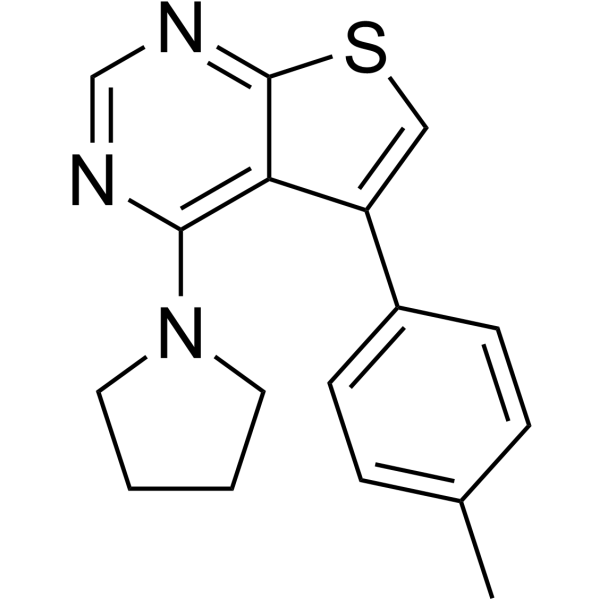
UMK57 is a MCAK activator and kinetochore-microtubule destabilizer. UMK57 enhances MCAK-dependent microtubule depolymerization, increases kinetochore-microtubule turnover, reduces chromosome mis-segregation and lagging chromosomes, and inhibits cancer cell proliferation. UMK57 triggers adaptive resistance in Aurora B cancer cells via reversible Aurora B signaling pathway alterations. UMK57 can be used for the research of solid tumors .
loading...
    loading...
Cat. No.: HY-N1243
CAS No.: 205304-87-6
Tubulysin B is a highly cytotoxic peptide and potent microtubule destabilizing agents isolated from the myxobacteria Archangium geophyra and Angiococcus disciformis. Tubulysin B has IC50 values in the picomolar range against many cancer cell lines, including those with multidrug resistant properties .Tubulysin B is a cytotoxic activity tubulysin which inhibits tubulin polymerization and leads to cell cycle arrest and apoptosis .
loading...
    loading...
Cat. No.: HY-B0413R
CAS No.: 43210-67-9
Fenbendazole (Standard) is the analytical standard of Fenbendazole. This product is intended for research and analytical applications. Fenbendazole is an orally active benzimidazole anthelmintic agent, with a broad antiparasitic range. Fenbendazole is a microtubule destabilizing agent and acts on helminthes primarily by binding to tubulin and disrupting the tubulin microtubule equilibrium. Fenbendazole stabilizes the transcriptional activator HIF-1α. Fenbendazole possesses an efficient anti-proliferative activity and induces apoptosis. Fenbendazole causes cell-cycle arrest and mitotic cell death, and has antitumor activity in mice xenografted with wild-type p53 .
loading...
    loading...
Cat. No.: HY-16196
CAS No.: 864668-87-1
Synonyms: IRC-110160
Research Areas:  

Cancer

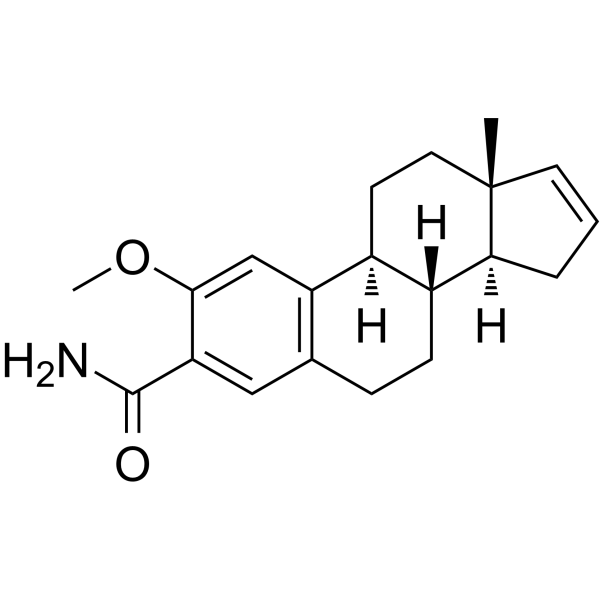
ENMD-1198 (IRC-110160), an orally active microtubule destabilizing agent, is a 2-methoxyestradiol analogue with antiproliferative and antiangiogenic activity. ENMD-1198 is suitable for inhibiting HIF-1alpha and STAT3 in human HCC cells and leads to reduced tumor growth and vascularization.
loading...
    loading...
Cat. No.: HY-176537
CAS No.: 3055038-20-2
Target:  

Microtubule/Tubulin

Research Areas:  

Cancer

RGN6024 is a brain-penetrant, orally active and reversible small molecule tubulin destabilizer. RGN6024 inhibits microtubule polymerization both in biochemical and cellular assays, binds to the colchicine binding pocket of β-tubulin (SPR: Kd = 6.7 μM; tryptophan assay: Kd = 7.4 μM), and triggers G2/M arrest in glioblastoma (GB) cells. RGN6024 retains activity in βIII-tubulin overexpressing cells. RGN6024 inhibits tumor growth in a GB xenograft mouse model. RGN6024 can be used for the study of glioblastoma (GB) .
loading...
    loading...
Cat. No.: HY-78883
CAS No.: 592542-50-2
Target:  

Microtubule/Tubulin

Research Areas:  

Cancer

ON 01500 is a tubulin inhibitor with a Kd of 21 nM. ON 01500 exerts microtubule-destabilizing effects in cells. ON 01500 can be used the study of cancers .
loading...
    loading...
Cat. No.: HY-103257
CAS No.: 154554-41-3
Purity:  99.57%
Synonyms: NSC656158
Target:  

Microtubule/Tubulin

Research Areas:  

Cancer

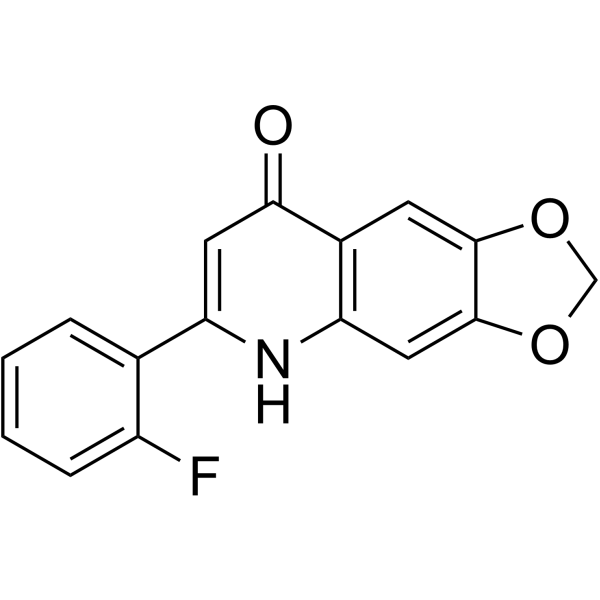
CHM-1, a microtubule-destabilizing agent, inhibits tubulin polymerization. CHM-1 is a potent and selective antimitotic antitumor activity against human hepatocellular carcinoma. CHM-1 induces growth inhibition and apoptosis via G2-M phase arrest in human hepatocellular carcinoma cells by activation of Cdc2 kinase activity .
loading...
    loading...
Cat. No.: HY-I0834
CAS No.: 915095-94-2
Target:  

Microtubule/Tubulin

Research Areas:  

Cancer

(S)-3-(4-(2-Chloro-5-iodobenzyl)phenoxy)tetrahydrofuran (compound 2d), a halogenated Phenstatin analog, is a microtubule destabilizing agent. (S)-3-(4-(2-Chloro-5-iodobenzyl)phenoxy)tetrahydrofuran shows anticancer activities .
loading...
    loading...
Cat. No.: HY-159891
Research Areas:  

Cancer

Microtubule destabilizing agent-2 (Compound 21) is an orally active and selective antitumor compound targeting microtubule protein. Microtubule destabilizing agent-2 destabilizes microtubule proteins and inhibits microtubule polymers. Microtubule destabilizing agent-2 arrests the G0/G1 phase in human tumor cells. Microtubule destabilizing agent-2 induces Apoptosis by activating the cascade pathway of caspases. Microtubule destabilizing agent-2 has anti-inflammatory activity, as inhibiting TNF-α and IL-6 in vitro. Microtubule destabilizing agent-2 reduces tumors growth in xenograft mice .
loading...
    loading...
Cat. No.: HY-145820
CAS No.: 2767446-34-2
Research Areas:  

Cancer

Tubulin inhibitor 14 is a potent NQO2 (quinone oxidoreductase 2) inhibitor with an IC50 of 1.0 μM. Tubulin inhibitor 14 also inhibits tubulin polymerization and the formation of endothelial cell capillary-like tubes. Tubulin inhibitor 14 is a microtubule-destabilizing agent with potential tumor-selectivity and antiangiogenic and vascular disrupting features .
loading...
    loading...
Cat. No.: HY-139981
CAS No.: 2850370-28-2
Target:  

Microtubule/Tubulin

Research Areas:  

Cancer

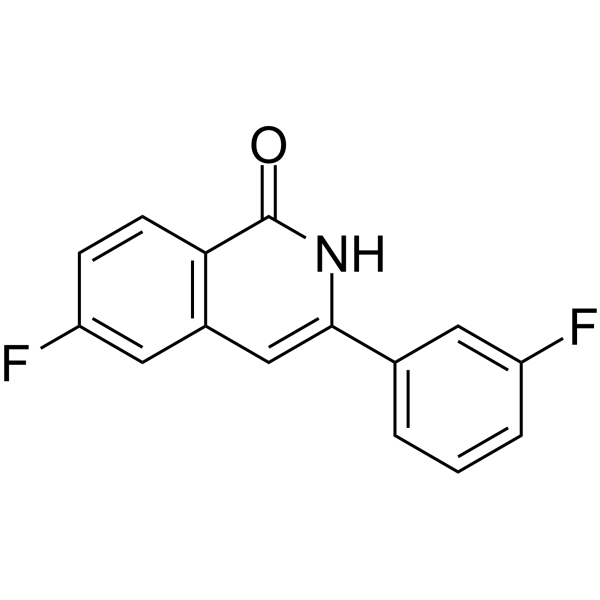
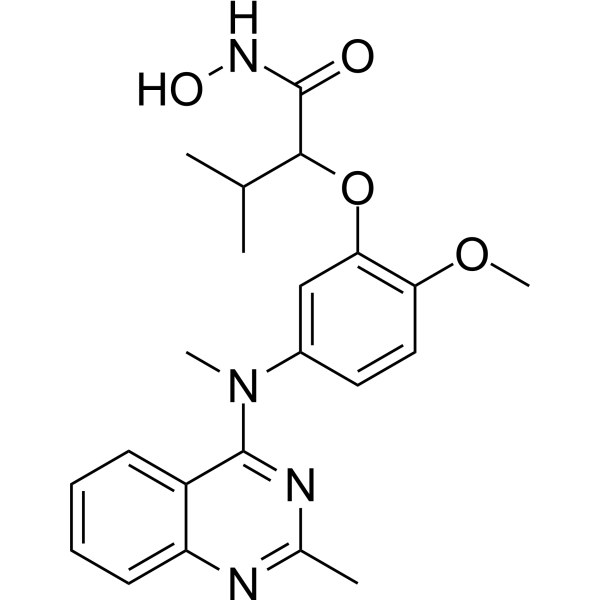
Microtubule destabilizing agent-1 (Compound 12b) acts as a microtubule destabilizing agent (MDA) based on hydroxamic acid, could serve as a potential MDA for further investigation. Microtubule destabilizing agent-1 shows favorable metabolism stability, high bioavailability, and potent antitumor activity .
loading...
    loading...
Cat. No.: HY-122228
CAS No.: 671181-94-5
Target:  

Cellulose Synthase

Research Areas:  

Others

Cestrin is a plant cellulose synthase complex (CESA) trafficking inhibitor. Cestrin selectively blocks the sustained trafficking of cellulose synthase complexes (CSCs) and the interaction between CSC and POM2, which indirectly causes secondary destabilization of cortical microtubules (MTs). Cestrin reduces cellulose content, inhibits anisotropic cell growth, induces cell swelling and decreases cell elongation. Cestrin is applicable to plant cell biology research .
loading...
    loading...
Cat. No.: HY-179696
CAS No.: 2734582-91-1
Research Areas:  

Cancer

destabilizing agent-3 (HY-179695). Microtubule destabilizing agent-3 is a microtubule destabilizing agent. Microtubule destabilizing agent-3 exerts its antimyeloma phenotypes by destabilizing microtubules and promoting mitotic arrest, leading to cell death. Microtubule destabilizing agent-3 induces G2/M phase arrest and caspase-dependent apoptosis .
loading...
    loading...

