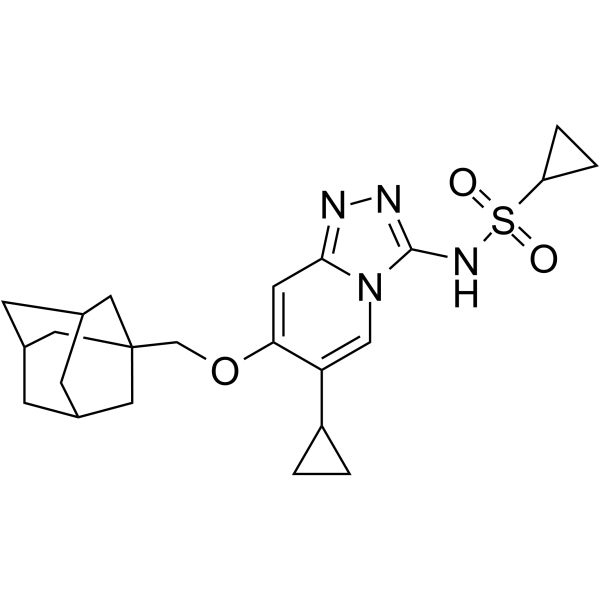
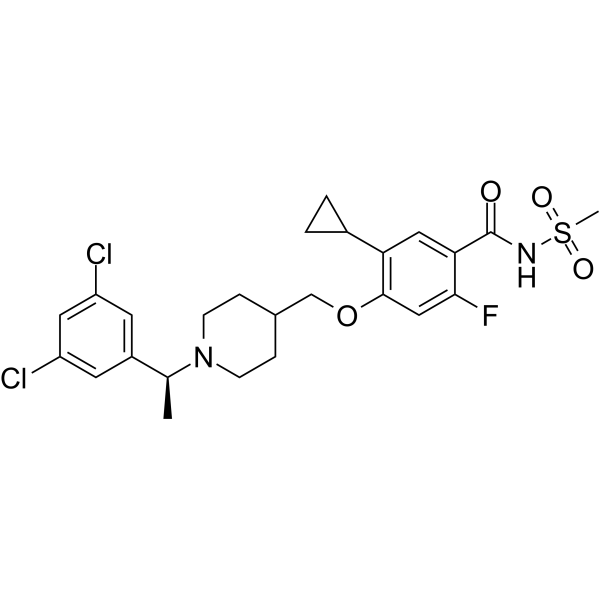
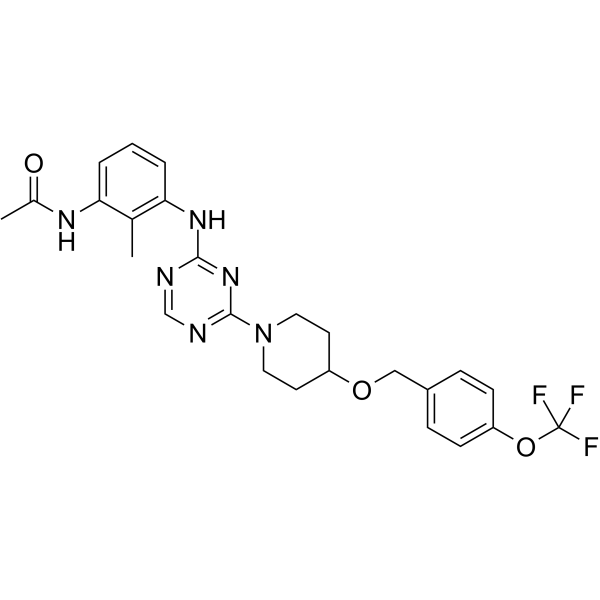
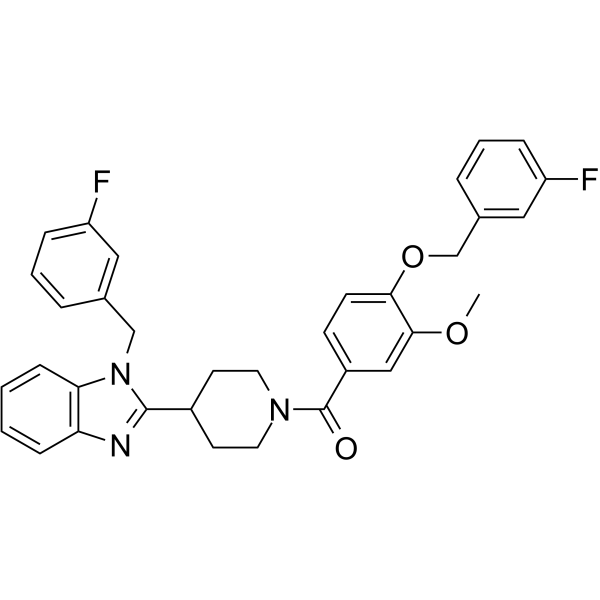
1. Search Result
Search Result
Results for "

Nav1.7 Inhibitor

" in MedChemExpress (MCE) Product Catalog:

80

Inhibitors & Agonists

21

Peptides

4

Natural
Products

Cat. No. Product Name Target Research Areas Chemical Structure
  • HY-N6691
    Veratridine
    4 Publications Verification

    3-Veratroylveracevine

    Sodium Channel Neurological Disease
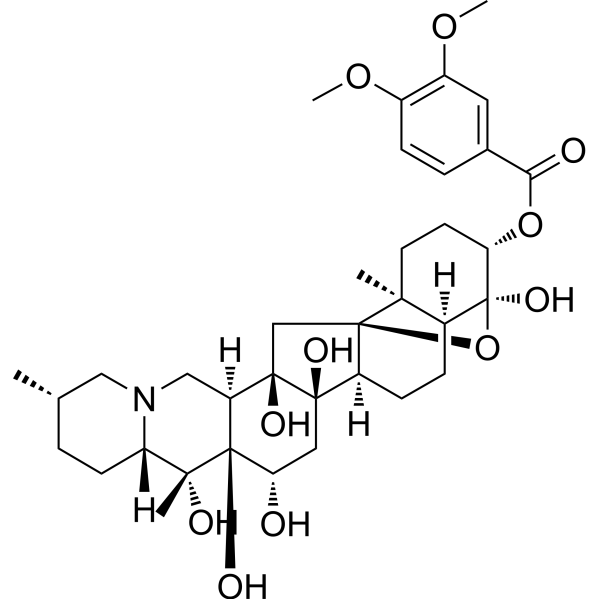
    Veratridine (3-Veratroylveracevine) is a plant neurotoxin, a voltage-gated sodium channels (VGSCs) agonist. Veratridine inhibits the peak current of Nav1.7, with an IC50 of 18.39 µM. Veratridine regulates sodium ion channels mainly by activating sodium ion channels, preventing channel inactivation and increasing sodium ion flow .
    Veratridine
  • HY-125079

    ANP-230

    Sodium Channel Cardiovascular Disease Neurological Disease
    DSP-2230 is the orally active inhibitor for voltage-gated sodium channel that inhibits Nav1.7-, Nav1.8-, and Nav1.9-derived sodium currents with IC50s of 7.1 μM, 11.4 μM and 6.7 μM, respectively. DSP-2230 can be used to improve neuropathic pain .
    DSP-2230
  • HY-12883
    PF 05089771
    4 Publications Verification

    Sodium Channel Neurological Disease
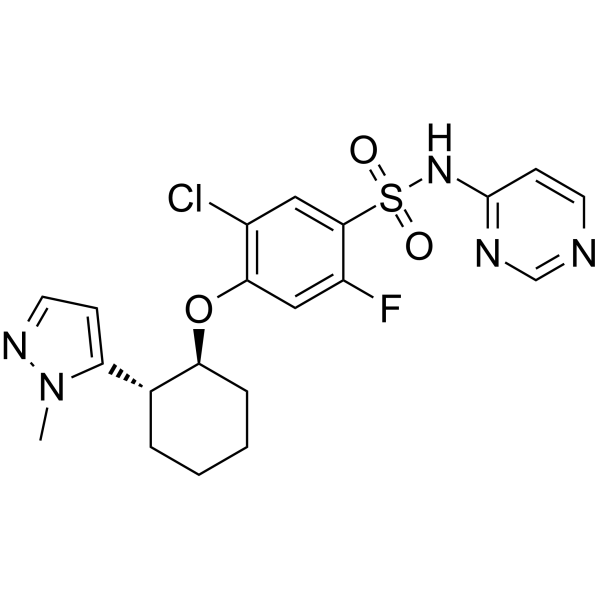
    PF 05089771 is a potent, orally active and selective arylsulfonamide Nav1.7 inhibitor, with IC50 values of 11 nM, 12 nM, 13 nM, 171 nM and 8 nM for hNav1.7, cynNav1.7, dogNav1.7, ratNav1.7, and musNav1.7, respectively. PF 05089771 is under the study for pain and diabetic neuropathy .
    PF 05089771
  • HY-12796A

    Vixotrigine hydrochloride; GSK-1014802 hydrochloride; CNV1014802 hydrochloride

    Sodium Channel Neurological Disease
    Raxatrigine hydrochloride (GSK-1014802 hydrochloride) is a novel small molecule state-dependent sodium channel blocker; Nav1.7 sodium channel inhibitor.
    Raxatrigine hydrochloride
  • HY-12796

    Vixotrigine; GSK-1014802; CNV1014802

    Sodium Channel Neurological Disease
    Raxatrigine (GSK-1014802) is a novel small molecule state-dependent sodium channel blocker; Nav1.7 sodium channel inhibitor.
    Raxatrigine
  • HY-114237

    Sodium Channel Neurological Disease
    GDC-0276 is a potent, selective, reversible and orally active NaV1.7 inhibitor with an IC50 value of 0.4 nM. GDC-0276 is well tolerated and exhibits a good pharmacokinetic profile. GDC-0276 has the potential for the treatment of pain and to address shortcomings of existing pain medications, such as addiction and off-target side effects .
    GDC-0276
  • HY-13985

    Sodium Channel Neurological Disease Inflammation/Immunology
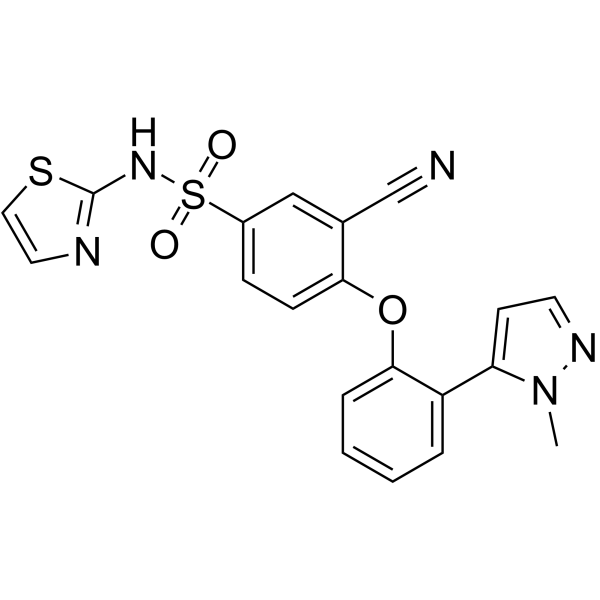
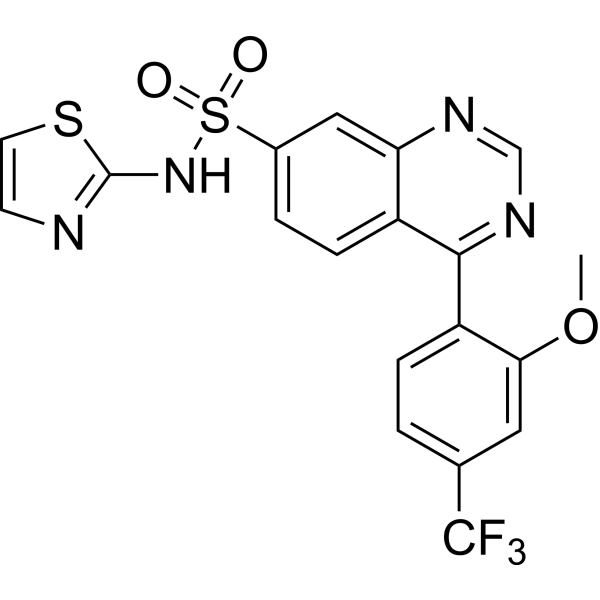
    Nav1.7 inhibitor (compound II), a sulfonamide, is a potent Nav1.7 inhibitor. Nav1.7 inhibitor has the potential for a wide range of disorders, particularly pain, including acute pain, inflammatory pain and/or neuropathic pain .
    Nav1.7 inhibitor
  • HY-16723

    TV 45070; XEN402

    Sodium Channel Neurological Disease Inflammation/Immunology
    Funapide (TV 45070; XEN402) is an orally active inhibitor of voltage-gated sodium channels (VGSC) in the peripheral nervous system with IC50 values ??of 84 nM and 54 nM for Nav1.5 and Nav1.7, respectively. Funapide has analgesic effects .
    Funapide
  • HY-119934

    Sodium Channel Neurological Disease
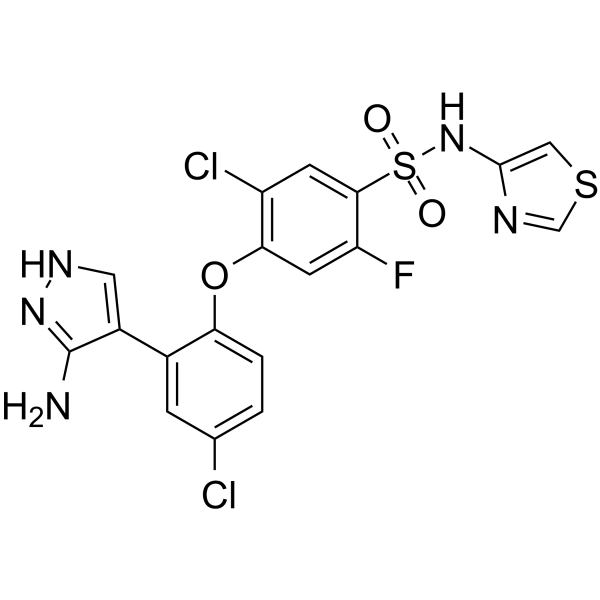
    NaV1.7 inhibitor-1 is an efficacious voltage-gated sodium channel (NaV) 1.7 inhibitor with an IC50 of 0.6 nM for hNaV1.7, exhibits 80-fold selectivity versus hNaV1.5 .
    NaV1.7 inhibitor-1
  • HY-112279

    Sodium Channel Neurological Disease
    GNE-131 is a potent and selective inhibitor of human sodium channel NaV1.7, with an IC50 of 3 nM.
    GNE-131
  • HY-139081

    Sodium Channel Neurological Disease
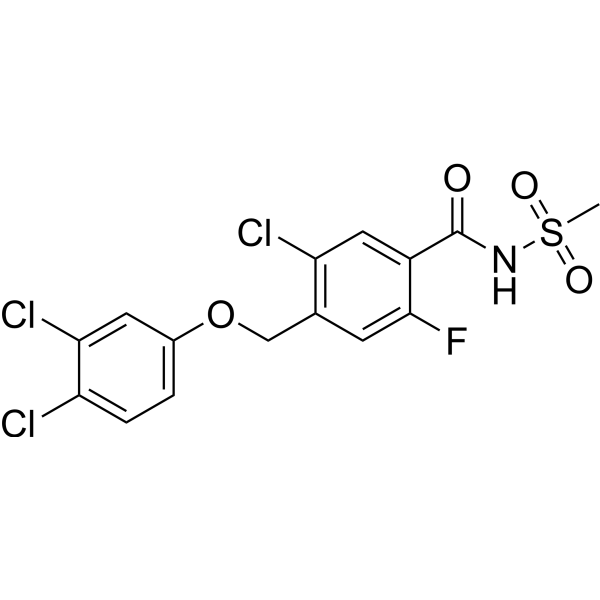
    GDC-0310 is a selective acyl-sulfonamide Nav1.7 inhibitor, with an IC50 of 0.6 nM for hNav1.7 .
    GDC-0310
  • HY-107405

    Sodium Channel Neurological Disease
    TC-N 1752 is a potent and orally active inhibitor of Nav1.7, with IC50s of 0.17 μM, 0.3 μM, 0.4 μM, 1.1 μM and 2.2 μM at hNav1.7, hNav1.3, hNav1.4, hNaV1.5 and rNav1.8, respectively. TC-N 1752 also inhibits tetrodotoxin-sensitive sodium channels. TC-N 1752 shows analgesic efficacy in the Formalin model of pain .
    TC-N 1752
  • HY-12811
    PF-04856264
    1 Publications Verification

    Sodium Channel Neurological Disease
    PF-04856264 is a potent and selective Nav1.7 inhibitor, with IC50s of 28, 131, 19, and 42 nM for human, mouse, cynomolgus monkey and dog Nav1.7, respectively. PF-04856264 has low potency against the rat Nav1.7 channel. PF-04856264 shows analgesic effect .
    PF-04856264
  • HY-145169

    Sodium Channel Neurological Disease
    AZ194 is a first-in-class, orally active inhibitor of CRMP2-Ubc9 interaction and inhibitor of NaV1.7 (IC50=1.2 μM). AZ194 blocks SUMOylation of CRMP2 to selectively reduce the amount of surface-expressed NaV1.7. Antinociceptive effects .
    AZ194
  • HY-19958

    Sodium Channel Neurological Disease
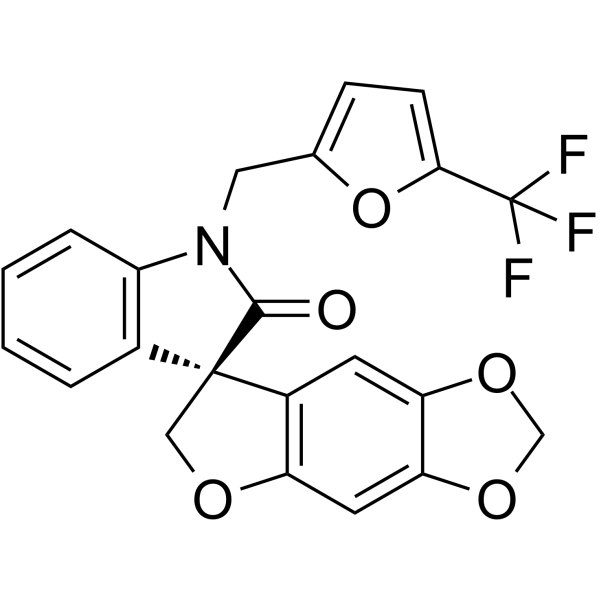
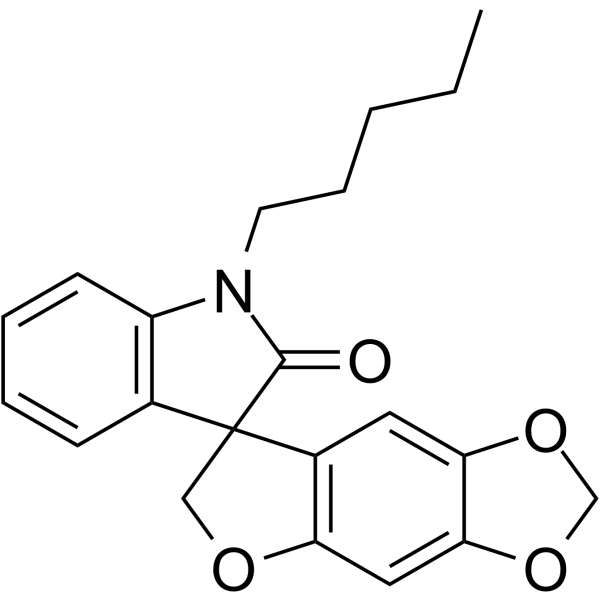
    XEN907 is a potent and spirooxindole blocker of NaV1.7, with an IC50 of 3 nM. XEN907 also inhibits CYP3A4 in a recombinant human enzyme assay. XEN907 can be used for the research of pain .
    XEN907
  • HY-N1847

    Sodium Channel Neurological Disease
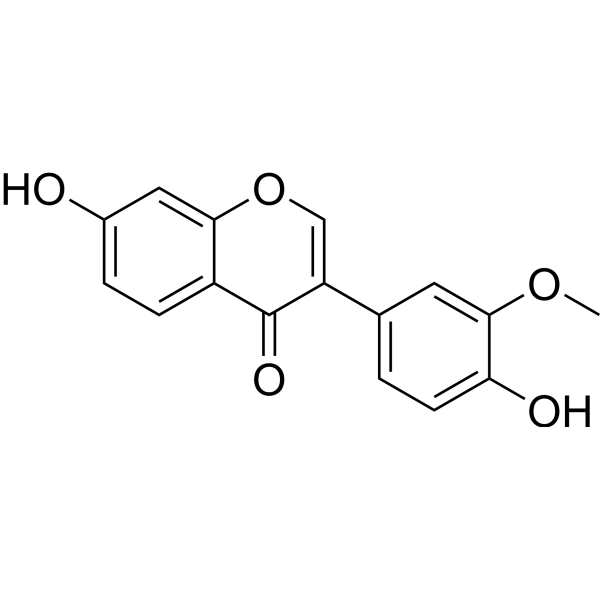
    3'-Methoxydaidzein is a isoflavone and a Sodium Channel inhibitor. 3'-Methoxydaidzein inhibits subtypes NaV1.7, NaV1.8 and NaV1.3 with IC50 of 181 nM, 397 nM, and 505 nM, respectively. 3'-Methoxydaidzein exerts analgesic activity by inhibiting voltage-gated sodium channels .
    3'-Methoxydaidzein
  • HY-131182
    DS-1971a
    1 Publications Verification

    Sodium Channel Neurological Disease
    DS-1971a is a potent, selective, and orally active NaV1.7 inhibitor, with IC50s of 22.8 and 59.4 nM for hNaV1.7 and mNaV1.7, respectively. DS-1971a exerts analgesic effects .
    DS-1971a
  • HY-164795

    Neurotensin Receptor Arrestin iGluR ERK Sodium Channel Neurological Disease
    SBI-810 is a blood-brain barrier-permeable NTSR1 modulator. SBI-810 promotes the recruitment of β-arrestin-2 to NTSR1 and antagonizes NTSR1-mediated Gq activation. SBI-810 inhibits excitatory synaptic transmission, NMDA receptor and extracellular signal-regulated kinase (ERK) signaling in spinal nociceptive neurons, reduces surface expression of Nav1.7 and action potential firing in primary sensory neurons, and attenuates C-fiber responses. SBI-810 effectively alleviates acute and chronic pain in various rodent models through peripheral and central modulation. SBI-810 is applicable to research related to multiple pain disorders .
    SBI-810
  • HY-164795A

    Neurotensin Receptor Arrestin iGluR ERK Sodium Channel Neurological Disease
    SBI-810 hydrochloride is a blood-brain barrier-permeable NTSR1 modulator. SBI-810 hydrochloride promotes the recruitment of β-arrestin-2 to NTSR1 and antagonizes NTSR1-mediated Gq activation. SBI-810 hydrochloride inhibits excitatory synaptic transmission, NMDA receptor and extracellular signal-regulated kinase (ERK) signaling in spinal nociceptive neurons, reduces surface expression of Nav1.7 and action potential firing in primary sensory neurons, and attenuates C-fiber responses. SBI-810 hydrochloride effectively alleviates acute and chronic pain in various rodent models through peripheral and central modulation. SBI-810 hydrochloride is applicable to research related to multiple pain disorders .
    SBI-810 hydrochloride
  • HY-157802

    Sodium Channel Neurological Disease
    LTGO-33 is a potent and selective voltage-gated sodium channel NaV1.8 inhibitor. LTGO-33 inhibits NaV1.8 in the nM potency range and exhibits over 600-fold selectivity against human NaV1.1-NaV1.7 and NaV1.9. LTGO-33 exhibits state-independent inhibition with similar potencies on channels in the closed and inactivated conformations. LTGO-33 inhibits native TTX-R NaV1.8 currents in non-human primate and human DRG neurons, where it reduces action potential firing. LTGO-33 can be used for pain disorders research .
    LTGO-33
  • HY-101789

    Sodium Channel Neurological Disease
    Nav1.7-IN-3 is a selective, orally bioavailable voltage-gated sodium channel Nav1.7 inhibitor with an IC50 of 8 nM. Pain relief. Limited CNS penetration .
    Nav1.7-IN-3
  • HY-156596

    Sodium Channel Neurological Disease
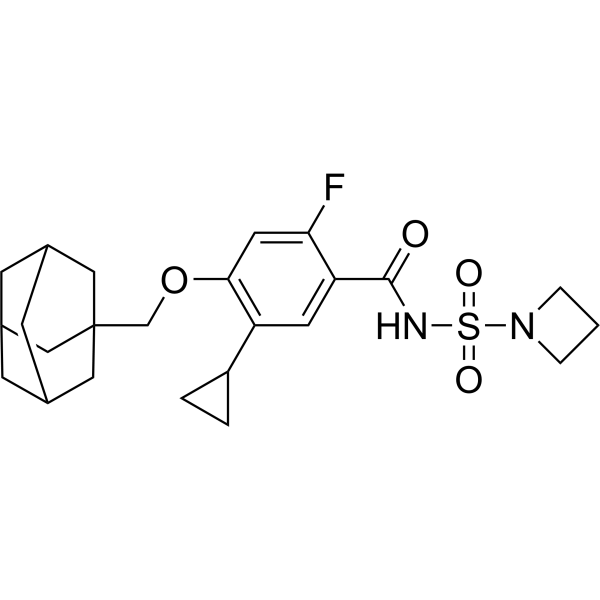
    Aneratrigine is a selective Nav1.7 inhibitor with an IC50 of 19 nM. Aneratrigine is applicable for pain-related research .
    Aneratrigine
  • HY-P1221A

    Sodium Channel Neurological Disease
    ProTx II TFA is a selective blocker of Nav1.7 sodium channels with an IC50 of 0.3 nM, and is at least 100-fold selective for Nav1.7 over other sodium channel subtypes. ProTx-II inhibits sodium channels by decreasing channel conductance and shifting activation to more positive potentials and blocks action potential propagation in nociceptors .
    ProTx II TFA
  • HY-131870

    Sodium Channel Inflammation/Immunology
    GX-201 is a selective NaV1.7 inhibitor, with an IC50 of <3.2 nM for hNaV1.7 .
    GX-201
  • HY-122001

    Sodium Channel Neurological Disease
    PF-05186462 is a potent and selective inhibitor of human Nav1.7 voltage-dependent sodium channel, with an IC50 of 21 nM. PF-05186462 shows significant selectivity for Nav1.7 versus other sodium channels (Nav 1.1, 1.2, 1.3, 1.4, 1.5, 1.6, and 1.8). PF-05186462 can be used for the research of acute or chronic pain .
    PF-05186462
  • HY-123824

    Sodium Channel Neurological Disease
    GNE-0439 is a novel Nav1.7-selective inhibitor with IC50 of 0.34 uM and inhibits Nav1.5 with an IC50 of 38.3 μM. GNE-0439 inhibits mutant N1742K channels (IC50=0.37 uM) in membrane potential assays. GNE-0439 possesses a carboxylic acid group, binds outside of the channel pore, and is unique compared with known selective VSD4 binders .
    GNE-0439
  • HY-103623

    Sodium Channel Neurological Disease
    PF-05241328 is a potent and selective inhibitor of human Nav1.7 voltage-dependent sodium channels (Nav1.7), with an IC50 of 31 nM.
    PF-05241328
  • HY-100727
    AM-2099
    1 Publications Verification

    Sodium Channel Neurological Disease
    AM-2099 is a potent and selective inhibitor of voltage-gated sodium channel Nav1.7 with an IC50 of 0.16 μM for human Nav1.7.
    AM-2099
  • HY-178494

    Sodium Channel Potassium Channel Neurological Disease
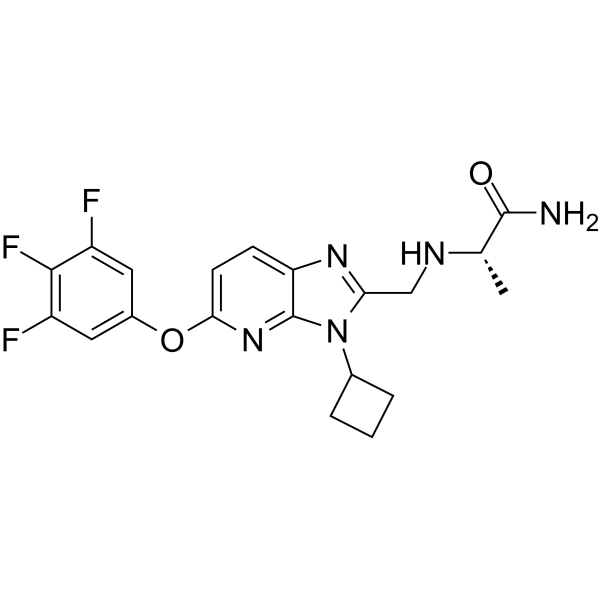
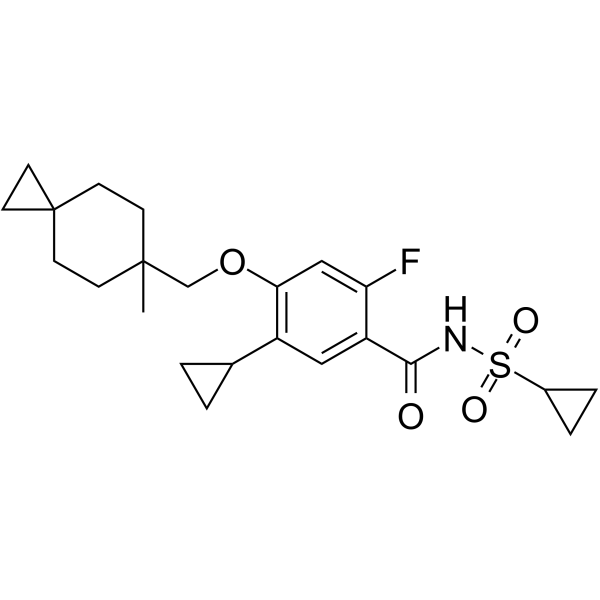
    Nav1.7-IN-19 is a potent, selective and orally active Nav1.7 inhibitor with an IC50 of 0.49 μM. Nav1.7-IN-19 shows high selectivity for Nav1.7, with selectivities of 312-fold and 662-fold against Nav1.1 and Nav1.5 in the inactivated state. Nav1.7-IN-19 exhibits weak inhibition on hERG potassium channels. Nav1.7-IN-19 exhibits analgesic effect and can be used for the research of neurological disease .
    Nav1.7-IN-19
  • HY-P1073

    Calcium Channel Potassium Channel Sodium Channel TRP Channel Neurological Disease Cancer
    ProTx-I is a toxin derived from Thrixopelma pruriens and a peptide inhibitor targeting TTX-resistant sodium channels. ProTx-I interacts with voltage sensors of multiple domains such as NaV1.7, reduces neuronal excitability through allosteric modulation of channel gating and alteration of voltage dependence. The IC50 values of ProTx-I against human NaV1.7, NaV1.2, NaV1.6, and NaV1.5 are 95 nM, 104 nM, 21 nM, and 358 nM, respectively; ProTx-I also potently inhibits Ba 2+ currents of hCav3.1, while its inhibitory potency against hCav3.2 is approximately 160-fold lower. ProTx-I is applicable to the research of chronic pain .
    ProTx-I
  • HY-19366

    Sodium Channel Neurological Disease
    Nav1.7-IN-2 is an inhibitor of voltage-gated sodium channels (Nav), in particular Nav 1.7, with IC50 of 80 nM.
    Nav1.7-IN-2
  • HY-P5786

    HpTx1

    Potassium Channel Sodium Channel Neurological Disease
    Heteropodatoxin-1 (HpTx1), a spider peptide toxin, is a Kv4.2 current inhibitor. Heteropodatoxin-1 also inhibits Nav1.7 and activates Nav1.9 but does not affect Nav1.8 .
    Heteropodatoxin-1
  • HY-P1221

    Sodium Channel Neurological Disease
    ProTx II is a selective blocker of Nav1.7 sodium channels with an IC50 of 0.3 nM, and is at least 100-fold selective for Nav1.7 over other sodium channel subtypes. ProTx-II inhibits sodium channels by decreasing channel conductance and shifting activation to more positive potentials and blocks action potential propagation in nociceptors .
    ProTx II
  • HY-118952

    Sodium Channel Neurological Disease
    PF-06456384 is a highly potent and selective NaV1.7 inhibitor with an IC50 of 0.01 nM. PF-06456384 has the potential for formalin pain model research .
    PF-06456384
  • HY-P1220A

    Sodium Channel Neurological Disease
    Huwentoxin-IV TFA is a potent and selective sodium channel blocker, inhibits neuronal Nav1.7, Nav1.2, Nav1.3 and Nav1.4 with IC50s of 26, 150, 338 and 400 nM, respectively. Huwentoxin-IV TFA preferentially blocks peripheral nerve subtype Nav1.7 by binding neurotoxin receptor site 4. Huwentoxin-IV TFA has analgesic effects on animal models of inflammatory and neuropathic pain .
    Huwentoxin-IV TFA
  • HY-12883A

    Sodium Channel Neurological Disease
    PF-05198007 is a potent, orally active and selective arylsulfonamide Nav1.7 inhibitor. PF-05198007 is a compound with a similar pharmacodynamic profile to PF-05089771 .
    PF-05198007
  • HY-16723A

    (R)-TV 45070; (R)-XEN402

    Sodium Channel Neurological Disease Inflammation/Immunology
    (R)-Funapide ((R)-TV 45070) is the less active R-enantiomer of Funapide. Funapide is a potent inhibitor of the sodium channel Nav1.7, Nav1.8 and other Nav channels expressed in the peripheral nervous system. Fornabil is an orally effective analgesic agent .
    (R)-Funapide
  • HY-P10234A
    Poneratoxin acetate
    3 Publications Verification

    Sodium Channel Neurological Disease
    Poneratoxin acetate is the acetate salt form of Poneratoxin (HY-P10234). Poneratoxin acetate is the modulator for voltage-gated sodium channel (NaV, EC50 for NaV1.6 and NaV1.7 is 97 nM and 2.3 µM), that lowers the voltage threshold for activation and inhibits the inactivation of channels, enhances the excitability of neurons, and leads to the transmission of pain signals .
    Poneratoxin acetate
  • HY-123414

    PF-05196233

    Sodium Channel Neurological Disease
    GX-936 (PF-05196233), a potent and Nav1.7-subtype selective inhibitor, binds to the activated state of voltage-sensor domain IV (VSD4) .
    GX-936
  • HY-P5809

    μ-TrTx-Pe1b

    Sodium Channel Neurological Disease
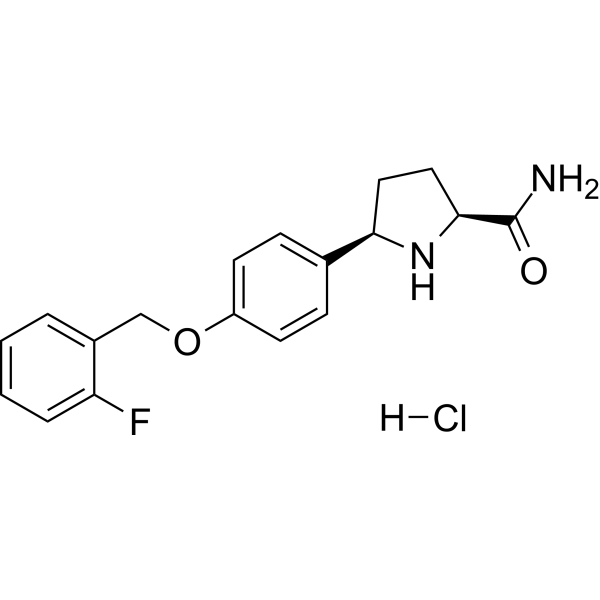
    Pe1b (μ-TrTx-Pe1b) is a selective Nav1.7 inhibitor with an IC50 of 167 nM .
    Pe1b
  • HY-P5160A

    PhlTx1 TFA

    Sodium Channel Neurological Disease
    Phlotoxin-1 (PhlTx1) is a 34-amino acid and 3-disulfide bridge peptide. Phlotoxin-1 can be isolated from Phlogiellus genus spider. Phlotoxin-1 is an antinociceptive agent by inhibiting NaV1.7 channel .
    Phlotoxin-1 TFA
  • HY-P5781

    Sodium Channel Neurological Disease
    δ-Theraphotoxin-Hm1b is a 42-amino acid peptide isolated from Togo starburst tarantula (Heteroscodra maculata) venom. δ-Theraphotoxin-Hm1b selectively inhibits inactivation of NaV1.1 but have no effect on NaV1.7 .
    δ-Theraphotoxin-Hm1b
  • HY-149994

    Sodium Channel Neurological Disease
    DS43260857 is a potentNaV1.7inhibitor, which has a high inhibitory effect on both human and mouse NaV1.7. The IC50 values of DS43260857 for hNaV1.1, hNaV1.5, hNaV1.7, mNaV1.7 are 6.6, 14, 0.015 and 0.061 μM, respectively .
    DS43260857
  • HY-126291

    Sodium Channel Neurological Disease
    GNE-616 is a highly potent, metabolically stable, orally bioavailable, and subtype selective Nav1.7 inhibitor (Ki of 0.79 nM and Kd of 0.38 nM for hNav1.7) for the treatment of chronic pain. GNE-616 shows >1000 nM Kd and >2500-fold selectivity over hNav1.1, hNav1.3, hNav1.4, and hNav1.5. Selectivity over hNav1.2 and hNav1.6 is more modest at 31- and 73-fold, respectively .
    GNE-616
  • HY-P11045

    Sodium Channel Neurological Disease
    JNJ63955918 is a potent, highly selective, blocked-state Nav1.7 blocking peptide with an IC50 of 8.0 nM. JNJ63955918 can be used in pain research .
    JNJ63955918
  • HY-171778

    Sodium Channel Neurological Disease Inflammation/Immunology
    QLS-81 is a Nav1.7 channel inhibitor (IC50: 1.5 μM). QLS-81 has significant analgesic activity and can relieve neuropathic and inflammatory pain. QLS-81 exerts frequency-dependent inhibitory effects by inhibiting the inactivated state of Nav1.7 channels. QLS-81 can be used in the study of chronic pain .
    QLS-81
  • HY-118048

    Sodium Channel Neurological Disease
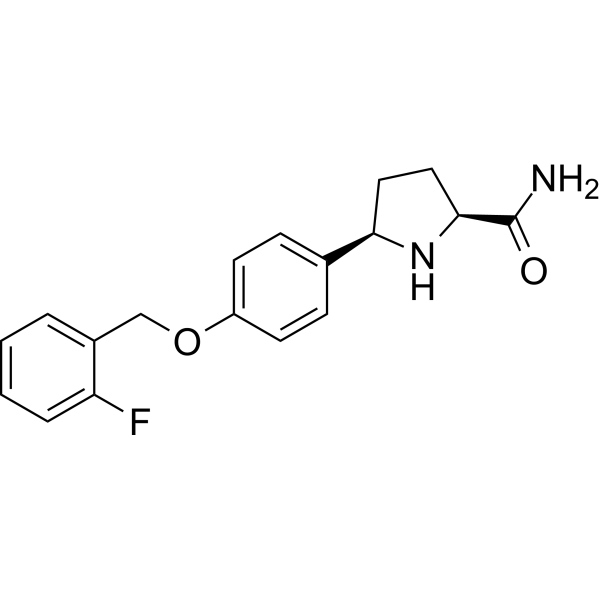
    NAV 26 (Compound 26) is a selective NaV1.7 inhibitor with an IC50 of 0.37 μM. NAV 26 is applicable for pain-related research .
    NAV 26
  • HY-P1220

    Sodium Channel Neurological Disease
    Huwentoxin-IV is a potent and selective sodium channel blocker, inhibits neuronal Nav1.7, Nav1.2, Nav1.3 and Nav1.4 with IC50s of 26, 150, 338 and 400 nM, respectively. Huwentoxin-IV preferentially blocks peripheral nerve subtype Nav1.7 by binding neurotoxin receptor site 4. Huwentoxin-IV has analgesic effects on animal models of inflammatory and neuropathic pain .
    Huwentoxin-IV
  • HY-P10234

    Sodium Channel Neurological Disease
    Poneratoxin is the modulator for voltage-gated sodium channel (NaV, EC50 for NaV1.6 and NaV1.7 is 97 nM and 2.3 µM), that lowers the voltage threshold for activation and inhibits the inactivation of channels, enhances the excitability of neurons, and leads to the transmission of pain signals .
    Poneratoxin
  • HY-135495

    Sodium Channel Histamine Receptor Inflammation/Immunology
    AM-0466 is a sodium channel inhibitor with nanomolar levels of NaV1.7 inhibitory activity. AM-0466 exhibits potent pharmacodynamic activity in a NaV1.7-dependent histamine-induced itch model. AM-0466 also showed significant analgesic effects in capsaicin-induced pain models. After optimizing its pharmacokinetic properties, AM-0466 was advanced into in vivo targeting and efficacy models for testing .
    AM-0466

Inquiry Online

Your information is safe with us. * Required Fields.

Salutation


Country or Region *

Applicant Name *


Organization Name *

Department *


Email Address *


Product Name *

Cat. No.


Requested quantity *

Phone Number *


Remarks

Inquiry Online

Inquiry Information

Product Name:
Cat. No.:
Quantity:
MCE Japan Authorized Agent:

