Search Result
Results for "
Neisseria
" in MedChemExpress (MCE) Product Catalog:
2
Biochemical Assay Reagents
5
Isotope-Labeled Compounds
| Cat. No. |
Product Name |
Target |
Research Areas |
Chemical Structure |
-
- HY-B0782
-
-
-
- HY-B1005
-
|
8-Quinolinol
|
Environmental Pollutants
Antibiotic
Bacterial
|
Cancer
|
|
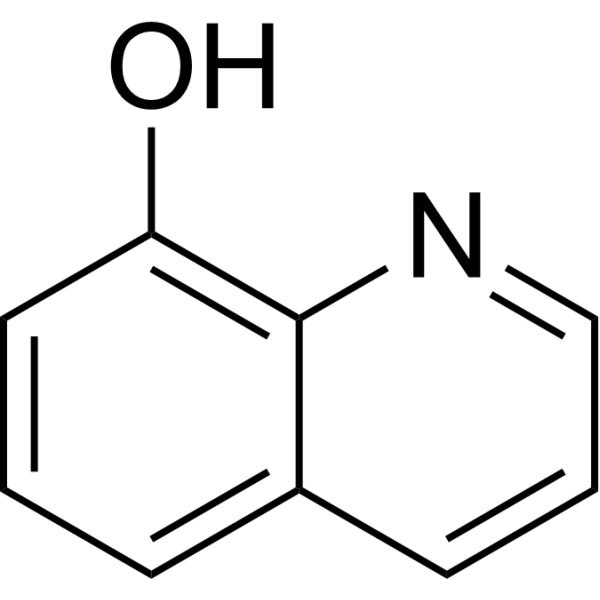
8-Hydroxyquinoline (8-Quinolinol) is a lipophilic metal chelator that can be used as a fungicide .8-Hydroxyquinoline shows the MIC range of 27.56-55.11 μM (4-8 μg/mL) against the clinical isolates of Neisseria gonorrhoeae. 8-Hydroxyquinoline can bind to copper form complexes and transport copper into cells. 8-Hydroxyquinoline increases in the number of micronucleated polychromatic erythrocytes and can also make hair depigmented in mice .
|
-
-
- HY-W025784
-
|
Sodium tetraphenylborate; Tetraphenylboron sodium
|
Bacterial
|
Infection
|
|
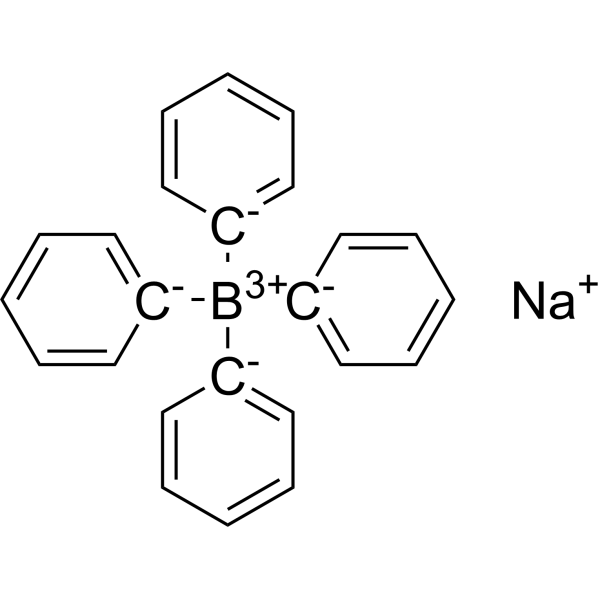
Kalibor (Sodium tetraphenylborate; Tetraphenylboron sodium) is a boron-based salt and antibacterial agent. Kalibor exerts activity against Neisseria meningitidis and Neisseria gonorrhoeae. Kalibor facilitates boron uptake by Neisseria meningitidis cells. Kalibor reduces bacterial burden in a mouse model of Neisseria meningitidis bacteremia. Kalibor can be used for the research of bacterial infection, such as meningococcal bacteremia .
|
-
-
- HY-B0782A
-
-
-
- HY-A0111
-
|
Ro 15-8074; Deacetoxycefotaxime
|
Antibiotic
Bacterial
Penicillin-binding protein (PBP)
Drug Metabolite
|
Infection
|
|
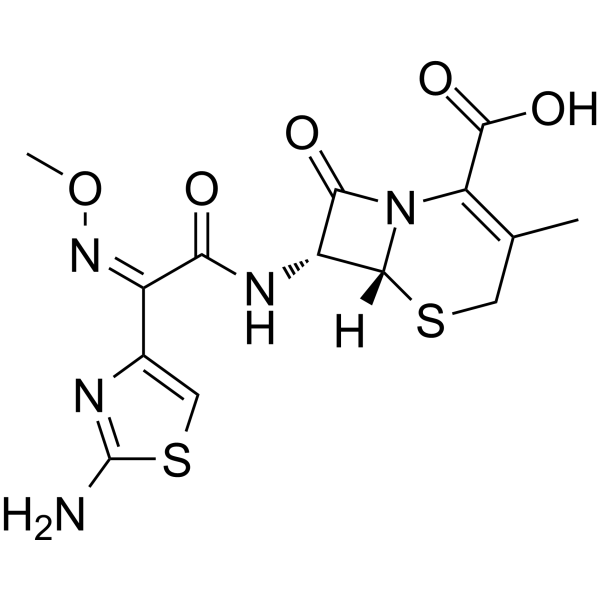
Cefetamet (Ro 15-8074) is a cephalosporin antibiotic and the active metabolite of Cefetamet pivoxil (HY-B1894A). Cefetamet binds to bacterial penicillin-binding protein (PBP) (IC50 for PBP3 in Escherichia coli W3110 is 2.5 μg/mL). Cefetamet has significant activity against Gram-negative bacteria such as Enterobacteriaceae, Neisseria species, and Haemophilus influenzae, as well as Gram-positive bacteria such as Streptococcus. Cefetamet kills and lyses Treponema pallidum. Cefetamet can be used in the research of respiratory tract, urinary tract, ear, nose and throat infections, and syphilis .
|
-
-
- HY-N7101
-
|
U-76,252; CS-807
|
Bacterial
Antibiotic
Penicillin-binding protein (PBP)
|
Infection
|
|
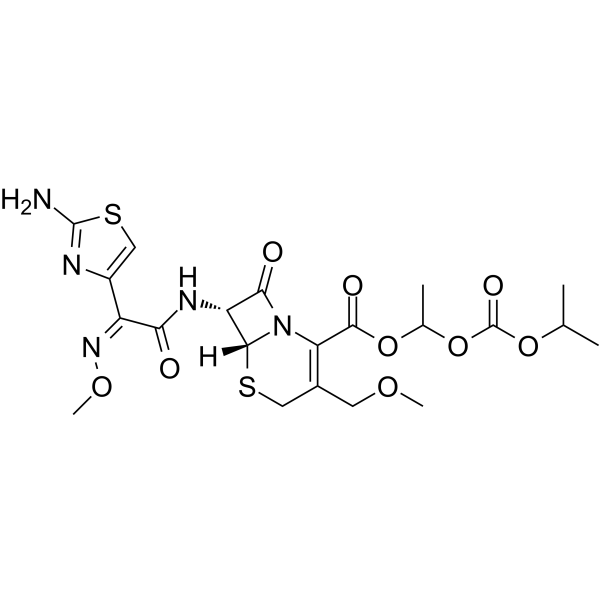
Cefpodoxime Proxetil is an orally active broad spectrum third-generation cephalosporin with potent antibacterial activity against both Gram-positive and Gram-negative bacteria including staphylococci, streptococci, Haemophilus influenzae, Neisseria gonorrhoeae, Escherichia coli, Klebsiella pnuemoniae, Citrobacter spp, and Proteus spp. Cefpodoxime Proxetil binds to penicillin binding proteins (PBPs), which inhibits peptidoglycan synthesis, finally results in interfering bacterial cell wall biosynthesis. Cefpodoxime Proxetil can be used against skin structure infections, acute otitis media, pharyngitis, tonsillitis, upper respiratory tract infection, urinary tract infections and sexually transmitted diseases .
|
-
-
- HY-14956
-
|
TG-873870
|
Antibiotic
Bacterial
|
Infection
Inflammation/Immunology
|
|
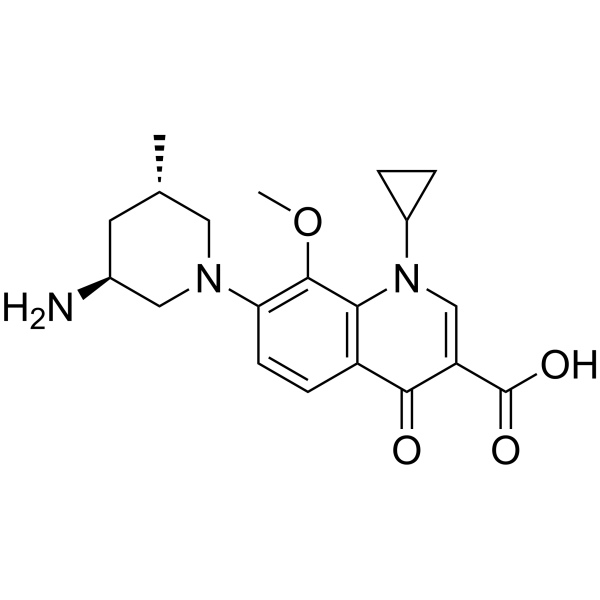
Nemonoxacin (TG-873870) is an orally active and potent broad-spectrum antibiotic. Nemonoxacin shows good inhibitory activity against different species of staphylococci, streptococci, and enterococci, Neisseria gonorrhoeae, and Haemophilus influenza. Nemonoxacin can be used in the study of bacterial infections and community-acquired pneumonia .
|
-
-
- HY-E70046
-
|
|
Endogenous Metabolite
|
Metabolic Disease
|
|
beta-1,4-Galactosyltransferase (LgtB) (EC 2.4.1.90) (B4GALT1 (LgtB)) is often used in biochemical studies. beta-1,4-Galactosyltransferase (LgtB) catalyzes the reaction involving UDP-galactose and N-acetylglucosamine for the production of galactose beta-1,4-N-acetylglucosamine .
|
-
-
- HY-107833
-
|
|
Antibiotic
Bacterial
|
Infection
|
|
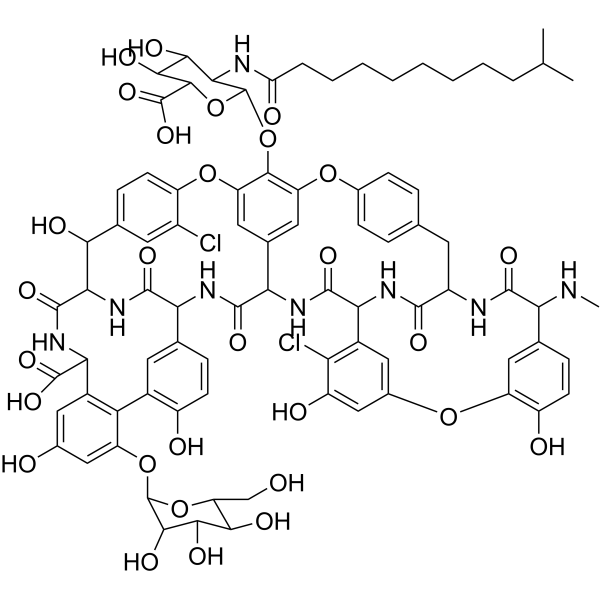
A40926 is a glycopeptide antibiotic that targets the bacterial cell wall peptidoglycan precursor D-alanyl-D-alanine (D-Ala-D-Ala). A40926 irreversibly inhibits cell wall synthesis by competitively binding to this target, and has high bactericidal activity against Gram-positive bacteria (such as Staphylococcus, Streptococcus) and Neisseria gonorrhoeae, with MIC=0.06-2 μg/mL, and is also effective against penicillin-resistant strains. A40926 blocks peptidoglycan cross-linking, destroys cell wall integrity, and causes bacterial lysis and death. A40926 has a fat-soluble fatty acid structure, which can increase serum concentrations and prolong the duration of action (e.g., the terminal half-life in rats is 61.22 h) .
|
-
-
- HY-156905
-
|
|
Biochemical Assay Reagents
|
Others
|
|
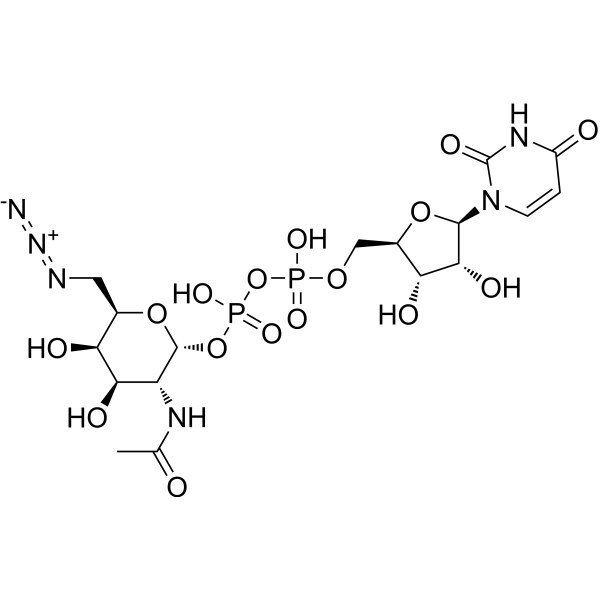
6-Azido-N-acetylgalactosamine-UDP (Compound 5) is a 6-azido-modified nucleotide sugar. It acts as an active sugar donor in lactose glycosylation catalyzed by beta-1,3-N-Acetylhexaminyltransferase (LgtA). Azido-modified nucleotide sugars are strategically used in copper-free click chemistry to modify the N-glycan core structure of IgG .
|
-
-
- HY-175597
-
|
|
ClpP
|
Infection
|
|
ClpP modulator-1 (Compound BC8a), a peptidomimetic, is an allosteric ClpP modulator. ClpP modulator-1 is a ClpP activator at low concentration with EC50s of 0.35 and 0.58 μM for for Neisseria meningitides ClpP (NmClpP) and Escherichia coli ClpP (EcClpP), resepectively. ClpP modulator-1 also inhibits peptidase activity at high concentration by competitively inhibiting substrate protein (LY-AMC) binding to ClpP C sites. ClpP modulator-1 has antibacterial activity. ClpP modulator-1 can be used for bacterial infections research .
|
-
-
- HY-175595
-
|
ADEP26
|
ClpP
Bacterial
|
Infection
|
|
ADEP-14 (ADEP26) is a ClpP activator. ADEP-14 exhibits antibacterial activity against Gram-negative and Gram-positive bacteria. ADEP-14 can be used in studies related to bacterial infections .
|
-
-
- HY-19773
-
|
|
Beta-lactamase
Bacterial
|
Infection
|
|
β-Lactamase-IN-1 is an inhibitor of β-Lactamase extracted from patent WO2016027249A1, page 77. β-Lactamase-IN-1 can be used to prepare of tricyclic nitrogen containing compound. β-Lactamase-IN-1 can be used for the research of neisseria gonorrhea infection .
|
-
-
- HY-145158
-
|
|
Bacterial
Antibiotic
Drug Derivative
Beta-lactamase
|
Infection
|
|
Temocillin is a derivative of Ticarcillin (HY-100577) and a β-lactamase-resistant Antibiotic. Temocillin blocks water molecules from entering the active sites of Ambler class A and class C serine-dependent β-lactamases, resisting hydrolysis by these enzymes. Temocillin exhibits antibacterial activity against Enterobacteriaceae and Neisseria gonorrhoeae. Temocillin shows antagonistic effects against some isolated strains when used in combination with Ticarcillin (HY-100577) or Cefazolin (HY-B1892). Temocillin can be used in research related to sepsis, urinary tract infections, and lower respiratory tract infections .
|
-
-
- HY-U00380
-
|
|
Antibiotic
Beta-lactamase
Bacterial
|
Infection
|
|
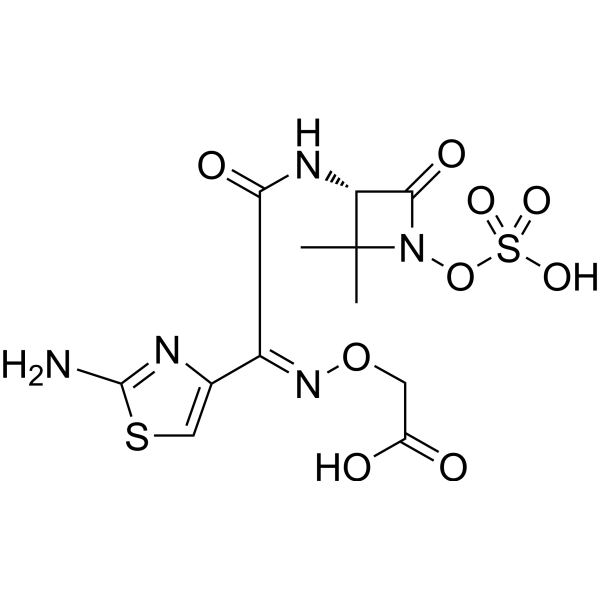
Tigemonam is an orally active monobactam antibiotic with a Ki of 0.86 μM against Enterobacter cloacae P99 β-lactamase and 50.8 μM against Escherichia coli TEM-1 β-lactamase. Tigemonam binds to penicillin-binding proteins 1a, 3, and 4, inhibits bacterial cell wall synthesis, and exhibits bactericidal activity against aerobic gram-negative bacteria including Enterobacteriaceae, Haemophilus influenzae, and Neisseria gonorrhoeae. Tigemonam resists hydrolysis by multiple β-lactamase enzymes, reduces bacterial load in systemic, pyelonephritic, lung, and thigh muscle infections in rodents, and shows minimal difference between minimum inhibitory and bactericidal concentrations. Tigemonam can be used for the research of gram-negative bacterial infections, acute pyelonephritis, lung infection, and thigh muscle infection .
|
-
-
- HY-14956S
-
|
TG-873870-d3
|
Bacterial
|
Inflammation/Immunology
|
|
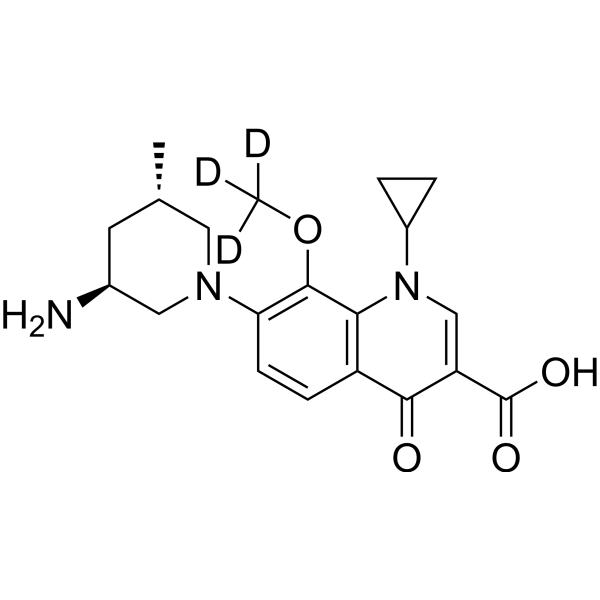
Nemonoxacin-d3 is the deuterium labeled Nemonoxacin. Nemonoxacin (TG-873870) is an orally active and potent broad-spectrum antibiotic. Nemonoxacin shows good inhibitory activity against different species of staphylococci, streptococci, and enterococci, Neisseria gonorrhoeae, and Haemophilus influenza. Nemonoxacin can be used in the study of bacterial infections and community-acquired pneumonia .
|
-
-
- HY-175596
-
|
|
ClpP
Bacterial
|
Infection
|
|
ACP1-01 is a bacterial ClpP activator with EC50s of 3.4 and 2.6 μM for Neisseria meningitides ClpP (NmClpP) and Escherichia coli ClpP (EcClpP). ACP1-01 noncovalently binds to ClpP C sites and activates the protease. ACP1-01 has antibacterial activity. ACP1-01 can be used for bacterial infections research .
|
-
-
- HY-W354203
-
|
1,2-Diisonicotinoylhydrazine
|
MOFs
Reactive Oxygen Species (ROS)
Bacterial
|
Infection
|
|
N'-Isonicotinoylisonicotinohydrazide (Compound 7, 1,2-Diisonicotinoylhydrazine) is a competitive inhibitor (IC50=5-30 μM) of bacterial heme oxygenase (HO). N'-Isonicotinoylisonicotinohydrazide inhibits iron release and bacterial iron acquisition. N'-Isonicotinoylisonicotinohydrazide exhibits selective activity against HO enzymes from Pseudomonas aeruginosa and Neisseria meningitidis. N'-Isonicotinoylisonicotinohydrazide is promising for research of multidrug-resistant Gram-negative bacterial infections .
|
-
-
- HY-B1005R
-
|
8-Quinolinol (Standard)
|
Reference Standards
Bacterial
Antibiotic
|
Cancer
|
|
8-Hydroxyquinoline (Standard) is the analytical standard of 8-Hydroxyquinoline. This product is intended for research and analytical applications. 8-Hydroxyquinoline (8-Quinolinol) is a lipophilic metal chelator that can be used as a fungicide .8-Hydroxyquinoline shows the MIC range of 27.56-55.11 μM (4-8 μg/mL) against the clinical isolates of Neisseria gonorrhoeae. 8-Hydroxyquinoline can bind to copper form complexes and transport copper into cells. 8-Hydroxyquinoline increases in the number of micronucleated polychromatic erythrocytes and can also make hair depigmented in mice .
|
-
-
- HY-W743473
-
|
Ro 15-8074-d3; Deacetoxycefotaxime-d3
|
Isotope-Labeled Compounds
Bacterial
Antibiotic
Penicillin-binding protein (PBP)
Drug Metabolite
|
Infection
|
|
Cefetamet-d3 (Ro 15-8074-d3; Deacetoxycefotaxime-d3) is the deuterium labeled Cefetamet (HY-A0111). Cefetamet (Ro 15-8074) is a cephalosporin antibiotic and the active metabolite of Cefetamet pivoxil (HY-B1894A). Cefetamet binds to bacterial penicillin-binding protein (PBP) (IC50 for PBP3 in Escherichia coli W3110 is 2.5 μg/mL). Cefetamet has significant activity against Gram-negative bacteria such as Enterobacteriaceae, Neisseria species, and Haemophilus influenzae, as well as Gram-positive bacteria such as Streptococcus. Cefetamet kills and lyses Treponema pallidum. Cefetamet can be used in the research of respiratory tract, urinary tract, ear, nose and throat infections, and syphilis .
|
-
-
- HY-121195
-
|
PC-904
|
Bacterial
|
Infection
|
|
Apalcillin (PC-904) in combination with Ro 48-1220, a penam sulfone β-lactamase inhibitor, demonstrated broad-spectrum activity against gram-negative aerobic and anaerobic bacteria, excluding Klebsiella oxytoca. It exhibited potent activity against β-lactamase-producing Moraxella catarrhalis, Haemophilus influenzae, and Neisseria gonorrhoeae, with effective MICs (11 μg/mL). The combination also inhibited Pseudomonas aeruginosa, Stenotrophomonas maltophilia, and Acinetobacter species at low MICs (0.25 to 4 μg/mL). However, its efficacy against oxacillin-resistant staphylococci and certain gram-positive organisms was limited. Apalcillin/Ro 48-1220 showed comparable efficacy to piperacillin/tazobactam against some extended-spectrum β-lactamase-producing Escherichia coli but was less effective against SHV-type β-lactamases .
|
-
-
- HY-149861
-
|
|
Bacterial
|
Infection
|
|
Mip-IN-1(S,S-28i)is a new rapamycin-derived macrophage infectivity potentiator (Mip) inhibitor. Mip-IN-1 displays strong anti-enzymatic activity against the Mip proteins of Neisseria meningitidis and Neisseria gonorrhoeae and substantially improved the ability of macrophages to kill the bacteria .
|
-
-
- HY-W590539
-
|
|
Bacterial
|
Infection
|
|
ω-azido-C6 Ceramide reduces the membrane potential, and exhibits antibacterial activity against Neisseria, with MIC of 2 µg/ml for N. meningitidis MC58 and N. gonorrhoeae FA1090 .
|
-
-
- HY-123216
-
|
S-1090 free base
|
Antibiotic
Bacterial
|
Infection
|
|
Cefmatilen (S-1090) is an orally-active cephalosporin antibiotic that shows high activity against a variety of Gram-positive and Gram-negative bacteria, including Streptococcus pyogenes and Neisseria gonorrhoeae .
|
-
-
- HY-135531
-
|
|
Antibiotic
Bacterial
|
Infection
|
|
Cefuzonam is an antibiotic, which exhibits antibacterial activity against gram positive bacteria, such as Staphylococcus, Streptococcus and Neisseria gonorrhoeae, with MIC ranginf from 0.63 to 2 μg/mL. Cefuzonam is an inhibitor for mild steel corrosion by increasing hydrophobicity of the metal surface to the acid solution .
|
-
-
- HY-P10526
-
|
|
Bacterial
|
Infection
|
|
CRAMP (1-39) is an antimicrobial peptide. CRAMP (1-39) has shown potent bactericidal effects against multiple strains of Neisseria meningitidis in vitro. CRAMP (1-39) can be used to study drug-resistant bacterial infections .
|
-
-
- HY-125524
-
|
|
Bacterial
|
Infection
|
|
Antibacterial agent 199 (Compound 2) is an activator for caseinolytic protease (ClpP) with a Kd of 0.7 μM. Antibacterial agent 199 exhibits antibacterial efficacy against Gram-positive strains Staphylococcus aureus, Streptococcus pneumoniae and Gram-negative strain Neisseria meningitidis, with MICs of 16, 0.5 and 0.5 μg/mL, respectively .
|
-
-
- HY-W025784R
-
|
Sodium tetraphenylborate (Standard); Tetraphenylboron sodium (Standard)
|
Reference Standards
Bacterial
|
Infection
|
|
(Sodium tetraphenylborate; Tetraphenylboron sodium) (Standard) is the analytical standard of Kalibor (HY-W025784). This product is intended for research and analytical applications. Kalibor is a boron-based salt and antibacterial agent. Kalibor exerts activity against Neisseria meningitidis and Neisseria gonorrhoeae. Kalibor facilitates boron uptake by Neisseria meningitidis cells. Kalibor reduces bacterial burden in a mouse model of Neisseria meningitidis bacteremia. Kalibor can be used for the research of bacterial infection, such as meningococcal bacteremia .
|
-
-
- HY-W744633
-
|
|
Drug Metabolite
Bacterial
|
Infection
|
|
Cefdaloxime is an orally active cephalosporin and HR-916 ester metabolite. Cefdaloxime has a broad spectrum of activity against pathogens such as the majority of members of the family Enterobacteriaceae, staphylococci, Streptococcus spp., Neisseria gonorrhoeae, Moraxella catarrhalis, Haemophilus influenzae .
|
-
-
- HY-14956S1
-
|
TG-873870-d3-1
|
Bacterial
|
Inflammation/Immunology
|
|
Nemonoxacin-d3-1 is the deuterium labeled Nemonoxacin. Nemonoxacin (TG-873870) is an orally active and potent broad-spectrum antibiotic. Nemonoxacin shows good inhibitory activity against different species of staphylococci, streptococci, and enterococci, Neisseria gonorrhoeae, and Haemophilus influenza. Nemonoxacin can be used in the study of bacterial infections and community-acquired pneumonia .
|
-
-
- HY-14956S2
-
|
TG-873870-d4
|
Bacterial
|
Inflammation/Immunology
|
|
Nemonoxacin-d4 is the deuterium labeled Nemonoxacin. Nemonoxacin (TG-873870) is an orally active and potent broad-spectrum antibiotic. Nemonoxacin shows good inhibitory activity against different species of staphylococci, streptococci, and enterococci, Neisseria gonorrhoeae, and Haemophilus influenza. Nemonoxacin can be used in the study of bacterial infections and community-acquired pneumonia .
|
-
-
- HY-123508
-
|
|
Drug Metabolite
Bacterial
|
Infection
|
|
PD 131628 is an antimicrobial agent and active PD 131112 metabolite. PD 131628 is two- to four-fold more active than Ciprofloxacin (HY-B0356), inhibiting all strains of Staphylococcus aureus and Streptococcus pneumoniae. PD 131628 is very active against Neisseria spp., Haemophilus influenzae and Moraxella catarrhalis, with MIC90s ranging from 0.004 to 0.008 mg/L .
|
-
-
- HY-150045
-
|
|
Topoisomerase
Bacterial
|
Infection
|
|
TP0480066 is a selective topoisomerase II inhibitor with IC50s of 1.10 and 62.89 nM for DNA gyrase and topo IV, respectively. TP0480066 shows good activity of againsting various bacterial species including drug-resistant strains. TP0480066 also exhibits potent inhibitory activity to N. gonorrhoeae, can be used in study of gonorrhea .
|
-
-
- HY-A0111A
-
|
Ro15-8074/001; Deacetoxycefotaxime sodium
|
Antibiotic
Bacterial
Penicillin-binding protein (PBP)
Drug Metabolite
|
Infection
|
|
Cefetamet (Ro 15-8074) sodium is a cephalosporin antibiotic and the active metabolite of Cefetamet pivoxil (HY-B1894A). Cefetamet sodium binds to bacterial penicillin-binding protein (PBP) (IC50 for PBP3 in Escherichia coli W3110 is 2.5 μg/mL). Cefetamet sodium has significant activity against Gram-negative bacteria such as Enterobacteriaceae, Neisseria species, and Haemophilus influenzae, as well as Gram-positive bacteria such as Streptococcus. Cefetamet sodium kills and lyses Treponema pallidum. Cefetamet sodium can be used in the research of respiratory tract, urinary tract, ear, nose and throat infections, and syphilis .
|
-
-
- HY-A0111B
-
|
Ro 15-8074 hydrochloride; Deacetoxycefotaxime hydrochloride
|
Antibiotic
Bacterial
Penicillin-binding protein (PBP)
Drug Metabolite
|
Infection
|
|
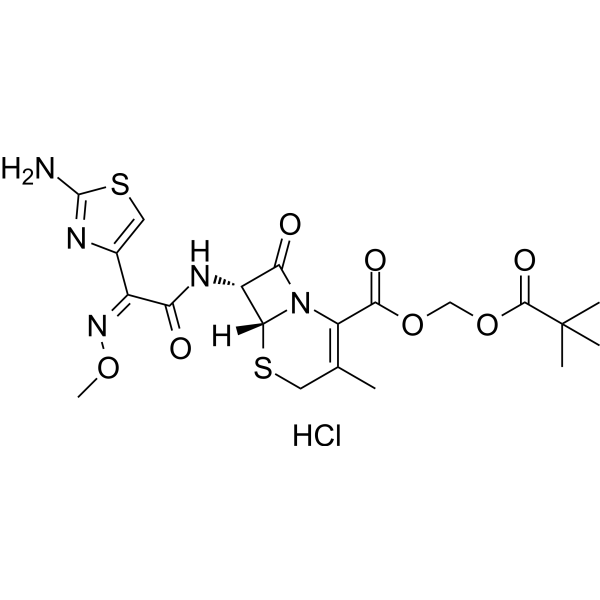
Cefetamet (Ro 15-8074) hydrochloride is a cephalosporin antibiotic and the active metabolite of Cefetamet pivoxil (HY-B1894A). Cefetamet hydrochloride binds to bacterial penicillin-binding protein (PBP) (IC50 for PBP3 in Escherichia coli W3110 is 2.5 μg/mL). Cefetamet hydrochloride has significant activity against Gram-negative bacteria such as Enterobacteriaceae, Neisseria species, and Haemophilus influenzae, as well as Gram-positive bacteria such as Streptococcus. Cefetamet hydrochloride kills and lyses Treponema pallidum. Cefetamet hydrochloride can be used in the research of respiratory tract, urinary tract, ear, nose and throat infections, and syphilis .
|
-
-
- HY-B1894
-
|
Ro 15-8075 free base
|
Antibiotic
Bacterial
|
Infection
|
|
Cefetamet pivoxyl (Ro 15-8075 free base) is an orally active cephalosporin Antibiotic and a prodrug of Cefetamet (HY-A0111). After ingestion, Cefetamet pivoxyl is hydrolyzed by gastrointestinal esterases to form Cefetamet. Cefetamet pivoxyl is primarily active against aerobic Gram-negative bacteria (such as Enterobacteriaceae, *Neisseria*, *Haemophilus*) and some Gram-positive bacteria (such as non-enterococcal streptococci). Cefetamet pivoxyl exhibits potent in vivo antibacterial activity against strains of Gram-positive bacteria (S. pyogenes) and Gram-negative bacteria (E. coli, K. pneumoniae, S. marcescens, P. vulgaris, P. mirabilis, H. influenzae) .
|
-
-
- HY-A0111R
-
|
Ro 15-8074 (Standard); Deacetoxycefotaxime (Standard)
|
Reference Standards
Antibiotic
Bacterial
Penicillin-binding protein (PBP)
Drug Metabolite
|
Infection
|
|
Cefetamet (Standard) is the analytical standard of Cefetamet (HY-A0111). This product is intended for research and analytical applications. Cefetamet (Ro 15-8074) is a cephalosporin antibiotic and the active metabolite of Cefetamet pivoxil (HY-B1894A). Cefetamet binds to bacterial penicillin-binding protein (PBP) (IC50 for PBP3 in Escherichia coli W3110 is 2.5 μg/mL). Cefetamet has significant activity against Gram-negative bacteria such as Enterobacteriaceae, Neisseria species, and Haemophilus influenzae, as well as Gram-positive bacteria such as Streptococcus. Cefetamet kills and lyses Treponema pallidum. Cefetamet can be used in the research of respiratory tract, urinary tract, ear, nose and throat infections, and syphilis .
|
-
-
- HY-N7101R
-
|
U-76,252 (Standard); CS-807 (Standard)
|
Reference Standards
Bacterial
Antibiotic
Penicillin-binding protein (PBP)
|
Infection
|
|
Cefpodoxime Proxetil (Standard) is the analytical standard of Cefpodoxime Proxetil. This product is intended for research and analytical applications. Cefpodoxime Proxetil is an orally active broad spectrum third-generation cephalosporin with potent antibacterial activity against both Gram-positive and Gram-negative bacteria including staphylococci, streptococci, Haemophilus influenzae, Neisseria gonorrhoeae, Escherichia coli, Klebsiella pnuemoniae, Citrobacter spp, and Proteus spp. Cefpodoxime Proxetil binds to penicillin binding proteins (PBPs), which inhibits peptidoglycan synthesis, finally results in interfering bacterial cell wall biosynthesis. Cefpodoxime Proxetil can be used against skin structure infections, acute otitis media, pharyngitis, tonsillitis, upper respiratory tract infection, urinary tract infections and sexually transmitted diseases .
|
-
-
- HY-N7101S
-
|
U-76-d7,252-d7; CS-807-d7
|
Isotope-Labeled Compounds
Bacterial
Antibiotic
Penicillin-binding protein (PBP)
|
Infection
|
|
Cefpodoxime proxetil-d7 (U-76-d7,252-d7; CS-807-d7) is the deuterium labeled Cefpodoxime Proxetil (HY-N7101). Cefpodoxime Proxetil is an orally active broad spectrum third-generation cephalosporin with potent antibacterial activity against both Gram-positive and Gram-negative bacteria including staphylococci, streptococci, Haemophilus influenzae, Neisseria gonorrhoeae, Escherichia coli, Klebsiella pnuemoniae, Citrobacter spp, and Proteus spp. Cefpodoxime Proxetil binds to penicillin binding proteins (PBPs), which inhibits peptidoglycan synthesis, finally results in interfering bacterial cell wall biosynthesis. Cefpodoxime Proxetil can be used against skin structure infections, acute otitis media, pharyngitis, tonsillitis, upper respiratory tract infection, urinary tract infections and sexually transmitted diseases .
|
-
-
- HY-E71261
-
|
|
Biochemical Assay Reagents
|
Others
|
|
β-1,3-N-Acetyl-Hexosaminyl-transferase, Neisseria meningitides (EC 2.4.1.150) is an enzyme that catalyzes the chemical reaction: UDP-N-acetyl-D-glucosamine + β-D-Galactosyl-(1→4)-N-acetyl-D-glucosaminyl-R = UDP + N-acetyl-β-D-glucosaminyl-(1→6)-β-D-Galactosyl-(1→4)-N-acetyl-D-glucosaminyl-R.
|
-
-
- HY-N11719
-
|
|
Bacterial
|
Infection
|
|
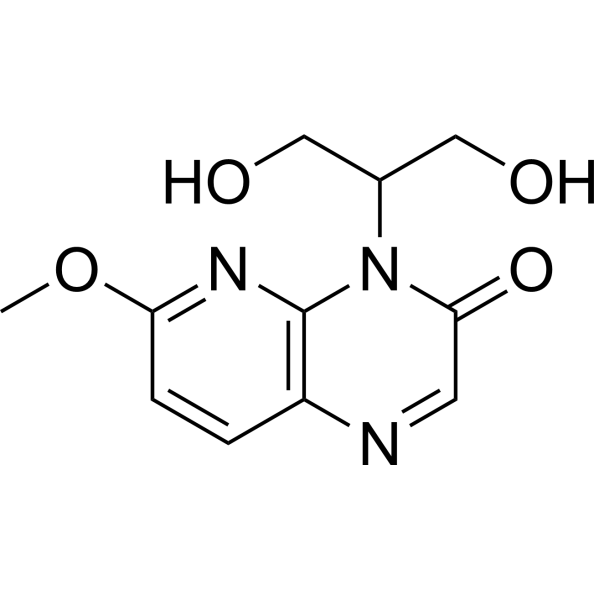
Clusin is a lignan that can be found in Hernandia nymphaeifolia. Clusin inhibits growth of the Gram-negative pathogen Neisseria gonorrhoeae. Clusin is inactive against murine lymphocytic leukemia cells and human cancer cells .
|
-
-
- HY-183080
-
|
|
Bacterial
Penicillin-binding protein (PBP)
|
Infection
|
|
VNRX-14079 is an antibacterial agent and PBP2 inhibitor, with an IC50 value of 1.7 μM against wild-type Neisseria gonorrhoeae PBP2. VNRX-14079 forms a covalent bond with Ser310 of PBP2, interacts with multiple residues of PBP2 to stabilize the complex, and induces an inward conformational change of the β3-β4 loop in chimeric PBP2. VNRX-14079 exhibits antibacterial activity against Ceftriaxone (HY-B0712)-resistant Neisseria gonorrhoeae strains. VNRX-14079 can be used in the research of gonorrhea .
|
-
-
- HY-183668
-
|
|
Bacterial
Carbonic Anhydrase
|
Infection
|
|
Carbonic anhydrase-IN-39 is a bacterial carbonic anhydrase inhibitor with oral bioavailability. Carbonic anhydrase-IN-39 inhibits α-NgCA and β-NgCA from Neisseria gonorrhoeae, as well as human hCA I and hCA II. Carbonic anhydrase-IN-39 exhibits bactericidal activity against Neisseria gonorrhoeae and reduces gonococcal burden in infected mouse models. Carbonic anhydrase-IN-39 can be used in the research of gonorrhea .
|
-
-
- HY-111034
-
|
|
Antibiotic
Bacterial
|
Infection
|
|
CGP 31523A is a broad-spectrum aminothiazole cephalosporin. CGP 31523A exhibits potent inhibitory effects on Enterobacteriaceae, Neisseria, Haemophilus influenzae, and Streptococcus (except Enterococcus faecalis), among others. CGP 31523A can be hydrolyzed by the common Escherichia coli type Ic β-lactamase, but is stable against the Ia type enzyme. CGP 31523A is neither an effective β-lactamase inhibitor nor does it induce the production of β-lactamase. CGP 31523A can be used for studying infections caused by Gram-negative bacteria (including drug-resistant strains) .
|
-
-
- HY-W077690
-
|
|
Bacterial
|
Infection
|
|
3-(2-Hydroxyethyl)quinazoline-2,4(1H,3H)-dione is an metal chelating agent and anti-bacterial agent. 3-(2-Hydroxyethyl)quinazoline-2,4(1H,3H)-dione shows inhibitory activity against gram-positive and gram-negative bacterial strains .
|
-
-
- HY-W683763A
-
|
HSR-903
|
Bacterial
|
Infection
|
|
Olamufloxacin (HSR-903) methanesulfonate is an orally active fluoroquinolone antibacterial agent. Olamufloxacin methanesulfonate inhibits DNA supercoiling activity. Olamufloxacin methanesulfonate exhibits activity against Gram-positive, Gram-negative, chlamydial, and quinolone-resistant bacterial strains. Olamufloxacin methanesulfonate can be used for the research of bacterial infections .
|
-
-
- HY-W683763
-
|
HSR-903 free base
|
Bacterial
|
Infection
|
|
Olamufloxacin (HSR-903) is an orally active fluoroquinolone antibacterial agent. Olamufloxacin inhibits DNA supercoiling activity. Olamufloxacin exhibits activity against Gram-positive, Gram-negative, chlamydial, and quinolone-resistant bacterial strains. Olamufloxacin can be used for the research of bacterial infections .
|
-
| Cat. No. |
Product Name |
Type |
-
- HY-W025784
-
|
Sodium tetraphenylborate; Tetraphenylboron sodium
|
Biochemical Assay Reagents
|
|
Kalibor (Sodium tetraphenylborate; Tetraphenylboron sodium) is a boron-based salt and antibacterial agent. Kalibor exerts activity against Neisseria meningitidis and Neisseria gonorrhoeae. Kalibor facilitates boron uptake by Neisseria meningitidis cells. Kalibor reduces bacterial burden in a mouse model of Neisseria meningitidis bacteremia. Kalibor can be used for the research of bacterial infection, such as meningococcal bacteremia .
|
-
- HY-W025784R
-
|
Sodium tetraphenylborate (Standard); Tetraphenylboron sodium (Standard)
|
Biochemical Assay Reagents
|
|
(Sodium tetraphenylborate; Tetraphenylboron sodium) (Standard) is the analytical standard of Kalibor (HY-W025784). This product is intended for research and analytical applications. Kalibor is a boron-based salt and antibacterial agent. Kalibor exerts activity against Neisseria meningitidis and Neisseria gonorrhoeae. Kalibor facilitates boron uptake by Neisseria meningitidis cells. Kalibor reduces bacterial burden in a mouse model of Neisseria meningitidis bacteremia. Kalibor can be used for the research of bacterial infection, such as meningococcal bacteremia .
|
| Cat. No. |
Product Name |
Target |
Research Area |
-
- HY-P10526
-
|
|
Bacterial
|
Infection
|
|
CRAMP (1-39) is an antimicrobial peptide. CRAMP (1-39) has shown potent bactericidal effects against multiple strains of Neisseria meningitidis in vitro. CRAMP (1-39) can be used to study drug-resistant bacterial infections .
|
| Cat. No. |
Product Name |
Category |
Target |
Chemical Structure |
-
- HY-125524
-
|
|
Natural Products
Microorganisms
Source Classification
|
Bacterial
|
|
Antibacterial agent 199 (Compound 2) is an activator for caseinolytic protease (ClpP) with a Kd of 0.7 μM. Antibacterial agent 199 exhibits antibacterial efficacy against Gram-positive strains Staphylococcus aureus, Streptococcus pneumoniae and Gram-negative strain Neisseria meningitidis, with MICs of 16, 0.5 and 0.5 μg/mL, respectively .
|
-
-
- HY-N11719
-
-
| Cat. No. |
Product Name |
Chemical Structure |
-
- HY-14956S
-
|
|
|
Nemonoxacin-d3 is the deuterium labeled Nemonoxacin. Nemonoxacin (TG-873870) is an orally active and potent broad-spectrum antibiotic. Nemonoxacin shows good inhibitory activity against different species of staphylococci, streptococci, and enterococci, Neisseria gonorrhoeae, and Haemophilus influenza. Nemonoxacin can be used in the study of bacterial infections and community-acquired pneumonia .
|
-
-
- HY-W743473
-
|
|
|
Cefetamet-d3 (Ro 15-8074-d3; Deacetoxycefotaxime-d3) is the deuterium labeled Cefetamet (HY-A0111). Cefetamet (Ro 15-8074) is a cephalosporin antibiotic and the active metabolite of Cefetamet pivoxil (HY-B1894A). Cefetamet binds to bacterial penicillin-binding protein (PBP) (IC50 for PBP3 in Escherichia coli W3110 is 2.5 μg/mL). Cefetamet has significant activity against Gram-negative bacteria such as Enterobacteriaceae, Neisseria species, and Haemophilus influenzae, as well as Gram-positive bacteria such as Streptococcus. Cefetamet kills and lyses Treponema pallidum. Cefetamet can be used in the research of respiratory tract, urinary tract, ear, nose and throat infections, and syphilis .
|
-
-
- HY-14956S1
-
|
|
|
Nemonoxacin-d3-1 is the deuterium labeled Nemonoxacin. Nemonoxacin (TG-873870) is an orally active and potent broad-spectrum antibiotic. Nemonoxacin shows good inhibitory activity against different species of staphylococci, streptococci, and enterococci, Neisseria gonorrhoeae, and Haemophilus influenza. Nemonoxacin can be used in the study of bacterial infections and community-acquired pneumonia .
|
-
-
- HY-14956S2
-
|
|
|
Nemonoxacin-d4 is the deuterium labeled Nemonoxacin. Nemonoxacin (TG-873870) is an orally active and potent broad-spectrum antibiotic. Nemonoxacin shows good inhibitory activity against different species of staphylococci, streptococci, and enterococci, Neisseria gonorrhoeae, and Haemophilus influenza. Nemonoxacin can be used in the study of bacterial infections and community-acquired pneumonia .
|
-
-
- HY-N7101S
-
|
|
|
Cefpodoxime proxetil-d7 (U-76-d7,252-d7; CS-807-d7) is the deuterium labeled Cefpodoxime Proxetil (HY-N7101). Cefpodoxime Proxetil is an orally active broad spectrum third-generation cephalosporin with potent antibacterial activity against both Gram-positive and Gram-negative bacteria including staphylococci, streptococci, Haemophilus influenzae, Neisseria gonorrhoeae, Escherichia coli, Klebsiella pnuemoniae, Citrobacter spp, and Proteus spp. Cefpodoxime Proxetil binds to penicillin binding proteins (PBPs), which inhibits peptidoglycan synthesis, finally results in interfering bacterial cell wall biosynthesis. Cefpodoxime Proxetil can be used against skin structure infections, acute otitis media, pharyngitis, tonsillitis, upper respiratory tract infection, urinary tract infections and sexually transmitted diseases .
|
-
Your information is safe with us. * Required Fields.
Inquiry Information
- Product Name:
- Cat. No.:
- Quantity:
- MCE Japan Authorized Agent:

