1. Search Result
Search Result
Results for "

Phencyclidine

" in MedChemExpress (MCE) Product Catalog:

33

Inhibitors & Agonists

1

Biochemical Assay Reagents

2

Natural
Products

Cat. No. Product Name Target Research Areas Chemical Structure
  • HY-16996A
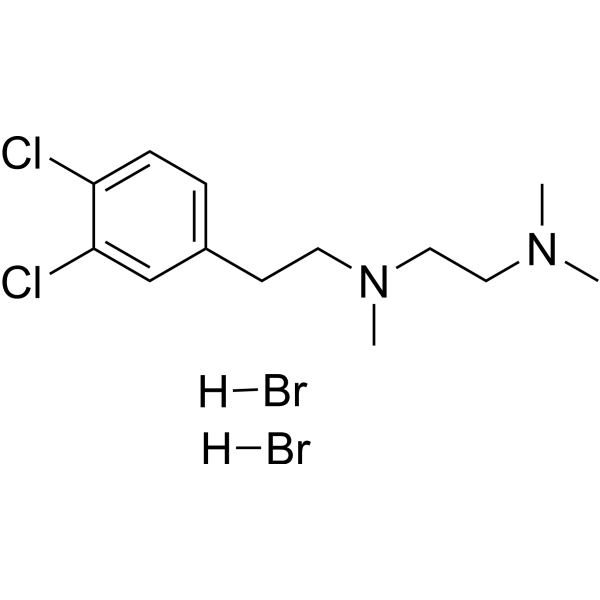
    BD-1047 dihydrobromide
    Maximum Cited Publications
    11 Publications Verification

    Sigma Receptor Neurological Disease
    BD-1047 dihydrobromide is a selective functional antagonist of sigma receptors. BD-1047 dihydrobromide attenuates Apomorphine (HY-12723)-induced climbing and Phencyclidine-induced head twitches .
    BD-1047 dihydrobromide
  • HY-111066A

    Dopamine Receptor Neurological Disease
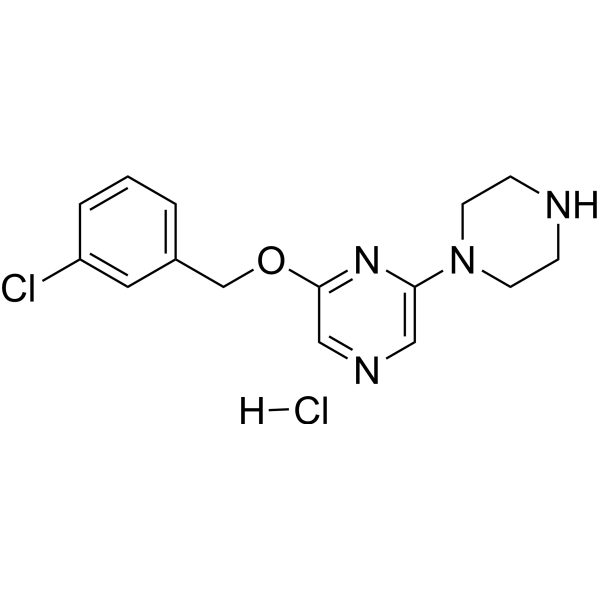
    JNJ-37822681 dihydrochloride is a potent, specific, centrally active, fast-dissociating dopamine D2 receptor antagonist with a moderate binding affinity for the dopamine D2L receptor (Ki =158 nM), which has potential for the treatment of schizophrenia and bipolar disorder .
    JNJ-37822681 dihydrochloride
  • HY-157959

    (±)-Orphenadrine

    iGluR Cytochrome P450 Cholinesterase (ChE) Neurological Disease Cancer
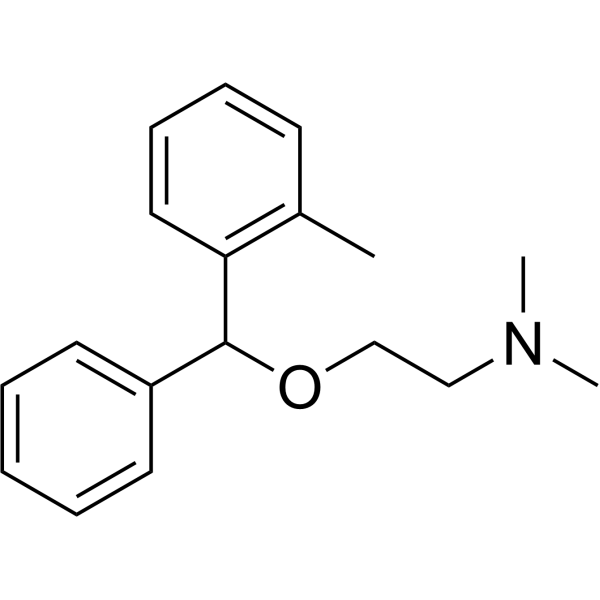
    Orphenadrine ((±)-Orphenadrine) is a skeletal muscle relaxant and NMDA antagonist that also has antiparkinsonian, antihistamine, antitremor, antispasmodic, and analgesic effects. Orphenadrine inhibits the binding of [3H]MK-801 to the phencyclidine (PCP) binding site of the NMDA receptor. Orphenadrine is also an anticholinergic and CYP2B inducer. Orphenadrine may exert pro-tumor effects, causing CAR nuclear translocation, resulting in microsomal reactive oxygen species (ROS) production and oxidative stress. Orphenadrine also exerts neuronal protection, protecting rat cerebellar granule cells (CGC) from 3-NPA-induced death and has inhibitory potential against neurodegenerative diseases mediated by NMDA receptor overactivation .
    Orphenadrine
  • HY-101376

    (+)-SKF 10047 hydrochloride; (+)-N-Allyl-N-normetazocine hydrochloride

    Opioid Receptor Neurological Disease
    (+)-N-Allylnormetazocine ((+)-SKF 10047) hydrochloride is a benzomorphan opioid with psychotomi metic effects. (+)-N-Allylnormetazocine hydrochloride is an opioid receptor antagonist with Ki values of 300 nM and 27 μM for σ1 and σ2 opioid receptors, respectively. (+)-N-Allylnormetazocine hydrochloride can be used for the research of neurological disease .
    (+)-N-Allylnormetazocine hydrochloride
  • HY-15543A
    CP-809101 hydrochloride
    1 Publications Verification

    5-HT Receptor Neurological Disease
    CP-809101 hydrochloride is a potent and highly selective 5-HT2C receptor agonist, with pEC50s of 9.96, 7.19 and 6.81 M for human 5HT2C, 5HT2B and 5HT2A receptor. CP-809101 hydrochloride inhibits conditioned avoidance responding in rats and antagonizes both PCP (phencyclidine hydrochloride)- and d-amphetamine-induced hyperactivity. CP-809101 hydrochloride also reduces food and nicotine dependence in rats, can be used in studies of antipsychotic and nicotine dependence .
    CP-809101 hydrochloride
  • HY-N2125

    5-HT Receptor iGluR Caspase Interleukin Related TNF Receptor SOD NF-κB Neurological Disease Inflammation/Immunology
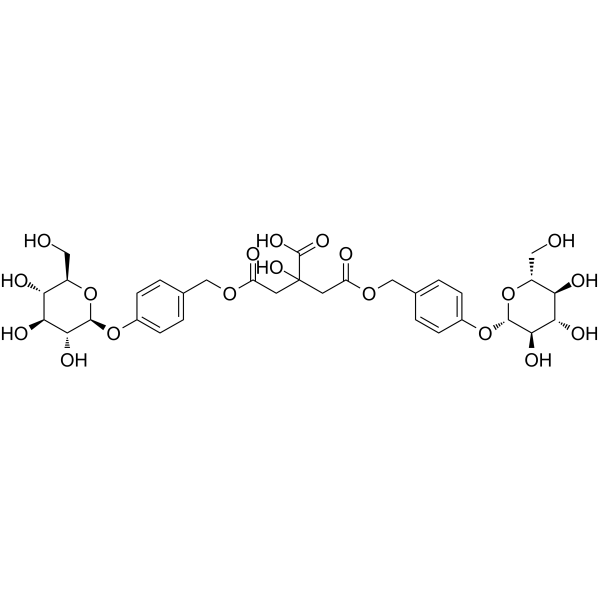
    Parishin C is a brain-penetrant major bioactive component found in Gastrodia elata Blume. Parishin C is a 5-HT1A receptor agonist with an EC50 of 34 nM. Parishin C has antipsychotic and neuroprotective effects. Parishin C protects against Aβ-induced long-term potentiation damage and NMDA receptor current impairment. Parishin C reduces oxidative stress, pro-inflammatory cytokine levels, caspase activity, brain water content, and cerebral infarct volume; increases antioxidant enzyme activity and BDNF levels; improves nerve function and histopathological brain damage. Parishin C attenuates phencyclidine-induced immobility time increases, sociability deficits, and visual recognition memory impairment. Parishin C can be used for the research of ischemic stroke, Alzheimer's disease, and schizophrenia-like psychosis .
    Parishin C
  • HY-107505A

    mGluR Neurological Disease
    CBiPES is a potent mGlu2 positive allosteric modulator with an EC50 value of 92.8 nM. CBiPES attenuates stress-induced hyperthermia and Phencyclidine-induced hyperlocomotor activity. CBiPES can be used for research of neurological diseases, such as Parkinson's disease (PD) .
    CBiPES
  • HY-103405A

    Dopamine Receptor Neurological Disease
    NGD 94-1 (dimaleate) is a potent and selective dopamine D4 receptor antagonist. NGD 94-1 (dimaleate) shows high affinity for the cloned human D4.2 receptor (Ki = 3.6 nM). NGD 94-1 (dimaleate) modulates the cognitive functions of the frontostriatal system and regulates dopaminergic transmission in Phencyclidine (PCP)-induced monkeys. NGD 94-1 (dimaleate) can be used for neurological disease research [1][2].
    NGD 94-1 dimaleate
  • HY-114753

    CR-2249; XY-2401

    iGluR Neurological Disease
    Neboglamine (CR-2249; XY-2401) is a modulator for N-methyl-D-aspartate (NMDA) receptor. Neboglamine increases the levels of fos-like immunoreactivity (FLI)-positive cells in the prefrontal cortex, nucleus accumbens, and lateral septal nucleus in rat models, .restores NMDA (HY-17551) -mediated neurotransmitter release, and inhibits phencyclidine-induced hyperlocomotion .
    Neboglamine
  • HY-157429

    5-HT Receptor Neurological Disease
    25N-N1-Nap (compound 16) is a β-arrestin-biased 5-HT2A agonist. 25N-N1-Nap antagonizes phencyclidine induced hyperactivity in Male C57BL/6 J mice .
    25N-N1-Nap
  • HY-33009

    Amino Acid Oxidase Neurological Disease
    AS057278 is a potent, selective, orally active and blood-brain barrier (BBB) penetrant non-peptidic D-amino acid oxidase (DAAO) inhibitor with an IC50 value of 0.91 μM and EC50 of 2.2-3.95 μM. AS057278 can normalize phencyclidine (PCP)-induced prepulse inhibition in mice. AS057278 can be used for researching schizophrenia .
    AS057278
  • HY-179008

    5-HT Receptor Neurological Disease
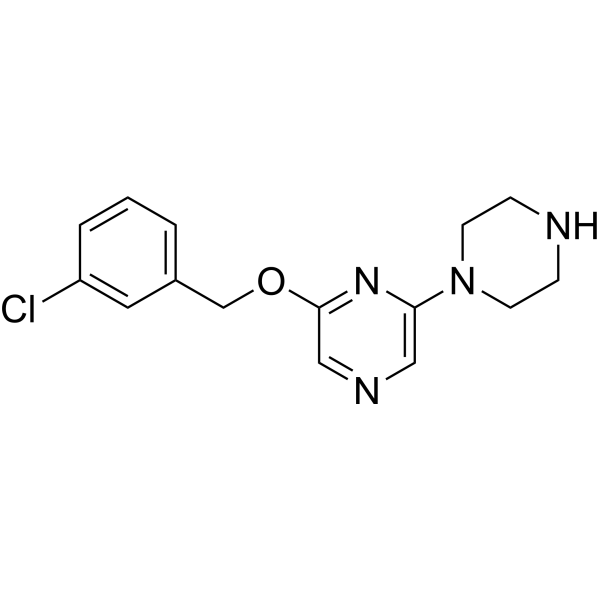
    5-HT2CR agonist 2 (Compound 16k) is a selective, blood-brain barrier-penetrating and Gq-biased 5-HT2CR agonist, with an EC50 of 36 nM. 5-HT2CR agonist 2 attenuates MK801 (HY-15084B)-induced hyperlocomotion and reverses Phencyclidine-induced hyperlocomotor activity .
    5-HT2CR agonist 2
  • HY-169465

    Drug Derivative Neurological Disease
    3-Methyl phencyclidine hydrochloride is an arylcyclohexylamine with psychoactive properties .
    3-Methyl phencyclidine hydrochloride
  • HY-15543

    5-HT Receptor Neurological Disease
    CP-809101 is a potent and highly selective 5-HT2C receptor agonist, with pEC50s of 9.96, 7.19 and 6.81 M for human 5HT2C, 5HT2B and 5HT2A receptor. CP-809101 inhibits conditioned avoidance responding in rats and antagonizes both PCP (phencyclidine hydrochloride)- and d-amphetamine-induced hyperactivity. CP-809101 also reduces food and nicotine dependence in rats, can be used in studies of antipsychotic and nicotine dependence .
    CP-809101
  • HY-100998

    iGluR Neurological Disease
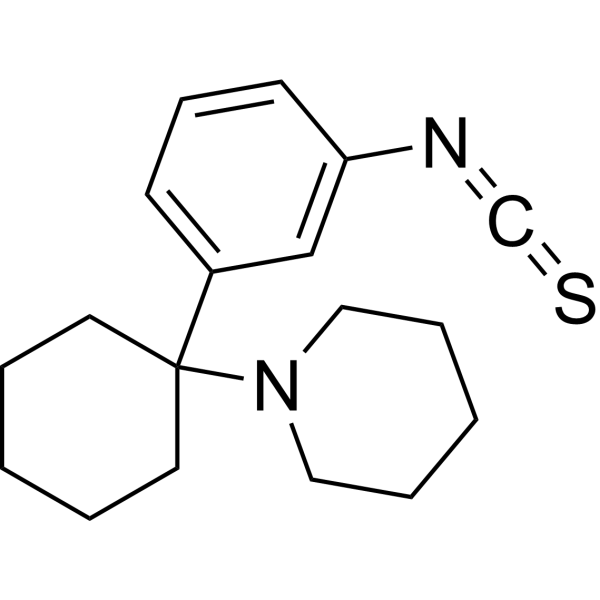
    Metaphit is a specific PCPantagonist and site-directed acylating agent of the [3H]phencyclidine binding site in rat brain homogenates . Metaphit prevents PCP-induced locomotor behavior through presynaptic mechanisms .
    Metaphit
  • HY-113981

    mGluR Neurological Disease
    LY459477 is a potent, selective and orally active metabotropic glutamate 2/3 receptor (mGluR2/3) agonist. LY459477 can effectively suppress Phencyclidine-evoked locomotor activity at doses that do not impair neuromuscular coordination. LY459477 can be used for the research of neurological disease .
    LY459477
  • HY-103405

    Dopamine Receptor Neurological Disease
    NGD94-1 is a potent and selective dopamine D4 receptor antagonist. NGD94-1 shows high affinity for the cloned human D4.2 receptor (Ki = 3.6 nM). NGD94-1 modulates the cognitive functions of the frontostriatal system and regulates dopaminergic transmission in Phencyclidine (PCP)-induced monkeys. NGD94-1 can be used for neurological disease research [1][2].
    NGD94-1
  • HY-W408972

    Drug Derivative Others
    PCPr (hydrochloride) is a compound derived from phencyclidine .
    PCPr hydrochloride
  • HY-W724221

    iGluR Neurological Disease
    3-Methoxyeticyclidine hydrochloride is a phencyclidine-type compound that has binding affinity for the N-methyl-D-aspartate receptor. 3-Methoxyeticyclidine hydrochloride has a certain degree of toxicity .
    3-Methoxyeticyclidine hydrochloride
  • HY-16996

    Sigma Receptor Neurological Disease
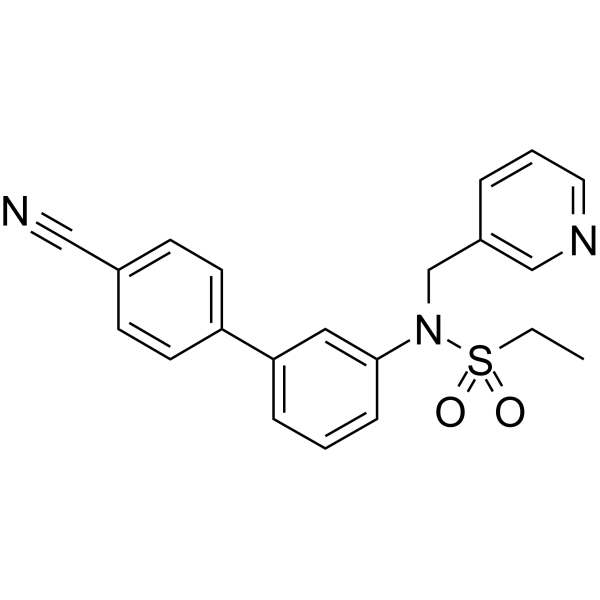
    BD-1047 is a selective functional antagonist of sigma receptors. BD-1047 attenuates Apomorphine (HY-12723)-induced climbing and Phencyclidine-induced head twitches .
    BD-1047
  • HY-111066AR

    Dopamine Receptor Neurological Disease
    JNJ-37822681 (dihydrochloride) (Standard) is the analytical standard of JNJ-37822681 (dihydrochloride). This product is intended for research and analytical applications. JNJ-37822681 dihydrochloride is a potent, specific, centrally active, fast-dissociating dopamine D2 receptor antagonist with a moderate binding affinity for the dopamine D2L receptor (Ki =158 nM), which has potential for the treatment of schizophrenia and bipolar disorder .
    JNJ-37822681 dihydrochloride (Standard)
  • HY-16996AR

    Sigma Receptor Neurological Disease
    BD-1047 (dihydrobromide) (Standard) is the analytical standard of BD-1047 (dihydrobromide). This product is intended for research and analytical applications. BD-1047 dihydrobromide is a selective functional antagonist of sigma receptors. BD-1047 dihydrobromide attenuates Apomorphine (HY-12723)-induced climbing and Phencyclidine-induced head twitches .
    BD-1047 dihydrobromide (Standard)
  • HY-171435A

    PCP/BSA

    Biochemical Assay Reagents Others
    Phencyclidine/BSA (PCP/BSA) is an antigen-adjuvant conjugate conjugate of Phencyclidine and BSA. By conjugating the antigen with a protein adjuvant, the production of antigen-specific antibodies in vaccine models can be enhanced. The conjugate does not affect protein folding or disrupt major epitopes, and can enhance cross-presentation and the production of antigen-specific T cells.
    Phencyclidine/BSA
  • HY-N2125R

    Reference Standards 5-HT Receptor iGluR Caspase Interleukin Related TNF Receptor SOD NF-κB Neurological Disease Inflammation/Immunology
    Parishin C (Standard) is the analytical standard of Parishin C (HY-N2125). This product is intended for research and analytical applications. Parishin C is a brain-penetrant major bioactive component found in Gastrodia elata Blume. Parishin C is a 5-HT1A receptor agonist with an EC50 of 34 nM. Parishin C has antipsychotic and neuroprotective effects. Parishin C protects against Aβ-induced long-term potentiation damage and NMDA receptor current impairment. Parishin C reduces oxidative stress, pro-inflammatory cytokine levels, caspase activity, brain water content, and cerebral infarct volume; increases antioxidant enzyme activity and BDNF levels; improves nerve function and histopathological brain damage. Parishin C attenuates phencyclidine-induced immobility time increases, sociability deficits, and visual recognition memory impairment. Parishin C can be used for the research of ischemic stroke, Alzheimer's disease, and schizophrenia-like psychosis .
    Parishin C (Standard)
  • HY-135073

    Drug Derivative Neurological Disease
    PCMPA hydrochloride a derivative of Phencyclidine that can be metabolized by cytochrome P450 isoenzymes (P450s) .
    PCMPA hydrochloride
  • HY-173644

    3,4-MDPCP hydrochloride; 3,4-Methylenedioxy Phencyclidine hydrochloride

    Drug Derivative Neurological Disease
    3,4-Methylenedioxy pcp hydrochloride (3,4-MDPCP hydrochloride; 3,4-Methylenedioxy phencyclidine hydrochloride) is a drug derivative that can be used for research on mental illnesses.
    3,4-Methylenedioxy pcp hydrochloride
  • HY-W070884

    nAChR Infection
    nAChR-IN-2 (Compound 2) is an inhibitor of insect nicotinic acetylcholine receptors (nAChR). nAChR-IN-2 inhibits the binding of α-bungarotoxin (HY-P1264) to the ACh site of insect nAChR in honeybee heads, with an IC50 of 360 μM. nAChR-IN-2 also inhibits the binding of Phencyclidine to the NCB/PCP site of insect nAChR in honeybee heads, with an IC50 of 84 μM .
    nAChR-IN-2
  • HY-W474200

    Drug Derivative Neurological Disease
    trans-4-Phenyl-4-piperidinocyclohexanol is structurally categorized as an arylcyclohexylamine and is a metabolite of Phencyclidine.
    trans-4-Phenyl-4-piperidinocyclohexanol
  • HY-107505AR

    Reference Standards mGluR Neurological Disease
    CBiPES (Standard) is the analytical standard of CBiPES (HY-107505A). This product is intended for research and analytical applications. CBiPES is a potent mGlu2 positive allosteric modulator with an EC50 value of 92.8 nM. CBiPES attenuates stress-induced hyperthermia and Phencyclidine-induced hyperlocomotor activity. CBiPES can be used for research of neurological diseases, such as ParKinson's disease (PD) .
    CBiPES (Standard)
  • HY-33009R

    Others Neurological Disease
    AS057278 (Standard) is the analytical standard of AS057278. This product is intended for research and analytical applications. AS057278 is a potent, selective, orally active and blood-brain barrier (BBB) penetrant non-peptidic D-amino acid oxidase (DAAO) inhibitor with an IC50 value of 0.91 μM and EC50 of 2.2-3.95 μM. AS057278 can normalize phencyclidine (PCP)-induced prepulse inhibition in mice. AS057278 can be used for researching schizophrenia .
    AS057278 (Standard)
  • HY-179724

    5-HT Receptor Dopamine Receptor MMP Cytochrome P450 Neurological Disease
    PZ-1657 (Compound 57) is an orally active, blood-brain barrier permeable, highly selective, and metabolically stable 5-HT7 receptor inverse agonist with a Ki value of 5 nM. PZ-1657 inhibits constitutive cyclic adenosine monophosphate (cAMP) production mediated by the Gs signaling pathway (EC50 value of 2.93 nM). PZ-1657 inhibits CYP3A4 P450 (IC50 = 12.2 μM) and hERG channels. PZ-1657 reduces 5-HT7 receptor-mediated MMP-9 activity. PZ-1657 reverses Phencyclidine-induced cognitive impairment. PZ-1657 possesses antidepressant properties .
    PZ-1657
  • HY-179724A

    5-HT Receptor Dopamine Receptor MMP Potassium Channel Neurological Disease
    PZ-1657 hydrochloride (Compound 57) is a potent, selective and orally active 5-HT7 receptor inverse agonist with a Ki of 5 nM. PZ-1657 hydrochloride can inhibit the constitutive cAMP production mediated by the Gs signaling pathway (EC50 = 2.93 nM). PZ-1657 hydrochloride can significantly reduce the MMP-9 activity mediated by 5-HT7 receptors in the hippocampus of mice, and the effect is comparable to that of SB-269970 (HY-15370). PZ-1657 hydrochloride can reverse the cognitive deficits observed in the rat novel object recognition test induced by Phencyclidine without affecting the animals' spontaneous activities. PZ-1657 hydrochloride can be used for the research of emotional disorders, such as depression and bipolar disorder .
    PZ-1657 hydrochloride
  • HY-181828

    iGluR Dopamine Receptor Neurological Disease
    SePP is a blood-brain barrier-permeable NMDAR antagonist and dopamine/norepinephrine reuptake inhibitor, with a Ki of 28.7 nM for rat NMDAR. SePP exerts anticonvulsant effects. SePP can be used in research related to fragile X syndrome .
    SePP

Inquiry Online

Your information is safe with us. * Required Fields.

Salutation


Country or Region *

Applicant Name *


Organization Name *

Department *


Email Address *


Product Name *

Cat. No.


Requested quantity *

Phone Number *


Remarks

Inquiry Online

Inquiry Information

Product Name:
Cat. No.:
Quantity:
MCE Japan Authorized Agent:

