







1. Search Result
Search Result
Results for "

Phosphoinositide

" in MedChemExpress (MCE) Product Catalog:

52

Inhibitors & Agonists

2

Biochemical Assay Reagents

3

Peptides

3

Natural
Products

7

Recombinant Proteins

15

Antibodies

10

Oligonucleotides

Targets Recommended:
Cat. No. Product Name Target Research Areas Chemical Structure
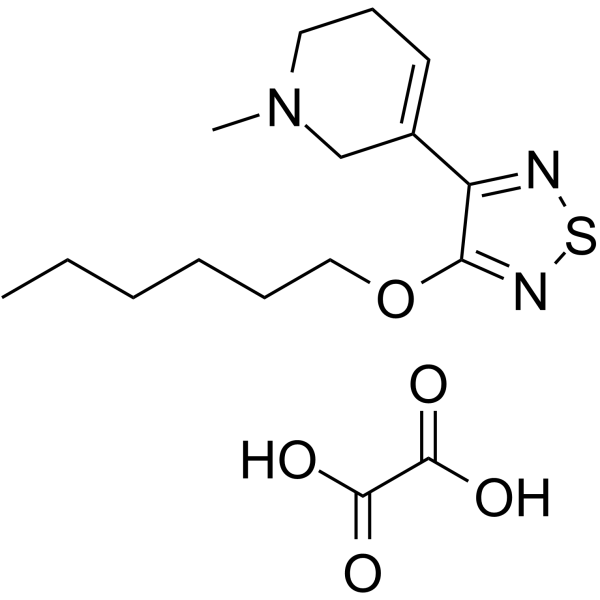
  • HY-13410
    Xanomeline oxalate
    5+ Cited Publications

    LY246708 oxalate

    mAChR Neurological Disease
    Xanomeline oxalate (LY246708 oxalate) is a potent and selective muscarinic receptor agonist (SMRA) and stimulates phosphoinositide hydrolysis in vivo. Xanomeline oxalate can be used for the research of Alzheimer’s disease .
    Xanomeline oxalate
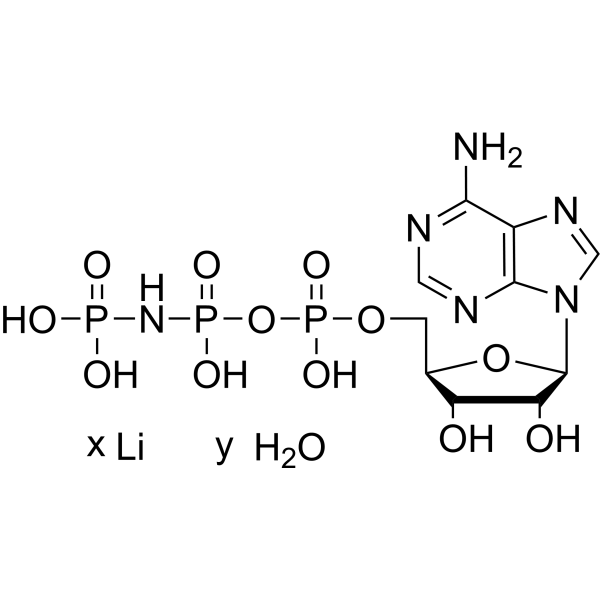
  • HY-130777A
    AMP-PNP lithium hydrate
    3 Publications Verification

    Adenylyl imidodiphosphate lithium hydrate

    Drug Derivative Metabolic Disease
    AMP-PNP (Adenylyl imidodiphosphate) lithium hydrate is a non-hydrolyzable ATP analog. AMP-PNP lithium hydrate binds to ATP binding sites competely but is not hydrolyzed by enzymes, providing stable experimental conditions for studying ATP-dependent processes. AMP-PNP lithium hydrate can also be used to study enzyme activity, kinase regulation, DNA/RNA metabolism, ion channel function, and protein complex assembly .
    AMP-PNP lithium hydrate
  • HY-14609
    MPEP Hydrochloride
    5+ Cited Publications

    mGluR Neurological Disease
    MPEP Hydrochloride is a potent, selective, noncompetitive, orally active and systemically active mGlu5 receptor antagonist, with an IC50 of 36 nM for completely inhibiting quisqualate-stimulated phosphoinositide (PI) hydrolysis. MPEP Hydrochloride has anxiolytic-or antidepressant-like effects . MPEP (Hydrochloride) is a click chemistry reagent, it contains an Alkyne group and can undergo copper-catalyzed azide-alkyne cycloaddition (CuAAc) with molecules containing Azide groups.
    MPEP Hydrochloride
  • HY-110150
    UNC3230
    Maximum Cited Publications
    9 Publications Verification

    PI4P5K Neurological Disease Inflammation/Immunology Cancer
    UNC3230 is a potent, selective and ATP-competitive PIP5K1C inhibitor with an IC50 of ~41 nM. UNC3230 also inhibits PIP4K2C and does not inhibit any of the other lipid kinases that regulate phosphoinositide levels. UNC3230 has antinociceptive and anticancer effects .
    UNC3230
  • HY-14609A
    MPEP
    5+ Cited Publications

    mGluR Neurological Disease
    MPEP is a potent, selective, noncompetitive, orally active and systemically active mGlu5 receptor antagonist, with an IC50 of 36 nM for completely inhibiting quisqualate-stimulated phosphoinositide (PI) hydrolysis. MPEP has anxiolytic-or antidepressant-like effects . MPEP is a click chemistry reagent, it contains an Alkyne group and can undergo copper-catalyzed azide-alkyne cycloaddition (CuAAc) with molecules containing Azide groups.
    MPEP
  • HY-139533

    Biochemical Assay Reagents Others
    Phosphatidylinositols, soya, sodium salts is a mixture of phosphatidylinositols. Phosphoinositides are lipids involved in the vesicular transport of proteins and lipids between the different compartments of eukaryotic cells. They act by recruiting and/or activating effector proteins and thus are involved in regulating various cellular functions, such as vesicular budding, membrane fusion and cytoskeleton dynamics .
    Phosphatidylinositols, soya, sodium salts
  • HY-P1096

    Cholecystokinin Receptor Metabolic Disease
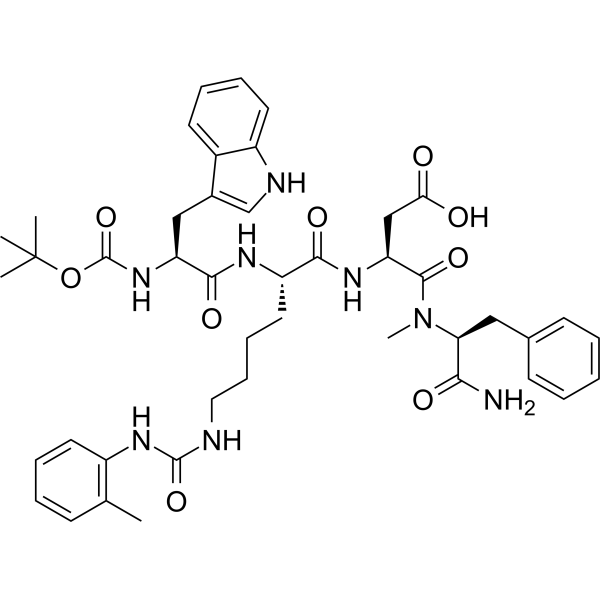
    A71623, a CCK-4-based peptide, is a potent and highly selective CCK-A full agonist. The IC50s for A-71623 are 3.7 nM in guinea pig pancreas (CCK-A) and 4500 nM in cerebral cortex (CCK-B) in radioligand binding assays, respectively .
    A71623
  • HY-107364
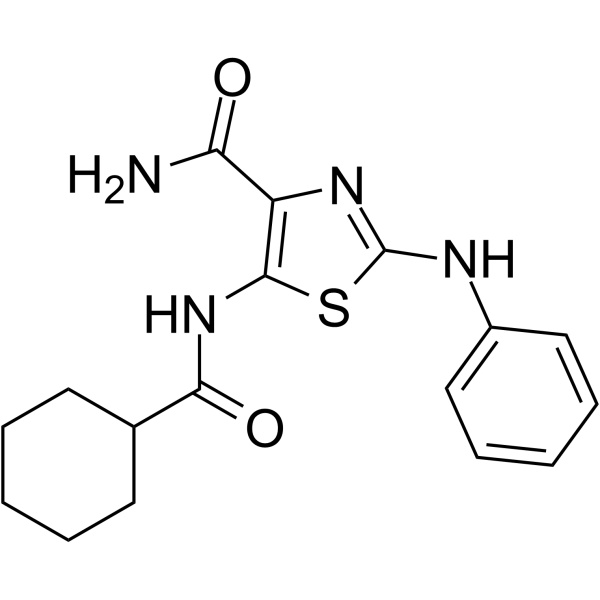
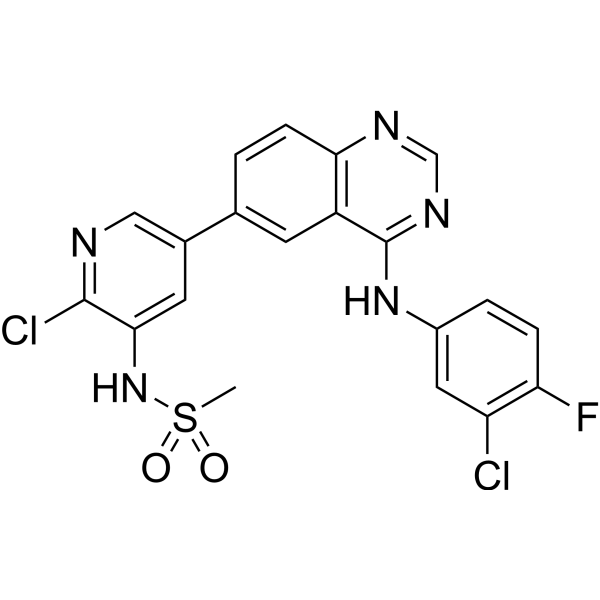
    MTX-211
    3 Publications Verification

    Mol 211

    EGFR PI3K Cancer
    MTX-211 (Mol 211) is a dual inhibitor of EGFR and PI3K with IC50 values of <100 nM. MTX-211 can be used for the research of cancer and other diseases .
    MTX-211
  • HY-101366

    Adrenergic Receptor Endocrinology
    A-61603 is a selective α1A/α1a-adrenergic receptor agonist with Ki of 8.89 nM for rat submaxillary gland α1A, Ki of 30.5 nM for cloned bovine α1a. A-61603 potentiates Ca 2+ transients with EC50 of 6.9 nM. A-61603 stimulates phosphoinositide hydrolysis, induces contractile responses in vas deferens, prostate strips, and spleen strips, and exhibits low activity in aortic rings. A-61603 can be used for research on adrenergic function .
    A-61603
  • HY-14440
    MP7
    2 Publications Verification

    PDK1 inhibitor

    PDK-1 Cancer
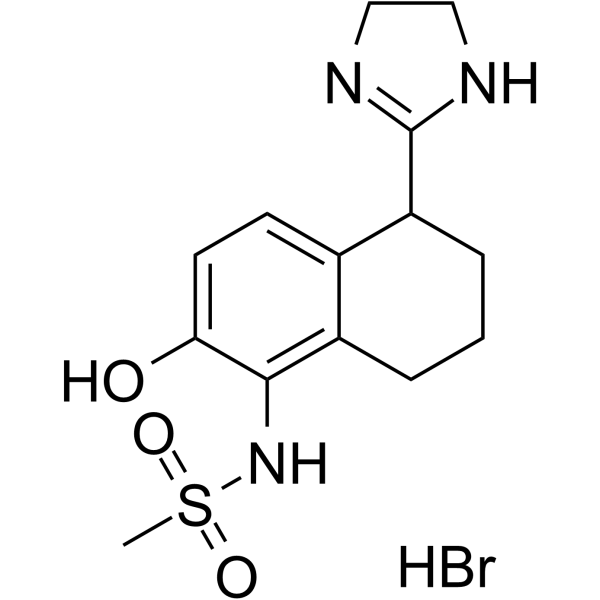
    MP7 (PDK1 inhibitor) is a phosphoinositide-dependent kinase-1 (PDK1) inhibitor.
    MP7
  • HY-N4246

    Aquaporin PKC Akt PI3K Apoptosis Monoamine Oxidase Pregnane X Receptor (PXR) Cardiovascular Disease Neurological Disease Inflammation/Immunology Cancer
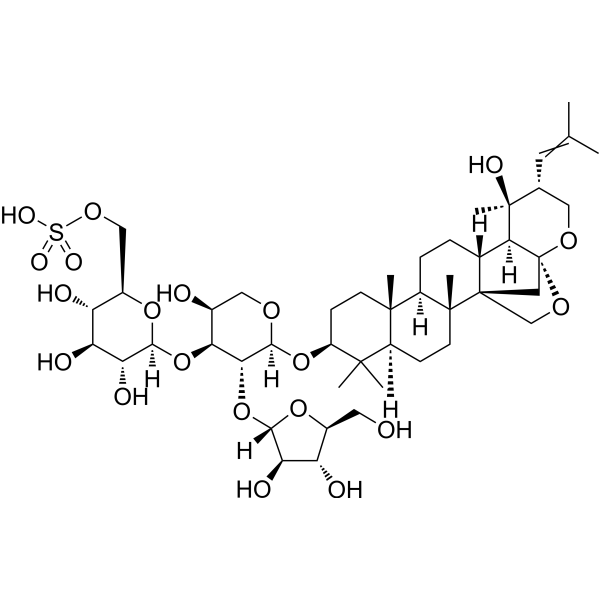
    Bacopaside I is an orally active aquaporin AQP1 inhibitor and PKC modulator with neuroprotective and anticancer activities. Bacopaside I specifically blocks the water channel and cGMP-gated ion channel activities of AQP1 without affecting AQP4, thereby inhibiting the migration of colon cancer cells expressing AQP1. Bacopaside I activates the Akt pathway by interacting with PI3K, specifically inhibits MAO-A, effectively alleviates neuron necrosis and apoptosis induced by oxygen-glucose deprivation, reduces oxidative stress, and regulates the surface expression of neuroreceptors. When combined with Bacopaside II (HY-N6016), Bacopaside I significantly reduces the viability, proliferation and invasion ability of breast cancer cells, and binds to the pregnane X receptor (PXR). Bacopaside I is applicable to the research of colon cancer, breast cancer, vascular dementia, cerebral ischemia and other related diseases .
    Bacopaside I
  • HY-101324A

    CPP monohydrochloride

    5-HT Receptor Neurological Disease
    MK-212 (CPP) monohydrochloride is a centrally acting 5-HT1C/5-HT2 agonist. MK-212 monohydrochloride can stimulate phosphoinositide hydrolysis in cerebral cortex .
    MK-212 monohydrochloride
  • HY-145086
    R-PSOP
    1 Publications Verification

    Neuromedin U Receptor (NMUR) Metabolic Disease
    R-PSOP is highly potent and selective nonpeptidic NMUR2 antagonist. R-PSOP binds to NMUR2 with the Kis of 52 and 32 nM for the human and rat NMUR2, respectively. R-PSOP shows moderate CNS penetration. R-PSOP can be used for the research of the eating disorders, obesity, pain, and stress-related disorders .
    R-PSOP
  • HY-107515A
    LY367385 hydrochloride
    3 Publications Verification

    mGluR Neurological Disease
    LY367385 hydrochloride is a highly selective and potent mGluR1a antagonist. LY367385 hydrochloride has an IC50 of 8.8 μM for inhibiting of quisqualate-induced phosphoinositide (PI) hydrolysis, compared with >100 μM for mGlu5a. LY367385 hydrochloride has neuroprotective, anticonvulsant and antiepileptic effects .
    LY367385 hydrochloride
  • HY-100841

    3HPG

    mGluR Neurological Disease
    (Rac)-3-Hydroxyphenylglycine (3HPG) is a racemic mixture of (S)-3-hydroxyphenylglycine and (R)-3-hydroxyphenylglycine. (S)-3-Hydroxyphenylglycine is a potent and selective mGluR1 agonist .
    (Rac)-3-Hydroxyphenylglycine
  • HY-100993

    5-HT Receptor Cardiovascular Disease
    α-Methylserotonin maleate is a potent and selective agonist of 5-HT2 receptor. α-Methylserotonin maleate is an analogue of serotonin formed in vivo from α-Methyltryptophan. α-Methylserotonin maleate mediates the lymphatic smooth muscle contraction and prevents the up-regulation of serotonin-receptor-mediated phosphoinositide hydrolysis .
    α-Methylserotonin maleate
  • HY-107515
    LY367385
    3 Publications Verification

    mGluR Neurological Disease
    LY367385 is a highly selective and potent mGluR1a antagonist. LY367385 has an IC50 of 8.8 μM for inhibiting of quisqualate-induced phosphoinositide (PI) hydrolysis, compared with >100 μM for mGlu5a. LY367385 has neuroprotective, anticonvulsant and antiepileptic effects .
    LY367385
  • HY-16461

    (-)-Solenopsin A

    Akt Ribosomal S6 Kinase (RSK) PI3K PDK-1 FOXO Mitophagy Reactive Oxygen Species (ROS) Mitochondrial Metabolism Cardiovascular Disease
    Solenopsin ((-)-Solenopsin A) is an ATP-competitive and selective Akt-1 inhibitor with an IC50 of 5-10 μM, and also acts as an RSK1 inhibitor. Solenopsin inhibits the activities of PDK1 in lipid rafts, downregulates PI3K, blocks PI3K-dependent generation of 3-phosphoinositides, and suppresses the phosphorylation of FOXO1a. Solenopsin induces Mitophagy and ROS production, reduces mitochondrial oxygen consumption, and exhibits antiproliferative and antiangiogenic activities. Solenopsin can be used in research related to hyperproliferative skin diseases and malignant diseases .
    Solenopsin
  • HY-161366

    PI3K Cancer
    OMS14 is exhibits inhibitory activity for phosphoinositide 3-kinase γ (PI3Kγ) and PIK3CD/PIK3R1, which inhibits 19% PI3Kγ and 65% PIK3CD/PIK3R1 activity at 100 μM. OMS14 exhibits anticancer efficacy in various cancer cells .
    OMS14
  • HY-101324

    CPP

    5-HT Receptor Neurological Disease
    MK-212 (CPP) is a centrally acting 5-HT1C/5-HT2 agonist. MK-212 can stimulate phosphoinositide hydrolysis in cerebral cortex .
    MK-212
  • HY-135464

    mGluR Neurological Disease
    (±)-LY367385 is the racemate of LY367385. LY367385 is a highly potent and selective mGluR1a antagonist. LY367385 has an IC50 of 8.8 μM for inhibits of quisqualate-induced phosphoinositide (PI) hydrolysis, compared with > 100 μM for mGlu5a .
    (±)-LY367385
  • HY-177913

    PDK-1 Cancer
    OSU-02067 is a selective 3-phosphoinositide-dependent protein kinase-1 (PDK-1) inhibitor (IC50=9 μM). OSU-02067 is promising for research of solid tumors (e.g., prostate, breast, colorectal cancers) .
    OSU-02067
  • HY-132231

    PI3K Apoptosis Cancer
    FD223 is a potent and selective phosphoinositide 3-kinase delta (PI3Kδ) inhibitor. FD223 displays high potency (IC50=1 nM) and good selectivity over other isoforms (IC50s of 51 nM, 29 nM and 37 nM, respectively for α, β and γ). FD223 exhibits efficient inhibition of the proliferation of acute myeloid leukemia (AML) cell lines by suppressing p-AKT Ser473 thus causing G1 phase arrest during the cell cycle. FD223 has potential for the research of leukemia such as AML .
    FD223
  • HY-115814

    PI3K Inflammation/Immunology
    AM-1430 is an efficient, highly selective and orally active small molecule inhibitor of PI3Kδ with an IC50 of 4.6 nM. AM-1430 exhibits IC50s for PI3Kα, PI3Kβ and PI3Kγ of 14.18, 2.2 and 3.22 μM, respectively. AM-1430 inhibits B cell proliferation and exhibits excellent in vivo activity in pAKT inhibition models and the hemoglobin (KLH) immune response model. AM-1430 can be used for the study of inflammation and autoimmune diseases .
    AM-1430
  • HY-13410R

    LY246708 oxalate (Standard)

    mAChR Reference Standards Neurological Disease
    Xanomeline (oxalate) (Standard) is the analytical standard of Xanomeline (oxalate). This product is intended for research and analytical applications. Xanomeline oxalate (LY246708 oxalate) is a potent and selective muscarinic receptor agonist (SMRA) and stimulates phosphoinositide hydrolysis in vivo. Xanomeline oxalate can be used for the research of Alzheimer’s disease .
    Xanomeline oxalate (Standard)
  • HY-145463

    5-HT Receptor Cardiovascular Disease
    α-Methylserotonin is a potent and selective agonist of 5-HT2 receptor. α-Methylserotonin is an analogue of serotonin formed in vivo from α-methyltryptophan. α-Methylserotonin mediates the lymphatic smooth muscle contraction and prevents the up-regulation of serotonin-receptor-mediated phosphoinositide hydrolysis .
    α-Methylserotonin
  • HY-P10105

    Akt Apoptosis Cancer
    TCL1(10-24) is a encompassing the betaA strand of human TCL1. TCL1(10-24) is a Akt inhibitor. TCL1(10-24) interacts with the Akt PH domain prevented phosphoinositide binding and hence inhibits membrane translocation and activation of Akt. TCL1(10-24) inhibits cellular proliferation and anti-apoptosis. TCL1(10-24) has tumor growth in vivo .
    TCL1(10-24)
  • HY-125304

    Neurokinin Receptor Endocrinology
    L 363851 is a Neurokinin 2 receptor agonist, and induces the contractile response of tracheal smooth muscle devoid of epithelium (IC50 of 3.2 nM) and phosphoinositide hydrolysis (IC50 of 36 μM).
    L 363851
  • HY-139880

    PI3K Cancer
    PI3Kγ inhibitor 5 is an inhibitor of phosphoinositide 3-kinase γ (PI3Kγ) with an IC50 value of 34 nM.
    PI3Kγ inhibitor 5
  • HY-N15876

    Fluorescent Dye Metabolic Disease
    18:1-6:0 DNP-C11 BODIPY 505/515 TG is a fluorescently-labeled triglyceride that can be used to study the effects of phosphoinositides (Ex/Em = 495/503 nm) .
    18:1-6:0 DNP-C11 BODIPY 505/515 TG
  • HY-131549A

    PTEN Phosphatase Others
    bpV(bipy) hydrate is the inhibitor for phosphoinositide 3-phosphatase (PTEN) and protein tyrosine phosphatases (PTP-β and PTP-1B) with IC50s of 18, 60.3, and 164 nM, respectively .
    bpV(bipy) hydrate
  • HY-101630A

    EGIS-3886 fumarate

    5-HT Receptor Others
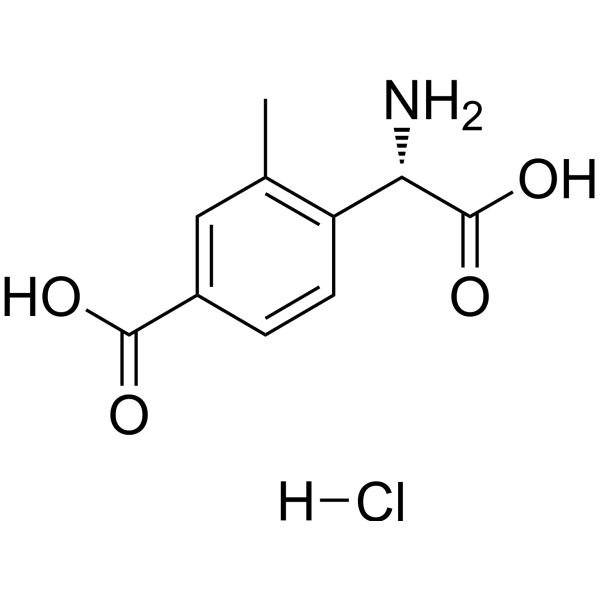
    Deramciclane fumarate is an antagonist of 5-HT Receptor. Deramciclane fumarate is an inverse agonist of 5-HT2C Receptor with an IC50 of 168 nM. Deramciclane fumarate also decreases basal phosphoinositide hydrolysis .
    Deramciclane fumarate
  • HY-163360

    PI3K Cancer
    PI3Kα-IN-19 (Compound 1) is a PI3Kα inhibitor with a targeted binding site at the p110α catalytic subunit. PI3Kα is one of the most common dysregulated kinases used in cancer research .
    PI3Kα-IN-19
  • HY-150135B

    Inositol 1,4,5-trisphosphate tripotassium; Ins(1,4,5)-P3 tripotassium

    Calcium Channel Neurological Disease
    D-myo-Inositol 1,4,5-trisphosphate tripotassium, a second messenger, elicits Ca 2+ mobilization. D-myo-Inositol 1,4,5-trisphosphate tripotassium inhibits the binding of phosphoinositide-specific phospholipase C-delta 1 (PLC-delta 1) to bilayer membranes composed of phosphatidylcholine (PC) and phosphatidylinositol 4,5-bisphosphate (PIP2) .
    D-myo-Inositol 1,4,5-trisphosphate tripotassium
  • HY-101324AR

    CPP monohydrochloride (Standard)

    Reference Standards 5-HT Receptor Neurological Disease
    MK-212 (monohydrochloride) (Standard) is the analytical standard of MK-212 (monohydrochloride). This product is intended for research and analytical applications. MK-212 (CPP) monohydrochloride is a centrally acting 5-HT1C/5-HT2 agonist. MK-212 monohydrochloride can stimulate phosphoinositide hydrolysis in cerebral cortex .
    MK-212 monohydrochloride (Standard)
  • HY-129516

    Cholecystokinin Receptor Metabolic Disease
    A-70874 is a tyrosine-free tetrapeptide analog of cholecystokinin (30-33) (CCK-4). A-70874 is an agonist that stimulates pancreatic amylase release and a partial agonist that stimulates pancreatic phosphoinositide decomposition. A-70874 has an IC50 of 4.9 nM for the guinea pig pancreatic CCK receptor. Cholecystokinin (CCK) receptors are divided into CCK-A (digestive tract) and CCK-B (brain). A-70874 has an affinity of 1.6 μM for the CCK-B/gastrin receptor .
    A-70874
  • HY-101115

    PI3K Cancer
    PI3K-IN-6 (compound 20a) is an oral active and highly selective phosphoinositide 3-kinase (PI3K) β/δ inhibitor, with IC50 values of 7.8 nM/5.3 nM for PI3K β/δ, respectively. PI3K-IN-6 (compound 20a) has potential top treat phosphatase and tensin homolog (PTEN) feficient tumors .
    PI3K-IN-6
  • HY-W403046A

    Drug Metabolite Calcium Channel Neurological Disease
    D-myo-Inositol-4-phosphate monoammonium is a metabolite of D-myo-Inositol 1,4,5-trisphosphate. D-myo-Inositol 1,4,5-trisphosphate, a second messenger, elicits Ca 2+ mobilization. D-myo-Inositol 1,4,5-trisphosphate inhibits the binding of phosphoinositide-specific phospholipase C-delta 1 (PLC-delta 1) to bilayer membranes composed of phosphatidylcholine (PC) and phosphatidylinositol 4,5-bisphosphate (PIP2) .
    D-myo-Inositol-4-phosphate monoammonium
  • HY-171558

    PI3K Akt Cancer
    PI3K-IN-56 (Compound 1) is an orally active, potent and selective irreversible inhibitor of phosphoinositide 3-kinase (PI3K). PI3K-IN-56 irreversibly blocks the phosphatidylinositol-3,4,5-triphosphate (PIP3) production and downstream AKT signaling pathway. PI3K-IN-56 is promising for research of PI3Kα-driven cancers, such as breast and ovarian cancers .
    PI3K-IN-56
  • HY-158688

    PI3K Inflammation/Immunology
    PI3Kδ-IN-21 (Compound 31) is a selective inhibitor for phosphoinositide 3-kinases δ (PI3Kδ), with an IC50 of 13.6 nM. PI3Kδ-IN-21 inhibits proliferation and differentation of T cells through PI3K/AKT/mTOR signaling pathway. PI3Kδ-IN-21 exhibits good pharmacokinetic characters in rat model, and attenuates the experimental autoimmune encephalomyelitis in myelin oligodendrocyte glycoprotein (MOG)-induced EAE model .
    PI3Kδ-IN-21
  • HY-123541

    FGFR Tyrosinase Cancer
    Tec-IN-6 (compound 6) is a FGF2 binding to Tec kinase inhibitor, with an IC50 of 8.9 μM (His-FGF2/GST-NΔ173 Tec) .
    Tec-IN-6
  • HY-N12616

    Drug Intermediate Others
    2-Deoxy-D-ribose 1-phosphate is an intermediate in the metabolism of phosphoinositide, which is found in the rat cerebral cortex .
    2-Deoxy-D-ribose 1-phosphate
  • HY-107515AR

    Reference Standards mGluR Neurological Disease
    LY367385 hydrochloride (Standard) is the analytical standard of LY367385 (hydrochloride) (HY-107515A). This product is intended for research and analytical applications. LY367385 hydrochloride is a highly selective and potent mGluR1a antagonist. LY367385 hydrochloride has an IC50 of 8.8 μM for inhibiting of quisqualate-induced phosphoinositide (PI) hydrolysis, compared with >100 μM for mGlu5a. LY367385 hydrochloride has neuroprotective, anticonvulsant and antiepileptic effects .
    LY367385 hydrochloride (Standard)
  • HY-N16138

    DSPI (18:0/18:0)

    Others Metabolic Disease
    18:0 PI is a phosphoinositide. Phosphoinositides (PI) are similar to other phospholipids, but the head group is the cyclic myo-inositol.
    18:0 PI
  • HY-W788040

    Others Metabolic Disease
    Inositol 1,3,4,5-tetraphosphate (tetraammonium) is a phosphoinositide. Phosphoinositides (PI) are similar to other phospholipids, but the head group is the cyclic myo-inositol.
    Inositol 1,3,4,5-tetraphosphate tetraammonium
  • HY-148303

    Others Metabolic Disease
    Phosphatidylinositol bis-4,5-phosphate,1,2-dipalmitoyl is a phosphoinositide. Phosphoinositides (PI) are similar to other phospholipids, but the head group is the cyclic myo-inositol.
    Phosphatidylinositol bis-4,5-phosphate,1,2-dipalmitoyl
  • HY-107387

    PI3K Metabolic Disease Inflammation/Immunology
    PF-376304 is an orally active non-specific class I phosphoinositide 3-kinase (PI3K) inhibitor with an IC50 of 0.197 μM against PI3Kγ. PF-376304 induces dose-dependent glucose and lipid metabolic disorders in rats, causes rapid death at high doses, and leads to metabolic abnormalities that are self-reversible at low doses. PF-376304 is applicable to the research of metabolic and inflammatory diseases .
    PF-376304
  • HY-172326

    Biochemical Assay Reagents Phospholipase Others
    DPPI-4,5-P2 ammonium is a sudstrate of Phosphoinositide-specific phospholipase C-δ1 (PI-PLC-δ1) .
    DPPI-4,5-P2 ammonium
  • HY-14609R

    mGluR Neurological Disease
    MPEP (Hydrochloride) (Standard) is the analytical standard of MPEP (Hydrochloride). This product is intended for research and analytical applications. MPEP Hydrochloride is a potent, selective, noncompetitive, orally active and systemically active mGlu5 receptor antagonist, with an IC50 of 36 nM for completely inhibiting quisqualate-stimulated phosphoinositide (PI) hydrolysis. MPEP Hydrochloride has anxiolytic-or antidepressant-like effects . MPEP (Hydrochloride) is a click chemistry reagent, it contains an Alkyne group and can undergo copper-catalyzed azide-alkyne cycloaddition (CuAAc) with molecules containing Azide groups.
    MPEP Hydrochloride (Standard)
  • HY-183593

    Phosphatase Akt Interleukin Related Neurological Disease
    SHIP1-IN-1 is an orally active, blood-brain barrier-permeable SHIP1 ligand. SHIP1-IN-1 exhibits IC50 values of 384 μM and 177 μM against human SHIP1, and an IC50 value of 379 μM against murine SHIP1. SHIP1-IN-1 alters the binding state of SHIP1 to phosphatidylinositol membranes, and regulates phosphoinositide pools and phosphorylated AKT levels. SHIP1-IN-1 enhances the uptake of myelin/membrane fragments and amyloid proteins by microglia, alters gene expression and reduces IL-1β levels. SHIP1-IN-1 can be used in studies related to Alzheimer's disease .
    SHIP1-IN-1

Inquiry Online

Your information is safe with us. * Required Fields.

Salutation


Country or Region *

Applicant Name *


Organization Name *

Department *


Email Address *


Product Name *

Cat. No.


Requested quantity *

Phone Number *


Remarks

Inquiry Online

Inquiry Information

Product Name:
Cat. No.:
Quantity:
MCE Japan Authorized Agent:

