
1. Search Result
Search Result
Results for "

Pseudovirus

" in MedChemExpress (MCE) Product Catalog:

17

Inhibitors & Agonists

4

Natural
Products

1

Isotope-Labeled Compounds

Cat. No. Product Name Target Research Areas Chemical Structure
  • HY-119293
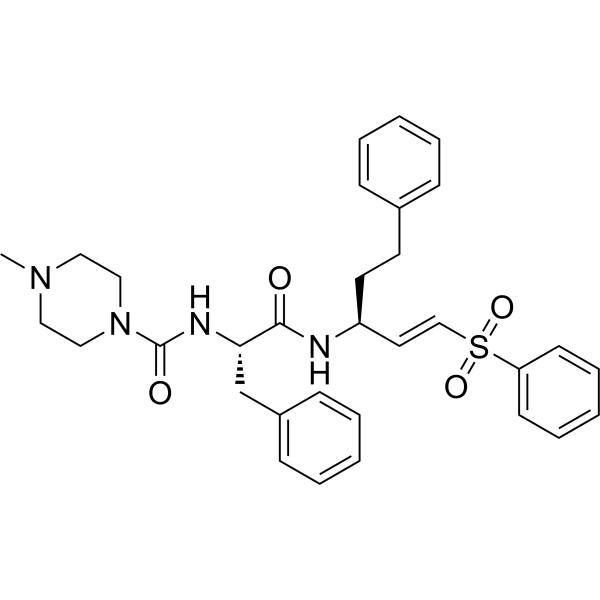
    K777
    3 Publications Verification

    Cathepsin Cytochrome P450 Parasite SARS-CoV Filovirus Infection Inflammation/Immunology Cancer
    K777 is a potent, orally active and irreversible cysteine protease inhibitor. K777 is also a potent CYP3A4 inhibitor with an IC50 of 60 nM. K777 irreversibly inhibits Cruzain, the major cysteine protease of Trypansoma cruzi, and cathepsins B and L. K777 is a broad-spectrum antiviral by targeting cathepsin-mediated cell entry. K777 inhibits SARS-CoV and EBOV pseudovirus entry with IC50 values of 0.68 nM and 0.87 nM, respectively .
    K777
  • HY-W012531
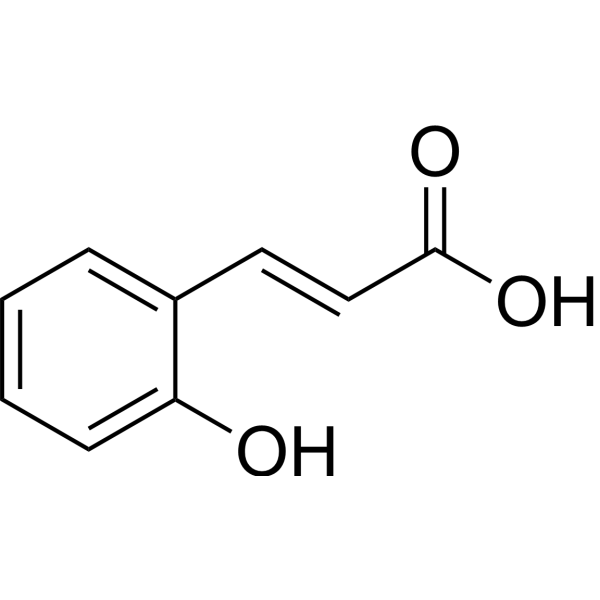
    2-Hydroxycinnamic acid
    1 Publications Verification

    HIV SARS-CoV Endogenous Metabolite Bacterial Infection Neurological Disease Inflammation/Immunology Cancer
    2-Hydroxycinnamic acid is a phenolic acid with antimicrobial and antioxidant properties. 2-Hydroxycinnamic acid has antimicrobial activity against Staphylococcus aureus and is not susceptible to drug resistance. 2-Hydroxycinnamic acid shows inhibitory effects on infection of HIV/SARS-CoV S pseudovirus with an IC50 of 0.3 mM. In addition, 2-Hydroxycinnamic acid has neuroprotective and antitumor activity .
    2-Hydroxycinnamic acid
  • HY-N2116
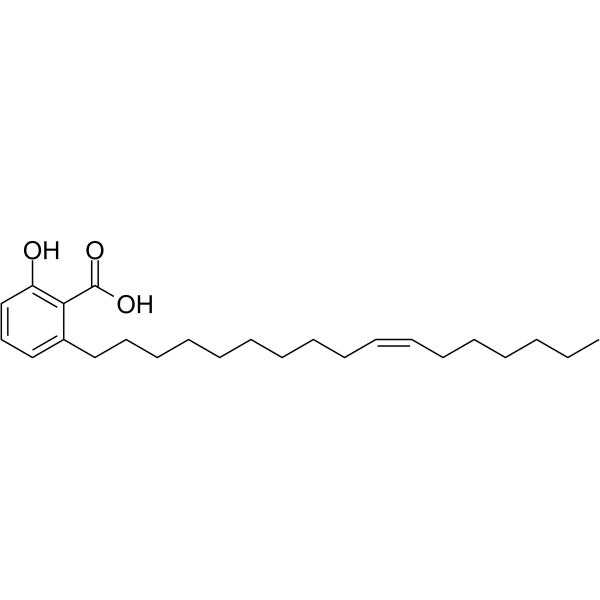
    Ginkgolic acid C17:1
    1 Publications Verification

    PTEN Fatty Acid Synthase (FASN) STAT Apoptosis SARS-CoV Infection Cancer
    Ginkgolic acid C17:1 is a fatty acid synthase (FAS) inhibitor with an IC50 of 10.5 µM. Ginkgolic acid C17:1 shows anti-tumor activity by inhibiting the phosphorylation of STAT3 and inducing apoptosis. Ginkgolic acid C17:1 can block the interaction between S-RBD and ACE2, and has anti-SARS-CoV-2-S pseudovirus activity. Ginkgolic acid C17:1 inhibits the biofilm formation of enterohemorrhagic Escherichia coli and Staphylococcus aureus .
    Ginkgolic acid C17:1
  • HY-B1589A
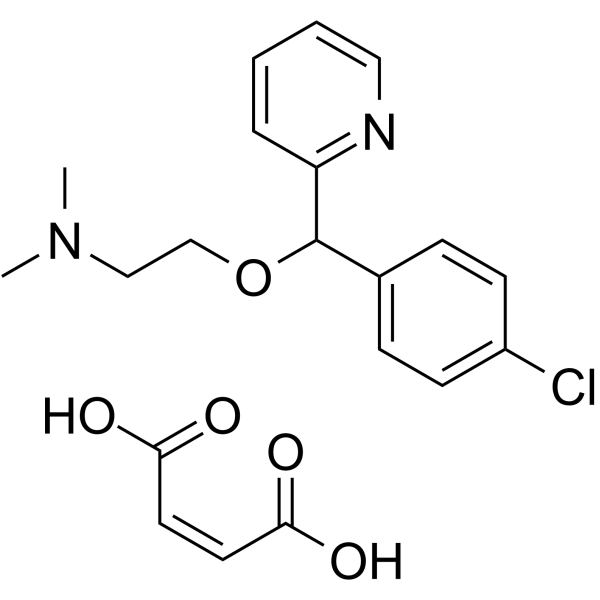
    Carbinoxamine maleate salt
    1 Publications Verification

    Histamine Receptor Influenza Virus Infection Inflammation/Immunology
    Carbinoxamine maleate salt is a blood-brain barrier-permeable histamine H1 receptor antagonist. Carbinoxamine maleate salt blocks the action of histamine on H1 receptors, reducing symptoms such as sneezing, rhinitis, rhinorrhea, erythema, pruritus and urticaria. Carbinoxamine maleate salt inhibits influenza virus entry into cells via endocytosis, targets the early stage of the viral life cycle, and simultaneously reduces viral replication levels in the lungs, alleviating pathological damage and inflammatory responses in lung tissues. Carbinoxamine maleate salt can be used in research on allergic rhinitis, influenza, etc.
    Carbinoxamine maleate salt
  • HY-119293A

    Cathepsin Cytochrome P450 Parasite SARS-CoV Filovirus Infection Inflammation/Immunology Cancer
    K777 tosylate is a potent, orally active and irreversible cysteine protease inhibitor. K777 tosylate is also a potent CYP3A4 inhibitor with an IC50 of 60 nM. K777 tosylate irreversibly inhibits Cruzain, the major cysteine protease of Trypansoma cruzi, and cathepsins B and L. K777 tosylate is a broad-spectrum antiviral by targeting cathepsin-mediated cell entry. K777 tosylate inhibits SARS-CoV and EBOV pseudovirus entry with IC50 values of 0.68 nM and 0.87 nM, respectively .
    K777 tosylate
  • HY-169171

    Cathepsin Infection
    Cathepsin L-IN-5 (D6-3) is a potent Cathepsin L (CatL) inhibitor with an IC50 of 0.27 nM. Cathepsin L-IN-5 effectively blocks the CatL function and substantially hinders the entry of the SARS-CoV-2 pseudovirus to cells by inhibiting the cleavage of the spike protein. Cathepsin L-IN-5 can be utilized in SARS-CoV-2 research .
    Cathepsin L-IN-5
  • HY-W012531R

    Reference Standards HIV SARS-CoV Endogenous Metabolite Bacterial Infection Neurological Disease Inflammation/Immunology Cancer
    2-Hydroxycinnamic acid (Standard) is the analytical standard of 2-Hydroxycinnamic acid. This product is intended for research and analytical applications. 2-Hydroxycinnamic acid is a phenolic acid with antimicrobial and antioxidant properties. 2-Hydroxycinnamic acid has antimicrobial activity against Staphylococcus aureus and is not susceptible to drug resistance. 2-Hydroxycinnamic acid shows inhibitory effects on infection of HIV/SARS-CoV S pseudovirus with an IC50 of 0.3 mM. In addition, 2-Hydroxycinnamic acid has neuroprotective and antitumor activity .
    2-Hydroxycinnamic acid (Standard)
  • HY-122256

    HIV Integrase Infection
    L-870812 is a HIV-1 integration with integrase strand transfer inhibitor. L-870812 consistently blocks cell-free and cell-associated HIV-1 infection. L-870812 blocks subtype C and CRFO2_AG primary isolates. L-870812 can be used for the study of replication-deficient HIV-1 Ba-L (env) pseudovirus .
    L-870812
  • HY-139985

    HIV Infection
    NBD-14189 is a potent HIV-1 entry antagonist with an IC50 of 89 nM against the HIV-1HXB2 pseudovirus. NBD-14189 binds to HIV-1 gp120 and shows potent antiviral activity (EC50<200 nM) .
    NBD-14189
  • HY-146157

    SARS-CoV Infection
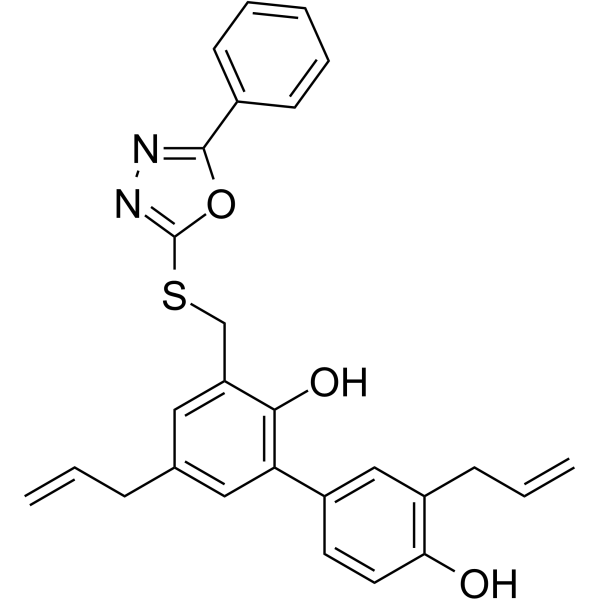
    SARS-CoV-2-IN-22 is a SARS-CoV-2 pseudovirus entry inhibitor with an IC50 value of 16.96 µM .
    SARS-CoV-2-IN-22
  • HY-162598

    SARS-CoV Infection
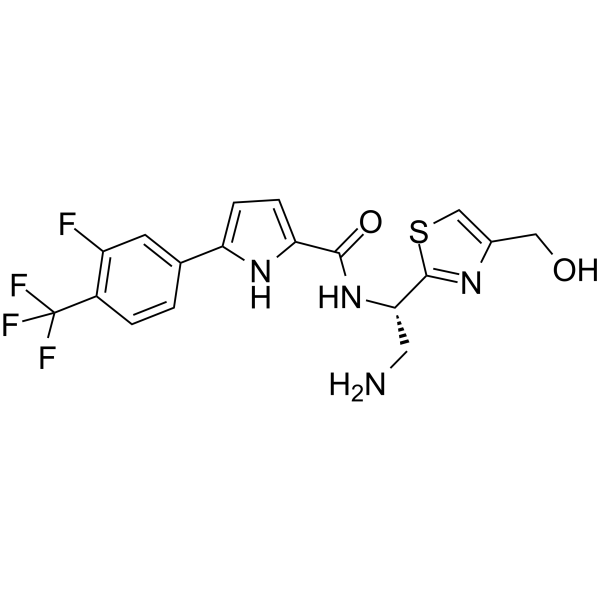
    CET-1 is an antiviral agent that inhibits SARS-CoV-2. CET-1 significantly prevents pseudovirus from entering ACE2 h cells .
    CET-1
  • HY-156441

    SARS-CoV Infection
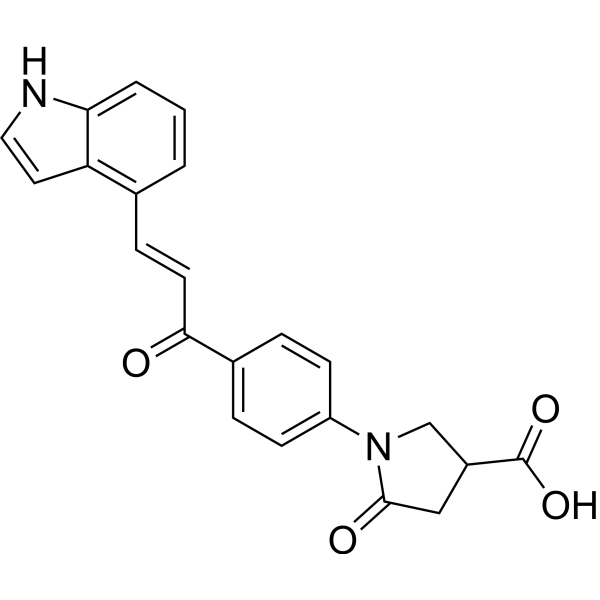
    SARS-CoV-2-IN-65 (compound 2f (81)) is a potent,orally active and reversible SARS-CoV-2 entry inhibitor. SARS-CoV-2-IN-65 inhibits the pseudovirus entry in a ACE2-dependent pathway, via mainly inhibiting RBD:ACE2 interaction and TMPRSS2 activity in Calu-3 cells .
    SARS-CoV-2-IN-65
  • HY-W012531S2

    Isotope-Labeled Compounds Bacterial Endogenous Metabolite SARS-CoV HIV Infection Neurological Disease Inflammation/Immunology Cancer
    2-Hydroxycinnamic acid-d4 is deuterium labeled 2-Hydroxycinnamic acid. 2-Hydroxycinnamic acid is a phenolic acid with antimicrobial and antioxidant properties. 2-Hydroxycinnamic acid has antimicrobial activity against Staphylococcus aureus and is not susceptible to drug resistance. 2-Hydroxycinnamic acid shows inhibitory effects on infection of HIV/SARS-CoV S pseudovirus with an IC50 of 0.3 mM. In addition, 2-Hydroxycinnamic acid has neuroprotective and antitumor activity .
    2-Hydroxycinnamic acid-d4
  • HY-N2116R

    Reference Standards PTEN Fatty Acid Synthase (FASN) STAT Apoptosis SARS-CoV Infection Cancer
    Ginkgolic acid C17:1 (Standard) is the analytical standard of Ginkgolic acid C17:1. This product is intended for research and analytical applications. Ginkgolic acid C17:1 is a fatty acid synthase (FAS) inhibitor with an IC50 of 10.5 µM. Ginkgolic acid C17:1 shows anti-tumor activity by inhibiting the phosphorylation of STAT3 and inducing apoptosis. Ginkgolic acid C17:1 can block the interaction between S-RBD and ACE2, and has anti-SARS-CoV-2-S pseudovirus activity. Ginkgolic acid C17:1 inhibits the biofilm formation of enterohemorrhagic Escherichia coli and Staphylococcus aureus .
    Ginkgolic acid C17:1 (Standard)
  • HY-B1589

    Histamine Receptor Infection Inflammation/Immunology
    (±)-Carbinoxamine is a blood-brain barrier-permeable histamine H1 receptor antagonist. (±)-Carbinoxamine blocks the action of histamine on H1 receptors, reducing symptoms such as sneezing, rhinitis, rhinorrhea, erythema, pruritus and urticaria. (±)-Carbinoxamine inhibits influenza virus entry into cells via endocytosis, targets the early stage of the viral life cycle, and simultaneously reduces viral replication levels in the lungs, alleviating pathological damage and inflammatory responses in lung tissues. (±)-Carbinoxamine can be used in research on allergic rhinitis, influenza, etc.
    (±)-Carbinoxamine
  • HY-180791

    SARS-CoV Infection
    SARS-CoV-2-IN-121 (Compound 74) is a SARS-CoV-2 virus inhibitor. SARS-CoV-2-IN-121 exhibits IC50 values in the pseudovirus and live virus systems of 1.6 and 0.45 μM respectively. SARS-CoV-2-IN-121 effectively inhibits the replication or protein expression of the virus within cells and has almost no toxicity to host cells. SARS-CoV-2-IN-121 can be used for SARS-CoV-2 virus infection research .
    SARS-CoV-2-IN-121
  • HY-181785

    Influenza Virus Infection
    Influenza A virus-IN-18 (Compound C2e) is an orally active inhibitor of Influenza A virus (IC50: 2.5 μM against PR8/H1N1; 6.42 μM against H3N2). Influenza A virus-IN-18 binds directly to the H1N1/PR8 HA protein with high affinity, with a KD of 0.25 μM. Influenza A virus-IN-18 is applicable to research related to Influenza A virus infection .
    Influenza A virus-IN-18

Inquiry Online

Your information is safe with us. * Required Fields.

Salutation


Country or Region *

Applicant Name *


Organization Name *

Department *


Email Address *


Product Name *

Cat. No.


Requested quantity *

Phone Number *


Remarks

Inquiry Online

Inquiry Information

Product Name:
Cat. No.:
Quantity:
MCE Japan Authorized Agent:

