
1. Search Result
Search Result
Results for "

RANK

" in MedChemExpress (MCE) Product Catalog:

19

Inhibitors & Agonists

1

Peptides

3

Inhibitory Antibodies

5

Natural
Products

8

Recombinant Proteins

3

Antibodies

3

Oligonucleotides

Targets Recommended:
Cat. No. Product Name Target Research Areas Chemical Structure
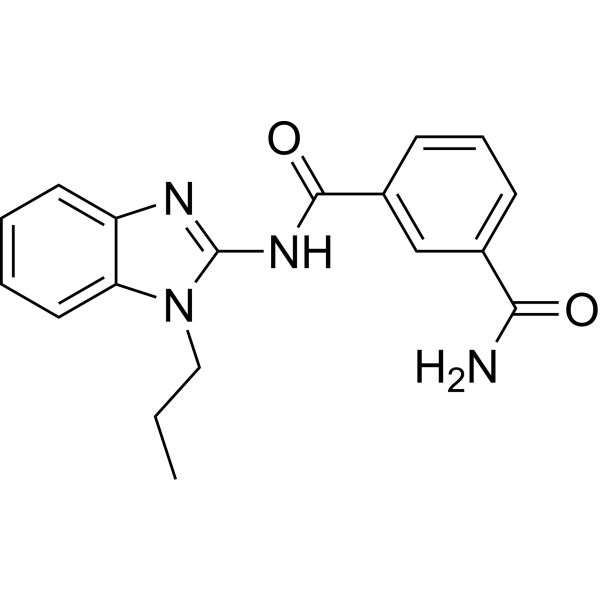
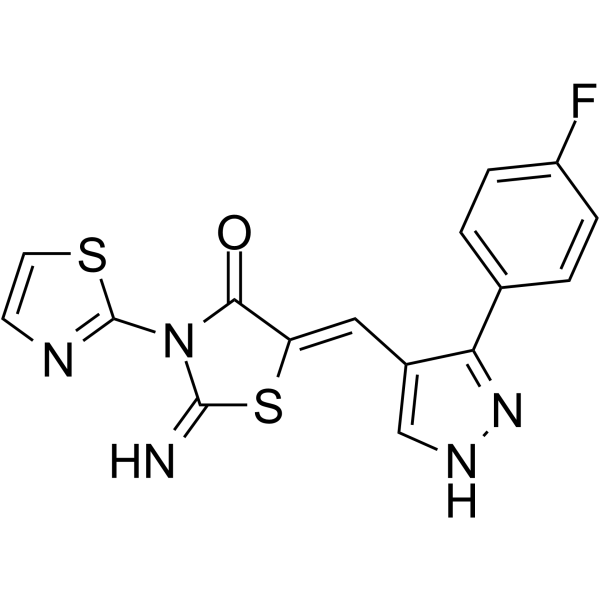
  • HY-103490
    Takinib
    Maximum Cited Publications
    28 Publications Verification

    EDHS-206

    MAP3K Apoptosis Infection Inflammation/Immunology Cancer
    Takinib (EDHS-206) is an orally active and selective TAK1 inhibitor (IC50=9.5 nM), more than 1.5 log more potent than the second and third ranked targets, IRAK4 (120 nM) and IRAK1 (390 nM), respectively. Takinib is an inhibitor of autophosphorylated TAK1 that non-competitively binds within the ATP binding pocket. Takinib induces apoptosis following TNFα stimulation in cell models of rheumatoid arthritis and metastatic breast cancer. Takinib is also a P. falciparum protein kinase 9 (PfPK9) inhibitor (KD(app) of 0.46 μM) .
    Takinib
  • HY-P9958
    Denosumab
    2 Publications Verification

    AMG-162

    NF-κB Caspase Apoptosis RANKL/RANK Endocrinology Cancer
    Denosumab is a human monoclonal antibody that targets the protein RANKL. Denosumab binds to the receptor activator of nuclear factor kappa-B ligand (RANKL) and prevents its binding to the RANK receptor (KD of 0.003 nM for human RANKL). Denosumab promotes proliferation and spermatogenesis. Denosumab prevents bone resorption through inhibition of the NF-κB pathway. Denosumab can be used in bone-related studies .
    Denosumab
  • HY-N6973
    Boldine
    1 Publications Verification

    RANKL/RANK Apoptosis Inflammation/Immunology Cancer
    Boldine is an apomorphine isoquinoline alkaloid extracted from the root of the pheasant pepper (Litsea cubeba). Boldine is an oral effective antioxidant, anti-inflammatory, antitumor agent, and can inhibit osteoclast formation. Boldine induces apoptosis of human bladder cancer cells by regulating ERK, AKT and GSK-3β. Boldine ameliorates bone destruction by down-regulating the OPG/RANKL/RANK signaling pathway. It can be used in rheumatoid arthritis research .
    Boldine
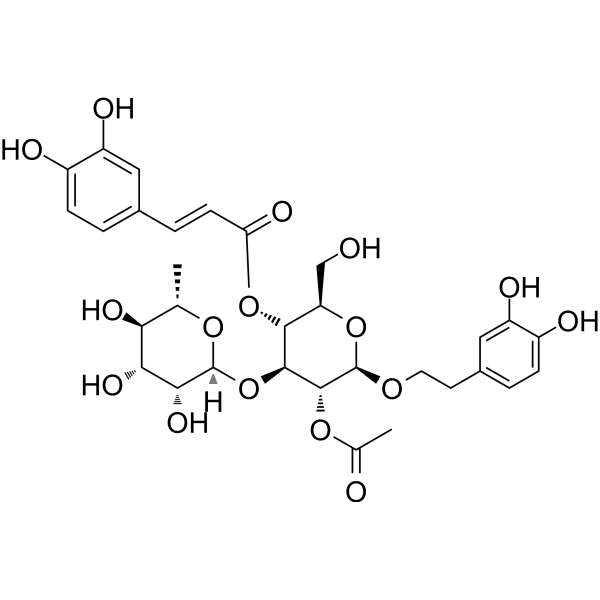
  • HY-N0026
    2'-Acetylacteoside
    1 Publications Verification

    2'-AA

    Monoamine Oxidase RANKL/RANK TNF Receptor NF-κB IKK Cardiovascular Disease Neurological Disease Metabolic Disease
    2'-Acetylacteoside (2'-AA) is a natural compound with oral activity and blood-brain barrier permeability. 2'-Acetylacteosideexhibits MAO‑B inhibitory activity (IC50 = 17.71 μM, Ki = 13.81 μM). 2'-Acetylacteoside downregulates the expression of RANK, TRAF6, NF‑κB, NFATc1 and IKKβ, disrupts the RANKL/RANK interaction, blocks downstream signaling pathways, and increases the level of phosphorylated Akt. 2'-Acetylacteoside possesses potent anti-osteoclastogenic, anti-bone resorptive, pro-neurogenic, neuroprotective and antioxidant activities. 2'-Acetylacteoside can be used in the research of osteoporosis, ischemic stroke and Parkinson's disease .
    2'-Acetylacteoside
  • HY-P9958A
    Denosumab (anti-TNFSF11)
    2 Publications Verification

    RANKL/RANK Apoptosis NF-κB Neurological Disease Endocrinology Cancer
    Denosumab (anti-TNFSF11) is a human monoclonal antibody that targets the protein RANKL. Denosumab binds to the receptor activator of nuclear factor kappa-B ligand (RANKL) and prevents its binding to the RANK receptor (KD of 0.003 nM for human RANKL). Denosumab promotes proliferation and spermatogenesis. Denosumab prevents bone resorption through inhibition of the NF-κB pathway. Denosumab can be used in bone-related studies .
    Denosumab (anti-TNFSF11)
  • HY-P990165

    RANKL/RANK E1/E2/E3 Enzyme NF-κB Inflammation/Immunology Cancer
    Anti-Mouse RANKL/CD254 Antibody (IK22/5) is an anti-mouse RANKL/CD254 IgG2a monoclonal antibody. Anti-Mouse RANKL/CD254 Antibody (IK22/5) inhibits osteoclast formation and activity by specifically blocking the binding of RANKL and RANK. Anti-Mouse RANKL/CD254 Antibody (IK22/5) can inhibit the expression of MuRF1/Trogin-1 and activation of NF-κB. Anti-Mouse RANKL/CD254 Antibody (IK22/5) can be used for research on cancer such as melanoma or colon cancer and osteoporosis .
    Anti-Mouse RANKL/CD254 Antibody (IK22/5)
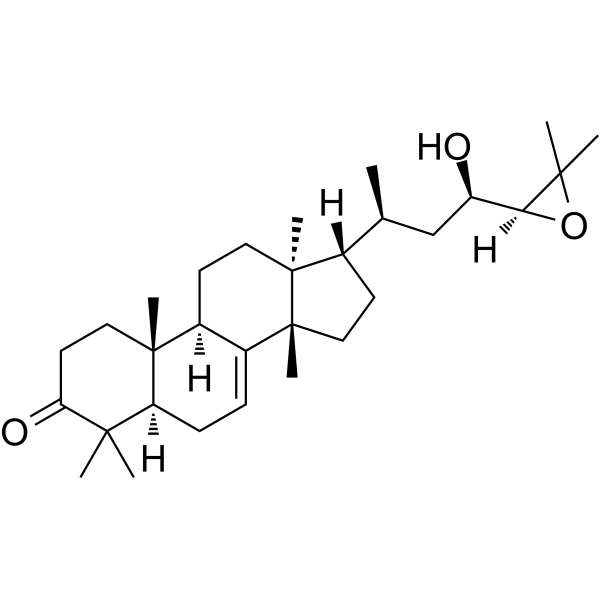
  • HY-N3188

    Akt NF-κB Infection
    Niloticin, tetracyclic triterpenoid compound, is a osteoclastogenesis inhibitor. Niloticin shows anti-viral, antioxidative, and mosquitocidal activities. Niloticin inhibits osteoclastogenesis by blocking RANKL-RANK interaction and suppressing the AKT, MAPK, and NF-κB signaling pathways .
    Niloticin
  • HY-N6973R
    Boldine (Standard)
    1 Publications Verification

    Reference Standards RANKL/RANK Inflammation/Immunology
    Boldine (Standard) is the analytical standard of Boldine. This product is intended for research and analytical applications. Boldine is an aporphine isoquinoline alkaloid extracted from the root of Litsea cubeba and also possesses these properties, including antioxidant, anti-inflammatory and cytoprotective effects. Boldine suppresses osteoclastogenesis, improves bone destruction by down-regulating the OPG/RANKL/RANK signal pathway and may be a potential therapeutic agent for rheumatoid arthritis .
    Boldine (Standard)
  • HY-RS14801

    Small Interfering RNA (siRNA) Others

    Tnfrsf11a Rat Pre-designed siRNA Set A contains three designed siRNAs for Tnfrsf11a gene (Rat), as well as a negative control, a positive control, and a FAM-labeled negative control.

    Tnfrsf11a Rat Pre-designed siRNA Set A
    Tnfrsf11a Rat Pre-designed siRNA Set A
  • HY-RS14800

    Small Interfering RNA (siRNA) Others

    Tnfrsf11a Mouse Pre-designed siRNA Set A contains three designed siRNAs for Tnfrsf11a gene (Mouse), as well as a negative control, a positive control, and a FAM-labeled negative control.

    Tnfrsf11a Mouse Pre-designed siRNA Set A
    Tnfrsf11a Mouse Pre-designed siRNA Set A
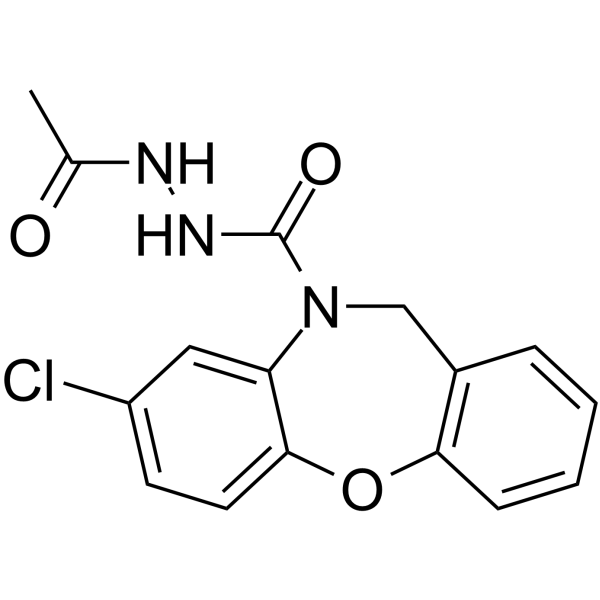
  • HY-117963

    Antibiotic Infection
    Lincosamine is a lincosamide antibiotic with activity that inhibits bacterial growth. Lincosamine is primarily produced by Streptomyces lincolnensis. Lincosamine has shown efficacy in combating certain bacterial infections, especially against Klebsiella pneumoniae. Lincosamine ranked among 14 other antimicrobial compounds in its activity against Klebsiella pneumoniae in a test .
    Lincosamine
  • HY-121282B

    Pecazine acetate

    Apoptosis MALT1 Others
    Mepazine acetate (Pecazine acetate) is a drug that has the activity to inhibit the protease activity of MALT1. Mepazine acetate is often used to study the role of MALT1 in biology. Treatment of mouse bone marrow precursor cells with mepazine acetate strongly inhibited RANK ligand (RANKL)-induced osteoclast formation. Mepazine acetate also inhibited the expression of multiple osteoclast markers such as TRAP, feline hepsin K, and calcitonin. The protective effect of mepazine acetate was not affected by MALT1 deficiency. The mechanism of action of mepazine acetate may involve MALT1-independent mechanisms, and this aspect needs to be considered in future studies .
    Mepazine acetate
  • HY-N0026R

    2'-AA (Standard)

    Reference Standards Monoamine Oxidase RANKL/RANK TNF Receptor NF-κB IKK Cardiovascular Disease Neurological Disease Metabolic Disease
    2'-Acetylacteoside (Standard) is the analytical standard of 2'-Acetylacteoside (2'-AA) (HY-N0026). This product is intended for research and analytical applications. 2'-Acetylacteoside is a natural compound with oral activity and blood-brain barrier permeability. 2'-Acetylacteosideexhibits MAO‑B inhibitory activity (IC50 = 17.71 μM, Ki = 13.81 μM). 2'-Acetylacteoside downregulates the expression of RANK, TRAF6, NF‑κB, NFATc1 and IKKβ, disrupts the RANKL/RANK interaction, blocks downstream signaling pathways, and increases the level of phosphorylated Akt. 2'-Acetylacteoside possesses potent anti-osteoclastogenic, anti-bone resorptive, pro-neurogenic, neuroprotective and antioxidant activities. 2'-Acetylacteoside can be used in the research of osteoporosis, ischemic stroke and Parkinson's disease .
    2'-Acetylacteoside (Standard)
  • HY-RS14799

    Small Interfering RNA (siRNA) Others

    TNFRSF11A Human Pre-designed siRNA Set A contains three designed siRNAs for TNFRSF11A gene (Human), as well as a negative control, a positive control, and a FAM-labeled negative control.

    TNFRSF11A Human Pre-designed siRNA Set A
    TNFRSF11A Human Pre-designed siRNA Set A
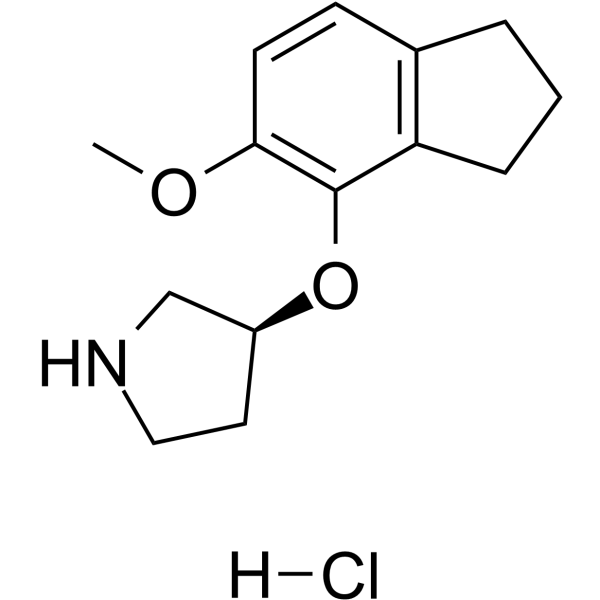
  • HY-103120

    5-HT Receptor Neurological Disease
    Org37684 is a highly potent 5-HT2C receptor agonist (pEC50=8.17). Org37684 exhibits a rank order of potency of 5-HT2C>5-HT2B>5-HT2A. Its selectivity for the 5-HT2C receptor is approximately 2.5 times over the 5-HT2B (pEC50=7.96) and ten times for the 5-HT2A (pEC50=7.11) receptor .
    Org37684
  • HY-103490R

    EDHS-206 (Standard)

    Reference Standards MAP3K Apoptosis Infection Inflammation/Immunology Cancer
    Takinib (Standard) is the analytical standard of Takinib. This product is intended for research and analytical applications. Takinib (EDHS-206) is an orally active and selective TAK1 inhibitor (IC50=9.5 nM), more than 1.5 log more potent than the second and third ranked targets, IRAK4 (120 nM) and IRAK1 (390 nM), respectively. Takinib is an inhibitor of autophosphorylated TAK1 that non-competitively binds within the ATP binding pocket. Takinib induces apoptosis following TNFα stimulation in cell models of rheumatoid arthritis and metastatic breast cancer. Takinib is also a P. falciparum protein kinase 9 (PfPK9) inhibitor (KD(app) of 0.46 μM) .
    Takinib (Standard)
  • HY-P11001

    TNF Receptor Cancer
    RANK-derived TRAF6 inhibitor is a TRAF6 inhibitor peptide that blocks the interaction of TRAF6 and LMP1 with an IC50 of 177 nM. RANK-derived TRAF6 inhibitor causes a severe reduction in cell viability in the LMP1-dependent lymphoblastoid cell lines (LCLs) .
    RANK-derived TRAF6 inhibitor
  • HY-181079

    RANKL/RANK Reactive Oxygen Species (ROS) p38 MAPK NF-κB Metabolic Disease
    RANKL-IN-2 is an orally active RANKL inhibitor with Kd values of 3.21 μM and 4.625 μM in the SPR and MST assays, respectively. RANKL-IN-2 binds to RANKL to interfere with RANKL-RANK interaction. RANKL-IN-2 suppresses osteoclastogenesis by inhibiting ROS, MAPK and NF-κB pathways. RANKL-IN-2 inhibits osteoclastogenesis via inhibition of RANKL-induced osteoclast formation, bone resorption, and osteoclast-specific gene and protein expressions in vitro.RANKL-IN-2 prevents bone loss in ovariectomized osteoporosis mice.RANKL-IN-2 can be used for the research of osteoporosis .
    RANKL-IN-2
  • HY-182757

    RANKL/RANK Nuclear Factor of activated T Cells (NFAT) Cathepsin Metabolic Disease Inflammation/Immunology
    Y1693 is an orally active RANKL inhibitor with a Kd of 5.03 μM for hRANKL. Y1693 inhibits the activation of the downstream c-fos/NFATc1 signaling pathway by blocking its interaction with RANK. Y1693 significantly inhibits RANKL-induced osteoclast differentiation, F-actin ring formation and bone resorptive activity, while downregulating the mRNA and protein expressions of TRAP, cathepsin K, c-fos and NFATc1. Y1693 shows no obvious cytotoxicity to bone marrow-derived macrophages and osteoclast precursor cells, and exhibits favorable ADME properties. Y1693 improves ovariectomy-induced osteoporosis in mice and reverses ligation-induced periodontal alveolar bone loss. Y1693 is applicable to research related to osteoporosis and periodontal diseases .
    Y1693

Inquiry Online

Your information is safe with us. * Required Fields.

Salutation


Country or Region *

Applicant Name *


Organization Name *

Department *


Email Address *


Product Name *

Cat. No.


Requested quantity *

Phone Number *


Remarks

Inquiry Online

Inquiry Information

Product Name:
Cat. No.:
Quantity:
MCE Japan Authorized Agent:

