

25 Results for "

Rose

" in MedChemExpress (MCE) Product Catalog:
Products (25)

25 Results for "Rose" in MCE Product Catalog:

2
2 Cited Publications
Cat. No.: HY-B1290
CAS No.: 60-12-8
Synonyms: Phenylethyl alcohol; Phenethyl alcohol; Benzyl carbinol
2-Phenylethanol (Phenethyl alcohol) is an aromatic alcohol with a rose-like odour. 2-Phenylethanol is a flavour and fragrance compound, and can be used as a preservative and anti-microbial agent. 2-Phenylethanol has antityrosinase and antimicrobial activities .
2
2 Cited Publications
Cat. No.: HY-B1290R
CAS No.: 60-12-8
Synonyms: Phenylethyl alcohol (Standard); Phenethyl alcohol (Standard); Benzyl carbinol (Standard)
2-Phenylethanol (Standard) is the analytical standard of 2-Phenylethanol. This product is intended for research and analytical applications. 2-Phenylethanol (Phenethyl alcohol) is an aromatic alcohol with a rose-like odour. 2-Phenylethanol is a flavour and fragrance compound, and can be used as a preservative and anti-microbial agent. 2-Phenylethanol has antityrosinase and antimicrobial activities .
1
1 Cited Publications
Cat. No.: HY-Y0678
CAS No.: 621-23-8
Synonyms: TRIMETHYL PHLOROGLUCINOL
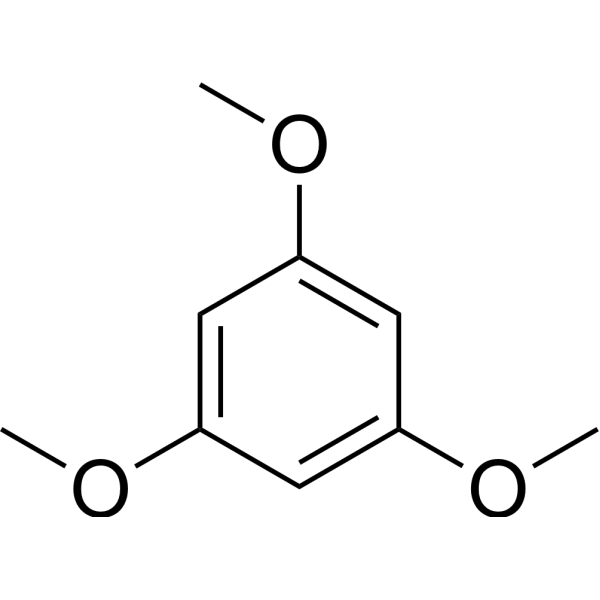
1,3,5-Trimethoxybenzene (TRIMETHYL PHLOROGLUCINOL) is an electrophilic substitution reaction substrate targeting free chlorine (Cl +) and free bromine (Br +). 1,3,5-Trimethoxybenzene has highly selective electrophilic addition characteristics. By capturing halogens, it undergoes specific substitution reactions to generate stable halogenated products. 1,3,5-Trimethoxybenzene can not only quench residual oxidants, but also quantify the halogen concentration by detecting the product without affecting the stability of redox-sensitive disinfection byproducts (DBPs). 1,3,5-Trimethoxybenzene is mainly used in water quality testing and quantitative analysis of free chlorine/bromine in water. At the same time, in phytochemistry, it is a key component of rose fragrance and participates in the study of pollination attraction mechanism .
Cat. No.: HY-W127769
CAS No.: 138182-21-5
Synonyms: Salmon-Gal
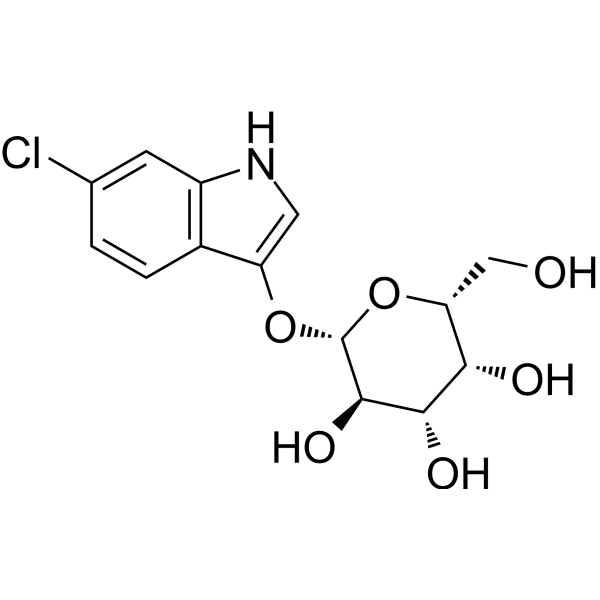
Rose-β-D-Gal is a chromogenic substrate, is also a β-galactosidase substrate. Rose-β-D-Gal creates a pink/magenta color after the reaction and has been used for detection of β-gal activity .
Cat. No.: HY-D1542
CAS No.: 51395-97-2
Mucicarmine is used in the histological visualization of acid mucopolysaccharides in tissue sections. Mucicarmine can identify mucin (deep rose), which is useful in determining the mucin positive cancer (such as liver carcinoma) .
Cat. No.: HY-17518
CAS No.: 283159-90-0
Synonyms: IR5885; Valiphenal
Domaines de recherche:  

Infection

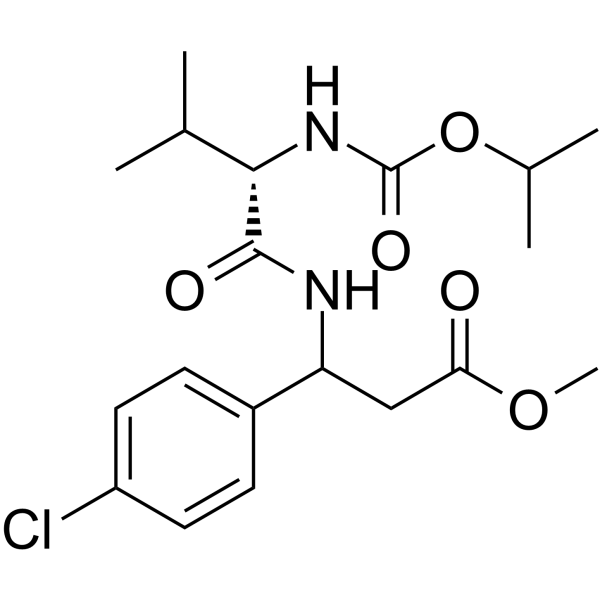
Valifenalate (IR5885; Valiphenal) is an insecticide agent and fungicide, which is approved for application on high-value crops such as grapes, tomatoes and other vegetables. Valifenalate interferes with cell-wall synthesisValifenalate is effective against various types of mildew. Valifenalate can be used against crown rot of rose cuased by Phytophthora citrophthora. Valifenalate induces non-adverse thyroid changes via adaptive induction of uridine 5’-diphosphoglucuronosyltransferase (UGT) in the liver of dogs and rats .
Cat. No.: HY-142956
Pureté:  99.65%
Domaines de recherche:  

Cancer

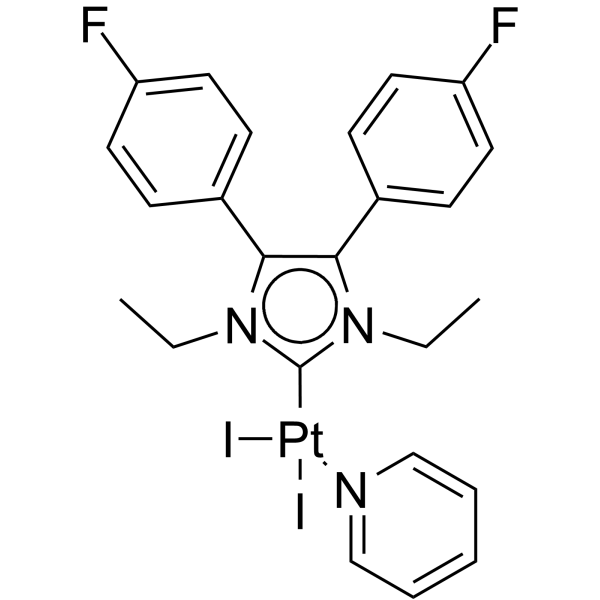
ROS-ERS inducer 1 is a type II ICD (immunogenic cell death) inducer. ROS-ERS inducer 1 is a Pt(II)-N-heterocyclic carbene (Pt(II)-NHC) complex derived from 4,5-diarylimidazole. ROS-ERS inducer 1 successfully induces endoplasmic reticulum stress (ERS) accompanied by reactive oxygen species (ROS) generation and finally lead to the release of damage-associated molecular patterns (DAMPs) in HCC cells. ROS-ERS inducer 1 displays much higher anticancer activities than Cisplatin .
Cat. No.: HY-W102525
CAS No.: 16409-43-1
Target:  

Drug Derivative

Domaines de recherche:  

Others

Rose oxide is a kind of monoterpenoid volatile organic compound with a distinctive rose fragrance. However, rose oxide does not have inhibitory activity against the formation of breast cancer stem cells .
Cat. No.: HY-B1290S2
CAS No.: 35845-63-7
Synonyms: Phenylethyl alcohol-d5; Phenethyl alcohol-d5; Benzyl carbinol-d5
2-Phenylethanol-d5 is the deuterium labeled 2-Phenylethanol . 2-Phenylethanol (Phenethyl alcohol), extracted from rose, carnation, hyacinth, Aleppo pine, orange blossom and other organisms, is a colourless liquid. It has a pleasant floral odor and also an autoantibiotic produced by the fungus Candida albicans . It is used as an additive in cigarettes and also used as a preservative in soaps due to its stability in basic conditions.
Cat. No.: HY-Y0678R
CAS No.: 621-23-8
1,3,5-Trimethoxybenzene (TRIMETHYL PHLOROGLUCINOL) is an electrophilic substitution reaction substrate targeting free chlorine (Cl+) and free bromine (Br+). 1,3,5-Trimethoxybenzene has highly selective electrophilic addition characteristics. By capturing halogens, it undergoes specific substitution reactions to generate stable halogenated products. 1,3,5-Trimethoxybenzene can not only quench residual oxidants, but also quantify the halogen concentration by detecting the product without affecting the stability of redox-sensitive disinfection byproducts (DBPs). 1,3,5-Trimethoxybenzene is mainly used in water quality testing and quantitative analysis of free chlorine/bromine in water. At the same time, in phytochemistry, it is a key component of rose fragrance and participates in the study of pollination attraction mechanism .
Cat. No.: HY-N13230
Target:  

Others

Rose Hips Extract is the extract of Rose Hips, with content of 5% Flavone.
Cat. No.: HY-W010235
CAS No.: 4179-19-5
Category:  

Natural Products

Target:  

Drug Derivative

3,5-Dimethoxytoluene, a methylated phenolic derivative, is one of characteristic scent compounds emitted from flowers of most rose varieties. 3,5-Dimethoxytoluene shows significant fumigant toxicity against L. serricorne and L. bostrychophila with LC50 values of 4.99 mg/L air and 0.91 mg/L air, respectively .
Cat. No.: HY-B1290S
CAS No.: 107473-33-6
Synonyms: Phenylethyl alcohol-d4; Phenethyl alcohol-d4; Benzyl carbinol-d4
2-Phenylethanol-d4 is the deuterium labeled 2-Phenylethanol . 2-Phenylethanol (Phenethyl alcohol), extracted from rose, carnation, hyacinth, Aleppo pine, orange blossom and other organisms, is a colourless liquid. It has a pleasant floral odor and also an autoantibiotic produced by the fungus Candida albicans . It is used as an additive in cigarettes and also used as a preservative in soaps due to its stability in basic conditions.
Cat. No.: HY-B1290S1
CAS No.: 42950-74-3
Synonyms: Phenylethyl alcohol-d9; Phenethyl alcohol-d9; Benzyl carbinol-d9
2-Phenylethanol-d9 is the deuterium labeled 2-Phenylethanol . 2-Phenylethanol (Phenethyl alcohol), extracted from rose, carnation, hyacinth, Aleppo pine, orange blossom and other organisms, is a colourless liquid. It has a pleasant floral odor and also an autoantibiotic produced by the fungus Candida albicans . It is used as an additive in cigarettes and also used as a preservative in soaps due to its stability in basic conditions.
Cat. No.: HY-158190
Synonyms: Rose Bengal Medium
Rose-Bengal Chloramphenicol Agar is a selective medium for the enumeration of yeasts and moulds from a wide variety of foodstuffs. The medium has a neutral pH and chloramphenicol is used as a selective agent to suppress the growth of bacteria .
Cat. No.: HY-169957
CAS No.: 3081736-89-9
Domaines de recherche:  

Cancer

ROS-ERS inducer 2 (Complex 3f) triggers intracellular ROS generation and affect the function of mitochondria. promote the release of damage-associated molecular patterns (DAMPs), induce immunogenic cell death (ICD) and activates endoplasmic reticulum stress (ERS). ROS-ERS inducer 2 plays an important role in anti-liver cancer research .
Cat. No.: HY-B1290S3
CAS No.: 68661-17-6
Synonyms: Phenylethyl alcohol-13C2; Phenethyl alcohol-13C2; Benzyl carbinol-13C2
2-Phenylethanol- 13C2 is 13C labeled 2-Phenylethanol (HY-B1290). 2-Phenylethanol (Phenethyl alcohol) is an aromatic alcohol with a rose-like odour. 2-Phenylethanol is a flavour and fragrance compound, and can be used as a preservative and anti-microbial agent. 2-Phenylethanol has antityrosinase and antimicrobial activities .
Cat. No.: HY-N18809
CAS No.: 8007-01-0
Category:  

Extract

Target:  

Others

Rose oil is widely used as a flavoring agent in beauty, body care, food, tobacco, perfumes, and cosmetics. Rose oil also has benefits in preventing infectious diseases and regulating the endocrine system.
Cat. No.: HY-Y0678S
CAS No.: 35564-11-5
Synonyms: Trimethyl phloroglucinol-d3
1,3,5-Trimethoxybenzene-d3 (Trimethyl phloroglucinol-d3) is the deuterium labeled 1,3,5-Trimethoxybenzene (HY-Y0678). 1,3,5-Trimethoxybenzene is a key component of the Chinese rose odor. 1,3,5-Trimethoxybenzene is synthesized in three successive methylation steps from phloroglucinol, the initial precursor .
Cat. No.: HY-W010235R
CAS No.: 4179-19-5
3,5-Dimethoxytoluene (Standard) is the analytical standard of 3,5-Dimethoxytoluene. This product is intended for research and analytical applications. 3,5-Dimethoxytoluene, a methylated phenolic derivative, is one of characteristic scent compounds emitted from flowers of most rose varieties. 3,5-Dimethoxytoluene shows significant fumigant toxicity against L. serricorne and L. bostrychophila with LC50 values of 4.99 mg/L air and 0.91 mg/L air, respectively[1].

