Search Result
Results for "
SKOV
" in MedChemExpress (MCE) Product Catalog:
| Cat. No. |
Product Name |
Target |
Research Areas |
Chemical Structure |
-
- HY-116147
-
|
|
LPL Receptor
Apoptosis
|
Cancer
|
|
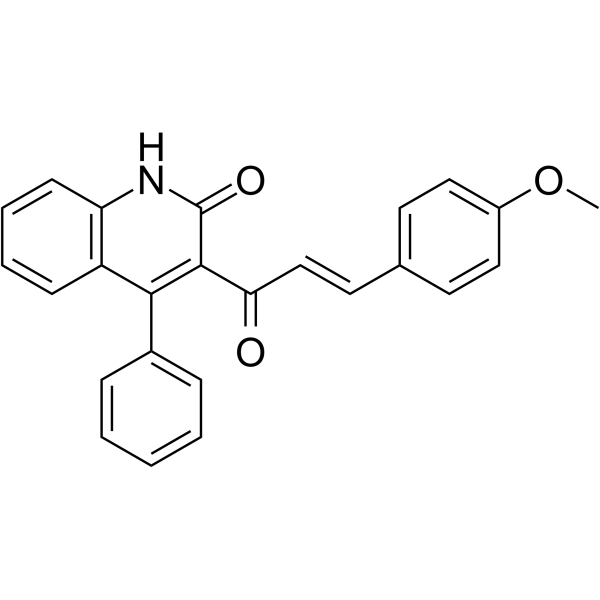
Ceranib-2 is a potent and nonlipid ceramidase inhibitor that inhibits cellular ceramidase activity with an IC50 of 28 μM in SKOV3 cells. Ceranib-2 induces the accumulation of multiple ceramide species, decreases levels of sphingosine and sphingosine-1-phosphate (S1P), and induces cell apoptosis. Anticancer activity .
|
-
-
- HY-N2416
-
|
|
Microtubule/Tubulin
Apoptosis
|
Cancer
|
|
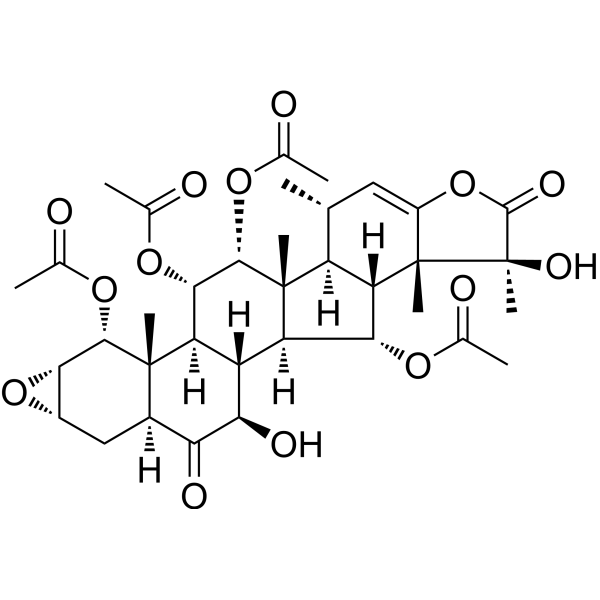
Taccalonolide A is a microtubule stabilizer, which is a steroid isolated from Tacca chantrieri, with cytotoxic and antimalarial activities . Taccalonolide A causes G2-M accumulation, Bcl-2 phosphorylation and initiation of apoptosis . Taccalonolide A is effective in vitro against cell lines that overexpress P-glycoprotein (Pgp) and multidrug resistance protein 7 (MRP7), with an IC50 of 622 nM for SK-OV-3 cells .
|
-
-
- HY-108639
-
MIRA-1
2 Publications Verification
NSC 19630
|
MDM-2/p53
Apoptosis
|
Cancer
|
|
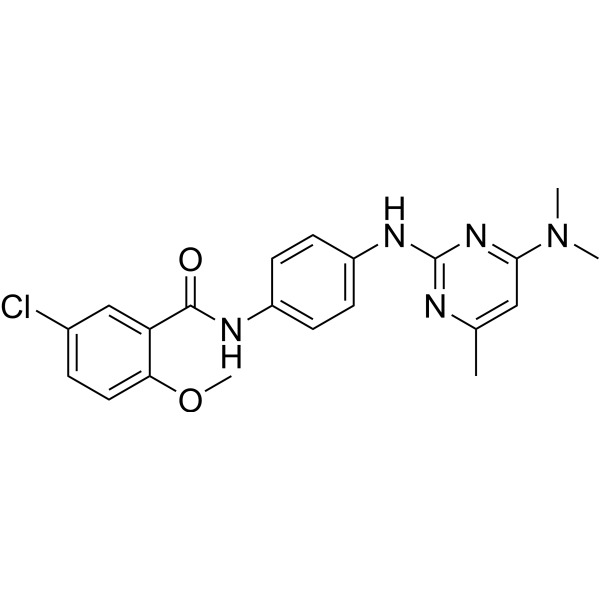
MIRA-1 is a maleimide analogue. MIRA-1 can induce apoptosis in mutant p53 cells via restoration of p53-dependent transcriptional transactivation. MIRA-1 has anticancer activity .
|
-
-
- HY-N3028
-
|
|
Microtubule/Tubulin
|
Cancer
|
|
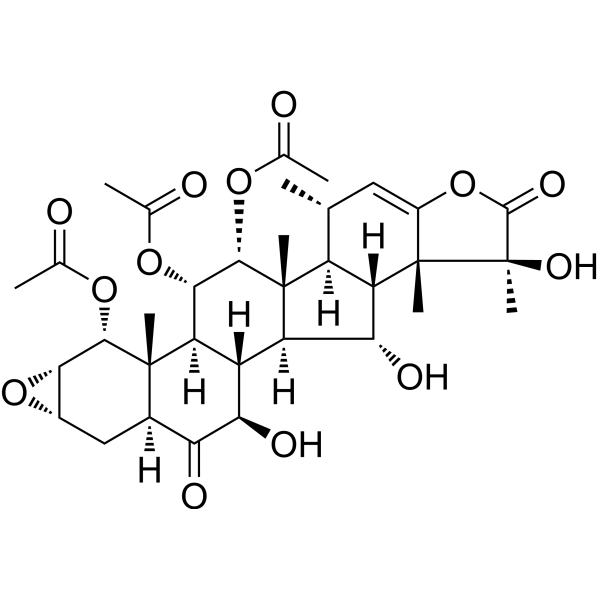
Taccalonolide B is microtubule stabilizer isolated from Tacca plantaginea, with antitumor activity. Taccalonolide B is effective in vitro against cell lines that overexpress P-glycoprotein (Pgp) and multidrug-resistance protein (MRP7). Taccalonolide B inhibits growth of SK-OV-3 cells with an IC50 of 208 nM .
|
-
-
- HY-172970
-
|
|
CDK
DNA/RNA Synthesis
Apoptosis
|
Cancer
|
|
HQY1428 is an orally active CDK12 inhibitor. HQY1428 inhibits DNA replication, causes G2/M arrest in SKOV3 cells, induces DNA double-strand breaks and apoptosis. HQY1428 has anti-tumor activity in the SKOV3 xenograft mouse model. HQY1428 combined with the HER2 inhibitor Lapatinib (HY-50898) in the NCI-N87 xenograft mouse model produces a synergistic therapeutic effect .
|
-
-
- HY-102073
-
|
|
Glutaminase
Integrin
FAK
Src
|
Cancer
|
|
TG53 is a potent inhibitor of tissue transglutaminase (TG2) and fibronectin (FN) protein-protein interaction. TG53 inhibits formation of a complex with integrin β1 and activation of FAK and c-Src during SKOV3 cell attachment onto FN. TG53 can be used for ovarian cancer research .
|
-
-
- HY-177285
-
|
|
Kinesin
ADC Payload
|
Cancer
|
|
NVP-BQS481 (Compound 1) is a selective Kinesin spindle protein-5 (Eg5) inhibitor with an IC50< 0.5 nM. NVP-BQS481 has significant antimitotic and antitumor activity (IC50: 0.0.9 nM for SK-OV-3ip cells). NVP-BQS481 can be used as a cytotoxic payload for synthesis of antibody-drug conjugates (ADCs) .
|
-
-
- HY-P1651B
-
|
|
TRP Channel
|
Cancer
|
|
SOR-C13 acetate is the acetate salt form of SOR-C13 (HY-P1651). SOR-C13 acetate is an antagonist for transient receptor potential vanilloid 6 (TRPV 6), with an IC50 of 14 nM. SOR-C13 acetate inhibits tumor growth in SKOV-3 xenograft mouse model .
|
-
-
- HY-N15314
-
|
|
MDM-2/p53
Akt
Apoptosis
|
Cancer
|
|
Syringolin A is a plant elicitor that can be produced by the plant pathogen Pseudomonas syringae pv. syringae. Syringolin A exhibits anti-proliferative activity against a variety of cancer cells (IC50 for SK-N-SH, LAN-1, SKOV3 is 20-25 µM), induces apoptosis in SK-N-SH through upregulation of p53 expression and downregulation of Akt/PKB proteins .
|
-
-
- HY-178446
-
|
|
METTL3
c-Myc
Bcl-2 Family
|
Cancer
|
|
METTL3-IN-11 is an excellent, selective METTL3 inhibitor (IC50 = 45.31 nM). METTL3-IN-11 exhibits high selectivity towards METTL3 compared to DNMT1, EZH1, MLL1, and PRMT1. METTL3-IN-11 reduces the m6A level of total RNA in MOLM-13 and SKOV3 cells, induces cell apoptosis, and inhibits cell migration. METTL3-IN-11 can reduce the expression of m6A downstream target genes (c-MYC and BCL2). METTL3-IN-11 can be used for the study of ovarian cancer and acute myeloid leukemia .
|
-
-
- HY-178956
-
|
|
HSP
|
Cancer
|
|
KUNB106 is a selective Hsp90β inhibitor with KDs of 91 nM and 38 μM against Hsp90β and Hsp90α. KUNB106 exhibits antiproliferative activity against MDA-MB-231 cells, A549 and SKOV-3 cells. KUNB106 can be used for the study of triple negative breast cancer .
|
-
-
- HY-162537
-
|
|
PROTACs
NAMPT
|
Cancer
|
|
LYP-8 is a potent and effective NAMPT degrader with maximum degradation of 97% at 0.5 μM in SKOV-3 cells. LYP-8 shows anti-cancer activity in vivo and in vitro(Sturcture Note:(Blue: Cereblon ligand (HY-112078), Black: linker (HY-128801);Pink: Nampt inhibitor Nampt-IN-11 (HY-158689)) .
|
-
-
- HY-175257
-
|
|
PARP
Reactive Oxygen Species (ROS)
Apoptosis
NF-κB
ERK
Bcl-2 Family
TGF-β Receptor
EGFR
Cadherin
|
Cancer
|
|
Theophylline-platinum(IV) prodrug-1 is a PARP-1 inhibitor. Theophylline-platinum(IV) prodrug-1 enhances DNA
damage, ROS production, mitochondrial dysfunction, apoptosis and S-phase arrest, along with reducing invasion and metastasis in cells. Theophylline-platinum(IV) prodrug-1 exhibits superior antitumor activity in the xenograft SKOV3-BRCA1-KD tumor model. Theophylline-platinum(IV) prodrug-1 can be used for the study of ovarian cancer .
|
-
-
- HY-N8934
-
|
|
Others
|
Cancer
|
|
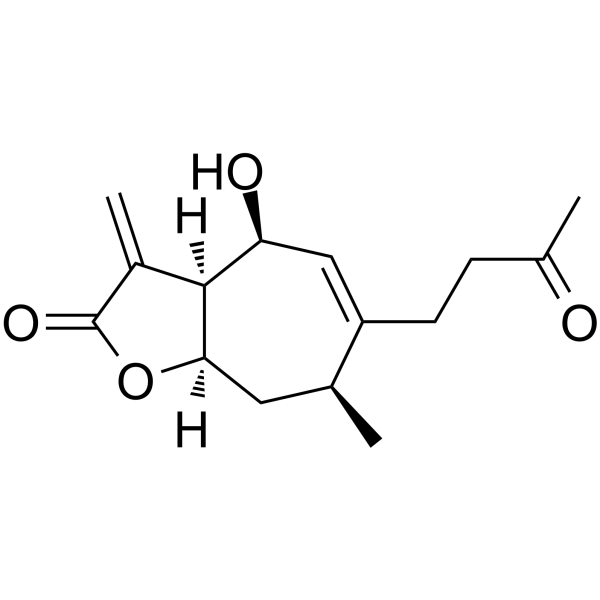
6β-Hydroxytomentosin, a sesquiterpenoid, can be found in flowers of Inula japonica. 6β-Hydroxytomentosin exhibits weak cytotoxicities against A549, SK-OV-3, HepG-2 and HT-29 cell lines .
|
-
-
- HY-N6578
-
|
|
Others
|
Cancer
|
|
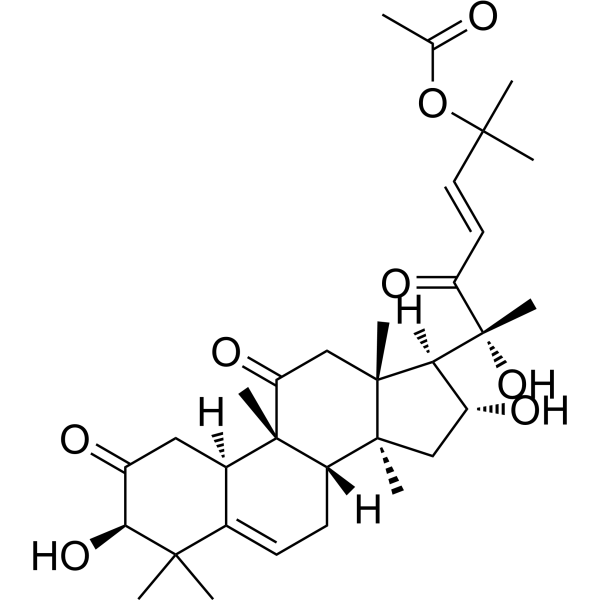
3-epi-Isocucurbitacin B (Compound 5) is a cucurbitane triterpene derived from Trichosanthes kirilowii. 3-epi-Isocucurbitacin B shows significant cytotoxicity to human tumor cells A-549, SK-OV-3, SK-MEL-2, XF-498 and HCT15 .
|
-
-
- HY-159123
-
|
|
MAP4K
|
Cancer
|
|
KHK-6 is an inhibitor for serine/threonine kinase hematopoietic progenitor kinase 1 (HPK 1) with an IC50 of 20 nM. KHK-6 enhances CD3/CD28-induced cytokine production, enhances CD69, CD25 and HLA-DR markers on CD4+ and CD8+ T cells, and enhances T cell-mediated killing activity of SKOV3 and A549 cells .
|
-
-
- HY-178948
-
|
|
HDAC
|
Cancer
|
HDAC10-IN-3 (Compound 2a) is a potent HDAC10 inhibitor with an IC50s of 0.41, 37, 350 and 4500 nM against HDAC10, HDAC6, HDAC8 and HDAC1. HDAC10-IN-3 exhibits moderate cytotoxicity in KB and SK-OV-3 cells, but does not show significant cytotoxicity against most cancer cell lines. HDAC10-IN-3 can be used for the study of cancers .
|
-
-
- HY-175466
-
|
|
PARP
DNA/RNA Synthesis
Apoptosis
|
Cancer
|
|
BER-IN-1 is a base excision repair (BER) inhibtor, targeting DNA abasic sites. BER-IN-1 cleaves abasic sites via β- and β,δ-elimination mechanisms, disrupts the base excision repair (BER) pathway and leads to DNA double-strand breaks (DSBs). BER-IN-1 can enhance the effectiveness of the PARP inhibitor Olaparib (HY-10162) in homologous recombination (HR)-proficient cancer cells (MDA-MB-231, HeLa, and SKOV3). BER-IN-1 induces an S-phase arrest and apoptosis companied with Olaparib (HY-10162). BER-IN-1 can be used for the research of cancer, such as breast, cervical and ovarian cancer .
|
-
-
- HY-173515
-
|
|
FAK
|
Cancer
|
|
FAK-IN-26 is a BBB-penetrable Focal Adhesion Kinase (FAK) inhibitor (IC50: 0.87 nM). FAK-IN-26 significantly suppresses tumor cell viability, cancer stem cell activity, and cell migration in A549 and SKOV-3 cell lines. FAK-IN-26 has potent anti-cancer activity in A549 and SKOV-3 tumor mice models with tumor inhibition rates of 59.15 % and 57.9 % .
|
-
-
- HY-135725
-
|
|
EGFR
|
Cancer
|
|
D-69491 hydrochloride is a HER-2 tyrosine kinase inhibitor that reduces HER-2 phosphorylation, inhibits the proliferation of SKOV-3 cells, and has anticancer activity .
|
-
-
- HY-161845
-
|
|
Drug Derivative
|
Cancer
|
|
Anticancer agent 240 (compound 9b) is an 8-quinolinesulfonamide derivative with a cytotoxicity activity. Anticancer agent 240 shows inhibitory activity in Caco-2, SNB-19, A-549, and SKOV-3 cell line IC50 values of 0.26, 0.38, 0.40 and 4.16 μM .
|
-
-
- HY-144808
-
|
|
Microtubule/Tubulin
|
Cancer
|
|
Anticancer agent 40 (compound 3e) is a potent anticancer agent. Anticancer agent 40 shows anticancer activities with IC50s of 0.94, 0.98, 0.96, 0.95, 2.13 nM for SKBR-3, SKOV-3, PC-3, U-87, HDF cells, respectively .
|
-
-
- HY-146080
-
|
|
Apoptosis
|
Cancer
|
|
Antitumor agent-61 (Compound 9b), Irinotecan (Ir) derivative, is a potential antitumor agent. Antitumor agent-61 displays potent activity with IC50s of 0.92, 1.39, 1.75, 2.20, 3.05 and 3.23 μM against five human cancer cells SK-OV-3, SK-OV-3/CDDP, U2OS, MCF-7, A549 and MG-63, respectively. Antitumor agent-61 induces SK-OV-3 cells apoptosis through mitochondrion pathways .
|
-
-
- HY-178957
-
|
|
HSP
|
Cancer
|
|
Hsp90β-IN-2 (Compound 16B) is a selective Hsp90β inhibitor with KDs of 225 nM and 73.32 μM against Hsp90β and Hsp90α. KUNB106 exhibits antiproliferative activity against MDA-MB-231 cells, A549 and SKOV-3 cells. KUNB106 can be used for the study of triple negative breast cancer .
|
-
-
- HY-178325
-
|
|
Microtubule/Tubulin
Apoptosis
|
Cancer
|
|
Tubulin-IN-57 is a Tubulin inhibitor. Tubulin-IN-57 is a potent antiproliferative agent that inhibits clonogenic formation, migration, and invasion of ovarian cancer cells. Tubulin-IN-57 inhibits tubulin polymerization, which in turn induces G2/M arrest and apoptosis in SKOV3 cells. Tubulin-IN-57 demonstrates potent antitumor activity without observable toxicity in an SKOV3 xenograft model. Y60S can be used for the study of ovarian cancer .
|
-
-
- HY-N3113
-
|
|
Others
|
Cancer
|
|
Panaxyne is a polyacetylene, that can be isolated from the roots of cultivated-wild ginseng. Panaxyne shows significant and selective cytotoxicity against SK-OV-3, with an ED50 of 1.40 µM .
|
-
-
- HY-169062
-
|
|
MMP
|
Cancer
|
RJF02215 is an MMP-9 inhibitor. RJF02215 has growth-inhibitory activity on the ovarian cancer SKOV3 cell line. RJF02215 can be used for tumor research .
|
-
-
- HY-139882
-
-
-
- HY-157319
-
|
|
PI3K
|
Cancer
|
|
PI3Kα-IN-15 is a potent PI3Kα inhibitor with an IC50 of 0.15?μM. PI3Kα-IN-15 also has acceptable anti-proliferative activity (inhibits SKOV-3, T47D, NCI-H1975, NCI-H460, and MCF-7 growth with IC50 values of 26.6?μM, 7.9?μM,? 32.1?μM,? 17.7??μM, and 9.4??μM, respectively. PI3Kα-IN-15 can be used for cancer research .
|
-
-
- HY-164320
-
|
|
Apoptosis
|
Cancer
|
|
Anticancer agent 245 (Compound 115) inhibits proliferation of cancer cell SKOV3, MDA-MB-231 and HCT-116 with IC50 of 0.021, 0.056 and 0.11 μM, respectively. Anticancer agent 245 exhibits antitumor efficacy in mice and good pharmacokinetic characteristics in rat models .
|
-
-
- HY-123898
-
|
|
Tyrosinase
Endogenous Metabolite
|
Cancer
|
|
Cepharadione B (compound 22) is a natural compound isolated from the leaves of Piper sanctum. Cepharadione B is a tyrosinase inhibitor with an IC50 value of 170 μM, and inhibits cell growth in A-549, SK-OV-3, SK-MEL-2, XF-498 and HCT-15 cells .
|
-
-
- HY-161824
-
|
|
Drug Intermediate
|
Cancer
|
|
Antiproliferative agent-52 (Compound 4a) is an antiproliferative agent that exhibits significant antiproliferative activity against four human tumor cell lines (A549, A2780, SKOV3, HCC827), with IC50 values ranging from 5.83 to 8.63 nM. Antiproliferative agent-52 can be used in cancer research .
|
-
-
- HY-134583
-
|
|
Indoleamine 2,3-Dioxygenase (IDO)
|
Cancer
|
|
IDO1-IN-7 is a highly potent and selective indoleamine-2,3-dioxygenase-1 (IDO1) inhibitor, with an IC50 of 6.1 nM in in the cellular assay (SKOV3). IDO1-IN-7 has immunomodulatory effects. IDO1-IN-7 can be used for the research of cancer .
|
-
-
- HY-144273
-
|
|
Indoleamine 2,3-Dioxygenase (IDO)
|
Cancer
|
|
IDO1-IN-13 (compound 27a) is a potent IDO1 inhibitor with an IC50 of 61.6 nM. IDO1-IN-13 has cellular IDO1 inhibition (HeLa EC50= 30 nM). IDO1-IN-13 decreases 51% of the kyn/trp ratio in SK-OV-3 xenograft tumor tissues .
|
-
-
- HY-N3179
-
|
|
Others
|
Others
|
|
Norcepharadione B is an alkaloid that can be isolated from Houttuynia cordata. Norcepharadione B exhibits moderate cytotoxicity against A-549, SK-OV-3, SK-MEL-2, XF-498 and HCT-15 cell line with ED50s of 40, 26.4, 40, 14.2 and 38.2 μg/mL, respectively .
|
-
-
- HY-N12821
-
|
|
Others
|
Cancer
|
|
Visamminol-3'-O-glucoside (Compound 4) is a chromone glycoside, which is initially isolated from Saposhnikovia divaricata. Visamminol-3'-O-glucoside exhibits weak cytotoxicity against cancer cells PC-3, SK-OV-3 and H460, with IC50s of 93.91, >100 and >100 μM, respectively .
|
-
-
- HY-119110
-
|
|
MMP
|
Cancer
|
|
LY52 is an MMP-2 and MMP-9 inhibitor. LY52 can significantly block the proteolytic activity of gelatinases, reducing the expression of MMP-2 and MMP-9 in SKOV3 cells, thereby inhibiting cell invasion. LY52 can also suppress the pulmonary metastasis of Lewis lung carcinoma cells in mice. LY52 may be used in cancer research .
|
-
-
- HY-149717
-
|
|
Ferroptosis
Apoptosis
Autophagy
|
Cancer
|
|
Antitumor agent-122 (Compound 5j) is an antitumor agent with good efficacy, limited toxicity and low resistance. Antitumor agent-122 has antiproliferative activity for MGC-803 cell, HepG2 cell, SKOV3 cell and T24 cell with IC50 values of 5.23 μM, 3.60 μM, 1.43 μM, 3.03 μM, respectively .
|
-
-
- HY-N1614
-
|
|
Others
|
Others
|
|
1 α-hydroxytorilin (compound 3) is a sesquiterpenoid. 1 α-hydroxytorilin can be isolated from Torilis japonica. 1α-hydroxytorilin has cytotoxicity against human A549, SK-OV-3, SK-MEL-2, and HCT15 tumor cells with ED50 values of 20.52, 18.24, 17.48, 42.54 μg/mL, respectively .
|
-
-
- HY-N12349
-
|
|
Others
|
Others
|
|
Glucozaluzanin C is a lignan isolated from the MeOH extract of the roots of Ainsliaea acerifolia (Compositae). Glucozaluzanin C has ED50 value of 2.45 μg/mL, 1.37μg/mL, 0.40 μg/mL, 1.41 μg/mL, 1.43 μg/mL for A549 cells, SK-OV-3 cells, SK-MEL-2 cells, XF498 cells, HCT15 cells, respectively .
|
-
-
- HY-N12606
-
|
|
Fungal
|
Infection
|
|
Neodidymelliosides A (compound 1)It is a secondary metabolite of fungi and has a significant inhibitory effect on Staphylococcus aureus and Candida albicans biofilms. Neodidymelliosides AIt also has anti-cancer activity and can inhibit KB3.1 (cervix),PC-3 (prostate),MCF-7(breast),SKOV-3 (ovary),A431 (skin )and A549 (lung )Cell viability of cell lines .
|
-
-
- HY-N9101
-
|
|
Others
|
Cancer
|
|
4,4'-Dihydroxy-3,3',9-trimethoxy-9,9'-epoxylignan is a lignans that can be isolated from the Viburnum foetidum. 4,4'-Dihydroxy-3,3',9-trimethoxy-9,9'-epoxylignan has cytotoxicity against A549, SK-OV-3, SKMEL-2 and HCT15 cell line with IC50s of 67.14, 67.38, 64.11 and 76.31 μg/mL, respectively .
|
-
-
- HY-172890
-
|
|
Apoptosis
|
Cancer
|
|
Apoptosis inducer 37 (Derivative 10) is an apoptosis inducer. Apoptosis inducer 37 exerts anticancer effects by inducing S-G2/M cell cycle arrest and promoting cell apoptosis. Apoptosis inducer 37 has significant inhibitory activity against HCT116, SKOV3 and HepG2 cancer cells (IC50 values are 24.98 μM, 26.15 μM and 23.09 μM, respectively). Apoptosis inducer 37 has antitumor effects and can be used in ovarian cancer research .
|
-
-
- HY-P991310
-
|
LT3015; LT-3000
|
LPL Receptor
|
Neurological Disease
Cancer
|
|
Lpathomab (LT3015; LT-3000) is a human IgG1 monoclonal antibody (mAb) targeting LPA. Lpathomab reduces the release of IL-8 and IL-6 cytokines in SKOV3 cells and blocks LPA-triggered tumor cell migration. Lpathomab reduces neovascularization in Matrigel plug and CNV models. Lpathomab inhibits brain injury in the CCI mouse model. Lpathomab can be used in the study of brain injury, ovarian cancer, diabetic neuropathy, and spinal cord injury. Recommended isotype control: Human IgG1 kappa, Isotype Control (HY-P99001) .
|
-
-
- HY-161825
-
|
|
Microtubule/Tubulin
Apoptosis
|
Cancer
|
|
Tubulin polymerization-IN-66 (Compound 13) inhibits colony formation and tubulin polymerization. Tubulin polymerization-IN-66 induces apoptosis. Tubulin polymerization-IN-66 inhibits cell viability of A549, A2780, SKOV3, HCC827 cells, with IC50s of 0.84, 0.38, 0.31, 0.34 nM respectively. Tubulin polymerization-IN-66 is also active against the Paclitaxel (HY-B0015)-resistant cancer cell line A2780/T and its parental cell line A2780 .
|
-
-
- HY-N12589
-
|
|
Others
|
Cancer
|
|
8-epi-Helenalin is a semitterpene lactone with anti-tumor activity that can be isolated from Inula britannicaL. var. chinensis (Rupr.) Reg. and the ED50 values of 8-epi-Helenalin for HL-60, A549, MCF7, HCT-15, SK-OV-3 and Malme-3M are 12.2 μM, 53.8 μM, 9.1 μM, 8.7 μM, 18.7 μM and 8.3 μM, respectively. 8-epi-Helenalin can be used for anti-tumor studies .
|
-
-
- HY-178479
-
|
|
Indoleamine 2,3-Dioxygenase (IDO)
Cytochrome P450
|
Inflammation/Immunology
Cancer
|
|
IDO1-IN-30 (Compound (R)-100) is a potent and highly selective IDO1 inhibitor. IDO1-IN-30 has an IC50 of 4.8 nM to IDO1 in SKOV3 cells. IDO1-IN-30 does not show significant cytotoxicity at 25 µM in HepG2 cells. IDO1-IN-30 can eliminate inhibition of CYP450 enzymes (such as 3A4, 2C9, 2D6). IDO1-IN-30 can be used for research on cancer and inflammatory conditions .
|
-
-
- HY-126914
-
|
|
Parasite
|
Infection
|
|
Diacetylcercosporin is a perylenequinone produced by Cercospora and Septoria that has diverse biological activities. Diacetylcercosporin inhibits the growth of P. falciparum strains that are sensitive and resistant to chloroquine (IC50s=2.75 and 1.94 μM for D6 and W2 clones, respectively) and L. donovani parasites (IC50=3.1 μM) in vitro. Diacetylcercosporin exhibits cytotoxicity against SK-MEL, KB, BT549, and SKOV3 human cancer cell lines (IC50s=4.8-8.7 μM). Diacetylcercosporin is also a phytotoxin that inhibits the growth of lettuce and bentgrass at a concentration of 1.62 mM.
|
-
-
- HY-108639R
-
|
NSC 19630 (Standard)
|
Reference Standards
MDM-2/p53
Apoptosis
|
Cancer
|
|
MIRA-1 (Standard) is the analytical standard of MIRA-1 (HY-108639). This product is intended for research and analytical applications. MIRA-1 is a maleimide analogue. MIRA-1 can induce apoptosis in mutant p53 cells via restoration of p53-dependent transcriptional transactivation. MIRA-1 has anticancer activity .
|
-
-
- HY-159811
-
|
|
Drug Derivative
|
Cancer
|
|
Antitumor agent-187 (compound I) is an isoflavone derivative with antitumor activity. Antitumor agent-187 shows IC50 values of 5.23 μM and 2.63 μM on A2780 and SKOV3, respectily .
|
-
- HY-177967
-
|
|
Drug Derivative
|
Cancer
|
|
Antitumor agent-209 (Compound 10g), a quinolone derivative, is an antitumor agent. Antitumor agent-209 can inhibit proliferation of HCT-116, RKO, DLD1, HepG2, BGC-823, NCI-H1650 and SK-OV-3 cells with IC50 values of 0.37, 0.58, 0.81, 0.79, 0.89, 0.78 and 0.89 μM .
|
-
- HY-W098807
-
|
|
Drug Derivative
|
Cancer
|
|
4-Chloro-7-ethoxyquinoline (Compound 9a), a quinolone derivative, is an anticancer agent. 4-Chloro-7-ethoxyquinoline can inhibit proliferation of HCT-116, RKO, DLD1, HepG2, BGC-823, NCI-H1650 and SK-OV-3 cells with IC50 values of 3.16, 3.87, 2.75, 2.66, 3.91, 3.34 and 3.46μM .
|
-
- HY-177092
-
|
|
Antifolate
SHMT
Apoptosis
mTOR
Reactive Oxygen Species (ROS)
Mitochondrial Metabolism
|
Cancer
|
|
AGF347 is a potent and multi-targeted antifolate that targets serine hydroxymethyltransferase (SHMT)2 in the mitochondria and SHMT1 in the cytosol, and inhibits de novo purine biosynthesis. AGF347 induces apoptosis, inhibits mTOR signaling, decreases GSH pools, and increases ROS. AGF347 inhibits proliferation of Cisplatin (HY-17394) sensitive and resistant epithelial ovarian cancer (EOC) cells. AGF347 exhibits antitumor efficacy in SKOV3 EOC xenograft mouse models. AGF347 can be used for ovarian cancer research .
|
-
- HY-179385
-
|
|
Microtubule/Tubulin
Phosphatase
Apoptosis
|
Cancer
|
|
Tubulin-IN-62 is a tubulin inhibitor targeting the colchicine-binding site. Tubulin-IN-62 exhibits IC50 values of 17.2 nM and 19.3 nM against SKOV3 and HCC827 cells, respectively. Tubulin-IN-62 inhibits microtubule polymerization, arrests the cell cycle at the G2/M phase, and induces apoptosis. Tubulin-IN-62 demonstrates significant antitumor efficacy in vivo with good tolerability. Tubulin-IN-62 can be used in ovarian cancer and non-small cell lung cancer (NSCLC) research .
|
-
- HY-N9848
-
|
|
Others
|
Cancer
|
|
2α,3α,24-Trihydroxyursa-12,20(30)-dien-28-oic acid is a triterpenoid with anticancer effects. 2α,3α,24-Trihydroxyursa-12,20(30)-dien-28-oic acid inhibits HepG2, A549, MCF-7, SK-OV-3, and HeLa cells with IC50 values of 19.62 μM, 18.86 μM, 45.94 μM, 62.41 μM, and 28.74 μM, respectively .
|
-
- HY-183253
-
|
|
Drug-Linker Conjugates for ADC
Eukaryotic Initiation Factor (eIF)
EGFR
|
Cancer
|
|
DL149 is a component of an antibody-drug conjugate (ADC) formed by conjugating the eIF4A inhibitor FD236 (HY-186186) with an ADC linker, and exhibits potential antitumor activity. DL149 can bind to an anti-HER2 antibody to form a complete ADC molecule, which precisely binds to the HER2 receptor on the surface of tumor cells. After internalization into cells, it releases the eIF4A inhibitor payload. DL149 irreversibly blocks the mRNA translation process in tumor cells, thereby inhibiting tumor cell proliferation and inducing their death. DL149 exhibits in vivo antitumor activity in the SK-OV-3 xenograft tumor model, and can be used for the research of HER2-positive solid tumors .
|
-
| Cat. No. |
Product Name |
Target |
Research Area |
-
- HY-P1651B
-
|
|
TRP Channel
|
Cancer
|
|
SOR-C13 acetate is the acetate salt form of SOR-C13 (HY-P1651). SOR-C13 acetate is an antagonist for transient receptor potential vanilloid 6 (TRPV 6), with an IC50 of 14 nM. SOR-C13 acetate inhibits tumor growth in SKOV-3 xenograft mouse model .
|
| Cat. No. |
Product Name |
Target |
Research Area |
Image |
-
- HY-P991310
-
|
LT3015; LT-3000
|
LPL Receptor
|
Neurological Disease
Cancer
|
|
Lpathomab (LT3015; LT-3000) is a human IgG1 monoclonal antibody (mAb) targeting LPA. Lpathomab reduces the release of IL-8 and IL-6 cytokines in SKOV3 cells and blocks LPA-triggered tumor cell migration. Lpathomab reduces neovascularization in Matrigel plug and CNV models. Lpathomab inhibits brain injury in the CCI mouse model. Lpathomab can be used in the study of brain injury, ovarian cancer, diabetic neuropathy, and spinal cord injury. Recommended isotype control: Human IgG1 kappa, Isotype Control (HY-P99001) .
|
-
(5)
| Cat. No. |
Product Name |
Category |
Target |
Chemical Structure |
-
- HY-N2416
-
-
-
- HY-N3028
-
-
-
- HY-N15314
-
|
|
Microorganisms
Ketones, Aldehydes, Acids
Source Classification
|
MDM-2/p53
Akt
Apoptosis
|
|
Syringolin A is a plant elicitor that can be produced by the plant pathogen Pseudomonas syringae pv. syringae. Syringolin A exhibits anti-proliferative activity against a variety of cancer cells (IC50 for SK-N-SH, LAN-1, SKOV3 is 20-25 µM), induces apoptosis in SK-N-SH through upregulation of p53 expression and downregulation of Akt/PKB proteins .
|
-
-
- HY-N8934
-
-
-
- HY-N6578
-
-
-
- HY-N3113
-
-
-
- HY-123898
-
-
-
- HY-N3179
-
-
-
- HY-N12821
-
-
-
- HY-N1614
-
-
-
- HY-N12349
-
-
-
- HY-N12606
-
|
|
Microorganisms
Saccharides
Monosaccharides
Source Classification
|
Fungal
|
|
Neodidymelliosides A (compound 1)It is a secondary metabolite of fungi and has a significant inhibitory effect on Staphylococcus aureus and Candida albicans biofilms. Neodidymelliosides AIt also has anti-cancer activity and can inhibit KB3.1 (cervix),PC-3 (prostate),MCF-7(breast),SKOV-3 (ovary),A431 (skin )and A549 (lung )Cell viability of cell lines .
|
-
-
- HY-N9101
-
|
|
Caprifoliaceae
Lignans
Phenylpropanoids
Viburnum cylindricum Buch.-Ham. ex D. Don
Plants
Source Classification
|
Others
|
|
4,4'-Dihydroxy-3,3',9-trimethoxy-9,9'-epoxylignan is a lignans that can be isolated from the Viburnum foetidum. 4,4'-Dihydroxy-3,3',9-trimethoxy-9,9'-epoxylignan has cytotoxicity against A549, SK-OV-3, SKMEL-2 and HCT15 cell line with IC50s of 67.14, 67.38, 64.11 and 76.31 μg/mL, respectively .
|
-
-
- HY-N12589
-
-
-
- HY-N9848
-
|
|
Triterpenes
Senegalia pennata (L.) Maslin
Terpenoids
Labiatae
Plants
Source Classification
|
Others
|
|
2α,3α,24-Trihydroxyursa-12,20(30)-dien-28-oic acid is a triterpenoid with anticancer effects. 2α,3α,24-Trihydroxyursa-12,20(30)-dien-28-oic acid inhibits HepG2, A549, MCF-7, SK-OV-3, and HeLa cells with IC50 values of 19.62 μM, 18.86 μM, 45.94 μM, 62.41 μM, and 28.74 μM, respectively .
|
-
Your information is safe with us. * Required Fields.
Inquiry Information
- Product Name:
- Cat. No.:
- Quantity:
- MCE Japan Authorized Agent:

