Search Result
Results for "
Solid Tumor
" in MedChemExpress (MCE) Product Catalog:
5
Biochemical Assay Reagents
11
Isotope-Labeled Compounds
| Cat. No. |
Product Name |
Target |
Research Areas |
Chemical Structure |
-
- HY-101566
-
|
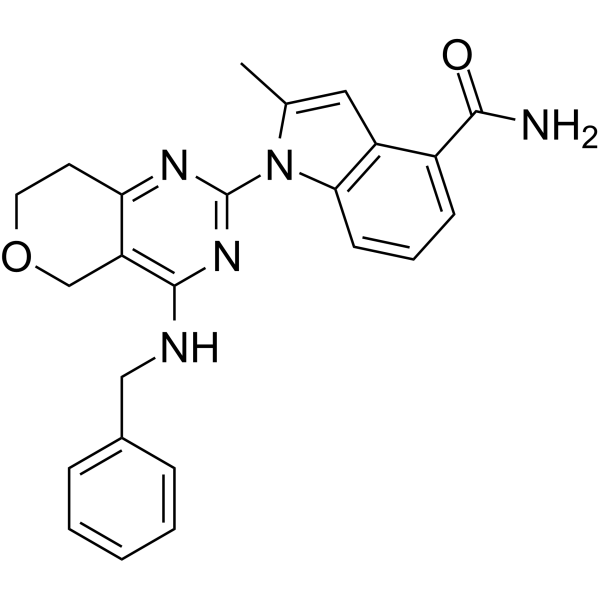
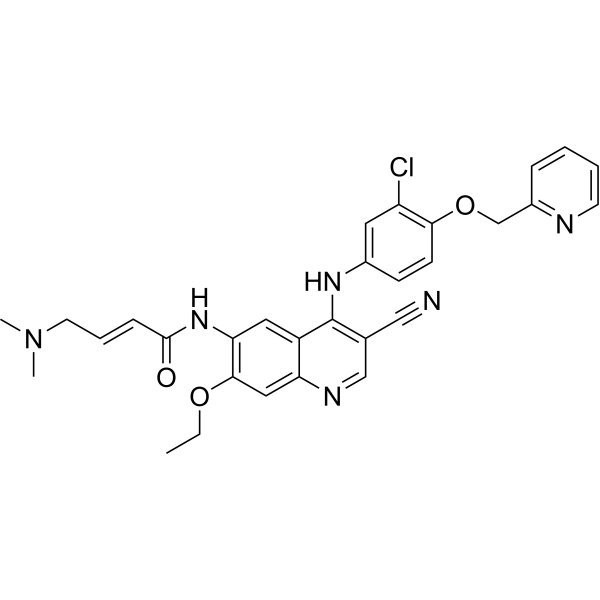
BAY 1895344
|
ATM/ATR
|
Cancer
|
|
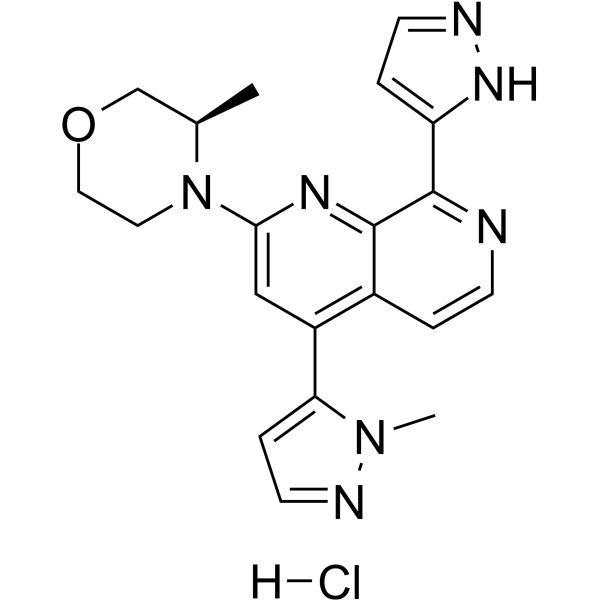
Elimusertib (BAY-1895344) is a potent, orally active and selective ATR inhibitor with an IC50 of 7 nM. Elimusertib has anti-tumor activity . Elimusertib can be used for the research of solid tumors and lymphomas .
|
-
-
- HY-101266
-
|
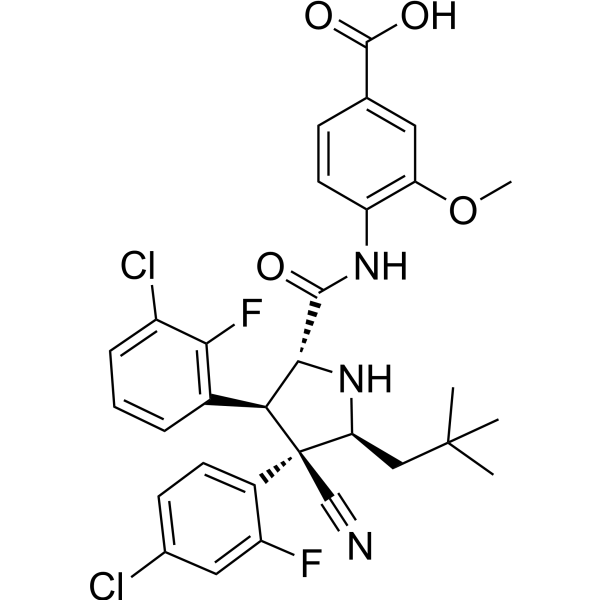
DS-3032
|
MDM-2/p53
E1/E2/E3 Enzyme
Apoptosis
|
Cancer
|
|
Milademetan (DS-3032) is a specific and orally active MDM2 inhibitor for the research of acute myeloid leukemia (AML) or solid tumors. Milademetan (DS-3032) induces G1 cell cycle arrest, senescence and apoptosis .
|
-
-
- HY-137435
-
|
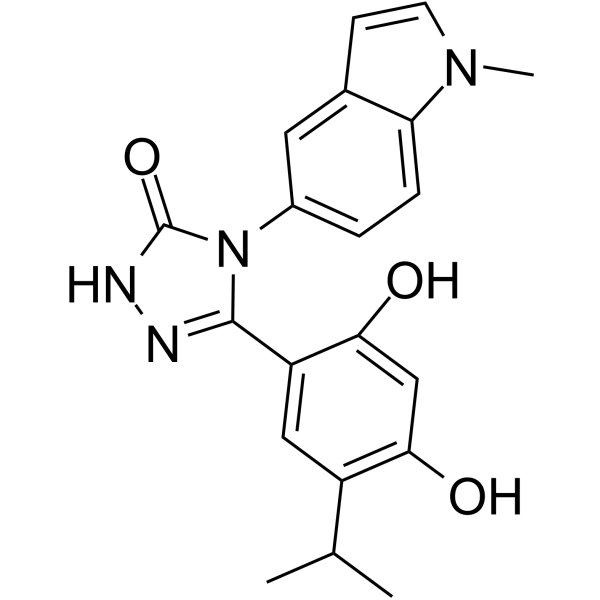
SM08502
|
CDK
|
Cancer
|
|
Cirtuvivint (SM08502) is a potent and orally active CDC-like kinase (CLK) inhibitor. Cirtuvivint can be used for solid tumors research .
|
-
-
- HY-P99100
-
|
CTL-002
|
TGF-beta/Smad
PD-1/PD-L1
|
Cancer
|
|
Visugromab (CTL-002) is a GDF-15 neutralizing IgG4 mAb. Visugromab has synergistic anticancer activity with the anti-PD1 antibody Nivolumab (HY-P9903) and can effectively act on PD-1/PD-L1 relapsed/refractory metastatic solid tumors. Recommend Isotype Controls: Human IgG4 (S228P) kappa, Isotype Control (HY-P99003) .
|
-
-
- HY-159641
-
|
BAY-3605349
|
Molecular Glues
Keap1-Nrf2
|
Metabolic Disease
Inflammation/Immunology
Cancer
|
|
VVD-130037 (BAY-3605349) is a covalent molecular glue and allosteric NRF2 degrader. VVD-130037 covalently binds to KEAP1 and allosterically enhances the affinity of KEAP1-CUL3, promotes the formation of the active KEAP1-CUL3 E3 ligase complex, and thereby enhances the ubiquitination and degradation of NRF2. VVD-130037 exhibits KEAP1 target-binding activity both in in vitro systems and mouse models, and it can be used in research related to NRF2-dependent cancers, solid tumors harboring KEAP1 nonsense mutations and frameshift mutations, as well as advanced solid tumors .
|
-
-
- HY-137457
-
|
IDX-1197
|
PARP
|
Cancer
|
|
Venadaparib (IDX-1197) is a potent, selective and orally active PARP inhibitor with IC50s of 1.4 nM and 1.0 nM for PARP1 and PARP2, respectively. Venadaparib does not sensitive to PARP-5. Venadaparib prevents the repair of DNA single-strand breaks (SSB) and can be used for solid tumors research .
|
-
-
- HY-P99489
-
|
ABBV 181; PR 1648817
|
PD-1/PD-L1
|
Inflammation/Immunology
Cancer
|
|
Budigalimab (ABBV 181; PR 1648817) is a humanized, recombinant IgG1 monoclonal antibody targeting programmed cell death 1 (PD-1) receptor. Budigalimab has an Fc mutation that reduces the inhibition of Fc receptor interactions and effector factors. Budigalimab can block the binding of PD-1 and PD-L1, which has anti-tumor activity. Budigalimab can be used in the study of solid tumors .
|
-
-
- HY-P99708
-
|
ABBV-151; ARGX-115
|
TGF-beta/Smad
|
Cancer
|
|
Livmoniplimab (ABBV-151) is a monoclonal antibody against GARP/TGF-β1 that can inhibit the release of active TGF-β1. Livmoniplimab has anti-tumor activity in colon cancer mice. Livmoniplimab can be used for the study of locally advanced or metastatic solid tumors .
|
-
-
- HY-P99271
-
|
Anti-Human F3 Recombinant Antibody
|
ADC Antibody
|
Cancer
|
|
Tisotumab (Anti-Human F3 Recombinant Antibody) is a human IgG1 monoclonal antibody and ADC antibody. Tisotumab targets tissue factor (TF). Tisotumab can be used to synthesize antibody-drug conjugates (ADCs) targeting tissue factor (TF), Tisotumab vedotin (HY-152963). Tisotumab can be used for the research of solid tumors .
|
-
-
- HY-142118
-
|
AP 12009
|
TGF-beta/Smad
|
Cancer
|
|
Trabedersen (AP 12009) is an orally active synthetic antisense phosphorothioate oligodeoxynucleotide that selectively targets human TGFβ2 mRNA. Trabedersen blocks TGFβ2 protein production, enters the nucleus without a transfection vector, and exerts dose-dependent antitumor effects. By reversing TGFβ2-induced immunosuppression and enhancing immune cytotoxicity, Trabedersen exhibits significant antiproliferative, antimigratory, and antimetastatic activities, with favorable safety profiles. Trabedersen is widely used in research related to various solid tumors, including anaplastic astrocytoma, glioblastoma, colorectal tumor, and melanoma .
|
-
-
- HY-128587
-
|
SY-1365
|
CDK
|
Cancer
|
|
Mevociclib (SY-1365) is a potent and first-in-class selective CDK7 inhibitor, with a Ki of 17.4 nM. Mevociclib exhibits anti-proliferative and apoptotic effects in solid tumor cell lines. Mevociclib possesses anti-tumor activity in hematological and multiple aggressive solid tumors .
|
-
-
- HY-101566A
-
|
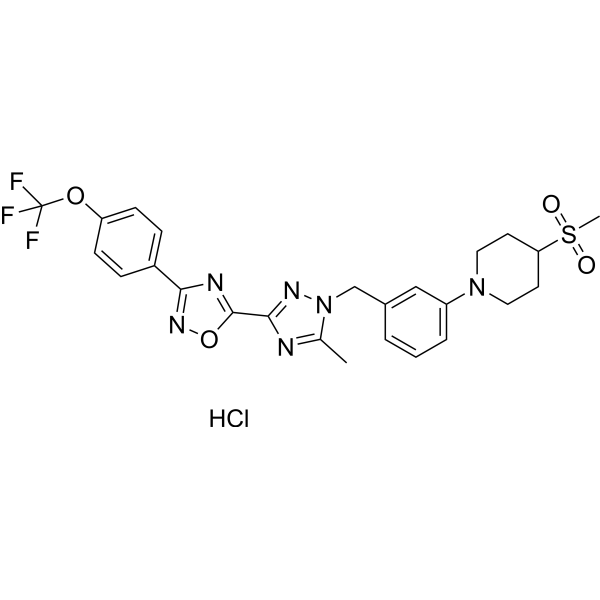
BAY 1895344 hydrochloride
|
ATM/ATR
|
Cancer
|
|
Elimusertib (BAY 1895344) hydrochloride is a potent, orally active and selective ATR inhibitor with an IC50 of 7 nM. Elimusertib hydrochloride has anti-tumor activity . Elimusertib hydrochloride can be used for the research of solid tumors and lymphomas .
|
-
-
- HY-P99217
-
|
AMG 102
|
c-Met/HGFR
|
Cancer
|
|
Rilotumumab (AMG 102) is an anti-HGF (anti-hepatocyte growth factor) monoclonal antibody, inhibits HGF/MET-driven signaling. Rilotumumab shows anti-tumor activity, and can be used in castration-resistant prostate cancer (CRPC) and solid tumor research .
|
-
-
- HY-162858
-
|
|
Bcl-2 Family
Caspase
Apoptosis
|
Cancer
|
|
BRD-810 is a potent and selective MCL1 inhibitor with a Kd of 0.3 nM. BRD-810 can specifically block the BH3 binding groove of MCL1, while having little effect on other anti-apoptotic proteins (such as Bcl-2, Bcl-xL). BRD-810 effectively destroys the MCL1-BAK complex (IC50 = 1.2 nM) in cancer cells, rapidly activates Caspase and induces cell apoptosis. BRD-810 can be used in the research of various cancers such as hematological tumors and solid tumors .
|
-
-
- HY-128995A
-
|
Glycyl-DX-8951 TFA; Exatecan analog 2 TFA
|
Drug Derivative
|
Cancer
|
|
Glycyl-Exatecan TFA (Glycyl-DX-8951 TFA), a derivative of Exatecan (HY-13631), is an anticancer agent. Glycyl-Exatecan TFA has significantly antitumor activity. Glycyl-Exatecan TFA can be used for cancers like solid tumors research .
|
-
-
- HY-172663A
-
|
|
DNA/RNA Synthesis
Apoptosis
|
Cancer
|
|
Trabectedin derivative 1 TFA is a selective DNA minor groove binder. Trabectedin derivative 1 TFA inhibits DNA transcription and repair to induce tumor cell apoptosis. Trabectedin derivative 1 TFA is promising for research of solid tumors such as soft tissue sarcoma and ovarian cancer .
|
-
-
- HY-164129
-
|
|
CDK
Apoptosis
|
Cancer
|
|
CDK4-IN-3 (Compound 389) is a potent irreversible cyclin-dependent kinase 4 (CDK4) inhibitor (IC50=25 nM, >10-fold selective over CDK6). CDK4-IN-3 arrests the cell cycle at G₁ phase, and induces tumor cell apoptosis. CDK4-IN-3 is promising for research of solid tumors such as breast and lung cancers .
|
-
-
- HY-P99852
-
|
ABT165; PR1283233
|
VEGFR
Notch
|
Cancer
|
|
Dilpacimab (ABT165) is a bispecific variable domain immunoglobulin. Dilpacimab binds to and inhibits DLL4 and VEGF and acts as a tumor growth inhibitor. Dilpacimab can be used in research related to metastatic colorectal cancer and advanced solid tumors .
|
-
-
- HY-P99827
-
|
TSR-022; GSK4069889
|
Tim3
|
Cancer
|
|
Cobolimab (TSR-022) is an anti-TIM-3 monoclonal antibody. Cobolimab mediates the internalization of TIM3 with an IC50 value of 0.4464 nM. Cobolimab has potential application in solid tumors and non-small cell lung cancer (NSCLC) .
|
-
-
- HY-P991451
-
|
SGN-ALPV antibody
|
Phosphatase
|
Cancer
|
|
Anti-ALPP Antibody (SGN-ALPV antibody) is a human monoclonal antibody (mAb) targeting ALPP. Anti-ALPP Antibody can be used in solid tumors research .
|
-
-
- HY-P991396
-
|
|
Tim3
|
Cancer
|
|
LY-3321367 is a human monoclonal antibody (mAb) targeting TIM-3/HAVCR2/CD366. LY-3321367 can be used in solid tumors research .
|
-
-
- HY-P991449
-
|
|
PD-1/PD-L1
Tim3
|
Cancer
|
|
LY3415244 is a human bispecific antibody (bsAb) targeting B7-H1/PD-L1/CD274 & TIM-3/HAVCR2/CD366. LY3415244 can be used in advanced solid tumors research .
|
-
-
- HY-P991444
-
|
|
NTPDase
ATP Synthase
|
Inflammation/Immunology
Cancer
|
|
IPH5201 is a selective CD39 inhibitor and a humanized IgG1 monoclonal antibody. IPH5201 selectively binds to and inhibits the enzymatic activity of both membrane-bound and soluble CD39, blocking ATP hydrolysis. IPH5201 enhances the phenotypic maturation and activation of dendritic cells and macrophages. IPH5201 potentiates the anti-tumor effect of Oxaliplatin (HY-17371). IPH5201 shows preliminary evidence of disease stabilization in advanced solid tumor models when used as a single agent or in combination with Durvalumab (HY-P9919). IPH5201 can be used for the research of advanced solid tumors .
|
-
-
- HY-164493
-
|
|
Ras
|
Cancer
|
|
KRASG12C IN-13 (LY3499446) is a potent KRAS G12C inhibitor. KRASG12C IN-13 is promising for research of advanced solid tumors including non-small cell lung cancer and colorectal cancer .
|
-
-
- HY-P991193
-
|
|
TNF Receptor
|
Cancer
|
|
NGM-438 is a humanized monoclonal antibody antagonist of LAIR1, with a Ka of 0.26 nM for human LAIR1 and 4.28 nM for cynomolgus monkey LAIR1. NGM-438 blocks the binding of LAIR1 to its Collagen ligand and antagonizes the Collagen-induced LAIR1 signaling pathway. NGM-438 reverses FcγR signaling inhibition in myeloid cells, induces dendritic cells to secrete TNFα, promotes T cell proliferation, and triggers myeloid inflammation and allogeneic T cell responses. NGM-438 sensitizes refractory mouse lung cancer to PD-1 blockade, increases the content of intratumoral CD8 + T cells and the expression of inflammatory genes. NGM-438 is applicable to research related to solid tumors, refractory solid tumors and non-small cell lung cancer .
|
-
-
- HY-P99475
-
|
MSB-2311
|
PD-1/PD-L1
|
Cancer
|
|
Betifisolimab (MSB-2311) is a humanized monoclonal antibody directed against the immunosuppressive ligand PD-L1. Betifisolimab has the potential for advanced solid tumors and hematological malignancies research .
|
-
-
- HY-P991402
-
|
|
TNF Receptor
|
Cancer
|
|
BI-1910 is a human monoclonal antibody (mAb) targeting TNFRSF1B. BI-1910 enhances T cell activation and induces CD8 T cell-dependent anti-tumor effects. BI-1910 can be used in solid tumors research. Recommended isotype control: Human IgG2 lambda, Isotype Control (HY-P991206) .
|
-
-
- HY-101266B
-
|
DS-3032b; DS-3032 tosylate hydrate
|
MDM-2/p53
E1/E2/E3 Enzyme
Apoptosis
|
Cancer
|
|
Milademetan (DS-3032) tosylate hydrate is a specific and orally active MDM2 inhibitor for the research of acute myeloid leukemia (AML) or solid tumors. Milademetan (DS-3032) tosylate hydrate induces G1 cell cycle arrest, senescence and apoptosis .
|
-
-
- HY-P991178
-
|
|
TNF Receptor
|
Cancer
|
|
BMS-986156 is a fully humanized IgG1 agonist monoclonal antibody agonist corticosteroid-induced tumor necrosis factor receptor-related protein (GITR). BMS-986156 binds to GITR and promotes activation of T effector cells and inactivates T regulatory cells. BMS-986156 is indicated for use in advanced solid tumor studies .
|
-
-
- HY-P991309
-
|
|
C-type Lectin-like Receptors (CTLRs)
|
Cancer
|
|
ZM-008 is an anti-LLT1 monoclonal antibody. ZM-008 blocks the interaction between LLT1 and CD161 on the surface of NK cells and T cells. ZM-008 restores anti-tumor immune activity, shifts the tumor microenvironment to an immune-responsive state, and recovers NK cell-mediated cytotoxicity against tumor cells, thereby reversing immunosuppression in immune-resistant "cold" tumors. ZM-008 is applicable to the research of immune-resistant solid tumors .
|
-
-
- HY-177083
-
|
AVA-6000
|
FAP
|
Cancer
|
|
Faridoxorubicin (AVA-6000) is a prodrug targeting fibroblast activation protein α (FAPα). Faridoxorubicin releases active doxorubicin through FAPα-mediated cleavage, enhancing intratumoral drug exposure and reducing cardiac toxicity. Faridoxorubicin is promising for research of solid tumors (e.g., colorectal cancer liver metastasis) .
|
-
-
- HY-P99516
-
|
HLX-06
|
VEGFR
|
Cancer
|
Vulinacimab (HLX-06) is a human monoclonal antibody directed against human vascular endothelial growth factor receptor 2 (VEGFR-2). Vulinacimab specifically binds to and inhibits VEGFR-2, which may inhibit tumor angiogenesis and tumor cell proliferation. Vulinacimab can be used for the research of solid tumors and non-small cell lung cancer .
|
-
-
- HY-105529
-
|
(+)-Indicine N-oxide; NSC 132319
|
Microtubule/Tubulin
|
Cancer
|
|
Indicine N-oxide (NSC 132319), a pyrrolizidine alkaloid, is an antitumor agent for pediatric cancer and solid tumors research .
|
-
-
- HY-W001983
-
|
|
Dihydropyrimidine Dehydrogenase (DPD)
|
Cancer
|
|
5-Iodouracil (Compound 4b) is an irreversible dihydropyrimidine dehydrogenase (DPD) inhibitor (IC50=0.22 μM). 5-Iodouracil is promising for research of DPD-overexpressing solid tumors like non-small cell lung cancer (NSCLC) .
|
-
-
- HY-175322
-
|
|
FAP
|
Cancer
|
|
FAPI-P8PN is a fibroblast activation protein (FAP) inhibitor (IC50=3.6 nM). FAPI-P8PN is promising for research of FAP-overexpressing solid tumors .
|
-
-
- HY-178190
-
|
|
Wee1
|
Cancer
|
|
WEE1-IN-13 (Compound 10) is a highly selective WEE1 kinase inhibitor (IC50=0.7 nM). WEE1-IN-13 abrogates the G2/M checkpoint and induces tumor cell apoptosis. WEE1-IN-13 is promising for research of solid tumors (e.g., non-small cell lung cancer, ovarian cancer) .
|
-
-
- HY-120409
-
|
|
LPL Receptor
Apoptosis
|
Cancer
|
|
AB1 is a highly selective S1P2 receptor antagonist (IC50=3.5 nM). AB1 inhibits sphingosine-1-phosphate (S1P) signaling, suppressing tumor cell migration, angiogenesis, and profibrotic mediator CTGF expression while inducing apoptosis. AB1 is promising for research of solid tumors .
|
-
-
- HY-16110
-
|
UFT; BMS-200604
|
Thymidylate Synthase
|
Cancer
|
|
Tegafur-Uracil (UFT; BMS-200604) is an effective oral chemotherapy drug based on fluoropyrimidine. Tegafur-Uracil inhibits thymidylate synthase. Tegafur-Uracil can be used in combination with leucovorin (LV) and polysaccharide K (PSK) for research on solid tumors .
|
-
-
- HY-175323
-
|
|
Integrin
PD-1/PD-L1
|
Cancer
|
|
NOTA-IMB-RGD is a dual molecular probe targeting integrin αvβ3 and programmed death ligand-1 (PD-L1). NOTA-IMB-RGD blocks the PD-1/PD-L1 signaling pathway and integrin αvβ3-overexpressing tumor vasculature. NOTA-IMB-RGD is promising for research of solid tumors co-expressing PD-L1 and αvβ3 (e.g., glioma, breast cancer) .
|
-
-
- HY-160843
-
|
|
Apoptosis
|
Cancer
|
|
N-ω-chloroacetyl-L-ornithine (NCAO) is a potent reversible competitive ornithine decarboxylase (ODC) inhibitor that exerts cytotoxic and antiproliferative effects on tumor cell lines with EC50 values ranging from 1 to 50.6 µM. NCAO induces tumor cell Apoptosis and inhibits tumor cell migration in vitro. NCAO also exhibits a potent antitumor activity against both solid and ascitic tumors in a mouse model using the myeloma (Ag8) cell line. NCAO is promising for research of antitumor agents .
|
-
-
- HY-176854
-
|
|
PI3K
mTOR
|
Cancer
|
|
PI3K/mTOR-IN-18 (Compound 12) is a highly selective dual PI3K/mTOR inhibitor. PI3K/mTOR-IN-18 shows antitumor effects via competitive binding to PI3Kα (Ki=0.130 nM) and mTOR (Ki=0.111 nM). PI3K/mTOR-IN-18 blocks the PI3K/AKT/mTOR pathway and inhibits tumor cell proliferation (IC50=144 nM). PI3K/mTOR-IN-18 is promising for research of solid tumors (e.g., breast, NSCLC) .
|
-
-
- HY-106218
-
|
5-Fluorocyclocytidine; 5'-Fluorocyclocytidine
|
Nucleoside Antimetabolite/Analog
|
Cancer
|
|
Flurocitabine (5-Fluorocyclocytidine) is a fluorinated anlydride analog of cytosine arabinoside, partially hydrolysecl in vivo into two active antitumor substances (arabinosyl-tluorocytosine (ara-FC) and arabinosyl-fluorouracil (ara-FU)). Flurocitabine (5-Fluorocyclocytidine) has antitumor activity during phase I studies in acute leukemia and solid tumors .
|
-
-
- HY-137457A
-
|
IDX-1197 hydrochloride
|
PARP
|
Cancer
|
|
Venadaparib (IDX-1197) hydrochloride is a potent and selective PARP inhibitor with anticancer activities. Venadaparib hydrochloride can be used for solid tumors research .
|
-
-
- HY-P99887
-
|
JTX-4014
|
PD-1/PD-L1
|
Cancer
|
|
Pimivalimab (JTX-4014) is a PD-1 inhibitor. Pimivalimab can be used for the research of solid tumor .
|
-
-
- HY-157941A
-
|
|
Drug Isomer
|
Cancer
|
|
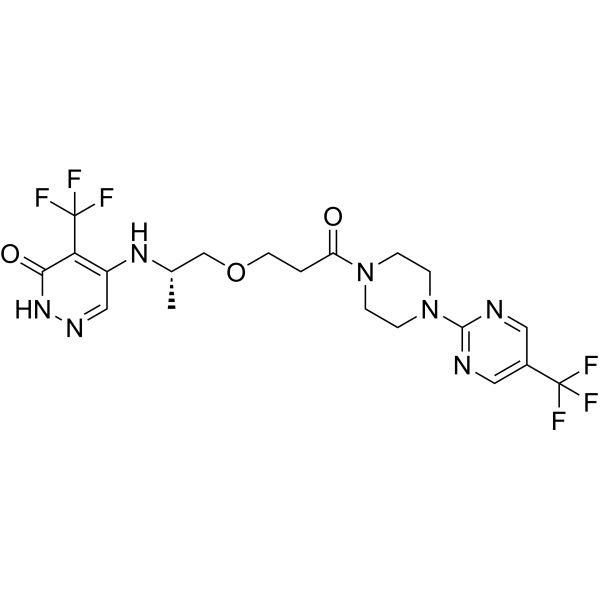
(R,R)-ART0380 (Compound 38) is the enantiomer of ART0380 (HY-157941). ART0380 is a potent and selective ATR inhibitor. ART0380 can be used in studies of advanced or metastatic solid tumors .
|
-
-
- HY-P991135
-
|
RO-7502175; RG-6411
|
CCR
|
Cancer
|
|
Enzelkitug is a humanized immunoglobulin G1-κ monoclonal antibody targeting the human C-C motif chemokine receptor 8 (CCR8). Enzelkitug is promising for research of various solid tumors and hematological malignancies .
|
-
-
- HY-153243
-
|
|
c-Fms
|
Cancer
|
|
IACS-9439 is a potent, selective, and orally active CSF1R inhibitor with a Ki value of 1 nM inhibitor. IACS-9439 can be used for advanced solid tumors research .
|
-
-
- HY-P991436
-
|
BMS-986415
|
Interleukin Related
IFNAR
|
Cancer
|
|
DF6002 (BMS-986415) is a human monoclonal antibody (mAb) targeting IL-12. DF6002 increases IFN-γ levels. DF6002 can be used in solid tumors research .
|
-
-
- HY-177913
-
|
|
PDK-1
|
Cancer
|
|
OSU-02067 is a selective 3-phosphoinositide-dependent protein kinase-1 (PDK-1) inhibitor (IC50=9 μM). OSU-02067 is promising for research of solid tumors (e.g., prostate, breast, colorectal cancers) .
|
-
-
- HY-177134
-
|
|
VEGFR
c-Met/HGFR
|
Cancer
|
|
Taligantinib (Compound Example 70) is an orally active and selective dual inhibitor targeting vascular endothelial growth factor receptor 2 (VEGFR-2) and hepatocyte growth factor receptor (c-Met). Taligantinib suppresses tumor angiogenesis and cell proliferation. Taligantinib is promising for research of solid tumors such as non-small cell lung cancer and hepatocellular carcinoma .
|
-
- HY-P99619
-
|
SCT-I10A
|
PD-1/PD-L1
|
Cancer
|
|
Finotonlimab (SCT-I10A) is a recombinant humanised IgG PD-1 antibody. Finotonlimab has the potential for solid tumors or lymphomas research .
|
-
- HY-P11089
-
|
|
MHC
|
Cancer
|
|
TP53 neoepitope is a high-affinity antigenic peptide targeting HLA-A. TP53 neoepitope can triggers CD8 + T cell-mediated killing of TP53-mutant tumor cells. TP53 neoepitope is promising for research of solid tumors harboring TP53 hotspot mutations (e.g., R175H, R273H) .
|
-
- HY-P991244
-
|
|
EGFR
|
Cancer
|
|
REGN-1400 is a humanized monoclonal antibody inhibitor targeting ErbB3. REGN-1400 reduces tumor cell proliferation by inhibiting ErbB3 and blocking related signaling pathways. REGN-1400 is promising for research of solid tumors such as non-small cell lung cancer (NSCLC), colorectal cancer (CRC), and squamous cell carcinoma of the head and neck (SCCHN) .
|
-
- HY-19095
-
|
|
Antifolate
|
Cancer
|
|
TNP-351 is an antifolate. TNP-351, a dihydrofolate reductase (DHFR) inhibitor, has potent antitumor activity against not only leukemia cells but also solid tumor cells in vitro and in vivo .
|
-
- HY-124070
-
|
|
MDM-2/p53
|
Cancer
|
|
ISA 27 is a small-molecule MDM2-p53 protein-protein interaction inhibitor. ISA 27 inhibits MDM2-mediated p53 ubiquitination and degradation. ISA 27 is promising for research of p53-mutant solid tumors (e.g., thyroid, breast cancer) .
|
-
- HY-112485
-
|
|
SphK
Drug Derivative
|
Cancer
|
|
(R)-FTY720-vinylphosphonate is a sphingosine kinase 1 (SK1) inhibitor. (R)-FTY720-ene-phosphonate is also an FTY720 analogue. (R)-FTY720-vinylphosphonate is promising for research of solid tumors like breast cancer .
|
-
- HY-P99271A
-
|
Anti-Human F3 Recombinant Antibody (powder)
|
ADC Antibody
|
Cancer
|
|
Tisotumab (Anti-Human F3 Recombinant Antibody) (powder) is a human IgG1 monoclonal antibody and ADC antibody. Tisotumab (powder) targets tissue factor (TF). Tisotumab (powder) can be used to synthesize antibody-drug conjugates (ADCs) targeting tissue factor (TF), Tisotumab vedotin (HY-152963). Tisotumab (powder) can be used for the research of solid tumors .
|
-
- HY-10058
-
|
|
JAK
Aurora Kinase
Bcr-Abl
FLT3
Apoptosis
Autophagy
|
Cancer
|
|
AT9283 lactic acid is a multi-targeted kinase inhibitor with potent activity against Aurora A/B, JAK2/3, Abl (T315I) and Flt3 (IC50s ranging from 1 to 30 nM). AT9283 lactic acid inhibits growth and survival of multiple solid tumors in vitro and in vivo .
|
-
- HY-178468
-
|
|
PARP
|
Cancer
|
|
PARP1-IN-47 (Compound 35) is a highly selective PARP1 inhibitor (IC50 <100 nM). PARP1-IN-47 blocks poly(ADP-ribosyl)ation and disrupts DNA damage repair pathways to induce tumor cell apoptosis. PARP1-IN-47 is promising for research of solid tumors and hematological malignancies .
|
-
- HY-P991397
-
|
|
Tim3
|
Cancer
|
|
Sym023 is a human monoclonal antibody (mAb) targeting TIM-3/HAVCR2/CD366. Sym023 enhances immunostimulatory and anti-tumor activities. Sym023 can be used in Non-small cell lung cancer, Solid tumors and Lymphoma research .
|
-
- HY-120412
-
|
|
EGFR
Apoptosis
|
Cancer
|
|
SKLB188 is an orally active and potent epidermal growth factor receptor (EGFR) inhibitor (IC50=5 nM). SKLB188 suppresses MEK/Erk and Akt/mTOR signaling pathways to inhibit head and neck squamous cell carcinoma (HNSCC) proliferation and induce caspase-dependent apoptosis. SKLB188 is promising for research of EGFR-overexpressing solid tumors .
|
-
- HY-P991635
-
|
|
TNF Receptor
|
Cancer
|
|
PF-07329640 is a humanized monoclonal antibody inhibitor targeting TNFRSF3. PF-07329640 can be used for advanced/metastatic solid tumors like non-small cell lung cancer (NSCLC) and colorectal cancer (CRC) research .
|
-
- HY-P99100A
-
|
CLT-002 (Powder)
|
TGF-beta/Smad
PD-1/PD-L1
|
Cancer
|
|
Visugromab (CTL-002) (Powder) is a GDF-15 neutralizing IgG4 mAb. Visugromab (Powder) has synergistic anticancer activity with the anti-PD1 antibody Nivolumab (HY-P9903) and can effectively act on PD-1/PD-L1 relapsed/refractory metastatic solid tumors. Recommend Isotype Controls: Human IgG4 (S228P) kappa, Isotype Control (HY-P99003) .
|
-
- HY-P991151
-
|
|
PD-1/PD-L1
TNF Receptor
|
Cancer
|
|
Opamtistomig is a humanized immunoglobulin (H-γ1-scFv-L-κ) dimer monoclonal antibody targeting human programmed death ligand 1 (PD-L1), CD274 and tumor necrosis factor receptor superfamily member 9 (TNFRSF9). Opamtistomig is promising for research of various solid tumors and hematological malignancies .
|
-
- HY-P991612
-
|
Sym024
|
CD73
|
Inflammation/Immunology
Cancer
|
|
S095024 is a humanized IgG1 monoclonal antibody inhibitor targeting CD73. S095024 can be used to study acute respiratory distress syndrome (ARDS), non-small cell lung cancer (NSCLC) and advanced solid tumor malignancies .
|
-
- HY-P991393
-
|
|
Transmembrane Glycoprotein
IFNAR
TNF Receptor
|
Cancer
|
|
ASP8374 is a human IgG4 monoclonal antibody (mAb) targeting TIGIT. ASP8374 increases IL-2 production in Jurkat cells and IFN-γ and TNF-α production in human PBMCs. ASP8374 can be used in advanced solid tumors research. Recommended isotype control: Human IgG4 kappa, Isotype Control (HY-P99003) .
|
-
- HY-119214
-
|
|
Drug Derivative
|
Cancer
|
|
TL-310 is a novel, orally active Taxane analogue. TL-310 can be used in the research of solid tumors .
|
-
- HY-P991406
-
|
|
TNF Receptor
|
Cancer
|
|
MK-1248 is a human IgG4 monoclonal antibody (mAb) targeting TNFSF18. MK-1248 enhances the proliferative response of tumor-infiltrating lymphocytes to anti-CD3 stimulation and promotes the production of anti-tumor-associated regulatory cytokines. MK-1248 can be used in solid tumors research .
|
-
- HY-106176
-
|
|
Microtubule/Tubulin
|
Cancer
|
|
BMS-184476 is a selective microtubule inhibitor with potent antitumor activity. BMS-184476 induces G2/M phase arrest and promotes tumor cell apoptosis. BMS-184476 is promising for research of solid tumors, such as non-small cell lung cancer .
|
-
- HY-P991404
-
|
|
TNF Receptor
|
Cancer
|
|
AMG-228 is a human IgG1 monoclonal antibody (mAb) targeting TNFRSF18/GITR/CD357. AMG-228 can be used in advanced solid tumors research .
|
-
- HY-P990038
-
|
ES002023
|
NTPDase
|
Neurological Disease
|
|
Eurestobart (ES002023) is a recombinant human IgG1 antibody against CD39. Eurestobart restores antitumor immunity by stabilizing the pro-inflammatory extracellular ATP (eATP) and interfering with synthesis of the immunosuppressive adenosine within the tumor microenvironment (TME). Eurestobart is used in the research of locally advanced and metastatic solid tumors .
|
-
- HY-P991473
-
|
|
TNF Receptor
|
Cancer
|
|
hCBE-11 is a human monoclonal antibody (mAb) targeting TNFRSF3. hCBE-11 can be used in solid tumors research. Recommended isotype control: Human IgG1 kappa, Isotype Control (HY-P99001) .
|
-
- HY-P991371
-
|
PF-06664178 antibody; RN926
|
TROP2
|
Cancer
|
|
PF-06478924 (PF-06664178 antibody; RN926) is a human monoclonal antibody (mAb) targeting TROP2. PF-06478924 can be used in the study of advanced and metastatic solid tumors .
|
-
- HY-P991394
-
|
|
Transmembrane Glycoprotein
|
Cancer
|
|
SEA-TGT is a human monoclonal antibody (mAb) targeting TIGIT. SEA-TGT enhances binding to the activating FcγRIIIA while reducing binding to the inhibitory FcγRIIb. SEA-TGT can be used in advanced solid tumors and Lymphoma research .
|
-
- HY-P991329
-
|
|
Complement System
|
Cancer
|
|
ASP-1948 is a human monoclonal antibody (mAb) targeting NRP1/VEGF165R/CD34. ASP-1948 reverses the suppressive effects of regulatory T cells. ASP-1948 can be used in solid tumors research .
|
-
- HY-P991421
-
|
|
VISTA
|
Cancer
|
|
W0180 is a human IgG1 monoclonal antibody (mAb) targeting VISTA/B7-H5. W0180 has the potential to activate T cells. W0180 can be used in solid tumors research .
|
-
- HY-170393
-
|
|
JAK
STAT
|
Cancer
|
|
iBFAR2, a BFAR inhibitor, restores the CD8+ TRM cell subset against solid tumors. iBFAR2 promotes JAK2-STAT1 association and STAT1 phosphorylation .
|
-
- HY-119118
-
|
|
Microtubule/Tubulin
|
Cancer
|
|
J-30 is an orally active and potent tubulin inhibitor (IC50=15-20 nM). J-30 disrupts microtubule polymerization and induces G2/M phase arrest. J-30 is promising for research of solid tumors (e.g., gastric, oral) .
|
-
- HY-174274
-
|
|
ERK
|
Cancer
|
|
ERK2-IN-6 (Compound 20) is a highly selective ERK1/2 inhibitor with an IC50 value of 7.9 nM for ERK2. ERK2-IN-6 inhibits the proliferation of BRAF V600E mutant cells (IC50=250 nM in A375 cells). ERK2-IN-6 is promising for research of solid tumors, such as BRAF-mutated melanoma .
|
-
- HY-172534
-
|
|
Fluorescent Dye
EGFR
TSPO
|
Cancer
|
|
BPN-01 is a fluorescent probe targeting translocator protein (TSPO) and human epidermal growth factor receptor 2 (HER2) with binding affinities of -10.7 kcal/mol for TSPO and -11.3 kcal/mol for HER2. BPN-01 is promising for research of solid tumor imaging during fluorescence image-guided surgery (FIGS) (Ex/Em = 475/510 nm) .
|
-
- HY-144038
-
|
|
DNA-PK
|
Cancer
|
|
DNA-PK-IN-5 is a potent inhibitor of DNA-PK. DNA-PK-IN-5 inhibits DNA-PKcs activity, thus greatly reducing tumor DNA repair and inducing cells to enter the apoptotic program. DNA-PK-IN-5 enhances the sensitivity of tumor tissues to radiotherapy, overcomes the problem of agent resistance, and enhances the inhibitory effect on a variety of solid tumors and hematological tumors (extracted from patent WO2021204111A1, compound 2) .
|
-
- HY-144039
-
|
|
DNA-PK
|
Cancer
|
|
DNA-PK-IN-6 is a potent inhibitor of DNA-PK. DNA-PK-IN-6 inhibits DNA-PKcs activity, thus greatly reducing tumor DNA repair and inducing cells to enter the apoptotic program. DNA-PK-IN-6 enhances the sensitivity of tumor tissues to radiotherapy, overcomes the problem of agent resistance, and enhances the inhibitory effect on a variety of solid tumors and hematological tumors (extracted from patent WO2021197159A1, compound 6) .
|
-
- HY-P991556
-
|
|
TNF Receptor
|
Cancer
|
|
TQB2916 is a humanized IgG2 monoclonal antibody agonist targeting CD40. TQB2916 has a significant antitumor activity with CD40 occupancy and immune activation. TQB2916 can be used for advanced solid tumors and lymphomas research .
|
-
- HY-178157
-
|
|
CDK
EGFR
VEGFR
|
Cancer
|
|
Multi-target kinase-IN-7 (Compound 1e) is an orally active multi-target kinase inhibitor (IC50 values: CDK2=0.314 μM, EGFR=0.183 μM, HER-2=0.197 μM, VEGFR-2=0.235 μM). Multi-target kinase-IN-7 is promising for research of solid tumors (e.g., lung, breast, prostate cancer) .
|
-
- HY-144424
-
|
|
Trk Receptor
|
Cancer
|
|
Trk-IN-11 (Compound 14h) is a potent inhibitor of TRK (IC50 = 1.4, 1.8 nM, against TrkA, TrkA G595R, respectively). As a receptor tyrosine kinase (RTK), tropomyosin receptor kinase (Trk) is a key agent target in solid tumors. Trk-IN-11 has the potential for the research of cancer disease .
|
-
- HY-P992442
-
|
|
CD73
|
Cancer
|
|
PM-1015 is a specific antibody targeting CD73. PM-1015 can be used for the research of advanced solid tumor.
|
-
- HY-183186
-
|
|
METTL3
Cytochrome P450
|
Cancer
|
|
EP102 is an orally active, selective inhibitor of the METTL3/METTL14 complex with an IC50 of 2 nM. EP102 reduces intracellular N6-methyladenosine levels, inhibits cancer cell proliferation, and thereby suppresses tumor growth in mouse models. EP102 is applicable for the research of acute myeloid leukemia, ovarian solid tumors and advanced solid tumors .
|
-
- HY-169129
-
|
ILX-295501
|
Drug Derivative
|
Cancer
|
|
LY-295501 is a sulfonylurea compound that has demonstrated in-vivo antitumor activity against a broad spectrum of solid tumors. LY-295501 can be utilized in cancer research .
|
-
- HY-N12331
-
|
|
Microtubule/Tubulin
|
Cancer
|
|
Ohchinolide B is a tubulin inhibitor. Ohchinolide B inhibits microtubule polymerization (IC50=2.3 μM) and induces G2/M phase cell cycle arrest via mitochondrial apoptotic pathways. Ohchinolide B is promising for research of solid tumors (e.g., breast, lung cancer) .
|
-
- HY-P992344
-
|
|
Transmembrane Glycoprotein
|
Cancer
|
|
DNP002 is a humanized IgG1 monoclonal antibody targeting tumor-associated CEACAM6. DNP002 binds to CEACAM1, CEACAM5 and CEACAM6, and exhibits antibody-dependent cellular cytotoxicity against tumor cells overexpressing these targets. DNP002 binds to CEACAM6 on the surface of tumor-associated neutrophils (including MDSCs) to reverse the immunosuppressive effect in the tumor microenvironment. DNP002 shows anti-tumor activity in advanced solid tumors. DNP002 can be used for the research of advanced solid tumors. The recommended isotype control is human IgG1 kappa (HY-P99001) .
|
-
- HY-P992363
-
|
|
CD276/B7-H3
|
Cancer
|
|
HBM1020 is a fully human monoclonal antibody targeting B7H7. HBM1020 binds to B7H7 and enhances the anti-tumor response of T cells. HBM1020 can be used in research related to advanced solid tumors .
|
-
- HY-P992371
-
|
|
VEGFR
|
Cancer
|
|
hPV19 is a humanized inhibitory monoclonal antibody targeting vascular endothelial growth factor (VEGF) with a unique binding site.hPV19 can be used for the research of advanced solid tumors .
|
-
- HY-148150A
-
|
|
Creatine Kinase
|
Cardiovascular Disease
Inflammation/Immunology
Cancer
|
|
Cyclocreatine phosphate dilithium is a synthetic intracellular energy buffer. Cyclocreatine phosphate dilithium mediates antiproliferative activity in cells with high creatine kinase levels and inhibits solid tumor growth. Cyclocreatine phosphate dilithium maintains adenosine triphosphate (ATP) levels and protects tissues from hypoxia, cellular damage and inflammation during ischemic events. Cyclocreatine phosphate dilithium accumulates in skeletal muscle, reduces muscle phosphocreatine and total creatine levels, and acts both as a bioenergetic/anti-inflammatory agent and an experimental tool for the assessment of ischemic injury. Cyclocreatine phosphate dilithium can be used in studies related to solid tumors, heart failure and ischemia .
|
-
- HY-P992446
-
|
|
NTPDase
|
Cancer
|
|
PUR001 is a monoclonal antibody targeting NTPDase 1 (CD39). PUR001 blocks the hydrolysis of extracellular ATP and ADP into AMP by inhibiting CD39, reduces the production of immunosuppressive adenosine, and increases extracellular ATP concentration to activate anti-tumor immune responses. PUR001 can be used in studies related to solid tumors .
|
-
- HY-101266R
-
|
DS-3032 (Standard)
|
MDM-2/p53
Reference Standards
E1/E2/E3 Enzyme
Apoptosis
|
Cancer
|
|
Milademetan (Standard) is the analytical standard of Milademetan (HY-101266). This product is intended for research and analytical applications. Milademetan (DS-3032) is a specific and orally active MDM2 inhibitor for the research of acute myeloid leukemia (AML) or solid tumors. Milademetan (DS-3032) induces G1 cell cycle arrest, senescence and apoptosis .
|
-
- HY-101266BR
-
|
DS-3032b (Standard); DS-3032 tosylate hydrate (Standard)
|
MDM-2/p53
Reference Standards
E1/E2/E3 Enzyme
Apoptosis
|
Cancer
|
|
Milademetan (tosylate hydrate) (Standard) is the analytical standard of Milademetan (tosylate hydrate) (HY-101266B). This product is intended for research and analytical applications. Milademetan (DS-3032) tosylate hydrate is a specific and orally active MDM2 inhibitor for the research of acute myeloid leukemia (AML) or solid tumors. Milademetan (DS-3032) tosylate hydrate induces G1 cell cycle arrest, senescence and apoptosis .
|
-
- HY-182467
-
|
|
Molecular Glues
IKZF Family
E1/E2/E3 Enzyme
|
Cancer
|
|
BMS-986482 is a CELMoD, CRBN-mediated, selective IKZF1-4 Molecular Glue degrader. The activity of BMS-986482 is driven by a non-traditional CELMoD core that selectively degrades the IKZF protein family. BMS-986482 inhibits tumor growth in preclinical mouse models. BMS-986482 can be used for the research of advanced solid tumors .
.
|
-
- HY-181620
-
|
|
Molecular Glues
CDK
|
Cancer
|
|
CDK2 degrader 9 (compound 1) is a CDK2-targeting Molecular Glue with selectivity for GSPT1 and CDK1. CDK2 degrader 9 promotes the ubiquitination and degradation of CDK2 via the ubiquitin ligase pathway. CDK2 degrader 9 is applicable to research related to cancer, solid tumors and hematologic malignancies .
|
-
- HY-183623
-
|
|
ADC Payload
Apoptosis
|
Cancer
|
|
ProAlk01 is a protein alkylating agent that serves as a toxin payload for ADCs. ProAlk01 localizes to the cytoplasm and exerts cytotoxic effects mainly by alkylating cytoplasmic proteins rather than binding to DNA. ProAlk01 induces cell cycle arrest, apoptosis, and immunogenic cell death. ProAlk01 can be used in the research of solid tumors .
|
-
- HY-101566R
-
|
BAY 1895344 (Standard)
|
ATM/ATR
Reference Standards
|
Cancer
|
|
Elimusertib (Standard) is the analytical standard of Elimusertib (HY-101566). This product is intended for research and analytical applications. Elimusertib (BAY-1895344) is a potent, orally active and selective ATR inhibitor with an IC50 of 7 nM. Elimusertib has anti-tumor activity . Elimusertib can be used for the research of solid tumors and lymphomas .
|
-
- HY-P992133
-
|
SYS6002 Antibody; CRB-701 Antibody
|
ADC Antibody
Nectin-4
|
Cancer
|
|
Sutantatug (SYS6002 Antibody) is a monoclonal antibody targeting Nectin-4, and serves as the antibody moiety of the ADC CRB-701. Sutantatug is applicable to the research of Nectin-4-positive solid tumors, urothelial carcinoma and cervical cancer. The corresponding isotype control for Sutantatug is Human IgG1 kappa, Isotype Control (HY-P99001) .
|
-
- HY-P9994
-
|
SBT6050
|
Antibody-Drug Conjugates (ADCs)
EGFR
Toll-like Receptor (TLR)
|
Inflammation/Immunology
Cancer
|
|
Pertuzumab zuvotolimod (SBT6050) is an anti-HER2 antibody-drug conjugate (ADC). Pertuzumab zuvotolimod is composed of a humanized anti-HER2 antibody (Pertuzumab) (HY-P9912A), a linker, a TLR8 agonist payload, and the drug-linker conjugate for ADC is Zuvotolimod (HY-145620). Pertuzumab zuvotolimod potently induces multiple anti-tumor immune activities through the direct activation myeloid cells and the subsequent induction of T and NK cell cytolytic activity. Pertuzumab zuvotolimod can be used for HER2-expressing solid tumors research .
|
-
- HY-172820
-
|
DP303c
|
Antibody-Drug Conjugates (ADCs)
EGFR
|
Cancer
|
|
Trastuzumab envedotin (DP303c) is a anti-human epidermal growth factor receptor 2 (HER2) antibody-drug conjugate (ADC). Trastuzumab envedotin is composed of the tubulin polymerization inhibitor Monomethyl auristatin E (MMAE) (HY-15162) to the anti-HER2 antibody DP001 via a cleavable linker. Trastuzumab envedotin can be used for the research of HER2-positive solid tumors, such as breast cancer, colorectal cancer, and gastric cancer .
|
-
- HY-P991180
-
|
|
TNF Receptor
|
Cancer
|
|
TRX-518 is a humanized agylcosyl IgG1 anti-GITR mAb, , and is a GITR agonist. TRX-518 binds to the extracellular domain of human GITR, abrogates Treg-mediated suppression. TRX-518 increases effector T cell activation and pro-inflammatory cytokine production, reduces circulating and intratumor Treg frequencies. TRX-518 destabilizes Treg phenotype via Foxp3 downregulation and T-bet upregulation. TRX-518 can be used for the research of solid tumors[1][2][3].
|
-
- HY-183774
-
|
|
TAM Receptor
|
Cancer
|
|
NTQ2494 is a potent and orallty active AXL kinase inhibitor with an IC50 of 4.89 nM. NTQ2494 inhibits AXL kinase catalytic activity. NTQ2494 suppresses tumor growth in mouse xenograft models. NTQ2494 can be used for the research of advanced hematological malignancies, solid tumors .
|
-
- HY-136174
-
|
|
PARP
|
Cancer
|
|
RBN-2397 is a potent, accross species and orally active NAD + competitive inhibitor of PARP7 (IC50<3 nM). RBN-2397 selectively binds to PARP7 (Kd=0.001 μM) and restores IFN signaling. RBN-2397 has the potential for the study of advanced or metastatic solid tumors .
|
-
- HY-P99687
-
|
AMG 256
|
PD-1/PD-L1
|
Cancer
|
|
Latikafusp (AMG 256) is a bifunctional fusion protein comprising a PD-1-targeting antibody and IL-21 mutein designed to deliver IL-21 pathway stimulation to PD-1+ cells. Latikafusp is designed to prime and extend the activity of cytotoxic and memory T cells and induce anti-tumor immunity. Latikafusp has the potential for solid tumors research .Latikafusp may lead to the development of immunogenicity-mediated responses .
|
-
- HY-162006
-
|
|
Pim
Apoptosis
Autophagy
|
Metabolic Disease
Inflammation/Immunology
Cancer
|
|
Pim-1 kinase inhibitor 8 is a potent PIM-1 inhibitor with an IC50 value of 14.3 nM. Pim-1 kinase inhibitor 8 impedes cell proliferation and migration through PIM-1 inhibition and the induction of both apoptosis and autophagy. Pim-1 kinase inhibitor 8 inhibits solid tumor growth in Solid Ehrlich Carcinoma (SEC)-bearing mice. Pim-1 kinase inhibitor 8 can be used for breast and liver cancer research .
|
-
- HY-P10762
-
|
CBP-1008; LDC 10B
|
Peptide-Drug Conjugates (PDCs)
Folate Receptor (FR)
TRP Channel
|
Cancer
|
|
Ricorfotide vedotin (CBP-1008) is a dual-ligand peptide-drug conjugate (PDC) conjugated to MMAE (HY-15162), targeting Folate receptor α (FRα) and TRPV6. Ricorfotide vedotin binds to FRα with high affinity and TRPV6 with low affinity. Ricorfotide vedotin has antitumor activity, and can be used in advanced solid tumor research (eg: colorectal cancer, breast cancer, non-small cell lung cancer, ovarian cancer, adrenocortical carcinoma and follicular dendritic cell sarcoma) .
|
-
- HY-183845
-
|
|
Prostaglandin Receptor
|
Cancer
|
|
HTL0039732 is an orally active antagonist of the prostaglandin EP4 receptor (Prostaglandin E2 Receptor EP4). HTL0039732 reverses PGE2-induced differentiation toward M2-like macrophages. HTL0039732 exhibits efficacy in syngeneic tumor models and acts synergistically with PD-1/PD-L1 pathway blockers. HTL0039732 can be used for the research of advanced solid tumors .
|
-
- HY-P992412
-
|
|
Claudin
|
Cancer
|
|
MIL93 is a humanized defucosylated IgG1 monoclonal antibody targeting Claudin18.2 (CLDN18.2) with enhanced antibody-dependent cellular cytotoxicity (ADCC) activity. MIL93 can be used for research on advanced solid tumors and gastric cancer. The recommended isotype control is human IgG1 kappa (HY-P99001) .
|
-
- HY-176702
-
|
|
Histone Methyltransferase
|
Cancer
|
|
PRMT5-MTA-IN-5 (Compound 7) is an orally active, irreversible PRMT5-MTA complex (PRMT5•MTA) inhibitor (IC50=1.15 nM). PRMT5-MTA-IN-5 blocks arginine methylation and inhibits ribosomal RNA processing and cell cycle-related protein expression. PRMT5-MTA-IN-5 potently inhibits proliferation in MTAP-deficient tumor cells. PRMT5-MTA-IN-5 is promising for research of MTAP-deficient solid tumors, such as liver, breast, and pancreatic cancers .
|
-
- HY-144423
-
|
|
Trk Receptor
|
Cancer
|
|
Trk-IN-10 (Compound 14j) is a potent inhibitor of TRK (IC50 = 0.86, 6.92 nM, against TrkA, TrkA G595R, respectively). As a receptor tyrosine kinase (RTK), tropomyosin receptor kinase (Trk) is a key agent target in solid tumors. Trk-IN-10 (IC50 = 350 nM against ALK) has a higher selectivity of Trk inhibition, which may be of great significance for reducing toxicity .
|
-
- HY-P991004
-
|
LB-101
|
CD47
PD-1/PD-L1
|
Cancer
|
|
Itanistomig (LB-101) is a tetravalent bispecific antibody targeting PD-L1 and CD47. Itanistomig blocks PD-L1 and achieves tumor enrichment through binding to PD-L1, and also exerts conditional CD47 blocking activity via cleavage of the hinge linker in the PD-L1-positive tumor microenvironment. Itanistomig induces antibody-dependent cellular phagocytosis in human CD14 + cells and drives tumor regression. Itanistomig can be used in research related to solid tumors .
|
-
- HY-P99829
-
|
PF-06647020; ABBV-647; h6M24-vc0101
|
Antibody-Drug Conjugates (ADCs)
Microtubule/Tubulin
|
Cancer
|
|
Cofetuzumab pelidotin (PF-06647020) is a PTK7-targeting ADC comprising a humanized anti-PTK7 mAb (hu6M024, IgG1) joined to an auristatin microtubule inhibitor payload, auristatin-0101 (Aur0101; HY-12522), by a cleavable valine-citrulline (vc)-based linker. Cofetuzumab pelidotin has a DAR of 4. Cofetuzumab pelidotin binds to cell-surface PTK7 with an EC50 of 1153 pM by flow cytometry. Cofetuzumab pelidotin has the potential for solid tumors research .
|
-
- HY-171945
-
|
ABBV-400; Temab-A
|
Antibody-Drug Conjugates (ADCs)
Topoisomerase
c-Met/HGFR
|
Cancer
|
|
Telisotuzumab Adizutecan (ABBV-400) is an anti-c-Met antibody-drug conjugate (ADC). Telisotuzumab Adizutecan is composed of the humanized anti-c-Met antibody Telisotuzumab (HY-P99391) and the topoisomerase 1 inhibitor (7-MAD-MDCPT) (HY-132162). Telisotuzumab Adizutecan exhibits significant anti-tumor activity against advanced solid tumors such as colorectal cancer, gastric cancer, and non-small cell lung cancer .
|
-
- HY-P99172
-
|
|
CD47
Interleukin Related
|
Cancer
|
|
CC-90002 is a humanized anti-CD47 monoclonal antibody (mAb). CC-90002 has a high affinity for binding to CD47 with a subnanomolar Kd value. CC-90002 can be used for the research of hematologic malignancies and solid tumors .
|
-
- HY-172429
-
|
ORIC-114
|
EGFR
|
Neurological Disease
Cancer
|
|
Enozertinib (ORIC-114) is an orally active, CNS-penetrant, highly selective and irreversible dual EGFR/HER2 inhibitor that exhibits potent and targeted inhibition of exon 20 insertion mutations. Enozertinib exhibits high kinome selectivity for the EGFR family of receptors to reduce off-target kinase liabilities. Enozertinib induces tumor regression and demonstrates antitumor activity in central nervous system and non-small cell lung cancer (NSCLC) tumor models. Enozertinib can be used for the research of solid tumors and NSCLC .
|
-
- HY-P991057
-
|
|
CD47
|
Cancer
|
|
STI-6643 is a fully human IgG4 antibody that targets CD47. STI-6643 blocks CD47-SIRPα interaction, and enables macrophage-mediated phagocytosis of tumor cells. STI-6643 shows anti-tumor activity in mouse lymphoma xenograft models. STI-6643 can be used for the research of Burkitt's lymphoma, solid tumors, relapsed or refractory tumors, and lymphoma. The isotype control for STI-6643 can refer to Human IgG4 (S228P) kappa, Isotype Control (HY-P99003) .
|
-
- HY-182986
-
|
|
CDK
Apoptosis
DNA/RNA Synthesis
Aurora Kinase
|
Cancer
|
|
LS-Q2 is a highly selective CDK4/9 inhibitor with IC50 values of 1.4 nM and 6.2 nM. LS-Q2 inhibits cancer cells proliferation, induces G2/M phase arrest, apoptosis and reduces pSer2 RNA polymerase II expression. LS-Q2 interacts synergistically with BET and Bcl-2 inhibitors to drive antitumor activity. LS-Q2 can be used for the research of cancer, such as malignant solid tumors .
|
-
- HY-175749
-
|
|
Molecular Glues
Wee1
|
Inflammation/Immunology
Cancer
|
|
BMS-986463, a CRBN E3 ligase modulator (CELMoD), is a WEE1 kinase molecular glue degrader. BMS-986463 significantly inhibits tumor regression and reduces the level of phospho-CDK2. BMS-986463 can be used for advanced malignant solid tumors like non-small cell lung cancer (NSCLC) research .
|
-
- HY-P991911
-
|
|
Scavenger Receptor Class B type I (SR-BI)
|
Cancer
|
|
PLT012 is a humanized IgG4 antibody targeting CD36. PLT012 inhibits the lipid-binding domain of CD36. PLT012 blocks CD36-mediated metabolic adaptation in regulatory T cells (Tregs) and CD8 + tumor-infiltrating lymphocytes (TILs), thereby inhibiting tumor growth and shifting the tumor microenvironment from immunosuppressive to immunosupportive. PLT012 reduces intratumoral Tregs, enhances CD8 + T cell infiltration and cytotoxic function, and increases the abundance of progenitor-exhausted T cells. PLT012 exerts robust antitumor activity and synergizes with anti-PD-L1 or standard-of-care regimens (anti-VEGF + anti-PD-L1). PLT012 can be used for hepatocellular carcinoma, colorectal cancer and solid tumor research .
|
-
- HY-136244
-
|
|
TGF-β Receptor
|
Cancer
|
|
PF-06952229 is a potent, selective and orally active TGFbR1 inhibitor. PF-06952229 specifically binds to TGFbR1 and prevents TGFbR1-mediated signal transduction.?PF-06952229 is a promising antineoplastic?agent for the study solid tumors, especifically metastatic breast cancer .
|
-
- HY-160215A
-
|
|
TGF-β Receptor
p38 MAPK
TGF-beta/Smad
Interleukin Related
|
Cancer
|
|
GFH018 is an orally active, selective and ATP-competitive TGF-βR1 inhibitor with an IC50 of 40 nM. GFH018 reactivates the immune system by blocking the immunosuppression mediated by regulatory T cells and M2 macrophages. GFH018 inhibits tumor angiogenesis. GFH018 suppresses tumor growth in mouse tumor models. GFH018 can be used for the research of solid tumors, hepatocellular carcinoma, colorectal cancer, breast cancer, and relapsed/metastatic nasopharyngeal carcinoma .
|
-
- HY-160215
-
|
|
TGF-β Receptor
p38 MAPK
TGF-beta/Smad
Interleukin Related
|
Cancer
|
|
GFH018 is an orally active, selective and ATP-competitive TGF-βR1 inhibitor with an IC50 of 40 nM. GFH018 reactivates the immune system by blocking the immunosuppression mediated by regulatory T cells and M2 macrophages. GFH018 inhibits tumor angiogenesis. GFH018 suppresses tumor growth in mouse tumor models. GFH018 can be used for the research of solid tumors, hepatocellular carcinoma, colorectal cancer, breast cancer, and relapsed/metastatic nasopharyngeal carcinoma .
|
-
- HY-113902
-
|
|
CRM1
|
Cancer
|
|
(2-(β-Piperidinoethyl)-9-hydroxyellipticinium chloride (compound 1AA) is a SETBP1 inhibitor that disrupts the interaction between SETBP1 and XPO1. (2-(β-Piperidinoethyl)-9-hydroxyellipticinium chloride inhibits colony formation, induces differentiation/cytotoxicity, and downregulates the transcription of Setbpl target genes. (2-(β-Piperidinoethyl)-9-hydroxyellipticinium chloride improves survival and reduces the spleen size of leukemic mice. (2-(β-Piperidinoethyl)-9-hydroxyellipticinium chloride can be used for myeloid neoplasms and solid tumors research .
|
-
- HY-122094
-
-
- HY-183245
-
|
|
YAP
|
Cancer
|
|
51675515 is a YAP inhibitor that inhibits YAP-dependent transcriptional activity. 51675515 reduces YAP1-GFP intensity in cells engineered to express YAP1-GFP. 51675515 can be used for the research of YAP-dependent solid tumors (including hepatocellular carcinoma, malignant mesothelioma, colorectal cancer) .
|
-
- HY-P992337
-
|
|
ROR
|
Cancer
|
|
CS5001 Antibody is an IgG1 human monoclonal antibody targeting ROR1. CS5001 Antibody can be used for the synthesis of the ADC CS5001. It is applicable to research related to advanced solid tumors and lymphomas. The recommended isotype control is human IgG1 kappa (HY-P99001) .
|
-
- HY-171821
-
|
SGN-PDL1V
|
Antibody-Drug Conjugates (ADCs)
PD-1/PD-L1
|
Cancer
|
|
PF-08046054 (SGN-PDL1V) is a PD-L1-directed Antibody-drug conjugate (ADC), which is comprised of an anti-PD-L1 antibody conjugated to VcMMAE (HY-15575). PF-08046054 is direct cytotoxicity to PD-L1-expressing tumor cells via the intracellular delivery of MMAE. PF-08046054 can be used for the study of solid tumors
|
-
- HY-P992340
-
|
|
Radionuclide-Drug Conjugates (RDCs)
TNF Receptor
|
Cancer
|
|
CTB006 is a monoclonal antibody targeting a humanized chimeric recombinant anti-DR5. CTB006 specifically binds to and activates DR5, thereby inducing tumor cell apoptosis, inhibiting tumor growth and reducing tumor drug resistance. 177Lu-radiolabeled CTB006 can deliver targeted radiotherapy to tumor cells; while 89Zr- or 177Lu-labeled CTB006 can serve as a PET/CT imaging agent for detecting DR5 expression levels in preclinical tumor models and screening cancers with DR5 overexpression. CTB006 can be applied to research related to gastrointestinal cancer, colorectal cancer and other solid tumors .
|
-
- HY-139300
-
|
HMPL-813
|
EGFR
|
Cancer
|
|
Epitinib (HMPL-813) is a selective, orally active, blood-brain barrier-permeable EGFR tyrosine kinase inhibitor. Epitinib is applicable to research on EGFR T790M-positive non-small cell lung cancer with brain metastasis and advanced solid tumors .
|
-
- HY-175857
-
|
|
HDAC
Apoptosis
|
Cancer
|
|
HDAC-IN-92 is a pan-HDAC inhibitor with an IC50 of 12.58 µM in A2780 cells. HDAC-IN-92 demonstrates broad-spectrum, notable cytotoxic activity against a range of human cancer cell lines, including ovarian, liver, and breast carcinomas. HDAC-IN-92 causes apoptosis and demonstrates a notable decrease in tumor cell colony formation. HDAC-IN-92 inhibits the formation of blood vessels in the chick chorioallantoic membrane (CAM). HDAC-IN-92 exhibits anti-tumor effect in a 4T1 tumor-bearing mouse model. HDAC-IN-92 can be used for research targeting solid tumor .
|
-
- HY-178008
-
|
|
Bcl-2 Family
Caspase
Apoptosis
|
Cancer
|
|
Mcl-1-IN-16 is an effective macrocyclic myeloid cell leukemia 1 (Mcl-1) inhibitor with a Ki of below 0.08 nM. Mcl-1-IN-16 maintains high selectivity (>50,000-fold) for Mcl-1 over other antiapoptotic Bcl-2 family members Bcl-2 and Bcl-xL. Mcl-1-IN-16 leads to the activation of caspase-3/7, thereby initiating cell apoptosis. Mcl-1-IN-16 achieves tumor regression in a lung cancer-derived tumor xenograft mice model. Mcl-1-IN-16 can be used in the research of solid tumor such as nonsmall cell lung cancer (NSCLC) .
|
-
- HY-P992316
-
|
|
Claudin
ADC Antibody
|
Cancer
|
|
ATG-022 Antibody is a humanized monoclonal antibody targeting Claudin 18.2 (CLDN 18.2). ATG-022 Antibody binds with VcMMAE (HY-15575) to form an Antibody-Drug Conjugate (ADC). ATG-022 Antibody can be used for the research of advanced/metastatic solid tumors and gastric cancer .
|
-
- HY-P99605
-
|
PRS 343
|
EGFR
TNF Receptor
|
Cancer
|
|
Cinrebafusp alfa (PRS 343) is a high affinity CD137/HER2 bispecfic anticalin-based drug. Cinrebafusp alfa binds to recombinant human HER2 (Kd=0.3 nM) and human monomeric CD137 (4-1BB; Kd=5 nM). Cinrebafusp alfa facilitates T-cell costimulation by tumor-localized, HER2-dependent 4-1BB clustering and activation, further enhancing T-cell receptor-mediated activity and leading to tumor destruction. Cinrebafusp alfa has the potential for HER2+ solid tumors research .
|
-
- HY-P99115
-
|
ASC 22; KN 035
|
PD-1/PD-L1
|
Cancer
|
|
Envafolimab (ASC 22; KN 035) is a recombinant protein of a humanized single-domain anti- PD-L1 antibody. Envafolimab is created by a fusion of the of anti-PD-L1 domain with Fc fragment of human IgG1 antibody. Envafolimab blocks interaction between PD-L1 and PD-1 with an IC50 value of 5.25 nM. Envafolimab has the potential for the research of solid tumors .
|
-
- HY-P99364
-
|
Anti-VEGFR1/FLT1 Reference Antibody; IMC-18F1
|
VEGFR
Apoptosis
p38 MAPK
Akt
|
Endocrinology
Cancer
|
|
Icrucumab (Anti-VEGFR1/FLT1 Reference Antibody; IMC-18F1) is an IgG1 antibody inhibitor targeting VEGFR-1/FLT1 with anti-tumor activity. By blocking ligand-dependent phosphorylation and downstream signal transduction, Icrucumab reduces the activities of MAPK and Akt in breast cancer xenograft models, inhibits the proliferation and invasion of VEGFR-1-positive tumor cells, and reverses the conversion of M1 macrophages to the pro-tumor M2-like phenotype. Icrucumab also inhibits tumor cell proliferation, promotes apoptosis, and effectively suppresses tumor growth through direct targeting of tumors and host support mechanisms. In addition, Icrucumab exhibits a synergistic effect when combined with chemotherapeutic agents, and it is used in research related to various cancers including advanced solid malignancies, thyroid cancer, melanoma, and lung cancer .
|
-
- HY-P992473
-
|
|
TNF Receptor
|
Inflammation/Immunology
Cancer
|
|
TAS266 is a tetrameric nanobody agonist targeting DR5. TAS266 selectively induces cancer cell death. TAS266 triggers sustained tumor regression in xenograft models and also elicits immunogenic responses including antibody binding. TAS266 exhibits superior anti-tumor efficacy compared with traditional DR5-targeting strategies. TAS266 can be used in research related to pancreatic cancer and advanced solid tumors .
|
-
- HY-108417
-
|
|
STAT
JAK
Bcr-Abl
|
Cancer
|
|
Debio 0617B, a multi-kinase inhibitor, reduces maintenance and self-renewal of primary human AML CD34 + stem/progenitor cells. Debio 0617B has a unique profile targeting key kinases upstream of STAT3/STAT5 signaling such as JAK, SRC, ABL, and class III/V receptor tyrosine kinases (TKs). Debio 0617B has documented efficacy in STAT3-driven solid tumors .
|
-
- HY-173630
-
|
|
Molecular Glues
IKZF Family
|
Cancer
|
|
BMS-986449 is a potent and orally active CELMoD molecular glue and an IKZF2/IKZF4 degrader. BMS-986449 targets the degradation of transcription factors Helios (IKZF2) and Eos (IKZF4) in regulatory T (Treg) cells. BMS-986449 redirects the E3 ubiquitin ligase Cereblon to induce the degradation of Helios and Eos, reprogramming Treg cells and enhancing antitumor immunity. BMS-986449 is promising for research of advanced solid tumors .
|
-
- HY-158143
-
|
|
Histone Methyltransferase
Apoptosis
|
Cancer
|
|
AZD3470 is an orally active MTA-cooperative PRMT5 inhibitor, selective for MTAP-deficient tumors. AZD3470 induces cell cycle G2/M phase alterations, DNA damage, apoptosis, and symmetric dimethylarginine reduction. AZD3470 alters alternative splicing, increases skipped exon events in DNA repair and cell cycle pathways, and inhibits cancer cell proliferation and tumor growth. AZD3470 can be used for the research of non-small cell lung cancer and MTAP-deleted solid tumors .
|
-
- HY-P991419
-
|
|
VEGFR
|
Cancer
|
|
MSB-0254 is a human monoclonal antibody (mAb) targeting VEGFR2/KDR/CD309. MSB-0254 inhibits the invasion, migration, and vascular mimetic (VM) formation of U251 and primary glioma cells. MSB-0254 inhibits the growth of U251 and GL261 cell transplanted tumors. MSB-0254 reduces the expression of CD34, VEGFR2, Ki67, MMP2, MMP9, and CD34/PAS. MSB-0254 can be used in advanced solid tumors research .
|
-
- HY-13582A
-
|
|
Fungal
Parasite
|
Infection
Cancer
|
|
Carbendazim hydrochloride is a potent and orally active broad-spectrum?benzimidazole fungicide and can be acts as a pesticide for fungal diseases research, such as Seproria,?Fusarium?and?Sclerotina . Carbendazim hydrochloride is a benzimidazole (HY-Y1825) derivative with antitumor activity and used for cancer research, especially advanced solid tumors and lymphoma .
|
-
- HY-13582
-
|
|
Environmental Pollutants
Fungal
Parasite
|
Infection
Cancer
|
|
Carbendazim is a potent and orally active broad-spectrum benzimidazole fungicide and can be acts as a pesticide for fungal diseases research, such as Seproria, Fusarium and Sclerotina . Carbendazim is a benzimidazole (HY-Y1825) derivative with antitumor activity and used for cancer research, especially advanced solid tumors and lymphoma .
|
-
- HY-173630A
-
|
|
Molecular Glues
IKZF Family
|
Cancer
|
|
(R)-BMS-986449 is the racemic mixture of BMS-986449 (HY-173630). BMS-986449 is a CELMoD molecular glue and an IKZF2/IKZF4 degrader. BMS-986449 targets the degradation of transcription factors Helios (IKZF2) and Eos (IKZF4) in regulatory T (Treg) cells. BMS-986449 redirects the E3 ubiquitin ligase Cereblon to induce the degradation of Helios and Eos, reprogramming Treg cells and enhancing antitumor immunity. BMS-986449 is promising for research of advanced solid tumors .
|
-
- HY-N9459
-
|
D-Glucosamine Hydrochloride
|
GLUT
|
Infection
Neurological Disease
Cancer
|
2-Amino-2-deoxyglucose hydrochloride (D-Glucosamine Hydrochloride) is a glucose analog that is specifically recognized and transported by the cell membrane GLUT1. 2-Amino-2-deoxyglucose hydrochloride acts as a tumor-targeting ligand and a guiding molecule for the synthesis of prodrug conjugates, thus delivering drugs precisely to tumor cells. 2-Amino-2-deoxyglucose hydrochloride is applicable to diagnostic imaging and therapeutic efficacy monitoring of solid tumors and various cancers (e.g., breast cancer, glioblastoma). 2-Amino-2-deoxyglucose hydrochloride also helps bacteria resist lysozyme digestion by integrating into the non-N-acetylated residues of Streptococcus pneumoniae peptidoglycan. 2-Amino-2-deoxyglucose hydrochloride is used in studies on tumor metabolism and the exploration of bacterial drug resistance mechanisms .
|
-
- HY-P991423
-
|
21H3RK
|
Notch
|
Cancer
|
|
MEDI0639 (21H3RK) is a human monoclonal antibody (mAb) targeting DLL4. MEDI0639 inhibits Notch1 binding to Dll4. MEDI0639 reverses Notch1-mediated growth inhibition of human umbilical vein endothelial cells in vitro. MEDI0639 promotes human angiogenesis and reduces the number of vessels covered by smooth muscle actin-positive mural cells. MEDI0639 can be used in Small cell lung cancer and solid tumors research .
|
-
- HY-181052
-
|
|
PROTACs
Trk Receptor
|
Cancer
|
|
PROTAC NTRK1 degrader-1 is a wild-type and mutant NTRK1 PROTAC degrader with IC50 values of 4 nM (wild-type), 2 nM (G595R), 5 nM (G667C), and <0.5 nM (F598L). PROTAC NTRK1 degrader-1 catalyzes ubiquitination and subsequent proteasome-mediated degradation of wild-type and mutant (G595R, G667C, F598L) NTRK1. PROTAC NTRK1 degrader-1 can be used for the research of solid tumors .
|
-
- HY-P991588
-
|
AC101
|
EGFR
Apoptosis
|
Cancer
|
|
HLX-22 is a humanized monoclonal antibody targeting HER2. HLX-22 induces apoptosis in HER2-overexpressing breast and gastric cancer cells combined with Trastuzumab (HY-P9907). HLX-22 has potent antitumor activity against advanced solid tumors .
|
-
- HY-153709
-
|
IPN-01087
|
Neurokinin Receptor
|
Cancer
|
|
Zalsenertant tetraxetan (IPN-01087) is a DOTA-conjugated antagonist of the neurohypophyseal hormone receptor subtype 1 (NTSR1). Zalsenertant tetraxetan is labeled with the radioactive isotope Lu-177 (177Lu), which can be used for molecular imaging to identify potential responders. Zalsenertant tetraxetan can be used in the radiotherapy research of solid tumors .
|
-
- HY-141600
-
|
BAY 1187982
|
Antibody-Drug Conjugates (ADCs)
FGFR
Microtubule/Tubulin
Apoptosis
|
Cancer
|
|
Aprutumab ixadotin (BAY 1187982) is the first antibody-drug conjugate (ADC) to target FGFR2 and the first to use Auristatin-based payload. Aprutumab ixadotin contains a fully human anti-FGFR2 monoclonal antibody (Aprutumab) (HY-P99007) conjugated by lysine side chains to a non-cleavable linker and via this an innovative Auristatin W derivative. Aprutumab ixadotin can be used for the study of advanced solid tumors, such as FGFR2-positive gastric cancer and triple-negative breast cancer .
|
-
- HY-P992356
-
|
|
Topoisomerase
|
Cancer
|
|
GENA-104A16 is a humanized monoclonal antibody targeting CNTN4, with multiple functions including immunostimulation, cytotoxicity and immunoregulation. By binding to CNTN4, GENA-104A16 blocks its interaction with APP, thereby restoring T cell function, inducing tumor cell death and regulating tumor-infiltrating immune cell populations. GENA-104A16 also exerts topoisomerase I inhibitory activity via the payload Exatecan (HY-13631). GENA-104A16 can be used in research related to colon cancer liver metastasis and other CNTN4-expressing solid tumors .
|
-
- HY-P991480
-
|
|
Transmembrane Glycoprotein
Tau Protein
Amyloid-β
|
Neurological Disease
Cancer
|
|
ONC-841 is a blood-brain barrier-permeable, humanized monoclonal antibody targeting SIGLEC10. As an immune checkpoint inhibitor, ONC-841 restores the functions of immune effector cells such as T cells and enhances anti-tumor immune responses by blocking inhibitory signals mediated by SIGLEC10. ONC-841 restores the phagocytic and migratory activities of microglia, and promotes the phagocytosis of Amyloid-β and Tau protein aggregates by microglia. ONC-841 is applicable to research related to solid tumors and Alzheimer's disease .
|
-
- HY-P992448
-
|
|
PD-1/PD-L1
|
Cancer
|
|
RC98 is a monoclonal antibody targeting programmed cell death ligand 1 (PD-L1) and acts as a selective PD-L1 inhibitor. RC98 binds specifically to human and cynomolgus monkey PD-L1. RC98 blocks the interaction between PD-L1 and its receptor PD-1 to reverse T-cell inactivation mediated by PD-1/PD-L1 signaling. RC98 enhances the cytotoxic T-lymphocyte-mediated anti-tumor immune response against PD-L1-expressing tumor cells. RC98 can be used for the research of tumor immunity and solid tumors .
|
-
- HY-P10740
-
|
|
Peptide-Drug Conjugates (PDCs)
PSMA
Folate Receptor (FR)
|
Cancer
|
|
CBP-1018 is a PDC (peptide-drug conjugate) formed by conjugating Monomethyl auristatin E (HY-15162) to a dual-targeting ligand of FLOR1/PSMA (prostate-specific membrane antigen) via a linker (HY-78738). CBP-1018 binds to FLOR1 and prostate-specific membrane antigen (PSMA). CBP-1018 is applicable to the research of solid tumors and metastatic castration-resistant prostate cancer .
|
-
- HY-P992388
-
|
|
LILRB
|
Cancer
|
|
IO-108 is a humanized IgG4 monoclonal antibody and a competitive inhibitor of LILRB2, with a KD value of 1.97 nM. IO-108 competitively blocks the binding of LILRB2 to its ligands including HLA-G, MHC-I, ANGPTL2 and SEMA4A, reprograms tumor-associated myeloid cells, drives the conversion of suppressive myeloid cells into a pro-inflammatory phenotype, and restores the cytotoxic activity of T cells and NK cells. IO-108 inhibits tumor growth in LILRB2 transgenic mouse models. IO-108 can be used for the research of solid tumors .
|
-
- HY-181626
-
|
|
HSP
Aurora Kinase
Apoptosis
|
Cancer
|
|
NN-01-195 is a HSP90 and AURKA inhibitor. NN-01-195 binds tightly to and inhibits AURKA and HSP90, with an IC50 of 3.1 nM against AURKA and an IC50 of 8.7 nM against HSP90α. NN-01-195 induces mitotic arrest and spindle abnormality in tumor cells, and triggers cell apoptosis. NN-01-195 can be used in the research of solid tumors .
|
-
- HY-13582R
-
|
|
Parasite
Fungal
Reference Standards
|
Infection
Cancer
|
|
Carbendazim (Standard) is the analytical standard of Carbendazim. This product is intended for research and analytical applications. Carbendazim is a potent and orally active broad-spectrum benzimidazole fungicide and can be acts as a pesticide for fungal diseases research, such as Seproria, Fusarium and Sclerotina . Carbendazim is a benzimidazole (HY-Y1825) derivative with antitumor activity and used for cancer research, especially advanced solid tumors and lymphoma .
|
-
- HY-169075
-
|
|
HDAC
CDK
Apoptosis
|
Cancer
|
|
CDK/HDAC-IN-4 is a high selective dual cyclin-dependent kinase (CDK)/histone deacetylase (HDAC) inhibitor with IC50 values of 88.4 and 168.9 nM, respectively. CDK/HDAC-IN-4 exhibits antiproliferative capacities against hematological and solid tumor cells. CDK/HDAC-IN-4 also induces MV-4-11 cell Apoptosis and S cell cycle arrests. CDK/HDAC-IN-4 possesses a significant antitumor potency in the MV-4-11 xenograft model .
|
-
- HY-16491
-
|
DJ-927
|
Microtubule/Tubulin
|
Cancer
|
|
Tesetaxel (DJ-927) is an orally active and brain-penetrant taxane tubulin inhibitor. Tesetaxel inhibits tubulin depolymerization with an IC50 of 0.44 μM. Tesetaxel inhibits cancer cells proliferation and shows potent antitumor activity against P-glycoprotein-positive cancer cells. Tesetaxel can be used for the research of cancer, such as solid tumors, liver metastasis, and advanced breast cancer .
|
-
- HY-P991061
-
|
CHS-114; SRF-114
|
CCR
|
Cancer
|
|
Tagmokitug (CHS-114; SRF-114) is a fully human IgG1 antibody targeting CCR8. Tagmokitug selectively binds to human CCR8 (Kd = 502 pM) and mediates the death of CCR8-expressing cells via antibody-dependent cellular cytotoxicity and antibody-dependent cellular phagocytosis. Tagmokitug selectively eliminates intratumoral regulatory T cells, induces tumor growth inhibition, remodels the tumor immune microenvironment, and promotes the differentiation of cytotoxic CD8 + T cell subsets. Tagmokitug can be used for the research of solid tumors .
|
-
- HY-P990961
-
|
IMM-2510; SYN-2510
|
VEGFR
PD-1/PD-L1
|
Cardiovascular Disease
Inflammation/Immunology
Cancer
|
|
Palverafusp alfa (IMM-2510; SYN-2510) is a PD-L1/VEGF-targeting IgG1κ type humanized antibody. Palverafusp alfa blocks PD-1/PD-L1 binding, relieves immune suppression, mediates PD-L1-directed antibody-dependent cellular cytotoxicity (ADCC). Palverafusp alfa blocks VEGF/VEGFR binding, inhibits angiogenic signaling, relieves VEGF-induced immune suppression. Palverafusp alfa reduces endothelial cell proliferation, enhances ADCC and antibody-dependent cellular phagocytosis (ADCP), inhibits tumor growth, reverses T cell immune suppression. Palverafusp alfa exhibits immune stimulatory, antiangiogenic, and anti-tumor activity in the tumor microenvironment. Palverafusp alfa can be used for the research of cancer, such as solid tumors, non-small cell lung cancer .
|
-
- HY-P3448
-
|
CEND-1; iRGD; LSTA1
|
Integrin
Complement System
|
Cancer
|
|
Certepetide (CEND-1) is a bifunctional cyclic peptide (a.k.a. iRGD). Certepetide is a tumor-penetrating enhancer via RGD motif interaction with alphav-integrins and via activating NRP-1, and transforms the solid tumor microenvironment into a temporary agent conduit. Certepetide accumulates in tumors, and is used in the research of pancreatic cancer and other solid tumors .
|
-
- HY-P992346
-
|
|
CD47
|
Cancer
|
|
DS-1103a is a humanized IgG4 monoclonal antibody targeting SIRPa/CD172a. DS-1103a inhibits the interaction between SIRPα and CD47. DS-1103a enhances antibody-dependent cellular phagocytosis of cancer cells. DS-1103a can be used for the research of solid tumors. The recommended isotype control is: Human IgG4 (S228P) kappa, (HY-P99003) .
|
-
- HY-P99943
-
|
KN-046
|
PD-1/PD-L1
CTLA-4
|
Cancer
|
|
Erfonrilimab (KN-046) is a monoclonal antibody targeting PD-L1/CTLA-4. Erfonrilimab blocks the PD-L1 and CTLA-4 pathways, thereby regulating T cell function. Erfonrilimab enhances the secretion of IL-2 in superantigen-stimulated peripheral blood mononuclear cells. Erfonrilimab inhibits tumor growth in xenograft and double gene knock-in mouse models. Erfonrilimab can be used in research related to a variety of advanced solid tumors, including non-small cell lung cancer and nasopharyngeal carcinoma.
|
-
- HY-145928B
-
|
GDC-6036 adipate
|
Ras
|
Cancer
|
|
Divarasib (GDC-6036) adipate is an orally active, selective KRASG12C inhibitor with an IC50 of <0.01 μM. Divarasib adipate covalently binds Cys12 in GDP-bound KRASG12C, occupies the switch II pocket, blocks GTP binding and SOS-mediated reactivation, and inhibits oncogenic KRAS signaling. Divarasib adipate induces tumor shrinkage and robust tumor growth inhibition in KRASG12C-positive models and cancer cells. Divarasib adipate can be used for the research of non-small cell lung cancer, colorectal adenocarcinoma, pancreatic ductal adenocarcinoma, and other KRASG12C-mutated solid tumors .
|
-
- HY-16265A
-
|
|
Ephrin Receptor
PDGFR
VEGFR
|
Cancer
|
|
JI-101 hydrochloride is an orally active angiogenesis inhibitor and anticancer agent with 55% oral bioavailability in Sprague Dawley rats, high permeability, and no P-gp substrate activity .JI-101 hydrochloride modulates angiogenesis signaling pathways in tumor vessel beds, downregulates EphB4, targets EphB4, VEGFR-2, and PDGFR-β, and inhibits multiple stages of tumor angiogenesis .JI-101 hydrochloride exerts activity against cancer cells and xenografts, exhibits mild to moderate inhibition of CYP3A4, and shows stability in pre-clinical and human liver microsomes .JI-101 hydrochloride undergoes rapid oral absorption in Sprague Dawley rats, has extensive tissue distribution with preferred lung uptake, and is excreted via bile with mono- and di-hydroxy metabolites, with feces as the primary elimination route .JI-101 hydrochloride can be used for the research of ovarian cancer and solid tumors .
|
-
- HY-P992130
-
|
TQB2102 Antibody
|
ADC Antibody
EGFR
|
Cancer
|
|
Rolditamig (TQB2102 Antibody) is a recombinant humanized anti-human epidermal growth factor receptor 2 (HER2) antibody. Rolditamig can be conjugated with an enzyme-cleavable linker and a topoisomerase I inhibitor to form the ADC TQB2102. Rolditamig is applicable to research on solid tumors such as HER2-positive breast cancer .
|
-
- HY-W719784
-
|
|
Others
|
Cancer
|
|
Dimethynur is an anti-tumor agent. Dimethynur exerts anti-tumor effects in solid sarcoma mouse models. Dimethynur can be used in cancer research .
|
-
- HY-P992461
-
|
|
LAG-3
|
Cancer
|
|
SHR-1802 is a humanized anti-LAG-3 monoclonal antibody.SHR-1802 specifically binds to LAG-3 and inhibits its binding to major histocompatibility complex class II (MHC-II), fibrinogen-like protein 1 (FGL1), galectin-3, and liver sinusoidal endothelial cell lectin.SHR-1802 can be used for the research of advanced solid tumors .
|
-
- HY-16503
-
|
NSC 39069; Treosulphan
|
DNA Alkylator/Crosslinker
|
Cancer
|
|
Treosulfan (NSC 39069) is a bifunctional alkylating agent with activity in ovarian cancer and other solid tumor types.
|
-
- HY-19171
-
|
|
Drug Derivative
|
Cancer
|
|
Aranose is a nitrosourea derivative with antineoplastic activity. Aranose can be used for leukemia, plasmacytoma, and solid tumor research .
|
-
- HY-123565
-
|
|
Tie
Fungal
Bacterial
|
Infection
Cancer
|
|
TP-S1-68 (Compound 10) is a TIE-2 inhibitor with an IC50 of 3.65 μM. TP-S1-68 exhibits antibacterial activity against a variety of fungal and bacteria. TP-S1-68 serves as a starting compound for the further development of TIE-2 inhibitors. TP-S1-68 can be used in research related to solid tumors, bacterial infections and fungal infections .
|
-
- HY-18774
-
|
|
DNA Alkylator/Crosslinker
|
Cancer
|
|
Cycloplatam is a DNA crosslinking agent. Cycloplatam inhibits tumor cell DNA replication and transcription. Cycloplatam is promising for research of ovarian cancer, lung cancer, and other solid tumors .
|
-
- HY-170451
-
|
KT-253
|
PROTACs
MDM-2/p53
Apoptosis
|
Cancer
|
|
Seldegamadlin (KT-253) is a selective p53 stabilizer and a MDM2 PROTAC degrader (DC50 = 0.4 nM). Seldegamadlin inhibits the proliferation of cancer cell RS4;11 with an IC50 of 0.3 nM, arrests the cell cycle at G2/M phase, and induces apoptosis. Seldegamadlin upregulates p53 activity and overcomes the p53-MDM2 feedback loop. Seldegamadlin can be used for the study of hematologic and solid tumors, such as acute myeloid leukemia (AML) and acute lymphoblastic leukemia (ALL). (Pink: ligand for target protein MDM2 ligand 4 (HY-170452); Black: linker (HY-W001478); Blue: ligand for E3 ligase cereblon (HY-163927)) .
|
-
- HY-13725
-
-
- HY-13656
-
|
KOS-1803
|
Microtubule/Tubulin
|
Cancer
|
|
Isofludelone (KOS-1803) is a potential microtubule stabilizer for the study of solid tumors. Isofludelone has antitumor activity .
|
-
- HY-163668
-
|
|
STING
|
Cancer
|
|
MK-2118 is a GMP-synthesized STING agonist with the potential to inhibit advanced/metastatic solid tumors or lymphomas. .
|
-
- HY-153661
-
-
- HY-13725A
-
-
- HY-172320
-
|
|
PD-1/PD-L1
|
Cancer
|
|
BMS-986238 is an orally active macrocyclic peptide PD-L1 inhibitor. BMS-986238 can be used in the research of tumors such as solid tumors and lymphomas .
|
-
- HY-P992353
-
|
|
LILRB
|
Cancer
|
|
ES009 is a high-affinity LILRB2 antagonist, with IC50 values of 14.07 nM and 18.61 nM for inhibiting hLILRB2-huANGPTL3 and hLILRB2-huANGPTL4, respectively. ES009 specifically blocks the interactions between LILRB2 and MHC class I as well as non-MHC ligands, thereby effectively inhibiting receptor activation. ES009 can reprogram anti-inflammatory myeloid cells and induce their conversion to a pro-inflammatory phenotype, and also reverse the T cell suppression mediated by macrophages. When combined with anti-PD-1 blockade therapy, ES009 synergistically enhances T cell activation. ES009 can be used in research related to advanced solid tumors and ovarian cancer .
|
-
- HY-14941
-
|
CP 4055
|
Nucleoside Antimetabolite/Analog
|
Cancer
|
|
Elacytarabine (CP 4055) is a lipid-conjugated derivative of the nucleoside analog cytarabine. Elacytarabine (CP 4055) is an antineoplastic agent with cytotoxicity in solid tumors.
|
-
- HY-111786
-
-
- HY-P11597
-
|
CY-101
|
Wnt
β-catenin
|
Cancer
|
|
Getacatetide (CY-101) is a peptide-based Wnt/β-catenin inhibitor, which can be used for the study of solid tumors .
|
-
- HY-P3448S1
-
|
CEND-1-13C2,15N; iRGD-13C2,15N; LSTA1-13C2,15N
|
Isotope-Labeled Compounds
Complement System
Integrin
|
Cancer
|
|
Certepetide- 13C2, 15N (CEND-1- 13C2, 15N) is the 13C- and 15N-labeled Certepetide (HY-P3448). Certepetide (CEND-1) is a bifunctional cyclic peptide (a.k.a. iRGD). Certepetide is a tumor-penetrating enhancer via RGD motif interaction with alphav-integrins and via activating NRP-1, and transforms the solid tumor microenvironment into a temporary agent conduit. Certepetide accumulates in tumors, and is used in the research of pancreatic cancer and other solid tumors .
|
-
- HY-11043
-
|
|
Raf
|
Cancer
|
|
PF-0419789 is a BRAF (V600E) inhibitor that can be used to study BRAF V600 mutant solid tumors .
|
-
- HY-P992450
-
|
|
TNF Receptor
|
Cancer
|
|
REGN6569 is a fully human IgG1 monoclonal antibody targeting glucocorticoid-induced tumor necrosis factor receptor-related protein (GITR) with high specificity for GITR. REGN6569 exerts stronger in vitro antibody-dependent cell-mediated cytotoxicity (ADCC) against regulatory T cells expressing GITR. REGN6569 selectively depletes regulatory T cells via antibody-dependent cell-mediated cytotoxicity and increases the proportion of proliferative natural killer (NK) cells in peripheral blood. REGN6569 is applicable for advanced solid malignancies. Isotype control: HY-P99001 .
|
-
- HY-P991405
-
|
|
TNF Receptor
|
Cancer
|
|
EU-102 is a human monoclonal antibody (mAb) targeting TNFSF18. EU-102 can be used in solid tumors research .
|
-
- HY-145120
-
|
RG6344; RO7276389; B-Raf IN 2
|
Raf
|
Cancer
|
|
BRAF inhibitor. RG6344 can be used for the study of BRAF V600-mutant solid tumors, such as colorectal cancer (CRC) .
|
-
- HY-N3065
-
|
|
Others
|
Cancer
|
|
Pierreione B is a pyranoisoflavone, that can be isolated from the leaves and twigs of Antheroporum pierrei. Pierreione B demonstrates solid tumor selectivity with minimal cytotoxicity .
|
-
- HY-P3448S
-
|
CEND-1-13C6,15N2; iRGD-13C6,15N2; LSTA1-13C6,15N2
|
Isotope-Labeled Compounds
Complement System
Integrin
|
Cancer
|
|
Certepetide- 13C6, 15N2 (CEND-1- 13C6, 15N2) is the 13C- and 15N-labeled Certepetide (HY-P3448). Certepetide (CEND-1) is a bifunctional cyclic peptide (a.k.a. iRGD). Certepetide is a tumor-penetrating enhancer via RGD motif interaction with alphav-integrins and via activating NRP-1, and transforms the solid tumor microenvironment into a temporary agent conduit. Certepetide accumulates in tumors, and is used in the research of pancreatic cancer and other solid tumors .
|
-
- HY-169017
-
|
|
Toll-like Receptor (TLR)
|
Cancer
|
MTT5 is a toll-like receptor 7 (TLR7) agonist. MTT5 can couple with Deruxtecan (HY-13631E) and exert anti-tumor activity in HER2 positive solid tumors through tumor cell killing and immune activation .
|
-
- HY-P2302
-
|
|
Antibiotic
Bacterial
Fungal
|
Infection
Inflammation/Immunology
Cancer
|
|
Defensin HNP-3 human is an α-defensin stored in the azurophilic granules of human neutrophils. Defensin HNP-3 human exerts broad-spectrum bactericidal, antifungal and antiviral activities mainly by forming bacterial membrane pores, and acts as a chemoattractant for monocytes and T cells. Defensin HNP-3 human maintains epithelial integrity to support periodontal tissue homeostasis, and exerts concentration-dependent effects on epithelial cell proliferation, adhesion and bacterial adhesion. Defensin HNP-3 human targets solid tumors and leukemia by inducing single-strand DNA breaks and membrane permeabilization in tumor cells via electrostatic binding and pore formation. Defensin HNP-3 human is abundant in human tongue squamous cell carcinoma and neutrophils infiltrating oral squamous cell carcinoma. Defensin HNP-3 human can be applied to research related to periodontitis and human tongue squamous cell carcinoma .
|
-
- HY-156602
-
|
OKI-179
|
HDAC
|
Cancer
|
|
Bocodepsin (OKI-179) is an orally active and selective HDAC inhibitor, with antitumor activity. Bocodepsin can be used for suppression on solid tumor and hematologic malignancies .
|
-
- HY-U00337A
-
|
|
DNA/RNA Synthesis
|
Cancer
|
|
Datelliptium chloride hydrochloride is a DNA-intercalating agent derived from Ellipticine (HY-15753). Datelliptium chloride hydrochloride is effective in vivo against a variety of murine solid tumors .
|
-
- HY-137573
-
|
CC-90010
|
Epigenetic Reader Domain
|
Cancer
|
|
CC-90010 (compound 1) is a reversible and orally active BET inhibitor. CC-90010 is applied in the study for advanced solid tumors .
|
-
- HY-156602A
-
|
OKI-179 hydrochloride
|
HDAC
|
Cancer
|
|
Bocodepsin hydrochloride (OKI-179) is an orally active and selective HDAC inhibitor, with antitumor activity. Bocodepsin hydrochloride can be used for suppression on solid tumor and hematologic malignancies .
|
-
- HY-P4111A
-
|
|
CXCR
|
Cancer
|
|
Peptide R (TFA) is a synthetic and specific CXCR4 antagonist. Peptide R (TFA) shows outstanding capacities to remodel the tumor stroma. Peptide R (TFA) can be used for solid tumor (glioblastoma, etc.) research .
|
-
- HY-119823
-
|
|
P-glycoprotein
|
Cancer
|
|
PGP-4008 is a specific P-glycoprotein (Pgp) inhibitor. PGP-4008 inhibits tumor growth in a murine syngeneic Pgp-mediated multiple agent resistance (MDR) solid tumor model when given in combination with Doxorubicin .
|
-
- HY-135254
-
|
CP-46665-1
|
PKC
|
Cancer
|
|
CP-46665 dihydrochloride is an anticancer agent that inhibits the incorporation of tritiated thymidine into leukemia cells and human solid tumor cells in vitro. It can lead to the loss of surface characteristics in tumor cells and disrupt cell membranes, inhibiting cell proliferation .
|
-
- HY-P11280A
-
|
|
Melanocortin Receptor
|
Cancer
|
|
PRAME peptide (425-433) acetate is a proteasome-degraded peptide derived from the cancer-testis antigen PRAME (Preferentially Expressed Antigen in Melanoma). PRAME peptide (425-433) acetate is restricted by HLA-A*02:01 and can serve as a target for bispecific T cell engager therapy in the context of major histocompatibility complex I presentation. PRAME peptide (425-433) acetate shows application potential in various malignant tumors and is widely suitable for research related to solid tumors, melanoma, ovarian cancer, endometrial cancer, and lung cancer (including lung adenocarcinoma and lung squamous cell carcinoma). PRAME peptide (425-433) acetate can be used to explore disease of triple-negative breast cancer, diffuse large B-cell lymphoma, and head and neck squamous cell carcinoma .
|
-
- HY-W615797
-
|
|
Drug Derivative
|
Cancer
|
|
DL-Sarcolysine is an alkylating agent-based antitumor agent. DL-Sarcolysine shows significant inhibitory activity against solid tumors transplanted subcutaneously and in the abdominal cavity .
|
-
- HY-13892
-
|
CHIR-258 dilactic acid; TKI258 dilactic acid
|
VEGFR
|
Cancer
|
|
Dovitinib (dilactic acid) is an orally active inhibitor of VEGF kinase. Dovitinib (dilactic acid) inhibits receptor tyrosine kinases (RTKs) involved in solid and hematologic cancers and tumor angiogenesis .
|
-
- HY-14919A
-
|
MN-029
|
Microtubule/Tubulin
|
Cancer
|
|
Denibulin (MN-029) hydrochloride is an anti-angiogenic agent with anticancer activity. It can cause rapid closure of blood vessels in solid tumors and lead to dose-dependent killing of tumor cells, effectively enhancing the antitumor effects of radiation and cisplatin chemotherapy .
|
-
- HY-128995
-
|
Glycyl-DX-8951; Exatecan analog 2
|
Drug Metabolite
|
Cancer
|
|
Glycyl-Exatecan (Glycyl-DX-8951) is an active metabolite released from DE-310 by enzymatic cleavage of the spacer. Glycyl-Exatecan exerts anti-tumor activity in vivo. Glycyl-Exatecan can be used for solid tumor research .
|
-
- HY-119869
-
|
|
DNA/RNA Synthesis
|
Cancer
|
|
Anaxirone is an anti-tumor agent. The epoxy group in its structure can interfere with the proliferation of tumor cells by alkylating biological macromolecules such as DNA. Anaxirone has dose-limiting toxicity (DLT) and gastrointestinal toxicity. Anaxirone can be used for research on solid tumors such as non-small cell lung cancer (NSCLC) .
|
-
- HY-P991330
-
|
|
CD73
|
Cancer
|
|
BMS-986179 is a human monoclonal antibody (mAb) targeting NT5E/CD73. BMS-986179 inhibits CD73 enzymatic activity in tumor vasculature and tumor cells. BMS-986179 can be used in advanced solid tumors research .
|
-
- HY-182349
-
|
|
Bcl-2 Family
|
Cancer
|
|
Bax activator-2 (compound 27c) is a pro-apoptotic agent targeting BAX, with an IC50 of 0.30 μmol/L against human BAX. Bax activator-2 binds to the trigger site of BAX and induces its conformational change. Bax activator-2 induces mitochondrial depolarization, cytochrome c release, caspase-3/9 cleavage and PARP cleavage, thereby initiating apoptosis. Bax activator-2 exhibits cytotoxicity against various cancer cell lines, shows reduced cytotoxicity in BAX-knockout A549 cells, and has low cytotoxicity against non-cancerous cell lines. Bax activator-2 can be used in studies related to acute myeloid leukemia and solid tumors .
|
-
- HY-147991
-
|
|
Phosphodiesterase (PDE)
HDAC
Apoptosis
|
Cancer
|
|
PDE5/HDAC-IN-1 (Compound 26) is a potent phosphodiesterase 5 (PDE5) and HDAC inhibitor with IC50 values of 46.3 nM and 14.5 nM, respectively. PDE5/HDAC-IN-1 induces cell apoptosis and shows anticancer activities .
|
-
- HY-15865
-
|
|
DNA/RNA Synthesis
|
Cancer
|
|
FR901463 is a potent anti-cancer agent and can be used for cancer research. FR901463 enhances the transcriptional activity of the promoter of SV40 DNA virus .
|
-
- HY-P99510
-
|
LY-3127804
|
Tie
|
Inflammation/Immunology
Cancer
|
|
Zansecimab (LY-3127804) is a monoclonal antibody against angiopoietin 2 (Ang‑2). Zansecimab can be used in research on angiogenesis, immunomodulation and anti-tumor activity .
|
-
- HY-P991297
-
|
|
LAG-3
|
Cancer
|
|
AM0003 is a human monoclonal antibody (mAb) targeting CD223/LAG3. AM0003 can be used in the study of advanced solid tumors .
|
-
- HY-P991093
-
|
|
Transmembrane Glycoprotein
|
Cancer
|
|
NGM-707 is a humanized monoclonal antibody that blocks ILT2 and ILT4 receptors. NGM-707 has the potential for the study of advanced and metastatic solid tumors .
|
-
- HY-P99517
-
|
JNJ-63898081; JNJ-081
|
CD3
PSMA
|
Cancer
|
|
Voxalatamab (JNJ-63898081) is a bispecific IgG4 antibody targeting PSMA and CD3. Voxalatamab attacks PSMA-expressing tumor cells by activating T cells. Voxalatamab has anticancer activity and is being studied for the treatment of solid tumors such as prostate cancer .
|
-
- HY-P99057
-
|
CDX-1127
|
TNF Receptor
Transmembrane Glycoprotein
|
Inflammation/Immunology
Cancer
|
|
Varlilumab (CDX-1127) is an agonist anti-CD27 monoclonal antibody. Varlilumab can promote T cell expansion and activate the immune response. Varlilumab has anti-tumor activity and can be used in the research of hematological malignancies and solid tumors .
|
-
- HY-174421
-
|
|
FAP
|
Cancer
|
|
FAPI-JNU is a molecule targeting fibroblast activation protein (FAP). FAPI-JNU specifically binds to FAP highly expressed in the tumor microenvironment, and uses radionuclides [ 68Ga]Ga or [ 177Lu]Lu to achieve tumor imaging diagnosis. [177Lu]Lu−FAPI−JNU can effectively target and inhibit tumor growth in tumor-bearing mice. FAPI-JNU is promising for research of FAP-positive tumors (such as various solid tumors) .
|
-
- HY-13725R
-
|
THP (Standard)
|
Reference Standards
Topoisomerase
Autophagy
Bacterial
Antibiotic
|
Infection
Cancer
|
|
Pirarubicin (Standard) is the analytical standard of Pirarubicin. This product is intended for research and analytical applications. Pirarubicin is an anthracycline antibiotics, acts as a topoisomerase II inhibitor, and is a widely used for treatment of various cancers, in particular, solid tumors.
|
-
- HY-13725AR
-
|
THP Hydrochloride (Standard)
|
Reference Standards
Topoisomerase
Autophagy
Bacterial
Antibiotic
|
Infection
Cancer
|
|
Pirarubicin (Hydrochloride) (Standard) is the analytical standard of Pirarubicin (Hydrochloride). This product is intended for research and analytical applications. Pirarubicin Hydrochloride is an anthracycline antibiotics, acts as a topoisomerase II inhibitor, and is a widely used for treatment of various cancers, in particular, solid tumors.
|
-
- HY-106603
-
|
Diarylsulfonylurea; LY186641
|
Calcium Channel
|
Cancer
|
|
Sulofenur (LY186641) is an orally active anti-tumor agent. Sulofenur induces gene expression through calcium ion-dependent pathways and some protein kinase-independent pathways, and its effect is particularly enhanced in H-ras mutant cells. Sulofenur exhibits significant activity in mouse solid tumor models and human tumor xenograft models .
|
-
- HY-160015
-
|
|
Drug-Linker Conjugates for ADC
Topoisomerase
|
Cancer
|
|
CB07-Exatecan is an ADC drug-Linker conjugate that can be used for the synthesis of ADCs. ADC conjugated with CB07-Exatecan and trastuzumab inhibits the growth of HER2-positive cancer cells. CB07-Exatecan can be used in cancer research .
|
-
- HY-P99812
-
|
INCAGN-1876
|
TNF Receptor
|
Inflammation/Immunology
Cancer
|
|
Ragifilimab (INCAGN-1876) is an agonist monoclonal antibody targeting the glucocorticoid-induced TNFR-related protein (GITR). Ragifilimab binds to and activates GITR on T cells, which stimulates the immune system to enhance its anti-tumor activity. Ragifilimab can be used for advanced or metastatic solid tumors research .
|
-
- HY-P99401
-
|
OMP-131R10
|
Wnt
|
Cancer
|
|
Rosmantuzumab (OMP-131R10) is an anti-R-spondin 3 (RSPO3) humanized monoclonal antibody. Rosmantuzumab can be used for the research of advanced telapsed and refractory solid tumors .
|
-
- HY-W848341
-
|
NSC 338947; CIEtSoSo
|
DNA Alkylator/Crosslinker
|
Cancer
|
|
Clomesone (NSC 338947) is a compound with antitumor activity. Clomesone induces the formation of cross-links between DNA strands in cell lines. Clomesone is inactive against most human colorectal cancer solid tumor cell lines in vitro, has no significant activity against mouse tumors in vivo, and is accompanied by bone marrow suppression. Its pharmacokinetic behavior indicates that it cannot reach effective concentrations at the tumor site.
|
-
- HY-177439
-
|
|
Antibody-Drug Conjugates (ADCs)
PD-1/PD-L1
|
Cancer
|
|
HLX43 is an antibody-drug conjugate (ADC) targeting PD-L1. HLX43 consists of a human monoclonal antibody anti-PD-L1 antibody Opucolimab (HY-P99785) with the drug-linker conjugate being DL-01 (HY-155870A). HLX43 exerts superior anticancer efficacy with safety profile in vivo. HLX43 can be used for non-small cell lung cancer (NSCLC), head and neck squamous cell carcinoma (HNSCC), esophageal squamous cell carcinoma (ESCC), melanoma (MEL), ovarian cancer (Ovc) research .
|
-
- HY-B0109
-
|
L671152; MK507
|
Carbonic Anhydrase
|
Cancer
|
Dorzolamide (L671152) is a potent carbonic anhydrase II inhibitor, with IC50 values of 0.18 nM and 600 nM for red blood cell CA-II and CA-I respectively. Dorzolamide possesses anti-tumor activity .
|
-
- HY-B0109A
-
|
L671152 hydrochloride; MK507 hydrochloride
|
Carbonic Anhydrase
|
Cardiovascular Disease
Others
|
Dorzolamide (L671152) hydrochloride is a potent carbonic anhydrase II inhibitor, with IC50 values of 0.18 nM and 600 nM for red blood cell CA-II and CA-I respectively. Dorzolamide possesses anti-tumor activity .
|
-
- HY-16069AR
-
|
Irbinitinib hemiethanolate (Standard); ARRY-380 hemiethanolate (Standard); ONT-380 hemiethanolate (Standard)
|
EGFR
Reference Standards
|
Cancer
|
|
Tucatinib (hemiethanolate) (Standard) is the analytical standard of Tucatinib (hemiethanolate). This product is intended for research and analytical applications. Tucatinib (Irbinitinib) hemiethanolate is a potent, orally active and selective HER2 inhibitor with an IC50 of 8 nM.
|
-
- HY-12419
-
|
|
Notch
|
Cancer
|
|
BMS-983970 is an oral pan-Notch inhibitor for the treatment of multiplecancers .
|
-
- HY-P99249
-
|
Pogalizumab; MOXR 0916
|
Orexin Receptor (OX Receptor)
|
Cancer
|
|
Vonlerolizumab (Pogalizumab; MOXR 0916) is a humanized IgG1 monoclonal antibody targeting OX40 (CD134). Pogalizumab partially blocks the interaction between OX40 and its natural ligand OX40L upon binding, thereby activating the NF-κB signaling pathway. Pogalizumab enhances T cell activation and proliferation and has shown antitumor activity in mouse models .
|
-
- HY-B0109AS
-
|
L671152-d3 hydrochloride; MK507-d3 hydrochloride
|
Carbonic Anhydrase
Isotope-Labeled Compounds
|
Others
|
Dorzolamide-d3 hydrochloride is deuterated labeled Dorzolamide hydrochloride (HY-B0109A). Dorzolamide (L671152) hydrochloride is a potent carbonic anhydrase II inhibitor, with IC50 values of 0.18 nM and 600 nM for red blood cell CA-II and CA-I respectively. Dorzolamide possesses anti-tumor activity .
|
-
- HY-16069A
-
|
Irbinitinib hemiethanolate; ARRY-380 hemiethanolate; ONT-380 hemiethanolate
|
EGFR
|
Cancer
|
|
Tucatinib (Irbinitinib) hemiethanolate is a potent, orally active and selective HER2 inhibitor with an IC50 of 8 nM.
|
-
- HY-178522
-
|
|
Cadherin
|
Cancer
|
|
BAS00093476 is an E-cadherin inhibitor. BAS00093476 exhibits inhibitory activity against E-cadherin-mediated cell-cell adhesion in human pancreatic tumor BxPC-3 cells. BAS00093476 can be applied to the research on the modulation of E-cadherin-mediated cell-cell adhesion in solid tumors expressing cadherins .
|
-
- HY-13598
-
|
CKD-516
|
Microtubule/Tubulin
|
Cancer
|
|
Valecobulin (CKD516) is a valine proagent of (S516) and a vascular disrupting agent (VDA). Valecobulin is a potent β-tubulin polymerization inhibitor with marked antitumor activity against murine and human solid tumors .
|
-
- HY-16475
-
|
|
Hedgehog
|
Cancer
|
|
TAK-441 is a highly potent and orally active hedgehog (Hh) signaling inhibitor with an IC50value of 4.4 nM. TAK-441 has strong antitumor activity in solid tumors .
|
-
- HY-150314
-
|
|
Monocarboxylate Transporter
|
Cancer
|
|
MCT-IN-1 (Compound 2) is a potent MCT inhibitor, with IC50 values of 9 nM and 14 nM against MCT1 and MCT4, respectively. MCT-IN-1 can be used in research related to solid tumors .
|
-
- HY-19211
-
|
|
Topoisomerase
DNA/RNA Synthesis
|
Cancer
|
|
KW-2170 hydrochloride is an alkylating agent and topoisomerase II inhibitor. KW-2170 hydrochloride stabilizes the topoisomerase II-DNA complex, causing DNA double-strand breaks, thereby preventing DNA replication and transcription, and ultimately leading to the death of tumor cells. KW-2170 hydrochloride exhibits potent and broad-spectrum anti-tumor activity in various mouse and human tumor models. KW-2170 hydrochloride can be used in the research of solid tumors .
|
-
- HY-122844B
-
|
BI-853520 tosylate; IN-10018 tosylate
|
FAK
|
Cancer
|
|
Ifebemtinib (tosylate) (BI-853520 (tosylate); IN-10018 (tosylate)) is a highly selective PTK2 kinase inhibitor. Ifebemtinib (tosylate) demonstrates anti-tumor activity. Ifebemtinib (tosylate) inhibits FAK autophosphorylation in prostate carcinoma cells. Ifebemtinib (tosylate) can inhibit spheroid formation and orthotopic tumor growth in vivo. Ifebemtinib (tosylate) can be studied in anticancer research such as solid tumors, breast cancer, and malignant pleural mesothelioma .
|
-
- HY-135829
-
|
|
Aryl Hydrocarbon Receptor
|
Cancer
|
|
BAY 2416964 is a potent and orally active aryl hydrocarbon receptor (AHR) antagonist extracted from patent WO2018146010A1, example 192, has an IC50 of 341 nM. BAY 2416964 has the potential for solid tumors treatment .
|
-
- HY-106014
-
|
|
DNA/RNA Synthesis
Nucleoside Antimetabolite/Analog
Apoptosis
|
Cancer
|
|
Tezacitabine is a cytostatic and cytotoxic antimetabolite and a nucleoside analogue. Tezacitabine irreversibly inhibits the ribonucleotide reductase and interferes with DNA replication and repair. Tezacitabine effectively induces cells apoptotic. Tezacitabine has the potential for leukemias and solid tumors (carcinomas) treatment .
|
-
- HY-148810
-
|
BI 1810631
|
c-Met/HGFR
|
Cancer
|
|
Zongertinib (BI 1810631) is a potent and selective HER2 and EGFR tyrosine kinase inhibitor with IC50 values of 13 nM and 579 nM, respectively. Zongertinib has antitumor activity and can be used in the study of multiple solid tumors .
|
-
- HY-106015
-
|
|
DNA/RNA Synthesis
Nucleoside Antimetabolite/Analog
Apoptosis
|
Cancer
|
|
Tezacitabine hydrate is a cytostatic and cytotoxic antimetabolite and nucleoside analogue. Tezacitabine hydrate irreversibly inhibits the ribonucleotide reductase and interferes with DNA replication and repair. Tezacitabine hydrate effectively induces cells Apoptosis. Tezacitabine hydrate has the potential for leukemias and solid tumors (carcinomas) treatment .
|
-
- HY-153356
-
|
|
Molecular Glues
Apoptosis
|
Inflammation/Immunology
Cancer
|
|
MRT-2359 is an orally active and selective GSPT1 molecular glue degrader, with a DC50 of 5 nM. MRT-2359 induces CRBN/GSPT1 ternary complex formation to drive CRBN- and degron-dependent proteasomal GSPT1 degradation, with selectivity for wild-type GSPT1 over the GSPT1G575N mutant. MRT-2359 disrupts protein translation, induces ribosome stalling, downregulates MYC family proteins and their transcriptional output, reduces proliferation, and induces apoptosis in cancer cells. MRT-2359 can be used for the research of non-small cell lung cancer (NSCLC), small cell lung cancer (SCLC), neuroendocrine lung cancer, high grade neuroendocrine cancers, diffuse large B-cell lymphoma, prostate cancer, and MYC-driven solid tumors .
|
-
- HY-P11462
-
|
|
Epigenetic Reader Domain
|
Cancer
|
|
UNO peptide is a MRC1-expressing TAMs (MEMs)-targeting peptide. UNO peptide targets CD206 on MEMs across a spectrum of solid tumors. UNO peptide can be used in the research of MEMs in breast cancer .
|
-
- HY-136173
-
|
TNO155
|
SHP2
Phosphatase
|
Cancer
|
|
Batoprotafib (TNO155) is a potent selective and orally active allosteric inhibitor of wild-type SHP2 (IC50=0.011 µM). Batoprotafib has the potential for the study of RTK-dependent malignancies, especially advanced solid tumors .
|
-
- HY-P991608
-
|
7F11C7
|
Mucin
|
Cancer
|
|
CTM01 is a murine IgG1 (or humanized IgG4) monoclonal antibody inhibitor targeting MUC1. CTM01 has a broad spectrum anticancer activity against solid tumors of epithelial origin, such as breast, lung and ovarian cancer .
|
-
- HY-146358
-
|
|
Microtubule/Tubulin
|
Cancer
|
|
Anticancer agent 49 (compound 69) is a broad spectrum anticancer agent. Anticancer agent 49 inhibits tubulin polymerization. Anticancer agent 49 shows antiproliferative activity. Anticancer agent 49 has the potential for the research of solid and hematological tumors .
|
-
- HY-178007
-
|
|
CDK
|
Cancer
|
|
CDK2 degrader 8 (Compound1) is a CDK2 degrader. CDK2 degrader 8 shows potential anti-tumor activity by targeting CDK2. CDK2 degrader 8 can be used for the study of solid tumors (breast cancer, triple negative breast cancer, ovarian serous cystadenocarcinoma) and liquid tumors (diffuse large B-cell lymphoma, acute myelogenous leukemia) associated with abnormal CDK2 function .
|
-
- HY-13598A
-
|
CKD-516 hydrochloride
|
Microtubule/Tubulin
|
Cancer
|
|
Valecobulin hydrochloride (CKD-516 hydrochloride) is a valine proagent of S516 (HY-130233) and a vascular disrupting agent (VDA). Valecobulin hydrochloride is a potent β-tubulin polymerization inhibitor with marked antitumor activity against murine and human solid tumors .
|
-
- HY-145602
-
|
CPI-0209
|
Histone Methyltransferase
|
Cancer
|
|
Tulmimetostat (CPI-0209) is an orally active EZH1/EZH2 inhibitor that targets and inhibits the EZH2 enzyme.Tulmimetostat has antitumor activity and is used in a variety of solid tumor studies .
|
-
- HY-P99057A
-
|
CDX-1127 (anti-CD27)
|
TNF Receptor
Transmembrane Glycoprotein
|
Inflammation/Immunology
Cancer
|
|
Varlilumab (CDX-1127) (anti-CD27) is an agonist anti-CD27 monoclonal antibody. Varlilumab (anti-CD27) can promote T cell expansion and activate the immune response. Varlilumab (anti-CD27) has anti-tumor activity and can be used in the research of hematological malignancies and solid tumors .
|
-
- HY-P992043
-
|
ANK-101
|
Interleukin Related
PD-1/PD-L1
|
Inflammation/Immunology
Cancer
|
|
Tolododekin alfa (ANK-101) is a drug conjugate that anchors and combines IL-12 with Aluminum Hydroxide (HY-B1521). Tolododekin alfa promotes the recruitment of effector CD8 + T cells to tumor sites, enhances the production of γ-interferon, upregulates the expression of PD-L1, and induces sustained pro-inflammatory gene expression in mouse tumor models. Tolododekin alfa can be used for research related to advanced solid tumors .
|
-
- HY-P10131
-
|
|
Radionuclide-Drug Conjugates (RDCs)
FAP
|
Cancer
|
|
3BP-3940 is a highly potent and selective peptide inhibitor of FAP that targets cancer-associated fibroblasts (CAFs) in the tumor microenvironment. 3BP-3940 can be labeled with radionuclides (such as Ga-68) for precise tumor imaging or Lu-177 for the development of targeted anticancer technologies. 3BP-3940 accumulates in tumor lesions and can be used to diagnose and inhibit various solid cancers and CAFs-related diseases .
|
-
- HY-P991969
-
|
|
EGFR
|
Cancer
|
|
LR004 is an EGFR monoclonal antibody, with a Kd of 2.80 × 10 -9 M against human EGFR. LR004 shows extremely weak inhibitory effect on the viability of EGFR-positive tumor cells in vitro, but inhibits the growth of EGFR-positive tumor xenografts as a single agent. LR004 is applicable to research related to advanced colorectal cancer, solid tumors, esophageal squamous cell carcinoma, epidermoid carcinoma, colon cancer and breast cancer .
|
-
- HY-100885A
-
|
(S)-NUC-1031; Fosgemcitabine palabenamide
|
Others
|
Cancer
|
|
(S)-Acelarin ((S)-NUC-1031) is an anti-cancer agent. (S)-Acelarin inhibits the growth of various cancer cells. (S)-Acelarin can be used for the study of solid tumors (e.g., pancreatic cancer, BTC, ovarian cancer) and hematological malignancies .
|
-
- HY-P5922
-
|
Ac-Gly-Val-Nle-Arg-Ile-NH2
|
Histone Methyltransferase
|
Cancer
|
|
PTD2 (Ac-Gly-Val-Nle-Arg-Ile-NH2) is a potent, selective inhibitor of WHSC1. PTD2 exhibits micromolar affinity towards WHSC1 .
|
-
- HY-108969R
-
|
NSC 366140 (Standard); PD 115934 (Standard)
|
Topoisomerase
Apoptosis
Reference Standards
|
Cancer
|
|
Pyrazoloacridine (Standard) is the analytical standard of Pyrazoloacridine. This product is intended for research and analytical applications. Pyrazoloacridine (NSC 366140), an intercalating agent with anti-cancer activity, inhibits the activity of topoisomerases 1 and 2. Pyrazoloacridine (NSC 366140) exhibits an IC50 of 1.25 μM in K562 myeloid leukemia cells for 24 h treatment .
|
-
- HY-160289
-
|
|
FAP
|
Cancer
|
|
ARI-3144 is an excellent and specific substrate for fibroblast activation protein (FAP). ARI-3144 is usually coupled with the fluorophore 7-Amino-4-methylcoumarin (HY-D0027) (AMC) for detection and quantification of FAP .
|
-
- HY-108969
-
|
NSC 366140; PD 115934
|
Topoisomerase
Apoptosis
|
Cancer
|
|
Pyrazoloacridine (NSC 366140), an intercalating agent with anti-cancer activity, inhibits the activity of topoisomerases 1 and 2. Pyrazoloacridine (NSC 366140) exhibits an IC50 of 1.25 μM in K562 myeloid leukemia cells for 24 h treatment .
|
-
- HY-14934
-
|
STA 5312
|
Microtubule/Tubulin
|
Cancer
|
|
Rosabulin (STA 5312) is a potent and orally active microtubule inhibitor that inhibits microtubule assembly. Rosabulin has broad-spectrum anti-tumor activity .
|
-
- HY-106801
-
|
RP 49532
|
Interleukin Related
NF-κB
AP-1
MDM-2/p53
Apoptosis
|
Infection
Inflammation/Immunology
Cancer
|
|
Girolline (RP 49532) is a protein synthesis inhibitor and a functional modulator of eIF5A. Girolline induces ribosome stalling by interfering with the binding of eIF5A to ribosomes. Girolline also inhibits the production of IL-6 and IL-8, and induces cell cycle arrest in tumor cells. Girolline is applicable to research related to inflammatory diseases, solid tumors, leukemia and malaria .
|
-
- HY-178078
-
|
|
Drug Intermediate
|
Cancer
|
|
PTX-SS-COOH is the proform that can be grafted to the sulfhydryl modified gelatin to form the redox sensitive amphiphilic polymer. The nanoparticle (BSA/Gel-SS-PTX/PTX-SS-COOH NPs) demonstrates an excellent anticancer efficiency. PTX-SS-COOH can be applied in the research of targeted delivery for solid tumors (such as breast cancer and melanoma) by utilizing the unique characteristics of the tumor microenvironment (high GSH level) .
|
-
- HY-172155
-
|
|
MEK
|
Cancer
|
|
MEK1-IN-1 (Compound M15) is a MEK1 inhibitor with an IC50 of 10.29 nM. MEK1-IN-1 can inhibit the proliferation and migration, induce apoptosis of tumor cells. MEK1-IN-1 has good liver microsomal stability. MEK1-IN-1 can be used for the research of solid tumors .
|
-
- HY-131246
-
|
|
Histone Methyltransferase
|
Cancer
|
|
DM-01 is a powerful and selective EZH2 inhibitor for the research of diffuse large B-cell lymphoma (DLBCL), follicular lymphoma (FL), and SNF5/INI-1/SMARCB1 genetically defined solid tumors .
|
-
- HY-P991367
-
|
|
CD47
|
Cancer
|
|
ES004 is a human monoclonal antibody (mAb) targeting SIRPα/CD172a. ES004 enhances macrophage phagocytosis and induces potent T cell responses to promote tumor killing. ES004 can be used in Solid tumours research .
|
-
- HY-125378
-
|
SBI-0636457; SB1-0636457
|
IAP
|
Cancer
|
|
SBP-0636457 (SB1-0636457) is a SMAC mimetic, and as an IAP antagonist. SBP-0636457 binds to the BIR-domains of the IAP proteins, with a Ki of 0.27 μM. SBP-0636457 can be used for the research of solid tumors and hematologic cancers .
|
-
- HY-153110A
-
|
|
EGFR
IRAK
Btk
|
Cancer
|
|
Larotinib mesylate hydrate is a potent broad-spectrum and orally active tyrosine kinase inhibitor (TKI) with EGFR as the main target with an IC50 of 0.6 nM .
|
-
- HY-153110
-
|
|
EGFR
IRAK
Btk
|
Cancer
|
|
Larotinib is a potent broad-spectrum and orally active tyrosine kinase inhibitor (TKI) with EGFR as the main target with an IC50 of 0.6 nM .
|
-
- HY-182700
-
|
|
Complement System
VEGFR
|
Cancer
|
|
NRPa-308 is a potent and orally active Neuropilin-1 (NRP-1) antagonist with an IC50 of 42 μM for inhibiting VEGF-A165 binding to NRP-1. NRPa-308 blocks the specific interaction between VEGF-A165 and NRP-1. NRPa-308 effectively suppresses angiogenesis in vitro and in vivo and reduces the viability of a broad spectrum of human solid and haematological cancer cells. NRPa-308 inhibits tumor growth and prolongs median survival in a human breast cancer xenograft mouse model. NRPa-308 can be used for the research of multiple human malignancies including solid tumors and hematological cancers .
|
-
- HY-156857
-
|
|
Liposome
|
Inflammation/Immunology
Cancer
|
|
PPZ-A10 is an ionizable cationic lipid. PPZ-A10 preferentially delivers mRNA to liver and spleen immune cells. Pi-LNPs containing PPZ-A10 can effectively deliver mRNA/siRNA to solid tumors .
|
-
- HY-156712
-
|
|
Antibody-Drug Conjugates (ADCs)
EGFR
|
Cancer
|
|
Depatuxizumab MMAE is an antibody-drug conjugate (ADC) comprising an anti EGFR monoclonal antibody (Depatuxizumab) (HY-P99849) and the cytotoxic agent Monomethyl auristatin E (MMAE) (HY-15162). Depatuxizumab MMAE can be used for the study of EGFR-expressing advanced solid tumors.
|
-
- HY-P991960
-
|
|
CTLA-4
Interleukin Related
|
Cancer
|
|
JS007 is a humanized IgG1 monoclonal antibody and also a CTLA-4 binder, with a Kd of 0.21 nM for CTLA-4. JS007 blocks the interaction between CTLA-4 and B7-1. JS007 activates T cells, promotes increased IL-2 secretion, and inhibits tumor growth in CTLA-4 knock-in mouse syngeneic tumor models. JS007 is applicable to research related to cancer and advanced solid tumors.
|
-
- HY-P991526
-
|
|
CD3
|
Cancer
|
|
M701 is a T-cell engager bispecific humanized antibody targeting epithelial cell adhesion molecule (EpCAM) and cluster of differentiation 3 (CD3). M701 binds to EpCAM on tumor cells and CD3 on T cells, thereby linking the two cell populations to achieve targeted cytotoxicity and T cell-mediated cytotoxicity. M701 is applicable to research related to advanced epithelial solid tumors .
|
-
- HY-W342380
-
|
NSC 5067
|
E1/E2/E3 Enzyme
|
Cancer
|
|
SPI-05 (NSC 5067) is a non-competitive SUMO-specific proteases (SENP1/2) inhibitor (IC50=60 μM). SPI-05 is promising for research of cancers, such as prostate cancer and hypoxia-driven solid tumors with SENP1 overexpression .
|
-
- HY-E70668
-
|
|
CDK
|
Cancer
|
|
CDK19 is a kinase that controls the dynamic transcription of specific genes in response to various signals. CDK19 is hijacked by various solid and liquid tumors to maintain excessive cell proliferation. CDK19/CycC Recombinant Human Active Protein Kinase is an ortholog of CDK19 .
|
-
- HY-157990
-
|
|
Wnt
β-catenin
|
Cancer
|
|
Wnt/β-catenin-in-1 (compounds 17) is a Wnt/β-catenin signaling pathway inhibitor. Wnt/β-catenin-IN-1 can induce apoptosis of colon cancer cells, has broad-spectrum anticancer activity, and can be used for the reseach of a variety of solid tumors .
|
-
- HY-P991537
-
|
HS-20093 Antibody; GSK5764227 Antibody
|
ADC Antibody
CD276/B7-H3
|
Cancer
|
|
HS-20093 Antibody (GSK5764227 Antibody) is an antibody targeting B7-H3, which can be used to synthesize the ADC HS-20093. HS-20093 Antibody exhibits anti-tumor activity. HS-20093 Antibody can be studied in research for small cell lung cancer, relapsed or refractory osteosarcoma, and advanced solid tumors .
|
-
- HY-P11307
-
|
|
Proteasome
|
Cancer
|
|
Biotin-epoxomicin is a Proteasome subunit binder. Biotin-epoxomicin serves as an affinity reagent for identifying proteasomal catalytic subunits, and facilitates affinity purification of active proteasomal subunits for LC-MS identification. Biotin-epoxomicin can be used to study solid tumors derived from B16 melanoma .
|
-
- HY-P991391
-
|
|
Transmembrane Glycoprotein
|
Cancer
|
|
COM902 is a human IgG4 monoclonal antibody (mAb) targeting TIGIT. COM902 enhances anti-tumor immune responses. COM902 can be used in Multiple myeloma, Solid tumours and Colorectal cancer research. Recommended isotype control: IgG4-lambda .
|
-
- HY-175750
-
|
|
DNA/RNA Synthesis
|
Cancer
|
|
MOMA-341 is a selective Werner RecQ like helicase (WRN) inhibitor. MOMA-341 binds to WRN at cysteine 727 through an allosteric and ATP-competitive binding mechanism. MOMA-341 has antitumor activity and can be used for advanced and metastatic solid tumors research .
|
-
- HY-162763
-
|
|
Apoptosis
|
Cancer
|
|
FLQY2 is a camptothecin analog that exhibits outstanding antitumor efficacy against various solid tumors. FLQY2 possesses both in vitro and in vivo anti-pancreatic cancer activity, inhibiting cell proliferation, colony formation, inducing apoptosis, and causing cell cycle arrest at nanomolar concentrations .
|
-
- HY-155523
-
|
|
Microtubule/Tubulin
HDAC
Apoptosis
|
Cancer
|
|
Tubulin/HDAC-IN-2 (Compound II-19k) is a dual inhibitor of Tubulin and HDAC, with an IC50 of 0.403 μM, 0.591μM, 3.552μM, 0.459μM for HDAC1/2/3/6. Tubulin/HDAC-IN-2 blocks cell cycle arrest at G2 phase, induces cell apoptosis. Tubulin/HDAC-IN-2 inhibits the growth of hematoma and solid tumor cells, reduces tumor metastasis, and also inhibits tumor growth in a liver tumor allograft mouse model .
|
-
- HY-128946
-
|
|
Drug-Linker Conjugates for ADC
|
Inflammation/Immunology
Cancer
|
|
CL2A-SN-38 is a agent-linker conjugate composed of a potent a DNA Topoisomerase I inhibitor SN-38 and a linker CL2A to make antibody agent conjugate (ADC). CL2A-SN-38 provides significant and specific antitumor effects against a range of human solid tumor types. CL2A-SN-38 uses hydrolyzable linker to deliver active agents within tumor cells and in the tumor microenvironment, resulting in bystander effects .
|
-
- HY-172429A
-
|
ORIC-114 hemihydrate
|
EGFR
|
Neurological Disease
Cancer
|
|
Enozertinib (ORIC-114) hemihydrate is an orally active, CNS-penetrant, highly selective and irreversible dual EGFR/HER2 inhibitor that exhibits potent and targeted inhibition of exon 20 insertion mutations. Enozertinib hemihydrate exhibits high kinome selectivity for the EGFR family of receptors to reduce off-target kinase liabilities. Enozertinib hemihydrate induces tumor regression and demonstrates antitumor activity in central nervous system and non-small cell lung cancer (NSCLC) tumor models. Enozertinib hemihydrate can be used for the research of solid tumors and NSCLC .
|
-
- HY-P99157
-
|
|
CD276/B7-H3
|
Cancer
|
|
Omburtamab is a humanized monoclonal antibody targeting B7-H3 (CD276). Omburtamab selectively binds to B7-H3 highly expressed on the surface of tumor cells and activates anti-tumor immune responses mediated by T cells and natural killer (NK) cells. Omburtamab can promote the specific infiltration of CAR-T cells into tumors, enhance the killing function of NK cells through the CD16 signaling pathway, and regulate tumor cell glucose metabolism (such as inhibiting the Warburg effect). Omburtamab has the potential to inhibit solid tumors such as non-small cell lung cancer (NSCLC) .
|
-
- HY-N2732
-
|
6-Prenyl-4',5,7-trihydroxyflavone; 6-C-Prenylapigenin
|
Others
|
Cancer
|
|
6-Prenylapigenin (6-Prenyl-4',5,7-trihydroxyflavone; 6-C-Prenylapigenin) is a prenylated flavonoid that exists in the stems and leaves of Maclura pomifera. 6-Prenylapigenin exhibits cytotoxicity against cancer cells such as leukemia cells and solid tumor cells .
|
-
- HY-P99422
-
|
SHR-1316
|
PD-1/PD-L1
Apoptosis
|
Cancer
|
|
Adebrelimab (SHR-1316) is a humanized IgG4 monoclonal PD-L1 (PD-1/PD-L1) antibody. Adebrelimab has promising antitumor activity in solid tumors including extensive-stage small-cell lung cancer (SCLC) .
|
-
- HY-146357
-
|
|
Microtubule/Tubulin
|
Cancer
|
|
Anticancer agent 48 (compound 48) is a broad spectrum anticancer agent. Anticancer agent 48 inhibits tubulin polymerization. Anticancer agent 48 shows antiproliferative activity. Anticancer agent 48 shows antitumor activity in vivo. Anticancer agent 48 has the potential for the research of solid and hematological tumors .
|
-
- HY-175743
-
|
|
FGFR
|
Cancer
|
|
TYRA-200 is a potent and orally active FGFR2 inhibitor. TYRA-200 inhibits the kinase activity of wild-type FGFR2 and its mutants. TYRA-200 induces significant tumor regression in FGFR2-driven cancer models. TYRA-200 can be used for the research of FGFR2-altered advanced solid tumors, intrahepatic cholangiocarcinoma, and endometrial cancer .
|
-
- HY-13752
-
|
|
HSP
|
Cancer
|
|
STA-1474 is an orally active and highly selective HSP90 inhibitor. STA-1474 can trigger tumor cell apoptosis. STA-1474 demonstrates significant antitumor efficacy in spontaneous canine cancer models (e.g., osteosarcoma, thyroid carcinoma). STA-1474 is promising for research of solid tumors (e.g., osteosarcoma, breast cancer) and HSP90-driven cancers .
|
-
- HY-P99293
-
|
IDEC 114; Anti-Human CD80 Recombinant Antibody
|
CD28
Apoptosis
|
Cancer
|
|
Galiximab (IDEC-114) is a primatized monoclonal IgG1 antibody targeting CD80. Galiximab variable regions are primatized, and the constant regions are humanized. Galiximab induces antibody-dependent cellular cytotoxicity by blocking CD80-CD28 binding. Galiximab has antitumor activity and can induce apoptosis in tumor cells. Galiximab can be used in the research of relapsed Hodgkin lymphoma and solid tumors .
|
-
- HY-159771
-
|
|
FAP
|
Cancer
|
|
FAP6-19 is a fibroblast activation protein (FAP) targeting radioligand with a Kd of 18.2 nM. FAP6-19 selectively delivers therapeutic radioactive nuclides (such as 177Lu) to the tumor site by targeting the overexpressed FAP protein in the tumor microenvironment, achieving precise killing of cancer cells while minimizing radiation damage to healthy tissues. FAP6-19 exhibits extremely high total cellular uptake and good intracellular retention ability in HT1080 cells. After being labeled with 111In, FAP6-19 produced extremely high tumor/kidney and tumor/liver dose ratios in the mouse model with 4T1 tumors. FAP6-19 can be used in the research of solid tumors expressing FAP.
|
-
- HY-P99785
-
|
HLX20; HLX43 antibody
|
PD-1/PD-L1
ADC Antibody
|
Cancer
|
|
Opucolimab (HLX20) is an engineered anti-PD-L1 humanised IgG1 antibody. Opucolimab, when conjugated with camptothecin toxoid, yields the PD-L1-targeting ADC, HLX43 (HY-177439). HLX43 can be used for non-small cell lung cancer (NSCLC), head and neck squamous cell carcinoma (HNSCC), esophageal squamous cell carcinoma (ESCC), melanoma (MEL), ovarian cancer (Ovc) research .
|
-
- HY-P991942
-
|
BAY3375968; TPP-23411
|
CCR
|
Inflammation/Immunology
Cancer
|
|
Lanerkitug (BAY3375968) is a fully human monoclonal IgG1 anti-human CCR8 antibody. Lanerkitug selectively depletes human CCR8 + Tregs via antibody dependent cellular cytotoxicity (ADCC) and antibody dependent cellular phagocytosis (ADCP). Lanerkitug can be used in the research of solid tumors .
|
-
- HY-P10841
-
|
|
Amino Acid Derivatives
|
Cancer
|
|
CyPep-1 is a novel cationic lytic peptide with antitumor activity. CyPep-1 is highly cytotoxic by interacting with the negatively charged cell membrane of cancer cells. CyPep-1 has strong cytolytic activity on cancer cells both in vivo and in vitro, and can be used in the study of solid tumors .
|
-
- HY-19938
-
|
|
Biochemical Assay Reagents
|
Cancer
|
|
MTL-005 is a boron-containing radiosensitizer used in Boron Neutron Capture Therapy (BNCT). MTL-005 enriches the boron-10 isotope in tumor tissues, causing nuclear fission under thermal neutron irradiation, releasing high linear energy transfer (LET) α particles and lithium ions, which selectively destroy tumor cells while minimizing damage to surrounding normal tissues. MTL-005 significantly controlls the tumor progression in the SCCVII squamous cell carcinoma mouse model and prolonged the survival of the mice. MTL-005 can be used to study solid tumors such as head and neck cancer.
|
-
- HY-16366
-
|
ON 014185
|
Eukaryotic Initiation Factor (eIF)
CDK
c-Myc
MDM-2/p53
Caspase
Apoptosis
|
Cancer
|
|
Briciclib (ON 014185) is a eukaryotic translation initiation factor 4E (eIF4E) inhibitor. Briciclib exhibits broad-spectrum anti-cancer activity, including in mantle cell leukemia, breast cancer, gastric cancer, and esophageal cancer cells. Briciclib reduces the expression of cyclin D1 and c-Myc, and enhances the expression of P53 and Cleaved Caspase 3 pro-apoptotic proteins. Briciclib can be used for the study of hematological system tumors and solid tumors .
|
-
- HY-152963
-
|
|
Antibody-Drug Conjugates (ADCs)
|
Inflammation/Immunology
Cancer
|
|
Tisotumab vedotin is an antibody drug conjugate (ADC) targeting tissue factor (TF), formed by covalently linking a fully human monoclonal antibody (TF-011) against TF with the microtubule disruptor Monomethyll Auristatin E (MMAE) (HY-15162), and the drug-linker conjugate for ADC is VcMMAE (HY-15575). Tisotumab vedotin has immunomodulatory and anti-tumor activities, and can be used in the study of advanced or metastatic solid tumors such as cervical cancer .
|
-
- HY-P99740
-
|
|
CD276/B7-H3
ADC Antibody
|
Cancer
|
|
Mirzotamab is an IgG1κ monoclonal antibody targeting to CD276/B7-H3 with anti-tumor activity. Mirzotamab conjugates with Clezutoclax (HY-137774), a BCL inhibitor to form Mirzotamab clezutoclax (HY-P99741), involving in research with taxane research in relapsed/refractory solid tumors. Mirzotamab clezutoclax (ABBV-155) is a targeted antibody drug conjugate (ADC) .
|
-
- HY-178140
-
|
|
STAT
|
Cancer
|
|
STAT3-IN-47 is an orally active STAT3 inhibitor. STAT3-IN-47 exhibits broad-spectrum anti-tumor activity against HeLa, HepG2, U87, and LN229 cells. STAT3-IN-47 suppresses STAT3 activation in vitro. STAT3-IN-47 can be used for the study of solid tumors, especially central nervous system (CNS) malignancies and hepatocellular carcinoma .
|
-
- HY-16160
-
|
|
Autophagy
ICMT
|
Neurological Disease
Cancer
|
|
Cysmethynil is an Icmt inhibitor(IC50 = 2.4 μM). Cysmethynil inhibites RAS membrane binding and EGF signal transduction. Cysmethynil prevents the cells in the G1 phase and induces autophagy. Cysmethynil inhibits PC3 cells proliferation, has synergistic effect with Paclitaxel (HY-B0015) and Doxorubicin (HY-15142A). Cysmethynil has anti-tumor effects and can be used for solid tumor (such as prostate cancer et al.) research .
|
-
- HY-16366A
-
|
ON 014185 sodium
|
Eukaryotic Initiation Factor (eIF)
CDK
c-Myc
MDM-2/p53
Caspase
Apoptosis
|
Cancer
|
|
Briciclib (ON 014185) sodium is a eukaryotic translation initiation factor 4E (eIF4E) inhibitor. Briciclib sodium exhibits broad-spectrum anti-cancer activity, including in mantle cell leukemia, breast cancer, gastric cancer, and esophageal cancer cells. Briciclib sodium reduces the expression of cyclin D1 and c-Myc, and enhances the expression of P53 and Cleaved Caspase 3 pro-apoptotic proteins. Briciclib sodium can be used for the study of hematological system tumors and solid tumors .
|
-
- HY-104044
-
|
BGB-290
|
PARP
|
Cancer
|
|
Pamiparib (BGB-290) is an orally active, potent, highly selective PARP inhibitor, with IC50 values of 0.9 nM and 0.5 nM for PARP1 and PARP2, respectively. Pamiparib has potent PARP trapping, and capability to penetrate the brain, and can be used for the research of various cancers including the solid tumor .
|
-
- HY-156578
-
|
|
DGK
HIV
|
Infection
Cancer
|
|
DGKα-IN-8 (Example 51) is a DGKα inhibitor (IC50=22.491 nM; EC50=0.256 nM). DGKα-IN-8 can be used to study cancer, including solid tumors, and viral infections, such as HIV or hepatitis B virus infection .
|
-
- HY-174418
-
-
- HY-13767
-
|
SR259075; SR4233; Win59075; SML 0552; SR 259075; Tirazone
|
DNA/RNA Synthesis
|
Cancer
|
|
Tirapazamine (SR259075) is an anticancer agent that shows selective cytotoxicity for hypoxic cells in solid tumors, thereby inducing single-and double-strand breaks in DNA, base damage, and cell death. Tirapazamine is an anticancer and bioreductive agent.Tirapazamine (SR259075) can enhance the cytotoxic effects of ionizing radiation in hypoxic cells .
|
-
- HY-N9382
-
|
|
PKC
|
Cancer
|
|
Gnidimacrin is a protein kinase C (PKC) activator. Gnidimacrin inhibits cell growth of human leukemias, stomach cancers and non-small cell lung cancers in vitro, and shows activity against murine leukemias and solid tumors in vivo. Gnidimacrin can be used for leukemias, stomach cancers and non-small cell lung cancers research .
|
-
- HY-148755
-
|
|
Lipase
|
Cancer
|
|
ERX-41 is an orally active and stereospecific small molecule targeting to lysosomal acid lipase A (LIPA). ERX-41 induces endoplasmic reticulum (ER) stress resulting in cell death, indicating a function independent of LIPA but dependent on its ER localization. ERX-41 involves in a targeted strategy for solid tumors .
|
-
- HY-125232
-
MS645
1 Publications Verification
|
Epigenetic Reader Domain
|
Cancer
|
|
MS645 is a bivalent BET bromodomains (BrD) inhibitor with a Ki of 18.4 nM for BRD4-BD1/BD2. MS645 spatially constrains bivalent inhibition of BRD4 BrDs resulting in a sustained repression of BRD4 transcriptional activity in solid-tumor cells .
|
-
- HY-182450
-
|
|
Ser/Thr Protease
|
Cancer
|
|
WX-293 is a highly selective urokinase-type plasminogen activator (uPA) inhibitor with a Ki value of 2.4 μM. WX-293 abolishes hypoxia-induced keratinocyte migration and in vitro wound closure. WX-293 can be used in research on hypoxia-mediated skin wounds and solid malignant tumors .
|
-
- HY-145584
-
|
JPI-547/OCN-201
|
PARP
Wnt
β-catenin
|
Neurological Disease
Cancer
|
|
Nesuparib (JPI-547) is the orally active inhibitor for PARP 1/2 and Tankyrase 1/2 that inhibits tankyrases 1, tankyrases 2, and PARP 1 with IC50s of 5, 1 and 2 nM, respectively. Nesuparib exhibits antitumor activity and can be used in research of advanced solid tumor .
|
-
- HY-145584A
-
|
JPI-547/OCN-201 hydrochloride
|
PARP
Wnt
β-catenin
|
Cancer
|
|
Nesuparib (JPI-547) hydrochloride is the orally active inhibitor for PARP 1/2 and Tankyrase 1/2 that inhibits tankyrases 1, tankyrases 2, and PARP 1 with IC50s of 5, 1 and 2 nM, respectively. Nesuparib hydrochloride exhibits antitumor activity and can be used in research of advanced solid tumor .
|
-
- HY-50514
-
|
|
JAK
Aurora Kinase
Bcr-Abl
FLT3
Apoptosis
Autophagy
|
Cancer
|
|
AT9283 is a multi-targeted kinase inhibitor with potent activity against Aurora A/B, JAK2/3, Abl (T315I) and Flt3 (IC50s ranging from 1 to 30 nM). AT9283 inhibits growth and survival of multiple solid tumors in vitro and in vivo .
|
-
- HY-P992338
-
|
|
Mesothelin
Constitutive Androstane Receptor
|
Inflammation/Immunology
Cancer
|
|
CT-1119 is an autologous human anti-Mesothelin chimeric antigen receptor macrophage (CAR-M). CT-1119 mediates CAR-dependent, antigen-dependent functional activities. CT-1119 acts as a phagocytosis inducer, tumor cell killer, pro-inflammatory cytokine inducer, and M1 macrophage polarizer. CT-1119 exhibits stronger resistance to M2 repolarization and reduces tumor burden in a mouse lung cancer xenograft model. CT-1119 can be used for the research of mesothelin-expressing solid tumors .
|
-
- HY-P990716
-
|
AZD7789
|
PD-1/PD-L1
Tim3
|
Inflammation/Immunology
|
|
Sabestomig (AZD7789) is a monovalent bispecific antibody targeting PD-1 and TIM-3. Sabestomig binds to PD-1 and an epitope in the TIM-3 IgV domain outside the phosphatidylserine-binding cleft, thereby precisely regulating immune responses. Sabestomig promotes IL-2 production, efferocytosis and cross-presentation of tumor antigens, and enhances the release of anti-tumor T cell cytokines, cytotoxicity, and secretion of IFN-γ. Sabestomig inhibits the growth of solid tumors, prolongs the duration of tumor suppression, and significantly enhances anti-tumor responses following anti-PD-1 therapy. Sabestomig has been used in studies related to non-small cell lung cancer and classical Hodgkin lymphoma .
|
-
- HY-183253
-
|
|
Drug-Linker Conjugates for ADC
Eukaryotic Initiation Factor (eIF)
EGFR
|
Cancer
|
|
DL149 is a component of an antibody-drug conjugate (ADC) formed by conjugating the eIF4A inhibitor FD236 (HY-186186) with an ADC linker, and exhibits potential antitumor activity. DL149 can bind to an anti-HER2 antibody to form a complete ADC molecule, which precisely binds to the HER2 receptor on the surface of tumor cells. After internalization into cells, it releases the eIF4A inhibitor payload. DL149 irreversibly blocks the mRNA translation process in tumor cells, thereby inhibiting tumor cell proliferation and inducing their death. DL149 exhibits in vivo antitumor activity in the SK-OV-3 xenograft tumor model, and can be used for the research of HER2-positive solid tumors .
|
-
- HY-P991052
-
|
|
TNF Receptor
|
Cancer
|
|
GSK-3174998 is a humanized IgG1 OX40/TNFRSF4 agonistic monoclonal antibody. GSK-3174998 has the potential for the study of advanced solid tumors. The isotype control for GSK-3174998 can refer to Human IgG1 kappa, Isotype Control (HY-P99001) .
|
-
- HY-112037A
-
|
IACS-10759 hydrochloride
|
Oxidative Phosphorylation
Mitochondrial Metabolism
Apoptosis
|
Cancer
|
|
IACS-010759 hydrochlorideis an orally active, potent mitochondrial complex I of oxidative phosphorylation (OXPHOS) inhibitor. IACS-010759 hydrochlorideinhibits proliferation and induces apoptosis in models of brain cancer and acute myeloid leukemia (AML) reliant on OXPHOS. IACS-010759 hydrochloride has the potential for relapsed/refractory AML and solid tumors research .
|
-
- HY-112037
-
|
IACS-10759
|
Oxidative Phosphorylation
Mitochondrial Metabolism
Apoptosis
|
Cancer
|
|
IACS-010759 is an orally active, potent mitochondrial complex I of oxidative phosphorylation (OXPHOS) inhibitor. IACS-010759 inhibits proliferation and induces apoptosis in models of brain cancer and acute myeloid leukemia (AML) reliant on OXPHOS. IACS-010759 has the potential for relapsed/refractory AML and solid tumors research .
|
-
- HY-P992508
-
|
SX001
|
Claudin
|
Cancer
|
|
SPX-101 (SX001) is a humanized monoclonal antibody targeting CLDN18.2. CLDN18.2 is only transiently expressed in the differentiated epithelial cells of the gastric mucosa and is hardly found in healthy tissues, thus having an extremely wide therapeutic window. SPX-101 can be used for the study of solid tumors.
|
-
- HY-106014R
-
|
|
Reference Standards
DNA/RNA Synthesis
Nucleoside Antimetabolite/Analog
Apoptosis
|
Cancer
|
|
Tezacitabine (Standard) is the analytical standard of Tezacitabine (HY-106014). This product is intended for research and analytical applications. Tezacitabine is a cytostatic and cytotoxic antimetabolite and a nucleoside analogue. Tezacitabine irreversibly inhibits the ribonucleotide reductase and interferes with DNA replication and repair. Tezacitabine effectively induces cells apoptotic. Tezacitabine has the potential for leukemias and solid tumors (carcinomas) treatment .
|
-
- HY-P992354
-
|
INBRX-110
|
TNF Receptor
NF-κB
|
Cancer
|
|
FPA154 is a human monoclonal antibody against TNFRSF18/GITR/CD357. FPA154 activates NF-κB via the GITR pathway. FPA154 can be used in solid tumor research. Recommend Isotype Controls: Human IgG1 kappa, Isotype Control (HY-P99001) .
|
-
- HY-182264
-
|
Nordihydroguaiaretic acid tetrapivalate
|
IGF-1R
EGFR
Drug Metabolite
|
Cancer
|
|
Masoprocol tetrapivalate (Nordihydroguaiaretic acid tetrapivalate) is a catecholic butane metabolite and also a tyrosine kinase activity inhibitor of IGF-1R and EGFR. Masoprocol tetrapivalate regulates tyrosine kinase signaling pathways associated with cell proliferation. Masoprocol tetrapivalate can be used in the research of proliferative diseases, including malignant, precancerous or benign cancers, and solid tumors .
|
-
- HY-P99667
-
|
OMP-54F28; FZD8-Fc
|
Wnt
|
Cancer
|
|
Ipafricept (OMP-54F28; FZD8-Fc) is a first class recombinant fusion protein with the extracellular part of the human frizzled-8 receptor fused to a human IgG1 Fc fragment that binds Wnt ligands, which blocks Wnt signaling. Ipafricept reduces tumor growth and results in a decrease in both liver and lung metastases combined with Gemcitabine (HY-17026) in pancreatic cancer mouse models. Ipafricept shows solid tumor inhibition activity with well tolerance, such as desmoid tumor, germ cell cancer, ovarian cancer .
|
-
- HY-18957C
-
|
BGB-283 hydrochloride
|
Endogenous Metabolite
|
Cancer
|
|
Lifirafenib hydrochloride (BGB-283 hydrochloride) is a novel, reversible B-RAFV600E inhibitor with antitumor activity. Lifirafenib has shown potent antitumor activity against solid tumors with B-RAFV600E mutations, such as melanoma, thyroid cancer, and low-grade serous ovarian cancer. Lifirafenib exhibits selective cytotoxicity in vitro, preferentially inhibiting the proliferation of cancer cells with B-RAFV600E and EGFR mutations/amplification. Lifirafenib can achieve dose-dependent inhibition of tumor growth in animal models, accompanied by partial and complete tumor shrinkage .
|
-
- HY-153793
-
|
DGKζ-IN-1
|
DGK
IFNAR
Interleukin Related
ERK
|
Cancer
|
|
Alcudacigib (ASP1570; DGKζ-IN-1) is an orally active diacylglycerol kinase ζ (DGKζ) inhibitor, with an IC50 of 4.7 nM against human DGKζ and an IC50 of 3.0 nM against mouse DGKζ. Alcudacigib selectively inhibits the kinase activity of DGKζ and induces proteasome-dependent degradation of DGKζ protein. Alcudacigib enhances the anti-tumor functions of T cells and NK cells. Alcudacigib can be used for the research of advanced/metastatic solid tumors .
|
-
- HY-P991233
-
|
|
EGFR
|
Cancer
|
|
BAT1006 is a monoclonal antibody targeting HER2 extracellular domain II with enhanced antibody-dependent cell-mediated cytotoxicity (ADCC) for the study of HER2-positive locally advanced/metastatic solid tumors. BAT1006 has an approximately 5-fold enhanced ADCC effect compared to pertuzumab (HY-P9912) and exhibits potent anti-tumor activity in the HER2-positive Calu-3 xenograft mouse model .
|
-
- HY-178462
-
|
|
HSP
DNA/RNA Synthesis
|
Cancer
|
|
Hsp70/FoxM1-IN-1 (Compound 7d) is a potent heat shock protein 70 (Hsp70) and Forkhead box M1 (FoxM1) dual inhibitor. Hsp70/FoxM1-IN-1 demonstrates significant antiproliferative and pro-apoptotic effects in multiple solid tumor models (e.g., breast, colorectal cancer), particularly for tumors co-overexpressing Hsp70/FoxM1 .
|
-
- HY-147218
-
|
ARRY-067
|
TAM Receptor
|
Cancer
|
|
PF-07265807 (ARRY-067) is a kinase inhibitor with primary targets AXL, MERTK, and TYRO3. PF-07265807 acts as an immunomodulator that cross-activates CD8 + T cells by enhancing dendritic cell function. PF-07265807 blocks downstream signal transduction of AXL and MERTK, and inhibits the proliferation and migration of tumor cells with high expression of these two kinases. PF-07265807 is applicable to research related to advanced or metastatic solid tumors, such as colorectal cancer .
|
-
- HY-P992408
-
|
|
TNF Receptor
NF-κB
MHC
IFNAR
|
Cancer
|
|
MEDI-5083 is an Fc fusion protein that targets CD40 and is a CD40 agonist. MEDI-5083 stimulates CD40 signaling via NF-κB activation. MEDI-5083 upregulates MHCII, CD80, and CD86 expression, induces pro-inflammatory cytokine secretion, and enhances IFN-γ secretion by memory CD8+ T cells. MEDI-5083 can be used for the research of melanoma, colon carcinoma, and advanced solid tumors[1][2].
|
-
- HY-16350
-
|
NKP-1339; IT-139; KP-1339
|
DNA/RNA Synthesis
Apoptosis
|
Cancer
|
|
BOLD-100 (NKP-1339; IT-139) is the first-in-class ruthenium-based anticancer agent in development against solid cancer with limited side effects. BOLD-100 induces G2/M cell cycle arrest, blockage of DNA synthesis, and induction of apoptosis via the mitochondrial pathway. BOLD-100 has a high tumor targeting potential, strongly binds to serum proteins such as albumin and transferrin and activates in the reductive tumor milieu .
|
-
- HY-128586A
-
|
|
NEDD8-activating Enzyme
Carbonic Anhydrase
Apoptosis
|
Cancer
|
|
TAS4464 hydrochloride is a long-acting, highly selective covalent inhibitor targeting NEDD8-activating enzyme (NAE) (IC50=0.955 nM), and also inhibits CAII with an IC50 of 0.73 μM, which is less potent than MLN4924 (HY-70062). The IC50 values of TAS4464 hydrochloride against other E1 enzymes UAE and SAE are 449 nM and 1280 nM, respectively. TAS4464 hydrochloride targets NEDD8 in an ATP-dependent manner to inhibit NAE, blocks the neddylation pathway, causes accumulation of CRL ubiquitin ligase substrates (such as CDT1, p27, phosphorylated IκBα), and further induces tumor cell apoptosis. TAS4464 hydrochloride exhibits antiproliferative and cytotoxic effects, and has broad-spectrum antitumor activity against various hematologic and solid tumor cell lines as well as patient-derived tumor cells. TAS4464 hydrochloride has a wide therapeutic window, without obvious toxicity. TAS4464 hydrochloride can be used in the research of hematologic malignancies (leukemia, lymphoma, multiple myeloma, etc.) and solid tumors (small cell lung cancer, colorectal cancer, sarcoma, endometrial cancer, ovarian cancer, etc.) .
|
-
- HY-128586
-
|
|
Apoptosis
Carbonic Anhydrase
NEDD8-activating Enzyme
|
Cancer
|
|
TAS4464 is a long-acting, highly selective covalent inhibitor targeting NEDD8-activating enzyme (NAE) (IC50=0.955 nM), and also inhibits CAII with an IC50 of 0.73 μM, which is less potent than MLN4924 (HY-70062). The IC50 values of TAS4464 against other E1 enzymes UAE and SAE are 449 nM and 1280 nM, respectively. TAS4464 targets NEDD8 in an ATP-dependent manner to inhibit NAE, blocks the neddylation pathway, causes accumulation of CRL ubiquitin ligase substrates (such as CDT1, p27, phosphorylated IκBα), and further induces tumor cell apoptosis. TAS4464 exhibits antiproliferative and cytotoxic effects, and has broad-spectrum antitumor activity against various hematologic and solid tumor cell lines as well as patient-derived tumor cells. TAS4464 has a wide selcetive window, without obvious toxicity. TAS4464 can be used in the research of hematologic malignancies (leukemia, lymphoma, multiple myeloma, etc.) and solid tumors (small cell lung cancer, colorectal cancer, sarcoma, endometrial cancer, ovarian cancer, etc.) .
|
-
- HY-185280
-
|
HS-20089; GSK5733584
|
Antibody-Drug Conjugates (ADCs)
|
Cancer
|
|
Mocertatug rezetecan (HS-20089; GSK5733584) is an antibody-drug conjugate (ADC) targeting B7-H4. Mocertatug rezetecan exhibits activity against platinum-resistant ovarian cancer. Mocertatug rezetecan is used for the research of advanced solid tumors, especially ovarian cancer and triple-negative breast cancer .
|
-
- HY-103671A
-
|
|
Glutaminase
|
Inflammation/Immunology
Cancer
|
|
IPN-60090 dihydrochloride is an orally active and highly selective inhibitor of glutaminase 1 (GLS1; IC50=31 nM), with no activity observed against GLS-2. IPN-60090 dihydrochloride exhibits excellent physicochemical and pharmacokinetic properties in vivo. IPN-60090 dihydrochloride can be used for solid tumors research, such as lung and ovarian cancers .
|
-
- HY-P99406
-
|
MCLA 158
|
EGFR
|
Cancer
|
|
Petosemtamab (MCLA 158) is an anti- EGFR (Kd: 0.22 nM) and anti-LGR5 (Kd: 0.86 nM) monoclonal antibody (mAb). Petosemtamab leads to EGFR signaling blockade and receptor degradation in LGR5+ cancer cells. Petosemtamab can be used in the research of solid tumors, such as head and neck squamous cell carcinoma (HNSCC), metastatic colorectal cancer (CRC) .
|
-
- HY-103671
-
|
|
Glutaminase
|
Inflammation/Immunology
Cancer
|
|
IPN-60090 is an orally active and highly selective inhibitor of glutaminase 1 (GLS1; IC50=31 nM), with no activity observed against GLS-2. IPN-60090 exhibits excellent physicochemical and pharmacokinetic properties in vivo. IPN-60090 can be used for solid tumors research, such as lung and ovarian cancers .
|
-
- HY-15205
-
|
STA-9090
|
HSP
Apoptosis
|
Cancer
|
|
Ganetespib (STA-9090) is a heat shock protein 90 (HSP90) inhibitor which exhibits potent cytotoxicity in a wide variety of hematological and solid tumor cell lines. Ganetespib has antiangiogenic effects in colorectal cancer mediated through inhibition of HIF-1α and STAT3 .
|
-
- HY-P9920A
-
|
|
VEGFR
|
Cancer
|
|
Ramucirumab (anti-VEGFR) is a human VEGFR-2 antagonist for the treatment of solid tumors. Ramucirumab (anti-VEGFR) is a recombinant human immunoglobulin G1 monoclonal antibody that binds to the extracellular binding domain of VEGFR-2 and prevents the binding of VEGFR ligands: VEGF-A, VEGF-C, and VEGF-D. Ramucirumab (anti-VEGFR) is also an angiogenesis inhibitor .
|
-
- HY-13582S
-
|
|
Isotope-Labeled Compounds
Fungal
|
Infection
Cancer
|
|
Carbendazim-d4 is the deuterium labeled Carbendazim. Carbendazim is a potent and orally active broad-spectrum?benzimidazole fungicide and can be acts as a pesticide for fungal diseases research, such as Seproria,?Fusarium?and?Sclerotina . Carbendazim is a benzimidazole (HY-Y1825) derivative with antitumor activity and used for cancer research, especially advanced solid tumors and lymphoma .
|
-
- HY-12861
-
|
|
p97
|
Cancer
|
|
CB-5083 is a first-in-class, potent, selective, and orally bioavailable inhibitor of the p97 AAA ATPase/VCP. CB-5083 selectively inhibits p97 through its D2 site with the IC50 of 11 nM .
|
-
- HY-P11084
-
|
|
MHC
|
Inflammation/Immunology
Cancer
|
|
WT1 126-134 peptide is a Wilms' tumor oncogene protein (WT1) peptide (RMFPNAPYL). WT1 126-134 peptide is presented by HLA-A0201 and induces cytotoxic CD8 T cells capable of killing WT1+ positive tumor cells. WT1 126-134 can form stable complexes with the H-2Db (mouse) or HLA-A0201 (human) molecules. WT1 126-134 peptide/HLA-A0201 complex has an extremely high affinity (Kd = 0.2 nM) with the humanized monoclonal antibody (IgG1). WT1 126-134 peptide can be used as a vaccine for T cells or as a target for antibodies .
|
-
- HY-146153
-
|
|
HDAC
|
Cancer
|
|
HDAC-IN-40 is a potent alkoxyamide-based HDAC inhibitor with Ki values of 60 nM and 30 nM for HDAC2 and HDAC6, respectively. HDAC-IN-40 had antitumor effects .
|
-
- HY-138630
-
-
- HY-158618
-
|
|
Aurora Kinase
Apoptosis
|
Cancer
|
|
Aurora kinase inhibitor-14 (Compound 79) is an orally active and highly selective inhibitor of Aurora kinases with IC50 values of 0.5 nM and 1.2 nM for Aurora A and Aurora B, respectively. Aurora kinase inhibitor-14 binds to the ATP-binding site of Aurora kinases to block chromosome segregation during mitosis and induce apoptosis in tumor cells. Aurora kinase inhibitor-14 is promising for research of various solid tumors and hematological malignancies, such as non-small cell lung cancer, breast cancer, and acute myeloid leukemia .
|
-
- HY-P991510
-
|
|
TNF Receptor
|
Cancer
|
|
CDX-1140 is a human IgG2 CD40 agonist antibody. CDX-1140 activates dendritic cells (DCs) and B cells and drives NF-kB stimulation in a CD40-expressing reporter cell line. CDX-1140 is independent of FcR binding and synergistic with native CD40L signaling. CDX-1140 has both direct and immune-mediated anti-tumor activity. CDX-1140 can be used for the study of lymphoma cancer and solid tumors .
|
-
- HY-156632
-
|
KIN-3248
|
FGFR
|
Cancer
|
|
Resigratinib (KIN-3248) is an irreversible and orally active covalent inhibitor of FGFR1-4 that effectively inhibits wild-type and drug-resistant mutations (such as FGFR2 V565F, FGFR3 V555M). Resigratinib covalently binds to the Cys492 site of FGFR, blocks the FGFR signaling pathway, inhibits tumor cell proliferation and induces apoptosis. Resigratinib can be used for the study of FGFR2/3-driven solid tumors (such as cholangiocarcinoma and bladder cancer) .
|
-
- HY-153793A
-
|
DGKζ-IN-1 TFA
|
DGK
IFNAR
Interleukin Related
ERK
|
Cancer
|
|
Alcudacigib (ASP1570; DGKζ-IN-1) TFA is an orally active diacylglycerol kinase ζ (DGKζ) inhibitor, with an IC50 of 4.7 nM against human DGKζ and an IC50 of 3.0 nM against mouse DGKζ. Alcudacigib TFA selectively inhibits the kinase activity of DGKζ and induces proteasome-dependent degradation of DGKζ protein. Alcudacigib TFA enhances the anti-tumor functions of T cells and NK cells. Alcudacigib TFA can be used for the research of advanced/metastatic solid tumors .
|
-
- HY-P99934
-
|
ABBV-621
|
Apoptosis
Caspase
TNF Receptor
|
Cancer
|
|
Eftozanermin alfa (ABBV-621) is a tumor necrosis factor-related apoptosis-inducing ligand receptor (TRAIL-R) agonist. Eftozanermin alfa is a fusion protein consisting of a mutant immunoglobulin G1-Fc linked to 2 single-chain trimers of TRAIL. Eftozanermin alfa induces apoptosis in tumor cells by activation of death receptors (DR4 receptor and DR5 receptor) with Kds of 780 nM and 635 nM. Eftozanermin alfa can be used for the research of multiple solid and heme malignancies .
|
-
- HY-173266
-
|
|
PROTACs
HDAC
|
Neurological Disease
Cancer
|
|
TO-1187 is a selective HDAC6 PROTAC degrader (DC50: 5.81 nM). TO-1187 promotes the ubiquitination and degradation of HDAC6 and can be used in the study of hematological malignancies and solid tumors (Pink: HDAC6 ligand (HY-173386); Blue: CRBN ligase ligand (HY-41547); Black: linker (HY-140212)) .
|
-
- HY-13582S1
-
|
|
Isotope-Labeled Compounds
Fungal
Parasite
|
Others
|
|
Carbendazimb-d3 is the deuterium labeled Carbendazimb (HY-13582). Carbendazim is a potent and orally active broad-spectrum?benzimidazole fungicide and can be acts as a pesticide for fungal diseases research, such as Seproria,?Fusarium?and?Sclerotina . Carbendazim is a benzimidazole (HY-Y1825) derivative with antitumor activity and used for cancer research, especially advanced solid tumors and lymphoma .
|
-
- HY-178417
-
|
|
Microtubule/Tubulin
Apoptosis
|
Cancer
|
|
Angustilongine M is a microtubule-targeting antitumor alkaloid (IC50=0.2 μM against HT-29 cells). Angustilongine M induces G0/G1 cell cycle arrest and mitochondrial apoptosis via tubulin polymerization promotion. Angustilongine M is promising for research of colorectal cancer and other solid tumors .
|
-
- HY-149718
-
|
|
JAK
HDAC
|
Cancer
|
|
Antitumor agent-123 (Copmound 4d) effectively inhibits multiple kinase targets with anti-cancer effects, including JAK2, JAK3, HDAC1 and HDAC6, with IC50 values of 34.6 and 2.6 μM for JAK2 and JAK3, respectively. Antitumor agent-123 exhibits moderate activity in solid tumor models .
|
-
- HY-164429
-
|
|
Integrin
Elastase
|
Cancer
|
|
VIP236 is a small-molecule drug conjugate targeting αvβ3 integrin. VIP236 achieves tumor homing via specific binding to αvβ3 integrin and delivers its payload to the tumor microenvironment. The linker of VIP236 is cleavable by neutrophil elastase, which is highly expressed in the tumor microenvironment, to release the payload 7-ethylcamptothecin. This payload induces DNA damage by inhibiting topoisomerase 1, thereby exerting anti-tumor effects. VIP236 exhibits excellent plasma stability and tumor targeting property, with a tumor/plasma payload ratio 10-fold higher than that of the single administration. It effectively induces tumor regression, reduces metastasis formation, and shows good tolerance in mouse models. VIP236 has been used in studies related to non-small cell lung cancer, clear cell renal cell carcinoma, colon cancer, triple-negative breast cancer, small cell lung cancer, and metastatic solid tumors .
|
-
- HY-N2424
-
|
2-Phenyl-4-chromone
|
CDK
Apoptosis
Caspase
|
Cancer
|
|
Flavone is an anti-tumor compound that targets cell cycle regulatory proteins (such as cyclin B1) and apoptosis-related factors (such as p21waf1, PIG3). Flavone selectively induces mitochondrial-mediated apoptosis pathways in tumor cells, inhibits cyclin B1 protein expression, upregulates p21waf1, and activates p63/p73 proteins. Flavone has immunomodulatory functions that enhance natural killer cell (NK cell) activity and lymphocyte proliferation. Flavone is used in cancer research, especially for its inhibitory potential in solid tumor models such as esophageal cancer and liver cancer .
|
-
- HY-183596
-
|
|
Drug Intermediate
|
Cancer
|
|
L-His-BPA is a prodrug of L-p-Boronophenylalanine (L-BPA) (HY-W087830), formed by the peptide bond linkage of L-histidine (L-His) (HY-N0832) and L-BPA. L-His-BPA is rapidly cleaved by endogenous proteases to de novo release L-BPA in the systemic circulation. When used in combination with neutron irradiation, L-His-BPA induces complete and durable tumor regression, elicits cancer vaccine responses, and produces abscopal inhibitory effects on unirradiated distant tumors. L-His-BPA can be used in studies of boron neutron capture therapy (BNCT) for relapsed/advanced solid tumors .
|
-
- HY-P99682
-
|
hLIV22
|
ADC Antibody
|
Cancer
|
|
Ladiratuzumab (hLIV22) is a humanized monoclonal antibody against zinc transporter LIV-1/ZIP6. Ladiratuzumab is conjugated to MMAE (HY-15162) via a cleavable dipeptide linker to synthesize an antibody-drug conjugate (ADC) Ladiratuzumab vedotin (HY-P99683). Ladiratuzumab vedotin selectively targets LIV-1 protein overexpressed on the surface of tumor cells, enters cells through antibody-mediated receptor endocytosis, releases MMAE to inhibit microtubule polymerization, and kills adjacent tumor cells with a bystander effect. Ladiratuzumab can be used in the study of solid tumors such as metastatic triple-negative breast cancer (mTNBC) .
|
-
- HY-P992361
-
|
|
Transmembrane Glycoprotein
|
Cancer
|
|
HB0030 is a TIGIT inhibitor with antibody-dependent cellular cytotoxicity (ADCC) and complement-dependent cytotoxicity (CDC) activities. HB0030 enhances the expression of activation markers in natural killer (NK) cells, promotes the killing of regulatory T cells (Tregs), and reduces the proportion of FoxP3 + Treg in tumor-infiltrating lymphocytes. The combination of HB0030 with the anti-PD-L1/VEGF bispecific antibody HB0025 further enhances tumor suppression efficacy. HB0030 can be used in studies related to colorectal cancer, pancreatic adenocarcinoma, hepatocellular carcinoma, bladder cancer, breast cancer, non-small cell lung cancer, and advanced solid tumors .
|
-
- HY-P99229
-
|
XMT-1535
|
ADC Antibody
|
Cancer
|
|
Upifitamab is a humanized monoclonal antibody targeting NaPi2b. Upifitamab can be used to synthesize ADC such as Upfitamab rilsodotin. Upfitamab rilsodotin can be used in research for solid tumors including high-grade serious epithelial ovarian, fallopian tube and primary peritoneal cancer (OC). Recommend Isotype Controls: Human IgG1 kappa, Isotype Control (HY-P99001) .
|
-
- HY-P99386
-
|
MNRP-1685A
|
Complement System
EGFR
PDGFR
p38 MAPK
|
Cancer
|
|
Vesencumab (MNRP-1685A) is IG1 antibody against neuropilin-1 (NRP-1). Vesencumab binds to NRP-1 and prevents the subsequent coupling of NRP-1 to VEGFR-2. Vesencumab has anti-angiogenic and anti-neoplastic activities. Vesencumab can be used in the research of metastatic solid tumors, including ovarian cancer .
|
-
- HY-173266A
-
|
|
PROTACs
HDAC
|
Neurological Disease
Cancer
|
|
TO-1187 TFA is a selective HDAC6 PROTAC degrader (DC50: 5.81 nM). TO-1187 TFA promotes the ubiquitination and degradation of HDAC6 and can be used in the study of hematological malignancies and solid tumors (Pink: HDAC6 ligand (HY-173386); Blue: CRBN ligase ligand (HY-41547); Black: linker (HY-140212)) .
|
-
- HY-177501
-
|
|
CDK
Apoptosis
|
Cancer
|
|
Otviciclib (Compound 86) is a CDK inhibitor. Otviciclib has potent anti-proliferative activity against solid tumor cells (such as HCT116, NCIH82 and DU145 cells) with no significant toxicity to normal cells, and effectively induces the G2/M phase cells arrest and apoptosis. Otviciclib has a broad-spectrum anticancer activity, such as colon, pancreatic and lung cancer .
|
-
- HY-153120A
-
|
|
PI3K
mTOR
|
Cancer
|
|
PI3K/mTOR Inhibitor-13 sodium is an orally active dual inhibitor of phosphoinositol 3-kinase (PI3K) and mTOR kinase. PI3K/mTOR Inhibitor-13 sodium has potential applications in sexual diseases, solid tumor and idiopathic pulmonary fibrosis (IPF) .
|
-
- HY-169090
-
|
|
DNA/RNA Synthesis
|
Cancer
|
|
TS-002902 is a selective small-molecule inhibitor of TUT4 and TUT7 enzymes, with IC50 values of 0.36 nM and 9.6 nM, respectively. TS-002902 induces an antiproliferative effect in FOCAD-deficient cancer cells. TS-002902 is applicable for research on FOCAD-deficient solid tumors (including glioblastoma, non-small cell lung cancer, and pancreatic cancer) .
|
-
- HY-W267524
-
|
|
Drug Derivative
|
Cancer
|
|
H-Phe (3-CF3)-OH is a phenylalanine derivative targeting the L-type amino acid transporter 1 (LAT1, SLC7A5) as its core target, and it belongs to LAT1 substrates. H-Phe (3-CF3)-OH can be used for prodrug scaffold development and research related to multiple solid tumors .
|
-
- HY-P992438
-
|
Anti-Notch3 mAb hu28
|
Notch
|
Cancer
|
|
PF-06650808 Antibody (Anti-NOTCH3 mAb hu28) is an IgG1-kappa Notch3-targeting antibody. PF-06650808 Antibody is the antibody component of the antibody-drug conjugate (ADC) PF-06650808. PF-06650808 Antibody can be used for the research of advanced breast cancer, advanced solid tumors .
|
-
- HY-128995AS
-
|
Glycyl-DX-8951-d5 hydrochloride; Exatecan analog 2-d5 hydrochloride
|
Isotope-Labeled Compounds
ADC Payload
Topoisomerase
|
Cancer
|
|
Glycyl-Exatecan-d5 (Glycyl-DX-8951-d5) hydrochloride is deuterium labeled Glycyl-Exatecan (HY-128995A). Glycyl-Exatecan (Glycyl-DX-8951), a derivative of Exatecan (HY-13631), is an anticancer agent. Glycyl-Exatecan has significantly antitumor activity. Glycyl-Exatecan can be used for cancers like solid tumors research.
|
-
- HY-153120
-
|
|
PI3K
mTOR
|
Cancer
|
|
PI3K/mTOR Inhibitor-13 is an orally active dual inhibitor of phosphoinositol 3-kinase (PI3K) and mTOR kinase. PI3K/mTOR Inhibitor-13 has potential applications in sexual diseases, solid tumor and idiopathic pulmonary fibrosis (IPF) .
|
-
- HY-173374
-
|
|
FAP
Drug Derivative
|
Cancer
|
|
DOTAGA-FAP-2286-ALB is a derivative of Rofapitide tetraxetan (HY-147057). DOTAGA-FAP-2286-ALB is a selective fibroblast activation protein (FAP) inhibitor with an IC50 value of 67.5 nM. DOTAGA-FAP-2286-ALB enhances tumor retention via albumin interaction, prolonging blood circulation and improving radiometal complex stability (e.g., with 111In and 225Ac). DOTAGA-FAP-2286-ALB is promising for research of radionuclide therapy (TRT) of FAP-positive solid tumors .
|
-
- HY-179157
-
|
|
PROTACs
Checkpoint Kinase (Chk)
DNA/RNA Synthesis
Apoptosis
Bcl-2 Family
Caspase
|
Cancer
|
|
MA203 is a highly efficient and selective PROTAC degrader targeting CHK1. MA203 accelerates CRBN-dependent proteasomal degradation of CHK1 in solid tumor-derived cells and acute leukemia cells. MA203 induces DNA replication stress. MA203 blocks cell cycle progression and triggers tumor cell apoptosis. MA203 does not damage healthy differentiated and primitive hematopoietic cells, stromal cells, and retinal epithelial cells. MA203 can be used for the study of CHK1-dependent cancers .
|
-
- HY-183631
-
|
|
β-catenin
Wnt
mTOR
c-Myc
Apoptosis
|
Cancer
|
|
PM54 is an antitumor agent with activity across multiple cancer types. PM54 acts as a transcription and WNT/β-catenin signaling pathway inhibitor. PM54 suppresses oncogenic transcriptional programs, and key malignant pathways, while inducing DNA double-strand breaks, S-phase cell cycle arrest and apoptosis. PM54 enhances innate immune recognition, remodels the tumor microenvironment. PM54 exhibits antitumor activity as monotherapy or in combination in xenograft models. PM54 is applicable to research on various cancers and advanced solid tumors .
|
-
- HY-P99027
-
|
LAG525; IMP701; Hu5A8
|
LAG-3
|
Cancer
|
|
Ieramilimab (LAG525; IMP701) is a humanized IgG4 monoclonal antibody that binds to LAG-3, resulting in inhibition of LAG-3 interaction with MHC-II molecules. Ieramilimab restores T-cell and NK-cell-mediated antileukemic immunity by reducing exhaustion and augmenting cytokine output and cytotoxicity. Ieramilimab increases the infiltration of cytotoxic T lymphocytes and reduces baseline densities of regulatory T cells (Tregs) and ADAM10-expressing tumor cells. Ieramilimab can be used for the study of various malignancies including melanoma, RCC, and advanced solid tumors .
|
-
- HY-P991983
-
|
|
ADC Antibody
|
Cancer
|
|
DB-1310 Antibody is a monoclonal antibody inhibitor targeting HER3. DB-1310 Antibody can be used to synthesize the antibody-drug conjugate (ADC) DB-1310. DB-1310 Antibody is applicable to research related to HER3-positive solid tumors, non-small cell lung cancer, breast cancer, colon cancer and prostate cancer .
|
-
- HY-125378A
-
|
(7R)-SBI-0636457; (7R)-SB1-0636457
|
IAP
|
Cancer
|
|
(7R)-SBP-0636457 is the isomer of SBP-0636457 (HY-125378), and can be used as an experimental control. SBP-0636457 (SB1-0636457) is a SMAC mimetic, and as an IAP antagonist. SBP-0636457 binds to the BIR-domains of the IAP proteins, with a Ki of 0.27 μM. SBP-0636457 can be used for the research of solid tumors and hematologic cancers .
|
-
- HY-104044R
-
|
BGB-290 (Standard)
|
Reference Standards
PARP
|
Cancer
|
|
Pamiparib (Standard) is the analytical standard of Pamiparib. This product is intended for research and analytical applications. Pamiparib (BGB-290) is an orally active, potent, highly selective PARP inhibitor, with IC50 values of 0.9 nM and 0.5 nM for PARP1 and PARP2, respectively. Pamiparib has potent PARP trapping, and capability to penetrate the brain, and can be used for the research of various cancers including the solid tumor .
|
-
- HY-P990059
-
|
INT-016; AZD8205 Antibody
|
ADC Antibody
CD276/B7-H3
|
Cancer
|
|
Puxitatug (INT-016; AZD8205 Antibody) is a monoclonal antibody targeting VTCN1/B7-H4. Puxitatug can be used to synthesize antibody-drug conjugates (ADCs), such as Puxitatug samrotecan (HY-171689), which can be applied to various solid tumors. Puxitatug can also be used for researching adjuvant therapies for gastric cancer .
|
-
- HY-P991927
-
|
|
CD47
|
Cancer
|
|
ZL-1201 is a recombinant humanized monoclonal anti-CD47 IgG4 antibody. ZL-1201 disrupt the CD47-SIRPα interaction. ZL-1201 modulates the tumor microenvironment. ZL-1201 promotes tumor-associated macrophage phagocytic activity. ZL-1201 substantially enhances phagocytosis by M2 macrophages, but not by M1 macrophages. ZL-1201 in combination with both mAb and chemotherapy achieves the maximal antitumor effects in a variety of solid tumor models. ZL-1201 can be used in the study of lymphoma, breast cancer, ovarian cancer, head and neck squamous cell carcinoma, and gastric cancer .
|
-
- HY-N0488A
-
Vincristine
Maximum Cited Publications
74 Publications Verification
Leurocristine; NSC-67574; 22-Oxovincaleukoblastine
|
Apoptosis
Microtubule/Tubulin
Mitosis
|
Infection
Cancer
|
|
Vincristine (Leurocristine; NSC-67574; 22-Oxovincaleukoblastine) is a microtubule inhibitor that disrupts microtubule polymerization by binding to β-tubulin (with a Ki of 85 nM in bovine), arrests the cell cycle and induces apoptosis. Vincristine inhibits cell replication, tumor blood flow and the proliferation of various cancer cells, while triggering effects such as oxidative stress, inflammation, calcium overload, epithelial-mesenchymal transition and peripheral neuropathic pain. Vincristine upregulates the expression of various transporters and nuclear receptors, and enriches gastric cancer stem-like cells. Vincristine is used in research related to various tumors including acute lymphoblastic leukemia, lymphoma, melanoma, gastric cancer, solid tumors and sarcomas .
|
-
- HY-145928
-
|
GDC-6036
|
Ras
|
Cancer
|
|
Divarasib (GDC-6036) is an orally active, selective KRAS G12C inhibitor with an IC50 of <0.01 μM. Divarasib covalently binds Cys12 in GDP-bound KRAS G12C, occupies the switch II pocket, blocks GTP binding and SOS-mediated reactivation, and inhibits oncogenic KRAS signaling. Divarasib induces tumor shrinkage and robust tumor growth inhibition in KRAS G12C-positive models and cancer cells. Divarasib can be used for the research of non-small cell lung cancer, colorectal adenocarcinoma, pancreatic ductal adenocarcinoma, and other KRAS G12C-mutated solid tumors .
|
-
- HY-P991097
-
|
PM-8002; BNT-327
|
VEGFR
PD-1/PD-L1
|
Cancer
|
|
Pumitamig (PM-8002, BNT-327) is a bispecific antibody targeting PD-L1 and VEGF-A, with immune activation and anti-angiogenic activities. By binding to PD-L1, Pumitamig restores the function of effector T cells, while neutralizing VEGF-A in the tumor microenvironment to reverse its inhibition on the infiltration and activation of immune cells and normalize tumor blood vessels. Pumitamig can also be combined with various ADCs targeting TROP2, B7H3, HER2, HER3 for the research of advanced/metastatic solid tumors, including non-small cell lung cancer, ovarian cancer, triple-negative breast cancer, cervical cancer, etc. Pumitamig also exhibits potential efficacy in "cold" tumors with low PD-L1 expression that are insensitive to immunotherapy .
|
-
- HY-101466
-
|
|
FGFR
|
Cancer
|
|
E7090 is an orally available, potent, and selective FGFR inhibitor with IC50s of 0.71 nM, 0.50 nM, 1.2 nM, and 120 nM for FGFR1/FGFR2/FGFR3/FGFR4, respectively .
|
-
- HY-P99109
-
|
GLS-010; AB-122; WBP-3055
|
PD-1/PD-L1
|
Cancer
|
|
Zimberelimab (GLS-010) is a fully human IgG4 anti-PD-1 monoclonal antibody with an EC50 of 210 pM for human PD-1. Zimberelimab effectively blocks the binding of PD-L1 and PD-L2 to cell-surface PD-1 in CHO-S cells, with IC50 values of 580 pM and 670 pM, respectively. Zimberelimab shows antitumor activities, and can be used for various cancers research, including cervical cancer, non-small cell lung cancer and classical Hodgkin’s lymphoma .
|
-
- HY-101466A
-
|
|
FGFR
|
Cancer
|
|
E7090 succinate is an orally available, selective and potent inhibitor of FGFR1, FGFR2 and FGFR3 tyrosine kinase activities, with IC50 values of 0.71 nM, 0.50 nM, 1.2 nM, and 120 nM for FGFR1/2/3/4, respectively .
|
-
- HY-P1925B
-
|
|
Mucin
|
Cancer
|
|
L-GO-203 TFA is a potent MUC1-C oncoprotein inhibitor. L-GO-203 TFA is an anti-cancer peptide for targeting intracellular proteins .
|
-
- HY-101466R
-
|
|
FGFR
Reference Standards
|
Cancer
|
|
E7090 (Standard) is the analytical standard of E7090 (HY-101466). This product is intended for research and analytical applications. E7090 is an orally available, potent, and selective FGFR inhibitor with IC50s of 0.71 nM, 0.50 nM, 1.2 nM, and 120 nM for FGFR1/FGFR2/FGFR3/FGFR4, respectively .
|
-
- HY-15866
-
|
|
Others
|
Cancer
|
|
FR901465 is a potent anti-cancer and anti-tumor agent. FR901465 can be used for cancer research .
|
-
- HY-132168
-
|
|
mTOR
|
Cancer
|
|
RMC-5552 is a potent and selective mTORC1 inhibitor. RMC-5552 inhibits phosphorylation of mTORC1 pS6K and p4EBP1 with IC50s of 0.14 nM and 0.48 nM, respectively. RMC-5552 shows much lower pAKT inhibition (IC50 of 19 nM), resulting in mTORC1/mTORC2 selectivity approaching 40-fold. RMC-5552 has anti-cancer activity .
|
-
- HY-168878
-
|
|
METTL3
|
Cancer
|
|
EP652 is a METTL3 inhibitor and antitumor agent with IC50 values of 2 nM, <10 nM, and 37 nM in SPA, intracellular, and ATPlite assays, respectively. EP652 exhibits high selectivity against 40 other methyltransferases and FTO, and possesses favorable pharmacokinetic parameters. EP652 reduces intracellular N 6-methyladenosine (m 6A) levels in mRNA. EP652 inhibits tumor growth and progression of both hematologic malignancies and solid tumors. EP652 can be used for the research of acute myeloid leukemia, ovarian cancer, non-small cell lung cancer, and hypopharyngeal squamous cell carcinoma .
|
-
- HY-159642
-
|
TYRA-300
|
FGFR
ERK
|
Metabolic Disease
Cancer
|
|
Dabogratinib (TYRA-300) is an orally active, selective FGFR3 inhibitor with an IC50 of 11 nM. Dabogratinib exhibits antitumor activity against urothelial carcinoma and solid tumors. Dabogratinib downregulates the FGFR3 and ERK1/2 signaling pathways, and induces tumor growth inhibition and regression in FGFR3-altered xenograft models. Dabogratinib promotes chondrocyte proliferation and differentiation, drives endochondral bone formation and overall body growth, partially restores long bone proportions, and improves craniofacial and spinal morphology. Dabogratinib can be used for the research of metastatic urothelial carcinoma, achondroplasia and hypochondroplasia .
|
-
- HY-167840
-
|
|
PD-1/PD-L1
|
Neurological Disease
Cancer
|
|
IMMH-010 maleate is a prodrug that serves as a novel PD-L1 inhibitor, exhibiting potential antitumor activity for the treatment of neurological disorders and advanced malignant solid tumors. IMMH-010 maleate is rapidly converted to its active form, YPD-29B, following oral administration. IMMH-010 maleate is poised for advancing research in the field of PD-L1 inhibitors and related therapeutic applications.
|
-
- HY-122236
-
|
|
Mitosis
Kinesin
Microtubule/Tubulin
Aurora Kinase
|
Cancer
|
|
UMK57 is a MCAK activator and kinetochore-microtubule destabilizer. UMK57 enhances MCAK-dependent microtubule depolymerization, increases kinetochore-microtubule turnover, reduces chromosome mis-segregation and lagging chromosomes, and inhibits cancer cell proliferation. UMK57 triggers adaptive resistance in Aurora B cancer cells via reversible Aurora B signaling pathway alterations. UMK57 can be used for the research of solid tumors .
|
-
- HY-P991135A
-
|
RO-7502175 (FUT8-KO); RG-6411 (FUT8-KO)
|
CCR
|
Cancer
|
|
Enzelkitug (RO-7502175; RG-6411) (FUT8-KO) is an anti-CCR8 monoclonal antibody expressed by CHO cells with the fucosyltransferase 8 gene (FUT8) knocked out. Fucose deficiency enhances the antibody-dependent cellular cytotoxicity (ADCC) effect of the antibody. Enzelkitug (FUT8-KO) can be used for the research of various solid tumors and hematological malignancies .
|
-
- HY-P990261
-
|
|
Transmembrane Glycoprotein
|
Inflammation/Immunology
Cancer
|
|
Anti-Mouse CD83 Antibody (Michel-17) is a rat-derived IgG1 κ type antibody inhibitor, targeting to mouse CD83. Anti-Mouse CD83 Antibody (Michel-17) can block CD83 and inhibit T cells proliferation. Anti-Mouse CD83 Antibody (Michel-17) can be used for the researches of cancer and immunology, such as solid tumor .
|
-
- HY-50514R
-
|
|
JAK
Aurora Kinase
Bcr-Abl
FLT3
Apoptosis
Autophagy
|
Cancer
|
|
AT9283 (Standard) is the analytical standard of AT9283. This product is intended for research and analytical applications. AT9283 is a multi-targeted kinase inhibitor with potent activity against Aurora A/B, JAK2/3, Abl (T315I) and Flt3 (IC50s ranging from 1 to 30 nM). AT9283 inhibits growth and survival of multiple solid tumors in vitro and in vivo .
|
-
- HY-P992457
-
|
|
Glycoprotein VI
Interleukin Related
|
Cancer
|
|
SAR444200 is a nanobody T-cell engager targeting GPC3 (glypican-3) and TCRαβ (T-cell receptor αβ). SAR444200 has a KD of 0.023 nM for human GPC3 and a KD of 5.2 nM for human TCRαβ. SAR444200 mediates T-cell-dependent cytotoxicity, with high selectivity and killing activity against GPC3-positive tumor cells. SAR444200 binds to GPC3 in a dual-epitope manner, and binds to TCRαβ via its N-terminal nanobody, forming an artificial immunological synapse between T cells and tumor cells. SAR444200 can be used for the research of GPC3 + solid tumors, including liver cancer, lung squamous cell carcinoma and melanoma .
|
-
- HY-N0488
-
|
Leurocristine sulfate; NSC-67574 sulfate; 22-Oxovincaleukoblastine sulfate
|
Apoptosis
Microtubule/Tubulin
Mitosis
|
Cancer
|
|
Vincristine (Leurocristine; NSC-67574; 22-Oxovincaleukoblastine) sulfate is a microtubule inhibitor that disrupts microtubule polymerization by binding to β-tubulin (with a Ki of 85 nM in bovine), arrests the cell cycle and induces apoptosis. Vincristine sulfate inhibits cell replication, tumor blood flow and the proliferation of various cancer cells, while triggering effects such as oxidative stress, inflammation, calcium overload, epithelial-mesenchymal transition and peripheral neuropathic pain. Vincristine sulfate upregulates the expression of various transporters and nuclear receptors, and enriches gastric cancer stem-like cells. Vincristine sulfate is used in research related to various tumors including acute lymphoblastic leukemia, lymphoma, melanoma, gastric cancer, solid tumors and sarcomas .
|
-
- HY-P991223
-
|
|
Transmembrane Glycoprotein
TNF Receptor
|
Cancer
|
|
NC762 is a humanized IgG1κ monoclonal antibody that targets human B7-H4 (B7 homolog 4). NC762 has enhanced binding to CD16a (FcγRIIIa) after being Fc engineered with three point mutations (S239D/A330L/I332E; DLE) and demonstrate increased antibody-dependent cellular cytotoxicity (ADCC) activity. NC762 inhibits tumor growth in vivo through binding to tumor-expressing B7-H4. NC762 can be studies in research on cancer such as advanced or metastatic solid tumors .
|
-
- HY-145925B
-
CFT8634
1 Publications Verification
|
PROTACs
Epigenetic Reader Domain
|
Cancer
|
|
CFT8634 is an orally bioavailable PROTAC BRD9 targeted degrader based on the E3 ubiquitin ligase CRBN mechanism. CFT8634 can be used for the study of synovial sarcoma and SMARCB1-deficient solid tumors (Pink: BRD9 ligand (HY-169988); Blue: E3 ligase ligand (HY-169989); Black: linker (HY-169991). CFT8634 is a heterobifunctional molecule that binds to BRD9 at one end and recruits CRBN at the other end, which can inhibit the growth of tumor cells that depend on BRD9. CFT8634 can be used for the study of SMARCB1-related cancers (such as synovial sarcoma and malignant rhabdoid tumor) .
|
-
- HY-W009538
-
|
5-Fluoro-5'-deoxycytidine
|
Nucleoside Antimetabolite/Analog
DNA/RNA Synthesis
Drug Metabolite
|
Cancer
|
|
5'-Deoxy-5-fluorocytidine (5-Fluoro-5'-deoxycytidine) is a cytidine analog and metabolite of Capecitabine (HY-B0016). 5'-Deoxy-5-fluorocytidine is converted from Capecitabine by carboxylesterase in the liver. 5'-Deoxy-5-fluorocytidine is deaminated by cytidine deaminase to generate 5'-deoxy-5-fluorouridine, which is finally converted into 5-fluorouracil (HY-90006) by thymidine phosphorylase in tumor tissues to exert anti-tumor effects. 5'-Deoxy-5-fluorocytidine is used in the researches for solid tumors such as colorectal cancer, non-small cell lung cancer and breast cancer .
|
-
- HY-183118
-
|
|
CDK
Apoptosis
|
Neurological Disease
Cancer
|
|
CID-078 is an orally active macrocyclic cyclin A and cyclin B inhibitor. CID-078 binds cyclin hydrophobic patches, disrupting interactions of cyclin A-Cdk2 with E2F1 and cyclin B-Cdk1 with Myt1, and selectively targets RxL binding motifs to block complex-substrate interactions. CID-078 induces DNA damage, G2/M cell cycle arrest, apoptosis, mitotic catastrophe, spindle assembly checkpoint activation, and neomorphic cyclin B-CDK2 complex formation, driving synthetic lethality in E2F-driven cancer cells. CID-078 can be used for the research of small cell lung cancer, non-small cell lung cancer, triple negative breast cancer, advanced solid tumors, luminal HR +/HER 2- breast cancer, RB1-altered solid tumors, and neuroblastoma .
|
-
- HY-156083
-
|
|
CDK
|
Cancer
|
|
PROTAC CDK9/CycT1 Degrader-1 (compounds 10) is a potent inhibitor of CDK9. PROTAC CDK9/CycT1 Degrader-1 can be used as a PROTAC target protein ligand for PROTAC synthesis. PROTAC CDK9/CycT1 Degrader-1 shows strong anti-proliferative activity in solid tumors .
|
-
- HY-170226
-
|
|
Epigenetic Reader Domain
|
Cancer
|
|
BET-IN-28 (Compound 44) is a highly potent inhibitor of bromodomain and extra-terminal domain (BET), with an IC50 value of 4.47 nM against BRD4-BD1. BET-IN-28 blocks the interaction between BET proteins and N-acetylated lysine residues on histone tails, down-regulates certain genes. BET-IN-28 can be used for hematological malignancies and solid tumors study .
|
-
- HY-P991354
-
|
|
PD-1/PD-L1
|
Cancer
|
|
GR-1405 is a human monoclonal antibody (mAb) targeting B7-H1/PD-L1/CD274. GR-1405 enhances cytotoxic T lymphocyte (CTL)-mediated antitumor immune responses against PD-L1-expressing tumor cells. GR-1405 can be used in Lymphoma and Solid tumours research .
|
-
- HY-15205R
-
|
STA-9090 (Standard)
|
HSP
Apoptosis
Reference Standards
|
Cancer
|
|
Ganetespib (Standard) is the analytical standard of Ganetespib. This product is intended for research and analytical applications. Ganetespib (STA-9090) is a heat shock protein 90 (HSP90) inhibitor which exhibits potent cytotoxicity in a wide variety of hematological and solid tumor cell lines. Ganetespib has antiangiogenic effects in colorectal cancer mediated through inhibition of HIF-1α and STAT3 .
|
-
- HY-156484
-
|
|
PI3K
mTOR
|
Cancer
|
|
SPR519 is a selective, orally active dual PI3Kα/mTOR kinase inhibitor, with an IC50 of 0.03 μM against PI3Kα and an IC50 of 0.01 μM against mTOR. SPR519 exhibits anticancer effects in ovarian cancer and colon cancer xenograft models. SPR519 can be used for the research of solid tumors (ovarian cancer, colon cancer) .
|
-
- HY-185545
-
|
|
Ligands for Target Protein for PROTAC
Trk Receptor
|
Cancer
|
|
NTRK1-ligand-1 (Compound 15) is a NTRK1 ligand. NTRK1-ligand-1 serves as a Ligand for Target Protein for PROTAC, which is applicable to the development and design of PROTAC NTRK1 degraders, such as PROTAC NTRK1 degrader-1 (HY-181052). NTRK1-ligand-1 can be used in the research of solid tumors .
|
-
- HY-P99712
-
|
hz208F2-4
|
IGF-1R
Apoptosis
ADC Antibody
|
Cancer
|
|
Lonigutamab (hz208F2-4) is a humanized anti-IGF-1R monoclonal antibody, serveing as a targeting vector for antibody-drug conjugates (ADCs). Lonigutamab causes G2-M phase cell cycle arrest and increases apoptosis in IGF-1R-overexpressing tumor cells. Lonigutamab demonstrates potent antitumor efficacy in IGF-1R-overexpressing xenograft models. Lonigutamab can be used for the study of Solid tumors with overexpression of IGF-1R and thyroid eye
diseases .
|
-
- HY-142118A
-
|
AP 12009 sodium
|
TGF-beta/Smad
|
Cancer
|
|
Trabedersen (AP 12009) sodium is an orally active synthetic antisense phosphorothioate oligodeoxynucleotide that selectively targets human TGFβ2 mRNA. Trabedersen sodium blocks TGFβ2 protein production, enters the nucleus without a transfection vector, and exerts dose-dependent antitumor effects. By reversing TGFβ2-induced immunosuppression and enhancing immune cytotoxicity, Trabedersen sodium exhibits significant antiproliferative, antimigratory, and antimetastatic activities, with favorable safety profiles. Trabedersen sodium is widely used in research related to various solid tumors, including anaplastic astrocytoma, glioblastoma, colorectal tumor, and melanoma .
|
-
- HY-P992370
-
|
|
Interleukin Related
IFNAR
|
Cancer
|
|
HPN601 is a protease-activated EpCAM-targeting T-cell engager that binds EpCAM competitively and induces T-cell mediated tumor cell killing. HPN601 binds to EpCAM, CD3e and albumin; albumin binding extends its half-life, while masking groups keep the molecule inert outside the tumor microenvironment. HPN601 significantly reduces the release levels of IFN-γ, IL-2, IL-6 and IL-10. HPN601 can be used in research related to cancers such as breast cancer and gastric cancer .
|
-
- HY-P99188
-
|
CNTO 888
|
CCR
|
Cancer
|
|
Carlumab (CNTO 888) is a human anti-CCL2 (chemokine ligand 2) monoclonal antibody. Carlumab binds and neutralises profibrotic activities of human CCL2. Carlumab inhibits tumor growth by reducing macrophage infiltration and decreasing tumor microvascular density. Carlumab can be used for the research of cancer, suah as prostate cancer .
|
-
- HY-19916A
-
|
BAL-101553 dihydrochloride
|
Microtubule/Tubulin
Checkpoint Kinase (Chk)
|
Cancer
|
|
Lisavanbulin (BAL-101553) dihydrochloride is the prodrug of the microtubule targeting agent Avanbulin (BAL 27862) (HY-106008). Lisavanbulin dihydrochloride exhibits antitumor activity, especially in tumors that express high levels of end-binding protein 1. Lisavanbulin dihydrochloride has ability to target tumor cell proliferation and affects the tumor microenvironment by reducing tumor microvasculature. Lisavanbulin dihydrochloride is also a spindle assembly checkpoint activator. Lisavanbulin dihydrochloride induces cell cycle arrest and subsequent death or aberrant chromosome segregation. Lisavanbulin dihydrochloride can be studied in research for diffuse large B cell lymphoma (DLBCL) and glioblastoma .
|
-
- HY-19916
-
|
BAL-101553
|
Microtubule/Tubulin
Checkpoint Kinase (Chk)
|
Cancer
|
|
Lisavanbulin (BAL-101553) is the prodrug of the microtubule targeting agent Avanbulin (BAL 27862) (HY-106008). Lisavanbulin is a BBB-penetrant and orally active antitumor agent, especially in tumors that express high levels of end-binding protein 1. Lisavanbulin has ability to target tumor cell proliferation and affects the tumor microenvironment by reducing tumor microvasculature. Lisavanbulin is also a spindle assembly checkpoint activator. Lisavanbulin induces cell cycle arrest and subsequent death or aberrant chromosome segregation. Lisavanbulin can be studied in research for diffuse large B cell lymphoma (DLBCL) and glioblastoma .
|
-
- HY-103671AR
-
|
|
Reference Standards
Glutaminase
|
Inflammation/Immunology
Cancer
|
|
IPN60090 dihydrochloride (Standard) is the analytical standard of IPN60090 dihydrochloride (HY-103671A). This product is intended for research and analytical applications. IPN-60090 dihydrochloride is an orally active and highly selective inhibitor of glutaminase 1 (GLS1; IC50=31 nM), with no activity observed against GLS-2. IPN-60090 dihydrochloride exhibits excellent physicochemical and pharmacokinetic properties in vivo. IPN-60090 dihydrochloride can be used for solid tumors research, such as lung and ovarian cancers .
|
-
- HY-103671R
-
|
|
Reference Standards
Glutaminase
|
Inflammation/Immunology
Cancer
|
|
IPN60090 (Standard) is the analytical standard of IPN60090 (HY-103671). This product is intended for research and analytical applications. IPN-60090 is an orally active and highly selective inhibitor of glutaminase 1 (GLS1; IC50=31 nM), with no activity observed against GLS-2. IPN-60090 exhibits excellent physicochemical and pharmacokinetic properties in vivo. IPN-60090 can be used for solid tumors research, such as lung and ovarian cancers .
|
-
- HY-P991092
-
|
|
EGFR
CD276/B7-H3
|
Cancer
|
|
IBI-334 is a bispecific B7-H3 and EGFR antibody. IBI-334 has an EGFR arm for signal blockage and is coupled with a fine-tuned B7-H3 arm with optimal affinity and binding domain. IBI-334 shows antibody-mediated cell cytotoxicity (ADCC) effects. IBI-334 has a wide range of applications in many EGFR-driven solid tumors .
|
-
- HY-137458
-
|
ARQ 751
|
Akt
Ser/Thr Protease
|
Cancer
|
|
Vevorisertib (ARQ 751) is an orally active, potent and selective pan-AKT serine/threonine kinase inhibitor against AKT1 (IC50=0.55 nM), AKT2 (IC50=0.81 nM), and AKT3 (IC50=1.31 nM). Vevorisertib, as a single agent or in combination with other anti-cancer agents, can be used for the research of solid tumors with PIK3CA / AKT / PTEN mutations .
|
-
- HY-N0488S
-
|
Leurocristine-d3 sulfate; NSC-67574-d3 sulfate; 22-Oxovincaleukoblastine-d3 sulfate
|
Isotope-Labeled Compounds
Apoptosis
Microtubule/Tubulin
Mitosis
|
Cancer
|
|
Vincristine-d3 sulfate is the deuterium labeled Vincristine sulfate. Vincristine sulfate (Leurocristine; NSC-67574; 22-Oxovincaleukoblastine) is a microtubule inhibitor that disrupts microtubule polymerization by binding to β-tubulin (with a Ki of 85 nM in bovine), arrests the cell cycle and induces apoptosis. Vincristine sulfate inhibits cell replication, tumor blood flow and the proliferation of various cancer cells, while triggering effects such as oxidative stress, inflammation, calcium overload, epithelial-mesenchymal transition and peripheral neuropathic pain. Vincristine sulfate upregulates the expression of various transporters and nuclear receptors, and enriches gastric cancer stem-like cells. Vincristine sulfate is used in research related to various tumors including acute lymphoblastic leukemia, lymphoma, melanoma, gastric cancer, solid tumors and sarcomas .
|
-
- HY-P99291
-
|
LM609; MEDI-522
|
Integrin
Apoptosis
Akt
|
Cancer
|
|
Etaracizumab (LM 609) is an αvβ3 integrin IgG mAb. Etaracizumab is developed to target αvβ3+ cancer cells via NK cell-mediated cytotoxicity. Etaracizumab sterically hinders access of large ligands to the RGD-binding pocket, without obstructing it. Etaracizumab decreases p-Akt in vitro. Etaracizumab can decrease cancer proliferation and invasion. Etaracizumab induces tumor cell apoptosis, and inhibition ofαvβ3-mediated cell adhesion, endothelial cell migration and osteoclast-mediated bone resorption. Etaracizumab can be studied in anti-tumor research against cancers such as ovarian cancer, metastatic melanoma as well as advanced solid tumors. Recommend Isotype Control: Human IgG1 kappa, Isotype Control (HY-P99001) .
|
-
- HY-N0488S2
-
|
Leurocristine-d6 sulfate; NSC-67574-d6 sulfate; 22-Oxovincaleukoblastine-d6 sulfate
|
Isotope-Labeled Compounds
Apoptosis
Mitosis
Microtubule/Tubulin
|
Cancer
|
|
Vincristine-d6 (sulfate) is the deuterium labeled Vincristine sulfate. Vincristine sulfate (Leurocristine; NSC-67574; 22-Oxovincaleukoblastine) is a microtubule inhibitor that disrupts microtubule polymerization by binding to β-tubulin (with a Ki of 85 nM in bovine), arrests the cell cycle and induces apoptosis. Vincristine sulfate inhibits cell replication, tumor blood flow and the proliferation of various cancer cells, while triggering effects such as oxidative stress, inflammation, calcium overload, epithelial-mesenchymal transition and peripheral neuropathic pain. Vincristine sulfate upregulates the expression of various transporters and nuclear receptors, and enriches gastric cancer stem-like cells. Vincristine sulfate is used in research related to various tumors including acute lymphoblastic leukemia, lymphoma, melanoma, gastric cancer, solid tumors and sarcomas .
|
-
- HY-177332
-
|
|
TAM Receptor
SARS-CoV
Akt
|
Infection
Cancer
|
|
SLC-391 is an orally active AXL kinase inhibitor with an IC50 of 9.6 nM against AXL kinase. SLC-391 inhibits Gas6-induced AXL-dependent phosphorylation of Akt. SLC-391 inhibits SARS-CoV-2 infection, entry and replication in cells. SLC-391 suppresses cancer cell proliferation. SLC-391 inhibits tumor growth in mouse solid tumor xenograft models. SLC-391 can be used for the research of COVID-19, influenza virus infection, triple-negative breast cancer, chronic myeloid leukemia and non-small cell lung cancer .
|
-
- HY-N1420
-
|
L-Rhamnose
|
Environmental Pollutants
Endogenous Metabolite
PKA
MMP
Interleukin Related
|
Infection
Metabolic Disease
Cancer
|
|
Rhamnose (L-Rhamnose ) is an orally active deoxysugar. Rhamnose can inhibit levels of pro-inflammatory interleukin and matrix metalloproteinases (MMPs) in skin aging models. Rhamnose can promote the phosphorylation levels of PKA substrates and HSL in SVF-derived adipocytes, stimulating PKA signaling. Rhamnose can act against obesity in mice by stimulating fat dopamine receptors and inducing thermogenesis. Rhamnose shows anti-aging effects. Rhamnose monohydrate can be used in the study of Ehrlich’s solid tumors and sarcomas .
|
-
- HY-N1420A
-
|
L-Rhamnose monohydrate
|
Endogenous Metabolite
MMP
Interleukin Related
PKA
|
Infection
Metabolic Disease
Cancer
|
|
Rhamnose monohydrate (L-Rhamnose monohydrate) is an orally active deoxysugar. Rhamnose monohydrate can inhibit levels of pro-inflammatory interleukin and matrix metalloproteinases (MMPs) in skin aging models. Rhamnose can promote the phosphorylation levels of PKA substrates and HSL in SVF-derived adipocytes, stimulating PKA signaling. Rhamnose monohydrate can act against obesity in mice by stimulating fat dopamine receptors and inducing thermogenesis. Rhamnose monohydrate shows anti-aging effects. Rhamnose monohydrate can be used in the study of Ehrlich’s solid tumors and sarcomas .
|
-
- HY-P991582
-
|
|
Fc Receptor (FcR)
|
Cancer
|
|
BI-1607 is a humanized monoclonal antibody targeting CD32b/FcγRIIB. BI-1607 has an antagonistic function capable of blocking the inhibitory function of FcγRIIB on immune effector cells. BI-1607 has a significant cytolytic activity against malignant B cells and antitumor activity against HER2-positive solid tumors including advanced gastric cancer (GC) with combination with Trastuzumab (HY-P9907) .
|
-
- HY-155163
-
|
|
Anaplastic lymphoma kinase (ALK)
ROS Kinase
FAK
Apoptosis
|
Cancer
|
|
APG-2449 is an orally active inhibitor for BCL-2 and multikinase (ALK/FAK/ROS1) with potent antitumor activities. APG-2449 reduces cell viability and enhances apoptosis in acute myeloid leukemia cells in vitro. APG-2449 decreases activation of FAK and its downstream effectors. APG-2449 can be studied in research for mesothelioma tumor, non-small cell lung cancer, ovarian cancer, hematologic and solid malignancies .
|
-
- HY-148273
-
|
ASP-3082; KRAS G12D inhibitor 17
|
PROTACs
Ras
ERK
Akt
|
Cancer
|
|
Setidegrasib (KRAS G12D inhibitor 17, ASP3082) is a PROTAC KRAS degrader (DC50: 37 nM). Setidegrasib induces the degradation of G12D-mutation KRAS protein. Setidegrasib suppresses p-ERK, p-AKT, p-S6 levels in AsPC-1 cells. Setidegrasib exhibits anti-tumor activity in various cancer xenograft models in mice. Setidegrasib can be used for the study of KRAS(G12D)-mutated solid tumors. (Blue: VHL ligase ligand (HY-168699); Black: linker (HY-168698); Pink: G12D ligand (HY-168700)) .
|
-
- HY-P992146
-
|
MYTX-011 Antibody; Q-397
|
ADC Antibody
c-Met/HGFR
|
Cancer
|
|
Zevontabart (MYTX-011 Antibody; Q-397) is a pH-dependent anti-c-MET antibody. Zevontabart regulates the trafficking process of c-MET to reduce receptor recycling, and enhances its own endocytosis and accumulation in c-MET-expressing cells. Zevontabart induces cytotoxicity in solid tumor cells and exerts anti-tumor activity in a non-small cell lung cancer xenograft mouse model. Zevontabart can be used to synthesize ADC, such as: MYTX-011. Zevontabart can be used in studies related to non-small cell lung cancer, with its corresponding isotype control being Human IgG1 kappa, Isotype Control (HY-P99001) .
|
-
- HY-32721
-
|
HKI-272
|
EGFR
|
Cancer
|
|
Neratinib (HKI-272) is an orally available, irreversible, highly selective HER2 and EGFR inhibitor with IC50s of 59 nM and 92 nM, respectively .
|
-
- HY-139481
-
TL-895
1 Publications Verification
|
Btk
BMX Kinase
Interleukin Related
TNF Receptor
|
Neurological Disease
Inflammation/Immunology
Cancer
|
|
TL-895 is a potent, orally active, ATP-competitive, and highly selective irreversible BTK inhibitor. TL-895 is active against recombinant BTK (average IC50: 1.5 nM) and inhibits only three additional kinases BLK, BMX (IC50 = 1.6 nM) and TXK with IC50 within tenfold of BTK activity. TL-895 inhibits BTK auto-phosphorylation at the Y223 phosphorylation site (IC50: 1-10 nM). The TL-895 effectively inhibits the production of inflammatory factors such as IL-8, IL-1β, MCP-1 and TNF-α by monocytes or macrophages, and reduces the chemotactic migration of MF cells towards SDF-1. TL-895 is used be for studies of chronic lymphocytic leukemia (CLL), myelofibrosis (MF), and B-cell malignancies .
|
-
- HY-10252
-
|
ADW742; GSK 552602A; ADW
|
IGF-1R
Insulin Receptor
Apoptosis
|
Endocrinology
Cancer
|
|
NVP-ADW742 (ADW742) is an orally active, selective IGF-1R tyrosine kinase inhibitor with an IC50 of 0.17 μM. NVP-ADW742 inhibits insulin receptor (InsR) with an IC50 of 2.8 μM. NVP-ADW742 induces pleiotropic antiproliferative/proapoptotic biologic sequelae in tumor cells .
|
-
- HY-32721R
-
|
HKI-272 (Standard)
|
Reference Standards
EGFR
|
Cancer
|
|
Neratinib (Standard) is the analytical standard of Neratinib. This product is intended for research and analytical applications. Neratinib (HKI-272) is an orally available, irreversible, highly selective HER2 and EGFR inhibitor with IC50s of 59 nM and 92 nM, respectively .
|
-
- HY-32721B
-
|
HKI-272 maleate
|
EGFR
|
Cancer
|
|
Neratinib (HKI-272) maleate is an orally available, irreversible, highly selective HER2 and EGFR inhibitor with IC50s of 59 nM and 92 nM, respectively .
|
-
- HY-10252R
-
|
ADW742 (Standard); GSK 552602A (Standard); ADW (Standard)
|
Reference Standards
IGF-1R
Insulin Receptor
Apoptosis
|
Endocrinology
Cancer
|
|
NVP-ADW742 (Standard) is the analytical standard of NVP-ADW742 (HY-10252). This product is intended for research and analytical applications. NVP-ADW742 (ADW742) is an orally active, selective IGF-1R tyrosine kinase inhibitor with an IC50 of 0.17 μM. NVP-ADW742 inhibits insulin receptor (InsR) with an IC50 of 2.8 μM. NVP-ADW742 induces pleiotropic antiproliferative/proapoptotic biologic sequelae in tumor cells .
|
-
- HY-N0488R
-
|
Leurocristine sulfate (Standard); NSC-67574 sulfate (Standard); 22-Oxovincaleukoblastine sulfate (Standard)
|
Reference Standards
Apoptosis
Microtubule/Tubulin
Mitosis
|
Cancer
|
|
Vincristine (sulfate) (Standard) is the analytical standard of Vincristine (sulfate). This product is intended for research and analytical applications. Vincristine sulfate (Leurocristine; NSC-67574; 22-Oxovincaleukoblastine) is a microtubule inhibitor that disrupts microtubule polymerization by binding to β-tubulin (with a Ki of 85 nM in bovine), arrests the cell cycle and induces apoptosis. Vincristine sulfate inhibits cell replication, tumor blood flow and the proliferation of various cancer cells, while triggering effects such as oxidative stress, inflammation, calcium overload, epithelial-mesenchymal transition and peripheral neuropathic pain. Vincristine sulfate upregulates the expression of various transporters and nuclear receptors, and enriches gastric cancer stem-like cells. Vincristine sulfate is used in research related to various tumors including acute lymphoblastic leukemia, lymphoma, melanoma, gastric cancer, solid tumors and sarcomas .
|
-
- HY-N0488S1
-
|
Leurocristine-d3-1 sulfate; NSC-67574-d3-1 sulfate; 22-Oxovincaleukoblastine-d3-1 sulfate
|
Isotope-Labeled Compounds
Apoptosis
Mitosis
Microtubule/Tubulin
|
Cancer
|
|
Vincristine-d3 sulfate is the deuterium labeled Vincristine sulfate. Vincristine-1 sulfate (Leurocristine; NSC-67574; 22-Oxovincaleukoblastine) is a microtubule inhibitor that disrupts microtubule polymerization by binding to β-tubulin (with a Ki of 85 nM in bovine), arrests the cell cycle and induces apoptosis. Vincristine-1 sulfate inhibits cell replication, tumor blood flow and the proliferation of various cancer cells, while triggering effects such as oxidative stress, inflammation, calcium overload, epithelial-mesenchymal transition and peripheral neuropathic pain. Vincristine-1 sulfate upregulates the expression of various transporters and nuclear receptors, and enriches gastric cancer stem-like cells. Vincristine-1 sulfate is used in research related to various tumors including acute lymphoblastic leukemia, lymphoma, melanoma, gastric cancer, solid tumors and sarcomas .
|
-
- HY-159642G
-
|
TYRA-300
|
FGFR
ERK
|
Metabolic Disease
Cancer
|
|
Dabogratinib (TYRA-300) (GMP) is Dabogratinib (HY-159642) produced by using GMP guidelines. GMP small molecules work appropriately as an auxiliary reagent for cell therapy manufacture. Dabogratinib is an orally active, selective FGFR3 inhibitor with an IC50 of 11 nM. Dabogratinib exhibits antitumor activity against urothelial carcinoma and solid tumors. Dabogratinib downregulates the FGFR3 and ERK1/2 signaling pathways, and induces tumor growth inhibition and regression in FGFR3-altered xenograft models. Dabogratinib promotes chondrocyte proliferation and differentiation, drives endochondral bone formation and overall body growth, partially restores long bone proportions, and improves craniofacial and spinal morphology. Dabogratinib can be used for the research of metastatic urothelial carcinoma, achondroplasia and hypochondroplasia .
|
-
- HY-160406
-
|
|
STING
IFNAR
Interleukin Related
|
Inflammation/Immunology
Cancer
|
|
SNX281 is a selective STING agonist, with IC50 values of 4.1, 4.5, 10.7, and 3.7 μM against human, mouse, rat, and monkey STING, respectively. SNX281 undergoes homodimerization at the STING binding site, triggering a conformational shift of STING from an inactive open state to an active closed state, thereby driving downstream STING-dependent signaling pathways. SNX281 induces type I interferons, IFN-β, TNF-α, IL-6, cytokine release, T cell responses, and long-lasting immune memory. SNX281 exhibits anti-tumor activity and is applicable to research related to colorectal cancer, melanoma, advanced solid tumors, lymphoma, and ovarian cancer .
|
-
- HY-185075
-
|
LY4050784
|
SWI/SNF Complex
|
Cancer
|
|
FHD-909 (LY4050784) is an orally active and selective SMARCA2 (BRM) ATPase inhibitor. FHD-909 potently inhibits purified BRM ATPase with an IC50 of 0.0025 μM and exhibits 35.69-fold selectivity for BRM over purified SMARCA4 (BRG1) ATPase. FHD-909 induces synthetic lethality, suppresses cell proliferation, modulates target gene expression, and achieves remarkable tumor growth inhibition and regression in SMARCA4-mutant cancer cells and xenograft models. FHD-909 can be used for the research of SMARCA4/BRG1-mutant cancers, advanced solid tumors, and BAF complex-related disorders .
|
-
- HY-177542
-
|
Emi-Le; XMT-1660
|
|
Cancer
|
|
Emiltatug ledadotin (Emi-Le; XMT-1660) is a B7-H4-targeted antibody-drug conjugate (ADC). Emiltatug ledadotin consists of the tumor-specific anti-B7-H4 monoclonal antibody Emiltatug (HY-P990918) and the linker-payload system Ledadotin (HY-177541), with site-specific conjugation achieved via GlycoConnect click chemistry. Emiltatug ledadotin inhibits the growth of B7-H4-positive cancer cells. Emiltatug ledadotin can be used to study advanced solid tumors with B7-H4 overexpression, particularly breast cancer, ovarian cancer, and endometrial cancer .
|
-
- HY-174974
-
|
|
FGFR
|
Cancer
|
|
ISM7594 is an orally active FGFR2/3 inhibitor. ISM7594 shows broad-spectrum antiproliferative potency in
FGFR2- or FGFR3-altered cancer cell panels, including FGFR2/3 amplification, fusion, and mutation (BaF3-TEL-FGFR2-V564F (IC50 = 0.067 nM), BaF3-TEL-FGFR2-V564I (IC50 = 2 nM)) types. ISM7594 inhibits tumor growth in a dose-dependent manner. ISM7594 can be used for the study of advanced solid tumors with FGFR2/3 aberrations .
|
-
- HY-Z8644
-
|
N-Formyl-N-deacetylcolchicine
|
Microtubule/Tubulin
Apoptosis
|
Cancer
|
|
N-Deacetyl-N-formylcolchicine (N-Formyl-N-deacetylcolchicine, Compound 11) is a selective inhibitor targeting the colchicine-binding site of tubulin. N-Deacetyl-N-formylcolchicine shows antiproliferative activity against various cancer cell lines with IC50 values of 32.61-100.28 nM. N-Deacetyl-N-formylcolchicine inhibits microtubule polymerization to block cell division, induces cancer cell apoptosis and suppresses migration. N-Deacetyl-N-formylcolchicine is promising for research of cancers such as lung cancer and various solid tumors .
|
-
- HY-P991942A
-
|
BAY3375968 (FUT8-KO); TPP-23411 (FUT8-KO)
|
CCR
|
Cancer
|
|
Lanerkitug (FUT8-KO) (BAY3375968 (FUT8-KO)) is an anti-CCR8 monoclonal antibody expressed by CHO cells with the fucosyltransferase 8 gene (FUT8) knocked out. Fucose deficiency enhances the ADCC effect of the antibody. Lanerkitug (HY-P991942) selectively depletes human CCR8+Tregs via antibody dependent cellular cytotoxicity (ADCC) and antibody dependent cellular phagocytosis (ADCP). Lanerkitug can be used in the research of solid tumors .
|
-
- HY-175332
-
|
|
Apoptosis
Bcl-2 Family
Caspase
MDM-2/p53
|
Cancer
|
|
Apoptosis inducer 43 is an apoptosis inducer. Apoptosis inducer 43 can induce apoptosis, SubG0-G1 cell cycle arrest, secondary necrosis, and upregulate caspase-3, p53, and Bax/Bcl-2 expression in HCT116 cells. Apoptosis inducer 43 can inhibit tumor growth in a solid Ehrlich carcinoma (SEC) mouse model. Apoptosis inducer 43 can be used to study cancers such as colon cancer, leukemia, and non-small cell lung cancer .
|
-
- HY-160018
-
|
|
Epigenetic Reader Domain
|
Cancer
|
|
BAY-155 is a potent and selective menin-MLL tool inhibitor, with an IC50 of 8 nM. BAY-155 leads to a strong expression down-regulation of the MEIS1 gene and up-regulation of CD11b and MNDA genes. BAY-155 shows anti-proliferative effects in AML/ALL (acute myeloid/lymphoblastic leukemia) models .
|
-
- HY-W009538R
-
|
5-Fluoro-5'-deoxycytidine (Standard)
|
Nucleoside Antimetabolite/Analog
Reference Standards
DNA/RNA Synthesis
Drug Metabolite
|
Cancer
|
|
5'-Deoxy-5-fluorocytidine (Standard) is the analytical standard of 5'-Deoxy-5-fluorocytidine (HY-W009538). This product is intended for research and analytical applications. 5'-Deoxy-5-fluorocytidine (5-Fluoro-5'-deoxycytidine) is a cytidine analog and metabolite of Capecitabine (HY-B0016). 5'-Deoxy-5-fluorocytidine is converted from Capecitabine by carboxylesterase in the liver. 5'-Deoxy-5-fluorocytidine is deaminated by cytidine deaminase to generate 5'-deoxy-5-fluorouridine, which is finally converted into 5-fluorouracil (HY-90006) by thymidine phosphorylase in tumor tissues to exert anti-tumor effects. 5'-Deoxy-5-fluorocytidine is used in the researches for solid tumors such as colorectal cancer, non-small cell lung cancer and breast cancer .
|
-
- HY-W009538S
-
|
5-Fluoro-5'-deoxycytidine-d3
|
Nucleoside Antimetabolite/Analog
Isotope-Labeled Compounds
DNA/RNA Synthesis
Drug Metabolite
|
Cancer
|
|
5'-Deoxy-5-fluorocytidine-d3 is deuterated labeled 5'-Deoxy-5-fluorocytidine (HY-W009538). 5'-Deoxy-5-fluorocytidine (5-Fluoro-5'-deoxycytidine) is a cytidine analog and metabolite of Capecitabine (HY-B0016). 5'-Deoxy-5-fluorocytidine is converted from Capecitabine by carboxylesterase in the liver. 5'-Deoxy-5-fluorocytidine is deaminated by cytidine deaminase to generate 5'-deoxy-5-fluorouridine, which is finally converted into 5-fluorouracil (HY-90006) by thymidine phosphorylase in tumor tissues to exert anti-tumor effects. 5'-Deoxy-5-fluorocytidine is used in the researches for solid tumors such as colorectal cancer, non-small cell lung cancer and breast cancer .
|
-
- HY-181073
-
|
|
Apoptosis
Necroptosis
NF-κB
p38 MAPK
|
Neurological Disease
Cancer
|
|
Apoptosis/necroptosis inducer 1 is an orally active and brain-penetrant apoptosis and necroptosis inducer. Apoptosis/necroptosis inducer 1 induces mitochondria-dependent (intrinsic pathway) apoptosis. Apoptosis/necroptosis inducer 1 induces necroptosis by activating the TNF-α/NF-κB/MAPK signaling pathway. Apoptosis/necroptosis inducer 1 exhibits antiproliferative activity in glioblastoma cell lines and multiple solid tumor types. Apoptosis/necroptosis inducer 1 inhibits growth of orthotopic glioblastoma in animal models and improves survival rate. Apoptosis/necroptosis inducer 1 can be used for the research of glioblastoma .
|
-
- HY-N1420AR
-
|
L-Rhamnose monohydrate (Standard)
|
Reference Standards
Endogenous Metabolite
MMP
Interleukin Related
PKA
|
Infection
Metabolic Disease
Cancer
|
|
Rhamnose monohydrate (Standard) is the analytical standard of Rhamnose monohydrate (HY-N1420A). Rhamnose monohydrate (L-Rhamnose monohydrate) is an orally active deoxysugar. Rhamnose monohydrate can inhibit levels of pro-inflammatory interleukin and matrix metalloproteinases (MMPs) in skin aging models. Rhamnose can promote the phosphorylation levels of PKA substrates and HSL in SVF-derived adipocytes, stimulating PKA signaling. Rhamnose monohydrate can act against obesity in mice by stimulating fat dopamine receptors and inducing thermogenesis. Rhamnose monohydrate shows anti-aging effects. Rhamnose monohydrate can be used in the study of Ehrlich’s solid tumors and sarcomas .
|
-
- HY-P99304
-
|
Anti-Human ERBB3 Recombinant Antibody
|
EGFR
PI3K
Akt
p38 MAPK
|
Cancer
|
|
Lumretuzumab (Anti-Human ERBB3 Recombinant Antibody) is a humanized anti-HER3 (ERBB3) monoclonal antibody. Lumretuzumab effectively inhibits the activity of key oncogenic signaling pathways such as PI3K/AKT and MAPK. Lumretuzumab has been optimized through glycosyl engineering to enhance antibody-dependent cell-mediated cytotoxicity (ADCC). Lumretuzumab can be used to study HER3-positive, HER2-low-expressing solid tumors, especially breast cancer .
|
-
- HY-172615
-
|
|
Molecular Glues
Epigenetic Reader Domain
|
Cancer
|
|
AMPTX-1 is a selective, orally active, covalent reversible BRD9 molecular glue degrader with a DC50 of 0.05 nM. AMPTX-1 selectively recruits BRD9 to the E3 ligase DCAF16. AMPTX-1 forms a ternary complex with BRD9 and a reversible covalent adduct with Cys58 on the surface of DCAF16. AMPTX-1 mediates BRD9 degradation via the proteasome and Cullin RING E3 ligase pathways. AMPTX-1 can be used in the research of solid tumors and hematological malignancies .
|
-
- HY-150772
-
|
|
Microtubule/Tubulin
HDAC
Apoptosis
Mitochondrial Metabolism
|
Cancer
|
|
Tubulin/HDAC-IN-1 is a dual tubulin and HDAC-IN-1 inhibitor through CH/π interaction with tubulin and hydrogen bond interaction with HDAC8. Tubulin/HDAC-IN-1 inhibits tubulin polymerization and selectively inhibits HDAC8 (IC50: 150 nM). Tubulin/HDAC-IN-1 has cytotoxicity against various human cancer cells, also arrests cell cycle in the G2/M phase and induces cell apoptosis. Tubulin/HDAC-IN-1 can be used in the research of hematologic and solid tumors such as neuroblastoma, leukemia .
|
-
- HY-P99406A
-
|
|
EGFR
|
Cancer
|
|
Petosemtamab (FUT8-KO) is an anti-EGFR and anti-LGR5 monoclonal antibody expressed in CHO cells with the fucosyltransferase 8 gene (FUT8) knocked out. Fucosyl loss enhances the ADCC effect of the antibody. Petosemtamab (FUT8-KO) leads to EGFR signaling blockade and receptor degradation in LGR5+ cancer cells. Petosemtamab (FUT8-KO) can be used for research on solid tumors such as head and neck squamous cell carcinoma (HNSCC) and metastatic colorectal cancer (CRC) .
|
-
- HY-18692
-
|
|
AMPK
FLT3
Src
VEGFR
Ephrin Receptor
MNK
Ribosomal S6 Kinase (RSK)
|
Cancer
|
|
Multi-kinase-IN-12 is a non-selective multi-target inhibitor, with IC50 values against human targets as follows: Flt3 < 0.001 μM, c-Src 0.002 μM, KDR 0.004 μM, Eph-A2, MNK-1 and Flt1 0.011 μM, Lck 0.016 μM, Rsk1 0.21 μM, and α2 subunit of AMPK 0.041 μM. Multi-kinase-IN-12 can be used in research related to solid tumors .
|
-
- HY-400902
-
|
|
YAP
VEGFR
Hippo (MST)
|
Cancer
|
VT3989 is an orally active pan-TEAD autopalmitoylation inhibitor that modulates the Hippo signaling pathway. VT3989 directly binds to TEAD transcription factors to block their palmitoylation modification, thereby disrupting the formation of YAP/TAZ-TEAD complexes and inhibiting downstream oncogenic transcriptional activity. VT3989 effectively inhibits the growth of NF2-deficient schwannoma and meningioma cells and reverses the Schwann cell phenotype. In addition, VT3989 exerts a synergistic effect when combined with Osimtinib (HY-15772) in EGFR-mutant non-small cell lung cancer models, significantly delaying tumor recurrence and prolonging survival. VT3989 can be used for the research of epithelioid hemangioendothelioma, malignant pleural mesothelioma, type 2 neurofibromatosis and related advanced solid tumors .
|
-
- HY-179585
-
|
|
Apoptosis
|
Cancer
|
|
DD-CIP2 is a DNA damage and apoptosis inducer. DD-CIP2 demonstrates effective anti-proliferative activity against multiple cancer cell. DD-CIP2 modulates the DNA damage response pathway, triggering robust DNA damage, cell cycle arrest, and apoptosis in vitro. DD-CIP2 demonstrates significant anti-tumor efficacy in vivo at well-tolerated doses, without substantial toxicity. DD-CIP2 exhibits superior cytotoxic potency against a broad panel of blood-and solid-tumor-derived cancer cell lines independent of their BRCA1/2 status. DD-CIP2 can be used for small-cell lung cancer (SCLC) and non small-cell lung cancer (NSCLC) research .
|
-
- HY-P990953
-
|
Gen1047
|
CD3
|
Cancer
|
|
Zubotamig (Gen1047) is an CD3E/VTCN1-targeting Ig(G1 -κ_G1 -λ2) type chimeric human antibody. The recommed isotype control is Human IgG1 kappa, Isotype Control (HY-P99001). Zubotamig induces T-cell mediated cytotoxicity of B7H4-positive tumor cells, triggers T-cell activation, and induces cytokine release from T cells in the presence of B7H4-expressing tumor cells. Zubotamig demonstrates antitumor activity in mouse patient-derived xenograft (PDX) models. Zubotamig can be used for the research of solid cancers (including breast, ovarian and lung cancer) .
|
-
- HY-W009538S1
-
|
5-Fluoro-5'-deoxycytidine-13C5
|
Isotope-Labeled Compounds
DNA/RNA Synthesis
Drug Metabolite
|
Cancer
|
|
5'-Deoxy-5-fluorocytidine-13C5 is the 13C labeled isotope of 5'-Deoxy-5-fluorocytidine (HY-W009538). 5'-Deoxy-5-fluorocytidine (5-Fluoro-5'-deoxycytidine) is a cytidine analog and metabolite of Capecitabine (HY-B0016). 5'-Deoxy-5-fluorocytidine is converted from Capecitabine by carboxylesterase in the liver. 5'-Deoxy-5-fluorocytidine is deaminated by cytidine deaminase to generate 5'-deoxy-5-fluorouridine, which is finally converted into 5-fluorouracil (HY-90006) by thymidine phosphorylase in tumor tissues to exert anti-tumor effects. 5'-Deoxy-5-fluorocytidine is used in the researches for solid tumors such as colorectal cancer, non-small cell lung cancer and breast cancer .
|
-
- HY-182354
-
|
|
VEGFR
FGFR
FLT3
PDGFR
RET
Akt
ERK
c-Kit
|
Cancer
|
|
VEGFR2-IN-84 is an orally active, multi-targeted tyrosine kinase inhibitor based on a naphthalene ring scaffold. VEGFR2-IN-84 inhibits VEGFR2 with sub-nanomolar affinity and broadly targets kinases including Kit, FGFR, PDGFR, and Ret. By competitively binding to the ATP-binding pocket, VEGFR2-IN-84 blocks the phosphorylation of VEGFR2 and its downstream AKT/ERK signaling pathway, thereby significantly inhibiting endothelial cell proliferation, migration, and tumor angiogenesis. VEGFR2-IN-84 exhibits broad-spectrum antiproliferative activity against various solid tumors such as liver cancer, lung cancer, and renal cancer, shows weak toxicity to normal cells, and has superior potency to Lenvatinib (HY-10981). VEGFR2-IN-84 possesses favorable pharmacokinetic properties and high safety (LD50>2000 mg/kg), and can be used in related studies of various malignant tumors .
|
-
- HY-169076
-
|
|
FLT3
HDAC
Apoptosis
|
Cancer
|
FLT3/HDAC-IN-1 is a dual inhibitor of FLT3/HDAC, with IC50 values of 30.4, 52.4, and 14.7 nM for FLT3, HDAC1, and HDAC3, respectively. FLT3/HDAC-IN-1 can induce apoptosis in MV-4-11 cells and has anti-proliferative effects on FLT3 mutant-transformed BaF3 cells. FLT3/HDAC-IN-1 is being researched for its potential in treating hard-to-treat solid tumors and hematological malignancies .
|
-
- HY-P99007
-
|
BAY 1179470
|
FGFR
|
Cancer
|
|
Aprutumab (BAY 1179470) is a fully human fibroblast growth factor receptor 2 (FGFR2)-specific monoclonal antibody . Aprutumab induces FGFR2 endocytosis and degradation in cancer cells expressing FGFR2. Aprutumab serves as the targeted monoclonal antibody component of the antibody-drug conjugate BAY 1187982 (HY-141600) and mediates the endocytosis of the antibody-drug conjugate into FGFR2-positive cells. Aprutumab can be used for the research of FGFR2-positive solid tumors, including studies on gastric cancer and triple-negative breast cancer .
|
-
- HY-P11486
-
-
- HY-16457
-
|
MST 997
|
Microtubule/Tubulin
Caspase
Apoptosis
|
Cancer
|
|
Simotaxel (MST 997) is an orally active derivative of the taxane class. Simotaxel binds to β-tubulin and promotes tubulin polymerization (EC₅₀ = 0.9 μM), inhibits tubulin depolymerization, and causes cell cycle arrest at the G₂-M phase. Simotaxel disrupts the formation of the mitotic spindle and triggers the caspase-dependent apoptotic pathway (apoptosis). Simotaxel has inhibitory effects on Paclitaxel (HY-B0015) sensitive cell lines and overcomes drug resistance. Simotaxel can be used to study Paclitaxel / Docetaxel (HY-B0011) resistant solid tumors .
|
-
- HY-W540123
-
|
|
Biochemical Assay Reagents
|
Cancer
|
Fmoc-PNA-A(Bhoc)-OH is a protected peptide nucleic acid (PNA) monomer carrying an adenine base. Fmoc-PNA-A(Bhoc)-OH contains Fmoc and benzhydryloxycarbonyl (Bhoc) protecting groups, and serves as a standard building block designed specifically for solid-phase PNA synthesis. Fmoc-PNA-A(Bhoc)-OH can be efficiently used to synthesize PNA-based sequence-specific hybridization probes. These probes have broad applications in molecular biology research; for example, they can be used in HER2-expressing tumor-related studies, providing tools for disease diagnosis and mechanism exploration .
|
-
- HY-175297
-
|
|
VEGFR
EGFR
|
Cancer
|
|
EGFR T790M/VEGFR-2-IN-1 (Compound 6) is a dual EGFR T790M mutant (IC50=0.26 μM) and VEGFR-2 (IC50=0.95 μM) inhibitor. EGFR T790M/VEGFR-2-IN-1 blocks tumor cell proliferation and angiogenesis signaling pathways. EGFR T790M/VEGFR-2-IN-1 exhibits potent cytotoxicity against multiple cancer cell lines (HCT116, MCF-7, HepG2, A549; IC50=5.35-9.90 μM). EGFR T790M/VEGFR-2-IN-1 is promising for research of non-small cell lung cancer and solid tumors .
|
-
- HY-177434
-
|
Precem-TcT; M 9140
|
Antibody-Drug Conjugates (ADCs)
Transmembrane Glycoprotein
Topoisomerase
|
Cancer
|
|
Precemtabart tocentecan (Precem-TcT; M 9140) is an anti-CEACAM5 (carcinoembryonic antigen-related cell adhesion molecule 5) antibody-drug conjugate (ADC). Precemtabart tocentecan consists of a tumor-specific anti-CEACAM5 monoclonal antibody Precemtabart (HY-P990940), a highly hydrophilic and stable cleavable β-glucuronide linker, and a topoisomerase 1 inhibitor payload Exatecan (HY-13631), and the drug-linker conjugate for ADC is Mal-Gly-PAB-Exatecan-D-glucuronic acid (HY-153179). Precemtabart tocentecan inhibits the growth of CEACAM5-positive cancer cells. Precemtabart tocentecan exhibits significant antitumor activity in CEACAM5-expressing xenograft models. Precemtabart tocentecan can be used for the study of CEACAM5-expressing advanced solid tumors, especially mCRC .
|
-
- HY-P990957
-
|
BCA-101; FMAB2
|
EGFR
TGF-beta/Smad
|
Inflammation/Immunology
Cancer
|
|
Ficerafusp alfa (BCA-101) is a bispecific antibody targeting EGFR and TGFβ, with a Kd of 2.58 nM against EGFR and a Kd of 61.3 nM against TGFβ1. Ficerafusp alfa binds to EGFR, inhibits EGFR phosphorylation, blocks EGF-dependent cell proliferation, and mediates antibody-dependent cellular cytotoxicity against EGFR-positive tumor cells. Ficerafusp alfa sequesters TGFβ via its TGFβRII ECD domain, neutralizes the activity of TGFβ and TGFβ1, and blocks TGFβ-dependent processes, including epithelial-mesenchymal transition, cell invasion, and differentiation of inducible regulatory T cells. Ficerafusp alfa is applicable to research related to head and neck squamous cell carcinoma, advanced solid tumors, squamous non-small cell lung cancer, anal squamous cell carcinoma, colorectal cancer, and pancreatic cancer .
|
-
- HY-D1056B2
-
|
LPS, from bacterial (Proteus mirabilis)
|
Toll-like Receptor (TLR)
|
Inflammation/Immunology
|
Lipopolysaccharides, from Proteus mirabilis are lipopolysaccharide endotoxins and TLR-4 activators derived from Proteus mirabilis, classified as S-type LPS, which can activate pathogen-associated molecular patterns (PAMP) of the immune system and induce cellular secretion of migrasomes. Lipopolysaccharides, from Proteus mirabilis exhibit a typical three-part structure: O-antigen, core oligosaccharide, and lipid A. Proteus mirabilis is a major pathogen causing urinary tract infections and may also contribute to rheumatoid arthritis. Lipopolysaccharides, from Proteus mirabilis also exhibit potential anti-tumor effects, demonstrating in vivo inhibitory activity against solid tumors such as meningosarcoma and Walker carcinosarcoma .
It is recommended to prepare a solution with concentration ≥2 mg/mL. Vortex thoroughly for more than 10 minutes. Due to the adsorption characteristics of LPS, silanized container or low adsorption centrifuge tubes should be used for aliquoting and storage, and mix thoroughly before use.
|
-
- HY-P99974
-
|
Nanoparticle albumin-bound Paclitaxel; Nanoparticle albumin-bound ABI-007
|
Microtubule/Tubulin
Apoptosis
Autophagy
|
Cancer
|
|
Nab-Paclitaxel (Nanoparticle albumin-bound Paclitaxel) is an albumin-bound nanoparticle formulation of Paclitaxel (HY-B0015). Nab-Paclitaxel is composed of albumin and the active pharmaceutical ingredient Paclitaxel, in which human albumin is used as an excipient to disperse and stabilize particles and carry the main drug. Nab-Paclitaxel is a solvent-free taxane with higher response rates and improved tolerability. Nab-Paclitaxel displays less toxicity and greater antitumor activity. Nab-Paclitaxel is more readily available for tumor cell uptake in three rhabdomyosarcoma, seven neuroblastoma cell lines, and one ostersarcoma cell line Nab-Paclitaxel can be studied in cancer research for example breast cancer and solid tumors. (The product specifications below only indicate the effective content of Paditaxel, the actual albumin quality depends on the batch; the ratio of each ingredient in this product is Paditaxel: albumin -1:7~1:11) .
|
-
- HY-176556
-
|
|
EGFR
|
Cancer
|
|
EGFR-IN-1671 is a selective EGFR inhibitor with an IC50 of 0.19 nM. EGFR-IN-167 exhibits good potency against various EGFR mutants (IC50 = 0.109 nM, 0.75 nM and <0.05 nM against EGFR (L858R), EGFR (C797S) and EGFR (del19), respectively). EGFR-IN-1671 covalently engages the catalytically conserved lysine of EGFR in live mammalian cells. EGFR-IN-1671 demonstrates excellent anti-proliferative activity by inhibiting EGFR autophosphorylation. EGFR-IN-1671 can be used for the study of non-small-cell lung carcinomas (NSCLC), glioblastoma and many solid tumors .
|
-
- HY-P991452
-
|
|
Orexin Receptor (OX Receptor)
|
Cancer
|
|
Anti-CD200R1/OX2R Antibody (I-4P) is a human monoclonal antibody (mAb) targeting CD200R1/OX2R. Anti-CD200R1/OX2R Antibody (I-4P) can be used in solid tumors research. Recommended isotype control: Human IgG4 kappa, Isotype Control (HY-P99003) .
|
-
- HY-143234
-
|
|
Isocitrate Dehydrogenase (IDH)
|
Cancer
|
|
mIDH1-IN-1 (compound 43) is a potent and selective mIDH1 (mutant isocitrate dehydrogenases 1) inhibitor, with an IC50 of 961.5 nM. mIDH1-IN-1 potently inhibits intracellular 2-HG (2-hydroxyglutarate) production in HT1080 cells, with an EC50 of 208.6 ± 8.0 nM. mIDH1-IN-1 shows a significant anti-proliferation activity on IDH1 mutant-U-87 cells, with an IC50 of 41.8 nM. mIDH1-IN-1 is an antitumor agent, and can be used for IDH1 mutated solid tumors research .
|
-
- HY-123656
-
|
|
Apoptosis
|
Cancer
|
|
Antiproliferative agent-61 is a synthetic β-carlinyl chalcone with significant antiproliferative activity. Antiproliferative agent-61 showed significant effects in a range of solid tumor cell lines, with the most prominent effects in breast cancer. Antiproliferative agent-61 showed IC50 values of 2.25 and 3.29 μM in the human breast cancer MCF-7 cell line. Antiproliferative agent-61 significantly induced DNA fragmentation and apoptosis in breast cancer cells. Antiproliferative agent-61 inhibited the interaction of MDM2 with p53 and promoted the degradation of MDM2 .
|
-
- HY-P992002
-
|
|
ADC Antibody
|
Cancer
|
|
AMT-151 Antibody is a monoclonal antibody inhibitor targeting folate receptor α. AMT-151 Antibody can be used to synthesize the antibody-drug conjugate (ADC) AMT-151. AMT-151 Antibody can be used to research related to cancer .
|
-
- HY-114358
-
|
ONO-7475
|
TAM Receptor
Trk Receptor
|
Cancer
|
|
Tamnorzatinib (ONO-7475) is a potent, selective, and orally active Axl/Mer inhibitor with IC50 values of 0.7 nM and 1.0 nM, respectively. Tamnorzatinib sensitizes AXL-overexpressing EGFR-mutant NSCLC cells to the EGFR-TKIs, suppresses the emergence and maintenance of tolerant cells. Tamnorzatinib combines with Osimertinib (HY-15772) provides a bright promise for the study of EGFR-mutated non-small cell lung cancer (NSCLC).
|
-
- HY-159643
-
|
|
MAP4K
IFNAR
Interleukin Related
|
Inflammation/Immunology
Cancer
|
|
NDI-101150 is an orally active, potent and selective hematopoietic progenitor cell kinase 1 (HPK1) inhibitor with an IC50 of 0.7 nM. NDI-101150 blocks HPK1-mediated negative regulation of immune receptor signaling, inhibits immunosuppression of T cell activation, enhances antigen-specific antibody production and augments B-cell activation. NDI-101150 inhibits tumor growth in syngeneic tumor models, establishes durable antitumor immune memory, and synergizes with anti-PD1 to enhance exhausted T cell activity and drive tumor regressions. NDI-101150 can be used for the research of cancer, such as breast cancer and colon cancer .
|
-
- HY-130612
-
|
|
Epigenetic Reader Domain
PROTACs
|
Cancer
|
|
PROTAC BRD2/BRD4 degrader-1 (compound 15) is a potent and selective BET protein BRD4 and BRD2 degrader, connected by ligands for Cereblon and BET. PROTAC BRD2/BRD4 degrader-1 rapidly induces reversible, long-lasting, and unexpectedly selective removal of BRD4 and BRD2 over BRD3. It effectively inhibits solid tumors with low cytotoxic effect. PROTAC BRD2/BRD4 degrader-1 is composed of the BET inhibitor, a linker, and the ligand thalidomide for cereblon (CRBN)/cullin 4A .
|
-
- HY-106021
-
|
ILX651 free base
|
Microtubule/Tubulin
Prolyl Endopeptidase (PREP)
|
Cancer
|
|
Tasidotin (ILX651 free base) is a tubulin inhibitor and competitive Prolyl Endopeptidase (PREP) inhibitor, with an IC50 of 10 μM against bovine tubulin. Tasidotin exhibits high cerebrospinal fluid penetration in non-human primates. Tasidotin antagonizes microtubule assembly and induces an extended assembly lag phase, thereby inhibiting mitosis and cell proliferation, and exerts cytotoxic and oncolytic effects on cancer cells. Tasidotin is metabolized into polypeptides and proline inside cells, and its in vivo metabolism is mediated by prolyl endopeptidase. Tasidotin can be applied in research related to Burkitt's lymphoma, breast cancer, leukemia, melanoma, central nervous system malignancies and various solid tumors .
|
-
- HY-150105
-
|
BMF-219; Menin-MLL inhibitor 21
|
Epigenetic Reader Domain
|
Metabolic Disease
Inflammation/Immunology
Cancer
|
|
Icovamenib (BMF-219) is a selective, orally active, irreversible Menin inhibitor. Icovamenib forms a stable and irreversible covalent bond with Menin. Icovamenib promotes selective and controlled proliferation of beta cells and improvement of beta cell function in ex vivo human islet cultures. Icovamenib enhances glycemic control in animal diabetic models. Icovamenib induces a dose-dependent enhancement in insulin secretion potentiated by the GLP-1 RA. Icovamenib can be used for the study of multiple hematologic malignancies, solid tumors, and diabetes mellitus, such as diffuse large B-cell lymphoma (DLBCL), multiple myeloma (MM) and chronic lymphocytic leukemia and type 2 diabetes .
|
-
- HY-172747
-
|
|
PARP
|
Cancer
|
|
TNKS-2-IN-3 (Compound 5) is a selective competitive tankyrase 2 (TNKS2) inhibitor with an IC50 value of 0.3 nM, showing over 20-fold selectivity over TNKS1 and more than 100-fold selectivity over PARP1/2. TNKS-2-IN-3 stabilizes axin and suppresses the Wnt/β-catenin pathway by inhibiting TNKS2-mediated ADP-ribosylation, exhibiting antiproliferative activity in colorectal cancer cells. TNKS-2-IN-3 is proming for rasearch of solid tumors with aberrant Wnt pathway activation, such as colorectal cancer .
|
-
- HY-P99911
-
|
MEDI-6383
|
Orexin Receptor (OX Receptor)
|
Inflammation/Immunology
Cancer
|
|
Efizonerimod alfa (MEDI-6383) is a recombinant human OX40L IgG4P Fc fusion protein that assembles into a hexameric structure and exerts potent agonist activity upon binding to OX40. The activity of Efizonerimod alfa is enhanced by Fcγ receptor-mediated aggregation. Efizonerimod alfa binds to OX40 on the surface of activated T cells, induces NF-κB promoter activity in OX40-expressing T cells, and triggers the production of Th1-type cytokines, T cell proliferation, and resistance to regulatory T cell (Treg)-mediated suppression. Efizonerimod alfa enhances the cytolytic activity of tumor-reactive T cells and slows tumor growth in immunodeficient mice. Efizonerimod alfa induces the proliferation of CD4, CD8, and B cells in the peripheral blood of healthy non-human primates. Efizonerimod alfa can be used in the research of advanced solid malignancies and melanoma .
|
-
- HY-108232
-
MK-2206
Maximum Cited Publications
462 Publications Verification
|
Bcl-2 Family
Apoptosis
mTOR
Akt
GSK-3
|
Metabolic Disease
Inflammation/Immunology
Cancer
|
|
MK-2206 is an orally active pan-AKT inhibitor, with IC50 values of 8 nM, 12 nM and 65 nM against AKT1, AKT2 and AKT3, respectively. MK-2206 inhibits the Akt/mTOR signaling pathway and reduces the levels of downstream GSK3β and Mcl-1 via proteasomal degradation. MK-2206 induces G1-phase cell cycle arrest, apoptosis, epithelial-mesenchymal transition, fibroblast activation and extracellular matrix deposition. MK-2206 causes transient hyperglycemia and hyperinsulinemia in animals. MK-2206 can be used in research related to solid tumors, renal fibrosis and hypercholesterolemia .
|
-
- HY-181965
-
|
|
Ras
ERK
p38 MAPK
|
Cancer
|
|
KRAS G12C-IN-78 is a selective SWII-binding KRASG12C dual inhibitor targeting both inactive and active states. KRAS G12C-IN-78 rapidly inhibits ERK1/2 phosphorylation, induces covalent adduct formation with endogenous KRASG12C, suppresses MAPK pathway gene expression, and inhibits cellular proliferation in KRASG12C mutant cells. KRAS G12C-IN-78 can be used for the research of KRASG12C mutant solid tumors, including pancreatic ductal adenocarcinoma and non-small cell lung cancer .
|
-
- HY-159607
-
|
|
PROTACs
SWI/SNF Complex
|
Cancer
|
|
PRT3789 is a selective SMARCA2 PROTAC degrader (DC50 in HeLa cell: 0.72 nM for SMARCA2, 14 nM for SMARCA4). PRT3789 forms a stable ternary complex with Von Hippel-Lindau (VHL) E3 ligase, induces polyubiquitination at SMARCA2-specific lysine residues, and drives proteasome-dependent SMARCA2 degradation. PRT3789 disrupts SWI/SNF chromatin remodeling complex integrity, induces dissociation of specific subunits, suppresses oncogenic gene expression, reduces chromatin accessibility, and upregulates antigen processing/presentation-related gene expression. PRT3789 induces synthetic lethality, inhibits proliferation and colony formation, and drives tumor growth inhibition and regression in SMARCA4-deficient contexts. PRT3789 can be used for the research of SMARCA4-mutated solid tumors, non-small cell lung cancer, endometrial cancer, colorectal cancer, bladder cancer, esophageal cancer, ovarian cancer, and gastric cancer .
|
-
- HY-13032B
-
|
GSK 525762C; I-BET 762 besylate
|
Epigenetic Reader Domain
ERK
|
Cancer
|
|
Molibresib besylate (GSK 525762C; I-BET 762 besylate) is an orally active pan-BET inhibitor that targets and binds to BRD2, BRD3, BRD4 and BRDT. By competitively occupying acetylated lysine binding sites, Molibresib besylate disrupts the interaction between BET proteins and chromatin, thereby effectively inhibiting MYC expression and target gene transcription. Molibresib besylate exhibits broad antiproliferative activity, which not only inhibits cancer cell growth and induces growth arrest, but also downregulates mitosis-related genes and upregulates the level of p-ERK1/2. When combined with MEK inhibitors, Molibresib besylate shows a significant synergistic effect, reduces tumor burden in mouse models of leukemia, modulates the immune microenvironment and prolongs survival. Molibresib besylate is widely applicable to research related to acute myeloid leukemia, multiple myeloma, triple-negative breast cancer, small-cell lung cancer and various advanced refractory solid tumors .
|
-
- HY-166648
-
|
|
Liposome
|
Cancer
|
|
DSPE-PEG2000-Maleimide sodium (purity>99%) is a functional lipid component and a thiol-reactive crosslinker. DSPE-PEG2000-Maleimide sodium (purity>99%) undergoes Michael addition with the thiol groups of thiolated or cyclic RGD peptides to form stable thioether bonds and DSPE-PEG2000-RGD. DSPE-PEG2000-Maleimide sodium (purity>99%) is applicable to research on drug delivery .
|
-
- HY-182906
-
|
|
Wee1
CDK
|
Cancer
|
|
XL495 is an potent, selective and orally active PKMYT1 inhibitor. XL495 inhibits CDK1 Thr14 phosphorylation and induces KAP1 Ser824 phosphorylation in xenograft tumors. XL495 reduces tumor growth in colorectal and breast cancer xenograft models, and achieves tumor regression with DNA-damaging agents in colorectal cancer xenograft models. XL495 can be used for the research of cancer, such as breast cancer and colorectal cancer .
|
-
- HY-166648A
-
|
|
Liposome
|
Others
|
|
DSPE-PEG-Maleimide ammonium (MW 2000) is a functional lipid component and a thiol-reactive crosslinker. DSPE-PEG-Maleimide ammonium (MW 2000) undergoes Michael addition with the thiol groups of thiolated or cyclic RGD peptides to form stable thioether bonds and DSPE-PEG (2000)-RGD. DSPE-PEG-Maleimide ammonium (MW 2000) is applicable to research on drug delivery .
|
-
- HY-P991092A
-
|
|
EGFR
CD276/B7-H3
|
Cancer
|
|
IBI-334 (FUT8-KO) is a bispecific B7-H3 and EGFR antibody that has knocked out the fucosyltransferase 8 gene (FUT8). IBI-334 (FUT8-KO) has an EGFR arm for signal blocking and is coupled with a fine-tuned B7-H3 arm with the best affinity and binding domain. IBI-334 (FUT8-KO), compared to IBI-334 (HY-P991092), has enhanced antibody-mediated cytotoxicity (ADCC) effect. IBI-334 (FUT8-KO) has wide applications in many EGFR-driven solid tumors .
|
-
- HY-12455
-
|
|
ADC Payload
Antibiotic
DNA Alkylator/Crosslinker
Apoptosis
Caspase
|
Cancer
|
|
Duocarmycin A is an antitumor antibiotic and DNA alkylating agent with broad-spectrum antibacterial activity, which can serve as a payload for synthesizing antibody-drug conjugates (ADCs). Duocarmycin A selectively binds to the AT-rich minor groove of DNA, forms covalent adducts by alkylating the adenine N3 residue, thereby disrupting DNA structure and inhibiting its replication and transcription. Duocarmycin A induces apoptosis, sub-G1 phase accumulation and chromatin condensation, reduces the levels of pro-caspase-3/9, and induces p53-independent p21 expression. Duocarmycin A is widely used in the research of various malignancies, including leukemia, sarcoma, glioblastoma, as well as multiple solid tumor models such as lung cancer, breast cancer, and colorectal cancer .
|
-
- HY-10358
-
|
MK-2206 (2HCl)
|
Bcl-2 Family
Apoptosis
mTOR
Akt
GSK-3
|
Cardiovascular Disease
Inflammation/Immunology
Cancer
|
|
MK-2206 dihydrochloride (MK-2206 2HCl) is an orally active pan-AKT inhibitor, with IC50 values of 8 nM, 12 nM and 65 nM against AKT1, AKT2 and AKT3, respectively. MK-2206 dihydrochloride inhibits the Akt/mTOR signaling pathway and reduces the levels of downstream GSK3β and Mcl-1 via proteasomal degradation. MK-2206 dihydrochloride induces G1-phase cell cycle arrest, apoptosis, epithelial-mesenchymal transition, fibroblast activation and extracellular matrix deposition. MK-2206 dihydrochloride causes transient hyperglycemia and hyperinsulinemia in animals. MK-2206 dihydrochloride can be used in research related to solid tumors, renal fibrosis and hypercholesterolemia .
|
-
- HY-179404
-
|
|
Ras
|
Cancer
|
|
KRASG12C IN-18 is an orally active covalent KRAS G12C inhibitor that achieves complete covalent engagement of KRAS G12C in both GDP- and GMPPNP-bound states and displays strong antiproliferative activity against KRAS G12C and resistance-associated variants, including KRAS G12C/R68S, with low-nanomolar IC50 values.
KRASG12C IN-18 exhibits marked in vivo efficacy in KRAS G12C-driven solid tumor and KRAS G12C/R68S xenograft models and can be used for colorectal cancer research .
|
-
- HY-112296
-
T025
4 Publications Verification
|
CDK
Apoptosis
DYRK
|
Cancer
|
|
T025 is an orally active and highly potent inhibitor of Cdc2-like kinase (CLKs), with Kd values of 4.8, 0.096, 6.5, 0.61, 0.074, 1.5 and 32 nM for CLK1, CLK2, CLK3, CLK4, DYRK1A, DYRK1B and DYRK2, respectively. T025 induces caspase-3/7-mediated cell apoptosis. T025 reduces CLK-dependent phosphorylation. T025 exerts anti-proliferative activities in both hematological and solid cancer cell lines (IC50 values: 30-300 nM). T025 has an anti-tumor efficiency, mainly for MYC-driven disease research .
|
-
- HY-P99363
-
|
Anti-ICOS/CD278 Reference Antibody (feladilimab); GSK3359609
|
Transmembrane Glycoprotein
|
Cancer
|
|
Feladilimab (Anti-ICOS/CD278 Reference Antibody (feladilimab); GSK3359609) is humanized IgG4 anti-ICOS/CD278 agonist monoclonal antibody. Feladilimab can be used for the research of cancer .
|
-
- HY-159480
-
|
|
Src
ATM/ATR
Apoptosis
mTOR
AMPK
|
Cancer
|
|
AD1058 is an orally active, selective, and BBB-permeable inhibitor of ATR (IC50: 1.6 nM). AD1058 exhibits anticancer activity by inhibiting tumor cell proliferation, inducing cell cycle arrest, and promoting apoptosis. AD1058 is suitable for research on advanced malignancies and brain metastases .
|
-
- HY-P991577
-
|
DS-8895A
|
Ephrin Receptor
|
Cancer
|
|
DS-8895(DS-8895A) is an anti-EphA2 monoclonal antibody with specific binding to EphA2 receptors and EphA2-expressing cells. DS-8895, when conjugated with 89Zr, 111In, or 125I, supports molecular imaging of EphA2 expression in xenograft models. DS-8895 allows noninvasive measurement of EphA2 expresssion in tumors in vivo. .
|
-
- HY-177442
-
|
DS-3939
|
Antibody-Drug Conjugates (ADCs)
Mucin
Topoisomerase
Apoptosis
|
Cancer
|
|
DS-3939a (DS-3939) is an anti-TA-MUC1 (tumor-associated mucin-1) antibody-drug conjugate (ADC). DS-3939a consists of a humanized anti-TA-MUC1 IgG1 monoclonal antibody Gatipotuzumab ( HY-P99634), a stable and cleavable tetrapeptide-based linker (Gly-Gly-Phe-Gly), and a DNA topoisomerase I inhibitor payload (DXd) (HY-13631D), and the drug-linker conjugate for ADC is Deruxtecan (HY-13631E). DS-3939a inhibits the growth of TA-MUC1-positive cancer cells (CFPAC-1, NCI-H2110) by inducing DNA damage and apoptosis. DS-3939a exhibits significant antitumor activity in a variety of TA-MUC1-expressing advanced solid tumors. DS-3939a can be used for the study of TA-MUC1-expressing advanced cancers .
|
-
- HY-P3371
-
|
DS-7300a; MABX-9001a; I-DXd
|
Antibody-Drug Conjugates (ADCs)
Topoisomerase
Apoptosis
|
Cancer
|
|
Ifinatamab deruxtecan (DS-7300a) is a B7-H3-targeting Antibody-drug conjugate (ADC), which is composed of a humanized anti-B7-H3 monoclonal antibody, an enzymatically cleavable peptide-based linker, and Exatecan derivative (DXd) (HY-13631D). Ifinatamab deruxtecan is a DNA Topoisomerase I inhibitor. Ifinatamab deruxtecan induces Apoptosis. DS-7300a exerts potent antitumor activities against B7-H3-expressing tumors. against rhabdomyosarcoma, endometrial adenocarcinoma and lung adenocarcinoma. Ifinatamab deruxtecan does not exert direct immunomodulatory effects
|
-
- HY-181533
-
|
|
Ligands for E3 Ligase
IAP
|
Cancer
|
|
IAP ligand 9 is an ASX-series, non-peptidic SMAC mimetic and IAP binder with high cell permeability. IAP ligand 9 selectively targets cIAP1-BIR3, XIAP-BIR3, exhibits extremely weak binding affinity for XIAP-BIR2, with a KD of 100 nM for cIAP1-BIR3 and 10 nM for XIAP-BIR2. IAP ligand 9 can be used to synthesize IAP-recruiting protein degraders (IPD), and can calibrate the cell permeability and cellular-level target binding assays of the IPD molecule SNIPER (TEAD)-1 (HY-181607). IAP ligand 9 and its series of degraders can be used in the research of solid tumors such as malignant pleural mesothelioma associated with abnormal activation of the Hippo pathway .
|
-
- HY-10357
-
|
|
Akt
mTOR
Apoptosis
GSK-3
Bcl-2 Family
|
Metabolic Disease
Inflammation/Immunology
Cancer
|
|
MK-2206 free base is an orally active pan-AKT inhibitor, with IC50 values of 8 nM, 12 nM and 65 nM against AKT1, AKT2 and AKT3, respectively. MK-2206 free base inhibits the Akt/mTOR signaling pathway and reduces the levels of downstream GSK3β and Mcl-1 via proteasomal degradation. MK-2206 free base induces G1-phase cell cycle arrest, apoptosis, epithelial-mesenchymal transition, fibroblast activation and extracellular matrix deposition. MK-2206 free base causes transient hyperglycemia and hyperinsulinemia in animals. MK-2206 free base can be used in research related to solid tumors, renal fibrosis and hypercholesterolemia .
|
-
- HY-114244
-
USL311
1 Publications Verification
|
CXCR
|
Cancer
|
|
USL311 is an orally active CXCR4 inhibitor. USL311 blocks the activity of the CXCR4 receptor. USL311 is applicable to research related to various cancers including breast cancer, bladder cancer, colon cancer, rectal cancer, liver cancer and glioblastoma .
|
-
- HY-P992460
-
|
|
Tim3
|
Cancer
|
|
SHR-1702 is a monoclonal antibody targeting TIM-3, which specifically binds to and blocks the TIM-3 signaling pathway. SHR-1702 restores the function of immune cells and inhibits the proliferation process of malignant cells. SHR-1702 is mainly used in relevant research on acute myeloid leukemia and myelodysplastic syndromes .
|
-
- HY-P991968
-
|
Halozyme patent anti-EGFR
|
EGFR
|
Cancer
|
|
HTI-1511 Antibody is a monoclonal antibody inhibitor targeting EGFR. HTI-1511 Antibody can be used to synthesize a novel anti-EGFR-ADC, HTI-1511. HTI-1511 Antibody can be used in the research of head and neck squamous cell carcinoma, non-small cell lung cancer, pancreatic cancer, colorectal cancer, renal cell carcinoma, and epidermoid carcinoma .
|
-
- HY-10358R
-
|
MK-2206 (2HCl) (Standard)
|
Organoid
Reference Standards
Akt
Autophagy
Apoptosis
|
Cardiovascular Disease
Inflammation/Immunology
Cancer
|
|
MK-2206 dihydrochloride (MK-2206 2HCl) (Standard) is the analytical standard of MK-2206 dihydrochloride (HY-10358). This product is intended for research and analytical applications. MK-2206 dihydrochloride is an orally active pan-AKT inhibitor, with IC50 values of 8 nM, 12 nM and 65 nM against AKT1, AKT2 and AKT3, respectively. MK-2206 dihydrochloride inhibits the Akt/mTOR signaling pathway and reduces the levels of downstream GSK3β and Mcl-1 via proteasomal degradation. MK-2206 dihydrochloride induces G1-phase cell cycle arrest, apoptosis, epithelial-mesenchymal transition, fibroblast activation and extracellular matrix deposition. MK-2206 dihydrochloride causes transient hyperglycemia and hyperinsulinemia in animals. MK-2206 dihydrochloride can be used in research related to solid tumors, renal fibrosis and hypercholesterolemia .
|
-
- HY-153916
-
|
T417
|
HOXA
DNA/RNA Synthesis
NEKs
|
Neurological Disease
Inflammation/Immunology
Cancer
|
|
TCRS-417 (T417) is a small-molecular inhibitor for PBX1. TCRS-417 can directly block PBX1-binding to DNA (IC50 = 6.58 μM), and affects PBX1 transcription. TCRS-417 is able to hammer out the stemness traits of Carboplatin (HY-17393)-resistant (CR) cells to revert to a differentiated status through tacking PBX1 signaling cascade. TCRS-417 significantly suppresses self-renewal and proliferation of cancer cells expressing high levels of PBX1. TCRS-417 can decrease the mRNA levels of FOXM1, NEK2, and E2F2 in cancer cell lines. TCRS-417 is selectively toxic against chr1q-amp myeloma and solid tumor cells .
|
-
- HY-181964
-
|
|
|
Cancer
|
|
KRAS G12C-IN-77 is an orally active and selective KRAS G12C covalent dual-state inhibitor that binds with high affinity to both GDP-bound (inactive state) and GTP-bound (active state) KRAS G12C (IC50 = 133 nM). KRAS G12C-IN-77 rapidly inhibits ERK1/2 phosphorylation, induces the formation of covalent adducts with endogenous KRAS G12C, suppresses the expression of MAPK pathway genes, and inhibits the proliferation of KRAS G12C-mutant cells. KRAS G12C-IN-77 is applicable to research related to KRAS G12C-mutant solid tumors, including pancreatic ductal adenocarcinoma and non-small cell lung cancer .
|
-
- HY-P991212
-
|
ALT-B4
|
Glycosidase
|
Cancer
|
|
Berahyaluronidase alfa (ALT-B4) is a recombinant hyaluronidase engineered from human hyaluronidase PH20. Berahyaluronidase alfa features favorable structural stability and enzymatic activity, and can be used to enhance drug absorption and dispersion in subcutaneous or intradermal administration .
|
-
- HY-P992477
-
-
- HY-172159
-
|
|
HDAC
Apoptosis
|
Cancer
|
|
FF2039 (compound 1j) is a specific HDAC1, HDAC6, and HDAC isoforms of class I, IIa and IIb PROTAC degrader. FF2039 demonstrates s significant antiproliferative activity against both hematological and solid cancer cell lines, driven by cell cycle arrest and Apoptosis induction. FF2039 inhibits HDAC isoform of HDAC1, HDAC2, HDAC4 and HDAC6 with IC50s of 1.03, 2.15, 12.4 and 0.053 μM, respectively. FF2039 shows antiproliferative activity against different tumor entities of MM.1S, MDA-MB-231 and U-87MG with EC50s of 2.8, 28 and 30 μM, respectively. (Pink: PRMT5 ligand (HY-168864); Blue: E3 ligase ligand HY-W957284); Black: linker (HY-W881439); E3+linker (HY-172185 )) .
|
-
- HY-19621
-
|
|
HIF/HIF Prolyl-Hydroxylase
|
Cancer
|
|
THS-044 is a modulator of the formation of the HIF2α/ARNT heterodimer. THS-044 binding stabilizes the HIF2α PAS-B folded state (KD = 2 μM), for regulating HIF2 activity in endogenous and pathological settings, and does not bind to HIF1α or ARNT PAS-B. THS-044 can be used for the study of diseases related to hypoxia .
|
-
- HY-13464
-
|
Brigatinib analog
|
Anaplastic lymphoma kinase (ALK)
EGFR
|
Cancer
|
|
ALK-IN-1 is an orally active, blood-brain barrier-permeable ALK and EGFR inhibitor. ALK-IN-1 binds to and inhibits ALK kinase, ALK fusion proteins, and wild-type and mutant EGFR variants, thereby disrupting their corresponding signaling pathways. ALK-IN-1 can suppress the growth and proliferation of tumor cells and exhibits potential inhibitory activity against mutant EGFR. ALK-IN-1 can be used in the research of non-small-cell lung cancer .
|
-
- HY-E70199
-
|
APN/CD13
|
Aminopeptidase
|
Cardiovascular Disease
|
|
Aminopeptidase N (rat) (APN/CD13) is a Zn 2+-dependent membrane-bound exopeptidase that preferentially degrades proteins and peptides with N-terminal neutral amino acids. Aminopeptidase N (rat) is inhibited by angiotensin IV and participates in the regulation of angiotensin IV half-life in the rat striatum .
|
-
- HY-W1130452
-
|
|
Liposome
|
Cancer
|
|
Lipid C16-C is an ionizable cationic lipid that can be used to prepare lipid nanoparticles (LNPs) for mRNA delivery. Lipid C16-C mediates ApoE-independent macropinocytosis-based mRNA delivery to macrophages, with endosomal acidification enabling endosomal escape and release of mRNA cargo into the cytosol .
|
-
- HY-176296
-
|
SR-8541A
|
Phosphodiesterase (PDE)
STING
|
Cancer
|
|
Vizenpistat is an orally active ENPP1 inhibitor. Vizenpistat increases cGAMP levels, blocks 2′3′-cGAMP hydrolysis, inhibits adenosine production, regulates innate immune signaling mediated by the STING pathway, and modulates anti-tumor immune responses. Vizenpistat is applicable to research related to breast cancer and metastatic microsatellite-stable colorectal cancer .
|
-
- HY-182306
-
|
|
VEGFR
|
Cardiovascular Disease
|
|
VEGFR-2 ligand-1, Sorafenib (HY-10201) derivative, is a vascular endothelial growth factor receptor 2 (VEGFR2) ligand. VEGFR-2 ligand-1 binds to the ATP-binding pocket of VEGFR2, forms hydrophobic contacts and hydrogen bonds with key binding-site residues. VEGFR-2 ligand-1 can be used for the research angiogenesis-related pathologies .
|
-
- HY-172416
-
|
ZE63-0302
|
Epigenetic Reader Domain
|
Cancer
|
|
Balomenib (ZE63-0302) is an orally bioavailable menin-KMT2A interaction inhibitor. Balomenib disrupts menin-KMT2A binding, reverses aberrant HOX gene expression. Balomenib inhibits Meis1 mRNA expression in KMT2A-rearranged acute myeloid leukemia cells. Balomenib can be used for the research of leukemia .
|
-
- HY-P991000
-
|
AU-007; BD-8; BDG8
|
Interleukin Related
|
Cardiovascular Disease
Inflammation/Immunology
Cancer
|
|
Imneskibart (AU-007) is a human monoclonal antibody that binds to the CD25-binding epitope of interleukin-2 (IL-2), blocking the binding of IL-2 to the trimeric IL-2 receptor while retaining the ability to bind to the dimeric IL-2 receptor. Imneskibart expands effector T cell and NK cell populations, reduces regulatory T cells, increases the effector T cell/regulatory T cell ratio, and alleviates vascular leakage. Imneskibart can be used in research related to melanoma and non-small cell lung cancer. The corresponding isotype control is: Human IgG1 kappa, Isotype Control (HY-P99001) .
|
-
- HY-183553
-
|
|
Ras
|
Cancer
|
|
AUBE00 is an orally active, selective cyclic peptide pan-KRAS inhibitor. AUBE00 selectively binds to the OFF state of KRAS. AUBE00 exhibits anticancer activity against RAS wild-type colorectal cancer. The combination of AUBE00 with Cetuximab (HY-P9905) produces a synergistic antiproliferative effect .
|
-
- HY-174929A
-
|
DBCO-PEG5000-NH2
|
Biochemical Assay Reagents
|
Others
|
|
DBCO-PEG5000-Amine (DBCO-PEG5000-NH2) is a polyethylene glycol derivative containing dibenzocyclooctyne. DBCO-PEG-Amine is a universal, modular "bridge molecule": it forms stable covalent linkage with target materials (e.g., MSN or polymers) via the amino group at one end, while the DBCO group at the other end enables efficient, specific, and biocompatible click chemical conjugation with any azide-bearing biological entities (e.g., bacteria, cells) in subsequent steps .
|
-
- HY-P991372
-
|
RN927C antibody
|
TROP2
|
Cancer
|
|
Anti-TROP2 Antibody (RN927C antibody) is a human monoclonal antibody targeting Trop-2. Anti-TROP2 Antibody exerts in vitro inhibitory effects on a variety of tumor cell lines. Anti-TROP2 Antibody exhibits anti-tumor activity in mouse pancreatic PDX, ovarian PDX, lung PDX and triple-negative breast cancer (TNB) PDX models. Anti-TROP2 Antibody can be used for research on pancreatic cancer, ovarian cancer, lung cancer and triple-negative breast cancer .
|
-
- HY-P992056
-
|
|
Autophagy
|
Cancer
|
|
Anti-Human/Mouse LY6E Antibody (9B12) is a high-affinity, multi-target antibody that binds specifically to LY6E. Anti-Human/Mouse LY6E Antibody (9B12) binds specifically to cell-surface LY6E and enters lysosomes via lipid raft-dependent endocytosis, thereby effectively inhibiting the growth of various LY6E-expressing solid tumors (such as breast cancer and lung cancer) in both in vitro and in vivo models. Anti-Human/Mouse LY6E Antibody (9B12) exerts a dual mechanism of action: on one hand, it blocks the interaction between PILRα and CD8α, specifically reduces the survival rate of peripheral CD8 + T cells and induces their activation, breaking the state of cellular quiescence; on the other hand, it recognizes and immunoprecipitates IDE under both non-denaturing and denaturing conditions, which is applicable to studies on the subcellular localization and protein interactions of IDE. The regulatory effect of Anti-Human/Mouse LY6E Antibody (9B12) on CD8 + T cells strictly depends on the presence of PILRα, and it does not affect CD4 + T cells or T cell development in the thymus, exhibiting high specificity .
|
-
| Cat. No. |
Product Name |
Type |
-
- HY-P3371
-
|
DS-7300a; MABX-9001a; I-DXd
|
Fluorescent Dye
|
|
Ifinatamab deruxtecan (DS-7300a) is a B7-H3-targeting Antibody-drug conjugate (ADC), which is composed of a humanized anti-B7-H3 monoclonal antibody, an enzymatically cleavable peptide-based linker, and Exatecan derivative (DXd) (HY-13631D). Ifinatamab deruxtecan is a DNA Topoisomerase I inhibitor. Ifinatamab deruxtecan induces Apoptosis. DS-7300a exerts potent antitumor activities against B7-H3-expressing tumors. against rhabdomyosarcoma, endometrial adenocarcinoma and lung adenocarcinoma. Ifinatamab deruxtecan does not exert direct immunomodulatory effects
|
-
- HY-171945
-
|
ABBV-400; Temab-A
|
Fluorescent Dye
|
|
Telisotuzumab Adizutecan (ABBV-400) is an anti-c-Met antibody-drug conjugate (ADC). Telisotuzumab Adizutecan is composed of the humanized anti-c-Met antibody Telisotuzumab (HY-P99391) and the topoisomerase 1 inhibitor (7-MAD-MDCPT) (HY-132162). Telisotuzumab Adizutecan exhibits significant anti-tumor activity against advanced solid tumors such as colorectal cancer, gastric cancer, and non-small cell lung cancer .
|
-
- HY-177434
-
|
Precem-TcT; M 9140
|
Fluorescent Dye
|
|
Precemtabart tocentecan (Precem-TcT; M 9140) is an anti-CEACAM5 (carcinoembryonic antigen-related cell adhesion molecule 5) antibody-drug conjugate (ADC). Precemtabart tocentecan consists of a tumor-specific anti-CEACAM5 monoclonal antibody Precemtabart (HY-P990940), a highly hydrophilic and stable cleavable β-glucuronide linker, and a topoisomerase 1 inhibitor payload Exatecan (HY-13631), and the drug-linker conjugate for ADC is Mal-Gly-PAB-Exatecan-D-glucuronic acid (HY-153179). Precemtabart tocentecan inhibits the growth of CEACAM5-positive cancer cells. Precemtabart tocentecan exhibits significant antitumor activity in CEACAM5-expressing xenograft models. Precemtabart tocentecan can be used for the study of CEACAM5-expressing advanced solid tumors, especially mCRC .
|
-
- HY-171821
-
|
SGN-PDL1V
|
Fluorescent Dye
|
|
PF-08046054 (SGN-PDL1V) is a PD-L1-directed Antibody-drug conjugate (ADC), which is comprised of an anti-PD-L1 antibody conjugated to VcMMAE (HY-15575). PF-08046054 is direct cytotoxicity to PD-L1-expressing tumor cells via the intracellular delivery of MMAE. PF-08046054 can be used for the study of solid tumors
|
-
- HY-177442
-
|
DS-3939
|
Fluorescent Dye
|
|
DS-3939a (DS-3939) is an anti-TA-MUC1 (tumor-associated mucin-1) antibody-drug conjugate (ADC). DS-3939a consists of a humanized anti-TA-MUC1 IgG1 monoclonal antibody Gatipotuzumab ( HY-P99634), a stable and cleavable tetrapeptide-based linker (Gly-Gly-Phe-Gly), and a DNA topoisomerase I inhibitor payload (DXd) (HY-13631D), and the drug-linker conjugate for ADC is Deruxtecan (HY-13631E). DS-3939a inhibits the growth of TA-MUC1-positive cancer cells (CFPAC-1, NCI-H2110) by inducing DNA damage and apoptosis. DS-3939a exhibits significant antitumor activity in a variety of TA-MUC1-expressing advanced solid tumors. DS-3939a can be used for the study of TA-MUC1-expressing advanced cancers .
|
-
- HY-156712
-
|
|
Fluorescent Dye
|
|
Depatuxizumab MMAE is an antibody-drug conjugate (ADC) comprising an anti EGFR monoclonal antibody (Depatuxizumab) (HY-P99849) and the cytotoxic agent Monomethyl auristatin E (MMAE) (HY-15162). Depatuxizumab MMAE can be used for the study of EGFR-expressing advanced solid tumors.
|
-
- HY-P9994
-
|
SBT6050
|
Fluorescent Dye
|
|
Pertuzumab zuvotolimod (SBT6050) is an anti-HER2 antibody-drug conjugate (ADC). Pertuzumab zuvotolimod is composed of a humanized anti-HER2 antibody (Pertuzumab) (HY-P9912A), a linker, a TLR8 agonist payload, and the drug-linker conjugate for ADC is Zuvotolimod (HY-145620). Pertuzumab zuvotolimod potently induces multiple anti-tumor immune activities through the direct activation myeloid cells and the subsequent induction of T and NK cell cytolytic activity. Pertuzumab zuvotolimod can be used for HER2-expressing solid tumors research .
|
-
- HY-159642G
-
|
TYRA-300
|
Fluorescent Dye
|
|
Dabogratinib (TYRA-300) (GMP) is Dabogratinib (HY-159642) produced by using GMP guidelines. GMP small molecules work appropriately as an auxiliary reagent for cell therapy manufacture. Dabogratinib is an orally active, selective FGFR3 inhibitor with an IC50 of 11 nM. Dabogratinib exhibits antitumor activity against urothelial carcinoma and solid tumors. Dabogratinib downregulates the FGFR3 and ERK1/2 signaling pathways, and induces tumor growth inhibition and regression in FGFR3-altered xenograft models. Dabogratinib promotes chondrocyte proliferation and differentiation, drives endochondral bone formation and overall body growth, partially restores long bone proportions, and improves craniofacial and spinal morphology. Dabogratinib can be used for the research of metastatic urothelial carcinoma, achondroplasia and hypochondroplasia .
|
-
- HY-172820
-
|
DP303c
|
Fluorescent Dye
|
|
Trastuzumab envedotin (DP303c) is a anti-human epidermal growth factor receptor 2 (HER2) antibody-drug conjugate (ADC). Trastuzumab envedotin is composed of the tubulin polymerization inhibitor Monomethyl auristatin E (MMAE) (HY-15162) to the anti-HER2 antibody DP001 via a cleavable linker. Trastuzumab envedotin can be used for the research of HER2-positive solid tumors, such as breast cancer, colorectal cancer, and gastric cancer .
|
| Cat. No. |
Product Name |
Type |
-
- HY-166648
-
|
|
Biochemical Assay Reagents
|
|
DSPE-PEG2000-Maleimide sodium (purity>99%) is a functional lipid component and a thiol-reactive crosslinker. DSPE-PEG2000-Maleimide sodium (purity>99%) undergoes Michael addition with the thiol groups of thiolated or cyclic RGD peptides to form stable thioether bonds and DSPE-PEG2000-RGD. DSPE-PEG2000-Maleimide sodium (purity>99%) is applicable to research on drug delivery .
|
-
- HY-156857
-
|
|
Biochemical Assay Reagents
|
|
PPZ-A10 is an ionizable cationic lipid. PPZ-A10 preferentially delivers mRNA to liver and spleen immune cells. Pi-LNPs containing PPZ-A10 can effectively deliver mRNA/siRNA to solid tumors .
|
-
- HY-D1056B2
-
|
LPS, from bacterial (Proteus mirabilis)
|
Biochemical Assay Reagents
|
Lipopolysaccharides, from Proteus mirabilis are lipopolysaccharide endotoxins and TLR-4 activators derived from Proteus mirabilis, classified as S-type LPS, which can activate pathogen-associated molecular patterns (PAMP) of the immune system and induce cellular secretion of migrasomes. Lipopolysaccharides, from Proteus mirabilis exhibit a typical three-part structure: O-antigen, core oligosaccharide, and lipid A. Proteus mirabilis is a major pathogen causing urinary tract infections and may also contribute to rheumatoid arthritis. Lipopolysaccharides, from Proteus mirabilis also exhibit potential anti-tumor effects, demonstrating in vivo inhibitory activity against solid tumors such as meningosarcoma and Walker carcinosarcoma .
It is recommended to prepare a solution with concentration ≥2 mg/mL. Vortex thoroughly for more than 10 minutes. Due to the adsorption characteristics of LPS, silanized container or low adsorption centrifuge tubes should be used for aliquoting and storage, and mix thoroughly before use.
|
-
- HY-174929A
-
|
DBCO-PEG5000-NH2
|
Biochemical Assay Reagents
|
|
DBCO-PEG5000-Amine (DBCO-PEG5000-NH2) is a polyethylene glycol derivative containing dibenzocyclooctyne. DBCO-PEG-Amine is a universal, modular "bridge molecule": it forms stable covalent linkage with target materials (e.g., MSN or polymers) via the amino group at one end, while the DBCO group at the other end enables efficient, specific, and biocompatible click chemical conjugation with any azide-bearing biological entities (e.g., bacteria, cells) in subsequent steps .
|
-
- HY-159642G
-
|
TYRA-300
|
Biochemical Assay Reagents
|
|
Dabogratinib (TYRA-300) (GMP) is Dabogratinib (HY-159642) produced by using GMP guidelines. GMP small molecules work appropriately as an auxiliary reagent for cell therapy manufacture. Dabogratinib is an orally active, selective FGFR3 inhibitor with an IC50 of 11 nM. Dabogratinib exhibits antitumor activity against urothelial carcinoma and solid tumors. Dabogratinib downregulates the FGFR3 and ERK1/2 signaling pathways, and induces tumor growth inhibition and regression in FGFR3-altered xenograft models. Dabogratinib promotes chondrocyte proliferation and differentiation, drives endochondral bone formation and overall body growth, partially restores long bone proportions, and improves craniofacial and spinal morphology. Dabogratinib can be used for the research of metastatic urothelial carcinoma, achondroplasia and hypochondroplasia .
|
| Cat. No. |
Product Name |
Target |
Research Area |
-
- HY-172320
-
|
|
PD-1/PD-L1
|
Cancer
|
|
BMS-986238 is an orally active macrocyclic peptide PD-L1 inhibitor. BMS-986238 can be used in the research of tumors such as solid tumors and lymphomas .
|
-
- HY-P11307
-
|
|
Proteasome
|
Cancer
|
|
Biotin-epoxomicin is a Proteasome subunit binder. Biotin-epoxomicin serves as an affinity reagent for identifying proteasomal catalytic subunits, and facilitates affinity purification of active proteasomal subunits for LC-MS identification. Biotin-epoxomicin can be used to study solid tumors derived from B16 melanoma .
|
-
- HY-P0131A
-
|
Laminin (925-933) TFA
|
Peptides
|
Cancer
|
|
Laminin peptide CDPGYIGSR (Laminin (925-933)) TFA is a 67 kDa laminin receptor ligand and selective cell adhesion inducer. Laminin peptide CDPGYIGSR TFA not only promotes cell adhesion and mediates directed neurite outgrowth via matrix coating or covalent immobilization, but also inhibits neural crest cell migration under specific conditions. Laminin peptide CDPGYIGSR TFA inhibits lung colonization of melanoma cells, and suppresses the growth of Sarcoma 180 solid tumors and Lewis lung carcinoma (3LL) in mice. Laminin peptide CDPGYIGSR TFA also exerts significant anti-angiogenic effects by inhibiting embryonic angiogenesis in the chick chorioallantoic membrane and vascular endothelial cell migration induced by tumor-conditioned medium. Laminin peptide CDPGYIGSR TFA can be widely used in studies related to melanoma, Sarcoma 180, Lewis lung carcinoma (3LL), and other relevant areas .
|
-
- HY-P10762
-
|
CBP-1008; LDC 10B
|
Peptide-Drug Conjugates (PDCs)
Folate Receptor (FR)
TRP Channel
|
Cancer
|
|
Ricorfotide vedotin (CBP-1008) is a dual-ligand peptide-drug conjugate (PDC) conjugated to MMAE (HY-15162), targeting Folate receptor α (FRα) and TRPV6. Ricorfotide vedotin binds to FRα with high affinity and TRPV6 with low affinity. Ricorfotide vedotin has antitumor activity, and can be used in advanced solid tumor research (eg: colorectal cancer, breast cancer, non-small cell lung cancer, ovarian cancer, adrenocortical carcinoma and follicular dendritic cell sarcoma) .
|
-
- HY-P3448
-
|
CEND-1; iRGD; LSTA1
|
Integrin
Complement System
|
Cancer
|
|
Certepetide (CEND-1) is a bifunctional cyclic peptide (a.k.a. iRGD). Certepetide is a tumor-penetrating enhancer via RGD motif interaction with alphav-integrins and via activating NRP-1, and transforms the solid tumor microenvironment into a temporary agent conduit. Certepetide accumulates in tumors, and is used in the research of pancreatic cancer and other solid tumors .
|
-
- HY-P10131
-
|
|
Radionuclide-Drug Conjugates (RDCs)
FAP
|
Cancer
|
|
3BP-3940 is a highly potent and selective peptide inhibitor of FAP that targets cancer-associated fibroblasts (CAFs) in the tumor microenvironment. 3BP-3940 can be labeled with radionuclides (such as Ga-68) for precise tumor imaging or Lu-177 for the development of targeted anticancer technologies. 3BP-3940 accumulates in tumor lesions and can be used to diagnose and inhibit various solid cancers and CAFs-related diseases .
|
-
- HY-P10740
-
|
|
Peptide-Drug Conjugates (PDCs)
PSMA
Folate Receptor (FR)
|
Cancer
|
|
CBP-1018 is a PDC (peptide-drug conjugate) formed by conjugating Monomethyl auristatin E (HY-15162) to a dual-targeting ligand of FLOR1/PSMA (prostate-specific membrane antigen) via a linker (HY-78738). CBP-1018 binds to FLOR1 and prostate-specific membrane antigen (PSMA). CBP-1018 is applicable to the research of solid tumors and metastatic castration-resistant prostate cancer .
|
-
- HY-P2302
-
|
|
Antibiotic
Bacterial
Fungal
|
Infection
Inflammation/Immunology
Cancer
|
|
Defensin HNP-3 human is an α-defensin stored in the azurophilic granules of human neutrophils. Defensin HNP-3 human exerts broad-spectrum bactericidal, antifungal and antiviral activities mainly by forming bacterial membrane pores, and acts as a chemoattractant for monocytes and T cells. Defensin HNP-3 human maintains epithelial integrity to support periodontal tissue homeostasis, and exerts concentration-dependent effects on epithelial cell proliferation, adhesion and bacterial adhesion. Defensin HNP-3 human targets solid tumors and leukemia by inducing single-strand DNA breaks and membrane permeabilization in tumor cells via electrostatic binding and pore formation. Defensin HNP-3 human is abundant in human tongue squamous cell carcinoma and neutrophils infiltrating oral squamous cell carcinoma. Defensin HNP-3 human can be applied to research related to periodontitis and human tongue squamous cell carcinoma .
|
-
- HY-P10841
-
|
|
Amino Acid Derivatives
|
Cancer
|
|
CyPep-1 is a novel cationic lytic peptide with antitumor activity. CyPep-1 is highly cytotoxic by interacting with the negatively charged cell membrane of cancer cells. CyPep-1 has strong cytolytic activity on cancer cells both in vivo and in vitro, and can be used in the study of solid tumors .
|
-
- HY-P11084
-
|
|
MHC
|
Inflammation/Immunology
Cancer
|
|
WT1 126-134 peptide is a Wilms' tumor oncogene protein (WT1) peptide (RMFPNAPYL). WT1 126-134 peptide is presented by HLA-A0201 and induces cytotoxic CD8 T cells capable of killing WT1+ positive tumor cells. WT1 126-134 can form stable complexes with the H-2Db (mouse) or HLA-A0201 (human) molecules. WT1 126-134 peptide/HLA-A0201 complex has an extremely high affinity (Kd = 0.2 nM) with the humanized monoclonal antibody (IgG1). WT1 126-134 peptide can be used as a vaccine for T cells or as a target for antibodies .
|
-
- HY-175323
-
|
|
Integrin
PD-1/PD-L1
|
Cancer
|
|
NOTA-IMB-RGD is a dual molecular probe targeting integrin αvβ3 and programmed death ligand-1 (PD-L1). NOTA-IMB-RGD blocks the PD-1/PD-L1 signaling pathway and integrin αvβ3-overexpressing tumor vasculature. NOTA-IMB-RGD is promising for research of solid tumors co-expressing PD-L1 and αvβ3 (e.g., glioma, breast cancer) .
|
-
- HY-P1925B
-
|
|
Mucin
|
Cancer
|
|
L-GO-203 TFA is a potent MUC1-C oncoprotein inhibitor. L-GO-203 TFA is an anti-cancer peptide for targeting intracellular proteins .
|
-
- HY-P11089
-
|
|
MHC
|
Cancer
|
|
TP53 neoepitope is a high-affinity antigenic peptide targeting HLA-A. TP53 neoepitope can triggers CD8 + T cell-mediated killing of TP53-mutant tumor cells. TP53 neoepitope is promising for research of solid tumors harboring TP53 hotspot mutations (e.g., R175H, R273H) .
|
-
- HY-P3448S
-
|
CEND-1-13C6,15N2; iRGD-13C6,15N2; LSTA1-13C6,15N2
|
Isotope-Labeled Compounds
Complement System
Integrin
|
Cancer
|
|
Certepetide- 13C6, 15N2 (CEND-1- 13C6, 15N2) is the 13C- and 15N-labeled Certepetide (HY-P3448). Certepetide (CEND-1) is a bifunctional cyclic peptide (a.k.a. iRGD). Certepetide is a tumor-penetrating enhancer via RGD motif interaction with alphav-integrins and via activating NRP-1, and transforms the solid tumor microenvironment into a temporary agent conduit. Certepetide accumulates in tumors, and is used in the research of pancreatic cancer and other solid tumors .
|
-
- HY-P4111A
-
|
|
CXCR
|
Cancer
|
|
Peptide R (TFA) is a synthetic and specific CXCR4 antagonist. Peptide R (TFA) shows outstanding capacities to remodel the tumor stroma. Peptide R (TFA) can be used for solid tumor (glioblastoma, etc.) research .
|
-
- HY-159771
-
|
|
FAP
|
Cancer
|
|
FAP6-19 is a fibroblast activation protein (FAP) targeting radioligand with a Kd of 18.2 nM. FAP6-19 selectively delivers therapeutic radioactive nuclides (such as 177Lu) to the tumor site by targeting the overexpressed FAP protein in the tumor microenvironment, achieving precise killing of cancer cells while minimizing radiation damage to healthy tissues. FAP6-19 exhibits extremely high total cellular uptake and good intracellular retention ability in HT1080 cells. After being labeled with 111In, FAP6-19 produced extremely high tumor/kidney and tumor/liver dose ratios in the mouse model with 4T1 tumors. FAP6-19 can be used in the research of solid tumors expressing FAP.
|
-
- HY-P3448S1
-
|
CEND-1-13C2,15N; iRGD-13C2,15N; LSTA1-13C2,15N
|
Isotope-Labeled Compounds
Complement System
Integrin
|
Cancer
|
|
Certepetide- 13C2, 15N (CEND-1- 13C2, 15N) is the 13C- and 15N-labeled Certepetide (HY-P3448). Certepetide (CEND-1) is a bifunctional cyclic peptide (a.k.a. iRGD). Certepetide is a tumor-penetrating enhancer via RGD motif interaction with alphav-integrins and via activating NRP-1, and transforms the solid tumor microenvironment into a temporary agent conduit. Certepetide accumulates in tumors, and is used in the research of pancreatic cancer and other solid tumors .
|
-
- HY-P5922
-
|
Ac-Gly-Val-Nle-Arg-Ile-NH2
|
Histone Methyltransferase
|
Cancer
|
|
PTD2 (Ac-Gly-Val-Nle-Arg-Ile-NH2) is a potent, selective inhibitor of WHSC1. PTD2 exhibits micromolar affinity towards WHSC1 .
|
-
- HY-P11597
-
|
CY-101
|
Wnt
β-catenin
|
Cancer
|
|
Getacatetide (CY-101) is a peptide-based Wnt/β-catenin inhibitor, which can be used for the study of solid tumors .
|
-
- HY-P11280A
-
|
|
Melanocortin Receptor
|
Cancer
|
|
PRAME peptide (425-433) acetate is a proteasome-degraded peptide derived from the cancer-testis antigen PRAME (Preferentially Expressed Antigen in Melanoma). PRAME peptide (425-433) acetate is restricted by HLA-A*02:01 and can serve as a target for bispecific T cell engager therapy in the context of major histocompatibility complex I presentation. PRAME peptide (425-433) acetate shows application potential in various malignant tumors and is widely suitable for research related to solid tumors, melanoma, ovarian cancer, endometrial cancer, and lung cancer (including lung adenocarcinoma and lung squamous cell carcinoma). PRAME peptide (425-433) acetate can be used to explore disease of triple-negative breast cancer, diffuse large B-cell lymphoma, and head and neck squamous cell carcinoma .
|
-
- HY-P11462
-
|
|
Epigenetic Reader Domain
|
Cancer
|
|
UNO peptide is a MRC1-expressing TAMs (MEMs)-targeting peptide. UNO peptide targets CD206 on MEMs across a spectrum of solid tumors. UNO peptide can be used in the research of MEMs in breast cancer .
|
-
- HY-W540123
-
|
|
Biochemical Assay Reagents
|
Cancer
|
Fmoc-PNA-A(Bhoc)-OH is a protected peptide nucleic acid (PNA) monomer carrying an adenine base. Fmoc-PNA-A(Bhoc)-OH contains Fmoc and benzhydryloxycarbonyl (Bhoc) protecting groups, and serves as a standard building block designed specifically for solid-phase PNA synthesis. Fmoc-PNA-A(Bhoc)-OH can be efficiently used to synthesize PNA-based sequence-specific hybridization probes. These probes have broad applications in molecular biology research; for example, they can be used in HER2-expressing tumor-related studies, providing tools for disease diagnosis and mechanism exploration .
|
-
- HY-P11486
-
| Cat. No. |
Product Name |
Target |
Research Area |
Image |
-
- HY-P99100
-
|
CTL-002
|
TGF-beta/Smad
PD-1/PD-L1
|
Cancer
|
|
Visugromab (CTL-002) is a GDF-15 neutralizing IgG4 mAb. Visugromab has synergistic anticancer activity with the anti-PD1 antibody Nivolumab (HY-P9903) and can effectively act on PD-1/PD-L1 relapsed/refractory metastatic solid tumors. Recommend Isotype Controls: Human IgG4 (S228P) kappa, Isotype Control (HY-P99003) .
|
-
(5)
-
- HY-P99115
-
|
ASC 22; KN 035
|
PD-1/PD-L1
|
Cancer
|
|
Envafolimab (ASC 22; KN 035) is a recombinant protein of a humanized single-domain anti- PD-L1 antibody. Envafolimab is created by a fusion of the of anti-PD-L1 domain with Fc fragment of human IgG1 antibody. Envafolimab blocks interaction between PD-L1 and PD-1 with an IC50 value of 5.25 nM. Envafolimab has the potential for the research of solid tumors .
|
-
(5)
-
- HY-P99517
-
|
JNJ-63898081; JNJ-081
|
CD3
PSMA
|
Cancer
|
|
Voxalatamab (JNJ-63898081) is a bispecific IgG4 antibody targeting PSMA and CD3. Voxalatamab attacks PSMA-expressing tumor cells by activating T cells. Voxalatamab has anticancer activity and is being studied for the treatment of solid tumors such as prostate cancer .
|
-
(5)
-
- HY-P99829
-
|
PF-06647020; ABBV-647; h6M24-vc0101
|
Antibody-Drug Conjugates (ADCs)
Microtubule/Tubulin
|
Cancer
|
|
Cofetuzumab pelidotin (PF-06647020) is a PTK7-targeting ADC comprising a humanized anti-PTK7 mAb (hu6M024, IgG1) joined to an auristatin microtubule inhibitor payload, auristatin-0101 (Aur0101; HY-12522), by a cleavable valine-citrulline (vc)-based linker. Cofetuzumab pelidotin has a DAR of 4. Cofetuzumab pelidotin binds to cell-surface PTK7 with an EC50 of 1153 pM by flow cytometry. Cofetuzumab pelidotin has the potential for solid tumors research .
|
-
(5)
-
- HY-P99364
-
|
Anti-VEGFR1/FLT1 Reference Antibody; IMC-18F1
|
VEGFR
Apoptosis
p38 MAPK
Akt
|
Endocrinology
Cancer
|
|
Icrucumab (Anti-VEGFR1/FLT1 Reference Antibody; IMC-18F1) is an IgG1 antibody inhibitor targeting VEGFR-1/FLT1 with anti-tumor activity. By blocking ligand-dependent phosphorylation and downstream signal transduction, Icrucumab reduces the activities of MAPK and Akt in breast cancer xenograft models, inhibits the proliferation and invasion of VEGFR-1-positive tumor cells, and reverses the conversion of M1 macrophages to the pro-tumor M2-like phenotype. Icrucumab also inhibits tumor cell proliferation, promotes apoptosis, and effectively suppresses tumor growth through direct targeting of tumors and host support mechanisms. In addition, Icrucumab exhibits a synergistic effect when combined with chemotherapeutic agents, and it is used in research related to various cancers including advanced solid malignancies, thyroid cancer, melanoma, and lung cancer .
|
-
(5)
-
- HY-P99489
-
|
ABBV 181; PR 1648817
|
PD-1/PD-L1
|
Inflammation/Immunology
Cancer
|
|
Budigalimab (ABBV 181; PR 1648817) is a humanized, recombinant IgG1 monoclonal antibody targeting programmed cell death 1 (PD-1) receptor. Budigalimab has an Fc mutation that reduces the inhibition of Fc receptor interactions and effector factors. Budigalimab can block the binding of PD-1 and PD-L1, which has anti-tumor activity. Budigalimab can be used in the study of solid tumors .
|
-
(5)
-
- HY-P99708
-
|
ABBV-151; ARGX-115
|
TGF-beta/Smad
|
Cancer
|
|
Livmoniplimab (ABBV-151) is a monoclonal antibody against GARP/TGF-β1 that can inhibit the release of active TGF-β1. Livmoniplimab has anti-tumor activity in colon cancer mice. Livmoniplimab can be used for the study of locally advanced or metastatic solid tumors .
|
-
(5)
-
- HY-P99271
-
|
Anti-Human F3 Recombinant Antibody
|
ADC Antibody
|
Cancer
|
|
Tisotumab (Anti-Human F3 Recombinant Antibody) is a human IgG1 monoclonal antibody and ADC antibody. Tisotumab targets tissue factor (TF). Tisotumab can be used to synthesize antibody-drug conjugates (ADCs) targeting tissue factor (TF), Tisotumab vedotin (HY-152963). Tisotumab can be used for the research of solid tumors .
|
-
(5)
-
- HY-141600
-
|
BAY 1187982
|
Antibody-Drug Conjugates (ADCs)
FGFR
Microtubule/Tubulin
Apoptosis
|
Cancer
|
|
Aprutumab ixadotin (BAY 1187982) is the first antibody-drug conjugate (ADC) to target FGFR2 and the first to use Auristatin-based payload. Aprutumab ixadotin contains a fully human anti-FGFR2 monoclonal antibody (Aprutumab) (HY-P99007) conjugated by lysine side chains to a non-cleavable linker and via this an innovative Auristatin W derivative. Aprutumab ixadotin can be used for the study of advanced solid tumors, such as FGFR2-positive gastric cancer and triple-negative breast cancer .
|
-
(5)
-
- HY-P991537
-
|
HS-20093 Antibody; GSK5764227 Antibody
|
ADC Antibody
CD276/B7-H3
|
Cancer
|
|
HS-20093 Antibody (GSK5764227 Antibody) is an antibody targeting B7-H3, which can be used to synthesize the ADC HS-20093. HS-20093 Antibody exhibits anti-tumor activity. HS-20093 Antibody can be studied in research for small cell lung cancer, relapsed or refractory osteosarcoma, and advanced solid tumors .
|
-
(5)
-
- HY-P99422
-
|
SHR-1316
|
PD-1/PD-L1
Apoptosis
|
Cancer
|
|
Adebrelimab (SHR-1316) is a humanized IgG4 monoclonal PD-L1 (PD-1/PD-L1) antibody. Adebrelimab has promising antitumor activity in solid tumors including extensive-stage small-cell lung cancer (SCLC) .
|
-
(5)
-
- HY-P99217
-
|
AMG 102
|
c-Met/HGFR
|
Cancer
|
|
Rilotumumab (AMG 102) is an anti-HGF (anti-hepatocyte growth factor) monoclonal antibody, inhibits HGF/MET-driven signaling. Rilotumumab shows anti-tumor activity, and can be used in castration-resistant prostate cancer (CRPC) and solid tumor research .
|
-
(5)
-
- HY-P99605
-
|
PRS 343
|
EGFR
TNF Receptor
|
Cancer
|
|
Cinrebafusp alfa (PRS 343) is a high affinity CD137/HER2 bispecfic anticalin-based drug. Cinrebafusp alfa binds to recombinant human HER2 (Kd=0.3 nM) and human monomeric CD137 (4-1BB; Kd=5 nM). Cinrebafusp alfa facilitates T-cell costimulation by tumor-localized, HER2-dependent 4-1BB clustering and activation, further enhancing T-cell receptor-mediated activity and leading to tumor destruction. Cinrebafusp alfa has the potential for HER2+ solid tumors research .
|
-
(5)
-
- HY-P991480
-
|
|
Transmembrane Glycoprotein
Tau Protein
Amyloid-β
|
Neurological Disease
Cancer
|
|
ONC-841 is a blood-brain barrier-permeable, humanized monoclonal antibody targeting SIGLEC10. As an immune checkpoint inhibitor, ONC-841 restores the functions of immune effector cells such as T cells and enhances anti-tumor immune responses by blocking inhibitory signals mediated by SIGLEC10. ONC-841 restores the phagocytic and migratory activities of microglia, and promotes the phagocytosis of Amyloid-β and Tau protein aggregates by microglia. ONC-841 is applicable to research related to solid tumors and Alzheimer's disease .
|
-
(5)
-
- HY-P99943
-
|
KN-046
|
PD-1/PD-L1
CTLA-4
|
Cancer
|
|
Erfonrilimab (KN-046) is a monoclonal antibody targeting PD-L1/CTLA-4. Erfonrilimab blocks the PD-L1 and CTLA-4 pathways, thereby regulating T cell function. Erfonrilimab enhances the secretion of IL-2 in superantigen-stimulated peripheral blood mononuclear cells. Erfonrilimab inhibits tumor growth in xenograft and double gene knock-in mouse models. Erfonrilimab can be used in research related to a variety of advanced solid tumors, including non-small cell lung cancer and nasopharyngeal carcinoma.
|
-
(5)
-
- HY-P99510
-
|
LY-3127804
|
Tie
|
Inflammation/Immunology
Cancer
|
|
Zansecimab (LY-3127804) is a monoclonal antibody against angiopoietin 2 (Ang‑2). Zansecimab can be used in research on angiogenesis, immunomodulation and anti-tumor activity .
|
-
(5)
-
- HY-P991526
-
|
|
CD3
|
Cancer
|
|
M701 is a T-cell engager bispecific humanized antibody targeting epithelial cell adhesion molecule (EpCAM) and cluster of differentiation 3 (CD3). M701 binds to EpCAM on tumor cells and CD3 on T cells, thereby linking the two cell populations to achieve targeted cytotoxicity and T cell-mediated cytotoxicity. M701 is applicable to research related to advanced epithelial solid tumors .
|
-
(5)
-
- HY-P99157
-
|
|
CD276/B7-H3
|
Cancer
|
|
Omburtamab is a humanized monoclonal antibody targeting B7-H3 (CD276). Omburtamab selectively binds to B7-H3 highly expressed on the surface of tumor cells and activates anti-tumor immune responses mediated by T cells and natural killer (NK) cells. Omburtamab can promote the specific infiltration of CAR-T cells into tumors, enhance the killing function of NK cells through the CD16 signaling pathway, and regulate tumor cell glucose metabolism (such as inhibiting the Warburg effect). Omburtamab has the potential to inhibit solid tumors such as non-small cell lung cancer (NSCLC) .
|
-
(5)
-
- HY-P99852
-
|
ABT165; PR1283233
|
VEGFR
Notch
|
Cancer
|
|
Dilpacimab (ABT165) is a bispecific variable domain immunoglobulin. Dilpacimab binds to and inhibits DLL4 and VEGF and acts as a tumor growth inhibitor. Dilpacimab can be used in research related to metastatic colorectal cancer and advanced solid tumors .
|
-
(5)
-
- HY-P99827
-
|
TSR-022; GSK4069889
|
Tim3
|
Cancer
|
|
Cobolimab (TSR-022) is an anti-TIM-3 monoclonal antibody. Cobolimab mediates the internalization of TIM3 with an IC50 value of 0.4464 nM. Cobolimab has potential application in solid tumors and non-small cell lung cancer (NSCLC) .
|
-
(5)
-
- HY-P991180
-
|
|
TNF Receptor
|
Cancer
|
|
TRX-518 is a humanized agylcosyl IgG1 anti-GITR mAb, , and is a GITR agonist. TRX-518 binds to the extracellular domain of human GITR, abrogates Treg-mediated suppression. TRX-518 increases effector T cell activation and pro-inflammatory cytokine production, reduces circulating and intratumor Treg frequencies. TRX-518 destabilizes Treg phenotype via Foxp3 downregulation and T-bet upregulation. TRX-518 can be used for the research of solid tumors[1][2][3].
|
-
(5)
-
- HY-P99172
-
|
|
CD47
Interleukin Related
|
Cancer
|
|
CC-90002 is a humanized anti-CD47 monoclonal antibody (mAb). CC-90002 has a high affinity for binding to CD47 with a subnanomolar Kd value. CC-90002 can be used for the research of hematologic malignancies and solid tumors .
|
-
(5)
-
- HY-P991588
-
|
AC101
|
EGFR
Apoptosis
|
Cancer
|
|
HLX-22 is a humanized monoclonal antibody targeting HER2. HLX-22 induces apoptosis in HER2-overexpressing breast and gastric cancer cells combined with Trastuzumab (HY-P9907). HLX-22 has potent antitumor activity against advanced solid tumors .
|
-
(5)
-
- HY-P991061
-
|
CHS-114; SRF-114
|
CCR
|
Cancer
|
|
Tagmokitug (CHS-114; SRF-114) is a fully human IgG1 antibody targeting CCR8. Tagmokitug selectively binds to human CCR8 (Kd = 502 pM) and mediates the death of CCR8-expressing cells via antibody-dependent cellular cytotoxicity and antibody-dependent cellular phagocytosis. Tagmokitug selectively eliminates intratumoral regulatory T cells, induces tumor growth inhibition, remodels the tumor immune microenvironment, and promotes the differentiation of cytotoxic CD8 + T cell subsets. Tagmokitug can be used for the research of solid tumors .
|
-
(5)
-
- HY-P99057
-
|
CDX-1127
|
TNF Receptor
Transmembrane Glycoprotein
|
Inflammation/Immunology
Cancer
|
|
Varlilumab (CDX-1127) is an agonist anti-CD27 monoclonal antibody. Varlilumab can promote T cell expansion and activate the immune response. Varlilumab has anti-tumor activity and can be used in the research of hematological malignancies and solid tumors .
|
-
(5)
-
- HY-P99401
-
|
OMP-131R10
|
Wnt
|
Cancer
|
|
Rosmantuzumab (OMP-131R10) is an anti-R-spondin 3 (RSPO3) humanized monoclonal antibody. Rosmantuzumab can be used for the research of advanced telapsed and refractory solid tumors .
|
-
(5)
-
- HY-P99249
-
|
Pogalizumab; MOXR 0916
|
Orexin Receptor (OX Receptor)
|
Cancer
|
|
Vonlerolizumab (Pogalizumab; MOXR 0916) is a humanized IgG1 monoclonal antibody targeting OX40 (CD134). Pogalizumab partially blocks the interaction between OX40 and its natural ligand OX40L upon binding, thereby activating the NF-κB signaling pathway. Pogalizumab enhances T cell activation and proliferation and has shown antitumor activity in mouse models .
|
-
(5)
-
- HY-P99293
-
|
IDEC 114; Anti-Human CD80 Recombinant Antibody
|
CD28
Apoptosis
|
Cancer
|
|
Galiximab (IDEC-114) is a primatized monoclonal IgG1 antibody targeting CD80. Galiximab variable regions are primatized, and the constant regions are humanized. Galiximab induces antibody-dependent cellular cytotoxicity by blocking CD80-CD28 binding. Galiximab has antitumor activity and can induce apoptosis in tumor cells. Galiximab can be used in the research of relapsed Hodgkin lymphoma and solid tumors .
|
-
(5)
-
- HY-P991451
-
|
SGN-ALPV antibody
|
Phosphatase
|
Cancer
|
|
Anti-ALPP Antibody (SGN-ALPV antibody) is a human monoclonal antibody (mAb) targeting ALPP. Anti-ALPP Antibody can be used in solid tumors research .
|
-
(5)
-
- HY-P991396
-
|
|
Tim3
|
Cancer
|
|
LY-3321367 is a human monoclonal antibody (mAb) targeting TIM-3/HAVCR2/CD366. LY-3321367 can be used in solid tumors research .
|
-
(5)
-
- HY-P991449
-
|
|
PD-1/PD-L1
Tim3
|
Cancer
|
|
LY3415244 is a human bispecific antibody (bsAb) targeting B7-H1/PD-L1/CD274 & TIM-3/HAVCR2/CD366. LY3415244 can be used in advanced solid tumors research .
|
-
(5)
-
- HY-P991444
-
|
|
NTPDase
ATP Synthase
|
Inflammation/Immunology
Cancer
|
|
IPH5201 is a selective CD39 inhibitor and a humanized IgG1 monoclonal antibody. IPH5201 selectively binds to and inhibits the enzymatic activity of both membrane-bound and soluble CD39, blocking ATP hydrolysis. IPH5201 enhances the phenotypic maturation and activation of dendritic cells and macrophages. IPH5201 potentiates the anti-tumor effect of Oxaliplatin (HY-17371). IPH5201 shows preliminary evidence of disease stabilization in advanced solid tumor models when used as a single agent or in combination with Durvalumab (HY-P9919). IPH5201 can be used for the research of advanced solid tumors .
|
-
(5)
-
- HY-P99687
-
|
AMG 256
|
PD-1/PD-L1
|
Cancer
|
|
Latikafusp (AMG 256) is a bifunctional fusion protein comprising a PD-1-targeting antibody and IL-21 mutein designed to deliver IL-21 pathway stimulation to PD-1+ cells. Latikafusp is designed to prime and extend the activity of cytotoxic and memory T cells and induce anti-tumor immunity. Latikafusp has the potential for solid tumors research .Latikafusp may lead to the development of immunogenicity-mediated responses .
|
-
(5)
-
- HY-P990961
-
|
IMM-2510; SYN-2510
|
VEGFR
PD-1/PD-L1
|
Cardiovascular Disease
Inflammation/Immunology
Cancer
|
|
Palverafusp alfa (IMM-2510; SYN-2510) is a PD-L1/VEGF-targeting IgG1κ type humanized antibody. Palverafusp alfa blocks PD-1/PD-L1 binding, relieves immune suppression, mediates PD-L1-directed antibody-dependent cellular cytotoxicity (ADCC). Palverafusp alfa blocks VEGF/VEGFR binding, inhibits angiogenic signaling, relieves VEGF-induced immune suppression. Palverafusp alfa reduces endothelial cell proliferation, enhances ADCC and antibody-dependent cellular phagocytosis (ADCP), inhibits tumor growth, reverses T cell immune suppression. Palverafusp alfa exhibits immune stimulatory, antiangiogenic, and anti-tumor activity in the tumor microenvironment. Palverafusp alfa can be used for the research of cancer, such as solid tumors, non-small cell lung cancer .
|
-
(5)
-
- HY-P99812
-
|
INCAGN-1876
|
TNF Receptor
|
Inflammation/Immunology
Cancer
|
|
Ragifilimab (INCAGN-1876) is an agonist monoclonal antibody targeting the glucocorticoid-induced TNFR-related protein (GITR). Ragifilimab binds to and activates GITR on T cells, which stimulates the immune system to enhance its anti-tumor activity. Ragifilimab can be used for advanced or metastatic solid tumors research .
|
-
(5)
-
- HY-P991193
-
|
|
TNF Receptor
|
Cancer
|
|
NGM-438 is a humanized monoclonal antibody antagonist of LAIR1, with a Ka of 0.26 nM for human LAIR1 and 4.28 nM for cynomolgus monkey LAIR1. NGM-438 blocks the binding of LAIR1 to its Collagen ligand and antagonizes the Collagen-induced LAIR1 signaling pathway. NGM-438 reverses FcγR signaling inhibition in myeloid cells, induces dendritic cells to secrete TNFα, promotes T cell proliferation, and triggers myeloid inflammation and allogeneic T cell responses. NGM-438 sensitizes refractory mouse lung cancer to PD-1 blockade, increases the content of intratumoral CD8 + T cells and the expression of inflammatory genes. NGM-438 is applicable to research related to solid tumors, refractory solid tumors and non-small cell lung cancer .
|
-
(5)
-
- HY-P99475
-
|
MSB-2311
|
PD-1/PD-L1
|
Cancer
|
|
Betifisolimab (MSB-2311) is a humanized monoclonal antibody directed against the immunosuppressive ligand PD-L1. Betifisolimab has the potential for advanced solid tumors and hematological malignancies research .
|
-
(5)
-
- HY-P99035
-
|
|
Inhibitory Antibodies
|
Inflammation/Immunology
Cancer
|
|
Naptumomab is a fusion protein of a tumor-targeting superantigen (TTS). Naptumomab stimulates the immune system to recognize and kill tumor cells and can be used in the study of refractory solid tumors such as renal cell carcinoma .
|
-
(5)
-
- HY-P991402
-
|
|
TNF Receptor
|
Cancer
|
|
BI-1910 is a human monoclonal antibody (mAb) targeting TNFRSF1B. BI-1910 enhances T cell activation and induces CD8 T cell-dependent anti-tumor effects. BI-1910 can be used in solid tumors research. Recommended isotype control: Human IgG2 lambda, Isotype Control (HY-P991206) .
|
-
(5)
-
- HY-P991178
-
|
|
TNF Receptor
|
Cancer
|
|
BMS-986156 is a fully humanized IgG1 agonist monoclonal antibody agonist corticosteroid-induced tumor necrosis factor receptor-related protein (GITR). BMS-986156 binds to GITR and promotes activation of T effector cells and inactivates T regulatory cells. BMS-986156 is indicated for use in advanced solid tumor studies .
|
-
(5)
-
- HY-P991309
-
|
|
C-type Lectin-like Receptors (CTLRs)
|
Cancer
|
|
ZM-008 is an anti-LLT1 monoclonal antibody. ZM-008 blocks the interaction between LLT1 and CD161 on the surface of NK cells and T cells. ZM-008 restores anti-tumor immune activity, shifts the tumor microenvironment to an immune-responsive state, and recovers NK cell-mediated cytotoxicity against tumor cells, thereby reversing immunosuppression in immune-resistant "cold" tumors. ZM-008 is applicable to the research of immune-resistant solid tumors .
|
-
(5)
-
- HY-P99516
-
|
HLX-06
|
VEGFR
|
Cancer
|
Vulinacimab (HLX-06) is a human monoclonal antibody directed against human vascular endothelial growth factor receptor 2 (VEGFR-2). Vulinacimab specifically binds to and inhibits VEGFR-2, which may inhibit tumor angiogenesis and tumor cell proliferation. Vulinacimab can be used for the research of solid tumors and non-small cell lung cancer .
|
-
(5)
-
- HY-P991057
-
|
|
CD47
|
Cancer
|
|
STI-6643 is a fully human IgG4 antibody that targets CD47. STI-6643 blocks CD47-SIRPα interaction, and enables macrophage-mediated phagocytosis of tumor cells. STI-6643 shows anti-tumor activity in mouse lymphoma xenograft models. STI-6643 can be used for the research of Burkitt's lymphoma, solid tumors, relapsed or refractory tumors, and lymphoma. The isotype control for STI-6643 can refer to Human IgG4 (S228P) kappa, Isotype Control (HY-P99003) .
|
-
(5)
-
- HY-P991423
-
|
21H3RK
|
Notch
|
Cancer
|
|
MEDI0639 (21H3RK) is a human monoclonal antibody (mAb) targeting DLL4. MEDI0639 inhibits Notch1 binding to Dll4. MEDI0639 reverses Notch1-mediated growth inhibition of human umbilical vein endothelial cells in vitro. MEDI0639 promotes human angiogenesis and reduces the number of vessels covered by smooth muscle actin-positive mural cells. MEDI0639 can be used in Small cell lung cancer and solid tumors research .
|
-
(5)
-
- HY-P9994
-
|
SBT6050
|
Antibody-Drug Conjugates (ADCs)
EGFR
Toll-like Receptor (TLR)
|
Inflammation/Immunology
Cancer
|
|
Pertuzumab zuvotolimod (SBT6050) is an anti-HER2 antibody-drug conjugate (ADC). Pertuzumab zuvotolimod is composed of a humanized anti-HER2 antibody (Pertuzumab) (HY-P9912A), a linker, a TLR8 agonist payload, and the drug-linker conjugate for ADC is Zuvotolimod (HY-145620). Pertuzumab zuvotolimod potently induces multiple anti-tumor immune activities through the direct activation myeloid cells and the subsequent induction of T and NK cell cytolytic activity. Pertuzumab zuvotolimod can be used for HER2-expressing solid tumors research .
|
-
(5)
-
- HY-P991248
-
|
|
Inhibitory Antibodies
|
Cancer
|
|
TTX-080 is a humanized monoclonal antagonistic antibody targeting human leukocyte antigen G (HLA-G). TTX-080 exerts anti-tumor activity by relieving HLA-G-mediated immune suppression. TTX-080 is promising for research of solid tumors such as metastatic colorectal cancer (mCRC) and head and neck squamous cell carcinoma (mHNSCC) .
|
-
(5)
-
- HY-P99887
-
|
JTX-4014
|
PD-1/PD-L1
|
Cancer
|
|
Pimivalimab (JTX-4014) is a PD-1 inhibitor. Pimivalimab can be used for the research of solid tumor .
|
-
(5)
-
- HY-P991135
-
|
RO-7502175; RG-6411
|
CCR
|
Cancer
|
|
Enzelkitug is a humanized immunoglobulin G1-κ monoclonal antibody targeting the human C-C motif chemokine receptor 8 (CCR8). Enzelkitug is promising for research of various solid tumors and hematological malignancies .
|
-
(5)
-
- HY-P991436
-
|
BMS-986415
|
Interleukin Related
IFNAR
|
Cancer
|
|
DF6002 (BMS-986415) is a human monoclonal antibody (mAb) targeting IL-12. DF6002 increases IFN-γ levels. DF6002 can be used in solid tumors research .
|
-
(5)
-
- HY-P99619
-
|
SCT-I10A
|
PD-1/PD-L1
|
Cancer
|
|
Finotonlimab (SCT-I10A) is a recombinant humanised IgG PD-1 antibody. Finotonlimab has the potential for solid tumors or lymphomas research .
|
-
(5)
- HY-P991244
-
|
|
EGFR
|
Cancer
|
|
REGN-1400 is a humanized monoclonal antibody inhibitor targeting ErbB3. REGN-1400 reduces tumor cell proliferation by inhibiting ErbB3 and blocking related signaling pathways. REGN-1400 is promising for research of solid tumors such as non-small cell lung cancer (NSCLC), colorectal cancer (CRC), and squamous cell carcinoma of the head and neck (SCCHN) .
|
-
(5)
- HY-P99271A
-
|
Anti-Human F3 Recombinant Antibody (powder)
|
ADC Antibody
|
Cancer
|
|
Tisotumab (Anti-Human F3 Recombinant Antibody) (powder) is a human IgG1 monoclonal antibody and ADC antibody. Tisotumab (powder) targets tissue factor (TF). Tisotumab (powder) can be used to synthesize antibody-drug conjugates (ADCs) targeting tissue factor (TF), Tisotumab vedotin (HY-152963). Tisotumab (powder) can be used for the research of solid tumors .
|
-
(5)
- HY-P991397
-
|
|
Tim3
|
Cancer
|
|
Sym023 is a human monoclonal antibody (mAb) targeting TIM-3/HAVCR2/CD366. Sym023 enhances immunostimulatory and anti-tumor activities. Sym023 can be used in Non-small cell lung cancer, Solid tumors and Lymphoma research .
|
-
(5)
- HY-P991635
-
|
|
TNF Receptor
|
Cancer
|
|
PF-07329640 is a humanized monoclonal antibody inhibitor targeting TNFRSF3. PF-07329640 can be used for advanced/metastatic solid tumors like non-small cell lung cancer (NSCLC) and colorectal cancer (CRC) research .
|
-
(5)
- HY-P99100A
-
|
CLT-002 (Powder)
|
TGF-beta/Smad
PD-1/PD-L1
|
Cancer
|
|
Visugromab (CTL-002) (Powder) is a GDF-15 neutralizing IgG4 mAb. Visugromab (Powder) has synergistic anticancer activity with the anti-PD1 antibody Nivolumab (HY-P9903) and can effectively act on PD-1/PD-L1 relapsed/refractory metastatic solid tumors. Recommend Isotype Controls: Human IgG4 (S228P) kappa, Isotype Control (HY-P99003) .
|
-
(5)
- HY-P991151
-
|
|
PD-1/PD-L1
TNF Receptor
|
Cancer
|
|
Opamtistomig is a humanized immunoglobulin (H-γ1-scFv-L-κ) dimer monoclonal antibody targeting human programmed death ligand 1 (PD-L1), CD274 and tumor necrosis factor receptor superfamily member 9 (TNFRSF9). Opamtistomig is promising for research of various solid tumors and hematological malignancies .
|
-
(5)
- HY-P991612
-
|
Sym024
|
CD73
|
Inflammation/Immunology
Cancer
|
|
S095024 is a humanized IgG1 monoclonal antibody inhibitor targeting CD73. S095024 can be used to study acute respiratory distress syndrome (ARDS), non-small cell lung cancer (NSCLC) and advanced solid tumor malignancies .
|
-
(5)
- HY-P991393
-
|
|
Transmembrane Glycoprotein
IFNAR
TNF Receptor
|
Cancer
|
|
ASP8374 is a human IgG4 monoclonal antibody (mAb) targeting TIGIT. ASP8374 increases IL-2 production in Jurkat cells and IFN-γ and TNF-α production in human PBMCs. ASP8374 can be used in advanced solid tumors research. Recommended isotype control: Human IgG4 kappa, Isotype Control (HY-P99003) .
|
-
(5)
- HY-P991004
-
|
LB-101
|
CD47
PD-1/PD-L1
|
Cancer
|
|
Itanistomig (LB-101) is a tetravalent bispecific antibody targeting PD-L1 and CD47. Itanistomig blocks PD-L1 and achieves tumor enrichment through binding to PD-L1, and also exerts conditional CD47 blocking activity via cleavage of the hinge linker in the PD-L1-positive tumor microenvironment. Itanistomig induces antibody-dependent cellular phagocytosis in human CD14 + cells and drives tumor regression. Itanistomig can be used in research related to solid tumors .
|
-
(5)
- HY-P991330
-
|
|
CD73
|
Cancer
|
|
BMS-986179 is a human monoclonal antibody (mAb) targeting NT5E/CD73. BMS-986179 inhibits CD73 enzymatic activity in tumor vasculature and tumor cells. BMS-986179 can be used in advanced solid tumors research .
|
-
(5)
- HY-P991093
-
|
|
Transmembrane Glycoprotein
|
Cancer
|
|
NGM-707 is a humanized monoclonal antibody that blocks ILT2 and ILT4 receptors. NGM-707 has the potential for the study of advanced and metastatic solid tumors .
|
-
(5)
- HY-P991391
-
|
|
Transmembrane Glycoprotein
|
Cancer
|
|
COM902 is a human IgG4 monoclonal antibody (mAb) targeting TIGIT. COM902 enhances anti-tumor immune responses. COM902 can be used in Multiple myeloma, Solid tumours and Colorectal cancer research. Recommended isotype control: IgG4-lambda .
|
-
(5)
- HY-P991406
-
|
|
TNF Receptor
|
Cancer
|
|
MK-1248 is a human IgG4 monoclonal antibody (mAb) targeting TNFSF18. MK-1248 enhances the proliferative response of tumor-infiltrating lymphocytes to anti-CD3 stimulation and promotes the production of anti-tumor-associated regulatory cytokines. MK-1248 can be used in solid tumors research .
|
-
(5)
- HY-P991404
-
|
|
TNF Receptor
|
Cancer
|
|
AMG-228 is a human IgG1 monoclonal antibody (mAb) targeting TNFRSF18/GITR/CD357. AMG-228 can be used in advanced solid tumors research .
|
-
(5)
- HY-P990038
-
|
ES002023
|
NTPDase
|
Neurological Disease
|
|
Eurestobart (ES002023) is a recombinant human IgG1 antibody against CD39. Eurestobart restores antitumor immunity by stabilizing the pro-inflammatory extracellular ATP (eATP) and interfering with synthesis of the immunosuppressive adenosine within the tumor microenvironment (TME). Eurestobart is used in the research of locally advanced and metastatic solid tumors .
|
-
(5)
- HY-P991473
-
|
|
TNF Receptor
|
Cancer
|
|
hCBE-11 is a human monoclonal antibody (mAb) targeting TNFRSF3. hCBE-11 can be used in solid tumors research. Recommended isotype control: Human IgG1 kappa, Isotype Control (HY-P99001) .
|
-
(5)
- HY-P991371
-
|
PF-06664178 antibody; RN926
|
TROP2
|
Cancer
|
|
PF-06478924 (PF-06664178 antibody; RN926) is a human monoclonal antibody (mAb) targeting TROP2. PF-06478924 can be used in the study of advanced and metastatic solid tumors .
|
-
(5)
- HY-P991394
-
|
|
Transmembrane Glycoprotein
|
Cancer
|
|
SEA-TGT is a human monoclonal antibody (mAb) targeting TIGIT. SEA-TGT enhances binding to the activating FcγRIIIA while reducing binding to the inhibitory FcγRIIb. SEA-TGT can be used in advanced solid tumors and Lymphoma research .
|
-
(5)
- HY-P991329
-
|
|
Complement System
|
Cancer
|
|
ASP-1948 is a human monoclonal antibody (mAb) targeting NRP1/VEGF165R/CD34. ASP-1948 reverses the suppressive effects of regulatory T cells. ASP-1948 can be used in solid tumors research .
|
-
(5)
- HY-P991421
-
|
|
VISTA
|
Cancer
|
|
W0180 is a human IgG1 monoclonal antibody (mAb) targeting VISTA/B7-H5. W0180 has the potential to activate T cells. W0180 can be used in solid tumors research .
|
-
(5)
- HY-P991556
-
|
|
TNF Receptor
|
Cancer
|
|
TQB2916 is a humanized IgG2 monoclonal antibody agonist targeting CD40. TQB2916 has a significant antitumor activity with CD40 occupancy and immune activation. TQB2916 can be used for advanced solid tumors and lymphomas research .
|
-
(5)
- HY-P991419
-
|
|
VEGFR
|
Cancer
|
|
MSB-0254 is a human monoclonal antibody (mAb) targeting VEGFR2/KDR/CD309. MSB-0254 inhibits the invasion, migration, and vascular mimetic (VM) formation of U251 and primary glioma cells. MSB-0254 inhibits the growth of U251 and GL261 cell transplanted tumors. MSB-0254 reduces the expression of CD34, VEGFR2, Ki67, MMP2, MMP9, and CD34/PAS. MSB-0254 can be used in advanced solid tumors research .
|
-
(5)
- HY-P991405
-
|
|
TNF Receptor
|
Cancer
|
|
EU-102 is a human monoclonal antibody (mAb) targeting TNFSF18. EU-102 can be used in solid tumors research .
|
-
(5)
- HY-P991297
-
|
|
LAG-3
|
Cancer
|
|
AM0003 is a human monoclonal antibody (mAb) targeting CD223/LAG3. AM0003 can be used in the study of advanced solid tumors .
|
-
(5)
- HY-P991608
-
|
7F11C7
|
Mucin
|
Cancer
|
|
CTM01 is a murine IgG1 (or humanized IgG4) monoclonal antibody inhibitor targeting MUC1. CTM01 has a broad spectrum anticancer activity against solid tumors of epithelial origin, such as breast, lung and ovarian cancer .
|
-
(5)
- HY-P99057A
-
|
CDX-1127 (anti-CD27)
|
TNF Receptor
Transmembrane Glycoprotein
|
Inflammation/Immunology
Cancer
|
|
Varlilumab (CDX-1127) (anti-CD27) is an agonist anti-CD27 monoclonal antibody. Varlilumab (anti-CD27) can promote T cell expansion and activate the immune response. Varlilumab (anti-CD27) has anti-tumor activity and can be used in the research of hematological malignancies and solid tumors .
|
-
(5)
- HY-P991367
-
|
|
CD47
|
Cancer
|
|
ES004 is a human monoclonal antibody (mAb) targeting SIRPα/CD172a. ES004 enhances macrophage phagocytosis and induces potent T cell responses to promote tumor killing. ES004 can be used in Solid tumours research .
|
-
(5)
- HY-P992442
-
|
|
CD73
|
Cancer
|
|
PM-1015 is a specific antibody targeting CD73. PM-1015 can be used for the research of advanced solid tumor.
|
-
(5)
- HY-P992344
-
|
|
Transmembrane Glycoprotein
|
Cancer
|
|
DNP002 is a humanized IgG1 monoclonal antibody targeting tumor-associated CEACAM6. DNP002 binds to CEACAM1, CEACAM5 and CEACAM6, and exhibits antibody-dependent cellular cytotoxicity against tumor cells overexpressing these targets. DNP002 binds to CEACAM6 on the surface of tumor-associated neutrophils (including MDSCs) to reverse the immunosuppressive effect in the tumor microenvironment. DNP002 shows anti-tumor activity in advanced solid tumors. DNP002 can be used for the research of advanced solid tumors. The recommended isotype control is human IgG1 kappa (HY-P99001) .
|
-
(5)
- HY-P992363
-
|
|
CD276/B7-H3
|
Cancer
|
|
HBM1020 is a fully human monoclonal antibody targeting B7H7. HBM1020 binds to B7H7 and enhances the anti-tumor response of T cells. HBM1020 can be used in research related to advanced solid tumors .
|
-
(5)
- HY-P992371
-
|
|
VEGFR
|
Cancer
|
|
hPV19 is a humanized inhibitory monoclonal antibody targeting vascular endothelial growth factor (VEGF) with a unique binding site.hPV19 can be used for the research of advanced solid tumors .
|
-
(5)
- HY-P992446
-
|
|
NTPDase
|
Cancer
|
|
PUR001 is a monoclonal antibody targeting NTPDase 1 (CD39). PUR001 blocks the hydrolysis of extracellular ATP and ADP into AMP by inhibiting CD39, reduces the production of immunosuppressive adenosine, and increases extracellular ATP concentration to activate anti-tumor immune responses. PUR001 can be used in studies related to solid tumors .
|
-
(5)
- HY-P992133
-
|
SYS6002 Antibody; CRB-701 Antibody
|
ADC Antibody
Nectin-4
|
Cancer
|
|
Sutantatug (SYS6002 Antibody) is a monoclonal antibody targeting Nectin-4, and serves as the antibody moiety of the ADC CRB-701. Sutantatug is applicable to the research of Nectin-4-positive solid tumors, urothelial carcinoma and cervical cancer. The corresponding isotype control for Sutantatug is Human IgG1 kappa, Isotype Control (HY-P99001) .
|
-
(5)
- HY-P992412
-
|
|
Claudin
|
Cancer
|
|
MIL93 is a humanized defucosylated IgG1 monoclonal antibody targeting Claudin18.2 (CLDN18.2) with enhanced antibody-dependent cellular cytotoxicity (ADCC) activity. MIL93 can be used for research on advanced solid tumors and gastric cancer. The recommended isotype control is human IgG1 kappa (HY-P99001) .
|
-
(5)
- HY-P991911
-
|
|
Scavenger Receptor Class B type I (SR-BI)
|
Cancer
|
|
PLT012 is a humanized IgG4 antibody targeting CD36. PLT012 inhibits the lipid-binding domain of CD36. PLT012 blocks CD36-mediated metabolic adaptation in regulatory T cells (Tregs) and CD8 + tumor-infiltrating lymphocytes (TILs), thereby inhibiting tumor growth and shifting the tumor microenvironment from immunosuppressive to immunosupportive. PLT012 reduces intratumoral Tregs, enhances CD8 + T cell infiltration and cytotoxic function, and increases the abundance of progenitor-exhausted T cells. PLT012 exerts robust antitumor activity and synergizes with anti-PD-L1 or standard-of-care regimens (anti-VEGF + anti-PD-L1). PLT012 can be used for hepatocellular carcinoma, colorectal cancer and solid tumor research .
|
-
(5)
- HY-P992337
-
|
|
ROR
|
Cancer
|
|
CS5001 Antibody is an IgG1 human monoclonal antibody targeting ROR1. CS5001 Antibody can be used for the synthesis of the ADC CS5001. It is applicable to research related to advanced solid tumors and lymphomas. The recommended isotype control is human IgG1 kappa (HY-P99001) .
|
-
(5)
- HY-P992340
-
|
|
Radionuclide-Drug Conjugates (RDCs)
TNF Receptor
|
Cancer
|
|
CTB006 is a monoclonal antibody targeting a humanized chimeric recombinant anti-DR5. CTB006 specifically binds to and activates DR5, thereby inducing tumor cell apoptosis, inhibiting tumor growth and reducing tumor drug resistance. 177Lu-radiolabeled CTB006 can deliver targeted radiotherapy to tumor cells; while 89Zr- or 177Lu-labeled CTB006 can serve as a PET/CT imaging agent for detecting DR5 expression levels in preclinical tumor models and screening cancers with DR5 overexpression. CTB006 can be applied to research related to gastrointestinal cancer, colorectal cancer and other solid tumors .
|
-
(5)
- HY-P992316
-
|
|
Claudin
ADC Antibody
|
Cancer
|
|
ATG-022 Antibody is a humanized monoclonal antibody targeting Claudin 18.2 (CLDN 18.2). ATG-022 Antibody binds with VcMMAE (HY-15575) to form an Antibody-Drug Conjugate (ADC). ATG-022 Antibody can be used for the research of advanced/metastatic solid tumors and gastric cancer .
|
-
(5)
- HY-P992473
-
|
|
TNF Receptor
|
Inflammation/Immunology
Cancer
|
|
TAS266 is a tetrameric nanobody agonist targeting DR5. TAS266 selectively induces cancer cell death. TAS266 triggers sustained tumor regression in xenograft models and also elicits immunogenic responses including antibody binding. TAS266 exhibits superior anti-tumor efficacy compared with traditional DR5-targeting strategies. TAS266 can be used in research related to pancreatic cancer and advanced solid tumors .
|
-
(5)
- HY-P992356
-
|
|
Topoisomerase
|
Cancer
|
|
GENA-104A16 is a humanized monoclonal antibody targeting CNTN4, with multiple functions including immunostimulation, cytotoxicity and immunoregulation. By binding to CNTN4, GENA-104A16 blocks its interaction with APP, thereby restoring T cell function, inducing tumor cell death and regulating tumor-infiltrating immune cell populations. GENA-104A16 also exerts topoisomerase I inhibitory activity via the payload Exatecan (HY-13631). GENA-104A16 can be used in research related to colon cancer liver metastasis and other CNTN4-expressing solid tumors .
|
-
(5)
- HY-P992448
-
|
|
PD-1/PD-L1
|
Cancer
|
|
RC98 is a monoclonal antibody targeting programmed cell death ligand 1 (PD-L1) and acts as a selective PD-L1 inhibitor. RC98 binds specifically to human and cynomolgus monkey PD-L1. RC98 blocks the interaction between PD-L1 and its receptor PD-1 to reverse T-cell inactivation mediated by PD-1/PD-L1 signaling. RC98 enhances the cytotoxic T-lymphocyte-mediated anti-tumor immune response against PD-L1-expressing tumor cells. RC98 can be used for the research of tumor immunity and solid tumors .
|
-
(5)
- HY-P992388
-
|
|
LILRB
|
Cancer
|
|
IO-108 is a humanized IgG4 monoclonal antibody and a competitive inhibitor of LILRB2, with a KD value of 1.97 nM. IO-108 competitively blocks the binding of LILRB2 to its ligands including HLA-G, MHC-I, ANGPTL2 and SEMA4A, reprograms tumor-associated myeloid cells, drives the conversion of suppressive myeloid cells into a pro-inflammatory phenotype, and restores the cytotoxic activity of T cells and NK cells. IO-108 inhibits tumor growth in LILRB2 transgenic mouse models. IO-108 can be used for the research of solid tumors .
|
-
(5)
- HY-P992346
-
|
|
CD47
|
Cancer
|
|
DS-1103a is a humanized IgG4 monoclonal antibody targeting SIRPa/CD172a. DS-1103a inhibits the interaction between SIRPα and CD47. DS-1103a enhances antibody-dependent cellular phagocytosis of cancer cells. DS-1103a can be used for the research of solid tumors. The recommended isotype control is: Human IgG4 (S228P) kappa, (HY-P99003) .
|
-
(5)
- HY-P992130
-
|
TQB2102 Antibody
|
ADC Antibody
EGFR
|
Cancer
|
|
Rolditamig (TQB2102 Antibody) is a recombinant humanized anti-human epidermal growth factor receptor 2 (HER2) antibody. Rolditamig can be conjugated with an enzyme-cleavable linker and a topoisomerase I inhibitor to form the ADC TQB2102. Rolditamig is applicable to research on solid tumors such as HER2-positive breast cancer .
|
-
(5)
- HY-P992461
-
|
|
LAG-3
|
Cancer
|
|
SHR-1802 is a humanized anti-LAG-3 monoclonal antibody.SHR-1802 specifically binds to LAG-3 and inhibits its binding to major histocompatibility complex class II (MHC-II), fibrinogen-like protein 1 (FGL1), galectin-3, and liver sinusoidal endothelial cell lectin.SHR-1802 can be used for the research of advanced solid tumors .
|
-
(5)
- HY-P992353
-
|
|
LILRB
|
Cancer
|
|
ES009 is a high-affinity LILRB2 antagonist, with IC50 values of 14.07 nM and 18.61 nM for inhibiting hLILRB2-huANGPTL3 and hLILRB2-huANGPTL4, respectively. ES009 specifically blocks the interactions between LILRB2 and MHC class I as well as non-MHC ligands, thereby effectively inhibiting receptor activation. ES009 can reprogram anti-inflammatory myeloid cells and induce their conversion to a pro-inflammatory phenotype, and also reverse the T cell suppression mediated by macrophages. When combined with anti-PD-1 blockade therapy, ES009 synergistically enhances T cell activation. ES009 can be used in research related to advanced solid tumors and ovarian cancer .
|
-
(5)
- HY-P992450
-
|
|
TNF Receptor
|
Cancer
|
|
REGN6569 is a fully human IgG1 monoclonal antibody targeting glucocorticoid-induced tumor necrosis factor receptor-related protein (GITR) with high specificity for GITR. REGN6569 exerts stronger in vitro antibody-dependent cell-mediated cytotoxicity (ADCC) against regulatory T cells expressing GITR. REGN6569 selectively depletes regulatory T cells via antibody-dependent cell-mediated cytotoxicity and increases the proportion of proliferative natural killer (NK) cells in peripheral blood. REGN6569 is applicable for advanced solid malignancies. Isotype control: HY-P99001 .
|
-
(5)
- HY-P992043
-
|
ANK-101
|
Interleukin Related
PD-1/PD-L1
|
Inflammation/Immunology
Cancer
|
|
Tolododekin alfa (ANK-101) is a drug conjugate that anchors and combines IL-12 with Aluminum Hydroxide (HY-B1521). Tolododekin alfa promotes the recruitment of effector CD8 + T cells to tumor sites, enhances the production of γ-interferon, upregulates the expression of PD-L1, and induces sustained pro-inflammatory gene expression in mouse tumor models. Tolododekin alfa can be used for research related to advanced solid tumors .
|
-
(5)
- HY-P991969
-
|
|
EGFR
|
Cancer
|
|
LR004 is an EGFR monoclonal antibody, with a Kd of 2.80 × 10 -9 M against human EGFR. LR004 shows extremely weak inhibitory effect on the viability of EGFR-positive tumor cells in vitro, but inhibits the growth of EGFR-positive tumor xenografts as a single agent. LR004 is applicable to research related to advanced colorectal cancer, solid tumors, esophageal squamous cell carcinoma, epidermoid carcinoma, colon cancer and breast cancer .
|
-
(5)
- HY-P991960
-
|
|
CTLA-4
Interleukin Related
|
Cancer
|
|
JS007 is a humanized IgG1 monoclonal antibody and also a CTLA-4 binder, with a Kd of 0.21 nM for CTLA-4. JS007 blocks the interaction between CTLA-4 and B7-1. JS007 activates T cells, promotes increased IL-2 secretion, and inhibits tumor growth in CTLA-4 knock-in mouse syngeneic tumor models. JS007 is applicable to research related to cancer and advanced solid tumors.
|
-
(5)
- HY-P99785
-
|
HLX20; HLX43 antibody
|
PD-1/PD-L1
ADC Antibody
|
Cancer
|
|
Opucolimab (HLX20) is an engineered anti-PD-L1 humanised IgG1 antibody. Opucolimab, when conjugated with camptothecin toxoid, yields the PD-L1-targeting ADC, HLX43 (HY-177439). HLX43 can be used for non-small cell lung cancer (NSCLC), head and neck squamous cell carcinoma (HNSCC), esophageal squamous cell carcinoma (ESCC), melanoma (MEL), ovarian cancer (Ovc) research .
|
-
(5)
- HY-P991942
-
|
BAY3375968; TPP-23411
|
CCR
|
Inflammation/Immunology
Cancer
|
|
Lanerkitug (BAY3375968) is a fully human monoclonal IgG1 anti-human CCR8 antibody. Lanerkitug selectively depletes human CCR8 + Tregs via antibody dependent cellular cytotoxicity (ADCC) and antibody dependent cellular phagocytosis (ADCP). Lanerkitug can be used in the research of solid tumors .
|
-
(5)
- HY-P99740
-
|
|
CD276/B7-H3
ADC Antibody
|
Cancer
|
|
Mirzotamab is an IgG1κ monoclonal antibody targeting to CD276/B7-H3 with anti-tumor activity. Mirzotamab conjugates with Clezutoclax (HY-137774), a BCL inhibitor to form Mirzotamab clezutoclax (HY-P99741), involving in research with taxane research in relapsed/refractory solid tumors. Mirzotamab clezutoclax (ABBV-155) is a targeted antibody drug conjugate (ADC) .
|
-
(5)
- HY-P992338
-
|
|
Mesothelin
Constitutive Androstane Receptor
|
Inflammation/Immunology
Cancer
|
|
CT-1119 is an autologous human anti-Mesothelin chimeric antigen receptor macrophage (CAR-M). CT-1119 mediates CAR-dependent, antigen-dependent functional activities. CT-1119 acts as a phagocytosis inducer, tumor cell killer, pro-inflammatory cytokine inducer, and M1 macrophage polarizer. CT-1119 exhibits stronger resistance to M2 repolarization and reduces tumor burden in a mouse lung cancer xenograft model. CT-1119 can be used for the research of mesothelin-expressing solid tumors .
|
-
(5)
- HY-P990716
-
|
AZD7789
|
PD-1/PD-L1
Tim3
|
Inflammation/Immunology
|
|
Sabestomig (AZD7789) is a monovalent bispecific antibody targeting PD-1 and TIM-3. Sabestomig binds to PD-1 and an epitope in the TIM-3 IgV domain outside the phosphatidylserine-binding cleft, thereby precisely regulating immune responses. Sabestomig promotes IL-2 production, efferocytosis and cross-presentation of tumor antigens, and enhances the release of anti-tumor T cell cytokines, cytotoxicity, and secretion of IFN-γ. Sabestomig inhibits the growth of solid tumors, prolongs the duration of tumor suppression, and significantly enhances anti-tumor responses following anti-PD-1 therapy. Sabestomig has been used in studies related to non-small cell lung cancer and classical Hodgkin lymphoma .
|
-
(5)
- HY-P991052
-
|
|
TNF Receptor
|
Cancer
|
|
GSK-3174998 is a humanized IgG1 OX40/TNFRSF4 agonistic monoclonal antibody. GSK-3174998 has the potential for the study of advanced solid tumors. The isotype control for GSK-3174998 can refer to Human IgG1 kappa, Isotype Control (HY-P99001) .
|
-
(5)
- HY-P992508
-
|
SX001
|
Claudin
|
Cancer
|
|
SPX-101 (SX001) is a humanized monoclonal antibody targeting CLDN18.2. CLDN18.2 is only transiently expressed in the differentiated epithelial cells of the gastric mucosa and is hardly found in healthy tissues, thus having an extremely wide therapeutic window. SPX-101 can be used for the study of solid tumors.
|
-
(5)
- HY-P992354
-
|
INBRX-110
|
TNF Receptor
NF-κB
|
Cancer
|
|
FPA154 is a human monoclonal antibody against TNFRSF18/GITR/CD357. FPA154 activates NF-κB via the GITR pathway. FPA154 can be used in solid tumor research. Recommend Isotype Controls: Human IgG1 kappa, Isotype Control (HY-P99001) .
|
-
(5)
- HY-P99667
-
|
OMP-54F28; FZD8-Fc
|
Wnt
|
Cancer
|
|
Ipafricept (OMP-54F28; FZD8-Fc) is a first class recombinant fusion protein with the extracellular part of the human frizzled-8 receptor fused to a human IgG1 Fc fragment that binds Wnt ligands, which blocks Wnt signaling. Ipafricept reduces tumor growth and results in a decrease in both liver and lung metastases combined with Gemcitabine (HY-17026) in pancreatic cancer mouse models. Ipafricept shows solid tumor inhibition activity with well tolerance, such as desmoid tumor, germ cell cancer, ovarian cancer .
|
-
(5)
- HY-P991233
-
|
|
EGFR
|
Cancer
|
|
BAT1006 is a monoclonal antibody targeting HER2 extracellular domain II with enhanced antibody-dependent cell-mediated cytotoxicity (ADCC) for the study of HER2-positive locally advanced/metastatic solid tumors. BAT1006 has an approximately 5-fold enhanced ADCC effect compared to pertuzumab (HY-P9912) and exhibits potent anti-tumor activity in the HER2-positive Calu-3 xenograft mouse model .
|
-
(5)
- HY-P992408
-
|
|
TNF Receptor
NF-κB
MHC
IFNAR
|
Cancer
|
|
MEDI-5083 is an Fc fusion protein that targets CD40 and is a CD40 agonist. MEDI-5083 stimulates CD40 signaling via NF-κB activation. MEDI-5083 upregulates MHCII, CD80, and CD86 expression, induces pro-inflammatory cytokine secretion, and enhances IFN-γ secretion by memory CD8+ T cells. MEDI-5083 can be used for the research of melanoma, colon carcinoma, and advanced solid tumors[1][2].
|
-
(5)
- HY-P99406
-
|
MCLA 158
|
EGFR
|
Cancer
|
|
Petosemtamab (MCLA 158) is an anti- EGFR (Kd: 0.22 nM) and anti-LGR5 (Kd: 0.86 nM) monoclonal antibody (mAb). Petosemtamab leads to EGFR signaling blockade and receptor degradation in LGR5+ cancer cells. Petosemtamab can be used in the research of solid tumors, such as head and neck squamous cell carcinoma (HNSCC), metastatic colorectal cancer (CRC) .
|
-
(5)
- HY-P9920A
-
|
|
VEGFR
|
Cancer
|
|
Ramucirumab (anti-VEGFR) is a human VEGFR-2 antagonist for the treatment of solid tumors. Ramucirumab (anti-VEGFR) is a recombinant human immunoglobulin G1 monoclonal antibody that binds to the extracellular binding domain of VEGFR-2 and prevents the binding of VEGFR ligands: VEGF-A, VEGF-C, and VEGF-D. Ramucirumab (anti-VEGFR) is also an angiogenesis inhibitor .
|
-
(5)
- HY-P991510
-
|
|
TNF Receptor
|
Cancer
|
|
CDX-1140 is a human IgG2 CD40 agonist antibody. CDX-1140 activates dendritic cells (DCs) and B cells and drives NF-kB stimulation in a CD40-expressing reporter cell line. CDX-1140 is independent of FcR binding and synergistic with native CD40L signaling. CDX-1140 has both direct and immune-mediated anti-tumor activity. CDX-1140 can be used for the study of lymphoma cancer and solid tumors .
|
-
(5)
- HY-P99934
-
|
ABBV-621
|
Apoptosis
Caspase
TNF Receptor
|
Cancer
|
|
Eftozanermin alfa (ABBV-621) is a tumor necrosis factor-related apoptosis-inducing ligand receptor (TRAIL-R) agonist. Eftozanermin alfa is a fusion protein consisting of a mutant immunoglobulin G1-Fc linked to 2 single-chain trimers of TRAIL. Eftozanermin alfa induces apoptosis in tumor cells by activation of death receptors (DR4 receptor and DR5 receptor) with Kds of 780 nM and 635 nM. Eftozanermin alfa can be used for the research of multiple solid and heme malignancies .
|
-
(5)
- HY-P99682
-
|
hLIV22
|
ADC Antibody
|
Cancer
|
|
Ladiratuzumab (hLIV22) is a humanized monoclonal antibody against zinc transporter LIV-1/ZIP6. Ladiratuzumab is conjugated to MMAE (HY-15162) via a cleavable dipeptide linker to synthesize an antibody-drug conjugate (ADC) Ladiratuzumab vedotin (HY-P99683). Ladiratuzumab vedotin selectively targets LIV-1 protein overexpressed on the surface of tumor cells, enters cells through antibody-mediated receptor endocytosis, releases MMAE to inhibit microtubule polymerization, and kills adjacent tumor cells with a bystander effect. Ladiratuzumab can be used in the study of solid tumors such as metastatic triple-negative breast cancer (mTNBC) .
|
-
(5)
- HY-P992361
-
|
|
Transmembrane Glycoprotein
|
Cancer
|
|
HB0030 is a TIGIT inhibitor with antibody-dependent cellular cytotoxicity (ADCC) and complement-dependent cytotoxicity (CDC) activities. HB0030 enhances the expression of activation markers in natural killer (NK) cells, promotes the killing of regulatory T cells (Tregs), and reduces the proportion of FoxP3 + Treg in tumor-infiltrating lymphocytes. The combination of HB0030 with the anti-PD-L1/VEGF bispecific antibody HB0025 further enhances tumor suppression efficacy. HB0030 can be used in studies related to colorectal cancer, pancreatic adenocarcinoma, hepatocellular carcinoma, bladder cancer, breast cancer, non-small cell lung cancer, and advanced solid tumors .
|
-
(5)
- HY-P99229
-
|
XMT-1535
|
ADC Antibody
|
Cancer
|
|
Upifitamab is a humanized monoclonal antibody targeting NaPi2b. Upifitamab can be used to synthesize ADC such as Upfitamab rilsodotin. Upfitamab rilsodotin can be used in research for solid tumors including high-grade serious epithelial ovarian, fallopian tube and primary peritoneal cancer (OC). Recommend Isotype Controls: Human IgG1 kappa, Isotype Control (HY-P99001) .
|
-
(5)
- HY-P99386
-
|
MNRP-1685A
|
Complement System
EGFR
PDGFR
p38 MAPK
|
Cancer
|
|
Vesencumab (MNRP-1685A) is IG1 antibody against neuropilin-1 (NRP-1). Vesencumab binds to NRP-1 and prevents the subsequent coupling of NRP-1 to VEGFR-2. Vesencumab has anti-angiogenic and anti-neoplastic activities. Vesencumab can be used in the research of metastatic solid tumors, including ovarian cancer .
|
-
(5)
- HY-P992438
-
|
Anti-Notch3 mAb hu28
|
Notch
|
Cancer
|
|
PF-06650808 Antibody (Anti-NOTCH3 mAb hu28) is an IgG1-kappa Notch3-targeting antibody. PF-06650808 Antibody is the antibody component of the antibody-drug conjugate (ADC) PF-06650808. PF-06650808 Antibody can be used for the research of advanced breast cancer, advanced solid tumors .
|
-
(5)
- HY-P99176
-
ATG-031
4 Publications Verification
|
Inhibitory Antibodies
|
Cancer
|
|
ATG-031 is a humanized anti-CD24 monoclonal antibody with high affinity and specificity. ATG-031 interacts with Siglec-10 expressed by tumor-associated macrophages. ATG-031 effectively stimulates macrophage-mediated phagocytosis and induces cancer cell destruction by blocking the anti-phagocytic surface proteins. ATG-031 can be used in the study of haematological malignancies as well as solid tumors. Recommend Isotype Controls: Human IgG4 (S228P) kappa, Isotype Control (HY-P99003) .
|
-
(5)
- HY-P99027
-
|
LAG525; IMP701; Hu5A8
|
LAG-3
|
Cancer
|
|
Ieramilimab (LAG525; IMP701) is a humanized IgG4 monoclonal antibody that binds to LAG-3, resulting in inhibition of LAG-3 interaction with MHC-II molecules. Ieramilimab restores T-cell and NK-cell-mediated antileukemic immunity by reducing exhaustion and augmenting cytokine output and cytotoxicity. Ieramilimab increases the infiltration of cytotoxic T lymphocytes and reduces baseline densities of regulatory T cells (Tregs) and ADAM10-expressing tumor cells. Ieramilimab can be used for the study of various malignancies including melanoma, RCC, and advanced solid tumors .
|
-
(5)
- HY-P991983
-
|
|
ADC Antibody
|
Cancer
|
|
DB-1310 Antibody is a monoclonal antibody inhibitor targeting HER3. DB-1310 Antibody can be used to synthesize the antibody-drug conjugate (ADC) DB-1310. DB-1310 Antibody is applicable to research related to HER3-positive solid tumors, non-small cell lung cancer, breast cancer, colon cancer and prostate cancer .
|
-
(5)
- HY-P990059
-
|
INT-016; AZD8205 Antibody
|
ADC Antibody
CD276/B7-H3
|
Cancer
|
|
Puxitatug (INT-016; AZD8205 Antibody) is a monoclonal antibody targeting VTCN1/B7-H4. Puxitatug can be used to synthesize antibody-drug conjugates (ADCs), such as Puxitatug samrotecan (HY-171689), which can be applied to various solid tumors. Puxitatug can also be used for researching adjuvant therapies for gastric cancer .
|
-
(5)
- HY-P991927
-
|
|
CD47
|
Cancer
|
|
ZL-1201 is a recombinant humanized monoclonal anti-CD47 IgG4 antibody. ZL-1201 disrupt the CD47-SIRPα interaction. ZL-1201 modulates the tumor microenvironment. ZL-1201 promotes tumor-associated macrophage phagocytic activity. ZL-1201 substantially enhances phagocytosis by M2 macrophages, but not by M1 macrophages. ZL-1201 in combination with both mAb and chemotherapy achieves the maximal antitumor effects in a variety of solid tumor models. ZL-1201 can be used in the study of lymphoma, breast cancer, ovarian cancer, head and neck squamous cell carcinoma, and gastric cancer .
|
-
(5)
- HY-P991097
-
|
PM-8002; BNT-327
|
VEGFR
PD-1/PD-L1
|
Cancer
|
|
Pumitamig (PM-8002, BNT-327) is a bispecific antibody targeting PD-L1 and VEGF-A, with immune activation and anti-angiogenic activities. By binding to PD-L1, Pumitamig restores the function of effector T cells, while neutralizing VEGF-A in the tumor microenvironment to reverse its inhibition on the infiltration and activation of immune cells and normalize tumor blood vessels. Pumitamig can also be combined with various ADCs targeting TROP2, B7H3, HER2, HER3 for the research of advanced/metastatic solid tumors, including non-small cell lung cancer, ovarian cancer, triple-negative breast cancer, cervical cancer, etc. Pumitamig also exhibits potential efficacy in "cold" tumors with low PD-L1 expression that are insensitive to immunotherapy .
|
-
(5)
- HY-P99109
-
|
GLS-010; AB-122; WBP-3055
|
PD-1/PD-L1
|
Cancer
|
|
Zimberelimab (GLS-010) is a fully human IgG4 anti-PD-1 monoclonal antibody with an EC50 of 210 pM for human PD-1. Zimberelimab effectively blocks the binding of PD-L1 and PD-L2 to cell-surface PD-1 in CHO-S cells, with IC50 values of 580 pM and 670 pM, respectively. Zimberelimab shows antitumor activities, and can be used for various cancers research, including cervical cancer, non-small cell lung cancer and classical Hodgkin’s lymphoma .
|
-
(5)
- HY-P991135A
-
|
RO-7502175 (FUT8-KO); RG-6411 (FUT8-KO)
|
CCR
|
Cancer
|
|
Enzelkitug (RO-7502175; RG-6411) (FUT8-KO) is an anti-CCR8 monoclonal antibody expressed by CHO cells with the fucosyltransferase 8 gene (FUT8) knocked out. Fucose deficiency enhances the antibody-dependent cellular cytotoxicity (ADCC) effect of the antibody. Enzelkitug (FUT8-KO) can be used for the research of various solid tumors and hematological malignancies .
|
-
(5)
- HY-P990261
-
|
|
Transmembrane Glycoprotein
|
Inflammation/Immunology
Cancer
|
|
Anti-Mouse CD83 Antibody (Michel-17) is a rat-derived IgG1 κ type antibody inhibitor, targeting to mouse CD83. Anti-Mouse CD83 Antibody (Michel-17) can block CD83 and inhibit T cells proliferation. Anti-Mouse CD83 Antibody (Michel-17) can be used for the researches of cancer and immunology, such as solid tumor .
|
-
(5)
- HY-P992457
-
|
|
Glycoprotein VI
Interleukin Related
|
Cancer
|
|
SAR444200 is a nanobody T-cell engager targeting GPC3 (glypican-3) and TCRαβ (T-cell receptor αβ). SAR444200 has a KD of 0.023 nM for human GPC3 and a KD of 5.2 nM for human TCRαβ. SAR444200 mediates T-cell-dependent cytotoxicity, with high selectivity and killing activity against GPC3-positive tumor cells. SAR444200 binds to GPC3 in a dual-epitope manner, and binds to TCRαβ via its N-terminal nanobody, forming an artificial immunological synapse between T cells and tumor cells. SAR444200 can be used for the research of GPC3 + solid tumors, including liver cancer, lung squamous cell carcinoma and melanoma .
|
-
(5)
- HY-P991223
-
|
|
Transmembrane Glycoprotein
TNF Receptor
|
Cancer
|
|
NC762 is a humanized IgG1κ monoclonal antibody that targets human B7-H4 (B7 homolog 4). NC762 has enhanced binding to CD16a (FcγRIIIa) after being Fc engineered with three point mutations (S239D/A330L/I332E; DLE) and demonstrate increased antibody-dependent cellular cytotoxicity (ADCC) activity. NC762 inhibits tumor growth in vivo through binding to tumor-expressing B7-H4. NC762 can be studies in research on cancer such as advanced or metastatic solid tumors .
|
-
(5)
- HY-P991354
-
|
|
PD-1/PD-L1
|
Cancer
|
|
GR-1405 is a human monoclonal antibody (mAb) targeting B7-H1/PD-L1/CD274. GR-1405 enhances cytotoxic T lymphocyte (CTL)-mediated antitumor immune responses against PD-L1-expressing tumor cells. GR-1405 can be used in Lymphoma and Solid tumours research .
|
-
(5)
- HY-P99712
-
|
hz208F2-4
|
IGF-1R
Apoptosis
ADC Antibody
|
Cancer
|
|
Lonigutamab (hz208F2-4) is a humanized anti-IGF-1R monoclonal antibody, serveing as a targeting vector for antibody-drug conjugates (ADCs). Lonigutamab causes G2-M phase cell cycle arrest and increases apoptosis in IGF-1R-overexpressing tumor cells. Lonigutamab demonstrates potent antitumor efficacy in IGF-1R-overexpressing xenograft models. Lonigutamab can be used for the study of Solid tumors with overexpression of IGF-1R and thyroid eye
diseases .
|
-
(5)
- HY-P992370
-
|
|
Interleukin Related
IFNAR
|
Cancer
|
|
HPN601 is a protease-activated EpCAM-targeting T-cell engager that binds EpCAM competitively and induces T-cell mediated tumor cell killing. HPN601 binds to EpCAM, CD3e and albumin; albumin binding extends its half-life, while masking groups keep the molecule inert outside the tumor microenvironment. HPN601 significantly reduces the release levels of IFN-γ, IL-2, IL-6 and IL-10. HPN601 can be used in research related to cancers such as breast cancer and gastric cancer .
|
-
(5)
- HY-P99188
-
|
CNTO 888
|
CCR
|
Cancer
|
|
Carlumab (CNTO 888) is a human anti-CCL2 (chemokine ligand 2) monoclonal antibody. Carlumab binds and neutralises profibrotic activities of human CCL2. Carlumab inhibits tumor growth by reducing macrophage infiltration and decreasing tumor microvascular density. Carlumab can be used for the research of cancer, suah as prostate cancer .
|
-
(5)
- HY-P99867
-
|
MEDI 573
|
Inhibitory Antibodies
|
Cancer
|
|
Dusigitumab is a fully human IgG2λ monoclonal antibody that targets IGF-1 and IGF-2 with picomolar binding affinity. Dusigitumab blocks IGF-1 and IGF-2-induced phosphorylation of IGF-1R as well as activation of IR-A, thereby inhibiting the activation of downstream signaling pathways. Dusigitumab is applicable to research related to advanced solid tumors and hormone receptor-positive metastatic breast cancer .
|
-
(5)
- HY-P991092
-
|
|
EGFR
CD276/B7-H3
|
Cancer
|
|
IBI-334 is a bispecific B7-H3 and EGFR antibody. IBI-334 has an EGFR arm for signal blockage and is coupled with a fine-tuned B7-H3 arm with optimal affinity and binding domain. IBI-334 shows antibody-mediated cell cytotoxicity (ADCC) effects. IBI-334 has a wide range of applications in many EGFR-driven solid tumors .
|
-
(5)
- HY-P99291
-
|
LM609; MEDI-522
|
Integrin
Apoptosis
Akt
|
Cancer
|
|
Etaracizumab (LM 609) is an αvβ3 integrin IgG mAb. Etaracizumab is developed to target αvβ3+ cancer cells via NK cell-mediated cytotoxicity. Etaracizumab sterically hinders access of large ligands to the RGD-binding pocket, without obstructing it. Etaracizumab decreases p-Akt in vitro. Etaracizumab can decrease cancer proliferation and invasion. Etaracizumab induces tumor cell apoptosis, and inhibition ofαvβ3-mediated cell adhesion, endothelial cell migration and osteoclast-mediated bone resorption. Etaracizumab can be studied in anti-tumor research against cancers such as ovarian cancer, metastatic melanoma as well as advanced solid tumors. Recommend Isotype Control: Human IgG1 kappa, Isotype Control (HY-P99001) .
|
-
(5)
- HY-P991582
-
|
|
Fc Receptor (FcR)
|
Cancer
|
|
BI-1607 is a humanized monoclonal antibody targeting CD32b/FcγRIIB. BI-1607 has an antagonistic function capable of blocking the inhibitory function of FcγRIIB on immune effector cells. BI-1607 has a significant cytolytic activity against malignant B cells and antitumor activity against HER2-positive solid tumors including advanced gastric cancer (GC) with combination with Trastuzumab (HY-P9907) .
|
-
(5)
- HY-P992146
-
|
MYTX-011 Antibody; Q-397
|
ADC Antibody
c-Met/HGFR
|
Cancer
|
|
Zevontabart (MYTX-011 Antibody; Q-397) is a pH-dependent anti-c-MET antibody. Zevontabart regulates the trafficking process of c-MET to reduce receptor recycling, and enhances its own endocytosis and accumulation in c-MET-expressing cells. Zevontabart induces cytotoxicity in solid tumor cells and exerts anti-tumor activity in a non-small cell lung cancer xenograft mouse model. Zevontabart can be used to synthesize ADC, such as: MYTX-011. Zevontabart can be used in studies related to non-small cell lung cancer, with its corresponding isotype control being Human IgG1 kappa, Isotype Control (HY-P99001) .
|
-
(5)
- HY-P991942A
-
|
BAY3375968 (FUT8-KO); TPP-23411 (FUT8-KO)
|
CCR
|
Cancer
|
|
Lanerkitug (FUT8-KO) (BAY3375968 (FUT8-KO)) is an anti-CCR8 monoclonal antibody expressed by CHO cells with the fucosyltransferase 8 gene (FUT8) knocked out. Fucose deficiency enhances the ADCC effect of the antibody. Lanerkitug (HY-P991942) selectively depletes human CCR8+Tregs via antibody dependent cellular cytotoxicity (ADCC) and antibody dependent cellular phagocytosis (ADCP). Lanerkitug can be used in the research of solid tumors .
|
-
(5)
- HY-P99304
-
|
Anti-Human ERBB3 Recombinant Antibody
|
EGFR
PI3K
Akt
p38 MAPK
|
Cancer
|
|
Lumretuzumab (Anti-Human ERBB3 Recombinant Antibody) is a humanized anti-HER3 (ERBB3) monoclonal antibody. Lumretuzumab effectively inhibits the activity of key oncogenic signaling pathways such as PI3K/AKT and MAPK. Lumretuzumab has been optimized through glycosyl engineering to enhance antibody-dependent cell-mediated cytotoxicity (ADCC). Lumretuzumab can be used to study HER3-positive, HER2-low-expressing solid tumors, especially breast cancer .
|
-
(5)
- HY-P99406A
-
|
|
EGFR
|
Cancer
|
|
Petosemtamab (FUT8-KO) is an anti-EGFR and anti-LGR5 monoclonal antibody expressed in CHO cells with the fucosyltransferase 8 gene (FUT8) knocked out. Fucosyl loss enhances the ADCC effect of the antibody. Petosemtamab (FUT8-KO) leads to EGFR signaling blockade and receptor degradation in LGR5+ cancer cells. Petosemtamab (FUT8-KO) can be used for research on solid tumors such as head and neck squamous cell carcinoma (HNSCC) and metastatic colorectal cancer (CRC) .
|
-
(5)
- HY-P990953
-
|
Gen1047
|
CD3
|
Cancer
|
|
Zubotamig (Gen1047) is an CD3E/VTCN1-targeting Ig(G1 -κ_G1 -λ2) type chimeric human antibody. The recommed isotype control is Human IgG1 kappa, Isotype Control (HY-P99001). Zubotamig induces T-cell mediated cytotoxicity of B7H4-positive tumor cells, triggers T-cell activation, and induces cytokine release from T cells in the presence of B7H4-expressing tumor cells. Zubotamig demonstrates antitumor activity in mouse patient-derived xenograft (PDX) models. Zubotamig can be used for the research of solid cancers (including breast, ovarian and lung cancer) .
|
-
(5)
- HY-P99007
-
|
BAY 1179470
|
FGFR
|
Cancer
|
|
Aprutumab (BAY 1179470) is a fully human fibroblast growth factor receptor 2 (FGFR2)-specific monoclonal antibody . Aprutumab induces FGFR2 endocytosis and degradation in cancer cells expressing FGFR2. Aprutumab serves as the targeted monoclonal antibody component of the antibody-drug conjugate BAY 1187982 (HY-141600) and mediates the endocytosis of the antibody-drug conjugate into FGFR2-positive cells. Aprutumab can be used for the research of FGFR2-positive solid tumors, including studies on gastric cancer and triple-negative breast cancer .
|
-
(5)
- HY-P990957
-
|
BCA-101; FMAB2
|
EGFR
TGF-beta/Smad
|
Inflammation/Immunology
Cancer
|
|
Ficerafusp alfa (BCA-101) is a bispecific antibody targeting EGFR and TGFβ, with a Kd of 2.58 nM against EGFR and a Kd of 61.3 nM against TGFβ1. Ficerafusp alfa binds to EGFR, inhibits EGFR phosphorylation, blocks EGF-dependent cell proliferation, and mediates antibody-dependent cellular cytotoxicity against EGFR-positive tumor cells. Ficerafusp alfa sequesters TGFβ via its TGFβRII ECD domain, neutralizes the activity of TGFβ and TGFβ1, and blocks TGFβ-dependent processes, including epithelial-mesenchymal transition, cell invasion, and differentiation of inducible regulatory T cells. Ficerafusp alfa is applicable to research related to head and neck squamous cell carcinoma, advanced solid tumors, squamous non-small cell lung cancer, anal squamous cell carcinoma, colorectal cancer, and pancreatic cancer .
|
-
(5)
- HY-P99974
-
|
Nanoparticle albumin-bound Paclitaxel; Nanoparticle albumin-bound ABI-007
|
Microtubule/Tubulin
Apoptosis
Autophagy
|
Cancer
|
|
Nab-Paclitaxel (Nanoparticle albumin-bound Paclitaxel) is an albumin-bound nanoparticle formulation of Paclitaxel (HY-B0015). Nab-Paclitaxel is composed of albumin and the active pharmaceutical ingredient Paclitaxel, in which human albumin is used as an excipient to disperse and stabilize particles and carry the main drug. Nab-Paclitaxel is a solvent-free taxane with higher response rates and improved tolerability. Nab-Paclitaxel displays less toxicity and greater antitumor activity. Nab-Paclitaxel is more readily available for tumor cell uptake in three rhabdomyosarcoma, seven neuroblastoma cell lines, and one ostersarcoma cell line Nab-Paclitaxel can be studied in cancer research for example breast cancer and solid tumors. (The product specifications below only indicate the effective content of Paditaxel, the actual albumin quality depends on the batch; the ratio of each ingredient in this product is Paditaxel: albumin -1:7~1:11) .
|
-
(5)
- HY-P991452
-
|
|
Orexin Receptor (OX Receptor)
|
Cancer
|
|
Anti-CD200R1/OX2R Antibody (I-4P) is a human monoclonal antibody (mAb) targeting CD200R1/OX2R. Anti-CD200R1/OX2R Antibody (I-4P) can be used in solid tumors research. Recommended isotype control: Human IgG4 kappa, Isotype Control (HY-P99003) .
|
-
(5)
- HY-P992002
-
|
|
ADC Antibody
|
Cancer
|
|
AMT-151 Antibody is a monoclonal antibody inhibitor targeting folate receptor α. AMT-151 Antibody can be used to synthesize the antibody-drug conjugate (ADC) AMT-151. AMT-151 Antibody can be used to research related to cancer .
|
-
(5)
- HY-P99911
-
|
MEDI-6383
|
Orexin Receptor (OX Receptor)
|
Inflammation/Immunology
Cancer
|
|
Efizonerimod alfa (MEDI-6383) is a recombinant human OX40L IgG4P Fc fusion protein that assembles into a hexameric structure and exerts potent agonist activity upon binding to OX40. The activity of Efizonerimod alfa is enhanced by Fcγ receptor-mediated aggregation. Efizonerimod alfa binds to OX40 on the surface of activated T cells, induces NF-κB promoter activity in OX40-expressing T cells, and triggers the production of Th1-type cytokines, T cell proliferation, and resistance to regulatory T cell (Treg)-mediated suppression. Efizonerimod alfa enhances the cytolytic activity of tumor-reactive T cells and slows tumor growth in immunodeficient mice. Efizonerimod alfa induces the proliferation of CD4, CD8, and B cells in the peripheral blood of healthy non-human primates. Efizonerimod alfa can be used in the research of advanced solid malignancies and melanoma .
|
-
(5)
- HY-P991092A
-
|
|
EGFR
CD276/B7-H3
|
Cancer
|
|
IBI-334 (FUT8-KO) is a bispecific B7-H3 and EGFR antibody that has knocked out the fucosyltransferase 8 gene (FUT8). IBI-334 (FUT8-KO) has an EGFR arm for signal blocking and is coupled with a fine-tuned B7-H3 arm with the best affinity and binding domain. IBI-334 (FUT8-KO), compared to IBI-334 (HY-P991092), has enhanced antibody-mediated cytotoxicity (ADCC) effect. IBI-334 (FUT8-KO) has wide applications in many EGFR-driven solid tumors .
|
-
(5)
- HY-P99363
-
|
Anti-ICOS/CD278 Reference Antibody (feladilimab); GSK3359609
|
Transmembrane Glycoprotein
|
Cancer
|
|
Feladilimab (Anti-ICOS/CD278 Reference Antibody (feladilimab); GSK3359609) is humanized IgG4 anti-ICOS/CD278 agonist monoclonal antibody. Feladilimab can be used for the research of cancer .
|
-
(5)
- HY-P991577
-
|
DS-8895A
|
Ephrin Receptor
|
Cancer
|
|
DS-8895(DS-8895A) is an anti-EphA2 monoclonal antibody with specific binding to EphA2 receptors and EphA2-expressing cells. DS-8895, when conjugated with 89Zr, 111In, or 125I, supports molecular imaging of EphA2 expression in xenograft models. DS-8895 allows noninvasive measurement of EphA2 expresssion in tumors in vivo. .
|
-
(5)
- HY-P3371
-
|
DS-7300a; MABX-9001a; I-DXd
|
Antibody-Drug Conjugates (ADCs)
Topoisomerase
Apoptosis
|
Cancer
|
|
Ifinatamab deruxtecan (DS-7300a) is a B7-H3-targeting Antibody-drug conjugate (ADC), which is composed of a humanized anti-B7-H3 monoclonal antibody, an enzymatically cleavable peptide-based linker, and Exatecan derivative (DXd) (HY-13631D). Ifinatamab deruxtecan is a DNA Topoisomerase I inhibitor. Ifinatamab deruxtecan induces Apoptosis. DS-7300a exerts potent antitumor activities against B7-H3-expressing tumors. against rhabdomyosarcoma, endometrial adenocarcinoma and lung adenocarcinoma. Ifinatamab deruxtecan does not exert direct immunomodulatory effects
|
-
(5)
- HY-P992460
-
|
|
Tim3
|
Cancer
|
|
SHR-1702 is a monoclonal antibody targeting TIM-3, which specifically binds to and blocks the TIM-3 signaling pathway. SHR-1702 restores the function of immune cells and inhibits the proliferation process of malignant cells. SHR-1702 is mainly used in relevant research on acute myeloid leukemia and myelodysplastic syndromes .
|
-
(5)
- HY-P991968
-
|
Halozyme patent anti-EGFR
|
EGFR
|
Cancer
|
|
HTI-1511 Antibody is a monoclonal antibody inhibitor targeting EGFR. HTI-1511 Antibody can be used to synthesize a novel anti-EGFR-ADC, HTI-1511. HTI-1511 Antibody can be used in the research of head and neck squamous cell carcinoma, non-small cell lung cancer, pancreatic cancer, colorectal cancer, renal cell carcinoma, and epidermoid carcinoma .
|
-
(5)
- HY-P991212
-
|
ALT-B4
|
Glycosidase
|
Cancer
|
|
Berahyaluronidase alfa (ALT-B4) is a recombinant hyaluronidase engineered from human hyaluronidase PH20. Berahyaluronidase alfa features favorable structural stability and enzymatic activity, and can be used to enhance drug absorption and dispersion in subcutaneous or intradermal administration .
|
-
(5)
- HY-P992477
-
-
(5)
- HY-P991000
-
|
AU-007; BD-8; BDG8
|
Interleukin Related
|
Cardiovascular Disease
Inflammation/Immunology
Cancer
|
|
Imneskibart (AU-007) is a human monoclonal antibody that binds to the CD25-binding epitope of interleukin-2 (IL-2), blocking the binding of IL-2 to the trimeric IL-2 receptor while retaining the ability to bind to the dimeric IL-2 receptor. Imneskibart expands effector T cell and NK cell populations, reduces regulatory T cells, increases the effector T cell/regulatory T cell ratio, and alleviates vascular leakage. Imneskibart can be used in research related to melanoma and non-small cell lung cancer. The corresponding isotype control is: Human IgG1 kappa, Isotype Control (HY-P99001) .
|
-
(5)
- HY-P991372
-
|
RN927C antibody
|
TROP2
|
Cancer
|
|
Anti-TROP2 Antibody (RN927C antibody) is a human monoclonal antibody targeting Trop-2. Anti-TROP2 Antibody exerts in vitro inhibitory effects on a variety of tumor cell lines. Anti-TROP2 Antibody exhibits anti-tumor activity in mouse pancreatic PDX, ovarian PDX, lung PDX and triple-negative breast cancer (TNB) PDX models. Anti-TROP2 Antibody can be used for research on pancreatic cancer, ovarian cancer, lung cancer and triple-negative breast cancer .
|
-
(5)
- HY-P992056
-
|
|
Autophagy
|
Cancer
|
|
Anti-Human/Mouse LY6E Antibody (9B12) is a high-affinity, multi-target antibody that binds specifically to LY6E. Anti-Human/Mouse LY6E Antibody (9B12) binds specifically to cell-surface LY6E and enters lysosomes via lipid raft-dependent endocytosis, thereby effectively inhibiting the growth of various LY6E-expressing solid tumors (such as breast cancer and lung cancer) in both in vitro and in vivo models. Anti-Human/Mouse LY6E Antibody (9B12) exerts a dual mechanism of action: on one hand, it blocks the interaction between PILRα and CD8α, specifically reduces the survival rate of peripheral CD8 + T cells and induces their activation, breaking the state of cellular quiescence; on the other hand, it recognizes and immunoprecipitates IDE under both non-denaturing and denaturing conditions, which is applicable to studies on the subcellular localization and protein interactions of IDE. The regulatory effect of Anti-Human/Mouse LY6E Antibody (9B12) on CD8 + T cells strictly depends on the presence of PILRα, and it does not affect CD4 + T cells or T cell development in the thymus, exhibiting high specificity .
|
-
(5)
| Cat. No. |
Product Name |
Category |
Target |
Chemical Structure |
-
- HY-N0488
-
|
Leurocristine sulfate; NSC-67574 sulfate; 22-Oxovincaleukoblastine sulfate
|
Apocynaceae
Alkaloids
Structural Classification
Classification of Application Fields
Anti-aging
Plants
Disease Research Fields
Alkaloid Dimers
Catharanthus roseus (L.) G. Don
Source Classification
Cancer
|
Apoptosis
Microtubule/Tubulin
Mitosis
|
|
Vincristine (Leurocristine; NSC-67574; 22-Oxovincaleukoblastine) sulfate is a microtubule inhibitor that disrupts microtubule polymerization by binding to β-tubulin (with a Ki of 85 nM in bovine), arrests the cell cycle and induces apoptosis. Vincristine sulfate inhibits cell replication, tumor blood flow and the proliferation of various cancer cells, while triggering effects such as oxidative stress, inflammation, calcium overload, epithelial-mesenchymal transition and peripheral neuropathic pain. Vincristine sulfate upregulates the expression of various transporters and nuclear receptors, and enriches gastric cancer stem-like cells. Vincristine sulfate is used in research related to various tumors including acute lymphoblastic leukemia, lymphoma, melanoma, gastric cancer, solid tumors and sarcomas .
|
-
-
- HY-N0488A
-
Vincristine
Maximum Cited Publications
74 Publications Verification
Leurocristine; NSC-67574; 22-Oxovincaleukoblastine
|
Apocynaceae
Alkaloids
Structural Classification
Classification of Application Fields
Plants
Disease Research Fields
Alkaloid Dimers
Catharanthus roseus (L.) G. Don
Source Classification
Cancer
|
Apoptosis
Microtubule/Tubulin
Mitosis
|
|
Vincristine (Leurocristine; NSC-67574; 22-Oxovincaleukoblastine) is a microtubule inhibitor that disrupts microtubule polymerization by binding to β-tubulin (with a Ki of 85 nM in bovine), arrests the cell cycle and induces apoptosis. Vincristine inhibits cell replication, tumor blood flow and the proliferation of various cancer cells, while triggering effects such as oxidative stress, inflammation, calcium overload, epithelial-mesenchymal transition and peripheral neuropathic pain. Vincristine upregulates the expression of various transporters and nuclear receptors, and enriches gastric cancer stem-like cells. Vincristine is used in research related to various tumors including acute lymphoblastic leukemia, lymphoma, melanoma, gastric cancer, solid tumors and sarcomas .
|
-
-
- HY-N1420
-
-
-
- HY-N2424
-
|
2-Phenyl-4-chromone
|
Flavonoids
Classification of Application Fields
Flavones
Metabolic Disease
Endogenous metabolite
Disease Research Fields
Source Classification
|
CDK
Apoptosis
Caspase
|
|
Flavone is an anti-tumor compound that targets cell cycle regulatory proteins (such as cyclin B1) and apoptosis-related factors (such as p21waf1, PIG3). Flavone selectively induces mitochondrial-mediated apoptosis pathways in tumor cells, inhibits cyclin B1 protein expression, upregulates p21waf1, and activates p63/p73 proteins. Flavone has immunomodulatory functions that enhance natural killer cell (NK cell) activity and lymphocyte proliferation. Flavone is used in cancer research, especially for its inhibitory potential in solid tumor models such as esophageal cancer and liver cancer .
|
-
-
- HY-N1420A
-
-
-
- HY-N9459
-
|
D-Glucosamine Hydrochloride
|
Structural Classification
Microorganisms
Classification of Application Fields
Other Diseases
Disease Research Fields
Saccharides
Source Classification
|
GLUT
|
2-Amino-2-deoxyglucose hydrochloride (D-Glucosamine Hydrochloride) is a glucose analog that is specifically recognized and transported by the cell membrane GLUT1. 2-Amino-2-deoxyglucose hydrochloride acts as a tumor-targeting ligand and a guiding molecule for the synthesis of prodrug conjugates, thus delivering drugs precisely to tumor cells. 2-Amino-2-deoxyglucose hydrochloride is applicable to diagnostic imaging and therapeutic efficacy monitoring of solid tumors and various cancers (e.g., breast cancer, glioblastoma). 2-Amino-2-deoxyglucose hydrochloride also helps bacteria resist lysozyme digestion by integrating into the non-N-acetylated residues of Streptococcus pneumoniae peptidoglycan. 2-Amino-2-deoxyglucose hydrochloride is used in studies on tumor metabolism and the exploration of bacterial drug resistance mechanisms .
|
-
-
- HY-122094
-
-
-
- HY-N2732
-
-
-
- HY-N1420AR
-
|
L-Rhamnose monohydrate (Standard)
|
Structural Classification
Microorganisms
other families
Plants
Saccharides
Monosaccharides
Source Classification
|
Reference Standards
Endogenous Metabolite
MMP
Interleukin Related
PKA
|
|
Rhamnose monohydrate (Standard) is the analytical standard of Rhamnose monohydrate (HY-N1420A). Rhamnose monohydrate (L-Rhamnose monohydrate) is an orally active deoxysugar. Rhamnose monohydrate can inhibit levels of pro-inflammatory interleukin and matrix metalloproteinases (MMPs) in skin aging models. Rhamnose can promote the phosphorylation levels of PKA substrates and HSL in SVF-derived adipocytes, stimulating PKA signaling. Rhamnose monohydrate can act against obesity in mice by stimulating fat dopamine receptors and inducing thermogenesis. Rhamnose monohydrate shows anti-aging effects. Rhamnose monohydrate can be used in the study of Ehrlich’s solid tumors and sarcomas .
|
-
-
- HY-105529
-
-
-
- HY-106801
-
-
-
- HY-N0488R
-
|
Leurocristine sulfate (Standard); NSC-67574 sulfate (Standard); 22-Oxovincaleukoblastine sulfate (Standard)
|
Apocynaceae
Alkaloids
Structural Classification
Plants
Alkaloid Dimers
Catharanthus roseus (L.) G. Don
Source Classification
|
Reference Standards
Apoptosis
Microtubule/Tubulin
Mitosis
|
|
Vincristine (sulfate) (Standard) is the analytical standard of Vincristine (sulfate). This product is intended for research and analytical applications. Vincristine sulfate (Leurocristine; NSC-67574; 22-Oxovincaleukoblastine) is a microtubule inhibitor that disrupts microtubule polymerization by binding to β-tubulin (with a Ki of 85 nM in bovine), arrests the cell cycle and induces apoptosis. Vincristine sulfate inhibits cell replication, tumor blood flow and the proliferation of various cancer cells, while triggering effects such as oxidative stress, inflammation, calcium overload, epithelial-mesenchymal transition and peripheral neuropathic pain. Vincristine sulfate upregulates the expression of various transporters and nuclear receptors, and enriches gastric cancer stem-like cells. Vincristine sulfate is used in research related to various tumors including acute lymphoblastic leukemia, lymphoma, melanoma, gastric cancer, solid tumors and sarcomas .
|
-
-
- HY-N3065
-
-
-
- HY-N12331
-
-
-
- HY-N9382
-
-
| Cat. No. |
Product Name |
Chemical Structure |
-
- HY-128995AS
-
|
|
|
Glycyl-Exatecan-d5 (Glycyl-DX-8951-d5) hydrochloride is deuterium labeled Glycyl-Exatecan (HY-128995A). Glycyl-Exatecan (Glycyl-DX-8951), a derivative of Exatecan (HY-13631), is an anticancer agent. Glycyl-Exatecan has significantly antitumor activity. Glycyl-Exatecan can be used for cancers like solid tumors research.
|
-
-
- HY-13582S
-
|
|
|
Carbendazim-d4 is the deuterium labeled Carbendazim. Carbendazim is a potent and orally active broad-spectrum?benzimidazole fungicide and can be acts as a pesticide for fungal diseases research, such as Seproria,?Fusarium?and?Sclerotina . Carbendazim is a benzimidazole (HY-Y1825) derivative with antitumor activity and used for cancer research, especially advanced solid tumors and lymphoma .
|
-
-
- HY-N0488S
-
|
|
|
Vincristine-d3 sulfate is the deuterium labeled Vincristine sulfate. Vincristine sulfate (Leurocristine; NSC-67574; 22-Oxovincaleukoblastine) is a microtubule inhibitor that disrupts microtubule polymerization by binding to β-tubulin (with a Ki of 85 nM in bovine), arrests the cell cycle and induces apoptosis. Vincristine sulfate inhibits cell replication, tumor blood flow and the proliferation of various cancer cells, while triggering effects such as oxidative stress, inflammation, calcium overload, epithelial-mesenchymal transition and peripheral neuropathic pain. Vincristine sulfate upregulates the expression of various transporters and nuclear receptors, and enriches gastric cancer stem-like cells. Vincristine sulfate is used in research related to various tumors including acute lymphoblastic leukemia, lymphoma, melanoma, gastric cancer, solid tumors and sarcomas .
|
-
-
- HY-P3448S
-
|
|
|
Certepetide- 13C6, 15N2 (CEND-1- 13C6, 15N2) is the 13C- and 15N-labeled Certepetide (HY-P3448). Certepetide (CEND-1) is a bifunctional cyclic peptide (a.k.a. iRGD). Certepetide is a tumor-penetrating enhancer via RGD motif interaction with alphav-integrins and via activating NRP-1, and transforms the solid tumor microenvironment into a temporary agent conduit. Certepetide accumulates in tumors, and is used in the research of pancreatic cancer and other solid tumors .
|
-
-
- HY-N0488S2
-
|
|
|
Vincristine-d6 (sulfate) is the deuterium labeled Vincristine sulfate. Vincristine sulfate (Leurocristine; NSC-67574; 22-Oxovincaleukoblastine) is a microtubule inhibitor that disrupts microtubule polymerization by binding to β-tubulin (with a Ki of 85 nM in bovine), arrests the cell cycle and induces apoptosis. Vincristine sulfate inhibits cell replication, tumor blood flow and the proliferation of various cancer cells, while triggering effects such as oxidative stress, inflammation, calcium overload, epithelial-mesenchymal transition and peripheral neuropathic pain. Vincristine sulfate upregulates the expression of various transporters and nuclear receptors, and enriches gastric cancer stem-like cells. Vincristine sulfate is used in research related to various tumors including acute lymphoblastic leukemia, lymphoma, melanoma, gastric cancer, solid tumors and sarcomas .
|
-
-
- HY-N0488S1
-
|
|
|
Vincristine-d3 sulfate is the deuterium labeled Vincristine sulfate. Vincristine-1 sulfate (Leurocristine; NSC-67574; 22-Oxovincaleukoblastine) is a microtubule inhibitor that disrupts microtubule polymerization by binding to β-tubulin (with a Ki of 85 nM in bovine), arrests the cell cycle and induces apoptosis. Vincristine-1 sulfate inhibits cell replication, tumor blood flow and the proliferation of various cancer cells, while triggering effects such as oxidative stress, inflammation, calcium overload, epithelial-mesenchymal transition and peripheral neuropathic pain. Vincristine-1 sulfate upregulates the expression of various transporters and nuclear receptors, and enriches gastric cancer stem-like cells. Vincristine-1 sulfate is used in research related to various tumors including acute lymphoblastic leukemia, lymphoma, melanoma, gastric cancer, solid tumors and sarcomas .
|
-
-
- HY-P3448S1
-
|
|
|
Certepetide- 13C2, 15N (CEND-1- 13C2, 15N) is the 13C- and 15N-labeled Certepetide (HY-P3448). Certepetide (CEND-1) is a bifunctional cyclic peptide (a.k.a. iRGD). Certepetide is a tumor-penetrating enhancer via RGD motif interaction with alphav-integrins and via activating NRP-1, and transforms the solid tumor microenvironment into a temporary agent conduit. Certepetide accumulates in tumors, and is used in the research of pancreatic cancer and other solid tumors .
|
-
-
- HY-B0109AS
-
|
|
Dorzolamide-d3 hydrochloride is deuterated labeled Dorzolamide hydrochloride (HY-B0109A). Dorzolamide (L671152) hydrochloride is a potent carbonic anhydrase II inhibitor, with IC50 values of 0.18 nM and 600 nM for red blood cell CA-II and CA-I respectively. Dorzolamide possesses anti-tumor activity .
|
-
-
- HY-13582S1
-
|
|
|
Carbendazimb-d3 is the deuterium labeled Carbendazimb (HY-13582). Carbendazim is a potent and orally active broad-spectrum?benzimidazole fungicide and can be acts as a pesticide for fungal diseases research, such as Seproria,?Fusarium?and?Sclerotina . Carbendazim is a benzimidazole (HY-Y1825) derivative with antitumor activity and used for cancer research, especially advanced solid tumors and lymphoma .
|
-
-
- HY-W009538S
-
|
|
|
5'-Deoxy-5-fluorocytidine-d3 is deuterated labeled 5'-Deoxy-5-fluorocytidine (HY-W009538). 5'-Deoxy-5-fluorocytidine (5-Fluoro-5'-deoxycytidine) is a cytidine analog and metabolite of Capecitabine (HY-B0016). 5'-Deoxy-5-fluorocytidine is converted from Capecitabine by carboxylesterase in the liver. 5'-Deoxy-5-fluorocytidine is deaminated by cytidine deaminase to generate 5'-deoxy-5-fluorouridine, which is finally converted into 5-fluorouracil (HY-90006) by thymidine phosphorylase in tumor tissues to exert anti-tumor effects. 5'-Deoxy-5-fluorocytidine is used in the researches for solid tumors such as colorectal cancer, non-small cell lung cancer and breast cancer .
|
-
-
- HY-W009538S1
-
|
|
|
5'-Deoxy-5-fluorocytidine-13C5 is the 13C labeled isotope of 5'-Deoxy-5-fluorocytidine (HY-W009538). 5'-Deoxy-5-fluorocytidine (5-Fluoro-5'-deoxycytidine) is a cytidine analog and metabolite of Capecitabine (HY-B0016). 5'-Deoxy-5-fluorocytidine is converted from Capecitabine by carboxylesterase in the liver. 5'-Deoxy-5-fluorocytidine is deaminated by cytidine deaminase to generate 5'-deoxy-5-fluorouridine, which is finally converted into 5-fluorouracil (HY-90006) by thymidine phosphorylase in tumor tissues to exert anti-tumor effects. 5'-Deoxy-5-fluorocytidine is used in the researches for solid tumors such as colorectal cancer, non-small cell lung cancer and breast cancer .
|
-
| Cat. No. |
Product Name |
|
Classification |
-
- HY-139300
-
|
HMPL-813
|
|
Alkynes
|
|
Epitinib (HMPL-813) is a selective, orally active, blood-brain barrier-permeable EGFR tyrosine kinase inhibitor. Epitinib is applicable to research on EGFR T790M-positive non-small cell lung cancer with brain metastasis and advanced solid tumors .
|
-
- HY-174929A
-
|
DBCO-PEG5000-NH2
|
|
DBCO
|
|
DBCO-PEG5000-Amine (DBCO-PEG5000-NH2) is a polyethylene glycol derivative containing dibenzocyclooctyne. DBCO-PEG-Amine is a universal, modular "bridge molecule": it forms stable covalent linkage with target materials (e.g., MSN or polymers) via the amino group at one end, while the DBCO group at the other end enables efficient, specific, and biocompatible click chemical conjugation with any azide-bearing biological entities (e.g., bacteria, cells) in subsequent steps .
|
-
- HY-179404
-
|
|
|
Alkynes
|
|
KRASG12C IN-18 is an orally active covalent KRAS G12C inhibitor that achieves complete covalent engagement of KRAS G12C in both GDP- and GMPPNP-bound states and displays strong antiproliferative activity against KRAS G12C and resistance-associated variants, including KRAS G12C/R68S, with low-nanomolar IC50 values.
KRASG12C IN-18 exhibits marked in vivo efficacy in KRAS G12C-driven solid tumor and KRAS G12C/R68S xenograft models and can be used for colorectal cancer research .
|
| Cat. No. |
Product Name |
|
Classification |
-
- HY-166648
-
|
|
|
Pegylated Lipids
|
|
DSPE-PEG2000-Maleimide sodium (purity>99%) is a functional lipid component and a thiol-reactive crosslinker. DSPE-PEG2000-Maleimide sodium (purity>99%) undergoes Michael addition with the thiol groups of thiolated or cyclic RGD peptides to form stable thioether bonds and DSPE-PEG2000-RGD. DSPE-PEG2000-Maleimide sodium (purity>99%) is applicable to research on drug delivery .
|
-
- HY-142118
-
|
AP 12009
|
|
Antisense Oligonucleotides
|
|
Trabedersen (AP 12009) is an orally active synthetic antisense phosphorothioate oligodeoxynucleotide that selectively targets human TGFβ2 mRNA. Trabedersen blocks TGFβ2 protein production, enters the nucleus without a transfection vector, and exerts dose-dependent antitumor effects. By reversing TGFβ2-induced immunosuppression and enhancing immune cytotoxicity, Trabedersen exhibits significant antiproliferative, antimigratory, and antimetastatic activities, with favorable safety profiles. Trabedersen is widely used in research related to various solid tumors, including anaplastic astrocytoma, glioblastoma, colorectal tumor, and melanoma .
|
-
- HY-W009538
-
|
5-Fluoro-5'-deoxycytidine
|
|
Nucleoside Analogs
Cytidine
|
|
5'-Deoxy-5-fluorocytidine (5-Fluoro-5'-deoxycytidine) is a cytidine analog and metabolite of Capecitabine (HY-B0016). 5'-Deoxy-5-fluorocytidine is converted from Capecitabine by carboxylesterase in the liver. 5'-Deoxy-5-fluorocytidine is deaminated by cytidine deaminase to generate 5'-deoxy-5-fluorouridine, which is finally converted into 5-fluorouracil (HY-90006) by thymidine phosphorylase in tumor tissues to exert anti-tumor effects. 5'-Deoxy-5-fluorocytidine is used in the researches for solid tumors such as colorectal cancer, non-small cell lung cancer and breast cancer .
|
-
- HY-156857
-
|
|
|
Cationic Lipids
|
|
PPZ-A10 is an ionizable cationic lipid. PPZ-A10 preferentially delivers mRNA to liver and spleen immune cells. Pi-LNPs containing PPZ-A10 can effectively deliver mRNA/siRNA to solid tumors .
|
-
- HY-166648A
-
|
|
|
Pegylated Lipids
|
|
DSPE-PEG-Maleimide ammonium (MW 2000) is a functional lipid component and a thiol-reactive crosslinker. DSPE-PEG-Maleimide ammonium (MW 2000) undergoes Michael addition with the thiol groups of thiolated or cyclic RGD peptides to form stable thioether bonds and DSPE-PEG (2000)-RGD. DSPE-PEG-Maleimide ammonium (MW 2000) is applicable to research on drug delivery .
|
-
- HY-142118A
-
|
AP 12009 sodium
|
|
Antisense Oligonucleotides
|
|
Trabedersen (AP 12009) sodium is an orally active synthetic antisense phosphorothioate oligodeoxynucleotide that selectively targets human TGFβ2 mRNA. Trabedersen sodium blocks TGFβ2 protein production, enters the nucleus without a transfection vector, and exerts dose-dependent antitumor effects. By reversing TGFβ2-induced immunosuppression and enhancing immune cytotoxicity, Trabedersen sodium exhibits significant antiproliferative, antimigratory, and antimetastatic activities, with favorable safety profiles. Trabedersen sodium is widely used in research related to various solid tumors, including anaplastic astrocytoma, glioblastoma, colorectal tumor, and melanoma .
|
-
- HY-177571
-
|
Sgc8c-VcMMAE
|
|
Aptamers
|
|
Sgc8c-M is a PTK7-targeted aptamer-drug conjugate (ApDC). Sgc8c-M is composed of the classic PTK7-specific aptamer Sgc8c, a cathepsin B (CTSB)-cleavable valine-citrulline (VC)-based linker, and the potent antimitotic agent Monomethyl auristatin E (MMAE) (HY-15162) as the payload. Sgc8c-M inhibits the growth of PTK7-overexpressing cancer cells. Sgc8c-M can be used for the study of PTK7-expressing advanced solid tumors .
|
| Cat. No. |
Product Name |
Target |
Research Areas |
Chemical Structure |
-
- HY-159642G
-
|
TYRA-300
|
FGFR
ERK
|
Metabolic Disease
Cancer
|
|
Dabogratinib (TYRA-300) (GMP) is Dabogratinib (HY-159642) produced by using GMP guidelines. GMP small molecules work appropriately as an auxiliary reagent for cell therapy manufacture. Dabogratinib is an orally active, selective FGFR3 inhibitor with an IC50 of 11 nM. Dabogratinib exhibits antitumor activity against urothelial carcinoma and solid tumors. Dabogratinib downregulates the FGFR3 and ERK1/2 signaling pathways, and induces tumor growth inhibition and regression in FGFR3-altered xenograft models. Dabogratinib promotes chondrocyte proliferation and differentiation, drives endochondral bone formation and overall body growth, partially restores long bone proportions, and improves craniofacial and spinal morphology. Dabogratinib can be used for the research of metastatic urothelial carcinoma, achondroplasia and hypochondroplasia .
|
-
Your information is safe with us. * Required Fields.
Inquiry Information
- Product Name:
- Cat. No.:
- Quantity:
- MCE Japan Authorized Agent:

