



Navitoclax dihydrochloride
Based on 161 publication(s) in Google Scholar
Navitoclax dihydrochloride (ABT-263 dihydrochloride) is an orally active BH3 mimetic and an inhibitor of Bcl-2, Bcl-xL, and Bcl-w, with a Ki value of <1 nM for each target. Navitoclax dihydrochloride triggers endogenous Apoptosis and downregulates the expression of Survivin and TGFβ2. Navitoclax dihydrochloride alleviates fibrosis and induces thrombocytopenia. Navitoclax dihydrochloride exhibits anticancer activity against a variety of tumors and enhances the efficacy of chemotherapy and radiotherapy. Navitoclax dihydrochloride can be used in the research of acute lymphoblastic leukemia, ovarian cancer, and fibrotic diseases.
For research use only. We do not sell to patients.
- Purity : 99.15%
- CAS No.: 1093851-28-5
- Formula: C47H57Cl3F3N5O6S3
- Molecular Weight:1047.53
-
Storage:
4°C, sealed storage, away from moisture
* In solvent : -80°C, 6 months; -20°C, 1 month (sealed storage, away from moisture)


To place orders, for customer services and technical support, please contact: MedChemExpress USA
Tel: 609-228-6898 E-mail: [email protected] [email protected]


-
 Biological Activity
-
Chemical Information
-
Solvent & Solubility
- Purity & Documentation
- References
-
 Help & FAQs


Publications Citing Use of MedChemExpress (MCE) Navitoclax dihydrochloride
More- Signal Transduct Target Ther. 2025 Dec 15;10(1):406. [Abstract]
- Cancer Cell. 2026 Feb 5:S1535-6108(26)00045-0. [Abstract]
- Cancer Cell. 2021 Jan 11;39(1):68-82.e9. [Abstract]
- Cell. 2025 Dec 24;188(26):7397-7412.e21. [Abstract]
- Cell Res. 2023 Jul;33(7):516-532. [Abstract]
- Cancer Discov. 2026 Jun 22. [Abstract]
- Cancer Discov. 2025 Oct 27. [Abstract]
- Nat Genet. 2025 Jun;57(6):1478-1492. [Abstract]
- Cell Stem Cell. 2025 Dec 4;32(12):1869-1885.e8. [Abstract]
- Nat Cell Biol. 2026 Feb;28(2):296-306. [Abstract]
- Cancer Res. 2026 Jan 22. [Abstract]
- Cancer Res. 2025 Jan 2;85(1):32-51. [Abstract]
- Nat Commun. 2025 Dec 11;16(1):11059. [Abstract]
- Nat Commun. 2025 Nov 21;16(1):10263. [Abstract]
- Nat Commun. 2025 Sep 30;16(1):8654. [Abstract]
- Nat Commun. 2025 Mar 27;16(1):3003. [Abstract]
- Nat Commun. 2024 Nov 21;15(1):10089. [Abstract]
- Nat Commun. 2024 Mar 18;15(1):2435. [Abstract]
- Nat Commun. 2023 Sep 19;14(1):5709. [Abstract]
- Nat Commun. 2022 Nov 10;13(1):6803. [Abstract]
- Nat Commun. 2022 Apr 21;13(1):2177. [Abstract]
- Nat Commun. 2022 Mar 7;13(1):1199. [Abstract]
- Nat Commun. 2021 Jul 22;12(1):4457. [Abstract]
- Nat Commun. 2020 Apr 22;11(1):1935. [Abstract]
- Nat Commun. 2019 Feb 6;10(1):620. [Abstract]
- Circ Res. 2025 Jan 17;136(2):e1-e19. [Abstract]
- Cell Discov. 2022 Oct 6;8(1):102. [Abstract]
- Sci Transl Med. 2025 Aug 6;17(810):eadv4071. [Abstract]
- Sci Transl Med. 2018 Jul 18;10(450):eaaq1093. [Abstract]
- J Exp Clin Cancer Res. 2024 Sep 6;43(1):253. [Abstract]
- Adv Sci (Weinh). 2026 Feb 28:e17353. [Abstract]
- NPJ Aging. 2025 Dec 17;11(1):101. [Abstract]
- NPJ Aging. 2024 Jun 20;10(1):31. [Abstract]
- J Control Release. 2026 May 10:393:114828. [Abstract]
- J Control Release. 2025 Nov 10:387:114246. [Abstract]
- Cell Death Dis. 2026 Apr 10;17(1):388.
- Cell Death Dis. 2025 Jul 27;16(1):566. [Abstract]
- Cell Death Dis. 2024 Mar 18;15(3):224. [Abstract]
- Pharmacol Res. 2023 Jan:187:106628. [Abstract]
- Cell Death Dis. 2021 Aug 12;12(8):789. [Abstract]
- Cell Death Dis. 2021 Jul 27;12(8):742. [Abstract]
- Cell Death Dis. 2020 Jun 8;11(6):443. [Abstract]
- Cell Death Dis. 2020 Apr 24;11(4):281. [Abstract]
- Cell Death Dis. 2020 Mar 9;11(3):177. [Abstract]
- Cell Death Dis. 2019 Aug 9;10(8):602. [Abstract]
- Cell Death Dis. 2018 Sep 24;9(10):986. [Abstract]
- Cell Commun Signal. 2026 Mar 28;24(1):279. [Abstract]
- Cell Commun Signal. 2024 Sep 13;22(1):441. [Abstract]
- Adv Healthc Mater. 2022 Jan;11(2):e2101483. [Abstract]
- Cell Death Discov. 2025 Sep 25;11(1):423. [Abstract]
- Acta Pharmacol Sin. 2024 Nov;45(11):2420-2431. [Abstract]
- Acta Biomater. 2024 Mar 1:176:405-416. [Abstract]
- Cell Death Discov. 2022 Oct 29;8(1):433. [Abstract]
- Acta Biomater. 2021 Nov:135:520-533. [Abstract]
- Leukemia. 2025 Dec 19. [Abstract]
- Leukemia. 2025 Jul 30. [Abstract]
- Leukemia. 2024 Sep;38(9):1894-1905. [Abstract]
- Free Radic Biol Med. 2026 Aug 16:252:613-624. [Abstract]
- Stem Cell Res Ther. 2024 Nov 11;15(1):413. [Abstract]
- Am J Chin Med. 2022;50(7):1869-1885. [Abstract]
- Stem Cell Res Ther. 2022 Jun 3;13(1):222. [Abstract]
- Cell Rep. 2026 Jun 20;45(7):117583. [Abstract]
- Aging Cell. 2026 Apr;25(4):e70477. [Abstract]
- Aging Cell. 2026 Jan 20;25(2):e70352.
- Blood Adv. 2025 Aug 19:bloodadvances.2025016898. [Abstract]
- Cell Rep. 2025 Jul 17;44(8):116026. [Abstract]
- Blood Adv. 2025 Jul 2:bloodadvances.2024015322. [Abstract]
- Aging Cell. 2025 May;24(5):e14469. [Abstract]
- Aging Cell. 2025 Feb;24(2):e14385. [Abstract]
- Blood Adv. 2024 Jan 9;8(1):112-129. [Abstract]
- Cell Rep. 2022 Dec 20;41(12):111826. [Abstract]
- Neurotherapeutics. 2025 Apr;22(3):e00575. [Abstract]
- J Med Chem. 2025 Oct 17. [Abstract]
- Sci Data. 2024 Sep 19;11(1):1024. [Abstract]
- Sci Signal. 2021 Jun 8;14(686):eabc7405. [Abstract]
- Sci Signal. 2020 Jun 16;13(636):eaay1451. [Abstract]
- Mol Cancer Ther. 2025 Jul 2. [Abstract]
- Pharmaceutics. 2024 May 23;16(6):695. [Abstract]
- Pharmaceutics. 2023 Dec 29;16(1):56. [Abstract]
- Mol Cancer Ther. 2023 Apr 3;22(4):447-458. [Abstract]
- Pharmaceutics. 2022 Jun 6;14(6):1209. [Abstract]
- JCI Insight. 2024 Mar 14;9(8):e172565. [Abstract]
- JCI Insight. 2023 Feb 8;8(3):e163762. [Abstract]
- Biochem Pharmacol. 2026 Mar:245:117659. [Abstract]
- Cells. 2026 Jan 16;15(2):164.
- Geroscience. 2025 Jun;47(3):4577-4600. [Abstract]
- Int J Pharm. 2022 Nov 25:628:122343. [Abstract]
- Cells. 2022 Jun 21;11(13):1992. [Abstract]
- Acs Biomater Sci Eng. 2022 May 9;8(5):1921-1929. [Abstract]
- Cells. 2021 Feb 5;10(2):328. [Abstract]
- Biomacromolecules. 2025 Feb 10;26(2):814-824. [Abstract]
- Acta Physiol. 2026 Apr;242(4):e70189. [Abstract]
- Reprod Biol Endocrinol. 2025 Mar 26;23(1):47. [Abstract]
- Pharmaceuticals (Basel). 2021 Jul 30;14(8):749. [Abstract]
- Biomolecules. 2025 Jun 16;15(6):873. [Abstract]
- Int J Mol Sci. 2024 Apr 4;25(7):4031. [Abstract]
- Int J Mol Sci. 2022 Nov 19;23(22):14392. [Abstract]
- J Integr Med. 2025 Apr 22:S2095-4964(25)00050-0. [Abstract]
- Toxicology. 2024 Nov:508:153906. [Abstract]
- Mol Med Rep. 2021 Jan;23(1):48. [Abstract]
- Cancers (Basel). 2024 Mar 28;16(7):1321. [Abstract]
- Cancers (Basel). 2023 Jun 27;15(13):3375. [Abstract]
- Comput Struct Biotechnol J. 2023 Jan 16:21:956-964. [Abstract]
- Neoplasia. 2022 Jul;29:100798. [Abstract]
- J Cell Mol Med. 2026 Apr;30(7):e71101. [Abstract]
- J Cell Mol Med. 2025 Jan;29(1):e70331. [Abstract]
- Mol Cell Biochem. 2020 Sep;472(1-2):187-198. [Abstract]
- iScience. 2025 Nov 10;28(12):113985. [Abstract]
- Mol Oncol. 2025 Apr;19(4):1265-1280. [Abstract]
- Neurochem Res. 2022 Dec;47(12):3723-3732. [Abstract]
- iScience. 2022 Oct 28;25(11):105458. [Abstract]
- Nanomedicine. 2023 Jan:47:102627. [Abstract]
- J Infect Dis. 2025 Jul 16:jiaf373. [Abstract]
- Ther Adv Med Oncol. 2020 Dec 14:12:1758835920975621. [Abstract]
- Development. 2023 May 1;150(9):dev200903. [Abstract]
- ACS Med Chem Lett. 2015 Jun 22;6(8):948-52. [Abstract]
- Biochim Biophys Acta Gene Regul Mech. 2023 Apr 26;1866(2):194939. [Abstract]
- Toxicol Appl Pharmacol. 2020 Dec 1:408:115259. [Abstract]
- Cancer Med. 2026 Mar;15(3):e71645. [Abstract]
- ChemMedChem. 2026 Mar 13;21(5):e202500744. [Abstract]
- Mol Carcinog. 2022 Nov;61(11):1031-1042. [Abstract]
- Pigment Cell Melanoma Res. 2022 May;35(3):356-368. [Abstract]
- Breast Cancer Res Treat. 2025 Apr;210(2):493-506. [Abstract]
- Breast Cancer Res Treat. 2019 Feb;173(3):585-596. [Abstract]
- Am J Cancer Res. 2019 Mar 1;9(3):546-561. [Abstract]
- PLoS One. 2020 Oct 16;15(10):e0240718. [Abstract]
- FEBS Open Bio. 2026 Feb 19. [Abstract]
- Biochem Biophys Res Commun. 2022 Feb 19:593:122-128. [Abstract]
- J Chromatogr Sci. 2025 Aug 30;63(8):bmaf046. [Abstract]
- Melanoma Res. 2023 Oct 1;33(5):345-356. [Abstract]
- Masaryk University. 2026.
- McGill University. 2026.
- bioRxiv. 2026 Jun 26.
- bioRxiv. 2026 Jun 30.
- bioRxiv. 2026 Apr 15:2026.04.13.718209. [Abstract]
- Res Sq. 2026 Jan 15.
- SSRN. 2025 Oct 15.
- bioRxiv. 2025 Sep 7:2025.09.02.673780. [Abstract]
- University of Szeged. 2025.
- University of Montreal. 2025.
- Seoul National University. 2025.
- University of Washington. 2025.
- Research Square Print. 2025 May 28.
- bioRxiv. 2025 Feb 6:2025.02.06.636893. [Abstract]
- bioRxiv. 2024 Jul 25.
- Res Sq. 2024 Sep 2:rs.3.rs-4926508. [Abstract]
- Res Sq. 2024 Sep 12:rs.3.rs-5065904. [Abstract]
- bioRxiv. 2024 Jul 30:2024.07.29.605645. [Abstract]
- McGill University. 2023 Dec.
- bioRxiv. 2023 Oct 10.
- University of Michigan. 2023 Sep.
- Research Square Preprint. 2023 Jul 26.
- Research Square Preprint. 2022 Feb.
- Patent. US20220062383A1.
- Patent. US20210290680A1.
- Biomed Pharmacother. 2021 Mar:135:111213. [Abstract]
- University of Colorado. 2020 Dec.
- Biomed Pharmacother. 2020 Sep:129:110427. [Abstract]
- Norwegian University of Science and Technology. 2020 Jul.
- Aging (Albany NY). 2020 Jun 25;12(12):11337-11348. [Abstract]
- University of Michigan. 2020 May.
 Customer Validation & Images

-
Cell Proliferation/Viability Assay
-
RT-PCR
-
Cell Proliferation/Viability Assay
-
WB
-
Cell Proliferation/Viability Assay


Biological Activity
Description
IC50 & Target
[1]|
Bcl-2 <1 nM (Ki) |
Bcl-xL <1 nM (Ki) |
Bcl-W <1 nM (Ki) |
In Vitro
Navitoclax (1 nM-10 μM; 96 h) dihydrochloride exhibits cytotoxic activity against a variety of cancer cell lines in vitro, with acute lymphoblastic leukemia (ALL) and Kasumi-1 acute myeloid leukemia (AML) cell lines showing the highest sensitivity (median IC50 for ALL = 0.45 μM, IC50 for RS4;11 cell line = 0.05 μM, IC50 for Kasumi-1 cell line = 0.09 μM). The median IC50 across all tested cell lines is 1.91 μM[1].
Navitoclax dihydrochloride potently binds to the anti-apoptotic Bcl-2, Bcl-xL and Bcl-w proteins, with a Ki of <1 nM for each protein[1].
Navitoclax (72 h) dihydrochloride exerts synergistic effects with various chemotherapeutic agents across 46 solid tumor cell lines, with a mean combination index value ranging from 0.05 to 0.75[2].
Navitoclax dihydrochloride (0.1-25.0 μM; 2 h) induces concentration-dependent Caspase-3 activation in docetaxel (HY-B0011)-pretreated ovarian cancer cells SKOV3[3].
Navitoclax dihydrochloride binds to purified anti-apoptotic BCL-2 and BCL-XL proteins with high affinity, but does not bind to MCL-1 protein[4].
Navitoclax dihydrochloride weakly induces apoptosis in BCL-2-deficient cells, indicating that it possesses BCL-2-dependent apoptotic activity[4].
Navitoclax (1.0 nM-10.0 μM) dihydrochloride exhibits the highest sensitivity toward acute lymphoblastic leukemia (ALL) cell lines among the tested cancer cell lines, and this sensitivity correlates with high expression of BCL-2, BCL-W, BCL-XL and BIM as well as low expression of MCL-1[4].
When combined with Paclitaxel (HY-B0015), Navitoclax dihydrochloride (14 nM-3 μM; 72 h) exhibits superadditive growth inhibitory effects on 26 out of 27 ovarian cancer cell lines, with strong synergistic effects (Bliss sum >250) observed in 14 cell lines; its single-agent IC50 values range from 0.04 μM in OAW28 cells to 1.3 μM in TOV112D cells[6].
MedChemExpress (MCE) has not independently confirmed the accuracy of these methods. They are for reference only.
-
Cell Line:23 pediatric cancer cell lines from the Pediatric Preclinical Testing Program (PPTP) in vitro panel, including rhabdomyosarcoma, rhabdoid, Ewing sarcoma, glioblastoma, neuroblastoma, acute lymphoblastic leukemia (ALL), acute myeloid leukemia (AML), anaplastic large cell lymphoma (ALCL), and non-Hodgkin lymphoma (NHL) lines
-
Concentration:1 nM, 10 μM
-
Incubation Time:96 h
-
Result:Induced cytotoxicity against approximately half of the tested cell lines.
Exhibited a median IC50 of 1.91 μM across all 23 cell lines, with IC50 values ranging from 0.05 μM to >10 μM.
Showed the greatest sensitivity in ALL cell lines, with a median IC50 of 0.45 μM, significantly lower than the median IC50 of >10 μM for non-ALL lines (P=0.02).
Demonstrated high sensitivity in the AML line Kasumi-1, with an IC50 of 0.09 μM.
Had a higher median IC50 of >10 μM in Ewing sarcoma lines compared to non-Ewing lines (median IC50 1.14 μM, P=0.19).
Achieved IC50 values <1 μM for 9 of the 23 cell lines, a concentration defined as indicative of sensitivity.
-
Cell Line:SKOV3 human ovarian cancer cells
-
Concentration:0.1-25.0 μM
-
Incubation Time:2 h (following 48 h docetaxel pretreatment)
-
Result:Did not increase activated caspase-3 levels alone.
Induced a concentration-dependent increase in the percentage of cells with activated caspase-3 when preceded by docetaxel pretreatment, reaching up to ≈25% at 25.0 μM.
In Vivo
Navitoclax (100 mg/kg; p.o.; once daily; for 21 consecutive days) dihydrochloride shows no efficacy in the NCI-H1650 NSCLC xenograft model, but when combined with Erlotinib (HY-50896), it achieves a TGI of 98%, with 100% of the treated mice exhibiting sustained complete remission[2].
Navitoclax (2-6 mg/kg; p.o.; daily; 2 mg/kg on days 1-6, 6 mg/kg on days 7-12) dihydrochloride induces reversible thrombocytopenia in Beagle dogs, characterized by an initial decrease in platelet count that stabilizes following continuous high-dose treatment, with no bone marrow toxicity[4].
MedChemExpress (MCE) has not independently confirmed the accuracy of these methods. They are for reference only.
-
Animal Model:Immunocompromised mice (8-10 mice per group; SKOV3 human ovarian cancer cells flank xenograft model)[2]
-
Dosage:100 mg/kg (monotherapy; combination with docetaxel 10 mg/kg; combination with docetaxel 30 mg/kg)
-
Administration:p.o.; once daily; 2 days, 14 days, 21 days, days 2-3, days 2-15
-
Result:Showed no antitumor efficacy as monotherapy, with negative or minimal TGI values (-44%, -5%, -4% for 21-day, 14-day, and 2-day daily dosing, respectively) and no ORR.
Increased ORR from 30% to 100%, increased TGI from 82% to 92%, and increased TGD from 114% to >175%, with 33% complete regression when combined with docetaxel (10 mg/kg i.v. once every 7 days for 3 cycles) via concurrent 21-day daily dosing.
Increased ORR from 0% to 89%, increased TGI from 48% to 95%, and increased TGD from 12% to 135%, with 56% complete regression when combined with docetaxel (30 mg/kg i.v. once on day 1) via concurrent 14-day daily dosing.
Increased TGI from 48% to 86% and increased TGD from 12% to 54%, with 11% complete regression and 22% ORR when combined with docetaxel (30 mg/kg i.v. once on day 1) via concurrent 2-day daily dosing.
Increased TGI from 48% to 85% and increased TGD from 12% to 38%, with 11% complete regression and 22% ORR when combined with docetaxel (30 mg/kg i.v. once on day 1) via sequential 14-day daily dosing starting on day 2.
Increased TGI from 48% to 63% and increased TGD from 12% to 38%, with no complete regression or ORR when combined with docetaxel (30 mg/kg i.v. once on day 1) via sequential 2-day daily dosing starting on day 2.
-
Animal Model:Immunocompromised mice (6 mice per group; NCI-H1650 human NSCLC cells flank xenograft model)[2]
-
Dosage:100 mg/kg (monotherapy; combination with erlotinib 50 mg/kg)
-
Administration:p.o.; once daily; 21 days
-
Result:Showed no significant antitumor activity as monotherapy.
Increased TGI from 52% to 98%, induced durable complete tumor regressions in 100% of treated mice, and sustained regressions for 25 days after treatment cessation when combined with erlotinib; the combination was well tolerated, with less than 5% body weight loss.


Chemical Information
-
CAS No. 1093851-28-5
-
Appearance Solid
-
Molecular Weight 1047.53
-
Formula C47H57Cl3F3N5O6S3
-
Color White to off-white
-
SMILES
O=C(C1=CC=C(N2CCN(CC2)CC3=C(CCC(C)(C3)C)C4=CC=C(Cl)C=C4)C=C1)NS(=O)(C5=CC=C(C(S(=O)(C(F)(F)F)=O)=C5)N[C@H](CCN6CCOCC6)CSC7=CC=CC=C7)=O.Cl.Cl
-
Synonyms
ABT-263 dihydrochloride
-
Shipping
Room temperature in continental US; may vary elsewhere.
-
Storage
4°C, sealed storage, away from moisture
* In solvent : -80°C, 6 months; -20°C, 1 month (sealed storage, away from moisture)


Publications (161)
-
Journal Impact Factor
-
Most Recent
-
Signal Transduct Target Ther
Selective depletion of tumor-associated SAMHD1 enhances chemotherapeutic efficacy and antitumor immune responses. [Abstract]2025 Dec 15;10(1):406. PMID: 41392286 -
Cancer Cell
2026 Feb 5:S1535-6108(26)00045-0. PMID: 41650972 -
Cancer Cell
2021 Jan 11;39(1):68-82.e9. PMID: 33186519 -
Cell
2025 Dec 24;188(26):7397-7412.e21. PMID: 41274283 -
Cell Res
Antagonizing the irreversible thrombomodulin-initiated proteolytic signaling alleviates age-related liver fibrosis via senescent cell killing. [Abstract]2023 Jul;33(7):516-532. PMID: 37169907 -
Cancer Discov
Targeting KRAS codon 13 mutations using direct combination approaches in non-small cell lung cancer. [Abstract]2026 Jun 22. PMID: 42329102 -
Cancer Discov
P21-positive senescent stromal cells promote prostate cancer immune suppression and progression that can be reversed by senolytic therapy. [Abstract]2025 Oct 27. PMID: 41135083 -
Nat Genet
Chromothripsis-associated chromosome 21 amplification orchestrates transformation to blast-phase MPN through targetable overexpression of DYRK1A. [Abstract]2025 Jun;57(6):1478-1492. PMID: 40490510 -
Cell Stem Cell
Senolytic-sensitive p16Ink4a+ fibroblasts in the tumor stroma rewire lung cancer metabolism and plasticity. [Abstract]2025 Dec 4;32(12):1869-1885.e8. PMID: 41187746 -
Nat Cell Biol
2026 Feb;28(2):296-306. PMID: 41501178 -
Cancer Res
ETC-501 is a Brain Penetrant MNK Kinase Inhibitor that Potentiates TMZ-Induced Senescence and Sensitizes Glioblastoma Cells to Senolytic Therapy. [Abstract]2026 Jan 22. PMID: 41570320 -
Cancer Res
H4K20me3-Mediated Repression of Inflammatory Genes Is a Characteristic and Targetable Vulnerability of Persister Cancer Cells. [Abstract]2025 Jan 2;85(1):32-51. PMID: 39476057 -
Nat Commun
Systematic profiling reveals distinct senescence signatures and regulators across human brain cell types. [Abstract]2025 Dec 11;16(1):11059. PMID: 41381419 -
Nat Commun
Remodeling of the immune microenvironment is linked to adverse outcome in pediatric T cell acute lymphoblastic leukemia. [Abstract]2025 Nov 21;16(1):10263. PMID: 41271691 -
Nat Commun
Diabetes reshapes pancreatic cancer-associated endothelial niche by accelerating senescence. [Abstract]2025 Sep 30;16(1):8654. PMID: 41027967 -
Nat Commun
Proapoptotic Bcl-2 inhibitor as potential host directed therapy for pulmonary tuberculosis. [Abstract]2025 Mar 27;16(1):3003. PMID: 40148277 -
Nat Commun
Integrated molecular and functional characterization of the intrinsic apoptotic machinery identifies therapeutic vulnerabilities in glioma. [Abstract]2024 Nov 21;15(1):10089. PMID: 39572533 -
Nat Commun
Senescence drives immunotherapy resistance by inducing an immunosuppressive tumor microenvironment. [Abstract]2024 Mar 18;15(1):2435. PMID: 38499573 -
Nat Commun
ABCC1 and glutathione metabolism limit the efficacy of BCL-2 inhibitors in acute myeloid leukemia. [Abstract]2023 Sep 19;14(1):5709. PMID: 37726279 -
Nat Commun
2022 Nov 10;13(1):6803. PMID: 36357395
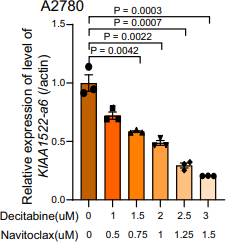
Navitoclax dihydrochloride purchased from MedChemExpress. Usage Cited in: Nat Commun. 2022 Nov 10;13(1):6803. [Abstract]
Navitoclax (0.5-1.5 μM;10 d) combined with decitabine significantly reduces the transcriptional activity of KIAA1522-a6 in siPTBP1-transfected A2780 cells.
-
Nat Commun
Single-cell transcriptomics identifies Mcl-1 as a target for senolytic therapy in cancer. [Abstract]2022 Apr 21;13(1):2177. PMID: 35449130 -
Nat Commun
Co-targeting of BAX and BCL-XL proteins broadly overcomes resistance to apoptosis in cancer. [Abstract]2022 Mar 7;13(1):1199. PMID: 35256598 -
Nat Commun
2021 Jul 22;12(1):4457. PMID: 34294701 -
Nat Commun
A BET family protein degrader provokes senolysis by targeting NHEJ and autophagy in senescent cells. [Abstract]2020 Apr 22;11(1):1935. PMID: 32321921 -
Nat Commun
Pharmacological reactivation of MYC-dependent apoptosis induces susceptibility to anti-PD-1 immunotherapy. [Abstract]2019 Feb 6;10(1):620. PMID: 30728358 -
Circ Res
2025 Jan 17;136(2):e1-e19. PMID: 39655444 -
Cell Discov
Lineage-coupled clonal capture identifies clonal evolution mechanisms and vulnerabilities of BRAFV600E inhibition resistance in melanoma. [Abstract]2022 Oct 6;8(1):102. PMID: 36202798
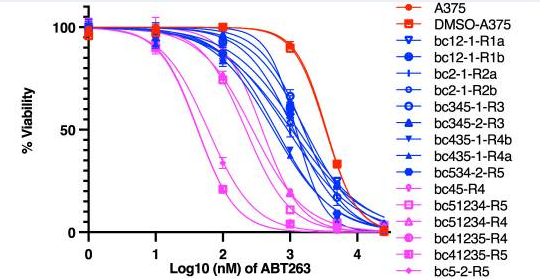
Navitoclax dihydrochloride purchased from MedChemExpress. Usage Cited in: Cell Discov. 2022 Oct 6;8(1):102. [Abstract]
Cell viability of the captured clones in response to ABT263 (Navitoclax) (2 days). Results are representative of two independent experiments with three technical replicates per experiment, and error bars represent SEM.
-
Sci Transl Med
Hematopoietic loss of Y chromosome activates immune checkpoints and contributes to impaired senescent cell clearance and renal disease. [Abstract]2025 Aug 6;17(810):eadv4071. PMID: 40768598 -
Sci Transl Med
PP2A inhibition is a druggable MEK inhibitor resistance mechanism in KRAS-mutant lung cancer cells. [Abstract]2018 Jul 18;10(450):eaaq1093. PMID: 30021885 -
J Exp Clin Cancer Res
HSF1 is a prognostic determinant and therapeutic target in intrahepatic cholangiocarcinoma. [Abstract]2024 Sep 6;43(1):253. PMID: 39243039
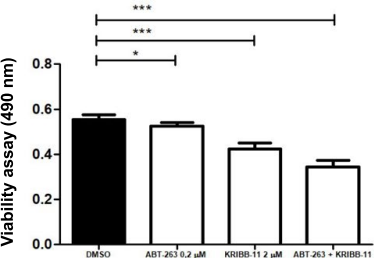
Navitoclax dihydrochloride purchased from MedChemExpress. Usage Cited in: J Exp Clin Cancer Res. 2024 Sep 6;43(1):253. [Abstract]
The co-treatment with ABT-263 (Navitoclax) (0.2 μM) and KRIBB-11 inhibits the cell viability in iCCA hCAFs. Effect of ABT-263, KRIBB-11, and their co-administration on the viability of iCCA hCAFs, grown for 72 h in culture medium supplemented with 10% FBS. Note the higher anti-growth effects of the two combined drugs than single treatments.
-
Adv Sci (Weinh)
Beyond CD30: Dual-Targeting of Malignant and Regulatory T Cells by Brentuximab Vedotin Remodels the Lymphoma Microenvironment and Overcomes Resistance via BCL2 Inhibition in Mycosis Fungoides. [Abstract]2026 Feb 28:e17353. PMID: 41762706 -
NPJ Aging
AI-aided identification of dual-purpose therapeutic targets PRPF19 and MAPK9 in hepatocellular carcinoma and cellular senescence. [Abstract]2025 Dec 17;11(1):101. PMID: 41407697 -
NPJ Aging
2024 Jun 20;10(1):31. PMID: 38902222 -
J Control Release
The HSP90-dependent bioorthogonal PROTAC prodrug system enables tumor-selective and enhanced protein degradation. [Abstract]2026 May 10:393:114828. PMID: 41839264 -
J Control Release
Fluorinated albumin nanocages dually target CAFs and tumor cells to potentiate bladder cancer chemoimmunotherapy. [Abstract]2025 Nov 10:387:114246. PMID: 40972824 -
-
Cell Death Dis
Repurposing BCL2 inhibitors: Venetoclax protects against acinar cell necrosis in acute pancreatitis by promoting apoptosis. [Abstract]2025 Jul 27;16(1):566. PMID: 40715042 -
Cell Death Dis
Disrupting pro-survival and inflammatory pathways with dimethyl fumarate sensitizes chronic lymphocytic leukemia to cell death. [Abstract]2024 Mar 18;15(3):224. PMID: 38494482 -
Pharmacol Res
Combination of palbociclib with navitoclax based-therapies enhances in vivo antitumoral activity in triple-negative breast cancer. [Abstract]2023 Jan:187:106628. PMID: 36566002 -
Cell Death Dis
Constitutive BAK/MCL1 complexes predict paclitaxel and S63845 sensitivity of ovarian cancer. [Abstract]2021 Aug 12;12(8):789. PMID: 34385422 -
Cell Death Dis
2021 Jul 27;12(8):742. PMID: 34315857 -
Cell Death Dis
MCL1 inhibitors S63845/MIK665 plus Navitoclax synergistically kill difficult-to-treat melanoma cells. [Abstract]2020 Jun 8;11(6):443. PMID: 32513939 -
Cell Death Dis
Chemotherapy-induced pyroptosis is mediated by BAK/BAX-caspase-3-GSDME pathway and inhibited by 2-bromopalmitate. [Abstract]2020 Apr 24;11(4):281. PMID: 32332857 -
Cell Death Dis
MCL1 inhibition is effective against a subset of small-cell lung cancer with high MCL1 and low BCL-XL expression. [Abstract]2020 Mar 9;11(3):177. PMID: 32152266 -
Cell Death Dis
CDK7 inhibitor THZ1 inhibits MCL1 synthesis and drives cholangiocarcinoma apoptosis in combination with BCL2/BCL-XL inhibitor ABT-263. [Abstract]2019 Aug 9;10(8):602. PMID: 31399555 -
Cell Death Dis
2018 Sep 24;9(10):986. PMID: 30250075
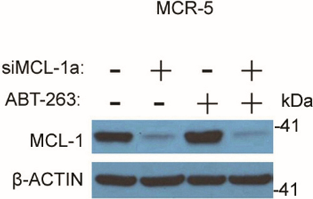
Navitoclax dihydrochloride purchased from MedChemExpress. Usage Cited in: Cell Death Dis. 2018 Sep 24;9(10):986. [Abstract]
Cells are treated with 25 nM siRNA for 48 hours followed by 1 μM ABT-263 for 36 hours.
-
Cell Commun Signal
Chemotherapy-induced senescent nasopharyngeal carcinoma cells suppress NK cell-mediated antitumor immunity by upregulating EBI3 via mtDNA-cGAS-STING pathway. [Abstract]2026 Mar 28;24(1):279. PMID: 41904509 -
Cell Commun Signal
ONC212, alone or in synergistic conjunction with Navitoclax (ABT-263), promotes cancer cell apoptosis via unconventional mitochondrial-independent caspase-3 activation. [Abstract]2024 Sep 13;22(1):441. PMID: 39272099 -
Adv Healthc Mater
Local Delivery of Senolytic Drug Inhibits Intervertebral Disc Degeneration and Restores Intervertebral Disc Structure. [Abstract]2022 Jan;11(2):e2101483. PMID: 34699690 -
Cell Death Discov
Exploiting dysregulated iron homeostasis to eradicate persistent high-grade serous ovarian cancer. [Abstract]2025 Sep 25;11(1):423. PMID: 40998801 -
Acta Pharmacol Sin
Chromosome instability functions as a potential therapeutic reference by enhancing chemosensitivity to BCL-XL inhibitors in colorectal carcinoma. [Abstract]2024 Nov;45(11):2420-2431. PMID: 39187678 -
Acta Biomater
A navitoclax-loaded nanodevice targeting matrix metalloproteinase-3 for the selective elimination of senescent cells. [Abstract]2024 Mar 1:176:405-416. PMID: 38185231 -
Cell Death Discov
A novel BH3 mimetic Bcl-2 inhibitor promotes autophagic cell death and reduces in vivo Glioblastoma tumor growth. [Abstract]2022 Oct 29;8(1):433. PMID: 36309485 -
Acta Biomater
Local delivery of a senolytic drug in ischemia and reperfusion-injured heart attenuates cardiac remodeling and restores impaired cardiac function. [Abstract]2021 Nov:135:520-533. PMID: 34454081 -
Leukemia
BET inhibitor-based combinations targeting novel dependencies in MECOM-rearranged (r) AML. [Abstract]2025 Dec 19. PMID: 41419608 -
Leukemia
Combining MCL-1 inhibition and CD37-directed chimeric antigen receptor T cells as an effective strategy to target T-cell lymphoma. [Abstract]2025 Jul 30. PMID: 40739330 -
Leukemia
2024 Sep;38(9):1894-1905. PMID: 38997434 -
Free Radic Biol Med
FMO1 disrupts mitochondrial functional homeostasis through ROS-mediated mechanisms to drive chondrocyte senescence and hypertrophy. [Abstract]2026 Aug 16:252:613-624. PMID: 42105790 -
Stem Cell Res Ther
Senolysis potentiates endothelial progenitor cell adhesion to and integration into the brain vasculature. [Abstract]2024 Nov 11;15(1):413. PMID: 39529098 -
Am J Chin Med
Salvianolic Acid Ameliorates Pressure Overload-Induced Cardiac Endothelial Dysfunction via Activating HIF1[Formula: see text]/HSF1/CD31 Pathway. [Abstract]2022;50(7):1869-1885. PMID: 36121714 -
Stem Cell Res Ther
Clearance of senescent cells with ABT-263 improves biological functions of synovial mesenchymal stem cells from osteoarthritis patients. [Abstract]2022 Jun 3;13(1):222. PMID: 35658936 -
Cell Rep
Dual blockade of PD-1 and NKG2A prevents NK cell senescence and reprograms the immunosuppressive microenvironment in pancreatic cancer. [Abstract]2026 Jun 20;45(7):117583. PMID: 42322608 -
Aging Cell
Morphofunctional Heterogeneity and Plasticity of Glioblastoma Cells Induced to Senescence by Temozolomide. [Abstract]2026 Apr;25(4):e70477. PMID: 41963773 -
-
Blood Adv
Preclinical efficacy of tasquinimod-based combinations in advanced myeloproliferative neoplasms (MPN) in blastic phase. [Abstract]2025 Aug 19:bloodadvances.2025016898. PMID: 40829105 -
Cell Rep
Divergent sex-specific effects on a ketogenic diet: Male, but not female, mice exhibit oxidative stress and cellular senescence. [Abstract]2025 Jul 17;44(8):116026. PMID: 40682777 -
Blood Adv
BH3 mimetic drugs overcome the microenvironment-induced resistance to crizotinib in ALK+ anaplastic large cell lymphoma. [Abstract]2025 Jul 2:bloodadvances.2024015322. PMID: 40601898 -
Aging Cell
Investigating the Role of TRPV4 and GPR35 Interaction in Endothelial Dysfunction in Aging Mice. [Abstract]2025 May;24(5):e14469. PMID: 39744893 -
Aging Cell
2025 Feb;24(2):e14385. PMID: 39439195 -
Blood Adv
CBFA2T3::GLIS2 Pediatric Acute Megakaryoblastic Leukemia is Sensitive to BCL-XL Inhibition by Navitoclax and DT2216. [Abstract]2024 Jan 9;8(1):112-129. PMID: 37729615 -
Cell Rep
BCL-xL inhibition potentiates cancer therapies by redirecting the outcome of p53 activation from senescence to apoptosis. [Abstract]2022 Dec 20;41(12):111826. PMID: 36543138 -
Neurotherapeutics
Transcriptionally distinct malignant neuroblastoma populations show selective response to adavosertib treatment. [Abstract]2025 Apr;22(3):e00575. PMID: 40118716 -
J Med Chem
Systems Biology-Based Drug Repositioning Identifies Extracellular Matrix Module as a Therapeutic Target in Lung Squamous Cell Carcinoma. [Abstract]2025 Oct 17. PMID: 41105954 -
Sci Data
High-throughput drug screening identifies novel therapeutics for Low Grade Serous Ovarian Carcinoma. [Abstract]2024 Sep 19;11(1):1024. PMID: 39300112 -
Sci Signal
Metabolic perturbations sensitize triple-negative breast cancers to apoptosis induced by BH3 mimetics. [Abstract]2021 Jun 8;14(686):eabc7405. PMID: 34103421 -
Sci Signal
High-throughput dynamic BH3 profiling may quickly and accurately predict effective therapies in solid tumors. [Abstract]2020 Jun 16;13(636):eaay1451. PMID: 32546544 -
Mol Cancer Ther
Harnessing senolytics and PARP inhibition to expand the antitumor activity of CDK4/6 inhibitors in prostate cancer. [Abstract]2025 Jul 2. PMID: 40601842 -
Pharmaceutics
Targeted Drug Therapy for Senescent Cells Alleviates Unilateral Ureteral Obstruction-Induced Renal Injury in Rats. [Abstract]2024 May 23;16(6):695. PMID: 38931822 -
Pharmaceutics
Maximizing Anticancer Response with MPS1 and CENPE Inhibition Alongside Apoptosis Induction. [Abstract]2023 Dec 29;16(1):56. PMID: 38258067 -
Mol Cancer Ther
Bepotastine sensitizes ovarian cancer to PARP inhibitors through suppressing NF-κB-triggered SASP in cancer-associated fibroblasts. [Abstract]2023 Apr 3;22(4):447-458. PMID: 36780236 -
Pharmaceutics
Navitoclax Enhances the Therapeutic Effects of PLK1 Targeting on Lung Cancer Cells in 2D and 3D Culture Systems. [Abstract]2022 Jun 6;14(6):1209. PMID: 35745782 -
JCI Insight
2024 Mar 14;9(8):e172565. PMID: 38483541 -
JCI Insight
Inhibition of antiapoptotic BCL-2 proteins with ABT-263 induces fibroblast apoptosis, reversing persistent pulmonary fibrosis. [Abstract]2023 Feb 8;8(3):e163762. PMID: 36752201 -
Biochem Pharmacol
Senolytic elimination of therapy-induced senescent cells by ABT-263 improves chemotherapeutic efficacy in esophageal squamous cell carcinoma. [Abstract]2026 Mar:245:117659. PMID: 41423036 -
-
Geroscience
The senolytic ABT-263 improves cognitive functions in middle-aged male, but not female, atherosclerotic LDLr-/-;hApoB100+/+ mice. [Abstract]2025 Jun;47(3):4577-4600. PMID: 39982668 -
Int J Pharm
Co-encapsulation of PI3-Kδ/HDAC6 dual inhibitor and Navitoclax in Quatramer™ nanoparticles for synergistic effect in ER+ breast cancer. [Abstract]2022 Nov 25:628:122343. PMID: 36341921 -
Cells
EA.hy926 Cells and HUVECs Share Similar Senescence Phenotypes but Respond Differently to the Senolytic Drug ABT-263. [Abstract]2022 Jun 21;11(13):1992. PMID: 35805077 -
Acs Biomater Sci Eng
2022 May 9;8(5):1921-1929. PMID: 35416659 -
Cells
Selective Targeting of Cancer-Associated Fibroblasts by Engineered H-Ferritin Nanocages Loaded with Navitoclax. [Abstract]2021 Feb 5;10(2):328. PMID: 33562504 -
Biomacromolecules
2025 Feb 10;26(2):814-824. PMID: 39783796 -
Acta Physiol
Tacrolimus Induced Hypertension and Vascular Remodeling Includes Mechanisms of Cellular Senescence-The Protective Effect of Valsartan. [Abstract]2026 Apr;242(4):e70189. PMID: 41814130 -
Reprod Biol Endocrinol
A novel senotherapeutic strategy with azithromycin for preventing endometriosis progression. [Abstract]2025 Mar 26;23(1):47. PMID: 40140889 -
Pharmaceuticals (Basel)
2021 Jul 30;14(8):749. PMID: 34451846 -
Biomolecules
Targeting Cellular Senescence to Enhance Human Endometrial Stromal Cell Decidualization and Inhibit Their Migration. [Abstract]2025 Jun 16;15(6):873. PMID: 40563513 -
Int J Mol Sci
The Differential Effect of Senolytics on SASP Cytokine Secretion and Regulation of EMT by CAFs. [Abstract]2024 Apr 4;25(7):4031. PMID: 38612842 -
Int J Mol Sci
Developing 3D Organoid Raft Cultures from Patient-Derived Xenografts as Rapid Models to Screen Efficacy of Experimental Therapeutics. [Abstract]2022 Nov 19;23(22):14392. PMID: 36430867 -
J Integr Med
Morin inhibits ubiquitination degradation of BCL-2 associated agonist of cell death and synergizes with BCL-2 inhibitor in gastric cancer cells. [Abstract]2025 Apr 22:S2095-4964(25)00050-0. PMID: 40319008 -
Toxicology
Proteasome inhibition induces apoptosis through simultaneous inactivation of MCL-1/BCL-XL by NOXA independent of CHOP and JNK pathways. [Abstract]2024 Nov:508:153906. PMID: 39117261 -
Mol Med Rep
Inhibition of Bcl-2 and Bcl-xL overcomes the resistance to the third-generation EGFR tyrosine kinase inhibitor osimertinib in non-small cell lung cancer. [Abstract]2021 Jan;23(1):48. PMID: 33200796 -
Cancers (Basel)
Antineoplastic Drug Synergy of Artesunate with Navitoclax in Models of High-Grade Serous Ovarian Cancer. [Abstract]2024 Mar 28;16(7):1321. PMID: 38610999 -
Cancers (Basel)
Tumor-Associated Fibroblast-Derived Exosomal circDennd1b Promotes Pituitary Adenoma Progression by Modulating the miR-145-5p/ONECUT2 Axis and Activating the MAPK Pathway. [Abstract]2023 Jun 27;15(13):3375. PMID: 37444485 -
Comput Struct Biotechnol J
A deep tabular data learning model predicting cisplatin sensitivity identifies BCL2L1 dependency in cancer. [Abstract]2023 Jan 16:21:956-964. PMID: 36733702 -
Neoplasia
Mcl-1 levels critically impact the sensitivities of human colorectal cancer cells to APG-1252-M1, a novel Bcl-2/Bcl-XL dual inhibitor that induces Bax-dependent apoptosis. [Abstract]2022 Jul;29:100798. PMID: 35462114 -
J Cell Mol Med
2026 Apr;30(7):e71101. PMID: 41896195 -
J Cell Mol Med
LAPTM5 Confers the Resistance to Venetoclax via Promoting the Autophagosome-Lysosome Fusion in Multiple Myeloma. [Abstract]2025 Jan;29(1):e70331. PMID: 39753521 -
Mol Cell Biochem
Bcl-2/Bcl-xL inhibitor navitoclax increases the antitumor effect of Chk1 inhibitor prexasertib by inducing apoptosis in pancreatic cancer cells via inhibition of Bcl-xL but not Bcl-2. [Abstract]2020 Sep;472(1-2):187-198. PMID: 32567031 -
iScience
2025 Nov 10;28(12):113985. PMID: 41438049 -
Mol Oncol
The CDK12-BRCA1 signaling axis mediates dinaciclib-associated radiosensitivity through p53-mediated cellular senescence. [Abstract]2025 Apr;19(4):1265-1280. PMID: 39626031 -
Neurochem Res
2022 Dec;47(12):3723-3732. PMID: 36066699 -
iScience
Reciprocal effects of mTOR inhibitors on pro-survival proteins dictate therapeutic responses in tuberous sclerosis complex. [Abstract]2022 Oct 28;25(11):105458. PMID: 36388985 -
Nanomedicine
Polylactic acid based polymeric nanoparticle mediated co-delivery of navitoclax and decitabine for cancer therapy. [Abstract]2023 Jan:47:102627. PMID: 36410699 -
J Infect Dis
2025 Jul 16:jiaf373. PMID: 40668935 -
Ther Adv Med Oncol
Navitoclax combined with Alpelisib effectively inhibits Merkel cell carcinoma cell growth in vitro. [Abstract]2020 Dec 14:12:1758835920975621. PMID: 33403016 -
Development
2023 May 1;150(9):dev200903. PMID: 37017267 -
ACS Med Chem Lett
High-Throughput Screening of Patient-Derived Cultures Reveals Potential for Precision Medicine in Glioblastoma. [Abstract]2015 Jun 22;6(8):948-52. PMID: 26288699
Navitoclax dihydrochloride purchased from MedChemExpress. Usage Cited in: ACS Med Chem Lett. 2015 Jun 22;6(8):948-52. [Abstract]
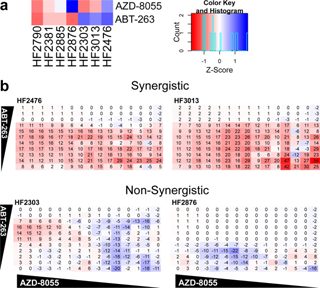
Combination treatment. (a) Comparison of AZD-8055 and ABT-263 treatment in all cell lines. Red indicates sensitivity, while blue indicates resistance. (b) Depiction of synergism where the values shown are excess over Bliss Independence, a prediction of inhibition without synergism. Increased synergism is evident by an increased number, shown in red, while negative numbers in blue represent an antagonistic effect.
-
Biochim Biophys Acta Gene Regul Mech
DNA-PKcs as an upstream mediator of OCT4-induced MYC activation in small cell lung cancer. [Abstract]2023 Apr 26;1866(2):194939. PMID: 37116859 -
Toxicol Appl Pharmacol
Gestational arsenite exposure augments hepatic tumors of C3H mice by promoting senescence in F1 and F2 offspring via different pathways. [Abstract]2020 Dec 1:408:115259. PMID: 33010264 -
Cancer Med
Identification and Validation of cGAS-STING Pathway-Associated Predictive and Therapeutic Models for Esophageal Squamous Cell Cancer Patients via Artificial Intelligence and Multi-Omics. [Abstract]2026 Mar;15(3):e71645. PMID: 41731722 -
ChemMedChem
Advancing Accurate Quantification of Protein-Ligand Interactions: Differential Scanning Calorimetry as a Precision Screening Tool Using BCL-2 as a Model System. [Abstract]2026 Mar 13;21(5):e202500744. PMID: 41774457 -
Mol Carcinog
Therapeutic potential of the novel Bcl-2/Bcl-XL dual inhibitor, APG1252, alone or in combination against non-small cell lung cancer. [Abstract]2022 Nov;61(11):1031-1042. PMID: 36066010 -
Pigment Cell Melanoma Res
Establishment and characterization of an immortalized human giant congenital melanocytic nevi cell line. [Abstract]2022 May;35(3):356-368. PMID: 35218152 -
Breast Cancer Res Treat
Dual targeting of HSP90 and BCL-2 in breast cancer cells using inhibitors BIIB021 and ABT-263. [Abstract]2025 Apr;210(2):493-506. PMID: 39779635 -
Breast Cancer Res Treat
Rationally derived drug combinations with the novel Mcl-1 inhibitor EU-5346 in breast cancer. [Abstract]2019 Feb;173(3):585-596. PMID: 30374681 -
Am J Cancer Res
Targeting sphingosine kinase 2 suppresses cell growth and synergizes with BCL2/BCL-XL inhibitors through NOXA-mediated MCL1 degradation in cholangiocarcinoma. [Abstract]2019 Mar 1;9(3):546-561. PMID: 30949409 -
PLoS One
Synergistic apoptotic effects in cancer cells by the combination of CLK and Bcl-2 family inhibitors. [Abstract]2020 Oct 16;15(10):e0240718. PMID: 33064779 -
FEBS Open Bio
PARP inhibitors induce a senescence phenotype in non-small cell lung carcinoma cell lines. [Abstract]2026 Feb 19. PMID: 41714887 -
Biochem Biophys Res Commun
2022 Feb 19:593:122-128. PMID: 35063767 -
J Chromatogr Sci
Simultaneous Bioanalytical Method Development and Validation of Navitoclax and Doxorubicin in Rat Plasma Using UHPLC-HESI-LTQ-MS. [Abstract]2025 Aug 30;63(8):bmaf046. PMID: 40884358 -
Melanoma Res
2023 Oct 1;33(5):345-356. PMID: 37467061 -
-
-
-
-
bioRxiv
Sacituzumab Govitecan as an Effective Strategy for Sensitizing Chemoresistant HNSCC Cells to Senolytic Intervention. [Abstract]2026 Apr 15:2026.04.13.718209. PMID: 42039381 -
-
-
bioRxiv
BOGO: A Proteome-Wide Gene Overexpression Platform for Discovering Rational Cancer Combination Therapies. [Abstract]2025 Sep 7:2025.09.02.673780. PMID: 40950237 -
-
-
-
-
-
bioRxiv
Regulatory Network Inference of Induced Senescent Midbrain Cell Types Reveals Cell Type-Specific Senescence-Associated Transcriptional Regulators. [Abstract]2025 Feb 6:2025.02.06.636893. PMID: 39975267 -
-
Res Sq
2024 Sep 2:rs.3.rs-4926508. PMID: 39281866 -
Res Sq
BMP receptor 2 inhibition regulates mitochondrial bioenergetics to induce synergistic cell death with BCL-2 inhibitors in leukemia and NSLC cells. [Abstract]2024 Sep 12:rs.3.rs-5065904. PMID: 39315260 -
bioRxiv
2024 Jul 30:2024.07.29.605645. PMID: 39131266 -
-
-
-
-
-
-
-
Biomed Pharmacother
Foeniculum vulgare seed extract induces apoptosis in lung cancer cells partly through the down-regulation of Bcl-2. [Abstract]2021 Mar:135:111213. PMID: 33395604 -
-
Biomed Pharmacother
Triptolide impairs genome integrity by directly blocking the enzymatic activity of DNA-PKcs in human cells. [Abstract]2020 Sep:129:110427. PMID: 32574974 -
-
Aging (Albany NY)
Transient metabolic improvement in obese mice treated with navitoclax or dasatinib/quercetin. [Abstract]2020 Jun 25;12(12):11337-11348. PMID: 32584785 -


Solvent & Solubility
In Vitro:
DMSO : 100 mg/mL (95.46 mM; Need ultrasonic; Hygroscopic DMSO has a significant impact on the solubility of product, please use newly opened DMSO)
H2O : < 0.1 mg/mL (insoluble)
Please refer to the solubility information to select the appropriate solvent. Once prepared, please aliquot and store the solution to prevent product inactivation from repeated freeze-thaw cycles.
Storage method and period of stock solution: -80°C, 6 months; -20°C, 1 month (sealed storage, away from moisture). When stored at -80°C, please use it within 6 months. When stored at -20°C, please use it within 1 month.
Please refer to the solubility information to select the appropriate solvent. Once prepared, please aliquot and store the solution to prevent product inactivation from repeated freeze-thaw cycles.
Storage method and period of stock solution: -80°C, 6 months; -20°C, 1 month (sealed storage, away from moisture). When stored at -80°C, please use it within 6 months. When stored at -20°C, please use it within 1 month.
Concentration (start) × Volume (start) = Concentration (final) × Volume (final)
In Vivo:
Select the appropriate dissolution method based on your experimental animal and administration route.
- For the following dissolution methods, please ensure to first prepare a clear stock solution using an In Vitro approach and then sequentially add co-solvents:
- To ensure reliable experimental results, the clarified stock solution can be appropriately stored based on storage conditions. As for the working solution for In Vivo experiments, it is recommended to prepare freshly and use it on the same day.
- The percentages shown for the solvents indicate their volumetric ratio in the final prepared solution. If precipitation or phase separation occurs during preparation, heat and/or sonication can be used to aid dissolution.
Add each solvent one by one: 10% DMSO 40% PEG300 5% Tween-80 45% Saline
Solubility: ≥ 5 mg/mL (4.77 mM); Clear solution
This protocol yields a clear solution of ≥ 5 mg/mL (saturation unknown).
Taking 1 mL working solution as an example, add 100 μL DMSO stock solution (50.0 mg/mL) to 400 μL PEG300, and mix evenly; then add 50 μL Tween-80 and mix evenly; then add 450 μL Saline to adjust the volume to 1 mL.
Preparation of Saline: Dissolve 0.9 g sodium chloride in ddH₂O and dilute to 100 mL to obtain a clear Saline solution.
In Vivo Dissolution Calculator
Please enter the basic information of animal experiments:
-
-
-
-
Recommended: Prepare an additional quantity of animals to account for potential losses during experiments.
Please enter your animal formula composition:
-
%DMSO +
Recommended: Keep the proportion of DMSO in working solution below 2% if your animal is weak.
-
%+
-
+%Tween-80 + +
-
%Saline +
The co-solvents required include: DMSO, . All of co-solvents are available by MedChemExpress (MCE). , Tween 80. All of co-solvents are available by MedChemExpress (MCE).
Working solution concentration: 0.22 mg/mL
Method for preparing stock solution: mg drug dissolved in μL DMSO. Stock solution concentration: mg/mL. * In solvent : -80°C, 6 months; -20°C, 1 month (sealed storage, away from moisture)
1. Take μL DMSO stock solution;
2. Add μL .
μL , mix evenly;
3. Then add μL Tween 80, mix evenly;
4. Then add μL
Please ensure that the stock solution in the first step is dissolved to a clear state, and add co-solvents in sequence. You can use ultrasonic heating (ultrasonic cleaner, recommended frequency 20-40 kHz), vortexing, etc. to assist dissolution.


Purity & Documentation
-
Data Sheet (287 KB)
-
SDS (252 KB)
- English - EN (252 KB)
- Français - FR (252 KB)
- Deutsch - DE (252 KB)
- Norwegian - NO (252 KB)
- Español - ES (252 KB)
- Swedish - SV (252 KB)
- Italian - IT (252 KB)
- Korean - KR (252 KB)
- Portuguese - PT (252 KB)
-
Handling Instructions (2659 KB)
References
[1]. Lock R, et al. Initial testing (stage 1) of the BH3 mimetic ABT-263 by the pediatric preclinical testing program. Pediatric blood & cancer. 2008 Jun;50(6):1181-9. [Content Brief]
[2]. Chen J, et al. The Bcl-2/Bcl-X(L)/Bcl-w inhibitor, navitoclax, enhances the activity of chemotherapeutic agents in vitro and in vivo. Mol Cancer Ther. 2011 Dec;10(12):2340-9. [Content Brief]
[3]. Chen J, et al. The Bcl-2/Bcl-X(L)/Bcl-w inhibitor, navitoclax, enhances the activity of chemotherapeutic agents in vitro and in vivo. Molecular cancer therapeutics. 2011 Dec;10(12):2340-9. [Content Brief]
[4]. Mohamad Anuar NN, et al. Clinical Review: Navitoclax as a Pro-Apoptotic and Anti-Fibrotic Agent. Frontiers in pharmacology. 2020;11:564108. [Content Brief]
[5]. Wilson WH, et al. Navitoclax, a targeted high-affinity inhibitor of BCL-2, in lymphoid malignancies: a phase 1 dose-escalation study of safety, pharmacokinetics, pharmacodynamics, and antitumour activity. The Lancet. Oncology. 2010 Dec;11(12):1149-59. [Content Brief]
[6]. Wong M, et al. Navitoclax (ABT-263) reduces Bcl-x(L)-mediated chemoresistance in ovarian cancer models. Molecular cancer therapeutics. 2012 Apr;11(4):1026-35. [Content Brief]


Complete Stock Solution Preparation Table
Please refer to the solubility information to select the appropriate solvent. Once prepared, please aliquot and store the solution to prevent product inactivation from repeated freeze-thaw cycles.
Storage method and period of stock solution: -80°C, 6 months; -20°C, 1 month (sealed storage, away from moisture). When stored at -80°C, please use it within 6 months. When stored at -20°C, please use it within 1 month.
| Optional Solvent | Concentration Solvent Mass | 1 mg | 5 mg | 10 mg | 25 mg |
|---|---|---|---|---|---|
| DMSO | 1 mM | 0.9546 mL | 4.7731 mL | 9.5463 mL | 23.8657 mL |
| 5 mM | 0.1909 mL | 0.9546 mL | 1.9093 mL | 4.7731 mL | |
| 10 mM | 0.0955 mL | 0.4773 mL | 0.9546 mL | 2.3866 mL | |
| 15 mM | 0.0636 mL | 0.3182 mL | 0.6364 mL | 1.5910 mL | |
| 20 mM | 0.0477 mL | 0.2387 mL | 0.4773 mL | 1.1933 mL | |
| 25 mM | 0.0382 mL | 0.1909 mL | 0.3819 mL | 0.9546 mL | |
| 30 mM | 0.0318 mL | 0.1591 mL | 0.3182 mL | 0.7955 mL | |
| 40 mM | 0.0239 mL | 0.1193 mL | 0.2387 mL | 0.5966 mL | |
| 50 mM | 0.0191 mL | 0.0955 mL | 0.1909 mL | 0.4773 mL | |
| 60 mM | 0.0159 mL | 0.0796 mL | 0.1591 mL | 0.3978 mL | |
| 80 mM | 0.0119 mL | 0.0597 mL | 0.1193 mL | 0.2983 mL |


Navitoclax dihydrochloride Related Classifications
HY-10087A1 Related Classifications
 Powered by Bioz