Search Result
Results for "
Spectrophotometric
" in MedChemExpress (MCE) Product Catalog:
12
Biochemical Assay Reagents
2
Isotope-Labeled Compounds
| Cat. No. |
Product Name |
Target |
Research Areas |
Chemical Structure |
-
- HY-137805
-
|
|
Fluorescent Dye
|
Others
|
|
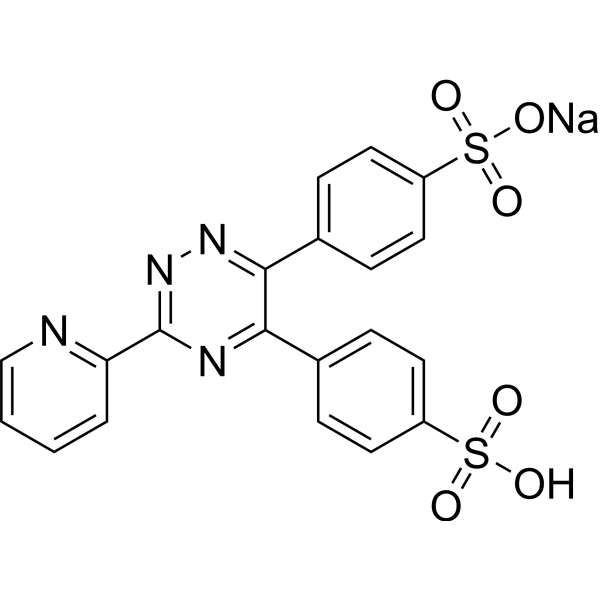
Ferrozine is a spectrophotometric reagent for iron ions, can react with divalent Fe to form a stable magenta complex species. The complex has an absorption peak at 562 nm . Ferrozine-based colorimetric assays can quantify iron in cells
|
-
-
- HY-15928
-
|
p-Nitrophenyl phosphate disodium
|
Fluorescent Dye
|
Others
|
|
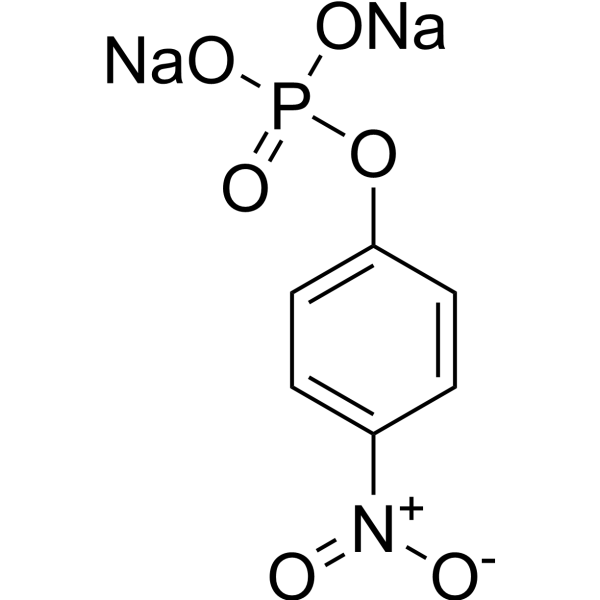
4-Nitrophenyl phosphate (p-Nitrophenyl phosphate) disodium is a non-proteinaceous chromogenic substrate for alkaline and acid phosphatases used in ELISA and conventional spectrophotometric assays.
|
-
-
- HY-D0034
-
|
ABMDMA
|
Fluorescent Dye
MOFs
|
Cancer
|
|
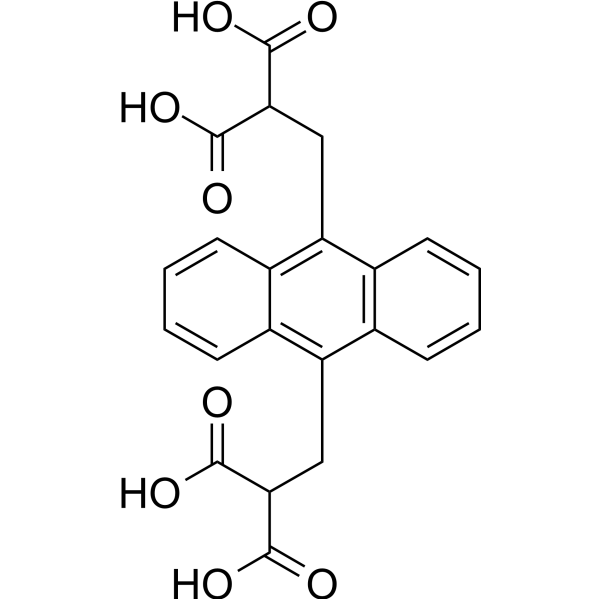
9,10-Anthracenediyl-bis(methylene)dimalonic acid (ABMDMA) is a biological dye and indicator used to detect singlet oxygen generation (SOG). 9,10-Anthracenediyl-bis(methylene)dimalonic acid is water-soluble derivative of anthracene. 9,10-Anthracenediyl-bis(methylene)dimalonic acid can be photobleached by singlet oxygen to its corresponding endoperoxide. This reaction can be monitored spectrophotometrically by recording the decrease of absorbance at 400 nm .
|
-
-
- HY-15926
-
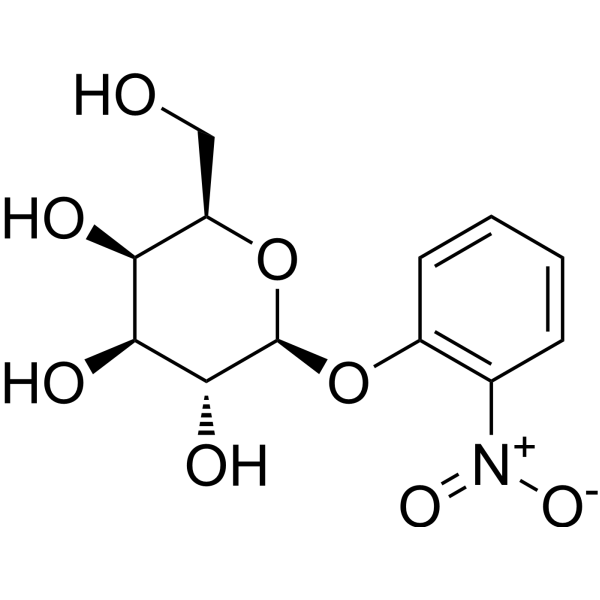
ONPG
Maximum Cited Publications
6 Publications Verification
2-Nitrophenyl β-D-galactopyranoside
|
Biochemical Assay Reagents
|
Others
|
|
ONPG is a colorimetric and spectrophotometric substrate for detection of β-galactosidase activity.
|
-
-
- HY-15927
-
|
|
Biochemical Assay Reagents
|
Metabolic Disease
|
|
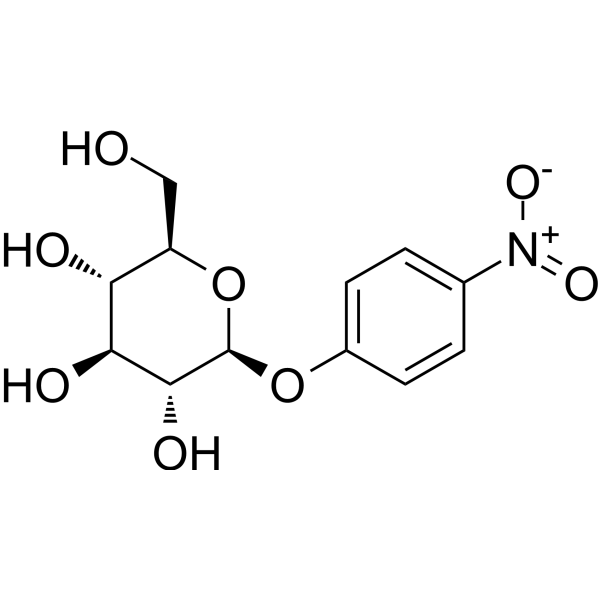
4-Nitrophenyl β-D-glucopyranoside is a chromogenic substrate for β-glucosidase. 4-Nitrophenyl β-D-glucopyranoside is converted to a colored product, p-nitrophenol that is easily detected spectrophotometrically at 405 nm when used in a β-glycosidase assay. 4-Nitrophenyl β-D-glucopyranoside is hydrolysed through intramolecular nucleophilic catalysis by the phosphate group in the 2-position. 4-Nitrophenyl β-D-glucopyranoside is promising for research of postmenopausal osteoporosis .
|
-
-
- HY-101890
-
|
DABS-Cl
|
Fluorescent Dye
|
Others
|
|
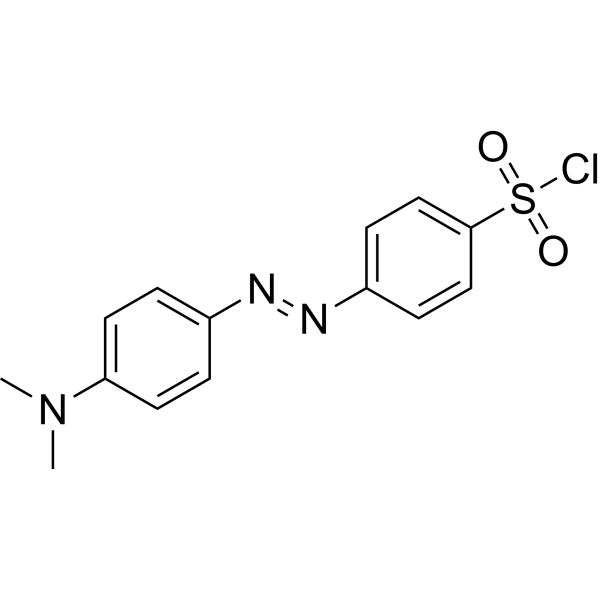
Dabsyl chloride is an amine derivatizing agent, able to give rise to stable products that can be easily monitored spectrophotometrically at 460 nm; Dabsyl chloride also used for labeling amino acids.
|
-
-
- HY-W129633
-
|
DCIP sodium hydrate; DPIP sodium hydrate
|
Biochemical Assay Reagents
|
Others
|
|
2,6-Dichlorophenolindophenol (DCIP; DPIP) sodium hydrate is a redox chromogenic indicator with a redox potential of +217 mV relative to SHE, and it acts as a substrate for reduction reactions. During the metabolic process of nutrient consumption by Saccharomyces cerevisiae, 2,6-Dichlorophenolindophenol sodium hydrate is reduced from dark blue to colorless, resulting in a decrease in absorbance. 2,6-Dichlorophenolindophenol sodium hydrate is widely used in spectrophotometric biochemical oxygen demand determination and preclinical colorimetric toxicity analysis for heavy metal ion detection based on Saccharomyces cerevisiae .
|
-
-
- HY-169798
-
|
|
Fluorescent Dye
VSV
|
Infection
|
1,9-Dimethylmethylene blue is a photosensitizer, virus inactivator and hemoglobin oxidant derived from methylene blue. When activated, 1,9-Dimethylmethylene blue generates reactive oxygen species including singlet oxygen, and acts as a metachromatic dye. When activated in monomeric or dimeric form, 1,9-Dimethylmethylene blue induces photoinactivation of R17 phage and vesicular stomatitis virus and oxidizes hemoglobin via non-singlet oxygen reactive oxygen species or singlet oxygen-mediated pathways, respectively. The monomeric form, with higher nucleic acid affinity, achieves virus inactivation under specific conditions without forming methemoglobin. 1,9-Dimethylmethylene blue binds to substances such as glycosaminoglycans to produce color changes. Although it is susceptible to interference from non-glycosaminoglycan components in urine, it is still applicable to spectrophotometric analysis for glycosaminoglycan quantification. With these unique photochemical and binding properties, 1,9-Dimethylmethylene blue is widely used in studies of viral infections and related biochemical analyses .
|
-
-
- HY-Y0032
-
|
|
Orthopoxvirus
|
Infection
Others
Cancer
|
|
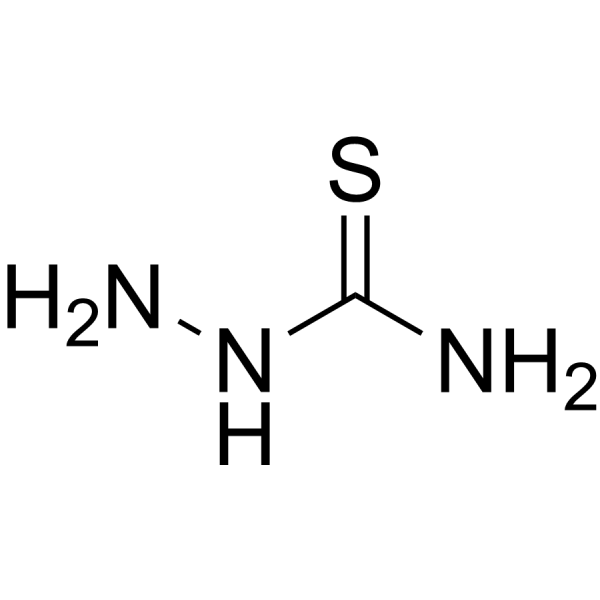
Thiosemicarbazide is a vitamin B6 antagonist with anti-acne activity. Thiosemicarbazide is also a well-known source in the synthesis of heterocycles, and its derivatives have potential anticancer activity. Thiosemicarbazide (TSC: HL1) reacts with metal salts, urea (U), to prepare Co(II) and Cu(I) metal complexes. Thiosemicarbazide is also used in the fields of media communications and optical storage, and in the spectrophotometric detection of metals .
|
-
-
- HY-W250149
-
|
|
Biochemical Assay Reagents
|
Cancer
|
|
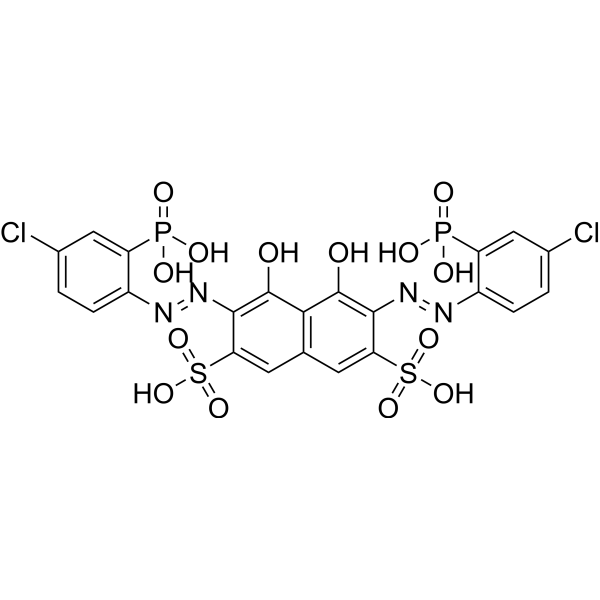
Chlorophosphonazo III is a cell membrane-permeable contrast agent and spectrophotometric reagent. Chlorophosphonazo III forms stable 1:1 complexes with intracellular calcium, magnesium, uranium, titanium, zirconium, thorium, scandium, equivalent actinides and protactinium. Chlorophosphonazo III generates photoacoustic signals correlated with Ca 2+ concentrations, which is applicable for imaging 3D tumor cell cultures and tumor spheroids. Chlorophosphonazo III exhibits no cytotoxicity, can be used for spectrophotometric detection of target ions, and the absorbance of its complexes remains stable for up to one week within the pH range of 2.2 to 7.0 .
|
-
-
- HY-D0945
-
|
|
Fluorescent Dye
|
Others
|
|
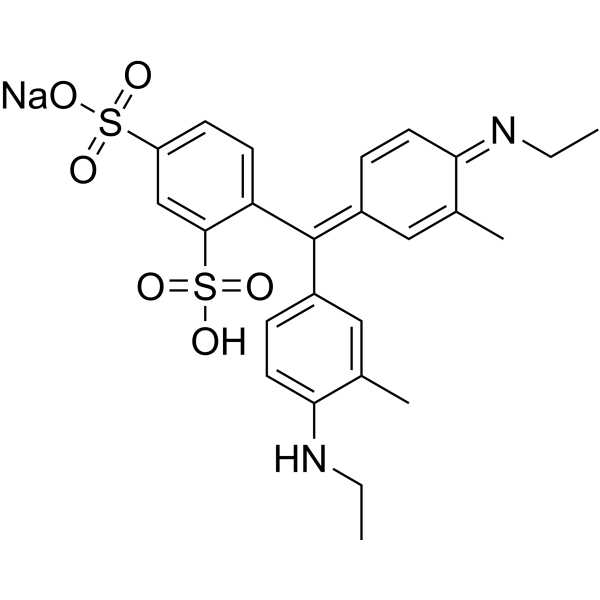
Xylene Cyanol FF is an acid triphenylmethane dye. Xylene Cyanol FF can be used for histochemical staining of hemoglobin peroxidase or as a tracking dye for DNA sequencing in electrophoresis. Xylene Cyanol FF will be catalyzed by Fe and Al to accelerate oxidation under the addition of double oxidant hydrogen peroxide and potassium periodate. Xylene Cyanol FF thus enables the spectrophotometric determination of Fe and Al in the solution to be tested .
|
-
-
- HY-W045537
-
|
|
Biochemical Assay Reagents
|
Others
|
|
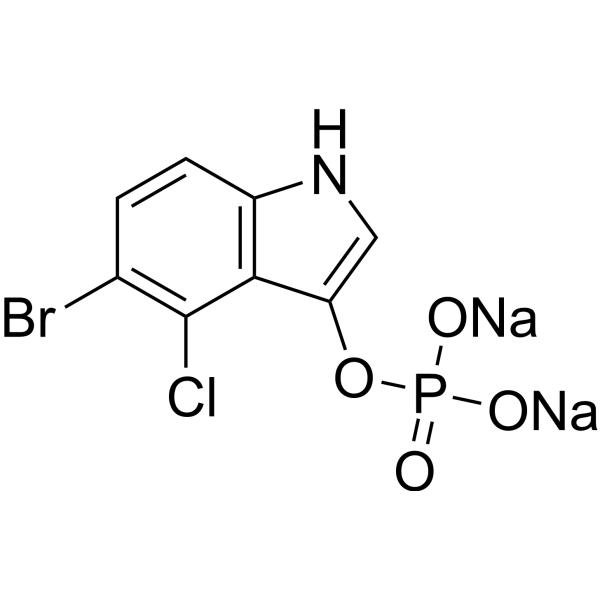
Sodium 5-bromo-4-chloro-1H-indol-3-yl phosphate is commonly used as a substrate for phosphatase assays in biochemistry and molecular biology. This compound is converted by phosphatases to a yellow compound that can be easily measured spectrophotometrically or fluorometrically. Furthermore, it has been used as a useful reagent in enzyme-catalyzed reactions and a tool for studying signal transduction pathways.
|
-
-
- HY-131490
-
|
Violet tetrazolium
|
Biochemical Assay Reagents
|
Others
|
|
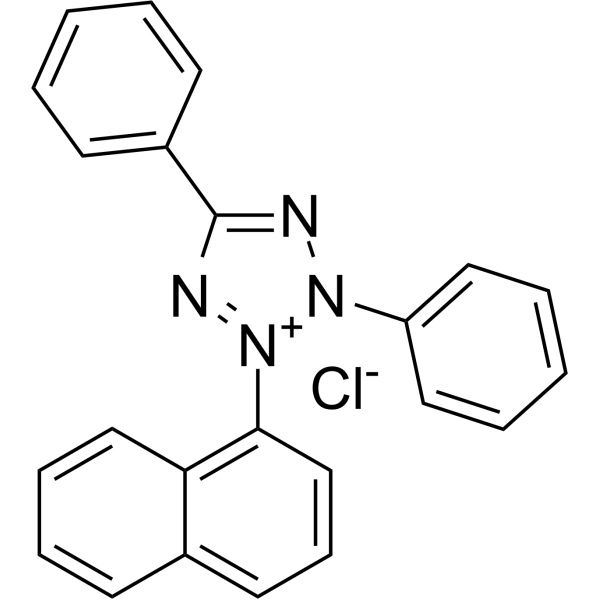
Tetrazolium violet is a redox indicator commonly used in various biochemical assays to measure cell viability and metabolic activity. Tetrazolium Violet has unique chemical properties that allow it to be reduced by cellular enzymes such as dehydrogenases to form a purple formazan product that can be detected spectrophotometrically. This makes it a useful tool for assessing cell health and growth in culture or tissue samples.
|
-
-
- HY-P4522A
-
|
|
Biochemical Assay Reagents
|
Others
|
|
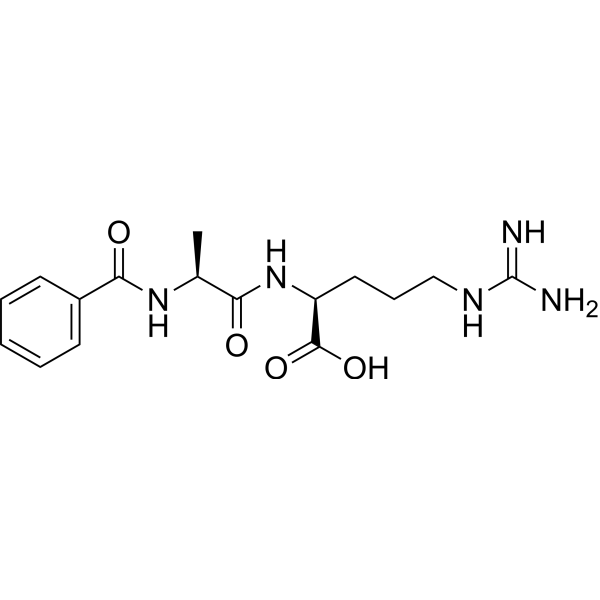
Bz-Ala-Arg TFA is a dipeptide. Bz-Ala-Arg TFA is also a substrate of human pancreatic carboxypeptidase B and plasma carboxypeptidase N .
|
-
-
- HY-P4522
-
|
|
Biochemical Assay Reagents
|
Others
|
|
Bz-Ala-Arg is a dipeptide. Bz-Ala-Arg is also a substrate of human pancreatic carboxypeptidase B and plasma carboxypeptidase N .
|
-
-
- HY-130767A
-
|
|
Biochemical Assay Reagents
|
Cancer
|
|
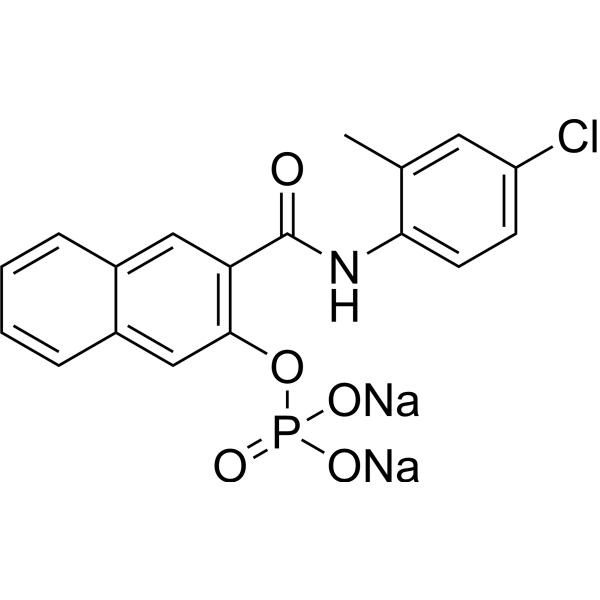
Naphthol AS-TR Phosphate disodium is a water-soluble dye commonly used as an enzymatic substrate in various biochemical assays to detect alkaline phosphatase activity. Naphthol AS-TR Phosphate disodium has unique chemical properties that allow it to be hydrolyzed by alkaline phosphatase, forming a colored product that can be detected spectrophotometrically. This makes it a useful tool for monitoring enzyme activity in biological samples such as serum or urine.
|
-
-
- HY-W009311
-
|
4,4'-Bis(dimethylamino)thiobenzophenone
|
Biochemical Assay Reagents
|
Others
|
|
Thiomichler's ketone (4,4'-Bis (dimethylamino) thiobenzophenone) is a heavy metal complexing agent and a colorimetric/spectrophotometric reagent. Thiomichler's ketone shows selectivity for Hg 2+ at pH 3, and exhibits activity towards Pd 2+ and Ag + at pH 3.5. Thiomichler's ketone enables accurate detection of trace Pd 2+ by forming an extractable Hg 2+ complex via micelle-mediated cloud point extraction, or generating a red coordination complex including Pd (TMK)4. Thiomichler's ketone is applicable for the determination of trace Pd 2+ in antibiotics and catalysts of automobile exhaust purifiers .
|
-
-
- HY-W151629A
-
|
|
Fluorescent Dye
|
Others
|
|
Ferrozine sodium hydrate is a spectrophotometric reagent for iron, can react with divalent Fe to form a stable magenta complex species. The complex has an absorption peak at 562 nm .Ferrozine sodium hydrate-based colorimetric assays can quantify iron in cells
|
-
-
- HY-W014924
-
|
Phenolindophenol
|
Biochemical Assay Reagents
|
Others
|
|
Indophenol (Phenolindophenol) can be used for quantification of the concentrations of ammoniacal nitrogen (eg: NH4 + and NO2 −) through spectrophotometric assay .
|
-
-
- HY-15926S
-
|
2-Nitrophenyl β-D-galactopyranoside-13C
|
Isotope-Labeled Compounds
|
Others
|
|
ONPG- 13C is the 13C labeled ONPG. ONPG is a colorimetric and spectrophotometric substrate for detection of β-galactosidase activit .
|
-
-
- HY-P4039
-
|
|
HCV Protease
|
Infection
|
|
Ac-EEVVAC-pNA is a chromogenic substrate for a continuous spectrophotometric assay of HCV NS3 protease. The sequence EEVVAC is derived from the 5A-5B cleavage junction of the HCV polyprotein .
|
-
-
- HY-Y0032R
-
|
|
Orthopoxvirus
Reference Standards
|
Infection
Others
Cancer
|
|
Thiosemicarbazide is a vitamin B6 antagonist with anti-acne activity. Thiosemicarbazide is also a well-known source in the synthesis of heterocycles, and its derivatives have potential anticancer activity. Thiosemicarbazide (TSC: HL1) reacts with metal salts, urea (U), to prepare Co(II) and Cu(I) metal complexes. Thiosemicarbazide is also used in the fields of media communications and optical storage, and in the spectrophotometric detection of metals .
|
-
-
- HY-W923770
-
|
|
Biochemical Assay Reagents
|
Others
|
|
N-(1-Naphthyl)ethylenediamine dihydrochloride monomethanolate is a reagent that can be used for the spectrophotometric determination of nitrite and nitrate .
|
-
-
- HY-Y1132
-
|
6-Chloroanthranilic acid
|
Biochemical Assay Reagents
|
Others
|
|
2-Amino-6-chlorobenzoic acid is an autocoupling diazotization reagent used for spectrophotometric detection of nitrite ions in water. 2-Amino-6-chlorobenzoic acid exhibits good tolerance to various anions under acidic conditions. 2-Amino-6-chlorobenzoic acid is commonly used as a reagent in organic synthesis and analytical chemistry .
|
-
-
- HY-W011038S
-
|
HDPB-d5
|
Isotope-Labeled Compounds
Biochemical Assay Reagents
|
Others
|
|
Hexadecylpyridinium bromide-d5 (HDPB-d5) is the deuterated form of Hexadecylpyridinium bromide. Hexadecylpyridinium bromide (HDPB) is a cationic surfactant. Hexadecylpyridinium bromide can act as a sensitizer and solubilizer, and is a key component in spectrophotometric determination of metal ion reaction systems. Hexadecylpyridinium bromide can be used as a new passivating ligand for the synthesis and stabilization of cesium lead bromide calcium phosphate nanocrystals.
|
-
-
- HY-D1536
-
|
|
Fluorescent Dye
|
Neurological Disease
|
|
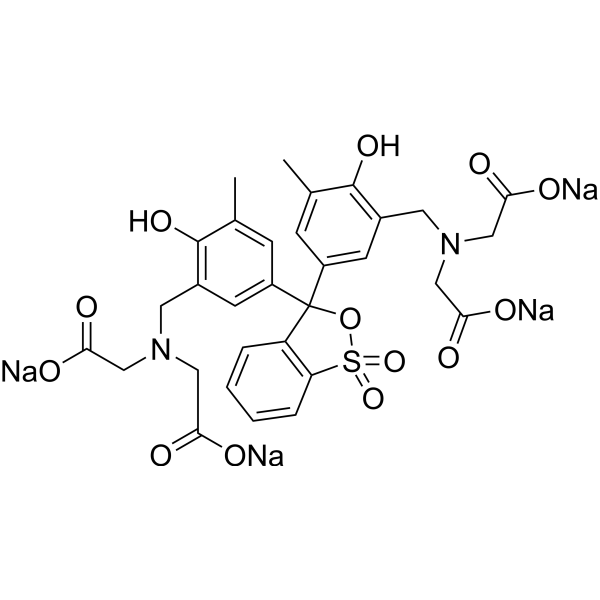
Glycine cresol red is a complexometric indicator. Glycine cresol red forms coloured complexes with Al 3+, Ga 3+ and In 3+ ions in aqueous solutions. Glycine cresol red can been used for the spectrophotometric determination of inorganic ions. Glycine cresol red can be used as a stain in neurohistology .
|
-
-
- HY-119839
-
|
|
Antibiotic
Bacterial
|
Infection
|
|
Acediasulfone is an antimicrobial. Acediasulfone can formation of a colored product reaction with p-dimethylaminobenzaldehyde .
|
-
-
- HY-158735
-
|
|
Biochemical Assay Reagents
|
Others
|
|
Thioarginine hydrobromide is a colorimetric substrate for arginase that can be used in the spectrophotometric assay of arginase .
|
-
-
- HY-116022B
-
|
p-Nitrophenyl phosphate ditromethamine
|
Biochemical Assay Reagents
|
Others
|
|
4-Nitrophenyl phosphate ditromethamine is an enzyme substrate commonly used in biochemical assays to measure the activity of various phosphatases, including alkaline phosphatase. 4-Nitrophenylphosphate has unique chemical properties that allow it to be hydrolyzed by phosphatases, releasing a yellow product that can be detected spectrophotometrically.
|
-
-
- HY-130310
-
|
|
COX
|
Inflammation/Immunology
|
|
11(R)-HEDE is produced from 11Z,14Z-eicosadienoic acid by COX in a lipoxygenase-type reaction.1 Spectrophotometric measurement of the conjugated diene absorbance of 11(R)-HEDE is occasionally used to quantify COX activity.
|
-
-
- HY-130767
-
|
|
Biochemical Assay Reagents
|
Others
|
|
Naphthol AS-TR Phosphate is a water-soluble dye commonly used as an enzyme substrate in various biochemical assays to detect alkaline phosphatase activity. Naphthol AS-TR Phosphate has unique chemical properties that allow it to be hydrolyzed by alkaline phosphatase to form a colored product that can be detected spectrophotometrically. This makes it a useful tool for monitoring enzyme activity in biological samples such as serum or urine.
|
-
-
- HY-138241
-
|
|
Fluorescent Dye
|
Others
|
|
PBD-BODIPY is a probe for the spectrophotometric measurement of autoxidation reactions. Co-autoxidation of the PBD-BODIPY signal carrier and a hydrocarbon co-substrate can be quantified by monitoring loss of absorbance at 591 nm. PBD-BODIPY has been used to measure the activity of radical-trapping antioxidants in cell-free assays. It has also been used as a fluorescent probe for the detection of epoxidation activity.
|
-
-
- HY-DY1106
-
|
|
Fluorescent Dye
|
Others
|
Ferrozine (solution) is a spectrophotometric reagent for iron ions, can react with divalent Fe to form a stable magenta complex species. The complex has an absorption peak at 562 nm . Ferrozine-based colorimetric assays can quantify iron in cells Solvent and concentration: ddH2O: 10 mM
|
-
-
- HY-101890R
-
|
DABS-Cl (Standard)
|
Fluorescent Dye
Reference Standards
|
Others
|
|
Dabsyl chloride (Standard) is the analytical standard of Dabsyl chloride (HY-101890). This product is intended for research and analytical applications. Dabsyl chloride is an amine derivatizing agent, able to give rise to stable products that can be easily monitored spectrophotometrically at 460 nm; Dabsyl chloride also used for labeling amino acids.
|
-
-
- HY-W612175
-
|
|
Leukotriene Receptor
|
Others
|
|
H-Ala-pNA is an L-amino acid p-nitroaniline (pNA) derivative and a specific substrate for leukotriene A4 hydrolase. The D-enantiomer of H-Ala-pNA shows no activity toward leukotriene A4 hydrolase. H-Ala-pNA can be catalytically hydrolyzed by leukotriene A4 hydrolase, and the p-nitroaniline produced during the reaction is monitored spectrophotometrically at 405 nm to enable quantitative detection of enzyme activity. H-Ala-pNA is used to evaluate the potency of inhibitors targeting the amidase activity of leukotriene A4 hydrolase .
|
-
| Cat. No. |
Product Name |
Type |
-
- HY-137805
-
|
|
Fluorescent Dye
|
|
Ferrozine is a spectrophotometric reagent for iron ions, can react with divalent Fe to form a stable magenta complex species. The complex has an absorption peak at 562 nm . Ferrozine-based colorimetric assays can quantify iron in cells
|
-
- HY-15928
-
|
p-Nitrophenyl phosphate disodium
|
Fluorescent Dye
|
|
4-Nitrophenyl phosphate (p-Nitrophenyl phosphate) disodium is a non-proteinaceous chromogenic substrate for alkaline and acid phosphatases used in ELISA and conventional spectrophotometric assays.
|
-
- HY-D0034
-
|
ABMDMA
|
Fluorescent Dye
|
|
9,10-Anthracenediyl-bis(methylene)dimalonic acid (ABMDMA) is a biological dye and indicator used to detect singlet oxygen generation (SOG). 9,10-Anthracenediyl-bis(methylene)dimalonic acid is water-soluble derivative of anthracene. 9,10-Anthracenediyl-bis(methylene)dimalonic acid can be photobleached by singlet oxygen to its corresponding endoperoxide. This reaction can be monitored spectrophotometrically by recording the decrease of absorbance at 400 nm .
|
-
- HY-101890
-
|
DABS-Cl
|
Fluorescent Dye
|
|
Dabsyl chloride is an amine derivatizing agent, able to give rise to stable products that can be easily monitored spectrophotometrically at 460 nm; Dabsyl chloride also used for labeling amino acids.
|
-
- HY-D0945
-
|
|
Fluorescent Dye
|
|
Xylene Cyanol FF is an acid triphenylmethane dye. Xylene Cyanol FF can be used for histochemical staining of hemoglobin peroxidase or as a tracking dye for DNA sequencing in electrophoresis. Xylene Cyanol FF will be catalyzed by Fe and Al to accelerate oxidation under the addition of double oxidant hydrogen peroxide and potassium periodate. Xylene Cyanol FF thus enables the spectrophotometric determination of Fe and Al in the solution to be tested .
|
-
- HY-P4039
-
|
|
Fluorescent Dye
|
|
Ac-EEVVAC-pNA is a chromogenic substrate for a continuous spectrophotometric assay of HCV NS3 protease. The sequence EEVVAC is derived from the 5A-5B cleavage junction of the HCV polyprotein .
|
-
- HY-D1536
-
|
|
Fluorescent Dye
|
|
Glycine cresol red is a complexometric indicator. Glycine cresol red forms coloured complexes with Al 3+, Ga 3+ and In 3+ ions in aqueous solutions. Glycine cresol red can been used for the spectrophotometric determination of inorganic ions. Glycine cresol red can be used as a stain in neurohistology .
|
-
- HY-DY1106
-
|
|
Fluorescent Dye
|
Ferrozine (solution) is a spectrophotometric reagent for iron ions, can react with divalent Fe to form a stable magenta complex species. The complex has an absorption peak at 562 nm . Ferrozine-based colorimetric assays can quantify iron in cells Solvent and concentration: ddH2O: 10 mM
|
-
- HY-101890R
-
|
DABS-Cl (Standard)
|
Fluorescent Dye
|
|
Dabsyl chloride (Standard) is the analytical standard of Dabsyl chloride (HY-101890). This product is intended for research and analytical applications. Dabsyl chloride is an amine derivatizing agent, able to give rise to stable products that can be easily monitored spectrophotometrically at 460 nm; Dabsyl chloride also used for labeling amino acids.
|
| Cat. No. |
Product Name |
Type |
-
- HY-15926
-
ONPG
Maximum Cited Publications
6 Publications Verification
2-Nitrophenyl β-D-galactopyranoside
|
Biochemical Assay Reagents
|
|
ONPG is a colorimetric and spectrophotometric substrate for detection of β-galactosidase activity.
|
-
- HY-15927
-
|
|
Biochemical Assay Reagents
|
|
4-Nitrophenyl β-D-glucopyranoside is a chromogenic substrate for β-glucosidase. 4-Nitrophenyl β-D-glucopyranoside is converted to a colored product, p-nitrophenol that is easily detected spectrophotometrically at 405 nm when used in a β-glycosidase assay. 4-Nitrophenyl β-D-glucopyranoside is hydrolysed through intramolecular nucleophilic catalysis by the phosphate group in the 2-position. 4-Nitrophenyl β-D-glucopyranoside is promising for research of postmenopausal osteoporosis .
|
-
- HY-W129633
-
|
DCIP sodium hydrate; DPIP sodium hydrate
|
Biochemical Assay Reagents
|
|
2,6-Dichlorophenolindophenol (DCIP; DPIP) sodium hydrate is a redox chromogenic indicator with a redox potential of +217 mV relative to SHE, and it acts as a substrate for reduction reactions. During the metabolic process of nutrient consumption by Saccharomyces cerevisiae, 2,6-Dichlorophenolindophenol sodium hydrate is reduced from dark blue to colorless, resulting in a decrease in absorbance. 2,6-Dichlorophenolindophenol sodium hydrate is widely used in spectrophotometric biochemical oxygen demand determination and preclinical colorimetric toxicity analysis for heavy metal ion detection based on Saccharomyces cerevisiae .
|
-
- HY-W250149
-
|
|
Biochemical Assay Reagents
|
|
Chlorophosphonazo III is a cell membrane-permeable contrast agent and spectrophotometric reagent. Chlorophosphonazo III forms stable 1:1 complexes with intracellular calcium, magnesium, uranium, titanium, zirconium, thorium, scandium, equivalent actinides and protactinium. Chlorophosphonazo III generates photoacoustic signals correlated with Ca 2+ concentrations, which is applicable for imaging 3D tumor cell cultures and tumor spheroids. Chlorophosphonazo III exhibits no cytotoxicity, can be used for spectrophotometric detection of target ions, and the absorbance of its complexes remains stable for up to one week within the pH range of 2.2 to 7.0 .
|
-
- HY-D0945
-
|
|
Biochemical Assay Reagents
|
|
Xylene Cyanol FF is an acid triphenylmethane dye. Xylene Cyanol FF can be used for histochemical staining of hemoglobin peroxidase or as a tracking dye for DNA sequencing in electrophoresis. Xylene Cyanol FF will be catalyzed by Fe and Al to accelerate oxidation under the addition of double oxidant hydrogen peroxide and potassium periodate. Xylene Cyanol FF thus enables the spectrophotometric determination of Fe and Al in the solution to be tested .
|
-
- HY-W045537
-
|
|
Biochemical Assay Reagents
|
|
Sodium 5-bromo-4-chloro-1H-indol-3-yl phosphate is commonly used as a substrate for phosphatase assays in biochemistry and molecular biology. This compound is converted by phosphatases to a yellow compound that can be easily measured spectrophotometrically or fluorometrically. Furthermore, it has been used as a useful reagent in enzyme-catalyzed reactions and a tool for studying signal transduction pathways.
|
-
- HY-131490
-
|
Violet tetrazolium
|
Biochemical Assay Reagents
|
|
Tetrazolium violet is a redox indicator commonly used in various biochemical assays to measure cell viability and metabolic activity. Tetrazolium Violet has unique chemical properties that allow it to be reduced by cellular enzymes such as dehydrogenases to form a purple formazan product that can be detected spectrophotometrically. This makes it a useful tool for assessing cell health and growth in culture or tissue samples.
|
-
- HY-W009311
-
|
4,4'-Bis(dimethylamino)thiobenzophenone
|
Biochemical Assay Reagents
|
|
Thiomichler's ketone (4,4'-Bis (dimethylamino) thiobenzophenone) is a heavy metal complexing agent and a colorimetric/spectrophotometric reagent. Thiomichler's ketone shows selectivity for Hg 2+ at pH 3, and exhibits activity towards Pd 2+ and Ag + at pH 3.5. Thiomichler's ketone enables accurate detection of trace Pd 2+ by forming an extractable Hg 2+ complex via micelle-mediated cloud point extraction, or generating a red coordination complex including Pd (TMK)4. Thiomichler's ketone is applicable for the determination of trace Pd 2+ in antibiotics and catalysts of automobile exhaust purifiers .
|
-
- HY-W923770
-
|
|
Biochemical Assay Reagents
|
|
N-(1-Naphthyl)ethylenediamine dihydrochloride monomethanolate is a reagent that can be used for the spectrophotometric determination of nitrite and nitrate .
|
-
- HY-Y1132
-
|
6-Chloroanthranilic acid
|
Biochemical Assay Reagents
|
|
2-Amino-6-chlorobenzoic acid is an autocoupling diazotization reagent used for spectrophotometric detection of nitrite ions in water. 2-Amino-6-chlorobenzoic acid exhibits good tolerance to various anions under acidic conditions. 2-Amino-6-chlorobenzoic acid is commonly used as a reagent in organic synthesis and analytical chemistry .
|
-
- HY-116022B
-
|
p-Nitrophenyl phosphate ditromethamine
|
Biochemical Assay Reagents
|
|
4-Nitrophenyl phosphate ditromethamine is an enzyme substrate commonly used in biochemical assays to measure the activity of various phosphatases, including alkaline phosphatase. 4-Nitrophenylphosphate has unique chemical properties that allow it to be hydrolyzed by phosphatases, releasing a yellow product that can be detected spectrophotometrically.
|
-
- HY-130767
-
|
|
Biochemical Assay Reagents
|
|
Naphthol AS-TR Phosphate is a water-soluble dye commonly used as an enzyme substrate in various biochemical assays to detect alkaline phosphatase activity. Naphthol AS-TR Phosphate has unique chemical properties that allow it to be hydrolyzed by alkaline phosphatase to form a colored product that can be detected spectrophotometrically. This makes it a useful tool for monitoring enzyme activity in biological samples such as serum or urine.
|
| Cat. No. |
Product Name |
Target |
Research Area |
-
- HY-P2573
-
|
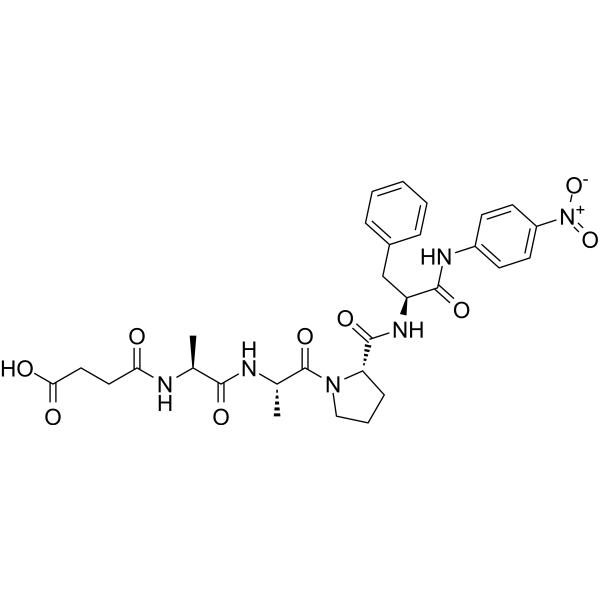
Suc-Ala-Ala-Pro-Phe-pNA
|
Peptides
|
Others
|
|
Suc-AAPF-pNA (Suc-Ala-Ala-Pro-Phe-pNA) is a chromogenic p-nitroanilide (pNA) substrate with the Km of 1.7 mM. Cleavage of Suc-AAPF-pNA releases 4-nitroaniline, which is yellow in colour and can be measured spectrophotometrically. Suc-AAPF-pNA can be used for the measurement of free and membrane-bound cathepsin G in human neutrophils .
|
-
- HY-P4522A
-
|
|
Biochemical Assay Reagents
|
Others
|
|
Bz-Ala-Arg TFA is a dipeptide. Bz-Ala-Arg TFA is also a substrate of human pancreatic carboxypeptidase B and plasma carboxypeptidase N .
|
-
- HY-P4522
-
|
|
Biochemical Assay Reagents
|
Others
|
|
Bz-Ala-Arg is a dipeptide. Bz-Ala-Arg is also a substrate of human pancreatic carboxypeptidase B and plasma carboxypeptidase N .
|
-
- HY-P4039
-
|
|
HCV Protease
|
Infection
|
|
Ac-EEVVAC-pNA is a chromogenic substrate for a continuous spectrophotometric assay of HCV NS3 protease. The sequence EEVVAC is derived from the 5A-5B cleavage junction of the HCV polyprotein .
|
-
- HY-K2611
-
4 Publications Verification
|
|
MCE Caspase 3 Activity Assay Kit provides a simple and convenient way for detecting the activity of detection of Caspase 3 activity that based on the spectrophotometric.
|
-
- HY-K2610
-
1 Publications Verification
|
|
MCE Caspase 1 Activity Assay Kit provides a simple and convenient way for detecting the activity of detection of Caspase 1 activity that based on the spectrophotometric.
|
| Cat. No. |
Product Name |
Chemical Structure |
-
- HY-15926S
-
|
|
|
ONPG- 13C is the 13C labeled ONPG. ONPG is a colorimetric and spectrophotometric substrate for detection of β-galactosidase activit .
|
-
-
- HY-W011038S
-
|
|
|
Hexadecylpyridinium bromide-d5 (HDPB-d5) is the deuterated form of Hexadecylpyridinium bromide. Hexadecylpyridinium bromide (HDPB) is a cationic surfactant. Hexadecylpyridinium bromide can act as a sensitizer and solubilizer, and is a key component in spectrophotometric determination of metal ion reaction systems. Hexadecylpyridinium bromide can be used as a new passivating ligand for the synthesis and stabilization of cesium lead bromide calcium phosphate nanocrystals.
|
-
Your information is safe with us. * Required Fields.
Inquiry Information
- Product Name:
- Cat. No.:
- Quantity:
- MCE Japan Authorized Agent:

