5 Results for "

UVA and sunlight

" in MedChemExpress (MCE) Product Catalog:
Products (5)

5 Results for "UVA and sunlight" in MCE Product Catalog:

1
1 Cited Publications
Cat. No.: HY-Y1819
CAS No.: 93-08-3
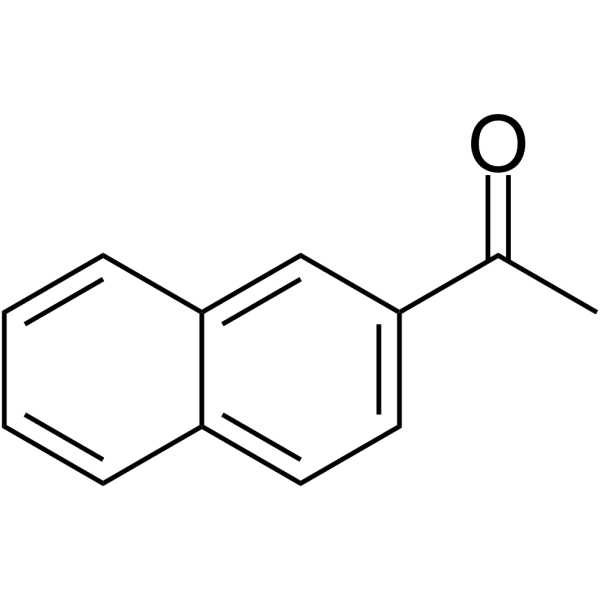
2-Acetonaphthone is a synthetic fragrance material. 2-Acetonaphthone increases ROS under UVA/sunlight, leading to endoplasmic reticulum stress and decreased mitochondrial membrane potential. 2-Acetonaphthone can be used as an adulterant in a variety of cosmetics. 2-Acetonaphthone can be used for the study of skin keratinization
loading...
    loading...
Cat. No.: HY-109654
CAS No.: 27503-81-7
Purity:  ≥98.0%
Research Areas:  

Metabolic Disease

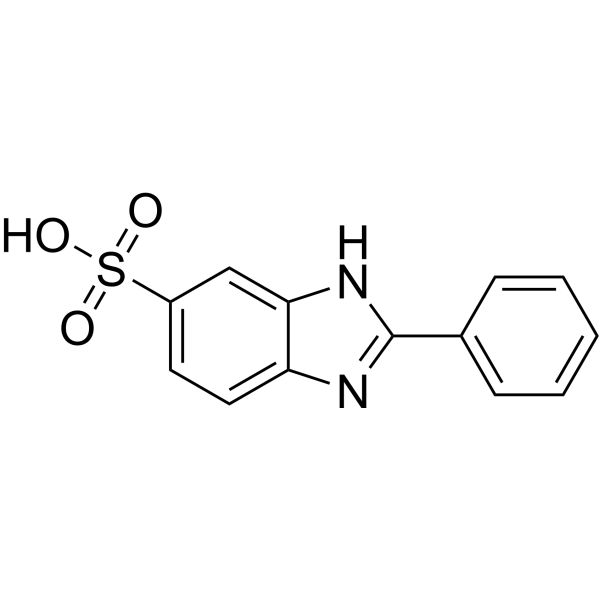
Ensulizole is a sulfonated UV absorber and can intense UVB and partial UVA absorption. Ensulizole can damage the DNA through the generation of reactive oxygen species (ROS) upon UV or sunlight irradiation .
loading...
    loading...
Cat. No.: HY-Y1819R
CAS No.: 93-08-3
2-Acetonaphthone is a synthetic fragrance material. 2-Acetonaphthone increases ROS under UVA/sunlight, leading to endoplasmic reticulum stress and decreased mitochondrial membrane potential. 2-Acetonaphthone can be used as an adulterant in a variety of cosmetics. 2-Acetonaphthone can be used for the study of skin keratinization
loading...
    loading...
Cat. No.: HY-109654R
CAS No.: 27503-81-7
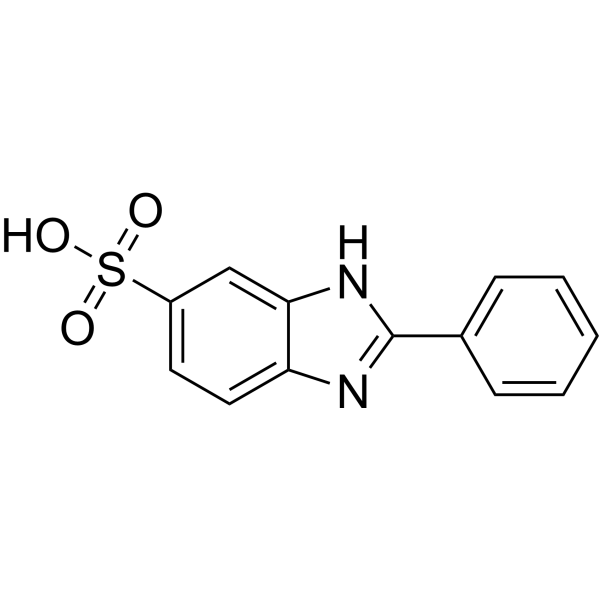
Ensulizole (Standard) is the analytical standard of Ensulizole. This product is intended for research and analytical applications. Ensulizole is a sulfonated UV absorber and can intense UVB and partial UVA absorption. Ensulizole can damage the DNA through the generation of reactive oxygen species (ROS) upon UV or sunlight irradiation .
loading...
    loading...
Cat. No.: HY-76705S
CAS No.: 2562378-12-3
Methyl N-methylanthranilate-d3 is the deuterated-labeled Methyl N-methylanthranilate (HY-76705). Methyl N-methylanthranilate is an N-alkylated anthranilate with a sweet citrus aroma, which is commonly used in perfume manufacturing. Methyl N-methylanthranilate is the dominant component in the defensive secretion of the millipede Typhloiulus orpheus. Methyl N-methylanthranilate exhibits quorum sensing inhibition and anti-biofilm activity against P. aeruginosa; it interferes with PQS synthesis via competitive inhibition of PqsA, but lacks bactericidal activity. Methyl N-methylanthranilate is sensitive to UVA/sunlight in human skin cells, and generates O2- through type I photodynamic reactions, leading to lysosomal/mitochondrial damage, double-strand DNA breaks and apoptosis, with potential phototoxicity .
loading...
    loading...

