

1. Search Result
Search Result
Pathways Recommended: Membrane Transporter/Ion Channel
Results for "

Zn ion

" in MedChemExpress (MCE) Product Catalog:

26

Inhibitors & Agonists

3

Fluorescent Dyes

5

Biochemical Assay Reagents

1

Peptides

2

MCE-Kits

2

Natural
Products

1

Isotope-Labeled Compounds

1

Click Chemistry

Art. -Nr. Produktname Target Forschungsgebiete Chemical Structure
  • HY-119287
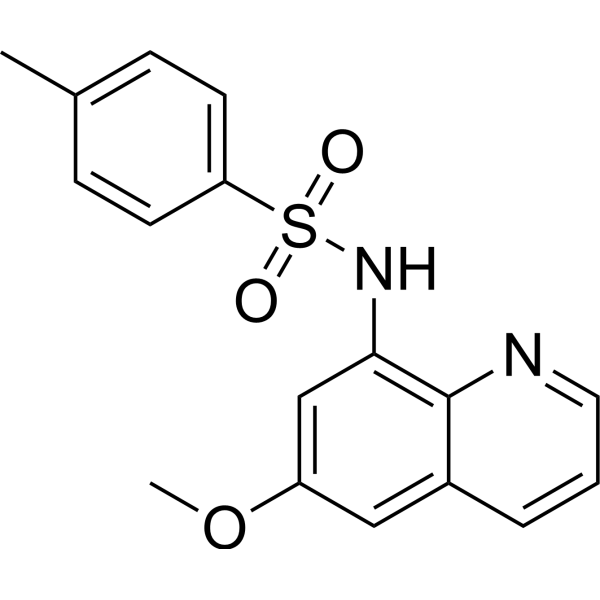
    TSQ
    5 Publications Verification

    Fluorescent Dye Others
    TSQ is a cytosolic zinc ion fluorescence probe that is membrane permeable and can be used for intracellular imaging of zinc proteins (λmax ~470 nm). TSQ can combine with Zn 2+ in the presence of Ca 2+ and Mg 2+ to produce blue fluorescence (Ex/Em = 334/495 nm) .
    TSQ
  • HY-W127776

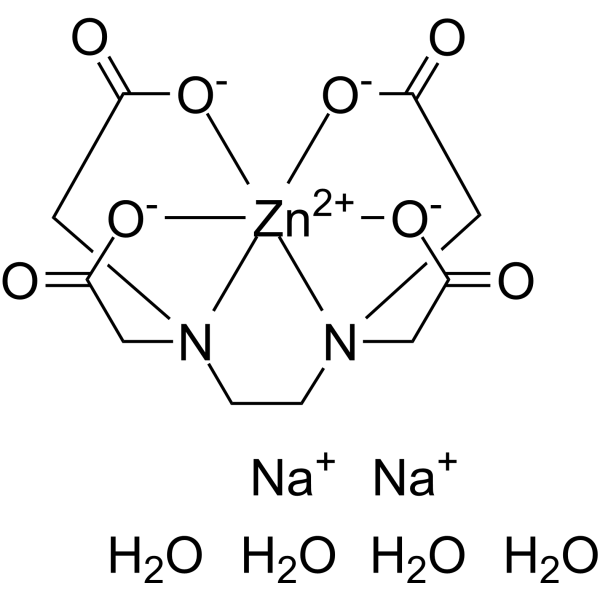
    Ethylenediaminetetraacetic acid zinc disodium tetrahydrate

    Biochemical Assay Reagents Others
    Zn(II)-EDTA (Ethylenediaminetetraacetic acid zinc) disodium tetrahydrate is a coordinating agent. Zn(II)-EDTA disodium tetrahydrate coordinates with Zn 2+ to modify its solvated structure, provides pre-synthesized EDTA-Zn complexes that release Zn 2+ to repair zinc anode defects under interfacial electric field, adsorbs onto zinc anode surface to block oxygen and water molecules, inhibits corrosion and hydrogen evolution reactions, promotes uniform Zn 2+ deposition, suppresses zinc dendrite formation, and modulates the hydrogen bonding network within the electrolyte. Zn(II)-EDTA disodium tetrahydrate acts as an electrolyte additive to enhance reversibility and stability of zinc anodes in aqueous zinc-ion batteries .
    Zn(Ⅱ)-EDTA disodium tetrahydrate
  • HY-NP009

    Bacterial Infection Neurological Disease
    α-Lactalbumin is a globular whey protein that exists in milk. α-Lactalbumin binds Ca 2+, Mg 2+, Mn 2+, Na +, K + and Zn 2+ ions; among these, Ca 2+ binding enhances protein stability, while Zn 2+ binding reduces stability and induces aggregation. α-Lactalbumin forms amyloid fibrils, amorphous aggregates, nanoparticles and nanotubes depending on external conditions. α-Lactalbumin exhibits bactericidal and antiviral activities. α-Lactalbumin has anxiolytic and antidepressant activities, and its effects are enhanced under stress conditions .
    α-Lactalbumin
  • HY-126823

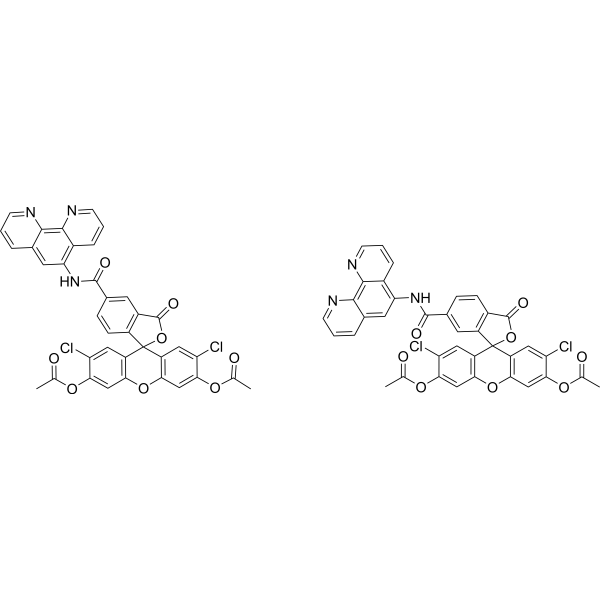
    PGSK diacetate (5/6-mixture)

    Fluorescent Dye Others
    Phen green SK (PGSK) diacetate (PGSK diacetate (5/6-mixture)) is a metal ion-sensitive fluorescent probe that can penetrate cell membranes. Phen green SK (PGSK) diacetate can react with a variety of metal ions, including Fe 2+, Cd 2+, Co 2+, Ni 2+, Zn 2+, etc. Phen green SK (PGSK) diacetate chelates Fe 2+, resulting in fluorescence quenching, which can be restored when a membrane-permeable chelator is added, thereby reflecting the changes in the intracellular chelatable iron pool. The excitation/emission maxima of Phen green SK diacetate are 507/532 nm, respectively .
    Phen Green SK diacetate (5/6-mixture)
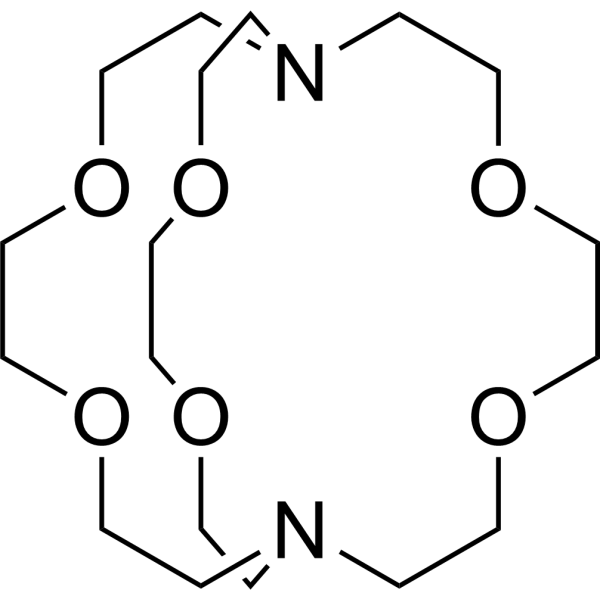
  • HY-W011060

    4,7,13,16,21,24-Hexaoxa-1,10-diazabicyclo[8.8.8]hexacosane

    Biochemical Assay Reagents Others
    Cryptand 2.2.2 (4,7,13,16,21,24-Hexaoxa-1,10-diazabicyclo[8.8.8]hexacosane) is a metal ion chelator. Cryptand 2.2.2 forms stable mononuclear, protonated and dinuclear complexes with copper (II) ions; forms protonated complexes with hydrogen ions; and also forms stable complexes with Zn 2+, Co 2+, Ni 2+, Cd 2+, Hg 2+ and Pb 2+ ions. Cryptand 2.2.2 can be used for the preparation of nanoparticles, transition metal compounds, etc.
    Cryptand 2.2.2
  • HY-D0179

    Biochemical Assay Reagents Infection Cardiovascular Disease
    Cyclam is a metal chelator that forms metal complexes with a variety of metal ions. Cyclam metal complexes exhibits anti-HIV (such as AMD3100), nitric oxide (NO) releasing and scavenging (such as Zn(II)-Cyclam and Ru(II)-Cyclam), and SOD mimetic (such as Mn(III)-Cyclam and Zn(II)-Cyclam) activities .
    Cyclam
  • HY-158779

    SSP4

    Fluorescent Dye Others
    Sulfane sulfur probe 4 (SSP4) is a fluorescent probe used to detect sulfane sulfur species (Ex/Em=494/515 nm). Sulfane sulfur probe 4 exhibits high sensitivity in detecting sulfane sulfur, even in the presence of other substances such as homocysteine, methionine, cysteine, glutathione, N-acetyl-L-cysteine, glycine, tyrosine, tryptophan, arginine, and metal ions (Fe 2+, Fe 3+, Mg 2+, Ca 2+, and Zn 2+) .
    Sulfane sulfur probe 4
  • HY-Y0850U5

    Polyvinyl alcohol (Mw 27000, 98-99% hydrolyzed, ~600 polymerization); Poly(Ethenol) (Mw 27000, 98-99% hydrolyzed, ~600 polymerization)

    Biochemical Assay Reagents Fungal Infection
    PVA (Polyvinyl alcohol) (Mw 27000, 98-99% hydrolyzed, ~600 polymerization) is a nonionic ethanol homopolymer with hydrophilicity, water solubility and biodegradability. PVA (Mw 27000, 98-99% hydrolyzed, ~600 polymerization) exhibits biocompatibility, non-toxicity and non-carcinogenicity, as well as antibacterial activity against Gram-positive bacteria, Gram-negative bacteria and fungal strains. PVA (Mw 27000, 98-99% hydrolyzed, ~600 polymerization) can serve as a solubilizer, stabilizer, mucoadhesive agent and sustained-release agent, and has a synergistic solubilizing effect on voriconazole/sulfobutyl ether β-cyclodextrin complexes. By stabilizing such complexes, PVA (Mw 27000, 98-99% hydrolyzed, ~600 polymerization) forms freeze-thaw hydrogels with high mucoadhesion, sustained drug release and ex vivo corneal permeability. When compounded with hyaluronic acid hydrogels, PVA (Mw 27000, 98-99% hydrolyzed, ~600 polymerization) supports chondrocyte growth in vitro, and also forms complexes with Cu 2+, Co 2+, Ni 2+ and Zn 2+ ions. PVA (Mw 27000, 98-99% hydrolyzed, ~600 polymerization) can be used in studies related to fungal keratitis, bacterial infections and fungal infections .
    PVA (Mw 27000, 98-99% hydrolyzed, ~600 polymerization)
  • HY-109560

    Zn-DTPA trisodium

    Biochemical Assay Reagents Others
    Pentetate zinc trisodium (Zn-DTPA trisodium) forms stable chelates with metal ions by exchanging zinc for a metal of greater binding capacity .
    Pentetate zinc trisodium
  • HY-DY1055

    Fluorescent Dye Others
    TSQ (solution) is a cytosolic zinc ion fluorescence probe that is membrane permeable and can be used for intracellular imaging of zinc proteins (λmax ~470 nm). TSQ can combine with Zn 2+ in the presence of Ca 2+ and Mg 2+ to produce blue fluorescence (Ex/Em = 334/495 nm) .
    Solvent and concentration: DMSO: 10 mM
    TSQ (solution)
  • HY-P2516

    Tau Protein Neurological Disease
    Tau Peptide (275-305) (Repeat 2 domain) is the Alzheimer's Tau fragment R2, corresponding to the second repeat unit of the microtubule-binding domain, which is believed to be pivotal to the biochemical properties of full tau protein. Tau Peptide (275-305) specifically coordinates with group IIB metal ions (Zn²⁺, Cd²⁺, Hg²⁺), which can induce their conformational changes and significantly promote their pathological accumulation. Tau Peptide (275-305) can be used to study the role of heavy metals in neurodegenerative diseases .
    Tau Peptide (275-305) (Repeat 2 domain)
  • HY-W1113135

    Biochemical Assay Reagents Others
    Carboxymethyl-β-cyclodextrin sodium salt is a negatively charged β-cyclodextrin derivative, as well as a metal ion chelator and solubilizing reagent. Carboxymethyl-β-cyclodextrin sodium salt forms stable aqueous complexes with Ba 2+, Ca 2+, Cd 2+, Ni 2+, Pb 2+, Sr 2+, and Zn 2+ ions. Carboxymethyl-β-cyclodextrin sodium salt derived hydrogel carriers support oral insulin delivery via paracellular permeation across Caco-2 monolayers and produce sustained hypoglycemic effects in diabetic mice. Carboxymethyl-β-cyclodextrin sodium salt can be conjugated onto folate-modified BSA nanoparticles to boost folate receptor-mediated endocytosis, elevate intracellular anticancer drug uptake and trigger cell apoptosis. Carboxymethyl-β-cyclodextrin sodium salt can be utilized for chiral separation in capillary electrophoresis, development of nanoscale drug carriers and nucleic acid transfection research .
    Carboxymethyl-β-cyclodextrin sodium salt
  • HY-117710B

    Cholinesterase (ChE) Amyloid-β ERK TNF Receptor Interleukin Related Neurological Disease
    AD-35 is an orally active anti-Alzheimer's disease (AD) agent with moderate AChE inhibitory activity and metal ion chelating ability. AD-35 exhibits IC50 values for AChE and BuChE of 793 nM and 31428 nM, respectively. AD-35 can form chelates with Cu²⁺ and Fe³⁺, but its chelating ability for Zn²⁺ is relatively weak. AD-35 can inhibit aggregation and disassemble the formed Aβ aggregates, and inhibit Aβ-induced ERK phosphorylation. AD-35 inhibits neuroinflammation in AD rat models and demonstrates a strong effect in improving cognitive function .
    AD-35
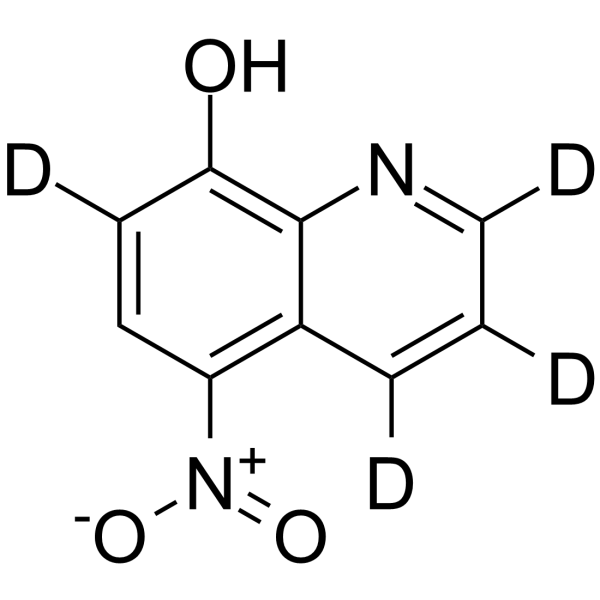
  • HY-B1159S

    8-Hydroxy-5-nitroquinoline-d4; 5-Nitro-8-quinolinol-d4

    Bacterial Autophagy Antibiotic Infection Cancer
    Nitroxoline-d4 is the deuterium labeled Nitroxoline. Nitroxoline is an antibiotic that has proven to be very effective at combating biofilm infections. Nitroxoline functions by chelating Fe 2+ and Zn 2+ ions from the biofilm matrix .
    Nitroxoline-d4
  • HY-W585934

    Fru-Phe

    Angiotensin-converting Enzyme (ACE) Cardiovascular Disease
    Fructose-phenylalanine (Fru-Phe) is a non-competitive angiotensin-converting enzyme (ACE) inhibitor (IC50 =0.19 mM) with antioxidant activities. Fructose-phenylalanine forms a stable complex with Zn 2+ ions at the ACE active site, blocking the conversion of angiotensin I to II and thereby lowering blood pressure. Fructose-phenylalanine is promising for research of cardiovascular diseases .
    Fructose-phenylalanine
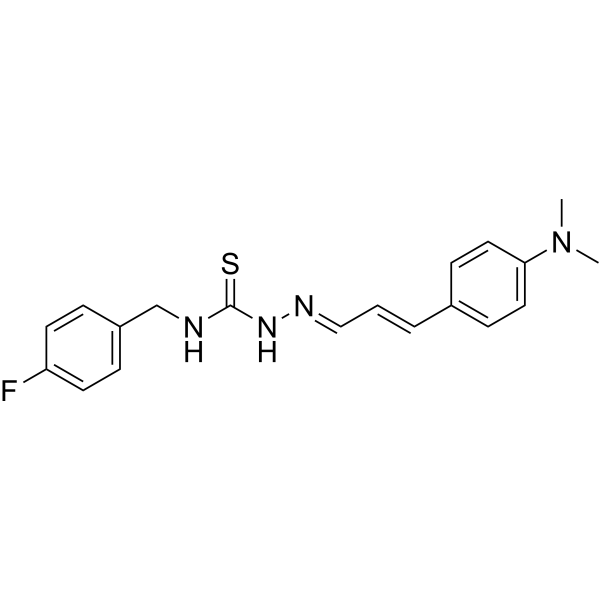
  • HY-151494

    Carbonic Anhydrase Cancer
    CAII-IN-2 (compound 3g), a thiosemicarbazide derivative, is a potent, selective carbonic anhydrase-II (CA-II) inhibitor with an IC50 value of 12.1 µM for bovine CA-II. CAII-IN-2 can be used in research of carbonic anhydrase related biological disorders .
    CAII-IN-2
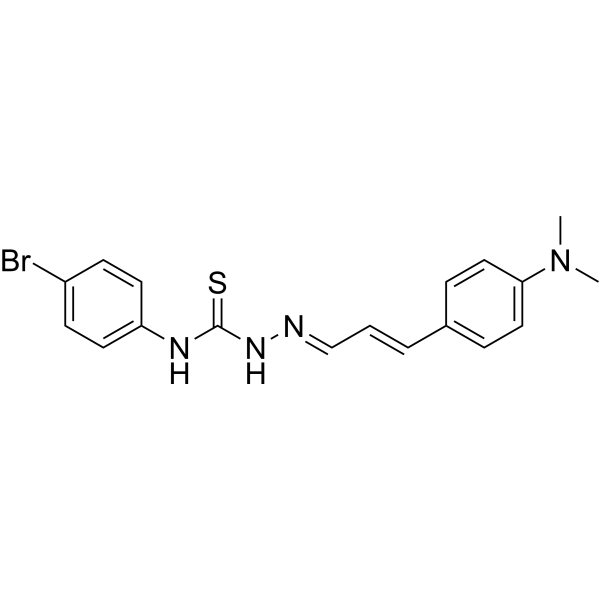
  • HY-151493

    Carbonic Anhydrase Cancer
    CAII-IN-1 (compound 3n), a thiosemicarbazide derivative, is a potent, selective carbonic anhydrase-II (CA-II) inhibitor with an IC50 value of 10.3 µM for bovine CA-II. CAII-IN-1 can be used in research of carbonic anhydrase related biological disorders .
    CAII-IN-1
  • HY-171029

    Amino Acid Derivatives Others
    C902 is a cysteine residue in the RAG1 protein, that binds to Zn 2+ ion and contributes to the DNA cleavage .
    C902
  • HY-129200

    Endogenous Metabolite Others
    Aspergillomarasmine A is a natural aminopolycarboxylic acid with potent inhibitory activity against class B metallo-β-lactamases (MBLs). Aspergillomarasmine A inactivates MBLs by removing a catalytic Zn2+ cofactor. Aspergillomarasmine A acts as a selective Zn2+ scavenger, promoting the dissociation of the metal cofactor, thereby indirectly inactivating NDM-1. Aspergillomarasmine A causes the loss of Zn2+ ions from the low-affinity binding site of NDM-1. The action of Aspergillomarasmine A results in the rapid degradation of Zn2+-deficient NDM-1, thereby enhancing its potency as a β-lactam enhancer. The mechanism of Aspergillomarasmine A has broad applicability among different Zn2+ chelators .
    Aspergillomarasmine A
  • HY-W011060R

    4,7,13,16,21,24-Hexaoxa-1,10-diazabicyclo[8.8.8]hexacosane (Standard)

    Biochemical Assay Reagents Reference Standards Others
    Cryptand 2.2.2 (Standard) is the analytical standard of Cryptand 2.2.2 (HY-W011060). This product is intended for research and analytical applications. Cryptand 2.2.2 is a metal ion chelating agent that can selectively form complexes with metal ions. At room temperature, Cryptand 2.2.2 can serve as a host molecule, using the chelation effect to selectively bind desired ions (such as Zn 2+, Co 2+, Ni 2+, Cu 2+). Cryptand 2.2.2 can be used in the preparation of nanoparticles, transition metal compounds, and so on .
    Cryptand 2.2.2 (Standard)
  • HY-E70991

    Biochemical Assay Reagents Metabolic Disease
    D-Ribulose-5-phosphate 3-Epimerase, Baker's yeast (S. cerevisiae) (EC 5.1.3.1) is a metalloenzyme that primarily utilizes divalent zinc ions (Zn2+) for catalysis.
    D-Ribulose-5-phosphate 3-Epimerase, Baker's yeast (S. cerevisiae)
  • HY-E70958

    Carboxypeptidase Metabolic Disease
    Carboxypeptidase G, Pseudomonas sp. (EC 3.4.17.11) is a lysosomal thiol-dependent protease that stepwise cleaves γ-glutamylpteroyl polyγ-glutamic acid to generate pteroyl-α-glutamic acid (folic acid) and free glutamic acid. Carboxypeptidase G is highly specific for the γ-glutamyl bond but not for the C-terminal amino acid of the leaving group. Carboxypeptidase G can be activated by Zn 2+ ions.
    Carboxypeptidase G, Pseudomonas sp.
  • HY-W722245

    Endogenous Metabolite Bacterial Infection
    Pyochelin is a salicylate-based nonribosomal peptide siderophore produced by Pseudomonas aeruginosa. Pyochelin chelates Fe 3+ and transports it back into bacterial cells, providing the iron essential for bacterial survival. Pyochelin can also chelate other metals such as Zn 2+, Co 2+, and Ni 2+, which helps bacteria maintain intracellular metal ion homeostasis by chelating and excreting excess metals in response to toxic metal stress. Pyochelin can be used in studies related to Pseudomonas aeruginosa infection .
    Pyochelin
  • HY-113658

    Endogenous Metabolite Others
    ts-SA is a carbonic anhydrase (CA) inhibitor with activity against seven human CA homologues. ts-SA can bind to the Zn(II) ion in the enzyme active site in a deprotonated form. The organic skeleton of ts-SA extends in the enzyme cavity and participates in multiple interactions with amino acid residues and water molecules. Due to its structural differences, the inhibitory performance of ts-SA is significantly better than that of another pyridine derivative. ts-SA exhibits low nanomolar inhibitory activity and is a multi-target CA inhibitor .
    ts-SA
  • HY-165381

    MDM-2/p53 Reactive Oxygen Species (ROS) Cancer
    ZMC2 is a thiosemicarbazone-class metal ion chelator and zinc ionophore with a human mutant p53 R175H binding Ka of 27.4 nM.ZMC2 binds Fe, Cu, Mn, Zn, and other transition metals.ZMC2 facilitates zinc transport across membranes.ZMC2 restores zinc binding to zinc-deficient p53 mutants, restoring wild-type structure and function, including site-specific DNA binding.ZMC2 generates reactive oxygen species (ROS).ZMC2 can be used for the research of cancer .
    ZMC2
  • HY-180114

    Cholinesterase (ChE) Monoamine Oxidase Amyloid-β Reactive Oxygen Species (ROS) Neurological Disease
    NSS-18 is a potent and reversible inhibitor of AChE and MAO-B, with IC50 values of 1.53 and 1.51 μM respectively. NSS-18 can inhibit the self-aggregation of . NSS-18 inhibits the intracellular generation of ROS induced by Aβ. NSS-18 shows a moderate neuroprotective effect against 6-OHDA (HY-B1081)-induced neurotoxicity. NSS-18 can form chelates with metal ions such as Cu²⁺, Fe³⁺, and Zn²⁺, with the strongest chelation being with Cu²⁺. NSS-18 can be used for the study of Alzheimer's disease .
    NSS-18

Online-Anfrage

Your information is safe with us. * Required Fields.

Anrede


Country or Region *

Name des Antragstellers *


Name der Organisation *

Department *


E-Mail-Addresse *


Produktname *

Art. -Nr.


Requested quantity *

Telefonnummer *


Bemerkungen

Online-Anfrage

Inquiry Information

Produktname:
Art. -Nr.:
Menge:
MCE Japan Authorized Agent:

