Search Result
Results for "
acyl-CoAs
" in MedChemExpress (MCE) Product Catalog:
7
Biochemical Assay Reagents
14
Isotope-Labeled Compounds
| Cat. No. |
Product Name |
Target |
Research Areas |
Chemical Structure |
- HY-E70247
-
-
- HY-E70276
-
-
- HY-CE00457
-
-
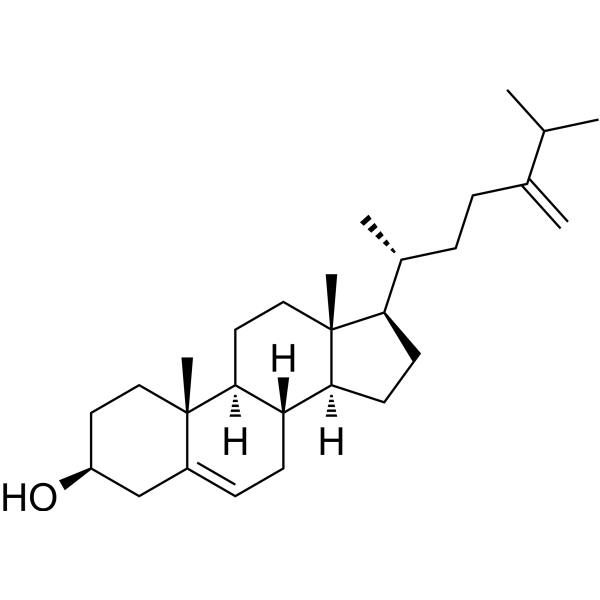
- HY-N14968
-
|
|
Parasite
Fungal
|
Infection
|
|
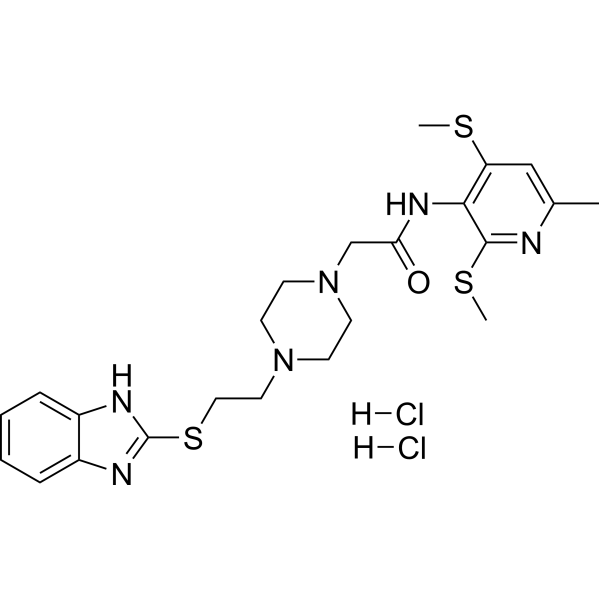
Enniatin F has insecticidal and antifungal activity. Enniatin F also can inhibit acyl-CoA, cholesterol acyltransferase (ACAT) .
|
-
- HY-CE00410
-
-
- HY-CE00466
-
-
- HY-E70268
-
-
- HY-CE00464
-
-
- HY-CE00532
-
-
- HY-CE00760
-
-
- HY-CE00469
-
-
- HY-CE00470
-
-
- HY-113165AR
-
|
|
Endogenous Metabolite
Reference Standards
|
Metabolic Disease
|
|
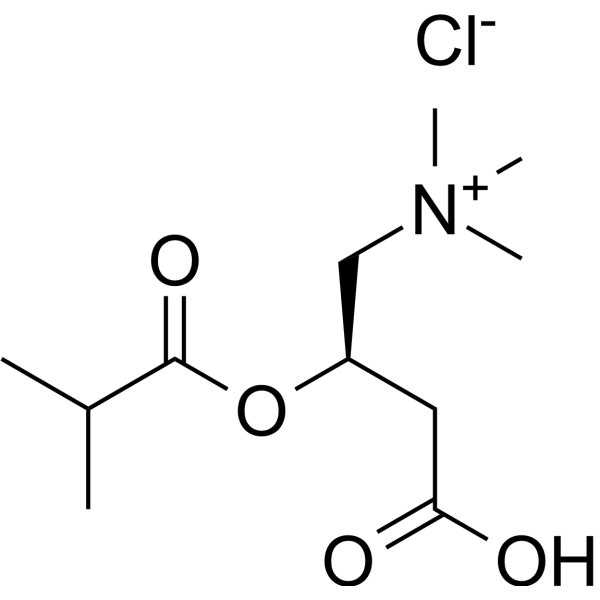
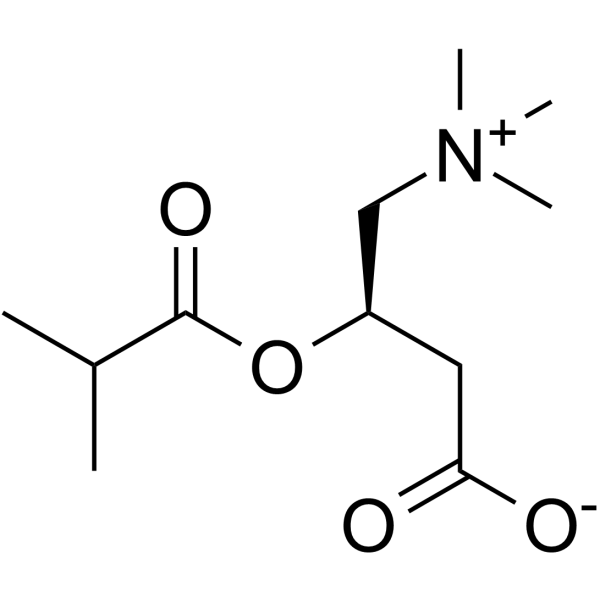
Isobutyryl-L-carnitine (chloride) (Standard) is the analytical standard of Isobutyryl-L-carnitine (chloride). This product is intended for research and analytical applications. Isobutyryl-L-carnitine chloride is a product of the acyl-CoA dehydrogenases .
|
-
- HY-CE00930
-
|
2E-Hexadecenoyl-coenzyme A; trans-2-Hexadecenoyl-CoA; trans-2-Hexadecenoyl-S-coenzyme A
|
Biochemical Assay Reagents
|
Metabolic Disease
|
|
2E-Hexadecenoyl-CoA (2E-Hexadecenoyl-coenzyme A) is a 2-enoyl-CoA and a long-chain fatty acyl-CoA.
|
-
- HY-CE00395
-
-
- HY-CE00353
-
-
- HY-CE00705
-
-
- HY-CE00276A
-
-
- HY-W700788
-
-
- HY-CE00562
-
-
- HY-CE00409
-
-
- HY-CE00070
-
-
- HY-CE00044
-
|
3-Oxo-(13Z)-eicosenoyl-CoA; (13Z)-3-Ketoicosenoyl-CoA
|
Biochemical Assay Reagents
|
Others
|
|
(13Z)-3-Oxoicosenoyl-CoA (3-Oxo-(13Z)-eicosenoyl-CoA) is an unsaturated fatty acyl-CoA.
|
-
- HY-CE00514
-
-
- HY-CE00109
-
-
- HY-CE00049
-
-
- HY-CE00003
-
-
- HY-CE00827
-
-
- HY-CE00114
-
-
- HY-E70009A
-
|
|
Biochemical Assay Reagents
|
Metabolic Disease
|
|
Acyl-CoA oxidase, Arthrobacter sp. (EC 1.3.3.6) is a redox enzyme that acts on the CH-CH group in donor molecules and uses oxygen as an acceptor. Acyl-CoA oxidase, Arthrobacter sp. (EC 1.3.3.6) is involved in three metabolic pathways: fatty acid metabolism, polyunsaturated fatty acid biosynthesis, and the PPAR signaling pathway.
|
-
- HY-E70274
-
-
- HY-CE00303
-
-
- HY-CE00178
-
-
- HY-CE00180
-
|
(3E)-Octenoyl-coenzyme A; trans-3-Octenoyl-CoA; 3-trans-Octenoylcoenzyme A
|
Biochemical Assay Reagents
|
Others
|
|
(3E)-Octenoyl-CoA ((3E)-Octenoyl-coenzyme A) is an unsaturated fatty acyl-CoA.
|
-
- HY-CE00054
-
-
- HY-CE00451
-
-
- HY-CE01044
-
-
- HY-CE01039
-
-
- HY-CE00315
-
-
- HY-CE00358
-
-
- HY-CE00125
-
-
- HY-CE00072
-
-
- HY-CE00474
-
-
- HY-CE00472
-
-
- HY-CE00468
-
-
- HY-CE00427
-
-
- HY-CE00349
-
-
- HY-CE00307
-
-
- HY-CE00066A
-
-
- HY-CE00891
-
-
- HY-CE00197A
-
-
- HY-N6702
-
-
- HY-CE00679
-
-
- HY-CE00103
-
|
(11Z,14Z)-Icosadienoyl-coenzyme A; (11Z,14Z)-Eicosadienoyl-coenzyme A
|
Biochemical Assay Reagents
|
Others
|
|
(11Z,14Z)-Icosadienoyl-CoA ((11Z,14Z)-Icosadienoyl-coenzyme A) is an unsaturated fatty acyl-CoA.
|
-
- HY-CE00255
-
-
- HY-CE00143C
-
|
(2E,5Z)-Tetradecadienoyl-coenzyme A
|
Biochemical Assay Reagents
|
Others
|
|
(2E,5Z)-Tetradecadienoyl-CoA ((2E,5Z)-Tetradecadienoyl-coenzyme A) is an unsaturated fatty acyl-CoA.
|
-
- HY-CE00277
-
-
- HY-CE00002
-
|
(15Z)-3-Oxotetracosenoyl-coenzyme A
|
Biochemical Assay Reagents
|
Others
|
|
(15Z)-3-Oxotetracosenoyl-CoA ((15Z)-3-Oxotetracosenoyl-coenzyme A) is a 3-oxo-fatty acyl-CoA.
|
-
- HY-CE00430
-
|
(8Z,11Z)-Icosadienoyl-coenzyme A; 8Z,11Z-Eicosadienoyl-CoA; 8Z,11Z-Eicosadienoyl-coenzyme A
|
Biochemical Assay Reagents
|
Metabolic Disease
|
|
(8Z,11Z)-Icosadienoyl-CoA ((8Z,11Z)-Icosadienoyl-coenzyme A) is an unsaturated fatty acyl-CoA.
|
-
- HY-131303
-
|
Heptadecanoyl-CoA
|
Biochemical Assay Reagents
|
Metabolic Disease
|
|
Heptadecanoyl Coenzyme A (Heptadecanoyl-CoA), long-chain acyl-coenzymes A (acyl-CoAs) (LCACoA), is an intermediate in lipid metabolism. Heptadecanoyl Coenzyme A can be used for the research of glucose metabolism .
|
-
- HY-CE00242A
-
|
(2E,7Z)-Hexadecadienoyl-coenzyme A
|
Biochemical Assay Reagents
|
Others
|
|
(2E,7Z)-Hexadecadienoyl-CoA ((2E,7Z)-Hexadecadienoyl-coenzyme A) is an unsaturated fatty acyl-CoA.
|
-
- HY-CE00037
-
|
(13Z)-3-Ketodocosenoyl-CoA; (13Z)-3-Oxodocosenoyl-coenzyme A
|
Biochemical Assay Reagents
|
Others
|
|
(13Z)-3-Oxodocosenoyl-CoA ((13Z)-3-Ketodocosenoyl-CoA) is a 3-oxo-fatty acyl-CoA.
|
-
- HY-CE00203A
-
|
(2E,11Z)-Icosadienoyl-coenzyme A
|
Biochemical Assay Reagents
|
Others
|
|
(2E,11Z)-Icosadienoyl-CoA ((2E,11Z)-Icosadienoyl-coenzyme A) is an unsaturated fatty acyl-CoA.
|
-
- HY-153203
-
|
20:5 Coenzyme A triammonium
|
Others
|
Others
|
|
Eicosapentaenoyl-CoA triammonium (C20:5-CoA) is an unsaturated fatty acyl-CoA that can assist in the measurement of enzymatic activity of the TrWSD4 enzyme .
|
-
- HY-CE00265
-
-
- HY-CE00009B
-
|
(10E,12Z)-Hexadecadienoyl-coenzyme A
|
Biochemical Assay Reagents
|
Others
|
|
(10E,12Z)-Hexadecadienoyl-CoA ((10E,12Z)-Hexadecadienoyl-coenzyme A) is an unsaturated fatty acyl-CoA.
|
-
- HY-CE00271
-
-
- HY-CE00365
-
-
- HY-CE00143A
-
|
(2E,5E)-Tetradecadienoyl-coenzyme A
|
Biochemical Assay Reagents
|
Others
|
|
(2E,5E)-Tetradecadienoyl-CoA ((2E,5E)-Tetradecadienoyl-coenzyme A) is an unsaturated fatty acyl-CoA.
|
-
- HY-CE00220A
-
-
- HY-CE00284
-
-
- HY-128603
-
-
- HY-CE00244
-
|
(2E,9Z)-Octadecadienoyl-coenzyme A
|
Biochemical Assay Reagents
|
Others
|
|
(2E,9Z)-Octadecadienoyl-CoA ((2E,9Z)-Octadecadienoyl-coenzyme A) is a polyunsaturated fatty acyl-CoA.
|
-
- HY-CE00240
-
|
(2E,9Z)-Hexadecadienoyl-coenzyme A
|
Biochemical Assay Reagents
|
Others
|
|
(2E,9Z)-Hexadecadienoyl-CoA ((2E,9Z)-Hexadecadienoyl-coenzyme A) is a polyunsaturated fatty acyl-CoA.
|
-
- HY-CE00191A
-
-
- HY-CE00416
-
-
- HY-113406
-
|
DL-Hexanoylcarnitine
|
Others
|
Inflammation/Immunology
|
|
(±)-Hexanoylcarnitine exists in human urine and plasma. (±)-Hexanoylcarnitine can be used as a plasma detection indicator in patients with methylmalonic aciduria, propionic acidemia, and medium-chain acyl-CoA dehydrogenase deficiency .
|
-
- HY-32219
-
|
|
Acyltransferase
|
Metabolic Disease
|
|
T863 is an orally active, selective and potent DGAT1 (acyl-CoA:diacylglycerol acyltransferase 1) inhibitor with an IC50 of 15 nM. T863 has no inhibitory activity against human MGAT3, human DGAT2, or human MGAT2. T863 interacts with the acyl-CoA binding site of DGAT1, and inhibits triacylglycerol synthesis in cells .
|
-
- HY-CE00064A
-
|
(11Z)-18-Hydroxyoctadec-11-enoyl-CoA; (11Z)-18-Hydroxyoctadecenoyl-coenzyme A; (11Z)-18-Hydroxyoctadec-11-enoyl-coenzyme A
|
Biochemical Assay Reagents
|
Others
|
|
(11Z)-18-Hydroxyoctadecenoyl-CoA ((11Z)-18-Hydroxyoctadec-11-enoyl-CoA) is an omega-hydroxy fatty acyl-CoA.
|
-
- HY-CE00711
-
-
- HY-W015444R
-
|
|
Reference Standards
Endogenous Metabolite
|
Metabolic Disease
|
|
2-Hydroxyoctanoic acid (Standard) is the analytical standard of 2-Hydroxyoctanoic acid. This product is intended for research and analytical applications. 2-Hydroxyoctanoic acid is a medium chain acyl-CoA synthetase inhibitor with a Ki of 500 μM[1].
|
-
- HY-CE00116
-
|
C20:3(Omega-3)-CoA; Cis-(omega-3)-icosatrienoyl-CoA
|
Biochemical Assay Reagents
|
Others
|
|
(11Z,14Z,17Z)-Icosatrienoyl-CoA (C20:3(Omega-3)-CoA) is an unsaturated fatty acyl-CoA.
|
-
- HY-CE00870
-
-
- HY-CE00282
-
-
- HY-CE00136
-
|
(3R)-3-Isopropenyl-6-oxoheptanoyl-coenzyme A
|
Biochemical Assay Reagents
|
Others
|
|
(3R)-3-Isopropenyl-6-oxoheptanoyl-CoA ((3R)-3-Isopropenyl-6-oxoheptanoyl-coenzyme A) is an unsaturated fatty acyl-CoA.
|
-
- HY-136615
-
|
|
Potassium Channel
|
Neurological Disease
|
|
5-Hydroxydecanoate sodium is a selective ATP-sensitive K + (KATP) channel blocker (IC50 of ~30 μM). 5-Hydroxydecanoate sodium is a substrate for mitochondrial outer membrane acyl-CoA synthetase and has antioxidant activity .
|
-
- HY-CE00181
-
|
(3R,11Z)-3-hydroxyoctadecenoyl-coenzyme A
|
Biochemical Assay Reagents
|
Others
|
|
(3R,11Z)-3-hydroxyoctadecenoyl-CoA ((3R,11Z)-3-hydroxyoctadecenoyl-coenzyme A) is an unsaturated fatty acyl-CoA.
|
-
- HY-CE00215
-
|
(3R,13Z)-3-Hydroxyicosenoyl-coenzyme A
|
Biochemical Assay Reagents
|
Others
|
|
(3R,13Z)-3-Hydroxyicosenoyl-CoA ((3R,13Z)-3-Hydroxyicosenoyl-coenzyme A) is an unsaturated fatty acyl-CoA.
|
-
- HY-CE00433
-
-
- HY-CE00059
-
-
- HY-CE00663
-
-
- HY-141540
-
|
|
Biochemical Assay Reagents
Endogenous Metabolite
|
Others
|
|
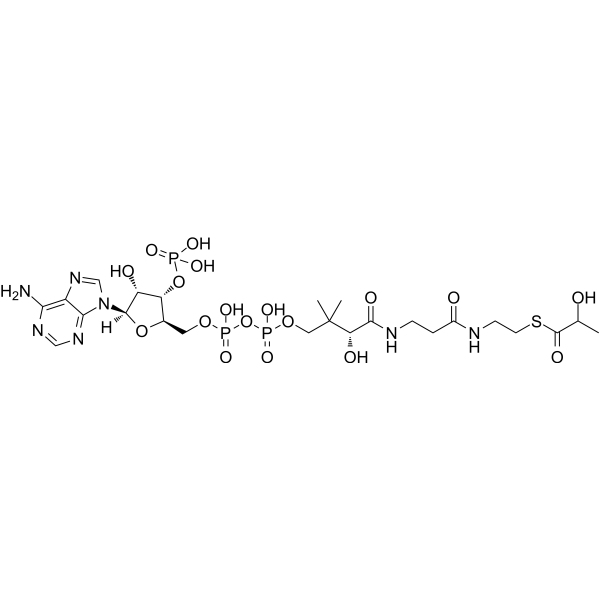
Lactyl-CoA is an acyl-CoA formally condensed from the sulfhydryl group of CoA and the carboxyl group of lactic acid, also known as lactyl-CoA. Lactyl-CoA is essential for the biosynthesis of biodegradable and biocompatible lactic acid-based copolymers .
|
-
- HY-CE00046
-
-
- HY-CE00881
-
-
- HY-CE00676
-
-
- HY-134427
-
|
Palmitoyl CoA lithium
|
Endogenous Metabolite
|
Metabolic Disease
|
|
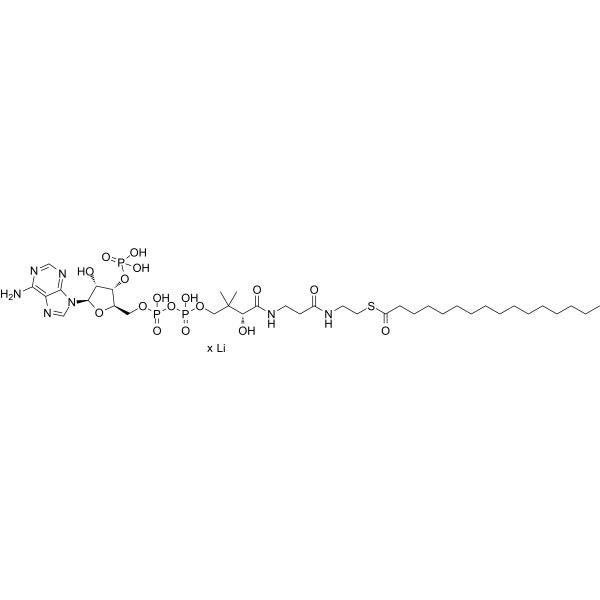
Palmitoyl coenzyme A lithium is an acyl-CoA thioester that can be transported into the mitochondrial matrix via the carnitine shuttle system and is involved in β-oxidation. Palmitoyl coenzyme A lithium can also be used as a substrate for sphingosine biosynthesis .
|
-
- HY-CE00651
-
-
- HY-CE00121A
-
-
- HY-CE00312
-
-
- HY-CE00257
-
-
- HY-CE00380
-
|
(S)-3-Hydroxyoctanoyl-Coenzyme A
|
Biochemical Assay Reagents
|
Metabolic Disease
|
|
(S)-3-Hydroxyoctanoyl-CoA ((S)-3-Hydroxyoctanoyl-Coenzyme A) is a hydroxy fatty acyl-CoA that results from the formal condensation of the thiol group of coenzyme A with the carboxy group of (S)-3-hydroxyoctanoic acid.
|
-
- HY-CE00198A
-
|
(2E,11Z,14Z)-Icosatrienoyl-coenzyme A
|
Biochemical Assay Reagents
|
Others
|
|
(2E,11Z,14Z)-Icosatrienoyl-CoA ((2E,11Z,14Z)-Icosatrienoyl-coenzyme A) is an unsaturated fatty acyl-CoA.
|
-
- HY-CE00461
-
-
- HY-E70271
-
|
6Z,9Z,12Z-Octadecatrienoyl-coenzyme A; γ-Linolenoylcoenzyme A; 6Z,9Z,12Z-Octadecatrienoyl-CoA
|
Endogenous Metabolite
|
Metabolic Disease
|
|
γ-Linolenoyl-CoA (C18:3(n6)-CoA) is a fatty acyl-CoA that can be used for lipidomics analysis of fatty acid-coenzyme A (FA-CoA) through LCMS/MS .
|
-
- HY-CE01484
-
-
- HY-CE00025A
-
|
(10Z,13Z,16Z)-Docosatrienoyl-coenzyme A; C22:3(Omega-6)-coenzyme A
|
Biochemical Assay Reagents
|
Others
|
|
(10Z,13Z,16Z)-Docosatrienoyl-CoA ((10Z,13Z,16Z)-Docosatrienoyl-coenzyme A) is an unsaturated fatty acyl-CoA.
|
-
- HY-CE00179
-
|
(3R,11Z)-3-Hydroxyicosenoyl-coenzyme A
|
Biochemical Assay Reagents
|
Others
|
|
(3R,11Z)-3-Hydroxyicosenoyl-CoA ((3R,11Z)-3-Hydroxyicosenoyl-coenzyme A) is a 3-hydroxy fatty acyl-CoA.
|
-
- HY-CE00068A
-
|
(11Z)-3-Ketoicosa-11-enoyl-CoA; 3-Oxo-(11Z)-eicos-11-enoyl-CoA
|
Biochemical Assay Reagents
|
Others
|
|
(11Z)-3-Oxoicosa-11-enoyl-CoA ((11Z)-3-Ketoicosa-11-enoyl-CoA) is a 3-oxo-fatty acyl-CoA.
|
-
- HY-CE00460
-
-
- HY-CE00214
-
|
(3R,13Z)-3-Hydroxydocosenoyl-coenzyme A
|
Biochemical Assay Reagents
|
Others
|
|
(3R,13Z)-3-Hydroxydocosenoyl-CoA ((3R,13Z)-3-Hydroxydocosenoyl-coenzyme A) is a 3-hydroxy fatty acyl-CoA.
|
-
- HY-CE00399
-
|
(S)-3-Hydroxylauroyl-coenzyme A
|
Biochemical Assay Reagents
|
Metabolic Disease
|
|
(S)-3-Hydroxylauroyl-CoA ((S)-3-Hydroxylauroyl-coenzyme A) is a hydroxy fatty acyl-CoA that results from the formal condensation of the thiol group of coenzyme A with the carboxy group of (S)-3-hydroxydodecanoic acid.
|
-
- HY-CE00023
-
-
- HY-CE00476
-
|
(3R)-Hydroxyvaleryl-coenzyme A
|
Biochemical Assay Reagents
|
Metabolic Disease
|
|
(R)-3-Hydroxyvaleryl-CoA ((3R)-Hydroxyvaleryl-coenzyme A) is a 3-hydroxy fatty acyl-CoA resulting from the formal condensation of the thiol group of coenzyme A with the carboxy group of (R)-3-hydroxypentanoic acid.
|
-
- HY-CE00069
-
-
- HY-CE00186
-
|
(2S,6R,10R)-Trimethyl-hendecanoyl-coenzyme A
|
Biochemical Assay Reagents
|
Others
|
|
(2S,6R,10R)-Trimethyl-hendecanoyl-CoA ((2S,6R,10R)-Trimethyl-hendecanoyl-coenzyme A) is a fatty acyl-CoA.
|
-
- HY-CE00355
-
-
- HY-N15411
-
|
|
Acyltransferase
Phytohormone
|
Metabolic Disease
|
|
Helminthosporol is a natural plant growth-regulator that can promote the growth of rice and lettuce seedlings. Helminthosporol can also inhibit the activity of acyl-CoA: cholesterol acyltransferase (ACAT) in rat liver microsomes and the synthesis of cholesterol esters in macrophages .
|
-
- HY-CE00012
-
-
- HY-W014674
-
|
|
Acyltransferase
|
Cancer
|
|
2,6-Dichlorophenylacetic acid is an inhibitor of isopenicillin N synthase (IPNS) and acyl-CoA: 6-APA acyltransferase. 2,6-Dichlorophenylacetic acid is also part of a group of phenylacetate derivatives that have cytostatic activity against tumour cells .
|
-
- HY-CE00104
-
|
(2,3,3-Trimethyl-5-oxocyclopent-3-enyl)acetyl-coenzyme A
|
Biochemical Assay Reagents
|
Others
|
|
(2,3,3-Trimethyl-5-oxocyclopent-3-enyl)acetyl-CoA ((2,3,3-Trimethyl-5-oxocyclopent-3-enyl)acetyl-coenzyme A) is an acyl-CoA.
|
-
- HY-CE00008
-
|
(2-Trans,6-cis)-dodeca-2,6-dienoyl-coenzyme A
|
Biochemical Assay Reagents
|
Others
|
|
(2-Trans,6-cis)-dodeca-2,6-dienoyl-CoA ((2-Trans,6-cis)-dodeca-2,6-dienoyl-coenzyme A) is an unsaturated fatty acyl-CoA.
|
-
- HY-CE00475
-
|
(R)-3-Hydroxytetradecanoyl-coenzyme A
|
Biochemical Assay Reagents
|
Metabolic Disease
|
|
(R)-3-Hydroxytetradecanoyl-CoA ((R)-3-Hydroxytetradecanoyl-coenzyme A) is a 3-hydroxy fatty acyl-CoA that results from the formal condensation of the thiol group of coenzyme A with the carboxy group of (R)-3-hydroxytetradecanoic acid.
|
-
- HY-W706234
-
|
Pelargonoyl-CoA-d17; S-Nonanoate coenzyme A-d17
|
Isotope-Labeled Compounds
Biochemical Assay Reagents
|
Others
|
|
Nonanoyl-CoA-d17 (Pelargonoyl-CoA-d17) is the deuterium labeled Nonanoyl-CoA (HY-E70246). Nonanoyl-CoA is a medium-chain fatty acyl-CoA that can be used as substrate for the medium-chain hydrolase .
|
-
- HY-N6706
-
|
|
Bacterial
Acyltransferase
Apoptosis
|
Infection
Cancer
|
|
Enniatin complex is a mixture of cyclohexadepsipeptides isolated largely from Fusarium species of fungi, and has ionophoric, antibiotic, and in vitro hypolipidaemic properties. Enniatin complex inhibits enzymes like acyl-CoA: cholesterol acyl transferase and induces apoptosis in several cancer lines .
|
-
- HY-169813
-
|
|
Acyltransferase
|
Cardiovascular Disease
|
|
Yakuchinone B is an Acyl-CoA: cholesterol O-acyltransferase (ACAT) inhibitor with hypocholesterolemic activity, which is found in the seeds of Zingiberaceae. Yakuchinone B inhibits rat hepatic ACAT with an IC50 value of 20.6 μM. Yakuchinone B is promising for research of hypercholesterolemia and atherosclerosis .
|
-
- HY-CE00060
-
-
- HY-CE00261
-
-
- HY-W014787
-
|
Sebacic acid
|
Environmental Pollutants
Endogenous Metabolite
|
Metabolic Disease
|
|
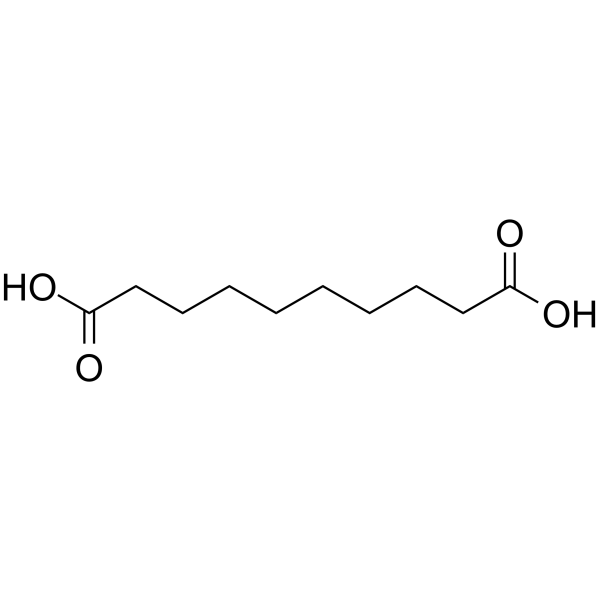
Decanedioic acid is a straight-chain dicarboxylic acid. Dodecanedioic acid overcomes metabolic inflexibility in type 2 diabetes. Decanedioic acid prevents and reverses metabolic-associated liver disease and obesity. Decanedioic acid is associated with carnitine-acylcarnitine translocase deficiency and medium chain acyl-CoA dehydrogenase deficiency .
|
-
- HY-N6702S
-
|
|
Isotope-Labeled Compounds
Acyltransferase
|
Infection
|
|
Enniatin A- 13C36 is the 13C-labeled Enniatin A (HY-N6702). Enniatin A is a Fusarium mycotoxin. Enniatin A inhibits acyl-CoA: cholesterol acyltransferase (ACAT) activity with an IC50 of 22 μM in an enzyme assay using rat liver microsomes .
|
-
- HY-CE00170
-
|
(2Z)-4-Carboxy-2-sulfanylbut-2-enoyl-coenzyme A
|
Biochemical Assay Reagents
|
Others
|
|
(2Z)-4-Carboxy-2-sulfanylbut-2-enoyl-CoA ((2Z)-4-Carboxy-2-sulfanylbut-2-enoyl-coenzyme A) is an acyl-CoA.
|
-
- HY-177705
-
|
|
ACSL Family
Drug Derivative
|
Metabolic Disease
Cancer
|
|
ACSL5-IN-2 (Compound B) is an Acyl CoA synthetase 5 (ACSL5) inhibitor. ACSL5-IN-2 can block the conversion of long-chain fatty acids (such as palmitic acid and oleic acid) into acyl-CoA, and intervene in the fatty acid metabolism pathway. ACSL5-IN-2 can inhibit cancer cells growth. ACSL5-IN-2 can be used for the research of cancer and metabolic disease, such as colon cancer and dysfunction-associated Steatohepatitis .
|
-
- HY-CE00015
-
-
- HY-CE00533
-
-
- HY-CE00062
-
|
C32:5(Omega-3)-coenzyme A
|
Biochemical Assay Reagents
|
Others
|
|
(17Z,20Z,23Z,26Z,29Z)-Dotriacontapentaenoyl-CoA (C32:5(Omega-3)-coenzyme A) is an unsaturated fatty acyl-CoA.
|
-
- HY-117651
-
|
|
Acyltransferase
|
Cancer
|
|
2-Fluoropalmitic acid, an acyl-CoA synthetase inhibitor, acts as a candidate anti-glioma agent. 2-Fluoropalmitic acid suppresses the viability and stem-like phenotype of glioma stem cells (GSCs). 2-Fluoropalmitic acid also inhibits proliferation and invasion of glioma cell lines .
|
-
- HY-108341
-
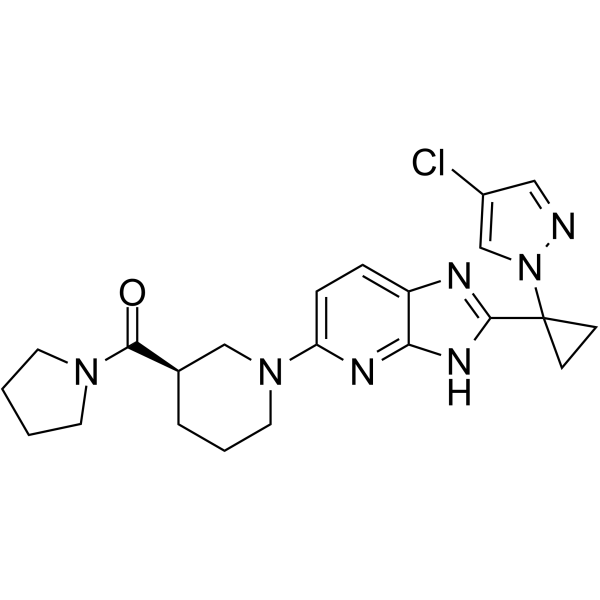
PF-06424439
Maximum Cited Publications
25 Publications Verification
|
Acyltransferase
|
Metabolic Disease
|
|
PF-06424439 is an oral, potent and selective imidazopyridine diacylglycerol acyltransferase 2 (DGAT2) inhibitor with an IC50 of 14 nM . PF-06424439 is slowly reversible, time-dependent inhibitor, which inhibits DGAT2 in a noncompetitive mode with respect to the acyl-CoA substrate .
|
-
- HY-CE00065
-
|
(25S)-3-Oxocholest-4-en-26-oyl-coenzyme A
|
Biochemical Assay Reagents
|
Others
|
|
(25S)-3-Oxocholest-4-en-26-oyl-CoA ((25S)-3-Oxocholest-4-en-26-oyl-coenzyme A) is a steroidal acyl-CoA.
|
-
- HY-CE00093
-
-
- HY-CE00075
-
-
- HY-N3806
-
|
|
Acyltransferase
ERK
|
Infection
Cardiovascular Disease
Cancer
|
|
Enniatin B is a Fusarium mycotoxin. Enniatin B inhibits acyl-CoA: cholesterol acyltransferase (ACAT) activity with an IC50 of 113 μM in an enzyme assay using rat liver microsomes . Enniatins B decreases the activation of ERK (p44/p42) .
|
-
- HY-CE00021
-
|
(10Z,13Z,16Z)-3-Oxodocosatrienoyl-coenzyme A; 3-Oxo-C22:3(omega-6)-CoA; (10Z,13Z,16Z)-3-Ketodocosatrienoyl-CoA
|
Biochemical Assay Reagents
|
Others
|
|
(10Z,13Z,16Z)-3-Oxodocosatrienoyl-CoA ((10Z,13Z,16Z)-3-Oxodocosatrienoyl-coenzyme A) is an unsaturated fatty acyl-CoA.
|
-
- HY-CE00018
-
|
3-Oxo-C24:4(omega-3)-CoA
|
Biochemical Assay Reagents
|
Others
|
|
(12Z,15Z,18Z,21Z)-3-Oxotetracosatetraenoyl-CoA (3-Oxo-C24:4(omega-3)-CoA) is an unsaturated fatty acyl-CoA.
|
-
- HY-CE00356
-
-
- HY-CE00067
-
|
3-Oxo-C28:4(omega-6)-CoA
|
Biochemical Assay Reagents
|
Others
|
|
(13Z,16Z,19Z,22Z)-3-Oxooctacosatetraenoyl-CoA (3-Oxo-C28:4(omega-6)-CoA) is an unsaturated fatty acyl-CoA.
|
-
- HY-CE00805
-
-
- HY-CE00465
-
|
1,4-Dihydroxy-2-naphthoyl-coenzyme A
|
Biochemical Assay Reagents
|
Metabolic Disease
|
|
1,4-Dihydroxy-2-naphthoyl-CoA (1,4-Dihydroxy-2-naphthoyl-coenzyme A) is an acyl-CoA that results from the formal condensation of the thiol group of coenzyme A with the carboxy group of 1,4-dihydroxy-2-naphthoic acid.
|
-
- HY-115703
-
|
N-Heptadecanoyl-D-erythro-sphingosine
|
Biochemical Assay Reagents
|
Metabolic Disease
|
|
C17 Ceramide (d18:1/17:0) (N-Heptadecanoyl-D-erythro-sphingosine) is a phospholipid internal standard. C17 Ceramide (d18:1/17:0) is used in studies of medium-chain acyl-CoA dehydrogenase deficiency (MCADD) .
|
-
- HY-108341A
-
|
|
Acyltransferase
|
Metabolic Disease
|
|
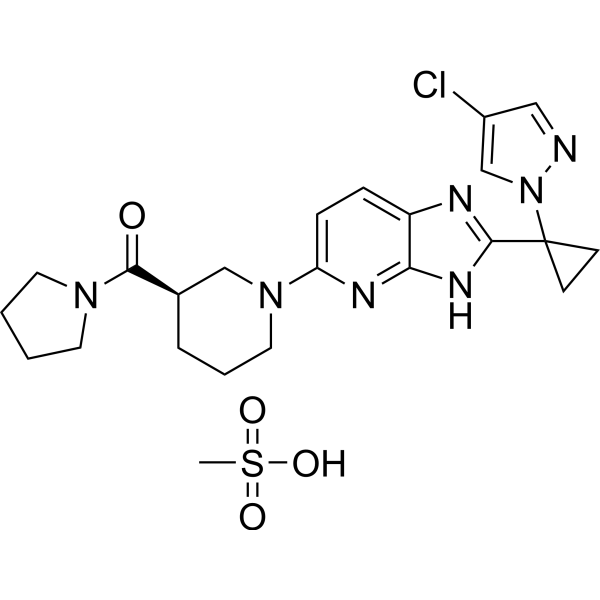
PF-06424439 methanesulfonate is an oral, potent and selective imidazopyridine diacylglycerol acyltransferase 2 (DGAT2) inhibitor with an IC50 of 14 nM . PF-06424439 methanesulfonate is slowly reversible, time-dependent inhibitor, which inhibits DGAT2 in a noncompetitive mode with respect to the acyl-CoA substrate .
|
-
- HY-CE00206
-
|
(3R,11Z,14Z)-3-Hydroxyicosadienoyl-coenzyme A
|
Biochemical Assay Reagents
|
Others
|
|
(3R,11Z,14Z)-3-Hydroxyicosadienoyl-CoA ((3R,11Z,14Z)-3-Hydroxyicosadienoyl-coenzyme A) is a 3-hydroxy fatty acyl-CoA.
|
-
- HY-CE00319
-
-
- HY-CE00235
-
|
(2E,8Z,11Z,14Z)-Icosatetraenoyl-coenzyme A
|
Biochemical Assay Reagents
|
Others
|
|
(2E,8Z,11Z,14Z)-Icosatetraenoyl-CoA ((2E,8Z,11Z,14Z)-Icosatetraenoyl-coenzyme A) is an unsaturated fatty acyl-CoA.
|
-
- HY-CE00296
-
|
(9Z,12Z,15Z,18Z)-Tetracosatetraenoyl-coenzyme A
|
Biochemical Assay Reagents
|
Metabolic Disease
|
|
(9Z,12Z,15Z,18Z)-Tetracosatetraenoyl-CoA ((9Z,12Z,15Z,18Z)-Tetracosatetraenoyl-coenzyme A) is an unsaturated fatty acyl-CoA.
|
-
- HY-CE00437
-
-
- HY-CE00032
-
|
(23Z,26Z,29Z,32Z)-Octatriacontatetraenoyl-coenzyme A
|
Biochemical Assay Reagents
|
Others
|
|
(23Z,26Z,29Z,32Z)-Octatriacontatetraenoyl-CoA ((23Z,26Z,29Z,32Z)-Octatriacontatetraenoyl-coenzyme A) is an unsaturated fatty acyl-CoA.
|
-
- HY-CE00028
-
|
(15Z,18Z,21Z,24Z)-Triacontatetraenoyl-coenzyme A; C30:4(Omega-6)-coenzyme A
|
Biochemical Assay Reagents
|
Others
|
|
(15Z,18Z,21Z,24Z)-Triacontatetraenoyl-CoA ((15Z,18Z,21Z,24Z)-Triacontatetraenoyl-coenzyme A) is an unsaturated fatty acyl-CoA.
|
-
- HY-CE00112A
-
|
(11Z,14Z,17Z)-3-Oxoeicosatrienoyl-CoA; (11Z,14Z,17Z)-3-Ketoeicosatrienoyl-CoA
|
Biochemical Assay Reagents
|
Others
|
|
(11Z,14Z,17Z)-3-Oxoicosatrienoyl-CoA ((11Z,14Z,17Z)-3-Oxoeicosatrienoyl-CoA) is a 3-oxo-fatty acyl-CoA.
|
-
- HY-E70254
-
|
|
Others
|
Others
|
|
Tricosanoyl-CoA triammonium is a very long-chain fatty acyl-CoA that results from the formal condensation of the thiol group of coenzyme A (HY-128851) with the carboxy group of tricosanoic acid (HY-W009081). Tricosanoyl-CoA is functionally related to a tricosanoic acid. Tricosanoyl-CoA is a conjugate acid of a tricosanoyl-CoA(4-).
|
-
- HY-CE00055
-
|
(17Z,20Z,23Z,26Z)-Dotriacontatetraenoyl-coenzyme A; C32:4(Omega-6)-coenzyme A
|
Biochemical Assay Reagents
|
Others
|
|
(17Z,20Z,23Z,26Z)-Dotriacontatetraenoyl-CoA ((17Z,20Z,23Z,26Z)-Dotriacontatetraenoyl-coenzyme A) is an unsaturated fatty acyl-CoA.
|
-
- HY-CE00085
-
|
(19Z,22Z,25Z,28Z)-Tetratriacontatetraenoyl-coenzyme A; C34:4(omega-6)-coenzyme A
|
Biochemical Assay Reagents
|
Others
|
|
(19Z,22Z,25Z,28Z)-Tetratriacontatetraenoyl-CoA ((19Z,22Z,25Z,28Z)-Tetratriacontatetraenoyl-coenzyme A) is an unsaturated fatty acyl-CoA.
|
-
- HY-CE00036A
-
|
(10Z,13Z,16Z,19Z)-Docosatetraenoyl-coenzyme A; C22:4(omega-3)-coenzyme A
|
Biochemical Assay Reagents
|
Others
|
|
(10Z,13Z,16Z,19Z)-Docosatetraenoyl-CoA ((10Z,13Z,16Z,19Z)-Docosatetraenoyl-coenzyme A) is an unsaturated fatty acyl-CoA.
|
-
- HY-115734
-
|
S14-95
|
Acyltransferase
|
Inflammation/Immunology
|
|
Phenylpyropene C (S14-95), a JAK/STAT pathway inhibitor, can inhibit IFN-γ mediated expression of the reporter gene (IC50=5.4~10.8 μM). Phenylpyropene C also is an inhibitor of acyl-CoA, with an IC50 of 16.0 μM .
|
-
- HY-CE00016
-
|
(21Z,24Z,27Z,30Z)-Hexatriacontatetraenoyl-coenzyme A; C36:4(Omega-6)-coenzyme A
|
Biochemical Assay Reagents
|
Others
|
|
(21Z,24Z,27Z,30Z)-Hexatriacontatetraenoyl-CoA ((21Z,24Z,27Z,30Z)-Hexatriacontatetraenoyl-coenzyme A) is an unsaturated fatty acyl-CoA.
|
-
- HY-CE00413
-
|
(3S)-3-Hydroxyoleoyl-coenzyme A
|
Biochemical Assay Reagents
|
Metabolic Disease
|
|
(3S)-3-Hydroxyoleoyl-CoA ((3S)-3-Hydroxyoleoyl-coenzyme A) is a 3-hydroxy fatty acyl-CoA that results from the formal condensation of the thiol group of coenzyme A with the carboxy group of (3S)-3-hydroxyoleic acid.
|
-
- HY-CE00288
-
-
- HY-CE00734A
-
|
12-Alpha-hydroxy-3-oxochola-4,6-dien-24-oyl-coenzyme A
|
Biochemical Assay Reagents
|
Metabolic Disease
|
|
12-Alpha-hydroxy-3-oxochola-4,6-dien-24-oyl-CoA (12-Alpha-hydroxy-3-oxochola-4,6-dien-24-oyl-coenzyme A) is a steroidal acyl-CoA.
|
-
- HY-141540S1
-
|
|
Isotope-Labeled Compounds
Biochemical Assay Reagents
Endogenous Metabolite
|
Others
|
|
Lactyl-CoA-d3 is the deuterium labeled Lactyl-CoA (HY-141540). Lactyl-CoA is an acyl-CoA formally condensed from the sulfhydryl group of CoA and the carboxyl group of lactic acid, also known as lactyl-CoA. Lactyl-CoA is essential for the biosynthesis of biodegradable and biocompatible lactic acid-based copolymers.
|
-
- HY-CE00033
-
-
- HY-CE00101
-
-
- HY-CE00047
-
|
C34:6(Omega-3)-coenzyme A
|
Biochemical Assay Reagents
|
Others
|
|
(16Z,19Z,22Z,25Z,28Z,31Z)-Tetratriacontahexaenoyl-CoA (C34:6(Omega-3)-coenzyme A) is an unsaturated fatty acyl-CoA.
|
-
- HY-123666
-
|
Bay o 2752
|
Acyltransferase
|
Cardiovascular Disease
|
|
Bay-02752 (Bay o 2752) is a lipid-lowering agent. Bay-02752 inhibits acyl-CoA activity in liver microsomes (IC50 = 0.95 μg/mL). Bay-02752 inhibits intestinal cholesterol absorption in rats. Bay-02752 inhibits gallstone formation in hamsters .
|
-
- HY-CE00045A
-
-
- HY-CE00094A
-
|
(11Z,14Z)-3-Ketoeicosa-11,14-dienoyl-CoA
|
Biochemical Assay Reagents
|
Others
|
|
(11Z,14Z)-3-Oxoicosa-11,14-dienoyl-CoA ((11Z,14Z)-3-Ketoeicosa-11,14-dienoyl-CoA) is a 3-oxo-fatty acyl-CoA.
|
-
- HY-CE00071
-
|
3-Oxo-C28:5(omega-3)-CoA
|
Biochemical Assay Reagents
|
Others
|
|
(13Z,16Z,19Z,22Z,25Z)-3-Oxooctacosapentaenoyl-CoA (3-Oxo-C28:5(omega-3)-CoA) is an unsaturated fatty acyl-CoA.
|
-
- HY-CE00239A
-
|
Delta2-THA-coenzyme A
|
Biochemical Assay Reagents
|
Others
|
|
(2E,6Z,9Z,12Z,15Z,18Z,21Z)-Tetracosaheptaenoyl-CoA (Delta2-THA-coenzyme A) is an unsaturated fatty acyl-CoA.
|
-
- HY-CE00014
-
|
3-Oxo-C26:5(omega-3)-CoA
|
Biochemical Assay Reagents
|
Others
|
|
(11Z,14Z,17Z,20Z,23Z)-3-Oxohexacosapentaenoyl-CoA (3-Oxo-C26:5(omega-3)-CoA) is an unsaturated fatty acyl-CoA.
|
-
- HY-141699
-
|
|
FATP
|
Metabolic Disease
|
|
FATP1-IN-1 (compound 5k) is a fatty acid transport protein 1 (FATP1) inhibitor. FATP1-IN-1 is an inhibition of recombinant human or mouse acyl-CoA synthetase activity of FATP1, with the IC50 values of 0.046 μM or 0.60 μM, respectively .
|
-
- HY-CE00333
-
|
(3S,5Z)-3-Hydroxytetradec-5-enoyl-coenzyme A
|
Biochemical Assay Reagents
|
Metabolic Disease
|
|
(3S,5Z)-3-Hydroxytetradec-5-enoyl-CoA ((3S,5Z)-3-Hydroxytetradec-5-enoyl-coenzyme A) is a long-chain (3S)-hydroxy fatty acyl-CoA.
|
-
- HY-176894
-
|
|
Carnitine Palmitoyltransferase (CPT)
Others
|
Metabolic Disease
|
|
Hemiacetylcarnitinium chloride is a inhibitor of fatty acid metabolism, specifically targeting carnitine palmitoyltransferase I (CPT I). Hemiacetylcarnitinium chloride disrupts the conversion of fatty acyl-CoA to fatty acyl carnitine, thereby blocking the subsequent oxidation of long-chain fatty acids and reducing the production of ATP required for energy-dependent cellular processes. Hemiacetylcarnitinium chloride can be used for the study of fatty acid metabolism .
|
-
- HY-113158
-
|
|
Drug Metabolite
|
Metabolic Disease
|
|
4-Hydroxyhippuric acid is a metabolite of polyphenols. 4-Hydroxyhippuric acid is generated via medium-chain acyl-CoA dehydrogenase (MCAD)-dependent β-oxidation of microbially-produced 3-(4-hydroxyphenyl)propionic acid, followed by host glycine conjugation. 4-Hydroxyhippuric acid can be simultaneously detected in urine as a biomarker of dietary polyphenol intake .
|
-
- HY-N6707
-
|
WS 1228A; FR 900190
|
ACSL Family
Parasite
|
Infection
Cardiovascular Disease
|
|
Triacsin C (WS 1228A), is an orally active and intracellular long-chain acyl-CoA synthetases (ACSL) inhibitor, which can be isolated from Streptomyces aureofaciens. Triacsin C inhibits TAG accumulation into lipid droplets (LD) by suppressing ACSL activity . Triacsin C exhibits highly inhibitory effect against rotavirus replication .
|
-
- HY-CE01152
-
|
|
Endogenous Metabolite
|
Others
|
|
3-Oxotetradecanoyl-CoA is a 3-oxo fatty acyl-CoA. 3-Oxotetradecanoyl-CoA can function as a metabolite in humans, Saccharomyces cerevisiae, Escherichia coli, and mice. 3-Oxotetradecanoyl-CoA is a preferred substrate for thiolytic cleavage by P-44 (type II 3-oxoacyl-CoA thiolase) .
|
-
- HY-CE00005
-
|
(15Z,18Z,21Z,24Z)-3-Oxotriacontatetraenoyl-coenzyme A; 3-Oxo-C30:4(omega-6)-coenzyme A
|
Biochemical Assay Reagents
|
Others
|
|
(15Z,18Z,21Z,24Z)-3-Oxotriacontatetraenoyl-CoA ((15Z,18Z,21Z,24Z)-3-Oxotriacontatetraenoyl-coenzyme A) is an unsaturated fatty acyl-CoA.
|
-
- HY-CE00030
-
|
3-Oxo-C30:6(omega-3)-CoA
|
Biochemical Assay Reagents
|
Others
|
|
(12Z,15Z,18Z,21Z,24Z,27Z)-3-Oxotriacontahexaenoyl-CoA (3-Oxo-C30:6(omega-3)-CoA) is an unsaturated fatty acyl-CoA.
|
-
- HY-CE00052
-
|
(17Z,20Z,23Z,26Z)-3-Oxodotriacontatetraenoyl-coenzyme A; 3-Oxo-C32:4(omega-6)-coenzyme A
|
Biochemical Assay Reagents
|
Others
|
|
(17Z,20Z,23Z,26Z)-3-Oxodotriacontatetraenoyl-CoA ((17Z,20Z,23Z,26Z)-3-Oxodotriacontatetraenoyl-coenzyme A) is an unsaturated fatty acyl-CoA.
|
-
- HY-CE00434
-
|
(8Z,11Z,14Z,17Z)-3-Oxoicosatetraenoyl-coenzyme A
|
Biochemical Assay Reagents
|
Metabolic Disease
|
|
(8Z,11Z,14Z,17Z)-3-Oxoicosatetraenoyl-CoA ((8Z,11Z,14Z,17Z)-3-Oxoicosatetraenoyl-coenzyme A) is an unsaturated fatty acyl-CoA.
|
-
- HY-CE00292
-
|
(9Z,12Z,15Z,18Z)-3-Oxotetracosatetraenoyl-coenzyme A
|
Biochemical Assay Reagents
|
Metabolic Disease
|
|
(9Z,12Z,15Z,18Z)-3-Oxotetracosatetraenoyl-CoA ((9Z,12Z,15Z,18Z)-3-Oxotetracosatetraenoyl-coenzyme A) is an unsaturated fatty acyl-CoA.
|
-
- HY-CE00078
-
|
3-Oxo-C36:6(Omega-3)-coenzyme A
|
Biochemical Assay Reagents
|
Others
|
|
(18Z,21Z,24Z,27Z,30Z,33Z)-3-Oxohexatriacontahexaenoyl-CoA (3-Oxo-C36:6(Omega-3)-coenzyme A) is an unsaturated fatty acyl-CoA.
|
-
- HY-CE00207
-
|
(3R,11Z,14Z,17Z)-3-Hydroxyicosatrienoyl-coenzyme A
|
Biochemical Assay Reagents
|
Others
|
|
(3R,11Z,14Z,17Z)-3-Hydroxyicosatrienoyl-CoA ((3R,11Z,14Z,17Z)-3-Hydroxyicosatrienoyl-coenzyme A) is an unsaturated fatty acyl-CoA.
|
-
- HY-CE00414
-
|
(7Z,10Z,13Z,16Z)-3-Oxodocosatetraenoyl-coenzyme A
|
Biochemical Assay Reagents
|
Metabolic Disease
|
|
(7Z,10Z,13Z,16Z)-3-Oxodocosatetraenoyl-CoA ((7Z,10Z,13Z,16Z)-3-Oxodocosatetraenoyl-coenzyme A) is an unsaturated fatty acyl-CoA.
|
-
- HY-CE00081
-
|
(19Z,22Z,25Z,28Z)-3-Oxotetratriacontatetraenoyl-coenzyme A; 3-Oxo-C34:4(omega-6)-coenzyme A
|
Biochemical Assay Reagents
|
Others
|
|
(19Z,22Z,25Z,28Z)-3-Oxotetratriacontatetraenoyl-CoA ((19Z,22Z,25Z,28Z)-3-Oxotetratriacontatetraenoyl-coenzyme A) is an unsaturated fatty acyl-CoA.
|
-
- HY-CE00011
-
|
3-Oxo-(11Z,14Z,17Z,20Z)-hexacosatetraenoyl-CoA
|
Biochemical Assay Reagents
|
Others
|
|
(11Z,14Z,17Z,20Z)-3-Oxohexacosatetraenoyl-CoA (3-Oxo-(11Z,14Z,17Z,20Z)-hexacosatetraenoyl-CoA) is an unsaturated fatty acyl-CoA.
|
-
- HY-CE00031
-
|
(10Z,13Z,16Z,19Z)-3-Oxodocosatetraenoyl-coenzyme A; 3-Oxo-C22:4(omega-3)-coenzyme A; 3-Oxo-all-cis-(omega-3)-docosatetraenoyl-coenzyme A
|
Biochemical Assay Reagents
|
Others
|
|
(10Z,13Z,16Z,19Z)-3-Oxodocosatetraenoyl-CoA ((10Z,13Z,16Z,19Z)-3-Oxodocosatetraenoyl-coenzyme A) is an unsaturated fatty acyl-CoA.
|
-
- HY-CE00029
-
|
(23Z,26Z,29Z,32Z)-3-Oxooctatriacontatetraenoyl-coenzyme A; 3-Oxo-C38:4(omega-6)-coenzyme A
|
Biochemical Assay Reagents
|
Others
|
|
(23Z,26Z,29Z,32Z)-3-Oxooctatriacontatetraenoyl-CoA ((23Z,26Z,29Z,32Z)-3-Oxooctatriacontatetraenoyl-coenzyme A) is an unsaturated fatty acyl-CoA.
|
-
- HY-CE00097
-
|
3-Oxo-C32:6(omega-3)-CoA
|
Biochemical Assay Reagents
|
Others
|
|
(14Z,17Z,20Z,23Z,26Z,29Z)-3-Oxodotriacontahexaenoyl-CoA (3-Oxo-C32:6(omega-3)-CoA) is an unsaturated fatty acyl-CoA.
|
-
- HY-CE00013A
-
|
(21Z,24Z,27Z,30Z)-3-Oxohexatriacontatetraenoyl-coenzyme A; 3-Oxo-C36:4(omega-6)-coenzyme A
|
Biochemical Assay Reagents
|
Others
|
|
(21Z,24Z,27Z,30Z)-3-Oxohexatriacontatetraenoyl-CoA ((21Z,24Z,27Z,30Z)-3-Oxohexatriacontatetraenoyl-coenzyme A) is an unsaturated fatty acyl-CoA.
|
-
- HY-CE00041A
-
|
3-Oxo-C28:6(omega-3)-CoA
|
Biochemical Assay Reagents
|
Others
|
|
(10Z,13Z,16Z,19Z,22Z,25Z)-3-Oxooctacosahexaenoyl-CoA (3-Oxo-C28:6(omega-3)-CoA) is an unsaturated fatty acyl-CoA.
|
-
- HY-W014787S
-
|
|
Endogenous Metabolite
|
Metabolic Disease
|
|
Decanedioic acid-d4 is the deuterium labeled Decanedioic acid (HY-W014787). Decanedioic acid is a straight-chain dicarboxylic acid. Dodecanedioic acid overcomes metabolic inflexibility in type 2 diabetes. Decanedioic acid prevents and reverses metabolic-associated liver disease and obesity. Decanedioic acid is associated with carnitine-acylcarnitine translocase deficiency and medium chain acyl-CoA dehydrogenase deficiency .
|
-
- HY-CE00230
-
|
(2E,8Z,11Z,14Z,17Z)-Icosapentaenoyl-coenzyme A
|
Biochemical Assay Reagents
|
Others
|
|
(2E,8Z,11Z,14Z,17Z)-Icosapentaenoyl-CoA ((2E,8Z,11Z,14Z,17Z)-Icosapentaenoyl-coenzyme A) is an unsaturated fatty acyl-CoA.
|
-
- HY-CE00022
-
|
(15Z,18Z,21Z,24Z,27Z)-Triacontapentaenoyl-coenzyme A
|
Biochemical Assay Reagents
|
Others
|
|
(15Z,18Z,21Z,24Z,27Z)-Triacontapentaenoyl-CoA ((15Z,18Z,21Z,24Z,27Z)-Triacontapentaenoyl-coenzyme A) is an unsaturated fatty acyl-CoA.
|
-
- HY-CE00304
-
|
(9Z,12Z,15Z,18Z,21Z)-Tetracosapentaenoyl-coenzyme A
|
Biochemical Assay Reagents
|
Metabolic Disease
|
|
(9Z,12Z,15Z,18Z,21Z)-Tetracosapentaenoyl-CoA ((9Z,12Z,15Z,18Z,21Z)-Tetracosapentaenoyl-coenzyme A) is an unsaturated fatty acyl-CoA.
|
-
- HY-B0399
-
L-Carnitine
Maximum Cited Publications
20 Publications Verification
(R)-Carnitine; Levocarnitine
|
Endogenous Metabolite
|
Neurological Disease
Cancer
|
|
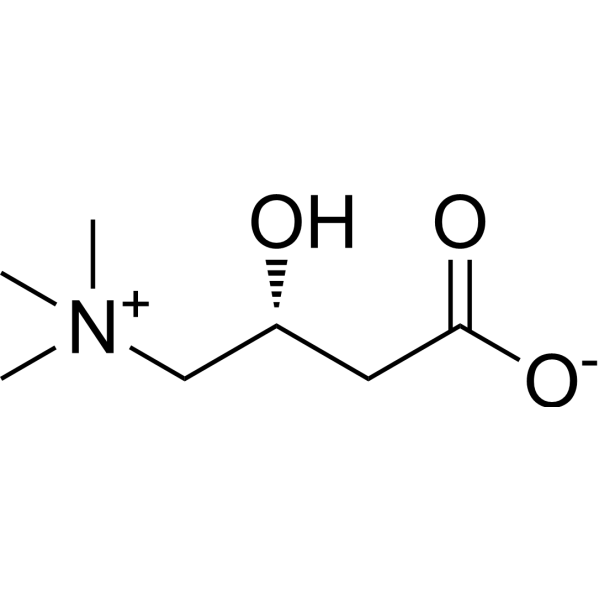
L-Carnitine ((R)-Carnitine), a highly polar, small zwitterion, is an essential co-factor for the mitochondrial β-oxidation pathway. L-Carnitine functions to transport long chain fatty acyl-CoAs into the mitochondria for degradation by β-oxidation. L-Carnitine is an antioxidant. L-Carnitine can ameliorate metabolic imbalances in many inborn errors of metabolism .
|
-
- HY-CE00196A
-
|
(2E,11Z,14Z,17Z,20Z)-Hexacosapentaenoyl-coenzyme A
|
Biochemical Assay Reagents
|
Others
|
|
(2E,11Z,14Z,17Z,20Z)-Hexacosapentaenoyl-CoA ((2E,11Z,14Z,17Z,20Z)-Hexacosapentaenoyl-coenzyme A) is an unsaturated fatty acyl-CoA.
|
-
- HY-CE00243A
-
|
(2E,19Z,22Z,25Z,28Z)-Tetratriacontapentaenoyl-coenzyme A
|
Biochemical Assay Reagents
|
Others
|
|
(2E,19Z,22Z,25Z,28Z)-Tetratriacontapentaenoyl-CoA ((2E,19Z,22Z,25Z,28Z)-Tetratriacontapentaenoyl-coenzyme A) is an unsaturated fatty acyl-CoA.
|
-
- HY-B2246
-
|
(R)-Carnitine hydrochloride; Levocarnitine hydrochloride
|
Endogenous Metabolite
|
Metabolic Disease
Cancer
|
|
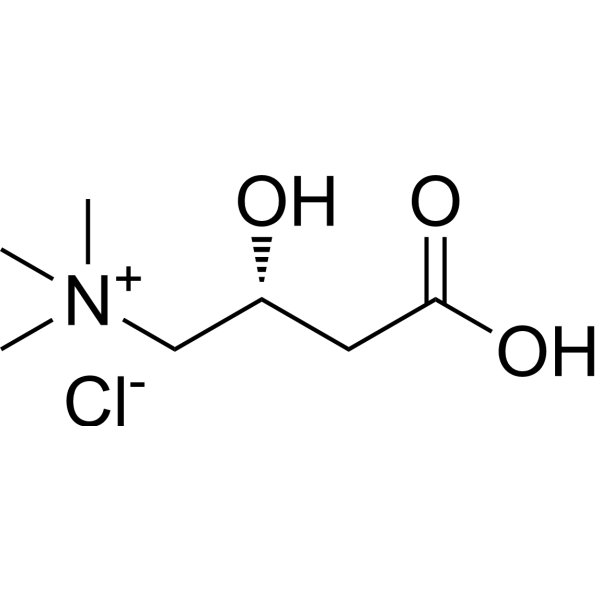
L-Carnitine hydrochloride ((R)-Carnitine hydrochloride), a highly polar, small zwitterion, is an essential co-factor for the mitochondrial β-oxidation pathway. L-Carnitine hydrochloride functions to transport long chain fatty acyl-CoAs into the mitochondria for degradation by β-oxidation. L-Carnitine hydrochloride is an antioxidant. L-Carnitine hydrochloride can ameliorate metabolic imbalances in many inborn errors of metabolism .
|
-
- HY-CE00352
-
|
(6Z,9Z,12Z,15Z,18Z)-Tetracosapentaenoyl-coenzyme A
|
Biochemical Assay Reagents
|
Metabolic Disease
|
|
(6Z,9Z,12Z,15Z,18Z)-Tetracosapentaenoyl-CoA ((6Z,9Z,12Z,15Z,18Z)-Tetracosapentaenoyl-coenzyme A) is an unsaturated fatty acyl-CoA.
|
-
- HY-CE00089
-
|
(19Z,22Z,25Z,28Z,31Z)-Tetratriacontapentaenoyl-coenzyme A; C34:5(Omega-3)-coenzyme A
|
Biochemical Assay Reagents
|
Others
|
|
(19Z,22Z,25Z,28Z,31Z)-Tetratriacontapentaenoyl-CoA ((19Z,22Z,25Z,28Z,31Z)-Tetratriacontapentaenoyl-coenzyme A) is an unsaturated fatty acyl-CoA.
|
-
- HY-CE00205A
-
|
(2E,4E,8Z,11Z,14Z)-Icosapentaenoyl-coenzyme A
|
Biochemical Assay Reagents
|
Others
|
|
(2E,4E,8Z,11Z,14Z)-Icosapentaenoyl-CoA (2E,4E,8Z,11Z,14Z)-Icosapentaenoyl-coenzyme A) is an unsaturated fatty acyl-CoA.
|
-
- HY-CE00010A
-
|
(20Z,23Z,26Z,29Z,32Z)-Octatriacontapentaenoyl-coenzyme A
|
Biochemical Assay Reagents
|
Others
|
|
(20Z,23Z,26Z,29Z,32Z)-Octatriacontapentaenoyl-CoA ((20Z,23Z,26Z,29Z,32Z)-Octatriacontapentaenoyl-coenzyme A) is an unsaturated fatty acyl-CoA.
|
-
- HY-CE00042
-
|
(16Z,19Z,22Z,25Z,28Z)-Tetratriacontapentaenoyl-coenzyme A
|
Biochemical Assay Reagents
|
Others
|
|
(16Z,19Z,22Z,25Z,28Z)-Tetratriacontapentaenoyl-CoA ((16Z,19Z,22Z,25Z,28Z)-Tetratriacontapentaenoyl-coenzyme A) is an unsaturated fatty acyl-CoA.
|
-
- HY-CE00038
-
|
(23Z,26Z,29Z,32Z,35Z)-Octatriacontapentaenoyl-coenzyme A
|
Biochemical Assay Reagents
|
Others
|
|
(23Z,26Z,29Z,32Z,35Z)-Octatriacontapentaenoyl-CoA ((23Z,26Z,29Z,32Z,35Z)-Octatriacontapentaenoyl-coenzyme A) is an unsaturated fatty acyl-CoA.
|
-
- HY-W014787S1
-
|
|
Endogenous Metabolite
|
Metabolic Disease
|
|
Decanedioic acid-d16 is the deuterium labeled Decanedioic acid (HY-W014787). Decanedioic acid is a straight-chain dicarboxylic acid. Dodecanedioic acid overcomes metabolic inflexibility in type 2 diabetes. Decanedioic acid prevents and reverses metabolic-associated liver disease and obesity. Decanedioic acid is associated with carnitine-acylcarnitine translocase deficiency and medium chain acyl-CoA dehydrogenase deficiency .
|
-
- HY-CE00039A
-
|
(10Z,13Z,16Z,19Z,22Z)-Octacosapentaenoyl-coenzyme A
|
Biochemical Assay Reagents
|
Others
|
|
(10Z,13Z,16Z,19Z,22Z)-Octacosapentaenoyl-CoA ((10Z,13Z,16Z,19Z,22Z)-Octacosapentaenoyl-coenzyme A) is an unsaturated fatty acyl-CoA.
|
-
- HY-CE00027
-
|
(12Z,15Z,18Z,21Z,24Z)-Triacontapentaenoyl-coenzyme A
|
Biochemical Assay Reagents
|
Others
|
|
(12Z,15Z,18Z,21Z,24Z)-Triacontapentaenoyl-CoA ((12Z,15Z,18Z,21Z,24Z)-Triacontapentaenoyl-coenzyme A) is an unsaturated fatty acyl-CoA.
|
-
- HY-CE00076
-
|
(18Z,21Z,24Z,27Z,30Z)-Hexatriacontapentaenoyl-coenzyme A
|
Biochemical Assay Reagents
|
Others
|
|
(18Z,21Z,24Z,27Z,30Z)-Hexatriacontapentaenoyl-CoA ((18Z,21Z,24Z,27Z,30Z)-Hexatriacontapentaenoyl-coenzyme A) is an unsaturated fatty acyl-CoA.
|
-
- HY-CE00127
-
|
(3E,5Z,8Z,11Z,14Z)-Icosapentaenoyl-coenzyme A
|
Biochemical Assay Reagents
|
Others
|
|
(3E,5Z,8Z,11Z,14Z)-Icosapentaenoyl-CoA ((3E,5Z,8Z,11Z,14Z)-Icosapentaenoyl-coenzyme A) is an unsaturated fatty acyl-CoA.
|
-
- HY-CE00439
-
|
(8Z,11Z,14Z,17Z,20Z)-Hexacosapentaenoyl-coenzyme A
|
Biochemical Assay Reagents
|
Metabolic Disease
|
|
(8Z,11Z,14Z,17Z,20Z)-Hexacosapentaenoyl-CoA ((8Z,11Z,14Z,17Z,20Z)-Hexacosapentaenoyl-coenzyme A) is an unsaturated fatty acyl-CoA.
|
-
- HY-107571
-
|
|
Acyltransferase
|
Cardiovascular Disease
Metabolic Disease
|
|
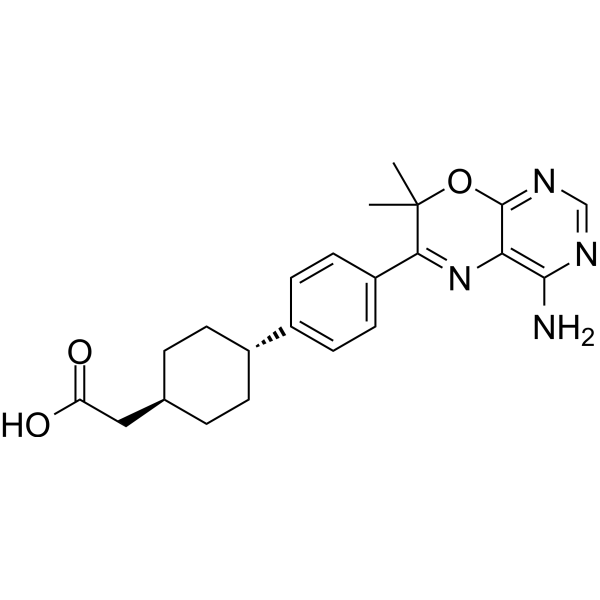
VULM 1457 is a potent inhibitor of cholesterol acyltransferase (acyl-CoA). VULM1457 significantly reduces production and secretion of adrenomedullin (AM) and down-regulates AM receptors on human hepatoblastic cells. VULM 1457 has remarkable hypolipidaemic activity and improves the overall myocardial ischaemia-reperfusion injury outcomes. VULM 1457 has the potential for the research of diabetes mellitus and hypercholesterolaemia .
|
-
- HY-CE00394
-
|
(3R,8Z,11Z,14Z)-3-Hydroxyicosatrienoyl-coenzyme A
|
Biochemical Assay Reagents
|
Metabolic Disease
|
|
(3R,8Z,11Z,14Z)-3-Hydroxyicosatrienoyl-CoA ((3R,8Z,11Z,14Z)-3-Hydroxyicosatrienoyl-coenzyme A) is a 3-hydroxy fatty acyl-CoA.
|
-
- HY-CE00322
-
|
(5Z,8Z,11Z,14Z,17Z)-Icosapentaenoyl-coenzyme A; Timnodonyl-CoA; Timnodonyl coenzyme A
|
Biochemical Assay Reagents
|
Metabolic Disease
|
|
(5Z,8Z,11Z,14Z,17Z)-Icosapentaenoyl-CoA ((5Z,8Z,11Z,14Z,17Z)-Icosapentaenoyl-coenzyme A) is an unsaturated fatty acyl-CoA.
|
-
- HY-CE00219A
-
|
(2E,15Z,18Z,21Z,24Z)-Triacontapentaenoyl-coenzyme A
|
Biochemical Assay Reagents
|
Others
|
|
(2E,15Z,18Z,21Z,24Z)-Triacontapentaenoyl-CoA ((2E,15Z,18Z,21Z,24Z)-Triacontapentaenoyl-coenzyme A) is an unsaturated fatty acyl-CoA.
|
-
- HY-CE00228A
-
|
(2E,17Z,20Z,23Z,26Z)-Dotriacontapentaenoyl-coenzyme A
|
Biochemical Assay Reagents
|
Others
|
|
(2E,17Z,20Z,23Z,26Z)-Dotriacontapentaenoyl-CoA ((2E,17Z,20Z,23Z,26Z)-Dotriacontapentaenoyl-coenzyme A) is an unsaturated fatty acyl-CoA.
|
-
- HY-CE00024
-
|
(21Z,24Z,27Z,30Z,33Z)-Hexatriacontapentaenoyl-coenzyme A
|
Biochemical Assay Reagents
|
Others
|
|
(21Z,24Z,27Z,30Z,33Z)-Hexatriacontapentaenoyl-CoA ((21Z,24Z,27Z,30Z,33Z)-Hexatriacontapentaenoyl-coenzyme A) is an unsaturated fatty acyl-CoA.
|
-
- HY-CE00421
-
|
(7Z,10Z,13Z,16Z,19Z)-Docosapentaenoyl-Coenzyme A
|
Biochemical Assay Reagents
|
Metabolic Disease
|
|
(7Z,10Z,13Z,16Z,19Z)-Docosapentaenoyl-CoA ((7Z,10Z,13Z,16Z,19Z)-Docosapentaenoyl-Coenzyme A) is an unsaturated fatty acyl-CoA.
|
-
- HY-CE00249A
-
|
(2E,21Z,24Z,27Z,30Z)-Hexatriacontapentaenoyl-coenzyme A
|
Biochemical Assay Reagents
|
Others
|
|
(2E,21Z,24Z,27Z,30Z)-Hexatriacontapentaenoyl-CoA ((2E,21Z,24Z,27Z,30Z)-Hexatriacontapentaenoyl-coenzyme A) is an unsaturated fatty acyl-CoA.
|
-
- HY-CE00201A
-
|
(2E,23Z,26Z,29Z,32Z)-Octatriacontapentaenoyl-coenzyme A
|
Biochemical Assay Reagents
|
Others
|
|
(2E,23Z,26Z,29Z,32Z)-Octatriacontapentaenoyl-CoA ((2E,23Z,26Z,29Z,32Z)-Octatriacontapentaenoyl-coenzyme A) is an unsaturated fatty acyl-CoA.
|
-
- HY-W014787R
-
|
Sebacic acid (Standard)
|
Reference Standards
Endogenous Metabolite
|
Metabolic Disease
|
|
Decanedioic acid (Standard) is the analytical standard of Decanedioic acid (HY-W014787). This product is intended for research and analytical applications. Decanedioic acid is a straight-chain dicarboxylic acid. Dodecanedioic acid overcomes metabolic inflexibility in type 2 diabetes. Decanedioic acid prevents and reverses metabolic-associated liver disease and obesity. Decanedioic acid is associated with carnitine-acylcarnitine translocase deficiency and medium chain acyl-CoA dehydrogenase deficiency .
|
-
- HY-CE00431
-
|
(8Z,11Z,14Z)-3-Oxoicosa-8,11,14-trienoyl-coenzyme A
|
Biochemical Assay Reagents
|
Metabolic Disease
|
|
(8Z,11Z,14Z)-3-Oxoicosa-8,11,14-trienoyl-CoA ((8Z,11Z,14Z)-3-Oxoicosa-8,11,14-trienoyl-coenzyme A) is an unsaturated fatty acyl-CoA.
|
-
- HY-B1212
-
|
Dibromohydroxyquinoline; 5,7-Dibromo-8-hydroxyquinoline
|
Parasite
Influenza Virus
|
Infection
|
|
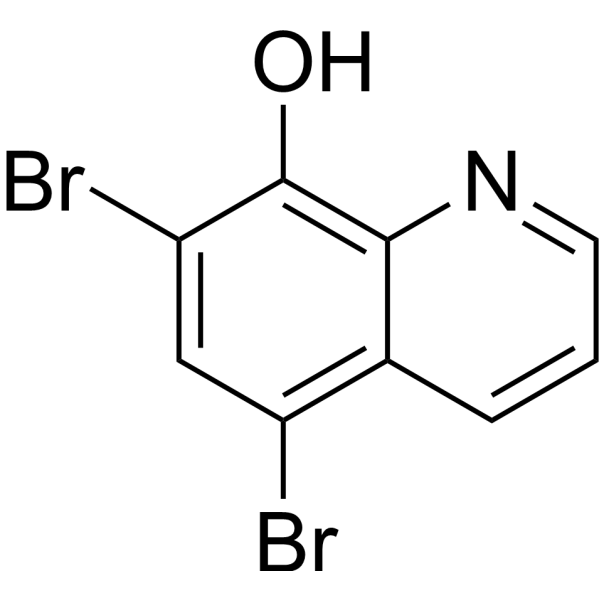
Broxyquinoline (Dibromohydroxyquinoline) is an effective inhibitor of severe fever with thrombocytopenia syndrome virus (SFTSV) with an IC50 of 5.8 µM. Additionally, Broxyquinoline is an inhibitor of CpACBP1 with an IC50 of 64.9 μM. CpACBP1 is a fatty acyl-CoA binding protein of Cryptosporidium parvum, thus Broxyquinoline has the potential to inhibit parasite growth. Broxyquinoline shows promise for research in the field of infectious diseases .
|
-
- HY-148104
-
-
- HY-W105518
-
|
|
Endogenous Metabolite
|
Neurological Disease
|
|
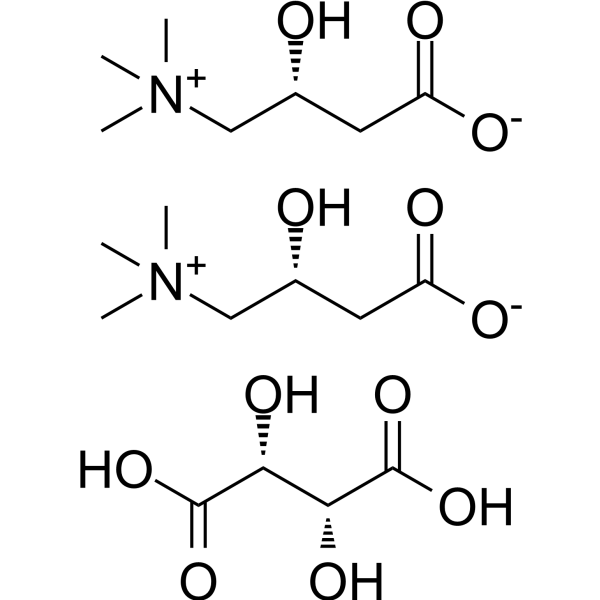
L-Carnitine tartrate is a highly polar, small zwitterion. L-Carnitine tartrate is an essential co-factor for the mitochondrial β-oxidation pathway. L-Carnitine tartrate functions to transport long chain fatty acyl-CoAs into the mitochondria for degradation by β-oxidation. L-Carnitine tartrate is an antioxidant. L-Carnitine tartrate can ameliorate metabolic imbalances in many inborn errors of metabolism [3] .
|
-
- HY-E70523A
-
|
Valeryl-CoA sodium; Valeryl-coenzyme A sodium
|
Endogenous Metabolite
|
Metabolic Disease
|
|
Pentanoyl coenzyme A (Valeryl-CoA) sodium is a short-chain fatty acyl-CoA that functions as an intermediate in mitochondrial β-oxidation and related metabolic pathways. Pentanoyl coenzyme A sodium results from the formal condensation of the thiol group of coenzyme A with the carboxy group of pentanoic acid. Pentanoyl coenzyme A sodium's levels can reflect changes in lipid metabolism under different physiological and pathological conditions. Pentanoyl coenzyme A sodium can be used for research on lipid metabolism .
|
-
- HY-N3806S
-
|
|
Isotope-Labeled Compounds
Acyltransferase
ERK
|
Infection
|
|
Enniatin B- 13C33 is the 13C-labeled Enniatin B (HY-N3806). Enniatin B is a Fusarium mycotoxin. Enniatin B inhibits acyl-CoA: cholesterol acyltransferase (ACAT) activity with an IC50 of 113 μM in an enzyme assay using rat liver microsomes . Enniatins B decreases the activation of ERK (p44/p42) .
|
-
- HY-E70523
-
|
Valeryl-CoA; Valeryl-coenzyme A; Pentanoyl coenzyme A free acid
|
Endogenous Metabolite
|
Metabolic Disease
|
|
Pentanoyl coenzyme A (Valeryl-CoA) is a short-chain fatty acyl-CoA that functions as an intermediate in mitochondrial β-oxidation and related metabolic pathways. Pentanoyl coenzyme A results from the formal condensation of the thiol group of coenzyme A with the carboxy group of pentanoic acid. Pentanoyl coenzyme A's levels can reflect changes in lipid metabolism under different physiological and pathological conditions. Pentanoyl coenzyme A can be used for research on lipid metabolism .
|
-
- HY-N15804
-
-
- HY-CE00034
-
|
(15Z,18Z,21Z,24Z,27Z)-3-Oxotriacontapentaenoyl-coenzyme A; 3-Oxo-C30:5(omega-3)-coenzyme A
|
Biochemical Assay Reagents
|
Others
|
|
(15Z,18Z,21Z,24Z,27Z)-3-Oxotriacontapentaenoyl-CoA ((15Z,18Z,21Z,24Z,27Z)-3-Oxotriacontapentaenoyl-coenzyme A) is an unsaturated fatty acyl-CoA.
|
-
- HY-CE00419
-
|
(7Z,10Z,13Z,16Z,19Z)-3-Oxodocosapentaenoyl-coenzyme A
|
Biochemical Assay Reagents
|
Metabolic Disease
|
|
(7Z,10Z,13Z,16Z,19Z)-3-Oxodocosapentaenoyl-CoA ((7Z,10Z,13Z,16Z,19Z)-3-Oxodocosapentaenoyl-coenzyme A) is an unsaturated fatty acyl-CoA.
|
-
- HY-CE00020
-
|
(21Z,24Z,27Z,30Z,33Z)-3-Oxohexatriacontapentaenoyl-coenzyme A; 3-Oxo-C36:5(omega-3)-coenzyme A
|
Biochemical Assay Reagents
|
Others
|
|
(21Z,24Z,27Z,30Z,33Z)-3-Oxohexatriacontapentaenoyl-CoA ((21Z,24Z,27Z,30Z,33Z)-3-Oxohexatriacontapentaenoyl-coenzyme A) is an unsaturated fatty acyl-CoA.
|
-
- HY-CE00438
-
|
(3S,8Z,11Z,14Z,17Z)-3-Hydroxyicosatetraenoyl-coenzyme A
|
Biochemical Assay Reagents
|
Metabolic Disease
|
|
(3S,8Z,11Z,14Z,17Z)-3-Hydroxyicosatetraenoyl-CoA ((3S,8Z,11Z,14Z,17Z)-3-Hydroxyicosatetraenoyl-coenzyme A) is a long-chain fatty acyl-CoA.
|
-
- HY-CE00364
-
|
(3R,21Z,24Z,27Z,30Z)-3-Hydroxyhexatriacontatetraenoyl-coenzyme A
|
Biochemical Assay Reagents
|
Metabolic Disease
|
|
(3R,21Z,24Z,27Z,30Z)-3-Hydroxyhexatriacontatetraenoyl-CoA ((3R,21Z,24Z,27Z,30Z)-3-Hydroxyhexatriacontatetraenoyl-coenzyme A) is an unsaturated fatty acyl-CoA.
|
-
- HY-CE00372
-
|
(3R,23Z,26Z,29Z,32Z)-3-Hydroxyoctatriacontatetraenoyl-coenzyme A
|
Biochemical Assay Reagents
|
Metabolic Disease
|
|
(3R,23Z,26Z,29Z,32Z)-3-Hydroxyoctatriacontatetraenoyl-CoA ((3R,23Z,26Z,29Z,32Z)-3-Hydroxyoctatriacontatetraenoyl-coenzyme A) is an unsaturated fatty acyl-CoA.
|
-
- HY-CE00350
-
|
(6Z,9Z,12Z,15Z,18Z)-3-Oxotetracosapentaenoyl-coenzyme A
|
Biochemical Assay Reagents
|
Metabolic Disease
|
|
(6Z,9Z,12Z,15Z,18Z)-3-Oxotetracosapentaenoyl-CoA ((6Z,9Z,12Z,15Z,18Z)-3-Oxotetracosapentaenoyl-coenzyme A) is an unsaturated fatty acyl-CoA.
|
-
- HY-CE00035
-
|
(23Z,26Z,29Z,32Z,35Z)-3-Oxooctatriacontapentaenoyl-coenzyme A; 3-Oxo-C38:5(omega-3)-coenzyme A
|
Biochemical Assay Reagents
|
Others
|
|
(23Z,26Z,29Z,32Z,35Z)-3-Oxooctatriacontapentaenoyl-CoA ((23Z,26Z,29Z,32Z,35Z)-3-Oxooctatriacontapentaenoyl-coenzyme A) is an unsaturated fatty acyl-CoA.
|
-
- HY-108341R
-
|
|
Reference Standards
Acyltransferase
|
Metabolic Disease
|
|
PF-06424439 (Standard) is the analytical standard of PF-06424439 (HY-108341). This product is intended for research and analytical applications. PF-06424439 is an oral, potent and selective imidazopyridine diacylglycerol acyltransferase 2 (DGAT2) inhibitor with an IC50 of 14 nM . PF-06424439 is slowly reversible, time-dependent inhibitor, which inhibits DGAT2 in a noncompetitive mode with respect to the acyl-CoA substrate .
|
-
- HY-CE00396
-
|
(3R,8Z,11Z,14Z,17Z)-3-Hydroxyicosatetraenoyl-coenzyme A
|
Biochemical Assay Reagents
|
Metabolic Disease
|
|
(3R,8Z,11Z,14Z,17Z)-3-Hydroxyicosatetraenoyl-CoA ((3R,8Z,11Z,14Z,17Z)-3-Hydroxyicosatetraenoyl-coenzyme A) is an unsaturated fatty acyl-CoA.
|
-
- HY-CE00087
-
|
(19Z,22Z,25Z,28Z,31Z)-3-Oxotetratriacontapentaenoyl-coenzyme A; 3-Oxo-C34:5(omega-3)-coenzyme A
|
Biochemical Assay Reagents
|
Others
|
|
(19Z,22Z,25Z,28Z,31Z)-3-Oxotetratriacontapentaenoyl-CoA ((19Z,22Z,25Z,28Z,31Z)-3-Oxotetratriacontapentaenoyl-coenzyme A) is an unsaturated fatty acyl-CoA.
|
-
- HY-137411
-
|
(E/Z)-Linoleoyl Coenzyme A; (E/Z)-9,12-Octadecadienoyl Coenzyme A
|
Endogenous Metabolite
|
Others
|
|
(E/Z)-Linoleoyl-CoA is a substrate used to study the specificity and kinetics of acyl-CoA. (E/Z)-Linoleoyl-CoA has the ability to replace substrates, and its specificity can be changed by amino acid substitution, thereby affecting the reaction with different desaturases. The study of (E/Z)-Linoleoyl-CoA helps to understand the substrate specificity of mammalian front-end fatty acid desaturases and provides support for the efficient production of value-added fatty acids .
|
-
- HY-CE00128A
-
|
(2E,23Z,26Z,29Z,32Z,35Z)-Octatriacontahexaenoyl-coenzyme A
|
Biochemical Assay Reagents
|
Others
|
|
(2E,23Z,26Z,29Z,32Z,35Z)-Octatriacontahexaenoyl-CoA ((2E,23Z,26Z,29Z,32Z,35Z)-Octatriacontahexaenoyl-coenzyme A) is an unsaturated fatty acyl-CoA.
|
-
- HY-CE00246A
-
|
(2E,19Z,22Z,25Z,28Z,31Z)-Tetratriacontahexaenoyl-coenzyme A
|
Biochemical Assay Reagents
|
Others
|
|
(2E,19Z,22Z,25Z,28Z,31Z)-Tetratriacontahexaenoyl-CoA ((2E,19Z,22Z,25Z,28Z,31Z)-Tetratriacontahexaenoyl-coenzyme A) is an unsaturated fatty acyl-CoA.
|
-
- HY-CE00258
-
|
(3R,15Z,18Z,21Z,24Z)-3-Hydroxytriacontatetraenoyl-coenzyme A
|
Biochemical Assay Reagents
|
Metabolic Disease
|
|
(3R,15Z,18Z,21Z,24Z)-3-Hydroxytriacontatetraenoyl-CoA ((3R,15Z,18Z,21Z,24Z)-3-Hydroxytriacontatetraenoyl-coenzyme A) is a 3-hydroxy fatty acyl-CoA.
|
-
- HY-B2246S
-
|
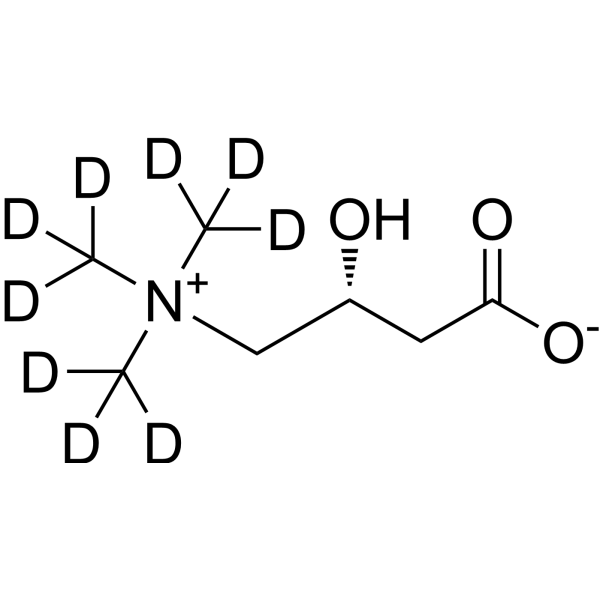
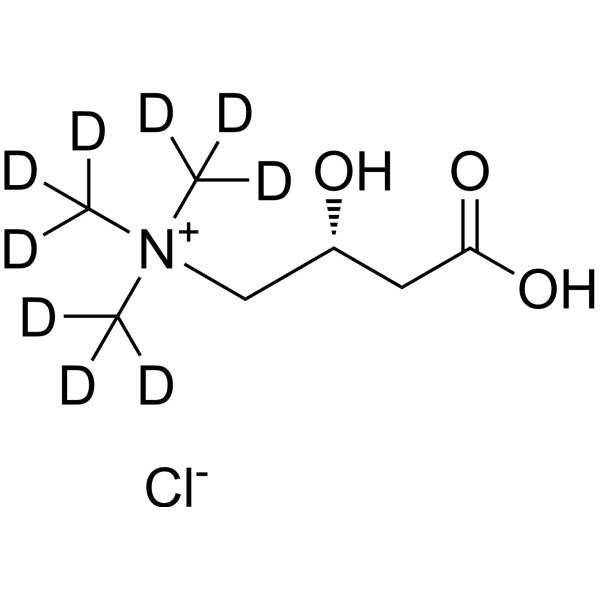
(R)-Carnitine-d9 chloride; Levocarnitine-d9 chloride
|
Isotope-Labeled Compounds
Endogenous Metabolite
|
Metabolic Disease
|
|
L-Carnitine-d9 (chloride)e is the deuterium labeled L-Carnitine chloride. L-Carnitine chloride, a highly polar, small zwitterion, is an essential co-factor for the mitochondrial β-oxidation pathway. L-Carnitine chloride functions to transport long chain fatty acyl-CoAs into the mitochondria for degradation by β-oxidation. L-Carnitine chloride is an antioxidant. L-Carnitine chloride can ameliorate metabolic imbalances in many inborn errors of metabolism .
|
-
- HY-CE00079
-
|
(18Z,21Z,24Z,27Z,30Z,33Z)-Hexatriacontahexaenoyl-coenzyme A
|
Biochemical Assay Reagents
|
Others
|
|
(18Z,21Z,24Z,27Z,30Z,33Z)-Hexatriacontahexaenoyl-CoA ((18Z,21Z,24Z,27Z,30Z,33Z)-Hexatriacontahexaenoyl-coenzyme A) is an unsaturated fatty acyl-CoA.
|
-
- HY-CE00232A
-
|
(2E,17Z,20Z,23Z,26Z,29Z)-Dotriacontahexaenoyl-coenzyme A
|
Biochemical Assay Reagents
|
Others
|
|
(2E,17Z,20Z,23Z,26Z,29Z)-Dotriacontahexaenoyl-CoA ((2E,17Z,20Z,23Z,26Z,29Z)-Dotriacontahexaenoyl-coenzyme A) is an unsaturated fatty acyl-CoA.
|
-
- HY-CE00217
-
|
(3R,13Z,16Z,19Z,22Z)-3-Hydroxyoctacosatetraenoyl-coenzyme A
|
Biochemical Assay Reagents
|
Others
|
|
(3R,13Z,16Z,19Z,22Z)-3-Hydroxyoctacosatetraenoyl-CoA ((3R,13Z,16Z,19Z,22Z)-3-Hydroxyoctacosatetraenoyl-coenzyme A) is a 3-hydroxy fatty acyl-CoA.
|
-
- HY-CE00388
-
|
(3R,7Z,10Z,13Z,16Z)-3-Hydroxydocosatetraenoyl-coenzyme A
|
Biochemical Assay Reagents
|
Metabolic Disease
|
|
(3R,7Z,10Z,13Z,16Z)-3-Hydroxydocosatetraenoyl-CoA ((3R,7Z,10Z,13Z,16Z)-3-Hydroxydocosatetraenoyl-coenzyme A) is a 3-hydroxy fatty acyl-CoA.
|
-
- HY-CE00443
-
|
(8Z,11Z,14Z,17Z,20Z,23Z)-Hexacosahexaenoyl-coenzyme A
|
Biochemical Assay Reagents
|
Metabolic Disease
|
|
(8Z,11Z,14Z,17Z,20Z,23Z)-Hexacosahexaenoyl-CoA ((8Z,11Z,14Z,17Z,20Z,23Z)-Hexacosahexaenoyl-coenzyme A) is an unsaturated fatty acyl-CoA.
|
-
- HY-CE00208
-
|
(3R,11Z,14Z,17Z,20Z)-3-Hydroxyhexacosatetraenoyl-coenzyme A
|
Biochemical Assay Reagents
|
Others
|
|
(3R,11Z,14Z,17Z,20Z)-3-Hydroxyhexacosatetraenoyl-CoA ((3R,11Z,14Z,17Z,20Z)-3-Hydroxyhexacosatetraenoyl-coenzyme A) is a 3-hydroxy fatty acyl-CoA.
|
-
- HY-CE00195A
-
|
(2E,11Z,14Z,17Z,20Z,23Z)-Hexacosahexaenoyl-coenzyme A
|
Biochemical Assay Reagents
|
Others
|
|
(2E,11Z,14Z,17Z,20Z,23Z)-Hexacosahexaenoyl-CoA ((2E,11Z,14Z,17Z,20Z,23Z)-Hexacosahexaenoyl-coenzyme A) is an unsaturated fatty acyl-CoA.
|
-
- HY-CE00221A
-
|
(2E,15Z,18Z,21Z,24Z,27Z)-Triacontahexaenoyl-coenzyme A
|
Biochemical Assay Reagents
|
Others
|
|
(2E,15Z,18Z,21Z,24Z,27Z)-Triacontahexaenoyl-CoA ((2E,15Z,18Z,21Z,24Z,27Z)-Triacontahexaenoyl-coenzyme A) is an unsaturated fatty acyl-CoA.
|
-
- HY-CE00189A
-
|
(2E,13Z,16Z,19Z,22Z,25Z)-Octacosahexaenoyl-coenzyme A
|
Biochemical Assay Reagents
|
Others
|
|
(2E,13Z,16Z,19Z,22Z,25Z)-Octacosahexaenoyl-CoA ((2E,13Z,16Z,19Z,22Z,25Z)-Octacosahexaenoyl-coenzyme A) is an unsaturated fatty acyl-CoA.
|
-
- HY-CE00234A
-
|
(2E,6Z,9Z,12Z,15Z,18Z)-Tetracosahexaenoyl-coenzyme A
|
Biochemical Assay Reagents
|
Others
|
|
(2E,6Z,9Z,12Z,15Z,18Z)-Tetracosahexaenoyl-CoA ((2E,6Z,9Z,12Z,15Z,18Z)-Tetracosahexaenoyl-coenzyme A) is an unsaturated fatty acyl-CoA.
|
-
- HY-CE00269
-
|
(3R,17Z,20Z,23Z,26Z)-3-Hydroxydotriacontatetraenoyl-coenzyme A
|
Biochemical Assay Reagents
|
Metabolic Disease
|
|
(3R,17Z,20Z,23Z,26Z)-3-Hydroxydotriacontatetraenoyl-CoA ((3R,17Z,20Z,23Z,26Z)-3-Hydroxydotriacontatetraenoyl-coenzyme A) is a 3-hydroxy fatty acyl-CoA.
|
-
- HY-CE00274
-
|
(3R,19Z,22Z,25Z,28Z)-3-Hydroxytetratriacontatetraenoyl-coenzyme A
|
Biochemical Assay Reagents
|
Metabolic Disease
|
|
(3R,19Z,22Z,25Z,28Z)-3-Hydroxytetratriacontatetraenoyl-CoA ((3R,19Z,22Z,25Z,28Z)-3-Hydroxytetratriacontatetraenoyl-coenzyme A) is a 3-hydroxy fatty acyl-CoA.
|
-
- HY-CE00401
-
|
(3R,9Z,12Z,15Z,18Z)-3-Hydroxytetracosatetraenoyl-coenzyme A
|
Biochemical Assay Reagents
|
Metabolic Disease
|
|
(3R,9Z,12Z,15Z,18Z)-3-Hydroxytetracosatetraenoyl-CoA ((3R,9Z,12Z,15Z,18Z)-3-Hydroxytetracosatetraenoyl-coenzyme A) is a 3-hydroxy fatty acyl-CoA.
|
-
- HY-B0399S
-
|
(R)-Carnitine-d9; Levocarnitine-d9
|
Isotope-Labeled Compounds
Endogenous Metabolite
|
Neurological Disease
Metabolic Disease
|
|
L-Carnitine-d9 is the deuterium labeled L-Carnitine. L-Carnitine (Levocarnitine) is an endogenous molecule involved in fatty acid metabolism, biosynthesized within the human body using amino acids: L-lysine and L-methionine, as substrates. L-Carnitine functions to transport long chain fatty acyl-CoAs into the mitochondria for degradation by β-oxidation. L-carnitine can ameliorate metabolic imbalances in many inborn errors of metabolism .
|
-
- HY-108341AR
-
|
|
Reference Standards
Acyltransferase
|
Metabolic Disease
|
|
PF-06424439 methanesulfonate (Standard) is the analytical standard of PF-06424439 (methanesulfonate) (HY-108341A). This product is intended for research and analytical applications. PF-06424439 methanesulfonate is an oral, potent and selective imidazopyridine diacylglycerol acyltransferase 2 (DGAT2) inhibitor with an IC50 of 14 nM . PF-06424439 methanesulfonate is slowly reversible, time-dependent inhibitor, which inhibits DGAT2 in a noncompetitive mode with respect to the acyl-CoA substrate .
|
-
- HY-B0399R
-
|
(R)-Carnitine (Standard); Levocarnitine (Standard)
|
Reference Standards
Endogenous Metabolite
|
Neurological Disease
Cancer
|
|
L-Carnitine (Standard) is the analytical standard of L-Carnitine. This product is intended for research and analytical applications. L-Carnitine ((R)-Carnitine), a highly polar, small zwitterion, is an essential co-factor for the mitochondrial β-oxidation pathway. L-Carnitine functions to transport long chain fatty acyl-CoAs into the mitochondria for degradation by β-oxidation. L-Carnitine is an antioxidant. L-Carnitine can ameliorate metabolic imbalances in many inborn errors of metabolism .
|
-
- HY-N3807
-
|
|
Acyltransferase
ERK
NF-κB
|
Infection
Cardiovascular Disease
Cancer
|
|
Enniatin B1 is a Fusarium mycotoxin. Enniatin B1 inhibits acyl-CoA: cholesterol acyltransferase (ACAT) activity with an IC50 of 73 μM in an enzyme assay using rat liver microsomes . Enniatin B1 crosss the blood-brain barrier . Enniatin B1 decreases the activation of ERK (p44/p42). Enniatin B1 inhibits moderately TNF-α-induced NF-κB activation .
|
-
- HY-19227
-
|
|
PPAR
|
Cardiovascular Disease
|
|
BM 170249 is a peroxisome proliferator, particularly in the perivenous region of the central acini in the liver. BM 170249 significantly reduces serum triglyceride and cholesterol levels in rats. BM 170249 strongly induces the activity of key enzymes in the peroxisome fatty acid β-oxidation system (such as acyl-CoA oxidase AOX, multifunctional enzyme PH, and thiolase PT), but leads to decreased activity of catalase and uricase in peroxisome components. BM 170249 could be used in lipid-lowering studies .
|
-
- HY-B2246R
-
|
(R)-Carnitine hydrochloride (Standard); Levocarnitine hydrochloride (Standard)
|
Reference Standards
Endogenous Metabolite
|
Metabolic Disease
Cancer
|
|
L-Carnitine (hydrochloride) (Standard) is the analytical standard of L-Carnitine (hydrochloride). This product is intended for research and analytical applications. L-Carnitine hydrochloride ((R)-Carnitine hydrochloride), a highly polar, small zwitterion, is an essential co-factor for the mitochondrial β-oxidation pathway. L-Carnitine hydrochloride functions to transport long chain fatty acyl-CoAs into the mitochondria for degradation by β-oxidation. L-Carnitine hydrochloride is an antioxidant. L-Carnitine hydrochloride can ameliorate metabolic imbalances in many inborn errors of metabolism .
|
-
- HY-CE00602
-
-
- HY-CE00613
-
-
- HY-CE00601
-
-
- HY-CE00618
-
-
- HY-CE00672
-
-
- HY-CE00556
-
-
- HY-CE00671
-
-
- HY-CE00253
-
|
(3R,13Z,16Z,19Z,22Z,25Z)-3-Hydroxyoctacosapentaenoyl-coenzyme A
|
Biochemical Assay Reagents
|
Metabolic Disease
|
|
(3R,13Z,16Z,19Z,22Z,25Z)-3-Hydroxyoctacosapentaenoyl-CoA ((3R,13Z,16Z,19Z,22Z,25Z)-3-Hydroxyoctacosapentaenoyl-coenzyme A) is an unsaturated fatty acyl-CoA.
|
-
- HY-CE00223A
-
|
(2E,16Z,19Z,22Z,25Z,28Z,31Z)-Tetratriacontaheptaenoyl-coenzyme A
|
Biochemical Assay Reagents
|
Others
|
|
(2E,16Z,19Z,22Z,25Z,28Z,31Z)-Tetratriacontaheptaenoyl-CoA ((2E,16Z,19Z,22Z,25Z,28Z,31Z)-Tetratriacontaheptaenoyl-coenzyme A) is an unsaturated fatty acyl-CoA.
|
-
- HY-CE00391
-
|
(3R,7Z,10Z,13Z,16Z,19Z)-3-Hydroxydocosapentaenoyl-coenzyme A
|
Biochemical Assay Reagents
|
Metabolic Disease
|
|
(3R,7Z,10Z,13Z,16Z,19Z)-3-Hydroxydocosapentaenoyl-CoA ((3R,7Z,10Z,13Z,16Z,19Z)-3-Hydroxydocosapentaenoyl-coenzyme A) is an unsaturated fatty acyl-CoA.
|
-
- HY-CE00278
-
|
(3R,19Z,22Z,25Z,28Z,31Z)-3-Hydroxytetratriacontapentaenoyl-coenzyme A
|
Biochemical Assay Reagents
|
Metabolic Disease
|
|
(3R,19Z,22Z,25Z,28Z,31Z)-3-Hydroxytetratriacontapentaenoyl-CoA ((3R,19Z,22Z,25Z,28Z,31Z)-3-Hydroxytetratriacontapentaenoyl-coenzyme A) is an unsaturated fatty acyl-CoA.
|
-
- HY-CE00260
-
|
(3R,15Z,18Z,21Z,24Z,27Z)-3-Hydroxytriacontapentaenoyl-coenzyme A
|
Biochemical Assay Reagents
|
Metabolic Disease
|
|
(3R,15Z,18Z,21Z,24Z,27Z)-3-Hydroxytriacontapentaenoyl-CoA ((3R,15Z,18Z,21Z,24Z,27Z)-3-Hydroxytriacontapentaenoyl-coenzyme A) is an unsaturated fatty acyl-CoA.
|
-
- HY-CE00238A
-
|
(2E,18Z,21Z,24Z,27Z,30Z,33Z)-Hexatriacontaheptaenoyl-coenzyme A
|
Biochemical Assay Reagents
|
Others
|
|
(2E,18Z,21Z,24Z,27Z,30Z,33Z)-Hexatriacontaheptaenoyl-CoA ((2E,18Z,21Z,24Z,27Z,30Z,33Z)-Hexatriacontaheptaenoyl-coenzyme A) is an unsaturated fatty acyl-CoA.
|
-
- HY-CE00402
-
|
(3R,9Z,12Z,15Z,18Z,21Z)-3-Hydroxytetracosapentaenoyl-coenzyme A
|
Biochemical Assay Reagents
|
Metabolic Disease
|
|
(3R,9Z,12Z,15Z,18Z,21Z)-3-Hydroxytetracosapentaenoyl-CoA ((3R,9Z,12Z,15Z,18Z,21Z)-3-Hydroxytetracosapentaenoyl-coenzyme A) is an unsaturated fatty acyl-CoA.
|
-
- HY-107571R
-
|
|
Reference Standards
Acyltransferase
|
Cardiovascular Disease
Metabolic Disease
|
|
VULM 1457 (Standard) is the analytical standard of VULM 1457 (HY-107571). This product is intended for research and analytical applications. VULM 1457 is a potent inhibitor of cholesterol acyltransferase (acyl-CoA). VULM1457 significantly reduces production and secretion of adrenomedullin (AM) and down-regulates AM receptors on human hepatoblastic cells. VULM 1457 has remarkable hypolipidaemic activity and improves the overall myocardial ischaemia-reperfusion injury outcomes. VULM 1457 has the potential for the research of diabetes mellitus and hypercholesterolaemia .
|
-
- HY-CE00209
-
|
(3R,11Z,14Z,17Z,20Z,23Z)-3-Hydroxyhexacosapentaenoyl-coenzyme A
|
Biochemical Assay Reagents
|
Others
|
|
(3R,11Z,14Z,17Z,20Z,23Z)-3-Hydroxyhexacosapentaenoyl-CoA ((3R,11Z,14Z,17Z,20Z,23Z)-3-Hydroxyhexacosapentaenoyl-coenzyme A) is an unsaturated fatty acyl-CoA.
|
-
- HY-CE00441
-
|
(8Z,11Z,14Z,17Z,20Z,23Z)-3-Oxohexacosahexaenoyl-coenzyme A
|
Biochemical Assay Reagents
|
Metabolic Disease
|
|
(8Z,11Z,14Z,17Z,20Z,23Z)-3-Oxohexacosahexaenoyl-CoA ((8Z,11Z,14Z,17Z,20Z,23Z)-3-Oxohexacosahexaenoyl-coenzyme A) is an unsaturated fatty acyl-CoA.
|
-
- HY-W754236
-
|
|
Isotope-Labeled Compounds
Endogenous Metabolite
|
Metabolic Disease
|
|
(R)-Carnitine Hydrochloride- 13C3 is the 13C-labeled L-Carnitine hydrochloride (HY-B2246). L-Carnitine hydrochloride ((R)-Carnitine hydrochloride), a highly polar, small zwitterion, is an essential co-factor for the mitochondrial β-oxidation pathway. L-Carnitine hydrochloride functions to transport long chain fatty acyl-CoAs into the mitochondria for degradation by β-oxidation. L-Carnitine hydrochloride is an antioxidant. L-Carnitine hydrochloride can ameliorate metabolic imbalances in many inborn errors of metabolism .
|
-
- HY-135425
-
|
|
Acyltransferase
|
Metabolic Disease
|
|
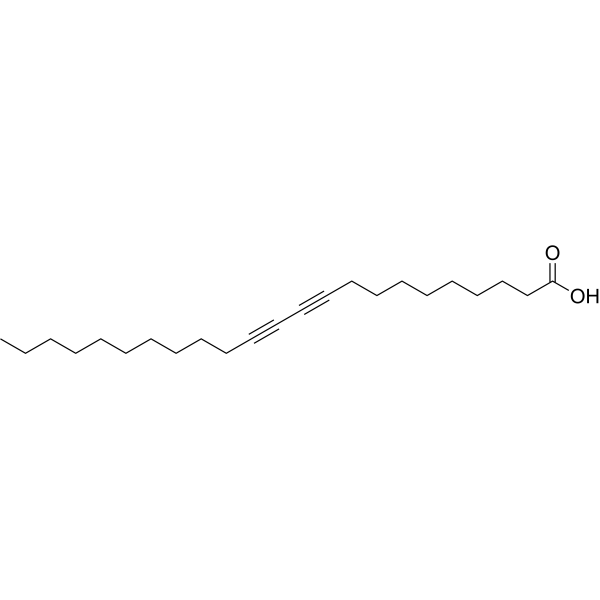
10,12-Tricosadiynoic acid is a highly specific, selective, high affinity and orally active acyl-CoA oxidase-1 (ACOX1) inhibitor. 10,12-Tricosadiynoic acid can treat high fat diet- or obesity-induced metabolic diseases by improving mitochondrial lipid and ROS metabolism . 10,12-Tricosadiynoic acid is a click chemistry reagent, it contains an Alkyne group and can undergo copper-catalyzed azide-alkyne cycloaddition (CuAAc) with molecules containing Azide groups.
|
-
- HY-CE00270
-
|
(3R,17Z,20Z,23Z,26Z,29Z)-3-Hydroxydotriacontapentaenoyl-coenzyme A
|
Biochemical Assay Reagents
|
Metabolic Disease
|
|
(3R,17Z,20Z,23Z,26Z,29Z)-3-Hydroxydotriacontapentaenoyl-CoA ((3R,17Z,20Z,23Z,26Z,29Z)-3-Hydroxydotriacontapentaenoyl-coenzyme A) is an unsaturated fatty acyl-CoA.
|
-
- HY-CE00188A
-
|
(2E,14Z,17Z,20Z,23Z,26Z,29Z)-Dotriacontaheptaenoyl-coenzyme A
|
Biochemical Assay Reagents
|
Others
|
|
(2E,14Z,17Z,20Z,23Z,26Z,29Z)-Dotriacontaheptaenoyl-CoA ((2E,14Z,17Z,20Z,23Z,26Z,29Z)-Dotriacontaheptaenoyl-coenzyme A) is an unsaturated fatty acyl-CoA.
|
-
- HY-CE00056
-
|
(24R,25R)-3Alpha,7alpha,24-trihydroxy-5beta-cholestan-26-oyl-coenzyme A
|
Biochemical Assay Reagents
|
Others
|
|
(24R,25R)-3Alpha,7alpha,24-trihydroxy-5beta-cholestan-26-oyl-CoA ((24R,25R)-3Alpha,7alpha,24-trihydroxy-5beta-cholestan-26-oyl-coenzyme A) is a steroidal acyl-CoA.
|
-
- HY-CE00193A
-
|
(2E,12Z,15Z,18Z,21Z,24Z,27Z)-Triacontaheptaenoyl-coenzyme A
|
Biochemical Assay Reagents
|
Others
|
|
(2E,12Z,15Z,18Z,21Z,24Z,27Z)-Triacontaheptaenoyl-CoA ((2E,12Z,15Z,18Z,21Z,24Z,27Z)-Triacontaheptaenoyl-coenzyme A) is an unsaturated fatty acyl-CoA.
|
-
- HY-113158R
-
|
|
Reference Standards
Drug Metabolite
|
Metabolic Disease
|
|
4-Hydroxyhippuric acid (Standard) is the analytical standard of 4-Hydroxyhippuric acid (HY-113158). This product is intended for research and analytical applications. 4-Hydroxyhippuric acid is a metabolite of polyphenols. 4-Hydroxyhippuric acid is generated via medium-chain acyl-CoA dehydrogenase (MCAD)-dependent β-oxidation of microbially-produced 3-(4-hydroxyphenyl)propionic acid, followed by host glycine conjugation. 4-Hydroxyhippuric acid can be simultaneously detected in urine as a biomarker of dietary polyphenol intake .
|
-
- HY-CE00043
-
|
(16Z,19Z,22Z,25Z,28Z,31Z)-3-Oxotetratriacontahexaenoyl-coenzyme A; 3-Oxo-C34:6(omega-3)-coenzyme A
|
Biochemical Assay Reagents
|
Others
|
|
(16Z,19Z,22Z,25Z,28Z,31Z)-3-Oxotetratriacontahexaenoyl-CoA ((16Z,19Z,22Z,25Z,28Z,31Z)-3-Oxotetratriacontahexaenoyl-coenzyme A) is an unsaturated fatty acyl-CoA.
|
-
- HY-CE00225
-
|
(2E,8Z,11Z,14Z,17Z,20Z,23Z)-Hexacosaheptaenoyl-coenzyme A
|
Biochemical Assay Reagents
|
Others
|
|
(2E,8Z,11Z,14Z,17Z,20Z,23Z)-Hexacosaheptaenoyl-CoA ((2E,8Z,11Z,14Z,17Z,20Z,23Z)-Hexacosaheptaenoyl-coenzyme A) is an unsaturated fatty acyl-CoA.
|
-
- HY-CE00400
-
|
(3R,8Z,11Z,14Z,17Z,20Z,23Z)-Hydroxyhexacosahexaenoyl-coenzyme A
|
Biochemical Assay Reagents
|
Metabolic Disease
|
|
(3R,8Z,11Z,14Z,17Z,20Z,23Z)-Hydroxyhexacosahexaenoyl-CoA ((3R,8Z,11Z,14Z,17Z,20Z,23Z)-Hydroxyhexacosahexaenoyl-coenzyme A) is an unsaturated fatty acyl-CoA.
|
-
- HY-CE00423
-
|
(3S,6Z,9Z,12Z,15Z,18Z)-3-Hydroxytetracosapentaenoyl-coenzyme A
|
Biochemical Assay Reagents
|
Metabolic Disease
|
|
(3S,6Z,9Z,12Z,15Z,18Z)-3-Hydroxytetracosapentaenoyl-CoA ((3S,6Z,9Z,12Z,15Z,18Z)-3-Hydroxytetracosapentaenoyl-coenzyme A) is an unsaturated fatty acyl-CoA.
|
-
- HY-CE00200A
-
|
(2E,10Z,13Z,16Z,19Z,22Z,25Z)-Octacosaheptaenoyl-coenzyme A
|
Biochemical Assay Reagents
|
Others
|
|
(2E,10Z,13Z,16Z,19Z,22Z,25Z)-Octacosaheptaenoyl-CoA ((2E,10Z,13Z,16Z,19Z,22Z,25Z)-Octacosaheptaenoyl-coenzyme A) is an unsaturated fatty acyl-CoA.
|
-
- HY-CE00368
-
|
(3R,21Z,24Z,27Z,30Z,33Z)-3-Hydroxyhexatriacontapentaenoyl-coenzyme A
|
Biochemical Assay Reagents
|
Metabolic Disease
|
|
(3R,21Z,24Z,27Z,30Z,33Z)-3-Hydroxyhexatriacontapentaenoyl-CoA ((3R,21Z,24Z,27Z,30Z,33Z)-3-Hydroxyhexatriacontapentaenoyl-coenzyme A) is an unsaturated fatty acyl-CoA.
|
-
- HY-CE00374
-
|
(3R,23Z,26Z,29Z,32Z,35Z)-3-Hydroxyoctatriacontapentaenoyl-coenzyme A
|
Biochemical Assay Reagents
|
Metabolic Disease
|
|
(3R,23Z,26Z,29Z,32Z,35Z)-3-Hydroxyoctatriacontapentaenoyl-CoA ((3R,23Z,26Z,29Z,32Z,35Z)-3-Hydroxyoctatriacontapentaenoyl-coenzyme A) is an unsaturated fatty acyl-CoA.
|
-
- HY-113201
-
|
|
Endogenous Metabolite
|
Neurological Disease
|
|
Tetradecanoylcarnitine is an acylcarnitine involved in mitochondrial β-oxidation of long-chain saturated fatty acids and fatty acid metabolism. Tetradecanoylcarnitine serves as a biomarker for very long-chain acyl-CoA dehydrogenase deficiency and MPTP (HY-15608)-induced Parkinson's disease. Tetradecanoylcarnitine exhibits a characteristic significant elevation in plasma levels in patients with sarcopenia, including those complicated with hypertension, and this elevation is closely associated with an increased risk of death. Tetradecanoylcarnitine is widely used in research on the pathological mechanisms of diseases such as Parkinson's disease and sarcopenia .
|
-
- HY-111417
-
-
- HY-19183
-
-
- HY-16281
-
|
DuP 128
|
Acyltransferase
|
Metabolic Disease
|
|
Lecimibide (DuP 128) is a potent and specific acyl-CoA:cholesterol acyltransferase (ACAT) inhibitor for antihyperlipidemia research .
|
-
- HY-101627
-
-
- HY-B0399G
-
|
(R)-Carnitine; Levocarnitine
|
Endogenous Metabolite
|
Neurological Disease
Cancer
|
|
L-Carnitine (GMP) is L-Carnitine (HY-B0399) produced by using GMP guidelines. GMP small molecules work appropriately as an auxiliary reagent for cell therapy manufacture. L-Carnitine, a highly polar, small zwitterion, is an essential co-factor for the mitochondrial β-oxidation pathway. L-Carnitine functions to transport long chain fatty acyl-CoAs into the mitochondria for degradation by β-oxidation. L-Carnitine is an antioxidant. L-Carnitine can ameliorate metabolic imbalances in many inborn errors of metabolism .
|
-
- HY-B0399S2
-
|
(R)-Carnitine-13C3; Levocarnitine-13C3
|
Isotope-Labeled Compounds
Endogenous Metabolite
|
Neurological Disease
Cancer
|
|
L-Carnitine- 13C3 ((R)-Carnitine- 13C3) is the 13C--labeled L-Carnitine (HY-B0399). L-Carnitine ((R)-Carnitine), a highly polar, small zwitterion, is an essential co-factor for the mitochondrial β-oxidation pathway. L-Carnitine functions to transport long chain fatty acyl-CoAs into the mitochondria for degradation by β-oxidation. L-Carnitine is an antioxidant. L-Carnitine can ameliorate metabolic imbalances in many inborn errors of metabolism .
|
-
- HY-W105518R
-
|
|
Reference Standards
Endogenous Metabolite
|
Neurological Disease
|
|
L-Carnitine (tartrate) (Standard) is the analytical standard of L-Carnitine (tartrate). This product is intended for research and analytical applications. L-Carnitine tartrate is a highly polar, small zwitterion. L-Carnitine tartrate is an essential co-factor for the mitochondrial β-oxidation pathway. L-Carnitine tartrate functions to transport long chain fatty acyl-CoAs into the mitochondria for degradation by β-oxidation. L-Carnitine tartrate is an antioxidant. L-Carnitine tartrate can ameliorate metabolic imbalances in many inborn errors of metabolism [3] .
|
-
- HY-CE00053
-
|
(24R,25R)-3Alpha,7alpha,12alpha,24-Tetrahydroxy-5beta-cholestanoyl-coenzyme A
|
Biochemical Assay Reagents
|
Others
|
|
(24R,25R)-3Alpha,7alpha,12alpha,24-Tetrahydroxy-5beta-cholestan-26-oyl-CoA ((24R,25R)-3Alpha,7alpha,12alpha,24-Tetrahydroxy-5beta-cholestanoyl-coenzyme A) is an acyl-CoA.
|
-
- HY-CE00657
-
-
- HY-141479B
-
|
Butyryl CoA lithium hydrate
|
Drug Intermediate
|
Others
|
|
Butyryl-Coenzyme A (Butyryl CoA) lithium hydrate is a short-chain acyl CoA that can synthesize Butyric acid (HY-B0350) .
|
-
- HY-141479C
-
|
Butyryl CoA triammonium
|
Drug Intermediate
|
Others
|
|
Butyryl-Coenzyme A (Butyryl CoA) triammonium is a short-chain acyl CoA that can synthesize Butyric acid (HY-B0350) .
|
-
- HY-122078
-
|
|
Acyltransferase
|
Metabolic Disease
|
|
FR-190809 is a potent, nonadrenotoxic, orally efficacious acyl-CoA:cholesterol O-acyltransferase (ACAT) inhibitor, with an IC50 of 45 nM .
|
-
- HY-141479D
-
|
Butyryl CoA trilithium
|
Drug Intermediate
|
Others
|
|
Butyryl-Coenzyme A (Butyryl CoA) trilithium is a short-chain acyl CoA that can synthesize Butyric acid (HY-B0350) .
|
-
- HY-141479A
-
|
Butyryl CoA trisodium
|
Drug Intermediate
|
Others
|
|
Butyryl-Coenzyme A (Butyryl CoA) trisodium is a short-chain acyl CoA that can synthesize Butyric acid (HY-B0350) .
|
-
- HY-126455
-
|
Vermixocin A
|
Acyltransferase
|
Metabolic Disease
|
|
Penicillide (Vermixocin A), isolated from Talaromyces derxii cultivated on rice, shows inhibitory activity against acyl-CoA:cholesterol acyltransferase (ACAT) .
|
-
- HY-U00430
-
-
- HY-164093A
-
|
|
Acetyl-CoA synthetase
|
Others
|
|
Isovaleryl-CoA sodium, a branched-chain acyl CoA, is a succinate:CoA ligase (SCL) inhibitor with an IC50 of 273 μM in rat liver mitochondria .
|
-
- HY-W612338
-
|
9-ONA
|
Acetyl-CoA Carboxylase
|
Inflammation/Immunology
|
|
9-Oxononanoic acid (9-ONA) is an orally active acetyl-CoA carboxylase inhibitor. 9-Oxononanoic acid inhibits acetyl-CoA carboxylase via accumulation of long-chain acyl-CoA. 9-Oxononanoic acid increases carnitine palmitoyltransferase, isocitrate dehydrogenase and glucose 6-phosphate dehydrogenase activity to elevate β-oxidation and support NADPH (HY-113324) supplyactivity. 9-Oxononanoic acid stimulates phospholipase A2 activity via post-translational, non-transcriptional mechanisms. 9-Oxononanoic acid can be used for the research of atherothrombosis .
|
-
- HY-133968
-
|
Ostreasterol
|
Acyltransferase
Reactive Oxygen Species (ROS)
|
Inflammation/Immunology
|
|
24-Methylenecholesterol (Ostreasterol) is a regulator targeting acyl-CoA cholesterol acyltransferase (ACAT) with anti-aging and neuroprotective effects. 24-Methylenecholesterol mimics the effects of nerve growth factor (NGF), can extend yeast lifespan through an anti-oxidative stress mechanism, and exhibits neuroprotective activity in PC12 cells. 24-Methylenecholesterol can reduce intracellular reactive oxygen species (ROS) and malondialdehyde (MDA) levels, activate anti-oxidative stress pathways (such as UTH1, SOD-related genes), and promote synaptic growth .
|
-
- HY-CE00256
-
|
(3R,14Z,17Z,20Z,23Z,26Z,29Z)-3-Hydroxydotriacontahexaenoyl-coenzyme A
|
Biochemical Assay Reagents
|
Metabolic Disease
|
|
(3R,14Z,17Z,20Z,23Z,26Z,29Z)-3-Hydroxydotriacontahexaenoyl-CoA ((3R,14Z,17Z,20Z,23Z,26Z,29Z)-3-Hydroxydotriacontahexaenoyl-coenzyme A) is an unsaturated fatty acyl-CoA.
|
-
- HY-CE00175
-
|
(3R,10Z,13Z,16Z,19Z,22Z,25Z)-3-Hydroxyoctacosahexaenoyl-coenzyme A
|
Biochemical Assay Reagents
|
Others
|
|
(3R,10Z,13Z,16Z,19Z,22Z,25Z)-3-Hydroxyoctacosahexaenoyl-CoA ((3R,10Z,13Z,16Z,19Z,22Z,25Z)-3-Hydroxyoctacosahexaenoyl-coenzyme A) is an unsaturated fatty acyl-CoA.
|
-
- HY-CE00429
-
|
(3S,6Z,9Z,12Z,15Z,18Z,21Z)-3-Hydroxytetracosahexaenoyl-coenzyme A
|
Biochemical Assay Reagents
|
Metabolic Disease
|
|
(3S,6Z,9Z,12Z,15Z,18Z,21Z)-3-Hydroxytetracosahexaenoyl-CoA ((3S,6Z,9Z,12Z,15Z,18Z,21Z)-3-Hydroxytetracosahexaenoyl-coenzyme A) is an unsaturated fatty acyl-CoA.
|
-
- HY-CE00272
-
|
(3R,18Z,21Z,24Z,27Z,30Z,33Z)-3-Hydroxyhexatriacontahexaenoyl-coenzyme A
|
Biochemical Assay Reagents
|
Metabolic Disease
|
|
(3R,18Z,21Z,24Z,27Z,30Z,33Z)-3-Hydroxyhexatriacontahexaenoyl-CoA ((3R,18Z,21Z,24Z,27Z,30Z,33Z)-3-Hydroxyhexatriacontahexaenoyl-coenzyme A) is an unsaturated fatty acyl-CoA.
|
-
- HY-CE00211
-
|
(3R,12Z,15Z,18Z,21Z,24Z,27Z)-3-Hydroxytriacontahexaenoyl-coenzyme A
|
Biochemical Assay Reagents
|
Others
|
|
(3R,12Z,15Z,18Z,21Z,24Z,27Z)-3-Hydroxytriacontahexaenoyl-CoA ((3R,12Z,15Z,18Z,21Z,24Z,27Z)-3-Hydroxytriacontahexaenoyl-coenzyme A) is an unsaturated fatty acyl-CoA.
|
-
- HY-173432
-
|
|
ACSL Family
Ferroptosis
|
Neurological Disease
Cancer
|
|
LIBX-A401 is a selective long-chain acyl-CoA synthetase 4 (ACSL4) inhibitor with a human IC50 values of 0.38 μM and a Kd of 0.72 μM. LIBX-A401 binds to ACSL4 in an ATP-dependent manner, stabilizes the C-terminal domain, alters the fatty acid gate region, and interacts with residues A329 and Q302 within the fatty acid binding site. LIBX-A401 exhibits anti-ferroptosis properties in cells. LIBX-A401 can be used for the researches of cancer and parkinson's disease .
|
-
- HY-CE00264
-
|
(3R,16Z,19Z,22Z,25Z,28Z,31Z)-3-Hydroxytetratriacontahexaenoyl-coenzyme A
|
Biochemical Assay Reagents
|
Metabolic Disease
|
|
(3R,16Z,19Z,22Z,25Z,28Z,31Z)-3-Hydroxytetratriacontahexaenoyl-CoA ((3R,16Z,19Z,22Z,25Z,28Z,31Z)-3-Hydroxytetratriacontahexaenoyl-coenzyme A) is an unsaturated fatty acyl-CoA.
|
-
- HY-19140
-
|
|
Acyltransferase
|
Metabolic Disease
|
|
YM17E hydrochloride is an acyl CoA:cholesterol acyltransferase (ACAT) inhibitor, with IC50 of 44 nM. YM17E hydrochloride has hypocholesterolemic effect .
|
-
- HY-148869A
-
|
06:0 Coenzyme A triammonium
|
Biochemical Assay Reagents
|
Metabolic Disease
|
|
Hexanoyl-Coenzyme A triammonium (06:0 Coenzyme A) is a medium-chain fatty acyl CoA that is an acyl donor substrate for ghrelin O-acyltransferase (GOAT) .
|
-
- HY-100400A
-
-
- HY-N3807S
-
|
|
Isotope-Labeled Compounds
Acyltransferase
ERK
NF-κB
|
Infection
|
|
Enniatin B1- 13C34 is the 13C-labeled Enniatin B1 (HY-N3807). Enniatin B1 is a Fusarium mycotoxin. Enniatin B1 inhibits acyl-CoA: cholesterol acyltransferase (ACAT) activity with an IC50 of 73 μM in an enzyme assay using rat liver microsomes . Enniatin B1 crosss the blood-brain barrier . Enniatin B1 decreases the activation of ERK (p44/p42). Enniatin B1 inhibits moderately TNF-α-induced NF-κB activation .
|
-
- HY-N9524
-
|
|
Acyltransferase
|
Metabolic Disease
|
|
Ilexoside XLVIII is an acyl CoA cholesteryl acyl transferase (ACAT) inhibitor. Ilexoside XLVIII is a triterpene saponin isolated from an aqueous extract of the leaves of Ilex kudincha .
|
-
- HY-121254
-
-
- HY-P2832B
-
|
|
Endogenous Metabolite
|
Metabolic Disease
|
|
Acyl-coenzyme A Synthetase, Pseudomonas sp. (EC 6.2.1.3) belongs to the ligase family and can activate the breakdown of complex fatty acids. Acyl-coenzyme A Synthetase, Pseudomonas sp. (EC 6.2.1.3) catalyzes the production of fatty acyl-CoA in a two-step process via an adenylate intermediate. Acyl-coenzyme A Synthetase, Pseudomonas sp. (EC 6.2.1.3) catalyzes the pre-reaction of fatty acid β-oxidation and can also be incorporated into phospholipids. Acyl-coenzyme A Synthetase, Pseudomonas sp. (EC 6.2.1.3) protein is involved in regulating and promoting the transport of long-chain fatty acids in mammalian cells.
|
-
- HY-106902
-
|
|
Acyltransferase
|
Cardiovascular Disease
|
|
F-1394 is an orally active acyl-CoA:cholesterol acyltransferase (ACAT) inhibitor that inhibits dietary cholesterol absorption in mice. F-1394 can be used in cardiovascular disease research .
|
-
- HY-15197
-
|
|
Acyltransferase
|
Metabolic Disease
|
|
ABT-046 is a potent, selective, and orally active acyl CoA:diacylglycerol acyltransferase 1 (DGAT-1) inhibitor with IC50s of both 8 nM against human and mouse DGAT-1 .
|
-
- HY-133968S1
-
|
Ostreasterol-13C
|
Isotope-Labeled Compounds
Acyltransferase
Reactive Oxygen Species (ROS)
|
Inflammation/Immunology
|
|
24-Methylenecholesterol- 13C (Ostreasterol- 13C) is the 13C labeled 24-Methylenecholesterol (HY-133968) . 24-Methylenecholesterol (Ostreasterol) is a regulator targeting acyl-CoA cholesterol acyltransferase (ACAT) with anti-aging and neuroprotective effects. 24-Methylenecholesterol mimics the effects of nerve growth factor (NGF), can extend yeast lifespan through an anti-oxidative stress mechanism, and exhibits neuroprotective activity in PC12 cells. 24-Methylenecholesterol can reduce intracellular reactive oxygen species (ROS) and malondialdehyde (MDA) levels, activate anti-oxidative stress pathways (such as UTH1, SOD-related genes), and promote synaptic growth .
|
-
- HY-133968R
-
|
Ostreasterol (Standard)
|
Reference Standards
Acyltransferase
Reactive Oxygen Species (ROS)
|
Inflammation/Immunology
|
|
24-Methylenecholesterol (Ostreasterol) (Standard) is the analytical standard of 24-Methylenecholesterol (HY-133968). This product is intended for research and analytical applications. 24-Methylenecholesterol (Ostreasterol) is a regulator targeting acyl-CoA cholesterol acyltransferase (ACAT) with anti-aging and neuroprotective effects. 24-Methylenecholesterol mimics the effects of nerve growth factor (NGF), can extend yeast lifespan through an anti-oxidative stress mechanism, and exhibits neuroprotective activity in PC12 cells. 24-Methylenecholesterol can reduce intracellular reactive oxygen species (ROS) and malondialdehyde (MDA) levels, activate anti-oxidative stress pathways (such as UTH1, SOD-related genes), and promote synaptic growth .
|
-
- HY-CE00300
-
|
(9Z,12Z,15Z,18Z,21Z)-3-Oxotetracosapentaenoyl-coenzyme A
|
Biochemical Assay Reagents
|
Metabolic Disease
|
|
(9Z,12Z,15Z,18Z,21Z)-3-Oxotetracosapentaenoyl-CoA ((9Z,12Z,15Z,18Z,21Z)-3-Oxotetracosapentaenoyl-coenzyme A) is an unsaturated fatty acyl-CoA that results from the formal condensation of the thiol group of coenzyme A with the carboxy group of (9Z,12Z,15Z,18Z,21Z)-3-oxotetracosapentaenoic acid.
|
-
- HY-121762
-
|
|
Acyltransferase
|
Cardiovascular Disease
|
|
NTE-122 (dihydrochloride) is an inhibitor of acyl-CoA:cholesterol acyltransferase (ACAT), with the IC50 in liver and aorta of cholesterol-fed rabbits of 7.6nM, 4.4nM and 9.6 nM, respectively, that plays an important role in atherosclerosis .
|
-
- HY-107396
-
|
|
Acyltransferase
|
Cardiovascular Disease
|
|
YM-750 is a potent acyl-CoA:cholesterol acyltransferase (ACAT) inhibitor (IC50=0.18 μM). ACAT catalyzes the formation of cholesteryl esters from cholesterol and long-chain fatty-acyl-coenzyme A .
|
-
- HY-167664
-
|
|
Acyltransferase
|
Metabolic Disease
|
|
KY-455 is a novel inhibitor of acyl-CoA:cholesterol acyltransferase (ACAT). KY-455 inhibita rabbit intestinal, hepatic, macrophage and adrenal ACAT with IC50 values of 0.4, 0.9, 2.9 and 4.1 μmol/L, respectively.
|
-
- HY-121407
-
|
|
Acyltransferase
|
Infection
Cancer
|
|
Lateritin is a potent inhibitor of acyl-CoA:cholesterol acyltransferase (ACAT), isolated from the mycelial cake of Gibberella lateritium IFO 7188 . Lateritin also inhibits the growth of a mini-panel of human cancer cell lines, gram-positive bacteria, and Candida albicans .
|
-
- HY-100400AR
-
|
|
Reference Standards
Acyltransferase
|
Cardiovascular Disease
|
|
K-604 (dihydrochloride) (Standard) is the analytical standard of K-604 (dihydrochloride). This product is intended for research and analytical applications. K-604 dihydrochloride is a potent and selective acyl-CoA:cholesterol acyltransferase 1 (ACAT-1) inhibitor with an IC50 of 0.45±0.06 μM.
|
-
- HY-19251
-
|
|
Acyltransferase
|
Cardiovascular Disease
Metabolic Disease
|
|
CL-283796 is a potent and orally active acyl-CoA:cholesterol acyltransferase (ACAT) inhibitor. CL-283796 reduces low-density lipoprotein (LDL) cholesterol without affecting cholesterol absorption in African green monkeys. CL-283796 can be used for hypercholesterolemia research .
|
-
- HY-119265
-
|
|
Acyltransferase
|
Metabolic Disease
|
|
LDL-IN-4 (Compound 2) inhibits human acyl-CoA:cholesterol acyltransferase-1 and -2 activities. LDL-IN-4 inhibits copper-mediated low density lipoprotein (LDL) oxidation, with an IC50 of 3 μM. LDL-IN-4 has anti-atherosclerotic biological activity .
|
-
- HY-W004784
-
|
|
Endogenous Metabolite
|
Others
|
|
3-Butynoic acid is an inhibitor of acyl CoA dehydrogenase. 3-Butynoic acid is a click chemistry reagent, it contains an Alkyne group and can undergo copper-catalyzed azide-alkyne cycloaddition (CuAAc) with molecules containing Azide groups. 3-Butynoic acid can reduce the formation of propionate and acrylic acid concentration-dependently .
|
-
- HY-129344
-
|
|
Acyltransferase
|
Metabolic Disease
|
|
CL 277082 is a potent and selective acyl CoA:cholesterol acyltransferase (ACAT) inhibitor in microsomes. CL 277082 inhibits ACAT with IC50 values of 0.14 μM for intestinal mucosal microsomes, 0.74 μM for liver, and 1.18 μM for rat adrenal. CL 277082 is a ACAT-catalyzed cholesterol esterification and cholesterol absorption inhibitor .
|
-
- HY-118486
-
|
|
Acyltransferase
|
Metabolic Disease
|
|
LDL-IN-1 (Compound 1) is an antioxidant, and is active against copper mediated LDL oxidation (IC50 = 52 μM). LDL-IN-1 is also an Acyl-CoA:cholesterol acyltransferase-1 and -2 (ACAT-1/2) inhibitor, with IC50s of 60 μM. LDL-IN-1 can be used for anti-atherosclerotic research .
|
-
- HY-107396R
-
|
|
Reference Standards
Acyltransferase
|
Cardiovascular Disease
|
|
YM-750 (Standard) is the analytical standard of YM-750 (HY-107396). This product is intended for research and analytical applications. YM-750 is a potent acyl-CoA:cholesterol acyltransferase (ACAT) inhibitor (IC50=0.18 μM). ACAT catalyzes the formation of cholesteryl esters from cholesterol and long-chain fatty-acyl-coenzyme A .
|
-
- HY-W004784R
-
|
|
Reference Standards
Endogenous Metabolite
|
Others
|
|
3-Butynoic acid (Standard) is the analytical standard of 3-Butynoic acid (HY-W004784). This product is intended for research and analytical applications. 3-Butynoic acid is an inhibitor of acyl CoA dehydrogenase. 3-Butynoic acid is a click chemistry reagent, it contains an Alkyne group and can undergo copper-catalyzed azide-alkyne cycloaddition (CuAAc) with molecules containing Azide groups. 3-Butynoic acid can reduce the formation of propionate and acrylic acid concentration-dependently .
|
-
- HY-112487
-
|
|
Acyltransferase
|
Metabolic Disease
|
|
Sandoz 58-035 is a selective acyl-CoA:cholesterol acyltransferase (ACAT) inhibitor. Sandoz 58-035 inhibits this enzyme in intact cells and isolated microsomal fractions. Sandoz 58-035 blocks the esterification of exogenous vesicle-derived cholesterol and the incorporation of oleic acid into cellular cholesterol esters, reducing the formation and accumulation of cholesterol esters. Sandoz 58-035 causes a slight increase in cellular free cholesterol, and at high concentrations, it also causes a slight reduction in overall cellular protein synthesis. Sandoz 58-035 can be used in studies related to cellular cholesterol regulation .
|
-
- HY-120984
-
|
|
Endogenous Metabolite
|
Metabolic Disease
|
|
AcylCoA:cholesterol acyltransferase (ACAT) is an intracellular cholesteryl ester synthase tied closely to the absorption of dietary cholesterol.1 Oleic acid-2,6-diisopropylanilide is an inhibitor of acylCoA:cholesterol acyltransferase with an IC50 of 7 nM.2 When co-administered to rabbits or rats fed a high fat, high cholesterol diet, oleic acid-2,6-diisopropylanilide decreased low density lipoproteins and elevated high density lipoprotein levels when administered at 0.05%.
|
-
- HY-U00369
-
|
|
Acyltransferase
|
Cardiovascular Disease
|
|
FCE 28654 is an inhibitor of acylCoA: cholesterol acyltransferase (ACAT), weakly inhibiting ACAT in microsomes from rabbit aorta and intestine, and monkey liver, with IC50s of 2.55, 1.08 and 5.69 μM, respcetively.
|
-
- HY-113166
-
|
(-)-Lauroylcarnitine
|
Endogenous Metabolite
|
Metabolic Disease
Inflammation/Immunology
|
|
Dodecanoylcarnitine ((-)-Lauroylcarnitine) is a medium long-chain acylcarnitine, an intermediate product in key energy metabolic pathways of fatty acid β-oxidation and amino acids catabolism. The abnormal decrease in the Dodecanoylcarnitine levels indicats that mitochondrial fuel metabolism, including fatty acid oxidation is significantly disturbed. Changes in plasma concentrations of Dodecanoylcarnitine are not only associated with type II diabetes, but also with pre-diabetes status. Dodecanoylcarnitine is present in fatty acid oxidation disorders such as long-chain acyl CoA dehydrogenase deficiency, carnitine palmitoyltransferase I/II deficiency, and is also associated with celiac disease. Dodecanoylcarnitine deomonstrates high sensitivities and specificities in predicting asthma. Combined model of Decanoylcarnitine (HY-113069), Dodecanoylcarnitine, PC (16:0/0:0), and Asp Arg Pro can be used as a potential biomarker for the diagnosis of Yin-deficiency-heat syndrome .
|
-
- HY-159509
-
|
Claziprotamide; BBP-671
|
PANK
|
Neurological Disease
Metabolic Disease
|
|
Claziprotamidum (Claziprotamide; BBP-671) is a panthothenate kinase (PANK) activator with oral activity and blood-brain barrier permeability. Claziprotamidum binds to and activates all PANK isoforms, with the highest affinity for PANK3 (KD = 97 pM; IC50 = 1.39 nM). Claziprotamidum increases the intracellular biosynthesis of Coenzyme A (HY-128851) and restores mitochondrial function. Claziprotamidum can be used in the research of pantothenate kinase-associated neurodegeneration and propionic acidemia .
|
-
- HY-113166R
-
|
(-)-Lauroylcarnitine (Standard)
|
Reference Standards
Endogenous Metabolite
|
Metabolic Disease
Inflammation/Immunology
|
|
Dodecanoylcarnitine (Standard) is the analytical standard of Dodecanoylcarnitine (HY-113166). This product is intended for research and analytical applications. Dodecanoylcarnitine ((-)-Lauroylcarnitine) is a medium long-chain acylcarnitine, an intermediate product in key energy metabolic pathways of fatty acid β-oxidation and amino acids catabolism. The abnormal decrease in the Dodecanoylcarnitine levels indicats that mitochondrial fuel metabolism, including fatty acid oxidation is significantly disturbed. Changes in plasma concentrations of Dodecanoylcarnitine are not only associated with type II diabetes, but also with pre-diabetes status. Dodecanoylcarnitine is present in fatty acid oxidation disorders such as long-chain acyl CoA dehydrogenase deficiency, carnitine palmitoyltransferase I/II deficiency, and is also associated with celiac disease. Dodecanoylcarnitine deomonstrates high sensitivities and specificities in predicting asthma. Combined model of Decanoylcarnitine (HY-113069), Dodecanoylcarnitine, PC (16:0/0:0), and Asp Arg Pro can be used as a potential biomarker for the diagnosis of Yin-deficiency-heat syndrome .
|
-
| Cat. No. |
Product Name |
Type |
-
- HY-B0399G
-
|
(R)-Carnitine; Levocarnitine
|
Fluorescent Dyes
|
|
L-Carnitine (GMP) is L-Carnitine (HY-B0399) produced by using GMP guidelines. GMP small molecules work appropriately as an auxiliary reagent for cell therapy manufacture. L-Carnitine, a highly polar, small zwitterion, is an essential co-factor for the mitochondrial β-oxidation pathway. L-Carnitine functions to transport long chain fatty acyl-CoAs into the mitochondria for degradation by β-oxidation. L-Carnitine is an antioxidant. L-Carnitine can ameliorate metabolic imbalances in many inborn errors of metabolism .
|
| Cat. No. |
Product Name |
Type |
-
- HY-134427
-
|
Palmitoyl CoA lithium
|
Biochemical Assay Reagents
|
|
Palmitoyl coenzyme A lithium is an acyl-CoA thioester that can be transported into the mitochondrial matrix via the carnitine shuttle system and is involved in β-oxidation. Palmitoyl coenzyme A lithium can also be used as a substrate for sphingosine biosynthesis .
|
-
- HY-W105518
-
|
|
Biochemical Assay Reagents
|
|
L-Carnitine tartrate is a highly polar, small zwitterion. L-Carnitine tartrate is an essential co-factor for the mitochondrial β-oxidation pathway. L-Carnitine tartrate functions to transport long chain fatty acyl-CoAs into the mitochondria for degradation by β-oxidation. L-Carnitine tartrate is an antioxidant. L-Carnitine tartrate can ameliorate metabolic imbalances in many inborn errors of metabolism [3] .
|
-
- HY-W004784
-
|
|
Biochemical Assay Reagents
|
|
3-Butynoic acid is an inhibitor of acyl CoA dehydrogenase. 3-Butynoic acid is a click chemistry reagent, it contains an Alkyne group and can undergo copper-catalyzed azide-alkyne cycloaddition (CuAAc) with molecules containing Azide groups. 3-Butynoic acid can reduce the formation of propionate and acrylic acid concentration-dependently .
|
-
- HY-131303
-
|
Heptadecanoyl-CoA
|
Biochemical Assay Reagents
|
|
Heptadecanoyl Coenzyme A (Heptadecanoyl-CoA), long-chain acyl-coenzymes A (acyl-CoAs) (LCACoA), is an intermediate in lipid metabolism. Heptadecanoyl Coenzyme A can be used for the research of glucose metabolism .
|
-
- HY-B0399G
-
|
(R)-Carnitine; Levocarnitine
|
Biochemical Assay Reagents
|
|
L-Carnitine (GMP) is L-Carnitine (HY-B0399) produced by using GMP guidelines. GMP small molecules work appropriately as an auxiliary reagent for cell therapy manufacture. L-Carnitine, a highly polar, small zwitterion, is an essential co-factor for the mitochondrial β-oxidation pathway. L-Carnitine functions to transport long chain fatty acyl-CoAs into the mitochondria for degradation by β-oxidation. L-Carnitine is an antioxidant. L-Carnitine can ameliorate metabolic imbalances in many inborn errors of metabolism .
|
-
- HY-W105518R
-
|
|
Biochemical Assay Reagents
|
|
L-Carnitine (tartrate) (Standard) is the analytical standard of L-Carnitine (tartrate). This product is intended for research and analytical applications. L-Carnitine tartrate is a highly polar, small zwitterion. L-Carnitine tartrate is an essential co-factor for the mitochondrial β-oxidation pathway. L-Carnitine tartrate functions to transport long chain fatty acyl-CoAs into the mitochondria for degradation by β-oxidation. L-Carnitine tartrate is an antioxidant. L-Carnitine tartrate can ameliorate metabolic imbalances in many inborn errors of metabolism [3] .
|
-
- HY-W004784R
-
|
|
Biochemical Assay Reagents
|
|
3-Butynoic acid (Standard) is the analytical standard of 3-Butynoic acid (HY-W004784). This product is intended for research and analytical applications. 3-Butynoic acid is an inhibitor of acyl CoA dehydrogenase. 3-Butynoic acid is a click chemistry reagent, it contains an Alkyne group and can undergo copper-catalyzed azide-alkyne cycloaddition (CuAAc) with molecules containing Azide groups. 3-Butynoic acid can reduce the formation of propionate and acrylic acid concentration-dependently .
|
| Cat. No. |
Product Name |
Category |
Target |
Chemical Structure |
-
- HY-B0399
-
-
-
- HY-N6707
-
-
-
- HY-W014787
-
-
-
- HY-133968
-
-
-
- HY-113166
-
|
(-)-Lauroylcarnitine
|
Structural Classification
Immune System Disorder
Classification of Application Fields
Ketones, Aldehydes, Acids
Disease markers
Endocrine diseases
Metabolic Disease
Endogenous metabolite
Disease Research Fields
Source Classification
|
Endogenous Metabolite
|
|
Dodecanoylcarnitine ((-)-Lauroylcarnitine) is a medium long-chain acylcarnitine, an intermediate product in key energy metabolic pathways of fatty acid β-oxidation and amino acids catabolism. The abnormal decrease in the Dodecanoylcarnitine levels indicats that mitochondrial fuel metabolism, including fatty acid oxidation is significantly disturbed. Changes in plasma concentrations of Dodecanoylcarnitine are not only associated with type II diabetes, but also with pre-diabetes status. Dodecanoylcarnitine is present in fatty acid oxidation disorders such as long-chain acyl CoA dehydrogenase deficiency, carnitine palmitoyltransferase I/II deficiency, and is also associated with celiac disease. Dodecanoylcarnitine deomonstrates high sensitivities and specificities in predicting asthma. Combined model of Decanoylcarnitine (HY-113069), Dodecanoylcarnitine, PC (16:0/0:0), and Asp Arg Pro can be used as a potential biomarker for the diagnosis of Yin-deficiency-heat syndrome .
|
-
-
- HY-B2246
-
-
-
- HY-113201
-
-
-
- HY-W004784
-
-
-
- HY-113158
-
|
|
Immune System Disorder
Disease markers
Endogenous metabolite
|
Drug Metabolite
|
|
4-Hydroxyhippuric acid is a metabolite of polyphenols. 4-Hydroxyhippuric acid is generated via medium-chain acyl-CoA dehydrogenase (MCAD)-dependent β-oxidation of microbially-produced 3-(4-hydroxyphenyl)propionic acid, followed by host glycine conjugation. 4-Hydroxyhippuric acid can be simultaneously detected in urine as a biomarker of dietary polyphenol intake .
|
-
-
- HY-N3807
-
-
-
- HY-W015444
-
-
-
- HY-N3806
-
-
-
- HY-B0399R
-
-
-
- HY-121254
-
-
-
- HY-113165A
-
-
-
- HY-W612338
-
|
9-ONA
|
Structural Classification
Arachis hypogaea L.
Leguminosae
Ketones, Aldehydes, Acids
Plants
Source Classification
|
Acetyl-CoA Carboxylase
|
|
9-Oxononanoic acid (9-ONA) is an orally active acetyl-CoA carboxylase inhibitor. 9-Oxononanoic acid inhibits acetyl-CoA carboxylase via accumulation of long-chain acyl-CoA. 9-Oxononanoic acid increases carnitine palmitoyltransferase, isocitrate dehydrogenase and glucose 6-phosphate dehydrogenase activity to elevate β-oxidation and support NADPH (HY-113324) supplyactivity. 9-Oxononanoic acid stimulates phospholipase A2 activity via post-translational, non-transcriptional mechanisms. 9-Oxononanoic acid can be used for the research of atherothrombosis .
|
-
-
- HY-N10224
-
-
-
- HY-113406
-
-
-
- HY-169813
-
-
-
- HY-113165
-
-
-
- HY-N6702
-
-
-
- HY-N6706
-
-
-
- HY-126455
-
-
-
- HY-N14614
-
-
-
- HY-N10234
-
-
-
- HY-N14968
-
-
-
- HY-113165AR
-
-
-
- HY-W015444R
-
-
-
- HY-N15411
-
-
-
- HY-W014787R
-
-
-
- HY-B2246R
-
|
(R)-Carnitine hydrochloride (Standard); Levocarnitine hydrochloride (Standard)
|
Structural Classification
Ketones, Aldehydes, Acids
Endogenous metabolite
Source Classification
|
Reference Standards
Endogenous Metabolite
|
|
L-Carnitine (hydrochloride) (Standard) is the analytical standard of L-Carnitine (hydrochloride). This product is intended for research and analytical applications. L-Carnitine hydrochloride ((R)-Carnitine hydrochloride), a highly polar, small zwitterion, is an essential co-factor for the mitochondrial β-oxidation pathway. L-Carnitine hydrochloride functions to transport long chain fatty acyl-CoAs into the mitochondria for degradation by β-oxidation. L-Carnitine hydrochloride is an antioxidant. L-Carnitine hydrochloride can ameliorate metabolic imbalances in many inborn errors of metabolism .
|
-
-
- HY-113158R
-
|
|
Immune System Disorder
Disease markers
Endogenous metabolite
|
Reference Standards
Drug Metabolite
|
|
4-Hydroxyhippuric acid (Standard) is the analytical standard of 4-Hydroxyhippuric acid (HY-113158). This product is intended for research and analytical applications. 4-Hydroxyhippuric acid is a metabolite of polyphenols. 4-Hydroxyhippuric acid is generated via medium-chain acyl-CoA dehydrogenase (MCAD)-dependent β-oxidation of microbially-produced 3-(4-hydroxyphenyl)propionic acid, followed by host glycine conjugation. 4-Hydroxyhippuric acid can be simultaneously detected in urine as a biomarker of dietary polyphenol intake .
|
-
-
- HY-N9524
-
-
-
- HY-133968R
-
-
-
- HY-113166R
-
|
(-)-Lauroylcarnitine (Standard)
|
Structural Classification
Immune System Disorder
Microorganisms
Ketones, Aldehydes, Acids
Disease markers
Endocrine diseases
Endogenous metabolite
Source Classification
|
Reference Standards
Endogenous Metabolite
|
|
Dodecanoylcarnitine (Standard) is the analytical standard of Dodecanoylcarnitine (HY-113166). This product is intended for research and analytical applications. Dodecanoylcarnitine ((-)-Lauroylcarnitine) is a medium long-chain acylcarnitine, an intermediate product in key energy metabolic pathways of fatty acid β-oxidation and amino acids catabolism. The abnormal decrease in the Dodecanoylcarnitine levels indicats that mitochondrial fuel metabolism, including fatty acid oxidation is significantly disturbed. Changes in plasma concentrations of Dodecanoylcarnitine are not only associated with type II diabetes, but also with pre-diabetes status. Dodecanoylcarnitine is present in fatty acid oxidation disorders such as long-chain acyl CoA dehydrogenase deficiency, carnitine palmitoyltransferase I/II deficiency, and is also associated with celiac disease. Dodecanoylcarnitine deomonstrates high sensitivities and specificities in predicting asthma. Combined model of Decanoylcarnitine (HY-113069), Dodecanoylcarnitine, PC (16:0/0:0), and Asp Arg Pro can be used as a potential biomarker for the diagnosis of Yin-deficiency-heat syndrome .
|
-
-
- HY-N15804
-
-
-
- HY-141479C
-
|
Butyryl CoA triammonium
|
Lipid
|
Drug Intermediate
|
|
Butyryl-Coenzyme A (Butyryl CoA) triammonium is a short-chain acyl CoA that can synthesize Butyric acid (HY-B0350) .
|
-
-
- HY-W004784R
-
-
| Cat. No. |
Product Name |
Chemical Structure |
-
- HY-B2246S
-
1 Publications Verification
|
|
L-Carnitine-d9 (chloride)e is the deuterium labeled L-Carnitine chloride. L-Carnitine chloride, a highly polar, small zwitterion, is an essential co-factor for the mitochondrial β-oxidation pathway. L-Carnitine chloride functions to transport long chain fatty acyl-CoAs into the mitochondria for degradation by β-oxidation. L-Carnitine chloride is an antioxidant. L-Carnitine chloride can ameliorate metabolic imbalances in many inborn errors of metabolism .
|
-
-
- HY-B0399S
-
1 Publications Verification
|
|
L-Carnitine-d9 is the deuterium labeled L-Carnitine. L-Carnitine (Levocarnitine) is an endogenous molecule involved in fatty acid metabolism, biosynthesized within the human body using amino acids: L-lysine and L-methionine, as substrates. L-Carnitine functions to transport long chain fatty acyl-CoAs into the mitochondria for degradation by β-oxidation. L-carnitine can ameliorate metabolic imbalances in many inborn errors of metabolism .
|
-
-
- HY-113165AS
-
|
|
|
Isobutyryl-L-carnitine-d3 (chloride) is the deuterium labeled Isobutyryl-L-carnitine chloride. Isobutyryl-L-carnitine chloride is a product of the acyl-CoA dehydrogenases .
|
-
-
- HY-B0399S2
-
|
|
|
L-Carnitine- 13C3 ((R)-Carnitine- 13C3) is the 13C--labeled L-Carnitine (HY-B0399). L-Carnitine ((R)-Carnitine), a highly polar, small zwitterion, is an essential co-factor for the mitochondrial β-oxidation pathway. L-Carnitine functions to transport long chain fatty acyl-CoAs into the mitochondria for degradation by β-oxidation. L-Carnitine is an antioxidant. L-Carnitine can ameliorate metabolic imbalances in many inborn errors of metabolism .
|
-
-
- HY-W700788
-
|
|
|
Isobutyryl-L-carnitine chloride-d6 is the deuterium labeled Isobutyryl-L-carnitine chloride (HY-113165A). Isobutyryl-L-carnitine chloride is a product of the acyl-CoA dehydrogenases .
|
-
-
- HY-W706234
-
|
|
|
Nonanoyl-CoA-d17 (Pelargonoyl-CoA-d17) is the deuterium labeled Nonanoyl-CoA (HY-E70246). Nonanoyl-CoA is a medium-chain fatty acyl-CoA that can be used as substrate for the medium-chain hydrolase .
|
-
-
- HY-133968S1
-
|
|
|
24-Methylenecholesterol- 13C (Ostreasterol- 13C) is the 13C labeled 24-Methylenecholesterol (HY-133968) . 24-Methylenecholesterol (Ostreasterol) is a regulator targeting acyl-CoA cholesterol acyltransferase (ACAT) with anti-aging and neuroprotective effects. 24-Methylenecholesterol mimics the effects of nerve growth factor (NGF), can extend yeast lifespan through an anti-oxidative stress mechanism, and exhibits neuroprotective activity in PC12 cells. 24-Methylenecholesterol can reduce intracellular reactive oxygen species (ROS) and malondialdehyde (MDA) levels, activate anti-oxidative stress pathways (such as UTH1, SOD-related genes), and promote synaptic growth .
|
-
-
- HY-N6702S
-
|
|
|
Enniatin A- 13C36 is the 13C-labeled Enniatin A (HY-N6702). Enniatin A is a Fusarium mycotoxin. Enniatin A inhibits acyl-CoA: cholesterol acyltransferase (ACAT) activity with an IC50 of 22 μM in an enzyme assay using rat liver microsomes .
|
-
-
- HY-141540S1
-
|
|
|
Lactyl-CoA-d3 is the deuterium labeled Lactyl-CoA (HY-141540). Lactyl-CoA is an acyl-CoA formally condensed from the sulfhydryl group of CoA and the carboxyl group of lactic acid, also known as lactyl-CoA. Lactyl-CoA is essential for the biosynthesis of biodegradable and biocompatible lactic acid-based copolymers.
|
-
-
- HY-W014787S
-
|
|
|
Decanedioic acid-d4 is the deuterium labeled Decanedioic acid (HY-W014787). Decanedioic acid is a straight-chain dicarboxylic acid. Dodecanedioic acid overcomes metabolic inflexibility in type 2 diabetes. Decanedioic acid prevents and reverses metabolic-associated liver disease and obesity. Decanedioic acid is associated with carnitine-acylcarnitine translocase deficiency and medium chain acyl-CoA dehydrogenase deficiency .
|
-
-
- HY-W014787S1
-
|
|
|
Decanedioic acid-d16 is the deuterium labeled Decanedioic acid (HY-W014787). Decanedioic acid is a straight-chain dicarboxylic acid. Dodecanedioic acid overcomes metabolic inflexibility in type 2 diabetes. Decanedioic acid prevents and reverses metabolic-associated liver disease and obesity. Decanedioic acid is associated with carnitine-acylcarnitine translocase deficiency and medium chain acyl-CoA dehydrogenase deficiency .
|
-
-
- HY-N3806S
-
|
|
|
Enniatin B- 13C33 is the 13C-labeled Enniatin B (HY-N3806). Enniatin B is a Fusarium mycotoxin. Enniatin B inhibits acyl-CoA: cholesterol acyltransferase (ACAT) activity with an IC50 of 113 μM in an enzyme assay using rat liver microsomes . Enniatins B decreases the activation of ERK (p44/p42) .
|
-
-
- HY-W754236
-
|
|
|
(R)-Carnitine Hydrochloride- 13C3 is the 13C-labeled L-Carnitine hydrochloride (HY-B2246). L-Carnitine hydrochloride ((R)-Carnitine hydrochloride), a highly polar, small zwitterion, is an essential co-factor for the mitochondrial β-oxidation pathway. L-Carnitine hydrochloride functions to transport long chain fatty acyl-CoAs into the mitochondria for degradation by β-oxidation. L-Carnitine hydrochloride is an antioxidant. L-Carnitine hydrochloride can ameliorate metabolic imbalances in many inborn errors of metabolism .
|
-
-
- HY-N3807S
-
|
|
|
Enniatin B1- 13C34 is the 13C-labeled Enniatin B1 (HY-N3807). Enniatin B1 is a Fusarium mycotoxin. Enniatin B1 inhibits acyl-CoA: cholesterol acyltransferase (ACAT) activity with an IC50 of 73 μM in an enzyme assay using rat liver microsomes . Enniatin B1 crosss the blood-brain barrier . Enniatin B1 decreases the activation of ERK (p44/p42). Enniatin B1 inhibits moderately TNF-α-induced NF-κB activation .
|
-
| Cat. No. |
Product Name |
|
Classification |
-
- HY-W004784
-
|
|
|
Alkynes
|
|
3-Butynoic acid is an inhibitor of acyl CoA dehydrogenase. 3-Butynoic acid is a click chemistry reagent, it contains an Alkyne group and can undergo copper-catalyzed azide-alkyne cycloaddition (CuAAc) with molecules containing Azide groups. 3-Butynoic acid can reduce the formation of propionate and acrylic acid concentration-dependently .
|
| Cat. No. |
Product Name |
|
Classification |
-
- HY-113166
-
|
(-)-Lauroylcarnitine
|
|
Cationic Lipids
|
|
Dodecanoylcarnitine ((-)-Lauroylcarnitine) is a medium long-chain acylcarnitine, an intermediate product in key energy metabolic pathways of fatty acid β-oxidation and amino acids catabolism. The abnormal decrease in the Dodecanoylcarnitine levels indicats that mitochondrial fuel metabolism, including fatty acid oxidation is significantly disturbed. Changes in plasma concentrations of Dodecanoylcarnitine are not only associated with type II diabetes, but also with pre-diabetes status. Dodecanoylcarnitine is present in fatty acid oxidation disorders such as long-chain acyl CoA dehydrogenase deficiency, carnitine palmitoyltransferase I/II deficiency, and is also associated with celiac disease. Dodecanoylcarnitine deomonstrates high sensitivities and specificities in predicting asthma. Combined model of Decanoylcarnitine (HY-113069), Dodecanoylcarnitine, PC (16:0/0:0), and Asp Arg Pro can be used as a potential biomarker for the diagnosis of Yin-deficiency-heat syndrome .
|
| Cat. No. |
Product Name |
Target |
Research Areas |
Chemical Structure |
-
- HY-B0399G
-
|
(R)-Carnitine; Levocarnitine
|
Endogenous Metabolite
|
Neurological Disease
Cancer
|
|
L-Carnitine (GMP) is L-Carnitine (HY-B0399) produced by using GMP guidelines. GMP small molecules work appropriately as an auxiliary reagent for cell therapy manufacture. L-Carnitine, a highly polar, small zwitterion, is an essential co-factor for the mitochondrial β-oxidation pathway. L-Carnitine functions to transport long chain fatty acyl-CoAs into the mitochondria for degradation by β-oxidation. L-Carnitine is an antioxidant. L-Carnitine can ameliorate metabolic imbalances in many inborn errors of metabolism .
|
-
Your information is safe with us. * Required Fields.
Inquiry Information
- Product Name:
- Cat. No.:
- Quantity:
- MCE Japan Authorized Agent:

