188 Results for "

amide+bond

" in MedChemExpress (MCE) Product Catalog:
Products (188)

188 Results for "amide+bond" in MCE Product Catalog:

8
8 Publications Verification
Cat. No.: HY-Y0623
CAS No.: 6066-82-6
Synonyms: HOSu; 1-Hydroxy-2,5-pyrrolidinedione
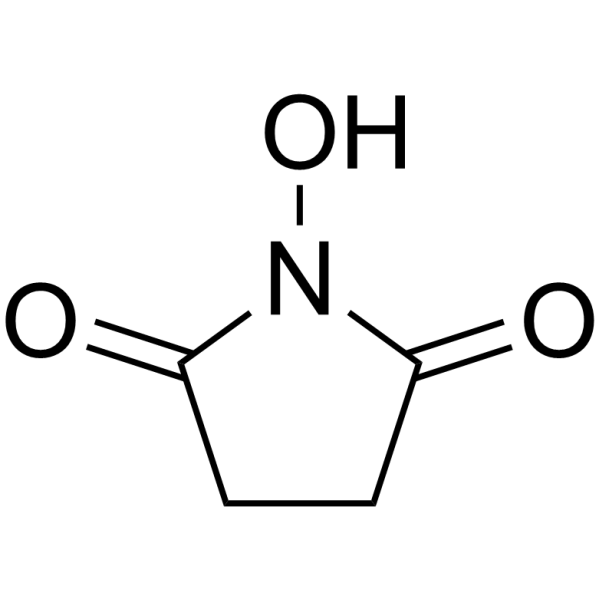
N-Hydroxysuccinimide (HOSu; 1-Hydroxy-2,5-pyrrolidinedione) is a covalent crosslinker commonly used in bioconjugation technology with a primary amine group. N-Hydroxysuccinimide reacts with amino groups (-NH2) to form a stable amide bond, which can modify amino-containing biomolecules. N-Hydroxysuccinimide can be used, for example, for protein labeling with fluorescent dyes and enzymes, surface activation of chromatography supports, microbeads, nanoparticles and microarray slides, and chemical synthesis of peptides. N-Hydroxysuccinimide has a wide range of applications in biomaterial synthesis (such as collagen, chitosan crosslinking), drug delivery systems (such as hydrogel preparation) and tissue engineering .
loading...
    loading...
6
6 Cited Publications
Cat. No.: HY-101884
CAS No.: 576-19-2
Purity:  99.91%
Synonyms: (+)-Biocytin
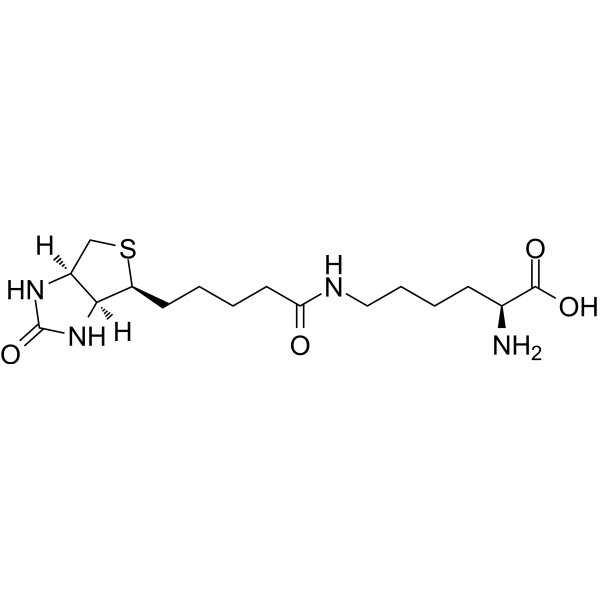
Biocytin is a conjugate of D-biotin and L-lysine, where the carboxylate of D-biotin is coupled with the -amine of L-lysine via a secondary amide bond. Biocytin is a classical neuroanatomical tracer commonly used to map brain connectivity. Biocytin is used as a versatile marker in anterograde, retrograde and intracellular neuroanatomical investigations and in biotinidase assays .
loading...
    loading...
2
2 Cited Publications
Cat. No.: HY-108913
CAS No.: 41906-86-9
Purity:  92.27%
Research Areas:  

Infection

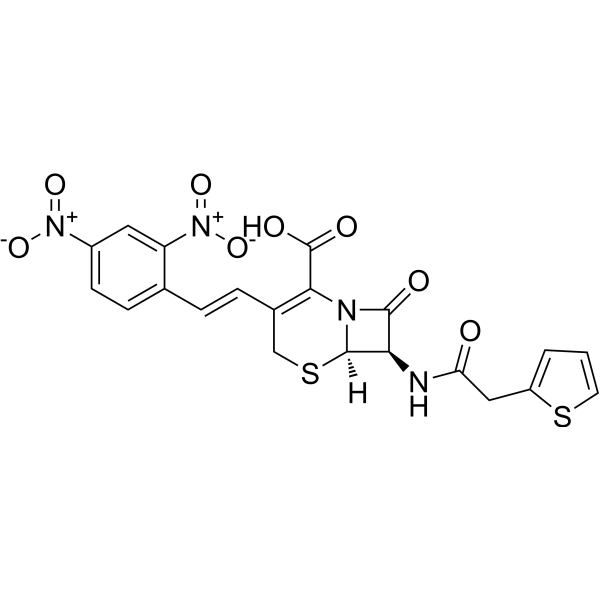
Nitrocefin is a highly activated, chromogenic cephalosporin derivative. Nitrocefin is a chromogenic β-lactamase substrate. Nitrocefin undergoes a distinctive color change from yellow to red as the amide bond in the β-lactam ring is hydrolyzed by β-lactamase. Nitrocefin is used in competitive inhibition studies in developmental work on β-lactamase-resistant antibiotics .
loading...
    loading...
1
1 Cited Publications
Cat. No.: HY-W591461
Target:  

Liposome

Research Areas:  

Cancer

DSPE-PEG-COOH, MW 2000 is a phospholipid polyPEG which can be used to prepare liposomes or nanoparticles. The terminal carboxylic acid can react with primary amine groups to form a stable amide bond.
loading...
    loading...
1
1 Cited Publications
Cat. No.: HY-123275
CAS No.: 64815-81-2
Synonyms: S-2238
Target:  

Thrombin

Research Areas:  

Others

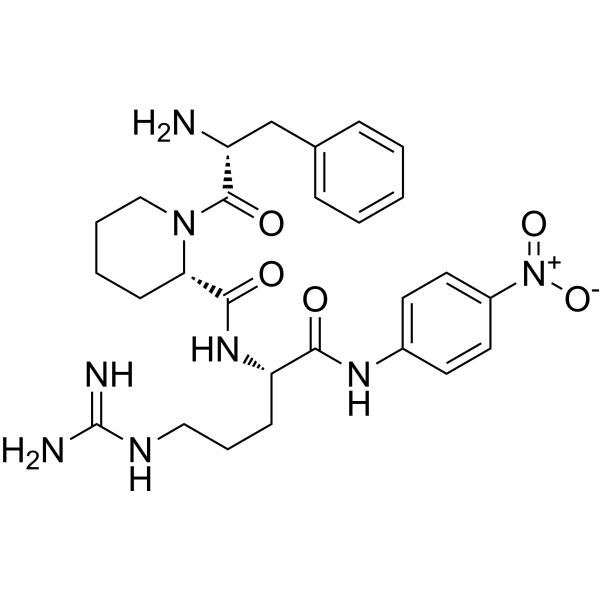
H-D-Phe-Pip-Arg-pNA (S-2238) is a specific chromogenic peptide substrate for thrombin (Thrombin). The amide bond of H-D-Phe-Pip-Arg-pNA is rapidly hydrolyzed by thrombin, producing a characteristic yellow absorbance at 405 nm, and the change in absorbance is proportional to thrombin activity. H-D-Phe-Pip-Arg-pNA can be used in biochemical detection-related studies .
loading...
    loading...
1
1 Cited Publications
Cat. No.: HY-123275A
CAS No.: 160192-34-7
Purity:  99.40%
Synonyms: S-2238 hydrochloride
Target:  

Thrombin

Research Areas:  

Others

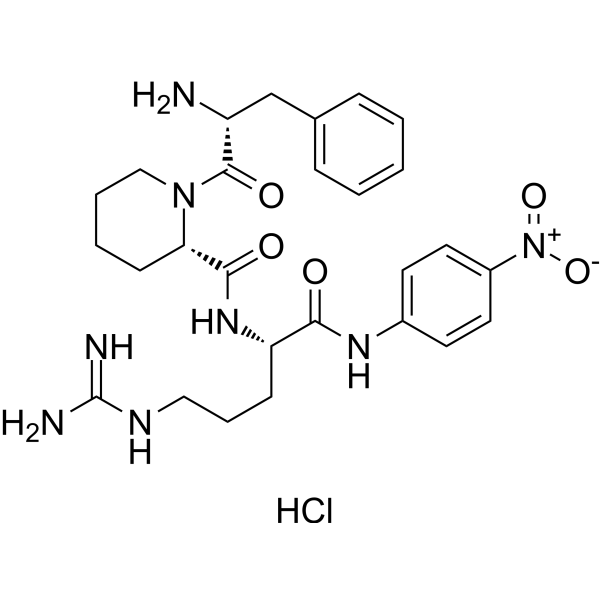
H-D-Phe-Pip-Arg-pNA hydrochloride (S-2238 hydrochloride) is a specific chromogenic peptide substrate for thrombin (Thrombin). The amide bond of H-D-Phe-Pip-Arg-pNA hydrochloride is rapidly hydrolyzed by thrombin, producing a characteristic yellow absorbance at 405 nm, and the change in absorbance is proportional to thrombin activity. H-D-Phe-Pip-Arg-pNA hydrochloride can be used in biochemical detection-related studies .
loading...
    loading...
1
1 Cited Publications
Cat. No.: HY-123275B
CAS No.: 115388-96-0
Purity:  98.90%
Synonyms: S-2238 acetate
Target:  

Thrombin

Research Areas:  

Others

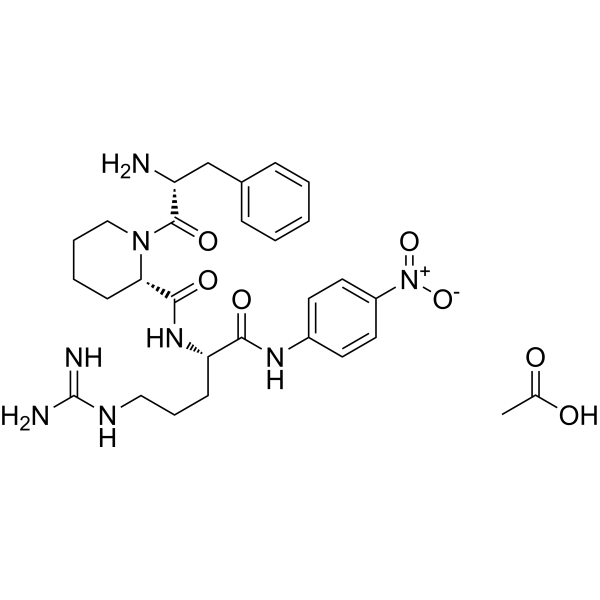
H-D-Phe-Pip-Arg-pNA acetate (S-2238 acetate) is a specific chromogenic peptide substrate for thrombin (Thrombin). The amide bond of H-D-Phe-Pip-Arg-pNA acetate is rapidly hydrolyzed by thrombin, producing a characteristic yellow absorbance at 405 nm, and the change in absorbance is proportional to thrombin activity. H-D-Phe-Pip-Arg-pNA acetate can be used in biochemical detection-related studies .
loading...
    loading...
1
1 Cited Publications
Cat. No.: HY-P1103
CAS No.: 1030384-98-5
Target:  

CXCR

Research Areas:  

Cancer

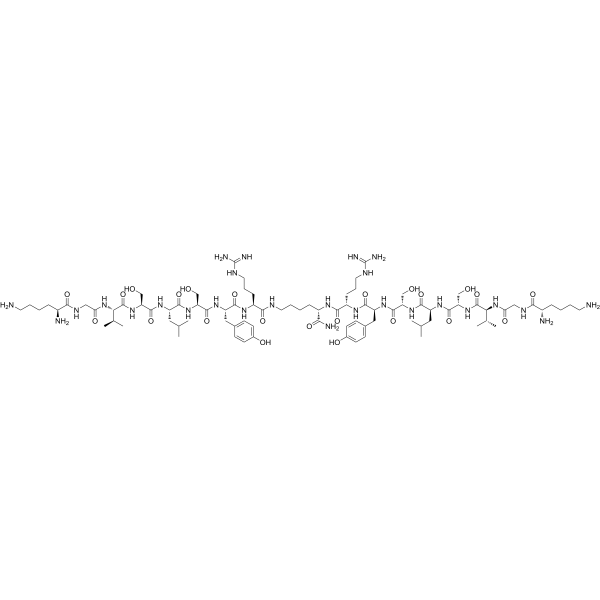
CTCE-9908 is a potent and selective CXCR4 antagonist. CTCE-9908 induces mitotic catastrophe, cytotoxicity and inhibits migration in CXCR4-expressing ovarian cancer cells .
loading...
    loading...
1
1 Cited Publications
Cat. No.: HY-W010712
CAS No.: 109425-51-6
Research Areas:  

Others

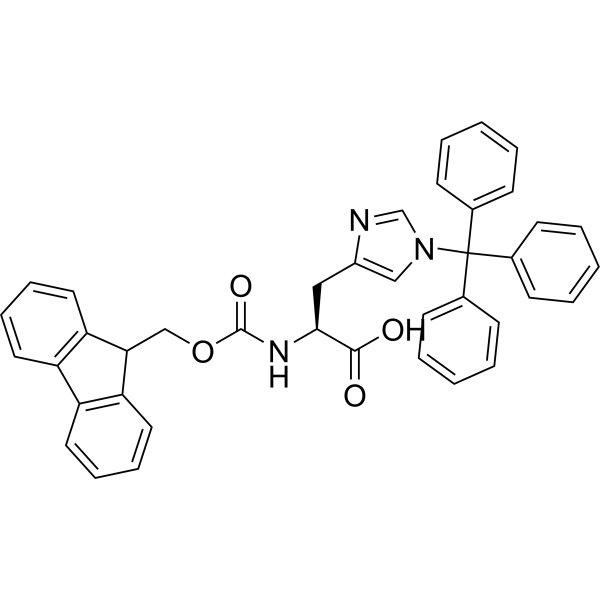
Fmoc-His(Trt)-OH is a histidine derivative with a trityl (Trt) group protecting the His side chain. Fmoc-His(Trt)-OH also has an Fmoc group protecting the α-NH2 group. Fmoc-His(Trt)-OH can be used in solid-phase peptide synthesis to prevent racemization and byproduct formation. Fmoc-His(Trt)-OH acts as a protected histidine precursor in solid-phase peptide synthesis (SPPS), participating in peptide chain construction through amide bond formation. Fmoc-His(Trt)-OH can be precisely incorporated into the target peptide sequence, ensuring correct peptide chain synthesis and reducing impurity formation. Fmoc-His(Trt)-OH is mainly used in the solid-phase synthesis research of pharmaceutical peptides and bioactive peptides, and is particularly suitable for the preparation of peptide drugs requiring precise control of histidine configuration .
loading...
    loading...
Cat. No.: HY-Y0973
CAS No.: 56602-33-6
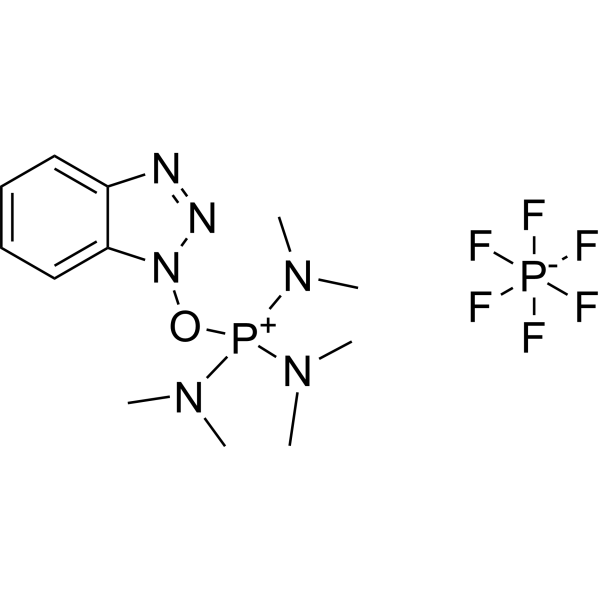
BOP hexafluorophosphate is a phosphonium-type condensing agent. BOP hexafluorophosphate activates the carboxylic acid component to form a highly reactive O-benzotriazole ester (active ester) intermediate, which then reacts with the amino component to form an amide bond (peptide bond). BOP hexafluorophosphate is applicable to solid-phase polypeptide synthesis and nucleoside modification .
loading...
    loading...
Cat. No.: HY-174921A
Maleimide-PEG2000-COOH is a PEG derivative composed of Maleimide (HY-W007324), PEG units and carboxyl (-COOH). Carboxyl can easily form a stable amide bond with amino groups or an ester bond with hydroxyl groups. Maleimide forms a stable thioether bond with sulfhydryl (-SH) .
loading...
    loading...
Cat. No.: HY-W717743
CAS No.: 913528-04-8
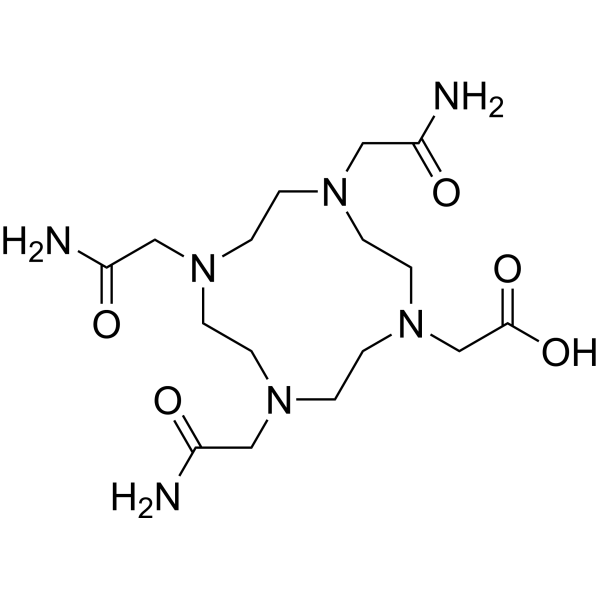
DOTAM-mono-acid is a chelator with DOTAM as its core. DOTAM-mono-acid contains a carboxylic acid group that can be activated to form an amide bond with the N-terminus of a peptide. DOTAM-mono-acid can form peptide conjugates for radiometal labeling .
loading...
    loading...
Cat. No.: HY-101884A
Purity:  99.32%
Research Areas:  

Neurological Disease

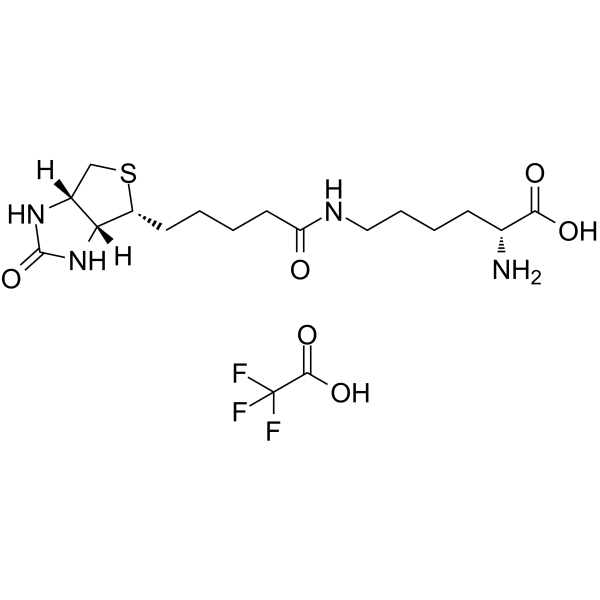
Biotinylated-D-lysine TFA is a conjugate of L-biotin and D-lysine, where the carboxylate of L-biotin is coupled with the ϵ-amine of D-lysine via a secondary amide bond. Biotinylated-D-lysine TFA is an isomer of the neuroanatomical tracer Biocyte.
loading...
    loading...
Cat. No.: HY-D2751
CAS No.: 1178534-61-6
BP Fluor 488 Cadaverine is a carboxyl/carbonyl reactive building block used widely to modify carboxylic groups in the presence of activators (e.g. EDC or DCC) or activated esters (e.g. NHS esters) through a stable amide bond.
loading...
    loading...
Cat. No.: HY-P2498A
Target:  

Cathepsin

Research Areas:  

Cancer

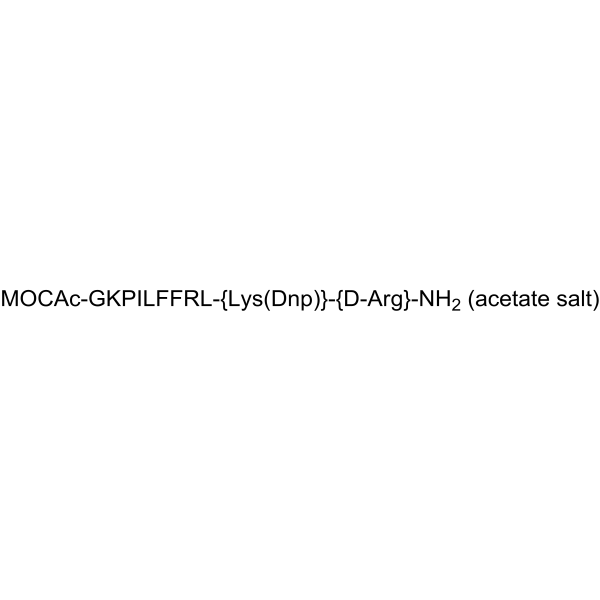
Cathepsin D and E FRET Substrate acetate is a fluorogenic substrate for cathepsins D and E and not for B, H or L. The cleavage occurs at the Phe-Phe amide bond resul. Cathepsin D and E FRET Substrate is a valuable tool for routine assays and for mechanistic studies on cathepsins E and D .
loading...
    loading...
Cat. No.: HY-W440706
Target:  

Liposome

Research Areas:  

Cancer

Cholesterol-PEG2000-alcohol is a pegylated lipids which can be used for preparation of liposome or nanoparticle. The lipophilic moiety can encapsulate hydrophobic drugs whereas the hydrophilic PEG chain helps the overal water solubility of the micelles. The amine can react with an activated NHS ester to form a stable amide bond.
loading...
    loading...
Cat. No.: HY-W1048918A
Synonyms: mPEG5000-COOH
mPEG5000-CM (mPEG5000-COOH) has a reactive carboxyl group (-COOH) attached to the terminal site of the structure, which can form a stable amide bond with the amino group or an ester bond with the hydroxyl group. mPEG5000-CM can be used for drug delivery .
loading...
    loading...
Cat. No.: HY-W1123939C
Silane-PEG5000-COOH can be used to modify proteins, peptides and other materials with active groups. The carboxyl group (-COOH) can easily form a stable amide bond with the amino group, and can also form an ester bond with the hydroxyl group. Silane-functionalized PEG (Silane-PEG-X) can be used to modify glass, silicon, etc .
loading...
    loading...
Cat. No.: HY-W105727
CAS No.: 1120-12-3
Target:  

PROTAC Linkers

Research Areas:  

Cancer

9-Aminononanoic acid can be used as a PROTAC linker and other conjugation in the synthesis of PROTACs. 9-Aminononanoic acid is an alkane chain with terminal carboxlic acid and amine groups. The amino group (NH2) is reactive with carboxylic acids, activated NHS esters, carbonyls (ketone, aldehyde) etc. The terminal carboxylic acid can react with primary amine groups of activated NHS ester to form a stable amide bond.
loading...
    loading...
Cat. No.: HY-W440927
Target:  

Liposome

Research Areas:  

Others

Stearic acid-PEG2000-NHS is an amphiphatic PEG polymer which forms micelles in an aqueous solution for drug-loaded nanoparticles. The NHS ester is reactive with amine to form a stable amide bond. Reagent grade, for research purpose.
loading...
    loading...

