1. Search Result
Search Result
Results for "

amide bond

" in MedChemExpress (MCE) Product Catalog:

189

Inhibitors & Agonists

10

Fluorescent Dyes

81

Biochemical Assay Reagents

11

Peptides

4

Natural
Products

1

Isotope-Labeled Compounds

8

Click Chemistry

8

Oligonucleotides

Targets Recommended:
Cat. No. Product Name Target Research Areas Chemical Structure
  • HY-Y0973

    Biochemical Assay Reagents Drug Intermediate Others
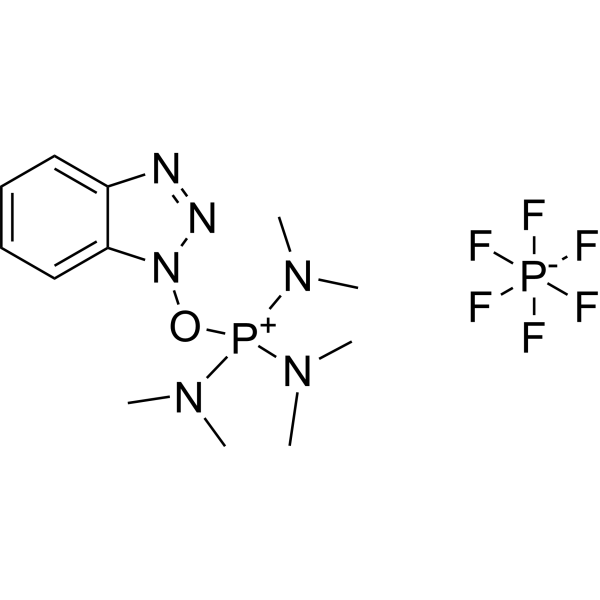
    BOP hexafluorophosphate is a phosphonium-type condensing agent. BOP hexafluorophosphate activates the carboxylic acid component to form a highly reactive O-benzotriazole ester (active ester) intermediate, which then reacts with the amino component to form an amide bond (peptide bond). BOP hexafluorophosphate is applicable to solid-phase polypeptide synthesis and nucleoside modification .
    BOP hexafluorophosphate
  • HY-174921A

    Biochemical Assay Reagents Others
    Maleimide-PEG2000-COOH is a PEG derivative composed of Maleimide (HY-W007324), PEG units and carboxyl (-COOH). Carboxyl can easily form a stable amide bond with amino groups or an ester bond with hydroxyl groups. Maleimide forms a stable thioether bond with sulfhydryl (-SH) .
    Maleimide-PEG2000-COOH
  • HY-W717743

    Biochemical Assay Reagents Radionuclide-Drug Conjugates (RDCs) Others
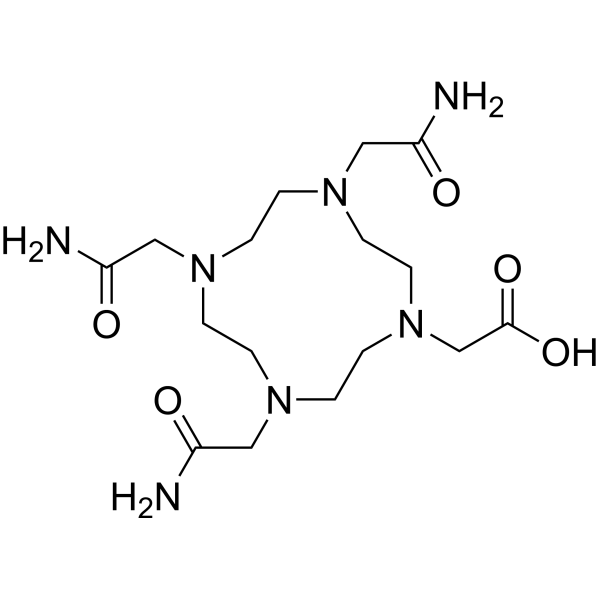
    DOTAM-mono-acid is a chelator with DOTAM as its core. DOTAM-mono-acid contains a carboxylic acid group that can be activated to form an amide bond with the N-terminus of a peptide. DOTAM-mono-acid can form peptide conjugates for radiometal labeling .
    DOTAM-mono-acid
  • HY-W1048918A

    mPEG5000-COOH

    Biochemical Assay Reagents Others
    mPEG5000-CM (mPEG5000-COOH) has a reactive carboxyl group (-COOH) attached to the terminal site of the structure, which can form a stable amide bond with the amino group or an ester bond with the hydroxyl group. mPEG5000-CM can be used for drug delivery .
    mPEG5000-CM
  • HY-W591461
    DSPE-PEG-COOH, MW 2000
    1 Publications Verification

    Liposome Cancer
    DSPE-PEG-COOH, MW 2000 is a phospholipid polyPEG which can be used to prepare liposomes or nanoparticles. The terminal carboxylic acid can react with primary amine groups to form a stable amide bond.
    DSPE-PEG-COOH, MW 2000
  • HY-W1123939C

    Biochemical Assay Reagents Others
    Silane-PEG5000-COOH can be used to modify proteins, peptides and other materials with active groups. The carboxyl group (-COOH) can easily form a stable amide bond with the amino group, and can also form an ester bond with the hydroxyl group. Silane-functionalized PEG (Silane-PEG-X) can be used to modify glass, silicon, etc .
    Silane-PEG5000-COOH
  • HY-P2958

    Biochemical Assay Reagents Metabolic Disease
    Choloylglycine hydrolase is a conjugated bile salt hydrolase that catalyses the hydrolysis of amide bond in conjugated bile acids. Choloylglycine hydrolase is expressed by intestinal microbiota. Choloylglycine hydrolase can be studied in research on type 2 diabetes .
    Choloylglycine hydrolase
  • HY-W1048549A

    HOOC-PEG2000-Thiol

    Biochemical Assay Reagents Others
    HOOC-PEG2000-SH (HOOC-PEG2000-Thiol) is a reactive thiol PEG derivative with a terminal carboxyl group. The carboxyl group can react with amine or hydroxyl groups to form a stable amide bond or an unstable ester bond. The PEG linkage between the thiol and carboxyl groups has good water solubility, flexible linker distance and higher stability .
    HOOC-PEG2000-SH
  • HY-D2751

    Fluorescent Dye Others
    BP Fluor 488 Cadaverine is a carboxyl/carbonyl reactive building block used widely to modify carboxylic groups in the presence of activators (e.g. EDC or DCC) or activated esters (e.g. NHS esters) through a stable amide bond.
    BP Fluor 488 cadaverine
  • HY-101884A

    Biochemical Assay Reagents Neurological Disease
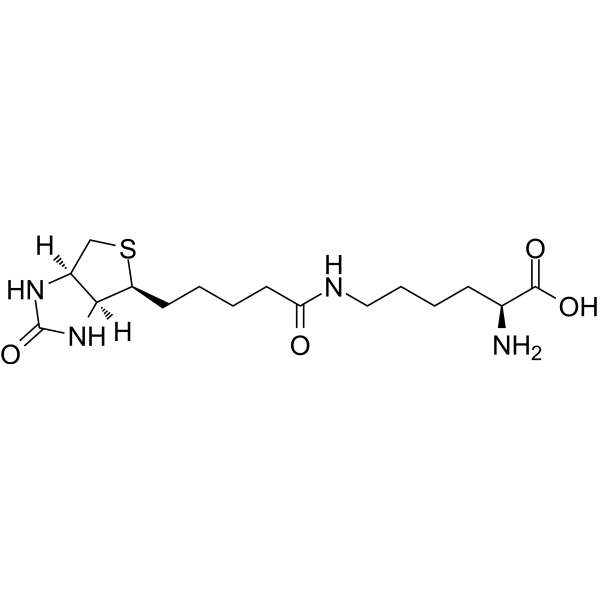
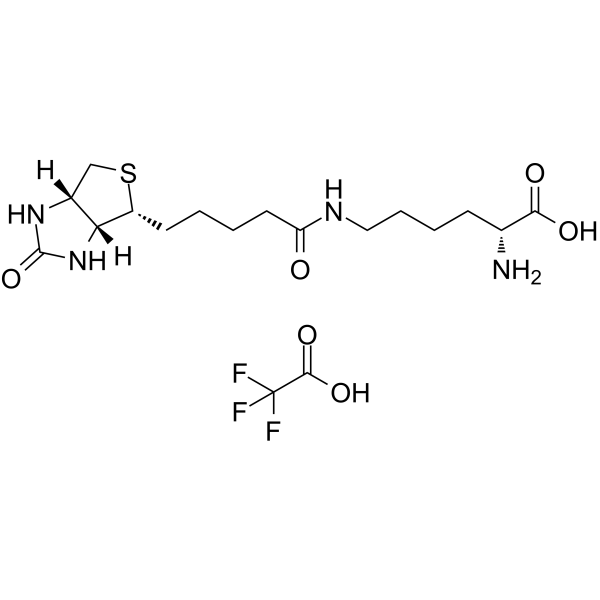
    Biotinylated-D-lysine TFA is a conjugate of L-biotin and D-lysine, where the carboxylate of L-biotin is coupled with the ϵ-amine of D-lysine via a secondary amide bond. Biotinylated-D-lysine TFA is an isomer of the neuroanatomical tracer Biocyte.
    Biotinylated-D-lysine TFA
  • HY-169794

    DNA/RNA Synthesis Others
    N-Palmitoyl-phenylalanine is an N-acyl amide that contains the long-chain saturated fatty acid Palmitic acid (HY-N0830) conjugated via an amide bond to the essential amino acid L-Phenylalanine (HY-N0215). N-Palmitoyl-phenylalanine inhibits pre-mRNA splicing in HeLa cell nuclear lysates (IC50 > 400 μM) but has no splicing activity in intact HeLa cells .
    N-Palmitoyl-phenylalanine
  • HY-P2498A

    Cathepsin Cancer
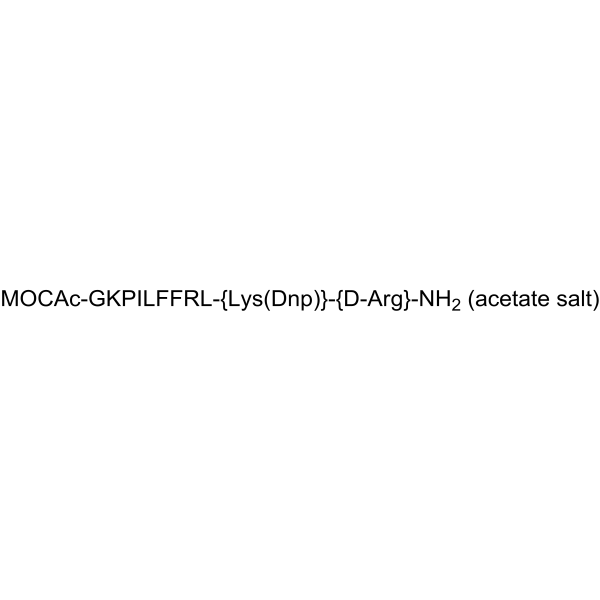
    Cathepsin D and E FRET Substrate acetate is a fluorogenic substrate for cathepsins D and E and not for B, H or L. The cleavage occurs at the Phe-Phe amide bond resul. Cathepsin D and E FRET Substrate is a valuable tool for routine assays and for mechanistic studies on cathepsins E and D .
    Cathepsin D and E FRET Substrate acetate
  • HY-W440706

    Liposome Cancer
    Cholesterol-PEG2000-alcohol is a pegylated lipids which can be used for preparation of liposome or nanoparticle. The lipophilic moiety can encapsulate hydrophobic drugs whereas the hydrophilic PEG chain helps the overal water solubility of the micelles. The amine can react with an activated NHS ester to form a stable amide bond.
    Cholesterol-PEG2000-alcohol
  • HY-W579377

    Drug Intermediate Others
    Sodium pantoate is a biosynthetic intermediate. Sodium pantoate is generated via hydroxymethylation of α-ketoisovalerate followed by reduction. Sodium pantoate combines with β-alanine via an amide bond to form pantothenic acid. Pantothenic acid has important biological significance .
    Pantoic acid sodium
  • HY-P4332

    Fluorescent Dye Ser/Thr Protease Cardiovascular Disease
    Boc-Glu(OBzl)-Ala-Arg-AMC is a fluorogenic substrate for coagulation factor XIa and trypsin. The cleavage of the amide bond between arginine and the methylcoumarin amide group releases fluorescent 7-Amino-4-methylcoumarin (HY-D0027) .
    Boc-Glu(OBzl)-Ala-Arg-AMC
  • HY-W440927

    Liposome Others
    Stearic acid-PEG2000-NHS is an amphiphatic PEG polymer which forms micelles in an aqueous solution for drug-loaded nanoparticles. The NHS ester is reactive with amine to form a stable amide bond. Reagent grade, for research purpose.
    Stearic acid-PEG2000-NHS
  • HY-P2498

    Cathepsin Others
    Cathepsin D and E FRET Substrate is a fluorogenic substrate for cathepsins D and E and not for B, H or L. The cleavage occurs at the Phe-Phe amide bond resul. Cathepsin D and E FRET Substrate is a valuable tool for routine assays and for mechanistic studies on cathepsins E and D .
    Cathepsin D and E FRET Substrate
  • HY-P11325

    Cathepsin Fluorescent Dye Others
    Ac-RR-AFC TFA is a Cathepsin B fluorogenic substrate (Ex=400 nm, Em=505 nm). Cathepsin B activity in cells lysates is determined by measuring cleavage of Ac-RR-AFC TFA and its cleavage occurs at the RR-AFC amide bond. Ac-RR-AFC TFA can be used for activity assays and mechanistic studies on cathepsin B .
    Ac-RR-AFC TFA
  • HY-133883

    Fluorescent Dye Others
    Cyanine7.5 amine is a near-infrared Cy7.5-based dye and also a substrate for amide bond coupling (Ex/Em = 788 nm/808 nm). Cyanine7.5 amine contains a free amino group and can be used for coupling with activated carboxylic acid derivatives .
    Cyanine7.5 amine
  • HY-W1048549C

    HOOC-PEG5000-Thiol

    Biochemical Assay Reagents Others
    HOOC-PEG5000-SH (HOOC-PEG5000-Thiol) is a reactive thiol PEG derivative with a terminal carboxyl group. The carboxyl group can react with amine or hydroxyl groups to form a stable amide bond or an unstable ester bond. The PEG linkage between the thiol and carboxyl groups has good water solubility, flexible linker distance and higher stability .
    HOOC-PEG5000-SH
  • HY-W1048547J

    HOOC-PEG40000-Amine

    PROTAC Linkers Others
    HOOC-PEG40000-NH2 (HOOC-PEG40000-Amine) is a heterobifunctional PEG crosslinker that can be used to attach functional PEG to biomolecules, particles, and other surface materials. The carboxyl group reacts with the amine group to form a stable amide bond. It can also react with the hydroxyl group to form an unstable ester bond. On the other hand, the amine group can be used to react with many amine-reactive groups, such as succinimidyl NHS esters, aldehydes, etc .
    HOOC-PEG40000-NH2
  • HY-137425

    Biochemical Assay Reagents Others
    N-Biotinyl-12-aminododecanoic acid is a compound formed by linking biotin and 12-aminododecanoic acid through an amide bond. N-Biotinyl-12-aminododecanoic acid is used as a biotinylation reagent to test the ligation activity of SimL .
    N-Biotinyl-12-aminododecanoic acid
  • HY-174921B

    Biochemical Assay Reagents Others
    Maleimide-PEG3400-COOH is a PEG derivative composed of Maleimide (HY-W007324), PEG units and carboxyl (-COOH). Carboxyl can easily form a stable amide bond with amino groups or an ester bond with hydroxyl groups. Maleimide forms a stable thioether bond with sulfhydryl (-SH) .
    Maleimide-PEG3400-COOH
  • HY-174921C

    Biochemical Assay Reagents Others
    Maleimide-PEG5000-COOH is a PEG derivative composed of Maleimide (HY-W007324), PEG units and carboxyl (-COOH). Carboxyl can easily form a stable amide bond with amino groups or an ester bond with hydroxyl groups. Maleimide forms a stable thioether bond with sulfhydryl (-SH) .
    Maleimide-PEG5000-COOH
  • HY-174921

    Biochemical Assay Reagents Others
    Maleimide-PEG1000-COOH is a PEG derivative composed of Maleimide (HY-W007324), PEG units and carboxyl (-COOH). Carboxyl can easily form a stable amide bond with amino groups or an ester bond with hydroxyl groups. Maleimide forms a stable thioether bond with sulfhydryl (-SH) .
    Maleimide-PEG1000-COOH
  • HY-P4333

    Fluorescent Dye Cardiovascular Disease
    Boc-Glu(OBzl)-Gly-Arg-AMC is a fluorogenic substrate for factors IXa and XIIa. The cleavage of the amide bond between arginine and the methylcoumarin amide group releases fluorescent 7-Amino-4-methylcoumarin (HY-D0027) .
    Boc-Glu(OBzl)-Gly-Arg-AMC
  • HY-W190951

    Biochemical Assay Reagents Others
    3-((2-(2,2,2-Trifluoroacetamido)ethyl)disulfanyl)propanoic acid is a cleavable linker containing a carboxylic acid. The terminal carboxylic acid can be reacted with primary amine groups in the presence of activators (e.g. EDC, or HATU) to form a stable amide bond. The disulfide bond can be cleaved via reduction reactions.
    3-((2-(2,2,2-Trifluoroacetamido)ethyl)disulfanyl)propanoic acid
  • HY-W1048918

    mPEG1000-COOH

    Biochemical Assay Reagents Others
    mPEG1000-CM (mPEG1000-COOH) has a reactive carboxyl group (-COOH) attached to the terminal site of the structure, which can form a stable amide bond with the amino group or an ester bond with the hydroxyl group. mPEG1000-CM can be used for drug delivery .
    mPEG1000-CM
  • HY-W800683

    Biochemical Assay Reagents Others
    4-Azide-TFP-Amide-SS-Sulfo-NHS consists of an aryl azide, a cleavable disulfide bond, and an NHS ester. The aryl azide can be photo-activated with UV light (250 to 350 nm) for conjugation with biomolecules. Fluoro helps to stabilize the free radical intermediate. The NHS ester reacts with amines. The disulfide bond can be cleaved by reducing agents.
    4-Azide-TFP-amide-SS-Sulfo-NHS
  • HY-134110

    Endogenous Metabolite Metabolic Disease
    Anandamide (AEA) is an endogenous cannabinoid that binds to both central cannabinoid (CB1) and peripheral cannabinoid (CB2) receptors. The biological actions of AEA are terminated by cellular uptake and hydrolysis of the amide bond by the enzyme fatty acid amide hydrolase. Arachidonoyl-N-methyl amide is an analog of anandamide that binds to the human central cannabinoid (CB1) receptor with a Ki of 60 nM. It inhibits rat glial gap junction cell-cell communication 100% at a concentration of 50 μM.
    N-Methylarachidonamide
  • HY-W1123939

    Biochemical Assay Reagents Others
    Silane-PEG-COOH (MW 1000) can be used to modify proteins, peptides and other materials with active groups. The carboxyl group (-COOH) can easily form a stable amide bond with the amino group, and can also form an ester bond with the hydroxyl group. Silane-functionalized PEG (Silane-PEG-X) can be used to modify glass, silicon, etc .
    Silane-PEG-COOH (MW 1000)
  • HY-134055

    Arachidonic acid-N,N-dimethyl amide

    Cannabinoid Receptor Metabolic Disease
    Anandamide (AEA) is an endogenous cannabinoid that binds to both central cannabinoid (CB1) and peripheral cannabinoid (CB2) receptors. The biological actions of AEA are terminated by cellular uptake and hydrolysis of the amide bond by the enzyme fatty acid amide hydrolase. Arachidonoyl-N,N-dimethyl amide is an analog of anandamide that exhibits weak or no binding to the human central cannabinoid (CB1) receptor (Ki >1 μM). It inhibits rat glial gap junction cell-cell communication 100% at a concentration of 50 μM.
    Arachidonoyl-N,N-dimethyl amide
  • HY-D2764

    Fluorescent Dye Others
    Difluorocarboxyfluorescein cadaverine, 5-isomer is a carbonyl reactive building block used to modify carboxylic groups in the presence of activators (e.g. EDC, or DCC) or activated esters (e.g. NHS esters) through a stable amide bond.
    Difluorocarboxyfluorescein cadaverine, 5-isomer
  • HY-W1048549E

    HOOC-PEG20000-Thiol

    Biochemical Assay Reagents Others
    HOOC-PEG20000-SH (HOOC-PEG20000-Thiol) is a reactive thiol PEG derivative with a terminal carboxyl group. The carboxyl group can react with amine or hydroxyl groups to form a stable amide bond or an unstable ester bond. The PEG linkage between the thiol and carboxyl groups has good water solubility, flexible linker distance and higher stability .
    HOOC-PEG20000-SH
  • HY-174364E

    Biochemical Assay Reagents Others
    Alkyne-PEG20000-COOH is a heterobifunctional PEG crosslinker that can be used to attach functional PEG to biomolecules, particles, and other material surfaces. The carboxyl group can react with the amine group to form a stable amide bond .
    Alkyne-PEG20000-COOH
  • HY-174364C

    Biochemical Assay Reagents Others
    Alkyne-PEG5000-COOH is a heterobifunctional PEG crosslinker that can be used to attach functional PEG to biomolecules, particles, and other material surfaces. The carboxyl group can react with the amine group to form a stable amide bond .
    Alkyne-PEG5000-COOH
  • HY-155070

    DNA/RNA Synthesis Apoptosis Cancer
    SRE-II, an amide derivative, is an activatable photosensitizer for photodynamic cancer research with decreased fluorescence and photosensitizing capabilities. SRE-II can be further converted into the active photosensitizer SDU Red via carboxylesterase-catalyzed amide bond cleavage. SRE-II induces DNA damage and cell apoptosis in the presence of light. SRE-II can act as a promising theranostic agent for triple-negative breast cancer .
    SRE-II
  • HY-116833

    Drug Derivative Metabolic Disease
    4-Chloro-3,5-dimethylphenoxyacetic acid (compound 602 UC) is a product of masked amide bond hydrolysis of auxin analog 602 (compound 602). Auxin can effectively stimulate hypocotyl growth in wild-type seedlings .
    4-Chloro-3,5-dimethylphenoxyacetic acid
  • HY-W800825

    Liposome Cancer
    Octadecanedioic Acid Mono-L-carnitine ester is a cationic lipid which may be used in combination with other lipids in the formation of lipid nanoparticles (LNPs). Its terminal carboxylic acid can react with primary amine groups in the presence of activators (e.g. HATU) to form a stable amide bond.
    Octadecanedioic acid mono-L-carnitine ester
  • HY-W888710D

    Folate-PEG2000-COOH

    Biochemical Assay Reagents Others
    FA-PEG2000-COOH (Folate-PEG2000-COOH) is a Folic acid (HY-16637)-modified PEG derivative containing a carboxyl group (-COOH). The carboxyl group can easily form a stable amide bond with an amino group, or an ester bond with a hydroxyl group. Folic acid (-FA) has a high affinity for the folate receptor and can be used to target cell membrane receptors for drug delivery .
    FA-PEG2000-COOH
  • HY-W888710E

    Folate-PEG3400-COOH

    Biochemical Assay Reagents Others
    FA-PEG3400-COOH (Folate-PEG3400-COOH) is a Folic acid (HY-16637)-modified PEG derivative containing a carboxyl group (-COOH). The carboxyl group can easily form a stable amide bond with an amino group, or an ester bond with a hydroxyl group. Folic acid (-FA) has a high affinity for the folate receptor and can be used to target cell membrane receptors for drug delivery .
    FA-PEG3400-COOH
  • HY-W190752

    Biochemical Assay Reagents Others
    m-PEG13-acid is a PEG linker containing a terminal carboxylic acid. The terminal carboxylic acid can react with primary amine groups in the presence of activators (e.g. EDC, or HATU) to form a stable amide bond. The hydrophilic PEG spacer increases solubility in aqueous media.
    m-PEG13-acid
  • HY-W800676

    Biochemical Assay Reagents Others
    DBCO-N-bis(PEG4-acid) is a branched click chemistry reagent. The DBCO group enables copper-free Click Chemistry reactions. carboxylic acid groups allows for reactions with primary amine groups using activators such as EDC or HATU to form a stable amide bond.
    DBCO-N-bis(PEG4-acid)
  • HY-W800632

    Biochemical Assay Reagents Others
    4-Azide-TFP-Amide-SS-propionic acid contains an aryl azide, a cleavable disulfide bond, and a carboxylic acid. The aryl azide can be photo-activated with UV light (250 to 350 nm) for conjugation with biomolecules. Fluoro helps to stabilize the free radical intermediate. The carboxylic acid can be reacted with amines in the presence of an activator to form an amide bond. The disulfide bond can be cleaved via reducing agents.
    4-Azide-TFP-amide-SS-propionic acid
  • HY-W800648

    Biochemical Assay Reagents Others
    Mal-PEG2-Amide is a PEG linker with a maleimide group which can react with a thiol group to form a covalent bond, enabling the connection of biomolecule with a thiol.
    Mal-PEG2-amide
  • HY-174904

    Biochemical Assay Reagents Others
    Dde Biotin-PEG4-COOH is a PEG derivative composed of Biotin, 5 PEG units, and a carboxyl group (-COOH). Biotin can form a stable non-covalent bond with streptavidin. The carboxyl group can easily form a stable amide bond with the amino group, and can also form an ester bond with the hydroxyl group.
    Dde Biotin-PEG4-COOH
  • HY-W190916

    Biochemical Assay Reagents Others
    3-[[2-[(4-azidobenzoyl)amino]ethyl]dithio]propanoicacid contains an aryl azide, a cleavable disulfide bond, and a carboxylic acid. The aryl azide can be photo-activated with UV light (250 to 350 nm) for conjugation with biomolecules. The carboxylic acid can be reacted with amines in the presence of an activator to form an amide bond. The disulfide bond can be cleaved via reducing agents.
    3-((2-(4-Azidobenzamido)ethyl)disulfanyl)propanoic acid
  • HY-W700975

    Biochemical Assay Reagents Others
    12-Ketostearic acid sodium is a synthetic membrane probe that binds to the hydrophobic regions in lipid bilayer membranes. The terminal carboxylic acid can react with primary amine groups to form a stable amide bond.
    12-Ketostearic acid sodium
  • HY-W1048918B

    mPEG10000-COOH

    Biochemical Assay Reagents Others
    mPEG10000-CM (mPEG10000-COOH) has a reactive carboxyl group (-COOH) attached to the terminal site of the structure, which can form a stable amide bond with the amino group or an ester bond with the hydroxyl group. mPEG10000-CM can be used for drug delivery .
    mPEG10000-CM
  • HY-W1048918D

    mPEG40000-COOH

    Biochemical Assay Reagents Others
    mPEG40000-CM (mPEG40000-COOH) has a reactive carboxyl group (-COOH) attached to the terminal site of the structure, which can form a stable amide bond with the amino group or an ester bond with the hydroxyl group. mPEG40000-CM can be used for drug delivery .
    mPEG40000-CM

Inquiry Online

Your information is safe with us. * Required Fields.

Salutation


Country or Region *

Applicant Name *


Organization Name *

Department *


Email Address *


Product Name *

Cat. No.


Requested quantity *

Phone Number *


Remarks

Inquiry Online

Inquiry Information

Product Name:
Cat. No.:
Quantity:
MCE Japan Authorized Agent:

