Search Result
Results for "
antitussive activity
" in MedChemExpress (MCE) Product Catalog:
2
Biochemical Assay Reagents
1
Isotope-Labeled Compounds
| Cat. No. |
Product Name |
Target |
Research Areas |
Chemical Structure |
-
- HY-13716
-
|
(S,R)-Noscapine
|
Opioid Receptor
Apoptosis
|
Neurological Disease
Inflammation/Immunology
Cancer
|
|
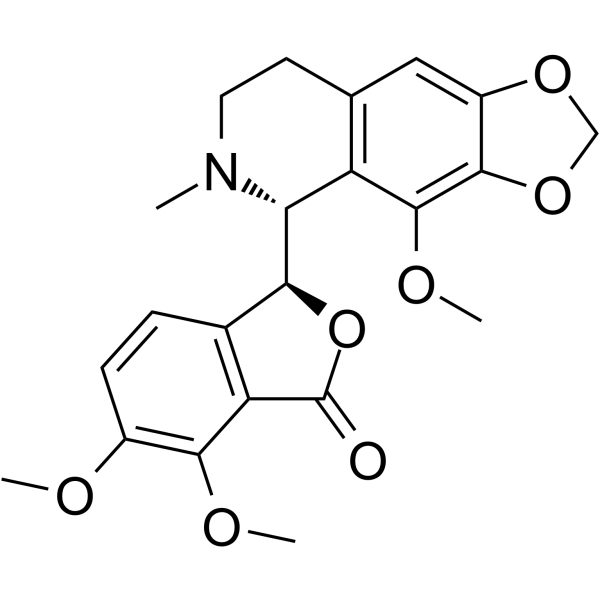
Noscapine ((S,R)-Noscapine) is an orally active phthalideisoquinoline alkaloid with potent antitussive. Noscapine exerts its antitussive effects by activating sigma opioid receptors and is a non-competitive Bradykinin inhibitor. Noscapine disrupts microtubule dynamics, induces mitotic arrest and apoptosis. Noscapine possesses anticancer, neuroprotective, anti-inflammatory activities, and can cross the blood-brain barrier .
|
-
-
- HY-N0808
-
-
-
- HY-B1551
-
|
Benzononatine
|
Sodium Channel
|
Neurological Disease
|
|
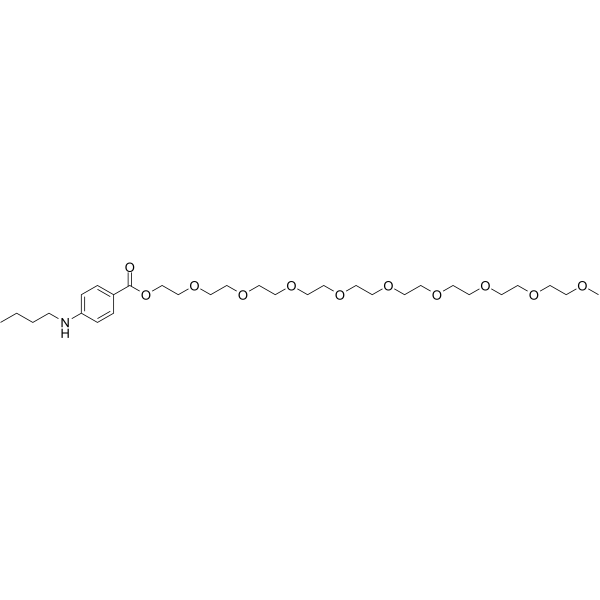
Benzonatate (Benzononatine) is an orally active and non-narcotic peripheral antitussive agent. Benzonatate is a reversible voltage-gated Na + channels inhibitor. Benzonatate dampens the activity of cough stretch receptors .
|
-
-
- HY-N1255
-
|
(-)-Scoulerine; Discretamine
|
Bcl-2 Family
Apoptosis
mTOR
GABA Receptor
PI3K
Adrenergic Receptor
Beta-secretase
Akt
|
Cancer
|
|
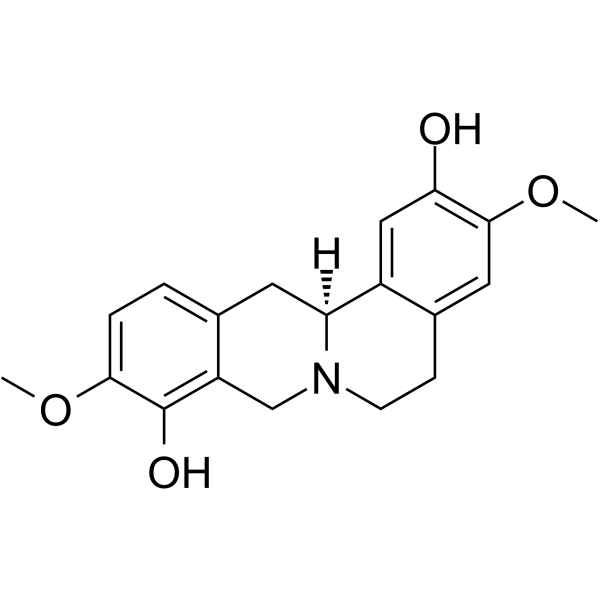
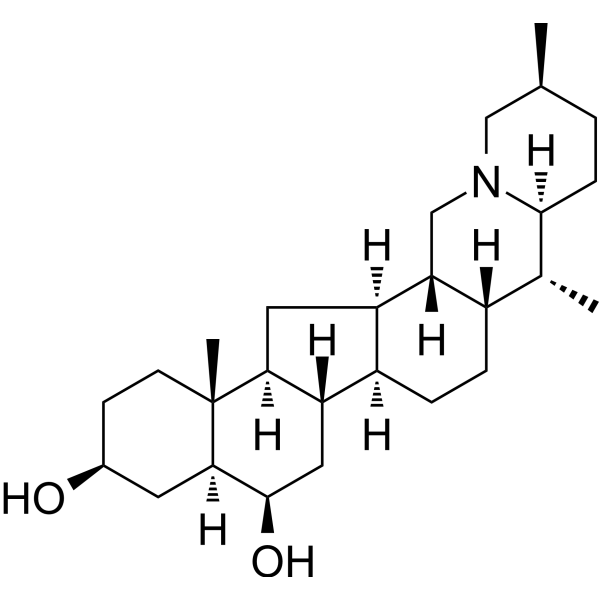
Scoulerine ((-)-Scoulerine; Discretamine) hydrochloride is a multi-target inhibitor with anti-tumor and antioxidant activities. Scoulerine mainly targets the PI3K/Akt/mTOR signaling axis and α1D-adrenergic receptor, disrupts microtubule structure, and induces cell cycle arrest and apoptosis. Scoulerine effectively inhibits mitochondrial dehydrogenase activity, targets GABA receptors and BACE1, and suppresses the proliferation, migration, invasion, epithelial-mesenchymal transition and stem cell properties of cancer cells. Scoulerine also exhibits multiple pharmacological activities including anti-Plasmodium falciparum, antibacterial, antiemetic and antitussive effects, and regulates endoplasmic reticulum stress and mitochondrial function (modulates Bax, Bcl-2 and cytochrome c). Scoulerine is applicable to research related to leukemia, ovarian cancer, and colorectal cancer .
|
-
-
- HY-13716A
-
|
(S,R)-Noscapine hydrochloride
|
Opioid Receptor
Apoptosis
|
Neurological Disease
Inflammation/Immunology
Cancer
|
|
Noscapine ((S,R)-Noscapine) hydrochloride is an orally active phthalideisoquinoline alkaloid with potent antitussive. Noscapine hydrochloride exerts its antitussive effects by activating sigma opioid receptors and is a non-competitive Bradykinin inhibitor. Noscapine hydrochloride disrupts microtubule dynamics, induces mitotic arrest and apoptosis. Noscapine hydrochloride possesses anticancer, neuroprotective, anti-inflammatory activities, and can crosse the blood-brain barrier .
|
-
-
- HY-N1377
-
-
-
- HY-N0829
-
|
|
Others
|
Inflammation/Immunology
|
|
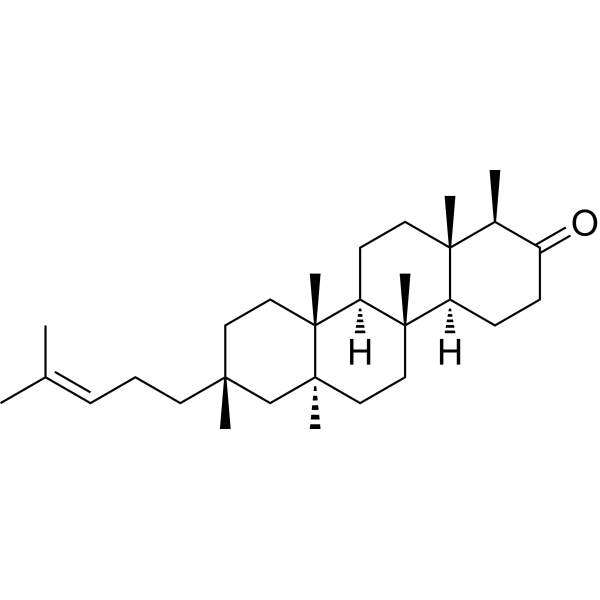
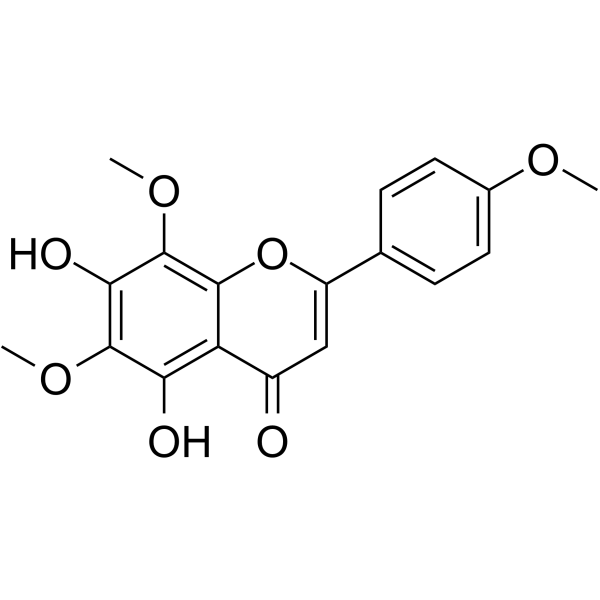
Shionone is the major triterpenoid isolated from Aster tataricus, has anti-tussive, anti-inflammatory activities . Shionone possesses a unique six-membered tetracyclic skeleton and 3-oxo-4-monomethyl structure .
|
-
-
- HY-118545
-
|
|
STAT
|
Inflammation/Immunology
Cancer
|
|
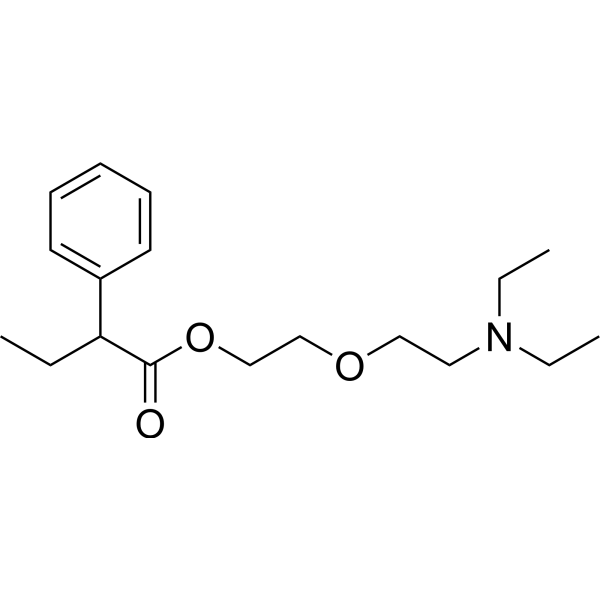
Butamirate is an orally active antitussive agent that acts centrally through the receptors in the brainstem. Butamirate also reduces the resistance in the airways by inhibiting bronchospasm and anti-inflammatory effect. Butamirate inhibits glioblastoma (GBM) growth and STAT3 activity. Butamirate can be used for the study of glioblastoma .
|
-
-
- HY-B1032
-
|
(±)-Dropropizine; UCB-196
|
Histamine Receptor
|
Neurological Disease
|
|
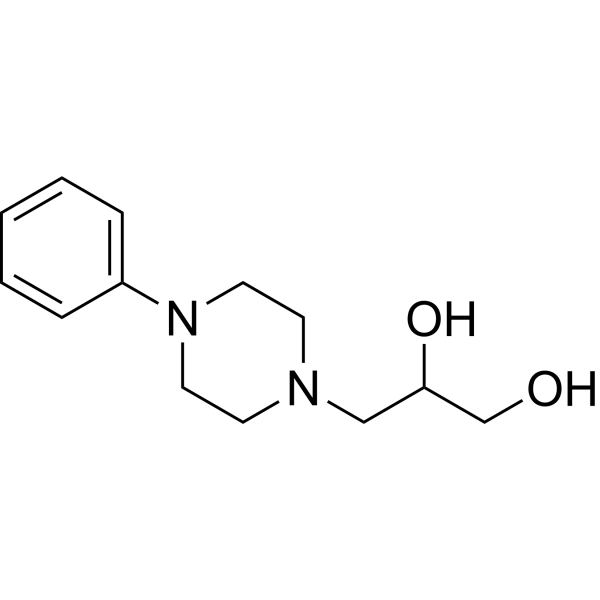
Dropropizine ((±)-Dropropizine; UCB-196) is an orally effective, peripherally selective antitussive that inhibits the activity of peripheral receptors and afferent nerves in the respiratory tract. Dropropizine acts on the cough reflex pathway, does not pass the blood-brain barrier, and has no central nervous system side effects. Dropropizine mainly regulates the level of sensory neuropeptides and inhibits the afferent signal transmission of the cough reflex, thereby alleviating the symptoms of dry cough, and has both mild local anesthetic and antihistamine activity. Dropropizine is mainly used for symptomatic research on dry cough caused by respiratory diseases .
|
-
-
- HY-18060
-
|
TC-5619
|
nAChR
|
Neurological Disease
|
|
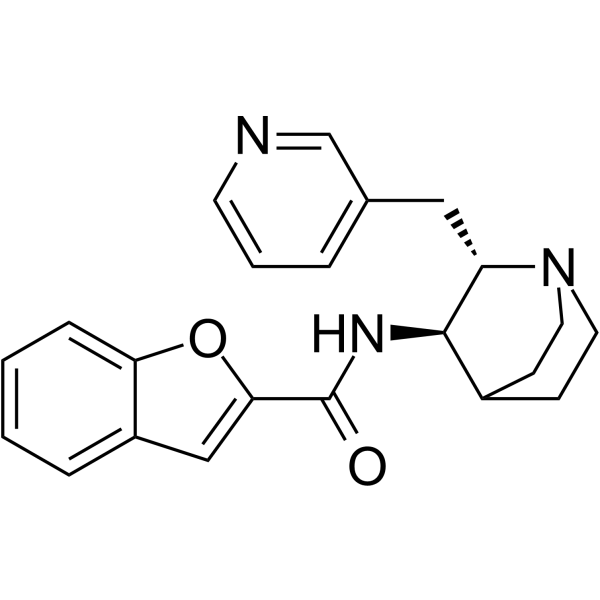
Bradanicline (TC-5619) is an orally active agonist of α7 nAChR with moderate blood-brain barrier penetration. Bradanicline exhibits high affinity and subtype selectivity for human α7 nAChR. Bradanicline possesses antitussive activity that depends on sustained receptor binding and activation. Bradanicline requires systemic administration to dose-dependently inhibit cough induced by citric acid, bradykinin and inhaled nicotine. Bradanicline is well tolerated in preclinical studies and is widely used in research related to chronic refractory cough .
|
-
-
- HY-118545A
-
|
|
STAT
|
Inflammation/Immunology
Cancer
|
|
Butamirate citrate is an orally active antitussive agent that acts centrally through the receptors in the brainstem. Butamirate citrate also reduces the resistance in the airways by inhibiting bronchospasm and anti-inflammatory effect. Butamirate citrate inhibits glioblastoma (GBM) growth and STAT3 activity. Butamirate citrate can be used for the study of glioblastoma .
|
-
-
- HY-N0413
-
-
-
- HY-N0808R
-
|
(±)-Camphor (Standard)
|
Reference Standards
TRP Channel
Influenza Virus
|
Infection
Inflammation/Immunology
Cancer
|
|
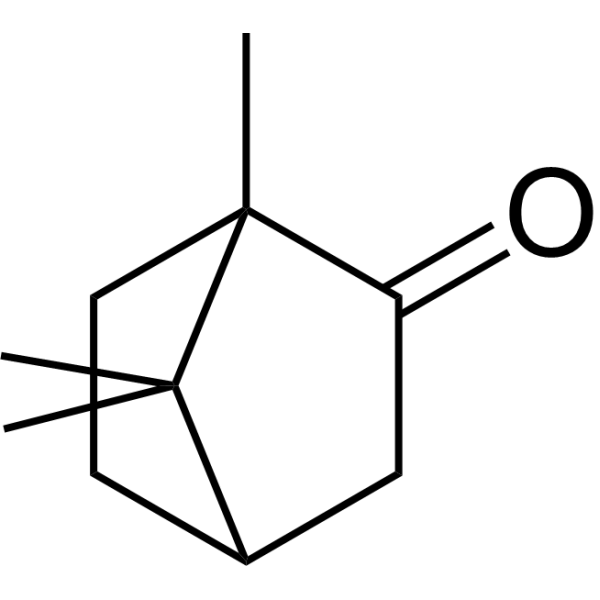
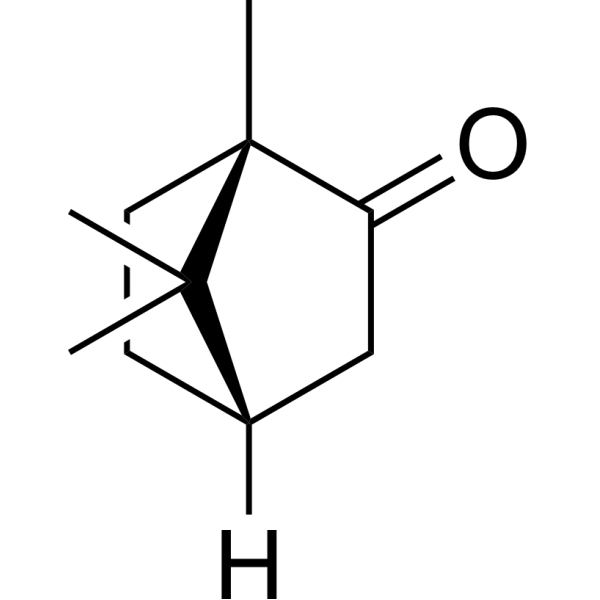
Camphor (Standard) is the analytical standard of Camphor. This product is intended for research and analytical applications. Camphor ((±)-Camphor) is a topical anti-infective and anti-pruritic and internally as a stimulant and carminative. However, Camphor is poisonous when ingested. Antiviral, antitussive, and anticancer activities . Camphor is a TRPV3 agonist .
|
-
-
- HY-B2090
-
|
SKF 70230A; SQ 15874; Pipazetate
|
GABA Receptor
|
Others
|
|
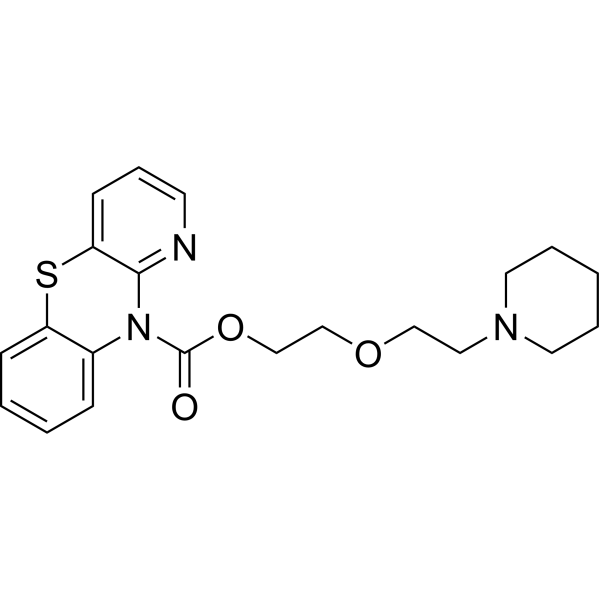
Pipazethate (SKF 70230A), a pyridobenzothiazine derivative, is a potent GABA antagonist. Pipazethate has antitussive activity. Pipazethate can be used in research in cough supressant .
|
-
-
- HY-118545AR
-
|
|
Reference Standards
STAT
|
Inflammation/Immunology
Cancer
|
|
Butamirate citrate (Standard) is the analytical standard of Butamirate citrate (HY-118545A). This product is intended for research and analytical applications. Butamirate citrate is an orally active antitussive agent that acts centrally through the receptors in the brainstem. Butamirate citrate also reduces the resistance in the airways by inhibiting bronchospasm and anti-inflammatory effect. Butamirate citrate inhibits glioblastoma (GBM) growth and STAT3 activity. Butamirate citrate can be used for the study of glioblastoma .
|
-
-
- HY-W742300
-
|
SKF 70230A hydrochloride; SQ 15874 hydrochloride; Pipazetate hydrochloride
|
GABA Receptor
|
Inflammation/Immunology
|
|
Pipazethate (SKF 70230A; SQ 15874) hydrochloride is a potent GABA antagonist. Pipazethate hydrochloride shows antitussive activity and can be used in research in cough suppressant .
|
-
-
- HY-N3945R
-
|
O,O-Dimethylisoboldine (Standard); S-(+)-Glaucine (Standard); NSC 34396 (Standard)
|
Reference Standards
Phosphodiesterase (PDE)
Calcium Channel
Adrenergic Receptor
Dopamine Receptor
Influenza Virus
|
Infection
Inflammation/Immunology
|
|
Glaucine (Standard) is the analytical standard of Glaucine. This product is intended for research and analytical applications. Glaucine (O,O-Dimethylisoboldine) is an alkaloid isolated from Glaucium flavum with antitussive, bronchodilation and anti-inflammatory properties. Glaucine is a selective and orally active phosphodiesterase 4 (PDE4) inhibitor with Kis of 3.4 μM in human bronchus and polymorphonuclear leukocytes. Glaucine is also a non-selective α-adrenoceptor antagonist, a Ca2+ entry blocker, and a weak dopamine D1 and D2 receptor antagonist. Glaucine has antioxidative and antiviral activities .
|
-
-
- HY-121644
-
-
-
- HY-N3197
-
|
(+)-Neostenine
|
P-glycoprotein
|
Cancer
|
|
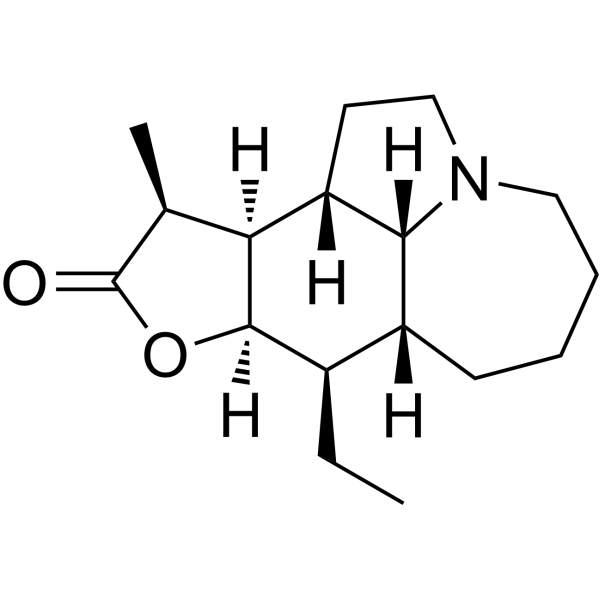
Neostenine is a stenine-type Stemona alkaloid, with antitussive activity. Neostenine is also a substrate of P-glycoprotein with high absorptive permeability in Caco-2 monolayer model. Neostenine also shows oral activity for intestinal application .
|
-
-
- HY-114723
-
|
|
DNA/RNA Synthesis
|
Others
|
|
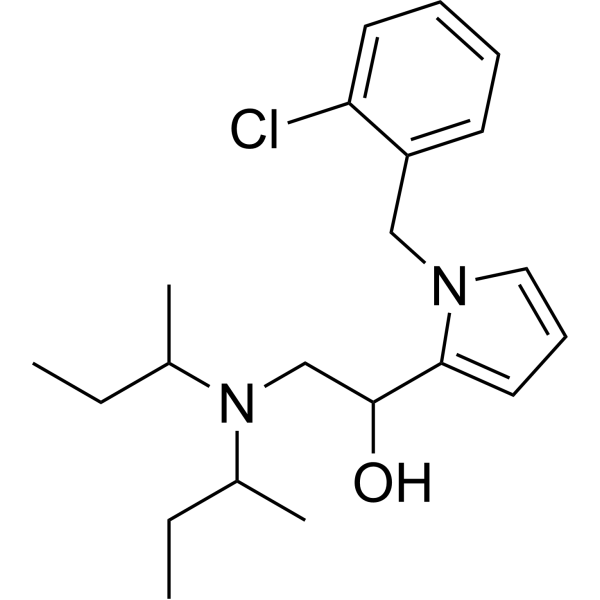
NPD9948 is an antitussive agent with antitussive activity in a guinea pig antitussive test. Its half antitussive dose (AtD50) is 14.5 mg/kg and 22.6 mg/kg when injected intraperitoneally and orally, respectively.
|
-
-
- HY-N3163
-
-
-
- HY-106873A
-
|
|
Drug Derivative
|
Others
|
|
Nepinalone hydrochloride, an alchilaminate derivative of β-tetralone and an orally active cough suppressant, possesses a non-opioid antitussive activity .
|
-
-
- HY-106873
-
|
|
Drug Derivative
|
Others
|
|
Nepinalone, an alchilaminate derivative of β-tetralone and an orally active cough suppressant, possesses a non-opioid antitussive activity .
|
-
-
- HY-134006
-
-
-
- HY-W354753
-
|
|
mAChR
|
Others
|
|
Homatropine hydrochloride is an orally active anticholinergic agent that rapidly dilates pupils and has cycloplegic effects. Homatropine hydrochloride also has antitussive activity. Homatropine hydrochloride can be used in research on eye diseases and coughs .
|
-
-
- HY-13716R
-
|
(S,R)-Noscapine (Standard)
|
Reference Standards
Opioid Receptor
Apoptosis
|
Neurological Disease
Inflammation/Immunology
Cancer
|
|
Noscapine (Standard) is the analytical standard of Noscapine. This product is intended for research and analytical applications. Noscapine ((S,R)-Noscapine) is an orally active phthalideisoquinoline alkaloid with potent antitussive. Noscapine exerts its antitussive effects by activating sigma opioid receptors and is a non-competitive Bradykinin inhibitor. Noscapine disrupts microtubule dynamics, induces mitotic arrest and apoptosis. Noscapine possesses anticancer, neuroprotective, anti-inflammatory activities, and can cross the blood-brain barrier [4] .
|
-
-
- HY-13716S
-
|
|
Isotope-Labeled Compounds
Apoptosis
Opioid Receptor
|
Cancer
|
|
Noscapine- 13C,d3 is a 13C- labeled and deuterated labeled Noscapine . Noscapine ((S,R)-Noscapine) is an orally active phthalideisoquinoline alkaloid with potent antitussive. Noscapine exerts its antitussive effects by activating sigma opioid receptors and is a non-competitive Bradykinin inhibitor. Noscapine disrupts microtubule dynamics, induces mitotic arrest and apoptosis. Noscapine possesses anticancer, neuroprotective, anti-inflammatory activities, and can cross the blood-brain barrier .
|
-
-
- HY-B0535R
-
|
|
Reference Standards
Bacterial
Antibiotic
|
Infection
|
|
Homatropine (hydrochloride) (Standard) is the analytical standard of Homatropine (hydrochloride). This product is intended for research and analytical applications. Homatropine hydrochloride is an orally active anticholinergic agent that rapidly dilates pupils and has cycloplegic effects. Homatropine hydrochloride also has antitussive activity. Homatropine hydrochloride can be used in research on eye diseases and coughs .
|
-
-
- HY-W354753R
-
|
|
mAChR
Reference Standards
|
Others
|
|
Homatropine (hydrochloride) (Standard) is the analytical standard of Homatropine (hydrochloride). This product is intended for research and analytical applications. Homatropine hydrochloride is an orally active anticholinergic agent that rapidly dilates pupils and has cycloplegic effects. Homatropine hydrochloride also has antitussive activity. Homatropine hydrochloride can be used in research on eye diseases and coughs .
|
-
-
- HY-B1551R
-
|
Benzononatine (Standard)
|
Reference Standards
Sodium Channel
|
Neurological Disease
|
|
Benzonatate (Standard) (Benzononatine (Standard)) is the analytical standard of Benzonatate (HY-B155). This product is intended for research and analytical applications. Benzonatate (Benzononatine) is an orally active and non-narcotic peripheral antitussive agent. Benzonatate is a reversible voltage-gated Na + channels inhibitor. Benzonatate dampens the activity of cough stretch receptors.
|
-
-
- HY-N0829R
-
|
|
Reference Standards
Others
|
Inflammation/Immunology
|
|
Shionone (Standard) is the analytical standard of Shionone. This product is intended for research and analytical applications. Shionone is the major triterpenoid isolated from Aster tataricus, has anti-tussive, anti-inflammatory activities . Shionone possesses a unique six-membered tetracyclic skeleton and 3-oxo-4-monomethyl structure .
|
-
-
- HY-N0413R
-
-
-
- HY-18060A
-
|
TC-5619 hydrochloride
|
nAChR
|
Neurological Disease
|
|
Bradanicline (TC-5619) tosylate is an orally active agonist of α7 nAChR with moderate blood-brain barrier penetration. Bradanicline hydrochloride exhibits high affinity and subtype selectivity for human α7 nAChR. Bradanicline hydrochloride possesses antitussive activity that depends on sustained receptor binding and activation. Bradanicline hydrochloride requires systemic administration to dose-dependently inhibit cough induced by citric acid, bradykinin and inhaled nicotine. Bradanicline hydrochloride is well tolerated in preclinical studies and is widely used in research related to chronic refractory cough .
|
-
-
- HY-N1377R
-
|
Lysionotin (Standard)
|
Carboxylesterase (CES)
Reference Standards
DNA/RNA Synthesis
Apoptosis
Bacterial
|
Infection
Metabolic Disease
Inflammation/Immunology
Endocrinology
Cancer
|
|
Nevadensin (Standard) (Lysionotin (Standard)) is the analytical standard of Nevadensin (HY-N1377). This product is intended for research and analytical applications. Nevadensin, a natural flavonoid, is a selective human carboxylesterase 1 (hCE1) inhibitor with an IC50 of 2.64 μM. Nevadensin is more selective for hCE1 than hCE2 (IC50 of 132.8 μM). Nevadensin can induce apoptosis and DNA damage in cancer cells. Nevadensin has a variety of pharmacological effects such as anti-inflammatory, anti-tumour, anti-hypertensive, anti-tubercular, antitussive, antioxidant and anti-microbial activities.
|
-
-
- HY-49864
-
-
-
- HY-N16978
-
|
|
Others
|
Inflammation/Immunology
|
|
Tuberospironine A is a Stemona alkaloid compound; a series of Stemona alkaloids often exhibit pharmacological activities such as antitussive effects. Tuberospironine A can be naturally extracted from the dried roots of Stemona tuberosa Lour., which grows in Indonesia .
|
-
-
- HY-106873AR
-
|
|
Drug Derivative
Reference Standards
|
Others
|
|
Nepinalone hydrochloride (Standard) is the analytical standard of Nepinalone (hydrochloride) (HY-106873A). This product is intended for research and analytical applications. Nepinalone hydrochloride, an alchilaminate derivative of β-tetralone and an orally active cough suppressant, possesses a non-opioid antitussive activity .
|
-
-
- HY-18060B
-
|
TC-5619 tosylate
|
nAChR
|
Inflammation/Immunology
|
|
Bradanicline (TC-5619) tosylate is an orally active agonist of α7 nAChR with moderate blood-brain barrier penetration. Bradanicline tosylate exhibits high affinity and subtype selectivity for human α7 nAChR. Bradanicline tosylate possesses antitussive activity that depends on sustained receptor binding and activation. Bradanicline tosylate requires systemic administration to dose-dependently inhibit cough induced by citric acid, bradykinin and inhaled nicotine. Bradanicline tosylate is well tolerated in preclinical studies and is widely used in research related to chronic refractory cough .
|
-
-
- HY-N1255A
-
|
(-)-Scoulerine hydrochloride; Discretamine hydrochloride
|
Apoptosis
PI3K
Akt
mTOR
Adrenergic Receptor
GABA Receptor
Beta-secretase
Bcl-2 Family
|
Cancer
|
|
Scoulerine ((-)-Scoulerine; Discretamine) hydrochloride is a multi-target inhibitor with anti-tumor and antioxidant activities. Scoulerine hydrochloride mainly targets the PI3K/Akt/mTOR signaling axis and α1D-adrenergic receptor, disrupts microtubule structure, and induces cell cycle arrest and apoptosis. Scoulerine hydrochloride effectively inhibits mitochondrial dehydrogenase activity, targets GABA receptors and BACE1, and suppresses the proliferation, migration, invasion, epithelial-mesenchymal transition and stem cell properties of cancer cells. Scoulerine hydrochloride also exhibits multiple pharmacological activities including anti-Plasmodium falciparum, antibacterial, antiemetic and antitussive effects, and regulates endoplasmic reticulum stress and mitochondrial function (modulates Bax, Bcl-2 and cytochrome c). Scoulerine hydrochloride is applicable to research related to leukemia, ovarian cancer, and colorectal cancer .
|
-
| Cat. No. |
Product Name |
Type |
-
- HY-W354753
-
|
|
Biochemical Assay Reagents
|
|
Homatropine hydrochloride is an orally active anticholinergic agent that rapidly dilates pupils and has cycloplegic effects. Homatropine hydrochloride also has antitussive activity. Homatropine hydrochloride can be used in research on eye diseases and coughs .
|
-
- HY-W354753R
-
|
|
Biochemical Assay Reagents
|
|
Homatropine (hydrochloride) (Standard) is the analytical standard of Homatropine (hydrochloride). This product is intended for research and analytical applications. Homatropine hydrochloride is an orally active anticholinergic agent that rapidly dilates pupils and has cycloplegic effects. Homatropine hydrochloride also has antitussive activity. Homatropine hydrochloride can be used in research on eye diseases and coughs .
|
| Cat. No. |
Product Name |
Category |
Target |
Chemical Structure |
-
- HY-13716
-
-
-
- HY-N0808
-
-
-
- HY-N1255
-
|
(-)-Scoulerine; Discretamine
|
Alkaloids
Structural Classification
other families
Classification of Application Fields
Phenols
Polyphenols
Plants
Isoquinoline Alkaloids
Disease Research Fields
Source Classification
Cancer
|
Bcl-2 Family
Apoptosis
mTOR
GABA Receptor
PI3K
Adrenergic Receptor
Beta-secretase
Akt
|
|
Scoulerine ((-)-Scoulerine; Discretamine) hydrochloride is a multi-target inhibitor with anti-tumor and antioxidant activities. Scoulerine mainly targets the PI3K/Akt/mTOR signaling axis and α1D-adrenergic receptor, disrupts microtubule structure, and induces cell cycle arrest and apoptosis. Scoulerine effectively inhibits mitochondrial dehydrogenase activity, targets GABA receptors and BACE1, and suppresses the proliferation, migration, invasion, epithelial-mesenchymal transition and stem cell properties of cancer cells. Scoulerine also exhibits multiple pharmacological activities including anti-Plasmodium falciparum, antibacterial, antiemetic and antitussive effects, and regulates endoplasmic reticulum stress and mitochondrial function (modulates Bax, Bcl-2 and cytochrome c). Scoulerine is applicable to research related to leukemia, ovarian cancer, and colorectal cancer .
|
-
-
- HY-N1377
-
-
-
- HY-N0829
-
-
-
- HY-N0413
-
-
-
- HY-N0808R
-
-
-
- HY-N3945R
-
-
-
- HY-N3197
-
-
-
- HY-N3163
-
-
-
- HY-134006
-
-
-
- HY-13716R
-
-
-
- HY-N0829R
-
-
-
- HY-N0413R
-
-
-
- HY-N1377R
-
-
-
- HY-N16978
-
-
-
- HY-N1255A
-
|
(-)-Scoulerine hydrochloride; Discretamine hydrochloride
|
Structural Classification
Alkaloids
Phenols
Polyphenols
Umbelliferae
Plants
Isoquinoline Alkaloids
Carphephorus corymbosus (Nutt.) Torr. & A.Gray
Source Classification
|
Apoptosis
PI3K
Akt
mTOR
Adrenergic Receptor
GABA Receptor
Beta-secretase
Bcl-2 Family
|
|
Scoulerine ((-)-Scoulerine; Discretamine) hydrochloride is a multi-target inhibitor with anti-tumor and antioxidant activities. Scoulerine hydrochloride mainly targets the PI3K/Akt/mTOR signaling axis and α1D-adrenergic receptor, disrupts microtubule structure, and induces cell cycle arrest and apoptosis. Scoulerine hydrochloride effectively inhibits mitochondrial dehydrogenase activity, targets GABA receptors and BACE1, and suppresses the proliferation, migration, invasion, epithelial-mesenchymal transition and stem cell properties of cancer cells. Scoulerine hydrochloride also exhibits multiple pharmacological activities including anti-Plasmodium falciparum, antibacterial, antiemetic and antitussive effects, and regulates endoplasmic reticulum stress and mitochondrial function (modulates Bax, Bcl-2 and cytochrome c). Scoulerine hydrochloride is applicable to research related to leukemia, ovarian cancer, and colorectal cancer .
|
-
| Cat. No. |
Product Name |
Chemical Structure |
-
- HY-13716S
-
|
|
|
Noscapine- 13C,d3 is a 13C- labeled and deuterated labeled Noscapine . Noscapine ((S,R)-Noscapine) is an orally active phthalideisoquinoline alkaloid with potent antitussive. Noscapine exerts its antitussive effects by activating sigma opioid receptors and is a non-competitive Bradykinin inhibitor. Noscapine disrupts microtubule dynamics, induces mitotic arrest and apoptosis. Noscapine possesses anticancer, neuroprotective, anti-inflammatory activities, and can cross the blood-brain barrier .
|
-
Your information is safe with us. * Required Fields.
Inquiry Information
- Product Name:
- Cat. No.:
- Quantity:
- MCE Japan Authorized Agent:

