1. Search Result
Search Result
Results for "

architecture

" in MedChemExpress (MCE) Product Catalog:

18

Inhibitors & Agonists

3

Screening Libraries

1

Fluorescent Dyes

1

Biochemical Assay Reagents

3

Peptides

1

Natural
Products

1

Click Chemistry

1

Oligonucleotides

Cat. No. Product Name Target Research Areas Chemical Structure
  • HY-108666
    ATPγS tetralithium salt
    1 Publications Verification

    Adenosine-5'-O-3-thiotriphosphate tetralithium salt; Adenosine 5'-[γ-thio]triphosphate tetralithium salt

    Eukaryotic Initiation Factor (eIF) P2Y Receptor Neurological Disease Metabolic Disease Inflammation/Immunology
    ATPγS (tetralithium salt) is a P2Y11 receptor agonist, an antioxidant and a neuroprotective agent. ATPγS (tetralithium salt) can be used as a substrate for the nucleotide hydrolysis and RNA unwinding activities of eukaryotic translation initiation factor eIF4A. ATPγS (tetralithium salt) is active in ATP hydrolysis .
    ATPγS tetralithium salt
  • HY-125176
    G907
    1 Publications Verification

    Bacterial Infection
    G907 is a selective antagonist of ATP-binding cassette (ABC) transporter MsbA with anti-microbial activity. G907 inhibits E. coli MsbA with an IC50 value of 18 nM. G907 traps MsbA in an inward-facing, lipopolysaccharide-bound conformation by wedging into an architecturally conserved transmembrane pocket .
    G907
  • HY-175416

    KC289

    Piezo Channel Calcium Channel Cardiovascular Disease Metabolic Disease
    Yoda2 (KC289), the potassium salt of Yoda1 (HY-18723), is a PIEZO1 agonist with an EC50 of 150 nM. Yoda2 evokes Ca 2+ elevation and NO-dependent relaxation. Yoda2 induces relaxation in mouse arterial and cavernous tissues. Yoda2 inhibits glucocorticoid-induced osteoclast formation and bone resorptive activity, reverses glucocorticoid-induced bone density loss and architectural deterioration, and does not induce medication-related osteonecrosis of the jaw in mice. Yoda2 can be used for the researches of hypertension and osteoporosis .
    Yoda2
  • HY-P2975

    Mouse laminin (Engelbreth-Holm-Swarm murine sarcoma basement membrane)

    Endogenous Metabolite Biochemical Assay Reagents Neurological Disease
    Laminin (Engelbreth-Holm-Swarm murine sarcoma basement membrane) is a crucial structural element in animal tissues, forming part of the scaffolding that supports tissue architecture. It interacts with type IV collagen through entactin and perlecan, connects to cell membranes via integrin receptors, dystroglycan complexes, and Lutheran blood group glycoproteins, and contains functional domains that facilitate collagen binding, cell adhesion, heparin interaction, and promote neurite outgrowth.
    Laminin (Engelbreth-Holm-Swarm murine sarcoma basement membrane)
  • HY-145310

    Epigenetic Reader Domain Inflammation/Immunology
    ZL0590 is a potent, orally active BRD4 BD1-selective inhibitor with an IC50 of 90 nM for human BRD4 BD1. ZL0590 exhibits significant anti-inflammatory activities. ZL0590 can reduce mucosal inflammation in animal models of inflammatory bowel disease and restores tissue architecture. ZL0590 can be used in research on inflammatory diseases such as inflammatory bowel disease .
    ZL0590
  • HY-P1454
    Fz7-21
    3 Publications Verification

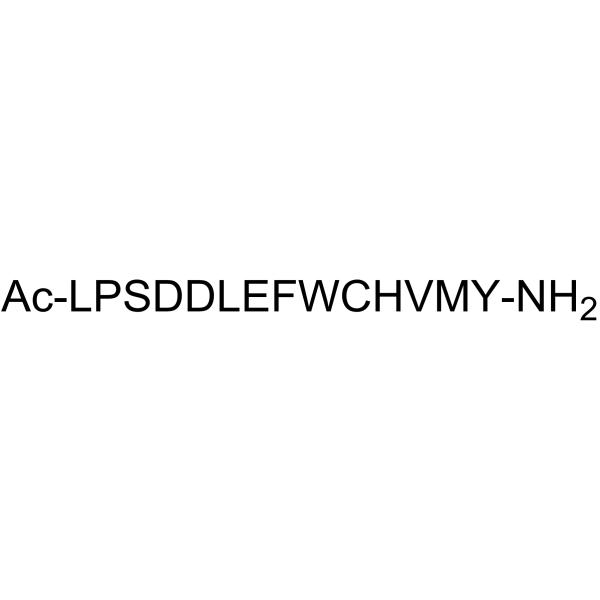
    Ac-LPSDDLEFWCHVMY-NH2

    Wnt Cancer
    Fz7-21 (Ac-LPSDDLEFWCHVMY-NH2) is a potent peptide antagonist of FZD7 receptors , selectively binds to FZD7 CRD subclass and alters the conformation of the CRD and the architecture of its lipid-binding groove. The EC50 values are 58 and 34 nM for human and mouse FZD7 CRD, respectively. Fz7-21 impairs the function of FZD7 in Wnt–β-catenin signalling and stem cell function in intestinal organoids .
    Fz7-21
  • HY-N10423

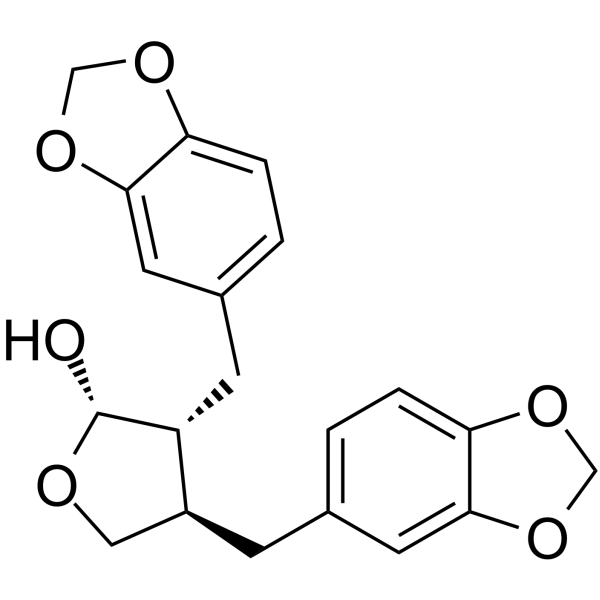
    (-)-Cubebin

    Cholinesterase (ChE) Bacterial Fungal Parasite p38 MAPK Infection Neurological Disease Metabolic Disease Inflammation/Immunology Cancer
    Cubebin ((-)-Cubebin), a dibenzyl butyrolactone lignan, is an orally active AChE inhibitor. Cubebin binds to active sites of NF-κB, TNF-α, and TGF-β1 via hydrogen and hydrophobic interactions, obstructing critical residues to inhibit pro-inflammatory or renal fibrosis-related activity. Cubebin enhances p38 MAPK phosphorylation to increase tyrosinase gene expression, stimulating melanogenesis via elevated tyrosinase activity, expression, and mRNA levels. Cubebin reduces oxidative stress via enhanced endogenous antioxidant enzyme activity and inhibited lipid peroxidation, regulates lipid metabolism, improves glycemic control, and exerts renoprotective effects via reduced renal dysfunction markers and improved renal architecture. Cubebin shows antimicrobial activity. Cubebin exerts larvicidal activity against Angiostrongylus cantonensis larvae, with no cytotoxicity toward monkey or human cell lines or Caenorhabditis elegans. Cubebin can be used for the research of diabetic nephropathy, melanoma, colon adenocarcinoma, neuroangiostrongyliasis, Alzheimer’s disease (AD) and depression .
    Cubebin
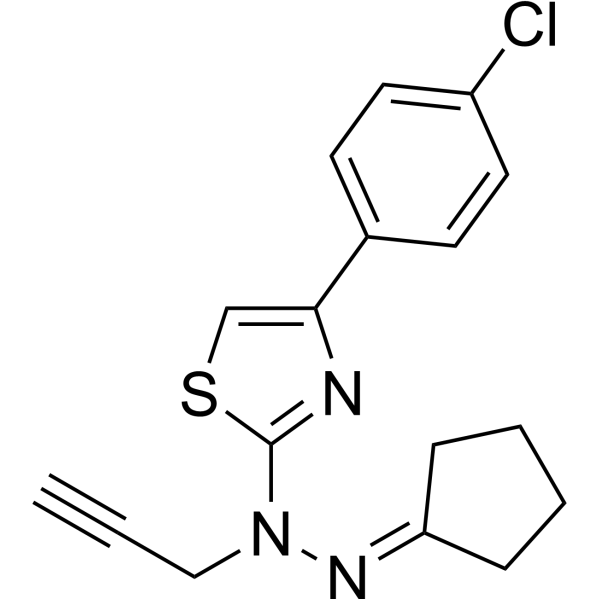
  • HY-120317

    Histone Acetyltransferase Others
    CPTH2-Alkyne is a cell active analog of CPTH2 (HY-W013274). CPTH2-Alkyne specifically accumulates in nucleoli and locates in nuclear periphery and in cytoplasma. CPTH2-Alkyne inhibits N-acetyltransferase 10 (NAT10). CPTH2-Alkyne is used in study of nuclear architecture and application in laminopathy .
    CPTH2-Alkyne
  • HY-P1454A
    Fz7-21 TFA
    3 Publications Verification

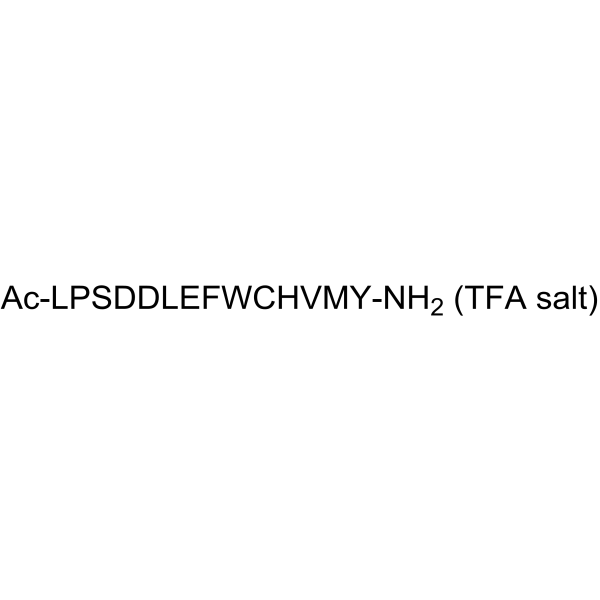
    Ac-LPSDDLEFWCHVMY-NH2 TFA

    Wnt Cancer
    Fz7-21 (Ac-LPSDDLEFWCHVMY-NH2) TFA is a potent peptide antagonist of FZD7 receptors , selectively binds to FZD7 CRD subclass and alters the conformation of the CRD and the architecture of its lipid-binding groove. The EC50 values are 58 and 34 nM for human and mouse FZD7 CRD, respectively. Fz7-21 TFA impairs the function of FZD7 in Wnt-β-catenin signalling and stem cell function in intestinal organoids .
    Fz7-21 TFA
  • HY-178358

    Drug Derivative Others
    JAX-44 is a potent root architecture modulator. JAX-44 maintains primary root length while substantially increasing lateral root numbers, thereby optimizing the plant’s overall root system. JAX-44 is the metabolic precursor of JAX-77 (HY-178359) and can be converted to Indole-3-butyric acid (IBA) (HY-N0186). JAX-44 can be used for auxin biology and root development research .
    JAX-44
  • HY-144381

    Bacterial Infection
    Glutamate-5-kinase-IN-1 (compound 50) is a potent glutamate-5-kinase (G5K) inhibitor with an MIC (minimum inhibitory concentration) of 4.1 μM. Glutamate-5-kinase-IN-1 shows G5K inhibition by alters the ATP binding site architecture for enzyme recognition. Glutamate-5-kinase-IN-1 has the potential for the research of anti-TB agents .
    Glutamate-5-kinase-IN-1
  • HY-179391

    Telomerase Apoptosis Cancer
    Telomerase-IN-9 is a potent and selective telomerase inhibitor. Telomerase-IN-9 significantly reduces telomerase activity by binding to hTERT, leading to decreased telomerase function. Telomerase-IN-9 induces apoptosis and inhibits colony formation. Telomerase-IN-9 reduces tumor burden, restores antioxidantbalance, and preserves lung architecture in a Benzo[a]pyrene (HY-107377)-induced lung cancer mouse model. Telomerase-IN-9 can be used for the research of lung cancer .
    Telomerase-IN-9
  • HY-145441

    Drug Derivative Cancer
    GEM–IB is the conjugate of gemcitabine (GEM)-5'-phosphate with ibandronate (IB). GEM–IB as a single agent or in combination with Docetaxel (DTX) demonstrates reduced tumor burden, preservation of the bone architecture, and improved the survival in a murine model of osteosarcoma (OS) .
    GEM–IB
  • HY-178359

    Drug Derivative Others
    JAX-77 is a potent root architecture modulator. JAX-77 maintains primary root length while substantially increasing lateral root numbers, thereby optimizing the plant’s overall root system. JAX-77 is the key intermediate metabolite formed from the hydrolysis of JAX-44 (HY-178358) and can be converted to Indole-3-butyric acid (IBA) (HY-N0186). JAX-77 can be used for auxin biology and root development research .
    JAX-77
  • HY-108666R

    Adenosine-5'-O-(3-thiotriphosphate) tetralithium salt (Standard); Adenosine 5'-[γ-thio]triphosphate tetralithium salt (Standard)

    Reference Standards Eukaryotic Initiation Factor (eIF) P2Y Receptor Neurological Disease Metabolic Disease Inflammation/Immunology
    ATPγS tetralithium salt (Standard) is the analytical standard of ATPγS (tetralithium salt) (HY-108666). This product is intended for research and analytical applications. ATPγS (tetralithium salt) is a P2Y11 receptor agonist, an antioxidant and a neuroprotective agent. ATPγS (tetralithium salt) can be used as a substrate for the nucleotide hydrolysis and RNA unwinding activities of eukaryotic translation initiation factor eIF4A. ATPγS (tetralithium salt) is active in ATP hydrolysis .
    ATPγS tetralithium salt (Standard)
  • HY-174479

    mRNA Cardiovascular Disease
    Mouse Mef2c mRNA encodes the mouse myocyte enhancer factor 2C (Mef2c) protein, a transcription activator which binds specifically to the MEF2 element present in the regulatory regions of many muscle-specific genes. Mef2c controls cardiac morphogenesis and myogenesis, and is also involved in vascular development, neurogenesis and the development of cortical architecture.
    Mouse Mef2c mRNA
  • HY-182786

    Cholinesterase (ChE) Monoamine Oxidase Beta-secretase COX Amyloid-β Neurological Disease
    MAO-B-IN-56 is a multi-target-directed ligand with AChE, BChE, MAO-B, and BACE1 inhibitory activity, with IC50 values of 0.35 μM, 3.22 μM, 0.14 μM, and 3.85 μM respectively, and shows selectivity for AChE over BChE and MAO-B over MAO-A.MAO-B-IN-56 reduces amyloid-beta production, reduces paw edema, improves spatial memory, and enhances Alzheimer's disease hallmarks and associated histopathological alterations.MAO-B-IN-56 can be used for the research of alzheimer's disease .
    MAO-B-IN-56
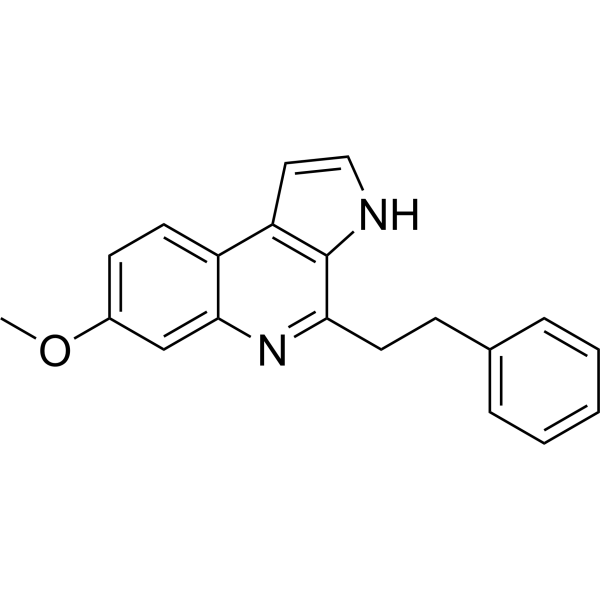
  • HY-180556

    mTOR PI3K Inflammation/Immunology
    PI3K/mTOR-IN-20 is a selective dual PI3K/mTOR inhibitor. PI3K/mTOR-IN-20 demonstrates nanomolar antiproliferative effects with IC50s of 0.380 and 0.090 μM for MRC-5 and Mlg2908 cells. PI3K/mTOR-IN-20 reduces Ashcroft scores, hydroxyproline content, collagen deposition, and downregulates fibrosis-related proteins, while restoring lung architecture in a Bleomycin-induced pulmonary fibrosis model. PI3K/mTOR-IN-20 shows a favorable safety profile with steady weight recovery and no distinct liver or kidney toxicity. PI3K/mTOR-IN-20 can be used for fetal lung fibroblasts research .
    PI3K/mTOR-IN-20

Inquiry Online

Your information is safe with us. * Required Fields.

Salutation


Country or Region *

Applicant Name *


Organization Name *

Department *


Email Address *


Product Name *

Cat. No.


Requested quantity *

Phone Number *


Remarks

Inquiry Online

Inquiry Information

Product Name:
Cat. No.:
Quantity:
MCE Japan Authorized Agent:

