

1. Search Result
Search Result
Results for "

astrocytomas

" in MedChemExpress (MCE) Product Catalog:

31

Inhibitors & Agonists

1

Biochemical Assay Reagents

1

Peptides

1

Inhibitory Antibodies

4

Natural
Products

1

Isotope-Labeled Compounds

2

Oligonucleotides

Cat. No. Product Name Target Research Areas Chemical Structure
  • HY-104042
    Vorasidenib
    Maximum Cited Publications
    7 Publications Verification

    AG-881

    Isocitrate Dehydrogenase (IDH) Cancer
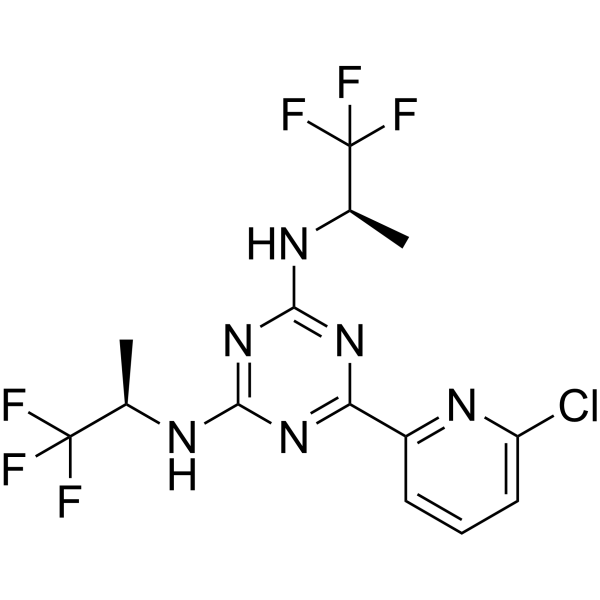
    Vorasidenib (AG-881) is an orally available, brain penetrant second-generation dual mutant isocitrate dehydrogenases 1 and 2 (mIDH1/2) inhibitor. Vorasidenib (AG-881) exhibits nanomolar inhibition of (D)-2-hydroxyglutarate (D-2-HG), and the IC50 ranges of 0.04~22 nM against IDH1 R132C, IDH1 R132G, IDH1 R132H and IDH1 R132S and 7~14 nM against IDH2 R140Q and 130 nM against IDH2 R172K. Vorasidenib can be used for the study of grade 2 astrocytoma or oligodendroglioma with a susceptible IDH1/2 mutation .
    Vorasidenib
  • HY-B0130
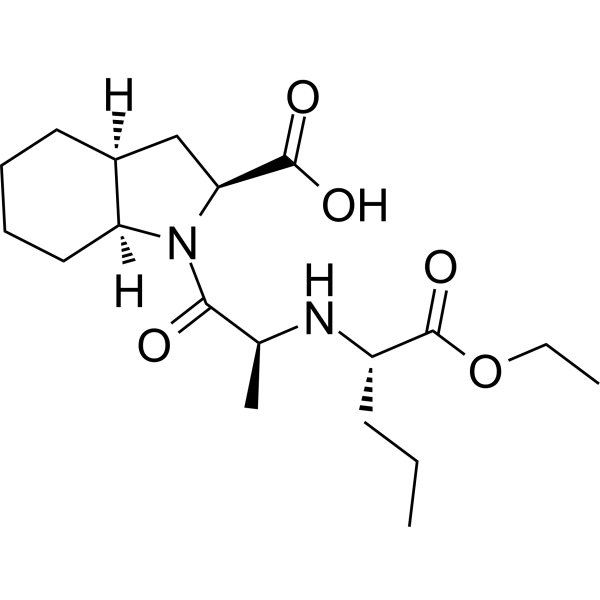
    Perindopril
    5+ Cited Publications

    S-9490

    Angiotensin-converting Enzyme (ACE) NF-κB STAT Sirtuin Cardiovascular Disease Neurological Disease Cancer
    Perindopril erbumine is an angiotensin-converting enzyme inhibitor. Perindopril erbumine modulates NFκB and STAT3 signaling and inhibits glial activation and neuroinflammation. Perindopril erbumine can be used for the research of Chronic Kidney Disease and high blood pressure .
    Perindopril
  • HY-W087830

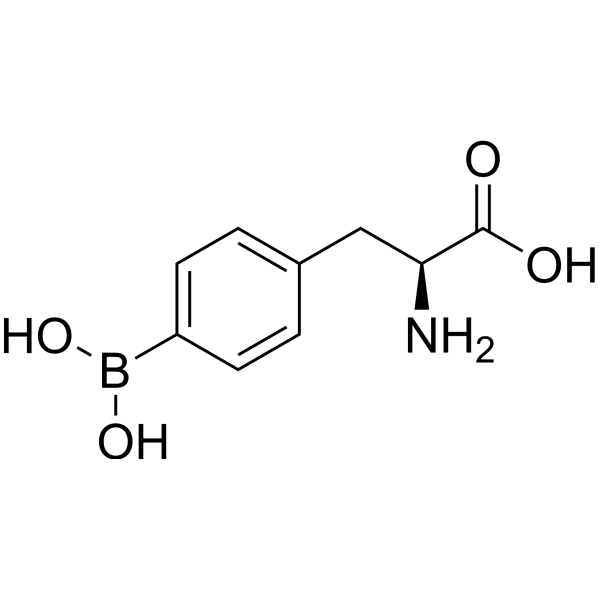
    L-BPA

    Biochemical Assay Reagents Cancer
    L-p-Boronophenylalanine is a boron-containing substrate for L-type amino acid transporters (LAT1 and LAT2). L-p-Boronophenylalanine enters tumor cells by competing with natural amino acids for LAT, selectively accumulating boron in cancer cells. L-p-Boronophenylalanine can be used in boron neutron capture therapy (BNCT). When boron-10 captures thermal neutrons, a nuclear reaction occurs, producing high-energy alpha particles and lithium nuclei, which kill cancer cells at close range with little damage to surrounding tissues. L-p-Boronophenylalanine can be used in cancer research, especially glioblastoma and anaplastic astrocytoma .
    L-p-Boronophenylalanine
  • HY-113110

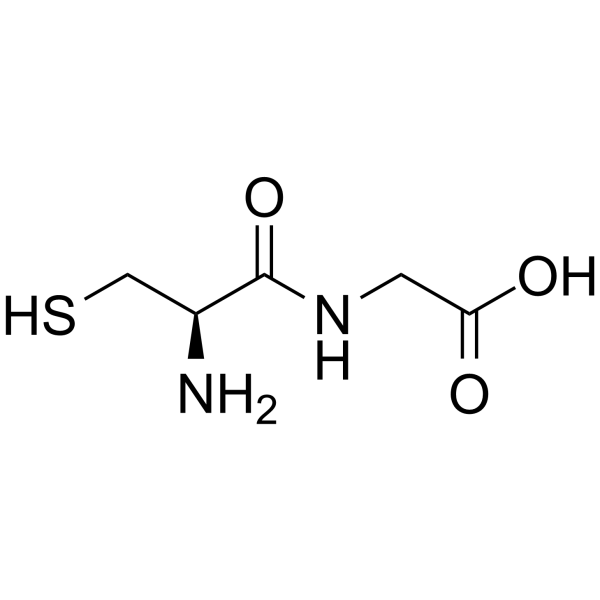
    L-Cysteinylglycine; Cys-Gly; H-Cys-Gly-OH

    Endogenous Metabolite Reactive Oxygen Species (ROS) DNA/RNA Synthesis Cardiovascular Disease Cancer
    Cysteinylglycine (L-Cysteinylglycine; Cys-Gly) is a dipeptide formed by the peptide bond linkage between cysteine (Cysteine) and glycine (Glycine). Cysteinylglycine is an important metabolic intermediate in the human body, mainly derived from the degradation of glutathione (GSH). Cysteinylglycine reduces ferric iron to ferrous iron, drives the redox cycle of iron, generates reactive oxygen species (ROS), stimulates oxidative reactions, induces lipid peroxidation of human plasma LDL lipoproteins, and causes oxidative damage to DNA bases. Cysteinylglycine can be used as a biomarker to evaluate ischemic heart disease, breast cancer and other conditions .
    Cysteinylglycine
  • HY-163573

    DNA/RNA Synthesis Cancer
    FANCM-BTR PPI-IN-1 (Compound 32) is a FANCM/BTR interaction inhibitor that blocks the localization of FANCM to telomeres. FANCM-BTR PPI-IN-1 exhibits anticancer activity against osteosarcoma .
    FANCM-BTR PPI-IN-1
  • HY-142118
    Trabedersen
    1 Publications Verification

    AP 12009

    TGF-beta/Smad Cancer
    Trabedersen (AP 12009) is an orally active synthetic antisense phosphorothioate oligodeoxynucleotide that selectively targets human TGFβ2 mRNA. Trabedersen blocks TGFβ2 protein production, enters the nucleus without a transfection vector, and exerts dose-dependent antitumor effects. By reversing TGFβ2-induced immunosuppression and enhancing immune cytotoxicity, Trabedersen exhibits significant antiproliferative, antimigratory, and antimetastatic activities, with favorable safety profiles. Trabedersen is widely used in research related to various solid tumors, including anaplastic astrocytoma, glioblastoma, colorectal tumor, and melanoma .
    Trabedersen
  • HY-B0130A
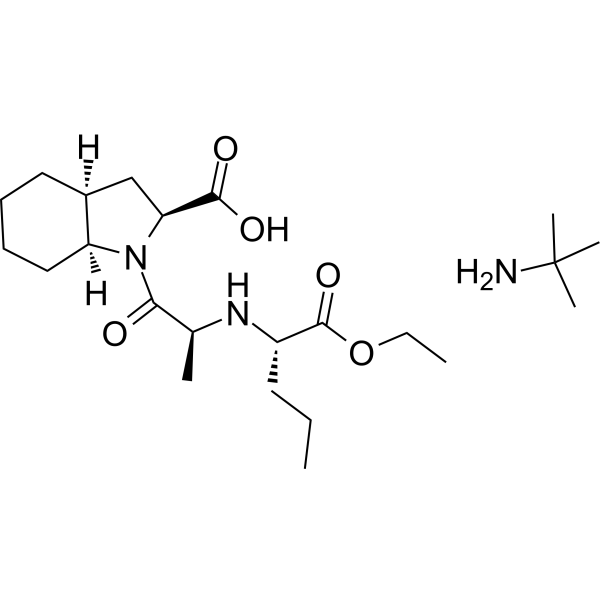
    Perindopril erbumine
    Maximum Cited Publications
    7 Publications Verification

    Perindopril (tert-butylamine salt); S-9490 erbumine

    Sirtuin NF-κB STAT Angiotensin-converting Enzyme (ACE) Cardiovascular Disease Cancer
    Perindopril erbumine is an angiotensin-converting enzyme inhibitor. Perindopril erbumine modulates NF-κB and STAT3 signaling and inhibits glial activation and neuroinflammation. Perindopril erbumine can be used for the research of Chronic Kidney Disease and high blood pressure .
    Perindopril erbumine
  • HY-123673
    MCP110
    2 Publications Verification

    Ras Raf Cancer
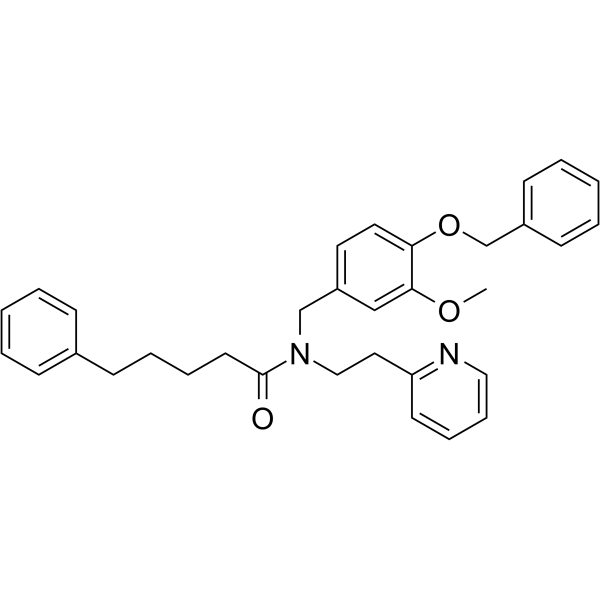
    MCP110 is an inhibitor of Ras/Raf-1 interaction. MCP110 blocks the interaction of Ras with Raf. MCP110 disrupts this interaction might can be used for the research of human tumors .
    MCP110
  • HY-P990789

    CTLA-4 Others Inflammation/Immunology Cancer
    Anti-Mouse CTLA-4 Antibody (9H10) is a kind of syrian hamster IgG antibody inhibitor, targeting to CTLA-4. Anti-Mouse CTLA-4 Antibody (9H10) binds mouse CTLA-4 and blocks the interaction between CTLA-4 and its ligand. Anti-Mouse CTLA-4 Antibody (9H10) shows potent anti-tumor effect in various tumor models, such as breast and colon cancer .
    Anti-Mouse CTLA-4 Antibody (9H10)
  • HY-108657A

    P2Y Receptor Neurological Disease
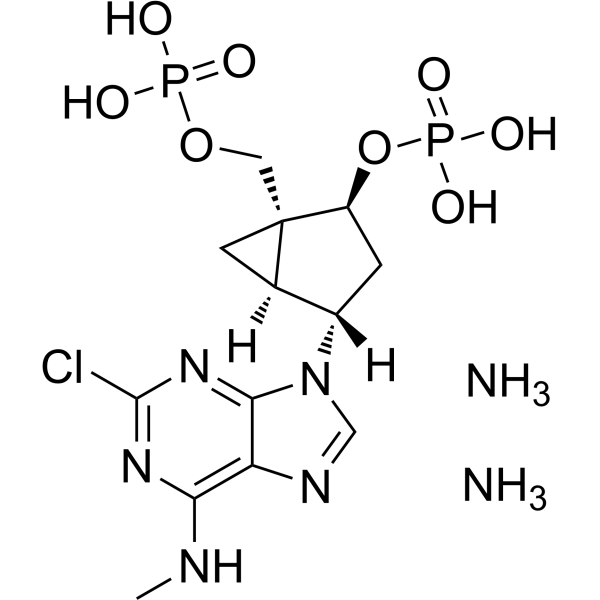
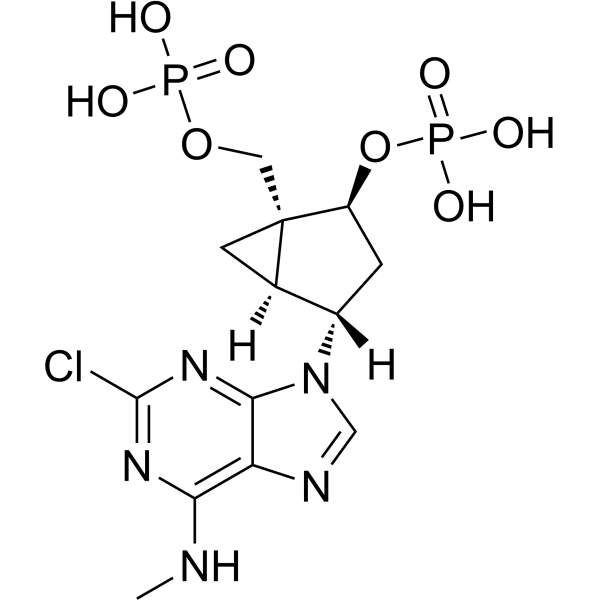
    MRS2279 diammonium is a selective and high affinity P2Y1 receptor antagonist, with a Ki value of 2.5 nM and an IC50 value of 51.6 nM. MRS2279 diammonium competitively inhibits ADP-promoted platelet aggregation with an pKb value of 8.05 .
    MRS2279 diammonium
  • HY-13219

    COX Lipoxygenase Reactive Oxygen Species (ROS) NF-κB Neurological Disease Inflammation/Immunology
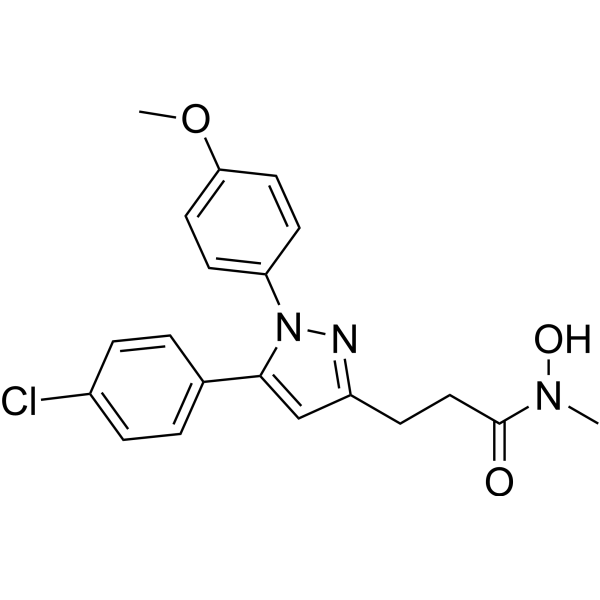
    Tepoxalin is an orally active dual inhibitor of Cyclooxygenase/Lipoxygenase, with IC50 values of 4.6 μM (sheep cyclooxygenase), 2.85 μM (rat cyclooxygenase), 0.15 μM (rat 5-lipoxygenase), and 3.0 μM (h12-lipoxygenase), respectively. Tepoxalin inhibits ROS production and NF-κB activation. Tepoxalin suppresses the production of thromboxane B2, leukotriene B4, prostaglandins and cytokines, and blocks platelet aggregation. Tepoxalin exhibits potent anti-inflammatory activity in rats with adjuvant-induced arthritis. Tepoxalin possesses analgesic activity. Tepoxalin shows no ulcerogenic activity within the anti-inflammatory dose range. Tepoxalin can be used in studies related to adjuvant-induced arthritis, skin inflammation and Alzheimer's disease .
    Tepoxalin
  • HY-W747597

    Disialoganglioside GD1b; Ganglioside C1; Ganglioside G2

    Endogenous Metabolite Cancer
    Ganglioside GD1b Disodium Salt (Bovine Brain) (Disialoganglioside GD1b; Ganglioside C1) is an acidic glycosphingolipid containing two sialic acid residues linked to an internal galactose unit. Ganglioside GD1b Disodium Salt tightly packs with cholesterol to form lipid microdomains that modulate intracellular and intercellular signaling events. Concentrations of Ganglioside GD1b Disodium Salt (Bovine Brain) in the human brain increase with age and are positively correlated with pilocytic astrocytoma tumor grade. Ganglioside GD1b Disodium Salt has been detected in various other gliomas, including primitive neuroectodermal tumors, glioblastomas, and anaplastic astrocytomas.
    Ganglioside GD1b Disodium Salt (Bovine Brain)
  • HY-142118A
    Trabedersen sodium
    1 Publications Verification

    AP 12009 sodium

    TGF-beta/Smad Cancer
    Trabedersen (AP 12009) sodium is an orally active synthetic antisense phosphorothioate oligodeoxynucleotide that selectively targets human TGFβ2 mRNA. Trabedersen sodium blocks TGFβ2 protein production, enters the nucleus without a transfection vector, and exerts dose-dependent antitumor effects. By reversing TGFβ2-induced immunosuppression and enhancing immune cytotoxicity, Trabedersen sodium exhibits significant antiproliferative, antimigratory, and antimetastatic activities, with favorable safety profiles. Trabedersen sodium is widely used in research related to various solid tumors, including anaplastic astrocytoma, glioblastoma, colorectal tumor, and melanoma .
    Trabedersen sodium
  • HY-158412

    Proteasome Apoptosis Cancer
    BT317 is a blood-brain transmissible mitochondrial Lon peptidase I (LonP1) and CT-L proteasome inhibitor. BT317 can increase the production of reactive oxygen species (ROS) and induce apoptosis in astrocytoma cells. BT317 has antitumor activity .
    BT317
  • HY-15482
    D-64131
    2 Publications Verification

    Microtubule/Tubulin Cancer
    D-64131 is an orally active tubulin inhibitor, with an IC50 of 0.53 μM for tubulin polymerization. D-64131 has antimitotic activity. D-64131 can be used for cancer research .
    D-64131
  • HY-103172

    P2Y Receptor Metabolic Disease
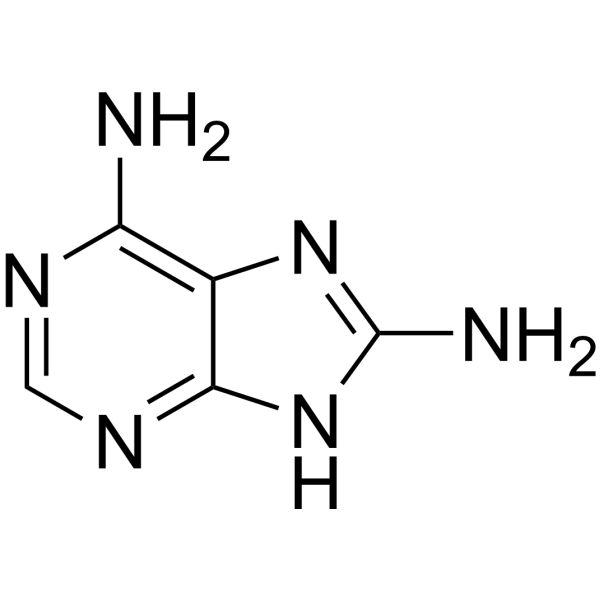
    8-Aminoadenine is an adenine receptor 1 (rAde1R) inhibitor with a Ki of 6.51 μM in rat and 0.0341 μM in human. 8-Aminoadenine inhibits isoprenaline-induced cAMP accumulation and adenine uptake in astrocytoma cells expressing rAde1R. 8-Aminoadenine serves as a lead structure for the development of adenine receptor ligands to elucidate the functions of the adenine receptor family .
    8-Aminoadenine
  • HY-128553A

    Ras Apoptosis Cancer
    (rac)-Antineoplaston A10 is the racemate of Antineoplaston A10. Antineoplaston A10 is a Ras inhibitor potentially for the treatment of glioma, lymphoma, astrocytoma and breast cancer .
    (Rac)-Antineoplaston A10
  • HY-108657

    P2Y Receptor Neurological Disease
    MRS2279 is a selective and high affinity P2Y1 receptor antagonist, with a Ki of 2.5 nM and an IC50 of 51.6 nM. MRS2279 competitively inhibits ADP-promoted platelet aggregation with an apparent affnity (pKB=8.05) .
    MRS2279
  • HY-108663

    5-Methoxyuridine 5'-trihydrogen diphosphate

    P2Y Receptor Neurological Disease Metabolic Disease
    5-OMe-UDP (5-methoxyuridine 5'-trihydrogen diphosphate) is a P2Y6 receptor agonist (EC50=0.08 μM). 5-OMe-UDP activates the P2Y6 receptor by binding to it, which triggers signaling pathways within the cell. This activation can lead to an increase in intracellular calcium ion concentration, which in turn regulates cellular function. The methoxy groups of 5-OMe-UDP provide additional activity and selectivity, contributing to the binding of 5-OMe-UDP to the P2Y6 receptor. 5-OMe-UDP can be used to study diseases related to P2Y6 receptor function, such as diabetes, inflammatory bowel disease, Alzheimer's disease, etc .
    5-OMe-UDP
  • HY-119552

    LL-S490β

    Endogenous Metabolite Neurokinin Receptor Neurological Disease
    Acetylaszonalenin, a prenylated indole derivative, is a fungal metabolite.Acetylaszonalenin is a potent neurokinin-1 (NK1) receptor antagonist. Acetylaszonalenin shows inhibition of [ 3H]-SP binding to human astrocytoma cells with a Ki of 170 μM .
    Acetylaszonalenin
  • HY-111193

    3-Chloroprocainamide

    NF-κB Apoptosis Cancer
    Declopramide (3-Chloroprocainamide) is an orally active antitumor agent, which inhibits proliferation of cancer cells HL60 and K562, and inhibits tumor growth of human brain astrocytoma (T24) in mouse model. Declopramide induces apoptosis, inhibits NF-κB through inhibition of IκBα degradation. Declopramide serves also as chemosensitizer in research .
    Declopramide
  • HY-103338

    Others Neurological Disease
    AM1172 is metabolically stable anandamide uptake inhibitor. AM1172 inhibits [ 3H] anandamide transport in rat cortical neurons and human CCF-STTG1 astrocytoma cells with IC50 values of 2.1 μM and 2.5 μM, respectively. AM1172 can significantly inhibit AEA hydrolysis and concurrently decrease AEA uptake. AM1172 can be used for the study of endocannabinoid system regulation .
    AM1172
  • HY-137603

    UTPγS

    P2Y Receptor Metabolic Disease
    Uridine-5'-O-(3-thiotriphosphate) (UTPγS), a stable analogue of Uridine triphosphate (UTP) (HY-107372), is a potent agonist of the P2Y2 and P2Y4 receptors with increased metabolic stability. Uridine-5'-O-(3-thiotriphosphate) stimulates inositol phosphate formation in human 1321N1 astrocytoma cells stably expressing the phospholipase C-coupled human P2U-purinoceptor (EC50 = 240 nM) .
    Uridine-5'-O-3-thiotriphosphate
  • HY-B0130AS

    Perindopril-d3 (tert-butylamine salt); S-9490-d3 erbumine

    NF-κB STAT Sirtuin Angiotensin-converting Enzyme (ACE) Isotope-Labeled Compounds Cardiovascular Disease Cancer
    Perindopril-d3 (erbumine) is deuterated labeled Perindopril (erbumine) (HY-B0130A). Perindopril erbumine is an angiotensin-converting enzyme inhibitor. Perindopril erbumine modulates NF-κB and STAT3 signaling and inhibits glial activation and neuroinflammation. Perindopril erbumine can be used for the research of Chronic Kidney Disease and high blood pressure .
    Perindopril-d3 erbumine
  • HY-B0130R

    S-9490 (Standard)

    Angiotensin-converting Enzyme (ACE) NF-κB STAT Sirtuin Reference Standards Cardiovascular Disease Neurological Disease Cancer
    Perindopril (Standard) is the analytical standard of Perindopril. This product is intended for research and analytical applications. Perindopril (S-9490) is an orally available, long-acting angiotensin-converting enzyme (ACE) inhibitor. Perindopril inhibits inflammatory cell influx and intimal thickening, preserving elastin on the inside of the aorta. Perindopril effectively inhibits experimental abdominal aortic aneurysm (AAA) formation in a rat model and reduces pulmonary vasoconstriction in rats with pulmonary hypertension .
    Perindopril (Standard)
  • HY-146669

    Cholinesterase (ChE) Neurological Disease
    BChE-IN-6 (compound 12) is a potent BChE inhibitor, with a Ki of 0.182 μM. BChE-IN-6 shows chelating capacity on Zn 2+. BChE-IN-6 can be used for Alzheimer’s disease (AD) research .
    BChE-IN-6
  • HY-185289

    Adrenergic Receptor Cancer
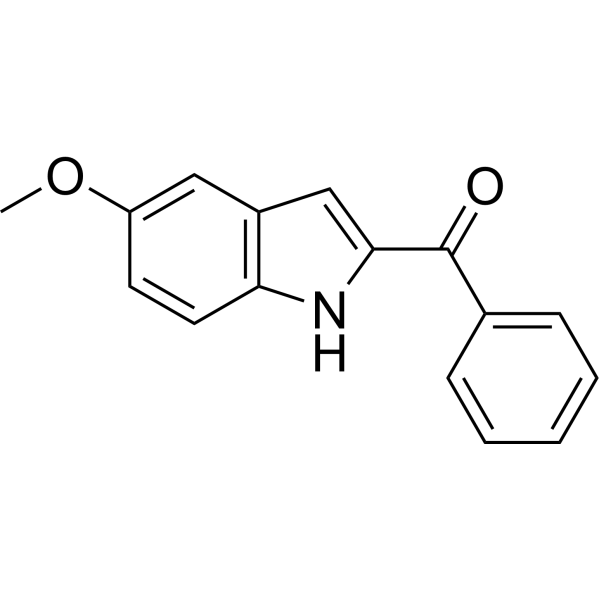
    Methoxyfenoterol is a β2-adrenergic receptor agonist. Methoxyfenoterol stimulates intracellular cAMP accumulation, inhibits tumor cell proliferation, induces G1 cell cycle arrest, upregulates cyclin-dependent kinase inhibitor p27, downregulates cyclin D1 and cyclin A, and inhibits Akt phosphorylation. Methoxyfenoterol crosses the blood-brain barrier and inhibits growth of astrocytoma xenografts. Methoxyfenoterol can be used for the research of astrocytoma, glioblastoma .
    Methoxyfenoterol
  • HY-N9554

    Neurokinin Receptor Endogenous Metabolite Calcium Channel Neurological Disease Inflammation/Immunology
    WIN-64821 is a secondary metabolite produced by Aspergillus species, and acts as a Neurokinin Receptor antagonist. The Ki values of WIN-64821 for NK1, NK2 and NK3 receptors are 0.24 (human astrocytoma cells), 0.26 (rat duodenum) and 15.2 (guinea pig forebrain) μM, respectively. WIN-64821 inhibits apamin-induced contraction of rat vas deferens, blocks substance P-induced contraction of guinea pig ileum and Ca 2+ efflux in human astrocytoma cells. WIN-64821 is applicable to analgesic and anti-inflammatory research .
    WIN-64821
  • HY-137603A

    UTPγS tetrasodium

    P2Y Receptor Neurological Disease Metabolic Disease
    Uridine-5'-O-(3-thiotriphosphate) (UTPγS) tetrasodium, a stable analogue of Uridine triphosphate (UTP) (HY-107372), is a potent agonist of the P2Y2 and P2Y4 receptors with increased metabolic stability. Uridine-5'-O-(3-thiotriphosphate) tetrasodium stimulates inositol phosphate formation in human 1321N1 astrocytoma cells stably expressing the phospholipase C-coupled human P2U-purinoceptor (EC50 = 240 nM) .
    Uridine-5'-O-3-thiotriphosphate tetrasodium
  • HY-104042R

    AG-881 (Standard)

    Reference Standards Isocitrate Dehydrogenase (IDH) Cancer
    Vorasidenib (Standard) is the analytical standard of Vorasidenib (HY-104042). This product is intended for research and analytical applications. Vorasidenib (AG-881) is an orally available, brain penetrant second-generation dual mutant isocitrate dehydrogenases 1 and 2 (mIDH1/2) inhibitor. Vorasidenib (AG-881) exhibits nanomolar inhibition of (D)-2-hydroxyglutarate (D-2-HG), and the IC50 ranges of 0.04~22 nM against IDH1 R132C, IDH1 R132G, IDH1 R132H and IDH1 R132S and 7~14 nM against IDH2 R140Q and 130 nM against IDH2 R172K. Vorasidenib can be used for the study of grade 2 astrocytoma or oligodendroglioma with a susceptible IDH1/2 mutation .
    Vorasidenib (Standard)
  • HY-182724

    Transmembrane Glycoprotein Inflammation/Immunology
    PSB-18422 is a GPR17 agonist, with an EC50 of 0.0279 μM for humans, 0.47 μM for rats, 0.753 μM for mice, and a human Ki of 1.46 μM. PSB-18422 triggers intracellular calcium mobilization via cross-species activation of GPR17. PSB-18422 can be used in the research of allergic bronchial inflammation .
    PSB-18422

Inquiry Online

Your information is safe with us. * Required Fields.

Salutation


Country or Region *

Applicant Name *


Organization Name *

Department *


Email Address *


Product Name *

Cat. No.


Requested quantity *

Phone Number *


Remarks

Inquiry Online

Inquiry Information

Product Name:
Cat. No.:
Quantity:
MCE Japan Authorized Agent:

