1. Search Result
Search Result
Results for "

bed

" in MedChemExpress (MCE) Product Catalog:

18

Inhibitors & Agonists

2

Biochemical Assay Reagents

5

Peptides

1

Recombinant Proteins

1

Antibodies

Cat. No. Product Name Target Research Areas Chemical Structure
  • HY-P1471
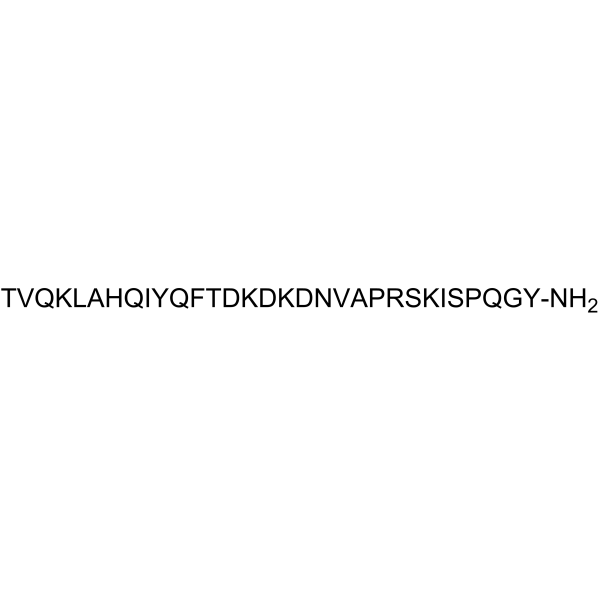
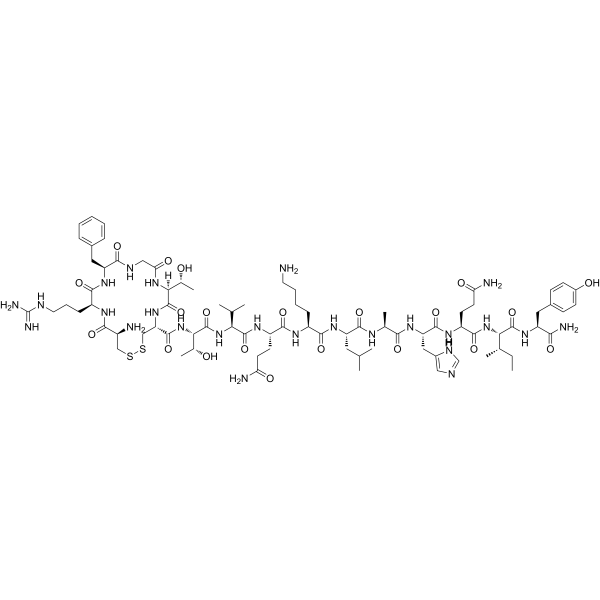
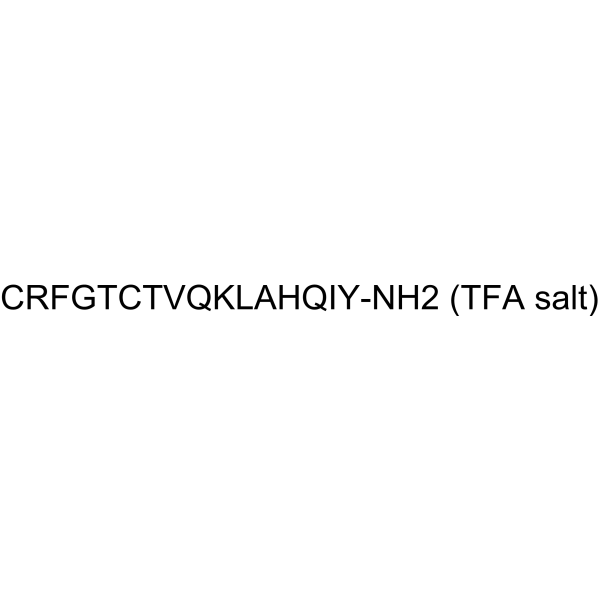
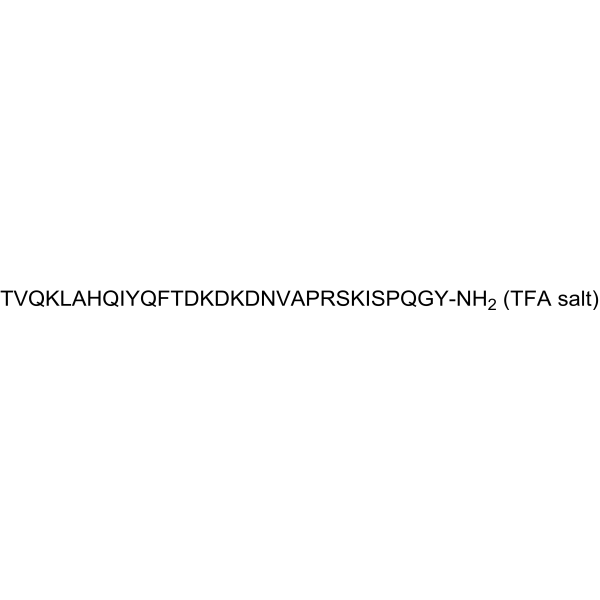
    Adrenomedullin (AM) (22-52), human
    4 Publications Verification

    22-52-Adrenomedullin (human)

    CGRP Receptor Cardiovascular Disease
    Adrenomedullin (AM) (22-52), human, an NH2 terminal truncated adrenomedullin analogue, is an adrenomedullin receptor antagonist, and also antagonizes the calcitonin generelated peptide (CGRP) receptor in the hindlimb vascular bed of the cat .
    Adrenomedullin (AM) (22-52), human
  • HY-B0644

    Sucrose octasulfate-aluminum complex

    Bacterial Infection Inflammation/Immunology Cancer
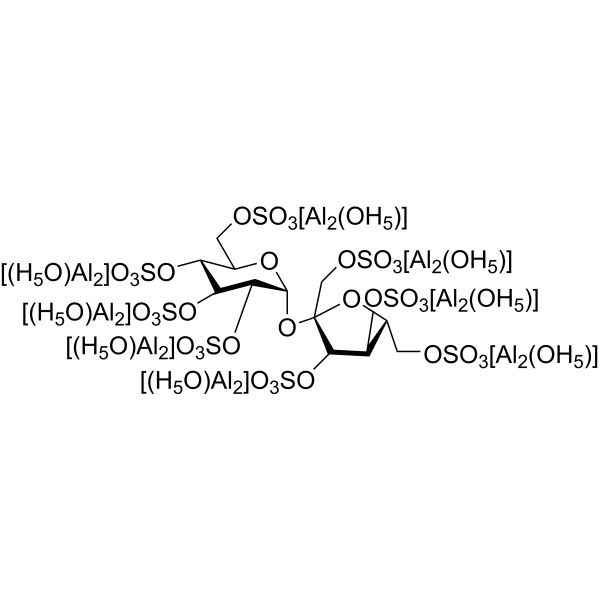
    Sucralfate (Sucrose octasulfate-aluminum complex) is a potent and orally active gastroprotectant with no systemic effects. Sucralfate inhibits peptic activity and binds to negatively charged subepithelial proteins exposed during mucosal injury, forming a viscous layer that protects the vascular bed and proliferative zone. Sucralfate is used for prevention and research of several gastrointestinal diseases in vivo .
    Sucralfate
  • HY-112624A

    Dextran 1; Dextran D1; Dextran T1(MW 800-1200)

    Biochemical Assay Reagents Others
    Dextran T1 (Dextran 1; Dextran D1) (with a molecular weight of 1,000) is a dehydrated glucose polymer with an average molecular weight of 1,000. Dextran T1 (MW 1,000) has excellent biodegradability and biocompatibility, and can be used as a nanobody carrier scaffold and a freeze-drying protectant. Dextran T1 (MW 1,000) promotes the retention of circulating tumor cells in the capillary bed .
    Dextran T1 (MW 1,000)
  • HY-P1770

    CGRP Receptor Cardiovascular Disease
    Adrenomedullin (16-31), human is amino acid residues 16-31 fragment of human adrenomedullin (hADM). Adrenomedullin has appreciable affinity for the CGRP1 receptor. Adrenomedullin (16-31), human possesses pressor activity in the systemic vascular bed of the rat, but not the cat .
    Adrenomedullin (16-31), human
  • HY-W062836

    Guanylate Cyclase Cardiovascular Disease
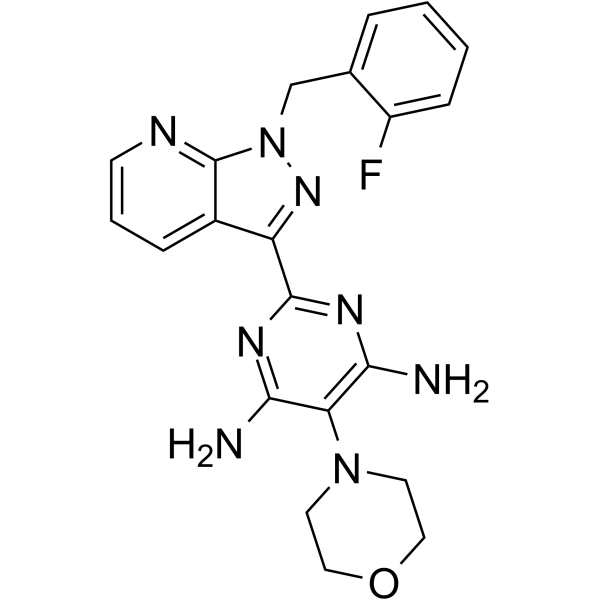
    BAY 41-8543 is an orally active, nitric oxide (NO)-independent stimulator of soluble guanylyl cyclase (sGC). BAY 41-8543 has vasodilator activity in the pulmonary and systemic vascular beds in the rat. BAY 41-8543 has antiplatelet effects and has the potential for cardiovascular diseases research .
    BAY 41-8543
  • HY-B0926B

    N-Methyl-D-glucamine diatrizoate

    Biochemical Assay Reagents Metabolic Disease
    Diatrizoate meglumine (N-Methyl-D-glucamine diatrizoate) is an orally active, water-soluble, poorly absorbable iodinated contrast agent. Diatrizoate meglumine is widely used as an adjuvant for radiological diagnosis and can also be applied to studies of small bowel obstruction in non-malignant conditions .
    Diatrizoate meglumine
  • HY-P2378

    Endogenous Metabolite Cardiovascular Disease
    Neuromedin U-25 human is the active form of neuromedin U in human. Neuromedin U-25 human inhibits glucose-stimulated insulin secretion, which leads to early-onset obesity. Neuromedin U-25 serves as vasoconstrictor in human vascular beds .
    Neuromedin U-25 (human)
  • HY-W011035

    Parasite Infection
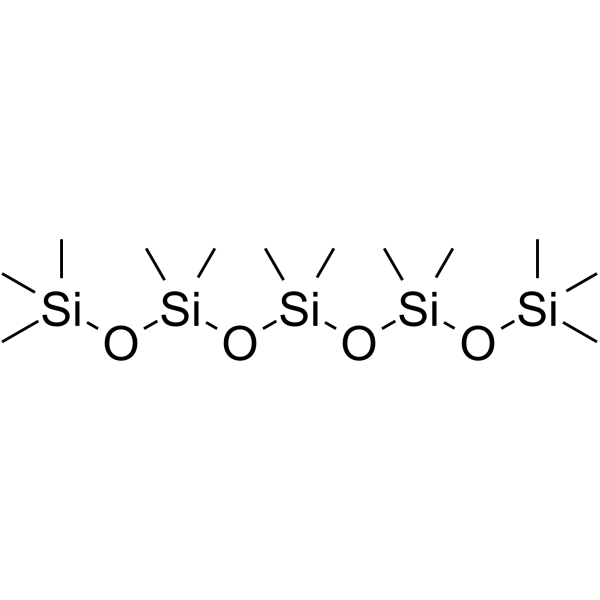
    Dodecamethylpentasiloxane is a component of siloxanes and can be used as silicone oil. Dodecamethylpentasiloxane exhibits insecticidal activity against bed bug .
    Dodecamethylpentasiloxane
  • HY-W011035R

    Reference Standards Parasite Infection
    Dodecamethylpentasiloxane (Standard) is the analytical standard of Dodecamethylpentasiloxane. This product is intended for research and analytical applications. Dodecamethylpentasiloxane is a component of siloxanes and can be used as silicone oil. Dodecamethylpentasiloxane exhibits insecticidal activity against bed bug .
    Dodecamethylpentasiloxane (Standard)
  • HY-P1471A

    22-52-Adrenomedullin (human) TFA

    CGRP Receptor Cardiovascular Disease
    Adrenomedullin (AM) (22-52), human (22-52-Adrenomedullin human) TFA, an NH2 terminal truncated adrenomedullin analogue, is an adrenomedullin receptor antagonist. Adrenomedullin (AM) (22-52), human also antagonizes the calcitonin generelated peptide (CGRP) receptor in the hindlimb vascular bed of the cat .
    Adrenomedullin (AM) (22-52), human TFA
  • HY-19420

    Phosphodiesterase (PDE) Others
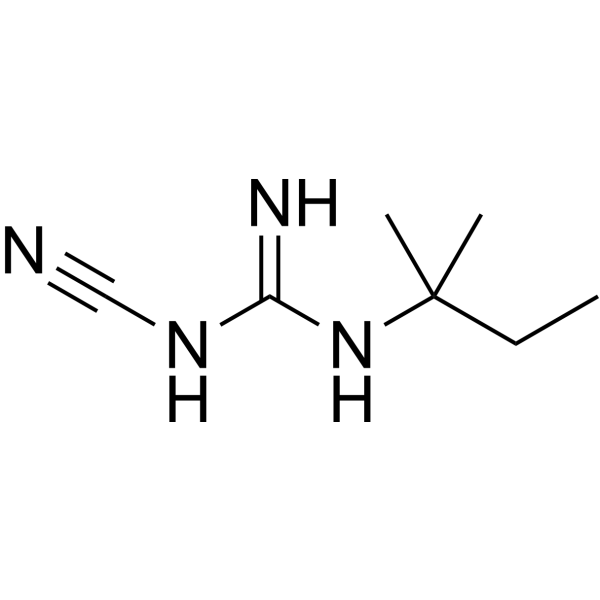
    UK 357903 is a selective inhibitor for phosphodiesterase 5 (PDE5), with IC50s of 1.7 and 714 nM, for PDE5 and PDE6. UK 357903 exhibits vasodilatory effects on the mesenteric and hindlimb vascular beds, and is potential for ameliorating erectile dysfunction .
    UK 357903
  • HY-114986
    6-Keto-PGE1
    1 Publications Verification

    6-keto-Prostaglandin E1

    β-glucuronidase Cardiovascular Disease
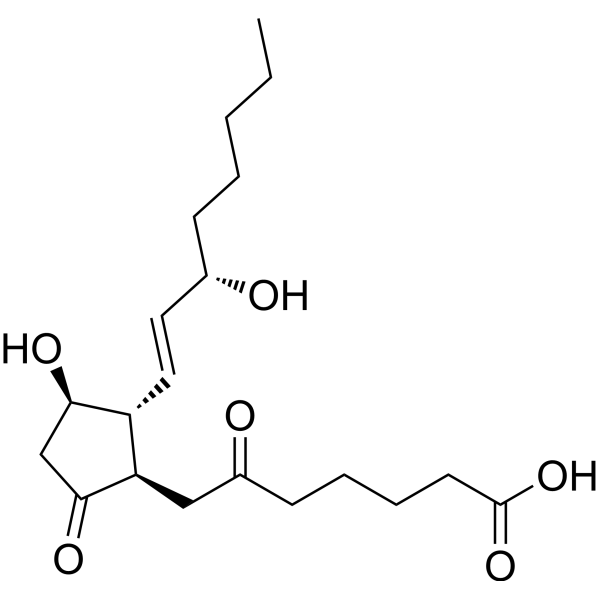
    6-Keto-PGE1 (6-keto-Prostaglandin E1) is a biologically active derivative of PGE1. 6-Keto-PGE1 inhibits adenosine diphosphate-induced platelet aggregation. 6-Keto-PGE1 reduces cardiac afterload, decreases the accumulation of plasma myocardial depressant factor (MDF), lowers arterial blood pressure, dilates vascular beds, inhibits the vasoconstrictive response of vascular smooth muscle, and increases pulmonary compliance. 6-Keto-PGE1 directly stabilizes isolated cat liver lysosomes and significantly reduces the release of β-glucuronidase and cathepsin D. 6-Keto-PGE1 prolongs the survival time of traumatized rats and exerts protective effects through hemodynamic and cytoprotective actions. 6-Keto-PGE1 reduces central airway resistance. 6-Keto-PGE1 can be used in studies related to traumatic shock .
    6-Keto-PGE1
  • HY-P1770A

    CGRP Receptor Cardiovascular Disease
    Adrenomedullin (16-31), human TFA is amino acid residues 16-31 fragment of human adrenomedullin (hADM). Adrenomedullin has appreciable affinity for the CGRP1 receptor. Adrenomedullin (16-31), human TFA possesses pressor activity in the systemic vascular bed of the rat, but not the cat .
    Adrenomedullin (16-31), human TFA
  • HY-19078

    Prostaglandin Receptor Cardiovascular Disease
    SQ-30741 is a thromboxane A2 receptor antagonist. SQ-30741 reduces vasoconstriction in a feline pulmonary vascular bed model. SQ-30741 increases relaxation of aortic endothelium and vascular smooth muscle in adult rats in a spontaneously hypertensive rat model. SQ-30741 can be used in research on cardiovascular diseases such as hypertension .
    SQ-30741
  • HY-107037

    RX71107

    Vasopressin Receptor Angiotensin Receptor Adrenergic Receptor Cardiovascular Disease
    Tolmesoxide (RX71107) is a peripheral vascular dilator with blood pressure lowering activity. Tolmesoxide has shown direct vasodilation in the human forearm arterial bed and dorsal hand vein. Tolmesoxide can dose-dependently increase blood flow in the forearm and produce dilation during contraction of the dorsal hand veins. Tolmesoxide can be used to study high blood pressure and angina .
    Tolmesoxide
  • HY-B0644R

    Sucrose octasulfate-aluminum complex (Standard)

    Reference Standards Bacterial Infection Inflammation/Immunology Cancer
    Sucralfate (Standard) is the analytical standard of Sucralfate. This product is intended for research and analytical applications. Sucralfate (Sucrose octasulfate-aluminum complex) is a potent and orally active gastroprotectant with no systemic effects. Sucralfate inhibits peptic activity and binds to negatively charged subepithelial proteins exposed during mucosal injury, forming a viscous layer that protects the vascular bed and proliferative zone. Sucralfate is used for prevention and research of several gastrointestinal diseases in vivo .
    Sucralfate (Standard)
  • HY-129922

    Prostaglandin Receptor Endocrinology
    Prostaglandin I2 is an unstable prostanoid which, through the ‘I prostanoid’ (IP) receptor, inhibits platelet aggregation and promotes vasodilatation in pulmonary vascular beds. AFP 07 is a 7,7-difluoroprostacyclin derivative that acts as a selective and highly potent agonist for the IP receptor (Ki=0.561 nM).1 AFP 07 shows weaker affinity for EP receptors, with Ki values > 100 nM for EP1-3 and > 10 nM for EP4. 16(R)-AFP 07 is an epimer of AFP 07. Its biological properties, particularly through the IP and EP receptors, remain to be evaluated.
    16(R)-AFP 07 free acid
  • HY-16265A

    Ephrin Receptor PDGFR VEGFR Cancer
    JI-101 hydrochloride is an orally active angiogenesis inhibitor and anticancer agent with 55% oral bioavailability in Sprague Dawley rats, high permeability, and no P-gp substrate activity .JI-101 hydrochloride modulates angiogenesis signaling pathways in tumor vessel beds, downregulates EphB4, targets EphB4, VEGFR-2, and PDGFR-β, and inhibits multiple stages of tumor angiogenesis .JI-101 hydrochloride exerts activity against cancer cells and xenografts, exhibits mild to moderate inhibition of CYP3A4, and shows stability in pre-clinical and human liver microsomes .JI-101 hydrochloride undergoes rapid oral absorption in Sprague Dawley rats, has extensive tissue distribution with preferred lung uptake, and is excreted via bile with mono- and di-hydroxy metabolites, with feces as the primary elimination route .JI-101 hydrochloride can be used for the research of ovarian cancer and solid tumors .
    JI-101 hydrochloride

Inquiry Online

Your information is safe with us. * Required Fields.

Salutation


Country or Region *

Applicant Name *


Organization Name *

Department *


Email Address *


Product Name *

Cat. No.


Requested quantity *

Phone Number *


Remarks

Inquiry Online

Inquiry Information

Product Name:
Cat. No.:
Quantity:
MCE Japan Authorized Agent:

