7 Results for "

biological sample staining

" in MedChemExpress (MCE) Product Catalog:
Products (7)

7 Results for "biological sample staining" in MCE Product Catalog:

1
1 Cited Publications
Cat. No.: HY-N0335
CAS No.: 482-89-3
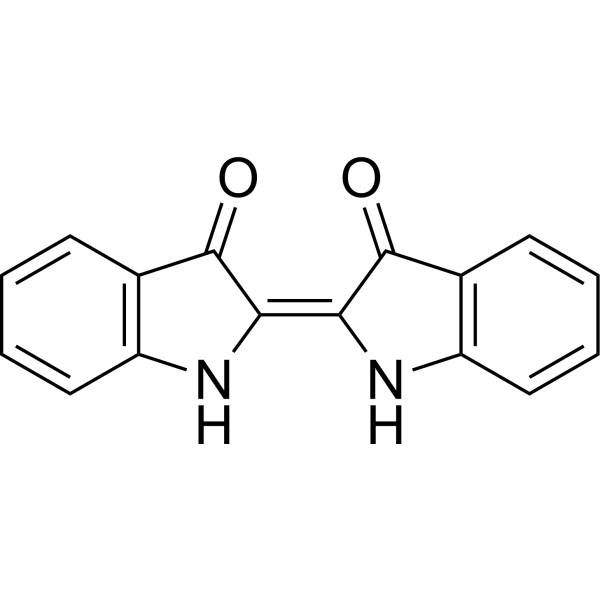
Indigo is a blue dye. Indigo stains cellulose fibers such as cotton. Indigo stains food or biological samples to visualize and quantify the uptake or distribution of substances by organisms .
loading...
    loading...
Cat. No.: HY-W250147
CAS No.: 2580-56-5
Synonyms: Victoria blue B
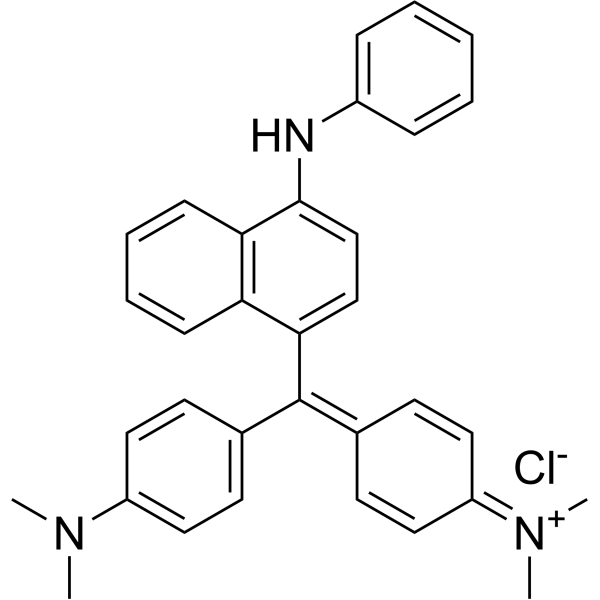
Basic blue 26 (Victoria blue B) is a synthetic cationic dye belonging to the class of triarylmethane dyes. It has a bright blue color and is commonly used as a colorant for a variety of applications, including textiles, paper and leather. Basic Blue 26 is also used as a biological stain for DNA and protein detection in laboratories. Due to its ability to bind negatively charged materials, it can be used as an indicator of the presence of specific molecules in biological samples. However, Basic blue 26 has been reported to have potentially harmful effects on human health and the environment and its use is regulated in some countries. Proper handling and disposal procedures are necessary to minimize its impact on the environment.
loading...
    loading...
Cat. No.: HY-W440915
CAS No.: 1000788-53-3
Target:  

Liposome

Research Areas:  

Inflammation/Immunology

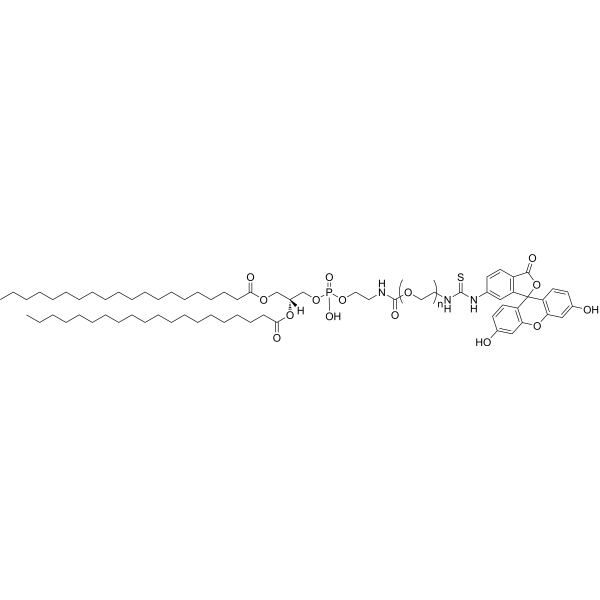
DSPE-PEG2000-FITC is a PEG lipid conjugated with fluorescein. FITC is a green dye with a peak absorption at 494 nm and a maximum emission at 520 nm, which is used for staining biological samples or nanoparticles. DSPE-PEG2000-FITC spontaneously forms lipid bilayers or micelles in water and can be used to prepare liposomes for delivering substances such as mRNA vaccines .
loading...
    loading...
Cat. No.: HY-W440939
Target:  

Liposome

Research Areas:  

Others

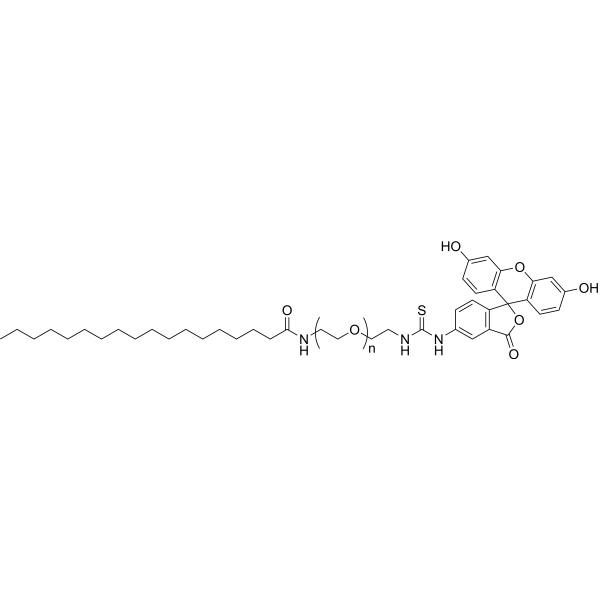
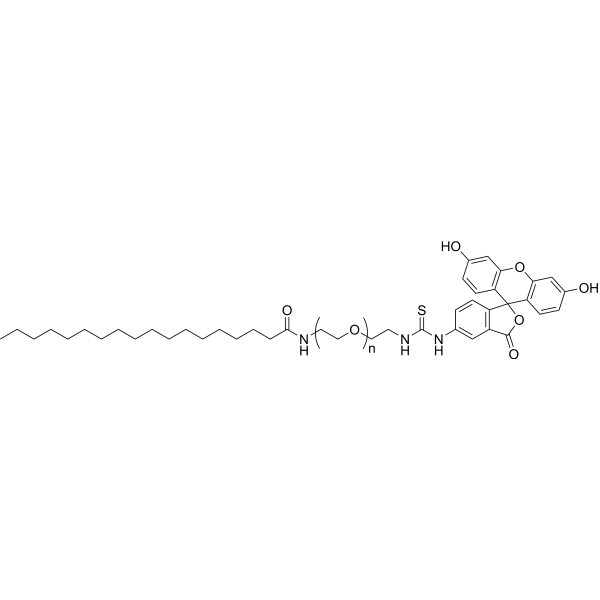
Stearic acid-PEG3400-FITC is a PEG lipid which forms micelles in water and can be used for drug delivery applications. The FITC fluorescent can be easily traced by miscroscopy. FITC is a green dye with peak absorption at 494 nm and maximum emission at 520 nm and can be used for staining biological samples or nanoparticles. FITC can be easily traced by fluorescence microscopy.
loading...
    loading...
Cat. No.: HY-W440938
Target:  

Liposome

Research Areas:  

Others

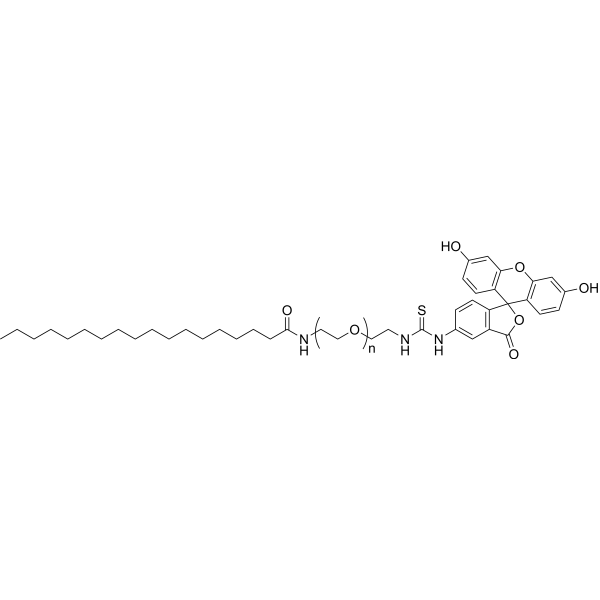
Stearic acid-PEG2000-FITC is an amphiphatic polyPEG which can self assemble to form micelles in water. The polymer can be used to encapsulate therapeutic agent. FITC is a green dye with peak absorption at 494 nm and maximum emission at 520 nm and can be used for staining biological samples or nanoparticles. FITC can be easily traced by fluorescence microscopy.
loading...
    loading...
Cat. No.: HY-W440940
Target:  

Liposome

Research Areas:  

Others

Stearic acid-PEG5000-FITC is a PEG lipid which forms micelles in water and can be used for drug delivery applications. The FITC fluorescent can be easily traced by miscroscopy. FITC is a green dye with peak absorption at 494 nm and maximum emission at 520 nm and can be used for staining biological samples or nanoparticles. FITC can be easily traced by fluorescence microscopy.
loading...
    loading...
Cat. No.: HY-W075283
CAS No.: 919789-80-3
Synonyms: 1-(4-Aminophenyl)-1,2,2-triphenylethene
Research Areas:  

Others

4-(1,2,2-Triphenylvinyl)aniline (1-(4-Aminophenyl)-1,2,2-triphenylethene) is a tetraphenylethene-based aggregation-induced luminescent molecule. 4-(1,2,2-Triphenylvinyl)aniline exhibits weak or no fluorescence in dilute solution/dispersed state, and strong fluorescence with increased quantum yield when aggregated into nanoparticles .
loading...
    loading...

