

1. Search Result
Search Result
Results for "

biotransformation

" in MedChemExpress (MCE) Product Catalog:

57

Inhibitors & Agonists

1

Biochemical Assay Reagents

25

Natural
Products

1

Isotope-Labeled Compounds

1

Click Chemistry

Cat. No. Nombre del producto Target Áreas de investigación Chemical Structure
  • HY-129217
    Naringinase
    2 Publications Verification

    Glycosidase Others
    Naringinase, a hydrolytic enzymatic complex, possesses the activity of both α-L-rhamnosidase and β-D-glucosidase. Naringinase has wide occurrence in nature. Naringinase can be used in the biotransformation of steroids, antibiotics, and mainly on glycosides hydrolysis .
    Naringinase
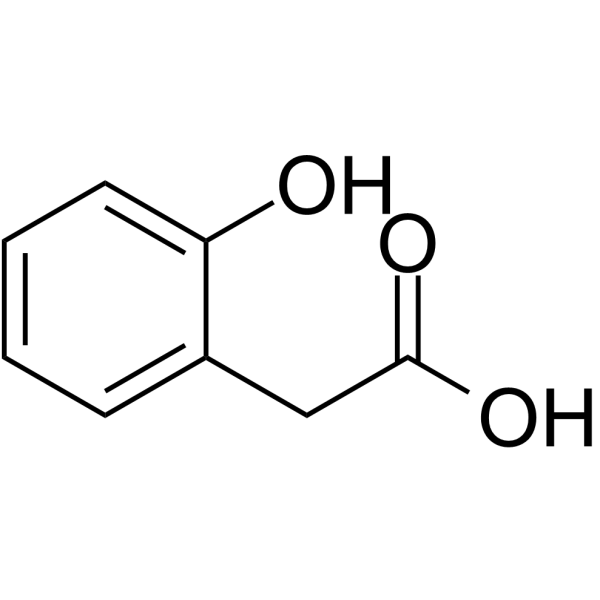
  • HY-W015590

    Drug Metabolite Fungal Infection Metabolic Disease
    2-Hydroxyphenylacetic acid is a metabolite of Phenylalanine and Tyrosine, as well as a product of the biotransformation of Phenylacetonitrile by marine fungi. 2-Hydroxyphenylacetic acid acts as a potential biomarker for food. 2-Hydroxyphenylacetic acid slightly induces the expression of green fluorescent protein. 2-Hydroxyphenylacetic acid is used in the research of phenylketonuria and related hyperphenylalaninemia .
    2-Hydroxyphenylacetic acid
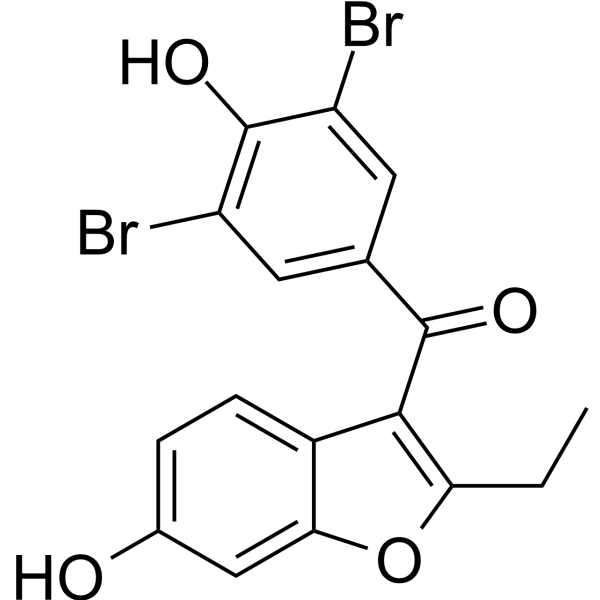
  • HY-135774

    Drug Metabolite Phosphatase Cardiovascular Disease
    6-Hydroxybenzbromarone is the major metabolite of Benzbromarone with a longer half-life and greater pharmacological potency than the parent compound. 6-Hydroxybenzbromarone is a protein Eyes Absent 3 (EYA3) inhibitor with an IC50 value of 21.5 μM. 6-Hydroxybenzbromarone is an anti-angiogenic agent, has strong inhibitory effects on cell migration, tubulogenesis, and angiogenic sprouting .
    6-Hydroxybenzbromarone
  • HY-P2816

    Biochemical Assay Reagents Others
    Xylanase is an enzyme targeting 1,4-β-D-xylan that randomly cleaves the β-1,4 backbone of xylan, a complex polysaccharide in plant cell walls. Xylanase finds applications in the food, feed and industrial sectors, including pulp and paper processing, baking, animal feed improvement, and biotransformation of waste .
    Xylanase
  • HY-173351

    Epigenetic Reader Domain Cancer
    G-6599 is a monovalent molecular glue-like degrader of SMARCA2/SMARCA4. G-6599 covalently binds to a specific cysteine residue of the E3 ligase FBXO22 in a biotransformation-independent manner, promotes the formation of a ternary complex with SMARCA2/A4, and achieves efficient and specific degradation of the two proteins via the ubiquitin-proteasome pathway. G-6599 is applicable to the research of androgen-dependent prostate cancer and mutant non-small cell lung cancer .
    G-6599
  • HY-P2800

    Endogenous Metabolite Others
    Diaphorase, Recombinant microorganisms can be obtained from anaerobic sludge organisms. Diaphorase catalyzes biotransformation of hexahydro-1,3, 5-trinitro-1,3, 5-triazine (RDX) by denitrification .
    Diaphorase, Recombinant microorganisms
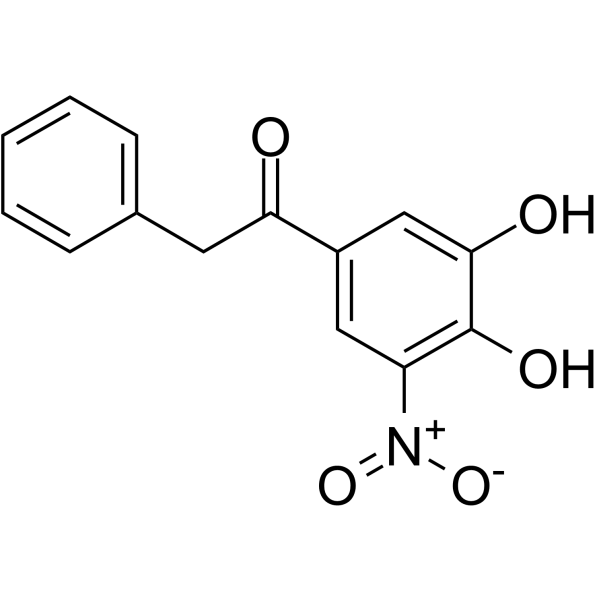
  • HY-106405

    BIA 3-202

    COMT Metabolic Disease
    Nebicapone (BIA 3-202), a reversible catechol-O-methyltransferase (COMT) inhibitor, is mainly metabolized by glucuronidation. Nebicapone is mainly peripherally acting inhibitor that decreases the biotransformation of L-DOPA to 3-O-methyl-DOPA by inhibition of COMT, and it is potential for the treatment of Parkinson's disease .
    Nebicapone
  • HY-N7921

    Bacterial Others
    Urolithin M6 is a polyhydroxy-rich metabolite with potential antioxidant activity. Urolithin M6 is produced by intestinal microbial metabolism and may act as an analog of tannic acid compounds. The production of Urolithin M6 in humans requires specific bacterial 3-dehydroxylase activity, which provides a new mechanism for its biotransformation. The metabolic profile of Urolithin M6 helps to stratify volunteers and further explore its potential role in health and disease .
    Urolithin M6
  • HY-P2866A

    NAG, Porcine kidney

    Others Others
    β-N-Acetylhexosaminidase, Porcine kidney is a glycosidase with transglycosylation activity, used to generate health-beneficial human milk oligosaccharides, and it effectively interacts with low molecular weight sugar alcohols (such as glycerol, erythritol, and xylitol). The enzyme exhibits optimal activity at pH 5 and 40 °C, and shows high thermal stability (up to 55°C) when bound to the cell wall. β-N-Acetylhexosaminidase holds promise for applications in the biotransformation of Chitin (HY-126389) and research in the food health sector .
    β-N-Acetylhexosaminidase, Porcine kidney
  • HY-W102516

    Δ6-Progesterone

    Endogenous Metabolite Others
    6-Dehydroprogesterone (Δ6-Progesterone) is a steroid compound that can be found in Botryodiplodia theobromae. 6-Dehydroprogesterone is a metabolic product of Progesterone (HY-N0437) after a microbial dehydrogenation reaction. 6-Dehydroprogesterone can be used to study steroid metabolism pathways, microbial dehydrogenase activity, and the biotransformation of steroids .
    6-Dehydroprogesterone
  • HY-130465

    Deacetylspironolactone; Mercaptospironolactone

    Drug Metabolite Metabolic Disease
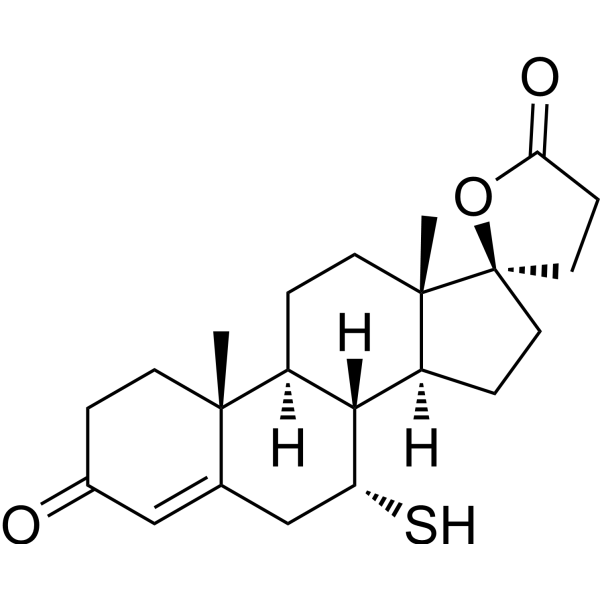
    7α-Thiospironolactone is the transformation product of spironolactone (HY-B0561), which can be obtained by the metabolism of Thermomyces lanuginosus .
    7α-Thiospironolactone
  • HY-N16639

    Drug Derivative Inflammation/Immunology
    (+)-Catechin-3’-O-β-D-glucoside is a mono glucoside derivative of (+)-catechin (HY-N0898) after biotransformation. (+)-Catechin-3’-O-β-D-glucoside is a potential antioxidant .
    (+)-Catechin-3′-O-β-D-glucoside
  • HY-N11677

    Drug Metabolite Others
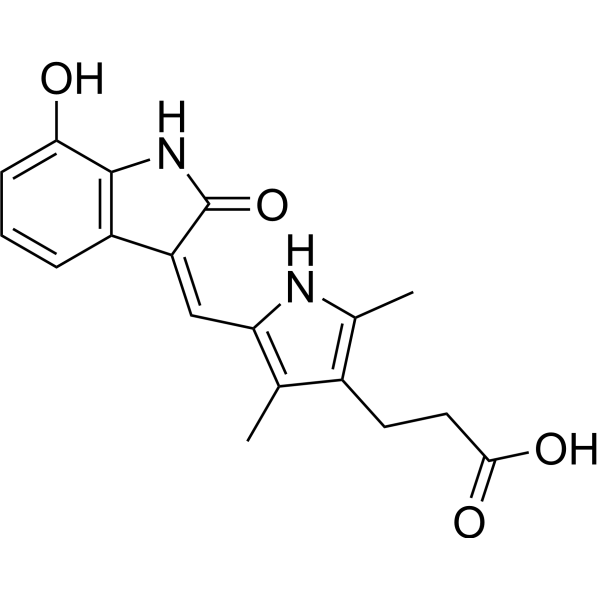
    7-Hydroxy-TSU-68 is a derivative of TSU-68 (HY-10517). It is a metabolite of the biotransformation pathway of TSU-68 in human liver microsomes. The content represents the self-induced hydroxylation level of TSU-68 .
    7-Hydroxy-TSU-68
  • HY-N12167

    Others Others
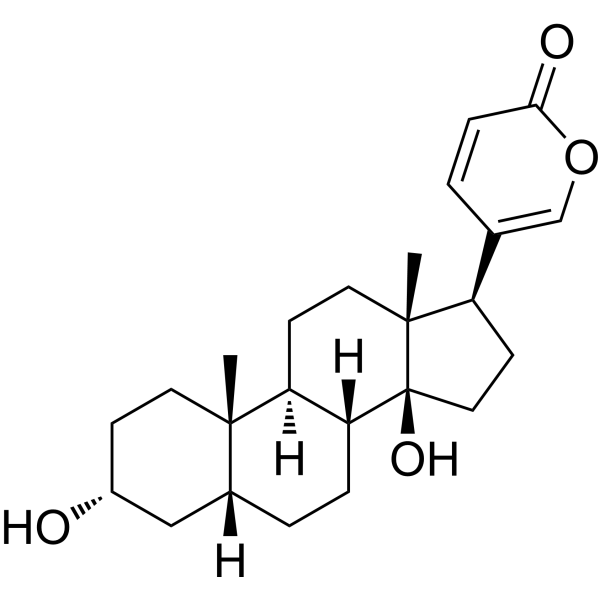
    3-epi-Bufalin (compound 2a) is the microbial transformation product of bufadienolide .
    3-epi-Bufalin
  • HY-N7731A

    (R)-Lavandulol

    Others Others
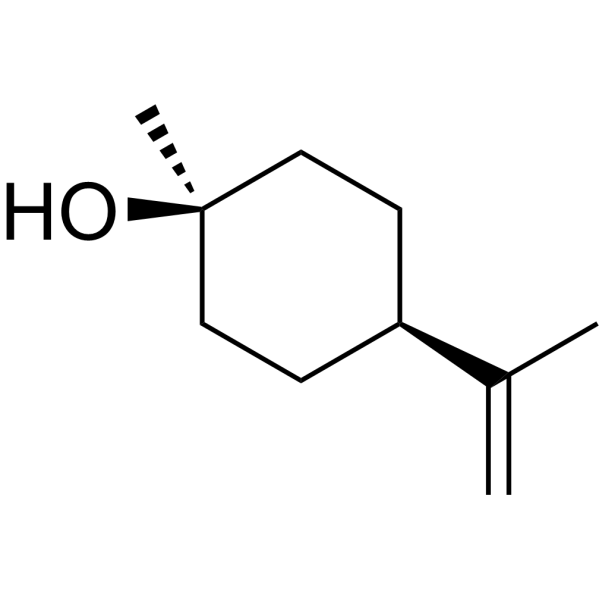
    (-)-Lavandulol is the isomer of (±)-Lavandulol (HY-N7731). (±)-Lavandulol is an irregular monoterpene alcohol. (±)-Lavandulol can be transformed by a fungal strain Rhizopus oryzae into corresponding oxygenated metabolite .
    (-)-Lavandulol
  • HY-N3994

    Drug Intermediate Others
    16α,17α-Epoxyprogesterone is an important steroid, serving as an intermediate for many hormonal drugs such as Hydrocortisone (HY-N0583) and Megestrol (HY-B1834). 16α,17α-Epoxyprogesterone can further biotransform into another significant intermediate, 11α-hydroxy-16α,17α-epoxyprogesterone, to manufacture additional compounds .
    16α,17α-Epoxyprogesterone
  • HY-119963A

    Bacterial Infection Inflammation/Immunology
    trans-β-Terpineol is a cyclic monoterpene alcohol present in Greek propolis and the essential oil of Peganum harmala seeds, with biological activities. trans-β-Terpineol serves as a substrate for biotransformation in tobacco suspension cells, where allylic hydroxylation occurs at specific sites. trans-β-Terpineol can be isolated from the leaves of Euryops arabicus. Terpineol (HY-N7851) exhibits antioxidant and antibacterial activities, and trans-β-terpineol is the bioactive compound responsible for the antibacterial effect in Euryops arabicus .
    trans-β-Terpineol
  • HY-139428

    Drug Metabolite Others
    Hydroxydehydro Nifedipine Carboxylate is an inactive metabolite formed by the oxidative biotransformation of Nifedipine (HY-B0284) in the human body .
    Hydroxydehydro Nifedipine Carboxylate
  • HY-123340

    Endogenous Metabolite Metabolic Disease
    Ozolinone is a diuretic metabolite formed by biotransformation of the diuretic elkapin in mammals and exerts a potent diuretic effect in a variety of species .
    Ozolinone
  • HY-N12033

    Others Cancer
    4'-Demethylpodophyllotoxone is an intermediate product of the biotransformation of Alternaria alternata S-f6. After 4'-Demethylpodophyllotoxone is modified with 4-(2,3,5,6-tetramethylpyrazine-1) (4-TMP), the resulting novel compound can strongly inhibit the growth of human gastric cancer cell line (BGC-823) .
    4'-Demethylpodophyllotoxone
  • HY-N8911

    Endogenous Metabolite Infection
    Dihydrodaidzin is an isoflavanone that can be isolated from Soybeans. Dihydrodaidzin is also a product of biotransformation by human intestinal bacteria .
    Dihydrodaidzin
  • HY-N8030

    Others Others
    Pseudoginsenoside Rg3 (compound 8) is the product of ginsenoside Rb1 fermentation with Acremonium strictum AS 3.2058 .
    Pseudoginsenoside Rg3
  • HY-N13220

    Others Endocrinology
    Soybean Extract is a soybean extract, and its components include: Isoflavone. Soybean Extract has an increased content of isoflavone aglycones after biotransformation, which is an estrogen-like bioactive compound with effective type I collagen enhancement. .
    Soybean Extract
  • HY-N10350

    Others Cancer
    2,3-Dihydro-3-methoxywithaferin A is an analogue of 2,3-dihydrowithaferin-A. 2,3-Dihydro-3-methoxywithaferin A inhibits proiiferation of P388 cells[1].
    2,3-Dihydro-3-methoxywithaferin A
  • HY-N11676

    Drug Metabolite Cancer
    6-Hydroxy-TSU-68 is a derivative of TSU-68 (HY-10517). It is a metabolite of the biotransformation pathway of TSU-68 in human liver microsomes. The content represents the self-induced hydroxylation level of TSU-68 .
    6-Hydroxy-TSU-68
  • HY-108381

    LCB29

    Others Others
    Idrocilamide (LCB29) exhibits a muscle relaxing effect, that inhibits muscle twitch, tetanic tension, K +-induced as well as voltage clamp-induced contraction of rat soleus muscle fibers. Idrocilamide is also a caffeine antagonist, inhibiting the breakdown and biotransformation of caffeine .
    Idrocilamide
  • HY-N9934R

    3-DHS (Standard); 5-Dehydroshikimic acid (Standard)

    Drug Intermediate Reference Standards Others
    Isonicotinic acid (Standard) is the analytical standard of Isonicotinic acid. This product is intended for research and analytical applications. Isonicotinic acid is a metabolite of Isoniazid. Isoniazid is converted to Isonicotinic acid by hydrazinolysis, with the Isoniazid to Isonicotinic acid biotransformation also to be catalyzed by cytochrome P450 (CYP) enzymes, e.g., CYP2C .
    (-)-3-Dehydroshikimic acid (Standard)
  • HY-10275A

    AR-H067637 TFA

    Thrombin Cardiovascular Disease
    Atecegatran TFA (AR-H067637 TFA) is an anticoagulant with selective direct thrombin inhibitory activity. Atecegatran TFA is commonly used to inhibit cardiovascular diseases. The biotransformation product of Atecegatran TFA, AR-H067637, is its active form and participates in the anticoagulation process .
    Atecegatran TFA
  • HY-135774R

    Reference Standards Drug Metabolite Phosphatase Cardiovascular Disease
    1-(Carboxymethyl)cyclohexanecarboxylic acid (Standard) is the analytical standard of 1-(Carboxymethyl)cyclohexanecarboxylic acid. This product is intended for research and analytical applications. 1-(Carboxymethyl)cyclohexanecarboxylic acid (1-Carboxycyclohexaneacetic acid; Gabapentin Impurity E) is a potential impurity in commercial preparations of the antiepileptic agent Gabapentin (HY-A0057). It is also used as a precursor for the synthesis of a serotonin (5-HT) receptor subtype 5-HT2A antagonist.
    6-Hydroxybenzbromarone (Standard)
  • HY-N7731R

    Others Reference Standards Others
    (±)-Lavandulol (Standard) is the analytical standard of (±)-Lavandulol. This product is intended for research and analytical applications. (±)-Lavandulol is an irregular monoterpene alcohol. (±)-Lavandulol can be transformed by a fungal strain Rhizopus oryzae into corresponding oxygenated metabolite .
    (±)-Lavandulol (Standard)
  • HY-N7731

    Others Others
    (±)-Lavandulol is an irregular monoterpene alcohol. (±)-Lavandulol can be transformed by a fungal strain Rhizopus oryzae into corresponding oxygenated metabolite .
    (±)-Lavandulol
  • HY-19602

    Endogenous Metabolite Cancer
    Cedefingol is an antitumor compound with α-glucosidase inhibitory activity. Cedefingol was identified together with other compounds in fermented dark tea samples. The biotransformation of cedefingol is related to enzymatic hydrolysis, hydrolysis and biosynthesis. Cedefingol exhibited different bioactivities in samples with different fermentation times. The antioxidant properties of cedefingol showed certain activity in the DPPH model .
    Cedefingol
  • HY-106405R

    BIA 3-202 (Standard)

    Reference Standards COMT Metabolic Disease
    Nebicapone (Standard) is the analytical standard of Nebicapone. This product is intended for research and analytical applications. Nebicapone (BIA 3-202), a reversible catechol-O-methyltransferase (COMT) inhibitor, is mainly metabolized by glucuronidation. Nebicapone is mainly peripherally acting inhibitor that decreases the biotransformation of L-DOPA to 3-O-methyl-DOPA by inhibition of COMT, and it is potential for the treatment of Parkinson's disease .
    Nebicapone (Standard)
  • HY-106365A

    Endogenous Metabolite Inflammation/Immunology
    Rofleponide epimer is a compound with anti-inflammatory activity. Rofleponide epimer has shown high selectivity in the lungs in experiments. Rofleponide epimer exhibits excellent pharmacological properties by efficiently binding to the rat thymic glucocorticoid receptor. The biotransformation rate of Rofleponide epimer is 10 times higher than that of other known similar drugs, indicating that it has potential application value in inhibiting inflammatory diseases involving mucosa .
    Rofleponide epimer
  • HY-W015590R

    Reference Standards Drug Metabolite Fungal Infection Metabolic Disease
    2-Hydroxyphenylacetic acid (Standard) is an analytical standard for 2-Hydroxyphenylacetic acid (HY-W015590). This product is intended for research and analytical applications. 2-Hydroxyphenylacetic acid is a metabolite of Phenylalanine and Tyrosine, and is also a product of the biotransformation of Phenylacetonitrile by marine fungi. 2-Hydroxyphenylacetic acid can be used as a potential biomarker for food. 2-Hydroxyphenylacetic acid can be used in the study of phenylketonuria and related hyperphenylalaninemias .
    2-Hydroxyphenylacetic acid (Standard)
  • HY-124626

    Histamine Receptor Inflammation/Immunology
    (R)-(+)-Mequitazine is a histamine H1 receptor antagonist that mainly undergoes bio-transformation via human liver microsomes, resulting in hydroxylated and S-oxidized metabolites. (R)-(+)-Mequitazine competitively binds to the H1 receptors in gastrointestinal, vascular, and respiratory effect cells, thus blocking the endogenous activity of histamine. (R)-(+)-Mequitazine has an inhibitory effect on CYP3A-catalyzed midazolam 1’-hydroxylase. (R)-(+)-Mequitazine can be used in the study of various allergic diseases .
    (R)-(+)-Mequitazine
  • HY-15042

    Bradykinin Receptor Metabolic Disease
    MK 0686, a potent bradykinin B1 receptor antagonist, demonstrates autoinduction of metabolism in rhesus monkeys after oral administration. It undergoes significant biotransformation primarily via oxidation pathways, leading to the formation of metabolites like M11 and M13 in rhesus liver microsomes. This metabolic induction is mediated by CYP2C75, as evidenced by increased mRNA expression, protein levels, and catalytic activity of this enzyme in hepatocytes and liver microsomes from MK 0686-treated animals. The autoinduction phenomenon suggests that MK 0686 enhances its own metabolism by upregulating CYP2C75, potentially influencing its systemic exposure and pharmacokinetics over time .
    MK 0686
  • HY-N12748

    Others Others
    17βH-Gitoxigenin is a compound that can be isolated from cell suspension cultures of Stropanthus divaricatus .
    17βH-Gitoxigenin
  • HY-143456

    NO Synthase Inflammation/Immunology
    Anti-inflammatory agent 18 (compound 3b) shows NO inhibitory activity, with an IC50 of 15.94 μM. Anti-inflammatory agent 18 inhibits HMGB1-induced later inflammation. Anti-inflammatory agent 18 can be used for the research of later inflammation diseases such as coronavirus diseases (COVID-19) and sepsis, etc .
    Anti-inflammatory agent 18
  • HY-143457

    NO Synthase Inflammation/Immunology
    Anti-inflammatory agent 19 (compound 2b) shows NO inhibitory activity, with an IC50 of 36.00 μM. Anti-inflammatory agent 19 inhibits HMGB1-induced later inflammation. Anti-inflammatory agent 19 can be used for the research of later inflammation diseases such as coronavirus diseases (COVID-19) and sepsis, etc .
    Anti-inflammatory agent 19
  • HY-176935

    Biochemical Assay Reagents Others
    BTP 414 is a biotransformation product. BTP 414 is probably formed from QUT sulfoxide (PTP2 400) .
    BTP 414
  • HY-N17436

    Bacterial Inflammation/Immunology Cancer
    Demethoxyhexahydrocurcumin is a Curcumin (HY-N0005) biotransformation metabolite and diarylheptanoid with antioxidant and antimicrobial activities. Demethoxyhexahydrocurcumin scavenges free radicals, inhibits cancer cell viability, and suppresses microbial growth. Demethoxyhexahydrocurcumin can be used for the research of colorectal cancer .
    Demethoxyhexahydrocurcumin
  • HY-W701712

    Drug Derivative Others
    Fenamiphos sulfone is the oxidative metabolite of the organophosphorus pesticide fenamiphos. Fenamiphos sulfone undergoes biotransformation and accumulates in aquatic and terrestrial algal species .
    Fenamiphos sulfone
  • HY-N8491C

    Others Others
    (+)-Neodihydrocarveol is a monoterpenoid compound. (+)-Neodihydrocarveol is a major metabolite during the biotransformation of (-)-limonene (HY-Z0478) by the fungus Aspergillus cellulosae M-77 .
    (+)-Neodihydrocarveol
  • HY-N17728

    Drug Metabolite Infection
    11βh,13-Dihydroparthenolide (Compound 314) is a metabolite of Parthenolide (HY-N0141), which can be produced by biotransformation of filamentous fungi .
    11βh,13-Dihydroparthenolide
  • HY-118699

    Fungal Infection
    Indole-3-thio carboxamide is an antifungal agent. Indole-3-thio carboxamide is a biotransformation product of Camalexin (HY-119502) by plant pathogenic fungi Botrytis cinerea .
    Indole-3-thio carboxamide
  • HY-N15432

    Endogenous Metabolite Others
    4-Cholenic acid-3-one is an antifeedant steroid metabolite formed via anaerobic biotransformation of Lithocholic acid (HY-B0172) by Pseudomonas sp. strain NCIB 10590 .
    4-Cholenic acid-3-one
  • HY-129230

    Endogenous Metabolite Cardiovascular Disease
    Triletide is a thromboxane A2 antagonist with good oral absorption activity. The biotransformation of Triletide mainly includes the formation of demethyl, deacetyl, demethyl-deacetyl and hydroxy derivatives. The distribution half-life of Triletide is about 1 hour, and the elimination half-life is about 5 hours .
    Triletide
  • HY-N13078

    Others Cancer
    3-epi-Resibufogenin (compound 2) is an anticancer agent that can be produced by biotransformation of Resibufogenin (HY-N0815) from Actinomucor elegans AS 3.2778. 3-epi-Resibufogenin exhibits cytotoxicity against cancer cells with IC50 values of 42.5 μM (A549) and 48.4 μM (H1299), respectively .
    3-epi-Resibufogenin
  • HY-N17509

    Drug Metabolite Others
    3β-Hydroxy-oleana-11,13 (18)-dien-28-oic acid (compound 3) is a triterpenoid compound present in Paeonia japonica and peony calli. 3β-Hydroxy-oleana-11,13 (18)-dien-28-oic acid is also a biotransformation product of oleanolic acid .
    3β-Hydroxy-oleana-11,13(18)-dien-28-oic acid

Consulta en línea

Your information is safe with us. * Required Fields.

Saludo


Country or Region *

Nombre del solicitante *


Nombre de la Organizaciòn *

Department *


Direcciòn del E-mail *


Nombre del producto *

Cat. No.


Requested quantity *

Número de teléfono *


Observaciones

Consulta en línea

Inquiry Information

Nombre del producto:
Cat. No.:
Cantidad:
MCE Japan Authorized Agent:

