1. Search Result
Search Result
Results for "

blue light

" in MedChemExpress (MCE) Product Catalog:

27

Inhibitors & Agonists

10

Fluorescent Dyes

1

Biochemical Assay Reagents

1

MCE Kits

2

Natural
Products

1

Isotope-Labeled Compounds

Cat. No. Product Name Target Research Areas Chemical Structure
  • HY-118462

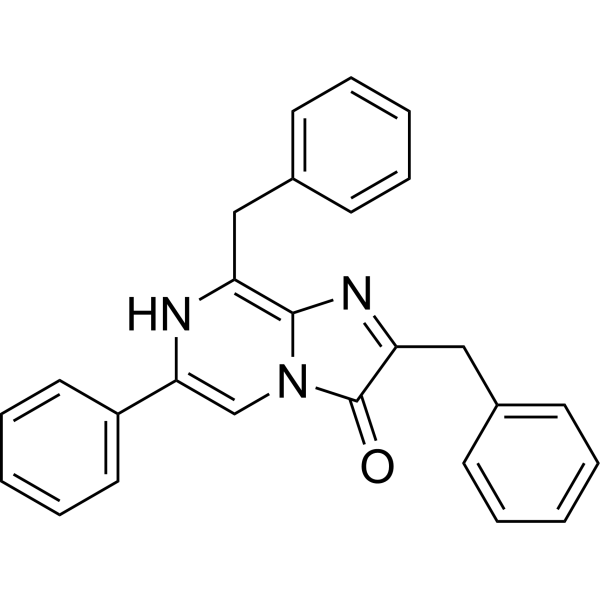
    Coelenterazine 400a; Bisdeoxycoelenterazine

    Fluorescent Dye Others
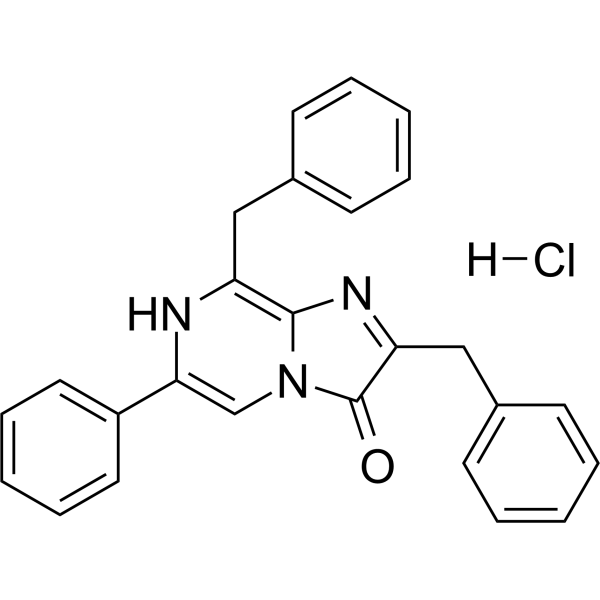
    Coelenteramine 400a (Coelenterazine 400a), a derivative of Coelenterazine, is a Renilla luciferase (RLuc) substrate. In the presence of Coelenteramine 400a, RLuc can emit blue light at 395 nm . Coelenterazine 400a will causes color change in the bioluminescence reaction of Rluc by replacing the sulfur and oxygen heteroatoms of the methylene bridge. Coelenterazine 400a provides higher signal resolution and can be used in the research of bioluminescence resonance energy transfer (BRET) .
    Coelenteramine 400a
  • HY-134928A

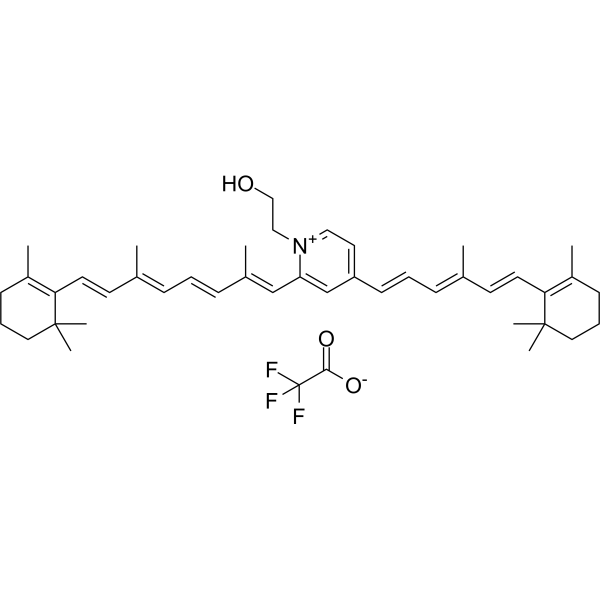
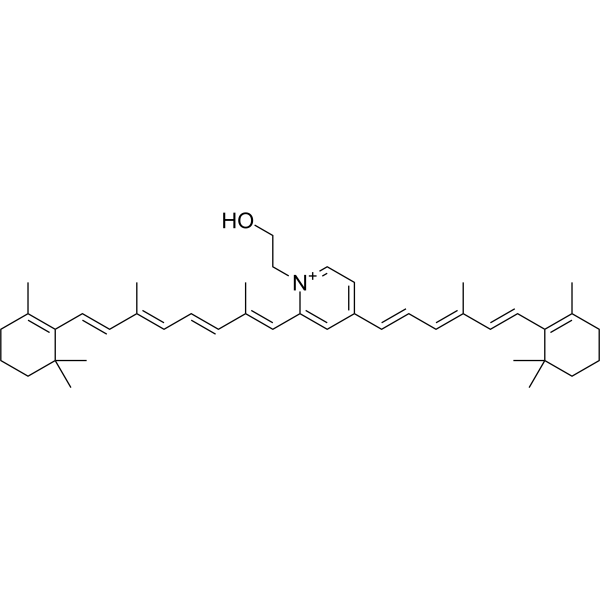
    A2E TFA; N-retinylidene-N-retinylethanolamine TFA

    Apoptosis Autophagy Reactive Oxygen Species (ROS) Cancer
    Pyridinium bisretinoid A2E (A2E) TFA is a fluorophore that can be isolated from lipofuscin in the retinal pigment epithelium (RPE). Pyridinium bisretinoid A2E TFA is an initiator of blue-light-induced apoptosis. Photoactivation of Pyridinium bisretinoid A2E TFA mediates autophagy and the production of reactive oxygen species. Pyridinium bisretinoid A2E TFA can be used in the study of retinal degenerative diseases .
    Pyridinium bisretinoid A2E TFA
  • HY-D0150
    Thiazole Orange
    1 Publications Verification

    Fluorescent Dye Others
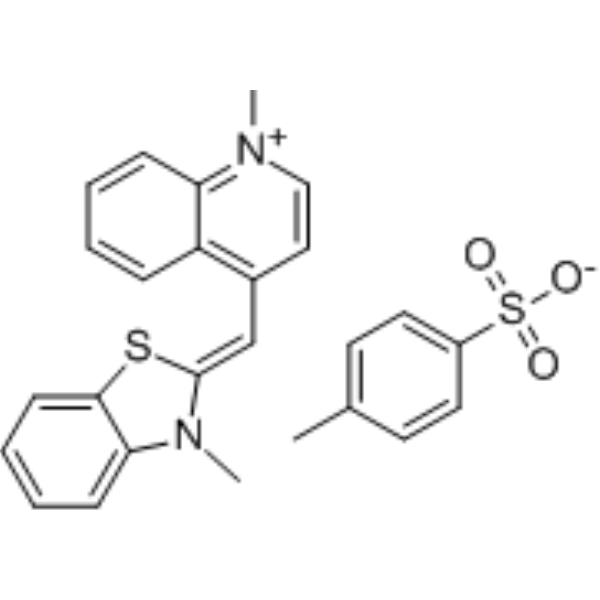
    Thiazole Orange is an asymmetric anthocyanin dye that can be coupled with oligonucleotides (ONs) to prepare fluorescent hybridization probes. Thiazole Orange has been widely used in biomolecular detection and staining of DNA/ RNA in gels and can be used for reticulocyte analysis. Thiazole orange generates a significant fluorescence enhancement and high quantum yield when it binds with nucleic acids, especially RNA. Thiazole orange can permeate living cell membranes. Thiazole orange can use UV light for detection, but can also be detected with blue light. The excitation and emission of Thiazole orange are λex = 510 nm (488 nm and 470 nm also show strong excitation) and λem = 527 nm, respectively .
    Thiazole Orange
  • HY-137276

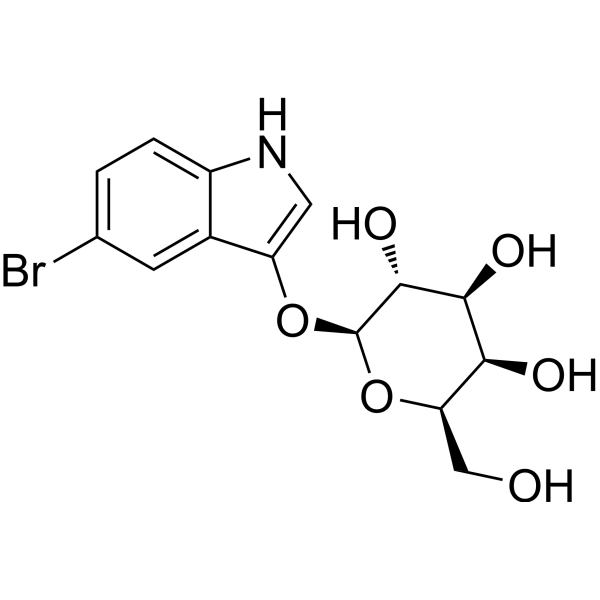
    Bluo-Gal

    Fluorescent Dye Glycosidase Others
    5-Bromo-3-indolyl β-D-galactopyranoside (Bluo-Gal) is a chromogenic substrate for β-galactosidase. 5-Bromo-3-indolyl β-D-galactopyranoside is hydrolyzed by the enzyme to generate a 5-bromoindole intermediate, which is further oxidized to form an insoluble blue precipitate. 5-Bromo-3-indolyl β-D-galactopyranoside can specifically recognize bacterial β-galactosidases (such as the product of the Escherichia coli lacZ gene) and reacts at pH 7.4, making it suitable for light and electron microscopic observations. 5-Bromo-3-indolyl β-D-galactopyranoside can be used in histochemical detection of reporter gene expression in transgenic organisms, such as the localization analysis of β-galactosidase activity in mouse embryos or muscle tissues .
    5-Bromo-3-indolyl β-D-galactopyranoside
  • HY-108468
    KL001
    2 Publications Verification

    Cryptochrome Metabolic Disease
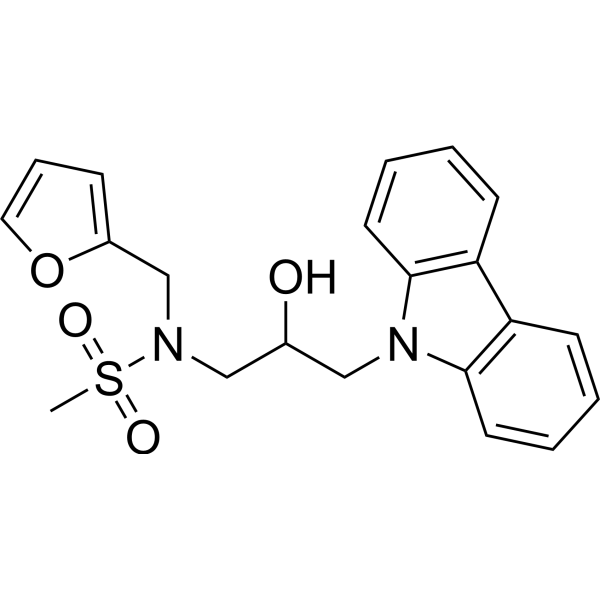
    KL001 is a first-in-class cryptochrome (CRY, a flavoproteins that are sensitive to blue light, and is involved in the circadian rhythms of plants and animals) stabilizer which specifically interacts with CRY1 and CRY2. KL001 prevents ubiquitin-dependent degradation of CRY, resulting in lengthening of the circadian period. KL001 has the potential to control fasting hormone-induced gluconeogenesis .
    KL001
  • HY-D1416
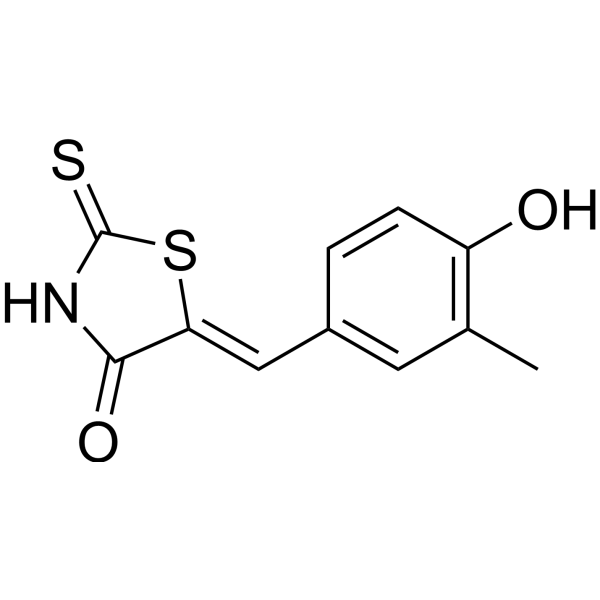
    HMBR
    1 Publications Verification

    Fluorescent Dye Others
    HMBR is an analogue with an additional methyl group on the aromatic ring and is non-fluorescent. HMBR conjugated with Y-FAST emits yellow fluorescence under blue light excitation (Ex= 419 nm; Em= 525–539 nm). HMBR is non-toxic to zebrafish embryos. HMBR has high cell permeability .
    HMBR
  • HY-D1571
    CellTracker Blue CMF2HC Dye
    4 Publications Verification

    DNA Stain Others
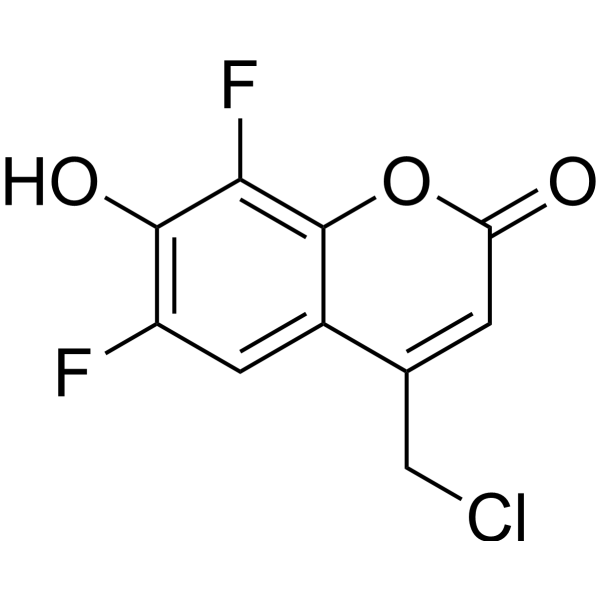
    CellTracker Blue CMF2HC Dye is a blue dye, can be used in two-channel nuclei acid sequencing, with blue and purple excitation light (450-460 nm/400-405nm or 415-450 nm/480-525nm). CellTracker Blue CMF2HC Dye can be used to rapid determination of antibiotic sensitivity of microorganisms .
    CellTracker Blue CMF2HC Dye
  • HY-134928

    A2E

    Apoptosis Autophagy Reactive Oxygen Species (ROS) Cancer
    Pyridinium bisretinoid A2E (A2E) is a fluorophore that can be isolated from lipofuscin in the retinal pigment epithelium (RPE). Pyridinium bisretinoid A2E is an initiator of blue-light-induced apoptosis. Photoactivation of Pyridinium bisretinoid A2E mediates autophagy and the production of reactive oxygen species. Pyridinium bisretinoid A2E can be used in the study of retinal degenerative diseases .
    Pyridinium bisretinoid A2E
  • HY-D0026

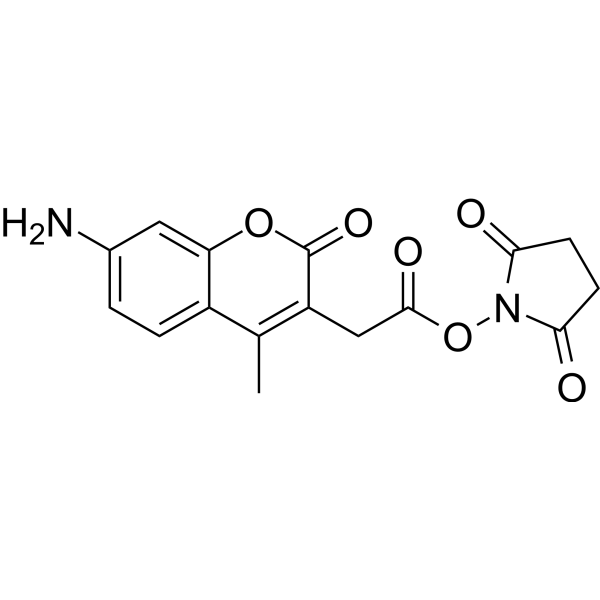
    7-Amino-4-methyl-3-coumarinacetic acid N-succinimidyl ester

    Fluorescent Dye Others
    AMCA,SE (7-Amino-4-methyl-3-coumarinacetic acid N-succinimidyl ester) is a bright blue fluorescent dye. AMCA,SE reacts with amino groups and is excited by ultraviolet light. AMCA,SE can be used for amine reactive labeling (Ex/Em = 354/440 nm) .
    AMCA,SE
  • HY-109116

    Leukomethylene blue

    Biochemical Assay Reagents Others
    Hydromethylthionine (Leukomethylene blue) has a very active photochemically active reagent, especially in its interaction with dissolved oxygen. The photochemical activity of Hydromethylthionine is mainly regulated by the reaction of its triplet state with dissolved oxygen, which reacts with dissolved oxygen to form Methylene Blue (HY-14536) and hydronium ions under ultraviolet light. Hydromethylthionine can be used for the photodegradation of model pollutants in semiconductor photocatalysis and for the study of indicators in chemical analysis .
    Hydromethylthionine
  • HY-101259
    BMS-195614
    3 Publications Verification

    BMS 614

    RAR/RXR Bcl-2 Family NF-κB PPAR VEGFR Interleukin Related Cardiovascular Disease Inflammation/Immunology Endocrinology
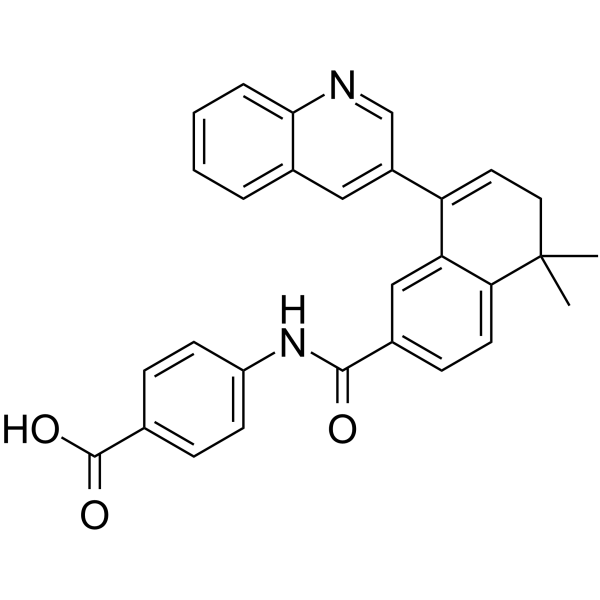
    BMS-195614 (BMS 614) is an orally active neutral RARα-selective antagonist with a Ki of 2.5 nM. BMS-195614 restores the expression of Bcl2. BMS-195614 inhibits the transactivation of NF-κB, AP-1 and PPAR. BMS-195614 downregulates the expression of IL-6 and VEGF. BMS-195614 reduces blue light-induced phototoxicity and inhibits cell migration. BMS-195614 modulates inflammation and angiogenesis .
    BMS-195614
  • HY-134928AS

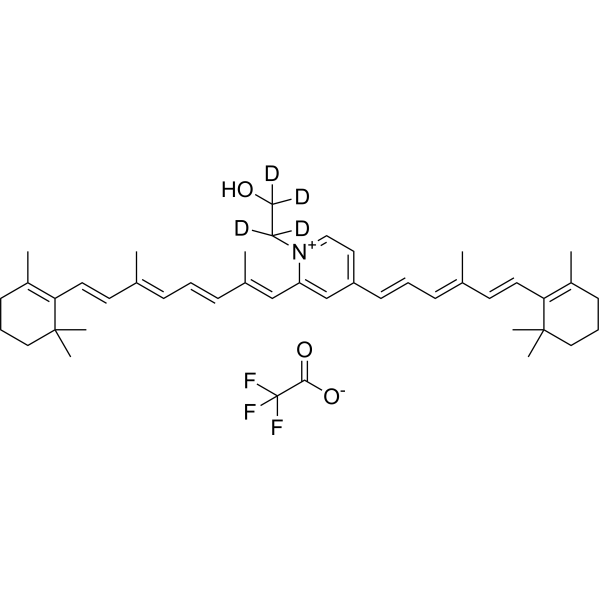
    A2E-d4 TFA

    Isotope-Labeled Compounds Cancer
    Pyridinium bisretinoid A2E-d4 TFA is the deuterium-labeled Pyridinium bisretinoid A2E (HY-134928). Pyridinium bisretinoid A2E (A2E)is an initiator of blue-light-induced apoptosis. Photoactivation of Pyridinium bisretinoid A2E mediates autophagy and the production of reactive oxygen species .
    Pyridinium bisretinoid A2E-d4 TFA
  • HY-N11499

    Bacterial Infection Inflammation/Immunology
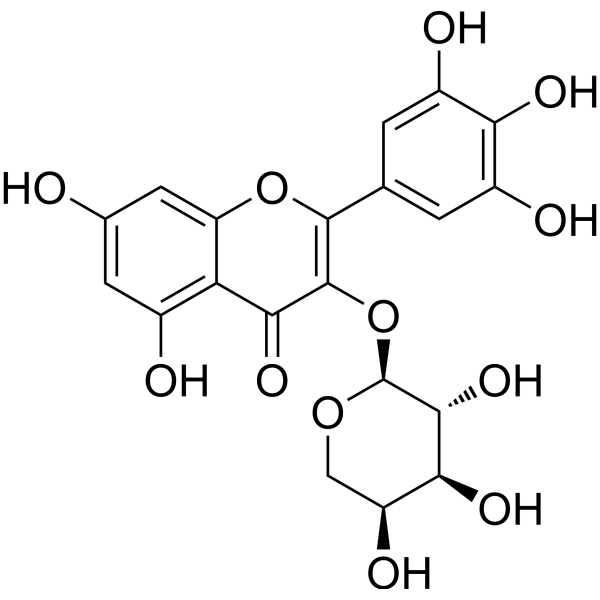
    Myricetin 3-O-α-L-arabinopyranoside is a quercetin derivative and plant flavonoid with antioxidant, antibacterial and antiurease effects. Myricetin 3-O-α-L-arabinopyranoside inhibits A2E photooxidation-induced RPE cell death. Myricetin 3-O-α-L-arabinopyranoside is protective against retinal degeneration and protects against blue light (BL)-induced damage in RPE cells and mouse models .
    Myricetin 3-O-α-L-arabinopyranoside
  • HY-W997836

    4-AHP

    Endogenous Metabolite Cancer
    4-Amino-3-hydroxyphenylalanine dihydrochloride (4-AHP) is a photodegradation product of eumelanin. 4-Amino-3-hydroxyphenylalanine dihydrochloride can be used to investigate the development of cutaneous melanoma and age-related macular degeneration .
    4-Amino-3-hydroxyphenylalanine
  • HY-D0012A

    Biochemical Assay Reagents Others
    Bromothymol Blue sodium salt is a pH indicator. Storage: protect from light.
    Bromothymol Blue sodium
  • HY-N7171

    4,4'-DiOMEA; Nasutin C

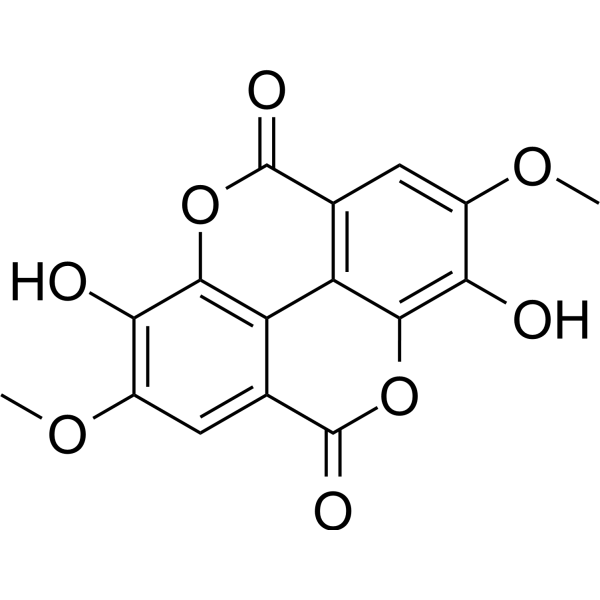
    Wnt Cancer
    4,4'-Di-O-methylellagic acid (4,4'-DiOMEA; Nasutin C) can be isolated from the Australian termites. 4,4'-Di-O-methylellagic acid is blue-fluorescent under ultra-violet light . 4,4'-Di-O-methylellagic acid inhibits colon cancer cell proliferation via the wnt signal pathway .
    4,4'-Di-O-methylellagic acid
  • HY-118462A

    Coelenterazine 400a hydrochloride; Bisdeoxycoelenterazine hydrochloride

    Fluorescent Dye Others
    Coelenteramine (Coelenterazine) 400a hydrochloride, a derivative of Coelenterazine, is a Renilla luciferase (RLuc) substrate. In the presence of Coelenteramine 400a hydrochloride, RLuc can emit blue light at 395 nm . Coelenteramine 400a hydrochloride will causes color change in the bioluminescence reaction of Rluc by replacing the sulfur and oxygen heteroatoms of the methylene bridge. Coelenteramine 400a hydrochloride provides higher signal resolution and can be used in the research of bioluminescence resonance energy transfer (BRET) .
    Coelenteramine 400a hydrochloride
  • HY-W087913

    Biochemical Assay Reagents Others
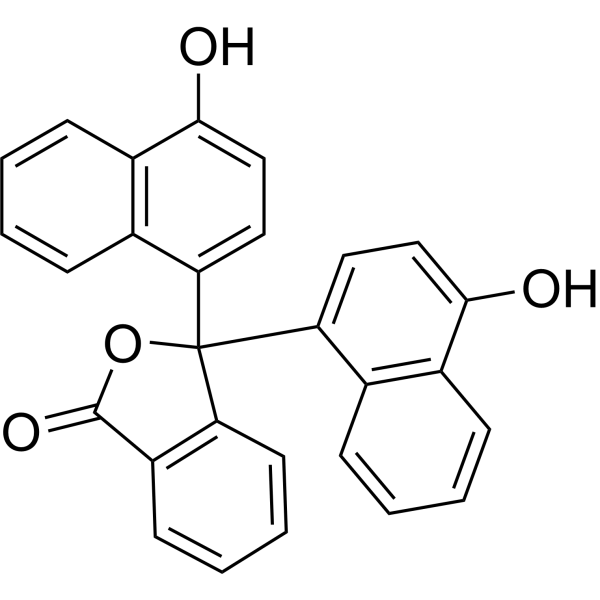
    alpha-Naphtholphthalein is an indicator that is light yellow at pH 6 and gradually shows a clear color change with increasing pH to light green-green-blue. alpha-Naphtholphthalein can be impregnated into cotton-blend fabrics and used to develop medical supplies for wound pH monitoring, such as medical gauze, hospital gowns and compression bandages .
    alpha-Naphtholphthalein
  • HY-178115

    Glutathione Peroxidase Apoptosis Ferroptosis Reactive Oxygen Species (ROS) Cancer
    MB-Buf is a conjugation of methylene blue (HY-14536) and bufalin (HY-N0877) . MB-Buf can targeting degrade GPX4 upon light activation. MB-Buf can induce cell apoptosis, ferroptosis, and ROS production. MB-Buf can be used for the research of cancer, such as breast cancer .
    MB-Buf
  • HY-174877

    PROTACs HDAC Cancer
    PROTAC HDAC6 degrader 6 (Compound 12) is a selective HDAC6-targeting photochemically targeting chimeras (PHOTACs) (subset of PROTAC) degrader with a ∼50% Dmax only upon activation to its cis-state with 390 nm light irradiation . Pink: HDAC6 ligand; Blue: CRBN ligase ligand (HY-A0003); Black: linker
    PROTAC HDAC6 degrader 6
  • HY-161650

    PROTACs Epigenetic Reader Domain Cancer
    PROTAC BRD4 Degrader-26 (PROTAC-2) is a photo-regulated PROTAC, which degrades 80% BRD4 at 1 μM by using photocleavable linker. PROTAC BRD4 Degrader-26 will be deactivated by UV light. (Pink: ligand for target protein BRD4 ligand 6 (HY-161651); Black: linker (HY-161653); Blue: E3 ligase ligand Thalidomide 4-fluoride (HY-41547))
    PROTAC BRD4 Degrader-26
  • HY-125667

    Photoamiloride-1

    Sodium Channel Metabolic Disease
    PA1 is a photoswitchable epithelial sodium channel (ENaC) blocker. PA1 can switch to cis-PA1 at 400nm and trans-PA1 at 500nm. PA1 inhibits δ/αENaC, αβγENaC, and δβγENaC, with IC50 values of 4.3nM, 90 nM, and 390 nM, respectively .
    PA1
  • HY-162825

    Photosensitizer Cancer
    Antitumor photosensitizer-7 (compound 15) is a photosensitizer with anti-cancer activity. Antitumor photosensitizer-7 exhibits significant cytotoxicity against the G361 melanoma cell line under 414 nm blue light irradiation .
    Antitumor photosensitizer-7
  • HY-108468R

    Cryptochrome Reference Standards Metabolic Disease
    KL001 (Standard) is the analytical standard of KL001 (HY-108468). This product is intended for research and analytical applications. KL001 is a first-in-class cryptochrome (CRY, a flavoproteins that are sensitive to blue light, and is involved in the circadian rhythms of plants and animals) stabilizer which specifically interacts with CRY1 and CRY2. KL001 prevents ubiquitin-dependent degradation of CRY, resulting in lengthening of the circadian period. KL001 has the potential to control fasting hormone-induced gluconeogenesis .
    KL001 (Standard)
  • HY-DY1097

    Fluorescent Dye Others
    Thiazole Orange (solution) is an asymmetric anthocyanin dye that can be coupled with oligonucleotides (ONs) to prepare fluorescent hybridization probes. Thiazole Orange has been widely used in biomolecular detection and staining of DNA/ RNA in gels and can be used for reticulocyte analysis. Thiazole orange generates a significant fluorescence enhancement and high quantum yield when it binds with nucleic acids, especially RNA. Thiazole orange can permeate living cell membranes. Thiazole orange can use UV light for detection, but can also be detected with blue light. The excitation and emission of Thiazole orange are λex = 510 nm (488 nm and 470 nm also show strong excitation) and λem = 527 nm, respectively .
    Solvent and concentration: DMSO: 10 mM
    The 1 mL volume is defined as the base specification. All larger sizes correspond to incremental volumes of this base.
    Thiazole Orange (solution)
  • HY-W075731

    Biochemical Assay Reagents Others
    (Ir[dF (F) ppy]2 (dCF3)) PF6 is a cyclometalated iridium (III) complex that is used in visible light-mediated photocatalytic organic transformations .
    (Ir[dF(F)ppy]2(dCF3))PF6
  • HY-D3275

    Fluorescent Dye Others
    PE-Cy5.5 is a far-red emitting tandem dye designed based on the principle of fluorescence resonance energy transfer (FRET), and is widely used in multicolor flow cytometry. PE-Cy5.5 consists of phycoerythrin (PE) as the energy donor and the cyanine dye Cy5.5 as the energy acceptor. Upon excitation by blue or green laser light, PE absorbs energy and transfers it to Cy5.5 via FRET, ultimately resulting in Cy5.5 emitting characteristic far-red fluorescence (Ex/Em = 450-500 nm/698 nm) .
    PE-Cy5.5

Inquiry Online

Your information is safe with us. * Required Fields.

Salutation


Country or Region *

Applicant Name *


Organization Name *

Department *


Email Address *


Product Name *

Cat. No.


Requested quantity *

Phone Number *


Remarks

Inquiry Online

Inquiry Information

Product Name:
Cat. No.:
Quantity:
MCE Japan Authorized Agent:

