
24 Results for "

carbon nanoparticles

" in MedChemExpress (MCE) Product Catalog:
Products (24)

24 Results for "carbon nanoparticles" in MCE Product Catalog:

4
4 Cited Publications
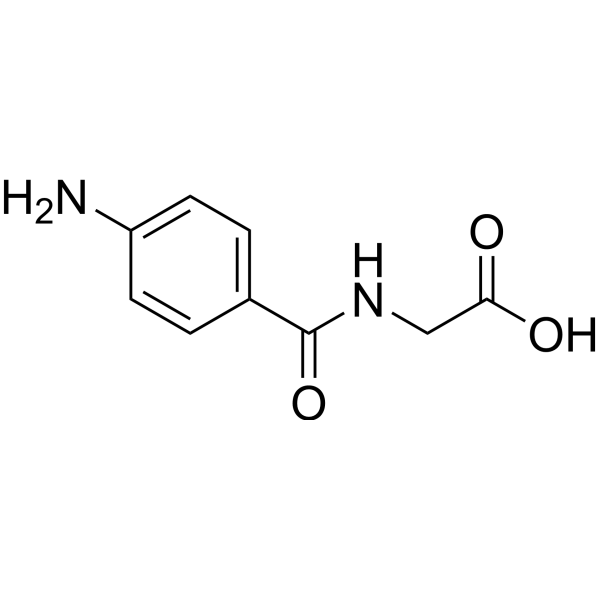
Cat. No.: HY-B1306
CAS No.: 61-78-9
Synonyms: p-Aminohippuric acid
4-Aminohippuric acid (p-Aminohippuric acid) is a coordination ligand for metal ions (such as Cu 2+, Fe 3+, Hg 2+) and a functionalization reagent for nanomaterials. 4-Aminohippuric acid can coordinate with metal ions or modify the surface of materials such as carbon nanotubes and gold nanoparticles through amino and carboxyl groups. 4-Aminohippuric acid can form stable complexes with metal ions or participate in the synthesis of nanomaterials as a reducing agent/stabilizer, enriching metal ions or giving nanoparticles peroxidase-mimicking activity. 4-Aminohippuric acid can be used to construct highly sensitive electrochemical sensors or colorimetric sensors to detect and quantitatively analyze heavy metal ions such as copper, iron, and mercury in environmental water samples and biological samples. 4-Aminohippuric acid may also be a biomarker for attention-deficit/hyperactivity disorder (ADHD) .
loading...
    loading...
1
1 Cited Publications
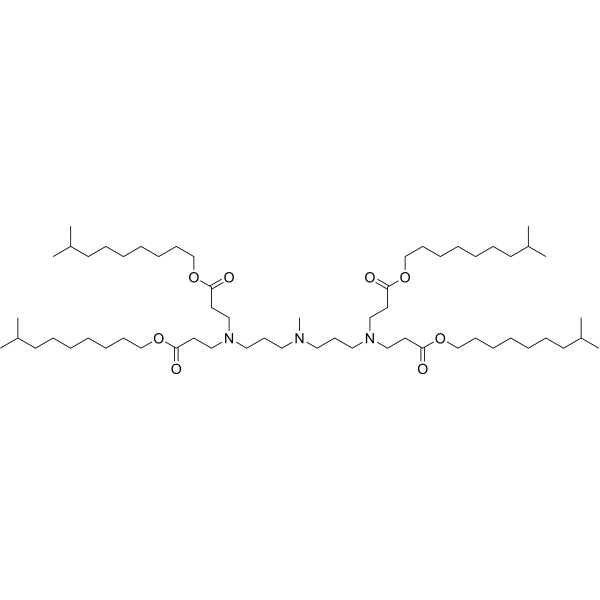
Cat. No.: HY-151507
CAS No.: 2322290-93-5
Purity:  ≥98.0%
Target:  

Liposome

Research Areas:  

Others

306Oi10 is a branched ionizable lipid that can be used to construct lipid nanoparticles (LNPs) for delivering messenger RNA. The surface ionization of lipid nanoparticles is related to the effectiveness of mRNA delivery. The tail of 306Oi10 has a one-carbon branch, which provides it with stronger surface ionization compared to lipids with linear tails, thereby enhancing its mRNA delivery efficacy. 306Oi10 can be used in research related to mRNA delivery .
loading...
    loading...
1
1 Cited Publications
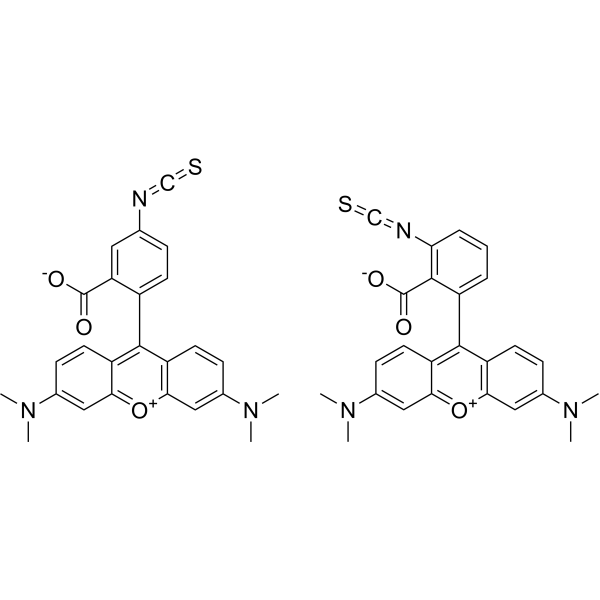
Cat. No.: HY-D0791
CAS No.: 95197-95-8
Synonyms: 5(6)-Tetramethylrhodamine isothiocyanate
TRITC (5(6)-Tetramethylrhodamine isothiocyanate) is a commonly used fluorescent dye, belonging to the Rhodamine derivative family. It exhibits red fluorescence properties (Ex/Em ≈ 550/580 nm). TRITC can be used for cell labeling and imaging .
loading...
    loading...
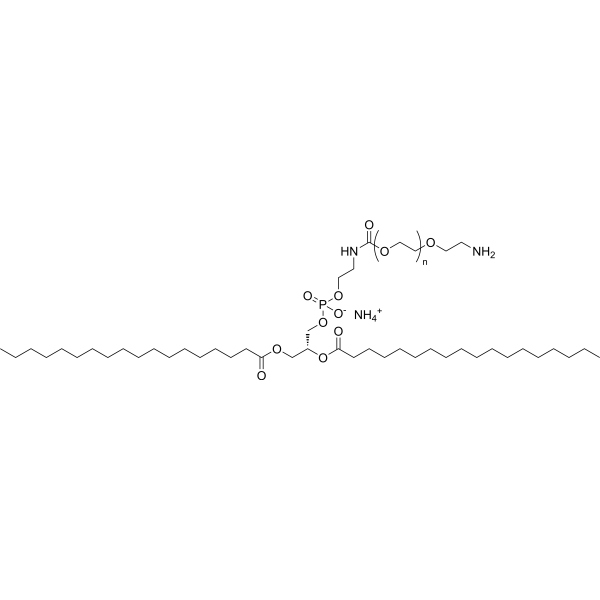
Cat. No.: HY-W440823A
CAS No.: 474922-26-4
Synonyms: DSPE-PEG1000-NH2 ammonium
Target:  

Liposome

Research Areas:  

Cancer

DSPE-PEG1000-Amine (DSPE-PEG1000-NH2) ammonium is a 1,2-distearoyl-sn-glycero-3-phosphoethanolamine-polyethylene glycol conjugate with a terminal amino group. DSPE-PEG1000-Amine ammonium can functionalize the surface of PLGA-lecithin-PEG core-shell nanoparticles to introduce positive surface charges. The amino group of DSPE-PEG1000-Amine ammonium can be converted into an aromatic aldehyde to react with the acetone-protected aromatic hydrazide on the surface of bovine carbonic anhydrase (BCA) molecules .
loading...
    loading...
Cat. No.: HY-140646
CAS No.: 24991-53-5
Purity:  99.39%
Synonyms: Poly(ethylene glycol)-bis-amine 2000
Research Areas:  

Cancer

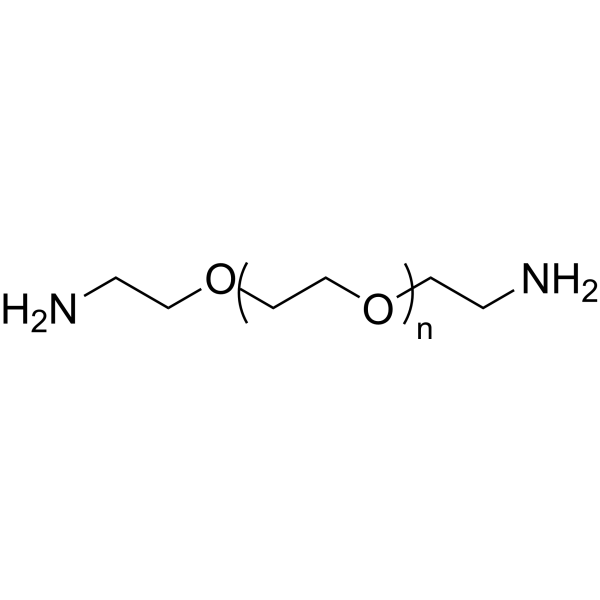
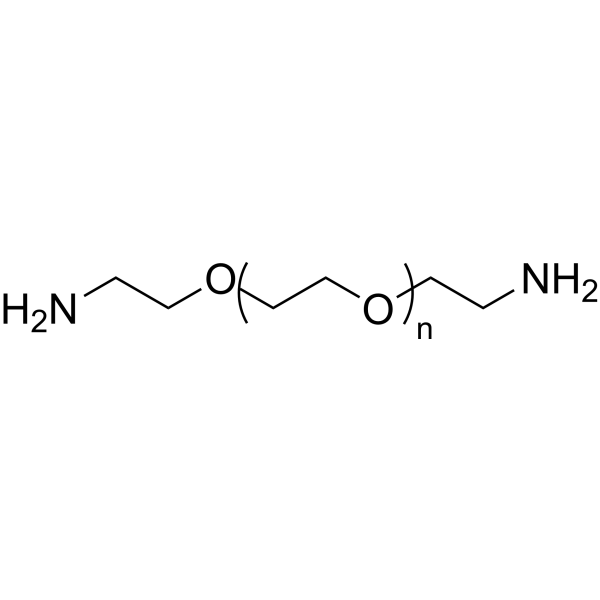
PEG2000-bis-amine (Poly(ethylene glycol)-bis-amine 2000) is a diamine-terminated polyethylene glycol and conjugate linker. PEG2000-bis-amine endows the surface of carbon capsules with stealth properties, biocompatibility, and free amino groups for antibody conjugation. PEG2000-bis-amine acts as a reducing agent and passivating agent to promote the formation and assembly of silver nanoparticles on silica nanospheres, and increases the number of silver nanoparticles on the silica surface .
loading...
    loading...
Cat. No.: HY-Y0395
CAS No.: 25487-66-5
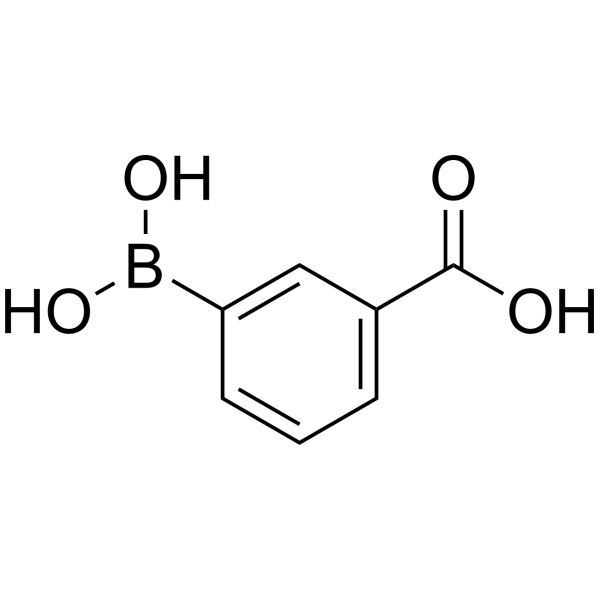
3-Carboxyphenylboronic acid is a biochemical reagent with multiple functions including nanoparticle enhancement, perovskite passivation, fluorescence quenching, and adhesion. 3-Carboxyphenylboronic acid improves tumor penetration and pulmonary retention of nanoparticles, and serves as a tumor-targeting ligand for carboxymethyl chitosan nanoparticles. 3-Carboxyphenylboronic acid optimizes film crystallization via coordinate chelation of free lead/iodide ions in perovskites. 3-Carboxyphenylboronic acid acts as an additive for n-i-p perovskite solar cells. Conjugation of 3-Carboxyphenylboronic acid with PPEG8 quenches the near-infrared fluorescence of single-walled carbon nanotubes, enabling aqueous dispersion of carbon nanotubes through binding to the diol structure of saccharides .
loading...
    loading...
Cat. No.: HY-N16025
CAS No.: 2342575-85-1
Synonyms: DOPE-PEG2000-NH2 ammonium
Research Areas:  

Others

DOPE-PEG2000-Amine (DOPE-PEG2000-NH2) ammonium is a polyethylene glycol-derivatized phospholipid that can be used to construct liposomes and lipid nanoparticles. DOPE-PEG-Amine ammonium is used for non-covalent functionalization of single-walled carbon nanotubes (SWCNTs) to enhance their water dispersibility and biocompatibility. DOPE-PEG-Amine ammonium can be applied in research related to photothermal applications .
loading...
    loading...
Cat. No.: HY-W1048555A
Mal-PEG2000-SCM is a heterobifunctional PEG crosslinker bearing maleimide and succinimidyl carboxymethyl ester functional groups. MMal-PEG2000-SCM conjugates the F3 peptide to nanoparticles: the SCM group reacts with amino groups on the nanoparticle surface to form amide groups, while the MAL group reacts with thiol groups of the F3 peptide to form carbon-sulfur bonds. Mal-PEG-SCM enables unidirectional addition of linkers, ensuring that appropriate functional groups are available for RGD incorporation. Mal-PEG2000-SCM can be used in the development of nanoparticles targeting specific tumor cells .
loading...
    loading...
Cat. No.: HY-D0948
CAS No.: 1562-90-9
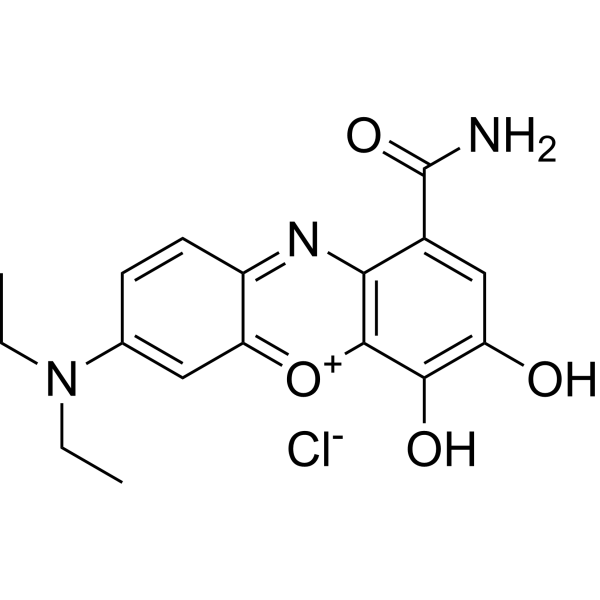
Celestine Blue is a electroactive indicator in DNA biosensors. Celestine Blue is strongly adsorbed on the spinel phases and CNT (carbon nanotubes), facilitates dispersion, acts as a capping agent and allows for the fabrication of spinel decorated CNT. Celestine Blue is an efficient charge transfer mediator, which allows for significant improvement of capacitive behavior. TiO2 nanoparticles doped with Celestine Blue can be used as a label in a sandwich immunoassay for the hepatitis C virus (HCV) core antigen .
loading...
    loading...
Cat. No.: HY-140649
CAS No.: 24991-53-5
Purity:  ≥98.0%
Synonyms: Poly(ethylene glycol)-bis-amine 20000
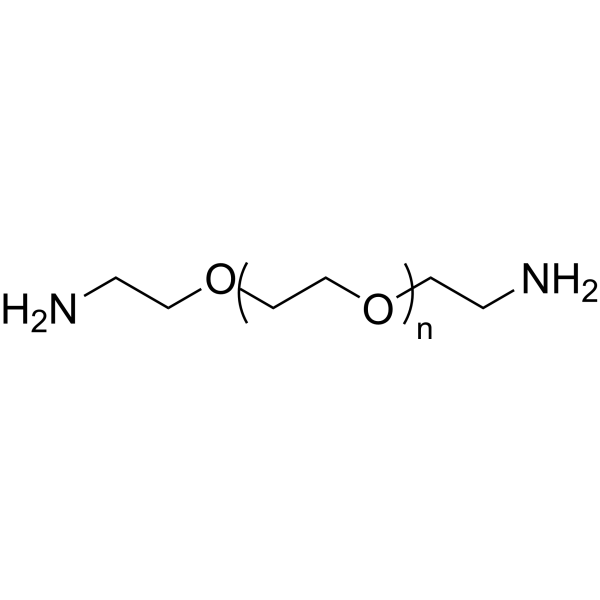
PEG20000-bis-amine (Poly(ethylene glycol)-bis-amine 20000) is a diamine-terminated polyethylene glycol and conjugate linker. PEG20000-bis-amine endows the surface of carbon capsules with stealth properties, biocompatibility, and free amino groups for antibody conjugation. PEG20000-bis-amine acts as a reducing agent and passivating agent to promote the formation and assembly of silver nanoparticles on silica nanospheres, and increases the number of silver nanoparticles on the silica surface.
loading...
    loading...
Cat. No.: HY-140647
CAS No.: 24991-53-5
Synonyms: Poly(ethylene glycol)-bis-amine 3400
PEG3400-bis-amine (Poly(ethylene glycol)-bis-amine 3400) is a diamine-terminated polyethylene glycol and conjugate linker. PEG3400-bis-amine endows the surface of carbon capsules with stealth properties, biocompatibility, and free amino groups for antibody conjugation. PEG3400-bis-amine acts as a reducing agent and passivating agent to promote the formation and assembly of silver nanoparticles on silica nanospheres, and increases the number of silver nanoparticles on the silica surface.
loading...
    loading...
Cat. No.: HY-B1306R
CAS No.: 61-78-9
Synonyms: p-Aminohippuric acid (Standard)
4-Aminohippuric acid (p-Aminohippuric acid) (Standard) is the analytical standard of 4-Aminohippuric acid (HY-B1306). This product is intended for research and analytical applications. 4-Aminohippuric acid (p-Aminohippuric acid) is a coordination ligand for metal ions (such as Cu 2+, Fe 3+, Hg 2+) and a functionalization reagent for nanomaterials. 4-Aminohippuric acid can coordinate with metal ions or modify the surface of materials such as carbon nanotubes and gold nanoparticles through amino and carboxyl groups. 4-Aminohippuric acid can form stable complexes with metal ions or participate in the synthesis of nanomaterials as a reducing agent/stabilizer, enriching metal ions or giving nanoparticles peroxidase-mimicking activity. 4-Aminohippuric acid can be used to construct highly sensitive electrochemical sensors or colorimetric sensors to detect and quantitatively analyze heavy metal ions such as copper, iron, and mercury in environmental water samples and biological samples. 4-Aminohippuric acid may also be a biomarker for attention-deficit/hyperactivity disorder (ADHD) .
loading...
    loading...
Cat. No.: HY-W243303C
CAS No.: 9003-01-4
Poly (acrylic acid) (MW 4000000) is an anionic polyacrylic acid. Poly (acrylic acid) (MW 4000000) acts as a corrosion inhibitor and surface stabilizer. Poly (acrylic acid) (MW 4000000) serves as a biomaterial or organic compound for life science research .
loading...
    loading...
Cat. No.: HY-172351A
CAS No.: 24991-53-5
PEG6000-bis-amine is a diamine-terminated polyethylene glycol (MW≈6000) and conjugate linker. PEG6000-bis-amine endows the surface of carbon capsules with stealth properties, biocompatibility, and free amino groups for antibody conjugation. PEG6000-bis-amine acts as a reducing agent and passivating agent to promote the formation and assembly of silver nanoparticles on silica nanospheres, and increases the number of silver nanoparticles on the silica surface .
loading...
    loading...
Cat. No.: HY-178106
Target:  

Drug Intermediate

Research Areas:  

Cancer

SCN2 is a esterase-responsive prodrug-based amphiphile composed of SN38 (HY-13704) and di-(triazole-[12]aneN3, N) moiety through a 7carbon alkyl chains. SCN2 has excellent self-assembly and reversible siRNA condensation capabilities as well as anti-proliferation activity against cancer cells. SCN2 can be used for synthesis of nanoparticles for drug delivery of lung cancer .
loading...
    loading...
Cat. No.: HY-B1306S
CAS No.: 1219805-41-0
Synonyms: p-Aminohippuric acid-d4
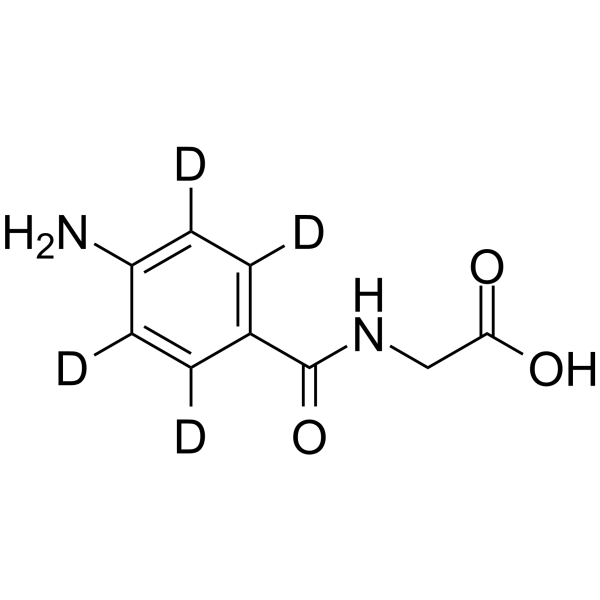
4-Aminohippuric acid-d4 (p-Aminohippuric acid-d4) is the deuterium labeled 4-Aminohippuric acid (HY-B1306). 4-Aminohippuric acid (p-Aminohippuric acid) is a coordination ligand for metal ions (such as Cu 2+, Fe 3+, Hg 2+) and a functionalization reagent for nanomaterials. 4-Aminohippuric acid can coordinate with metal ions or modify the surface of materials such as carbon nanotubes and gold nanoparticles through amino and carboxyl groups. 4-Aminohippuric acid can form stable complexes with metal ions or participate in the synthesis of nanomaterials as a reducing agent/stabilizer, enriching metal ions or giving nanoparticles peroxidase-mimicking activity. 4-Aminohippuric acid can be used to construct highly sensitive electrochemical sensors or colorimetric sensors to detect and quantitatively analyze heavy metal ions such as copper, iron, and mercury in environmental water samples and biological samples. 4-Aminohippuric acid may also be a biomarker for attention-deficit/hyperactivity disorder (ADHD) .
loading...
    loading...
Cat. No.: HY-172351
CAS No.: 24991-53-5
PEG400-bis-amine is a diamine-terminated polyethylene glycol and conjugate linker. PEG400-bis-amine endows the surface of carbon capsules with stealth properties, biocompatibility, and free amino groups for antibody conjugation. PEG400-bis-amine acts as a reducing agent and passivating agent to promote the formation and assembly of silver nanoparticles on silica nanospheres, and increases the number of silver nanoparticles on the silica surface.
loading...
    loading...
Cat. No.: HY-W440681
CAS No.: 1381861-96-6
Target:  

Liposome

Research Areas:  

Others

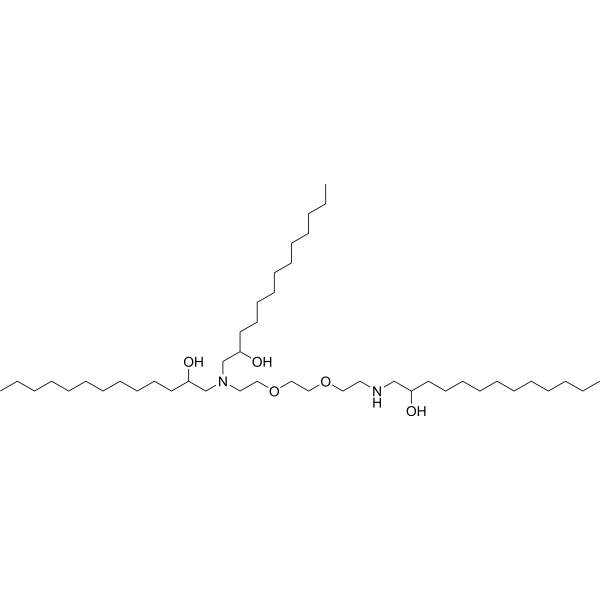
C13-112-tri-tail is a cationic lipid-like compound containing a polar amino alcohol head group, three hydrophobic carbon-13 tails, and a PEG2 linker. C13-112-tri-tail can be formulated into a lipid nanoparticle (LNP).
loading...
    loading...
Cat. No.: HY-W440682
CAS No.: 1381861-86-4
Target:  

Liposome

Research Areas:  

Others

C13-113-tri tail is a cationic lipid-like compound containing a polar amino alcohol head group, three hydrophobic carbon-13 tails, and a tertiary amine linker. C13-113-tri tail can be formulated into a lipid nanoparticle (LNP).
loading...
    loading...
Cat. No.: HY-W440683
CAS No.: 1381861-92-2
Target:  

Liposome

Research Areas:  

Others

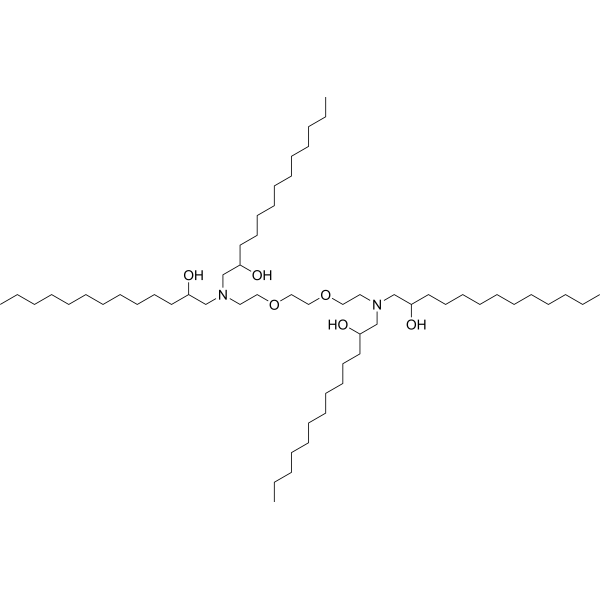
C13-112-tetra-tail is a cationic lipid-like compound containing a polar amino alcohol head group, four hydrophobic carbon-13 tails, and a PEG2 linker. C13-112-tetra-tail can be formulated into a lipid nanoparticle (LNP).
loading...
    loading...

