1. Search Result
Search Result
Results for "

carotenoid synthesis

" in MedChemExpress (MCE) Product Catalog:

7

Inhibitors & Agonists

2

Natural
Products

Targets Recommended:
Cat. No. Product Name Target Research Areas Chemical Structure
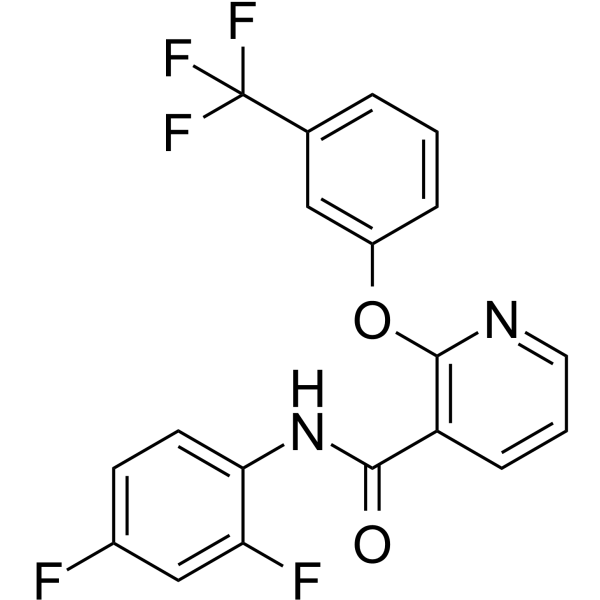
  • HY-W040206

    Environmental Pollutants Acetolactate Synthase (ALS) Herbicide Others
    Diflufenican is a Herbicide. Diflufenican inhibits phytoene desaturase (PDS) in the carotenoid synthesis pathway. Diflufenican suppresses the production of PDS, blocks carotenoid biosynthesis, thereby inducing chlorophyll destruction and cell membrane rupture, and ultimately causes the death of broadleaf weeds. The combination of Diflufenican and Flufenacet can be used to control Lolium rigidum populations resistant to ALS/ACCase .
    Diflufenican
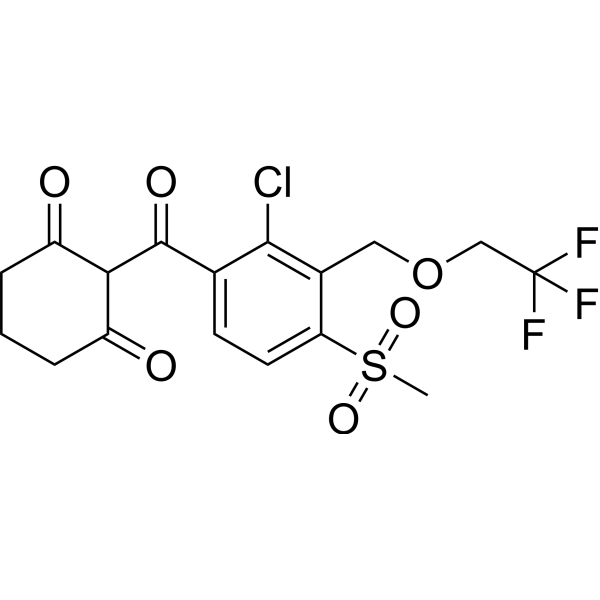
  • HY-137910

    Environmental Pollutants HPPD Herbicide Infection
    Tembotrione is a herbicide belonging to the HPPD (dioxygenase) inhibitor class with crop selectivity. Tembotrione effectively controls a variety of weeds including broadleaf and gramineous species by disrupting carotenoid synthesis, which leads to chlorophyll degradation and leaf whitening. Mixing Tembotrione with isoxaflutole or adding surfactants optimizes its efficacy and reduces phytotoxicity, with no residual impact on subsequent cruciferous crops, thus helping to increase maize grain yield. The activity of Tembotrione decreases under drought conditions, and under specific conditions (such as double-dose treatment), it may cause reversible yellowing and even yield reduction in crops such as poppy .
    Tembotrione
  • HY-174423

    NC-656

    Herbicide Others
    Iptriazopyrid (NC-656) is an azole carboxamide herbicide targeting 4-hydroxyphenylpyruvate dioxygenase (HPPD) with a Ki value of 24.3 nM for Arabidopsis HPPD and 33.3 nM for rice HPPD. Iptriazopyrid blocks plastoquinone and carotenoid synthesis, leading to weed chlorosis and death. Iptriazopyrid is promising for research of controlling weeds such as Echinochloa crus-galli in paddy fields .
    Iptriazopyrid
  • HY-W750719

    Endogenous Metabolite Drug Intermediate Cancer
    Neurosporene is a carotenoid. Neurosporene is an intermediate in the synthesis of Lycopene (HY-N0287). Neurosporene can be isolated from date palm, Kocuria sp. GMA bacteria, and Anthurus archeri fungi. Neurosporene has antioxidant activity. Neurosporene can be used in the research of diseases such as cancer .
    Neurosporene
  • HY-W775061

    Biochemical Assay Reagents Others
    Dichlormate is an inhibitor of normal carotenogenesis in etiolated wheat. Dichlormate can lead to accumulation of carotenoid precursors in plants. Dichlormate exhibits phytotoxicity via inhibiting the synthesis of carotenoids and to the consequent photodestruction of cholorophyll and chloroplast disruption .
    Dichlormate
  • HY-137910R

    Reference Standards Herbicide HPPD Others
    Tembotrione (Standard) is the analytical standard of Tembotrione. This product is intended for research and analytical applications. Tembotrione is a drug that may reduce the productivity of carrots. Tembotrione has the activity of reducing carrot stem mass. Tembotrione can be used to study the total productivity of carrot . Tembotrione is a herbicide belonging to the HPPD (dioxygenase) inhibitor class with crop selectivity. Tembotrione effectively controls a variety of weeds including broadleaf and gramineous species by disrupting carotenoid synthesis, which leads to chlorophyll degradation and leaf whitening. Mixing Tembotrione with isoxaflutole or adding surfactants optimizes its efficacy and reduces phytotoxicity, with no residual impact on subsequent cruciferous crops, thus helping to increase maize grain yield. The activity of Tembotrione decreases under drought conditions, and under specific conditions (such as double-dose treatment), it may cause reversible yellowing and even yield reduction in crops such as poppy .
    Tembotrione (Standard)
  • HY-N18649

    Others Inflammation/Immunology
    Rosa canina extract, derived from the wild rose (often known as rose hip), is rich in vitamin C, flavonoids, carotenoids, and essential fatty acids, contributing to its numerous health benefits. The extract is primarily known for its anti-inflammatory, antioxidant, and immune-boosting properties. Rosa canina extract is commonly used to boost the immune system, particularly during cold and flu seasons, due to its high vitamin C content. It also has joint health benefits, as it helps reduce inflammation and pain in conditions like arthritis. The extract's antioxidant properties help protect cells from oxidative stress and may contribute to skin health by promoting collagen synthesis, reducing the appearance of wrinkles, and supporting overall skin elasticity.
    Rosa canina extract

Inquiry Online

Your information is safe with us. * Required Fields.

Salutation


Country or Region *

Applicant Name *


Organization Name *

Department *


Email Address *


Product Name *

Cat. No.


Requested quantity *

Phone Number *


Remarks

Inquiry Online

Inquiry Information

Product Name:
Cat. No.:
Quantity:
MCE Japan Authorized Agent:

