

Search Result
Results for "
cationic liposomes
" in MedChemExpress (MCE) Product Catalog:
13
Biochemical Assay Reagents
2
Isotope-Labeled Compounds
| Cat. No. |
Product Name |
Target |
Research Areas |
Chemical Structure |
-
- HY-112005
-
DOPE
Maximum Cited Publications
10 Publications Verification
Dioleoylphosphatidylethanolamine; 1,2-Dioleoyl-sn-glycero-3-phosphoethanolamine
|
Liposome
Endogenous Metabolite
|
Inflammation/Immunology
|
|
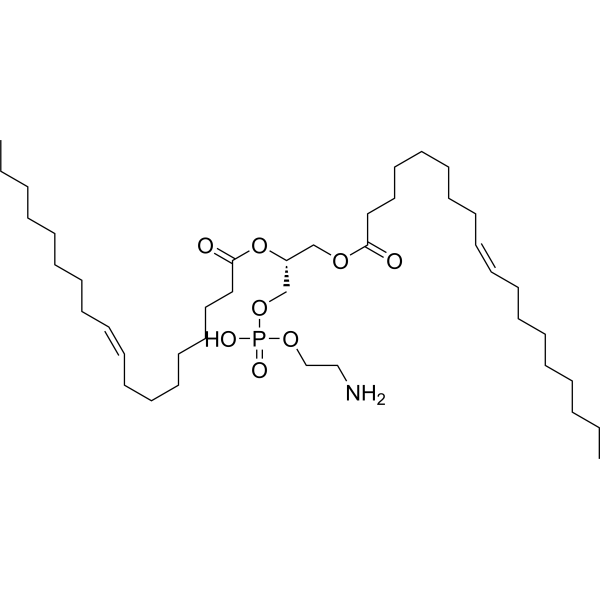
DOPE (Dioleoylphosphatidylethanolamine) is a neutral helper lipid for cationic liposome and combines with cationic phospholipids to improve transfection efficiency of naked siRNA .
|
-
-
- HY-130751
-
DODAP
1 Publications Verification
|
Liposome
|
Inflammation/Immunology
|
|
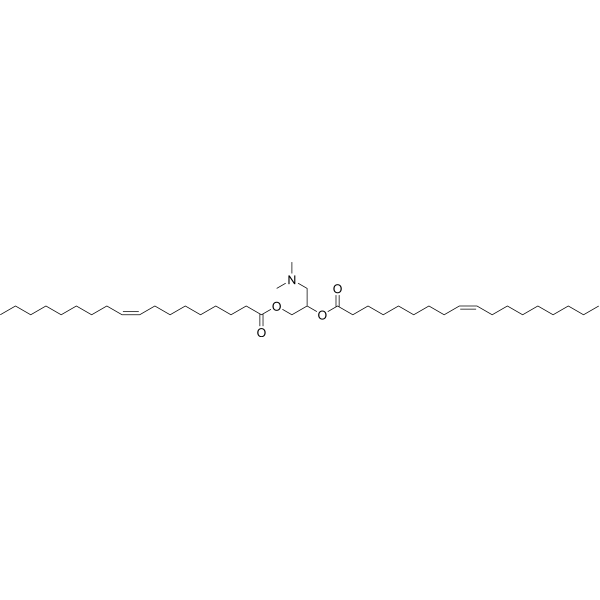
DODAP is a cationic lipid utilized as the lipid component in liposomes (pKa = 5.59 in TNS binding tests). DODAP is employed for encapsulating siRNA and delivering immunostimulated chemotherapeutic agents both in vitro and in vivo. DODAP holds great promise for research in vaccines and inflammation .
|
-
-
- HY-139200
-
DOTMA
1 Publications Verification
|
Liposome
|
Others
|
|
DOTMA is a cationic lipid that has been used as a non-viral vector for gene therapy. DOTMA is used as a component of liposomes to encapsulate siRNA, microRNA, and oligonucleotides and for in vitro gene transfection. DOTMA promotes effective interaction between liposomes and cell membranes by inducing positive charge on the liposomes. DOTMA showed good gene transfection effect both in vitro and in vivo .
|
-
-
- HY-131119
-
|
Dioctadecyldimethylammonium bromide; DODAB
|
Liposome
|
Others
|
|
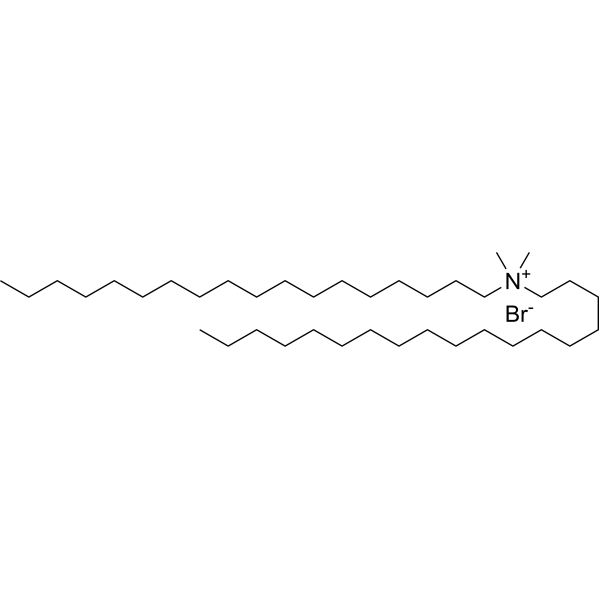
Dimethyldioctadecylammonium bromide is a synthetic cationic lipid commonly used in gene delivery and vaccine development. Also known as DODAB or DDAB, it consists of a positively charged ammonium head group and two long hydrophobic tails. These properties make it useful for forming liposomes and other lipid-based nanoparticles that can efficiently deliver genetic material into cells. In addition to its applications in biotechnology, DDAB is also used in surfactants, emulsifiers and fabric softeners. However, due to its potential toxicity and irritation, extreme care should be taken when handling DDAB.
|
-
-
- HY-139298
-
L319
1 Publications Verification
Di((Z)-Non-2-en-1-yl) 9-((4-(dimethylamino)butanoyl)oxy)heptadecanedioate
|
Liposome
|
Inflammation/Immunology
|
|
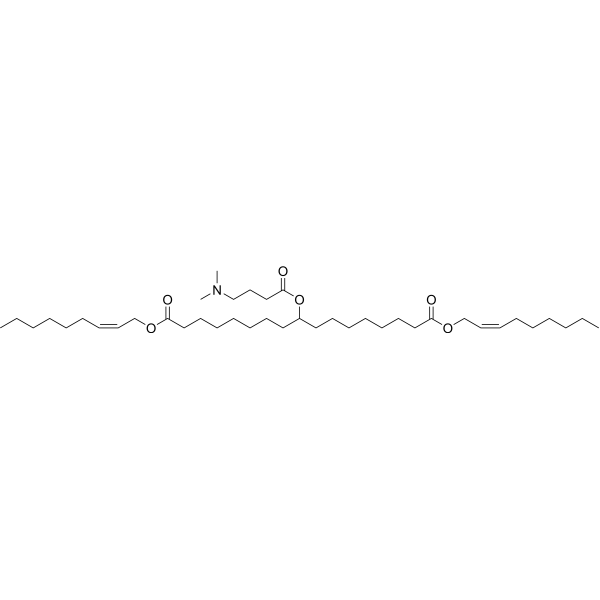
L319 is an ionizable cationic lipidoid and can be used for synthetic liposomes, from the patent WO-2011153493-A2, compound 1 .
|
-
-
- HY-W590549
-
|
DODAC
|
Liposome
|
Cancer
|
|
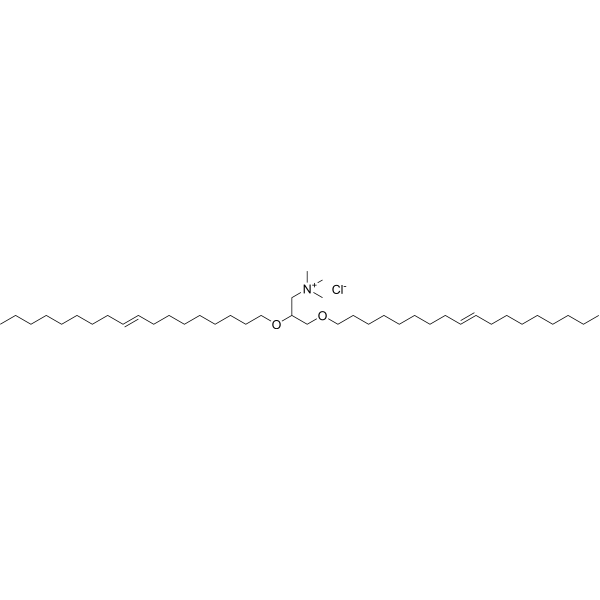
Dioleyldimethylammonium chloride (DODAC) is a positively charged lipid promoter with membrane-disrupting activity, which is often formulated into cationic liposomes with dioleoylphosphatidylethanolamine. Dioleyldimethylammonium chloride is used in gene transfection research; through electrostatic interactions, it effectively promotes the binding of programmable fusion vesicles to cells and induces membrane disruption. Dioleyldimethylammonium chloride is also applied in studies on L1210 leukemia and LS180 human colon cancer .
|
-
-
- HY-112766
-
|
|
Liposome
|
Others
|
|
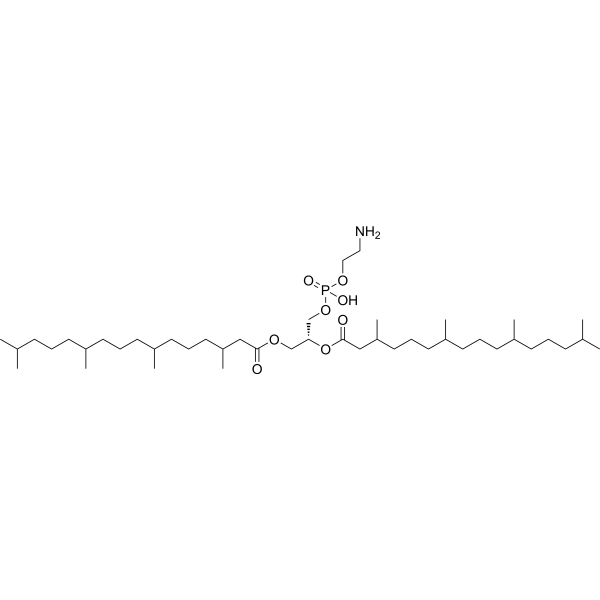
DPyPE is a neutral phosphatidylethanolamine lipid composed of a polyisoprene alkyl chain with two pyridine-containing phosphine ligands. DPyPE is mainly used in liposome formulations and to enhance the efficiency of gene delivery in vitro and in vivo. For example, DPyPE can be mixed with cationic lipids such as VC1052 (HY-156616) (in a 1:1 ratio) to form the vaccine adjuvant Vaxfectin (HY-142998). DPyPE assists VC1052 in binding to negatively charged pDNA to form a uniform liposome complex by regulating the fluidity and stability of the liposome membrane .
|
-
-
- HY-W416291
-
|
Poly(A)
|
Biochemical Assay Reagents
|
Cancer
|
|
Polyadenylic acid potassium, also known as Poly(A), is enzymatically added to messenger RNA (mRNA) in eukaryotic cells to stabilize mRNAs. Poly(A) is used to evaluate binding on cationic liposomes doped with non-ionic nucleolipids. Poly(A) is used in small molecule mRNA targeted drug development to evaluate the binding of potential therapeutic agents such as the Isoquinoline group of alkaloids. Small molecules that could bind to this poly(A) tail could influence and possibly inhibit mRNA function and subsequent protein production in the cell leading to the development of new type of therapeutic agents.
|
-
-
- HY-144018
-
|
|
Liposome
|
Others
|
|
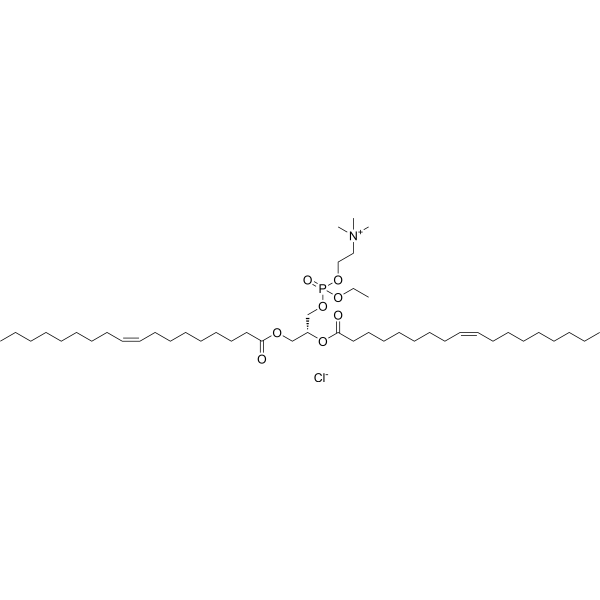
18:1 EPC chloride is a cationic alkylated phospholipid and also an egg yolk phosphatidylcholine. 18:1 EPC chloride can be used in research on liposomes and drug delivery .
|
-
-
- HY-D1556
-
|
1,2-dioleoyl-sn-glycero-3-phosphoethanolamine-N-(carboxyfluorescein) ammonium
|
Fluorescent Dye
|
Cancer
|
|
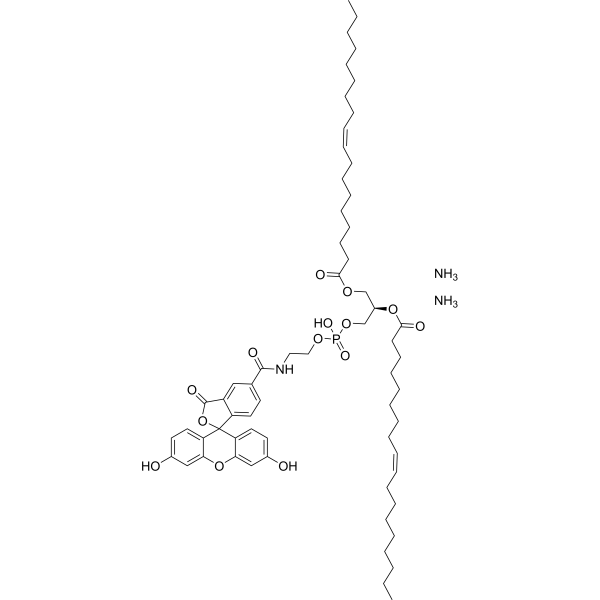
18:1 PE CF (1,2-dioleoyl-sn-glycero-3-phosphoethanolamine-N-(carboxyfluorescein) (ammonium)) is a pH-sensitive fluorescent indicator. 18:1 PE CF exhibits changes in fluorescence intensity in response to pH variations and reflects the electrostatic states of cationic liposomes and lipoplexes. 18:1 PE CF supports real-time visualization of pH distribution and membrane deformation in giant unilamellar vesicles and is suitable for steady-state fluorescence testing in large unilamellar vesicle membranes. 18:1 PE CF is capable of monitoring the surface electrical potential of cationic liposomes and lipoplexes and can effectively label lipid bilayers and nanomicelles. 18:1 PE CF can be used for the research of the investigation of lung cancer (Ex = 495 nm; Em = 520 nm) .
|
-
-
- HY-144025
-
|
|
Liposome
|
Others
|
|
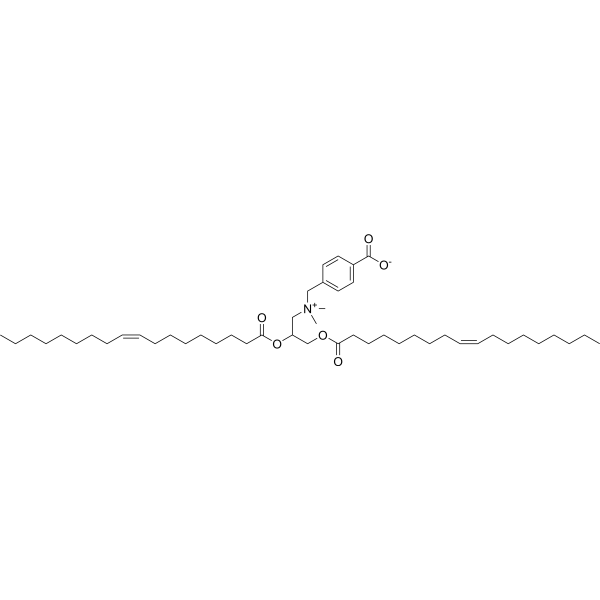
DOBAQ, a cationic lipid, is a pH-sensitive lipid. DOBAQ can be used for liposomes applied in drug delivery .
|
-
-
- HY-112763
-
|
|
Liposome
|
Inflammation/Immunology
|
|
CLinDMA, a cationic lipid, can cause inflammatory response. CLinDMA can be used for the synthesis LNP201. LNP201 is a liposome assembly for systemic delivery of siRNA .
|
-
-
- HY-112005GL
-
|
Dioleoylphosphatidylethanolamine (GMP Like); 1,2-Dioleoyl-sn-glycero-3-phosphoethanolamine (GMP Like)
|
Liposome
Endogenous Metabolite
|
Inflammation/Immunology
|
|
DOPE (GMP Like) is the GMP Like class DOPE (HY-112005), and can be used as pharmaceutical excipients. GMP small molecules works appropriately as an auxiliary reagent for cell therapy manufacture. DOPE is a neutral helper lipid for cationic liposome and combines with cationic phospholipids to improve transfection efficiency of naked siRNA .
|
-
-
- HY-W800783
-
|
CDESA
|
Liposome
|
Others
|
|
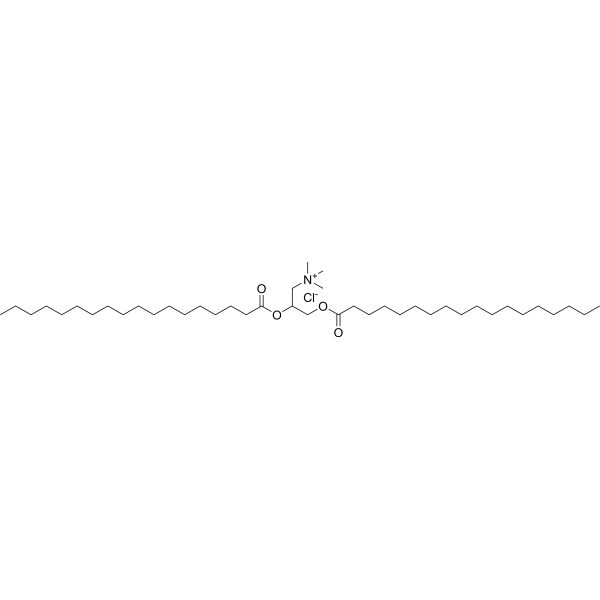
DSTAP chloride (CDESA) is a cationic lipid that used in the formation of lipid nanoparticles (LNPs). DORI chloride has high transfection efficiency .
|
-
-
- HY-144021
-
|
|
Liposome
|
Others
|
|
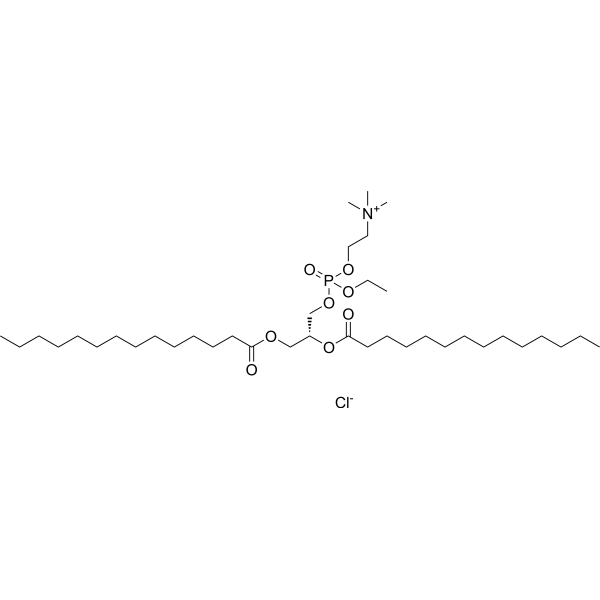
14:0 EPC chloride is an acyl cationic lipid that can be used for liposomes applied in drug delivery .
|
-
-
- HY-W800782
-
|
|
Liposome
|
Others
|
|
DC-6-14 is a cationic lipid with gene transfection activity, which can be used for the synthesis of liposomes .
|
-
-
- HY-W800776
-
|
1,2-Dioleoyl-3-dimethyl-hydroxyethylammonium bromide
|
Liposome
|
Others
|
|
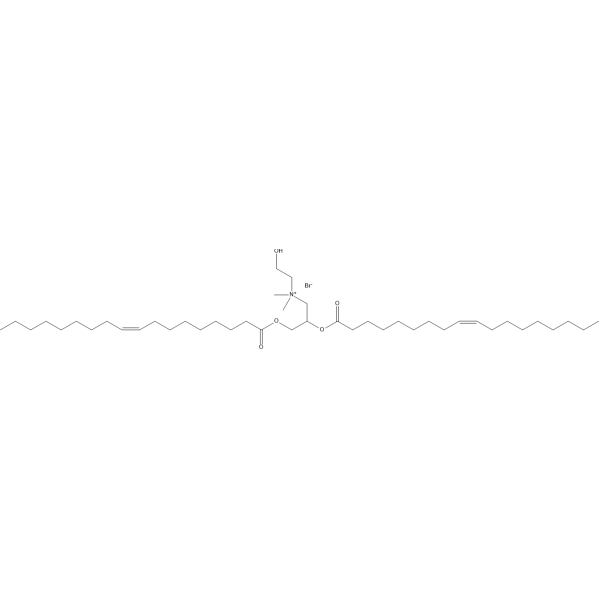
DORI is a cationic lipid that can deliver plasmid DNA in vitro. DORI has lower cytotoxicity and high transfection efficiency .
|
-
-
- HY-153125
-
|
|
Liposome
|
Others
|
|
DLRIE is a cationic lipid that can be used for the synthesis of liposome GAP-DLRIE. GAP-DLRIE can be used to enhance the delivery and expression of plasmid DNA. DLRIE can be used for delivery of nucleic acids .
|
-
-
- HY-172558
-
|
|
Biochemical Assay Reagents
|
Others
|
|
MEL-A is a glycolipid biosurfactant. MEL-A can be produced from vegetable oils by Pseudozyma yeasts. MEL-A can improve the low-temperature fluidity of biodiesel and hydrocarbon fuels. MEL-A is composed of a mixture of MEL-A isoforms with variable lengths of the fatty acid chain. MEL-A can significantly increases gene transfection by cationic liposomes via membrane fusion .
|
-
-
- HY-160275
-
|
|
Liposome
|
Others
|
|
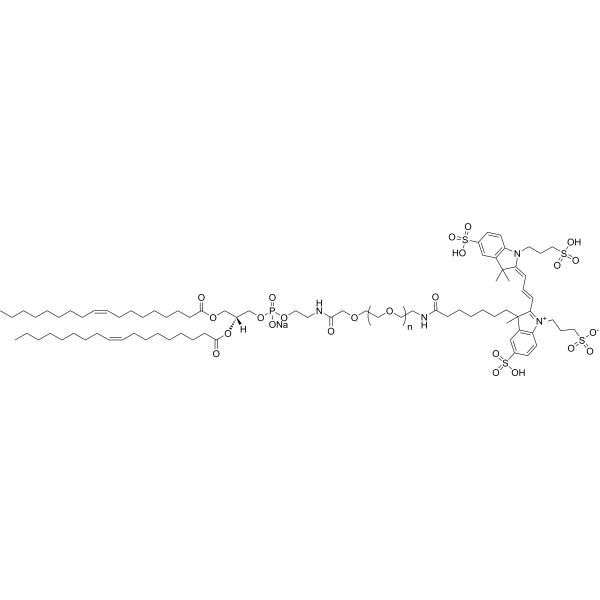
DOPE-PEG2000-Fluor 555 is a PEG-lipid-dye conjugate featuring a DOPE phospholipid and a Fluor 555 dye. DOPE (HY-112005) is a neutral helper lipid for cationic liposome. Fluor 555 is a fluorescent dye .
|
-
-
- HY-168777
-
|
|
Liposome
|
Others
|
|
Lipid 7-1 is an ionizable cationic lipid that can be used for the preparation of liposomes .
|
-
-
- HY-145797
-
|
|
Liposome
|
Others
|
|
L343 is an ionizable cationic lipidoid and can be used to synthetic liposomes for systemic delivery of RNAi therapeutics.
|
-
-
- HY-144023
-
|
|
Liposome
|
Others
|
|
16:0-18:1 EPC chloride is a cationic lipid, which can be used for liposomes applied in drug delivery .
|
-
-
- HY-160581
-
|
|
Liposome
|
Others
|
|
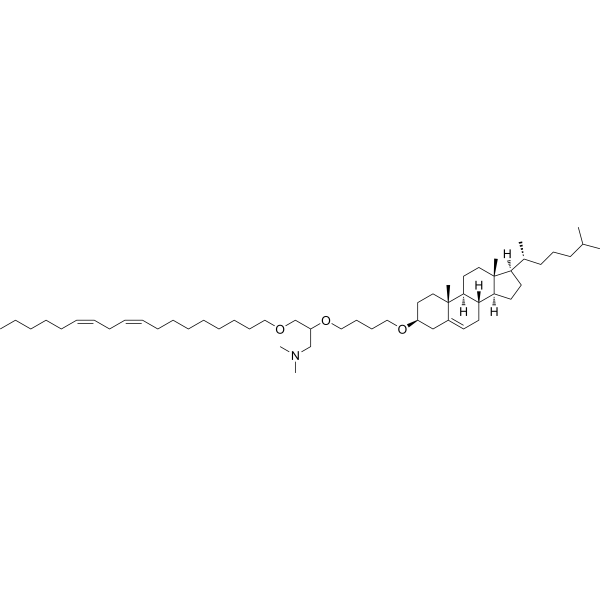
OH-C-Chol is a cationic liposome that serves as a siRNA delivery vehicle. OH-C-Chol (LP-C) and OH-NC-Chol (LP-NC)/siRNA complexes (lipoplexes) showed better performance than NP-C and NP-NC/siRNA complexes (nanocomplexes), respectively. ) greater gene silencing effect .
|
-
-
- HY-P10968
-
|
|
Bacterial
Antibiotic
|
Infection
|
|
KT2 is a cationic amphipathic antibacterial peptide. KT2 can completely kill cells of E. coli O157:H7. KT2 has potent anti-biofilm activity and prevents biofilm formation of E. coli O157:H7. KT2 significantly binds to bacterial surface LPS and interacts with the lipids of liposomes with great penetration capability into bacterial cells, followed by bond to DNA and other cytoplasmic membrane .
|
-
-
- HY-112005S
-
|
Dioleoylphosphatidylethanolamine-d62; 1,2-Dioleoyl-sn-glycero-3-phosphoethanolamine-d62
|
Isotope-Labeled Compounds
|
Inflammation/Immunology
|
|
DOPE-d62 (Dioleoylphosphatidylethanolamine-d62) is the deuterium labeled DOPE (HY-112005). DOPE (Dioleoylphosphatidylethanolamine) is a neutral helper lipid for cationic liposome and combines with cationic phospholipids to improve transfection efficiency of naked siRNA .
|
-
-
- HY-W1130442
-
|
|
Liposome
|
Inflammation/Immunology
Cancer
|
|
DMA4-H228 is a highly spleen-targeted, ionizable cationic liposome. DMA4-H228 is used to prepare lipid nanoparticles (LNPs) loaded with mRNA for the delivery of mRNA in vivo .
|
-
-
- HY-W724291
-
|
Dioctadecyldimethylammonium-d3 bromide; DODAB-d3
|
Isotope-Labeled Compounds
Liposome
|
Others
|
|
Dimethyldioctadecylammonium-d3 bromide (Dioctadecyldimethylammonium-d3 bromide) is the deuterium labeled Dimethyldioctadecylammonium bromide (HY-131119). Dimethyldioctadecylammonium bromide is a synthetic cationic lipid commonly used in gene delivery and vaccine development. Also known as DODAB or DDAB, it consists of a positively charged ammonium head group and two long hydrophobic tails. These properties make it useful for forming liposomes and other lipid-based nanoparticles that can efficiently deliver genetic material into cells. In addition to its applications in biotechnology, DDAB is also used in surfactants, emulsifiers and fabric softeners. However, due to its potential toxicity and irritation, extreme care should be taken when handling DDAB.
|
-
| Cat. No. |
Product Name |
Type |
-
- HY-D1556
-
|
1,2-dioleoyl-sn-glycero-3-phosphoethanolamine-N-(carboxyfluorescein) ammonium
|
Fluorescent Dyes
|
|
18:1 PE CF (1,2-dioleoyl-sn-glycero-3-phosphoethanolamine-N-(carboxyfluorescein) (ammonium)) is a pH-sensitive fluorescent indicator. 18:1 PE CF exhibits changes in fluorescence intensity in response to pH variations and reflects the electrostatic states of cationic liposomes and lipoplexes. 18:1 PE CF supports real-time visualization of pH distribution and membrane deformation in giant unilamellar vesicles and is suitable for steady-state fluorescence testing in large unilamellar vesicle membranes. 18:1 PE CF is capable of monitoring the surface electrical potential of cationic liposomes and lipoplexes and can effectively label lipid bilayers and nanomicelles. 18:1 PE CF can be used for the research of the investigation of lung cancer (Ex = 495 nm; Em = 520 nm) .
|
-
- HY-112005GL
-
|
Dioleoylphosphatidylethanolamine (GMP Like); 1,2-Dioleoyl-sn-glycero-3-phosphoethanolamine (GMP Like)
|
Fluorescent Dyes
|
|
DOPE (GMP Like) is the GMP Like class DOPE (HY-112005), and can be used as pharmaceutical excipients. GMP small molecules works appropriately as an auxiliary reagent for cell therapy manufacture. DOPE is a neutral helper lipid for cationic liposome and combines with cationic phospholipids to improve transfection efficiency of naked siRNA .
|
| Cat. No. |
Product Name |
Type |
-
- HY-112005
-
DOPE
Maximum Cited Publications
10 Publications Verification
Dioleoylphosphatidylethanolamine; 1,2-Dioleoyl-sn-glycero-3-phosphoethanolamine
|
Biochemical Assay Reagents
|
|
DOPE (Dioleoylphosphatidylethanolamine) is a neutral helper lipid for cationic liposome and combines with cationic phospholipids to improve transfection efficiency of naked siRNA .
|
-
- HY-130751
-
DODAP
1 Publications Verification
|
Biochemical Assay Reagents
|
|
DODAP is a cationic lipid utilized as the lipid component in liposomes (pKa = 5.59 in TNS binding tests). DODAP is employed for encapsulating siRNA and delivering immunostimulated chemotherapeutic agents both in vitro and in vivo. DODAP holds great promise for research in vaccines and inflammation .
|
-
- HY-139200
-
DOTMA
1 Publications Verification
|
Biochemical Assay Reagents
|
|
DOTMA is a cationic lipid that has been used as a non-viral vector for gene therapy. DOTMA is used as a component of liposomes to encapsulate siRNA, microRNA, and oligonucleotides and for in vitro gene transfection. DOTMA promotes effective interaction between liposomes and cell membranes by inducing positive charge on the liposomes. DOTMA showed good gene transfection effect both in vitro and in vivo .
|
-
- HY-131119
-
|
Dioctadecyldimethylammonium bromide; DODAB
|
Biochemical Assay Reagents
|
|
Dimethyldioctadecylammonium bromide is a synthetic cationic lipid commonly used in gene delivery and vaccine development. Also known as DODAB or DDAB, it consists of a positively charged ammonium head group and two long hydrophobic tails. These properties make it useful for forming liposomes and other lipid-based nanoparticles that can efficiently deliver genetic material into cells. In addition to its applications in biotechnology, DDAB is also used in surfactants, emulsifiers and fabric softeners. However, due to its potential toxicity and irritation, extreme care should be taken when handling DDAB.
|
-
- HY-139298
-
L319
1 Publications Verification
Di((Z)-Non-2-en-1-yl) 9-((4-(dimethylamino)butanoyl)oxy)heptadecanedioate
|
Biochemical Assay Reagents
|
|
L319 is an ionizable cationic lipidoid and can be used for synthetic liposomes, from the patent WO-2011153493-A2, compound 1 .
|
-
- HY-144018
-
|
|
Biochemical Assay Reagents
|
|
18:1 EPC chloride is a cationic alkylated phospholipid and also an egg yolk phosphatidylcholine. 18:1 EPC chloride can be used in research on liposomes and drug delivery .
|
-
- HY-144025
-
|
|
Biochemical Assay Reagents
|
|
DOBAQ, a cationic lipid, is a pH-sensitive lipid. DOBAQ can be used for liposomes applied in drug delivery .
|
-
- HY-112763
-
|
|
Biochemical Assay Reagents
|
|
CLinDMA, a cationic lipid, can cause inflammatory response. CLinDMA can be used for the synthesis LNP201. LNP201 is a liposome assembly for systemic delivery of siRNA .
|
-
- HY-112005GL
-
|
Dioleoylphosphatidylethanolamine (GMP Like); 1,2-Dioleoyl-sn-glycero-3-phosphoethanolamine (GMP Like)
|
Biochemical Assay Reagents
|
|
DOPE (GMP Like) is the GMP Like class DOPE (HY-112005), and can be used as pharmaceutical excipients. GMP small molecules works appropriately as an auxiliary reagent for cell therapy manufacture. DOPE is a neutral helper lipid for cationic liposome and combines with cationic phospholipids to improve transfection efficiency of naked siRNA .
|
-
- HY-144021
-
-
- HY-160275
-
|
|
Biochemical Assay Reagents
|
|
DOPE-PEG2000-Fluor 555 is a PEG-lipid-dye conjugate featuring a DOPE phospholipid and a Fluor 555 dye. DOPE (HY-112005) is a neutral helper lipid for cationic liposome. Fluor 555 is a fluorescent dye .
|
-
- HY-145797
-
|
|
Biochemical Assay Reagents
|
|
L343 is an ionizable cationic lipidoid and can be used to synthetic liposomes for systemic delivery of RNAi therapeutics.
|
-
- HY-144023
-
| Cat. No. |
Product Name |
Target |
Research Area |
-
- HY-P10968
-
|
|
Bacterial
Antibiotic
|
Infection
|
|
KT2 is a cationic amphipathic antibacterial peptide. KT2 can completely kill cells of E. coli O157:H7. KT2 has potent anti-biofilm activity and prevents biofilm formation of E. coli O157:H7. KT2 significantly binds to bacterial surface LPS and interacts with the lipids of liposomes with great penetration capability into bacterial cells, followed by bond to DNA and other cytoplasmic membrane .
|
| Cat. No. |
Product Name |
Chemical Structure |
-
- HY-112005S
-
|
|
|
DOPE-d62 (Dioleoylphosphatidylethanolamine-d62) is the deuterium labeled DOPE (HY-112005). DOPE (Dioleoylphosphatidylethanolamine) is a neutral helper lipid for cationic liposome and combines with cationic phospholipids to improve transfection efficiency of naked siRNA .
|
-
-
- HY-W724291
-
|
|
|
Dimethyldioctadecylammonium-d3 bromide (Dioctadecyldimethylammonium-d3 bromide) is the deuterium labeled Dimethyldioctadecylammonium bromide (HY-131119). Dimethyldioctadecylammonium bromide is a synthetic cationic lipid commonly used in gene delivery and vaccine development. Also known as DODAB or DDAB, it consists of a positively charged ammonium head group and two long hydrophobic tails. These properties make it useful for forming liposomes and other lipid-based nanoparticles that can efficiently deliver genetic material into cells. In addition to its applications in biotechnology, DDAB is also used in surfactants, emulsifiers and fabric softeners. However, due to its potential toxicity and irritation, extreme care should be taken when handling DDAB.
|
-
| Cat. No. |
Product Name |
|
Classification |
-
- HY-112005
-
DOPE
Maximum Cited Publications
10 Publications Verification
Dioleoylphosphatidylethanolamine; 1,2-Dioleoyl-sn-glycero-3-phosphoethanolamine
|
|
Phospholipids
|
|
DOPE (Dioleoylphosphatidylethanolamine) is a neutral helper lipid for cationic liposome and combines with cationic phospholipids to improve transfection efficiency of naked siRNA .
|
-
- HY-130751
-
DODAP
1 Publications Verification
|
|
Cationic Lipids
|
|
DODAP is a cationic lipid utilized as the lipid component in liposomes (pKa = 5.59 in TNS binding tests). DODAP is employed for encapsulating siRNA and delivering immunostimulated chemotherapeutic agents both in vitro and in vivo. DODAP holds great promise for research in vaccines and inflammation .
|
-
- HY-139200
-
DOTMA
1 Publications Verification
|
|
Cationic Lipids
|
|
DOTMA is a cationic lipid that has been used as a non-viral vector for gene therapy. DOTMA is used as a component of liposomes to encapsulate siRNA, microRNA, and oligonucleotides and for in vitro gene transfection. DOTMA promotes effective interaction between liposomes and cell membranes by inducing positive charge on the liposomes. DOTMA showed good gene transfection effect both in vitro and in vivo .
|
-
- HY-131119
-
|
Dioctadecyldimethylammonium bromide; DODAB
|
|
Cationic Lipids
|
|
Dimethyldioctadecylammonium bromide is a synthetic cationic lipid commonly used in gene delivery and vaccine development. Also known as DODAB or DDAB, it consists of a positively charged ammonium head group and two long hydrophobic tails. These properties make it useful for forming liposomes and other lipid-based nanoparticles that can efficiently deliver genetic material into cells. In addition to its applications in biotechnology, DDAB is also used in surfactants, emulsifiers and fabric softeners. However, due to its potential toxicity and irritation, extreme care should be taken when handling DDAB.
|
-
- HY-139298
-
L319
1 Publications Verification
Di((Z)-Non-2-en-1-yl) 9-((4-(dimethylamino)butanoyl)oxy)heptadecanedioate
|
|
Cationic Lipids
|
|
L319 is an ionizable cationic lipidoid and can be used for synthetic liposomes, from the patent WO-2011153493-A2, compound 1 .
|
-
- HY-W590549
-
|
DODAC
|
|
Cationic Lipids
|
|
Dioleyldimethylammonium chloride (DODAC) is a positively charged lipid promoter with membrane-disrupting activity, which is often formulated into cationic liposomes with dioleoylphosphatidylethanolamine. Dioleyldimethylammonium chloride is used in gene transfection research; through electrostatic interactions, it effectively promotes the binding of programmable fusion vesicles to cells and induces membrane disruption. Dioleyldimethylammonium chloride is also applied in studies on L1210 leukemia and LS180 human colon cancer .
|
-
- HY-112766
-
|
|
|
Phospholipids
|
|
DPyPE is a neutral phosphatidylethanolamine lipid composed of a polyisoprene alkyl chain with two pyridine-containing phosphine ligands. DPyPE is mainly used in liposome formulations and to enhance the efficiency of gene delivery in vitro and in vivo. For example, DPyPE can be mixed with cationic lipids such as VC1052 (HY-156616) (in a 1:1 ratio) to form the vaccine adjuvant Vaxfectin (HY-142998). DPyPE assists VC1052 in binding to negatively charged pDNA to form a uniform liposome complex by regulating the fluidity and stability of the liposome membrane .
|
-
- HY-144018
-
|
|
|
Phospholipids
|
|
18:1 EPC chloride is a cationic alkylated phospholipid and also an egg yolk phosphatidylcholine. 18:1 EPC chloride can be used in research on liposomes and drug delivery .
|
-
- HY-144025
-
|
|
|
Cationic Lipids
|
|
DOBAQ, a cationic lipid, is a pH-sensitive lipid. DOBAQ can be used for liposomes applied in drug delivery .
|
-
- HY-112763
-
|
|
|
Cationic Lipids
|
|
CLinDMA, a cationic lipid, can cause inflammatory response. CLinDMA can be used for the synthesis LNP201. LNP201 is a liposome assembly for systemic delivery of siRNA .
|
-
- HY-W800783
-
|
CDESA
|
|
Cationic Lipids
|
|
DSTAP chloride (CDESA) is a cationic lipid that used in the formation of lipid nanoparticles (LNPs). DORI chloride has high transfection efficiency .
|
-
- HY-144021
-
|
|
|
Cationic Lipids
|
|
14:0 EPC chloride is an acyl cationic lipid that can be used for liposomes applied in drug delivery .
|
-
- HY-W800782
-
|
|
|
Cationic Lipids
|
|
DC-6-14 is a cationic lipid with gene transfection activity, which can be used for the synthesis of liposomes .
|
-
- HY-W800776
-
|
1,2-Dioleoyl-3-dimethyl-hydroxyethylammonium bromide
|
|
Cationic Lipids
|
|
DORI is a cationic lipid that can deliver plasmid DNA in vitro. DORI has lower cytotoxicity and high transfection efficiency .
|
-
- HY-153125
-
|
|
|
Cationic Lipids
|
|
DLRIE is a cationic lipid that can be used for the synthesis of liposome GAP-DLRIE. GAP-DLRIE can be used to enhance the delivery and expression of plasmid DNA. DLRIE can be used for delivery of nucleic acids .
|
-
- HY-160275
-
|
|
|
Pegylated Lipids
Fluorescent Lipids
|
|
DOPE-PEG2000-Fluor 555 is a PEG-lipid-dye conjugate featuring a DOPE phospholipid and a Fluor 555 dye. DOPE (HY-112005) is a neutral helper lipid for cationic liposome. Fluor 555 is a fluorescent dye .
|
-
- HY-168777
-
|
|
|
Cationic Lipids
|
|
Lipid 7-1 is an ionizable cationic lipid that can be used for the preparation of liposomes .
|
-
- HY-145797
-
|
|
|
Cationic Lipids
|
|
L343 is an ionizable cationic lipidoid and can be used to synthetic liposomes for systemic delivery of RNAi therapeutics.
|
-
- HY-144023
-
|
|
|
Cationic Lipids
|
|
16:0-18:1 EPC chloride is a cationic lipid, which can be used for liposomes applied in drug delivery .
|
-
- HY-160581
-
|
|
|
Cationic Lipids
|
|
OH-C-Chol is a cationic liposome that serves as a siRNA delivery vehicle. OH-C-Chol (LP-C) and OH-NC-Chol (LP-NC)/siRNA complexes (lipoplexes) showed better performance than NP-C and NP-NC/siRNA complexes (nanocomplexes), respectively. ) greater gene silencing effect .
|
| Cat. No. |
Product Name |
Target |
Research Areas |
Chemical Structure |
-
- HY-112005GL
-
|
Dioleoylphosphatidylethanolamine (GMP Like); 1,2-Dioleoyl-sn-glycero-3-phosphoethanolamine (GMP Like)
|
Liposome
Endogenous Metabolite
|
Inflammation/Immunology
|
|
DOPE (GMP Like) is the GMP Like class DOPE (HY-112005), and can be used as pharmaceutical excipients. GMP small molecules works appropriately as an auxiliary reagent for cell therapy manufacture. DOPE is a neutral helper lipid for cationic liposome and combines with cationic phospholipids to improve transfection efficiency of naked siRNA .
|
-
Your information is safe with us. * Required Fields.
Inquiry Information
- Product Name:
- Cat. No.:
- Quantity:
- MCE Japan Authorized Agent:

