1. Search Result
Search Result
Pathways Recommended: Cell Cycle/DNA Damage Stem Cell/Wnt
Results for "

cell cycle protein

" in MedChemExpress (MCE) Product Catalog:

319

Inhibitors & Agonists

11

Screening Libraries

5

Biochemical Assay Reagents

8

Peptides

43

Natural
Products

21

Recombinant Proteins

4

Isotope-Labeled Compounds

24

Antibodies

5

Oligonucleotides

Cat. No. Product Name Target Research Areas Chemical Structure
  • HY-A0098
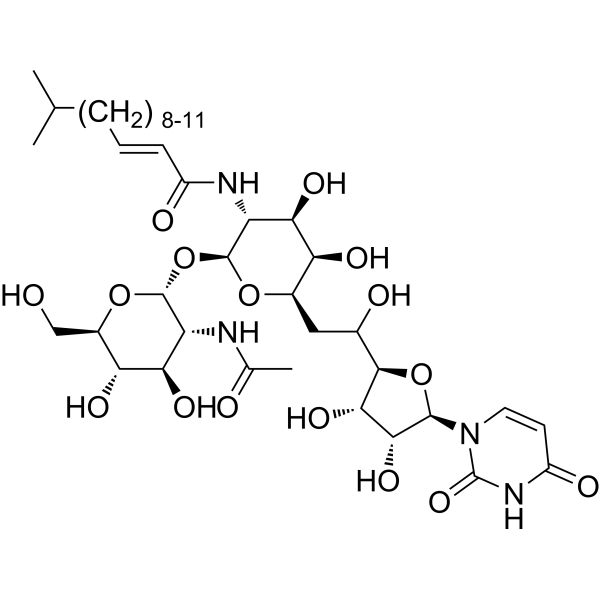
    Tunicamycin
    Maximum Cited Publications
    155 Publications Verification

    Antibiotic Influenza Virus Fungal Bacterial Aminotransferases (Transaminases) Exosomes Infection Inflammation/Immunology Cancer
    Tunicamycin is a mixture of homologous nucleoside antibiotic that inhibits N-linked glycosylation and blocks GlcNAc phosphotransferase (GPT). Tunicamycin causes accumulation of unfolded proteins in cell endoplasmic reticulum (ER) and induces ER stress, and causes blocking of DNA synthesis and cell cycle arrest in G1 phase. Tunicamycin inhibits gram-positive bacteria, yeasts, fungi, and viruses and has anti-cancer activity .Tunicamycin increases exosome release in cervical cancer cells .
    Tunicamycin
  • HY-16909
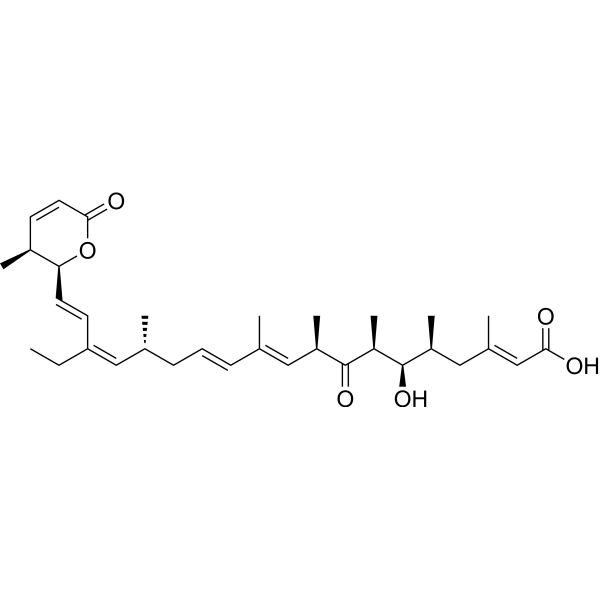
    Leptomycin B
    20+ Cited Publications

    CI 940; LMB

    CRM1 Fungal Antibiotic Infection Cancer
    Leptomycin B (CI 940; LMB) is a potent inhibitor of the nuclear export of proteins. Leptomycin B inactivates CRM1/exportin 1 by covalent modification at a cysteine residue. Leptomycin B is a potent antifungal antibiotic blocking the eukaryotic cell cycle .
    Leptomycin B
  • HY-150231
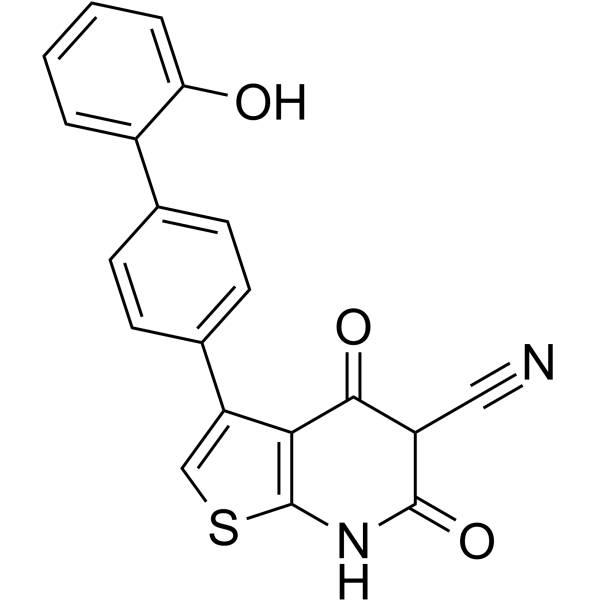
    SU056
    2 Publications Verification

    YB-1 Cancer
    SU056 is a YB-1 inhibitor. SU056 induces cell-cycle arrest, apoptosis, and inhibits cell migration in ovarian cancer cells. SU056 interacts with YB-1 and inhibits and its associated downstream proteins and pathways. SU056 can enhance the cytotoxic effects of Paclitaxel (HY-B0015) .
    SU056
  • HY-16661
    Skp2 Inhibitor C1
    5+ Cited Publications

    SKPin C1

    E1/E2/E3 Enzyme Cancer
    Skp2 Inhibitor C1 (SKPin C1) is an S-phase kinase-related protein 2 (Skp2) inhibitor with an inhibitory effect on metastatic melanoma cells. Skp2 Inhibitor C1 slows the cell cycle, inhibits cell proliferation, and triggers apoptosis .
    Skp2 Inhibitor C1
  • HY-101518
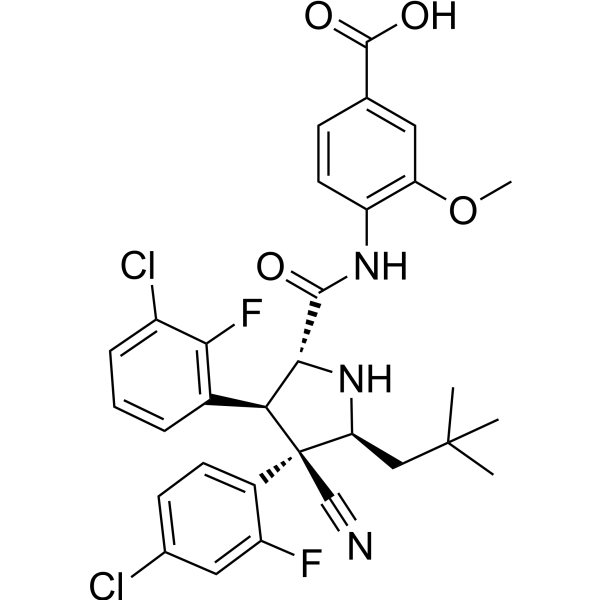
    Alrizomadlin
    4 Publications Verification

    APG-115; AA-115

    MDM-2/p53 E1/E2/E3 Enzyme Apoptosis Cancer
    Alrizomadlin (APG-115) is an orally active MDM2 protein inhibitor binding to MDM2 protein with IC50 and Ki values of 3.8 nM and 1 nM, respectively . Alrizomadlin blocks the interaction of MDM2 and p53 and induces cell-cycle arrest and apoptosis in a p53-dependent manner .
    Alrizomadlin
  • HY-W011370
    Pelargonidin chloride
    1 Publications Verification

    Quinone Reductase Reactive Oxygen Species (ROS) Neurological Disease Cancer
    Pelargonidin chloride is an anthocyanidin and also is a scavenger of nitric oxide radical and has antioxidant activities. Pelargonidin inhibits cell viability and induces cell cycle arrest at sub-G1 phase. Pelargonidin chloride increases the mRNA and protein expression of HO-1, NQO1, Nrf2. Pelargonidin chloride improves Aβ-induced memory and learning impairment .
    Pelargonidin chloride
  • HY-18981
    Decursin
    2 Publications Verification

    (+)-Decursin

    PKC Apoptosis CXCR Neurological Disease Inflammation/Immunology Cancer
    Decursin ((+)-Decursin) is a potent anti-tumor agent. Decursin also is a cytotoxic agent and a potent protein kinase C activator. Decursin induces apoptosis and cell cycle arrest at G1 phase. Decursin decreases the expression of CDK2, CDK4, CDK6, cyclin D1 protein at 48 h. Decursin inhibits cell proliferation and migration. Decursin shows anti-tumor, anti-inflammatory and analgesic activities .
    Decursin
  • HY-W017464

    N-Acetyl-4-benzoquinone Imine

    Drug Metabolite Endogenous Metabolite Metabolic Disease
    NAPQI is the toxic metabolite of Acetaminophen (HY-66005). NAPQI is also an inhibitor of enzymes in the vitamin K cycle. NAPQI is rapidly detoxified by glutathione (GSH), but in situations of GSH deficiency, excess NAPQI reacts with cysteine residues in proteins, causing cell death and toxicity in the liver .
    NAPQI
  • HY-N2424

    2-Phenyl-4-chromone

    CDK Apoptosis Caspase Cancer
    Flavone is an anti-tumor compound that targets cell cycle regulatory proteins (such as cyclin B1) and apoptosis-related factors (such as p21waf1, PIG3). Flavone selectively induces mitochondrial-mediated apoptosis pathways in tumor cells, inhibits cyclin B1 protein expression, upregulates p21waf1, and activates p63/p73 proteins. Flavone has immunomodulatory functions that enhance natural killer cell (NK cell) activity and lymphocyte proliferation. Flavone is used in cancer research, especially for its inhibitory potential in solid tumor models such as esophageal cancer and liver cancer .
    Flavone
  • HY-144425

    NEKs Inflammation/Immunology
    BSc5367 is a potent Nek1 inhibitor with an IC50 of 11.5 nM. NIMA-related protein kinase Nek1 is crucially involved in cell cycle regulation, DNA repair and microtubule regulation and dysfunctions of Nek1 play key roles in amyotrophic lateral sclerosis (ALS), polycystic kidney disease (PKD) and several types of radiotherapy resistant cancer .
    BSc5367
  • HY-113471A

    Apoptosis Bacterial Infection Cancer
    (S)-(-)-Perillic acid is a terpenoid plant extract with antimicrobial and anticancer activities. (S)-(-)-Perillic acid induces cell apoptosis and cell cycle arrest, and increases the levell of Bax, Bcl2, p21 and caspase-3 proteins. (S)-(-)-Perillic acid can be used for cancer and infection research .
    (S)-(-)-Perillic acid
  • HY-157334
    DEG-77
    1 Publications Verification

    Molecular Glues Casein Kinase IKZF Family Bcl-2 Family CDK Apoptosis Cancer
    DEG-77 is a molecular glue targeting IKZF2 and CK1α, with DC50 values of 15.3 nM and 10 nM, respectively. DEG-77 exhibits significant anti-tumor activity, inducing increased transcriptional levels of the pro-apoptotic protein Bax and the cell cycle arrest protein p21. DEG-77 is applicable to the research of acute myeloid leukemia (AmL), diffuse large B-cell lymphoma and ovarian cancer.
    DEG-77
  • HY-117113
    JI051
    1 Publications Verification

    Notch Cancer
    JI051 is a stabilizer for the Hes1-PHB2 interaction. JI051 interacts with a cancer-associated protein chaperone prohibitin 2 (PHB2), induces cell-cycle arrest by inhibiting the Notch downstream effector gene Hes1. Anti-cancer activity .
    JI051
  • HY-107426
    Verrucarin A
    1 Publications Verification

    Muconomycin A

    Apoptosis Reactive Oxygen Species (ROS) Cancer
    Verrucarin A (Muconomycin A), a Type D macrocyclic mycotoxin derived from the pathogen fungus Myrothecium verrucaria, is an inhibitor of protein synthesis. Verrucarin A inhibits growth of leukemia cell lines and activates caspases and apoptosis and inflammatory signaling in macrophages. Verrucarin A effectively increased the phosphorylation of p38 MAPK and diminished the phosphorylation of ERK/Akt. Verrucarin A caused cell cycle deregulation through the induction of p21 and p53 .
    Verrucarin A
  • HY-147868

    Epigenetic Reader Domain Apoptosis Cancer
    DC-CPin711 is a potent and selective inhibitor of CREB-binding protein (CBP) bromodomain with an IC50 of 0.0626 μM. DC-CPin711 arrests cell cycle at G1 phase and induces apoptosis .
    DC-CPin711
  • HY-176142

    CDK c-Myc Apoptosis Bcl-2 Family Cancer
    YX0798 is a selective and orally active CDK9 inhibitor (Kd: 0.28 nM). YX0798 downregulates the oncoprotein c-MYC and pro-survival protein MCL-1. YX0798 disrupts the cell cycle and results in transcriptomic reprogramming, eventually leading to cell apoptosis. YX0798 has antitumor activity .
    YX0798
  • HY-13691

    Ro-31-7453

    Apoptosis Akt mTOR Microtubule/Tubulin Mitosis Cancer
    MKC-1 (Ro-31-7453) is an orally active and potent cell cycle inhibitor with broad antitumor activity. MKC-1 inhibits the Akt/mTOR pathway. MKC-1 arrests cellular mitosis and induces cell apoptosis by binding to a number of different cellular proteins including tubulin and members of the importin β family .
    MKC-1
  • HY-121607
    INI-43
    1 Publications Verification

    AP-1 Apoptosis Cancer
    INI-43 is an inhibitor of Kpnβ1, interfering with the nuclear localization of Kpnβ1 and known Kpnβ1 cargo proteins, NFAT, NFκB, AP-1, and NFY. INI-43 can inhibit the proliferation of cancer cells, cause G2-M cell cycle arrest in cancer cells, and induce the intrinsic apoptosis pathway .
    INI-43
  • HY-124833

    Casein Kinase Apoptosis Fungal Reactive Oxygen Species (ROS) Caspase MDM-2/p53 PARP Bcl-2 Family Akt ERK STAT JNK p38 MAPK CDK Infection Cancer
    Quinalizarin is a protein kinase CK2 inhibitor with a Ki of 0.052 μM. Quinalizarin exhibits antifungal and anticancer activities. Quinalizarin induces ROS production, apoptotic signaling, mitochondrial pathway activation, cell cycle arrest, and cytotoxicity in cancer cells. Quinalizarin inhibits hyphal growth, biofilm formation, and mature biofilm integrity of Candida albicans. Quinalizarin can be used in research related to cancer and fungal infections .
    Quinalizarin
  • HY-15003

    FLT3 Apoptosis Cancer
    ATH686 is a potent, selective and ATP-competitive FLT3 inhibitor. ATH686 target mutant FLT3 protein kinase activity and inhibit the proliferation of cells harboring FLT3 mutants via induction of apoptosis and cell cycle inhibition. ATH686 has antileukemic effects .
    ATH686
  • HY-163707

    Apoptosis Cancer
    UR778Br targets the GTPase-activating protein-related domain (GRD domain) of IQGAP1 proteins. UR778Br inhibits the proliferation of human acute myeloid leukemia (AML), arrests the cell cycle at the G2/M phase, and induces apoptosis. UR778Br inhibits colony formation of primary and AML cells, without significant impacts on normal bone marrow cells .
    UR778Br
  • HY-N11774

    Apoptosis Caspase Cancer
    Euphornin is a anticaner agent, that can be isolated from E. helioscopia. Euphornin induces apoptosis via caspase-mediated pathways. Euphornin induces cell cycle arrest by increasing the level of the phospho-CDK1 (Tyr15) protein .
    Euphornin
  • HY-171825

    PROTACs Anaplastic lymphoma kinase (ALK) Cancer
    SIAIS001 is a CRBN-dependent ALK PROTAC degrader with a DC50 of 3.9 nM. SIAIS001 induces ALK protein degradation via the ubiquitin-proteasome system. SIAIS001 induces G1/S phase cell cycle arrest and inhibits proliferation of cancer cells. SIAIS001 can be used for the research of anaplastic large-cell lymphomas .
    SIAIS001
  • HY-Q04764

    Thyroid Hormone Receptor Apoptosis Cancer
    TI17 is an inhibitor of the thyroid hormone receptor-interacting protein Trip13 and has anticancer activity. TI17 effectively inhibits multiple myeloma (MM) cell proliferation and induces cell cycle arrest and apoptosis. Trip13 is an AAA-ATPase that mediates double-strand break (DSB) repair; TI17 inhibits Trip13 function and increases DNA damage .
    TI17
  • HY-149891

    HSP Cancer
    HSP90-IN-23 (Comp 12-1) is an inhibitor of heat shock protein 90(HSP90) with an IC50 of 9 nM. HSP90-IN-23 induces apoptosis of tumor cells and arrests the tumor cell cycle in G0/G1 phase. HSP90-IN-23 can be used for cancer research .
    HSP90-IN-23
  • HY-E70625

    Casein Kinase Cancer
    Casein Kinase 2 (CK2) is a serine/threonine protein kinase that is highly conserved among eukaryotes and has roles in many different cellular processes, such as cell survival, cell cycle regulation, cell polarity, stress responses, transcription and translation .
    Casein Kinase 2
  • HY-146302
    14-3-3η Protein inhibitor 1
    2 Publications Verification

    Apoptosis Cancer
    14-3-3η Protein inhibitor 1 (Compound C11) is a 14-3-3η protein inhibitor with a KD of 35 µM. 14-3-3η Protein inhibitor 1 shows inhibitory activities against several typical human liver cancer cell lines. 14-3-3η Protein inhibitor 1 induces cell apoptosis and G1-S cell cycle arrest with good metabolic stability .
    14-3-3η Protein inhibitor 1
  • HY-W747572

    (R)-(+)-Perillyl alcohol

    Ras Cancer
    (+)-Perillyl alcohol is the enantiomer of S-(-)-Perillyl alcohol (HY-116514). (+)-Perillyl alcohol can inhibit the growth of polypeptides and block the cell cycle in the G0/G1 phase. (+)-Perillyl alcohol induces cell signaling that is associated with changes in cytoskeletal actin organization and reduced protein expression of growth regulatory proteins such as Ras and CDC2 kinase .
    (+)-Perillyl alcohol
  • HY-175020

    Fatty Acid Synthase (FASN) Apoptosis Bcl-2 Family Cancer
    QNX-10 is a fatty acid synthase (FASN) inhibitor (IC50 = 0.7 μM) with anticancer activity. QNX-10 exhibits potent FASN inhibition and cytotoxicity against colorectal and breast cancer cells. QNX-10 induces apoptosis and cell cycle arrest in S phase by upregulating the pro-apoptotic protein Bax and downregulating the anti-apoptotic protein Bcl-xL. QNX-10 can be used to investigate anticancer therapies targeting FASN enzymes .
    QNX-10
  • HY-E70805

    SRPK Cancer
    SRPK2 (serine-arginine protein kinase 2) is a protein kinase that is involved in cell cycle regulation and cell apoptosis. Biotin-SRPK2 Recombinant Human Active Protein Kinase is a recombinant SRPK2 protein that can be used to study SRPK2-related functions, and is biotinylated .
    Biotin-SRPK2 Recombinant Human Active Protein Kinase
  • HY-151939

    DNA/RNA Synthesis Apoptosis Cancer
    BLM-IN-2 is a Bloom's Syndrome Protein (BLM) inhibitor with an IC50 value of 0.8 μM. BLM-IN-2 effectively suppresses the proliferation, invasion, cell cycle arrest and apoptosis of CRC cells. BLM-IN-2 can be used for the reserarch of colorectal cancer (CRC) .
    BLM-IN-2
  • HY-171047

    Apoptosis Autophagy DNA/RNA Synthesis Akt mTOR Cancer
    Autophagy inducer 7 (Compound SSA) is an Autophagy and Apoptosis inducer. Autophagy inducer 7 activates autophagy by inhibiting Akt/mTOR signaling and the expression of downstream proteins. Autophagy inducer 7 suppresses DNA synthesis and causes a G0-G1 cell-cycle arrest. Autophagy inducer 7 inhibits tumor cell growth .
    Autophagy inducer 7
  • HY-E70653

    CDK Cancer
    CDK1 is a cyclin-dependent kinase that functions as a serine/threonine protein kinase, and is a key player in cell cycle regulation. CDK1/CycB1 Recombinant Human Active Protein Kinase is an ortholog of CDK1. CDK1/cyclin B1 complexes initiates mitotic entry by phosphorylating a multitude of proteins to condense chromosomes, disrupt the nuclear envelope, and enable microtubules polymerization to attach and to segregate the chromosomes .
    CDK1/CycB1 Recombinant Human Active Protein Kinase
  • HY-150280

    Apoptosis Ferroptosis DNA/RNA Synthesis IRE1 CDK Caspase Drug Derivative Cancer
    Ironomycin is a derivative of Salinomycin (HY-15597). Ironomycin exhibits selective inhibitory activity against mantle cell lymphoma (MCL) cells. Ironomycin blocks the cell cycle and induces apoptosis and ferroptosis. Ironomycin induces double-strand DNA breaks and activates the unfolded protein response (UPR), particularly the IRE1α signaling pathway accumulation. The combination of Ironomycin with Ibrutinib (HY-10997) shows a synergistic effect. Ironomycin can be used for the study of MCL.
    Ironomycin
  • HY-137135

    Phosphatase Apoptosis ERK p38 MAPK JNK Cancer
    Cantharidic acid is a selective inhibitor for protein phosphatase 2 (PP2A) and protein phosphatase 1 (PP1). Cantharidic acid inhibits cell viability and arrest cell cycle at sub G1 phase, induces apoptosis in cells NPC-39 and HONE-1 through the upregulation of ERK1/2, p38, and JNK1/2 pathway .
    Cantharidic acid
  • HY-E70672

    CDK Cancer
    CDK2 is a cyclin-dependent kinase involved in the control of the cell cycle. CDK2/CycE1 Recombinant Human Active Protein Kinase is an ortholog of CDK2 .
    CDK2/CycE1 Recombinant Human Active Protein Kinase
  • HY-P10421

    ERK Cancer
    PKCδ substrate acts as a nuclear transporter of ERK2 and is involved in ERK2 mediated gene activation. PKCδ is involved in the regulation of cell growth, proliferation, cell cycle arrest, and apoptosis by phosphorylating hBVR and other proteins. PKCδ substrate can be used to study the development of diseases, especially cancer biology .
    PKCδ substrate
  • HY-161470

    Histone Demethylase E1/E2/E3 Enzyme DNA/RNA Synthesis Caspase Apoptosis Cancer
    WS-384 is a dual LSD1 and DCN1-UBC12 protein-protein interaction inhibitor with oral activity, with IC50 values of 338.79 nM and 14.81 nM, respectively. WS-384 possesses anticancer activity and can cause cell cycle arrest, DNA damage, and induce apoptosis. WS-384 can be used in the research of non-small cell lung cancer (NSCLC) .
    WS-384
  • HY-130519

    CDK Cancer
    Cdc7-IN-7 (compound I-E) is a potent Cdc7 kinase inhibitor extracted from patent WO2019165473A1, compound I-E. Cdc7 is a serine-threonine protein kinase enzyme which is essential for the initiation of DNA replication in the cell cycle .
    Cdc7-IN-7
  • HY-171184

    PARP Bcr-Abl Apoptosis Mitosis Cancer
    EAPB0503 is a quinoline compound with anti-tumor activity, showing strong cytotoxicity against melanoma cells in vitro (IC50=200 nM). EAPB0503 can induce specific cell cycle arrest in mitosis of CML cells and directly activate apoptosis, leading to an increase in the G0 cell population, disruption of mitochondrial membrane potential, PARP cleavage, and DNA fragmentation. EAPB0503 also reduces the levels of BCR-ABL protein .
    EAPB0503
  • HY-114413

    HSP Apoptosis Cancer
    YZ129 is an inhibitor of the HSP90-calcineurin-NFAT pathway against glioblastoma, directly binding to heat shock protein 90 (HSP90) with an IC50 of 820 nM on NFAT nuclear translocation. YZ129-induced GBM cell-cycle arrest at the G2/M phase promotes apoptosis and inhibited tumor cell proliferation and migration .
    YZ129
  • HY-106801

    RP 49532

    Interleukin Related NF-κB AP-1 MDM-2/p53 Apoptosis Infection Inflammation/Immunology Cancer
    Girolline (RP 49532) is a protein synthesis inhibitor and a functional modulator of eIF5A. Girolline induces ribosome stalling by interfering with the binding of eIF5A to ribosomes. Girolline also inhibits the production of IL-6 and IL-8, and induces cell cycle arrest in tumor cells. Girolline is applicable to research related to inflammatory diseases, solid tumors, leukemia and malaria .
    Girolline
  • HY-178036

    MDM-2/p53 Topoisomerase Bcl-2 Family Caspase Cyclin G-associated Kinase (GAK) Cancer
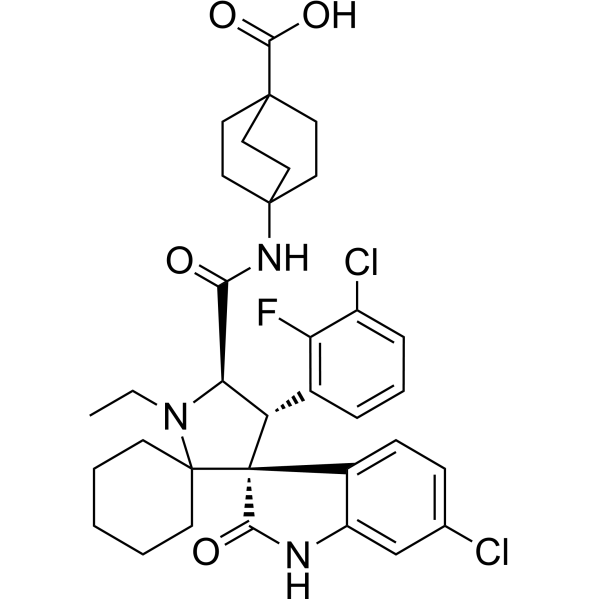
    ZM484 is a potent dual p53-MDM2/TOP1 inhibitor that exhibits antiproliferative and antitumor activity both in vitro and in vivo. ZM484 effectively upregulates p53 and MDM2 proteins and maintains TOP1 inhibitory activity by the release of camptothecin (CPT) and a potent p53-MDM2 inhibitor. ZM484 induces cell cycle arrest and apoptosis by regulating the expression of key apoptosis- and cycle-related proteins, including caspase-3, Bcl-2, and Cyclin B1. ZM484 can be used for colorectal cancer research .
    ZM484
  • HY-175009

    EGFR JAK STAT Apoptosis Cancer
    MRC-G-001 is a Genipin (HY-17389) derivative with an IC50 of 117 μM against A549 cancer cells. MRC-G-001 inhibits the phosphorylation of EGFR, JAK1, and STAT3, and modulates epithelial-mesenchymal transition (EMT)-related protein expression, thereby attenuating cell migration and invasion. MRC-G-001 induces cell cycle arrest and cell apoptosis. MRC-G-001 can be used for the study of cancers such as non-small-cell lung cancer .
    MRC-G-001
  • HY-E70675

    CDK Cancer
    CDK20 is a major controller of cell cycle checkpoints, which regulate cell growth and proliferation and perform a role in the development of many malignancies. CDK20 is thought to have Cyclin-dependent activating kinase (CAK) activity for CDK2 when it is complexed with Cyclin H. CDK20/CycH Recombinant Human Active Protein Kinase can be used to study the function of CDK20/CycH .
    CDK20/CycH Recombinant Human Active Protein Kinase
  • HY-174543

    mRNA Cancer
    Human PRKCA mRNA encodes the human protein kinase C alpha (PRKCA) protein, a member of Protein kinase C (PKC) family. PRKCA has been reported to play roles in many different cellular processes, such as cell adhesion, cell transformation, cell cycle checkpoint, and cell volume control.
    Human PRKCA mRNA
  • HY-E70687

    CDK Cancer
    CDK6 is a cell-cycle kinases that regulate exit from the G1 phase of the cell cycle. CDK6 is directly involved in transcription in tumor cells and in hematopoietic stem cells. CDK6/CycD2 Recombinant Human Active Protein Kinase is an ortholog of CDK6 .
    CDK6/CycD2 Recombinant Human Active Protein Kinase
  • HY-E70686

    CDK Cancer
    CDK6 is a cell-cycle kinases that regulate exit from the G1 phase of the cell cycle. CDK6 is directly involved in transcription in tumor cells and in hematopoietic stem cells. CDK6/CycD1 Recombinant Human Active Protein Kinase is an ortholog of CDK6 .
    CDK6/CycD1 Recombinant Human Active Protein Kinase
  • HY-E70688

    CDK Cancer
    CDK6 is a cell-cycle kinases that regulate exit from the G1 phase of the cell cycle. CDK6 is directly involved in transcription in tumor cells and in hematopoietic stem cells. CDK6/CycD3 Recombinant Human Active Protein Kinase is an ortholog of CDK6 .
    CDK6/CycD3 Recombinant Human Active Protein Kinase
  • HY-E70656

    CDK Cancer
    CDK1 is a cyclin-dependent kinase that functions as a serine/threonine protein kinase, and is a key player in cell cycle regulation. CDK1/CycO Recombinant Human Active Protein Kinase is an ortholog of CDK1 .
    CDK1/CycO Recombinant Human Active Protein Kinase

Inquiry Online

Your information is safe with us. * Required Fields.

Salutation


Country or Region *

Applicant Name *


Organization Name *

Department *


Email Address *


Product Name *

Cat. No.


Requested quantity *

Phone Number *


Remarks

Inquiry Online

Inquiry Information

Product Name:
Cat. No.:
Quantity:
MCE Japan Authorized Agent:

