










1. Search Result
Search Result
Results for "

cellular cytotoxicity

" in MedChemExpress (MCE) Product Catalog:

133

Inhibitors & Agonists

2

Fluorescent Dyes

3

Peptides

84

Inhibitory Antibodies

9

Natural
Products

4

Isotope-Labeled Compounds

Cat. No. Product Name Target Research Areas Chemical Structure
  • HY-P9976
    Isatuximab
    1 Publications Verification

    ch38SB19; hu38SB19; SAR-650984

    CD38 Apoptosis Cancer
    Isatuximab is a monoclonal antibody targeting the transmembrane receptor and ectoenzyme CD38, a protein highly expressed on hematological malignant cells, including those in multiple myeloma (MM). Isatuximab has antitumor activity via multiple biological mechanisms, including antibody-dependent cellular-mediated cytotoxicity, complement-dependent cytotoxicity, antibody-dependent cellular phagocytosis, and direct induction of apoptosis without crosslinking. Isatuximab also directly inhibits CD38 ectoenzyme activity, which is implicated in many cellular functions .
    Isatuximab
  • HY-P991028

    AZD0486; TNB-486

    CD3 CD19 Interleukin Related TNF Receptor IFNAR Cancer
    Surovatamig (AZD0486; TNB-486) is a fully human anti-CD19/CD3 IgG4 bispecific antibody. Surovatamig triggers T cell activation, releases cytotoxic granules, and induces T cell-dependent cellular cytotoxicity and tumor cell lysis. Surovatamig can reduces release of pro-inflammatory cytokines including IL-2, IFNγ, TNF. Surovatamig can be used for the research of cancer, such as B cell non-Hodgkin lymphoma .
    Surovatamig
  • HY-P99013
    Codrituzumab
    1 Publications Verification

    GC33; RO5137382

    Glycoprotein VI Cancer
    Codrituzumab (GC33) is a humanized monoclonal antibody targeting human GPC3 (glypican-3), with high affinity (Kd of 0.673 nM). GPC3 is an oncofetal protein expressed on the cell surface of hepatocellular carcinoma (HCC). Codrituzumab induces antibody-dependent cellular cytotoxicity (ADCC) and inhibits tumor growth .
    Codrituzumab
  • HY-P99117
    Cadonilimab
    1 Publications Verification

    AK104

    PD-1/PD-L1 CTLA-4 Inflammation/Immunology Cancer
    Cadonilimab (AK104) is a humanized tetravalent IgG1 bispecific antibody targeting PD1/CTLA4. Cadonilimab blocks both PD-1 and CTLA-4 pathways, thereby relieving their corresponding immunosuppressive effects and reversing tumor specific T cell exhaustion. Cadonilimab significantly downregulates Fc-mediated effector functions, including antibody-dependent cell-mediated cytotoxicity (ADCC), antibody-dependent cellular phagocytosis (ADCP), complement dependent cytotoxicity (CDC). Cadonilimab can be used for research of metastatic cervical cancer, as well as other malignancies such as gastric cancer, GEJ adenocarcinoma and non-small cell lung cancer (NSCLC) .
    Cadonilimab
  • HY-N6739

    Bacterial Apoptosis Fungal PI3K Akt TNF Receptor Interleukin Related Infection Cancer
    Beauvericin is a cyclohexapeptide Fusarium toxin with insecticidal, antibacterial, anticancer, antiviral and cytotoxic activities. Beauvericin causes cellular genotoxicity by producing DNA breaks, chromosomal aberrations and micronuclei, and inhibits the PI3K/AKT pathway to induce apoptosis, thereby inhibiting the growth of HCC. In addition, Beauvericin affects immune function by inhibiting lymphocyte proliferation and interfering with the differentiation process of human monocytes into macrophages .
    Beauvericin
  • HY-P99006
    Amatuximab
    3 Publications Verification

    MORab-009

    Mesothelin Cancer
    Amatuximab (MORab-009) is a chimeric, humanized IgG1/k MAb that targets the cell surface mesothelin (MSLN). Mesothelin is a glycosylphosphatidyl inositol (GPI)-anchored membrane glycoprotein, which is present in a restricted set of normal adult tissues such as the mesothelium .
    Amatuximab
  • HY-P9964

    11F8; IMC-11F8; LY3012211

    EGFR Cancer
    Necitumumab (11F8; IMC-11F8; LY3012211) is a human IgG monoclonal antibody directed against EGFR. Necitumumab binds to the EGF binding site of EGFR, blocks ligand binding, neutralizes ligand-induced EGFR phosphorylation and downstream signaling, induces EGFR internalization and degradation, and mediates antibody-dependent cellular cytotoxicity (ADCC) in EGFR-expressing cells. Necitumumab enhances antitumour activity in combination with Gemcitabine (HY-17026) and Cisplatin (HY-17394) in murine non-small-cell lung cancer xenograft models. Necitumumab can be used in research on cancers such as non-small cell lung cancer and colorectal cancer .
    Necitumumab
  • HY-10079
    CHS-828
    4 Publications Verification

    GMX1778

    NAMPT Apoptosis Cancer
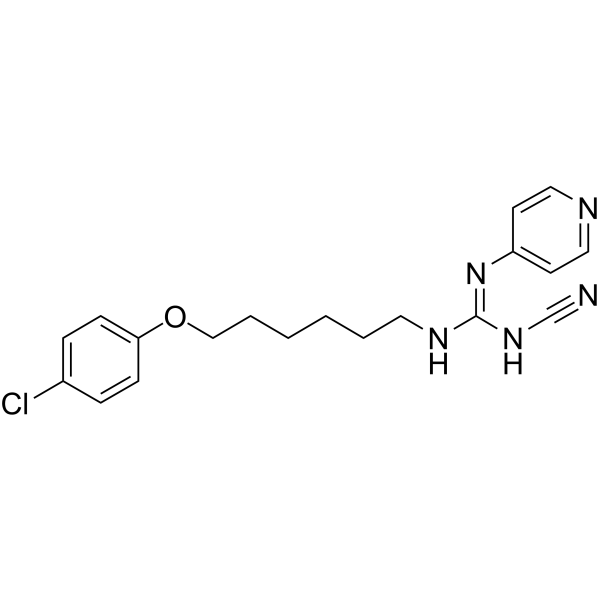
    CHS-828 (GMX1778) is a competitive inhibitor of nicotinamide phosphoribosyltransferase (NAMPT), with an IC50 less than 25 nM. CHS-828 (GMX1778) exerts a cytotoxic effect by decreasing the cellular level of NAD + and exhibits a potent anticancer activity .
    CHS-828
  • HY-113341
    7β-Hydroxycholesterol
    2 Publications Verification

    Reactive Oxygen Species (ROS) Apoptosis Interleukin Related Cardiovascular Disease Neurological Disease Inflammation/Immunology Cancer
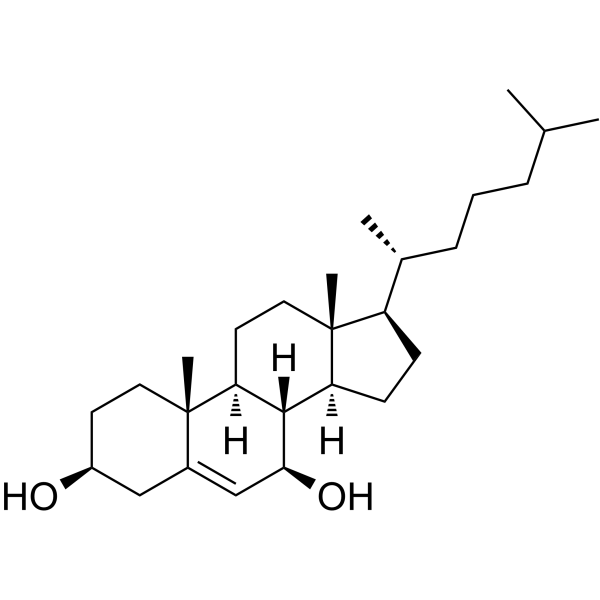
    7β-Hydroxycholesterol is an oxysterol that derived by the oxidation of cholesterol. 7β-hydroxycholesterol can induce cellular oxidative stress, apoptosis, and necrosis, resulting in cytotoxicity. 7β-hydroxycholesterol has antitumor activity .
    7β-Hydroxycholesterol
  • HY-N8015
    Octanal
    1 Publications Verification

    Environmental Pollutants Endogenous Metabolite Fungal Bacterial Infection Cancer
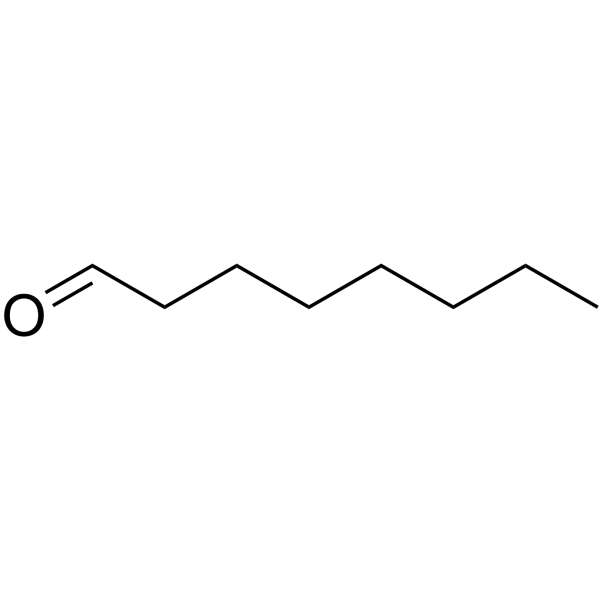
    Octanal is a fragrant aldehyde with antioxidant and antibacterial activity. Its antifungal effect against G. citri-aurantii may be related to the disruption of cell membrane integrity and the leakage of cellular components. Additionally, Octanal exhibits cytotoxicity towards HeLa cells, with an IC50 value of 3.5 μg/mL .
    Octanal
  • HY-P99113A

    CD19 Inflammation/Immunology
    Inebilizumab (FUT8-KO) is an anti-CD19 monoclonal antibody expressed by CHO cells with the fucosyltransferase 8 gene (FUT8) knocked out. Fucose deficiency enhances the antibody-dependent cellular cytotoxicity (ADCC) effect of the antibody.Inebilizumab (FUT8-KO) exhibits enhanced ADCC against B cells and can be used for research on multiple sclerosis and neuromyelitis optica .
    Inebilizumab (FUT8-KO)
  • HY-P991564

    IBI-343 antibody; HB37A6; TAK-921 Antibody

    ADC Antibody Claudin Cancer
    Arcotatug (IBI-343 antibody) is a CLDN18.2 targeting humanized monoclonal antibody. Arcotatug can be used for synthesis of ADCs .
    Arcotatug
  • HY-P99866

    MEHD-7945A; RG 7597

    EGFR Akt p38 MAPK Apoptosis Cancer
    Duligotuzumab (MEHD-7945A; RG 7597) is a humanized IgG-κ monoclonal antibody targeting EGFR. Duligotuzumab blocks the binding of ligands to these two receptors, inhibits downstream HER/ErbB, AKT and MAPK signaling pathways, induces antibody-dependent cellular cytotoxicity, reduces the proliferation and migration abilities of cancer cells, promotes apoptosis, exerts radiosensitizing effects, and reverses EGFR resistance in cancer cells. Duligotuzumab can be used in tumor-related research .
    Duligotuzumab
  • HY-P9983

    SGN-33; HuM-195; GLK-33 Antibody

    Transmembrane Glycoprotein Radionuclide-Drug Conjugates (RDCs) Inflammation/Immunology
    Lintuzumab (HUM-195) is an anti-CD33 humanized monoclonal antibody. Lintuzumab reduces the production of TNFα-induced pro-inflammatory cytokines and chemokines by AML cells. Lintuzumab promotes tumor cell killing through antibody-dependent cellular cytotoxicity (ADCC) and phagocytosis (ADCP) activities against MDR and MDR+ AML cell lines and primary AML patient samples. Lintuzumab enhances survival and reduces tumor burden in mice .
    Lintuzumab
  • HY-P99437
    Anbenitamab
    1 Publications Verification

    KN-026

    EGFR Cancer
    Anbenitamab (KN-026) is a bispecific antibody simultaneously targeting extracellular domains II and IV of human HER2. Anbenitamab blocks both ligand-dependent and ligand-independent HER2 signaling pathways. Anbenitamab mediates antibody-dependent cellular cytotoxicity (ADCC) via FcγIIIa binding. Ambrinitumab can be used in research for lung cancer, HER2-positive metastatic breast cancer (MBC), gastric cancer, and gastroesophageal junction cancer .
    Anbenitamab
  • HY-P9976A
    Isatuximab (anti-CD38)
    1 Publications Verification

    CD38 Apoptosis Cancer
    Isatuximab (anti-CD38) is a monoclonal antibody that targets the transmembrane receptor and extracellular enzyme CD38, a protein highly expressed in hematological malignancies, including multiple myeloma. Isatuximab (anti-CD38) exhibits anti-tumor activity through multiple biological mechanisms, including antibody-dependent cell-mediated cytotoxicity, complement-dependent cytotoxicity, antibody-dependent cell phagocytosis, and non-crosslinking direct induction of apoptosis. Isatuximab (anti-CD38) also directly inhibits the extracellular enzyme activity of CD38, which is related to many cellular functions .
    Isatuximab (anti-CD38)
  • HY-141452

    Malondialdehyde

    Endogenous Metabolite Neurological Disease
    Propanedial (Malondialdehyde) (13.88 mM in water) is one of the final products of lipid peroxidation. Propanedial causes protein inactivation, DNA damage and cross-linking by forming stable covalent adducts with biological macromolecules, which is the main mechanism for its cytotoxicity and genotoxicity. Propanedial production increases with the elevation of free radicals. Propanedial is a key biomarker for evaluating the level of cellular oxidative stress [1][2][3].
    Propanedial (13.88 mM in water)
  • HY-P991061

    CHS-114; SRF-114

    CCR Cancer
    Tagmokitug (CHS-114; SRF-114) is a fully human IgG1 antibody targeting CCR8. Tagmokitug selectively binds to human CCR8 (Kd = 502 pM) and mediates the death of CCR8-expressing cells via antibody-dependent cellular cytotoxicity and antibody-dependent cellular phagocytosis. Tagmokitug selectively eliminates intratumoral regulatory T cells, induces tumor growth inhibition, remodels the tumor immune microenvironment, and promotes the differentiation of cytotoxic CD8 + T cell subsets. Tagmokitug can be used for the research of solid tumors .
    Tagmokitug
  • HY-P990914

    GS-1811; JTX-1811

    CCR Inflammation/Immunology Cancer
    Denikitug (GS-1811; JTX-1811) is a humanized monoclonal antibody against CCR8 receptor with a KD of 16.8 pM. Denikitug specifically binds to human CCR8, inhibits CCL1-induced downstream CCR8 signaling. Denikitug selectively depletes cells expressing CCR8 via antibody-dependent cellular cytotoxicity (ADCC). Denikitug promotes anti-tumor immunity and can be used for the research of cancer and immunology .
    Denikitug
  • HY-P99591

    AS1402; huHMFG-1; Epitumomab

    Mucin Cancer
    Sontuzumab (AS1402) is a humanizedised IgG1κ MUC1 specific monoclonal antibody. Sontuzumab binds the extracellular MUC1 peptide sequence PDTR with a Kd of ~1 nM. Sontuzumab can be used for the research of breast cancer .
    Sontuzumab
  • HY-P99253
    Mogamulizumab
    1 Publications Verification

    KW-0761

    CCR Inflammation/Immunology Cancer
    Mogamulizumab (KW-0761) is a recombinant anti-CCR4 monoclonal antibody (MAb). Mogamulizumab can eliminate tumor cells by antibody-dependent cellular cytotoxicity (ADCC). Mogamulizumab can be used in the research of cancers, adult T-cell leukemia/lymphoma (ATLL), cutaneous T-cell lymphoma (CTCL) .
    Mogamulizumab
  • HY-P99293

    IDEC 114; Anti-Human CD80 Recombinant Antibody

    CD28 Apoptosis Cancer
    Galiximab (IDEC-114) is a primatized monoclonal IgG1 antibody targeting CD80. Galiximab variable regions are primatized, and the constant regions are humanized. Galiximab induces antibody-dependent cellular cytotoxicity by blocking CD80-CD28 binding. Galiximab has antitumor activity and can induce apoptosis in tumor cells. Galiximab can be used in the research of relapsed Hodgkin lymphoma and solid tumors .
    Galiximab
  • HY-114211

    Histone Methyltransferase HSP Cancer
    SGC8158 is an inhibitor of PRMT7 and can be used to study the cellular function of PRMT7. SGC8158 decreases monomethylarginine levels of Hsp70 (the best characterized PRMT7 substrate). SGC8158 induces growth inhibition in various cancer cells (IC50: 2-9 μM), as well as multidrug-resistant (MDR) cancer cells. SGC8158 also enhances Doxorubicin (HY-15142A) induced DNA damage and Its cytotoxicity .
    SGC8158
  • HY-P991703

    GSK5733584 antibody; HS-20089 antibody; hu2F7

    CD276/B7-H3 Cancer
    Mocertatug (GSK5733584 antibody) is a humanized IgG1κ antibody targeting B7-H4/VTCN1. Mocertatug can be used to construct ADCs, such as Mocertatug Rezetecan (HY-185280) .
    Mocertatug
  • HY-P990961

    IMM-2510; SYN-2510

    VEGFR PD-1/PD-L1 Cardiovascular Disease Inflammation/Immunology Cancer
    Palverafusp alfa (IMM-2510; SYN-2510) is a PD-L1/VEGF-targeting IgG1κ type humanized antibody. Palverafusp alfa blocks PD-1/PD-L1 binding, relieves immune suppression, mediates PD-L1-directed antibody-dependent cellular cytotoxicity (ADCC). Palverafusp alfa blocks VEGF/VEGFR binding, inhibits angiogenic signaling, relieves VEGF-induced immune suppression. Palverafusp alfa reduces endothelial cell proliferation, enhances ADCC and antibody-dependent cellular phagocytosis (ADCP), inhibits tumor growth, reverses T cell immune suppression. Palverafusp alfa exhibits immune stimulatory, antiangiogenic, and anti-tumor activity in the tumor microenvironment. Palverafusp alfa can be used for the research of cancer, such as solid tumors, non-small cell lung cancer .
    Palverafusp alfa
  • HY-P99431

    Alomfilimab; SAR 445256

    CD28 Inflammation/Immunology Cancer
    KY-1044 (Alomfilimab; SAR 445256) is a fully human IgG1 antibody targeting inducible costimulatory receptor (ICOS). KY-1044 depletes ICOS high cells via antibody-dependent cellular cytotoxicity (ADCC) through the engagement of FcgRIIIa. KY-1044 act as a costimulatory molecule on cells expressing lower ICOS levels, such as CD8 + TEff cells (through FcgR-dependent clustering). KY-1044 exploit the differential expression of ICOS on T-cell subtypes to improve the intratumoral immune contexture and restore an antitumor immune response .
    KY-1044
  • HY-P99699

    MHAB5553A; RG70026

    Influenza Virus Infection
    Lesofavumab (MHAB5553A) is a human IgG1κ anti-influenza B virus antibody .
    Lesofavumab
  • HY-P99015

    TNF Receptor Cancer
    Dacetuzumab (SGN-40) is a humanized IgG1, anti-CD40 monoclonal antibody with anti-lymphoma activity. Dacetuzumab kills tumor cells via immune effector functions (antibody-dependent cellular cytotoxicity and phagocytosis [ADCC/ADCP]). Dacetuzumab ((SGN-40) can be used for multiple myeloma research .
    Dacetuzumab
  • HY-108447

    Ser/Thr Protease SARS-CoV PAI-1 Infection Cancer
    BC-11 hydrobromide is a selective TMPRSS2 inhibitor (TMPRSS2 is a key host cellular factor for viral entry and SARS-CoV-2 pathogenesis), and a selective urokinase (uPA) inhibitor (IC50=8.2 μM). BC-11 hydrobromide is cytotoxic to triple-negative MDA-MB231 breast cancer cells. BC-11 hydrobromide is used in research on viral infections and cancer .
    BC-11 hydrobromide
  • HY-P99381
    XmAb 5592
    1 Publications Verification

    Transmembrane Glycoprotein Cancer
    XmAb 5592 is a humanized, Fc-engineered anti-HM1.24 antibody with enhanced binding to FcγRIIIa and FcγRIIa receptors, augments HM1.24-specific multiple myeloma (MM) cells lysis in vitro via antibody-dependent cellular cytotoxicity (ADCC) and antibody dependent cellular phagocytosis (ADCP) .
    XmAb 5592
  • HY-P990902

    BMS-986012

    Transmembrane Glycoprotein Cancer
    Atigotatug (BMS-986012) is a fully human IgG1 antibody binds specifically to FucGM1 with an EC50 of 0.15 nmol/L for FucGM1. Atigotatug is a FcγRIIIa ligand with a Kd of 21 nmol/L. Atigotatug demonstrates antitumor efficacy in multiple mouse small cell lung cancer models .
    Atigotatug
  • HY-P991513

    TNF Receptor Inflammation/Immunology
    BI-655064, a humanised anti-CD40 antibody with has fragment crystallisable (Fc) regions with two mutations that prevent Fc-mediated antibody-dependent or complement-mediated cellular cytotoxicity and platelet activation. BI-655064 can be used for the study of autoimmune disease, such as lupus nephritis and rheumatoid arthritis (RA) .
    BI-655064
  • HY-P991517

    Transmembrane Glycoprotein Reactive Oxygen Species (ROS) Cardiovascular Disease Cancer
    BI-836858 is a fully human anti-CD33 monoclonal antibody. BI-836858 reduces CD33+ cells via antibody-dependent cellular cytotoxicity (ADCC), blocks downstream signaling of S100A9/CD33, decreases the secretion of immunosuppressive cytokines and reactive oxygen species-induced genomic instability, and restores bone marrow hematopoietic function. BI-836858 is applicable to the research of myelodysplastic syndrome (MDS) and AML .
    BI-836858
  • HY-155813

    SARS-CoV Infection
    MPI60 is a potent SARS-CoV-2 M Pro inhibitor with high antiviral potency, low cellular cytotoxicity, and high in vitro metabolic stability. MPI60 can be used for SARS-CoV-2 research .
    MPI60
  • HY-N8015S

    Isotope-Labeled Compounds Bacterial Endogenous Metabolite Fungal Infection Cancer
    Octanal-d16 is the deuterium labeled Octanal. Octanal is a fragrant aldehyde with antioxidant and antibacterial activity. Its antifungal effect against G. citri-aurantii may be related to the disruption of cell membrane integrity and the leakage of cellular components. Additionally, Octanal exhibits cytotoxicity towards HeLa cells, with an IC50 value of 3.5 μg/mL .
    Octanal-d16
  • HY-P10563

    BHV-1100

    CD38 Cancer
    Noraramtide (BHV-1100) is an antibody recruitment molecule. Noraramtide can specifically bind to CD38 molecules to recruit natural killer (NK) cells. Noraramtide enhances the ability of NK cells to kill tumor cells through antibody-dependent cellular cytotoxicity (ADCC). This mechanism allows NK cells to more effectively recognize and eliminate tumor cells while avoiding mutual killing between NK cells. Noraramtide can be used for the study of autologous cancer immunity .
    Noraramtide
  • HY-P991229

    AGS-1C4D4; AGS-PSCA

    Complement System Cancer
    AGS-1C4D4 is a fully human IgG1κ monoclonal antibody targeting PSCA, with a Ka value of 0.2 nM. AGS-1C4D4 mediates antibody-dependent cellular cytotoxicity (ADCC) and complement-dependent cytotoxicity (CDC) against PSCA-expressing cells. AGS-1C4D4 can be used for the research of pancreatic cancer .
    MK-4721
  • HY-100707

    DNA-PK Apoptosis Inflammation/Immunology Cancer
    IC 86621 is a potent DNA-dependent protein kinase (DNA-PK) inhibitor, with an IC50 of 120 nM. IC 86621 also acts as a selective and reversible ATP-competitive inhibitor.IC 86621 inhibits DNA-PK mediated cellular DNA double-strand break (DSB) repair (EC50=68 µM). IC 86621 increases DSB-induced antitumor activity without cytotoxic effects. IC 86621 can protects rheumatoid arthritis (RA) T cells from apoptosis .
    IC 86621
  • HY-P991610

    Sym025

    C-type Lectin-like Receptors (CTLRs) Cancer
    S-095029 is a humanized IgG1 monoclonal antibody inhibitor targeting NKG2A. S-095029 significantly attenuates Fc-effector functions, inhibits the interaction with its ligand HLA-E, and increases the antibody-dependent cellular cytotoxicity mediated by other Fc-competent mAbs. S-095029 has a potent antitumor activity with enhancement of killing activity and cytokine secretion (IFNγ, TNF-α and CXCL9) of NK and γδ T-cells in co-culture with cancer cells .
    S-095029
  • HY-P990719

    XmAb24306

    Interleukin Related Inflammation/Immunology Cancer
    Efbalropendekin Alfa (XmAb24306) is an IL-15/IL-15 receptor alpha complex fused to a heterodimeric Fc domain (IL15/IL15Rα-Fc). Efbalropendekin Alfa increases direct and antibody-dependent cellular cytotoxicity (ADCC)-mediated human natural killer (NK) cell cytotoxicity in vitro .
    Efbalropendekin alfa
  • HY-P991562

    Transmembrane Glycoprotein Cancer
    MDX-1411 is a fully human monoclonal antibody targeting CD70. MDX-1411 is capable of inducing antibody-dependent cellular cytotoxicity (ADCC). MDX-1411 can be used in the research of B-cell malignancies .
    MDX-1411
  • HY-P991542

    CD19 Cancer
    GBR-401 is a humanized anti-CD19 monoclonal antibody with high affinity for FcγRIIIa. GBR-401 exerts a potent in vitro and in vivo cytotoxic activity against various B-cell malignancies. GBR-401 induces cell death by antibody dependent cellular cytotoxicity (ADCC) and direct killing effect. GBR-401 demonstrates potent activity of depleting malignant B cells and prolongs mice survival in multiple xenograft severe combined immunodeficiency (SCID) mice models .
    GBR-401
  • HY-113341S

    Isotope-Labeled Compounds Apoptosis Interleukin Related Cardiovascular Disease Neurological Disease Inflammation/Immunology Cancer
    7ß-Hydroxycholesterol-d7 is the deuterium labeled 7α-Hydroxycholesterol. 7β-Hydroxycholesterol is an oxysterol that derived by the oxidation of cholesterol. 7β-hydroxycholesterol can induce cellular oxidative stress, apoptosis, and necrosis, resulting in cytotoxicity. 7β-hydroxycholesterol has antitumor activity .
    7ß-Hydroxycholesterol-d7
  • HY-P991547

    CD20 Apoptosis Inflammation/Immunology Cancer
    Anti-CD20 Antibody (mAb 1.5.3) is a fully human IgG1 anti-CD20 antibody. Anti-CD20 Antibody (mAb 1.5.3) evokes enhanced pro-apoptotic activity in vitro. Anti-CD20 Antibody (mAb 1.5.3) mediated both complement-dependent cytotoxicity and antibody-dependent cellular cytotoxicity. Anti-CD20 Antibody (mAb 1.5.3) demonstrates enhanced anti-tumor activity in various tumor xenograft models. Anti-CD20 Antibody (mAb 1.5.3) produces a superior B-cell depletion profile in lymph node organs and bone marrow in a primate pharmacodynamic model. Anti-CD20 Antibody (mAb 1.5.3) can be studied in research for B-cell maglignancies .
    Anti-CD20 Antibody (mAb 1.5.3)
  • HY-P11340

    MHC Infection Inflammation/Immunology
    VMAPRTLFL is a 9-mer peptide derived from the signal peptide of HLA-G and can serve as a peptide ligand for HLA-E. VMAPRTLFL plays a crucial role in regulating the functions of adaptive natural killer (NK) cells. Specifically, VMAPRTLFL enriches FcεRγ - adaptive NK cells, upregulates the expression of CD25, and enhances their proliferative activity, antibody-dependent cellular cytotoxicity (ADCC), and IFN-γ release. VMAPRTLFL can be used in research related to human cytomegalovirus (HCMV) infection, transplant rejection, and pregnancy immunity .
    VMAPRTLFL
  • HY-N10352

    Others Cancer
    4-epi-Withaferin A (compound 28) is the analogue of Withaferin A. 4-epi-Withaferin A enhances cytotoxicity and cytoprotective heat-shock-inducing activity (HSA). 4-epi-Withaferin A has the potential for the research of protein aggregation-associated diseases by stimulating cellular defense mechanisms .
    4-epi-Withaferin A
  • HY-145692

    Bacterial Others
    Cas9-IN-3 is a potent Cas9 inhibitor (IC50=28 μM) .
    Cas9-IN-3
  • HY-114939

    DNA/RNA Synthesis Others
    Phelorphan is a purine MTH1 inhibitor identified through chemical array screening. Although it targets cellular MTH1, its cytotoxicity to cancer cells is weaker than that of other reported inhibitors. The cytotoxicity of MTH1 inhibitors may be attributed to off-target effects, and MTH1 is not essential for cancer cell survival.
    Phelorphan
  • HY-P991507

    Demupitamab

    EGFR Cancer
    SCT200 is a fully humanized IgG1 anti-EGFR monoclonal antibody with a Kd of 0.08 nM. SCT200 can kill tumor cells by complement-dependent cytotoxicity (CDC) and antibody-dependent cellular cytotoxicity (ADCC) through the Fc. SCT200 can be used for the study of refractory RAS and BRAF wild-type metastatic colorectal cancer .
    SCT200
  • HY-123718

    Parasite Others
    6-Benzylthioinosine is a compound with antileukemic activity that increases cytotoxicity against acute myeloid leukemia cells when combined with metformin, modulating cellular metabolism and signaling pathways through multiple mechanisms.
    6-Benzylthioinosine

Inquiry Online

Your information is safe with us. * Required Fields.

Salutation


Country or Region *

Applicant Name *


Organization Name *

Department *


Email Address *


Product Name *

Cat. No.


Requested quantity *

Phone Number *


Remarks

Inquiry Online

Inquiry Information

Product Name:
Cat. No.:
Quantity:
MCE Japan Authorized Agent:

