



Mogamulizumab
Based on 1 publication(s) in Google Scholar
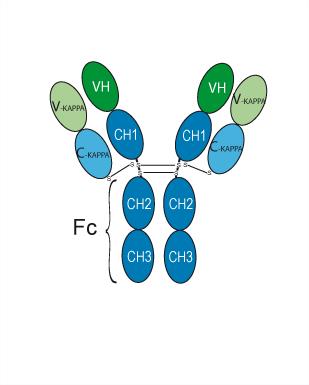
Mogamulizumab (KW-0761) is a recombinant anti-CCR4 monoclonal antibody (MAb). Mogamulizumab can eliminate tumor cells by antibody-dependent cellular cytotoxicity (ADCC). Mogamulizumab can be used in the research of cancers, adult T-cell leukemia/lymphoma (ATLL), cutaneous T-cell lymphoma (CTCL).
For research use only. We do not sell to patients.
- Purity : 96.9%
- CAS No.: 1159266-37-1
- Molecular Weight:146.44 kDa
-
Storage:
Please store the product under the recommended conditions in the Certificate of Analysis.


To place orders, for customer services and technical support, please contact: MedChemExpress USA
Tel: 609-228-6898 E-mail: [email protected] [email protected]


-
 Biological Activity
-
Chemical Information
- Protocols
- Purity & Documentation
- References
-
 Help & FAQs


-

HY-P99001
Human IgG1 kappa, Isotype ControlIgG1κ Isotype Control -

HY-P99002
Human IgG2 kappa, Isotype ControlIgG2κ Isotype Control -

HY-P99781
PlozalizumabCCR2 Antagonist -

HY-P99697
LeronlimabAnti-CCR5 Antibody -

HY-P99955
RocatinlimabAnti-OX40 Antibody -
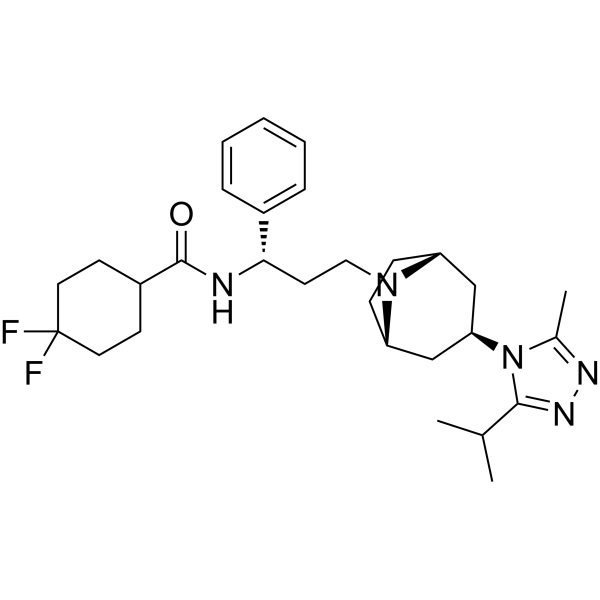
HY-13004
MaravirocCCR5 Antagonist -
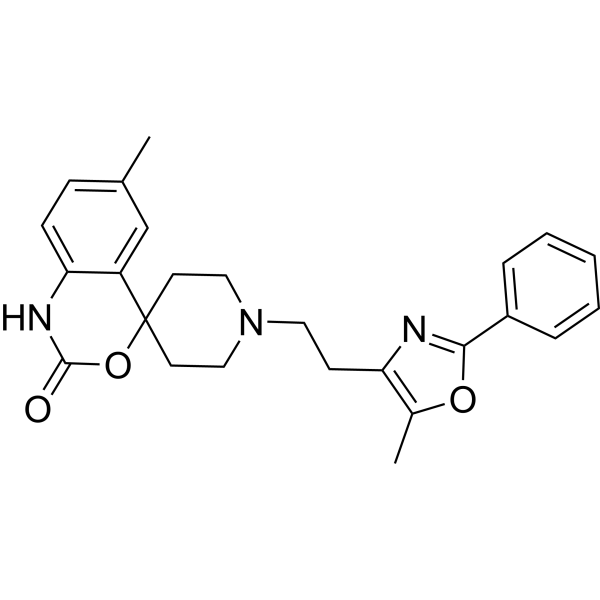
HY-15418
RS 504393CCR2 Antagonist -
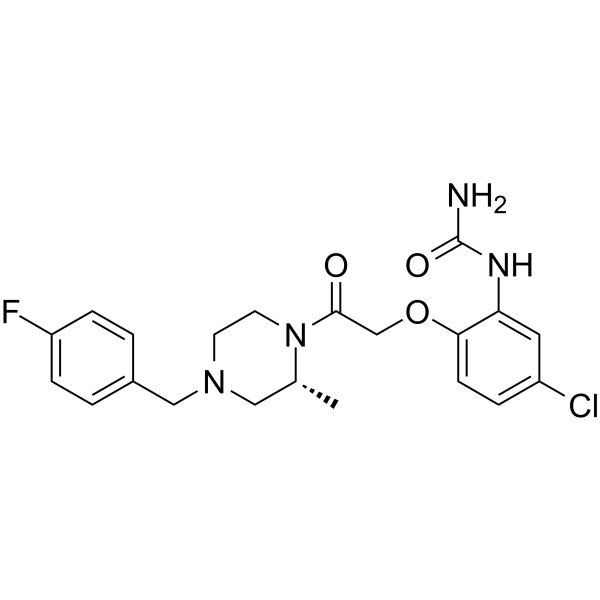
HY-12080
BX471CCR1 Antagonist -
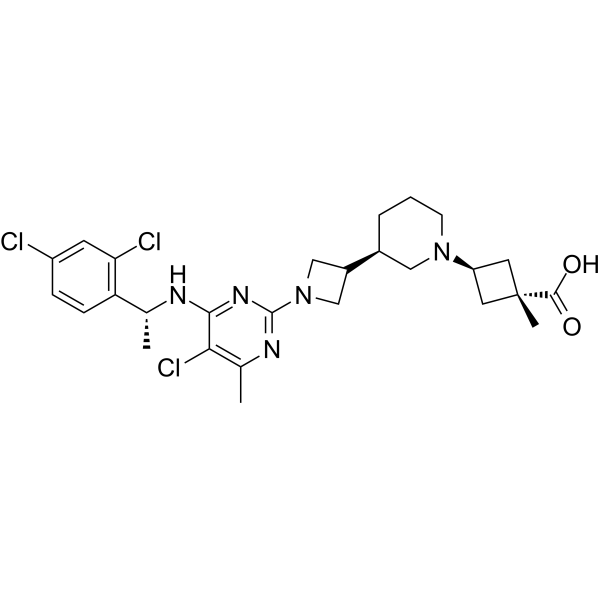
HY-148074
ZelnecirnonCCR4 Inhibitor -
HY-50674
INCB3344CCR2 Antagonis -
HY-18611A
AbaucinCCR Antagonist -
HY-15724
VercirnonCCR9 Antagonist
Publications Citing Use of MedChemExpress (MCE) Mogamulizumab
More

Biological Activity
Description
Isotype
Human IgG1 kappa
Recommend Isotype Controls
Species Reactivity
Human
IC50 & Target
[1]|
CCR4 |
In Vitro
Mogamulizumab (10 μg/mL, 24 h) induces ADCC activity against CCR4-positive cell lines (SNT8, SNT16, SNK6, and KAI3) in the presence of PBMCs[2].
Mogamulizumab (10 μg/mL, 3 days) reduces the human T-lymphotropic virus type 1 (HTLV-1) proviral load and inhibits spontaneous proliferation in PBMCs from patients with HTLV-1–associated myelopathy/tropical spastic paraparesis (HAM/TSP)[3].
Mogamulizumab (1 μg/mL, 5 days) eliminates the CD4+CCR4+ T cells in cultured PBMCs from patients with HAM/TSP[3].
MedChemExpress (MCE) has not independently confirmed the accuracy of these methods. They are for reference only.
In Vivo
Mogamulizumab (0.1 mg/kg, i.v., every other day) together with canine PBMCs (every fourth day)), inhibits tumor growth in canine bladder cancer-engrafted mouse model[4].
Mogamulizumab (0.01-1 mg/kg, i.v.) reduces circulating CD4+CCR4+ T cells, with no adverse effect in dogs[4].
MedChemExpress (MCE) has not independently confirmed the accuracy of these methods. They are for reference only.
-
Animal Model:Murine xenograft model, constructed by using the immunodeficient NOG mouse and the EBV-positive NK-cell lymphoma cell line (SNK6)[2]
-
Dosage:1 mg/kg
-
Administration:Intraperitoneal injection (i.p.), together with PBMC transplantation; twice per week for 4 weeks.
-
Result:Suppressed Tumor growth with vacuolar degeneration.
Clinical Trial
| NCT Number | Sponsor | Condition | Start Date |
Phase

|
|---|---|---|---|---|
| NCT01329991 | Plexxikon| | 2011-05 | PHASE1 |
Gene ID
Accession
Conjugated
Unconjugated
Reconsititution
The product can be reconstituted/diluted with sterile PBS or saline.
Format
-
Human IgG1 kappa
Application
ELISA, FACS, Functional assay
Verified Bioactivity
-
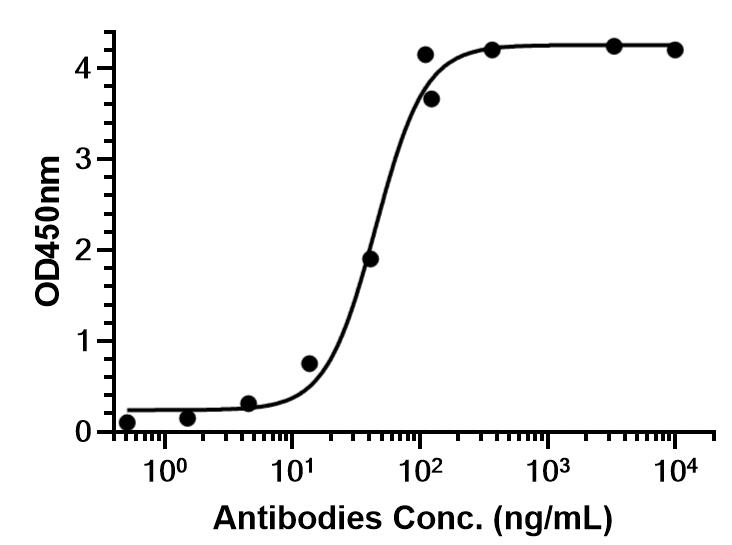 Immobilized Human CCR4/CD194 Protein (VLP, Flag & His-Strep Tag) can bind Mogamulizumab. The EC50 for this effect is 46.52 ng/mL.


Chemical Information
-
CAS No. 1159266-37-1
-
Appearance Liquid
-
Molecular Weight 146.44 kDa
-
Color Colorless to light yellow
-
SMILES
[Mogamulizumab]
-
Synonyms
KW-0761
-
Shipping
Shipping with dry ice.
-
Formulation
Please refer to the lot-specific COA for specific buffer information.
-
Storage
Please store the product under the recommended conditions in the Certificate of Analysis.


Publications (1)
-
Journal Impact Factor
-
Most Recent
-
Adv Sci (Weinh)
Repurposing of Chemokine Antagonists for Combined Phase-Resolved Spinal Cord Injury Treatment. [Abstract]2025 Oct 28:e16569. PMID: 41147460


Purity & Documentation
-
Data Sheet (262 KB)
-
SDS (251 KB)
- English - EN (251 KB)
- Français - FR (251 KB)
- Deutsch - DE (251 KB)
- Norwegian - NO (251 KB)
- Español - ES (251 KB)
- Swedish - SV (251 KB)
- Italian - IT (251 KB)
- Korean - KR (251 KB)
- Portuguese - PT (251 KB)
-
Inhibitory Antibodies User Guide (603 KB)
References
[1]. Duvic M, et al. Mogamulizumab for the treatment of cutaneous T-cell lymphoma: recent advances and clinical potential. Ther Adv Hematol. 2016 Jun;7(3):171-4. [Content Brief]
[2]. Kanazawa T, et al. Anti-CCR4 monoclonal antibody mogamulizumab for the treatment of EBV-associated T- and NK-cell lymphoproliferative diseases. Clin Cancer Res. 2014 Oct 1;20(19):5075-84. [Content Brief]
[3]. Yamauchi J, et al. Mogamulizumab, an anti-CCR4 antibody, targets human T-lymphotropic virus type 1-infected CD8+ and CD4+ T cells to treat associated myelopathy. J Infect Dis. 2015 Jan 15;211(2):238-48. [Content Brief]
[4]. Maeda S, et al. CCR4 Blockade Depletes Regulatory T Cells and Prolongs Survival in a Canine Model of Bladder Cancer. Cancer Immunol Res. 2019 Jul;7(7):1175-1187. [Content Brief]

Calculators
Concentration (start) × Volume (start) = Concentration (final) × Volume (final)


Mogamulizumab Related Classifications
HY-P99253 Related Classifications
 Powered by Bioz