1. Search Result
Search Result
Results for "

chitosan scaffolds

" in MedChemExpress (MCE) Product Catalog:

8

Inhibitors & Agonists

6

Biochemical Assay Reagents

1

Isotope-Labeled Compounds

5

Oligonucleotides

Cat. No. Product Name Target Research Areas Chemical Structure
  • HY-78985

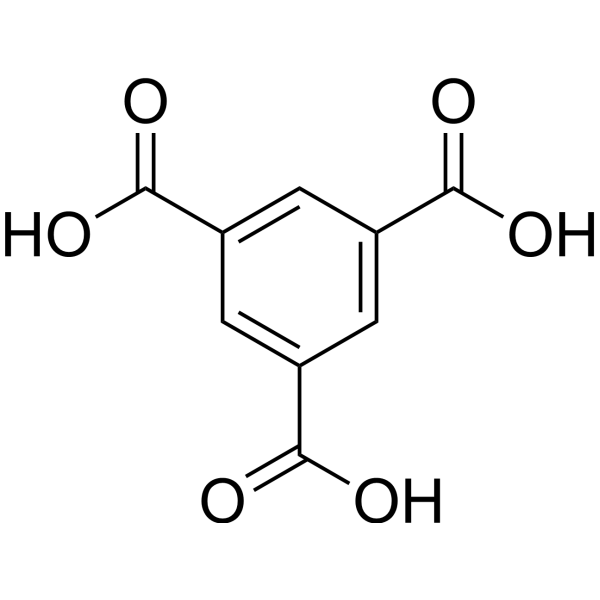
    Trimesic acid

    MOFs Biochemical Assay Reagents Others
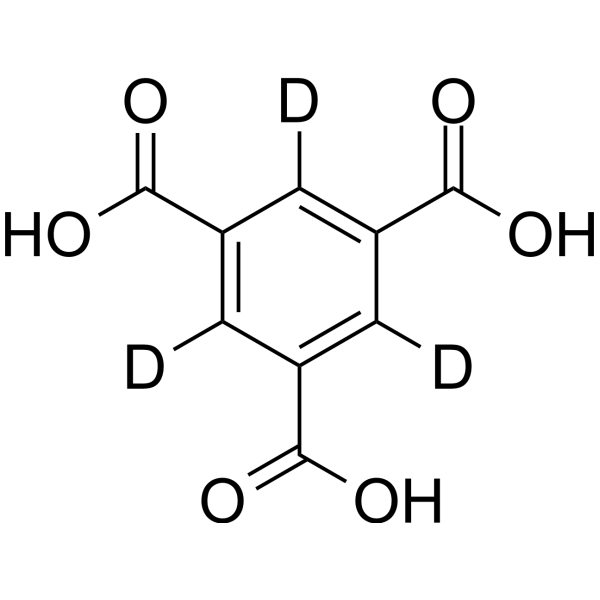
    Benzene-1,3,5-tricarboxylic acid (Trimesic acid) is a rigid planar small-molecule scaffold and crosslinker. Benzene-1,3,5-tricarboxylic acid induces bicyclic peptides to adopt a planar conformation, so as to maximize surface area and bind to the flat protein surfaces involved in protein-protein interactions. Benzene-1,3,5-tricarboxylic acid forms ionic crosslinks, hydrogen bonds and π-π bonds with chitosan, thereby constructing a hydrogel network. Benzene-1,3,5-tricarboxylic acid endows chitosan hydrogel systems with specific mechanical properties, enabling sustained release of cancer therapeutic drugs including 5-Fluorouracil (HY-90006) .
    Benzene-1,3,5-tricarboxylic acid
  • HY-155921

    mPEG5000-Aldehyde

    Biochemical Assay Reagents Others
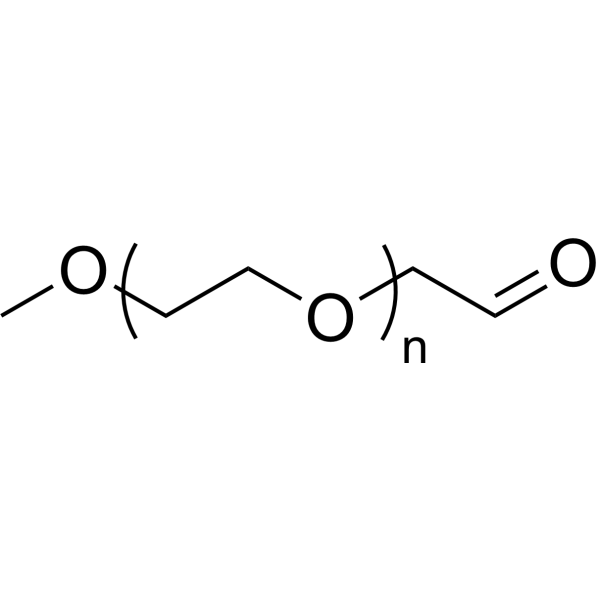
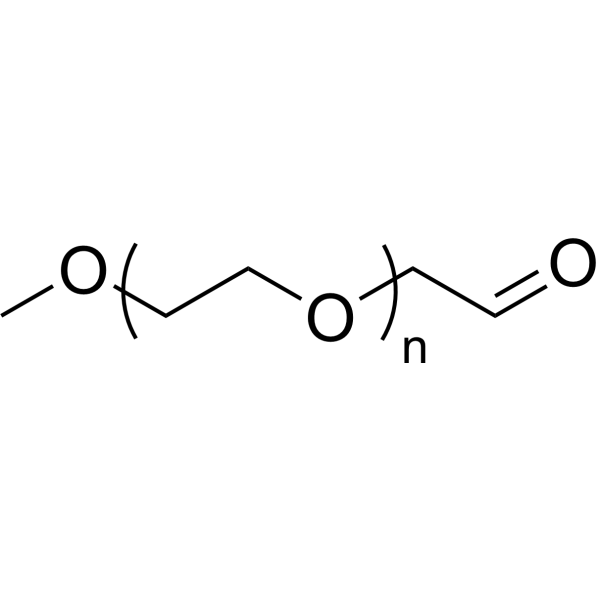
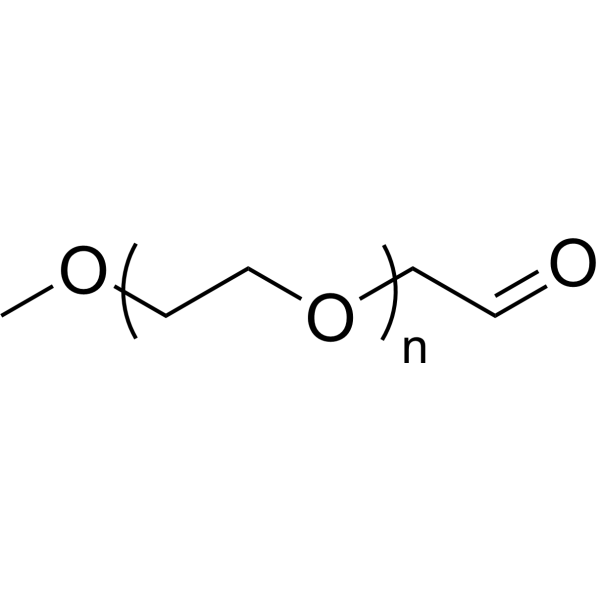
    mPEG5000-CHO participates in the formation of a three-dimensional porous scaffold which carries active substances to form a delivery vehicle. The -CHO functional group interacts with the -NH2 functional group of the chitosan chain to form a glutaraldehyde-type adduct to functionalize mPEG. This functionalization and cross-linking can affect the rigidity of the delivery system, allowing slow release of the cross-linked conjugate system.
    mPEG5000-CHO
  • HY-155922

    mPEG10000-Aldehyde

    Biochemical Assay Reagents Others
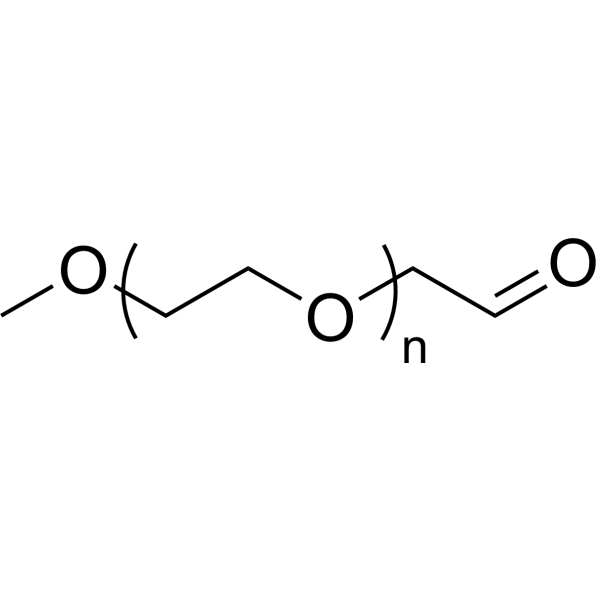
    mPEG10000-CHO participates in the formation of a three-dimensional porous scaffold which carries active substances to form a delivery vehicle. The -CHO functional group interacts with the -NH2 functional group of the chitosan chain to form a glutaraldehyde-type adduct to functionalize mPEG. This functionalization and cross-linking can affect the rigidity of the delivery system, allowing slow release of the cross-linked conjugate system.
    mPEG10000-CHO
  • HY-155919

    mPEG2000-Aldehyde

    Biochemical Assay Reagents Others
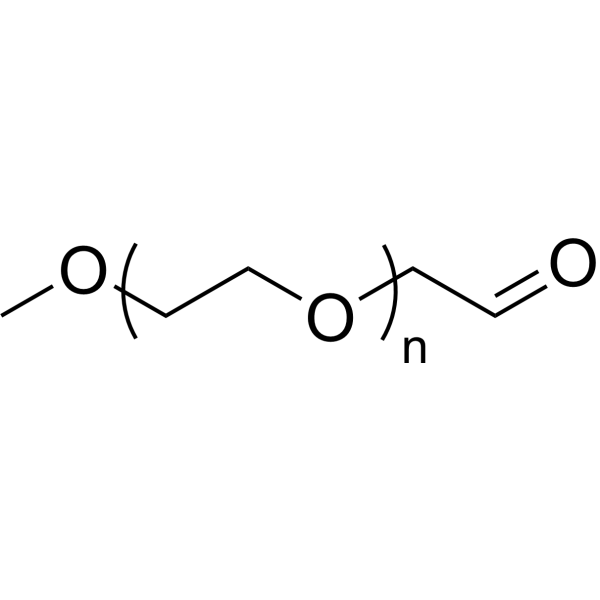
    mPEG2000-CHO participates in the formation of a three-dimensional porous scaffold which carries active substances to form a delivery vehicle. The -CHO functional group interacts with the -NH2 functional group of the chitosan chain to form a glutaraldehyde-type adduct to functionalize mPEG. This functionalization and cross-linking can affect the rigidity of the delivery system, allowing slow release of the cross-linked conjugate system.
    mPEG2000-CHO
  • HY-155918

    mPEG1000-Aldehyde

    Biochemical Assay Reagents Others
    mPEG1000-CHO participates in the formation of a three-dimensional porous scaffold that carries active substances to form a delivery vehicle. The -CHO functional group interacts with the -NH2 functional group of the chitosan chain to form a glutaraldehyde-type adduct to functionalize mPEG. This functionalization and cross-linking can affect the rigidity of the delivery system, allowing slow release of the cross-linked conjugate system.
    mPEG1000-CHO
  • HY-78985S

    Trimesic acid-d3

    Isotope-Labeled Compounds Biochemical Assay Reagents MOFs Others
    Benzene-1,3,5-tricarboxylic acid-d3 (Trimesic acid-d3) is the deuterium labeled Benzene-1,3,5-tricarboxylic acid (HY-78985). Benzene-1,3,5-tricarboxylic acid (Trimesic acid) is a rigid planar small-molecule scaffold and crosslinker. Benzene-1,3,5-tricarboxylic acid induces bicyclic peptides to adopt a planar conformation, so as to maximize surface area and bind to the flat protein surfaces involved in protein-protein interactions. Benzene-1,3,5-tricarboxylic acid forms ionic crosslinks, hydrogen bonds and π-π bonds with chitosan, thereby constructing a hydrogel network. Benzene-1,3,5-tricarboxylic acid endows chitosan hydrogel systems with specific mechanical properties, enabling sustained release of cancer therapeutic drugs including 5-Fluorouracil (HY-90006) .
    Benzene-1,3,5-tricarboxylic acid-d3
  • HY-W115785

    Environmental Pollutants VEGFR RUNX Metabolic Disease
    Zinc borate is a bioactive inorganic substance with properties including osteogenic induction, pro-angiogenesis, antioxidation, antimutagenesis and cytotoxicity. In the field of bone tissue engineering, Zinc borate is often incorporated into chitosan scaffolds. By releasing zinc ions and borate ions, Zinc borate induces the differentiation of human dental pulp stem cells into osteoblasts, upregulates the expression of bone-related genes and promotes calcium deposition. Zinc borate also promotes angiogenesis by upregulating key factors such as vascular endothelial growth factor. Zinc borate exhibits antioxidant capacity to scavenge free radicals, and can specifically reduce mutagenicity under specific conditions. Zinc borate reduces the survival rate of mouse fibroblasts, but it can still be used in studies related to bone tissue engineering .
    Zinc borate
  • HY-155923

    mPEG20000-Aldehyde

    Biochemical Assay Reagents Others
    mPEG20000-CHO participates in the formation of a three-dimensional porous scaffold which carries active substances to form a delivery vehicle. The -CHO functional group interacts with the -NH2 functional group of the chitosan chain to form a glutaraldehyde-type adduct to functionalize mPEG. This functionalization and cross-linking can affect the rigidity of the delivery system, allowing slow release of the cross-linked conjugate system.
    mPEG20000-CHO

Inquiry Online

Your information is safe with us. * Required Fields.

Salutation


Country or Region *

Applicant Name *


Organization Name *

Department *


Email Address *


Product Name *

Cat. No.


Requested quantity *

Phone Number *


Remarks

Inquiry Online

Inquiry Information

Product Name:
Cat. No.:
Quantity:
MCE Japan Authorized Agent:

