20 Results for "

cholinergic neuron

" in MedChemExpress (MCE) Product Catalog:
Products (20)

20 Results for "cholinergic neuron" in MCE Product Catalog:

28
28 Publications Verification
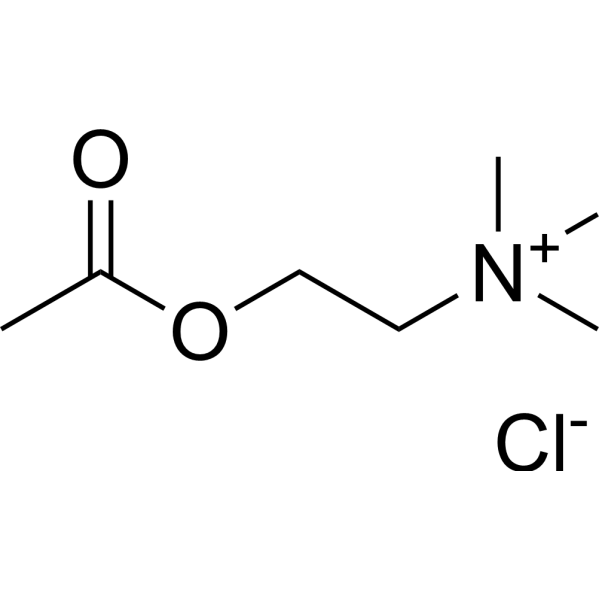
Cat. No.: HY-B0282
CAS No.: 60-31-1
Synonyms: ACh chloride
Acetylcholine chloride (ACh chloride), a neurotransmitter, is a potent and BBB-permeable cholinergic agonist. Acetylcholine chloride is a modulator of the activity of dopaminergic (DAergic) neurons through the stimulation of nicotinic acetylcholine receptors (nAChRs) . Acetylcholine chloride inhibits p53 mutant peptide aggregation in vitro .
loading...
    loading...
4
4 Cited Publications
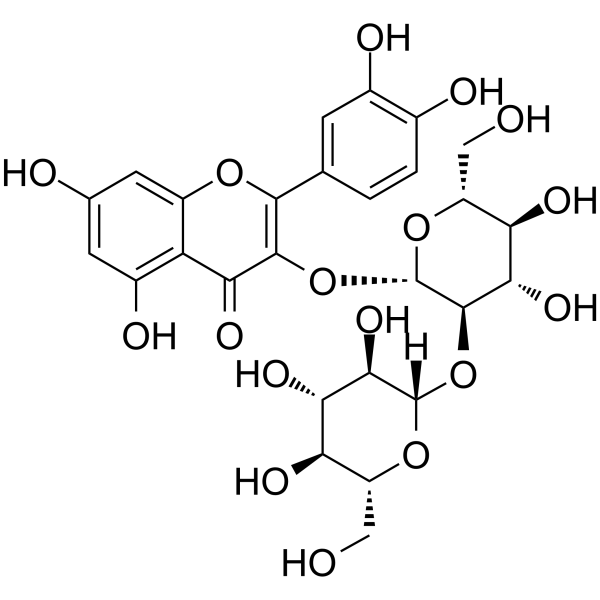
Cat. No.: HY-N2183
CAS No.: 18609-17-1
Synonyms: Quercetin 3-O-sophoroside
Baimaside (Quercetin 3-O-sophoroside) is a flavonoid cholinergic function modulator that binds to SARS-CoV-2-related targets. Baimaside regulates the expression of cholinergic system-related proteins and acetylcholine levels, improves scopolamine-induced learning and memory impairment, protects hippocampal neurons, inhibits pollen protein fluorescence, and protects pollen DNA. Its biosynthesis is regulated by multiple enzymes. Baimaside is completely absorbed in rats, undergoes phase Ⅱ metabolism and gut microbiota decomposition, and inhibits the invasion and proliferation of SARS-CoV-2 and its variants, making it suitable for research related to Alzheimer's disease and COVID-19 .
loading...
    loading...
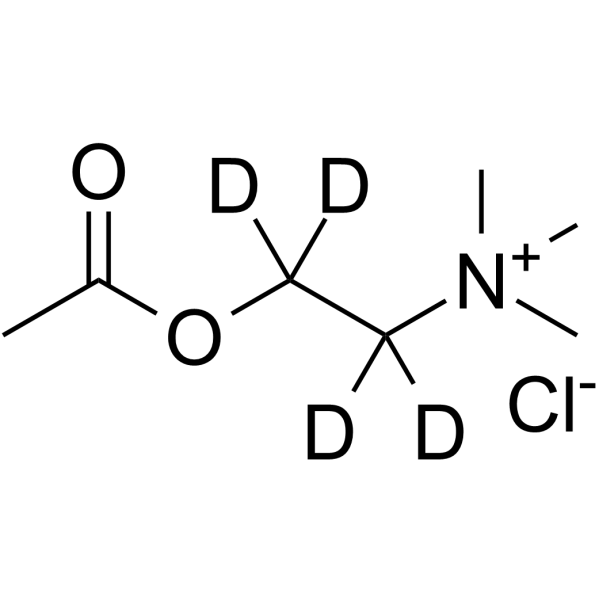
Cat. No.: HY-B0282S
CAS No.: 344298-94-8
Synonyms: ACh-d4 chloride
Acetylcholine-d4 (chloride) is the deuterium labeled Acetylcholine chloride. Acetylcholine chloride (ACh chloride), a neurotransmitter, is a potent and BBB-permeable cholinergic agonist. Acetylcholine chloride is a modulator of the activity of dopaminergic (DAergic) neurons through the stimulation of nicotinic acetylcholine receptors (nAChRs) . Acetylcholine chloride inhibits p53 mutant peptide aggregation in vitro .
loading...
    loading...
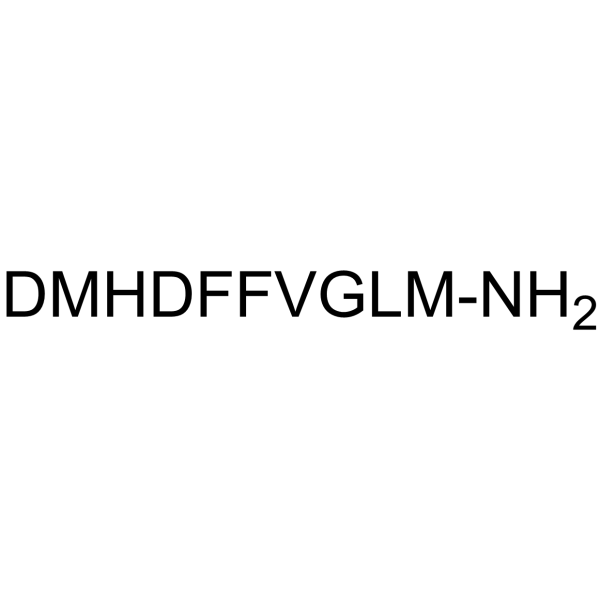
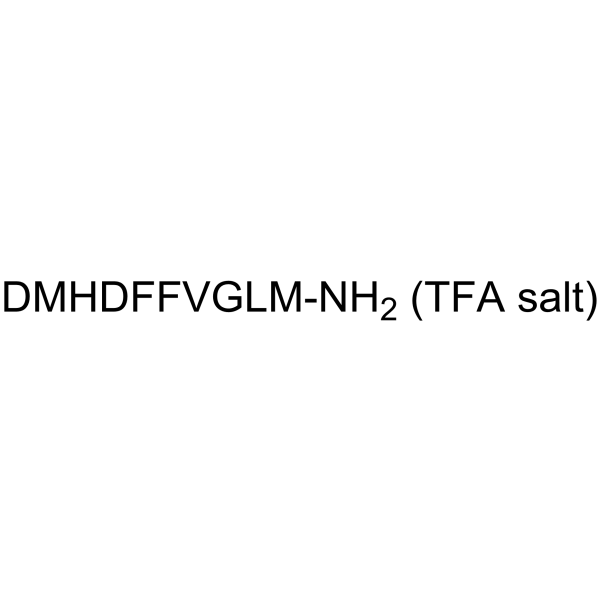
Cat. No.: HY-P0242
CAS No.: 86933-75-7
Neurokinin B is a tachykinin family peptide that preferentially binds to and activates NK3R over other tachykinin receptors. Neurokinin B preferentially binds to the substance P receptor (SP-N receptor) and mediates acetylcholine release from cholinergic neurons. Neurokinin B regulates the pulsatile release of Kisspeptin and GnRH, stimulates or inhibits the secretion of luteinizing hormone (HY-P2293), regulates reproductive function via metabolic signals, and drives the onset of puberty. Neurokinin B exerts vasoactive effects and induces contraction of isolated guinea pig ileum. Neurokinin B can be used in studies related to hypogonadotropic hypogonadism .
loading...
    loading...
Cat. No.: HY-P0242A
CAS No.: 101536-55-4
Neurokinin B TFA is a tachykinin family peptide that preferentially binds to and activates NK3R over other tachykinin receptors. Neurokinin B TFA preferentially binds to the substance P receptor (SP-N receptor) and mediates acetylcholine release from cholinergic neurons. Neurokinin B TFA regulates the pulsatile release of Kisspeptin and GnRH, stimulates or inhibits the secretion of luteinizing hormone (HY-P2293), regulates reproductive function via metabolic signals, and drives the onset of puberty. Neurokinin B TFA exerts vasoactive effects and induces contraction of isolated guinea pig ileum. Neurokinin B TFA can be used in studies related to hypogonadotropic hypogonadism .
loading...
    loading...
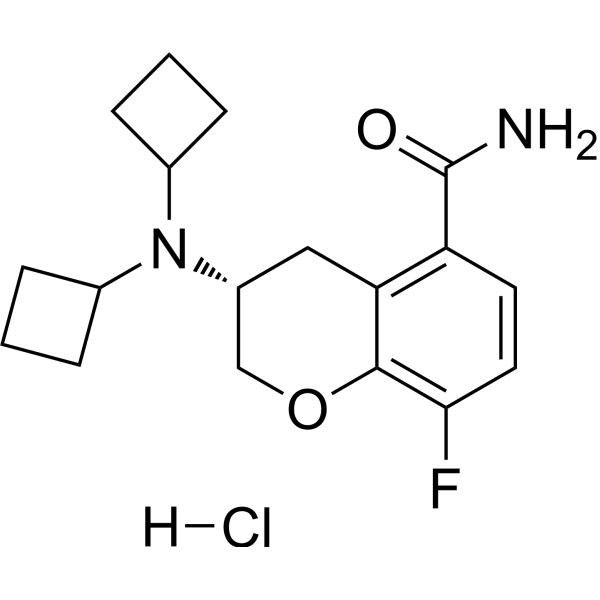
Cat. No.: HY-10351A
CAS No.: 184674-99-5
Synonyms: NAD-​299 hydrochloride
Target:  

5-HT Receptor

Research Areas:  

Neurological Disease

Robalzotan hydrochloride (NAD-​299 hydrochloride) is a potent and selective 5-Hydroxytryptamine 1A (5-HT1A) inhibitor. Robalzotan hydrochloride increases the firing rate of 5-HT cells. Robalzotan hydrochloride induces 5-HT1A receptor occupancy. Robalzotan hydrochloride has the potential for the research of a cholinergic deficit in the central -nervous system .
loading...
    loading...
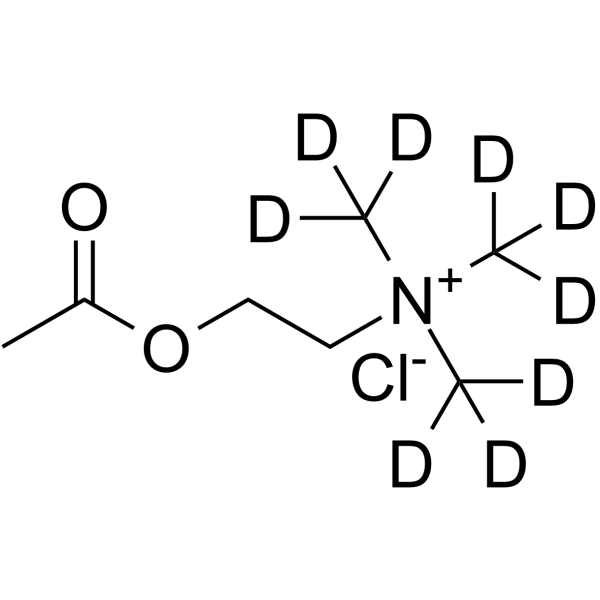
Cat. No.: HY-B0282S1
CAS No.: 344298-95-9
Synonyms: ACh-d9 chloride
Acetylcholine-d9 (chloride) is the deuterium labeled Acetylcholine chloride. Acetylcholine chloride (ACh chloride), a neurotransmitter, is a potent and BBB-permeable cholinergic agonist. Acetylcholine chloride is a modulator of the activity of dopaminergic (DAergic) neurons through the stimulation of nicotinic acetylcholine receptors (nAChRs) . Acetylcholine chloride inhibits p53 mutant peptide aggregation in vitro .
loading...
    loading...
Cat. No.: HY-B0282R
CAS No.: 60-31-1
Synonyms: ACh chloride (Standard)
Acetylcholine (chloride) (Standard) is the analytical standard of Acetylcholine (chloride). This product is intended for research and analytical applications. Acetylcholine chloride (ACh chloride), a neurotransmitter, is a potent and BBB-permeable cholinergic agonist. Acetylcholine chloride is a modulator of the activity of dopaminergic (DAergic) neurons through the stimulation of nicotinic acetylcholine receptors (nAChRs) . Acetylcholine chloride inhibits p53 mutant peptide aggregation in vitro .
loading...
    loading...
Cat. No.: HY-W392413
CAS No.: 118421-50-4
Glutathione monoethyl ester is a glutathione derivative that can be transported into cells and hydrolyzed into glutathione. Glutathione monoethyl ester downregulates the gene expression of TEN1 and CTC1 while upregulating TERT expression. Glutathione monoethyl ester enhances telomerase activity, promotes proliferation and differentiation in aged bone marrow stromal cells, while elevating glutathione levels and reducing oxidative stress, protein aggregation and cell death in motor neuronal cells. Glutathione monoethyl ester confers broad multi-organ protection against cerebral ischemia, renal injury, liver damage, and pancreatitis. Glutathione monoethyl ester can be used for the research of amyotrophic lateral sclerosis, stroke, acute renal failure, liver injury, and acute pancreatitis .
loading...
    loading...
Cat. No.: HY-10351
CAS No.: 169758-66-1
Synonyms: NAD-​299
Target:  

5-HT Receptor

Research Areas:  

Neurological Disease

Robalzotan (NAD-​299) is a potent and selective 5-Hydroxytryptamine 1A (5-HT1A) inhibitor. Robalzotan increases the firing rate of 5-HT cells. Robalzotan induces 5-HT1A receptor occupancy. Robalzotan has the potential for the research of a cholinergic deficit in the central -nervous system .
loading...
    loading...
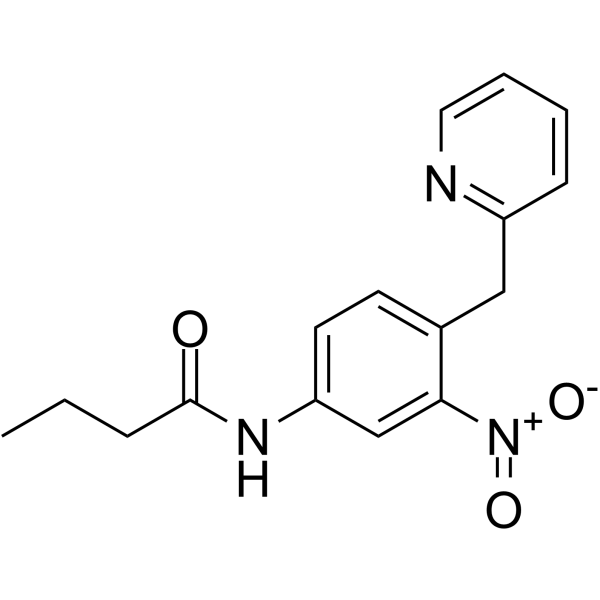
Cat. No.: HY-19085
CAS No.: 63233-46-5
Target:  

Cholinesterase (ChE)

Research Areas:  

Neurological Disease

KW-6055 is a benzylpyridine derivative with anti-amnesic effects. KW-6055 can increase the level of ACh in the brain cholinergic system and stimulate cholinergic neurons.
loading...
    loading...
Cat. No.: HY-129688
CAS No.: 123577-73-1
Research Areas:  

Neurological Disease

Sut-8701 is a Cholecystokinin (HY-P2932) analog that effectively slows the degenerative process of Alzheimer's disease by protecting the integrity of cholinergic neurons in the nucleus basalis .
loading...
    loading...
Cat. No.: HY-N2183R
CAS No.: 18609-17-1
Synonyms: Quercetin 3-O-sophoroside (Standard)
Baimaside (Standard) is the analytical standard of Baimaside. This product is intended for research and analytical applications. Baimaside (Quercetin 3-O-sophoroside) is a flavonoid cholinergic function modulator that binds to SARS-CoV-2-related targets. Baimaside regulates the expression of cholinergic system-related proteins and acetylcholine levels, improves scopolamine-induced learning and memory impairment, protects hippocampal neurons, inhibits pollen protein fluorescence, and protects pollen DNA. Its biosynthesis is regulated by multiple enzymes. Baimaside is completely absorbed in rats, undergoes phase Ⅱ metabolism and gut microbiota decomposition, and inhibits the invasion and proliferation of SARS-CoV-2 and its variants, making it suitable for research related to Alzheimer's disease and COVID-19 .
loading...
    loading...
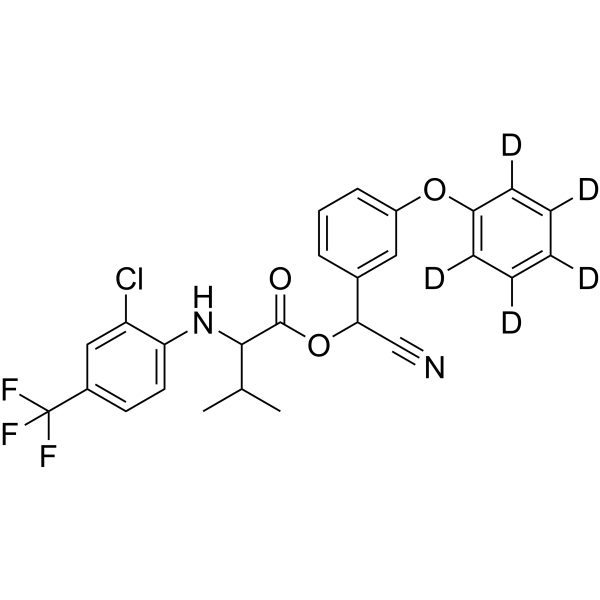
Cat. No.: HY-123320S
Fluvalinate-d5 is the deuterated-labeled Fluvalinate (HY-123320). Fluvalinate is an orally active acaricide classified as a sodium channel inhibitor. Fluvalinate delays sodium channel closure, prolongs cell membrane depolarization, inhibits the excitability of honeybee brain neurons, and exerts a central nervous system inhibitory effect. Fluvalinate negatively affects the learning ability, memory ability, sucrose responsiveness, and survival of honeybees. Fluvalinate potentiates pentobarbital-induced hypnosis, reduces spontaneous activity in mice, and decreases the total white blood cell count and absolute lymphocyte count in mice. Fluvalinate induces acute toxic symptoms in rats, acts as a cholinergic stimulant, and induces the production of hepatic enzymes in rats. Fluvalinate causes the death of Varroa jacobsoni sensitive to τ-Fluvalinate (HY-B2021). Fluvalinate can be used in studies related to mite pest control .
loading...
    loading...
Cat. No.: HY-183403
CAS No.: 457075-21-7
Synonyms: CHF 2819 free base
Target:  

Cholinesterase (ChE)

Research Areas:  

Neurological Disease

Ganstigmine (CHF 2819 free base) is a potent, orally active, blood-brain barrier-permeable acetylcholinesterase (AChE) inhibitor, with an IC50 value of 65 nM against human AChE, 310 nM against human butyrylcholinesterase (BChE), and 5.12 μM against Torpedo californica AChE. Ganstigmine increases extracellular acetylcholine levels in the brain of rodents without altering the concentrations of other neurotransmitters, stimulates cholinergic transmission, and induces the release of soluble non-amyloidogenic amyloid precursor protein. Ganstigmine exhibits neuroprotective activity independent of cholinesterase inhibition, prevents neuronal death, alleviates β-amyloid-induced neurodegeneration, rescues cholinergic neuron loss, and reverses Scopolamine (HY-N0296)-induced amnesia and memory deficits. Ganstigmine shows cholinesterase inhibition-independent neuroprotective effects against growth factor deprivation and Aβ25-35 toxicity. Ganstigmine can be used in research on Alzheimer's disease, cholinergic dysfunction, and neuroprotection .
loading...
    loading...
Cat. No.: HY-14287
CAS No.: 135017-85-5
Target:  

5-HT Receptor

Research Areas:  

Others

KW-5092 fumarete is a gastrokinetic agent. KW-5092 fumarete can increase intraluminal 5-HT release via the stimulation of cholinergic neurons .
loading...
    loading...
Cat. No.: HY-N18289
CAS No.: 4070-42-2
8-Hydroxydihydrochelerythrine is a benzophenanthridine alkaloid-derived, selective and competitive AChE inhibitor (IC50=0.61 μM) isolated from the roots of Zanthoxylum nitidum (Roxb.) DC. 8-Hydroxydihydrochelerythrine increases the content of acetylcholine in the synapses of cholinergic neurons and enhances cholinergic neurotransmission. 8-Hydroxydihydrochelerythrine is applicable to the research of neurodegenerative diseases with dementia such as Alzheimer's disease .
loading...
    loading...
Cat. No.: HY-116968
CAS No.: 2089059-30-1
Target:  

Sigma Receptor

Research Areas:  

Neurological Disease

JVW-1009 is a Sig2R/PGRMC1 antagonist (Sig1R Ki = 96 nM; Sig2R Ki = 70 nM). JVW-1009 acts as a neuroprotective agent. JVW-1009 can be used in the research of Alzheimer's disease .
loading...
    loading...
Cat. No.: HY-116153
CAS No.: 1393102-59-4
Target:  

Cholinesterase (ChE)

Research Areas:  

Neurological Disease

HUHS2002 is a free fatty acid derivative with the ability to enhance α7 cholinergic receptor activity. HUHS2002 enhances whole-cell membrane currents of α7 ACh receptors expressed in Xenopus oocytes in a concentration-dependent manner. The effects of HUHS2002 were blocked in the presence of the Ca2 /calmodulin-dependent protein kinase II (CaMKII) inhibitor KN-93. HUHS2002 activated CaMKII in cultured rodent hippocampal neurons, and this activation was abolished by KN-93. HUHS2002 also partially inhibited the activity of protein phosphatase 1 (PP1) in a cell-free PP1 activity assay .
loading...
    loading...
Cat. No.: HY-123320
CAS No.: 69409-94-5
Research Areas:  

Infection Neurological Disease

Fluvalinate is an orally active acaricide classified as a sodium channel inhibitor. Fluvalinate delays sodium channel closure, prolongs cell membrane depolarization, inhibits the excitability of honeybee brain neurons, and exerts a central nervous system inhibitory effect. Fluvalinate negatively affects the learning ability, memory ability, sucrose responsiveness, and survival of honeybees. Fluvalinate potentiates pentobarbital-induced hypnosis, reduces spontaneous activity in mice, and decreases the total white blood cell count and absolute lymphocyte count in mice. Fluvalinate induces acute toxic symptoms in rats, acts as a cholinergic stimulant, and induces the production of hepatic enzymes in rats. Fluvalinate causes the death of Varroa jacobsoni sensitive to τ-Fluvalinate (HY-B2021). Fluvalinate can be used in studies related to mite pest control .
loading...
    loading...
  • 1

