8 Results for "

colony-forming ability

" in MedChemExpress (MCE) Product Catalog:
Products (8)

8 Results for "colony-forming ability" in MCE Product Catalog:

Cat. No.: HY-161117
CAS No.: 1497439-74-3
Target:  

Acetyl-CoA synthetase

Research Areas:  

Cancer

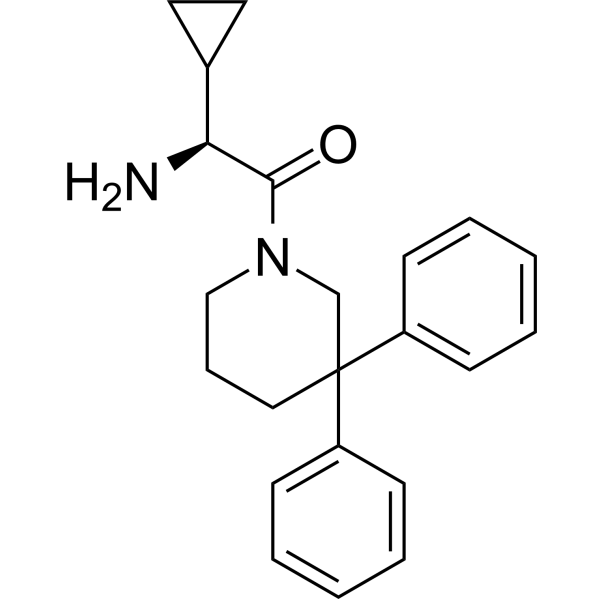
AD-8007 is a blood-brain barrier-permeable ACSS2 inhibitor with human IC50 of 0.89 μM and Kd of 116.6 μM. AD-8007 reduces colony-forming ability, lipid storage levels and FASN protein expression, and induces cancer cell death. AD-8007 shrinks established tumors, acts synergistically with radiotherapy to inhibit tumor growth, reduces tumor burden, causes no obvious toxicity to normal brain tissue, and prolongs survival. AD-8007 exhibits superior metabolic stability. AD-8007 is applicable to research related to breast cancer brain metastasis .
loading...
    loading...
Cat. No.: HY-151915
CAS No.: 3012609-63-8
Target:  

ATM/ATR mTOR

Research Areas:  

Cancer

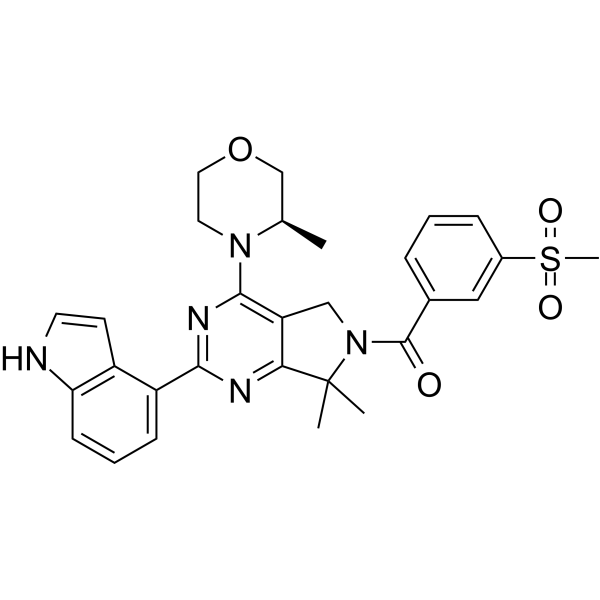
ATR-IN-20 is a potent ATR (ATM/ATR) inhibitor with an IC50 of 3 nM. ATR-IN-20 possess an inhibitory effect on mTOR (IC50 of 18 nM) while displaying good selectivity against PI3Kα (100 nM), ATM (100 nM), and DNA-PK (662 nM). ATR-IN-20 exhibits excellent pharmacokinetic profile (F = 30%), and has anticancer effects .
loading...
    loading...
Cat. No.: HY-120376
CAS No.: 1360562-98-6
Target:  

STAT

Research Areas:  

Cancer

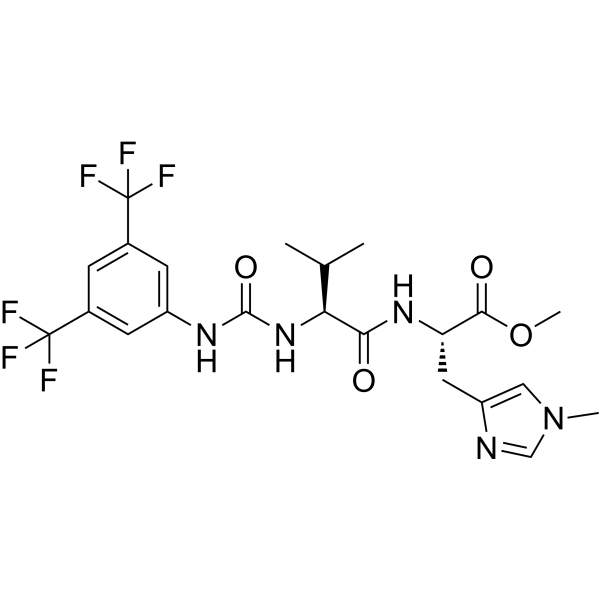
XZH-5 inhibits the phosphorylation of STAT3 and results in the induction of apoptosis and reduction of colony forming ability .
loading...
    loading...
Cat. No.: HY-187179
Target:  

CDK Apoptosis

Research Areas:  

Cancer

CDK2-IN-62 is a predicted CDK2 inhibitor. CDK2-IN-62 induces apoptosis in breast cancer cells and reduces their colony-forming ability. CDK2-IN-62 can be used for the research of breast cancer, ovarian cancer and colorectal cancer .
loading...
    loading...
Cat. No.: HY-180848
CAS No.: 3051861-49-2
Target:  

Bcl-2 Family Apoptosis

Research Areas:  

Cancer

Bcl-2-IN-24 (Compound 11g) is an efficient and selective Bcl-2 inhibitor with a Kd value of 11.3 μM. Bcl-2-IN-24 exhibits anti-proliferative activity against HCT-116 cells and A549 cells. Bcl-2-IN-24 effectively inhibits the colony-forming ability of tumor cells and induces cell apoptosis. Bcl-2-IN-24 can be used for research on colon cancer and lung cancer .
loading...
    loading...
Cat. No.: HY-182789
Target:  

VEGFR CDK

Research Areas:  

Cancer

VEGFR2-IN-86 is a dual VEGFR2/CDK2 inhibitor, with an IC50 of 0.06 μM against VEGFR2 and an IC50 of 0.78 μM against CDK2. VEGFR2-IN-86 induces G-phase cell cycle arrest, reduces colony-forming ability and tumor cell migration capacity, and exerts antiproliferative activity in cancer cells. VEGFR2-IN-86 can be used for the research of breast cancer and prostate cancer .
loading...
    loading...
Cat. No.: HY-183783
Target:  

PROTACs RET STAT ERK Apoptosis

Research Areas:  

Endocrinology Cancer

PROTAC RET Degrader 2 is a RET degrader with a target IC50 of 0.36 nM. PROTAC RET Degrader 2 is mainly composed of RET-IN-34 (HY-183729) and Thalidomide (HY-14658). PROTAC RET Degrader 2 mediates RET degradation via the ubiquitin-proteasome system. PROTAC RET Degrader 2 induces apoptosis, inhibits colony-forming ability, and exhibits antiproliferative activity in cancer cells. PROTAC RET Degrader 2 suppresses tumor growth in xenograft models. PROTAC RET Degrader 2 can be used in research related to medullary thyroid carcinoma, papillary thyroid carcinoma, and RET fusion-positive lung adenocarcinoma .
loading...
    loading...
Cat. No.: HY-N20674
CAS No.: 76472-89-4
Chalcomoracin is an orally active anticancer agent. Chalcomoracin exhibits anticancer, antibacterial, and α-glucosidase inhibitory activities, with an IC50 of 14.23 µM against yeast α-glucosidase and an IC50 of 5.5 μM against FabI of Staphylococcus aureus. Chalcomoracin reduces the phosphorylation levels of ERK, JNK, and P38; enhances the phosphorylation level of ERK1/2; regulates the MAPK, mTOR, AKT, and p53 signaling pathways; upregulates the expression of Chop, Bip, PINK1, GRP78, and GADD153; and downregulates the expression of Alix. Chalcomoracin induces apoptosis (apoptosis), endoplasmic reticulum stress (endoplasmic reticulum stress), paraptosis (paraptosis), ROS production, mitophagy (mitophagy), and autophagy (autophagy); it inhibits cancer cell viability, colony-forming ability, migration, invasion, proliferation, tumorigenesis, fatty acid synthesis, S. aureus growth, vitreous-stimulated retinal cell activity, and cell cycle progression at the G0/G1 phase. Chalcomoracin can be used in research related to hepatocellular carcinoma, non-small cell lung cancer, triple-negative breast cancer, prostate cancer, proliferative vitreoretinopathy, pancreatic cancer, diabetes, and bacterial infections .
loading...
    loading...

