9 Results for "

dental pulp stem cells

" in MedChemExpress (MCE) Product Catalog:
Products (9)

9 Results for "dental pulp stem cells" in MCE Product Catalog:

57
57 Cited Publications
Cat. No.: HY-B0356B
CAS No.: 86393-32-0
Synonyms: Bay-09867 hydrochloride monohydrate
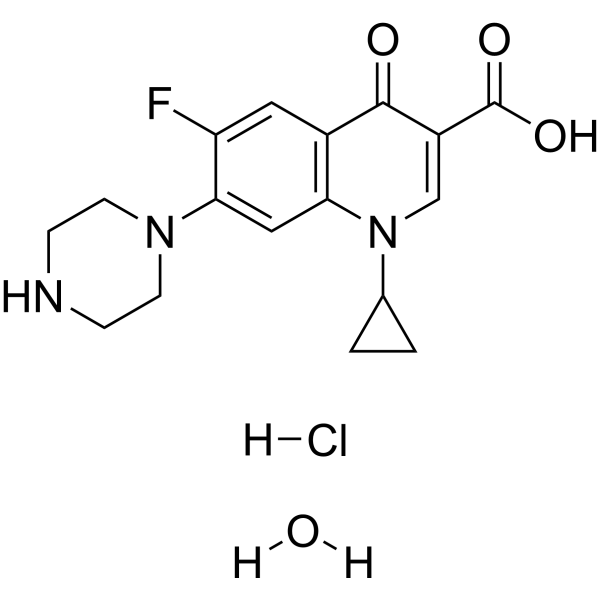
Ciprofloxacin (Bay-09867) hydrochloride monohydrate is an orally active, blood-brain barrier permeable fluoroquinolone antibacterial agent. Ciprofloxacin hydrochloride monohydrate exerts bactericidal effects primarily by inhibiting topoisomerase II and IV. Ciprofloxacin hydrochloride monohydrate inhibits the proliferation of human dental pulp stem cells and chondrocytes from young rats, and also activates the Akt signaling pathway and upregulates markers such as β-catenin and Nanog to maintain the morphological characteristics of stem cells. Ciprofloxacin hydrochloride monohydrate induces significant neurotoxicity and tissue damage, including reducing serotonin and glutathione levels in the brain, inducing oxidative stress and depression-like behaviors, and causing articular cartilage damage. Ciprofloxacin hydrochloride monohydrate can be applied to research related to infections of necrotic young permanent teeth and neurotoxicity .
loading...
    loading...
57
57 Cited Publications
Cat. No.: HY-B0356A
CAS No.: 93107-08-5
Synonyms: Bay-09867 monohydrochloride
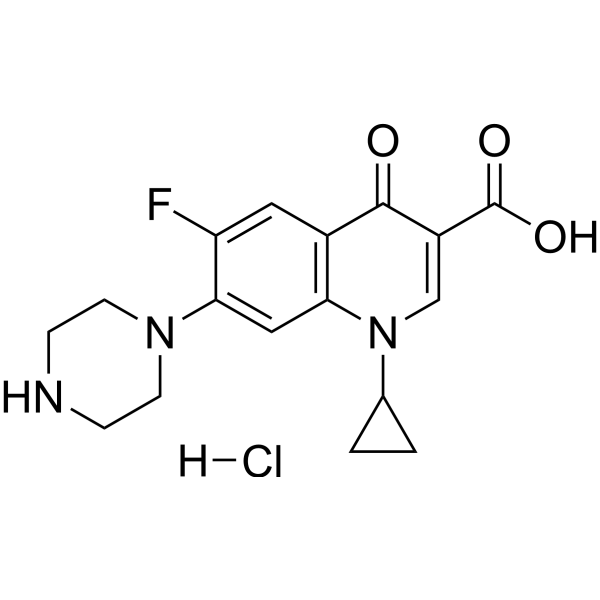
Ciprofloxacin (Bay-09867) monohydrochloride is an orally active, blood-brain barrier permeable fluoroquinolone antibacterial agent. Ciprofloxacin monohydrochloride exerts bactericidal effects primarily by inhibiting topoisomerase II and IV. Ciprofloxacin monohydrochloride inhibits the proliferation of human dental pulp stem cells and chondrocytes from young rats, and also activates the Akt signaling pathway and upregulates markers such as β-catenin and Nanog to maintain the morphological characteristics of stem cells. Ciprofloxacin monohydrochloride induces significant neurotoxicity and tissue damage, including reducing serotonin and glutathione levels in the brain, inducing oxidative stress and depression-like behaviors, and causing articular cartilage damage. Ciprofloxacin monohydrochloride can be applied to research related to infections of necrotic young permanent teeth and neurotoxicity .
loading...
    loading...
Cat. No.: HY-W019901B
CAS No.: 7778-18-9
Synonyms: Gypsum ustum (97%)
Anhydrous calcium sulfate (97%) serves as an oil-based drilling fluid additive and an osteogenic material. Anhydrous calcium sulfate (97%) increases the plastic viscosity, yield point, apparent viscosity and gel strength of oil-based drilling fluids. Anhydrous calcium sulfate (97%) upregulates the expression of bone-related genes FOSL1, RUNX2 and SPP1. Anhydrous calcium sulfate (97%) significantly affects the behavior of dental pulp stem cells, enhancing their proliferation, differentiation and matrix deposition .
loading...
    loading...
Cat. No.: HY-N4119
CAS No.: 13241-32-2
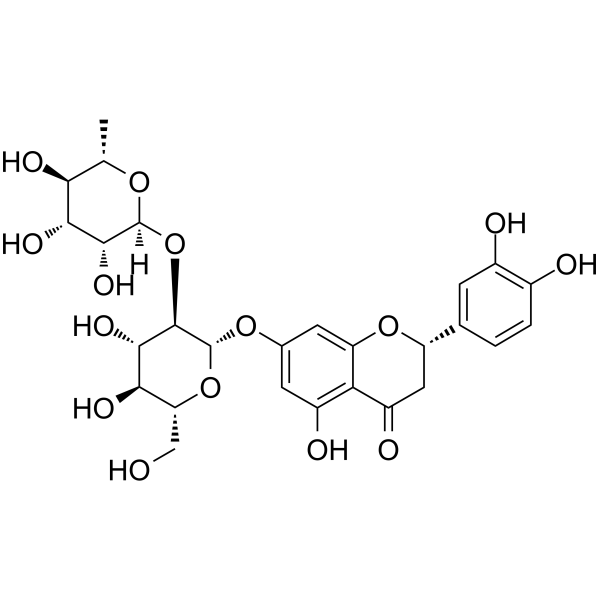
Neoeriocitrin is a Naringin (HY-N0153) analogue found in Drynaria Rhizome. Neoeriocitrin induces cells proliferation, differentiation, up-regulates type I collagen, osteocalcin, and key osteogenic markers, and increases ALP activity. Neoeriocitrin increases expression of Runx2, COL I, OCN and Beclin1. Neoeriocitrin inhibits phosphorylation of P38 mitogen-activated protein kinase, reduces acetylcholinesterase (AChE) activity, and increases choline acetyltransferase (ChAT) activity. Neoeriocitrin reduces apoptosis and induces autophagy. Neoeriocitrin can be used for the researches of osteoporosis and Alzheimer's disease .
loading...
    loading...
Cat. No.: HY-B0356R
CAS No.: 85721-33-1
Synonyms: Bay-09867 (Standard)
Ciprofloxacin (Standard) is the analytical standard of Ciprofloxacin. This product is intended for research and analytical applications. Ciprofloxacin (Bay-09867) is an orally active, blood-brain barrier permeable fluoroquinolone antibacterial agent. Ciprofloxacin exerts bactericidal effects primarily by inhibiting topoisomerase II and IV. Ciprofloxacin inhibits the proliferation of human dental pulp stem cells and chondrocytes from young rats, and also activates the Akt signaling pathway and upregulates markers such as β-catenin and Nanog to maintain the morphological characteristics of stem cells. Ciprofloxacin induces significant neurotoxicity and tissue damage, including reducing serotonin and glutathione levels in the brain, inducing oxidative stress and depression-like behaviors, and causing articular cartilage damage. Ciprofloxacin can be applied to research related to infections of necrotic young permanent teeth and neurotoxicity .
loading...
    loading...
Cat. No.: HY-B0356AR
CAS No.: 93107-08-5
Synonyms: Bay-09867 monohydrochloride (Standard)
Ciprofloxacin monohydrochloride (Standard) is the analytical standard of Ciprofloxacin (monohydrochloride). This product is intended for research and analytical applications. Ciprofloxacin (Bay-09867) monohydrochloride is an orally active, blood-brain barrier permeable fluoroquinolone antibacterial agent. Ciprofloxacin monohydrochloride exerts bactericidal effects primarily by inhibiting topoisomerase II and IV. Ciprofloxacin monohydrochloride inhibits the proliferation of human dental pulp stem cells and chondrocytes from young rats, and also activates the Akt signaling pathway and upregulates markers such as β-catenin and Nanog to maintain the morphological characteristics of stem cells. Ciprofloxacin monohydrochloride induces significant neurotoxicity and tissue damage, including reducing serotonin and glutathione levels in the brain, inducing oxidative stress and depression-like behaviors, and causing articular cartilage damage. Ciprofloxacin monohydrochloride can be applied to research related to infections of necrotic young permanent teeth and neurotoxicity .
loading...
    loading...
Cat. No.: HY-B0356G
CAS No.: 85721-33-1
Synonyms: Bay-09867 (GMP)
Ciprofloxacin GMP is Ciprofloxacin (HY-B0356) produced by using GMP guidelines. GMP small molecules works appropriately as an auxiliary reagent for cell therapy manufacture. Ciprofloxacin (Bay-09867) is an orally active, blood-brain barrier permeable fluoroquinolone antibacterial agent. Ciprofloxacin exerts bactericidal effects primarily by inhibiting topoisomerase II and IV. Ciprofloxacin inhibits the proliferation of human dental pulp stem cells and chondrocytes from young rats, and also activates the Akt signaling pathway and upregulates markers such as β-catenin and Nanog to maintain the morphological characteristics of stem cells. Ciprofloxacin induces significant neurotoxicity and tissue damage, including reducing serotonin and glutathione levels in the brain, inducing oxidative stress and depression-like behaviors, and causing articular cartilage damage. Ciprofloxacin can be applied to research related to infections of necrotic young permanent teeth and neurotoxicity .
loading...
    loading...
Cat. No.: HY-W115785
CAS No.: 1332-07-6
Research Areas:  

Metabolic Disease

Zinc borate is a bioactive inorganic substance with properties including osteogenic induction, pro-angiogenesis, antioxidation, antimutagenesis and cytotoxicity. In the field of bone tissue engineering, Zinc borate is often incorporated into chitosan scaffolds. By releasing zinc ions and borate ions, Zinc borate induces the differentiation of human dental pulp stem cells into osteoblasts, upregulates the expression of bone-related genes and promotes calcium deposition. Zinc borate also promotes angiogenesis by upregulating key factors such as vascular endothelial growth factor. Zinc borate exhibits antioxidant capacity to scavenge free radicals, and can specifically reduce mutagenicity under specific conditions. Zinc borate reduces the survival rate of mouse fibroblasts, but it can still be used in studies related to bone tissue engineering .
loading...
    loading...
Cat. No.: HY-D3525
Target:  

Fluorescent Dye

Research Areas:  

Others

BDL-E5 is a fluorescent probe for detecting live induced pluripotent stem cells at the early reprogramming stage. Its detection mechanism involves specific binding to authentic reprogramming cells, which exhibit increased expression of pluripotency and epithelial genes and decreased expression of mesenchymal genes compared to non-reprogramming cells; it appears to co-localize more significantly with the Golgi complex than other organelle markers in reprogramming cells, and it does not require washing after staining to reduce background signals; fluorescence is generated upon binding to these early reprogramming cells, with positive cells appearing 7 days before iPS colonies are visible and stain positive for the conventional pluripotent marker TRA-1-60, and sorting BDL-E5-positive cells enriches populations that generate higher numbers and quality of iPS colonies. Its detection wavelength is Ex/Em = 578/599 nm .
loading...
    loading...

