


Search Result
Results for "
fluorescent labeling
" in MedChemExpress (MCE) Product Catalog:
145
Biochemical Assay Reagents
21
Isotope-Labeled Compounds
| Cat. No. |
Product Name |
Target |
Research Areas |
Chemical Structure |
-
- HY-D1840
-
|
|
Biochemical Assay Reagents
|
Others
|
|
Tyramide Amplification Buffer is a ready-to-use buffer primarily intended for immunostaining of cells and tissues by the technique of tyramide signal amplification (TSA). Tyramide Amplification Buffer enables the reaction between tyramide-labeled antibodies and fluorescently labeled tyramide substitutes (tyramide) using peroxidase, resulting in a highly amplified fluorescent signal. Tyramide Amplification Buffer can be used for signal enhancement in detection methods such as immunofluorescence (IF), immunohistochemistry (IHC), or in situ hybridization (FISH) .
|
-
-
- HY-15938
-
|
|
Fluorescent Dye
|
Others
|
|
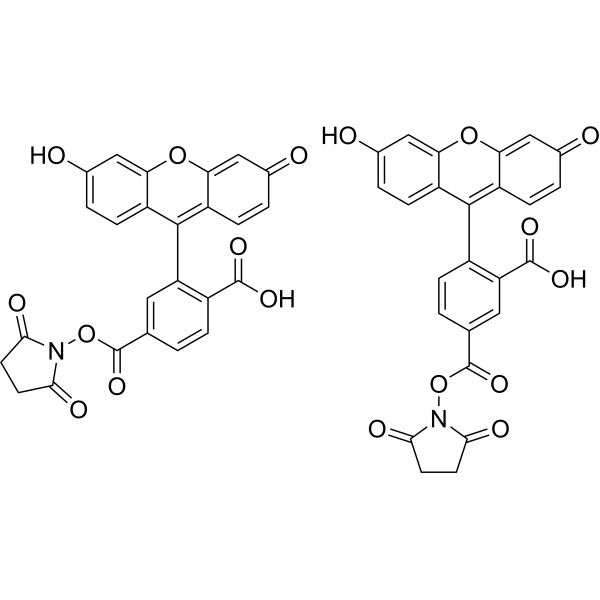
5-FAM SE is a single isomer, is a fluorescent labeling reagent used for labeling peptides, proteins and nucleotides. 5-FAM SE can react with amines and can yield stable amine conjugates .
|
-
-
- HY-NP052
-
|
OVA-Biotin
|
Biochemical Assay Reagents
|
Others
|
|
Ovalbumin-Biotin is a biotinylated biochemical reagent. Ovalbumin-Biotin is used to label or detect specific antigens, molecules or cellular structures .
|
-
-
- HY-D0807
-
5-IAF
1 Publications Verification
5-Iodoacetamidofluorescein
|
Fluorescent Dye
|
Cancer
|
|
5-IAF (5-Iodoacetamidofluorescein) is an idoacetamide derivate of fluoresceine. 5-IAF can be used as fluorescent probe that labels proteins and other molecules having free thiols (cysteine side chains) .
|
-
-
- HY-W998680
-
|
5-FITC-Maleimide
|
Fluorescent Dye
|
Others
|
|
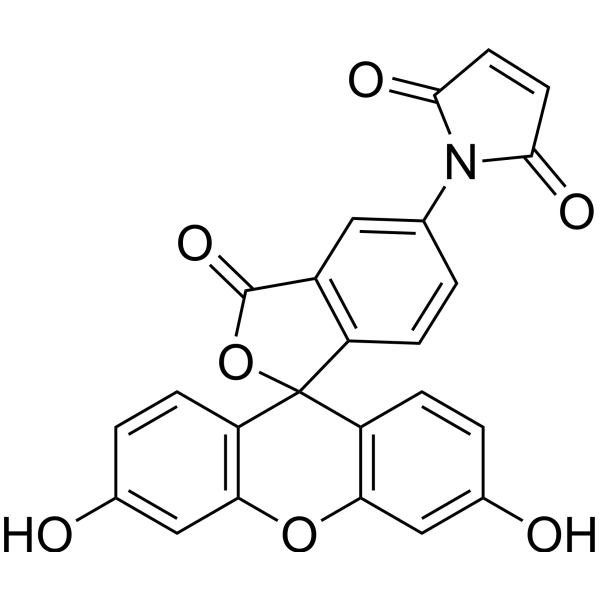
Fluorescein-maleimide (5-FITC-Maleimide) is a thiol-reactive fluorescent derivatization reagent and non-specific protein labeling reagent. Fluorescein-maleimide covalently binds to protein thiol groups for protein labeling. Fluorescein-maleimide covalently binds to protein amino and imidazole groups under neutral pH conditions. Fluorescein-maleimide is used for fluorescent labeling of proteins, nucleic acids or other molecules containing one or more thiol groups (Ex/Em = 494/519 nm) .
|
-
-
- HY-W800705
-
|
|
Fluorescent Dye
|
Others
|
|
Tamra azide is an azide-terminated fluorescent dye and click reaction partner. Tamra azide undergoes Cu I-catalyzed cycloaddition click reaction with alkyne-functionalized nanodiamonds. After conjugation with nanodiamonds, Tamra azide serves as a fluorescent label that can be excited at a specific wavelength to exhibit characteristic luminescence (Ex/Em=555/580 nm) .
|
-
-
- HY-66020
-
6-FITC
1 Publications Verification
6-Fluorescein Isothiocyanate
|
Fluorescent Dye
Drug Isomer
|
Others
|
|
6-FITC (6-Fluorescein Isothiocyanate) is a fluorescein isomer and also serves as a fluorescent label for biomolecules (FITC isomers have similar excitation/emission wavelengths, which are 495 nm/519 nm in fluorescence detection) .
|
-
-
- HY-NP051
-
|
|
Biochemical Assay Reagents
|
Others
|
|
Bovine Serum Albumin-FITC is a bovine Serum albumin conjugated to FITC (Ex=495 nm; Em=525 nm). Bovine Serum Albumin-FITC can be used as a fluorescent marker to label or detect specific antigens, molecules or cellular structures .
|
-
-
- HY-D0068
-
|
7-Diethylaminocoumarin-3-carboxylic acid, SE
|
Fluorescent Dye
|
Others
|
|
DEAC, SE (7-Diethylaminocoumarin-3-carboxylic acid, SE) is an excellent blue fluorescent building block for labeling amine-containing biomolecules.
|
-
-
- HY-NP059
-
|
OVA-AF647
|
Biochemical Assay Reagents
|
Others
|
|
Ovalbumin-AF647 is an ovalbumin conjugated with the far-red fluorescent dye AF647 (Ex=650 nm; Em=665 nm). Ovalbumin-AF647 can be used as a fluorescent label to label or detect specific antigens, molecules or cellular structures .
|
-
-
- HY-D1154
-
|
|
Fluorescent Dye
|
Others
|
|
β-Ala-Lys (AMCA) is a fluorescently labeled substrate of oligopeptide transporters . β-Ala-Lys (AMCA) acts as a substrate for a variety of bacterial proton-coupled oligopeptide transporters, and is used to label the activity of oligopeptide transporters. Excitation/emission wavelength: 340 nM/460 nM .
|
-
-
- HY-NP041
-
|
BSA-PE
|
Biochemical Assay Reagents
|
Others
|
|
Bovine Serum Albumin-PE (BSA-PE) is a biochemical reagent conjugated to fluorescein PE (Ex=565 nm; Em=578 nm). Bovine Serum Albumin-PE can be used to label or detect specific antigens, molecules or cellular structures .
|
-
-
- HY-D2466
-
|
|
Fluorescent Dye
|
Cardiovascular Disease
|
|
Cy3 Dextran (MW 70000) is a fluorescent labeling reagent that conjugates the Cy3 (HY-D0822) fluorescent dye with Dextran (HY-112624). The Cy3 fluorophore is commonly used in applications such as immunolabeling, nucleic acid labeling, fluorescence microscopy, and flow cytometry. The maximum emission wavelength of Cy3 is approximately 562-570 nm. Dextran inhibits platelet aggregation and coagulation factors, and serves as a plasma volume expander .
|
-
-
- HY-D0036
-
|
4-Bromomethyl-7-methoxycoumarin
|
Fluorescent Dye
|
Others
|
|
Br-Mmc (4-Bromomethyl-7-methoxycoumarin) is often used as fluorescent label for the determination of compounds possessing a carboxylic group. Br-Mmc is used for the determination fatty acids by TLC or HPLC .
|
-
-
- HY-D2178
-
|
|
Fluorescent Dye
|
Others
|
|
AF 568 NHS ester is a derivative of the orange fluorescent dye AF 568. AF 568 NHS ester is widely used in cell dyes, biological dyes, biomolecules and particle fluorescent labeling. AF 568 exhibits maximum absorption wavelength of 579 nm and the maximum emission wavelength of 603 nm .
|
-
-
- HY-76981
-
|
|
Others
|
Others
|
|
5-hydroxy-1-tetralone can be used as a fluorescent labeling reagent for the determination of glycosphingolipid from biological samples .
|
-
-
- HY-NP0158
-
|
UEA I (Rhodamine)
|
Fluorescent Dye
|
Others
|
|
Ulex Europaeus Agglutinin I Rhodamine (UEA I Rhodamine) is a fluorescently labeled lectin. Ulex Europaeus Agglutinin I Rhodamine exhibits specificity for cell surface glycoconjugates containing α-L-fucosyl groups. Ulex Europaeus Agglutinin I Rhodamine can be used in combination with other lectins for double staining .
|
-
-
- HY-D1432
-
|
|
Fluorescent Dye
|
Cancer
|
|
FITC-C6-DEVD-FMK, a fluorescently labeled caspase-3 inhibitor, can be used for detection of active caspase-3 in mammalian cells undergoing apoptosis. FITC-C6-DEVD-FMK provides a convenient means for sensitive detection of activated caspase-3 in living cells. Z-DEVD-FMK is a specific caspase-3 inhibitor .
|
-
-
- HY-D2244
-
-
-
- HY-W269179
-
|
|
Fluorescent Dye
|
Cancer
|
|
4-Bromomethyl-6,7-dimethoxycoumarin is a fluorescent label for carboxylic acids in chromatographic detection .
|
-
-
- HY-D1573
-
|
|
Fluorescent Dye
|
Others
|
|
C6 NBD Phytoceramide is a fluorescently labeled short-chain ceramide analog that can be recognized by mammalian GlcCer synthase (GCS) .
|
-
-
- HY-D2444
-
|
|
Fluorescent Dye
|
Cancer
|
|
AF555 NHS is a red fluorescent dye with excellent fluorescence properties and light stability. The excitation wavelength is 556 nm and the emission wavelength is 571 nm, which can be used for protein labeling, antibody labeling, and cell imaging .
|
-
-
- HY-D1697
-
|
|
Fluorescent Dye
|
Infection
|
|
OGDA is a green fluorescent D-amino acid. OGDA is suitable for labeling peptidoglycan in Gram-positive and Gram-negative bacteria .
|
-
-
- HY-W039519
-
|
|
Fluorescent Dye
|
Cancer
|
|
7-Methoxycoumarin-3-carboxylic acid is a fluorescent dye with an excitation peak at 355 nm and an emission peak at 405 nm. 7-Methoxycoumarin-3-carboxylic acid can be used to label peptide .
|
-
-
- HY-D2176
-
|
|
Fluorescent Dye
|
Others
|
|
AF 555 carboxylic acid is a derivative of the orange fluorescent dye AF 555. AF 555 carboxylic acid is widely used in cell dyes, biological dyes, biomolecules and particle fluorescent labeling. AF 555 exhibits average excitation wavelengths under green laser and red laser of 510 nm and 610 nm, respectively .
|
-
-
- HY-D1890
-
|
|
Fluorescent Dye
|
Others
|
|
N-(2-Aminooxyethyl)-7-DCCAm (Compound 7) is a fluorescent dye, and can be used for protein labeling .
|
-
-
- HY-130916
-
|
5(6)-CarboxyrhodaMine 6G, succinimidyl ester
|
Biochemical Assay Reagents
|
Others
|
|
5(6)-CR6G,SE (5(6)-CarboxyrhodaMine 6G) is a trace fluorescent labeling reagent for fluorescence imaging of protein crystallization. 5(6)-CR6G,SE can efficiently bind to proteins to produce characteristic fluorescence under specific excitation conditions. 5(6)-CR6G,SE shows a peak absorption wavelength of approximately 525 nm and exhibits a peak fluorescence emission wavelength of around 550 nm when excited by a 530 nm green LED .
|
-
-
- HY-W277900
-
|
|
MMP
|
Inflammation/Immunology
Cancer
|
|
2-Methoxy-2,4-diphenylfuran-3-one is a fluorescent compound which can be used to label gelatin as a substrate for detection of the gelatin degrading MMP-2 and MMP-9 by zymography .
|
-
-
- HY-158531
-
|
A3 N-linked oligosaccharide, procainamide labelled
|
Fluorescent Dye
Biochemical Assay Reagents
|
Others
|
|
A3 glycan, procainamide labelled (A3 N-linked oligosaccharide, procainamide labelled) is a N-polysaccharide protein and a multifunctional fluorescent linker. The resulting conjugates exhibit high sensitivity and specificity by mimicking the antennal elements of N-glycans .
|
-
-
- HY-D1433
-
|
|
Fluorescent Dye
|
Cancer
|
|
FITC-C6-LEHD-FMK, a fluorescently labeled caspase-9 inhibitor, can be used for detection of active caspase-9 in mammalian cells undergoing apoptosis. FITC-C6-LEHD-FMK provides a convenient means for sensitive detection of activated caspase-9 in living cells. Z-LEHD-FMK is a specific caspase-9 inhibitor .
|
-
-
- HY-158507
-
|
Mannose-5 N-linked oligosaccharide, procainamide labelled; Oligomannose 5 glycan, procainamide labelled
|
Biochemical Assay Reagents
|
Others
|
|
M5 glycan (Man5), procainamide labelled (Mannose-5 N-linked oligosaccharide, procainamide labelled; Oligomannose 5 glycan, procainamide labelled) is a N-polysaccharide protein and a multifunctional fluorescent linker. The resulting conjugates exhibit high sensitivity and specificity by mimicking the antennal elements of N-glycans .
|
-
-
- HY-158541
-
|
A4 N-linked oligosaccharide, 2-AB labelled
|
Fluorescent Dye
Biochemical Assay Reagents
|
Others
|
|
A4 glycan, 2-AB labelled (A4 N-linked oligosaccharide, 2-AB labelled) is a N-polysaccharide protein and a multifunctional fluorescent linker. The resulting conjugates exhibit high sensitivity and specificity by mimicking the antennal elements of N-glycans .
|
-
-
- HY-158540
-
|
A4 N-linked oligosaccharide, 2-AA labelled
|
Biochemical Assay Reagents
|
Others
|
|
A4 glycan, 2-AA labelled (A4 N-linked oligosaccharide, 2-AA labelled) is a N-polysaccharide protein and a multifunctional fluorescent linker. The resulting conjugates exhibit high sensitivity and specificity by mimicking the antennal elements of N-glycans .
|
-
-
- HY-158496
-
|
A2 N-linked oligosaccharide, 2-AB labelled
|
Biochemical Assay Reagents
|
Others
|
|
A2 glycan (G0), 2-AB labelled (A2 N-linked oligosaccharide, 2-AB labelled) is a N-polysaccharide protein and a multifunctional fluorescent linker. The resulting conjugates exhibit high sensitivity and specificity by mimicking the antennal elements of N-glycans .
|
-
-
- HY-158446
-
|
A2G2 N-linked oligosaccharide, APTS labelled
|
Biochemical Assay Reagents
|
Others
|
|
A2G2 glycan (G2), APTS labelled (A2G2 N-linked oligosaccharide, APTS labelled) is a N-polysaccharide protein and a multifunctional fluorescent linker. The resulting conjugates exhibit high sensitivity and specificity by mimicking the antennal elements of N-glycans .
|
-
-
- HY-158461
-
|
Galactose-alpha-1,3-galactose, 2-AA labelled
|
Biochemical Assay Reagents
|
Others
|
|
Alpha-Gal standard, 2-AA labelled (Galactose-alpha-1,3-galactose, 2-AA labelled) is a N-polysaccharide protein and a multifunctional fluorescent linker. The resulting conjugates exhibit high sensitivity and specificity by mimicking the antennal elements of N-glycans .
|
-
-
- HY-158462
-
|
Galactose-alpha-1,3-galactose, 2-AB labelled
|
Biochemical Assay Reagents
|
Others
|
|
Alpha-Gal standard, 2-AB labelled (Galactose-alpha-1,3-galactose, 2-AB labelled) is a N-polysaccharide protein and a multifunctional fluorescent linker. The resulting conjugates exhibit high sensitivity and specificity by mimicking the antennal elements of N-glycans .
|
-
-
- HY-158492
-
|
A4G4 N-linked oligosaccharide, 2-AB labelled
|
Biochemical Assay Reagents
|
Others
|
|
A4G4 glycan, 2-AB labelled (A4G4 N-linked oligosaccharide, 2-AB labelled) is a N-polysaccharide protein and a multifunctional fluorescent linker. The resulting conjugates exhibit high sensitivity and specificity by mimicking the antennal elements of N-glycans .
|
-
-
- HY-158537
-
|
A3G3S3 N-linked oligosaccharide, procainamide labelled
|
Biochemical Assay Reagents
|
Others
|
|
A3G3S3 glycan, procainamide labelled (A3G3S3 N-linked oligosaccharide, procainamide labelled) is a N-polysaccharide protein and a multifunctional fluorescent linker. The resulting conjugates exhibit high sensitivity and specificity by mimicking the antennal elements of N-glycans .
|
-
-
- HY-158514
-
|
Mannose-6 N-linked oligosaccharide, 2-AB labelled; Oligomannose 6 glycan, 2-AB labelled
|
Biochemical Assay Reagents
|
Others
|
|
M6 glycan (Man6), 2-AB labelled (Mannose-6 N-linked oligosaccharide, 2-AB labelled; Oligomannose 6 glycan, 2-AB labelled) is a N-polysaccharide protein and a multifunctional fluorescent linker. The resulting conjugates exhibit high sensitivity and specificity by mimicking the antennal elements of N-glycans .
|
-
-
- HY-158503
-
|
Mannose-5 N-linked oligosaccharide, 2-AB labelled; Oligomannose 5 glycan, 2-AB labelled
|
Biochemical Assay Reagents
|
Others
|
|
M5 glycan (Man5), 2-AB labelled (Mannose-5 N-linked oligosaccharide, 2-AB labelled; Oligomannose 5 glycan, 2-AB labelled) is a N-polysaccharide protein and a multifunctional fluorescent linker. The resulting conjugates exhibit high sensitivity and specificity by mimicking the antennal elements of N-glycans .
|
-
-
- HY-158536
-
|
Mannose-8 N-linked oligosaccharide, 2-AA labelled; Oligomannose 8 glycan, 2-AA labelled
|
Biochemical Assay Reagents
|
Others
|
|
M8 glycan (Man8), 2-AA labelled (Mannose-8 N-linked oligosaccharide, 2-AA labelled; Oligomannose 8 glycan, 2-AA labelled) is a N-polysaccharide protein and a multifunctional fluorescent linker. The resulting conjugates exhibit high sensitivity and specificity by mimicking the antennal elements of N-glycans .
|
-
-
- HY-158488
-
|
A3G3 N-linked oligosaccharide, 2-AB labelled
|
Biochemical Assay Reagents
|
Others
|
|
A3G3 glycan (G3), 2-AB labelled (A3G3 N-linked oligosaccharide, 2-AB labelled) is a N-polysaccharide protein and a multifunctional fluorescent linker. The resulting conjugates exhibit high sensitivity and specificity by mimicking the antennal elements of N-glycans .
|
-
-
- HY-158445
-
|
A2G2 N-linked oligosaccharide, 2-AB labelled
|
Biochemical Assay Reagents
|
Others
|
|
A2G2 glycan (G2), 2-AB labelled (A2G2 N-linked oligosaccharide, 2-AB labelled) is a N-polysaccharide protein and a multifunctional fluorescent linker. The resulting conjugates exhibit high sensitivity and specificity by mimicking the antennal elements of N-glycans .
|
-
-
- HY-158489
-
|
A3G3 N-linked oligosaccharide, procainamide labelled; A3G(4)3 glycan, procainamide labelled
|
Biochemical Assay Reagents
|
Others
|
|
A3G3 glycan (G3), procainamide labelled (A3G3 N-linked oligosaccharide, procainamide labelled; A3G(4)3 glycan, procainamide labelled) is a N-polysaccharide protein and a multifunctional fluorescent linker. The resulting conjugates exhibit high sensitivity and specificity by mimicking the antennal elements of N-glycans .
|
-
-
- HY-158499
-
|
FA2 N-linked oligosaccharide, 2-AA labelled; F(6)A2 glycan, 2-AA labelled
|
Biochemical Assay Reagents
|
Others
|
|
FA2 glycan (G0F), 2-AA labelled (FA2 N-linked oligosaccharide, 2-AA labelled; F(6)A2 glycan, 2-AA labelled) is a N-polysaccharide protein and a multifunctional fluorescent linker. The resulting conjugates exhibit high sensitivity and specificity by mimicking the antennal elements of N-glycans .
|
-
-
- HY-158500
-
|
FA2 N-linked oligosaccharide, 2-AB labelled; F(6)A2 glycan, 2-AB labelled
|
Biochemical Assay Reagents
|
Others
|
|
FA2 glycan (G0F), 2-AB labelled (FA2 N-linked oligosaccharide, 2-AB labelled; F(6)A2 glycan, 2-AB labelled) is a N-polysaccharide protein and a multifunctional fluorescent linker. The resulting conjugates exhibit high sensitivity and specificity by mimicking the antennal elements of N-glycans .
|
-
-
- HY-158468
-
|
|
Biochemical Assay Reagents
|
Others
|
|
Sialylated Core 1 O-glycan (C1S(3)1), 2AB labelled () is a N-polysaccharide protein and a multifunctional fluorescent linker. The resulting conjugates exhibit high sensitivity and specificity by mimicking the antennal elements of N-glycans .
|
-
-
- HY-158502
-
|
FA2G2S1 N-linked oligosaccharide, 2-AB labelled
|
Biochemical Assay Reagents
|
Others
|
|
FA2G2S1 glycan (G2FS1), 2-AB labelled (FA2G2S1 N-linked oligosaccharide, 2-AB labelled) is a N-polysaccharide protein and a multifunctional fluorescent linker. The resulting conjugates exhibit high sensitivity and specificity by mimicking the antennal elements of N-glycans .
|
-
-
- HY-158486
-
|
FA2G2S1 N-linked oligosaccharide, 2-AA labelled
|
Biochemical Assay Reagents
|
Others
|
|
FA2G2S1 glycan (G2FS1), 2-AA labelled (FA2G2S1 N-linked oligosaccharide, 2-AA labelled) is a N-polysaccharide protein and a multifunctional fluorescent linker. The resulting conjugates exhibit high sensitivity and specificity by mimicking the antennal elements of N-glycans .
|
-
- HY-158443
-
|
A2G2S1 N-linked oligosaccharide, 2-AB labelled
|
Biochemical Assay Reagents
|
Others
|
|
A2G2S1 glycan (G2S1), 2-AB labelled (A2G2S1 N-linked oligosaccharide, 2-AB labelled) is a N-polysaccharide protein and a multifunctional fluorescent linker. The resulting conjugates exhibit high sensitivity and specificity by mimicking the antennal elements of N-glycans .
|
-
- HY-158450
-
|
FA2G2 N-linked oligosaccharide, 2-AB labelled; F(6)A2G2, 2-AB labelled
|
Biochemical Assay Reagents
|
Others
|
|
FA2G2 glycan (G2F), 2-AB labelled (FA2G2 N-linked oligosaccharide, 2-AB labelled; F(6)A2G2, 2-AB labelled) is a N-polysaccharide protein and a multifunctional fluorescent linker. The resulting conjugates exhibit high sensitivity and specificity by mimicking the antennal elements of N-glycans .
|
-
- HY-158508
-
|
A2G2S2 N-linked oligosaccharide, 2-AA labelled; A2G(4)2S(6)2 glycan, 2-AA labelled
|
Biochemical Assay Reagents
|
Others
|
|
A2G2S2 glycan (G2S2), 2-AA labelled (A2G2S2 N-linked oligosaccharide, 2-AA labelled; A2G(4)2S(6)2 glycan, 2-AA labelled) is a N-polysaccharide protein and a multifunctional fluorescent linker. The resulting conjugates exhibit high sensitivity and specificity by mimicking the antennal elements of N-glycans .
|
-
- HY-158512
-
|
A2G2S2 N-linked oligosaccharide, 2-AB labelled; A2G(4)2S(6)2 glycan, 2-AB labelled
|
Biochemical Assay Reagents
|
Others
|
|
A2G2S2 glycan (G2S2), 2-AB labelled (A2G2S2 N-linked oligosaccharide, 2-AB labelled; A2G(4)2S(6)2 glycan, 2-AB labelled) is a N-polysaccharide protein and a multifunctional fluorescent linker. The resulting conjugates exhibit high sensitivity and specificity by mimicking the antennal elements of N-glycans .
|
-
- HY-158480
-
|
FA2[3]G1 & FA2[6]G1 N-linked oligosaccharide, procainamide labelled
|
Biochemical Assay Reagents
|
Others
|
|
FA2[3]G1 & FA2[6]G1 glycan (G1F), procainamide labelled (FA2[3]G1 & FA2[6]G1 N-linked oligosaccharide, procainamide labelled) is a N-polysaccharide protein and a multifunctional fluorescent linker. The resulting conjugates exhibit high sensitivity and specificity by mimicking the antennal elements of N-glycans .
|
-
- HY-158455
-
|
FA2[3]BG1 & FA2[6]BG1 glycan N-linked oligosaccharide, 2-AA labelled; G1F with bisecting GlcNAc, 2-AA labelled
|
Biochemical Assay Reagents
|
Others
|
|
FA2[3]BG1 & FA2[6]BG1 glycan (G1B), 2-AA labelled (FA2[3]BG1 & FA2[6]BG1 glycan N-linked oligosaccharide, 2-AA labelled; G1F with bisecting GlcNAc, 2-AA labelled) is a N-polysaccharide protein and a multifunctional fluorescent linker. The resulting conjugates exhibit high sensitivity and specificity by mimicking the antennal elements of N-glycans .
|
-
- HY-158481
-
|
FA2[3]G1 & FA2[6]G1 N-linked oligosaccharide, 2-AA labelled
|
Biochemical Assay Reagents
|
Others
|
|
FA2[3]G1 & FA2[6]G1 glycan (G1F), 2-AA labelled (FA2[3]G1 & FA2[6]G1 N-linked oligosaccharide, 2-AA labelled) is a N-polysaccharide protein and a multifunctional fluorescent linker. The resulting conjugates exhibit high sensitivity and specificity by mimicking the antennal elements of N-glycans .
|
-
- HY-158478
-
|
FA2[3]G1 & FA2[6]G1 N-linked oligosaccharide, 2-AB labelled
|
Biochemical Assay Reagents
|
Others
|
|
FA2[3]G1 & FA2[6]G1 glycan (G1F), 2-AB labelled (FA2[3]G1 & FA2[6]G1 N-linked oligosaccharide, 2-AB labelled) is a N-polysaccharide protein and a multifunctional fluorescent linker. The resulting conjugates exhibit high sensitivity and specificity by mimicking the antennal elements of N-glycans .
|
-
- HY-NP058
-
|
OVA-AF594
|
Biochemical Assay Reagents
|
Others
|
|
Ovalbumin-AF594 is a biochemical reagent conjugated to fluorescein AF594 (Ex=590 nm; Em=617 nm). Ovalbumin-AF594 can be used to label or detect specific antigens, molecules or cellular structures .
|
-
- HY-130510
-
|
|
Fluorescent Dye
|
Others
|
|
6-HEX dipivaloate is an amino-bindable fluorescent probe that can be used to label peptides and oligonucleotides. 6-HEX dipivaloate is widely used in nucleic acid sequencing and related research .
|
-
- HY-158542
-
|
A4 N-linked oligosaccharide, procainamide labelled
|
Biochemical Assay Reagents
|
Others
|
|
A4 glycan, procainamide labelled (A4 N-linked oligosaccharide, procainamide labelled) is a N-polysaccharide protein and a multifunctional fluorescent linker. The resulting conjugates exhibit high sensitivity and specificity by mimicking the antennal elements of N-glycans .
|
-
- HY-158493
-
|
A2 N-linked oligosaccharide, procainamide labelled
|
Biochemical Assay Reagents
|
Others
|
|
A2 glycan (G0), procainamide labelled (A2 N-linked oligosaccharide, procainamide labelled) is a N-polysaccharide protein and a multifunctional fluorescent linker. The resulting conjugates exhibit high sensitivity and specificity by mimicking the antennal elements of N-glycans .
|
-
- HY-158497
-
|
A2 N-linked oligosaccharide, APTS labelled
|
Biochemical Assay Reagents
|
Others
|
|
A2 glycan (G0), APTS labelled (A2 N-linked oligosaccharide, APTS labelled) is a N-polysaccharide protein and a multifunctional fluorescent linker. The resulting conjugates exhibit high sensitivity and specificity by mimicking the antennal elements of N-glycans .
|
-
- HY-158516
-
|
Mannose-6 N-linked oligosaccharide, procainamide labelled; Oligomannose 6 glycan, procainamide labelled
|
Biochemical Assay Reagents
|
Others
|
|
M6 glycan (Man6), procainamide labelled (Mannose-6 N-linked oligosaccharide, procainamide labelled) is a N-polysaccharide protein and a multifunctional fluorescent linker. The resulting conjugates exhibit high sensitivity and specificity by mimicking the antennal elements of N-glycans .
|
-
- HY-158539
-
|
Mannose-8 N-linked oligosaccharide, procainamide labelled; Oligomannose 8 glycan, procainamide labelled
|
Biochemical Assay Reagents
|
Others
|
|
M8 glycan (Man8), procainamide labelled (Mannose-8 N-linked oligosaccharide, procainamide labelled; Oligomannose 8 glycan, procainamide labelled) is a N-polysaccharide protein and a multifunctional fluorescent linker. The resulting conjugates exhibit high sensitivity and specificity by mimicking the antennal elements of N-glycans .
|
-
- HY-158546
-
|
Mannose-9 N-linked oligosaccharide, procainamide labelled; Oligomannose 9 glycan, procainamide labelled
|
Biochemical Assay Reagents
|
Others
|
|
M9 glycan (Man9), procainamide labelled (Mannose-9 N-linked oligosaccharide, procainamide labelled; Oligomannose 9 glycan, procainamide labelled) is a N-polysaccharide protein and a multifunctional fluorescent linker. The resulting conjugates exhibit high sensitivity and specificity by mimicking the antennal elements of N-glycans .
|
-
- HY-158505
-
|
Mannose-5 N-linked oligosaccharide, APTS labelled; Oligomannose 5 glycan, APTS labelled
|
Biochemical Assay Reagents
|
Others
|
|
M5 glycan (Man5), APTS labelled (Mannose-5 N-linked oligosaccharide, APTS labelled; Oligomannose 5 glycan, APTS labelled) is a N-polysaccharide protein and a multifunctional fluorescent linker. The resulting conjugates exhibit high sensitivity and specificity by mimicking the antennal elements of N-glycans .
|
-
- HY-158526
-
|
Mannose-7 N-linked oligosaccharide, procainamide labelled; Oligomannose 7 glycan, procainamide labelled
|
Biochemical Assay Reagents
|
Others
|
|
M7 glycan (Man7), procainamide labelled (Mannose-7 N-linked oligosaccharide, procainamide labelled; Oligomannose 7 glycan, procainamide labelled) is a N-polysaccharide protein and a multifunctional fluorescent linker. The resulting conjugates exhibit high sensitivity and specificity by mimicking the antennal elements of N-glycans .
|
-
- HY-158529
-
|
A3 N-linked oligosaccharide, 2-AA labelled
|
Biochemical Assay Reagents
|
Others
|
|
A3 glycan, 2-AA labelled (A3 N-linked oligosaccharide, 2-AA labelled) is a N-polysaccharide protein and a multifunctional fluorescent linker. The resulting conjugates exhibit high sensitivity and specificity by mimicking the antennal elements of N-glycans .
|
-
- HY-158530
-
|
A3 N-linked oligosaccharide, 2-AB labelled
|
Biochemical Assay Reagents
|
Others
|
|
A3 glycan, 2-AB labelled (A3 N-linked oligosaccharide, 2-AB labelled) is a N-polysaccharide protein and a multifunctional fluorescent linker. The resulting conjugates exhibit high sensitivity and specificity by mimicking the antennal elements of N-glycans .
|
-
- HY-158527
-
|
FA2 N-linked oligosaccharide, APTS labelled; F(6)A2 glycan, APTS labelled
|
Biochemical Assay Reagents
|
Others
|
|
FA2 glycan (G0F), APTS labelled (FA2 N-linked oligosaccharide, APTS labelled; F(6)A2 glycan, APTS labelled) is a N-polysaccharide protein and a multifunctional fluorescent linker. The resulting conjugates exhibit high sensitivity and specificity by mimicking the antennal elements of N-glycans .
|
-
- HY-D2941
-
|
SNAP-AF
|
Fluorescent Dye
|
Others
|
BGAF (SNAP-AF) is a fluorescent diacetyl fluorescein-labeled SNAP tag fluorescent probe, specifically designed for the covalent labeling of SNAP-tag fusion proteins in living cells. BGAF utilizes the specific reaction of the human DNA repair protein hAGT to achieve specific fluorescent labeling of the target protein in the living cell environment .
|
-
- HY-158491
-
|
A4G4 N-linked oligosaccharide, 2-AA labelled
|
Biochemical Assay Reagents
|
Others
|
|
A4G4 glycan, 2-AA labelled (A4G4 N-linked oligosaccharide, 2-AA labelled) is a N-polysaccharide protein and a multifunctional fluorescent linker. The resulting conjugates exhibit high sensitivity and specificity by mimicking the antennal elements of N-glycans .
|
-
- HY-158483
-
|
Mannose-3 N-linked oligosaccharide, 2-AA labelled; Oligomannose 3 glycan, 2-AA labelled
|
Biochemical Assay Reagents
|
Others
|
|
M3 glycan (Man3), 2-AA labelled (Mannose-3 N-linked oligosaccharide, 2-AA labelled; Oligomannose 3 glycan, 2-AA labelled) is a N-polysaccharide protein and a multifunctional fluorescent linker. The resulting conjugates exhibit high sensitivity and specificity by mimicking the antennal elements of N-glycans .
|
-
- HY-158511
-
|
Mannose-6 N-linked oligosaccharide, 2-AA labelled; Oligomannose 6 glycan, 2-AA labelled
|
Biochemical Assay Reagents
|
Others
|
|
M6 glycan (Man6), 2-AA labelled (Mannose-6 N-linked oligosaccharide, 2-AA labelled; Oligomannose 6 glycan, 2-AA labelled) is a N-polysaccharide protein and a multifunctional fluorescent linker. The resulting conjugates exhibit high sensitivity and specificity by mimicking the antennal elements of N-glycans .
|
-
- HY-158521
-
|
Mannose-7 N-linked oligosaccharide, 2-AA labelled; Oligomannose 7 glycan, 2-AA labelled
|
Biochemical Assay Reagents
|
Others
|
|
M7 glycan (Man7), 2-AA labelled (Mannose-7 N-linked oligosaccharide, 2-AA labelled; Oligomannose 7 glycan, 2-AA labelled) is a N-polysaccharide protein and a multifunctional fluorescent linker. The resulting conjugates exhibit high sensitivity and specificity by mimicking the antennal elements of N-glycans .
|
-
- HY-158524
-
|
Mannose-7 N-linked oligosaccharide, 2-AB labelled; Oligomannose 7 glycan, 2-AB labelled
|
Biochemical Assay Reagents
|
Others
|
|
M7 glycan (Man7), 2-AB labelled (Mannose-7 N-linked oligosaccharide, 2-AB labelled; Oligomannose 7 glycan, 2-AB labelled) is a N-polysaccharide protein and a multifunctional fluorescent linker. The resulting conjugates exhibit high sensitivity and specificity by mimicking the antennal elements of N-glycans .
|
-
- HY-158545
-
|
Mannose-9 N-linked oligosaccharide, 2-AB labelled; Oligomannose 9 glycan, 2-AB labelled
|
Biochemical Assay Reagents
|
Others
|
|
M9 glycan (Man9), 2-AB labelled (Mannose-9 N-linked oligosaccharide, 2-AB labelled; Oligomannose 9 glycan, 2-AB labelled) is a N-polysaccharide protein and a multifunctional fluorescent linker. The resulting conjugates exhibit high sensitivity and specificity by mimicking the antennal elements of N-glycans .
|
-
- HY-158544
-
|
Mannose-9 N-linked oligosaccharide, 2-AA labelled; Oligomannose 9 glycan, 2-AA labelled
|
Biochemical Assay Reagents
|
Others
|
|
M9 glycan (Man9), 2-AA labelled (Mannose-9 N-linked oligosaccharide, 2-AA labelled; Oligomannose 9 glycan, 2-AA labelled) is a N-polysaccharide protein and a multifunctional fluorescent linker. The resulting conjugates exhibit high sensitivity and specificity by mimicking the antennal elements of N-glycans .
|
-
- HY-158484
-
|
Mannose-3 N-linked oligosaccharide, 2-AB labelled; Oligomannose 3 glycan, 2-AB labelled
|
Biochemical Assay Reagents
|
Others
|
|
M3 glycan (Man3), 2-AB labelled (Mannose-3 N-linked oligosaccharide, 2-AB labelled; Oligomannose 3 glycan, 2-AB labelled) is a N-polysaccharide protein and a multifunctional fluorescent linker. The resulting conjugates exhibit high sensitivity and specificity by mimicking the antennal elements of N-glycans .
|
-
- HY-158501
-
|
Mannose-5 N-linked oligosaccharide, 2-AA labelled; Oligomannose 5 glycan, 2-AA labelled
|
Biochemical Assay Reagents
|
Others
|
|
M5 glycan (Man5), 2-AA labelled (Mannose-5 N-linked oligosaccharide, 2-AA labelled; Oligomannose 5 glycan, 2-AA labelled) is a N-polysaccharide protein and a multifunctional fluorescent linker. The resulting conjugates exhibit high sensitivity and specificity by mimicking the antennal elements of N-glycans .
|
-
- HY-158538
-
|
Mannose-8 N-linked oligosaccharide, 2-AB labelled; Oligomannose 8 glycan, 2-AB labelled
|
Biochemical Assay Reagents
|
Others
|
|
M8 glycan (Man8), 2-AB labelled (Mannose-8 N-linked oligosaccharide, 2-AB labelled; Oligomannose 8 glycan, 2-AB labelled) is a N-polysaccharide protein and a multifunctional fluorescent linker. The resulting conjugates exhibit high sensitivity and specificity by mimicking the antennal elements of N-glycans .
|
-
- HY-158487
-
|
A3G3 N-linked oligosaccharide, 2-AA labelled
|
Biochemical Assay Reagents
|
Others
|
|
A3G3 glycan (G3), 2-AA labelled (A3G3 N-linked oligosaccharide, 2-AA labelled) is a N-polysaccharide protein and a multifunctional fluorescent linker. The resulting conjugates exhibit high sensitivity and specificity by mimicking the antennal elements of N-glycans .
|
-
- HY-158447
-
|
A2G2 N-linked oligosaccharide, procainamide labelled; A2G(4)2 glycan, procainamide labelled
|
Biochemical Assay Reagents
|
Others
|
|
A2G2 glycan (G2), procainamide labelled (A2G2 N-linked oligosaccharide, procainamide labelled; A2G(4)2 glycan, procainamide labelled) is a N-polysaccharide protein and a multifunctional fluorescent linker. The resulting conjugates exhibit high sensitivity and specificity by mimicking the antennal elements of N-glycans .
|
-
- HY-158474
-
|
A2G2S1 N-linked oligosaccharide, APTS labelled
|
Biochemical Assay Reagents
|
Others
|
|
A2G2S1 glycan (G2S1), APTS labelled (A2G2S1 N-linked oligosaccharide, APTS labelled) is a N-polysaccharide protein and a multifunctional fluorescent linker. The resulting conjugates exhibit high sensitivity and specificity by mimicking the antennal elements of N-glycans .
|
-
- HY-158504
-
|
FA2G2S1 N-linked oligosaccharide, APTS labelled
|
Biochemical Assay Reagents
|
Others
|
|
FA2G2S1 glycan (G2FS1), APTS labelled (FA2G2S1 N-linked oligosaccharide, APTS labelled) is a N-polysaccharide protein and a multifunctional fluorescent linker. The resulting conjugates exhibit high sensitivity and specificity by mimicking the antennal elements of N-glycans .
|
-
- HY-158533
-
|
A3G3S3 N-linked oligosaccharide, 2-AA labelled
|
Biochemical Assay Reagents
|
Others
|
|
A3G3S3 glycan, 2-AA labelled (A3G3S3 N-linked oligosaccharide, 2-AA labelled) is a N-polysaccharide protein and a multifunctional fluorescent linker. The resulting conjugates exhibit high sensitivity and specificity by mimicking the antennal elements of N-glycans .
|
-
- HY-158535
-
|
A3G3S3 N-linked oligosaccharide, 2-AB labelled
|
Biochemical Assay Reagents
|
Others
|
|
A3G3S3 glycan, 2-AB labelled (A3G3S3 N-linked oligosaccharide, 2-AB labelled) is a N-polysaccharide protein and a multifunctional fluorescent linker. The resulting conjugates exhibit high sensitivity and specificity by mimicking the antennal elements of N-glycans .
|
-
- HY-158453
-
|
FA2B N-linked oligosaccharide, 2-AA labelled; G0F with bisecting GlcNAc, 2-AA labelled
|
Biochemical Assay Reagents
|
Others
|
|
FA2B glycan (G0B), 2-AA labelled (FA2B N-linked oligosaccharide, 2-AA labelled; G0F with bisecting GlcNAc, 2-AA labelled) is a N-polysaccharide protein and a multifunctional fluorescent linker. The resulting conjugates exhibit high sensitivity and specificity by mimicking the antennal elements of N-glycans .
|
-
- HY-158451
-
|
FA2G2 N-linked oligosaccharide, APTS labelled; F(6)A2G2, APTS labelled
|
Biochemical Assay Reagents
|
Others
|
|
FA2G2 glycan (G2F), APTS labelled (FA2G2 N-linked oligosaccharide, APTS labelled; F(6)A2G2, APTS labelled) is a N-polysaccharide protein and a multifunctional fluorescent linker. The resulting conjugates exhibit high sensitivity and specificity by mimicking the antennal elements of N-glycans .
|
-
- HY-158441
-
|
A2G2S1 N-linked oligosaccharide, 2-AA labelled
|
Biochemical Assay Reagents
|
Others
|
|
A2G2S1 glycan (G2S1), 2-AA labelled (A2G2S1 N-linked oligosaccharide, 2-AA labelled) is a N-polysaccharide protein and a multifunctional fluorescent linker. The resulting conjugates exhibit high sensitivity and specificity by mimicking the antennal elements of N-glycans .
|
-
- HY-158510
-
|
A2G2S2 N-linked oligosaccharide, APTS labelled; A2G(4)2S(6)2 glycan, APTS labelled
|
Biochemical Assay Reagents
|
Others
|
|
A2G2S2 glycan (G2S2), APTS labelled (A2G2S2 N-linked oligosaccharide, APTS labelled; A2G(4)2S(6)2 glycan, APTS labelled) is a N-polysaccharide protein and a multifunctional fluorescent linker. The resulting conjugates exhibit high sensitivity and specificity by mimicking the antennal elements of N-glycans .
|
-
- HY-158517
-
|
FA2G2S2 N-linked oligosaccharide, APTS labelled; F(6)A2G(4)2S(6)2 glycan, APTS labelled
|
Biochemical Assay Reagents
|
Others
|
|
FA2G2S2 glycan (G2FS2), APTS labelled (FA2G2S2 N-linked oligosaccharide, APTS labelled; F(6)A2G(4)2S(6)2 glycan, APTS labelled) is a N-polysaccharide protein and a multifunctional fluorescent linker. The resulting conjugates exhibit high sensitivity and specificity by mimicking the antennal elements of N-glycans .
|
-
- HY-158515
-
|
FA2G2S2 N-linked oligosaccharide, 2-AB labelled; F(6)A2G(4)2S(6)2 glycan, 2-AB labelled
|
Biochemical Assay Reagents
|
Others
|
|
FA2G2S2 glycan (G2FS2), 2-AB labelled (FA2G2S2 N-linked oligosaccharide, 2-AB labelled; F(6)A2G(4)2S(6)2 glycan, 2-AB labelled) is a N-polysaccharide protein and a multifunctional fluorescent linker. The resulting conjugates exhibit high sensitivity and specificity by mimicking the antennal elements of N-glycans .
|
-
- HY-158518
-
|
FA2G2S2 N-linked oligosaccharide, 2-AA labelled; F(6)A2G(4)2S(6)2 glycan, 2-AA labelled
|
Biochemical Assay Reagents
|
Others
|
|
FA2G2S2 glycan (G2FS2), 2-AA labelled (FA2G2S2 N-linked oligosaccharide, 2-AA labelled; F(6)A2G(4)2S(6)2 glycan, 2-AA labelled) is a N-polysaccharide protein and a multifunctional fluorescent linker. The resulting conjugates exhibit high sensitivity and specificity by mimicking the antennal elements of N-glycans .
|
-
- HY-158479
-
|
FA2[3]G1 & FA2[6]G1 N-linked oligosaccharide, APTS labelled
|
Biochemical Assay Reagents
|
Others
|
|
FA2[3]G1 & FA2[6]G1 glycan (G1F), APTS labelled (FA2[3]G1 & FA2[6]G1 N-linked oligosaccharide, APTS labelled) is a N-polysaccharide protein and a multifunctional fluorescent linker. The resulting conjugates exhibit high sensitivity and specificity by mimicking the antennal elements of N-glycans .
|
-
- HY-158456
-
|
FA2[3]BG1 & FA2[6]BG1 glycan N-linked oligosaccharide, 2-AB labelled; G1F with bisecting GlcNAc, 2-AB labelled
|
Biochemical Assay Reagents
|
Others
|
|
FA2[3]BG1 & FA2[6]BG1 glycan (G1B), 2-AB labelled (FA2[3]BG1 & FA2[6]BG1 glycan N-linked oligosaccharide, 2-AB labelled; G1F with bisecting GlcNAc, 2-AB labelled) is a N-polysaccharide protein and a multifunctional fluorescent linker. The resulting conjugates exhibit high sensitivity and specificity by mimicking the antennal elements of N-glycans .
|
-
- HY-158520
-
|
A2[3]G1 & A2[6]G1 N-linked oligosaccharide, 2-AA labelled
|
Biochemical Assay Reagents
|
Others
|
|
A2[3]G1 & A2[6]G1 glycan (G1), 2-AA labelled (A2[3]G1 & A2[6]G1 N-linked oligosaccharide, 2-AA labelled) is a N-polysaccharide protein and a multifunctional fluorescent linker. The resulting conjugates exhibit high sensitivity and specificity by mimicking the antennal elements of N-glycans .
|
-
- HY-158476
-
|
FA2G2S1 N-linked oligosaccharide, procainamide labelled; α(2,6)/FA2G2S(6)1 glycan, procainamide labelled; F(6)A2G(4)2S(6)1 glycan, procainamide labelled
|
Biochemical Assay Reagents
|
Others
|
|
FA2G2S1 glycan (G2FS1), procainamide labelled (FA2G2S1 N-linked oligosaccharide, procainamide labelled; α(2,6)/FA2G2S(6)1 glycan, procainamide labelled; F(6)A2G(4)2S(6)1 glycan, procainamide labelled) is a N-polysaccharide protein and a multifunctional fluorescent linker. The resulting conjugates exhibit high sensitivity and specificity by mimicking the antennal elements of N-glycans .
|
-
- HY-D2942
-
|
|
Fluorescent Dye
|
Others
|
|
BDP-V BG-BODIPY is a SNAP tag fluorescent probe labeled with a BODIPY molecular motor. BDP-V BG-BODIPY contains a BODIPY molecular rotor that functions as a viscosity-sensitive fluorophore, which is highly responsive to local viscosity changes and enables the specific monitoring of the local microviscosity of proteins. BDP-V BG-BODIPY supports one-photon and two-photon imaging, with an excitation wavelength (Ex) of 488 nm (for one-photon excitation) and 850 nm (for two-photon excitation), and an emission wavelength (Em) of 500-600 nm .
|
-
- HY-NP045
-
|
|
Biochemical Assay Reagents
|
Others
|
|
Protein A-RBITC is a biochemical reagent conjugated to fluorescein PE. Protein A-RBITC can be used to label or detect specific antigens, molecules or cellular structures .
|
-
- HY-W074785
-
|
|
Biochemical Assay Reagents
|
Others
|
|
Carboxyl diazirine alkyne is a protein cross-linking compound. Carboxyl diazirine alkyne plays a crucial role in the research on the inhibition and labeling of FTO protein by fluorescein derivatives .
|
-
- HY-D1591
-
|
|
Fluorescent Dye
|
Others
|
|
BODIPY R6G methyl ester (compound 5′-1) is a BODIPY-like fluorescent dye with good light stability and insensitive to pH value. BODIPY R6G methyl ester shows good photostability, high sensitivity and insensitive to pH value. BODIPY R6G methyl ester can be used in research areas such as photodynamic research, PH probes, ion recognition, photocatalysis, protein labeling, cell imaging, and proteomic analysis .
|
-
- HY-D1376A
-
|
|
Fluorescent Dye
|
Others
|
|
Sulfo-Cyanine5.5 amine consists of four sulfonate groups and has highly hydrophilic. Sulfo-Cyanine5.5 amine is an amine-containing fluorescent dye, the aliphatic primary amine group can be coupled with various electrophiles (activated esters, epoxides, etc). Sulfo-Cyanine5.5 amine can be used for the research of far red/NIR applications (such as in vivo imaging) and also can be used for enzymatic transamination labeling .
|
-
- HY-D0077
-
|
Oregon green 488
|
Fluorescent Dye
|
Others
|
|
2',7'-Difluorofluorescein (Oregon green 488) is a fluorescein derivative and a pH-sensitive fluorescent probe (pKa ~4.7). Upon excitation at 488 nm, 2',7'-Difluorofluorescein exhibits pH-sensitive fluorescence intensity through the formation of dianions, while its pH sensitivity decreases under excitation at 450 nm, allowing its use in ratiometric pH analysis. 2',7'-Difluorofluorescein can be used for the quantitative analysis of pH values in the range of 2-7 in submicron aerosol particles. 2',7'-Difluorofluorescein undergoes buffer-mediated and buffer-free excited-state proton transfer between different protonated forms, and its cationic form undergoes rapid excited-state deprotonation. 2',7'-Difluorofluorescein is resistant to photodegradation, maintains stable absorption and fluorescence properties within the physiological pH range, and serves as a fluorescent protein label, a component of Ca 2+ indicators, a fluorescent imaging agent, and an anisotropy probe .
|
-
- HY-D2930
-
|
SNAP-SS-SulfoCy5
|
Fluorescent Dye
|
Others
|
|
BG-SS-SulfoCy5 (SNAP-SS-SulfoCy5) is a SulfoCy5-labeled SNAP tag fluorescent probe, linked by a disulfide bond. BG-SS-SulfoCy5 combines the specific recognition of SNAP-tag, the cleavability of disulfide bond, and the excellent optical properties of SulfoCy5. BG-SS-SulfoCy5 can be used for tracking the internalization of cell surface proteins and multiple labeling experiments .
|
-
- HY-145800
-
|
pm-DAP TFA
|
Drug Intermediate
|
Others
|
|
Photocaged DAP (pm-DAP) TFA is a protected version of 2,3-Diaminopropionic acid (DAP) (HY-W013673). Photocaged DAP TFA can produce 2,3-Diaminopropionic acid after photodeprotection. Photocaged DAP TFA can be used as an intermediate to capture biosynthetic acylase .
|
-
- HY-155640
-
|
|
Fluorescent Dye
|
Others
|
|
Maleimide-5’FAM is a fluorescein. Maleimide-5’FAM can be used for labeling non-transduced cells .
|
-
- HY-NP057
-
|
OVA-AF555
|
Biochemical Assay Reagents
|
Others
|
|
Ovalbumin-AF555 is an AF555 conjugated ovalbumin (Ex=752 nM, Em=780 nm). Ovalbumin-AF555 can be used in the research of cell interaction .
|
-
- HY-NP061
-
|
BSA-AF750
|
Biochemical Assay Reagents
|
Others
|
|
Bovine Serum Albumin-AF750 (BSA-AF750) is an AF750 conjugated BSA (Ex=752 nM, Em=780 nm). Bovine Serum Albumin-AF750 can be used in the research of protein fluorescence detection .
|
-
- HY-147889
-
|
|
Apoptosis
Caspase
Bcl-2 Family
|
Others
|
|
BBR-BODIPY is a fluorescent probe that allows screening its interaction with the targeted cells. BBR-BODIPY induces apoptosis and changes the expression of apoptosis-related proteins .
|
-
- HY-113285F
-
|
|
Biochemical Assay Reagents
|
Others
|
|
FITC-Ureidopropionic acid is labeled with FITC fluorescent label on Ureidopropionic acid. FITC-Ureidopropionic acid is a fluorescent probe used to label biomolecules or cells.
|
-
- HY-13615
-
|
EC-17
|
Fluorescent Dye
Folate Receptor (FR)
|
Cancer
|
|
Folate-FITC (EC-17) is a folate receptor alpha (FRα) targeting contrast agent with fluorescent properties in the visible light spectrum. The Folate-FITC maximum excitation and emission wavelengths are 490 nm and 520 nm, respectively .
|
-
- HY-D0017
-
|
DNSCl
|
Fluorescent Dye
|
Others
|
|
Dansyl chloride is a reagent that produces stable blue or blue-green fluorescent sulfonamide adducts in the reaction of aliphatic and aromatic amines with primary amino groups, and is widely used for modified amino acids, protein sequencing and amino acid analysis .
|
-
- HY-154834
-
|
|
Fluorescent Dye
|
Others
|
|
BHQ-1 NHS is a quencher and fluorescent dye. BHQ-1 NHS enables direct labeling via fluorescently labeled nucleotides .
|
-
- HY-D1496
-
|
|
Fluorescent Dye
|
Others
|
|
Fluorescent Red Mega 485 NHS-ester is an amine conjugating fluorescent biolabel that can be used to label proteins .
|
-
- HY-172168A
-
|
|
Fluorescent Dye
|
Others
|
|
Orange Fluorescent PLGA nanoparticles, 200nm a nanoparticle made from the polymer PLGA and labeled with an orange fluorescent dye. Orange Fluorescent PLGA nanoparticles, 200nm can be used for drug delivery and for tracing .
|
-
- HY-172174
-
|
|
Fluorescent Dye
|
Others
|
|
Red Fluorescent PLGA nanoparticles, 100nm is a nanoparticle made from the polymer PLGA and labeled with a red fluorescent dye. Red Fluorescent PLGA nanoparticles, 100nm can be used for drug delivery and for tracing .
|
-
- HY-172168
-
|
|
Fluorescent Dye
|
Others
|
|
Orange Fluorescent PLGA nanoparticles, 100nm a nanoparticle made from the polymer PLGA and labeled with an orange fluorescent dye. Orange Fluorescent PLGA nanoparticles, 100nm can be used for drug delivery and for tracing .
|
-
- HY-172168B
-
|
|
Fluorescent Dye
|
Others
|
|
Orange Fluorescent PLGA nanoparticles, 500nm a nanoparticle made from the polymer PLGA and labeled with an orange fluorescent dye. Orange Fluorescent PLGA nanoparticles, 500nm can be used for drug delivery and for tracing .
|
-
- HY-172174B
-
|
|
Fluorescent Dye
|
Others
|
|
Red Fluorescent PLGA nanoparticles, 500nm is a nanoparticle made from the polymer PLGA and labeled with a red fluorescent dye. Red Fluorescent PLGA nanoparticles, 500nm can be used for drug delivery and for tracing .
|
-
- HY-172174A
-
|
|
Fluorescent Dye
|
Others
|
|
Red Fluorescent PLGA nanoparticles, 200nm is a nanoparticle made from the polymer PLGA and labeled with a red fluorescent dye. Red Fluorescent PLGA nanoparticles, 200nm can be used for drug delivery and for tracing .
|
-
- HY-168947A
-
|
|
Fluorescent Dye
|
Others
|
|
Green Fluorescent PLGA nanoparticles, 200nm is a PLGA nanoparticle labeled with a green fluorescent dye and is commonly used in imaging and diagnostic applications.
|
-
- HY-168947B
-
|
|
Fluorescent Dye
|
Others
|
|
Green Fluorescent PLGA nanoparticles, 500nm is a PLGA nanoparticle labeled with a green fluorescent dye and is commonly used in imaging and diagnostic applications.
|
-
- HY-168947
-
|
|
Fluorescent Dye
|
Others
|
|
Green Fluorescent PLGA nanoparticles, 100nm is a PLGA nanoparticle labeled with a green fluorescent dye and is commonly used in imaging and diagnostic applications.
|
-
- HY-D1849
-
|
|
Fluorescent Dye
|
Others
|
|
Cy3B NHS ester is a fluorescent dye compound that is commonly used in biomarking and fluorescent labeling experiments, especially for labeling biomolecules containing amino functional groups (amine groups), such as proteins, antibodies or peptides.
|
-
- HY-118562
-
|
|
Fluorescent Dye
|
Others
|
|
Dansyl amide is a fluorescent dye that is used in biochemistry and chemistry to label substances with the fluorescent dansyl group (Ex/Em: 360 nm/465 nm) .
|
-
- HY-158525
-
|
A3G3S3 N-linked oligosaccharide
|
Biochemical Assay Reagents
|
Others
|
|
A3G3S3 glycan (A3G3S3 N-linked oligosaccharide) is an N-glycosylated plasma protein that plays an important role in indicating different stages of type 1 diabetes .
|
-
- HY-158506
-
|
A2G2S2 N-linked oligosaccharide; A2G(4)2S(6)2 glycan
|
Biochemical Assay Reagents
|
Others
|
|
A2G2S2 glycan (G2S2) (A2G2S2 N-linked oligosaccharide; A2G(4)2S(6)2 glycan) is a N-polysaccharide protein and a multifunctional fluorescent linker. The resulting conjugates exhibit high sensitivity and specificity by mimicking the antennal elements of N-glycans .
|
-
- HY-158463
-
|
|
Biochemical Assay Reagents
|
Others
|
|
A2G2S2-KVANKT glycopeptide is a N-polysaccharide protein and a multifunctional fluorescent linker. The resulting conjugates exhibit high sensitivity and specificity by mimicking the antennal elements of N-glycans .
|
-
- HY-158532
-
|
A4 N-linked oligosaccharide
|
Biochemical Assay Reagents
|
Others
|
|
A4 glycan (A4 N-linked oligosaccharide) is a N-polysaccharide protein and a multifunctional fluorescent linker. The resulting conjugates exhibit high sensitivity and specificity by mimicking the antennal elements of N-glycans .
|
-
- HY-158466
-
|
|
Biochemical Assay Reagents
|
Others
|
|
Human IgG Glycoprotein is a N-polysaccharide protein and a multifunctional fluorescent linker. The resulting conjugates exhibit high sensitivity and specificity by mimicking the antennal elements of N-glycans .
|
-
- HY-158448
-
|
FA2G2 N-linked oligosaccharide; F(6)A2G2
|
Biochemical Assay Reagents
|
Others
|
|
FA2G2 glycan (G2F) (FA2G2 N-linked oligosaccharide; F(6)A2G2) is a N-polysaccharide protein and a multifunctional fluorescent linker. The resulting conjugates exhibit high sensitivity and specificity by mimicking the antennal elements of N-glycans .
|
-
- HY-158534
-
|
Mannose-8 N-linked oligosaccharide; Oligomannose 8 glycan
|
Biochemical Assay Reagents
|
Others
|
|
M8 glycan (Man8) (Mannose-8 N-linked oligosaccharide; Oligomannose 8 glycan) is a N-polysaccharide protein and a multifunctional fluorescent linker. The resulting conjugates exhibit high sensitivity and specificity by mimicking the antennal elements of N-glycans .
|
-
- HY-158513
-
|
FA2G2S2 N-linked oligosaccharide; F(6)A2G(4)2S(6)2 glycan
|
Biochemical Assay Reagents
|
Others
|
|
FA2G2S2 glycan (G2FS2) (FA2G2S2 N-linked oligosaccharide; F(6)A2G(4)2S(6)2 glycan) is a N-polysaccharide protein and a multifunctional fluorescent linker. The resulting conjugates exhibit high sensitivity and specificity by mimicking the antennal elements of N-glycans .
|
-
- HY-158475
-
|
A2G2S1 N-linked oligosaccharide; A2G(4)2S(6)1 glycan
|
Biochemical Assay Reagents
|
Others
|
|
A2G2S1 glycan (G2S1) (A2G2S1 N-linked oligosaccharide; A2G(4)2S(6)1 glycan) is a N-polysaccharide protein and a multifunctional fluorescent linker. The resulting conjugates exhibit high sensitivity and specificity by mimicking the antennal elements of N-glycans .
|
-
- HY-158485
-
|
Mannose-5 N-linked oligosaccharide; Oligomannose 5 glycan
|
Biochemical Assay Reagents
|
Others
|
|
M5 glycan (Man5) (Mannose-5 N-linked oligosaccharide; Oligomannose 5 glycan) is a N-polysaccharide protein and a multifunctional fluorescent linker. The resulting conjugates exhibit high sensitivity and specificity by mimicking the antennal elements of N-glycans .
|
-
- HY-158464
-
|
|
Biochemical Assay Reagents
|
Others
|
|
Fetuin glycoprotein is a N-polysaccharide protein and a multifunctional fluorescent linker. The resulting conjugates exhibit high sensitivity and specificity by mimicking the antennal elements of N-glycans .
|
-
- HY-158465
-
|
F(3)A2 glycan-KVANKT & F(6)A2 glycan-KVANKT
|
Biochemical Assay Reagents
|
Others
|
|
GPEP FA2-KVANKT glycopeptide (F(3)A2 glycan-KVANKT & F(6)A2 glycan-KVANKT) is a N-polysaccharide protein and a multifunctional fluorescent linker. The resulting conjugates exhibit high sensitivity and specificity by mimicking the antennal elements of N-glycans .
|
-
- HY-158519
-
|
Mannose-7 N-linked oligosaccharide; Oligomannose 7 glycan
|
Biochemical Assay Reagents
|
Others
|
|
M7 glycan (Man7) (Mannose-7 N-linked oligosaccharide; Oligomannose 7 glycan) is a N-polysaccharide protein and a multifunctional fluorescent linker. The resulting conjugates exhibit high sensitivity and specificity by mimicking the antennal elements of N-glycans .
|
-
- HY-158543
-
|
Mannose-9 N-linked oligosaccharide; Oligomannose 9 glycan
|
Biochemical Assay Reagents
|
Others
|
|
M9 glycan (Man9) (Mannose-9 N-linked oligosaccharide; Oligomannose 9 glycan) is a N-polysaccharide protein and a multifunctional fluorescent linker. The resulting conjugates exhibit high sensitivity and specificity by mimicking the antennal elements of N-glycans .
|
-
- HY-158490
-
|
A4G4 N-linked oligosaccharide
|
Biochemical Assay Reagents
|
Others
|
|
A4G4 glycan (A4G4 N-linked oligosaccharide) is a N-polysaccharide protein and a multifunctional fluorescent linker. The resulting conjugates exhibit high sensitivity and specificity by mimicking the antennal elements of N-glycans .
|
-
- HY-D1565
-
|
|
Fluorescent Dye
|
Others
|
|
Cy7.5 maleimide is a CY dye. CY, short for Cyanine, is a compound consisting of two nitrogen atoms connected by an odd number of methyl units. Cyanine compounds have the characteristics of long wavelength, adjustable absorption and emission, high extinction coefficient, good water solubility and relatively simple synthesis . CY dyes are of en used for the labeling of proteins, antibodies and small molecular compounds. For the labeling of protein antibodies, the combination can be completed through a simple mixing reaction. Below, we introduce the labeling method of protein antibody labeling, which has certain reference significance .
|
-
- HY-158473
-
|
FA2[3]G1 & FA2[6]G1 N-linked oligosaccharide
|
Biochemical Assay Reagents
|
Others
|
|
FA2[3]G1 & FA2[6]G1 glycan (G1F) (FA2[3]G1 & FA2[6]G1 N-linked oligosaccharide) is a N-polysaccharide protein and a multifunctional fluorescent linker. The resulting conjugates exhibit high sensitivity and specificity by mimicking the antennal elements of N-glycans .
|
-
- HY-158460
-
|
Galactose-alpha-1,3-galactose
|
Biochemical Assay Reagents
|
Others
|
|
Alpha-Gal (Galactose-alpha-1,3-galactose) is a N-polysaccharide protein and a multifunctional fluorescent linker. The resulting conjugates exhibit high sensitivity and specificity by mimicking the antennal elements of N-glycans .
|
-
- HY-158509
-
|
Mannose-6 N-linked oligosaccharide; Oligomannose 6 glycan
|
Biochemical Assay Reagents
|
Others
|
|
M6 glycan (Man6) (Mannose-6 N-linked oligosaccharide; Oligomannose 6 glycan) is a N-polysaccharide protein and a multifunctional fluorescent linker. The resulting conjugates exhibit high sensitivity and specificity by mimicking the antennal elements of N-glycans .
|
-
- HY-158528
-
|
A3 N-linked oligosaccharide
|
Biochemical Assay Reagents
|
Others
|
|
A3 glycan (A3 N-linked oligosaccharide) is a N-polysaccharide protein and a multifunctional fluorescent linker. The resulting conjugates exhibit high sensitivity and specificity by mimicking the antennal elements of N-glycans .
|
-
- HY-158472
-
|
|
Biochemical Assay Reagents
|
Others
|
|
Sialylated Core 1 O-glycan (C1S(3)1) () is a N-polysaccharide protein and a multifunctional fluorescent linker. The resulting conjugates exhibit high sensitivity and specificity by mimicking the antennal elements of N-glycans .
|
-
- HY-158452
-
|
A3G3 N-linked oligosaccharide; A3G(4)3 glycan
|
Biochemical Assay Reagents
|
Others
|
|
A3G3 glycan (G3) (A3G3 N-linked oligosaccharide; A3G(4)3 glycan) is a N-polysaccharide protein and a multifunctional fluorescent linker. The resulting conjugates exhibit high sensitivity and specificity by mimicking the antennal elements of N-glycans .
|
-
- HY-P4742A
-
|
6-FAM-AEEAC-SHK TFA
|
Biochemical Assay Reagents
Potassium Channel
|
Neurological Disease
|
|
6-FAM-AEEAc-Stichodactyla helianthus Neurotoxin (ShK) TFA (6-FAM-AEEAC-SHK TFA) is a peptide neurotoxin conjugated with a fluorescent marker. 6-FAM-AEEAc-Stichodactyla helianthus Neurotoxin (ShK) TFA can block voltage-gated potassium channels (kv1.1 and kv1.2) to prolong the duration of action potentials, thereby affecting the conduction of neural signals. 6-FAM-AEEAc-Stichodactyla helianthus Neurotoxin (ShK) TFA can be used in neuroscience research .
|
-
- HY-158522
-
|
A2[3]G1 & A2[6]G1 N-linked oligosaccharide, 2-AB labelled
|
Biochemical Assay Reagents
|
Others
|
|
A2[3]G1 & A2[6]G1 glycan (G1), 2-AB labeled Lewis sugar. SLeX is a ligand for the cell adhesion molecule E-selectin (E-selectin), which is specifically expressed at sites of inflammatory lesions. Designing SLeX-polysaccharide conjugates to deliver drugs to inflammatory lesions .
|
-
- HY-158477
-
|
FA2G2S1 N-linked oligosaccharide; α(2,6)/FA2G2S(6)1 glycan; F(6)A2G(4)2S(6)1 glycan
|
Biochemical Assay Reagents
|
Others
|
|
FA2G2S1 glycan (G2FS1) (FA2G2S1 N-linked oligosaccharide; α(2,6)/FA2G2S(6)1 glycan; F(6)A2G(4)2S(6)1 glycan) is a N-polysaccharide protein and a multifunctional fluorescent linker. The resulting conjugates exhibit high sensitivity and specificity by mimicking the antennal elements of N-glycans .
|
-
- HY-158442
-
|
A2G2 N-linked oligosaccharide; A2G(4)2 glycan
|
Biochemical Assay Reagents
|
Others
|
|
A2G2 glycan (G2) (A2G2 N-linked oligosaccharide; A2G(4)2 glycan) is a N-polysaccharide protein and a multifunctional fluorescent linker. The resulting conjugates exhibit high sensitivity and specificity by mimicking the antennal elements of N-glycans .
|
-
- HY-158482
-
|
Mannose-3 N-linked oligosaccharide; Oligomannose 3 glycan
|
Biochemical Assay Reagents
|
Others
|
|
M3 glycan (Man3) (Mannose-3 N-linked oligosaccharide; Oligomannose 3 glycan) is a N-polysaccharide protein and a multifunctional fluorescent linker. The resulting conjugates exhibit high sensitivity and specificity by mimicking the antennal elements of N-glycans .
|
-
- HY-158495
-
|
A2 N-linked oligosaccharide, 2-AA labelled
|
Biochemical Assay Reagents
|
Others
|
|
A2[3]G1 & A2[6]G1 glycan (G1), 2-AB labeled Lewis sugar. SLeX is a ligand for the cell adhesion molecule E-selectin (E-selectin), which is specifically expressed at sites of inflammatory lesions. Designing SLeX-polysaccharide conjugates to deliver drugs to inflammatory lesions .
|
-
- HY-158470
-
|
|
Biochemical Assay Reagents
|
Others
|
|
Disialylated Core 2 O-glycan (C2S(3,3)2), 2-AB labeled is a 2-AB (2-aminobenzamide) labeled O-linked glycan with core structure 2. Disialylated Core 2 O-glycan (C2S(3,3)2), 2-AB labeled is related to sialylation and participates in life activities including cell recognition, protection, immune regulation and disease markers .
|
-
- HY-158523
-
|
A2[3]G1 & A2[6]G1 N-linked oligosaccharide
|
Biochemical Assay Reagents
|
Others
|
|
A2[3]G1 & A2[6]G1 glycan (G1) (A2[3]G1 & A2[6]G1 N-linked oligosaccharide) is a N-polysaccharide protein and a multifunctional fluorescent linker. The resulting conjugates exhibit high sensitivity and specificity by mimicking the antennal elements of N-glycans .
|
-
- HY-158469
-
|
|
Biochemical Assay Reagents
|
Others
|
|
Disialylated Core 1 O-glycan (C1S(3,6)2), 2-AB labeled is a disialylated, 2-AB (2-aminobenzamide) labeled O-linked glycan with core structure 1 (MUC1-M). Disialylated Core 1 O-glycan (C1S(3,6)2), 2-AB labeled is related to sialylation and participates in life activities including cell recognition, protection, immune regulation and disease markers .
|
-
- HY-W588722
-
|
|
Fluorescent Dye
|
Others
|
|
ICG-DBCO is a near-infrared fluorescent dye that is widely used in cell dyes, biological dyes, biomolecules and particle fluorescent labeling.Ex/Em = 789/813 nm
|
-
- HY-D1770
-
-
- HY-156822
-
-
- HY-148947
-
|
|
Fluorescent Dye
Phosphoramidites
|
Others
|
|
Cy5 Phosphoramidite is a fluorescent labeling reagent . Cy5 Phosphoramidite serves as a fluorescent tag for 3' terminal labeling of single-stranded DNA, enabling fluorescence-based nucleic acid detection, monitoring, quantification, and in vitro study .
|
-
- HY-W998675
-
|
|
Fluorescent Dye
|
Others
|
|
5-FITC-Tetrazine is an fluorescent dye composed of FITC (HY-66019) and Tetrazine. 5-FITC-Tetrazine can be used for fluorescent labeling and imaging .
|
-
- HY-N15875
-
|
|
Fluorescent Dye
|
Metabolic Disease
|
|
18:1-18:1-C11 BODIPY 505/515 TG is a fluorescently-labeled triglyceride that can be used as a fluorescent probe (Ex/Em = 495/503 nm).
|
-
- HY-W142395S
-
|
|
Isotope-Labeled Compounds
DNA Stain
|
Others
|
|
6-TAMRA-d12 free acid is a deuterated-labeled 6-TAMRA, which is widely used in the preparation of fluorescent antibodies and as a fluorescent group for immunohistochemical avidin derivatives.
|
-
- HY-D2840E
-
|
|
Fluorescent Dye
|
Others
|
|
FITC-mPEG5000 is a fluorescent dye composed of methoxypolyethylene glycol (mPEG) and FITC (HY-66019). FITC-mPEG5000 can be used for fluorescent labeling and imaging .
|
-
- HY-D2840
-
|
|
Fluorescent Dye
|
Others
|
|
FITC-mPEG350 is a fluorescent dye composed of methoxypolyethylene glycol (mPEG) and FITC (HY-66019). FITC-mPEG350 can be used for fluorescent labeling and imaging .
|
-
- HY-D2840A
-
|
|
Fluorescent Dye
|
Others
|
|
FITC-mPEG550 is a fluorescent dye composed of methoxypolyethylene glycol (mPEG) and FITC (HY-66019). FITC-mPEG550 can be used for fluorescent labeling and imaging .
|
-
- HY-D2840D
-
|
|
Fluorescent Dye
|
Others
|
|
FITC-mPEG2000 is a fluorescent dye composed of methoxypolyethylene glycol (mPEG) and FITC (HY-66019). FITC-mPEG2000 can be used for fluorescent labeling and imaging .
|
-
- HY-D2840C
-
|
|
Fluorescent Dye
|
Others
|
|
FITC-mPEG1000 is a fluorescent dye composed of methoxypolyethylene glycol (mPEG) and FITC (HY-66019). FITC-mPEG1000 can be used for fluorescent labeling and imaging .
|
-
- HY-D2840H
-
|
|
Fluorescent Dye
|
Others
|
|
FITC-mPEG10000 is a fluorescent dye composed of methoxypolyethylene glycol (mPEG) and FITC (HY-66019). FITC-mPEG10000 can be used for fluorescent labeling and imaging .
|
-
- HY-D2840B
-
|
|
Fluorescent Dye
|
Others
|
|
FITC-mPEG750 is a fluorescent dye composed of methoxypolyethylene glycol (mPEG) and FITC (HY-66019). FITC-mPEG750 can be used for fluorescent labeling and imaging .
|
-
- HY-D2840I
-
|
|
Fluorescent Dye
|
Others
|
|
FITC-mPEG20000 is a fluorescent dye composed of methoxypolyethylene glycol (mPEG) and FITC (HY-66019). FITC-mPEG20000 can be used for fluorescent labeling and imaging .
|
-
- HY-135640
-
-
- HY-135637
-
|
|
Fluorescent Dye
|
Others
|
|
Nilotinib Acid, an analogue of Nilotinib, is usually used as a labeled chemical or fluorescent probe.
|
-
- HY-D3270
-
|
|
Fluorescent Dye
|
Others
|
|
IR 750 Maleimide is a near-infrared fluorescent dye composed of IRDye 750 near-infrared fluorophore and maleimide reactive group. IR 750 Maleimide can be applied to fluorescent labeling, imaging and detection.
|
-
- HY-D3271
-
|
|
Fluorescent Dye
|
Others
|
|
IR 750 NHS ester is a near-infrared fluorescent dye composed of IRDye 750 near-infrared fluorophore and NHS ester reactive group. IR 750 NHS ester can be applied to fluorescent labeling, imaging and detection.
|
-
- HY-D2956
-
|
CLIP-GLA-NHS
|
Biochemical Assay Reagents
|
Others
|
|
BC-GLA-NHS (CLIP-GLA-NHS) is a NHS-labeled CLIP tag, which is an amine-reactive crosslinker and can achieve site-specific protein labeling. The NHS ester of BC-GLA-NHS reacts with the primary amine of the target molecule (such as antibodies, quantum dots) in a pH 7.5-8.5 buffer solution to form a stable amide bond. After coupling, the BC molecule undergoes a nucleophilic substitution reaction with the active site (Cys) of the CLIP-tagged fusion protein, releasing benzylcytosine and forming an irreversible thioether bond, achieving covalent labeling. BC-GLA-NHS can be used for click chemistry labeling .
|
-
- HY-D1586
-
|
|
Fluorescent Dye
|
Others
|
|
Cyanine5 Boc-hydrazide (chloride) is a cyanine5-labeled and Boc-protected hydrazide fluorescent dye.
|
-
- HY-D0968
-
|
Cyanine3
|
Fluorescent Dye
|
Others
|
|
Cy 3 Non-Sulfonated (Cyanine3) is a fluorescent label for protein and nucleic acid.
|
-
- HY-143702
-
|
NBD-DOTAP
|
Fluorescent Dye
Liposome
|
Inflammation/Immunology
Cancer
|
|
Fluorescent DOTAP (NBD-DOTAP) is a cationic lipid which can be used for nucleic acid and protein delivery. Fluorescent DOTAP is labeled with a fluorophore NBD (maximum excitation/emission wavelength ∼463/536 nm). Fluorescent DOTAP can be used for gene delivery systems, drug delivery, as well as cell imaging and nanocarrier tracking. Fluorescent DOTAP is an ideal candidate for both biological and pharmaceutical formulation (e.g. co-delivery of vaccines) research .
|
-
- HY-D2245
-
|
|
Fluorescent Dye
|
Others
|
|
Cy5.5 phosphoramidite, a cyanine derivative, is a fluorescent labeling reagent for preparing fluorescence-labeled oligonucleotides .
|
-
- HY-D1564
-
-
- HY-W714795
-
|
Optical Brightener DMS-d10 sodium
|
Isotope-Labeled Compounds
|
Others
|
|
Fluorescent brightener 71-d10 (sodium) (Optical Brightener DMS-d10 (sodium)) is the deuterium labeled Fluorescent brightener 71-d10 (sodium) (HY-W714795) .
|
-
- HY-134392A
-
|
|
Nucleoside Antimetabolite/Analog
|
Others
|
|
6-Alkyne-NAD+ sodium is a nicotinamide adenine dinucleotide (NAD) analogue. 6-Alkyne-NAD+ sodium can be used as a fluorescent probe coupled with fluorescent labels for marking ADP-ribose polymerase substrate proteins .
|
-
- HY-W879234
-
|
Sulfo Cy5.5-DBCO
|
Fluorescent Dye
|
Others
|
|
TriSulfo-Cy5.5 DBCO is a near infrared (NIR) fluorescent anthocyanin fluorescent dye.TriSulfo-Cy5.5 DBCO can be used to label proteins, antibodies, peptides, nucleic acid molecules.
|
-
- HY-D0922A
-
-
- HY-D0922
-
-
- HY-W442295
-
|
|
Fluorescent Dye
|
Others
|
|
Dipyrrometheneboron difluoride is a green-fluorescent dye used for labeling nonpolar lipids and detecting calcium.
|
-
- HY-D2944
-
-
- HY-D2795
-
|
|
Fluorescent Dye
|
Others
|
|
FITC-PEG400-COOH is a fluorescent dye composed of polyethylene glycol (PEG), FITC (HY-66019) and a COOH. FITC-PEG400-COOH can be used for fluorescent labeling and imaging .
|
-
- HY-D2795A
-
|
|
Fluorescent Dye
|
Others
|
|
FITC-PEG1000-COOH is a fluorescent dye composed of polyethylene glycol (PEG), FITC (HY-66019) and a COOH. FITC-PEG1000-COOH can be used for fluorescent labeling and imaging .
|
-
- HY-D2795C
-
|
|
Fluorescent Dye
|
Others
|
|
FITC-PEG10000-COOH is a fluorescent dye composed of polyethylene glycol (PEG), FITC (HY-66019) and a COOH. FITC-PEG10000-COOH can be used for fluorescent labeling and imaging .
|
-
- HY-D2795B
-
|
|
Fluorescent Dye
|
Others
|
|
FITC-PEG5000-COOH is a fluorescent dye composed of polyethylene glycol (PEG), FITC (HY-66019) and a COOH. FITC-PEG5000-COOH can be used for fluorescent labeling and imaging .
|
-
- HY-15937
-
|
5(6)-Carboxyfluorescein N-hydroxysuccinimide ester; 5(6)-Carboxyfluorescein succinimidyl ester mixed isomers
|
Fluorescent Dye
|
Others
|
|
5(6)-FAM SE is a green fluorescent dye widely used for protein labeling.
|
-
- HY-136143
-
|
|
Fluorescent Dye
|
Others
|
|
(BHQ-3)-OSu hexafluorophosphate is used for fluorescent labeling of protease substrates .
|
-
- HY-D2961
-
|
|
Fluorescent Dye
|
Others
|
|
SiR-CLIP is a SiR-carboxyl derivative used for covalent fluorescent labeling of CLIP tags .
|
-
- HY-D1892
-
|
|
Fluorescent Dye
|
Others
|
|
6-Hexachloro-fluorescein phosphoramidite is a fluorescent probe that can be used for oligonucleotide labeling .
|
-
- HY-N15900
-
|
|
Fluorescent Dye
|
Others
|
|
C11 BODIPY 505/515 MG is a fluorescently labeled glycerolipid (Ex/Em = 495/503 nm).
|
-
- HY-N15886
-
|
|
Fluorescent Dye
|
Others
|
|
C4 BODIPY 505/515 MG is a fluorescently labeled glycerolipid (Ex/Em = 495/503 nm).
|
-
- HY-D2495
-
|
|
Fluorescent Dye
|
Others
|
|
Cy7 SE (nosulfo) is a fluorescent dye for the labeling of amino-groups in peptides, proteins, and oligonucleotides.
|
-
- HY-D2892E
-
|
|
Fluorescent Dye
|
Others
|
|
Rhodamine-PEG5000 a fluorescent PEG derivative composed of Rhodamine B (HY-Y0016) and PEG. Rhodamine-PEG5000 can be used for fluorescent labeling and imaging (Ex/Em=546/610 nm) .
|
-
- HY-D2892B
-
|
|
Fluorescent Dye
|
Others
|
|
Rhodamine-PEG750 a fluorescent PEG derivative composed of Rhodamine B (HY-Y0016) and PEG. Rhodamine-PEG750 can be used for fluorescent labeling and imaging (Ex/Em=546/610 nm) .
|
-
- HY-D2796C
-
|
|
Fluorescent Dye
|
Others
|
|
FITC-PEG10000-OH is a fluorescent dye composed of polyethylene glycol (PEG), FITC (HY-66019) and a Hydroxyl group. FITC-PEG10000-OH can be used for fluorescent labeling and imaging .
|
-
- HY-D2892H
-
|
|
Fluorescent Dye
|
Others
|
|
Rhodamine-PEG10000 a fluorescent PEG derivative composed of Rhodamine B (HY-Y0016) and PEG. Rhodamine-PEG10000 can be used for fluorescent labeling and imaging (Ex/Em=546/610 nm) .
|
-
- HY-D2796A
-
|
|
Fluorescent Dye
|
Others
|
|
FITC-PEG1000-OH is a fluorescent dye composed of polyethylene glycol (PEG), FITC (HY-66019) and a Hydroxyl group. FITC-PEG1000-OH can be used for fluorescent labeling and imaging .
|
-
- HY-D2798B
-
|
|
Fluorescent Dye
|
Others
|
|
FITC-PEG5000-SH is a fluorescent dye composed of polyethylene glycol (PEG), FITC (HY-66019) and a sulfhydryl (SH). FITC-PEG5000-SH can be used for fluorescent labeling and imaging .
|
-
- HY-D2798C
-
|
|
Fluorescent Dye
|
Others
|
|
FITC-PEG10000-SH is a fluorescent dye composed of polyethylene glycol (PEG), FITC (HY-66019) and a sulfhydryl (SH). FITC-PEG10000-SH can be used for fluorescent labeling and imaging .
|
-
- HY-D2892D
-
|
|
Fluorescent Dye
|
Others
|
|
Rhodamine-PEG2000 a fluorescent PEG derivative composed of Rhodamine B (HY-Y0016) and PEG. Rhodamine-PEG2000 can be used for fluorescent labeling and imaging (Ex/Em=546/610 nm) .
|
-
- HY-D2892J
-
|
|
Fluorescent Dye
|
Others
|
|
Rhodamine-PEG20000 a fluorescent PEG derivative composed of Rhodamine B (HY-Y0016) and PEG. Rhodamine-PEG20000 can be used for fluorescent labeling and imaging (Ex/Em=546/610 nm) .
|
-
- HY-D2796B
-
|
|
Fluorescent Dye
|
Others
|
|
FITC-PEG5000-OH is a fluorescent dye composed of polyethylene glycol (PEG), FITC (HY-66019) and a Hydroxyl group. FITC-PEG5000-OH can be used for fluorescent labeling and imaging .
|
-
- HY-D2796
-
|
|
Fluorescent Dye
|
Others
|
|
FITC-PEG400-OH is a fluorescent dye composed of polyethylene glycol (PEG), FITC (HY-66019) and a Hydroxyl group. FITC-PEG400-OH can be used for fluorescent labeling and imaging .
|
-
- HY-D2892A
-
|
|
Fluorescent Dye
|
Others
|
|
Rhodamine-PEG550 a fluorescent PEG derivative composed of Rhodamine B (HY-Y0016) and PEG. Rhodamine-PEG550 can be used for fluorescent labeling and imaging (Ex/Em=546/610 nm) .
|
-
- HY-D2892C
-
|
|
Fluorescent Dye
|
Others
|
|
Rhodamine-PEG1000 a fluorescent PEG derivative composed of Rhodamine B (HY-Y0016) and PEG. Rhodamine-PEG1000 can be used for fluorescent labeling and imaging (Ex/Em=546/610 nm) .
|
-
- HY-D2892
-
|
|
Fluorescent Dye
|
Others
|
|
Rhodamine-PEG350 a fluorescent PEG derivative composed of Rhodamine B (HY-Y0016) and PEG. Rhodamine-PEG350 can be used for fluorescent labeling and imaging (Ex/Em=546/610 nm) .
|
-
- HY-D2798A
-
|
|
Fluorescent Dye
|
Others
|
|
FITC-PEG1000-SH is a fluorescent dye composed of polyethylene glycol (PEG), FITC (HY-66019) and a sulfhydryl (SH). FITC-PEG1000-SH can be used for fluorescent labeling and imaging .
|
-
- HY-D2798
-
|
|
Fluorescent Dye
|
Others
|
|
FITC-PEG400-SH is a fluorescent dye composed of polyethylene glycol (PEG), FITC (HY-66019) and a sulfhydryl (SH). FITC-PEG400-SH can be used for fluorescent labeling and imaging .
|
-
- HY-D2619
-
|
|
Fluorescent Dye
|
Others
|
|
ICG PEG5000 FA is a fluorescently labeled biomolecule containing Indocyanine green (ICG) (HY-D0711) fluorescent dye, polyethylene glycol (PEG) and Folic acid (FA) (HY-16637). ICG PEG5000 FA is widely used in drug delivery and biomaterial labeling (Ex/Em=785/813 nm).
|
-
- HY-D2618
-
|
|
Fluorescent Dye
|
Others
|
|
ICG PEG2000 FA is a fluorescently labeled biomolecule containing Indocyanine green (ICG) (HY-D0711) fluorescent dye, polyethylene glycol (PEG) and Folic acid (FA) (HY-16637). ICG PEG2000 FA is widely used in drug delivery and biomaterial labeling (Ex/Em=785/813 nm).
|
-
- HY-D2449
-
|
|
Fluorescent Dye
|
Others
|
|
DQ-BSA-Red is a bovine serum albumin labeled with a red fluorescent dye that can be used to detect lysosomal activity. The excitation wavelength and emission wavelength of DQ-BSA-Red are 590 nm and 620 nm, respectively. The BSA molecule in DQ-BSA-Red is labeled with high concentration of red fluorescent dye in multiple sites, which shows high fluorescence self-inhibition. Once DQ-BSA-RED enters the lysosome, DQ-BSA is cleaved by lysosomal proteases, resulting in unquenched and released fluorescent fragments, emitting bright fluorescence. Inactivated lysosomes are unable to degrade the BSA protein and thus have a lower or even no fluorescent signal .
|
-
- HY-D1725
-
|
|
Fluorescent Dye
DNA Stain
|
Others
|
|
Cy3-dCTP is a directly fluorescently labeled deoxyribonucleotide, in which Cy3 is a cyanine fluorescent dye. Cy3-dCTP is used for direct enzymatic labeling of DNA and cDNA: with the aid of DNA polymerases, this modified nucleotide is incorporated into the extending DNA strand during processes such as reverse transcription, PCR, nick translation or random primer labeling .
|
-
- HY-147171
-
-
- HY-134351
-
-
- HY-D2844C
-
|
|
Fluorescent Dye
|
Neurological Disease
|
|
FITC-PEG3400-FA is a fluorescent dye composed of Folic acid (HY-16637) (FA), polyethylene glycol (PEG) and FITC (HY-66019). Fluorescent dye is linked to PEG and Folic acid through a specific chemical reaction to form a molecule with special properties. FITC-PEG3400-FA can be used for fluorescent labeling and imaging .
|
-
- HY-D2844E
-
|
|
Fluorescent Dye
|
Neurological Disease
|
|
FITC-PEG10000-FA is a fluorescent dye composed of Folic acid (HY-16637) (FA), polyethylene glycol (PEG) and FITC (HY-66019). Fluorescent dye is linked to PEG and Folic acid through a specific chemical reaction to form a molecule with special properties. FITC-PEG10000-FA can be used for fluorescent labeling and imaging .
|
-
- HY-D2844B
-
|
|
Fluorescent Dye
|
Neurological Disease
|
|
FITC-PEG2000-FA is a fluorescent dye composed of Folic acid (HY-16637) (FA), polyethylene glycol (PEG) and FITC (HY-66019). Fluorescent dye is linked to PEG and Folic acid through a specific chemical reaction to form a molecule with special properties. FITC-PEG2000-FA can be used for fluorescent labeling and imaging .
|
-
- HY-D2844
-
|
|
Fluorescent Dye
|
Neurological Disease
|
|
FITC-PEG400-FA is a fluorescent dye composed of Folic acid (HY-16637) (FA), polyethylene glycol (PEG) and FITC (HY-66019). Fluorescent dye is linked to PEG and Folic acid through a specific chemical reaction to form a molecule with special properties. FITC-PEG400-FA can be used for fluorescent labeling and imaging .
|
-
- HY-D2844D
-
|
|
Fluorescent Dye
|
Neurological Disease
|
|
FITC-PEG5000-FA is a fluorescent dye composed of Folic acid (HY-16637) (FA), polyethylene glycol (PEG) and FITC (HY-66019). Fluorescent dye is linked to PEG and Folic acid through a specific chemical reaction to form a molecule with special properties. FITC-PEG5000-FA can be used for fluorescent labeling and imaging .
|
-
- HY-D2844A
-
|
|
Fluorescent Dye
|
Neurological Disease
|
|
FITC-PEG1000-FA is a fluorescent dye composed of Folic acid (HY-16637) (FA), polyethylene glycol (PEG) and FITC (HY-66019). Fluorescent dye is linked to PEG and Folic acid through a specific chemical reaction to form a molecule with special properties. FITC-PEG1000-FA can be used for fluorescent labeling and imaging .
|
-
- HY-D2931
-
|
|
Fluorescent Dye
|
Others
|
|
SNAP-FAM is a FAM-labeled SNAP tag fluorescent probe, specifically designed for live-cell protein labeling and real-time imaging applications .
|
-
- HY-110393
-
|
|
Fluorescent Dye
|
Cancer
|
|
CLR1501, a fluorescently labeled CLR1404 analog, is a cancer cell-selective fluorescence compound .
|
-
- HY-135414
-
|
|
Fluorescent Dye
|
Others
|
|
Cyanine5 NHS ester chloride is a red emitting fluorescent dye for labeling of amino-groups in peptides, proteins, and oligonucleotides .
|
-
- HY-126172
-
|
|
Fluorescent Dye
|
Cancer
|
|
9-Anthryldiazomethane is a fluorescent labeling reagent, which can be used for detecting fatty acids and derivatives .
|
-
- HY-D2133
-
|
Alendronate-Cy5
|
Fluorescent Dye
|
Others
|
|
Cy5-ALN (Alendronate-Cy5) is a fluorescently labeled bisphosphonate probe .
|
-
- HY-D2373
-
|
|
Fluorescent Dye
|
Others
|
|
CY5.5-PEG2000-Mal is used for preparing fluorescently labeled molecules. It is formed by condensing maleimide groups (Mal), PEG2000, and fluorescent dye CY5.5 (HY-D0924) .
|
-
- HY-D2842D
-
|
|
Fluorescent Dye
|
Others
|
|
FITC-PEG5000-biotin is a fluorescent dye composed of polyethylene glycol (PEG), FITC (HY-66019) and a Biotin (HY-B0511). FITC-PEG5000-biotin can be used for fluorescent labeling and imaging .
|
-
- HY-D2374
-
|
|
Fluorescent Dye
|
Others
|
|
CY5.5-PEG5000-Mal is used for preparing fluorescently labeled molecules. It is formed by condensing maleimide groups (Mal), PEG5000, and fluorescent dye CY5.5 (HY-D0924) .
|
-
- HY-D2842
-
|
|
Fluorescent Dye
|
Others
|
|
FITC-PEG400-biotin is a fluorescent dye composed of polyethylene glycol (PEG), FITC (HY-66019) and a Biotin (HY-B0511). FITC-PEG400-biotin can be used for fluorescent labeling and imaging .
|
-
- HY-D2842A
-
|
|
Fluorescent Dye
|
Others
|
|
FITC-PEG1000-biotin is a fluorescent dye composed of polyethylene glycol (PEG), FITC (HY-66019) and a Biotin (HY-B0511). FITC-PEG1000-biotin can be used for fluorescent labeling and imaging .
|
-
- HY-D2842E
-
|
|
Fluorescent Dye
|
Others
|
|
FITC-PEG10000-biotin is a fluorescent dye composed of polyethylene glycol (PEG), FITC (HY-66019) and a Biotin (HY-B0511). FITC-PEG10000-biotin can be used for fluorescent labeling and imaging .
|
-
- HY-D2842B
-
|
|
Fluorescent Dye
|
Others
|
|
FITC-PEG2000-biotin is a fluorescent dye composed of polyethylene glycol (PEG), FITC (HY-66019) and a Biotin (HY-B0511). FITC-PEG2000-biotin can be used for fluorescent labeling and imaging .
|
-
- HY-D2842C
-
|
|
Fluorescent Dye
|
Others
|
|
FITC-PEG3400-biotin is a fluorescent dye composed of polyethylene glycol (PEG), FITC (HY-66019) and a Biotin (HY-B0511). FITC-PEG3400-biotin can be used for fluorescent labeling and imaging .
|
-
- HY-D2959
-
|
CLIP-DF
|
Fluorescent Dye
|
Others
|
|
BC-DF is a diacetyl fluorescein labeled CLIP tag fluorescent probe. BC-DF can be used for labeling CLIP-tag fusion protein in cells .
|
-
- HY-D2826E
-
|
|
Fluorescent Dye
|
Others
|
|
FITC-Chitosan (MW 2000) is a Chitosan labeled with FITC (HY-66019). FITC-Chitosan (MW 2000) can be used for fluorescent labeling and imaging .
|
-
- HY-D2826C
-
|
|
Fluorescent Dye
|
Others
|
|
FITC-Chitosan (MW 10000) is a Chitosan labeled with FITC (HY-66019). FITC-Chitosan (MW 10000) can be used for fluorescent labeling and imaging .
|
-
- HY-D1818
-
|
|
Fluorescent Dye
|
Others
|
|
Vari Fluor 680-Phalloidin is a fluorescent derivative of Phalloidin that specifically labels myofilament proteins and exhibits red fluorescence when labeled at 680/700 nm .
|
-
- HY-D1819
-
|
|
Fluorescent Dye
|
Others
|
|
Vari Fluor 633-Phalloidin is a fluorescent derivative of Phalloidin that specifically labels myofilament proteins and exhibits red fluorescence at 630/650 nm when labeled .
|
-
- HY-D2826D
-
|
|
Fluorescent Dye
|
Others
|
|
FITC-Chitosan (MW 5000) is a Chitosan labeled with FITC (HY-66019). FITC-Chitosan (MW 5000) can be used for fluorescent labeling and imaging .
|
-
- HY-D2826A
-
|
|
Fluorescent Dye
|
Others
|
|
FITC-Chitosan (MW 40000) is a Chitosan labeled with FITC (HY-66019). FITC-Chitosan (MW 40000) can be used for fluorescent labeling and imaging .
|
-
- HY-D2960
-
|
CLIP-OG
|
Fluorescent Dye
|
Others
|
|
BC-OG is an oregon green labeled CLIP tag fluorescent probe. BC-OG can be used for labeling CLIP-tag fusion protein in cells .
|
-
- HY-D2826B
-
|
|
Fluorescent Dye
|
Others
|
|
FITC-Chitosan (MW 20000) is a Chitosan labeled with FITC (HY-66019). FITC-Chitosan (MW 20000) can be used for fluorescent labeling and imaging .
|
-
- HY-D1820
-
|
|
Fluorescent Dye
|
Others
|
|
Vari Fluor 594-Phalloidin is a fluorescent derivative of Phalloidin that specifically labels myofilament proteins and exhibits red fluorescence at 585/609 nm when labeled .
|
-
- HY-D2794B
-
|
|
Fluorescent Dye
|
Others
|
|
FITC-PEG5000-NH2 is a fluorescent dye composed of polyethylene glycol (PEG), FITC (HY-66019) and an amino group. FITC-PEG5000-NH2 can be used for fluorescent labeling and imaging .
|
-
- HY-D2800
-
|
|
Fluorescent Dye
|
Others
|
|
FITC-PEG400-MAL is a fluorescent dye composed of polyethylene glycol (PEG), FITC (HY-66019) and Maleimide (HY-W007324) (MAL). FITC-PEG400-MAL can be used for fluorescent labeling and imaging .
|
-
- HY-D2794A
-
|
|
Fluorescent Dye
|
Others
|
|
FITC-PEG1000-NH2 is a fluorescent dye composed of polyethylene glycol (PEG), FITC (HY-66019) and an amino group. FITC-PEG1000-NH2 can be used for fluorescent labeling and imaging .
|
-
- HY-D2800B
-
|
|
Fluorescent Dye
|
Others
|
|
FITC-PEG3400-MAL is a fluorescent dye composed of polyethylene glycol (PEG), FITC (HY-66019) and Maleimide (HY-W007324) (MAL). FITC-PEG3400-MAL can be used for fluorescent labeling and imaging .
|
-
- HY-D2800C
-
|
|
Fluorescent Dye
|
Others
|
|
FITC-PEG5000-MAL is a fluorescent dye composed of polyethylene glycol (PEG), FITC (HY-66019) and Maleimide (HY-W007324) (MAL). FITC-PEG5000-MAL can be used for fluorescent labeling and imaging .
|
-
- HY-D2845
-
|
|
Fluorescent Dye
|
Others
|
|
4-Arm-PEG2000-FITC is a fluorescent dye composed of polyethylene glycol (PEG) and 4 FITC (HY-66019) groups. 4-Arm-PEG2000-FITC can be used for fluorescent labeling and imaging .
|
-
- HY-D2800A
-
|
|
Fluorescent Dye
|
Others
|
|
FITC-PEG1000-MAL is a fluorescent dye composed of polyethylene glycol (PEG), FITC (HY-66019) and Maleimide (HY-W007324) (MAL). FITC-PEG1000-MAL can be used for fluorescent labeling and imaging .
|
-
- HY-D2845B
-
|
|
Fluorescent Dye
|
Others
|
|
4-Arm-PEG10000-FITC is a fluorescent dye composed of polyethylene glycol (PEG) and 4 FITC (HY-66019) groups. 4-Arm-PEG10000-FITC can be used for fluorescent labeling and imaging .
|
-
- HY-D2845A
-
|
|
Fluorescent Dye
|
Others
|
|
4-Arm-PEG5000-FITC is a fluorescent dye composed of polyethylene glycol (PEG) and 4 FITC (HY-66019) groups. 4-Arm-PEG5000-FITC can be used for fluorescent labeling and imaging .
|
-
- HY-D2794C
-
|
|
Fluorescent Dye
|
Others
|
|
FITC-PEG10000-NH2 is a fluorescent dye composed of polyethylene glycol (PEG), FITC (HY-66019) and an amino group. FITC-PEG10000-NH2 can be used for fluorescent labeling and imaging .
|
-
- HY-D2794
-
|
|
Fluorescent Dye
|
Others
|
|
FITC-PEG400-NH2 is a fluorescent dye composed of polyethylene glycol (PEG), FITC (HY-66019) and an amino group. FITC-PEG400-NH2 can be used for fluorescent labeling and imaging .
|
-
- HY-D2800D
-
|
|
Fluorescent Dye
|
Others
|
|
FITC-PEG10000-MAL is a fluorescent dye composed of polyethylene glycol (PEG), FITC (HY-66019) and Maleimide (HY-W007324) (MAL). FITC-PEG10000-MAL can be used for fluorescent labeling and imaging .
|
-
- HY-D2550
-
|
|
Fluorescent Dye
|
Others
|
|
Cy5-PEG2000-FA is a fluorescently labeled biomolecule consisting of Cy5 (HY-D0821) fluorescent dye, polyethylene glycol (PEG), and Folic acid (FA) (HY-16637). Cy5 is commonly used in applications such as immunolabeling and nucleic acid labeling. The maximum emission wavelength of Cy5 is approximately 670 nm.
|
-
- HY-D2524
-
|
|
Fluorescent Dye
|
Others
|
|
Cy3-PEG5000-FA is a fluorescently labeled biomolecule consisting of Cy3 (HY-D0822) fluorescent dye, polyethylene glycol (PEG), and Folic acid (FA) (HY-16637). Cy3 is commonly used in applications such as immunolabeling and nucleic acid labeling. The maximum emission wavelength of Cy3 is approximately 562-570 nm.
|
-
- HY-D2551
-
|
|
Fluorescent Dye
|
Others
|
|
Cy5-PEG5000-FA is a fluorescently labeled biomolecule consisting of Cy5 (HY-D0821) fluorescent dye, polyethylene glycol (PEG), and Folic acid (FA) (HY-16637). Cy5 is commonly used in applications such as immunolabeling and nucleic acid labeling. The maximum emission wavelength of Cy5 is approximately 670 nm.
|
-
- HY-141576
-
|
dhCerC6NBD
|
Fluorescent Dye
|
Others
|
|
C6-NBD Sphinganine is a sphinganine analog and can be used as fluorescent dye for labeling fatty acid .
|
-
- HY-135414B
-
|
|
Fluorescent Dye
|
Others
|
|
Cyanine5 NHS ester iodide is a red emitting fluorescent dye for labeling of amino-groups in peptides, proteins, and oligonucleotides .
|
-
- HY-D1089
-
|
|
Fluorescent Dye
|
Others
|
|
6-JOE, SE is an amine-reactive fluorescent probe and is suitable for postsynthetic labeling of amino-modified oligonucleotides .
|
-
- HY-D2278
-
|
|
Fluorescent Dye
|
Others
|
|
GDP-Fucose-Cy5 is a fluorescent dye that can be used for labeling free glycans, glycoproteins and glycolipids .
|
-
- HY-135634
-
|
|
Fluorescent Dye
|
Others
|
|
GNF-2-PEG-acid, an analogue of GNF-2, is usually used as a labeled chemical or fluorescent probe.
|
-
- HY-D1893
-
|
|
Fluorescent Dye
|
Others
|
|
HEX azide, 6-isomer, a derivate of fluorescent dye hexachlorofluorescein (HEX), can be used for labeling oligonucleotides .
|
-
- HY-D2838
-
|
|
Fluorescent Dye
|
Others
|
|
mPEG-PEI-Cy5 (MW 5000) is a fluorescent dye composed of polyethylene glycol (PEG), FITC (HY-66019) and a Biotin (HY-B0511). mPEG-PEI-Cy5 (MW 5000) can be used for fluorescent labeling and imaging .
|
-
- HY-D2835
-
|
|
Fluorescent Dye
|
Others
|
|
mPEG-PEI-Cy5 (MW 1000) is a fluorescent dye composed of polyethylene glycol (PEG), FITC (HY-66019) and a Biotin (HY-B0511). mPEG-PEI-Cy5 (MW 1000) can be used for fluorescent labeling and imaging .
|
-
- HY-D2452
-
|
|
Fluorescent Dye
|
Others
|
|
Cy3-Cisplatin is a Cyanine 3 fluorescent dye CY3 (HY-D0822) labled Cisplatin (HY-17394). Cy3-Cisplatin can be used for drug delivery, fluorescent labeling, cell imaging and tracking .
|
-
- HY-D2762
-
|
|
Fluorescent Dye
|
Cancer
|
|
18:1 PE AF 594 triammonium is a fluorescently labeled phospholipid probe. 18:1 PE AF 594 triammonium can be used as a fluorescent tracer for lipid nanoparticles (LNPs). 18:1 PE AF 594 triammonium is promising for research of drug delivery systems .
|
-
- HY-D2837
-
|
|
Fluorescent Dye
|
Others
|
|
mPEG-PEI-Cy5 (MW 2000) is a fluorescent dye composed of polyethylene glycol (PEG), FITC (HY-66019) and a Biotin (HY-B0511). mPEG-PEI-Cy5 (MW 2000) can be used for fluorescent labeling and imaging .
|
-
- HY-15939
-
|
|
Fluorescent Dye
|
Metabolic Disease
|
|
6-FAM SE (6-carboxyfluorescein succinimidyl ester) is a fluorescent labeling reagent. 6-FAM SE is used for oligonucleotide labeling and DNA sequencing .
|
-
- HY-P2550
-
|
|
Amyloid-β
|
Neurological Disease
|
|
β-Amyloid (1-40), FAM-labeled is a FAM fluorescently-labelled β-Amyloid (1-40) peptide (λex= 492 nm and λem= 518 nm) .
|
-
- HY-P2550A
-
|
|
Amyloid-β
|
Neurological Disease
|
|
β-Amyloid (1-40), FAM-labeled TFA is a FAM fluorescently-labelled β-Amyloid (1-40) peptide (λex= 492 nm and λem= 518 nm).
|
-
- HY-D1663
-
|
|
Fluorescent Dye
|
Others
|
|
APTAB is a fluorescent cationic membrane probe. APTAB locates the anthracene-labeled molecules incorporated into model membranes by fluorescence quenching .
|
-
- HY-D1897
-
|
5′-Tetrachlorofluorescein phosphoramidite
|
Fluorescent Dye
|
Others
|
|
6-TET phosphoramidite (5′-Tetrachlorofluorescein phosphoramidite) is a fluorescent dye that can be used for labeling an oligonucleotide with fluorescein .
|
-
- HY-D2290
-
|
|
Fluorescent Dye
|
Others
|
|
Demethoxy-BODIPY TMR NHS ester is an amine-reactive fluorescent probe, and can be used for the labeling of proteins, peptides, and other molecules .
|
-
- HY-D1221
-
|
|
Fluorescent Dye
|
Others
|
|
6-Fluorescein phosphoramidite is a potent fluorescent dye. 6-Fluorescein phosphoramidite can be used to label oligonucleotides .
|
-
- HY-D2890
-
|
|
Fluorescent Dye
|
Others
|
|
5-TAMRA-NHS is a fluorescent dye that combines 5-TAMRA (HY-15942) with a hydroxysuccinimide (NHS) group. The NHS group can react with amine-containing groups. 5-TAMRA-NHS can be used for fluorescent labeling and imaging (Ex/Em = 541/567 nm) .
|
-
- HY-151759
-
|
|
Fluorescent Dye
|
Cancer
|
|
Sulfo-Cy5-TCO is a water-soluble sulfonated Cy5 fluorescent reagent containing trans-cyclooctene (TCO). Sulfo-Cy5-TCO undergoes an inverse electron demand Diels‑Alder reaction with tetrazine-labeled fixed breast cancer cells to achieve cell labeling. Sulfo-Cy5-TCO is used for fluorescent labeling and imaging of biological samples such as proteins and cells .
|
-
- HY-D2881B
-
|
Rhodamine B-PEG-COOH (MW 1000)
|
Fluorescent Dye
|
Others
|
|
RB-PEG-COOH (MW 1000) (Rhodamine B-PEG-COOH (MW 1000)) is a fluorescent dye composed of Rhodamine B (HY-Y0016), PEG and a COOH. RRB-PEG-COOH (MW 1000) can be used for fluorescent labeling and imaging (Ex/Em = 546/610 nm) .
|
-
- HY-D2801
-
|
|
Fluorescent Dye
|
Others
|
|
FITC-PEG400-NHS is a fluorescent dye composed of polyethylene glycol (PEG), FITC (HY-66019) and a hydroxysuccinimide (NHS) group. The NHS group can react with amine-containing groups. FITC-PEG400-NHS can be used for fluorescent labeling and imaging .
|
-
- HY-D2801A
-
|
|
Fluorescent Dye
|
Others
|
|
FITC-PEG1000-NHS is a fluorescent dye composed of polyethylene glycol (PEG), FITC (HY-66019) and a hydroxysuccinimide (NHS) group. The NHS group can react with amine-containing groups. FITC-PEG1000-NHS can be used for fluorescent labeling and imaging .
|
-
- HY-D2801B
-
|
|
Fluorescent Dye
|
Others
|
|
FITC-PEG3400-NHS is a fluorescent dye composed of polyethylene glycol (PEG), FITC (HY-66019) and a hydroxysuccinimide (NHS) group. The NHS group can react with amine-containing groups. FITC-PEG3400-NHS can be used for fluorescent labeling and imaging .
|
-
- HY-D2801C
-
|
|
Fluorescent Dye
|
Others
|
|
FITC-PEG5000-NHS is a fluorescent dye composed of polyethylene glycol (PEG), FITC (HY-66019) and a hydroxysuccinimide (NHS) group. The NHS group can react with amine-containing groups. FITC-PEG5000-NHS can be used for fluorescent labeling and imaging .
|
-
- HY-D2421
-
|
|
Fluorescent Dye
|
Cardiovascular Disease
Cancer
|
|
DEAE-dex-Cy5 is a fluorescent labeling reagent that combines Cy5 (HY-D0821) fluorescent dye, Dextran (dex) and Diethylaminoethyl (DEAE). Cy5 is a Cyanine dye (with a long wavelength about 662nm) that can be used for molecular labeling and microscopy imaging. Dex has an inhibitory effect on thrombocyte aggregation and coagulation factors and is used as a plasma volume expander .
|
-
- HY-100041
-
|
Monobromobimane
|
Fluorescent Dye
|
Others
|
|
Bromobimane (Monobromobimane) is a nonfluorescent and converts into fluorescent products when reacts with thiols. Bromobimane has potential applications in labeling thiols .
|
-
- HY-N15889
-
|
|
Fluorescent Dye
|
Others
|
|
18:1-C11 BODIPY 505/515 DG is a fluorescently labeled glycerolipid (Ex/Em = 495/503 nm).
|
-
- HY-D1109
-
|
|
Fluorescent Dye
|
Others
|
|
5(6)-SFX ,SE (Compound SFX-SE) is a fluorescent dye for labeling primary amines and nascent proteins .
|
-
- HY-105047
-
|
NRL972
|
Biochemical Assay Reagents
|
Metabolic Disease
|
|
Fluorescein lisicol is a fluorescent-labelled bile salt and a marker of hepatic biliary transporter function. Fluorescein lisicol can be used for metabolic research .
|
-
- HY-D0822
-
CY3
4 Publications Verification
Sulfo-Cyanine3
|
Fluorescent Dye
|
Others
|
|
Cy3 (Sulfo-Cyanine3) is an orange-fluorescent label for protein and nucleic acid (λex=554, λem=568).
|
-
- HY-P0128F1
-
|
|
Amyloid-β
|
Neurological Disease
|
|
FITC-β-Ala-β-Amyloid (25-35) is a fluorescent product labeled by FITC that can be used in Alzheimer's disease research .
|
-
- HY-D2839
-
|
|
Fluorescent Dye
|
Others
|
|
m-PEG10000-PEI-Cy5 is a fluorescent dye composed of polyethylene glycol (PEG), Cy5 (HY-D0821) and Polyethyleneimine (PEI). m-PEG10000-PEI-Cy5 can be used for fluorescent labeling and imaging .
|
-
- HY-D2525
-
|
|
Fluorescent Dye
|
Others
|
|
Cy3-PEG-DMPE is a fluorescent probe that combines Cy3 (HY-D0822) fluorescent dye, polyethylene glycol (PEG) and DMPE (HY-142983). Cy3-PEG-DMPE is widely used in biomolecule labeling, cell imaging and liposome research.
|
-
- HY-D2706
-
|
|
Fluorescent Dye
|
Others
|
|
Cy3 Dextran (MW 3000) is a fluorescent labeling reagent that combines Cy3 (HY-D0822) fluorescent dye and Dextran (HY-112624). The Cy3 fluorophore is commonly used in applications such as immunolabeling, nucleic acid labeling, fluorescence microscopy, and flow cytometry. Dextran has an inhibitory effect on thrombocyte aggregation and coagulation factors and is used as a plasma volume expander (Ex/Em = 550/570 nm) .
|
-
- HY-D2712
-
|
|
Fluorescent Dye
|
Others
|
|
Cy3 Dextran (MW 500000) is a fluorescent labeling reagent that combines Cy3 (HY-D0822) fluorescent dye and Dextran (HY-112624). The Cy3 fluorophore is commonly used in applications such as immunolabeling, nucleic acid labeling, fluorescence microscopy, and flow cytometry. Dextran has an inhibitory effect on thrombocyte aggregation and coagulation factors and is used as a plasma volume expander (Ex/Em = 550/570 nm) .
|
-
- HY-D2708
-
|
|
Fluorescent Dye
|
Others
|
|
Cy3 Dextran (MW 10000) is a fluorescent labeling reagent that combines Cy3 (HY-D0822) fluorescent dye and Dextran (HY-112624). The Cy3 fluorophore is commonly used in applications such as immunolabeling, nucleic acid labeling, fluorescence microscopy, and flow cytometry. Dextran has an inhibitory effect on thrombocyte aggregation and coagulation factors and is used as a plasma volume expander (Ex/Em = 550/570 nm) .
|
-
- HY-D2710
-
|
|
Fluorescent Dye
|
Others
|
|
Cy3 Dextran (MW 40000) is a fluorescent labeling reagent that combines Cy3 (HY-D0822) fluorescent dye and Dextran (HY-112624). The Cy3 fluorophore is commonly used in applications such as immunolabeling, nucleic acid labeling, fluorescence microscopy, and flow cytometry. Dextran has an inhibitory effect on thrombocyte aggregation and coagulation factors and is used as a plasma volume expander (Ex/Em = 550/570 nm) .
|
-
- HY-D2707
-
|
|
Fluorescent Dye
|
Others
|
|
Cy3 Dextran (MW 5000) is a fluorescent labeling reagent that combines Cy3 (HY-D0822) fluorescent dye and Dextran (HY-112624). The Cy3 fluorophore is commonly used in applications such as immunolabeling, nucleic acid labeling, fluorescence microscopy, and flow cytometry. Dextran has an inhibitory effect on thrombocyte aggregation and coagulation factors and is used as a plasma volume expander (Ex/Em = 550/570 nm) .
|
-
- HY-D2705
-
|
|
Fluorescent Dye
|
Others
|
|
Cy3 Dextran (MW 2000) is a fluorescent labeling reagent that combines Cy3 (HY-D0822) fluorescent dye and Dextran (HY-112624). The Cy3 fluorophore is commonly used in applications such as immunolabeling, nucleic acid labeling, fluorescence microscopy, and flow cytometry. Dextran has an inhibitory effect on thrombocyte aggregation and coagulation factors and is used as a plasma volume expander (Ex/Em = 550/570 nm) .
|
-
- HY-D2711
-
|
|
Fluorescent Dye
|
Others
|
|
Cy3 Dextran (MW 100000) is a fluorescent labeling reagent that combines Cy3 (HY-D0822) fluorescent dye and Dextran (HY-112624). The Cy3 fluorophore is commonly used in applications such as immunolabeling, nucleic acid labeling, fluorescence microscopy, and flow cytometry. Dextran has an inhibitory effect on thrombocyte aggregation and coagulation factors and is used as a plasma volume expander (Ex/Em = 550/570 nm) .
|
-
- HY-D2573
-
|
|
Fluorescent Dye
|
Others
|
|
Cy5.5-PEG2000-FA is a fluorescently labeled biomolecule consisting of Cy5.5 (HY-D0924) fluorescent dye, polyethylene glycol (PEG), and Folic acid (FA) (HY-16637). Cy5.5 is commonly used in applications such as immunolabeling and nucleic acid labeling. The maximum emission wavelength of Cy5.5 is approximately 710 nm.
|
-
- HY-D2574
-
|
|
Fluorescent Dye
|
Others
|
|
Cy5.5-PEG5000-FA is a fluorescently labeled biomolecule consisting of Cy5.5 (HY-D0924) fluorescent dye, polyethylene glycol (PEG), and Folic acid (FA) (HY-16637). Cy5.5 is commonly used in applications such as immunolabeling and nucleic acid labeling. The maximum emission wavelength of Cy5.5 is approximately 710 nm.
|
-
- HY-D2430
-
|
|
Fluorescent Dye
Bacterial
Fungal
|
Infection
Cancer
|
|
Chitosan-PEG-Cy3 is a fluorescent labeling reagent that combines Cy3 (HY-D0822) fluorescent dye, Chitosan and polyethylene glycol (PEG). The Cy3 fluorophore is commonly used in applications such as immunolabeling, nucleic acid labeling, fluorescence microscopy, and flow cytometry. Cy3 has an emission maximum around 562-570 nm. Chitosan exhibits antimicrobial activity against various bacteria and fungi .
|
-
- HY-D0099
-
|
|
Fluorescent Dye
|
Others
|
|
Fluorescein-5-thiosemicarbazide is a amine containing fluorescent probe that can be used for labeling saccharides and protein carbonyl derivatives .
|
-
- HY-D2945
-
|
|
Fluorescent Dye
|
Others
|
|
CLIP-Biotin is a Biotin-labeled CLIP tag fluorescent probe. CLIP-Biotin can be used for marking the CLIP-tag fusion proteins in cells.
|
-
- HY-141618
-
|
|
Fluorescent Dye
|
Others
|
|
5(6)-Carboxyrhodamine 110 is an amine-reactive fluorescent probe for labeling DNA, cells and proteins (Ex/Em = 498/530 nm) .
|
-
- HY-D1086
-
|
6-ROX, SE
|
DNA Stain
|
Others
|
|
6-Carboxy-X-rhodamine, succinimidyl ester (6-ROX, SE) is a fluorescent dye for oligonucleotide labeling and automated DNA sequencing .
|
-
- HY-137100
-
|
Cyanine5 hydrazide
|
Fluorescent Dye
|
Others
|
|
Cy 5 hydrazide (Cyanine5 hydrazide) is a fluorescent dye for aldehydes and ketones. Cy 5 hydrazide can be used for labeling proteins .
|
-
- HY-130893A
-
|
|
Biochemical Assay Reagents
|
Others
|
|
Biotin-EDA TFA is a nucleophilic biotinylation reagent used for the conjugation of various substrates and identification and quantification using biotin-conjugated fluorescent labels .
|
-
- HY-D2881
-
|
Rhodamine B-PEG400-COOH
|
Fluorescent Dye
|
Others
|
|
RB-PEG400-COOH (Rhodamine B-PEG400-COOH) is a fluorescent dye composed of Rhodamine B (HY-Y0016), PEG and a COOH. RRB-PEG400-COOH can be used for fluorescent labeling and imaging (Ex/Em=546/610 nm) .
|
-
- HY-D2881H
-
|
Rhodamine B-PEG10000-COOH
|
Fluorescent Dye
|
Others
|
|
RB-PEG10000-COOH (Rhodamine B-PEG10000-COOH) is a fluorescent dye composed of Rhodamine B (HY-Y0016), PEG and a COOH. RRB-PEG10000-COOH can be used for fluorescent labeling and imaging (Ex/Em=546/610 nm) .
|
-
- HY-D2881A
-
|
Rhodamine B-PEG600-COOH
|
Fluorescent Dye
|
Others
|
|
RB-PEG600-COOH (Rhodamine B-PEG600-COOH) is a fluorescent dye composed of Rhodamine B (HY-Y0016), PEG and a COOH. RRB-PEG600-COOH can be used for fluorescent labeling and imaging (Ex/Em=546/610 nm) .
|
-
- HY-D2881C
-
|
Rhodamine B-PEG2000-COOH
|
Fluorescent Dye
|
Others
|
|
RB-PEG2000-COOH (Rhodamine B-PEG2000-COOH) is a fluorescent dye composed of Rhodamine B (HY-Y0016), PEG and a COOH. RRB-PEG2000-COOH can be used for fluorescent labeling and imaging (Ex/Em=546/610 nm) .
|
-
- HY-D2881D
-
|
Rhodamine B-PEG3400-COOH
|
Fluorescent Dye
|
Others
|
|
RB-PEG3400-COOH (Rhodamine B-PEG3400-COOH) is a fluorescent dye composed of Rhodamine B (HY-Y0016), PEG and a COOH. RRB-PEG3400-COOH can be used for fluorescent labeling and imaging (Ex/Em=546/610 nm) .
|
-
- HY-D2881E
-
|
Rhodamine B-PEG5000-COOH
|
Fluorescent Dye
|
Others
|
|
RB-PEG5000-COOH (Rhodamine B-PEG5000-COOH) is a fluorescent dye composed of Rhodamine B (HY-Y0016), PEG and a COOH. RRB-PEG5000-COOH can be used for fluorescent labeling and imaging (Ex/Em=546/610 nm) .
|
-
- HY-D3038
-
|
|
Fluorescent Dye
|
Others
|
|
Rhodamine B-Heparin is a Rhodamine B (HY-Y0016)-labeled heparin. Rhodamine B-Heparin is widely used in fluorescent labeling, molecular tracking, and visualization studies (Ex/Em = 546/610 nm) .
|
-
- HY-D2709
-
|
|
Fluorescent Dye
|
Others
|
|
Cy3 Dextran (MW 20000) is a fluorescent labeling reagent that combines Cy3 (HY-D0822) fluorescent dye and Dextran (HY-112624). The Cy3 fluorophore is commonly used in applications such as immunolabeling, nucleic acid labeling, fluorescence microscopy, and flow cytometry. Dextran has an inhibitory effect on thrombocyte aggregation and coagulation factors and is used as a plasma volume expander (Ex/Em = 550/570 nm) .
|
-
- HY-W356116
-
|
Nbd-ceramide
|
Fluorescent Dye
|
Others
|
|
C6 NBD Ceramide is a Golgi apparatus fluorescent probe with cell membrane permeability. C6 NBD Ceramide can be used for fast and convenient green fluorescent labeling of Golgi in living and fixed cells, and can be used to observe changes in Golgi morphology in living cells (Ex=466 nm, Em=536 nm). C6-NBD-ceramide is metabolized to fluorescent sphingomyelin and glucosylceramide, can be used for the study of sphingolipid transport and metabolic mechanism .
|
-
- HY-W273413
-
|
NBD-H
|
Fluorescent Dye
|
Cancer
|
|
4-Hydrazino-7-nitro-benzofurazan hydrazine adduct (NBD-H) is a fluorescent reagent used for protein labeling .
|
-
- HY-N15902
-
-
- HY-W017776
-
|
SNAP-NH2
|
Drug Intermediate
|
Others
|
|
BG-NH2 is a pharmaceutical intermediate. BG-NH2 is suitable for synthesizing fluorescent SNAP tag substrates to label RNA .
|
-
- HY-D0122
-
|
|
Fluorescent Dye
|
Others
|
|
6-Iodoacetamidofluorescein, a sulphhydryl-specific fluorescent dye, and can be used to selectively label the -SH groups of nuclear matrix polypeptides and proteins .
|
-
- HY-35556
-
-
- HY-135635
-
|
|
Fluorescent Dye
|
Others
|
|
ABL-001-Amide-PEG3-acid, an analogue of ABL-001, is usually used as a labeled chemical or fluorescent probe.
|
-
- HY-D1696
-
|
|
Fluorescent Dye
|
Others
|
|
MitoTracker Orange CMTMRos is a fluorescent dye that labels mitochondria within live cells utilizing the mitochondrial membrane potential (Ex/Em: 551/576 nm) .
|
-
- HY-D2893A
-
|
Rhodamine B-PEG400-Rhodamine B
|
Fluorescent Dye
|
Others
|
|
RB-PEG400-RB (Rhodamine B-PEG400-Rhodamine B) a fluorescent dye composed of two Rhodamine B (HY-Y0016) and PEG. RB-PEG400-RB can be used for fluorescent labeling and imaging (Ex/Em=546/610 nm) .
|
-
- HY-D2893D
-
|
Rhodamine B-PEG2000-Rhodamine B
|
Fluorescent Dye
|
Others
|
|
RB-PEG2000-RB (Rhodamine B-PEG2000-Rhodamine B) a fluorescent dye composed of two Rhodamine B (HY-Y0016) and PEG. RB-PEG2000-RB can be used for fluorescent labeling and imaging (Ex/Em=546/610 nm) .
|
-
- HY-D2530
-
|
|
Fluorescent Dye
|
Others
|
|
Cy5-PEG3400-SH is a fluorescent labeling reagent that combines Cy5 (HY-D0821) fluorescent dye, polyethylene glycol (PEG) and sulfhydryl (SH) derivatives, and is suitable for molecular coupling. SH is highly reactive and can react with a variety of functional groups (such as maleimide) to form stable thioether bonds.
|
-
- HY-137896
-
|
|
Fluorescent Dye
|
Others
|
|
4-Acetamido-4'-isothiocyanatostilbene-2,2'-disulfonic acid disodium is a fluorescent dye. 4-Acetamido-4'-isothiocyanatostilbene-2,2'-disulfonic acid disodium can be used to demonstrate retrograde axonal transport to label secondary antibodies and as a fluorescent whole cell stain .
|
-
- HY-D2882B
-
|
Rhodamine B-PEG1000-OH
|
Fluorescent Dye
|
Others
|
|
RB-PEG1000-OH (Rhodamine B-PEG1000-OH) is a fluorescent dye composed of Rhodamine B (HY-Y0016), PEG and a Hydroxyl group. RB-PEG1000-OH can be used for fluorescent labeling and imaging (Ex/Em=546/610 nm) .
|
-
- HY-D2882E
-
|
Rhodamine B-PEG5000-OH
|
Fluorescent Dye
|
Others
|
|
RB-PEG5000-OH (Rhodamine B-PEG5000-OH) is a fluorescent dye composed of Rhodamine B (HY-Y0016), PEG and a Hydroxyl group. RB-PEG5000-OH can be used for fluorescent labeling and imaging (Ex/Em=546/610 nm) .
|
-
- HY-D2529
-
|
|
Fluorescent Dye
|
Others
|
|
Cy5-PEG2000-SH is a fluorescent labeling reagent that combines Cy5 (HY-D0821) fluorescent dye, polyethylene glycol (PEG) and sulfhydryl (SH) derivatives, and is suitable for molecular coupling. SH is highly reactive and can react with a variety of functional groups (such as maleimide) to form stable thioether bonds.
|
-
- HY-D2893E
-
|
Rhodamine B-PEG4000-Rhodamine B
|
Fluorescent Dye
|
Others
|
|
RB-PEG4000-RB (Rhodamine B-PEG4000-Rhodamine B) a fluorescent dye composed of two Rhodamine B (HY-Y0016) and PEG. RB-PEG4000-RB can be used for fluorescent labeling and imaging (Ex/Em=546/610 nm) .
|
-
- HY-D2882D
-
|
Rhodamine B-PEG3400-OH
|
Fluorescent Dye
|
Others
|
|
RB-PEG3400-OH (Rhodamine B-PEG3400-OH) is a fluorescent dye composed of Rhodamine B (HY-Y0016), PEG and a Hydroxyl group. RB-PEG3400-OH can be used for fluorescent labeling and imaging (Ex/Em=546/610 nm) .
|
-
- HY-D2882
-
|
Rhodamine B-PEG400-OH
|
Fluorescent Dye
|
Others
|
|
RB-PEG400-OH (Rhodamine B-PEG400-OH) is a fluorescent dye composed of Rhodamine B (HY-Y0016), PEG and a Hydroxyl group. RB-PEG400-OH can be used for fluorescent labeling and imaging (Ex/Em=546/610 nm) .
|
-
- HY-D2893
-
|
Rhodamine B-PEG600-Rhodamine B
|
Fluorescent Dye
|
Others
|
|
RB-PEG600-RB (Rhodamine B-PEG600-Rhodamine B) a fluorescent dye composed of two Rhodamine B (HY-Y0016) and PEG. RB-PEG600-RB can be used for fluorescent labeling and imaging (Ex/Em=546/610 nm) .
|
-
- HY-D2531
-
|
|
Fluorescent Dye
|
Others
|
|
Cy5-PEG5000-SH is a fluorescent labeling reagent that combines Cy5 (HY-D0821) fluorescent dye, polyethylene glycol (PEG) and sulfhydryl (SH) derivatives, and is suitable for molecular coupling. SH is highly reactive and can react with a variety of functional groups (such as maleimide) to form stable thioether bonds.
|
-
- HY-D2882H
-
|
Rhodamine B-PEG10000-OH
|
Fluorescent Dye
|
Others
|
|
RB-PEG10000-OH (Rhodamine B-PEG10000-OH) is a fluorescent dye composed of Rhodamine B (HY-Y0016), PEG and a Hydroxyl group. RB-PEG10000-OH can be used for fluorescent labeling and imaging (Ex/Em=546/610 nm) .
|
-
- HY-D2882C
-
|
Rhodamine B-PEG2000-OH
|
Fluorescent Dye
|
Others
|
|
RB-PEG2000-OH (Rhodamine B-PEG2000-OH) is a fluorescent dye composed of Rhodamine B (HY-Y0016), PEG and a Hydroxyl group. RB-PEG2000-OH can be used for fluorescent labeling and imaging (Ex/Em=546/610 nm) .
|
-
- HY-D2893J
-
|
Rhodamine B-PEG6000-Rhodamine B
|
Fluorescent Dye
|
Others
|
|
RB-PEG6000-RB (Rhodamine B-PEG6000-Rhodamine B) a fluorescent dye composed of two Rhodamine B (HY-Y0016) and PEG. RB-PEG6000-RB can be used for fluorescent labeling and imaging (Ex/Em=546/610 nm) .
|
-
- HY-D2893H
-
|
Rhodamine B-PEG5000-Rhodamine B
|
Fluorescent Dye
|
Others
|
|
RB-PEG5000-RB (Rhodamine B-PEG5000-Rhodamine B) a fluorescent dye composed of two Rhodamine B (HY-Y0016) and PEG. RB-PEG5000-RB can be used for fluorescent labeling and imaging (Ex/Em=546/610 nm) .
|
-
- HY-D2882A
-
|
Rhodamine B-PEG600-OH
|
Fluorescent Dye
|
Others
|
|
RB-PEG600-OH (Rhodamine B-PEG600-OH) is a fluorescent dye composed of Rhodamine B (HY-Y0016), PEG and a Hydroxyl group. RB-PEG600-OH can be used for fluorescent labeling and imaging (Ex/Em=546/610 nm) .
|
-
- HY-D2893L
-
|
Rhodamine B-PEG10000-Rhodamine B
|
Fluorescent Dye
|
Others
|
|
RB-PEG10000-RB (Rhodamine B-PEG10000-Rhodamine B) a fluorescent dye composed of two Rhodamine B (HY-Y0016) and PEG. RB-PEG10000-RB can be used for fluorescent labeling and imaging (Ex/Em=546/610 nm) .
|
-
- HY-D2893B
-
|
Rhodamine B-PEG1000-Rhodamine B
|
Fluorescent Dye
|
Others
|
|
RB-PEG1000-RB (Rhodamine B-PEG1000-Rhodamine B) a fluorescent dye composed of two Rhodamine B (HY-Y0016) and PEG. RB-PEG1000-RB can be used for fluorescent labeling and imaging (Ex/Em=546/610 nm) .
|
-
- HY-D2893C
-
|
Rhodamine B-PEG3400-Rhodamine B
|
Fluorescent Dye
|
Others
|
|
RB-PEG3400-RB (Rhodamine B-PEG3400-Rhodamine B) a fluorescent dye composed of two Rhodamine B (HY-Y0016) and PEG. RB-PEG3400-RB can be used for fluorescent labeling and imaging (Ex/Em=546/610 nm) .
|
-
- HY-D2532
-
|
|
Fluorescent Dye
|
Others
|
|
Cy5-PEG10000-SH is a fluorescent labeling reagent that combines Cy5 (HY-D0821) fluorescent dye, polyethylene glycol (PEG) and sulfhydryl (SH) derivatives, and is suitable for molecular coupling. SH is highly reactive and can react with a variety of functional groups (such as maleimide) to form stable thioether bonds.
|
-
- HY-D2893K
-
|
Rhodamine B-PEG8000-Rhodamine B
|
Fluorescent Dye
|
Others
|
|
RB-PEG8000-RB (Rhodamine B-PEG8000-Rhodamine B) a fluorescent dye composed of two Rhodamine B (HY-Y0016) and PEG. RB-PEG8000-RB can be used for fluorescent labeling and imaging (Ex/Em=546/610 nm) .
|
-
- HY-D2893M
-
|
Rhodamine B-PEG20000-Rhodamine B
|
Fluorescent Dye
|
Others
|
|
RB-PEG20000-RB (Rhodamine B-PEG20000-Rhodamine B) a fluorescent dye composed of two Rhodamine B (HY-Y0016) and PEG. RB-PEG20000-RB can be used for fluorescent labeling and imaging (Ex/Em=546/610 nm) .
|
-
- HY-D2797
-
|
|
Fluorescent Dye
|
Others
|
|
Chitosan-Cy7 (MW 2000) is a Chitosan labeled with Cy7 (HY-D0825). Chitosan-Cy7 (MW 2000) can be used for fluorescent labeling and imaging .
|
-
- HY-D2814
-
|
|
Fluorescent Dye
|
Others
|
|
Chitosan-Cy7 (MW 100000) is a Chitosan labeled with Cy7 (HY-D0825). Chitosan-Cy7 (MW 100000) can be used for fluorescent labeling and imaging .
|
-
- HY-D0022A
-
|
6-AF
|
Fluorescent Dye
|
Others
|
|
6-Aminofluorescein (6-AF) is a fluorescent labeling reagent. 6-Aminofluorescein can be used to label fullerene-based liposome nanostructures termed ‘buckysomes′ (Ex/Em = 490/515 nm) .
|
-
- HY-D2799
-
|
|
Fluorescent Dye
|
Others
|
|
Chitosan-Cy7 (MW 7000) is a Chitosan labeled with Cy7 (HY-D0825). Chitosan-Cy7 (MW 7000) can be used for fluorescent labeling and imaging .
|
-
- HY-D2804
-
|
|
Fluorescent Dye
|
Others
|
|
Chitosan-Cy7 (MW 10000) is a Chitosan labeled with Cy7 (HY-D0825). Chitosan-Cy7 (MW 10000) can be used for fluorescent labeling and imaging .
|
-
- HY-D2170
-
|
|
Fluorescent Dye
|
Others
|
|
AF488 streptavidin is a fluorescently labeled streptavidin. AF488 streptavidin is a streptavidin conjugated to Alexa Fluor 488, with 4 fluorophores per protein molecule, enabling stoichiometric fluorescent labeling of cell surface targets. AF488 streptavidin can form a complex with biotinylated E07 aptamer to stain cells expressing EGFR, and the staining is reversible after treatment with mA9 detoxifying oligonucleotides (Ex/Em = 470/520 nm) .
|
-
- HY-D2441
-
|
|
Fluorescent Dye
|
Cancer
|
|
TAT-PEG-Cy3 is a fluorescent labeling reagent that combines Cy3 fluorescent dye, Cell membrane penetrating peptide (TAT) and polyethylene glycol (PEG). The Cy3 fluorophore is commonly used in applications such as immunolabeling, nucleic acid labeling, fluorescence microscopy, and flow cytometry. Cy3 has an emission maximum around 562-570 nm. TAT-PEG-Cy3 can be used for cell targeted delivery and biological imaging .
|
-
- HY-D2939
-
|
|
Fluorescent Dye
|
Others
|
BGSBD is a SNAP-tag-based fluorescent probe (Ex/Em: 435 nm/516 nm) based on the environmentally sensitive fluorescent group SBD, specifically designed for protein labeling of live cells without washing. BGSBD achieves a 280-fold fluorescence enhancement after labeling by ingeniously utilizing the hydrophobic binding pocket of the SNAP-tag protein, providing an ideal tool for real-time monitoring of protein dynamics within cells .
|
-
- HY-123533S
-
|
NSC 12097-d6
|
Reactive Oxygen Species (ROS)
|
Others
|
|
Resorufin-d6 is the deuterium labeled Resorufin. Resorufin (NSC 12097) is a highly fluorescent pink dye for the detection of ROS/RNS and a second analyte .
|
-
- HY-P1459
-
|
|
Bacterial
|
Infection
|
|
Sphistin Synthetic Peptide (12-38, Fitc in N-Terminal-Fluorescently Labeled Peptide) is a truncated fragments of Sphistin Synthetic Peptide that shows potent antimicrobial activity.
|
-
- HY-D3272
-
|
|
Fluorescent Dye
|
Others
|
|
IR 680LT NHS ester is a fluorescent dye with an NHS ester moiety, which can be used to label antibodies, proteins, etc (Ex/Em = 675/694 nm) .
|
-
- HY-15944
-
|
5(6)-Carboxytetramethylrhodamine
|
Fluorescent Dye
|
Others
|
|
5(6)-TAMRA (5(6)-Carboxytetramethylrhodamine) is a fluorescent dye molecule widely used as a label for peptides and proteins (Ex/Em = 520/600 nm).
|
-
- HY-W738852
-
-
- HY-D2933
-
|
|
Fluorescent Dye
|
Others
|
|
SNAP-505 is a green fluorescent O6 benzylguanine derivative. SNAP-505 labels SNAP-tagged proteins covalently.
SNAP-505 can be used to label cells (green) .
|
-
- HY-D2615
-
|
|
Fluorescent Dye
|
Others
|
|
ICG PEG5000 biotin is a fluorescent dye composed of Indocyanine green (ICG) (HY-D0711), PEG and biotin. Indocyanine green provides it with fluorescent labeling function, PEG enhances its biocompatibility and stability, and biotin can bind to target molecules containing streptavidin to achieve targeted imaging or targeted delivery (Ex/Em=785/813 nm).
|
-
- HY-D1832
-
|
VF 532 Tyramide
|
Fluorescent Dye
|
Others
|
|
Vari Fluor 532 TSA (200×) (VF 532 Tyramide) is a fluorescent probe belonging to the Vari Fluor TSA series. Vari Fluor TSA series fluorescent probes can be used for high-density in situ labeling of target antigens using horseradish peroxidase (HRP) assays, which are widely used in ELISA, IF, IHC and other techniques with high detection sensitivity .
|
-
- HY-124891S
-
|
N-Phenylpyrrole-d9
|
Isotope-Labeled Compounds
|
Others
|
|
1-Phenylpyrrole-d9 (N-Phenylpyrrole-d9) is the deuterium labeled 1-Phenylpyrrole (HY-124891). 1-Phenylpyrrole (N-Phenylpyrrole) has dual fluorescent properties. 1-Phenylpyrrole displays a single band in nonpolar solvents and a second red-shifted fluorescent band in polar solvents .
|
-
- HY-D2614
-
|
|
Fluorescent Dye
|
Others
|
|
ICG PEG2000 biotin is a fluorescent dye composed of Indocyanine green (ICG) (HY-D0711), PEG and biotin. Indocyanine green provides it with fluorescent labeling function, PEG enhances its biocompatibility and stability, and biotin can bind to target molecules containing streptavidin to achieve targeted imaging or targeted delivery (Ex/Em=785/813 nm).
|
-
- HY-D2509
-
|
|
Fluorescent Dye
|
Others
|
|
Cy3-PEG1000-SH is a fluorescent labeling reagent that combines Cy3 (HY-D0822) fluorescent dye, polyethylene glycol (PEG) and sulfhydryl (SH) derivatives, and is suitable for molecular coupling. SH is highly reactive and can react with a variety of functional groups (such as maleimide) to form stable thioether bonds .
|
-
- HY-D1835
-
|
VF 594 Tyramide
|
Fluorescent Dye
|
Others
|
|
Vari Fluor 594 TSA (200×) (VF 594 Tyramide) is a fluorescent probe belonging to the Vari Fluor TSA series. Vari Fluor TSA series fluorescent probes can be used for high-density in situ labeling of target antigens using horseradish peroxidase (HRP) assays, which are widely used in ELISA, IF, IHC and other techniques with high detection sensitivity .
|
-
- HY-139404
-
|
Anthrylvinyl ceramide; AV Ceramide; AV Ceramide (d18:1/10:0)
|
Fluorescent Dye
|
Others
|
|
C10 AV Ceramide (d18:1/10:0) is a fluorescent probe. Anthrylvinyl (AV) acts as the fluorescent label positioned on the amide linked acyl chain on the Ceramide molecule to measure the CERT-mediated transfer. The anthrylvinyl moiety of C10 AV Ceramide (d18:1/10:0) localizes to the hydrophobic region of the bilayer .
|
-
- HY-D1831
-
|
VF 620 Tyramide
|
Fluorescent Dye
|
Others
|
|
Vari Fluor 620 TSA (200×) (VF 620 Tyramide) is a fluorescent probe belonging to the Vari Fluor TSA series. Vari Fluor TSA series fluorescent probes can be used for high-density in situ labeling of target antigens using horseradish peroxidase (HRP) assays, which are widely used in ELISA, IF, IHC and other techniques with high detection sensitivity .
|
-
- HY-D1833
-
|
VF 680 Tyramide
|
Fluorescent Dye
|
Others
|
|
Vari Fluor 680 TSA (200×) (VF 680 Tyramide) is a fluorescent probe belonging to the Vari Fluor TSA series. Vari Fluor TSA series fluorescent probes can be used for high-density in situ labeling of target antigens using horseradish peroxidase (HRP) assays, which are widely used in ELISA, IF, IHC and other techniques with high detection sensitivity .
|
-
- HY-D3314
-
|
NBD-SAG
|
Fluorescent Dye
DGK
|
Others
|
|
1-NBD-Stearoyl-2-arachidonoyl-sn-glycerol (NBD-SAG) is a fluorescently labeled 1-Stearoyl-2-arachidonoyl-sn-glycerol (HY-131897). 1-NBD-Stearoyl-2-arachidonoyl-sn-glycerol acts as a fluorescent probe for the measurement of DGKε enzymatic activity .
|
-
- HY-D3264
-
|
|
Fluorescent Dye
|
Others
|
|
SiR-PEG4-DBCO is a novel fluorescent labeling molecule that combines the superior fluorescent properties of silicon-rhodamine dyes with the functionalities of polyethylene glycol (PEG) and Click Chemistry. SiR dyes exhibit excellent photostability under identical excitation conditions, making them suitable for long-term cellular imaging (Ex = 640 nm, Em = 670–680 nm).
|
-
- HY-D2512
-
|
|
Fluorescent Dye
|
Others
|
|
Cy3-PEG5000-SH is a fluorescent labeling reagent that combines Cy3 (HY-D0822) fluorescent dye, polyethylene glycol (PEG) and sulfhydryl (SH) derivatives, and is suitable for molecular coupling. SH is highly reactive and can react with a variety of functional groups (such as maleimide) to form stable thioether bonds .
|
-
- HY-D2426
-
|
|
Fluorescent Dye
Transferrin Receptor
|
Cardiovascular Disease
|
|
Cy3-Transferrin is a fluorescent labeling reagent that combines Cy3 (HY-D0822) fluorescent dye and Transferrin (HY-P3267). The Cy3 fluorophore is commonly used in applications such as immunolabeling, nucleic acid labeling, fluorescence microscopy, and flow cytometry. Cy3 has an emission maximum around 562-570 nm. Transferrin, a blood-plasma glycoprotein, is a target ligand for transferrin receptor. Transferrin can bind to and mediate the transport of iron .
|
-
- HY-D2335
-
|
|
Fluorescent Dye
|
Neurological Disease
|
|
SERTlight is a fluorescent agent that can specifically label serotonergic neuronal cell bodies, dendrites, and axonal projections as fluorescent substrates of the serotonin transporter (SERT). SERTlight is orthogonal to various genetically encoded sensors in terms of optics, pharmacology, and operation, enabling multiple imaging. SERTlight allows the use of GRAB5HT sensors to label distal 5HT axonal projections and simultaneously image the release of endogenous 5HT, providing a new multifunctional molecular tool for studying serotonergic systems .
|
-
- HY-D1916A
-
|
|
Fluorescent Dye
|
Others
|
|
ATTO 594 TEA is a highly hydrophilic fluorescent dye used to label the outermost position of the glycan moiety of glycosphingolipids to retain the biophysical and biochemical properties of native glycosphingolipids .
|
-
- HY-D1882
-
|
|
Fluorescent Dye
|
Others
|
|
Cy5.5 hydrazide is a fluorescent dye containing a hydrazide functionality. Cy5.5 hydrazide can be used to label aldehydes and ketones .
|
-
- HY-D1958
-
|
|
Fluorescent Dye
|
Others
|
|
ATTO 565 is a new type of fluorescent dye with high fluorescence yield, which can be used for most labeling applications, maximum excitation/emission wavelength: 564/590 nm.
|
-
- HY-D2071
-
|
|
Fluorescent Dye
|
Others
|
|
ATTO 680 is a new type of fluorescent dye with high fluorescence yield, which can be used for most labeling applications, maximum excitation/emission wavelength: 681/698 nm.
|
-
- HY-D2056
-
|
|
Fluorescent Dye
|
Others
|
|
ATTO 700 is a new type of fluorescent dye with high fluorescence yield, which can be used for most labeling applications, maximum excitation/emission wavelength: 700/716 nm.
|
-
- HY-D2044
-
|
|
Fluorescent Dye
|
Others
|
|
ATTO 532 is a new type of fluorescent dye with high fluorescence yield, which can be used for most labeling applications, maximum excitation/emission wavelength: 532/552 nm.
|
-
- HY-D1997
-
|
|
Fluorescent Dye
|
Others
|
|
ATTO 665 is a new type of fluorescent dye with high fluorescence yield, which can be used for most labeling applications, maximum excitation/emission wavelength: 663/680 nm.
|
-
- HY-D1580
-
|
|
Fluorescent Dye
|
Others
|
|
C12 NBD Lactosylceramide is a derivative of Lactosylceramide labeled with a C12 NBD fluorescent group. C12 NBD Lactosylceramide can be used to identify Lactosylceramides .
|
-
- HY-D2043
-
|
|
Fluorescent Dye
|
Others
|
|
ATTO 620 is a new type of fluorescent dye with high fluorescence yield, which can be used for most labeling applications, maximum excitation/emission wavelength: 620/642 nm.
|
-
- HY-D2099
-
|
|
Fluorescent Dye
|
Others
|
|
Coumarin-PEG2-SCO, a Coumarin (HY-N0709) deravitive, is a fluorescent dye, and can be used for labeling of small molecules and biomolecules .
|
-
- HY-D2017
-
|
|
Fluorescent Dye
|
Others
|
|
ATTO 550 is a new type of fluorescent dye with high fluorescence yield, which can be used for most labeling applications, maximum excitation/emission wavelength: 554/576 nm.
|
-
- HY-B0389F1
-
|
|
Fluorescent Dye
Bacterial
|
Infection
|
|
FITC-D-Glucose is a fluorescently labeled glucose derivative and an orally effective bacterial metabolic activity detection probe. FITC-D-Glucose is applicable to the research of cholera .
|
-
- HY-D1971
-
|
|
Fluorescent Dye
|
Others
|
|
ATTO 725 is a new type of fluorescent dye with high fluorescence yield, which can be used for most labeling applications, maximum excitation/emission wavelength: 728/751 nm.
|
-
- HY-129097
-
|
|
Fluorescent Dye
|
Others
|
|
FFN-102 trifluoroacetate is an analogue of biogenic neurotransmitters. FFN-102 trifluoroacetate is a pH-dependent fluorescent probe that labels dopamine cell bodies, axons, and presynaptic terminals .
|
-
- HY-D1931
-
|
|
Fluorescent Dye
|
Others
|
|
ATTO 590 is a new type of fluorescent dye with high fluorescence yield, which can be used for most labeling applications, maximum excitation/emission wavelength: 594/622 nm.
|
-
- HY-D2042
-
|
|
Fluorescent Dye
|
Others
|
|
ATTO 610 is a new type of fluorescent dye with high fluorescence yield, which can be used for most labeling applications, maximum excitation/emission wavelength: 616/633 nm.
|
-
- HY-124197
-
|
|
Fluorescent Dye
|
Others
|
|
Coumarin hydrazine is a fluorescent chemical probe (λex=420–450/λem=468nm) to label cellular protein- and lipid-bound carbonyls .
|
-
- HY-112697
-
|
|
Biochemical Assay Reagents
|
Others
|
|
Rhodamine B isothiocyanate (RBITC) is a fluorescent dye commonly used in biological imaging and labeling applications. It has an isothiocyanate functional group that can be covalently attached to amino groups on proteins and other biomolecules, making it useful for fluorescent labeling of cells and tissues. RBITC fluoresces bright orange-red under green light excitation, which makes it easy to detect and track labeled molecules in complex samples. Due to its stability and sensitivity, RBITC has been widely used in various research fields, including cell biology, immunology, and neurobiology.
|
-
- HY-D2589
-
|
|
Fluorescent Dye
|
Others
|
|
Cy7.5 PEG-SH is a fluorescent labeling reagent that combines CY7.5 (HY-D0926) fluorescent dye, polyethylene glycol (PEG) and sulfhydryl (SH) derivatives, and is suitable for molecular coupling. SH is highly reactive and can react with a variety of functional groups (such as maleimide) to form stable thioether bonds (Ex/Em = 770/820 nm).
|
-
- HY-D2556
-
|
|
Fluorescent Dye
|
Others
|
|
Cy5.5-PEG1000-SH is a fluorescent labeling reagent that combines Cy5.5 (HY-D0924) fluorescent dye, polyethylene glycol (PEG) and sulfhydryl (SH) derivatives, and is suitable for molecular coupling. SH is highly reactive and can react with a variety of functional groups (such as maleimide) to form stable thioether bonds.
|
-
- HY-D2557
-
|
|
Fluorescent Dye
|
Others
|
|
Cy5.5-PEG3400-SH is a fluorescent labeling reagent that combines Cy5.5 (HY-D0924) fluorescent dye, polyethylene glycol (PEG) and sulfhydryl (SH) derivatives, and is suitable for molecular coupling. SH is highly reactive and can react with a variety of functional groups (such as maleimide) to form stable thioether bonds.
|
-
- HY-D2885H
-
|
Rhodamine B-PEG10000-Mal
|
Fluorescent Dye
|
Others
|
|
RB-PEG10000-Mal (Rhodamine B-PEG10000-Mal) is a fluorescent dye composed of Rhodamine B (HY-Y0016), PEG and Maleimide (HY-W007324) (Mal). RB-PEG10000-Mal can be used for fluorescent labeling and imaging (Ex/Em=546/610 nm) .
|
-
- HY-D2885E
-
|
Rhodamine B-PEG5000-Mal
|
Fluorescent Dye
|
Others
|
|
RB-PEG5000-Mal (Rhodamine B-PEG5000-Mal) is a fluorescent dye composed of Rhodamine B (HY-Y0016), PEG and Maleimide (HY-W007324) (Mal). RB-PEG5000-Mal can be used for fluorescent labeling and imaging (Ex/Em=546/610 nm) .
|
-
- HY-D2559
-
|
|
Fluorescent Dye
|
Others
|
|
Cy5.5-PEG10000-SH is a fluorescent labeling reagent that combines Cy5.5 (HY-D0924) fluorescent dye, polyethylene glycol (PEG) and sulfhydryl (SH) derivatives, and is suitable for molecular coupling. SH is highly reactive and can react with a variety of functional groups (such as maleimide) to form stable thioether bonds.
|
-
- HY-D2558
-
|
|
Fluorescent Dye
|
Others
|
|
Cy5.5-PEG5000-SH is a fluorescent labeling reagent that combines Cy5.5 (HY-D0924) fluorescent dye, polyethylene glycol (PEG) and sulfhydryl (SH) derivatives, and is suitable for molecular coupling. SH is highly reactive and can react with a variety of functional groups (such as maleimide) to form stable thioether bonds.
|
-
- HY-D1834
-
|
VF 640 Tyramide
|
Fluorescent Dye
|
Others
|
|
Vari Fluor 640 TSA(200×) (VF 640 Tyramide) is a fluorescent probe belonging to the Vari Fluor TSA series. Vari Fluor TSA series fluorescent probes can be used for high-density in situ labeling of target antigens using horseradish peroxidase (HRP) assays, which are widely used in ELISA, IF, IHC and other techniques with high detection sensitivity .
|
-
- HY-D1837
-
|
VF 488 Tyramide
|
Fluorescent Dye
|
Others
|
|
Vari Fluor 488 TSA(200×) (VF 488 Tyramide) is a fluorescent probe belonging to the Vari Fluor TSA series. Vari Fluor TSA series fluorescent probes can be used for high-density in situ labeling of target antigens using horseradish peroxidase (HRP) assays, which are widely used in ELISA, IF, IHC and other techniques with high detection sensitivity .
|
-
- HY-D2885
-
|
Rhodamine B-PEG400-Mal
|
Fluorescent Dye
|
Others
|
|
RB-PEG400-Mal (Rhodamine B-PEG400-Mal) is a fluorescent dye composed of Rhodamine B (HY-Y0016), PEG and Maleimide (HY-W007324) (Mal). RB-PEG400-Mal can be used for fluorescent labeling and imaging (Ex/Em=546/610 nm) .
|
-
- HY-110211
-
|
|
Fluorescent Dye
|
Others
|
|
BODIPY TMR-X SE is a potent fluorescent dye. BODIPY TMR-X SE can be used to label the primary amines (R-NH2) of proteins, amine-modified oligonucleotides, and other amine-containing molecules. BODIPY TR-X binds to protein or antibody and has bright, orange fluorescent light. (λex=544 nm, λem=570 nm) .
|
-
- HY-D1421
-
|
|
Fluorescent Dye
|
Others
|
|
PKH67 is a fluorescent cell binding dye with green fluorescence. PKH67 can stain the cell membrane and the Ex/Em is 490/502 nm. PKH67 is often used in combination with the non-specific red fluorescent dye PKH26 (Ex/Em=551/567 nm) to label cells, detect cell proliferation in vitro, and trace cells in vitro and in vivo .
|
-
- HY-D2885A
-
|
Rhodamine B-PEG600-Mal
|
Fluorescent Dye
|
Others
|
|
RB-PEG600-Mal (Rhodamine B-PEG600-Mal) is a fluorescent dye composed of Rhodamine B (HY-Y0016), PEG and Maleimide (HY-W007324) (Mal). RB-PEG600-Mal can be used for fluorescent labeling and imaging (Ex/Em=546/610 nm) .
|
-
- HY-D2885C
-
|
Rhodamine B-PEG2000-Mal
|
Fluorescent Dye
|
Others
|
|
RB-PEG2000-Mal (Rhodamine B-PEG2000-Mal) is a fluorescent dye composed of Rhodamine B (HY-Y0016), PEG and Maleimide (HY-W007324) (Mal). RB-PEG2000-Mal can be used for fluorescent labeling and imaging (Ex/Em=546/610 nm) .
|
-
- HY-D2885B
-
|
Rhodamine B-PEG1000-Mal
|
Fluorescent Dye
|
Others
|
|
RB-PEG1000-Mal (Rhodamine B-PEG1000-Mal) is a fluorescent dye composed of Rhodamine B (HY-Y0016), PEG and Maleimide (HY-W007324) (Mal). RB-PEG1000-Mal can be used for fluorescent labeling and imaging (Ex/Em=546/610 nm) .
|
-
- HY-D2885D
-
|
Rhodamine B-PEG3400-Mal
|
Fluorescent Dye
|
Others
|
|
RB-PEG3400-Mal (Rhodamine B-PEG3400-Mal) is a fluorescent dye composed of Rhodamine B (HY-Y0016), PEG and Maleimide (HY-W007324) (Mal). RB-PEG3400-Mal can be used for fluorescent labeling and imaging (Ex/Em=546/610 nm) .
|
-
- HY-D1838
-
|
VF 350 Tyramide
|
Fluorescent Dye
|
Others
|
|
Vari Fluor 350 TSA(200×) (VF 350 Tyramide) is a fluorescent probe belonging to the Vari Fluor TSA series. Vari Fluor TSA series fluorescent probes can be used for high-density in situ labeling of target antigens using horseradish peroxidase (HRP) assays, which are widely used in ELISA, IF, IHC and other techniques with high detection sensitivity .
|
-
- HY-DY1066
-
|
|
Fluorescent Dye
|
Others
|
Cy3 (Sulfo-Cyanine3) (solution) is an orange-fluorescent label for protein and nucleic acid (λex=554, λem=568). Solvent and concentration: DMSO: 10 mM
|
-
- HY-175046
-
|
|
Fluorescent Dye
|
Others
|
|
C12 Lissamine-rhodamine galactosylceramide (d18:1/12:0) (Lissamine-rhodamine B-dodecanoyl Galactosylceramide) is a fluorescently labeled version of C12 galactosylceramide.
|
-
- HY-W008884
-
|
|
Bacterial
|
Others
|
|
25-NBD Cholesterol is a fluorescently labeled form of cholesterol that facilitates the distinction between exogenous and endogenous cholesterol within bacterial cell membranes, emitting green fluorescence signals.
|
-
- HY-D2174
-
|
|
Fluorescent Dye
|
Others
|
|
AF488 amine is a bright, green-fluorescent dye used for labeling molecule such as antibodies. AF488 exhibits the λem and λex wavelength of 520 nm and 470 nm, respectively .
|
-
- HY-D2445
-
|
|
Fluorescent Dye
|
Others
|
|
AF405 acid is a fluorescent dye. AF405 exhibits a maximal excitation wavelength of 395 nm, and a maximal emission wavelength of 435 nm. AF405 is used for cell labeling and imaging .
|
-
- HY-D1576
-
|
|
Fluorescent Dye
|
Others
|
|
C6 NBD L-threo-dihydroceramide is a dihydro-ceramide isomer labeled with a fluorescent group C6 nitrobenzoxadiazole (C6 NBD), can be used to detect ceramide.
|
-
- HY-D3033
-
|
|
Fluorescent Dye
|
Others
|
|
FITC-Alginate is a FITC (HY-66019)-labeled alginate. FITC-Alginate combines the polysaccharide properties of alginate with the fluorescence properties of FITC, playing an important role in fields such as fluorescent labeling, cell imaging, and drug delivery research (Ex/Em = 488/525 nm).
|
-
- HY-D1830
-
|
VF 680 Carboxylic acid(free acid)
|
Fluorescent Dye
|
Others
|
|
Vari Fluor 680 Carboxylic acid (VF 680 Carboxylic acid) free acid is a carboxylic acid derivative of Vari Fluor. Vari Fluor carboxylic acid derivatives are unactivated labeled fluorescent dyes for protein, antibody, and polysaccharide labeling that require carboxylic acid activation for use .
|
-
- HY-D1821
-
|
VF 750 Carboxylic acid(free acid)
|
Fluorescent Dye
|
Others
|
|
Vari Fluor 750 Carboxylic acid (VF 750 Carboxylic acid) free acid is a carboxylic acid derivative of Vari Fluor. Vari Fluor carboxylic acid derivatives are unactivated labeled fluorescent dyes for protein, antibody, and polysaccharide labeling that require carboxylic acid activation for use .
|
-
- HY-D1828
-
|
VF 640 Carboxylic acid(free acid)
|
Fluorescent Dye
|
Others
|
|
Vari Fluor 640 Carboxylic acid (VF 640 Carboxylic acid) free acid is a carboxylic acid derivative of Vari Fluor. Vari Fluor carboxylic acid derivatives are unactivated labeled fluorescent dyes for protein, antibody, and polysaccharide labeling that require carboxylic acid activation for use .
|
-
- HY-D1829
-
|
VF 568 Carboxylic acid(free acid)
|
Fluorescent Dye
|
Others
|
|
Vari Fluor 568 Carboxylic acid (VF 568 Carboxylic acid) free acid is a carboxylic acid derivative of Vari Fluor. Vari Fluor carboxylic acid derivatives are unactivated labeled fluorescent dyes for protein, antibody, and polysaccharide labeling that require carboxylic acid activation for use .
|
-
- HY-D1826
-
|
VF 594 Carboxylic acid(free acid)
|
Fluorescent Dye
|
Others
|
|
Vari Fluor 594 Carboxylic acid (VF 594 Carboxylic acid) free acid is a carboxylic acid derivative of Vari Fluor. Vari Fluor carboxylic acid derivatives are unactivated labeled fluorescent dyes for protein, antibody, and polysaccharide labeling that require carboxylic acid activation for use .
|
-
- HY-D1827
-
|
VF 660 Carboxylic acid(free acid)
|
Fluorescent Dye
|
Others
|
|
Vari Fluor 660 Carboxylic acid (VF 660 Carboxylic acid) free acid is a carboxylic acid derivative of Vari Fluor. Vari Fluor carboxylic acid derivatives are unactivated labeled fluorescent dyes for protein, antibody, and polysaccharide labeling that require carboxylic acid activation for use .
|
-
- HY-D1825
-
|
VF 532 Carboxylic acid(free acid)
|
Fluorescent Dye
|
Others
|
|
Vari Fluor 532 Carboxylic acid (VF 532 Carboxylic acid) free acid is a carboxylic acid derivative of Vari Fluor. Vari Fluor carboxylic acid derivatives are unactivated labeled fluorescent dyes for protein, antibody, and polysaccharide labeling that require carboxylic acid activation for use .
|
-
- HY-D1823
-
|
VF 647A Carboxylic acid(free acid)
|
Fluorescent Dye
|
Others
|
|
Vari Fluor 647A Carboxylic acid (VF 647A Carboxylic acid) free acid is a carboxylic acid derivative of Vari Fluor. Vari Fluor carboxylic acid derivatives are unactivated labeled fluorescent dyes for protein, antibody, and polysaccharide labeling that require carboxylic acid activation for use .
|
-
- HY-D1824
-
|
VF 488 Carboxylic acid(free acid)
|
Fluorescent Dye
|
Others
|
|
Vari Fluor 488 Carboxylic acid (VF 488 Carboxylic acid) free acid is a carboxylic acid derivative of Vari Fluor. Vari Fluor carboxylic acid derivatives are unactivated labeled fluorescent dyes for protein, antibody, and polysaccharide labeling that require carboxylic acid activation for use .
|
-
- HY-D1822
-
|
VF 555 Carboxylic acid(free acid)
|
Fluorescent Dye
|
Others
|
|
Vari Fluor 555 Carboxylic acid (VF 555 Carboxylic acid) free acid is a carboxylic acid derivative of Vari Fluor. Vari Fluor carboxylic acid derivatives are unactivated labeled fluorescent dyes for protein, antibody, and polysaccharide labeling that require carboxylic acid activation for use .
|
-
- HY-D2439
-
|
|
Fluorescent Dye
|
Cancer
|
|
RGD-PEG-Cy3 is a fluorescent labeling reagent that combines Cy3 fluorescent dye, peptide (RGD) and polyethylene glycol (PEG). The Cy3 fluorophore is commonly used in applications such as immunolabeling, nucleic acid labeling, fluorescence microscopy, and flow cytometry. Cy3 has an emission maximum around 562-570 nm. RGD is a peptide sequence (CRGDKGPDCiRGD) that binds to αvβ3 and αvβ5 integrin receptors on tumor neovasculogenesis to achieve specific tumor tissue targeting .
|
-
- HY-P4154
-
|
ALM-488
|
Fluorescent Dye
|
Neurological Disease
Cancer
|
|
Bevonescein (ALM-488) is a fluorescein-conjugated peptide that facilitates the targeted delivery of a fluorescent moiety (5-FAM (HY-66022)) to nerves after intravenous (IV) administration. Bevonescein binds nerve-associated connective tissue, labels peripheral nerves under real-time fluorescence imaging (FL) in living mice and human ex vivo nerve tissue. Bevonescein is a peptide-linked tracer which fluorescently labeled both intact and degenerated nerves (Ex/Em = 480/530 nm) .
|
-
- HY-168375
-
|
|
Fluorescent Dye
|
Metabolic Disease
|
|
BODIPY-Palmitate is a fluorescently labeled palmitic acid (HY-N0830), with excitation/emission maxima at 488/508 nm. BODIPY-Palmitate can be used to detect fatty acid uptake and metabolism .
|
-
- HY-D2498
-
|
|
Fluorescent Dye
|
Others
|
|
Cy7 maleimide is a fluorescent dye containing a Maleimide (HY-W007324) functional group. Maleimide can be used to label thiol groups on antibodies, proteins and peptides .
|
-
- HY-D3420
-
|
|
Fluorescent Dye
|
Neurological Disease
|
|
Neuro-DiI is a red retrograde Fluorescent tracer. Neuro-DiI is transported retrogradely to the cell bodies in the ventral tegmental area and labels ventral tegmental area neurons with red fluorescence .
|
-
- HY-D1609
-
|
|
Fluorescent Dye
|
Others
|
|
BODIPY FL Verapamil hydrochloride is a fluorescent dye, it can be used as a molecular probe to label tissues and cells. BODIPY FL Verapamil hydrochloride is a substrate for both ABCB1 and ABCC1 .
|
-
- HY-D2817
-
|
|
Fluorescent Dye
|
Others
|
|
FITC-PLL is a fluorescent dye composed of poly-lysine (PLL) and FITC (HY-66019). FITC-PLL can be used for cell labeling and has nucleic acid binding ability .
|
-
- HY-NP071
-
|
LEL
|
Biochemical Assay Reagents
|
Others
|
|
Lycopersicon esculentum (Tomato) Lectin (LEL) specifically recognizes and binds to sugar structures, that combines with fluorescein for fluorescent labeling and imaging of cells and tissues. Lycopersicon esculentum (Tomato) Lectin is used to visualizes the vasculature within transplanted tissues by labeling with fluorescein .
|
-
- HY-D2825
-
|
|
Fluorescent Dye
|
Others
|
|
Chitosan-Cy7.5 (MW 100000) is a Chitosan labeled with Cy7.5 (HY-D0926). Chitosan-Cy7.5 (MW 100000) can be used for fluorescent labeling and imaging .
|
-
- HY-D2816
-
|
|
Fluorescent Dye
|
Others
|
|
Chitosan-Cy7.5 (MW 2000) is a Chitosan labeled with Cy7.5 (HY-D0926). Chitosan-Cy7.5 (MW 2000) can be used for fluorescent labeling and imaging .
|
-
- HY-D2820
-
|
|
Fluorescent Dye
|
Others
|
|
Chitosan-Cy7.5 (MW 75000) is a Chitosan labeled with Cy7.5 (HY-D0926). Chitosan-Cy7.5 (MW 75000) can be used for fluorescent labeling and imaging .
|
-
- HY-D2824
-
|
|
Fluorescent Dye
|
Others
|
|
Chitosan-Cy7.5 (MW 10000) is a Chitosan labeled with Cy7.5 (HY-D0926). Chitosan-Cy7.5 (MW 10000) can be used for fluorescent labeling and imaging .
|
-
- HY-D2884D
-
|
Rhodamine B-PEG3400-NHS
|
Fluorescent Dye
|
Others
|
|
RB-PEG3400-NHS (Rhodamine B-PEG3400-NHS) is a fluorescent dye composed of Rhodamine B (HY-Y0016), PEG and a hydroxysuccinimide (NHS) group. The NHS group can react with amine-containing groups. RB-PEG3400-NHS can be used for fluorescent labeling and imaging (Ex/Em=546/610 nm) .
|
-
- HY-128868H
-
|
|
Biochemical Assay Reagents
|
Others
|
|
FITC-Dextran (MW 500000) is a compound belonging to the class of fluorescent dyes. It is commonly used in biomedical research as a tracer molecule to label and track cells or other biological matter. FITC-Dextran consists of fluorescein isothiocyanate (FITC) and dextran, a complex carbohydrate derived from starch. The combination of the two creates a stable fluorescent tracer that can be viewed under a microscope or quantified using specialized detection instruments.
|
-
- HY-D2884A
-
|
Rhodamine B-PEG600-NHS
|
Fluorescent Dye
|
Others
|
|
RB-PEG600-NHS (Rhodamine B-PEG600-NHS) is a fluorescent dye composed of Rhodamine B (HY-Y0016), PEG and a hydroxysuccinimide (NHS) group. The NHS group can react with amine-containing groups. RB-PEG600-NHS can be used for fluorescent labeling and imaging (Ex/Em=546/610 nm) .
|
-
- HY-D2165
-
|
|
Fluorescent Dye
|
Others
|
|
AF 594 streptavidin is a bioconjugating agent. It consists of AF 594 and streptomycin, a streptomycin derivative of the red fluorescent dye AF 594. AF 594 has high fluorescence quantum yield and high photostability (Ex=594 nm, Em=615 nm). AF 594 streptavidin can be selectively conjugated to streptavidin-modified molecules via a streptomycin-modifying group for fluorescent labeling and spectroscopic analysis .
|
-
- HY-D2884B
-
|
Rhodamine B-PEG1000-NHS
|
Fluorescent Dye
|
Others
|
|
RB-PEG1000-NHS (Rhodamine B-PEG1000-NHS) is a fluorescent dye composed of Rhodamine B (HY-Y0016), PEG and a hydroxysuccinimide (NHS) group. The NHS group can react with amine-containing groups. RB-PEG1000-NHS can be used for fluorescent labeling and imaging (Ex/Em=546/610 nm) .
|
-
- HY-128868I
-
|
|
Biochemical Assay Reagents
|
Others
|
|
FITC-Dextran (MW 2000000) is a compound belonging to the class of fluorescent dyes. It is commonly used in biomedical research as a tracer molecule to label and track cells or other biological matter. FITC-Dextran consists of fluorescein isothiocyanate (FITC) and dextran, a complex carbohydrate derived from starch. The combination of the two creates a stable fluorescent tracer that can be viewed under a microscope or quantified using specialized detection instruments.
|
-
- HY-128868J
-
|
|
Biochemical Assay Reagents
|
Others
|
|
FITC-Dextran (MW 1000) is a compound that belongs to the class of fluorescent dyes. It is often used as a tracer molecule in biomedical research to label and track cells or other biological substances. FITC-Dextran consists of fluorescein isothiocyanate (FITC) and dextran, a complex carbohydrate extracted from starch. The combination of the two creates a stable fluorescent tracer that can be observed under a microscope or quantified using specialized detection instruments.
|
-
- HY-D2884E
-
|
Rhodamine B-PEG5000-NHS
|
Fluorescent Dye
|
Others
|
|
RB-PEG5000-NHS (Rhodamine B-PEG5000-NHS) is a fluorescent dye composed of Rhodamine B (HY-Y0016), PEG and a hydroxysuccinimide (NHS) group. The NHS group can react with amine-containing groups. RB-PEG5000-NHS can be used for fluorescent labeling and imaging (Ex/Em=546/610 nm) .
|
-
- HY-D2884H
-
|
Rhodamine B-PEG10000-NHS
|
Fluorescent Dye
|
Others
|
|
RB-PEG10000-NHS (Rhodamine B-PEG10000-NHS) is a fluorescent dye composed of Rhodamine B (HY-Y0016), PEG and a hydroxysuccinimide (NHS) group. The NHS group can react with amine-containing groups. RB-PEG10000-NHS can be used for fluorescent labeling and imaging (Ex/Em=546/610 nm) .
|
-
- HY-128868F
-
|
|
Biochemical Assay Reagents
|
Others
|
|
FITC-Dextran (MW 110000) is a compound belonging to the class of fluorescent dyes. It is commonly used in biomedical research as a tracer molecule to label and track cells or other biological matter. FITC-Dextran consists of fluorescein isothiocyanate (FITC) and dextran, a complex carbohydrate derived from starch. The combination of the two creates a stable fluorescent tracer that can be viewed under a microscope or quantified using specialized detection instruments.
|
-
- HY-134308
-
|
|
Fluorescent Dye
|
Others
|
|
8-NBD-cAMP sodium is a fluorescently labeled cyclic adenosine phosphate (cAMP) analogue. 8-NBD-cAMP sodium retains a similar biological activity to cAMP, regulating their activity by binding to specific proteins such as EPACs or PKA. 8-NBD-cAMP sodium can be used in fluorescent competitive binding experiments to evaluate the binding affinity of newly synthesized EPAC1 agonists to EPAC1 proteins .
|
-
- HY-D2884C
-
|
Rhodamine B-PEG2000-NHS
|
Fluorescent Dye
|
Others
|
|
RB-PEG2000-NHS (Rhodamine B-PEG2000-NHS) is a fluorescent dye composed of Rhodamine B (HY-Y0016), PEG and a hydroxysuccinimide (NHS) group. The NHS group can react with amine-containing groups. RB-PEG2000-NHS can be used for fluorescent labeling and imaging (Ex/Em=546/610 nm) .
|
-
- HY-110212
-
|
BODIPY TR-X NHS Ester
|
Fluorescent Dye
|
Others
|
|
BODIPY TR-X (BODIPY TR-X NHS Ester) is a potent fluorescent dye. BODIPY TR-X can be used to label the primary amines (R-NH2) of proteins, amine-modified oligonucleotides, and other amine-containing molecules. BODIPY TR-X binds to protein or antibody and has bright, red fluorescent light. (λex=545 nm, λem=560 nm) .
|
-
- HY-D2448
-
|
|
Fluorescent Dye
|
Cancer
|
|
Cy3-PEG-Thiol (Cy3-PEG-SH) is a near infrared fluorescent labeling reagent that combines Cy3 fluorescent dye, polyethylene glycol (PEG) and sulfhydryl (SH) polyethylene glycol derivatives, and is suitable for molecular coupling. Cy3-PEG-Thiol is absorbed at 550nm and has high solubility and end-group substitution rate .
|
-
- HY-128868E
-
|
|
Biochemical Assay Reagents
|
Others
|
|
FITC-Dextran (MW 70000) is a compound belonging to the class of fluorescent dyes. It is commonly used in biomedical research as a tracer molecule to label and track cells or other biological matter. FITC-Dextran consists of fluorescein isothiocyanate (FITC) and dextran, a complex carbohydrate derived from starch. The combination of the two creates a stable fluorescent tracer that can be viewed under a microscope or quantified using specialized detection instruments.
|
-
- HY-D2884
-
|
Rhodamine B-PEG400-NHS
|
Fluorescent Dye
|
Others
|
|
RB-PEG400-NHS (Rhodamine B-PEG400-NHS) is a fluorescent dye composed of Rhodamine B (HY-Y0016), PEG and a hydroxysuccinimide (NHS) group. The NHS group can react with amine-containing groups. RB-PEG400-NHS can be used for fluorescent labeling and imaging (Ex/Em=546/610 nm) .
|
-
- HY-128868C
-
|
|
Biochemical Assay Reagents
|
Others
|
|
FITC-Dextran (MW 20000) is a compound belonging to the class of fluorescent dyes. It is commonly used in biomedical research as a tracer molecule to label and track cells or other biological matter. FITC-Dextran consists of fluorescein isothiocyanate (FITC) and dextran, a complex carbohydrate derived from starch. The combination of the two creates a stable fluorescent tracer that can be viewed under a microscope or quantified using specialized detection instruments.
|
-
- HY-D2953
-
|
CLIP-CPY
|
Fluorescent Dye
|
Others
|
|
BC-CPY is a CLIP-tagged probe based on the pyridine-benzoanthrone (CPY) fluorophore (Ex/Em: 580 nm/610 nm). BC-CPY has excellent cell membrane permeability, enabling deep imaging, low phototoxicity and high signal-to-noise ratio. BC-CPY can be used for super-resolution microscopy imaging of living cells .
|
-
- HY-D1816
-
|
|
Fluorescent Dye
|
Others
|
|
Vari Fluor 555-Phalloidin is a fluorescent derivative of Phalloidin that specifically labels myofilament proteins and exhibits red fluorescence when labeled, allowing for fluorescence imaging using the PE channel (Ex/Em=550 nm/561 nm) .
|
-
- HY-D1817
-
|
|
Fluorescent Dye
|
Others
|
|
Vari Fluor 488-Phalloidin is a fluorescent derivative of Phalloidin that specifically labels myofilament proteins and exhibits green fluorescence when labeled, allowing for fluorescence imaging using FITC channels (Ex/Em=488 nm/513 nm) .
|
-
- HY-P4878
-
-
- HY-D1781
-
|
|
Fluorescent Dye
|
Others
|
|
NTPAN-MI is a fluorescent probe (excitation wavelength: 405 nm). NTPAN-MI is selectively activated after labeling unfolded proteins with exposed thiols, thereby reporting the degree of protein homeostasis .
|
-
- HY-W998658
-
|
|
Fluorescent Dye
|
Others
|
|
BODIPY 564/570 is a fluorescent dye that can be used in labeling superparamagnetic nanoparticles (MNPs). BODIPY 564/570 exhibits a maximal excitation wavelength of 564 nm and a maximal emission wavelength of 570 nm .
|
-
- HY-Y1309S
-
|
Furro ER-d8; NSC 9586-d8; Nako TRB-d8
|
Endogenous Metabolite
|
Others
|
|
1-Naphthol-d8 is the deuterium labeled 1-Naphthol . 1-naphthol is an excited state proton transfer (ESPT) fluorescent molecular probe .
|
-
- HY-D1365B
-
|
|
Fluorescent Dye
|
Others
|
|
Sulfo-Cyanine 3 free acid potassium is a sulfo-Cyanine3 derivative. Cyanine3 is an orange-fluorescent label dye for protein and nucleic acid (Ex=554 nm, Em=568 nm) .
|
-
- HY-D0830
-
|
Fluorexon tetraethyl ester
|
Fluorescent Dye
|
Others
|
|
Calcein tetraethyl ester is a tetraethylated derivative of calcein, with its core function serving as a live cell-specific fluorescent tracer. Calcein tetraethyl ester can diffuse between human periodontal ligament cells via gap junctions, thus enabling the evaluation of gap junction intercellular communication function, and its diffusion is enhanced under hydrogen peroxide induction. Calcein tetraethyl ester can be applied in the fields of cell biology and fluorescent labeling .
|
-
- HY-79647
-
|
N-(Fmoc-oxy)succinimide
|
Biochemical Assay Reagents
|
Others
|
|
Fmoc-OSu (N-(Fmoc-oxy)succinimide) is an acylating agent that targets amino groups (-NH2). It can selectively protect the amino groups of amino acids by covalently binding with primary or secondary amines through nucleophilic substitution reactions. Fmoc-OSu forms a stable amide bond with the amino group to avoid side reactions of the amino group in peptide synthesis. It can also be used as a fluorescent labeling reagent to react with glycosylamines for efficient labeling of N-sugar chains. Fmoc-OSu can be used as an Fmoc protection strategy in peptide synthesis, and as a fluorescent labeling and analysis method for N-sugar chains .
|
-
- HY-D1321A
-
|
Cyanine5 amine TFA
|
Fluorescent Dye
|
Others
|
|
Cy 5 amine (Cyanine5 amine) TFA is a fluorescent dye. Cy 5 amine TFA can be used in the preparation of Cy5.5-labeled compound or polymers, which can be used for imaging cellular process and trafficking .
|
-
- HY-D1885
-
|
|
Fluorescent Dye
|
Others
|
|
Vari Fluor 647 Carboxylic acid free acid is a carboxylic acid derivative of Vari Fluor. Vari Fluor carboxylic acid derivative is an inactive labeled fluorescent dye, which can be used to label proteins, antibodies, polysaccharides. The use of Vari Fluor carboxylic acid derivatives requires carboxylic acid activation.
|
-
- HY-D3025
-
|
HSA-FITC
|
Fluorescent Dye
|
Others
|
|
Human Serum Albumin-FITC (HSA-FITC) is a FITC (HY-66019) labeled serum albumin. Human Serum Albumin-FITC plays an important role in fluorescent labeling, drug delivery research, and other fields (Ex/Em = 488/525 nm) .
|
-
- HY-D0163
-
|
|
DNA Stain
|
Others
|
|
Methyl Green is a non-intercalating fluorescent labeling agent that selectively binds to the major groove of DNA. Methyl Green electrostatically interacts with the major groove of DNA through positively charged groups, exhibiting key activities such as high affinity, resistance to photobleaching, and stable fluorescence emission. Methyl Green can be directly measured by microscopy and flow cytometry, with peaks at 633 and 677 nm. Methyl Green can be used for fluorescent labeling of the nuclei of embryonic tissues or cells, or DNA staining and cell activity detection in gel electrophoresis[1][2][3].
|
-
- HY-D1735
-
|
Golgi-Red Tracke
|
Fluorescent Dye
|
Others
|
|
The Golgi apparatus is composed of flattened vesicles superimposed on each other by unit membranes. The flattened vesicles are round with expanded and perforated edges. The Golgi fluorescent probe is a BODIPY-labeled ceramide derivative, the synthesis of which occurs in the endoplasmic reticulum and can then be transported to the Golgi via ceramide transport protein (CERT) or vesicular translocation, allowing specific labeling of the dye. BODIPY TR Ceramide (Golgi-Red Tracke) is a Golgi-specific fluorescent dye, which can visualise individual cells . Ex/Em=589 nm/616 nm.
|
-
- HY-D1612
-
|
|
Fluorescent Dye
|
Others
|
|
The Golgi apparatus is composed of flattened vesicles superimposed on each other by unit membranes. The flattened vesicles are round with expanded and perforated edges. The Golgi fluorescent probe is a BODIPY-labeled ceramide derivative, the synthesis of which occurs in the endoplasmic reticulum and can then be transported to the Golgi via ceramide transport protein (CERT) or vesicular translocation, allowing specific labeling of the dye . BODIPY Fl C5-Ceramide is a Golgi-specific green fluorescent dye, which can visualise individual cells . Ex/Em= 505 nm/512 nm.
|
-
- HY-W248119
-
|
|
Fluorescent Dye
|
Others
|
|
8-(4-Iodophenyl)-1,3,5,7-tetramethyl BODIPY is a BODIPY derivative that can be used as a fluorescent probe for GFP-labeled muscarinic M1 receptor .
|
-
- HY-N15876
-
|
|
Fluorescent Dye
|
Metabolic Disease
|
|
18:1-6:0 DNP-C11 BODIPY 505/515 TG is a fluorescently-labeled triglyceride that can be used to study the effects of phosphoinositides (Ex/Em = 495/503 nm) .
|
-
- HY-D1691
-
|
|
Fluorescent Dye
|
Others
|
|
BODIPY-581/591 NHS ester is a bright, red fluorescent dye (excitation: 581 nm; emission: 591 nm). BODIPY-581/591 NHS ester can be used for the labeling of amine containing biomolecules .
|
-
- HY-158638
-
|
|
Fluorescent Dye
|
Others
|
|
NBD-FTY720 phenoxy hydrochloride is a fluorescently-labeled analog of FTY720. FTY720 (HY-12005) is a potent sphingosine 1-phosphate (S1P) receptors modulator .
|
-
- HY-D1853
-
|
|
Fluorescent Dye
|
Others
|
|
Sulfo-Cy5 carboxylic acid is a Cy5 derivative that can be used for chemical synthesis. Cy5 is a red fluorescent label dye for imaging (Ex/Em=642/670 nm) .
|
-
- HY-D2943
-
|
SNAP-SS-SulfoCy3
|
Fluorescent Dye
|
Others
|
|
BG-SS-SulfoCy3 is a SulfoCy3-labeled SNAP tag fluorescent probe, which is linked by a disulfide bond to achieve selective labeling and controllable cleavage. BG-SS-SulfoCy3 can be used to study the endocytosis and trafficking of membrane proteins such as GPCRs .
|
-
- HY-D3035
-
|
|
Fluorescent Dye
|
Others
|
|
Rhodamine-Alginate is a Rhodamine B (HY-Y0016)-labeled alginate. Rhodamine-Alginate combines the polysaccharide properties of alginate with the fluorescence properties of Rhodamine B, playing an important role in fields such as fluorescent labeling, cell imaging, and drug delivery research (Ex/Em = 546/610 nm) .
|
-
- HY-124197S
-
|
|
Isotope-Labeled Compounds
Fluorescent Dye
|
Others
|
|
Coumarin hydrazine-d7 is the deuterium labeled Coumarin hydrazine (HY-124197). Coumarin hydrazine is a fluorescent chemical probe (λex=420–450/λem=468nm) to label cellular protein- and lipid-bound carbonyls .
|
-
- HY-P0248F
-
|
|
PKA
Fluorescent Dye
|
Metabolic Disease
|
|
Kemptide, 5-FAM labeled is a 5-FAM labeled Kemptide (HY-P0248). Kemptide is a phosphate acceptor peptide that serves as a synthetic substrate for PKA (Km = 16 μM). The corresponding fluorescent and biotinylated peptides are also proven to be good substrates for PKA.
|
-
- HY-D2488
-
|
|
Fluorescent Dye
|
Others
|
|
Sulfo Cy5.5-maleimide is a fluorescent dye containing a Maleimide (HY-W007324) functional group. Maleimide can be used to label thiol groups on antibodies, proteins and peptides.
|
-
- HY-P1362F
-
|
Cy5-Amyloid β Peptide (42-1)(human) Tris
|
Amyloid-β
|
Neurological Disease
|
|
Cy5-β-Amyloid (42-1), human is a Cy5 fluorescently-labelled β-Amyloid (42-1, human) peptide (λex= 633 nm and λem= 670 nm) .
|
-
- HY-N16309
-
|
|
Fluorescent Dye
|
Others
|
|
Cyanine 7 free acid bromide is a near-infrared fluorescent probe for labelling amine groups such as those on antibodies, nucleic acids, and proteins and can be detected using a variety of fluorescence detection techniques such as microscopy and flow cytometry.
|
-
- HY-D0029
-
|
5(6)-AFM; Fluoresceinamine mixed isomers
|
Fluorescent Dye
|
Others
|
|
5(6)-Aminofluorescein (5(6)-AFM) is an amino-containing fluorescein dye primarily used for biomolecular labeling, fluorescence imaging, and as a precursor for the synthesis of fluorescent probes (Ex/Em = 495/515 nm).
|
-
- HY-137098
-
|
|
Fluorescent Dye
|
Others
|
|
Sulfo-Cy3 maleimide potassium is a fluorescent dye with a maleimide functionality at the end a short alkyl linker. Sulfo-Cy3 maleimide potassium can be used for the labeling of antibodies and other labile proteins .
|
-
- HY-D0021S
-
|
EtBr-d5; Homidium-d5 bromide
|
Isotope-Labeled Compounds
DNA Stain
|
Others
|
|
EthD-d5 bromide is the deuterium labeled Ethidium bromide. EthD bromide is an intercalating agent commonly used as a fluorescent tag (nucleic acid stain) in molecular biology laboratories for techniques such as agarose gel electrophoresis.
|
-
- HY-D1853A
-
|
|
Fluorescent Dye
|
Others
|
|
Sulfo-Cy5 carboxylic acid TEA is a Cy5 derivative that can be used for chemical synthesis. Cy5 is a red fluorescent label dye for imaging (Ex/Em=642/670 nm) .
|
-
- HY-NP218
-
|
|
Fluorescent Dye
|
Others
|
|
NP-APC (Allophycocyanin) is a conjugate that links NP (a hapten) and APC (fluorescent protein) together. NP-APC (Allophycocyanin) is used in immunological research as a tool for specifically labeling cells and antibodies (Ex/Em = 650/660 nm).
|
-
- HY-D2948
-
|
|
Fluorescent Dye
|
Others
|
|
SNAP-430 is a (diethylamino) coumarin-labeled SNAP tag fluorescent probe. SNAP-430 can be used for making SNAP-tag fusion proteins inside living cells, on cell surfaces, or in vitro.
|
-
- HY-D3027
-
|
HSA-Rhodamine
|
Fluorescent Dye
|
Others
|
|
Human Serum Albumin-Rhodamine (HSA-Rhodamine) is a Rhodamine B (HY-Y0016) labeled serum albumin. Human Serum Albumin-Rhodamine plays an important role in fluorescent labeling, drug delivery research, and other fields (Ex/Em = 546/610 nm) .
|
-
- HY-178588
-
|
|
Nucleoside Antimetabolite/Analog
|
Cancer
|
|
Fluorescein-12-dUTP is a fluorescent labeling and detection reagent that can be used for nucleic acid synthesis. Fluorescein-12-dUTP can be used to synthesize labeled DNA probes for in situ hybridization, microarray or western blot analysis .
|
-
- HY-D2946
-
|
BC-TMR
|
Fluorescent Dye
|
Infection
|
CLIP-TMR (BC-TMR) is a TMR-labeled CLIP tag fluorescent probe. CLIP-TMR combines the high specificity recognition ability of the CLIP-tag and the excellent optical performance of the TMR fluorophore, and can be used for the specific labeling and visualization of the HCV NS5A protein .
|
-
- HY-D2510
-
|
|
Fluorescent Dye
|
Cancer
|
|
Cy3-PEG2000-SH (Cy3-PEG-Thiol) is a near infrared fluorescent labeling reagent that combines Cy3 fluorescent dye, polyethylene glycol (PEG) and sulfhydryl (SH) polyethylene glycol derivatives, and is suitable for molecular coupling. Cy3-PEG2000-SH is absorbed at 550nm and has high solubility and end-group substitution rate .
|
-
- HY-DY1103
-
|
|
Biochemical Assay Reagents
|
Others
|
FITC-Dextran (MW 70000) (solution) is a compound belonging to the class of fluorescent dyes. It is commonly used in biomedical research as a tracer molecule to label and track cells or other biological matter. FITC-Dextran consists of fluorescein isothiocyanate (FITC) and dextran, a complex carbohydrate derived from starch. The combination of the two creates a stable fluorescent tracer that can be viewed under a microscope or quantified using specialized detection instruments. Solvent and concentration: ddH2O: 1 mM
|
-
- HY-D2511
-
|
|
Fluorescent Dye
|
Cancer
|
|
Cy3-PEG3400-SH (Cy3-PEG-Thiol) is a near infrared fluorescent labeling reagent that combines Cy3 fluorescent dye, polyethylene glycol (PEG) and sulfhydryl (SH) polyethylene glycol derivatives, and is suitable for molecular coupling. Cy3-PEG3400-SH is absorbed at 550nm and has high solubility and end-group substitution rate .
|
-
- HY-D2513
-
|
|
Fluorescent Dye
|
Cancer
|
|
Cy3-PEG10000-SH (Cy3-PEG-Thiol) is a near infrared fluorescent labeling reagent that combines Cy3 fluorescent dye, polyethylene glycol (PEG) and sulfhydryl (SH) polyethylene glycol derivatives, and is suitable for molecular coupling. Cy3-PEG10000-SH is absorbed at 550nm and has high solubility and end-group substitution rate .
|
-
- HY-D3047A
-
|
|
Fluorescent Dye
|
Others
|
|
Rhodamine B-Dextran (MW 5000) is a Rhodamine B (HY-Y0016)-labeled dextran with a molecular weight of 5000. Rhodamine B-Chitosan (MW 5000) plays an important role in fluorescent labeling, cell imaging, vascular imaging, and drug delivery research (Ex/Em = 546/610 nm) .
|
-
- HY-D3047
-
|
|
Fluorescent Dye
|
Others
|
|
Rhodamine B-Dextran (MW 3000) is a Rhodamine B (HY-Y0016)-labeled dextran with a molecular weight of 3000. Rhodamine B-Chitosan (MW 3000) plays an important role in fluorescent labeling, cell imaging, vascular imaging, and drug delivery research (Ex/Em = 546/610 nm) .
|
-
- HY-P5378
-
|
Cathepsin S substrate
|
Ser/Thr Protease
|
Others
|
|
Ac-KQKLR-AMC is a substrate peptide of Cathepsin S fluorescently labeled with AMC (Ex/Em=354 nm/442 nm). Ac-KQKLR-AMC can be used to measure Cathepsin S activity) .
|
-
- HY-66022
-
5-FAM
4 Publications Verification
5-Carboxyfluorescein
|
Fluorescent Dye
|
Others
|
|
5-FAM (5-Carboxyfluorescein) is a green fluorescent reagent used for in situ labeling peptides, proteins and nucleotides. 5-FAM is a single isomer with Ex/Em of 490 nm/520 nm .
|
-
- HY-D1365
-
|
|
Fluorescent Dye
|
Others
|
|
Sulfo-Cy3(Me)COOH is a sulfo-Cyanine3 derivative. Cyanine3 is an orange-fluorescent label dye for protein and nucleic acid (Ex=554 nm, Em=568 nm) .
|
-
- HY-P10202
-
|
|
STAT
|
Cancer
|
|
5-FAM-GpYLPQTV-NH2 is a fluorescently labeled peptide and has STAT3 inhibitory activity. 5-FAM-GpYLPQTV-NH2 can be used in cancer research .
|
-
- HY-D1161
-
|
NCI 240899
|
Fluorescent Dye
|
Neurological Disease
|
|
True Blue (NCI 240899) is a fluorescent dye, as neuronal retrograde tracer (excitation wavelength 395-425 nm, barrier filter 450 nm). True Blue can label neuron and has no effects on neuronal survival .
|
-
- HY-D3026
-
|
HSA-ICG
|
Fluorescent Dye
|
Others
|
|
Human Serum Albumin-ICG (HSA-ICG) is a Indocyanine green (ICG) (HY-D0711) labeled serum albumin. Human Serum Albumin-ICG plays an important role in fluorescent labeling, drug delivery research, and other fields (Ex/Em = 785/813 nm) .
|
-
- HY-D3047I
-
|
|
Fluorescent Dye
|
Others
|
|
Rhodamine B-Dextran (MW 500000) is a Rhodamine B (HY-Y0016)-labeled dextran with a molecular weight of 500,000. Rhodamine B-Chitosan (MW 500000) plays an important role in fluorescent labeling, cell imaging, vascular imaging, and drug delivery research (Ex/Em = 546/610 nm) .
|
-
- HY-D3047H
-
|
|
Fluorescent Dye
|
Others
|
|
Rhodamine B-Dextran (MW 200000) is a Rhodamine B (HY-Y0016)-labeled dextran with a molecular weight of 200,000. Rhodamine B-Chitosan (MW 200000) plays an important role in fluorescent labeling, cell imaging, vascular imaging, and drug delivery research (Ex/Em = 546/610 nm) .
|
-
- HY-D3047C
-
|
|
Fluorescent Dye
|
Others
|
|
Rhodamine B-Dextran (MW 20000) is a Rhodamine B (HY-Y0016)-labeled dextran with a molecular weight of 20,000. Rhodamine B-Chitosan (MW 20000) plays an important role in fluorescent labeling, cell imaging, vascular imaging, and drug delivery research (Ex/Em = 546/610 nm) .
|
-
- HY-D3047D
-
|
|
Fluorescent Dye
|
Others
|
|
Rhodamine B-Dextran (MW 40000) is a Rhodamine B (HY-Y0016)-labeled dextran with a molecular weight of 40,000. Rhodamine B-Chitosan (MW 40000) plays an important role in fluorescent labeling, cell imaging, vascular imaging, and drug delivery research (Ex/Em = 546/610 nm) .
|
-
- HY-D3047E
-
|
|
Fluorescent Dye
|
Others
|
|
Rhodamine B-Dextran (MW 100000) is a Rhodamine B (HY-Y0016)-labeled dextran with a molecular weight of 100,000. Rhodamine B-Chitosan (MW 100000) plays an important role in fluorescent labeling, cell imaging, vascular imaging, and drug delivery research (Ex/Em = 546/610 nm) .
|
-
- HY-D3047B
-
|
|
Fluorescent Dye
|
Others
|
|
Rhodamine B-Dextran (MW 10000) is a Rhodamine B (HY-Y0016)-labeled dextran with a molecular weight of 10,000. Rhodamine B-Chitosan (MW 10000) plays an important role in fluorescent labeling, cell imaging, vascular imaging, and drug delivery research (Ex/Em = 546/610 nm) .
|
-
- HY-D1886
-
|
|
Fluorescent Dye
|
Others
|
|
Vari Fluor 647 SE is a fluorescent dye, SE stands for "succinimidyl ester". Vari Fluor 647 SE belongs to the Vari Fluor family of labeling reagents used in cell and molecular biology research. Vari Fluor 647 SE can react with an amino group to form a covalent bond, thereby introducing Vari Fluor 647 dye into the target molecule or cell. Vari Fluor 647 SE is a reactive dye that produces a fluorescent signal after binding to a target molecule or cell.
|
-
- HY-D0968B
-
|
Cyanine3 triethylamine
|
Fluorescent Dye
|
Others
|
|
Cy 3 Non-Sulfonated (Cyanine3) triethylamine is a cyanine (Cy) dye, and a fluorescent label with green channel for protein and nucleic acid. Cy 3 Non-Sulfonated triethylamine is a fluorescent photoproduct of Cyanine5 via photoconversion upon photoexcitation. Cy 3 Non-Sulfonated triethylamine can be used to high-density single-particle tracking in a living cell without using UV illumination and cell-toxic additives (Ex=470 nm; Em=515 nm and 565 nm nm) .
|
-
- HY-116215
-
|
|
Fluorescent Dye
|
Others
|
|
2-NBDG is a fluorescently-labeled deoxyglucose analog that is used primarily to directly monitor glucose uptake by living cells and tissues. It is also used as a topical contrast reagent for the detection of neoplasia. 2-NBDG can be used in real-time confocal, high-resolution, or wide-field fluorescence microscopy as well as in flow cytometry. The probe can be excited by the Argon laser at 488 nm to give the environment-sensitive fluorescence. It has lower photostability than the rhodamine-based fluorescent probes.
|
-
- HY-D1756
-
|
|
Fluorescent Dye
|
Others
|
|
ROX NHS ester, 6-isomer is a highly fluorescent, and photostable rhodamine dye for various applications. ROX labeled oligonucleotide probes are often used in qPCR, and qPCR instruments have ROX channel. This is reactive dye for the labeling of amino-groups in peptides, proteins, and amino-oligonucleotides. Pure single isomer.
|
-
- HY-112624F1
-
|
|
Fluorescent Dye
|
Others
|
|
CY5-Dextran (MW 4000) is a fluorescent dye CY5 (HY-D0821)-labeled Dextran (HY-112624). Dextran-CY5 (MW 4000) can be used to visualize the specific subcellular distribution of dextran at the nanoscale .
|
-
- HY-135636
-
|
|
Fluorescent Dye
|
Others
|
|
Ponatinib Acid, an analogue of Ponatinib, is usually used as a labeled chemical or fluorescent probe. Ponatinib Acid is a click chemistry reagent, it contains an Alkyne group and can undergo copper-catalyzed azide-alkyne cycloaddition (CuAAc) with molecules containing Azide groups.
|
-
- HY-D2179
-
|
|
Fluorescent Dye
|
Others
|
|
AF 568 DBCO is a fluorescent dye that reacts with azide-labeled molecules or biomolecules via copper-free click chemistry. AF 568 exhibits maximum absorption wavelength of 579 nm and the maximum emission wavelength of 603 nm .
|
-
- HY-D1365A
-
|
|
Fluorescent Dye
|
Others
|
|
Sulfo-Cy3(Me)COOH TEA is a sulfo-Cyanine3 derivative. Cyanine3 is an orange-fluorescent label dye for protein and nucleic acid (Ex=554 nm, Em=568 nm) .
|
-
- HY-D0043
-
|
5(6)-Carboxy-X-rhodamine
|
DNA Stain
|
Others
|
|
5(6)-ROX (5(6)-Carboxy-X-rhodamine) is a nucleic acid fluorescent label which can be used as a reference dye for real-time polymerase chain reaction (Em/Ex = 605/585 nm) .
|
-
- HY-P5367
-
|
PMDM6-F
|
Fluorescent Dye
|
Others
|
|
5-FAM-PMDM6 (PMDM6-F) is a biological active peptide. (PMDM6-F is a fluorescent-labeled probe for MDM2-binding assay.)
|
-
- HY-D3019
-
|
|
Fluorescent Dye
|
Others
|
|
CY5-Alginate is a CY5 (HY-D0821)-labeled alginate.CY5-Alginate combines the polysaccharide properties of alginate with the fluorescence properties of CY5, playing an important role in fields such as fluorescent labeling, cell imaging, and drug delivery research (Ex/Em = 633/670 nm).
|
-
- HY-D3018
-
|
|
Fluorescent Dye
|
Others
|
|
CY3-Alginate is a CY3 (HY-D0822)-labeled alginate. CY3-Alginate combines the polysaccharide properties of alginate with the fluorescence properties of CY3, playing an important role in fields such as fluorescent labeling, cell imaging, and drug delivery research (Ex/Em = 550/570 nm).
|
-
- HY-D3021
-
|
|
Fluorescent Dye
|
Others
|
|
CY7-Alginate is a CY7 (HY-D0825)-labeled alginate. CY7-Alginate combines the polysaccharide properties of alginate with the fluorescence properties of CY7, playing an important role in fields such as fluorescent labeling, cell imaging, and drug delivery research (Ex/Em = 740/770 nm).
|
-
- HY-P5378A
-
|
Cathepsin S substrate TFA
|
Ser/Thr Protease
|
Others
|
|
Ac-KQKLR-AMC TFA is a substrate peptide of Cathepsin S fluorescently labeled with AMC (Ex/Em=354 nm/442 nm). Ac-KQKLR-AMC TFA can be used to measure Cathepsin S activity) .
|
-
- HY-D1690A
-
|
|
Fluorescent Dye
|
Others
|
|
sBADA is a potent green fluorescent dye. sBADA is a sulfonated BODIPY-FL 3-amino-D-alanine. sBADA is used to label peptidoglycans in bacterial cell walls in situ. (λex=490 nm, λem=510 nm) .
|
-
- HY-W142546
-
|
mono-Potassium 7-amino-1,3-naphthalenedisulfonate monohydrate
|
Biochemical Assay Reagents
|
Others
|
|
7-Amino-1,3-naphthalenedisulfonic acid monopotassium (mono-Potassium 7-amino-1,3-naphthalenedisulfonate) monohydrate is a fluorescent dye that can be used to label carbohydrates (λex/λem = 310/450 nm) .
|
-
- HY-N16330
-
|
|
Fluorescent Dye
|
Others
|
|
14:0-6:0(C2 NBD) PI(4,5)P2 TEA is a fluorescent lipid labeled with Nitrobenzoxadiazole (NBD) (Ex/Em = 460/540 nm).
|
-
- HY-P10202A
-
|
|
STAT
|
Cancer
|
|
5-FAM-GpYLPQTV-NH2 (TFA) is a fluorescently labeled peptide and has STAT3 inhibitory activity. 5-FAM-GpYLPQTV-NH2 (TFA) can be used in cancer research .
|
-
- HY-D0097
-
|
|
Fluorescent Dye
|
Others
|
|
7-Fluorobenzofurazan-4-sulfonic acid ammonium is a fluorescent label. 7-Fluorobenzofurazan-4-sulfonic acid ammonium can be used for detecting dissolved thiol-disulfide (e.g., Cys, GSH) .
|
-
- HY-145612S
-
|
|
Isotope-Labeled Compounds
|
Others
|
|
Sudan Red 7B-d5 is a deuterated labeled Sudan red 7B . Sudan red 7B is a red non-fluorescent stain that can be used to stain fat bodies .
|
-
- HY-W075283
-
|
1-(4-Aminophenyl)-1,2,2-triphenylethene
|
|
Others
|
|
4-(1,2,2-Triphenylvinyl)aniline (1-(4-Aminophenyl)-1,2,2-triphenylethene) is a tetraphenylethene-based aggregation-induced luminescent molecule. 4-(1,2,2-Triphenylvinyl)aniline exhibits weak or no fluorescence in dilute solution/dispersed state, and strong fluorescence with increased quantum yield when aggregated into nanoparticles .
|
-
- HY-N15883
-
|
|
Fluorescent Dye
|
Metabolic Disease
|
|
18:1-C11 BODIPY 505/515-C11 BODIPY 505/515 TG is a fluorescently-labeled triglyceride that can be used to measure triacylglycerol hydrolases (Ex/Em = 495/503 nm) .
|
-
- HY-172269
-
|
|
Fluorescent Dye
|
Others
|
|
BP Fluor 488 is a bright, green-fluorescent dye widely used for labeling aldehydes or ketones in polysaccharides or glycoproteins. The dye has an excitation peak at 499 nm and an emission peak at 520 nm. The conjugates are widely used in microscopy, flow cytometry, and other applications.
|
-
- HY-100041R
-
|
Monobromobimane (Standard)
|
Fluorescent Dye
Reference Standards
|
Others
|
|
Bromobimane (Standard) is the analytical standard of Bromobimane (HY-100041). This product is intended for research and analytical applications. Bromobimane (Monobromobimane) is a nonfluorescent and converts into fluorescent products when reacts with thiols. Bromobimane has potential applications in labeling thiols .
|
-
- HY-D0791
-
TRITC
1 Publications Verification
5(6)-Tetramethylrhodamine isothiocyanate
|
Fluorescent Dye
|
Others
|
|
TRITC (5(6)-Tetramethylrhodamine isothiocyanate) is a commonly used fluorescent dye, belonging to the Rhodamine derivative family. It exhibits red fluorescence properties (Ex/Em ≈ 550/580 nm). TRITC can be used for cell labeling and imaging .
|
-
- HY-D2952
-
|
|
Fluorescent Dye
|
Others
|
|
BOCA-1-BG is a BODIPY-labeled SNAP tag fluorescence probe. BOCA-1-BG can be used to detect Ca 2+ concentration and serves as a highly sensitive Ca 2+ fluorescent indicator .
|
-
- HY-D0060
-
|
|
Fluorescent Dye
|
Others
|
|
4-Di-2-ASP, a styryl pyridinium fluorescent dye, is a vital mitochondrial marker. 4-Di-2-ASP shows reliable and specific labelling of pulmonary NEBs (neuroepithelial bodies) .
|
-
- HY-D1325
-
|
|
Fluorescent Dye
|
Others
|
|
Cyanine5.5 alkyne chloride is an alkynyl-modified near-infrared (NIR) fluorescent dye (Ex=678 nm, Em=694 nm). Cyanine5.5 alkyne chloride can react with azides for click chemistry labeling .
|
-
- HY-D1189
-
|
Lucifer Yellow 3-amino-D-alanine
|
Fluorescent Dye
|
Others
|
|
YADA (Lucifer Yellow 3-amino-D-alanine) is a conjugate of the fluorescent dyes Lucifer yellow and D-alanine, which is a green-yellow fluorescent dye. YADA is suitable for labeling peptidoglycans in living bacteria that can be incorporated into the cell wall where they are being synthesized. YADA has a large Stokes shift and a wide emission spectrum, allowing excitation through a purple light source and detection using a green filter. YADA showed good water solubility, light stability and thermal stability.
|
-
- HY-149117
-
|
|
Fluorescent Dye
|
Others
|
|
AF430 NHS ester is an AF 430 maleimide is a derivative of the yellow fluorescent dye AF 430. AF430 has an excitation wavelength of 425 nm and an emission wavelength of 542 nm. AF430 NHS ester can be uesd for the labeling of amino-groups in peptides, proteins, and oligonucleotides. To achieve specific coupling of dye labels and biomolecules .
|
-
- HY-D1993
-
|
|
Fluorescent Dye
HIV
|
Infection
|
|
ATTO 647 NHS ester is a fluorescent label targeting free amino groups. ATTO 647 NHS ester can undergo a nucleophilic reaction with the free amino groups of EF-C peptide via its activated carboxylic acid group to form a stable covalent conjugate. ATTO 647 NHS ester-labeled nanofibers not only retain retroviral transduction-enhancing activity but also maintain stable fluorescent signals in both buffer and cell culture systems. ATTO 647 NHS ester is suitable for detection applications including fluorescence spectroscopy, microscopy and flow cytometry. ATTO 647 NHS ester has been used in studies related to HIV-1 infection .
|
-
- HY-D1692
-
|
|
Fluorescent Dye
|
Others
|
|
BODIPY 650/665 NHS ester is bright, far-red fluorescent dye that can be used to label the primary amines (R-NH2) of proteins, amine-modified oligonucleotides, and other amine-containing molecules . Ex / Em = 646 / 660 nm
|
-
- HY-D2100B
-
|
|
Fluorescent Dye
|
Others
|
|
Cy5-DSPE chloride is a far-infrared fluorescent phospholipid (λex/λem = 600/665 nm). Cy5-DSPE chloride is used to label liposomes, membranes and lipid nanoparticles, and can be applied to tracking and imaging studies of liposomes .
|
-
- HY-D2100
-
|
|
Fluorescent Dye
|
Others
|
|
Cy5-DSPE is a far-infrared fluorescent phospholipid (λex/λem = 600/665 nm). Cy5-DSPE is used to label liposomes, membranes and lipid nanoparticles, and can be applied to tracking and imaging studies of liposomes .
|
-
- HY-D1605
-
|
|
Fluorescent Dye
|
Others
|
|
BODIPY FL L-Cystine is a thiol-reactive, green-fluorescent dye. BODIPY FL L-Cystine can be the labeling of membrane proteins, proteins with hydrophobic binding sites, or hydrophobic ligands. (λex=504 nm, λem=511 nm) .
|
-
- HY-135639
-
|
|
Fluorescent Dye
|
Others
|
|
Alkyne-probe 1 is usually used as a Alkyne-labeled chemical or fluorescent probe. Alkyne-probe 1 is a click chemistry reagent, it contains an Alkyne group and can undergo copper-catalyzed azide-alkyne cycloaddition (CuAAc) with molecules containing Azide groups.
|
-
- HY-D1305
-
|
|
Fluorescent Dye
|
Others
|
|
ATTO 488 carboxylic acid is a new fluorescent label based on the Rhodamine structure. It has strong absorption, high fluorescence quantum yield, high thermal stability and photochemical stability, and is suitable for single molecule detection and high-resolution microscopy. ATTO 488 carboxylic acid is a carboxylic acid derivative of ATTO 488, which can be used to label proteins or antibodies.
|
-
- HY-172285
-
|
|
Fluorescent Dye
|
Others
|
|
Cy3 hydrazide is a cyanine dye linker containing hydrazide, which can be used to label aldehydes and ketones. This reagent allows to label various carbonyl-containing molecules such as antibodies and other glycoproteins after periodate oxidation, proteins after oxidative stress or deamination, or reducing saccarides. Cyanine3 is compatible with a number of fluorescent instruments.
|
-
- HY-D3028
-
|
HSA-CY7
|
Fluorescent Dye
|
Others
|
|
Human Serum Albumin-CY7 (HSA-CY7) is a CY7 (HY-D0825) labeled serum albumin. Human Serum Albumin-CY7 plays an important role in fluorescent labeling, drug delivery research, and other fields (Ex/Em = 740/770 nm) .
|
-
- HY-D3048
-
|
|
Fluorescent Dye
|
Others
|
|
Rhodamine B-Chitosan (MW 3000) is a Rhodamine B (HY-Y0016)-labeled chitosan with a molecular weight of 3000. Rhodamine B-Chitosan (MW 3000) combines the polysaccharide properties of chitosan with the fluorescence properties of Rhodamine B, playing an important role in fields such as fluorescent labeling, cell imaging, and drug delivery research (Ex/Em = 546/610 nm) .
|
-
- HY-D3048D
-
|
|
Fluorescent Dye
|
Others
|
|
Rhodamine B-Chitosan (MW 40000) is a Rhodamine B (HY-Y0016)-labeled chitosan with a molecular weight of 40,000. Rhodamine B-Chitosan (MW 40000) combines the polysaccharide properties of chitosan with the fluorescence properties of Rhodamine B, playing an important role in fields such as fluorescent labeling, cell imaging, and drug delivery research (Ex/Em = 546/610 nm) .
|
-
- HY-D3048A
-
|
|
Fluorescent Dye
|
Others
|
|
Rhodamine B-Chitosan (MW 5000) is a Rhodamine B (HY-Y0016)-labeled chitosan with a molecular weight of 5,000. Rhodamine B-Chitosan (MW 5000) combines the polysaccharide properties of chitosan with the fluorescence properties of Rhodamine B, playing an important role in fields such as fluorescent labeling, cell imaging, and drug delivery research (Ex/Em = 546/610 nm) .
|
-
- HY-D3048E
-
|
|
Fluorescent Dye
|
Others
|
|
Rhodamine B-Chitosan (MW 100000) is a Rhodamine B (HY-Y0016)-labeled chitosan with a molecular weight of 100,000. Rhodamine B-Chitosan (MW 100000) combines the polysaccharide properties of chitosan with the fluorescence properties of Rhodamine B, playing an important role in fields such as fluorescent labeling, cell imaging, and drug delivery research (Ex/Em = 546/610 nm) .
|
-
- HY-D3048B
-
|
|
Fluorescent Dye
|
Others
|
|
Rhodamine B-Chitosan (MW 10000) is a Rhodamine B (HY-Y0016)-labeled chitosan with a molecular weight of 10,000. Rhodamine B-Chitosan (MW 10000) combines the polysaccharide properties of chitosan with the fluorescence properties of Rhodamine B, playing an important role in fields such as fluorescent labeling, cell imaging, and drug delivery research (Ex/Em = 546/610 nm) .
|
-
- HY-D3048I
-
|
|
Fluorescent Dye
|
Others
|
|
Rhodamine B-Chitosan (MW 10000) is a Rhodamine B (HY-Y0016)-labeled chitosan with a molecular weight of 10,000. Rhodamine B-Chitosan (MW 10000) combines the polysaccharide properties of chitosan with the fluorescence properties of Rhodamine B, playing an important role in fields such as fluorescent labeling, cell imaging, and drug delivery research (Ex/Em = 546/610 nm) .
|
-
- HY-D3048H
-
|
|
Fluorescent Dye
|
Others
|
|
Rhodamine B-Chitosan (MW 200000) is a Rhodamine B (HY-Y0016)-labeled chitosan with a molecular weight of 200,000. Rhodamine B-Chitosan (MW 200000) combines the polysaccharide properties of chitosan with the fluorescence properties of Rhodamine B, playing an important role in fields such as fluorescent labeling, cell imaging, and drug delivery research (Ex/Em = 546/610 nm) .
|
-
- HY-D3048C
-
|
|
Fluorescent Dye
|
Others
|
|
Rhodamine B-Chitosan (MW 20000) is a Rhodamine B (HY-Y0016)-labeled chitosan with a molecular weight of 20,000. Rhodamine B-Chitosan (MW 20000) combines the polysaccharide properties of chitosan with the fluorescence properties of Rhodamine B, playing an important role in fields such as fluorescent labeling, cell imaging, and drug delivery research (Ex/Em = 546/610 nm) .
|
-
- HY-D2949
-
|
|
Fluorescent Dye
|
Others
|
|
SNAP-549 is a DY-549P1-labeled SNAP tag fluorescent probe, specifically designed for single-molecule imaging and dynamic tracking of proteins in living cells. SNAP-549 only labels SNAP-tag fusion proteins, with low background signals and forming irreversible connections, making it suitable for long-term observation .
|
-
- HY-W440913
-
|
|
Liposome
Fluorescent Dye
|
Cancer
|
|
DSPE-PEG-Cy5, MW 5000 is a fluorescently labeled PEGylated phospholipid with a molecular weight of 5000 Da. After intravenous injection, DSPE-PEG-Cy5, MW 5000 shows only extremely low fluorescence accumulation at tumor sites in orthotopic tumor-bearing mice, and can be used as a negative control for evaluating tumor accumulation of nanoparticles. DSPE-PEG-Cy5, MW 5000 can serve as a fluorescent marker to prepare Cy5-labeled NPs-DPPA and NPs-DPPA (C3F8) for pharmacokinetic and biodistribution studies in mice. DSPE-PEG-Cy5, MW 5000 is widely applicable to research in fields related to triple-negative breast cancer, hepatocellular carcinoma and so on .
|
-
- HY-D1745
-
|
fac-[Re(CO)3(phen)L]
|
Fluorescent Dye
|
Others
|
|
Liptracker-green (fac-[Re(CO)3(phen)L]) is a cell-permeable fluorogenic probe that localizes to polar lipids, and can be used to label lipid droplets and other high lipid-content compartments in live and fixed cells using fluorescent microscopy.
|
-
- HY-D1690
-
|
|
Fluorescent Dye
|
Others
|
|
sBADA TFA is a potent green fluorescent dye. sBADA TFA is a sulfonated BODIPY-FL 3-amino-D-alanine. sBADA TFA is used to label peptidoglycans in bacterial cell walls in situ. (λex=490 nm, λem=510 nm) .
|
-
- HY-W738417
-
|
|
Isotope-Labeled Compounds
Biochemical Assay Reagents
|
Others
|
|
Phthalaldehyde-d6 is the deuterium labeled Phthalaldehyde (HY-W012669). Phthalaldehyde is a biochemical assay reagent, which modifies the amino acid and measure the derivative through HPLC. Phthalaldehyde forms a fluorescent compound with α-amino group .
|
-
- HY-W039924
-
|
|
Drug Metabolite
|
Metabolic Disease
|
|
N-Azidoacetylmannosamine is an azide-labeled sugar that can be metabolically incorporated into glycoproteins. N-Azidoacetylmannosamine can then react with alkynes or phosphines that are linked to fluorescent or biotin tags for visualization or capture of the glycoproteins. N-Azidoacetylmannosamine can be used for studying glycan structures and functions in vivo .
|
-
- HY-W749072
-
|
|
Fluorescent Dye
|
Others
|
|
BP Fluor 568 NHS ester is an amine-reactive, orange fluorescent dye routinely used to label proteins or antibodies through the primary amines (Lys), amine-modified oligonucleotides, and other amine-containing biomolecules (Ex/Em: 578 nm/602 nm) .
|
-
- HY-172508
-
|
|
Fluorescent Dye
Phosphoramidites
|
Others
|
|
Perylene dU phosphoramidite is a bright and extremely photostable fluorescent polycyclic aromatic hydrocarbon (PAH) label with a quantum yield approaching quantitative. Due to the low lifetime of fluorescence, this probe does not form excimers.With this phosphoramidite, perylene can be introduced into DNA by automated oligonucleotide synthesis.
|
-
- HY-D3405
-
|
|
Fluorescent Dye
|
Others
|
|
BO-TAP-3 is an orange fluorescent carbocyanine monomer dye, and it is also a cell impermeable nucleic acid staining agent. When there is no nucleic acid present, BO-TAP-3 shows a non-fluorescent state. However, when it binds to double-stranded DNA, it exhibits multiple fluorescence enhancement effects. BO-TAP-3 can be used for cell nucleus and cytoplasm imaging, bacterial and sperm labeling, and can also be applied in nucleic acid detection and amplification research. It can also be used as a temperature sensor (Ex/Em = 564/600 nM).
|
-
- HY-D3277
-
|
|
Fluorescent Dye
|
Others
|
|
PE-VF594 is a high-brightness fluorescent dye used in flow cytometry, primarily for labeling antibodies or streptavidin to help identify specific cell subpopulations. PE-VF594 is a tandem dye composed of two covalently linked fluorescent groups: one is phycoerythrin (PE), responsible for absorbing laser energy; the other is the receptor molecule VF594. Energy is transferred from PE to VF594 via fluorescence resonance energy transfer (FRET) mechanism (Ex/Em = 450-500 nm/614 nm) .
|
-
- HY-D1506
-
|
|
Fluorescent Dye
|
Others
|
|
Fl-DIBO (fluorogenic dibenzocyclooctyne) is a selective and high sensitivity fluorescent probe to azide compounds. Fl-DIBO can react rapidly with azide compounds to form new highly fluorescent products with a maximum emission wavelength of 469 nm and excitation wavelength of 363 nm. Fl-DIBO can be used to label diazo-tagged proteins without detectable background signal interference . Fl-DIBO is a click chemistry reagent, it contains an Alkyne group and can undergo copper-catalyzed azide-alkyne cycloaddition (CuAAc) with molecules containing Azide groups.
|
-
- HY-DY1019
-
|
|
Fluorescent Dye
|
Others
|
2-NBDG (solution) is a fluorescently-labeled deoxyglucose analog that is used primarily to directly monitor glucose uptake by living cells and tissues. It is also used as a topical contrast reagent for the detection of neoplasia. 2-NBDG can be used in real-time confocal, high-resolution, or wide-field fluorescence microscopy as well as in flow cytometry. The probe can be excited by the Argon laser at 488 nm to give the environment-sensitive fluorescence. It has lower photostability than the rhodamine-based fluorescent probes. Solvent and Concentration: Sterile PBS: 5 mM
|
-
- HY-D1602
-
|
|
Fluorescent Dye
|
Others
|
|
BODIPY FL DHPE is a green-fluorescent phospholipid probe. BODIPY FL DHPE labels lipid 1,2-dihexadecanoyl-sn-glycero-phosphoethanolamine (DHPE), labeled liposomes can be internalized by membrane fusion. BODIPY FL DHPE can be used for investigations of membrane surface and membrane fusion. (λex=505 nm, λem=511 nm) .
|
-
- HY-D2100A
-
|
|
Fluorescent Dye
|
Others
|
|
Cy5-DSPE chloride ammonium is a far-infrared fluorescent phospholipid (λex/λem = 600/665 nm). Cy5-DSPE chloride ammonium is used to label liposomes, membranes and lipid nanoparticles, and can be applied to tracking and imaging studies of liposomes .
|
-
- HY-D3263
-
|
|
Fluorescent Dye
|
Others
|
|
IR 650 NHS ester is a far-red-fluorescent probe with NHS ester. NHS ester is the most popular amine-reactive group for labeling with the primary amines of proteins (Lys), amine-modified oligonucleotides, and other amine-containing molecules. (Ex=651nm, Em=668 nm)
|
-
- HY-D2991
-
|
|
Bacterial
Fluorescent Dye
|
Infection
|
|
CDG-DNB3 is a selective fluorescent probe for Mycobacterium tuberculosis. CDG-DNB3 provides rapid and specific labeling of live Mycobacterium tuberculosis. CDG-DNB3 can image Bacillus Calmette-Guérin phagocytosis in real time .
|
-
- HY-D148410F
-
|
Cy5-STK-001 negative control
|
Fluorescent Dye
|
Neurological Disease
|
|
Cy5-Zorevunensen negative control (Cy5-STK-001 negative control) is an antisense oligonucleotide labeled with the fluorescent molecule Cy5, which can be used as a negative control for Zorevunersen (HY-148410) .
|
-
- HY-D2000
-
|
|
Fluorescent Dye
|
Others
|
|
ATTO 488 is a hydrophilic rhodamine-based fluorescent dye with strong absorption and high fluorescence quantum yield. ATTO 488 is suitable for flow cytometry (FACS), fluorescence in situ hybridization (FISH) and most other labeling uses (Ex/Em: 500/520 nm) .
|
-
- HY-D3020
-
|
|
Fluorescent Dye
|
Others
|
|
CY5.5-Alginate is a CY5.5 (HY-D0924)-labeled alginate. CY5.5-Alginate combines the polysaccharide properties of alginate with the fluorescence properties of CY5.5, playing an important role in fields such as fluorescent labeling, cell imaging, and drug delivery research (Ex/Em = 680/710 nm).
|
-
- HY-D3022
-
|
|
Fluorescent Dye
|
Others
|
|
CY7.5-Alginate is a CY7.5 (HY-D0926)-labeled alginate. CY7.5-Alginate combines the polysaccharide properties of alginate with the fluorescence properties of CY7.5, playing an important role in fields such as fluorescent labeling, cell imaging, and drug delivery research (Ex/Em = 770/820 nm).
|
-
- HY-148958
-
-
- HY-110257
-
|
|
Fluorescent Dye
|
Others
|
|
BODIPY FL-X,SE is a fluorescent greendye for the labeling of amine, shows a high fluorescence quantum yield and is relatively insensitive to pH change. BODIPY FL-X,SE can be used as an alternative for FAM, Cy2 or FITC. λabs: 504 nm; λem:510 nm .
|
-
- HY-D1249
-
|
|
Fluorescent Dye
|
Others
|
|
Calcein (mixture of isomers), Calcein (HY-D0040) Derivative, is a fluorescent dye (Ex/Em = 495/515 nm). Calcein (mixture of isomers) can be used for the researches for live cell staining, calcium ion detection, bone fluorescence labeling and membrane permeability leakage detection.
|
-
- HY-174978
-
|
|
Isocitrate Dehydrogenase (IDH)
|
Others
|
|
SK60 is a dimethylated derivative of GSK321 (HY-18948) with low nanomolar potency and high selectivity for IDH1R132H (IC50 = 14.5 nM). SK60 can be used as a tracer for brain imaging with the fluorescent label [ 18F] .
|
-
- HY-103305
-
|
|
Fluorescent Dye
Calcium Channel
|
Others
|
|
cis-Ned19 is an irreversible nicotinic acid adenine dinucleotide phosphate (NAADP) antagonist. cis-Ned19 localizes to lysosomes and endolysosomal vesicles, stains two-pore calcium channels and fluorescently labels NAADP receptors (Ex/Em = 365/410 nm) .
|
-
- HY-103373
-
|
|
Cholinesterase (ChE)
|
Neurological Disease
|
|
PE154 (Compound 13) is a potent fluorescent inhibitor of human acetylcholinesterase (AChE) and butyrylcholinesterase (BChE) (IC50s=280 pM and 16 nM, respectively) . PE154 can label β-amyloid plaques in histochemical analysis .
|
-
- HY-D3029
-
|
HSA-CY5.5
|
Fluorescent Dye
|
Others
|
|
Human Serum Albumin-CY5.5 (HSA-CY5.5) is a CY5.5 (HY-D0924) labeled serum albumin. Human Serum Albumin-CY5.5 plays an important role in fluorescent labeling, drug delivery research, and other fields (Ex/Em = 680/710 nm) .
|
-
- HY-136870
-
|
|
Fluorescent Dye
|
Others
|
|
Kyoto probe 1 is a hiPSCs fluorescent probe. Kyoto probe 1 selectively labels human pluripotent stem cells. Kyoto probe 1 is primarily explained by the distinct expression patterns of ATP-binding cassette (ABC) transporters by hiPS cells and differentiated cells .
|
-
- HY-131020
-
|
JF525, SE; JF525, NHS
|
Fluorescent Dye
|
Others
|
|
Janelia Fluor 525, SE (JF525, SE) (the SE form of compound 12) is a yellow fluorescent dye (Ex = 525 nm; Em = 549 nm) . Janelia Fluor 525, SE contains an NHS ester, which can be used to label primary amines and is suitable for live cell imaging.
|
-
- HY-149170
-
|
|
5-HT Receptor
Monoamine Transporter
|
Neurological Disease
|
|
FFN246 is a fluorescent, dual substrate of serotonin transporter (SERT) probe and vesicular monoamine transporter 2 (VMAT2) with excitation and emission spectra 392/427 nm. FFN246 can be used for labeling serotonergic neurons in mouse brain tissue through SERT-dependent accumulation .
|
-
- HY-D0152
-
|
|
Fluorescent Dye
|
Others
|
|
Tetramethylrhodamine-6-maleimide is a fluorescent dye with a reactive sulfhydryl-specific moiety is covalently coupled to this cysteine. Tetramethylrhodamine-6-maleimide can be used as labels to detect local protein motions of the fully active Na+/K+-ATPase in real time .
|
-
- HY-D3346
-
|
|
Fluorescent Dye
|
Others
|
|
Dusquench1 NHS ester is an amino-reactive fluorescent quencher (it does not emit light and has no emission wavelength, Ex = 480-580 nM), specially designed for labeling proteins, oligonucleotides and other biopolymers containing primary amines. It is a core reagent in the fields of qPCR probes, FRET detection and molecular beacons.
|
-
- HY-138200
-
|
Cyanine5 maleimide
|
DNA Stain
Fluorescent Dye
|
Others
|
|
Cy5 maleimide (Cyanine5 maleimide) is a single-reactive dye containing a maleimide group and a CY5 fluorescent group, which can selectively couple with a thiol group. Cy5 maleimide can be used to label antibodies, peptides, or proteins (Ex/Em = 646/664 nm).
|
-
- HY-D2851A
-
|
|
Fluorescent Dye
|
Others
|
|
FITC-PEG-CHOL (MW 3400) is a fluorescent dye composed of FITC (HY-66019), PEG and cholesterol. FITC-PEG-CHOL (MW 5000) is widely used in cell membrane-related studies, liposome and nanoparticle modification, and biomolecule labeling (Ex/Em = 488/525 nm) .
|
-
- HY-D2773
-
|
|
Fluorescent Dye
|
Others
|
|
5-Carboxyrhodamine 110 NHS Ester is the nonsulfonated analog of the BP Fluor 488 dye. The amine-reactive 5(6)-Carboxyrhodamine 110 NHS Ester can be used to create bright and photostable green-fluorescent bioconjugates with excitation/emission maxima ~502/527 nm. For many applications, the dye is preferred over 5-(6)-carboxyfluorescein NHS ester or FITC because of its exceptional photostability and fluorescence insensitivity to pH (4-9).
Although the mixed isomers of Carboxyrhodamine 110 NHS Ester preferred, routinely used fluorescent dye for labeling proteins, peptides and nucleotides, purification of peptide and nucleotides labeled with 5(6) isomers might be troublesome due to significant signal broadening in HPLC purification. Peptides and nucleotides labeled with a single isomer usually give better resolution in HPLC purification that is often required in the conjugation processes.
|
-
- HY-D0115
-
|
|
DNA Stain
|
Others
|
|
7-Hydroxycoumarin-3-carboxylic acid N-succinimidyl ester is the amine-reactive succinimidyl ester of 7-Hydroxycoumarin-3-carboxylic acid. 7-Hydroxycoumarin-3-carboxylic acid N-succinimidyl ester is a blue fluorescent dye for labeling proteins and nucleic acids .
|
-
- HY-D1749
-
|
|
Fluorescent Dye
|
Others
|
|
C6 NBD L-threo-ceramide is a cell-permeable analog of ceramides that is tagged with a fluorescent group C6 nitrobenzoxadiazole (C6 NBD). It is rapidly transferred between liposomes, labels the Golgi apparatus, and is metabolized to C6 NBD sphingomyelin in BHK cells and V79 fibroblasts.
|
-
- HY-D3052
-
|
|
Fluorescent Dye
|
Others
|
|
5(6)-carbonylated rhodamine 110 maleimide is a maleimide-based fluorescent reagent based on 5(6)-carbonylated rhodamine 110. Maleimide can be labeled by forming a stable thioester structure through an affinity addition reaction with a thiol group (-SH) (Ex/Em = 502/527 nm).
|
-
- HY-D3354
-
|
|
Fluorescent Dye
|
Others
|
|
BP Fluor 350 alkyne is a blue fluorescent dye probe (Ex/Em = 346 nm/455 nm) that contains a terminal acetylene group (-C≡CH). BP Fluor 350 is specifically used for copper-catalyzed azide-alkyne cycloaddition and is employed to label azide groups in biological samples.
|
-
- HY-W998679
-
|
N-(Fluorescein-5-carbamidoethyl)biotinamide
|
Fluorescent Dye
Endogenous Metabolite
|
|
|
Biotin (5-fluorescein) conjugate (N-(Fluorescein-5-carbamidoethyl)biotinamide) is a fluorescently labeled biotin derivative with high cell labeling activity. Biotin (5-fluorescein) conjugate can be used to detect and locate target molecules in biomedical research. Biotin (5-fluorescein) conjugate is widely used in immunofluorescence staining experiments to improve the sensitivity and specificity of the experiment.
|
-
- HY-D0059
-
|
DIB-Cl
|
Fluorescent Dye
|
Others
|
|
4-(4,5-Diphenyl-1H-imidazol-2-yl)benzoyl chloride (DIB-Cl) is a fluorescent labeling reagent. 4-(4,5-Diphenyl-1H-imidazol-2-yl)benzoyl chloride can be used for labeling amines and successfully being applied to determine activator amines by HPLC .
|
-
- HY-D2443
-
|
|
Fluorescent Dye
|
Cancer
|
|
AF594 DBCO is an AlexaFluor 594-conjugated DBCO click chemistry probe for fluorescent labeling of azido-modified cholesterol probes. DBCO is a commonly used chemical biomarker group. AF594 DBCO (Excitation wavelength about 590 nm, emission wavelength about 617 nm) can be used to label proteins, cells and other biomolecules for fluorescence imaging and flow cytometry detection .
|
-
- HY-D2150
-
|
|
Fluorescent Dye
|
Others
|
|
AF 430 maleimide is a derivative of the yellow fluorescent dye AF 430. AF430 has an excitation wavelength of 425 nm and an emission wavelength of 542 nm. AF 430 maleimide contains maleimide groups that react with thiol groups to form covalent bonds. To achieve specific coupling of dye labels and biomolecules .
|
-
- HY-D2328
-
|
Alexa Fluor 680 succinimidyl ester
|
Fluorescent Dye
|
Others
|
|
Alexa Fluor 680 NHS ester (Alexa Fluor 680 succinimidyl ester) is a near-infrared (NIR) fluorescent dye. NHS esters can be used to label to the primary amines (R-NH2) of proteins, amine-modified oligonucleotides, and other amine-containing molecules (Ex/Em = 679/702 nm) .
|
-
- HY-D2755
-
|
|
Fluorescent Dye
|
Others
|
|
BP Light 650 carboxylic acid is an vibrant far-red fluorochrome with comparable or improved performance over other dyes, including BP Fluor 647 and Cy5 dye, for fluorescent applications. It is used to label antibodies and other proteins as molecular probes for cellular imaging and other fluorescence detection methods application.
|
-
- HY-182595
-
|
|
Biochemical Assay Reagents
|
Others
|
|
Hydroxylamine Solution, 1.5 M, pH 8.5, is composed of 1.5 M hydroxylamine hydrochloride, deionized water, etc., with a pH of 8.5. Hydroxylamine Solution, 1.5 M, pH 8.5, is mainly used to remove unstable fluorescent groups or biotin during antibody labeling.
|
-
- HY-DN0194F
-
|
|
Fluorescent Dye
|
Others
|
|
Cy3-Asiatic acid is a fluorescent labeling reagent that combines Cy3 (HY-D0822) and Asiatic acid (HY-N0194). Cy3-Asiatic acid can be used to observe and track Asiatic acid under fluorescence microscopy (Ex/Em = 550/570 nm).
|
-
- HY-D1300
-
|
LysoTracker Red DND-99
|
Biochemical Assay Reagents
Fluorescent Dye
|
Others
|
|
LysoTracker Red is a Red fluorescently labeled lysosomal probe with a maximum excitation/emission wavelength of 577/590 nm. The structure is composed of a fluorescein group and linked weak bases, which can freely cross the cell membrane and gather on spherical organelles. It is suitable for observing the internal biosynthesis and related pathogenesis of lysosomes .
|
-
- HY-182594
-
|
|
Biochemical Assay Reagents
|
Others
|
|
Hydroxylamine Solution, 1.5 M, pH 8.0, is composed of 1.5 M hydroxylamine hydrochloride, deionized water, etc., with a pH of 8.0. Hydroxylamine Solution, 1.5 M, pH 8.0, is mainly used to remove unstable fluorescent groups or biotin during antibody labeling.
|
-
- HY-D1541
-
|
|
Fluorescent Dye
|
Others
|
|
Sulfo-Cyanine5.5 alkyne, a near-infrared (NIR) fluorescent dye, is an alkyne modified Sulfo-Cyanine5.5 (Ex=67 8nm, Em=694 nm). Sulfo-Cyanine5.5 alkyne can react with azides for Click Chemistry labeling.
|
-
- HY-D3056
-
|
|
Fluorescent Dye
|
Others
|
|
5(6)-Rhodamine 6G maleimide is a maleimide-based fluorescent reagent based on Rhodamine 6G (HY-D0309). Maleimide can be labeled by forming a stable thioester structure through an affinity addition reaction with a thiol group (-SH) (Ex/Em = 526/547 nm).
|
-
- HY-W009411S
-
|
|
Isotope-Labeled Compounds
Fluorescent Dye
|
Others
|
|
Dansyl hydrazine- 13C2 is the 13C-labeled Dansyl hydrazine (HY-W009411). Dansyl hydrazine is a carbohydrate-specific fluorescent dye (Ex/Em = 340 nm/525 nm). Dansyl hydrazine undergoes a condensation reaction with aldehyde groups generated by periodate oxidation on carbohydrate-containing structures to form fluorescent hydrazone compounds. Dansyl hydrazine selectively stains polysaccharides in formalin-fixed, paraffin-embedded human post-mortem brain tissues, revealing detailed structural features. Dansyl hydrazine is applicable to research related to Alzheimer's disease, Lafora disease, and polyglucosan body disease.
|
-
- HY-D1451
-
|
|
Fluorescent Dye
|
Others
|
|
PKH 26 is a red fluorescent dye, PKH 26 can stably bind to the lipid region of cell membrane and emit red fluorescence (Ex/Em=551/567 nm), which is mainly used for in vitro cell labeling, in vitro cell proliferation studies and in vivo and in vitro cell tracing studies .
|
-
- HY-DY1085
-
|
5(6)-Carboxytetramethylrhodamine (solution)
|
Fluorescent Dye
|
Others
|
5(6)-TAMRA (solution) (5(6)-Carboxytetramethylrhodamine (solution)) is a fluorescent dye molecule widely used as a label for peptides and proteins (Ex/Em = 520/600 nm). Solvent and concentration: DMSO: 10 mM The 1 mL volume is defined as the base specification. All larger sizes correspond to incremental volumes of this base.
|
-
- HY-D2328A
-
|
Alexa Fluor 680 succinimidyl ester diTEA
|
Fluorescent Dye
|
Others
|
|
Alexa Fluor 680 NHS ester (Alexa Fluor 680 succinimidyl ester) diTEA is a near-infrared (NIR) fluorescent dye. NHS esters can be used to label to the primary amines (R-NH2) of proteins, amine-modified oligonucleotides, and other amine-containing molecules (Ex/Em = 679/702 nm) .
|
-
- HY-175074
-
|
|
Fluorescent Dye
|
Others
|
|
C3 BODIPY Ganglioside GM1 (d18:1/3:0) ammonium is a fluorescently labeled GM1 ganglioside probe. C3 BODIPY Ganglioside GM1 (d18:1/3:0) ammonium can be used as a probe in biological experiments .
|
-
- HY-D1324
-
|
|
Fluorescent Dye
|
Others
|
|
Cyanine5.5 hydrazide, an analog of Cyanine5.5 fluorophore, is a near-infrared (NIR) fluorescent dye. Cyanine5.5 hydrazide is used for labeling of biomolecules through the condensation between the hydrazide groups and the carbonyl groups. (λex=684 nm, λem=710 nm) .
|
-
- HY-D2851B
-
|
|
Fluorescent Dye
|
Others
|
|
FITC-PEG5000-CHOL is a fluorescent dye composed of FITC (HY-66019), PEG and cholesterol. FITC-PEG5000-CHOL is widely used in cell membrane-related studies, liposome and nanoparticle modification, and biomolecule labeling (Ex/Em=488/525 nm) .
|
-
- HY-D2851
-
|
|
Fluorescent Dye
|
Others
|
|
FITC-PEG2000-CHOL is a fluorescent dye composed of FITC (HY-66019), PEG and cholesterol. FITC-PEG2000-CHOL is widely used in cell membrane-related studies, liposome and nanoparticle modification, and biomolecule labeling (Ex/Em=488/525 nm) .
|
-
- HY-119437
-
FLTX1
2 Publications Verification
|
Estrogen Receptor/ERR
|
Cancer
|
|
FLTX1 is a fluorescent Tamoxifen derivative that can specifically label intracellular Tamoxifen-binding sites (estrogen receptors) under permeabilized and non-permeabilized conditions. FLTX1 exhibits the potent antiestrogenic properties of Tamoxifen in breast cancer cells. FLTX1 is devoid of the estrogenic agonistic effect on the uterus .
|
-
- HY-13443F2
-
|
Exendin-4-Cys(Cy5)
|
Fluorescent Dye
|
Metabolic Disease
|
|
Exendin-4, Cy5-labeled (Exendin-4-Cys(Cy5)) is a covalently linked Cy5 fluorescent group to Exendin-4 (HY-13443), a GLP-1 receptor agonist. Exendin-4, Cy5-labeled enables the visualization imaging of β cells in vivo, especially for evaluating the expression dynamics of GLP-1R in type 2 diabetes models .
|
-
- HY-D0017S1
-
|
DNSCl-13C2
|
Fluorescent Dye
Isotope-Labeled Compounds
|
Others
|
|
Dansyl chloride- 13C2 is the 13C labeled Dansyl chloride (HY-D0017) . Dansyl chloride is a reagent that produces stable blue or blue-green fluorescent sulfonamide adducts in the reaction of aliphatic and aromatic amines with primary amino groups, and is widely used for modified amino acids, protein sequencing and amino acid analysis.
|
-
- HY-D0017S
-
|
DNSCl-d6
|
Biochemical Assay Reagents
|
Others
|
|
Dansyl chloride-d6 is the deuterium labeled Dansyl chloride (HY-D0017). Dansyl chloride is a reagent that produces stable blue or blue-green fluorescent sulfonamide adducts in the reaction of aliphatic and aromatic amines with primary amino groups, and is widely used for modified amino acids, protein sequencing and amino acid analysis .
|
-
- HY-D1596
-
|
Cy3.5 NHS ester chloride; Cy 3.5 chloride
|
Fluorescent Dye
|
Others
|
|
Cyanine 3.5 (Cy3.5 NHS ester) chloride is an analog of Cy3.5 fluorophore. Cyanine 3.5 chloride is a reactive, red fluorescent dye. Cyanine 3.5 chloride is used for labeling of amino-groups in peptides, proteins, and oligonucleotides. (λex=591 nm, λem=604 nm) .
|
-
- HY-18909
-
|
|
Src
Bcr-Abl
Pyk2
p38 MAPK
c-Kit
|
Others
|
|
Multi-kinase-IN-11 (Compound 1a) is a DFG-out conformation-targeted multi-kinase inhibitor, including SRC, LCK, ABL, PYK2, CSK, HCK, P38 and C-KIT. Multi-kinase-IN-11 serves as a scaffold for the preparation of fluorescently labeled binding probes and affinity matrices .
|
-
- HY-D0026
-
|
7-Amino-4-methyl-3-coumarinacetic acid N-succinimidyl ester
|
Fluorescent Dye
|
Others
|
|
AMCA,SE (7-Amino-4-methyl-3-coumarinacetic acid N-succinimidyl ester) is a bright blue fluorescent dye. AMCA,SE reacts with amino groups and is excited by ultraviolet light. AMCA,SE can be used for amine reactive labeling (Ex/Em = 354/440 nm) .
|
-
- HY-D2741
-
|
|
Fluorescent Dye
|
Others
|
|
MB 488 NHS ester is a fluroescent agent with a terminal NHS ester group. MB 488 NHS ester is a green fluorescent, very hydrophilic dye molecule that has a maximal absorption of 501 nm and emission at 524 nm. The NHS ester can be applied to label the primary amines (-NH2) of proteins, amine-modified oligonucleotides, and other amine-containing molecules.
|
-
- HY-D1299
-
|
CF3-substituted Tetramethyl BODIPY
|
Fluorescent Dye
|
Cancer
|
|
meso-CF3-BODIPY 2 (CF3-substituted Tetramethyl BODIPY) is a fluorescent dye with the absorption wavelength (λabs) of 553 nm and emission wavelength (λem) of 622 nm. meso-CF3-BODIPY 2 can be used in labeling reagents and photodynamic therapy .
|
-
- HY-D2767
-
|
|
Fluorescent Dye
|
Others
|
|
MB 660R NHS Ester is a fluroescent agent with a terminal NHS ester group.MB 660R NHS Ester is a far-red fluorescent dye that has a maximal absorption of 665 nm and emission at 690 nm. The NHS ester can be applied to label the primary amines (-NH2) of proteins, amine-modified oligonucleotides, and other amine-containing molecules.
|
-
- HY-D1021
-
|
Aminoallyl-dUTP sodium salt
|
DNA/RNA Synthesis
|
Others
|
|
AA-dUTP (Aminoallyl-dUTP) sodium salt is a reverse transcriptase and DNA polymerase I substrate with probe precursor activity. AA-dUTP sodium salt undergoes enzymatic incorporation into DNA during cDNA synthesis and nick translation. AA-dUTP sodium salt generates amine-modified DNA, which can be used for labeling with amine-reactive fluorescent dyes .
|
-
- HY-D2743
-
|
|
Fluorescent Dye
|
Others
|
|
ROX alkyne, 6-isomer is an alkyne derivative of the bright red-emitting dye ROX (Rhodamine X, Rhodamine 101). Due to its quantum yield approaching unity, ROX is a popular dye for qPCR and microscopy applications. It is used for fluorescent labeling of azide-containing biomolecules via copper-catalyzed click reaction.
|
-
- HY-W008048S
-
|
|
Isotope-Labeled Compounds
Nucleoside Antimetabolite/Analog
|
Others
|
|
2',3'-O-Isopropylideneadenosine- 13C5 is the 13C-labeled 2',3'-O-Isopropylideneadenosine (HY-W008048). 2',3'-O-Isopropylideneadenosine is a nucleoside compound and also a Golgi-targeting moiety. 2',3'-O-Isopropylideneadenosine constitutes a furanose ribose group that undergoes cyclization at the O (2') and O (3') atoms. As a component of the fluorescent probe TPE-Ade, 2',3'-O-Isopropylideneadenosine enables specific Golgi localization for fluorescence imaging. 2',3'-O-Isopropylideneadenosine participates in the synthesis of aggregation-induced emission (AIE) fluorescent probes .
|
-
- HY-D1376
-
|
|
Fluorescent Dye
|
|
|
Sulfo-Cyanine5.5 amine potassium is a water-soluble cyanine dye suitable for far-red/near-infrared applications such as in vivo imaging. The dye has four sulfonate groups, making it highly hydrophilic and water-soluble. Like other cyanines, sulfo-Cyanine5.5 has an excellent extinction coefficient, making it a bright fluorescent marker in the far-red region. This is an amine-containing fluorescent dye. The amine group is separated from the fluorophore by a relatively long linker that facilitates conjugation. Aliphatic primary amine groups can be coupled with various electrophiles (activated esters, epoxides, etc.) and can also be used for enzymatic transamination labeling.
|
-
- HY-172166B
-
|
|
Fluorescent Dye
|
Neurological Disease
|
|
TRITC-lysine-dextran (MW 70kDa) is a fluorescent label prepared by the conjugation of TRITC (HY-D0791), lysine and dextran. TRITC-lysine-dextran (MW 70kDa) serves multiple functions as an axonal tracer, non-viral nanocarrier and fixable fluorescent clonal marker. TRITC-lysine-dextran (MW 70kDa) undergoes anterograde and retrograde transport within axons of sensory neurons, and acts as a non-viral delivery system to precisely deliver biomolecules to neurons. TRITC-lysine-dextran (MW 70kDa) remains stably retained during histological preparation, thereby supporting continuous observation in live or fixed samples .
|
-
- HY-D2038
-
|
|
Fluorescent Dye
|
Others
|
|
ATTO 550 alkyne is a new fluorescent marker based on the Rhodamine structure. It has strong absorption, high fluorescence quantum yield, high thermal stability and photochemical stability, and is suitable for single molecule detection and high-resolution microscopy. ATTO 550 alkyne is an alkyne derivative of ATTO 550 and can be used to label proteins or antibodies.
|
-
- HY-D3411
-
|
|
Fluorescent Dye
|
Others
|
|
Rhobo6 is a cell-impermeable glycan-binding, fluorescence turn-on imaging agent with a Kd of 53 µM for glycans. Rhobo6 reversibly binds target glycans and enables wash-free live ECM visualization. Rhobo6 can be used for fluorescent labeling of ECM in living samples or decellularized tissues (Ex/Em = 488/561 nm) .
|
-
- HY-D1957
-
|
|
Fluorescent Dye
|
Others
|
|
ATTO 633 NHS ester is a new fluorescent marker based on the Rhodamine structure. It has strong absorption, high fluorescence quantum yield, high thermal stability and photochemical stability, and is suitable for single molecule detection and high-resolution microscopy. ATTO 633 NHS ester is an NHS ester derivative of ATTO 633 that can be used to label proteins or antibodies.
|
-
- HY-D2019
-
|
|
Fluorescent Dye
|
Others
|
|
ATTO 550 NHS ester is a new fluorescent marker based on the Rhodamine structure. It has strong absorption, high fluorescence quantum yield, high thermal stability and photochemical stability, and is suitable for single molecule detection and high-resolution microscopy. ATTO 550 NHS ester is an NHS ester derivative of ATTO 550 that can be used to label proteins or antibodies.
|
-
- HY-153524
-
|
|
Fluorescent Dye
|
Others
|
|
ATTO 425 NHS ester is a new fluorescent marker based on the Rhodamine structure. It has strong absorption, high fluorescence quantum yield, high thermal stability and photochemical stability, and is suitable for single molecule detection and high-resolution microscopy. ATTO 425 NHS ester is an NHS ester derivative of ATTO 425 that can be used to label proteins or antibodies.
|
-
- HY-D1929
-
|
|
Fluorescent Dye
|
Others
|
|
ATTO 594 NHS ester is a new fluorescent marker based on the Rhodamine structure. It has strong absorption, high fluorescence quantum yield, high thermal stability and photochemical stability, and is suitable for single molecule detection and high-resolution microscopy. ATTO 594 NHS ester is an NHS ester derivative of ATTO 594 that can be used to label proteins or antibodies.
|
-
- HY-D2014
-
|
|
Fluorescent Dye
|
Others
|
|
ATTO 565 alkyne is a new fluorescent marker based on the Rhodamine structure. It has strong absorption, high fluorescence quantum yield, high thermal stability and photochemical stability, and is suitable for single molecule detection and high-resolution microscopy. ATTO 565 alkyne is an alkyne derivative of ATTO 565 and can be used to label proteins or antibodies.
|
-
- HY-D2035
-
|
|
Fluorescent Dye
|
Others
|
|
ATTO 514 alkyne is a new fluorescent marker based on the Rhodamine structure. It has strong absorption, high fluorescence quantum yield, high thermal stability and photochemical stability, and is suitable for single molecule detection and high-resolution microscopy. ATTO 514 alkyne is an alkyne derivative of ATTO 514 and can be used to label proteins or antibodies.
|
-
- HY-110213
-
|
|
Fluorescent Dye
|
Others
|
|
BODIPY 630/650X is a red fluorescent dye that targets amine groups. BODIPY 630/650X displays excitation/emission maxima of 630/650 nm, respectively. BODIPY 630/650X can be used to covalently label proteins, antibodies, or other amine-containing biomolecules for detection and imaging .
|
-
- HY-15940
-
|
5(6)-FAM; 5-(and-6)-Carboxyfluorescein mixed isomers
|
Fluorescent Dye
|
Cancer
|
|
5(6)-Carboxyfluorescein (5(6)-FAM) is an amine-reactive pH-sensitive green fluorescent probe. 5(6)-Carboxyfluorescein (5(6)-FAM) can be used to label proteins, peptides and nucleotides. 5(6)-Carboxyfluorescein can be used for the detection of tumour areas in vivo .
|
-
- HY-D2002
-
|
|
Fluorescent Dye
|
Others
|
|
ATTO 488 maleimide is a new fluorescent marker based on the Rhodamine structure. It has strong absorption, high fluorescence quantum yield, high thermal stability and photochemical stability, and is suitable for single molecule detection and high-resolution microscopy. ATTO 488 maleimide is a maleimide derivative of ATTO 488, which can be used to label proteins or antibodies.
|
-
- HY-D2047
-
|
|
Fluorescent Dye
|
Others
|
|
ATTO 532 maleimide is a new fluorescent marker based on the Rhodamine structure. It has strong absorption, high fluorescence quantum yield, high thermal stability and photochemical stability, and is suitable for single molecule detection and high-resolution microscopy. ATTO 532 maleimide is a maleimide derivative of ATTO 532, which can be used to label proteins or antibodies.
|
-
- HY-D2016
-
|
|
Fluorescent Dye
|
Others
|
|
ATTO 565 cadaverine is a new fluorescent marker based on the Rhodamine structure. It has strong absorption, high fluorescence quantum yield, high thermal stability and photochemical stability, and is suitable for single molecule detection and high-resolution microscopy. ATTO 565 cadaverine is a cadaverine derivative of ATTO 565, which can be used to label proteins or antibodies.
|
-
- HY-D1959
-
|
|
Fluorescent Dye
|
Others
|
|
ATTO 565 NHS ester is a new fluorescent marker based on the Rhodamine structure. It has strong absorption, high fluorescence quantum yield, high thermal stability and photochemical stability, and is suitable for single molecule detection and high-resolution microscopy. ATTO 565 NHS ester is an NHS ester derivative of ATTO 565 that can be used to label proteins or antibodies.
|
-
- HY-D1939
-
|
|
Fluorescent Dye
|
Others
|
|
ATTO 465 amine is a new fluorescent marker based on the Rhodamine structure. It has strong absorption, high fluorescence quantum yield, high thermal stability and photochemical stability, and is suitable for single molecule detection and high-resolution microscopy. ATTO 465 amine is an amine derivative of ATTO 465 and can be used to label proteins or antibodies.
|
-
- HY-176102
-
|
N-Hexanoyl-D-erythro-sphingosine alkyne
|
Biochemical Assay Reagents
|
Others
|
|
C6 Ceramide (d18:1/6:0) alkyne is an ω-alkyne derivative of C6 ceramide. The terminal alkyne group can be used in click chemistry reactions to tag C6 ceramide with fluorescent or biotinylated labels, allowing the analysis of the metabolism and biological activity of C6 ceramide.
|
-
- HY-D2063
-
|
|
Fluorescent Dye
|
Others
|
|
ATTO 740 maleimide is a new fluorescent marker based on the Rhodamine structure. It has strong absorption, high fluorescence quantum yield, high thermal stability and photochemical stability, and is suitable for single molecule detection and high-resolution microscopy. ATTO 740 maleimide is a maleimide derivative of ATTO 740, which can be used to label proteins or antibodies.
|
-
- HY-D2015
-
|
|
Fluorescent Dye
|
Others
|
|
ATTO 488 alkyne is a new fluorescent marker based on the Rhodamine structure. It has strong absorption, high fluorescence quantum yield, high thermal stability and photochemical stability, and is suitable for single molecule detection and high-resolution microscopy. ATTO 488 alkyne is an alkyne derivative of ATTO 488 and can be used to label proteins or antibodies.
|
-
- HY-D1933
-
|
|
Fluorescent Dye
|
Others
|
|
ATTO 590 maleimide is a new fluorescent marker based on the Rhodamine structure. It has strong absorption, high fluorescence quantum yield, high thermal stability and photochemical stability, and is suitable for single molecule detection and high-resolution microscopy. ATTO 590 maleimide is a maleimide derivative of ATTO 590, which can be used to label proteins or antibodies.
|
-
- HY-D2059
-
|
|
Fluorescent Dye
|
Others
|
|
ATTO 700 maleimide is a new fluorescent marker based on the Rhodamine structure. It has strong absorption, high fluorescence quantum yield, high thermal stability and photochemical stability, and is suitable for single molecule detection and high-resolution microscopy. ATTO 700 maleimide is a maleimide derivative of ATTO 700, which can be used to label proteins or antibodies.
|
-
- HY-D2058
-
|
|
Fluorescent Dye
|
Others
|
|
ATTO 700 NHS ester is a new fluorescent marker based on the Rhodamine structure. It has strong absorption, high fluorescence quantum yield, high thermal stability and photochemical stability, and is suitable for single molecule detection and high-resolution microscopy. ATTO 700 NHS ester is an NHS ester derivative of ATTO 700 that can be used to label proteins or antibodies.
|
-
- HY-D0711S2
-
|
Foxgreen-d7; IC Green-d7; Cardiogreen-d7
|
Isotope-Labeled Compounds
Fluorescent Dye
|
Others
|
|
Indocyanine green-d7 (Foxgreen-d7) is the deuterium labeled Indocyanine green (HY-D0711). Indocyanine green is a low toxicic fluorescent agent that has been widely used in medical diagnostics, such as determining cardiac output, hepatic function, and liver blood flow, and for ophthalmic angiography .
|
-
- HY-N16316
-
|
|
Fluorescent Dye
|
Others
|
|
Meso-Cl cyanine 7 free acid chloride is a Meso-Cl cyanine fluorescent dye. Meso-Cl cyanine 7 free acid chloride can be used for labelling amine groups such as those on antibodies, nucleic acids, and proteins and can be detected using a variety of fluorescence detection techniques such as microscopy and flow cytometry (Ex/Em = 778/805 nm) .
|
-
- HY-79602S1
-
-
- HY-D2026
-
|
|
Fluorescent Dye
|
Others
|
|
ATTO 514 NHS ester is a new fluorescent marker based on the Rhodamine structure. It has strong absorption, high fluorescence quantum yield, high thermal stability and photochemical stability, and is suitable for single molecule detection and high-resolution microscopy. ATTO 514 NHS ester is an NHS ester derivative of ATTO 514 that can be used to label proteins or antibodies.
|
-
- HY-D1999
-
|
|
Fluorescent Dye
|
Others
|
|
ATTO 665 NHS ester is a new fluorescent marker based on the Rhodamine structure. It has strong absorption, high fluorescence quantum yield, high thermal stability and photochemical stability, and is suitable for single molecule detection and high-resolution microscopy. ATTO 665 NHS ester is an NHS ester derivative of ATTO 665 that can be used to label proteins or antibodies.
|
-
- HY-D1932
-
|
|
Fluorescent Dye
|
Others
|
|
ATTO 590 NHS ester is a new fluorescent marker based on the Rhodamine structure. It has strong absorption, high fluorescence quantum yield, high thermal stability and photochemical stability, and is suitable for single molecule detection and high-resolution microscopy. ATTO 590 NHS ester is an NHS ester derivative of ATTO 590 that can be used to label proteins or antibodies.
|
-
- HY-D2073
-
|
|
Fluorescent Dye
|
Others
|
|
ATTO 680 NHS ester is a new fluorescent marker based on the Rhodamine structure. It has strong absorption, high fluorescence quantum yield, high thermal stability and photochemical stability, and is suitable for single molecule detection and high-resolution microscopy. ATTO 680 NHS ester is an NHS ester derivative of ATTO 680 that can be used to label proteins or antibodies.
|
-
- HY-D2074
-
|
|
Fluorescent Dye
|
Others
|
|
ATTO 680 maleimide is a new fluorescent marker based on the Rhodamine structure. It has strong absorption, high fluorescence quantum yield, high thermal stability and photochemical stability, and is suitable for single molecule detection and high-resolution microscopy. ATTO 680 maleimide is a maleimide derivative of ATTO 680, which can be used to label proteins or antibodies.
|
-
- HY-D2021
-
|
|
Fluorescent Dye
|
Others
|
|
ATTO 550 maleimide is a new fluorescent marker based on the Rhodamine structure. It has strong absorption, high fluorescence quantum yield, high thermal stability and photochemical stability, and is suitable for single molecule detection and high-resolution microscopy. ATTO 550 maleimide is a maleimide derivative of ATTO 550, which can be used to label proteins or antibodies.
|
-
- HY-D1917
-
|
|
Fluorescent Dye
|
Others
|
|
ATTO 390 NHS ester is a new fluorescent marker based on the Rhodamine structure. It has strong absorption, high fluorescence quantum yield, high thermal stability and photochemical stability, and is suitable for single molecule detection and high-resolution microscopy. ATTO 390 NHS ester is an NHS ester derivative of ATTO 390 that can be used to label proteins or antibodies.
|
-
- HY-D1961
-
|
|
Fluorescent Dye
|
Others
|
|
ATTO 565 maleimide is a new fluorescent marker based on the Rhodamine structure. It has strong absorption, high fluorescence quantum yield, high thermal stability and photochemical stability, and is suitable for single molecule detection and high-resolution microscopy. ATTO 565 maleimide is a maleimide derivative of ATTO 565, which can be used to label proteins or antibodies.
|
-
- HY-D2046
-
|
|
Fluorescent Dye
|
Others
|
|
ATTO 532 NHS ester is a new fluorescent marker based on the Rhodamine structure. It has strong absorption, high fluorescence quantum yield, high thermal stability and photochemical stability, and is suitable for single molecule detection and high-resolution microscopy. ATTO 532 NHS ester is an NHS ester derivative of ATTO 532 that can be used to label proteins or antibodies.
|
-
- HY-D2171
-
|
|
Fluorescent Dye
|
Others
|
|
AF488 DBCO is a fluorescent dye and also a click chemistry reagent that can label azide-containing biomolecules. AF488 DBCO mediates the coupling reaction with azide-modified 2'-OMe RNA oligonucleotides. DBCO is a bioorthogonal partner of azides and enables covalent coupling without copper (Ex/Em = 470/520 nm) .
|
-
- HY-43520
-
|
|
Fluorescent Dye
|
Others
|
|
BODIPY-FL is a green fluorescent dye that can be used to label probes or primers. BODIPY-FL fluorescence can be quenched after interacting with uniquely positioned guanine, making it useful for quantifying specific DNA or RNA molecules. The maximum absorption wavelength of BODIPY-FL is 505 nm, and the maximum emission wavelength is 513 nm .
|
-
- HY-D2826
-
|
|
Fluorescent Dye
|
Others
|
|
FITC-Chitosan (MW 100000) is a chitosan (Chitosan) (HY-B2144A) labeled with FITC (HY-66019). FITC-Chitosan (MW 100000) combines the biological and physicochemical properties of chitosan (such as biocompatibility, positive charge, and nanoparticle-forming ability) with the fluorescent visibility of FITC (Ex/Em = ~485/535 nm) .
|
-
- HY-D3051
-
|
|
Fluorescent Dye
|
Others
|
|
5(6)-carbonylated rhodamine 110 amine is a primary amine fluorescent reagent based on 5(6)-carbonylated rhodamine 110. Primary amines can be covalently linked with various functional groups such as carboxylic acids, active esters (e.g., NHS esters), and isothiocyanates to achieve labeling (Ex/Em = 502/527 nm).
|
-
- HY-D2052
-
|
|
Fluorescent Dye
|
Others
|
|
ATTO 532 iodacetamid is a new fluorescent marker based on the Rhodamine structure. It has strong absorption, high fluorescence quantum yield, high thermal stability and photochemical stability, and is suitable for single molecule detection and high-resolution microscopy. ATTO 532 iodacetamid is an iodoacetamide derivative of ATTO 532, which can be used to label proteins or antibodies.
|
-
- HY-D2001
-
|
|
Fluorescent Dye
|
Others
|
|
ATTO 488 NHS ester is a new fluorescent marker based on the Rhodamine structure. It has strong absorption, high fluorescence quantum yield, high thermal stability and photochemical stability, and is suitable for single molecule detection and high-resolution microscopy. ATTO 488 NHS ester is an NHS ester derivative of ATTO 488 that can be used to label proteins or antibodies.
|
-
- HY-D1935
-
|
|
Fluorescent Dye
|
Others
|
|
ATTO 465 NHS ester is a new fluorescent marker based on the Rhodamine structure. It has strong absorption, high fluorescence quantum yield, high thermal stability and photochemical stability, and is suitable for single molecule detection and high-resolution microscopy. ATTO 465 NHS ester is an NHS ester derivative of ATTO 465 that can be used to label proteins or antibodies.
|
-
- HY-D1946
-
|
|
Fluorescent Dye
|
Others
|
|
ATTO 590 alkyne is a new fluorescent marker based on the Rhodamine structure. It has strong absorption, high fluorescence quantum yield, high thermal stability and photochemical stability, and is suitable for single molecule detection and high-resolution microscopy. ATTO 590 alkyne is an alkyne derivative of ATTO 590 and can be used to label proteins or antibodies.
|
-
- HY-203233
-
|
|
Fluorescent Dye
|
Others
|
|
Rhodamine-DHPE is a fluorescently labeled phosphatidylethanolamine lipid that labels phospholipid bilayers. Rhodamine-DHPE serves as a fluorescence quenching substrate and membrane stain. The fluorescence lifetime of Rhodamine-DHPE decreases significantly in the presence of Cu 2+-PS complexes. Rhodamine-DHPE effectively stains the membranes of human red blood cells and mouse fibroblasts, and supports lifetime-resolved imaging via pump-probe fluorescence microscopy .
|
-
- HY-D1540
-
|
Cy 5.5 amine; Lumiprobe Cy 5.5 amine
|
Fluorescent Dye
|
Others
|
|
Cyanine5.5 amine (Cy 5.5 amine), a Cy5.5 Analogue, is a near-infrared (NIR) fluorescent dye (Ex=648 nm, Em=710 nm). Cyanine5.5 amine can be used in the preparation of Cy5.5-labeled nanoparticles, which can be tracked and imaged with low fluorescence background using confocal microscopy .
|
-
- HY-112624M
-
|
Dextran 150; Dextran D150; Dextran T150(MW 130000-170000)
|
Biochemical Assay Reagents
|
Others
|
|
Dextran T150 (Dextran 150; Dextran D150) (MW 150,000) is a dehydrated glucose polymer with an average molecular weight of 150,000. Dextran T150 (MW 150,000) has excellent biodegradability and good biocompatibility, and can be used as a fluorescent labeling tracer and a high-molecular cross-linking agent .
|
-
- HY-D2465
-
|
|
Fluorescent Dye
|
Others
|
|
CY5-Dextran is a fluorescent dye CY5 (HY-D0821)- labeled Dextran (HY-112624). CY5 exhibits a maximal excitation wavelength of 633 nm, and a maximal emission wavelength of 670 nm. Dextran-CY5 can be used to visualize the specific subcellular distribution of dextran at the nanoscale .
|
-
- HY-N16307
-
|
|
Fluorescent Dye
|
Others
|
|
Meso-Cl cyanine 7.5 free acid chloride is a Meso-Cl cyanine fluorescent dye. Meso-Cl cyanine 7.5 free acid chloride can be used for labelling amine groups such as those on antibodies, nucleic acids, and proteins and can be detected using a variety of fluorescence detection techniques such as microscopy and flow cytometry (Ex/Em = 815/825 nm) .
|
-
- HY-D2154
-
|
|
Fluorescent Dye
|
Others
|
|
AF 430 carboxylic acid is a derivative of the yellow fluorescent dye AF 430. AF430 has an excitation wavelength of 425 nm and an emission wavelength of 542 nm. AF 430 carboxylic acid can form covalent bonds through a condensation reaction between carboxylic acid groups and molecules containing amino groups. To achieve specific coupling of dye labels and biomolecules .
|
-
- HY-D2001A
-
|
|
Fluorescent Dye
|
Others
|
|
TTO 488 NHS ester TEA is a new fluorescent marker based on the Rhodamine structure. It has strong absorption, high fluorescence quantum yield, high thermal stability and photochemical stability, and is suitable for single molecule detection and high-resolution microscopy. TTO 488 NHS ester TEA is an NHS ester derivative of ATTO 488 that can be used to label proteins or antibodies.
|
-
- HY-DY1011
-
|
|
Fluorescent Dye
|
Others
|
PKH 26 (solution) is a red fluorescent dye, PKH 26 can stably bind to the lipid region of cell membrane and emit red fluorescence (Ex/Em=551/567 nm) , which is mainly used for in vitro cell labeling, in vitro cell proliferation studies and in vivo and in vitro cell tracing studies . Solvent and concentration: DMSO: 5 mM
|
-
- HY-D2291
-
|
|
Fluorescent Dye
|
Others
|
|
BODIPY TMR NHS ester is bright, orange fluorescent dye with Ex/Em of 544/570 nm. The NHS ester (or succinimidyl ester) of BODIPY TMR NHS ester is a popular tool for conjugating the dye to a protein or antibody. NHS esters can be used to label the primary amines (R-NH2) of proteins, amine-modified oligonucleotides, and other amine-containing molecules .
|
-
- HY-D2164
-
|
|
Fluorescent Dye
|
Others
|
|
AF 430 alkyne is a derivative of the yellow fluorescent dye AF 430. AF430 has an excitation wavelength of 425 nm and an emission wavelength of 542 nm. AF 430 alkyne can undergo copper-catalyzed azide-alkyne cycloaddition (CuAAc) via Alkyne groups and molecules containing Azide groups. To achieve specific coupling of dye labels and biomolecules .
|
-
- HY-P1388F
-
|
FITC-Ahx-Amyloid β-peptide (1-42) (rat/mouse) tris
|
Amyloid-β
|
Neurological Disease
|
|
FITC-Ahx-β-Amyloid (1-42), (rat/mouse) (tris) is a fluorescently labeled (FITC) form of β-Amyloid (1-42), (rat/mouse) (HY-P1388), which can be used in Alzheimer's disease-related research, such as aggregation, fiber formation, cellular uptake or imaging experiments. This product is provided in the form of Tris salt.
|
-
- HY-153845
-
|
|
Biochemical Assay Reagents
|
Others
|
|
RNA Aptamer Broccoli sodium is a 49-nucleotide nucleic acid aptamer that is much shorter than Spinach and Spinach2. It exhibits bright green fluorescence when binding to DFHBI or DFHBI-1T (a soluble analog of the green fluorescent protein label). RNA Aptamer Broccoli sodium can be used for RNA expression or localization in living cells .
|
-
- HY-D2171A
-
|
|
Fluorescent Dye
|
Others
|
|
AF488 DBCO ditriethylamineis a fluorescent dye and also a click chemistry reagent that can label azide-containing biomolecules. AF488 DBCO ditriethylaminemediates the coupling reaction with azide-modified 2'-OMe RNA oligonucleotides. DBCO is a bioorthogonal partner of azides and enables covalent coupling without copper (Ex/Em = 470/520 nm) .
|
-
- HY-D3054
-
|
|
Fluorescent Dye
|
Others
|
|
5(6)-Rhodamine 6G amine is a primary amine fluorescent reagent based on Rhodamine 6G (HY-D0309). Primary amines can be covalently linked with various functional groups such as carboxylic acids, active esters (e.g., NHS esters), and isothiocyanates to achieve labeling (Ex/Em = 526/547 nm).
|
-
- HY-DY1040
-
|
|
Fluorescent Dye
Biochemical Assay Reagents
|
Others
|
LysoTracker Red (solution) is a Red fluorescently labeled lysosomal probe with a maximum excitation/emission wavelength of 577/590 nm. The structure is composed of a fluorescein group and linked weak bases, which can freely cross the cell membrane and gather on spherical organelles. It is suitable for observing the internal biosynthesis and related pathogenesis of lysosomes . Solvent and concentration: DMSO: 1 mM
|
-
- HY-D2163
-
|
|
Fluorescent Dye
|
Others
|
|
AF 430 amine is a derivative of the yellow fluorescent dye AF 430. AF430 has an excitation wavelength of 425 nm and an emission wavelength of 542 nm. AF 430 amine can form covalent bonds through a condensation reaction between amino groups and molecules containing carboxyl groups. To achieve specific coupling of dye labels and biomolecules .
|
-
- HY-D1596A
-
|
Cy3.5 NHS ester bromide; Cy 3.5 bromide
|
Fluorescent Dye
|
Others
|
|
Cyanine 3.5 bromide (Cy3.5 NHS ester bromide) is an analog of the Cy3.5 fluorophore. Cyanine 3.5 bromide is a red reactive fluorescent dye. Cyanine 3.5 bromide is used to label amino groups in peptides, proteins, and oligonucleotides. (λex=591 nm, λem=604 nm) .
|
-
- HY-175123
-
|
|
Fluorescent Dye
|
Others
|
|
3'-O-(5-Chloroanthraniloyl)-2'-deoxyadenosine-5'-O-triphosphate (sodium) is a fluorescently labeled derivative of 2'-deoxyadenosine triphosphate (dATP). 3'-O-(5-Chloroanthraniloyl)-2'-deoxyadenosine-5'-O-triphosphate (sodium) can be used as a probe.
|
-
- HY-D2459
-
|
|
Fluorescent Dye
|
Cancer
|
|
Alexa Fluor 430 NHS ester is a compound that couples green fluorescent dye Alexa Fluor 430 to a protein or antibody. Alexa Fluor 430 is used for the generation of stable signals in imaging and flow cytometry. NHS ester can be used to label proteins, amine-modified oligonucleotides and other primary amines (R-NH2) containing amine molecules .
|
-
- HY-D2601
-
|
|
Fluorescent Dye
|
Others
|
|
ICG PEG3400 NH2 is a polyethylene glycol derivative containing Indocyanine green (ICG) (HY-D0711) fluorescent dye and polyethylene glycol (PEG) and an amino group. The Indocyanine green fluorophore is commonly used in applications such as immunolabeling, nucleic acid labeling, fluorescence microscopy, and flow cytometry. ICG PEG3400 NH2 can be used for fluorescence imaging, fluorescence tracing and fluorescence labeling (Ex/Em=785/813 nm).
|
-
- HY-D2599
-
|
|
Fluorescent Dye
|
Others
|
|
ICG PEG1000 NH2 is a polyethylene glycol derivative containing Indocyanine green (ICG) (HY-D0711) fluorescent dye and polyethylene glycol (PEG) and an amino group. The Indocyanine green fluorophore is commonly used in applications such as immunolabeling, nucleic acid labeling, fluorescence microscopy, and flow cytometry. ICG PEG1000 NH2 can be used for fluorescence imaging, fluorescence tracing and fluorescence labeling (Ex/Em=785/813 nm).
|
-
- HY-D2600
-
|
|
Fluorescent Dye
|
Others
|
|
ICG PEG2000 NH2 is a polyethylene glycol derivative containing Indocyanine green (ICG) (HY-D0711) fluorescent dye and polyethylene glycol (PEG) and an amino group. The Indocyanine green fluorophore is commonly used in applications such as immunolabeling, nucleic acid labeling, fluorescence microscopy, and flow cytometry. ICG PEG2000 NH2 can be used for fluorescence imaging, fluorescence tracing and fluorescence labeling (Ex/Em=785/813 nm).
|
-
- HY-D2602
-
|
|
Fluorescent Dye
|
Others
|
|
ICG PEG5000 NH2 is a polyethylene glycol derivative containing Indocyanine green (ICG) (HY-D0711) fluorescent dye and polyethylene glycol (PEG) and an amino group. The Indocyanine green fluorophore is commonly used in applications such as immunolabeling, nucleic acid labeling, fluorescence microscopy, and flow cytometry. ICG PEG5000 NH2 can be used for fluorescence imaging, fluorescence tracing and fluorescence labeling (Ex/Em=785/813 nm).
|
-
- HY-D2603
-
|
|
Fluorescent Dye
|
Others
|
|
ICG PEG10000 NH2 is a polyethylene glycol derivative containing Indocyanine green (ICG) (HY-D0711) fluorescent dye and polyethylene glycol (PEG) and an amino group. The Indocyanine green fluorophore is commonly used in applications such as immunolabeling, nucleic acid labeling, fluorescence microscopy, and flow cytometry. ICG PEG10000 NH2 can be used for fluorescence imaging, fluorescence tracing and fluorescence labeling (Ex/Em=785/813 nm).
|
-
- HY-D2060
-
|
|
Fluorescent Dye
|
Others
|
|
ATTO 740 is a near-infrared dye (Ex/Em: 740/764 nm). ATTO 740 can be conjugated with the Cetuximab antibody (HY-P9905) .
|
-
- HY-110334
-
|
|
Fluorescent Dye
|
Others
|
|
FFN 206 dihydrochloride, a fluorescent probe, is used as an excellent Vesicular Monoamine Transporter 2 (VMAT2) substrate with an apparent Km of 1.16 μM. FFN 206 dihydrochloride is capable of detecting VMAT2 activity in intact cells using fluorescence microscopy, with subcellular localization to VMAT2-expressing acidic compartments without apparent labeling of other organelles .
|
-
- HY-D1794
-
|
VF 405 SE
|
Fluorescent Dye
|
Others
|
|
Vari Fluor 405 SE (VF 405 SE) is a dye marker of the Vari Fluor SE series (Ex/Em=399 nm/421 nm). The Vari Fluor SE series of dyes are a class of fluorescent dyes containing NHS ester groups used to label free amines (-NHX) on antibodies, proteins, peptides, amine-modified oligonucleotides and other biomolecules.
|
-
- HY-D1791
-
|
VF 750 SE
|
Fluorescent Dye
|
Others
|
|
Vari Fluor 750 SE (VF 750 SE) is a dye marker of the Vari Fluor SE series (Ex/Em=747 nm/770 nm). The Vari Fluor SE series of dyes are a class of fluorescent dyes containing NHS ester groups used to label free amines (-NHX) on antibodies, proteins, peptides, amine-modified oligonucleotides and other biomolecules.
|
-
- HY-D2230
-
|
|
Fluorescent Dye
|
Others
|
|
Cy3.5 alkyne, a fluorescent dye, is a click chemistry reagent, it contains an Alkyne group and can undergo copper-catalyzed azide-alkyne cycloaddition (CuAAc) with molecules containing Azide groups. Cy3.5 alkyne can be used for the detection and labeling of azide-containing molecules/ biomolecules with fluorescence spectroscopy after azide-alkyne cycloaddition .
|
-
- HY-D1792
-
|
VF 555 SE
|
Fluorescent Dye
|
Others
|
|
Vari Fluor 555 SE (VF 555 SE) is a dye marker of the Vari Fluor SE series (Ex/Em=550 nm/561 nm). The Vari Fluor SE series of dyes are a class of fluorescent dyes containing NHS ester groups used to label free amines (-NHX) on antibodies, proteins, peptides, amine-modified oligonucleotides and other biomolecules.
|
-
- HY-D1790
-
|
VF 640 SE
|
Fluorescent Dye
|
Others
|
|
Vari Fluor 640 SE (VF 640 SE) is a dye marker of the Vari Fluor SE series (Ex/Em=648 nm/664 nm). The Vari Fluor SE series of dyes are a class of fluorescent dyes containing NHS ester groups used to label free amines (-NHX) on antibodies, proteins, peptides, amine-modified oligonucleotides and other biomolecules.
|
-
- HY-D1803
-
|
VF 565 SE
|
Fluorescent Dye
|
Others
|
|
Vari Fluor 565 SE (VF 565 SE) is a dye marker of the Vari Fluor SE series (Ex/Em=563 nm/594 nm). The Vari Fluor SE series of dyes are a class of fluorescent dyes containing NHS ester groups used to label free amines (-NHX) on antibodies, proteins, peptides, amine-modified oligonucleotides and other biomolecules.
|
-
- HY-D1607
-
|
|
Fluorescent Dye
|
Others
|
|
BODIPY FL SSE is a potent fluorescent dye. BODIPY FL SSE is used to label the primary amines (R-NH2) of proteins, amine-modified oligonucleotides, and other amine-containing molecules. BODIPY FL SSE can reactive with primary amines on biomolecules to emit green fluorescence. (λex=502 nm, λem=511 nm) .
|
-
- HY-D1798
-
|
VF 350 SE
|
Fluorescent Dye
|
Others
|
|
Vari Fluor 350 SE (VF 350 SE) is a dye marker of the Vari Fluor SE series (Ex/Em=350 nm/448 nm). The Vari Fluor SE series of dyes are a class of fluorescent dyes containing NHS ester groups used to label free amines (-NHX) on antibodies, proteins, peptides, amine-modified oligonucleotides and other biomolecules.
|
-
- HY-D1296
-
|
|
Fluorescent Dye
|
Others
|
|
Green DND-26 is a green fluorescently labeled lysosomal probe with a maximum excitation/emission wavelength of 504/511 nm. The structure is composed of a fluorescein group and linked weak bases, which can freely cross the cell membrane and generally gather on spherical organelles. Green DND-26 is suitable for observing the internal biosynthesis and related pathogenesis of lysosomes .
|
-
- HY-D1796
-
|
VF 594 SE
|
Fluorescent Dye
|
Others
|
|
Vari Fluor 594 SE (VF 594 SE) is a dye marker of the Vari Fluor SE series (Ex/Em=585 nm/609 nm). The Vari Fluor SE series of dyes are a class of fluorescent dyes containing NHS ester groups used to label free amines (-NHX) on antibodies, proteins, peptides, amine-modified oligonucleotides and other biomolecules.
|
-
- HY-D1801
-
|
VF 488 SE
|
Fluorescent Dye
|
Others
|
|
Vari Fluor 488 SE (VF 488 SE) is a dye marker of the Vari Fluor SE series (Ex/Em=488 nm/513 nm). The Vari Fluor SE series of dyes are a class of fluorescent dyes containing NHS ester groups used to label free amines (-NHX) on antibodies, proteins, peptides, amine-modified oligonucleotides and other biomolecules.
|
-
- HY-D1351
-
|
Sulfo-Cy5.5 maleimide potassium
|
Fluorescent Dye
|
Others
|
|
Sulfo-Cyanine5.5 maleimide (Sulfo-Cy5.5 maleimide) potassium is a fluorescent dye. Sulfo-Cyanine5.5 is a nearinfrared (NIR) fluorophore with excitation maximum 675 nm and emission maximum 694 nm. Sulfo-Cyanine5.5 maleimide potassium can be used for the labeling of sensitive proteins, nanoparticles, and highly hydrophylic biopolymers .
|
-
- HY-D2891
-
|
|
Fluorescent Dye
|
Others
|
|
5-TAMRA-DBCO is a fluorescent dye that combines 5-TAMRA (HY-15942) with a dibenzocyclooctyne (DBCO) moiety. 5-TAMRA-DBCO is able to copper-free click chemistry reactions with azide-functionalized molecules. 5-TAMRA-DBCO can be used for labeling proteins, peptides, nucleic acids (Ex/Em = 541/567 nm) .
|
-
- HY-D1797
-
|
VF 660 SE
|
Fluorescent Dye
|
Others
|
|
Vari Fluor 660 SE (VF 660 SE) is a dye marker of the Vari Fluor SE series (Ex/Em=660 nm/679 nm). The Vari Fluor SE series of dyes are a class of fluorescent dyes containing NHS ester groups used to label free amines (-NHX) on antibodies, proteins, peptides, amine-modified oligonucleotides and other biomolecules.
|
-
- HY-D2148
-
|
|
Fluorescent Dye
|
Others
|
|
AF 430 tetrazine is a derivative of the yellow fluorescent dye AF 430. AF430 has an excitation wavelength of 425 nm and an emission wavelength of 542 nm. AF 430 tetrazine contains a Tetrazine group that can undergo an inverse electron demand Diels-Alder reaction (iEDDA) with molecules containing TCO groups. To achieve specific coupling of dye labels and biomolecules .
|
-
- HY-D1802
-
|
VF 425 SE
|
Fluorescent Dye
|
Others
|
|
Vari Fluor 425 SE (VF 425 SE) is a dye marker of the Vari Fluor SE series (Ex/Em=430 nm/475 nm). The Vari Fluor SE series of dyes are a class of fluorescent dyes containing NHS ester groups used to label free amines (-NHX) on antibodies, proteins, peptides, amine-modified oligonucleotides and other biomolecules.
|
-
- HY-D1800
-
|
VF 680 SE
|
Fluorescent Dye
|
Others
|
|
Vari Fluor 680 SE (VF 680 SE) is a dye marker of the Vari Fluor SE series (Ex/Em=680 nm/700 nm). The Vari Fluor SE series of dyes are a class of fluorescent dyes containing NHS ester groups used to label free amines (-NHX) on antibodies, proteins, peptides, amine-modified oligonucleotides and other biomolecules.
|
-
- HY-D1795
-
|
VF 532 SE
|
Fluorescent Dye
|
Others
|
|
Vari Fluor 532 SE (VF 532 SE) is a dye marker of the Vari Fluor SE series (Ex/Em=532 nm/545 nm). The Vari Fluor SE series of dyes are a class of fluorescent dyes containing NHS ester groups used to label free amines (-NHX) on antibodies, proteins, peptides, amine-modified oligonucleotides and other biomolecules.
|
-
- HY-D0128
-
|
7-Methoxy-4-methylcoumarin
|
Bacterial
|
Infection
|
|
4-Methylherniarin (7-Methoxy-4-methylcoumarin) is a coumarin derivative and fluorescent label, has an antimicrobial activitiy against both gram positive and gram negative bacterial stains. 4-Methylherniarin displays good activity against B. subtilis and S.sonnei with IC50 values of 11.76 μg/ml and 13.47 μg/ml .
|
-
- HY-D2940
-
|
SiR650-BG
|
Fluorescent Dye
|
Others
|
SiR-SNAP (SiR650-BG) is a SiR-labeled SNAP tag near-infrared fluorescent probe (Ex/Em: 645 nm/661 nm). SiR-SNAP combines excellent optical properties, good cell membrane permeability, and environmentally sensitive fluorescence characteristics, providing a powerful tool for the dynamic study of proteins in living cells .
|
-
- HY-D1799
-
|
VF 568 SE
|
Fluorescent Dye
|
Others
|
|
Vari Fluor 568 SE (VF 568 SE) is a dye marker of the Vari Fluor SE series (Ex/Em=573 nm/595 nm). The Vari Fluor SE series of dyes are a class of fluorescent dyes containing NHS ester groups used to label free amines (-NHX) on antibodies, proteins, peptides, amine-modified oligonucleotides and other biomolecules.
|
-
- HY-NP0147
-
|
WGA (Fluorescein)
|
Fluorescent Dye
|
Infection
Neurological Disease
|
|
Wheat Germ Agglutinin (WGA) Fluorescein is a classic fluorescent label that specifically binds to sugar residues such as N-acetylglucosamine, N-acetylneuraminic acid and sialic acid. Wheat Germ Agglutinin Fluorescein performs regionally differential fluorescent staining of the ocular surface epithelial glycocalyx to assess its integrity, and causes no damage to the eye at safe concentrations. Wheat Germ Agglutinin Fluorescein is also used for staining structures including red blood cells, cultured cells, bacteria and pine wood nematodes, and facilitates the isolation of wheat-associated plant-growth-promoting rhizobacterial strains. Wheat Germ Agglutinin Fluorescein can be applied to the detection of ocular glycocalyx integrity and the research of related diseases such as pine wilt disease .
|
-
- HY-D2588
-
|
|
Fluorescent Dye
|
Others
|
|
Cy7.5 PEG-NH2 is a polyethylene glycol derivative containing CY7.5 (HY-D0926) fluorescent dye and polyethylene glycol (PEG) and an amino group. The CY7.5 fluorophore is commonly used in applications such as immunolabeling, nucleic acid labeling, fluorescence microscopy, and flow cytometry. Cy7.5 PEG-NH2 can be used for fluorescence imaging, fluorescence tracing and fluorescence labeling.
|
-
- HY-150145A
-
|
|
Nucleoside Antimetabolite/Analog
Fluorescent Dye
|
Others
|
|
Cy5-UTP sodium (10 mM in water) is a fluorescently labeled ribonucleotide triphosphate that can be used as a substrate for terminal deoxynucleotide transferase (TdT). Cy5-UTP sodium can be used to label RNA probes generated in vitro (Ex/Em: 650/665 nm). Cy5-UTP sodium can be applied in FISH, multi-color fluorescence analysis, especially in dual-color expression arrays combined with Cy5-UTP .
|
-
- HY-150145
-
|
|
Nucleoside Antimetabolite/Analog
Fluorescent Dye
|
Others
|
|
Cy5-UTP is a fluorescently labeled ribonucleotide triphosphate that can be used as a substrate for terminal deoxynucleotidyl transferase (TdT). Cy5-UTP can be employed to label RNA probes generated in vitro (Ex/Em: 650/665 nm). Cy5-UTP can be applied in FISH, multi-color fluorescence analysis, especially in dual-color expression arrays that combine with Cy5-UTP .
|
-
- HY-138658
-
|
JF526, SE; JF526, NHS
|
Fluorescent Dye
|
Others
|
|
Janelia Fluor 526, SE (JF526,SE) is a fluorogenic yellow fluorescent dye that contains NHS ester group. JF526 is a versatile scaffold for fluorogenic ligands, including labels for genetically encoded self-labeling protein tags and stains for endogenous structures . Janelia Fluor products are licensed under U.S. Pat. Nos. 9,933,417, 10,018,624 and 10,161,932 and other patents from Howard Hughes Medical Institute.
|
-
- HY-D3325
-
|
|
Fluorescent Dye
|
Others
|
|
AF 700 NHS ester is a fluorescent dye AF 700 derivative exhibits high fluorescence quantum yield and high photostability. AF 700 NHS ester can form an ester bond with ammonia via the NHS group, and can be used to label proteins, amine-modified oligonucleotides, and other primary amines (R-NH2) containing amine molecules (Ex/Em = 702/723 nm).
|
-
- HY-137744
-
|
|
Adenylate Cyclase
Nucleoside Antimetabolite/Analog
|
Infection
|
|
MANT-GppNHp is a competitive adenyl cyclase (AC) inhibitor. MANT-GppNHp is a fluorescently labeled GTP (HY-113225) analogue. MANT-GppNHp interacts with the hydrophobic pocket near the AC catalytic site through its MANT group, thereby directly blocking the binding of the substrate ATP. MANT-GppNHp can be used to study diseases related to the increased activity of AC (such as cholera) .
|
-
- HY-D1671
-
|
|
Fluorescent Dye
|
Others
|
|
TRITC-DHPE is a rhodamine-labeled glycerophosphate ethanolamine lipid, with head groups marked with bright red fluorescent TRITC dye (λEx/λEm=514/580 nm). TRITC-DHPE can be used for membrane fusion assay to trace lipid processing in intracellular phagocytosis. TRITC-DHPE can serves as an energy transfer receptor for NBD, BODIPY and fluorescein lipid probes .
|
-
- HY-173578
-
|
|
Biochemical Assay Reagents
|
Others
|
|
N-(2-Poc-ethyl)betulin amide is a triterpenoid with antiviral and antitumor activities. N-(2-Poc-ethyl)betulin amide contains a Poc (prop-2-yn-1-yloxycarbonyl) alkynyl protecting group, which allows for bioorthogonal reactions (such as click chemistry) and is used for targeted delivery and fluorescent labeling .
|
-
- HY-D3257
-
|
|
Fluorescent Dye
|
Others
|
|
AF 546 NHS ester is a fluorescent dye AF 546 derivative exhibits high fluorescence quantum yield and high photostability. AF 546 NHS ester can form an ester bond with ammonia via the NHS group, and can be used to label proteins, amine-modified oligonucleotides, and other primary amines (R-NH2) containing amine molecules (Ex/Em = 554/570 nm).
|
-
- HY-158800
-
|
|
Biochemical Assay Reagents
|
Others
|
|
1-NBD-decanoyl-2-decanoyl-sn-glycerol is a diacylglycerol (DAG) derivative, which is labeled with a fluorescent group NBD. 1-NBD-decanoyl-2-decanoyl-sn-glycerol is the substrate for diacylglycerol kinase (DGK), and can be used for quantitative detection of the DGF enzyme kinetics in vitro, and the changes in DAG and PA during cell signaling .
|
-
- HY-D3259
-
|
|
Fluorescent Dye
|
Others
|
|
AF 680 NHS ester is a fluorescent dye AF 680 derivative exhibits high fluorescence quantum yield and high photostability. AF 680 NHS ester can form an ester bond with ammonia via the NHS group, and can be used to label proteins, amine-modified oligonucleotides, and other primary amines (R-NH2) containing amine molecules (Ex/Em = 684/707 nm).
|
-
- HY-D3326
-
|
|
Fluorescent Dye
|
Others
|
|
AF 750 NHS ester is a fluorescent dye AF 750 derivative exhibits high fluorescence quantum yield and high photostability. AF 750 NHS ester can form an ester bond with ammonia via the NHS group, and can be used to label proteins, amine-modified oligonucleotides, and other primary amines (R-NH2) containing amine molecules (Ex/Em = 753/782 nm).
|
-
- HY-D3323
-
|
|
Fluorescent Dye
|
Others
|
|
AF 350 NHS ester is a fluorescent dye AF 350 derivative exhibits high fluorescence quantum yield and high photostability. AF 350 NHS ester can form an ester bond with ammonia via the NHS group, and can be used to label proteins, amine-modified oligonucleotides, and other primary amines (R-NH2) containing amine molecules (Ex/Em = 346/445 nm) .
|
-
- HY-127112
-
|
|
Drug Derivative
|
Others
|
|
Oleic acid alkyne is Oleic acid (HY-N1446) with an acetylene group. The terminal alkyne group can be used for click chemical ligation reactions. Oleic acid can be hydroxylated by a microsomal cytochrome P-450-dependent system (ω-OAH). Through click chemistry reactions, fluorescent or biotin-labeled oleic acid can be introduced to analyze its metabolism and biological activity.
|
-
- HY-D2843
-
|
|
Fluorescent Dye
|
Others
|
|
FITC-PEG1000-FITC is a fluorescent dye composed of two FITC (HY-66019) molecules and one PEG. FITC-PEG-FITC is connected to each end of the two FITC (HY-66019) molecules to form a dual-labeling structure, which is suitable for high-sensitivity fluorescence detection and imaging (Ex/Em=488/525 nm) .
|
-
- HY-D3258
-
|
|
Fluorescent Dye
|
Others
|
|
AF 660 NHS ester is a fluorescent dye AF 660 derivative exhibits high fluorescence quantum yield and high photostability. AF 660 NHS ester can form an ester bond with ammonia via the NHS group, and can be used to label proteins, amine-modified oligonucleotides, and other primary amines (R-NH2) containing amine molecules (Ex/Em = 668/698 nm).
|
-
- HY-D2167
-
|
|
Fluorescent Dye
|
Others
|
|
AF 568 alkyne is a derivative of the orange fluorescent dye AF 568. AF 568 has an absorption wavelength of 590-720 nm (FRET) and an emission wavelength of 515-720 nm. AF 568 alkyne can undergo copper-catalyzed azide-alkyne cycloaddition (CuAAc) via the Alkyne group and molecules containing Azide groups. To achieve specific coupling of dye labels and biomolecules .
|
-
- HY-D3256
-
|
|
Fluorescent Dye
|
Others
|
|
AF 532 NHS ester is a fluorescent dye AF 532 derivative exhibits high fluorescence quantum yield and high photostability. AF 532 NHS ester can form an ester bond with ammonia via the NHS group, and can be used to label proteins, amine-modified oligonucleotides, and other primary amines (R-NH2) containing amine molecules (Ex/Em = 530/555 nm).
|
-
- HY-P4899
-
|
RE(EDANS)EVNLDAEFK(DABCYL)R
|
Beta-secretase
|
Neurological Disease
|
|
β-Secretase substrate VI, fluorogenic is an EDANS and DABCYL double-labeled peptide,serves as a fluorescent substrate for BACE1(Em=360nm,Ex=528nm). β-Secretase substrate VI, fluorogenic can be used for BACE1 activity measurement and the enzyme activity level is directly proportional to the fluorescence reaction .
|
-
- HY-D1583
-
|
DBCO-Cy5 hexafluorophosphate; Cyanine5 dibenzocyclooctyne hexafluorophosphate
|
Fluorescent Dye
|
Others
|
|
Cyanine5 DBCO (DBCO-Cy5) hexafluorophosphate is a low-toxicity azide reactive probe (NIR fluorescent dye), for imaging azide-labeled biomolecules via a copper-free "click-through" reaction. Cyanine5 DBCO hexafluorophosphate has no apparent cytotoxicity or animal toxicity and shows no damage to the physiological functions of cells other than the target cells (azide-labeled cells). Cyanine5 DBCO hexafluorophosphate can be used to label and track cells in vitro and in vivo (Ex=635 nm, Em=650-700 nm) .
|
-
- HY-D2907
-
|
DBCO-Cy5; Cyanine5 dibenzocyclooctyne
|
Fluorescent Dye
|
Others
|
|
Cyanine5 DBCO (DBCO-Cy5) is a low-toxicity azide reactive probe (NIR fluorescent dye), for imaging azide-labeled biomolecules via a copper-free "click-through" reaction. Cyanine5 DBCO has no apparent cytotoxicity or animal toxicity and shows no damage to the physiological functions of cells other than the target cells (azide-labeled cells). Cyanine5 DBCO can be used to label and track cells in vitro and in vivo (Ex=635 nm, Em=650-700 nm) .
|
-
- HY-121364
-
|
|
Histamine Receptor
Fluorescent Dye
|
Others
|
|
Bodilisant is a histamine H3 receptor (hH3R) ligand and imaging/labeling agent, with a Ki value of 6.51 nM for hH3R. Bodilisant binds to hH3R to produce strong green fluorescence, localizes to the extracellular membrane without internalization, and generates clear, displaceable fluorescent labeling of hH3R in native human brain tissues. Bodilisant serves as a pharmacological tool to visualize the distribution of hH3R via fluorescence confocal laser scanning microscopy .
|
-
- HY-D2422B
-
|
|
Fluorescent Dye
Microtubule/Tubulin
|
Cancer
|
|
Cy5-Paclitaxel is a Cyanine5 carboxylic acid bromide (HY-D1319) labeled Paclitaxel (HY-B0015) conjugate. Cyanine5 carboxylic acid bromide is a fluorescent dye containing a non-activated carboxylic acid (Ex=646 nm, Em=662 nm) that can be used for molecular labeling and microscopy imaging. Paclitaxel stabilizes tubulin polymerization. Paclitaxel can cause both mitotic arrest and apoptotic cell death. Paclitaxel also induces autophagy .
|
-
- HY-W800775
-
|
|
Fluorescent Dye
|
Others
|
|
BP Fluor 647 Alkyne is a bright green-fluorescent dye optimal for use with the 633, 650 nm Argon laser. The alkyne group can react with azides via copper catalyzed Click Chemistry reactions. The dye is water soluble and pH-insensitive from pH 4 to pH 10. The dye has 4 sulfonate groups which make it highly water soluble and cause less aggregation in the aqueous solution. BP Fluor 647 Alkyne is used for protein and antibody labeling, or nucleic acid applications with high labeling density.
|
-
- HY-D0153
-
|
|
Fluorescent Dye
|
Cancer
|
|
Tetramethylrhodamine-5-isothiocyanate is a potent fluorescent dye. Tetramethylrhodamine-5-isothiocyanate can be used for label PG-M3 antibody for rapid diagnosis of acute promyelocytic leukemia (APL). Tetramethylrhodamine-5-isothiocyanate can be used as probe to quantify in vivo the biodistribution of PLGA (poly(lactic-co-glycolic) acid) and PLGA/chitosan nanoparticles .
|
-
- HY-DY1082
-
|
|
Fluorescent Dye
|
Others
|
Green DND-26 (solution) is a green fluorescently labeled lysosomal probe with a maximum excitation/emission wavelength of 504/511 nm. The structure is composed of a fluorescein group and linked weak bases, which can freely cross the cell membrane and generally gather on spherical organelles. Green DND-26 is suitable for observing the internal biosynthesis and related pathogenesis of lysosomes . Solvent and concentration: DMSO: 2 mM
|
-
- HY-D2919
-
|
|
Fluorescent Dye
|
Infection
|
|
DMN-Tre is a conjugate of a solvatochromic fluorescent dye and trehalose. DMN-Tre takes advantage of the substrate promiscuity of the endogenous antigen 85 protein complex in mycobacteria to be metabolically integrated into the hydrophobic mycobacterial membrane. Once entering this hydrophobic environment, the linked DMN dye fluorescence is "turned on", enabling specific labeling . DMN-Tre can be used to reflect bacterial metabolic activity and support physiological studies of Mycobacterium tuberculosis .
|
-
- HY-103465B
-
|
|
Monoamine Transporter
|
Others
|
|
FFN511 (hydrochloride) is a potent fluorescent false neurotransmitters (FFNs) that targets neuronal vesicular monoamine transporter 2 (VMA T2). FFN511 (hydrochloride) inhibits serotonin binding to VMA T2-containing membranes with an IC50 of 1 µM. FFN511 (hydrochloride) directly images the dynamics of release during exocytosis, can be used to label dopamine terminals in live cortical-striatalacute slices .
|
-
- HY-W027544S
-
|
7-Methoxycoumarin-4-acetic acid-d3
|
Isotope-Labeled Compounds
Fluorescent Dye
|
Others
|
|
MCA-d3 (7-Methoxycoumarin-4-acetic acid3) is the deuterium labeled MCA (HY-W027544) . MCA is a Coumarin (HY-N0709) derivative. MCA quantitates platelet-activating factor (PAF) by high-performance liquid chromatography with fluorescent detection. MCA can modify FRET peptide substrates for analyzing protease activities .
|
-
- HY-103465
-
|
|
Monoamine Transporter
|
Others
|
|
FFN511 is a potent fluorescent false neurotransmitters (FFNs) that targets neuronal vesicular monoamine transporter 2 (VMA T2). FFN511 inhibits serotonin binding to VMA T2-containing membranes with an IC50 of 1 µM. FFN511 directly images the dynamics of release during exocytosis, can be used to label dopamine terminals in live cortical-striatalacute slices .
|
-
- HY-D1346
-
|
|
Fluorescent Dye
|
Others
|
|
610CP is a new type of actin labeling dye. It dissolves in organic solvents. In DMSO the 610CP excitation/emission wavelength is between 609 and 634 nm. 610CP is a fluorescent dye that penetrates living cells. Upon cell entry, 610CP binds to Bromo-des-methyl-Jasplakinolide Therefore, 610CP dye can be used to stain actin fluorescence images with low background and high resolution.
|
-
- HY-D3375
-
|
|
Fluorescent Dye
|
Neurological Disease
|
|
RAPID DiI is a cyanine dye with orange-red fluorescenc (EX≈550 nm; Em≈565 nm). RAPID DiI is a lipophilic dye that labels cell membranes by inserting its two long hydrocarbon (C18 carbon) chains into the lipid bilayer. RAPID DiI is weakly fluorescent until incorporated into membranes. RAPID DiI diffuses laterally to stain the entire cell, allowing it to be used as an anterograde and retrograde tracer of neurons.
|
-
- HY-W784030
-
|
|
Amino Acid Derivatives
Biochemical Assay Reagents
Fluorescent Dye
|
Others
|
|
N-TCO-L-lysine is a non-canonical amino acid. N-TCO-L-lysine contains a trans-cyclooctene (TCO) bioorthogonal reactive linker. N-TCO-L-lysine undergoes a bioorthogonal click reaction with SiR-Tz to enable fluorescent labeling of endogenously expressed proteins with site-specific incorporation. When used in combination with SiR-Tz, N-TCO-L-lysine allows super-resolution and live-cell imaging of endogenous proteins .
|
-
- HY-W740363
-
|
5-AF hydrochloride
|
Fluorescent Dye
|
|
|
5-Aminofluorescein hydrochloride (5-AF hydrochloride) is a protein fluorescent labeling reagent with excellent fluorescence activity. It is widely used in cell imaging and molecular probes in biomedical research. 5-Aminofluorescein hydrochloride can be used to observe the location of proteins and their dynamic changes, providing in-depth biological understanding. 5-Aminofluorescein hydrochloride is also used to detect interactions between biomolecules and help analyze complex biological processes.
|
-
- HY-D2417
-
|
|
Fluorescent Dye
|
Others
|
|
SiRA 2 is a fluorescent inducer with a Kd value of 430 nM for binding to the SiRA RNA aptamer. When used in combination with the SiRA aptamer, SiRA 2 enables live-cell RNA imaging of aptamer-labeled mRNA as well as stimulated emission depletion super-resolution microscopy imaging. SiRA 2 has high photostability and forms a bright far-red light-up aptamer system upon binding to SiRA .
|
-
- HY-D1836
-
|
VF 555 Tyramide
|
Fluorescent Dye
|
Others
|
|
Vari Fluor 555 TSA (200x) , also know as VF 555 Tyramide. Vari Fluor 555 TSA (200x) is one of Vari Fluor TSA series fluorescent probes, which can be used for high-density in situ labeling assays. Vari Fluor TSA series target antigens via horseradish peroxidase (HRP), which are widely used in ELISA, IF, IHC and other techniques with high detection sensitivity .
|
-
- HY-D2132
-
|
|
Fluorescent Dye
|
Cancer
|
|
Sulfo-Cy5.5-ALN is a fluorescent labeled alendronate, which targets bone. Sulfo-Cy5.5-ALN binds to hydroxyapatite and differentiated osteoblasts in vitro. Sulfo-Cy5.5-ALN selectively binds to the mineralized areas of the tumor. Sulfo-Cy5.5-ALN can be used to detect bone overgrowth in prostate bone metastasis .
|
-
- HY-D1390A
-
|
|
Fluorescent Dye
|
Others
|
|
Sulfo-Cy5-Mal is a fluorescent dye derivative composed of a CY5 dye and a maleimide functional group. Sulfo-Cy5-Mal specifically covalently binds to thiol-containing (-SH) biomolecules. Sulfo-Cy5-Mal can be used for protein labeling, antibody conjugation, molecular imaging, and drug delivery studies (Ex/Em = 633 nm/670 nm) .
|
-
- HY-D3372
-
|
Dilinoleyl DiO
|
Fluorescent Dye
|
Neurological Disease
|
|
RAPID DiO (Dilinoleyl DiO) is a cyanine dye with green fluorescence (EX≈490 nm; Em≈505 nm). RAPID DiO is a lipophilic dye that labels cell membranes by inserting its two long hydrocarbon (C18 carbon) chains into the lipid bilayer. RAPID DiO is weakly fluorescent until incorporated into membranes. RAPID DiO diffuses laterally to stain the entire cell, allowing it to be used as an anterograde and retrograde tracer of neurons.
|
-
- HY-D1314
-
|
6-FAM azide
|
Fluorescent Dye
|
Others
|
|
FAM azide, 6-isomer (6-FAM azide) is a 6-carboxyfluorescein derivative with an azide functional group and coupling partner in copper-catalyzed azide-alkyne cycloaddition. FAM azide, 6-isomer participates in synthesis of fluorescently tagged disparlure enantiomers for pheromone-binding protein binding assays. FAM azide, 6-isomer is widely used for labeling oligonucleotides (Ex/Em = 493/517 nm) .
|
-
- HY-D1390
-
|
|
Fluorescent Dye
|
Others
|
|
Sulfo-Cy5-Mal potassium is a fluorescent dye derivative composed of a CY5 dye and a maleimide functional group. Sulfo-Cy5-Mal potassium specifically covalently binds to thiol-containing (-SH) biomolecules. Sulfo-Cy5-Mal potassium can be used for protein labeling, antibody conjugation, molecular imaging, and drug delivery studies (Ex/Em = 633 nm/670 nm) .
|
-
- HY-D2906
-
|
|
Fluorescent Dye
|
Others
|
|
Alexa fluor 647 maleimide is a bright, far-red-emitting fluorescent dye for labeling of protein SH groups (Ex/Em = 656/670 nm). Alexa fluor 647 maleimide can be used to attach AF 647 fluorophore to proteins and peptides containing cysteine residues, as well as to other thiolated molecules (such as thiol-containing oligonucleotides). Alexa Fluor 647 maleimide is promising for research of cell biology, neuroscience, and disease diagnostics .
|
-
- HY-D3390
-
|
|
Fluorescent Dye
Bacterial
|
Infection
|
|
sCy5DA is a is a fluorescent D-amino acid . sCy5DA incorporates into bacterial peptidoglycan layers and cross-links via transpeptidase action, replacing peptidoglycan stem peptide D-amino acids. sCy5DA labels live bacterial cell walls, nascent peptidoglycan biosynthesis sites, and diverse bacterial species including Gram-negative, Gram-positive, and mycobacteria (Ex/Em = 646/665 nm) .
|
-
- HY-D2769
-
|
Difluorocarboxyfluorescein azide, 6-isomer
|
Fluorescent Dye
|
Others
|
|
Oregon green 488 azide (Difluorocarboxyfluorescein azide, 6-isomer) is a bright green fluorescent azide-activated probe that reacts with terminal alkynes via copper-catalyzed azide-alkyne cycloaddition (CuAAC). Oregon green 488 azide can label goat anti-mouse IgG and exhibits excellent luminescence efficiency. Oregon green 488 azide, as a streptavidin conjugate, is used for flow cytometry staining of macrophages .
|
-
- HY-DY1068
-
|
|
Fluorescent Dye
|
Others
|
Cyanine5 DBCO (DBCO-Cy5) hexafluorophosphate (solution) is a low-toxicity azide reactive probe (NIR fluorescent dye) , for imaging azide-labeled biomolecules via a copper-free "click-through" reaction. Cyanine5 DBCO hexafluorophosphate has no apparent cytotoxicity or animal toxicity and shows no damage to the physiological functions of cells other than the target cells (azide-labeled cells). Cyanine5 DBCO hexafluorophosphate can be used to label and track cells in vitro and in vivo (Ex=635 nm, Em=650-700 nm) . Solvent and concentration: DMSO: 10 mM
|
-
- HY-151704
-
|
|
Fluorescent Dye
|
Cancer
|
|
ICG-alkyne is a short-wave infrared (SWIR)-emitting cyanine fluorescent probe based on alkyne-derivatized indocyanine green. ICG-alkyne can undergo click chemistry reaction to conjugate with antibody molecules via binding to the azide groups introduced into antibodies. ICG-alkyne enables SWIR fluorescent molecular imaging of breast tumors in living mice. ICG-alkyne can be used in breast cancer-related research .
|
-
- HY-177435
-
|
|
FAP
|
Inflammation/Immunology
|
|
FAPI-800CW is a near-infrared (NIR) fluorescent-labeled fibroblast activation protein (FAP) inhibitor. FAPI-800CW shows specific uptake in inflamed paws in collagen-induced arthritis (CIA) model mice. FAPI-800CW can be used for in vivo molecular imaging of FAP expression in inflammatory diseases such as rheumatoid arthritis (RA) to monitor joint inflammation and disease activity .
|
-
- HY-D0823
-
CY3-SE
1 Publications Verification
Sulfo-Cy3 NHS ester; Sulfo Cyanine3 NHS ester
|
Fluorescent Dye
|
Others
|
|
Cy3-SE (Sulfo-Cy3 NHS ester; Sulfo Cyanine3 NHS ester) is a sulfonated cyanine dye-derived fluorescent labeling reagent with λex of about 515 nm and λem of about 568 nm. Cy3-SE can interact with the π-π stacking of biomolecules (e.g., nucleoside monophosphates, proteins), inhibiting the photoisomerization process and increasing the fluorescence quantum yield and lifetime .
|
-
- HY-D2735
-
|
|
Fluorescent Dye
|
Others
|
|
QSY-9-succinimidyl ester is a nonfluorescent acceptor molecule with a terminal NHS ester group. QSY-9-succinimidyl ester has a wide and intense quenching range from 500-600 nm that makes it useful as an acceptor in fluorescence resonance energy transfer (FRET) applications in conjunction with fluorescent dyes at 500 nm to 600 nm. The NHS ester can be applied to label the primary amines (-NH2) of proteins, amine-modified oligonucleotides, and other amine-containing molecules.
|
-
- HY-125452
-
|
|
Fluorescent Dye
|
Others
|
|
DiSBAC10 is a voltage-sensitive fluorescent probe used to study cell membrane electrical activity in FRET assays. In a resting polarized cell, DiSBAC10 resides on the outer leaflet of the membrane where it accepts photons from excited fluorescein-labeled proteins and re-emits the photons at a higher wavelength. Depolarization of the cell causes rapid translocation of DiSBAC10 to the inner leaflet of the membrane, thereby increasing the distance between fluorophores and reducing the FRET signal.
|
-
- HY-D2505
-
|
|
Fluorescent Dye
|
Others
|
|
Cy3-PEG1000-NH2 is a polyethylene glycol derivative containing Cy3 (HY-D0822) fluorescent dye and polyethylene glycol (PEG) and an amino group. The Cy3 fluorophore is commonly used in applications such as immunolabeling, nucleic acid labeling, fluorescence microscopy, and flow cytometry. Cy3 has an emission maximum around 562-570 nm. Cy3-PEG1000-NH2 can be used for fluorescence imaging, fluorescence tracing and fluorescence labeling .
|
-
- HY-D1721
-
|
|
Fluorescent Dye
Thrombin
|
Others
|
|
Fluorescein-12-dATP is a fluorescein-labeled deoxyadenosine triphosphate and signal amplifier. Fluorescein-12-dATP can be incorporated into the 3'-end of exposed thrombin-binding aptamers via terminal deoxynucleotidyl transferase to form multi-labeled nucleic acid chains, which are used for signal amplification in thrombin detection. Fluorescein-12-dATP acts as a fluorescent detection probe in chip-based aptamer sandwich biosensors for the detection of thrombin in serum. Fluorescein-12-dATP can be used in studies related to thrombin detection .
|
-
- HY-D2508
-
|
|
Fluorescent Dye
|
Others
|
|
Cy3-PEG10000-NH2 is a polyethylene glycol derivative containing Cy3 (HY-D0822) fluorescent dye and polyethylene glycol (PEG) and an amino group. The Cy3 fluorophore is commonly used in applications such as immunolabeling, nucleic acid labeling, fluorescence microscopy, and flow cytometry. Cy3 has an emission maximum around 562-570 nm. Cy3-PEG10000-NH2 can be used for fluorescence imaging, fluorescence tracing and fluorescence labeling .
|
-
- HY-158082B
-
|
Tetramethyl rhodamine isothiocyanate glucan, MW 40000
|
Fluorescent Dye
|
Others
|
|
TRITC-dextran (Tetramethyl rhodamine isothiocyanate glucan), MW 40000 is a TRITC (HY-D0791)-labeled neutral 40 kDa fluorescent polysaccharide probe. TRITC-dextran, MW 40000 forms a membrane layer on the surface of protocells composed of protamine/folate condensates, and is used to assess membrane fluidity via fluorescence recovery after photobleaching. TRITC-dextran, MW 40000 can also be used to evaluate the anti-bacterial invasion ability and colloidal stability of coated condensates, as well as analyze the permeability of vascular and lymphatic endothelial cell layers .
|
-
- HY-D2506
-
|
|
Fluorescent Dye
|
Others
|
|
Cy3-PEG3400-NH2 is a polyethylene glycol derivative containing Cy3 (HY-D0822) fluorescent dye and polyethylene glycol (PEG) and an amino group. The Cy3 fluorophore is commonly used in applications such as immunolabeling, nucleic acid labeling, fluorescence microscopy, and flow cytometry. Cy3 has an emission maximum around 562-570 nm. Cy3-PEG3400-NH2 can be used for fluorescence imaging, fluorescence tracing and fluorescence labeling .
|
-
- HY-D3310
-
|
|
Fluorescent Dye
|
Others
|
|
Fluorescein-12-dGTP is a fluorescein-labeled deoxyguanosine triphosphate. Fluorescein-12-dGTP incorporates into complementary allele-specific primers at SNP sites, enabling FRET with cationic conjugated polymer PFP via DNA-PFP electrostatic interactions. Fluorescein-12-dGTP incorporates into G-allele-specific primers for homozygous G/G SNP genotypes to enable genotype discrimination. Fluorescein-12-dGTP serves as a fluorescently labeled nucleotide for homogeneous solution-based SNP and FRET genotyping assays (Ex/Em = 498/517 nm) .
|
-
- HY-D2507
-
|
|
Fluorescent Dye
|
Others
|
|
Cy3-PEG5000-NH2 is a polyethylene glycol derivative containing Cy3 (HY-D0822) fluorescent dye and polyethylene glycol (PEG) and an amino group. The Cy3 fluorophore is commonly used in applications such as immunolabeling, nucleic acid labeling, fluorescence microscopy, and flow cytometry. Cy3 has an emission maximum around 562-570 nm. Cy3-PEG5000-NH2 can be used for fluorescence imaging, fluorescence tracing and fluorescence labeling .
|
-
- HY-172728
-
|
|
Fluorescent Dye
|
Others
|
|
Difluorocarboxyfluorescein NHS Ester, 6-isomer is an amine-reactive fluorinated analog of fluorescein that overcomes some of the key limitations of fluorescein, including greater photostability and a lower pKa (pKa ~ 4.7 versus 6.4 for fluorescein), making its fluorescence essentially pH insensitive in the physiological pH range. Although the mixed isomers of Difluorocarboxyfluorescein NHS Ester, is a preferred, routinely used fluorescent dye for labeling proteins, peptides and nucleotides, purification of peptide and nucleotides labeled with 5(6) isomers might be troublesome due to significant signal broadening in HPLC purification. Peptides and nucleotides labeled with a single isomer usually give better resolution in HPLC purification that is often required in the conjugation processes.
|
-
- HY-D1269
-
|
|
Fluorescent Dye
|
Others
|
|
Rhodamine-N3 chloride is an azide-rhodamine fluorescent dye that can be used to label biomolecules containing alkyne groups . Rhodamine-N3 chloride is a click chemistry reagent, it contains an Azide group and can undergo copper-catalyzed azide-alkyne cycloaddition reaction (CuAAc) with molecules containing Alkyne groups. It can also undergo strain-promoted alkyne-azide cycloaddition (SPAAC) reactions with molecules containing DBCO or BCN groups (Ex/Em = 544/576 nm).
|
-
- HY-165424
-
|
|
Fluorescent Dye
Glycosidase
|
Cardiovascular Disease
Cancer
|
|
NIR-BG2 is a near-infrared fluorescent probe targeting senescence-associated β-galactosidase (SA-β-Gal). NIR-BG2 is activated by SA-β-Gal and undergoes hydrolysis to release electrophilic quinone methide that covalently binds to surrounding proteins for in situ labeling, with a 16-fold enhancement of fluorescence signal at 709 nm . NIR-BG2 is promising for research of vivo imaging of cellular senescence .
|
-
- HY-135835
-
|
|
Fluorescent Dye
|
Others
|
|
6-FAM-PEG3-Azide is a fluorescent dye that can be used to label oligonucleotide . 6-FAM-PEG3-Azide is a click chemistry reagent, it contains an Azide group and can undergo copper-catalyzed azide-alkyne cycloaddition reaction (CuAAc) with molecules containing Alkyne groups. It can also undergo strain-promoted alkyne-azide cycloaddition (SPAAC) reactions with molecules containing DBCO or BCN groups.
|
-
- HY-W400925
-
|
|
Fluorescent Dye
|
Others
|
|
Sulfo-Cy5-N3 is a click chemistry reagent containing an azide group. Cy5 is a red fluorescent label dye for imaging (Ex/Em=642/670 nm) . It contains an azide group and can undergo copper-catalyzed azide-alkyne cycloaddition (CuAAc) with molecules containing alkyne groups. It can also undergo ring strain-promoted alkyne-azide cycloaddition (SPAAC) with molecules containing DBCO or BCN groups.
|
-
- HY-P5485
-
|
|
Bacterial
|
Others
|
|
Dabcyl-QALPETGEE-Edans is a synthetic peptide substrate for fluorescence resonance energy transfer (FRET) detection of Sortase A (SrtA) enzymatic activity. Dabcyl-QALPETGEE-Edans is labeled at both ends with the fluorescent group Edans (donor) and the quencher Dabcyl (acceptor), respectively. Dabcyl-QALPETGEE-Edans's central sequence contains a conserved motif specifically recognized by SrtA. Dabcyl-QALPETGEE-Edans demonstrates high sensitivity in vitro assays, enabling precise determination of the half-maximal inhibitory concentration of SrtA .
|
-
- HY-137609A
-
-
- HY-D2151
-
|
|
Fluorescent Dye
|
Others
|
|
AF 430 hydrazide is a derivative of the yellow fluorescent dye AF 430. AF430 has an excitation wavelength of 425 nm and an emission wavelength of 542 nm. AF 430 hydrazide can undergo copper-catalyzed azide-alkyne cycloaddition (CuAAc) via the Azide group and molecules containing Alkyne groups. Strain-promoted alkyne-azide cycloaddition (SPAAC) can also occur with molecules containing DBCO or BCN groups. To achieve specific coupling of dye labels and biomolecules .
|
-
- HY-D2156
-
|
|
Fluorescent Dye
|
Others
|
|
AF 430 azide is a derivative of the yellow fluorescent dye AF 430. AF430 has an excitation wavelength of 425 nm and an emission wavelength of 542 nm. AF 430 azide can undergo copper-catalyzed azide-alkyne cycloaddition (CuAAc) via the azide group and molecules containing Alkyne groups. It can also undergo strain-promoted alkyne-azide cycloaddition (SPAAC) reactions with molecules containing DBCO or BCN groups. To achieve specific coupling of dye labels and biomolecules .
|
-
- HY-D3172
-
|
|
Fluorescent Dye
|
Metabolic Disease
|
|
BD-105 is a glucagon-binding fluorescent probe with a Ka value of 13.3 μM. BD-105 exhibits changes in fluorescence intensity upon interaction with glucagon, and colocalizes with glucagon in cells and tissues. BD-105 is a selective cell stain that labels glucagon-secreting cells without staining insulin-secreting cells or non-endocrine control cells. BD-105 serves as an imaging reagent for glucagon in live cells and tissues .
|
-
- HY-110210
-
|
BODIPY FL,SE
|
Fluorescent Dye
|
Others
|
|
BODIPY FL NHS ester (BODIPY FL, SE) is a cell membranes-penatrable amine-reactive fluorescent probe. The maximum excitation/emission wavelength of the BODIPY-FL NHS ester are 502/511 nm, respectively. BODIPY-FL NHS ester has high stability and is insensitive to the polarity, pH and type of solvent, and can maintain stable fluorescence properties under different environmental conditions. BODIPY-FL NHS ester can be used for the synthesis of protease substrates, live cell imaging, protein labeling and immunoassay .
|
-
- HY-D2553
-
|
|
Fluorescent Dye
|
Others
|
|
Cy5.5-PEG3400-NH2 is a polyethylene glycol derivative containing Cy5.5 (HY-D0924) fluorescent dye and polyethylene glycol (PEG) and an amino group. The Cy5.5 fluorophore is commonly used in applications such as immunolabeling, nucleic acid labeling, fluorescence microscopy, and flow cytometry. Cy5.5 has an emission maximum around 710 nm. Cy5.5-PEG3400-NH2 can be used for fluorescence imaging, fluorescence tracing and fluorescence labeling.
|
-
- HY-D2552
-
|
|
Fluorescent Dye
|
Others
|
|
Cy5.5-PEG1000-NH2 is a polyethylene glycol derivative containing Cy5.5 (HY-D0924) fluorescent dye and polyethylene glycol (PEG) and an amino group. The Cy5.5 fluorophore is commonly used in applications such as immunolabeling, nucleic acid labeling, fluorescence microscopy, and flow cytometry. Cy5.5 has an emission maximum around 710 nm. Cy5.5-PEG1000-NH2 can be used for fluorescence imaging, fluorescence tracing and fluorescence labeling.
|
-
- HY-D2554
-
|
|
Fluorescent Dye
|
Others
|
|
Cy5.5-PEG5000-NH2 is a polyethylene glycol derivative containing Cy5.5 (HY-D0924) fluorescent dye and polyethylene glycol (PEG) and an amino group. The Cy5.5 fluorophore is commonly used in applications such as immunolabeling, nucleic acid labeling, fluorescence microscopy, and flow cytometry. Cy5.5 has an emission maximum around 710 nm. Cy5.5-PEG5000-NH2 can be used for fluorescence imaging, fluorescence tracing and fluorescence labeling.
|
-
- HY-D3182
-
|
|
Fluorescent Dye
Aldehyde Dehydrogenase (ALDH)
|
Cancer
|
|
AldeRed 588-A is a fluorescent labeling reagent and a substrate for aldehyde dehydrogenase (ALDH). AldeRed 588-A is metabolized by functionally active ALDH enzymes, thereby specifically labeling viable ALDH bright cell populations with red-shifted fluorescence. AldeRed 588-A supports one-step isolation and sorting of ALDH-expressing cells (including normal stem cells and cancer stem cells), and can be used in combination with green fluorophores for multicolor experimental applications. AldeRed 588-A is widely applicable to research related to various cancers such as bladder cancer, breast cancer, and head and neck cancer .
|
-
- HY-D2555
-
|
|
Fluorescent Dye
|
Others
|
|
Cy5.5-PEG10000-NH2 is a polyethylene glycol derivative containing Cy5.5 (HY-D0924) fluorescent dye and polyethylene glycol (PEG) and an amino group. The Cy5.5 fluorophore is commonly used in applications such as immunolabeling, nucleic acid labeling, fluorescence microscopy, and flow cytometry. Cy5.5 has an emission maximum around 710 nm. Cy5.5-PEG10000-NH2 can be used for fluorescence imaging, fluorescence tracing and fluorescence labeling.
|
-
- HY-137042
-
|
Alkyne-Cy5
|
Oxidative Phosphorylation
Mitochondrial Metabolism
|
Cancer
|
|
Cyanine5 alkyne (Alkyne-Cy5) is a fluorescent dye used to label azide proteins and can be used to analyse post-translational modifications of proteins, glycosylation etc. Cyanine5 alkyne can also be used as a mitochondrial OXPHOS inhibitor to inhibit the growth of cancer stem cells (CSC) . Cyanine5 alkyne is a click chemistry reagent, it contains an Alkyne group and can undergo copper-catalyzed azide-alkyne cycloaddition (CuAAc) with molecules containing Azide groups.
|
-
- HY-D2327
-
|
|
Dipeptidyl Peptidase
|
Others
|
|
DPP-8/9 probe-1 (compound 20) is a fluorescent probe targeting Dipeptidyl Peptidase DPP8/9, which can be selectively labeled and visualized in vitro by fluorescence microscopy Active DPP8/9. DPP-8/9 probe-1 contains a nitrobenzoxadiazole (NBD) tag and has high affinity and selectivity for DPP8/9 over related S9 family members (IC50 of 210 nM and 15 nM, respectively) .
|
-
- HY-137115
-
|
|
Smo
|
Cancer
|
|
BODIPY-Cyclopamine is a fluorescently labeled ligand for the Smoothened (SMO) receptor. The activation of SMO is regulated by Patch protein, and over-activated SMO signaling pathways are associated with tumorigenesis. The NanoBRET (Nanofluorescein bioluminescence resonance energy transfer) technique used in the study can sensitively detect the resonance energy transfer between SMO and BODIPY-Cyclopamine, which can be used for high-throughput screening and kinetic analysis. Studying the binding site of BODIPY-Cyclopamine on SMO can also further explore SMO-targeted drugs .
|
-
- HY-158082
-
|
Tetramethyl rhodamine isothiocyanate glucan, MW 4000
|
Fluorescent Dye
|
Others
|
|
TRITC-dextran MW 4000 (Tetramethyl rhodamine isothiocyanate glucan, MW 4000) is a fluorescent dye, with the molecular weight of 4 kD. TRITC-dextran MW 4000 exhibits an excitation wavelength of 555 nm. TRITC-dextran MW 4000 is vessel penetrate, which could label blood plasma to visualize the vasculature. TRITC-dextran MW 4000 is utilized in drug delivery for the stability of TRITC over a wide pH range (i.e. pH 2–11) and resistance to photo-bleaching .
|
-
- HY-D1051
-
|
|
Fluorescent Dye
|
Cancer
|
|
Cy3-N3 is a Cy3-azide fluorescent dye used to label for protein and nucleic acid. Cy3-N3 is a click chemistry reagent, it contains an Azide group and can undergo copper-catalyzed azide-alkyne cycloaddition reaction (CuAAc) with molecules containing Alkyne groups. It can also undergo strain-promoted alkyne-azide cycloaddition (SPAAC) reactions with molecules containing DBCO or BCN groups (Ex/Em = 548/563 nm).
|
-
- HY-D2168
-
|
|
Fluorescent Dye
|
Others
|
|
AF 568 azide is an azide derivative of the orange fluorescent dye AF 568. AF 568 has an absorption wavelength of 590-720 nm (FRET) and an emission wavelength of 515-720 nm. AF 568 alkyne can undergo copper-catalyzed azide-alkyne cycloaddition (CuAAc) via the Azide group and molecules containing Alkyne groups. Strain-promoted alkyne-azide cycloaddition (SPAAC) can also occur with molecules containing DBCO or BCN groups. To achieve specific coupling of dye labels and biomolecules .
|
-
- HY-158082A
-
|
Tetramethyl rhodamine isothiocyanate glucan, MW 20000
|
Fluorescent Dye
|
Others
|
|
TRITC-dextran, MW 20000 (Tetramethyl rhodamine isothiocyanate glucan, MW 20000) is a fluorescent dye, with the molecular weight of 20 kD. TRITC-dextran MW 20000 exhibits an excitation wavelength of 555 nm. TRITC-dextran MW 20000 is vessel penetrate, which could label blood plasma to visualize the vasculature. TRITC-dextran MW 20000 is utilized in drug delivery for the stability of TRITC over a wide pH range (i.e. pH 2–11) and resistance to photo-bleaching .
|
-
- HY-130736
-
|
JF549, SE; JF549, NHS
|
Fluorescent Dye
|
Others
|
|
Janelia Fluor® 549, SE (JF549, SE) is a cell-permeable fluorescent dye with an NHS ester (succinimidyl ester (SE)) reactive group. NHS esters react with primary amines and are commonly used to conjugate dyes to proteins, antibodies, amine-modified oligonucleotides, and other molecules. Janelia Fluor® 549, SE also acts as a ligand for self-labeling tags such as HaloTag and SNAP-tag, and can be used in live-cell imaging studies (Ex/Em = 549 nm/571 nm) .\n
|
-
- HY-D2924
-
|
|
Fluorescent Dye
|
Others
|
|
CBG-549-QSY7 is a Dylight 549-labeled SNAP tag fluorescent probe (Ex/Em: 546 nm/580 nm), specially designed for non-washable fluorescence imaging applications. CBG-549-QSY7 employs an intramolecular FRET quenching mechanism: intramolecular fluorescence quenching occurs before binding to the SNAP tag, and upon binding, the quenching group is cleaved, releasing fluorescence. The background fluorescence of CBG-549-QSY7 is extremely low, and clear cell membrane images can be obtained after 5 minutes of incubation .
|
-
- HY-D2422C
-
|
|
Fluorescent Dye
Microtubule/Tubulin
Autophagy
|
Cancer
|
|
Cy5-Paclitaxel bromide is the bromide of Cy5-Paclitaxel (HY-D2422B). Cy5-Paclitaxel is a Cyanine5 carboxylic acid bromide (HY-D1319) labeled Paclitaxel (HY-B0015) conjugate. Cyanine5 carboxylic acid bromide is a fluorescent dye containing a non-activated carboxylic acid (Ex=646 nm, Em=662 nm) that can be used for molecular labeling and microscopy imaging. Paclitaxel stabilizes tubulin polymerization. Paclitaxel can cause both mitotic arrest and apoptotic cell death. Paclitaxel also induces autophagy .
|
-
- HY-114354
-
|
BOD FL alkyne
|
Fluorescent Dye
|
Inflammation/Immunology
|
|
BODIPY (BOD) FL alkyne is an alkyne-containing BODIPY fluorophore derivative. BODIPY FL alkyne is a bioorthogonal labeling reagent with low toxicity and extremely low non-specific reactivity, and it is widely used in fluorescent bioimaging. BODIPY FL alkyne specifically labels azide groups on intracellular glycoconjugates mainly via strain-promoted azide-alkyne cycloaddition (SPAAC), or mediates site-specific conjugation with proteins such as IL-33, and supports positive cross-linking with other probes (e.g., DBCO-SCy5) for dual labeling. With the advantages of high specificity and low background interference, BODIPY FL alkyne can be used in the research of related diseases such as asthma, atopic dermatitis and inflammatory bowel disease .
|
-
- HY-D3347
-
|
|
Fluorescent Dye
|
Cancer
|
|
DUPA-FITC is a fluorescent reagent targeting PSMA, which specifically binds to prostate cancer cells expressing PSMA without non-specific binding to normal blood cells. DUPA-FITC can label PSMA-expressing prostate cancer cells in whole blood, followed by internalization and trafficking to acidic intracellular endosomes, during which the fluorescence is quenched. When combined with flow cytometry and density gradient centrifugation enrichment, DUPA-FITC enables quantitative analysis of circulating tumor cells in peripheral blood samples from prostate cancer patients .
|
-
- HY-103465R
-
|
|
Reference Standards
Monoamine Transporter
|
Others
|
|
FFN511 (Standard) is the analytical standard of FFN511 (HY-103465). This product is intended for research and analytical applications. FFN511 is a potent fluorescent false neurotransmitters (FFNs) that targets neuronal vesicular monoamine transporter 2 (VMA T2). FFN511 inhibits serotonin binding to VMA T2-containing membranes with an IC50 of 1 μM. FFN511 directly images the dynamics of release during exocytosis, can be used to label dopamine terminals in live cortical-striatalacute slices .
|
-
- HY-Y1309S1
-
|
Furro ER-d7; NSC 9586-d7; Nako TRB-d7
|
Isotope-Labeled Compounds
Endogenous Metabolite
|
Others
|
|
1-Naphthol-d7 (Furro ER-d7) is the deuterium labeled Naphthol (HY-Y1309). 1-Naphthol (Furro ER) is an excited state proton transfer (ESPT) fluorescent molecular probe. 1-naphthol can sense the hydrophobic domains in micellar aggregation and accurately sense the sol-gel transition. 1-naphthol can be used to study the thermally induced microenvironmental changes and hydration levels of Pluronic F127 (PF127) in different microenvironments in aqueous media .
|
-
- HY-D2608
-
|
|
Fluorescent Dye
|
Others
|
|
ICG PEG10000 N3 is a Indocyanine green (ICG) (HY-D0711)-azide fluorescent dye used to label for protein and nucleic acid. ICG PEG10000 N3 is a click chemistry reagent, it contains an Azide group and can undergo copper-catalyzed azide-alkyne cycloaddition reaction (CuAAc) with molecules containing Alkyne groups. It can also undergo strain-promoted alkyne-azide cycloaddition (SPAAC) reactions with molecules containing DBCO or BCN groups (Ex/Em=785/813 nm).
|
-
- HY-W540972
-
|
Primuline
|
Fluorescent Dye
HCV
Dengue Virus
|
Infection
|
|
Primulin is a versatile fluorescent dye and bioactive compound widely used in analytical, biological, botanical and virological studies. Primulin acts as a versatile stain that labels plant cell walls and differentiates live and dead spermatozoa via distinct fluorescence patterns. Primulin exhibits strong albumin‑binding capacity. Primulin acts as a retrograde axonal tracer in neurobiological investigations. Primulin and its derivatives inhibit HCV NS3, block dengue virus NS3-mediated ATP hydrolysis, and disrupt HCV replicase assembly .
|
-
- HY-D2604
-
|
|
Fluorescent Dye
|
Others
|
|
ICG PEG1000 N3 is a Indocyanine green (ICG) (HY-D0711)-azide fluorescent dye used to label for protein and nucleic acid. ICG PEG1000 N3 is a click chemistry reagent, it contains an Azide group and can undergo copper-catalyzed azide-alkyne cycloaddition reaction (CuAAc) with molecules containing Alkyne groups. It can also undergo strain-promoted alkyne-azide cycloaddition (SPAAC) reactions with molecules containing DBCO or BCN groups (Ex/Em=785/813 nm).
|
-
- HY-W087028
-
|
|
Radionuclide-Drug Conjugates (RDCs)
Biochemical Assay Reagents
CXCR
|
Cancer
|
|
NOTA-NHS ester is a chelating agent. NOTA-NHS ester can be coupled with T140 (HY-P4810) to produce NOTA-T140. NOTA-T140 can be radiolabeled with Al[ 18F]. The uptake of Al[ 18F]NOTA-T140 in tumors is correlated with the expression level of CXCR4. Al[ 18F]NOTA-T140 can be used in tumor PET imaging studies. NOTA-NHS ester can be used for fluorescent labeling .
|
-
- HY-15941
-
|
Fluorescein 5(6)-isothiocyanate; Fluorescein isothiocyanate 5- and 6- isomers
|
Fluorescent Dye
|
Others
|
|
5(6)-FITC (Fluorescein 5(6)-isothiocyanate) is an amine-reactive derivative of a fluorescent dye, characterized by high absorbance and excellent fluorescence quantum yield. The isothiocyanate group of FITC can react with various functional groups on proteins, including amines, thiols, imidazoles, tyrosines and carbonyls, enabling the labeling of proteins such as antibodies and lectins. 5(6)-FITC has a wide range of applications, including flow cytometry, immunofluorescence, protease assays and conjugation. The maximum excitation/emission wavelengths are 492/518 nm .
|
-
- HY-D2606
-
|
|
Fluorescent Dye
|
Others
|
|
ICG PEG3400 N3 is a Indocyanine green (ICG) (HY-D0711)-azide fluorescent dye used to label for protein and nucleic acid. ICG PEG3400 N3 is a click chemistry reagent, it contains an Azide group and can undergo copper-catalyzed azide-alkyne cycloaddition reaction (CuAAc) with molecules containing Alkyne groups. It can also undergo strain-promoted alkyne-azide cycloaddition (SPAAC) reactions with molecules containing DBCO or BCN groups (Ex/Em=785/813 nm).
|
-
- HY-D2605
-
|
|
Fluorescent Dye
|
Others
|
|
ICG PEG2000 N3 is a Indocyanine green (ICG) (HY-D0711)-azide fluorescent dye used to label for protein and nucleic acid. ICG PEG2000 N3 is a click chemistry reagent, it contains an Azide group and can undergo copper-catalyzed azide-alkyne cycloaddition reaction (CuAAc) with molecules containing Alkyne groups. It can also undergo strain-promoted alkyne-azide cycloaddition (SPAAC) reactions with molecules containing DBCO or BCN groups (Ex/Em=785/813 nm).
|
-
- HY-156404
-
PM-1
2 Publications Verification
|
Fluorescent Dye
|
Others
|
|
PM-1, a derivative of Thioflavin-T (ThT; HY-D0218), is a small but highly specific plasma membrane (PM) fluorescent dye for specific and long-time membrane imaging of living and fixed cells. PM-1 is embedded directly into the cell membrane and exhibits a very long retention time on the plasma membrane with a half-life of approximately 15 h. PM-1 can be used in combination with protein labeling probes to study ectodomain shedding and endocytosis processes of cell surface proteins .
|
-
- HY-W800838
-
|
|
Fluorescent Dye
|
Cancer
|
|
BP Fluor 488 Tetrazine is a bright, green-fluorescent probe used for detection TCO-tagged biopolymers. BP Fluor 488 Tetrazine demonstrates exceptionally fast cycloaddition kinetics (up to 30 000 M-1 s-1) with trans-cyclooctenes (TCO) as the dienophile, the fastest kinetics ever reported for any bioorthogonal reaction. In applications such as in vivo cancer imaging or pre?targeted cell labeling studies where rapid reaction kinetics is a must BP Fluor 488 Tetrazine probe would of great value.
|
-
- HY-D2607
-
|
|
Fluorescent Dye
|
Others
|
|
ICG PEG5000 N3 is a Indocyanine green (ICG) (HY-D0711)-azide fluorescent dye used to label for protein and nucleic acid. ICG PEG5000 N3 is a click chemistry reagent, it contains an Azide group and can undergo copper-catalyzed azide-alkyne cycloaddition reaction (CuAAc) with molecules containing Alkyne groups. It can also undergo strain-promoted alkyne-azide cycloaddition (SPAAC) reactions with molecules containing DBCO or BCN groups (Ex/Em=785/813 nm).
|
-
- HY-D2772
-
|
|
Biochemical Assay Reagents
|
Others
|
|
5-TAMRA cadaverine can used to modify carboxylic acid group in the presence of activators (e.g. EDC, or DCC) or activated esters (e.g. NHS esters) through a stable amide bond. It also can be reversibly coupled to aldehydes and ketones to form a Schiff base – which can be reduced to a generate stable amine derivative by sodium borohydride (NaBH4) or sodium cyanoborohydride (NaCNH3).
Although the mixed isomers of 5(6)-TAMRA cadaverine is a preferred, routinely used orange-fluorescent dye for staining proteins, it is rearly used for labeling peptides and nucleotides. Purification of 5(6)-TAMRA labeled peptide and nucleotides might be troublesome due to significant signal broadening in HPLC purification. Peptides and nucleotides labeled with a single isomer TAMRA usually give better resolution in HPLC purification that is often required in the conjugation processes.
|
-
- HY-D2738
-
|
|
Fluorescent Dye
|
Others
|
|
BP Fluor 532 NHS ester is an amine reactive, yellow-emitting dye routinely used to label proteins or antibodies through primary amines (Lys), amine-modified oligonucleotides, and other amine-containing biomolecules. The labeling occurs most efficiently at pH 7-9 and forms a stable, covalent amide bond.
BP Fluor 532 is a bright yellow-fluorescent dye with pH insensitive emission from pH 4 to pH 10. The excitation of BP Fluor 532 is ideally suited for the frequency-doubled Nd:YAG laser line. BP Fluor 532 can be conjugated to a variety of antibodies, peptides, proteins, tracers, and amplification substrates, and is often used for the generation of stable signals in imaging and flow cytometry.
|
-
- HY-D2768
-
|
|
Fluorescent Dye
|
Others
|
|
BP Fluor 430 NHS Ester is a water-soluble, green-fluorescent dye that is often used in multi-color applications, including flow cytometry and super-resolution microscopy using STORM. Its excitation is ideally suited for the 407 nm spectral line of the krypton laser or the 408 nm violet laser diode. BP Fluor 405 conjugates are pH-insensitive from pH 4 to pH 10.
The NHS ester (or succinimidyl ester) is the most popular amine reactive group for labeling the primary amines of proteins (Lys), amine-modified oligonucleotides, and other amine-containing molecules. Proteins can be labeled with BP Fluor 430 NHS Ester at high molar ratios without significant self-quenching, leading to brighter conjugates and more sensitive detection.
|
-
- HY-D2537
-
|
|
Fluorescent Dye
|
Others
|
|
Cy3-PEG2000-N3 is a Cy3 (HY-D0822)-azide fluorescent dye used to label for protein and nucleic acid. Cy3-PEG2000-N3 is a click chemistry reagent, it contains an Azide group and can undergo copper-catalyzed azide-alkyne cycloaddition reaction (CuAAc) with molecules containing Alkyne groups. It can also undergo strain-promoted alkyne-azide cycloaddition (SPAAC) reactions with molecules containing DBCO or BCN groups.
|
-
- HY-D2534
-
|
|
Fluorescent Dye
|
Others
|
|
Cy5-PEG3400-N3 is a Cy5 (HY-D0821)-azide fluorescent dye used to label for protein and nucleic acid. Cy5-PEG3400-N3 is a click chemistry reagent, it contains an Azide group and can undergo copper-catalyzed azide-alkyne cycloaddition reaction (CuAAc) with molecules containing Alkyne groups. It can also undergo strain-promoted alkyne-azide cycloaddition (SPAAC) reactions with molecules containing DBCO or BCN groups.
|
-
- HY-145746
-
|
|
Fluorescent Dye
PD-1/PD-L1
|
Inflammation/Immunology
Cancer
|
|
Sulfo-Cy5 azide is a near-infrared fluorescent probe with favorable click chemistry reactivity. Sulfo-Cy5 azide enables fluorescence imaging, tissue and cellular visualization of PD-L1 in tumors, and site-specific modification of anti-PD-L1 antibodies. Sulfo-Cy5 azide has been employed for RNA labeling and imaging. Sulfo-Cy5 azide can be conjugated to targeting agents for fluorescence imaging in atherosclerosis and breast cancer models (Ex/Em = 645/670 nm) .
|
-
- HY-D2540
-
|
|
Fluorescent Dye
|
Others
|
|
Cy3-PEG10000-N3 is a Cy3 (HY-D0822)-azide fluorescent dye used to label for protein and nucleic acid. Cy3-PEG10000-N3 is a click chemistry reagent, it contains an Azide group and can undergo copper-catalyzed azide-alkyne cycloaddition reaction (CuAAc) with molecules containing Alkyne groups. It can also undergo strain-promoted alkyne-azide cycloaddition (SPAAC) reactions with molecules containing DBCO or BCN groups.
|
-
- HY-D2538
-
|
|
Fluorescent Dye
|
Others
|
|
Cy3-PEG3400-N3 is a Cy3 (HY-D0822)-azide fluorescent dye used to label for protein and nucleic acid. Cy3-PEG3400-N3 is a click chemistry reagent, it contains an Azide group and can undergo copper-catalyzed azide-alkyne cycloaddition reaction (CuAAc) with molecules containing Alkyne groups. It can also undergo strain-promoted alkyne-azide cycloaddition (SPAAC) reactions with molecules containing DBCO or BCN groups.
|
-
- HY-D1736
-
|
|
Fluorescent Dye
|
Others
|
|
BODIPY FL-C16 is a BODIPY-labeled analog of Palmitic acid (HY-N0830), which serves as a fluorescent lipid tracer. BODIPY FL-C16 also acts as a ligand for liver fatty acid-binding protein (L-FABP) and intestinal fatty acid-binding protein (I-FABP) , with Kd values of 270 nM and 330 nM, respectively. BODIPY FL-C16 is rapidly taken up by cells, and after metabolic conversion to phospholipids, it is incorporated into the membrane structures of intracellular organelles and extracellular vesicles .
|
-
- HY-D1308
-
|
|
Fluorescent Dye
|
Others
|
|
Sulfo-Cyanine5.5 azide tripotassium, a near-infrared (NIR) fluorescent dye, is an azide-functionalized Sulfo-Cyanine5.5 (Ex=678 nm, Em=694 nm). Sulfo-Cyanine5.5 azide tripotassium can react with alkynes for Click Chemistry labeling . It contains an azide group and can undergo copper-catalyzed azide-alkyne cycloaddition (CuAAc) with molecules containing alkyne groups. It can also undergo ring strain-promoted alkyne-azide cycloaddition (SPAAC) with molecules containing DBCO or BCN groups.
|
-
- HY-D2536
-
|
|
Fluorescent Dye
|
Others
|
|
Cy5-PEG10000-N3 is a Cy5 (HY-D0821)-azide fluorescent dye used to label for protein and nucleic acid. Cy5-PEG10000-N3 is a click chemistry reagent, it contains an Azide group and can undergo copper-catalyzed azide-alkyne cycloaddition reaction (CuAAc) with molecules containing Alkyne groups. It can also undergo strain-promoted alkyne-azide cycloaddition (SPAAC) reactions with molecules containing DBCO or BCN groups.
|
-
- HY-D2365
-
|
|
Fluorescent Dye
|
Others
|
|
QSY 21 NHS is a dark quencher and an efficient energy transfer acceptor for far-red and near-infrared fluorescent probes. QSY 21 NHS operates at a wavelength range of 540-750 nm and is commonly used in FRET applications. QSY 21 NHS does not fluoresce under normal conditions. The NHS ester can be used to label primary amines (R-NH2) of proteins, amine-modified oligonucleotides and other amine-containing molecules. QSY 21 NHS can be conjugated with dendritic poly-L-lysine to achieve intramolecular quenching of Cy5 fluorescence .
|
-
- HY-D2533
-
|
|
Fluorescent Dye
|
Others
|
|
Cy5-PEG2000-N3 is a Cy5 (HY-D0821)-azide fluorescent dye used to label for protein and nucleic acid. Cy5-PEG2000-N3 is a click chemistry reagent, it contains an Azide group and can undergo copper-catalyzed azide-alkyne cycloaddition reaction (CuAAc) with molecules containing Alkyne groups. It can also undergo strain-promoted alkyne-azide cycloaddition (SPAAC) reactions with molecules containing DBCO or BCN groups.
|
-
- HY-100575
-
|
Acriflavinium chloride 3,6-Acridinediamine mix
|
Environmental Pollutants
Fluorescent Dye
Monocarboxylate Transporter
Bacterial
Fungal
HIF/HIF Prolyl-Hydroxylase
SARS-CoV
|
Infection
Cancer
|
|
Acriflavine (Acriflavinium chloride) is a fluorescent acridine dye that can be used to label nucleic acid. Acriflavine is an antiseptic agent. Acriflavine is a potent HIF-1 inhibitor that prevents the dimerization of HIF-1α and HIF-1β subunits. Acriflavine inhibits the interaction between monocarboxylate transporter 4 (MCT4) and Basigin. Acriflavine is used in cancer research, such as breast cancer, brain tumor and chronic myeloid leukemia. Acriflavine is a potent papain-like protease (PLpro) inhibitor, which inhibits SARS-CoV-2 .
|
-
- HY-D2539
-
|
|
Fluorescent Dye
|
Others
|
|
Cy3-PEG5000-N3 is a Cy3 (HY-D0822)-azide fluorescent dye used to label for protein and nucleic acid. Cy3-PEG5000-N3 is a click chemistry reagent, it contains an Azide group and can undergo copper-catalyzed azide-alkyne cycloaddition reaction (CuAAc) with molecules containing Alkyne groups. It can also undergo strain-promoted alkyne-azide cycloaddition (SPAAC) reactions with molecules containing DBCO or BCN groups.
|
-
- HY-D2590
-
|
|
Fluorescent Dye
|
Others
|
|
Cy7.5 PEG-N3 is a CY7.5 (HY-D0926)-azide fluorescent dye used to label for protein and nucleic acid. Cy7.5 PEG-N3 is a click chemistry reagent, it contains an Azide group and can undergo copper-catalyzed azide-alkyne cycloaddition reaction (CuAAc) with molecules containing Alkyne groups. It can also undergo strain-promoted alkyne-azide cycloaddition (SPAAC) reactions with molecules containing DBCO or BCN groups (Ex/Em = 770/820 nm).
|
-
- HY-W088075
-
|
Acriflavinium chloride hydrochloride
|
Fluorescent Dye
HIF/HIF Prolyl-Hydroxylase
Bacterial
SARS-CoV
Monocarboxylate Transporter
Fungal
|
Infection
Cancer
|
|
Acriflavine (Acriflavinium chloride) hydrochloride is a fluorescent acridine dye that can be used to label nucleic acid. Acriflavine hydrochloride is an antiseptic agent. Acriflavine hydrochloride is a potent HIF-1 inhibitor that prevents the dimerization of HIF-1α and HIF-1β subunits. Acriflavine hydrochloride inhibits the interaction between monocarboxylate transporter 4 (MCT4) and Basigin. Acriflavine hydrochloride is used in cancer research, such as breast cancer, brain tumor and chronic myeloid leukemia. Acriflavine hydrochloride is a potent papain-like protease (PLpro) inhibitor, which inhibits SARS-CoV-2 .
|
-
- HY-D2729
-
|
|
Fluorescent Dye
|
Infection
|
|
Cy3-NO2-Tre is a nitroreductase-responsive cyanine-based fluorescent probe that specifically labels Mycobacterium tuberculosis (Mtb). Cy3-NO2-tre generated fluorescence after activation by a specific nitroreductase, Rv3368c, which is conserved in the Mycobacteriaceae. Cy3-NO2-tre effectively imaged mycobacteria within infected host cells, tracked the infection process, and visualized Mycobacterium smegmatis being endocytosed by macrophages (Ex/Em= 540-550/575-625 nm) .
|
-
- HY-D2535
-
|
|
Fluorescent Dye
|
Others
|
|
Cy5-PEG5000-N3 is a Cy5 (HY-D0821)-azide fluorescent dye used to label for protein and nucleic acid. Cy5-PEG5000-N3 is a click chemistry reagent, it contains an Azide group and can undergo copper-catalyzed azide-alkyne cycloaddition reaction (CuAAc) with molecules containing Alkyne groups. It can also undergo strain-promoted alkyne-azide cycloaddition (SPAAC) reactions with molecules containing DBCO or BCN groups.
|
-
- HY-D2771
-
|
|
Fluorescent Dye
|
Others
|
|
BP Fluor 405 NHS Ester is a water-soluble, blue-fluorescent dye that is often used in multi-color applications, including flow cytometry and super-resolution microscopy using STORM. Its excitation is ideally suited for the 407 nm spectral line of the krypton laser or the 408 nm violet laser diode. BP Fluor 405 conjugates are pH-insensitive from pH 4 to pH 10.
The NHS ester (or succinimidyl ester) is the most popular amine reactive group for labeling with the primary amines of proteins (Lys), amine-modified oligonucleotides, and other amine-containing molecules. Proteins can be labeled with BP Fluor 405 NHS Ester at high molar ratios without significant self-quenching, leading to brighter conjugates and more sensitive detection. BP Fluor 405 conjugates can also be used for the detection of abundance targets.
|
-
- HY-D3389
-
|
|
Fluorescent Dye
Bacterial
|
Infection
|
|
sCy5DL-amide is an amidated fluorescent D-amino acid conjugated to Sulfo-Cyanine 5, and a peptidoglycan labeling agent. sCy5DL-amide incorporates into bacterial peptidoglycan cell wall via transpeptidase-mediated reactions, replacing the fourth or fifth D-amino acid of the peptidoglycan stem peptide for visualization of nascent peptidoglycan biosynthesis. sCy5DL-amide produces clear cell outline, septum labeling, and high localization density in Bacillus subtilis, including a 'V-shape' pattern at cell-cell contact areas. sCy5DL-amide exhibits robust incorporation into Gram-positive bacteria and mycobacteria, with reduced incorporation into Gram-negative bacteria (Ex/Em = 646/666 nm) .
|
-
- HY-D0098
-
|
N-(5-Fluoresceinyl)maleimide
|
Fluorescent Dye
|
Others
|
Fluorescein-5-maleimide (N-(5-Fluoresceinyl)maleimide) is a fluorescent dye. Fluorescein-5-maleimide can be used to detect the redox state of thiols in eukaryotic cells. Fluorescein-5-maleimide can label peptides and is used to detect negatively charged nanoparticles. Fluorescein-5-maleimide can also label actin to explore its interaction with cardiac myosin-binding protein C (cMyBP-C), which helps in developing small molecule modulators for heart failure. Fluorescein-5-maleimide can screen mutant proteins that contain cysteine residues. The excitation wavelength of Fluorescein-5-maleimide is 494 nm, and the emission wavelength is 519 nm .
|
-
- HY-66019
-
FITC
Maximum Cited Publications
92 Publications Verification
Fluorescein 5-isothiocyanate
|
Fluorescent Dye
|
Inflammation/Immunology
|
|
FITC (Fluorescein Isothiocyanate), is one of the green fluorescein derivatives widely used in biology. FITC has the characteristics of high absorptivity and excellent fluorescence quantum yield. The isothiocyanate group of FITC can be combined with amino, sulfhydryl, imidazole, tyrosyl, carbonyl and other groups on the protein, so as to achieve protein labeling including antibodies and lectins. In addition to its use as a protein marker, FITC can also be used as a fluorescent protein tracer to rapidly identify pathogens by labeling antibodies, or for microsequencing of proteins and peptides (HPLC). The maximum excitation wavelength of FITC is 494 nm. Once excited, it fluoresces yellow-green at a maximum emission wavelength of 520 nm. In addition, FITC is also a hapten that can induce contact hypersensitivity (CHS) and induce an atopic dermatitis model .
|
-
- HY-D2561
-
|
|
Fluorescent Dye
|
Others
|
|
Cy5.5-PEG3400-N3 is a Cy5.5 (HY-D0924)-azide fluorescent dye used to label for protein and nucleic acid. Cy5.5-PEG3400-N3 is a click chemistry reagent, it contains an Azide group and can undergo copper-catalyzed azide-alkyne cycloaddition reaction (CuAAc) with molecules containing Alkyne groups. It can also undergo strain-promoted alkyne-azide cycloaddition (SPAAC) reactions with molecules containing DBCO or BCN groups.
|
-
- HY-D1809
-
|
|
Fluorescent Dye
|
Others
|
Vari Fluor 405-Streptavidin is a dye marker of Vari Fluor-streptavidin consisting of labeling streptavidin with a Vari Fluor series of fluorescent probes. Streptavidin is a high-affinity tetramer protein, each tetramer consisting of four identical streptavidin subunits. Streptavidin binds to biotin specifically via a reversible non-covalent effect. Streptavidin can achieve rapid and efficient detection of biotin markers, and is often used in immunofluorescence (IF), enzyme-linked immunosorbent assay (ELISA), immunohistochemical staining (IFH), in situ hybridization (ISH) and other experiments. Ex/Em=405 nm/431 nm. Product Concentration: 0.8 mg/mL
|
-
- HY-D1090
-
|
|
DNA Stain
Fluorescent Dye
|
Others
|
|
JOE is a xanthene fluorophore (i.e., 4′,5′-dichloro-2′,7′-dimethoxy-5 (6)-carboxyfluorescein; 2',7'-dimethoxy-4',5'-dichloro-6-carboxyfluorescein) with an absorption wavelength of approximately 525 nm and an emission wavelength of approximately 550 nm. The fluorescence quantum yield of JOE correlates with the rigidity of the linker arm and the distance to dG nucleoside. JOE is commonly used as a fluorescent label for oligonucleotides and molecular beacon probes, and also serves as the acceptor fluorophore in fluorescence energy transfer primers for DNA sequencing .
|
-
- HY-D3195
-
|
|
Fluorescent Dye
Bacterial
|
Infection
|
|
CDr15 is a deep-red fluorescent probe (Ex=733 nm) that can selectively intercalate into and label bacterial extracellular DNA (eDNA). CDr15 exhibits extremely high specificity for biofilm imaging and cannot effectively bind to mammalian nuclear DNA. CDr15 enables real-time visualization of the microcolony structure and developmental process of three-dimensional *Pseudomonas aeruginosa* biofilms, and accurately localizes biofilm-forming regions of microorganisms in a mouse corneal infection model. With low background interference signals, CDr15 serves as an ideal diagnostic tool for research fields including bacterial biofilms and corneal infections .
|
-
- HY-DY1102
-
|
|
Fluorescent Dye
|
Others
|
BODIPY FL-C16 (solution) is a BODIPY-labeled analog of Palmitic acid (HY-N0830), which serves as a fluorescent lipid tracer. BODIPY FL-C16 (solution) also acts as a ligand for liver fatty acid-binding protein (L-FABP) and intestinal fatty acid-binding protein (I-FABP) , with Kd values of 270 nM and 330 nM, respectively. BODIPY FL-C16 (solution) is rapidly taken up by cells, and after metabolic conversion to phospholipids, it is incorporated into the membrane structures of intracellular organelles and extracellular vesicles . Solvent and concentration: DMSO: 5 mM
|
-
- HY-D1539
-
|
CY 5.5 azide; Lumiprobe CY 5.5 azide
|
Fluorescent Dye
|
Others
|
|
Cyanine 5.5 azide (CY 5.5 azide) is a potent fluorescent dye. Cyanine 5.5 azide can label DNA. Cyanine 5.5 azide can be used for NIR live organism imaging. (λex=684 nm, λem=710 nm) . Cyanine 5.5 azide is a click chemistry reagent, it contains an Azide group and can undergo copper-catalyzed azide-alkyne cycloaddition reaction (CuAAc) with molecules containing Alkyne groups. It can also undergo strain-promoted alkyne-azide cycloaddition (SPAAC) reactions with molecules containing DBCO or BCN groups.
|
-
- HY-D1805
-
|
|
Fluorescent Dye
|
Others
|
Vari Fluor 647-Streptavidin is a dye marker of Vari Fluor-streptavidin consisting of labeling streptavidin with a Vari Fluor series of fluorescent probes. Streptavidin is a high-affinity tetramer protein, each tetramer consisting of four identical streptavidin subunits. Streptavidin binds to biotin specifically via a reversible non-covalent effect. Streptavidin can achieve rapid and efficient detection of biotin markers, and is often used in immunofluorescence (IF), enzyme-linked immunosorbent assay (ELISA), immunohistochemical staining (IFH), in situ hybridization (ISH) and other experiments. Ex/Em=650 nm/665 nm.
Product Concentration: 0.8 mg/mL
|
-
- HY-D2562
-
|
|
Fluorescent Dye
|
Others
|
|
Cy5.5-PEG5000-N3 is a Cy5.5 (HY-D0924)-azide fluorescent dye used to label for protein and nucleic acid. Cy5.5-PEG5000-N3 is a click chemistry reagent, it contains an Azide group and can undergo copper-catalyzed azide-alkyne cycloaddition reaction (CuAAc) with molecules containing Alkyne groups. It can also undergo strain-promoted alkyne-azide cycloaddition (SPAAC) reactions with molecules containing DBCO or BCN groups.
|
-
- HY-D1808
-
|
|
Fluorescent Dye
|
Others
|
Vari Fluor 488-Streptavidin is a dye marker of Vari Fluor-streptavidin consisting of labeling streptavidin with a Vari Fluor series of fluorescent probes. Streptavidin is a high-affinity tetramer protein, each tetramer consisting of four identical streptavidin subunits. Streptavidin binds to biotin specifically via a reversible non-covalent effect. Streptavidin can achieve rapid and efficient detection of biotin markers, and is often used in immunofluorescence (IF), enzyme-linked immunosorbent assay (ELISA), immunohistochemical staining (IFH), in situ hybridization (ISH) and other experiments. Ex/Em=490 nm/515 nm. Product Concentration: 0.8 mg/mL
|
-
- HY-D1804
-
|
|
Fluorescent Dye
|
Others
|
Vari Fluor 680-Streptavidin is a dye marker of Vari Fluor-streptavidin consisting of labeling streptavidin with a Vari Fluor series of fluorescent probes. Streptavidin is a high-affinity tetramer protein, each tetramer consisting of four identical streptavidin subunits. Streptavidin binds to biotin specifically via a reversible non-covalent effect. Streptavidin can achieve rapid and efficient detection of biotin markers, and is often used in immunofluorescence (IF), enzyme-linked immunosorbent assay (ELISA), immunohistochemical staining (IFH), in situ hybridization (ISH) and other experiments. Ex/Em=680 nm/701 nm. Product Concentration: 0.8 mg/mL
|
-
- HY-D2563
-
|
|
Fluorescent Dye
|
Others
|
|
Cy5.5-PEG10000-N3 is a Cy5.5 (HY-D0924)-azide fluorescent dye used to label for protein and nucleic acid. Cy5.5-PEG10000-N3 is a click chemistry reagent, it contains an Azide group and can undergo copper-catalyzed azide-alkyne cycloaddition reaction (CuAAc) with molecules containing Alkyne groups. It can also undergo strain-promoted alkyne-azide cycloaddition (SPAAC) reactions with molecules containing DBCO or BCN groups.
|
-
- HY-D1807
-
|
|
Fluorescent Dye
|
Others
|
Vari Fluor 555-Streptavidin is a dye marker of Vari Fluor-streptavidin consisting of labeling streptavidin with a Vari Fluor series of fluorescent probes. Streptavidin is a high-affinity tetramer protein, each tetramer consisting of four identical streptavidin subunits. Streptavidin binds to biotin specifically via a reversible non-covalent effect. Streptavidin can achieve rapid and efficient detection of biotin markers, and is often used in immunofluorescence (IF), enzyme-linked immunosorbent assay (ELISA), immunohistochemical staining (IFH), in situ hybridization (ISH) and other experiments. Ex/Em=555 nm/565 nm. Product Concentration: 0.8 mg/mL
|
-
- HY-D2560
-
|
|
Fluorescent Dye
|
Others
|
|
Cy5.5-PEG2000-N3 is a Cy5.5 (HY-D0924)-azide fluorescent dye used to label for protein and nucleic acid. Cy5.5-PEG2000-N3 is a click chemistry reagent, it contains an Azide group and can undergo copper-catalyzed azide-alkyne cycloaddition reaction (CuAAc) with molecules containing Alkyne groups. It can also undergo strain-promoted alkyne-azide cycloaddition (SPAAC) reactions with molecules containing DBCO or BCN groups.
|
-
- HY-D1806
-
|
|
Fluorescent Dye
|
Others
|
Vari Fluor 594-Streptavidin is a dye marker of Vari Fluor-streptavidin consisting of labeling streptavidin with a Vari Fluor series of fluorescent probes. Streptavidin is a high-affinity tetramer protein, each tetramer consisting of four identical streptavidin subunits. Streptavidin binds to biotin specifically via a reversible non-covalent effect. Streptavidin can achieve rapid and efficient detection of biotin markers, and is often used in immunofluorescence (IF), enzyme-linked immunosorbent assay (ELISA), immunohistochemical staining (IFH), in situ hybridization (ISH) and other experiments. Ex/Em=590 nm/617 nm. Product Concentration: 0.8 mg/mL
|
-
- HY-Y0623
-
|
HOSu; 1-Hydroxy-2,5-pyrrolidinedione
|
Biochemical Assay Reagents
|
Others
|
|
N-Hydroxysuccinimide (HOSu; 1-Hydroxy-2,5-pyrrolidinedione) is a covalent crosslinker commonly used in bioconjugation technology with a primary amine group. N-Hydroxysuccinimide reacts with amino groups (-NH2) to form a stable amide bond, which can modify amino-containing biomolecules. N-Hydroxysuccinimide can be used, for example, for protein labeling with fluorescent dyes and enzymes, surface activation of chromatography supports, microbeads, nanoparticles and microarray slides, and chemical synthesis of peptides. N-Hydroxysuccinimide has a wide range of applications in biomaterial synthesis (such as collagen, chitosan crosslinking), drug delivery systems (such as hydrogel preparation) and tissue engineering .
|
-
- HY-179554
-
|
PI(4,5)P2-fluorescein triethylammonium
|
Fluorescent Dye
|
Others
|
|
PtdIns-(4,5)-P2-fluorescein (PI(4,5)P2-fluorescein) triethylammonium is a fluorescently labeled phosphatidylinositol-4,5-bisphosphate, which is a marked form of an important phospholipid signaling molecule (PIP2) on the cell membrane. PtdIns-(4,5)-P2-fluorescein triethylammonium can be used to detect proteins that interact with phosphatidylinositol-4,5-bisphosphate, such as PI3K, PTEN, and PH domain proteins, etc .
|
-
- HY-D2745
-
|
|
Fluorescent Dye
|
Others
|
|
BP Fluor 594 NHS ester is the most popular tool for modifying proteins or antibodies through the primary amines (Lys), amine-modified oligonucleotides, and other amine-containing biomolecules with BP Fluor 594 label. The labeling occurs most efficiently at pH 7-9 and forms a stable, covalent amide bond. BP Fluor 594 dye can be used for proteins labeling at high molar ratios without significant self-quenching, enabling brighter conjugates and more sensitive detection.
BP Fluor 594 is bright, water-soluble, and pH-insensitive from pH 4 to pH 10 red-fluorescent dye with absorption and emission maxima at 590 and 617 nm, respectively. It can be used with the 561 nm and 594 nm laser lines. BP Fluor 594 dye conjugated to a variety of antibodies, peptides, proteins, tracers, and amplification substrates often used for generation of stable signal in imaging and flow cytometry.
|
-
- HY-D1737
-
|
|
Bacterial
|
Infection
|
|
RADA is a fluorescent D-amino acid (FDAA) with high photostability and thermostability, which emits yellow-to-orange fluorescence. RADA shows low outer membrane permeability in wild-type Gram-negative Escherichia coli, but it targets penicillin-binding proteins and L,D-transpeptidases, mimics the interaction between acyl acceptors and enzyme intermediates, and integrates into peptidoglycan during biosynthesis. As a peptidoglycan labeling reagent, RADA metabolically integrates into the nascent peptidoglycan of live bacterial cells, labels the peptidoglycan at the poles and lateral walls of mycobacteria, and enables visualization of peptidoglycan synthesis and remodeling processes. RADA serves as a non-specific stain for fixed cells, is non-toxic to bacterial cells, and its red-shifted excitation/emission spectra reduce phototoxicity. RADA also supports virtual pulse-chase labeling experiments and stochastic optical reconstruction microscopy for sub-diffraction-limited imaging of bacterial cell walls .
|
-
- HY-D1327
-
|
|
Fluorescent Dye
|
Others
|
|
Cyanine3 azide chloride, an analog of Cy3 azide, is a potent green fluorescent dye. Cyanine3 azide chloride uses click chemistry coupled with Alkyne-labeled proteins. Cyanine3 azide chloride can be detected by fluorometers, imagers, and microscopes. (λex=684 nm, λem=710 nm) [1]. Cyanine3 azide (chloride) is a click chemistry reagent, it contains an Azide group and can undergo copper-catalyzed azide-alkyne cycloaddition reaction (CuAAc) with molecules containing Alkyne groups. It can also undergo strain-promoted alkyne-azide cycloaddition (SPAAC) reactions with molecules containing DBCO or BCN groups.
|
-
- HY-175132
-
|
NBD L-threo cer (d18:1/12:0); NBD L-threo ceramide (d18:1/12:0); N-Dodecanoyl-NBD L-threo-sphingosine
|
Fluorescent Dye
|
Others
|
|
C12 NBD L-threo Ceramide (d18:1/12:0) (NBD L-threo cer (d18:1/12:0); NBD L-threo ceramide (d18:1/12:0); N-Dodecanoyl-NBD L-threo-sphingosine) is an NBD fluorescently labeled ceramide analog. C12 NBD L-threo Ceramide (d18:1/12:0) is an isomer of C12 NBD ceramide. C12 NBD L-threo Ceramide (d18:1/12:0) can be used for fluorescence detection, imaging, and kinetic analysis.
|
-
- HY-DY1088
-
|
N-(5-Fluoresceinyl)maleimide (solution)
|
Fluorescent Dye
|
Others
|
Fluorescein-5-maleimide (solution) (N-(5-Fluoresceinyl)maleimide (solution)) is a fluorescent dye. Fluorescein-5-maleimide can be used to detect the redox state of thiols in eukaryotic cells. Fluorescein-5-maleimide can label peptides and is used to detect negatively charged nanoparticles. Fluorescein-5-maleimide can also label actin to explore its interaction with cardiac myosin-binding protein C (cMyBP-C), which helps in developing small molecule modulators for heart failure. Fluorescein-5-maleimide can screen mutant proteins that contain cysteine residues. The excitation wavelength of Fluorescein-5-maleimide is 494 nm, and the emission wavelength is 519 nm .
Solvent and concentration: DMSO: 10 mM
|
-
- HY-D2923
-
|
|
Fluorescent Dye
|
Others
|
|
PA-JF549-Halo ligand is a covalently linked conjugate comprising the photoactivatable fluorescent dye PA-JF549 and a ligand for the HaloTag protein. PA-JF549-Halo ligand exhibts inherent structural properties and predispose it to localize within mitochondria. PA-JF549-Halo ligand combines the exceptional brightness, photostability, and cell permeability of the JF549 dye with photoactivation capabilities and the high specificity characteristic of HaloTag protein labeling technology. PA-JF549-Halo ligand enables high-quality single-molecule imaging and super-resolution imaging of specific proteins within live cells .
|
-
- HY-DY1007
-
|
|
Fluorescent Dye
|
Inflammation/Immunology
|
FITC (Fluorescein Isothiocyanate) (solution) , is one of the green fluorescein derivatives widely used in biology. FITC has the characteristics of high absorptivity and excellent fluorescence quantum yield. The isothiocyanate group of FITC can be combined with amino, sulfhydryl, imidazole, tyrosyl, carbonyl and other groups on the protein, so as to achieve protein labeling including antibodies and lectins. In addition to its use as a protein marker, FITC can also be used as a fluorescent protein tracer to rapidly identify pathogens by labeling antibodies, or for microsequencing of proteins and peptides (HPLC). The maximum excitation wavelength of FITC is 494 nm. Once excited, it fluoresces yellow-green at a maximum emission wavelength of 520 nm. In addition, FITC is also a hapten that can induce contact hypersensitivity (CHS) and induce an atopic dermatitis model . Solvent and concentration: DMSO: 20 mM The 1 mL volume is defined as the base specification. All larger sizes correspond to incremental volumes of this base.
|
-
- HY-126192
-
|
PiB; 6-OH-BTA-1
|
Amyloid-β
|
Neurological Disease
|
|
Pittsburgh Compound B (PiB) is a blood-brain barrier-permeable, specific Aβ deposition PET tracer that binds to Aβ(1-40) fibrils with a Ki value of 678.4 nM. Through click chemical modification (a clickable Pittsburgh Compound B derivative is prepared by introducing a PEG3 linker and an alkynyl group at the 6-hydroxy site of Pittsburgh Compound B, followed by covalent conjugation with azide-labeled fluorescent dyes or affinity tags via copper-catalyzed azide-alkyne cycloaddition (CuAAC)), Pittsburgh Compound B and its conjugates can be used for fluorescence imaging, ultrastructural studies, and enrichment and characterization of Aβ complexes. Pittsburgh Compound B is applicable to Alzheimer's disease research .
|
-
- HY-100575R
-
|
Acriflavinium chloride 3,6-Acridinediamine mix (Standard)
|
Fluorescent Dye
Reference Standards
HIF/HIF Prolyl-Hydroxylase
Bacterial
SARS-CoV
Monocarboxylate Transporter
Fungal
|
Infection
Cancer
|
|
Acriflavine (Standard) is the analytical standard of Acriflavine (HY-100575). This product is intended for research and analytical applications. Acriflavine (Acriflavinium chloride) is a fluorescent acridine dye that can be used to label nucleic acid. Acriflavine is an antiseptic agent. Acriflavine is a potent HIF-1 inhibitor that prevents the dimerization of HIF-1α and HIF-1β subunits. Acriflavine inhibits the interaction between monocarboxylate transporter 4 (MCT4) and Basigin. Acriflavine is used in cancer research, such as breast cancer, brain tumor and chronic myeloid leukemia. Acriflavine is a potent papain-like protease (PLpro) inhibitor, which inhibits SARS-CoV-2 .
|
-
- HY-NP163A
-
|
WGA-AF488
|
Fluorescent Dye
|
Cancer
|
Wheat germ agglutinin-AF488 (WGA-AF488) is a cell membrane-specific staining agent prepared by conjugating wheat germ agglutinin with the Alexa Fluor 488 (HY-D1304) fluorescent dye, and it binds to cell surface glycoproteins with high affinity. Wheat germ agglutinin-AF488 is applied in fluorescence microscopy and confocal imaging techniques, and it can clearly label the membrane structures of various cells including breast cancer cells, enabling high-resolution visual observation. Wheat germ agglutinin-AF488 is used in studies of breast cancer and triple-negative breast cancer to observe cell morphology and membrane dynamic changes .
|
-
- HY-P5520
-
|
|
Bombesin Receptor
Radionuclide-Drug Conjugates (RDCs)
|
Cancer
|
|
GB-6 is a short linear peptide that targets the gastrin releasing peptide receptor (GRPR). GRPR is overexpressed in pancreatic cancer. Based on the tumor selectivity and tumor-specific accumulation properties of GB-6, GB-6 labeled with near infrared (NIR) fluorescent dyes or radionuclide netium-99m (99mTc) can be used as a high-contrast imaging probe. GB-6 has excellent in vivo stability, with tumor to pancreatic and intestinal fluorescence signal ratios of 5.2 and 6.3, respectively, in SW199 0 subcutaneous xenograft models. GB-6 can rapidly target tumors and accurately delineate tumor boundaries, which has broad application prospects .
|
-
- HY-W800697
-
|
|
Fluorescent Dye
|
Others
|
|
BP Fluor 430 Picolyl Azide is an advanced fluorescent probe that incorporatess a copper-chelating motif to raise the effective concentration of Cu(I) at the reaction site. The rate of the CuAAC reaction depends on the concentrations of all reagents, including copper, therefore raising the effective copper concentration at the reaction site will dramatically increase the rate of CuAAC reaction without the need to increase concentration of azide reagent or copper.
In addition, the use of BP Fluor 430 Picolyl Azide instead of conventional BP Fluor 430 Azide allows for at least a tenfold reduction in the concentration of the copper catalyst without sacrificing the efficiency of labeling.
In summary, the introduction of a picolyl moiety into an azide probe leads to a substantial increase in the sensitivity of alkyne detection. This is of special value for the detection of low abundance targets or where significant increase in signal intensity is desired.
|
-
- HY-160116
-
|
|
Radionuclide-Drug Conjugates (RDCs)
Fluorescent Dye
α-synuclein
|
Neurological Disease
|
|
α-Synuclein aggregate binder 1 (Compound C05-05) is a specific binder for α-synuclein aggregates and can inhibit α-synuclein aggregation. α-Synuclein aggregate binder 1 can be used as a fluorescent probe (excitation wavelength 900 nm, detection wavelength 500-550 nm) for optical imaging, and can also inhibit α-synuclein fibril formation by blocking the aggregation process. α-Synuclein aggregate binder 1 can be used for positron emission tomography (PET) imaging after being labeled with 18F. α-Synuclein aggregate binder 1 can be used for visual diagnosis of brain lesions and mechanism research of neurodegenerative diseases such as Parkinson's disease and Lewy body dementia .
|
-
- HY-15558
-
|
bisBenzimide H 33258; H 33258
|
Fluorescent Dye
DNA Stain
DNA Alkylator/Crosslinker
|
Others
|
|
Hoechst 33258 is a blue to blue-green fluorescent live cell dye that can label DNA. Hoechst 33258 can specifically bind to the minor groove of DNA (and tends to bind to A/T-rich DNA), resulting in a significant increase in fluorescence intensity. Hoechst 33258 can cross the cell membrane and cause changes in DNA structure, such as G2/M phase arrest. Hoechst 33258 can bind to live or fixed cells, and the fluorescence intensity increases with increasing solution pH. As a DNA-specific probe, Hoechst 33258 can be used to detect DNA content, analyze cell cycle, etc. The excitation wavelength of Hoechst 33258 is 350-365 nm, and the emission wavelength is 460-490 nm .
|
-
- HY-W800693
-
|
|
Fluorescent Dye
|
Others
|
|
BP Fluor 405 Picolyl Azide is an advanced fluorescent probe that incorporatess a copper-chelating motif to raise the effective concentration of Cu(I) at the reaction site. The rate of the CuAAC reaction depends on the concentrations of all reagents, including copper, therefore raising the effective copper concentration at the reaction site dramatically increases the rate of CuAAC reaction without increasing the concentrations of azide reagent or copper.
In addition, the use of picolyl azide instead of conventional azides allows for at least a tenfold reduction in the concentration of the copper catalyst without sacrificing the efficiency of labeling.
In summary, the introduction of a picolyl moiety into an azide probe leads to a substantial increase in the sensitivity of alkyne detection. This is of special value for the detection of low abundance targets or where significant increase in signal intensity is desired.
|
-
- HY-D1991
-
|
|
Fluorescent Dye
|
Others
|
|
ATTO 647 is a carborhodamine fluorophore and imaging tracer with photostable properties. ATTO 647 serves as a fluorescent probe to investigate cell membrane structure and diffusion characteristics. When conjugated with wheat germ agglutinin, ATTO 647 specifically binds to N-acetyl-β-D-glucosamine and sialic acid residues on membrane glycoproteins, enabling single-molecule tracing of glycoprotein diffusion. ATTO 647 exhibits highly stable fluorescence properties with significantly reduced blinking in mounting media such as ROXS (AA/MV) and ROXS (TX/TQ), whereas its brightness properties vary in Ibidi-MM and Vectashield. ATTO 647 can also be used to label histone H2B-GFP in fixed cells for confocal microscopy photobleaching experiments .
|
-
- HY-W048513
-
|
|
DNA/RNA Synthesis
|
Cancer
|
|
7-Deaza-2'-deoxyadenosine is an isosteric dATP analog of 2'-deoxyadenosine. 7-Deaza-2'-deoxyadenosine is recognized by various DNA polymerases and incorporated into DNA strands as a substrate. 7-Deaza-2'-deoxyadenosine undergoes a bioorthogonal inverse electron demand Diels-Alder reaction with tetrazine-modified molecules, enabling site-specific labeling of DNA, surface antibody immobilization and intracellular fluorescent labeling. 7-Deaza-2'-deoxyadenosine reduces the DNA curvature of d(A6)·d(T6) fragments and the stability of DNA/RNA double helices, and leads to decreased antisense activity against SV40 T Antigen. 7-Deaza-2'-deoxyadenosine finds application in the research field of SV40 T Antigen-related cancers .
|
-
- HY-118411S
-
|
EdU-13C
|
Isotope-Labeled Compounds
PROTAC Linkers
|
Cancer
|
|
5-Ethynyl-2'-deoxyuridine- 13C1 (EdU- 13C1) is the 13C-labeled 5-Ethynyl-2'-deoxyuridine (HY-118411). 5-Ethynyl-2'-deoxyuridine (EdU), a thymidine analogue, is incorporated into cellular DNA during DNA replication and the subsequent reaction of EdU with a fluorescent azide in a “Click” reaction. EdU staining is a fast, sensitive and reproducible method to study cell proliferation . 5-Ethynyl-2'-deoxyuridine is an alkyl chain-based PROTAC linker that can be used in the synthesis of PROTACs . 5-Ethynyl-2'-deoxyuridine is a click chemistry reagent, it contains an Alkyne group and can undergo copper-catalyzed azide-alkyne cycloaddition (CuAAc) with molecules containing Azide groups.
|
-
- HY-D1556
-
|
1,2-dioleoyl-sn-glycero-3-phosphoethanolamine-N-(carboxyfluorescein) ammonium
|
Fluorescent Dye
|
Cancer
|
|
18:1 PE CF (1,2-dioleoyl-sn-glycero-3-phosphoethanolamine-N-(carboxyfluorescein) (ammonium)) is a pH-sensitive fluorescent indicator. 18:1 PE CF exhibits changes in fluorescence intensity in response to pH variations and reflects the electrostatic states of cationic liposomes and lipoplexes. 18:1 PE CF supports real-time visualization of pH distribution and membrane deformation in giant unilamellar vesicles and is suitable for steady-state fluorescence testing in large unilamellar vesicle membranes. 18:1 PE CF is capable of monitoring the surface electrical potential of cationic liposomes and lipoplexes and can effectively label lipid bilayers and nanomicelles. 18:1 PE CF can be used for the research of the investigation of lung cancer (Ex = 495 nm; Em = 520 nm) .
|
-
- HY-B1422S
-
|
Aminacrine-13C6
|
Bacterial
HIV
Isotope-Labeled Compounds
|
Infection
|
|
9-Aminoacridine-13C6 is the 13C-labeled 9-Aminoacridine(HY-B1422). 9-Aminoacridine, a fluorescent probe, acts as an indicator of pH for quantitative determination of transmembrane pH gradients (inside acidic). 9-Aminoacridine is an antimicrobial. 9-Aminoacridine exerts its antimicrobial activity by interacting with specific bacterial DNA and disrupting the proton motive force in K. pneumoniae. 9-Aminoacridine is a HIV-1 inhibitor and inhibits HIV LTR transcription highly dependent on the presence and location of the amino moiety. 9-Aminoacridine inhibits virus replication in HIV-1 infected cell lines. 9-Aminoacridine is used as a Rifampin (RIF; HY-B0272) adjuvant for the multidrug-resistant K. pneumoniae infections .
|
-
- HY-D3391
-
|
|
Bacterial
|
Infection
|
|
RMR-Tre is a fluorescent probe targeting the mycobacterial acyltransferase Ag85. Under the catalysis of Ag85, RMR-Tre undergoes 6-position mycoloylation and anchors to the mycobacterial membrane, while achieving fluorescence activation by inhibiting the intramolecular twisted charge transfer state transition. RMR-Tre can distinguish live mycobacteria from dead ones through metabolism-driven labeling, enabling rapid, wash-free, low-background detection of viable bacteria. RMR-Tre reports the drug resistance of Mycobacterium tuberculosis via the trehalose catalytic shift activity readout associated with TreS. In addition, RMR-Tre can be combined with flow cytometry or high-content imaging techniques to visualize and quantitatively analyze the metabolic heterogeneity of Mycobacterium tuberculosis related to persistence and drug resistance. RMR-Tre is widely used in tuberculosis-related research .
|
-
- HY-118411S1
-
|
EdU-13C2
|
Isotope-Labeled Compounds
PROTAC Linkers
|
Cancer
|
|
5-Ethynyl-2'-deoxyuridine- 13C2 (EdU- 13C2) is the 13C-labeled 5-Ethynyl-2'-deoxyuridine (HY-118411). 5-Ethynyl-2'-deoxyuridine (EdU), a thymidine analogue, is incorporated into cellular DNA during DNA replication and the subsequent reaction of EdU with a fluorescent azide in a “Click” reaction. EdU staining is a fast, sensitive and reproducible method to study cell proliferation . 5-Ethynyl-2'-deoxyuridine is an alkyl chain-based PROTAC linker that can be used in the synthesis of PROTACs . 5-Ethynyl-2'-deoxyuridine is a click chemistry reagent, it contains an Alkyne group and can undergo copper-catalyzed azide-alkyne cycloaddition (CuAAc) with molecules containing Azide groups.
|
-
- HY-W001952
-
|
|
Fluorescent Dye
Drug Intermediate
|
Others
|
|
6-Bromo-2-naphthol is an RTP (real-time polymerase chain reaction) probe that forms a 1:1 or 2:1 complex with β-cyclodextrin (β-CD). 6-Bromo-2-naphthol is capable of real-time monitoring of PCR reactions and quantification of specific nucleic acid sequences. RTP probes are a class of small DNA or RNA sequences labeled with fluorescent dyes and quencher molecules, which can be widely used in gene expression analysis, SNP genotyping, and pathogen detection. 6-Bromo-2-naphthol embeds into the cyclodextrin cavity through hydrophobic interactions, inhibits the oxygen quenching effect, and emits a phosphorescent signal at room temperature. 6-Bromo-2-naphthol can also be used as an intermediate for the synthesis of antibacterial azo dyes, and its derivatives show antibacterial activity against Staphylococcus aureus, Escherichia coli and other bacteria .
|
-
- HY-112624I
-
|
Dextran 3; Dextran D3; Dextran T3(MW 2400-3600)
|
Bacterial
|
Others
|
|
Dextran T3 (Dextran 3; Dextran T3(MW 2400-3600)) is a neural tracer and intestinal permeability probe that can move anterogradely and retrogradely in neuronal axons by passive diffusion. Dextran T3 (MW 3,000) is able to permeate across the intestinal epithelial cell membrane in the presence of cholera toxin-induced cytoskeletal disturbance. Dextran T3 (MW 3,000) is used as a fluorescent marker to rapidly label developing neurons (such as Xenopus retinal ganglion cells) and to assess intestinal barrier function. It can be used to study axonal transport in neuroanatomy and permeability changes in intestinal pathophysiology. The Dextran series of compounds are also natural polysaccharide drug carriers that can be connected to drugs through covalent bonding methods such as ester bonds, amide bonds or click chemistry, or self-assembled to form carriers such as nanoparticles and hydrogels. Dextran is biodegradable and biocompatible, and can achieve targeted delivery and controlled release of drugs. Dextran derivatives can prolong the half-life of drugs, increase local concentrations, and reduce the activity of immune clearance .
|
-
| Cat. No. |
Product Name |
Type |
-
- HY-D0017
-
|
DNSCl
|
Fluorescent Dyes
|
|
Dansyl chloride is a reagent that produces stable blue or blue-green fluorescent sulfonamide adducts in the reaction of aliphatic and aromatic amines with primary amino groups, and is widely used for modified amino acids, protein sequencing and amino acid analysis .
|
-
- HY-D2449
-
|
|
Fluorescent Dyes
|
|
DQ-BSA-Red is a bovine serum albumin labeled with a red fluorescent dye that can be used to detect lysosomal activity. The excitation wavelength and emission wavelength of DQ-BSA-Red are 590 nm and 620 nm, respectively. The BSA molecule in DQ-BSA-Red is labeled with high concentration of red fluorescent dye in multiple sites, which shows high fluorescence self-inhibition. Once DQ-BSA-RED enters the lysosome, DQ-BSA is cleaved by lysosomal proteases, resulting in unquenched and released fluorescent fragments, emitting bright fluorescence. Inactivated lysosomes are unable to degrade the BSA protein and thus have a lower or even no fluorescent signal .
|
-
- HY-D1840
-
|
|
Fluorescent Dyes
|
|
Tyramide Amplification Buffer is a ready-to-use buffer primarily intended for immunostaining of cells and tissues by the technique of tyramide signal amplification (TSA). Tyramide Amplification Buffer enables the reaction between tyramide-labeled antibodies and fluorescently labeled tyramide substitutes (tyramide) using peroxidase, resulting in a highly amplified fluorescent signal. Tyramide Amplification Buffer can be used for signal enhancement in detection methods such as immunofluorescence (IF), immunohistochemistry (IHC), or in situ hybridization (FISH) .
|
-
- HY-15938
-
|
|
Fluorescent Dyes
|
|
5-FAM SE is a single isomer, is a fluorescent labeling reagent used for labeling peptides, proteins and nucleotides. 5-FAM SE can react with amines and can yield stable amine conjugates .
|
-
- HY-135414
-
|
|
Fluorescent Dyes
|
|
Cyanine5 NHS ester chloride is a red emitting fluorescent dye for labeling of amino-groups in peptides, proteins, and oligonucleotides .
|
-
- HY-15937
-
|
5(6)-Carboxyfluorescein N-hydroxysuccinimide ester; 5(6)-Carboxyfluorescein succinimidyl ester mixed isomers
|
Fluorescent Dyes
|
|
5(6)-FAM SE is a green fluorescent dye widely used for protein labeling.
|
-
- HY-D0807
-
5-IAF
1 Publications Verification
5-Iodoacetamidofluorescein
|
Fluorescent Dyes
|
|
5-IAF (5-Iodoacetamidofluorescein) is an idoacetamide derivate of fluoresceine. 5-IAF can be used as fluorescent probe that labels proteins and other molecules having free thiols (cysteine side chains) .
|
-
- HY-D1849
-
|
|
Fluorescent Dyes
|
|
Cy3B NHS ester is a fluorescent dye compound that is commonly used in biomarking and fluorescent labeling experiments, especially for labeling biomolecules containing amino functional groups (amine groups), such as proteins, antibodies or peptides.
|
-
- HY-D1725
-
|
|
Fluorescent Dyes
|
|
Cy3-dCTP is a directly fluorescently labeled deoxyribonucleotide, in which Cy3 is a cyanine fluorescent dye. Cy3-dCTP is used for direct enzymatic labeling of DNA and cDNA: with the aid of DNA polymerases, this modified nucleotide is incorporated into the extending DNA strand during processes such as reverse transcription, PCR, nick translation or random primer labeling .
|
-
- HY-W998680
-
|
5-FITC-Maleimide
|
Fluorescent Dyes
|
|
Fluorescein-maleimide (5-FITC-Maleimide) is a thiol-reactive fluorescent derivatization reagent and non-specific protein labeling reagent. Fluorescein-maleimide covalently binds to protein thiol groups for protein labeling. Fluorescein-maleimide covalently binds to protein amino and imidazole groups under neutral pH conditions. Fluorescein-maleimide is used for fluorescent labeling of proteins, nucleic acids or other molecules containing one or more thiol groups (Ex/Em = 494/519 nm) .
|
-
- HY-66020
-
6-FITC
1 Publications Verification
6-Fluorescein Isothiocyanate
|
Fluorescent Dyes
|
|
6-FITC (6-Fluorescein Isothiocyanate) is a fluorescein isomer and also serves as a fluorescent label for biomolecules (FITC isomers have similar excitation/emission wavelengths, which are 495 nm/519 nm in fluorescence detection) .
|
-
- HY-118562
-
|
|
Fluorescent Dyes
|
|
Dansyl amide is a fluorescent dye that is used in biochemistry and chemistry to label substances with the fluorescent dansyl group (Ex/Em: 360 nm/465 nm) .
|
-
- HY-D0068
-
|
7-Diethylaminocoumarin-3-carboxylic acid, SE
|
Fluorescent Dyes
|
|
DEAC, SE (7-Diethylaminocoumarin-3-carboxylic acid, SE) is an excellent blue fluorescent building block for labeling amine-containing biomolecules.
|
-
- HY-D1154
-
|
|
Fluorescent Dyes
|
|
β-Ala-Lys (AMCA) is a fluorescently labeled substrate of oligopeptide transporters . β-Ala-Lys (AMCA) acts as a substrate for a variety of bacterial proton-coupled oligopeptide transporters, and is used to label the activity of oligopeptide transporters. Excitation/emission wavelength: 340 nM/460 nM .
|
-
- HY-W588722
-
|
|
Fluorescent Dyes
|
|
ICG-DBCO is a near-infrared fluorescent dye that is widely used in cell dyes, biological dyes, biomolecules and particle fluorescent labeling.Ex/Em = 789/813 nm
|
-
- HY-D2795
-
|
|
Fluorescent Dyes
|
|
FITC-PEG400-COOH is a fluorescent dye composed of polyethylene glycol (PEG), FITC (HY-66019) and a COOH. FITC-PEG400-COOH can be used for fluorescent labeling and imaging .
|
-
- HY-D2466
-
|
|
Fluorescent Dyes
|
|
Cy3 Dextran (MW 70000) is a fluorescent labeling reagent that conjugates the Cy3 (HY-D0822) fluorescent dye with Dextran (HY-112624). The Cy3 fluorophore is commonly used in applications such as immunolabeling, nucleic acid labeling, fluorescence microscopy, and flow cytometry. The maximum emission wavelength of Cy3 is approximately 562-570 nm. Dextran inhibits platelet aggregation and coagulation factors, and serves as a plasma volume expander .
|
-
- HY-D0036
-
|
4-Bromomethyl-7-methoxycoumarin
|
Fluorescent Dyes
|
|
Br-Mmc (4-Bromomethyl-7-methoxycoumarin) is often used as fluorescent label for the determination of compounds possessing a carboxylic group. Br-Mmc is used for the determination fatty acids by TLC or HPLC .
|
-
- HY-D2178
-
|
|
Fluorescent Dyes
|
|
AF 568 NHS ester is a derivative of the orange fluorescent dye AF 568. AF 568 NHS ester is widely used in cell dyes, biological dyes, biomolecules and particle fluorescent labeling. AF 568 exhibits maximum absorption wavelength of 579 nm and the maximum emission wavelength of 603 nm .
|
-
- HY-147889
-
|
|
Fluorescent Dyes
|
|
BBR-BODIPY is a fluorescent probe that allows screening its interaction with the targeted cells. BBR-BODIPY induces apoptosis and changes the expression of apoptosis-related proteins .
|
-
- HY-D2840D
-
|
|
Fluorescent Dyes
|
|
FITC-mPEG2000 is a fluorescent dye composed of methoxypolyethylene glycol (mPEG) and FITC (HY-66019). FITC-mPEG2000 can be used for fluorescent labeling and imaging .
|
-
- HY-W442295
-
|
|
Fluorescent Dyes
|
|
Dipyrrometheneboron difluoride is a green-fluorescent dye used for labeling nonpolar lipids and detecting calcium.
|
-
- HY-126172
-
|
|
Fluorescent Dyes
|
|
9-Anthryldiazomethane is a fluorescent labeling reagent, which can be used for detecting fatty acids and derivatives .
|
-
- HY-D1432
-
|
|
Fluorescent Dyes
|
|
FITC-C6-DEVD-FMK, a fluorescently labeled caspase-3 inhibitor, can be used for detection of active caspase-3 in mammalian cells undergoing apoptosis. FITC-C6-DEVD-FMK provides a convenient means for sensitive detection of activated caspase-3 in living cells. Z-DEVD-FMK is a specific caspase-3 inhibitor .
|
-
- HY-D1565
-
|
|
Fluorescent Dyes
|
|
Cy7.5 maleimide is a CY dye. CY, short for Cyanine, is a compound consisting of two nitrogen atoms connected by an odd number of methyl units. Cyanine compounds have the characteristics of long wavelength, adjustable absorption and emission, high extinction coefficient, good water solubility and relatively simple synthesis . CY dyes are of en used for the labeling of proteins, antibodies and small molecular compounds. For the labeling of protein antibodies, the combination can be completed through a simple mixing reaction. Below, we introduce the labeling method of protein antibody labeling, which has certain reference significance .
|
-
- HY-D2840E
-
|
|
Fluorescent Dyes
|
|
FITC-mPEG5000 is a fluorescent dye composed of methoxypolyethylene glycol (mPEG) and FITC (HY-66019). FITC-mPEG5000 can be used for fluorescent labeling and imaging .
|
-
- HY-D2245
-
|
|
Fluorescent Dyes
|
|
Cy5.5 phosphoramidite, a cyanine derivative, is a fluorescent labeling reagent for preparing fluorescence-labeled oligonucleotides .
|
-
- HY-D2892J
-
|
|
Fluorescent Dyes
|
|
Rhodamine-PEG20000 a fluorescent PEG derivative composed of Rhodamine B (HY-Y0016) and PEG. Rhodamine-PEG20000 can be used for fluorescent labeling and imaging (Ex/Em=546/610 nm) .
|
-
- HY-D2798
-
|
|
Fluorescent Dyes
|
|
FITC-PEG400-SH is a fluorescent dye composed of polyethylene glycol (PEG), FITC (HY-66019) and a sulfhydryl (SH). FITC-PEG400-SH can be used for fluorescent labeling and imaging .
|
-
- HY-D2244
-
|
|
Fluorescent Dyes
|
|
Cy3 phosphoramidite?is a fluorescent dye for oligonucleotide labeling.
|
-
- HY-W269179
-
|
|
Fluorescent Dyes
|
|
4-Bromomethyl-6,7-dimethoxycoumarin is a fluorescent label for carboxylic acids in chromatographic detection .
|
-
- HY-D1573
-
|
|
Fluorescent Dyes
|
|
C6 NBD Phytoceramide is a fluorescently labeled short-chain ceramide analog that can be recognized by mammalian GlcCer synthase (GCS) .
|
-
- HY-D2444
-
|
|
Fluorescent Dyes
|
|
AF555 NHS is a red fluorescent dye with excellent fluorescence properties and light stability. The excitation wavelength is 556 nm and the emission wavelength is 571 nm, which can be used for protein labeling, antibody labeling, and cell imaging .
|
-
- HY-D1376A
-
|
|
Fluorescent Dyes
|
|
Sulfo-Cyanine5.5 amine consists of four sulfonate groups and has highly hydrophilic. Sulfo-Cyanine5.5 amine is an amine-containing fluorescent dye, the aliphatic primary amine group can be coupled with various electrophiles (activated esters, epoxides, etc). Sulfo-Cyanine5.5 amine can be used for the research of far red/NIR applications (such as in vivo imaging) and also can be used for enzymatic transamination labeling .
|
-
- HY-135640
-
|
|
Fluorescent Dyes
|
|
TAMRA-probe 1 is a commonly used fluorescent probe for labeling .
|
-
- HY-D2956
-
|
CLIP-GLA-NHS
|
Fluorescent Dyes
|
|
BC-GLA-NHS (CLIP-GLA-NHS) is a NHS-labeled CLIP tag, which is an amine-reactive crosslinker and can achieve site-specific protein labeling. The NHS ester of BC-GLA-NHS reacts with the primary amine of the target molecule (such as antibodies, quantum dots) in a pH 7.5-8.5 buffer solution to form a stable amide bond. After coupling, the BC molecule undergoes a nucleophilic substitution reaction with the active site (Cys) of the CLIP-tagged fusion protein, releasing benzylcytosine and forming an irreversible thioether bond, achieving covalent labeling. BC-GLA-NHS can be used for click chemistry labeling .
|
-
- HY-D0968
-
|
Cyanine3
|
Fluorescent Dyes
|
|
Cy 3 Non-Sulfonated (Cyanine3) is a fluorescent label for protein and nucleic acid.
|
-
- HY-D2798B
-
|
|
Fluorescent Dyes
|
|
FITC-PEG5000-SH is a fluorescent dye composed of polyethylene glycol (PEG), FITC (HY-66019) and a sulfhydryl (SH). FITC-PEG5000-SH can be used for fluorescent labeling and imaging .
|
-
- HY-D2133
-
|
Alendronate-Cy5
|
Fluorescent Dyes
|
|
Cy5-ALN (Alendronate-Cy5) is a fluorescently labeled bisphosphonate probe .
|
-
- HY-D2373
-
|
|
Fluorescent Dyes
|
|
CY5.5-PEG2000-Mal is used for preparing fluorescently labeled molecules. It is formed by condensing maleimide groups (Mal), PEG2000, and fluorescent dye CY5.5 (HY-D0924) .
|
-
- HY-W039519
-
|
|
Fluorescent Dyes
|
|
7-Methoxycoumarin-3-carboxylic acid is a fluorescent dye with an excitation peak at 355 nm and an emission peak at 405 nm. 7-Methoxycoumarin-3-carboxylic acid can be used to label peptide .
|
-
- HY-D2176
-
|
|
Fluorescent Dyes
|
|
AF 555 carboxylic acid is a derivative of the orange fluorescent dye AF 555. AF 555 carboxylic acid is widely used in cell dyes, biological dyes, biomolecules and particle fluorescent labeling. AF 555 exhibits average excitation wavelengths under green laser and red laser of 510 nm and 610 nm, respectively .
|
-
- HY-D1591
-
|
|
Fluorescent Dyes
|
|
BODIPY R6G methyl ester (compound 5′-1) is a BODIPY-like fluorescent dye with good light stability and insensitive to pH value. BODIPY R6G methyl ester shows good photostability, high sensitivity and insensitive to pH value. BODIPY R6G methyl ester can be used in research areas such as photodynamic research, PH probes, ion recognition, photocatalysis, protein labeling, cell imaging, and proteomic analysis .
|
-
- HY-D2840H
-
|
|
Fluorescent Dyes
|
|
FITC-mPEG10000 is a fluorescent dye composed of methoxypolyethylene glycol (mPEG) and FITC (HY-66019). FITC-mPEG10000 can be used for fluorescent labeling and imaging .
|
-
- HY-D2840I
-
|
|
Fluorescent Dyes
|
|
FITC-mPEG20000 is a fluorescent dye composed of methoxypolyethylene glycol (mPEG) and FITC (HY-66019). FITC-mPEG20000 can be used for fluorescent labeling and imaging .
|
-
- HY-D2840A
-
|
|
Fluorescent Dyes
|
|
FITC-mPEG550 is a fluorescent dye composed of methoxypolyethylene glycol (mPEG) and FITC (HY-66019). FITC-mPEG550 can be used for fluorescent labeling and imaging .
|
-
- HY-D0922
-
|
|
Fluorescent Dyes
|
|
Cy3.5 is a fluorescent dye that can be used to label antibodies .
|
-
- HY-D2944
-
-
- HY-D2795A
-
|
|
Fluorescent Dyes
|
|
FITC-PEG1000-COOH is a fluorescent dye composed of polyethylene glycol (PEG), FITC (HY-66019) and a COOH. FITC-PEG1000-COOH can be used for fluorescent labeling and imaging .
|
-
- HY-D2931
-
|
|
Fluorescent Dyes
|
|
SNAP-FAM is a FAM-labeled SNAP tag fluorescent probe, specifically designed for live-cell protein labeling and real-time imaging applications .
|
- HY-110393
-
|
|
Fluorescent Dyes
|
|
CLR1501, a fluorescently labeled CLR1404 analog, is a cancer cell-selective fluorescence compound .
|
- HY-D1890
-
|
|
Fluorescent Dyes
|
|
N-(2-Aminooxyethyl)-7-DCCAm (Compound 7) is a fluorescent dye, and can be used for protein labeling .
|
- HY-130916
-
|
5(6)-CarboxyrhodaMine 6G, succinimidyl ester
|
Fluorescent Dyes
|
|
5(6)-CR6G,SE (5(6)-CarboxyrhodaMine 6G) is a trace fluorescent labeling reagent for fluorescence imaging of protein crystallization. 5(6)-CR6G,SE can efficiently bind to proteins to produce characteristic fluorescence under specific excitation conditions. 5(6)-CR6G,SE shows a peak absorption wavelength of approximately 525 nm and exhibits a peak fluorescence emission wavelength of around 550 nm when excited by a 530 nm green LED .
|
- HY-W277900
-
|
|
Fluorescent Dyes
|
|
2-Methoxy-2,4-diphenylfuran-3-one is a fluorescent compound which can be used to label gelatin as a substrate for detection of the gelatin degrading MMP-2 and MMP-9 by zymography .
|
- HY-D1433
-
|
|
Fluorescent Dyes
|
|
FITC-C6-LEHD-FMK, a fluorescently labeled caspase-9 inhibitor, can be used for detection of active caspase-9 in mammalian cells undergoing apoptosis. FITC-C6-LEHD-FMK provides a convenient means for sensitive detection of activated caspase-9 in living cells. Z-LEHD-FMK is a specific caspase-9 inhibitor .
|
- HY-113285F
-
|
|
Fluorescent Dyes
|
|
FITC-Ureidopropionic acid is labeled with FITC fluorescent label on Ureidopropionic acid. FITC-Ureidopropionic acid is a fluorescent probe used to label biomolecules or cells.
|
- HY-D1496
-
|
|
Fluorescent Dyes
|
|
Fluorescent Red Mega 485 NHS-ester is an amine conjugating fluorescent biolabel that can be used to label proteins .
|
- HY-D1770
-
|
|
Fluorescent Dyes
|
|
NBD Dihexadecylamine is a fluorescent probe used for labeling phospholipids.
|
- HY-W998675
-
|
|
Fluorescent Dyes
|
|
5-FITC-Tetrazine is an fluorescent dye composed of FITC (HY-66019) and Tetrazine. 5-FITC-Tetrazine can be used for fluorescent labeling and imaging .
|
- HY-D2840C
-
|
|
Fluorescent Dyes
|
|
FITC-mPEG1000 is a fluorescent dye composed of methoxypolyethylene glycol (mPEG) and FITC (HY-66019). FITC-mPEG1000 can be used for fluorescent labeling and imaging .
|
- HY-D2840
-
|
|
Fluorescent Dyes
|
|
FITC-mPEG350 is a fluorescent dye composed of methoxypolyethylene glycol (mPEG) and FITC (HY-66019). FITC-mPEG350 can be used for fluorescent labeling and imaging .
|
- HY-135637
-
|
|
Fluorescent Dyes
|
|
Nilotinib Acid, an analogue of Nilotinib, is usually used as a labeled chemical or fluorescent probe.
|
- HY-D1586
-
|
|
Fluorescent Dyes
|
|
Cyanine5 Boc-hydrazide (chloride) is a cyanine5-labeled and Boc-protected hydrazide fluorescent dye.
|
- HY-D1564
-
|
|
Fluorescent Dyes
|
|
Cy7.5 hydrazide is a fluorophore Cy7.5-labeled hydrazide fluorescent dye.
|
- HY-W879234
-
|
Sulfo Cy5.5-DBCO
|
Fluorescent Dyes
|
|
TriSulfo-Cy5.5 DBCO is a near infrared (NIR) fluorescent anthocyanin fluorescent dye.TriSulfo-Cy5.5 DBCO can be used to label proteins, antibodies, peptides, nucleic acid molecules.
|
- HY-D2795C
-
|
|
Fluorescent Dyes
|
|
FITC-PEG10000-COOH is a fluorescent dye composed of polyethylene glycol (PEG), FITC (HY-66019) and a COOH. FITC-PEG10000-COOH can be used for fluorescent labeling and imaging .
|
- HY-D2795B
-
|
|
Fluorescent Dyes
|
|
FITC-PEG5000-COOH is a fluorescent dye composed of polyethylene glycol (PEG), FITC (HY-66019) and a COOH. FITC-PEG5000-COOH can be used for fluorescent labeling and imaging .
|
- HY-D2961
-
|
|
Fluorescent Dyes
|
|
SiR-CLIP is a SiR-carboxyl derivative used for covalent fluorescent labeling of CLIP tags .
|
- HY-D1892
-
|
|
Fluorescent Dyes
|
|
6-Hexachloro-fluorescein phosphoramidite is a fluorescent probe that can be used for oligonucleotide labeling .
|
- HY-D2495
-
|
|
Fluorescent Dyes
|
|
Cy7 SE (nosulfo) is a fluorescent dye for the labeling of amino-groups in peptides, proteins, and oligonucleotides.
|
- HY-D2892D
-
|
|
Fluorescent Dyes
|
|
Rhodamine-PEG2000 a fluorescent PEG derivative composed of Rhodamine B (HY-Y0016) and PEG. Rhodamine-PEG2000 can be used for fluorescent labeling and imaging (Ex/Em=546/610 nm) .
|
- HY-D2796B
-
|
|
Fluorescent Dyes
|
|
FITC-PEG5000-OH is a fluorescent dye composed of polyethylene glycol (PEG), FITC (HY-66019) and a Hydroxyl group. FITC-PEG5000-OH can be used for fluorescent labeling and imaging .
|
- HY-D2892E
-
|
|
Fluorescent Dyes
|
|
Rhodamine-PEG5000 a fluorescent PEG derivative composed of Rhodamine B (HY-Y0016) and PEG. Rhodamine-PEG5000 can be used for fluorescent labeling and imaging (Ex/Em=546/610 nm) .
|
- HY-D2892B
-
|
|
Fluorescent Dyes
|
|
Rhodamine-PEG750 a fluorescent PEG derivative composed of Rhodamine B (HY-Y0016) and PEG. Rhodamine-PEG750 can be used for fluorescent labeling and imaging (Ex/Em=546/610 nm) .
|
- HY-D2796C
-
|
|
Fluorescent Dyes
|
|
FITC-PEG10000-OH is a fluorescent dye composed of polyethylene glycol (PEG), FITC (HY-66019) and a Hydroxyl group. FITC-PEG10000-OH can be used for fluorescent labeling and imaging .
|
- HY-D2796
-
|
|
Fluorescent Dyes
|
|
FITC-PEG400-OH is a fluorescent dye composed of polyethylene glycol (PEG), FITC (HY-66019) and a Hydroxyl group. FITC-PEG400-OH can be used for fluorescent labeling and imaging .
|
- HY-D2892C
-
|
|
Fluorescent Dyes
|
|
Rhodamine-PEG1000 a fluorescent PEG derivative composed of Rhodamine B (HY-Y0016) and PEG. Rhodamine-PEG1000 can be used for fluorescent labeling and imaging (Ex/Em=546/610 nm) .
|
- HY-D2798A
-
|
|
Fluorescent Dyes
|
|
FITC-PEG1000-SH is a fluorescent dye composed of polyethylene glycol (PEG), FITC (HY-66019) and a sulfhydryl (SH). FITC-PEG1000-SH can be used for fluorescent labeling and imaging .
|
- HY-D2619
-
|
|
Fluorescent Dyes
|
|
ICG PEG5000 FA is a fluorescently labeled biomolecule containing Indocyanine green (ICG) (HY-D0711) fluorescent dye, polyethylene glycol (PEG) and Folic acid (FA) (HY-16637). ICG PEG5000 FA is widely used in drug delivery and biomaterial labeling (Ex/Em=785/813 nm).
|
- HY-D2618
-
|
|
Fluorescent Dyes
|
|
ICG PEG2000 FA is a fluorescently labeled biomolecule containing Indocyanine green (ICG) (HY-D0711) fluorescent dye, polyethylene glycol (PEG) and Folic acid (FA) (HY-16637). ICG PEG2000 FA is widely used in drug delivery and biomaterial labeling (Ex/Em=785/813 nm).
|
- HY-147171
-
|
|
Fluorescent Dyes
|
|
2,7-Bis(alloxycarbonylamino)-9-chloroacridine can be used as a fluorescent label.
|
- HY-D2844
-
|
|
Fluorescent Dyes
|
|
FITC-PEG400-FA is a fluorescent dye composed of Folic acid (HY-16637) (FA), polyethylene glycol (PEG) and FITC (HY-66019). Fluorescent dye is linked to PEG and Folic acid through a specific chemical reaction to form a molecule with special properties. FITC-PEG400-FA can be used for fluorescent labeling and imaging .
|
- HY-D2844D
-
|
|
Fluorescent Dyes
|
|
FITC-PEG5000-FA is a fluorescent dye composed of Folic acid (HY-16637) (FA), polyethylene glycol (PEG) and FITC (HY-66019). Fluorescent dye is linked to PEG and Folic acid through a specific chemical reaction to form a molecule with special properties. FITC-PEG5000-FA can be used for fluorescent labeling and imaging .
|
- HY-D2844A
-
|
|
Fluorescent Dyes
|
|
FITC-PEG1000-FA is a fluorescent dye composed of Folic acid (HY-16637) (FA), polyethylene glycol (PEG) and FITC (HY-66019). Fluorescent dye is linked to PEG and Folic acid through a specific chemical reaction to form a molecule with special properties. FITC-PEG1000-FA can be used for fluorescent labeling and imaging .
|
- HY-130510
-
|
|
Fluorescent Dyes
|
|
6-HEX dipivaloate is an amino-bindable fluorescent probe that can be used to label peptides and oligonucleotides. 6-HEX dipivaloate is widely used in nucleic acid sequencing and related research .
|
- HY-D2941
-
|
SNAP-AF
|
Fluorescent Dyes
|
BGAF (SNAP-AF) is a fluorescent diacetyl fluorescein-labeled SNAP tag fluorescent probe, specifically designed for the covalent labeling of SNAP-tag fusion proteins in living cells. BGAF utilizes the specific reaction of the human DNA repair protein hAGT to achieve specific fluorescent labeling of the target protein in the living cell environment .
|
- HY-D2942
-
|
|
Fluorescent Dyes
|
|
BDP-V BG-BODIPY is a SNAP tag fluorescent probe labeled with a BODIPY molecular motor. BDP-V BG-BODIPY contains a BODIPY molecular rotor that functions as a viscosity-sensitive fluorophore, which is highly responsive to local viscosity changes and enables the specific monitoring of the local microviscosity of proteins. BDP-V BG-BODIPY supports one-photon and two-photon imaging, with an excitation wavelength (Ex) of 488 nm (for one-photon excitation) and 850 nm (for two-photon excitation), and an emission wavelength (Em) of 500-600 nm .
|
- HY-D2930
-
|
SNAP-SS-SulfoCy5
|
Fluorescent Dyes
|
|
BG-SS-SulfoCy5 (SNAP-SS-SulfoCy5) is a SulfoCy5-labeled SNAP tag fluorescent probe, linked by a disulfide bond. BG-SS-SulfoCy5 combines the specific recognition of SNAP-tag, the cleavability of disulfide bond, and the excellent optical properties of SulfoCy5. BG-SS-SulfoCy5 can be used for tracking the internalization of cell surface proteins and multiple labeling experiments .
|
- HY-D2840B
-
|
|
Fluorescent Dyes
|
|
FITC-mPEG750 is a fluorescent dye composed of methoxypolyethylene glycol (mPEG) and FITC (HY-66019). FITC-mPEG750 can be used for fluorescent labeling and imaging .
|
- HY-D3270
-
|
|
Fluorescent Dyes
|
|
IR 750 Maleimide is a near-infrared fluorescent dye composed of IRDye 750 near-infrared fluorophore and maleimide reactive group. IR 750 Maleimide can be applied to fluorescent labeling, imaging and detection.
|
- HY-D3271
-
|
|
Fluorescent Dyes
|
|
IR 750 NHS ester is a near-infrared fluorescent dye composed of IRDye 750 near-infrared fluorophore and NHS ester reactive group. IR 750 NHS ester can be applied to fluorescent labeling, imaging and detection.
|
- HY-D0922A
-
|
|
Fluorescent Dyes
|
|
Cy3.5 acetate is a fluorescent dye that can be used to label antibodies .
|
- HY-D2892H
-
|
|
Fluorescent Dyes
|
|
Rhodamine-PEG10000 a fluorescent PEG derivative composed of Rhodamine B (HY-Y0016) and PEG. Rhodamine-PEG10000 can be used for fluorescent labeling and imaging (Ex/Em=546/610 nm) .
|
- HY-D2796A
-
|
|
Fluorescent Dyes
|
|
FITC-PEG1000-OH is a fluorescent dye composed of polyethylene glycol (PEG), FITC (HY-66019) and a Hydroxyl group. FITC-PEG1000-OH can be used for fluorescent labeling and imaging .
|
- HY-D2798C
-
|
|
Fluorescent Dyes
|
|
FITC-PEG10000-SH is a fluorescent dye composed of polyethylene glycol (PEG), FITC (HY-66019) and a sulfhydryl (SH). FITC-PEG10000-SH can be used for fluorescent labeling and imaging .
|
- HY-D2892A
-
|
|
Fluorescent Dyes
|
|
Rhodamine-PEG550 a fluorescent PEG derivative composed of Rhodamine B (HY-Y0016) and PEG. Rhodamine-PEG550 can be used for fluorescent labeling and imaging (Ex/Em=546/610 nm) .
|
- HY-D2892
-
|
|
Fluorescent Dyes
|
|
Rhodamine-PEG350 a fluorescent PEG derivative composed of Rhodamine B (HY-Y0016) and PEG. Rhodamine-PEG350 can be used for fluorescent labeling and imaging (Ex/Em=546/610 nm) .
|
- HY-D2844C
-
|
|
Fluorescent Dyes
|
|
FITC-PEG3400-FA is a fluorescent dye composed of Folic acid (HY-16637) (FA), polyethylene glycol (PEG) and FITC (HY-66019). Fluorescent dye is linked to PEG and Folic acid through a specific chemical reaction to form a molecule with special properties. FITC-PEG3400-FA can be used for fluorescent labeling and imaging .
|
- HY-D2844E
-
|
|
Fluorescent Dyes
|
|
FITC-PEG10000-FA is a fluorescent dye composed of Folic acid (HY-16637) (FA), polyethylene glycol (PEG) and FITC (HY-66019). Fluorescent dye is linked to PEG and Folic acid through a specific chemical reaction to form a molecule with special properties. FITC-PEG10000-FA can be used for fluorescent labeling and imaging .
|
- HY-D2844B
-
|
|
Fluorescent Dyes
|
|
FITC-PEG2000-FA is a fluorescent dye composed of Folic acid (HY-16637) (FA), polyethylene glycol (PEG) and FITC (HY-66019). Fluorescent dye is linked to PEG and Folic acid through a specific chemical reaction to form a molecule with special properties. FITC-PEG2000-FA can be used for fluorescent labeling and imaging .
|
- HY-D2842D
-
|
|
Fluorescent Dyes
|
|
FITC-PEG5000-biotin is a fluorescent dye composed of polyethylene glycol (PEG), FITC (HY-66019) and a Biotin (HY-B0511). FITC-PEG5000-biotin can be used for fluorescent labeling and imaging .
|
- HY-D2374
-
|
|
Fluorescent Dyes
|
|
CY5.5-PEG5000-Mal is used for preparing fluorescently labeled molecules. It is formed by condensing maleimide groups (Mal), PEG5000, and fluorescent dye CY5.5 (HY-D0924) .
|
- HY-D2842
-
|
|
Fluorescent Dyes
|
|
FITC-PEG400-biotin is a fluorescent dye composed of polyethylene glycol (PEG), FITC (HY-66019) and a Biotin (HY-B0511). FITC-PEG400-biotin can be used for fluorescent labeling and imaging .
|
- HY-D2842A
-
|
|
Fluorescent Dyes
|
|
FITC-PEG1000-biotin is a fluorescent dye composed of polyethylene glycol (PEG), FITC (HY-66019) and a Biotin (HY-B0511). FITC-PEG1000-biotin can be used for fluorescent labeling and imaging .
|
- HY-D2842E
-
|
|
Fluorescent Dyes
|
|
FITC-PEG10000-biotin is a fluorescent dye composed of polyethylene glycol (PEG), FITC (HY-66019) and a Biotin (HY-B0511). FITC-PEG10000-biotin can be used for fluorescent labeling and imaging .
|
- HY-D2842B
-
|
|
Fluorescent Dyes
|
|
FITC-PEG2000-biotin is a fluorescent dye composed of polyethylene glycol (PEG), FITC (HY-66019) and a Biotin (HY-B0511). FITC-PEG2000-biotin can be used for fluorescent labeling and imaging .
|
- HY-D2842C
-
|
|
Fluorescent Dyes
|
|
FITC-PEG3400-biotin is a fluorescent dye composed of polyethylene glycol (PEG), FITC (HY-66019) and a Biotin (HY-B0511). FITC-PEG3400-biotin can be used for fluorescent labeling and imaging .
|
- HY-D2959
-
|
CLIP-DF
|
Fluorescent Dyes
|
|
BC-DF is a diacetyl fluorescein labeled CLIP tag fluorescent probe. BC-DF can be used for labeling CLIP-tag fusion protein in cells .
|
- HY-D2826E
-
|
|
Fluorescent Dyes
|
|
FITC-Chitosan (MW 2000) is a Chitosan labeled with FITC (HY-66019). FITC-Chitosan (MW 2000) can be used for fluorescent labeling and imaging .
|
- HY-D2826C
-
|
|
Fluorescent Dyes
|
|
FITC-Chitosan (MW 10000) is a Chitosan labeled with FITC (HY-66019). FITC-Chitosan (MW 10000) can be used for fluorescent labeling and imaging .
|
- HY-D1818
-
|
|
Fluorescent Dyes
|
|
Vari Fluor 680-Phalloidin is a fluorescent derivative of Phalloidin that specifically labels myofilament proteins and exhibits red fluorescence when labeled at 680/700 nm .
|
- HY-D1819
-
|
|
Fluorescent Dyes
|
|
Vari Fluor 633-Phalloidin is a fluorescent derivative of Phalloidin that specifically labels myofilament proteins and exhibits red fluorescence at 630/650 nm when labeled .
|
- HY-D2826D
-
|
|
Fluorescent Dyes
|
|
FITC-Chitosan (MW 5000) is a Chitosan labeled with FITC (HY-66019). FITC-Chitosan (MW 5000) can be used for fluorescent labeling and imaging .
|
- HY-D2826A
-
|
|
Fluorescent Dyes
|
|
FITC-Chitosan (MW 40000) is a Chitosan labeled with FITC (HY-66019). FITC-Chitosan (MW 40000) can be used for fluorescent labeling and imaging .
|
- HY-D2960
-
|
CLIP-OG
|
Fluorescent Dyes
|
|
BC-OG is an oregon green labeled CLIP tag fluorescent probe. BC-OG can be used for labeling CLIP-tag fusion protein in cells .
|
- HY-D2826B
-
|
|
Fluorescent Dyes
|
|
FITC-Chitosan (MW 20000) is a Chitosan labeled with FITC (HY-66019). FITC-Chitosan (MW 20000) can be used for fluorescent labeling and imaging .
|
- HY-D1820
-
|
|
Fluorescent Dyes
|
|
Vari Fluor 594-Phalloidin is a fluorescent derivative of Phalloidin that specifically labels myofilament proteins and exhibits red fluorescence at 585/609 nm when labeled .
|
- HY-D2794B
-
|
|
Fluorescent Dyes
|
|
FITC-PEG5000-NH2 is a fluorescent dye composed of polyethylene glycol (PEG), FITC (HY-66019) and an amino group. FITC-PEG5000-NH2 can be used for fluorescent labeling and imaging .
|
- HY-D2800
-
|
|
Fluorescent Dyes
|
|
FITC-PEG400-MAL is a fluorescent dye composed of polyethylene glycol (PEG), FITC (HY-66019) and Maleimide (HY-W007324) (MAL). FITC-PEG400-MAL can be used for fluorescent labeling and imaging .
|
- HY-D2794A
-
|
|
Fluorescent Dyes
|
|
FITC-PEG1000-NH2 is a fluorescent dye composed of polyethylene glycol (PEG), FITC (HY-66019) and an amino group. FITC-PEG1000-NH2 can be used for fluorescent labeling and imaging .
|
- HY-D2800B
-
|
|
Fluorescent Dyes
|
|
FITC-PEG3400-MAL is a fluorescent dye composed of polyethylene glycol (PEG), FITC (HY-66019) and Maleimide (HY-W007324) (MAL). FITC-PEG3400-MAL can be used for fluorescent labeling and imaging .
|
- HY-D2800C
-
|
|
Fluorescent Dyes
|
|
FITC-PEG5000-MAL is a fluorescent dye composed of polyethylene glycol (PEG), FITC (HY-66019) and Maleimide (HY-W007324) (MAL). FITC-PEG5000-MAL can be used for fluorescent labeling and imaging .
|
- HY-D2845
-
|
|
Fluorescent Dyes
|
|
4-Arm-PEG2000-FITC is a fluorescent dye composed of polyethylene glycol (PEG) and 4 FITC (HY-66019) groups. 4-Arm-PEG2000-FITC can be used for fluorescent labeling and imaging .
|
- HY-D2800A
-
|
|
Fluorescent Dyes
|
|
FITC-PEG1000-MAL is a fluorescent dye composed of polyethylene glycol (PEG), FITC (HY-66019) and Maleimide (HY-W007324) (MAL). FITC-PEG1000-MAL can be used for fluorescent labeling and imaging .
|
- HY-D2845B
-
|
|
Fluorescent Dyes
|
|
4-Arm-PEG10000-FITC is a fluorescent dye composed of polyethylene glycol (PEG) and 4 FITC (HY-66019) groups. 4-Arm-PEG10000-FITC can be used for fluorescent labeling and imaging .
|
- HY-D2845A
-
|
|
Fluorescent Dyes
|
|
4-Arm-PEG5000-FITC is a fluorescent dye composed of polyethylene glycol (PEG) and 4 FITC (HY-66019) groups. 4-Arm-PEG5000-FITC can be used for fluorescent labeling and imaging .
|
- HY-D2794C
-
|
|
Fluorescent Dyes
|
|
FITC-PEG10000-NH2 is a fluorescent dye composed of polyethylene glycol (PEG), FITC (HY-66019) and an amino group. FITC-PEG10000-NH2 can be used for fluorescent labeling and imaging .
|
- HY-D2794
-
|
|
Fluorescent Dyes
|
|
FITC-PEG400-NH2 is a fluorescent dye composed of polyethylene glycol (PEG), FITC (HY-66019) and an amino group. FITC-PEG400-NH2 can be used for fluorescent labeling and imaging .
|
- HY-D2800D
-
|
|
Fluorescent Dyes
|
|
FITC-PEG10000-MAL is a fluorescent dye composed of polyethylene glycol (PEG), FITC (HY-66019) and Maleimide (HY-W007324) (MAL). FITC-PEG10000-MAL can be used for fluorescent labeling and imaging .
|
- HY-D2550
-
|
|
Fluorescent Dyes
|
|
Cy5-PEG2000-FA is a fluorescently labeled biomolecule consisting of Cy5 (HY-D0821) fluorescent dye, polyethylene glycol (PEG), and Folic acid (FA) (HY-16637). Cy5 is commonly used in applications such as immunolabeling and nucleic acid labeling. The maximum emission wavelength of Cy5 is approximately 670 nm.
|
- HY-D2524
-
|
|
Fluorescent Dyes
|
|
Cy3-PEG5000-FA is a fluorescently labeled biomolecule consisting of Cy3 (HY-D0822) fluorescent dye, polyethylene glycol (PEG), and Folic acid (FA) (HY-16637). Cy3 is commonly used in applications such as immunolabeling and nucleic acid labeling. The maximum emission wavelength of Cy3 is approximately 562-570 nm.
|
- HY-D2551
-
|
|
Fluorescent Dyes
|
|
Cy5-PEG5000-FA is a fluorescently labeled biomolecule consisting of Cy5 (HY-D0821) fluorescent dye, polyethylene glycol (PEG), and Folic acid (FA) (HY-16637). Cy5 is commonly used in applications such as immunolabeling and nucleic acid labeling. The maximum emission wavelength of Cy5 is approximately 670 nm.
|
- HY-141576
-
|
dhCerC6NBD
|
Fluorescent Dyes
|
|
C6-NBD Sphinganine is a sphinganine analog and can be used as fluorescent dye for labeling fatty acid .
|
- HY-135414B
-
|
|
Fluorescent Dyes
|
|
Cyanine5 NHS ester iodide is a red emitting fluorescent dye for labeling of amino-groups in peptides, proteins, and oligonucleotides .
|
- HY-D1089
-
|
|
Fluorescent Dyes
|
|
6-JOE, SE is an amine-reactive fluorescent probe and is suitable for postsynthetic labeling of amino-modified oligonucleotides .
|
- HY-D2278
-
|
|
Fluorescent Dyes
|
|
GDP-Fucose-Cy5 is a fluorescent dye that can be used for labeling free glycans, glycoproteins and glycolipids .
|
- HY-135634
-
|
|
Fluorescent Dyes
|
|
GNF-2-PEG-acid, an analogue of GNF-2, is usually used as a labeled chemical or fluorescent probe.
|
- HY-D1893
-
|
|
Fluorescent Dyes
|
|
HEX azide, 6-isomer, a derivate of fluorescent dye hexachlorofluorescein (HEX), can be used for labeling oligonucleotides .
|
- HY-D2838
-
|
|
Fluorescent Dyes
|
|
mPEG-PEI-Cy5 (MW 5000) is a fluorescent dye composed of polyethylene glycol (PEG), FITC (HY-66019) and a Biotin (HY-B0511). mPEG-PEI-Cy5 (MW 5000) can be used for fluorescent labeling and imaging .
|
- HY-D2835
-
|
|
Fluorescent Dyes
|
|
mPEG-PEI-Cy5 (MW 1000) is a fluorescent dye composed of polyethylene glycol (PEG), FITC (HY-66019) and a Biotin (HY-B0511). mPEG-PEI-Cy5 (MW 1000) can be used for fluorescent labeling and imaging .
|
- HY-D2452
-
|
|
Fluorescent Dyes
|
|
Cy3-Cisplatin is a Cyanine 3 fluorescent dye CY3 (HY-D0822) labled Cisplatin (HY-17394). Cy3-Cisplatin can be used for drug delivery, fluorescent labeling, cell imaging and tracking .
|
- HY-D2762
-
|
|
Fluorescent Dyes
|
|
18:1 PE AF 594 triammonium is a fluorescently labeled phospholipid probe. 18:1 PE AF 594 triammonium can be used as a fluorescent tracer for lipid nanoparticles (LNPs). 18:1 PE AF 594 triammonium is promising for research of drug delivery systems .
|
- HY-D2837
-
|
|
Fluorescent Dyes
|
|
mPEG-PEI-Cy5 (MW 2000) is a fluorescent dye composed of polyethylene glycol (PEG), FITC (HY-66019) and a Biotin (HY-B0511). mPEG-PEI-Cy5 (MW 2000) can be used for fluorescent labeling and imaging .
|
- HY-15939
-
|
|
Fluorescent Dyes
|
|
6-FAM SE (6-carboxyfluorescein succinimidyl ester) is a fluorescent labeling reagent. 6-FAM SE is used for oligonucleotide labeling and DNA sequencing .
|
- HY-D1897
-
|
5′-Tetrachlorofluorescein phosphoramidite
|
Fluorescent Dyes
|
|
6-TET phosphoramidite (5′-Tetrachlorofluorescein phosphoramidite) is a fluorescent dye that can be used for labeling an oligonucleotide with fluorescein .
|
- HY-D2290
-
|
|
Fluorescent Dyes
|
|
Demethoxy-BODIPY TMR NHS ester is an amine-reactive fluorescent probe, and can be used for the labeling of proteins, peptides, and other molecules .
|
- HY-D2890
-
|
|
Fluorescent Dyes
|
|
5-TAMRA-NHS is a fluorescent dye that combines 5-TAMRA (HY-15942) with a hydroxysuccinimide (NHS) group. The NHS group can react with amine-containing groups. 5-TAMRA-NHS can be used for fluorescent labeling and imaging (Ex/Em = 541/567 nm) .
|
- HY-151759
-
|
|
Fluorescent Dyes
|
|
Sulfo-Cy5-TCO is a water-soluble sulfonated Cy5 fluorescent reagent containing trans-cyclooctene (TCO). Sulfo-Cy5-TCO undergoes an inverse electron demand Diels‑Alder reaction with tetrazine-labeled fixed breast cancer cells to achieve cell labeling. Sulfo-Cy5-TCO is used for fluorescent labeling and imaging of biological samples such as proteins and cells .
|
- HY-D2881B
-
|
Rhodamine B-PEG-COOH (MW 1000)
|
Fluorescent Dyes
|
|
RB-PEG-COOH (MW 1000) (Rhodamine B-PEG-COOH (MW 1000)) is a fluorescent dye composed of Rhodamine B (HY-Y0016), PEG and a COOH. RRB-PEG-COOH (MW 1000) can be used for fluorescent labeling and imaging (Ex/Em = 546/610 nm) .
|
- HY-D2801
-
|
|
Fluorescent Dyes
|
|
FITC-PEG400-NHS is a fluorescent dye composed of polyethylene glycol (PEG), FITC (HY-66019) and a hydroxysuccinimide (NHS) group. The NHS group can react with amine-containing groups. FITC-PEG400-NHS can be used for fluorescent labeling and imaging .
|
- HY-D2801A
-
|
|
Fluorescent Dyes
|
|
FITC-PEG1000-NHS is a fluorescent dye composed of polyethylene glycol (PEG), FITC (HY-66019) and a hydroxysuccinimide (NHS) group. The NHS group can react with amine-containing groups. FITC-PEG1000-NHS can be used for fluorescent labeling and imaging .
|
- HY-D2801B
-
|
|
Fluorescent Dyes
|
|
FITC-PEG3400-NHS is a fluorescent dye composed of polyethylene glycol (PEG), FITC (HY-66019) and a hydroxysuccinimide (NHS) group. The NHS group can react with amine-containing groups. FITC-PEG3400-NHS can be used for fluorescent labeling and imaging .
|
- HY-D2801C
-
|
|
Fluorescent Dyes
|
|
FITC-PEG5000-NHS is a fluorescent dye composed of polyethylene glycol (PEG), FITC (HY-66019) and a hydroxysuccinimide (NHS) group. The NHS group can react with amine-containing groups. FITC-PEG5000-NHS can be used for fluorescent labeling and imaging .
|
- HY-D2421
-
|
|
Fluorescent Dyes
|
|
DEAE-dex-Cy5 is a fluorescent labeling reagent that combines Cy5 (HY-D0821) fluorescent dye, Dextran (dex) and Diethylaminoethyl (DEAE). Cy5 is a Cyanine dye (with a long wavelength about 662nm) that can be used for molecular labeling and microscopy imaging. Dex has an inhibitory effect on thrombocyte aggregation and coagulation factors and is used as a plasma volume expander .
|
- HY-100041
-
|
Monobromobimane
|
Fluorescent Dyes
|
|
Bromobimane (Monobromobimane) is a nonfluorescent and converts into fluorescent products when reacts with thiols. Bromobimane has potential applications in labeling thiols .
|
- HY-D1109
-
|
|
Fluorescent Dyes
|
|
5(6)-SFX ,SE (Compound SFX-SE) is a fluorescent dye for labeling primary amines and nascent proteins .
|
- HY-105047
-
|
NRL972
|
Fluorescent Dyes
|
|
Fluorescein lisicol is a fluorescent-labelled bile salt and a marker of hepatic biliary transporter function. Fluorescein lisicol can be used for metabolic research .
|
- HY-D0822
-
CY3
4 Publications Verification
Sulfo-Cyanine3
|
Fluorescent Dyes
|
|
Cy3 (Sulfo-Cyanine3) is an orange-fluorescent label for protein and nucleic acid (λex=554, λem=568).
|
- HY-D2839
-
|
|
Fluorescent Dyes
|
|
m-PEG10000-PEI-Cy5 is a fluorescent dye composed of polyethylene glycol (PEG), Cy5 (HY-D0821) and Polyethyleneimine (PEI). m-PEG10000-PEI-Cy5 can be used for fluorescent labeling and imaging .
|
- HY-D2525
-
|
|
Fluorescent Dyes
|
|
Cy3-PEG-DMPE is a fluorescent probe that combines Cy3 (HY-D0822) fluorescent dye, polyethylene glycol (PEG) and DMPE (HY-142983). Cy3-PEG-DMPE is widely used in biomolecule labeling, cell imaging and liposome research.
|
- HY-D2706
-
|
|
Fluorescent Dyes
|
|
Cy3 Dextran (MW 3000) is a fluorescent labeling reagent that combines Cy3 (HY-D0822) fluorescent dye and Dextran (HY-112624). The Cy3 fluorophore is commonly used in applications such as immunolabeling, nucleic acid labeling, fluorescence microscopy, and flow cytometry. Dextran has an inhibitory effect on thrombocyte aggregation and coagulation factors and is used as a plasma volume expander (Ex/Em = 550/570 nm) .
|
- HY-D2712
-
|
|
Fluorescent Dyes
|
|
Cy3 Dextran (MW 500000) is a fluorescent labeling reagent that combines Cy3 (HY-D0822) fluorescent dye and Dextran (HY-112624). The Cy3 fluorophore is commonly used in applications such as immunolabeling, nucleic acid labeling, fluorescence microscopy, and flow cytometry. Dextran has an inhibitory effect on thrombocyte aggregation and coagulation factors and is used as a plasma volume expander (Ex/Em = 550/570 nm) .
|
- HY-D2708
-
|
|
Fluorescent Dyes
|
|
Cy3 Dextran (MW 10000) is a fluorescent labeling reagent that combines Cy3 (HY-D0822) fluorescent dye and Dextran (HY-112624). The Cy3 fluorophore is commonly used in applications such as immunolabeling, nucleic acid labeling, fluorescence microscopy, and flow cytometry. Dextran has an inhibitory effect on thrombocyte aggregation and coagulation factors and is used as a plasma volume expander (Ex/Em = 550/570 nm) .
|
- HY-D2710
-
|
|
Fluorescent Dyes
|
|
Cy3 Dextran (MW 40000) is a fluorescent labeling reagent that combines Cy3 (HY-D0822) fluorescent dye and Dextran (HY-112624). The Cy3 fluorophore is commonly used in applications such as immunolabeling, nucleic acid labeling, fluorescence microscopy, and flow cytometry. Dextran has an inhibitory effect on thrombocyte aggregation and coagulation factors and is used as a plasma volume expander (Ex/Em = 550/570 nm) .
|
- HY-D2707
-
|
|
Fluorescent Dyes
|
|
Cy3 Dextran (MW 5000) is a fluorescent labeling reagent that combines Cy3 (HY-D0822) fluorescent dye and Dextran (HY-112624). The Cy3 fluorophore is commonly used in applications such as immunolabeling, nucleic acid labeling, fluorescence microscopy, and flow cytometry. Dextran has an inhibitory effect on thrombocyte aggregation and coagulation factors and is used as a plasma volume expander (Ex/Em = 550/570 nm) .
|
- HY-D2705
-
|
|
Fluorescent Dyes
|
|
Cy3 Dextran (MW 2000) is a fluorescent labeling reagent that combines Cy3 (HY-D0822) fluorescent dye and Dextran (HY-112624). The Cy3 fluorophore is commonly used in applications such as immunolabeling, nucleic acid labeling, fluorescence microscopy, and flow cytometry. Dextran has an inhibitory effect on thrombocyte aggregation and coagulation factors and is used as a plasma volume expander (Ex/Em = 550/570 nm) .
|
- HY-D2711
-
|
|
Fluorescent Dyes
|
|
Cy3 Dextran (MW 100000) is a fluorescent labeling reagent that combines Cy3 (HY-D0822) fluorescent dye and Dextran (HY-112624). The Cy3 fluorophore is commonly used in applications such as immunolabeling, nucleic acid labeling, fluorescence microscopy, and flow cytometry. Dextran has an inhibitory effect on thrombocyte aggregation and coagulation factors and is used as a plasma volume expander (Ex/Em = 550/570 nm) .
|
- HY-D2573
-
|
|
Fluorescent Dyes
|
|
Cy5.5-PEG2000-FA is a fluorescently labeled biomolecule consisting of Cy5.5 (HY-D0924) fluorescent dye, polyethylene glycol (PEG), and Folic acid (FA) (HY-16637). Cy5.5 is commonly used in applications such as immunolabeling and nucleic acid labeling. The maximum emission wavelength of Cy5.5 is approximately 710 nm.
|
- HY-D2574
-
|
|
Fluorescent Dyes
|
|
Cy5.5-PEG5000-FA is a fluorescently labeled biomolecule consisting of Cy5.5 (HY-D0924) fluorescent dye, polyethylene glycol (PEG), and Folic acid (FA) (HY-16637). Cy5.5 is commonly used in applications such as immunolabeling and nucleic acid labeling. The maximum emission wavelength of Cy5.5 is approximately 710 nm.
|
- HY-D2430
-
|
|
Fluorescent Dyes
|
|
Chitosan-PEG-Cy3 is a fluorescent labeling reagent that combines Cy3 (HY-D0822) fluorescent dye, Chitosan and polyethylene glycol (PEG). The Cy3 fluorophore is commonly used in applications such as immunolabeling, nucleic acid labeling, fluorescence microscopy, and flow cytometry. Cy3 has an emission maximum around 562-570 nm. Chitosan exhibits antimicrobial activity against various bacteria and fungi .
|
- HY-D0099
-
|
|
Fluorescent Dyes
|
|
Fluorescein-5-thiosemicarbazide is a amine containing fluorescent probe that can be used for labeling saccharides and protein carbonyl derivatives .
|
- HY-D2945
-
|
|
Fluorescent Dyes
|
|
CLIP-Biotin is a Biotin-labeled CLIP tag fluorescent probe. CLIP-Biotin can be used for marking the CLIP-tag fusion proteins in cells.
|
- HY-D1086
-
|
6-ROX, SE
|
Fluorescent Dyes
|
|
6-Carboxy-X-rhodamine, succinimidyl ester (6-ROX, SE) is a fluorescent dye for oligonucleotide labeling and automated DNA sequencing .
|
- HY-137100
-
|
Cyanine5 hydrazide
|
Fluorescent Dyes
|
|
Cy 5 hydrazide (Cyanine5 hydrazide) is a fluorescent dye for aldehydes and ketones. Cy 5 hydrazide can be used for labeling proteins .
|
- HY-D2881
-
|
Rhodamine B-PEG400-COOH
|
Fluorescent Dyes
|
|
RB-PEG400-COOH (Rhodamine B-PEG400-COOH) is a fluorescent dye composed of Rhodamine B (HY-Y0016), PEG and a COOH. RRB-PEG400-COOH can be used for fluorescent labeling and imaging (Ex/Em=546/610 nm) .
|
- HY-D2881H
-
|
Rhodamine B-PEG10000-COOH
|
Fluorescent Dyes
|
|
RB-PEG10000-COOH (Rhodamine B-PEG10000-COOH) is a fluorescent dye composed of Rhodamine B (HY-Y0016), PEG and a COOH. RRB-PEG10000-COOH can be used for fluorescent labeling and imaging (Ex/Em=546/610 nm) .
|
- HY-D2881A
-
|
Rhodamine B-PEG600-COOH
|
Fluorescent Dyes
|
|
RB-PEG600-COOH (Rhodamine B-PEG600-COOH) is a fluorescent dye composed of Rhodamine B (HY-Y0016), PEG and a COOH. RRB-PEG600-COOH can be used for fluorescent labeling and imaging (Ex/Em=546/610 nm) .
|
- HY-D2881C
-
|
Rhodamine B-PEG2000-COOH
|
Fluorescent Dyes
|
|
RB-PEG2000-COOH (Rhodamine B-PEG2000-COOH) is a fluorescent dye composed of Rhodamine B (HY-Y0016), PEG and a COOH. RRB-PEG2000-COOH can be used for fluorescent labeling and imaging (Ex/Em=546/610 nm) .
|
- HY-D2881D
-
|
Rhodamine B-PEG3400-COOH
|
Fluorescent Dyes
|
|
RB-PEG3400-COOH (Rhodamine B-PEG3400-COOH) is a fluorescent dye composed of Rhodamine B (HY-Y0016), PEG and a COOH. RRB-PEG3400-COOH can be used for fluorescent labeling and imaging (Ex/Em=546/610 nm) .
|
- HY-D2881E
-
|
Rhodamine B-PEG5000-COOH
|
Fluorescent Dyes
|
|
RB-PEG5000-COOH (Rhodamine B-PEG5000-COOH) is a fluorescent dye composed of Rhodamine B (HY-Y0016), PEG and a COOH. RRB-PEG5000-COOH can be used for fluorescent labeling and imaging (Ex/Em=546/610 nm) .
|
- HY-D3038
-
|
|
Fluorescent Dyes
|
|
Rhodamine B-Heparin is a Rhodamine B (HY-Y0016)-labeled heparin. Rhodamine B-Heparin is widely used in fluorescent labeling, molecular tracking, and visualization studies (Ex/Em = 546/610 nm) .
|
- HY-D2709
-
|
|
Fluorescent Dyes
|
|
Cy3 Dextran (MW 20000) is a fluorescent labeling reagent that combines Cy3 (HY-D0822) fluorescent dye and Dextran (HY-112624). The Cy3 fluorophore is commonly used in applications such as immunolabeling, nucleic acid labeling, fluorescence microscopy, and flow cytometry. Dextran has an inhibitory effect on thrombocyte aggregation and coagulation factors and is used as a plasma volume expander (Ex/Em = 550/570 nm) .
|
- HY-W356116
-
|
Nbd-ceramide
|
Fluorescent Dyes
|
|
C6 NBD Ceramide is a Golgi apparatus fluorescent probe with cell membrane permeability. C6 NBD Ceramide can be used for fast and convenient green fluorescent labeling of Golgi in living and fixed cells, and can be used to observe changes in Golgi morphology in living cells (Ex=466 nm, Em=536 nm). C6-NBD-ceramide is metabolized to fluorescent sphingomyelin and glucosylceramide, can be used for the study of sphingolipid transport and metabolic mechanism .
|
- HY-W273413
-
|
NBD-H
|
Fluorescent Dyes
|
|
4-Hydrazino-7-nitro-benzofurazan hydrazine adduct (NBD-H) is a fluorescent reagent used for protein labeling .
|
- HY-W017776
-
|
SNAP-NH2
|
Fluorescent Dyes
|
|
BG-NH2 is a pharmaceutical intermediate. BG-NH2 is suitable for synthesizing fluorescent SNAP tag substrates to label RNA .
|
- HY-D0122
-
|
|
Fluorescent Dyes
|
|
6-Iodoacetamidofluorescein, a sulphhydryl-specific fluorescent dye, and can be used to selectively label the -SH groups of nuclear matrix polypeptides and proteins .
|
- HY-135635
-
|
|
Fluorescent Dyes
|
|
ABL-001-Amide-PEG3-acid, an analogue of ABL-001, is usually used as a labeled chemical or fluorescent probe.
|
- HY-D1696
-
|
|
Fluorescent Dyes
|
|
MitoTracker Orange CMTMRos is a fluorescent dye that labels mitochondria within live cells utilizing the mitochondrial membrane potential (Ex/Em: 551/576 nm) .
|
- HY-D2893A
-
|
Rhodamine B-PEG400-Rhodamine B
|
Fluorescent Dyes
|
|
RB-PEG400-RB (Rhodamine B-PEG400-Rhodamine B) a fluorescent dye composed of two Rhodamine B (HY-Y0016) and PEG. RB-PEG400-RB can be used for fluorescent labeling and imaging (Ex/Em=546/610 nm) .
|
- HY-D2893D
-
|
Rhodamine B-PEG2000-Rhodamine B
|
Fluorescent Dyes
|
|
RB-PEG2000-RB (Rhodamine B-PEG2000-Rhodamine B) a fluorescent dye composed of two Rhodamine B (HY-Y0016) and PEG. RB-PEG2000-RB can be used for fluorescent labeling and imaging (Ex/Em=546/610 nm) .
|
- HY-D2530
-
|
|
Fluorescent Dyes
|
|
Cy5-PEG3400-SH is a fluorescent labeling reagent that combines Cy5 (HY-D0821) fluorescent dye, polyethylene glycol (PEG) and sulfhydryl (SH) derivatives, and is suitable for molecular coupling. SH is highly reactive and can react with a variety of functional groups (such as maleimide) to form stable thioether bonds.
|
- HY-137896
-
|
|
Fluorescent Dyes
|
|
4-Acetamido-4'-isothiocyanatostilbene-2,2'-disulfonic acid disodium is a fluorescent dye. 4-Acetamido-4'-isothiocyanatostilbene-2,2'-disulfonic acid disodium can be used to demonstrate retrograde axonal transport to label secondary antibodies and as a fluorescent whole cell stain .
|
- HY-D2882B
-
|
Rhodamine B-PEG1000-OH
|
Fluorescent Dyes
|
|
RB-PEG1000-OH (Rhodamine B-PEG1000-OH) is a fluorescent dye composed of Rhodamine B (HY-Y0016), PEG and a Hydroxyl group. RB-PEG1000-OH can be used for fluorescent labeling and imaging (Ex/Em=546/610 nm) .
|
- HY-D2882E
-
|
Rhodamine B-PEG5000-OH
|
Fluorescent Dyes
|
|
RB-PEG5000-OH (Rhodamine B-PEG5000-OH) is a fluorescent dye composed of Rhodamine B (HY-Y0016), PEG and a Hydroxyl group. RB-PEG5000-OH can be used for fluorescent labeling and imaging (Ex/Em=546/610 nm) .
|
- HY-D2529
-
|
|
Fluorescent Dyes
|
|
Cy5-PEG2000-SH is a fluorescent labeling reagent that combines Cy5 (HY-D0821) fluorescent dye, polyethylene glycol (PEG) and sulfhydryl (SH) derivatives, and is suitable for molecular coupling. SH is highly reactive and can react with a variety of functional groups (such as maleimide) to form stable thioether bonds.
|
- HY-D2893E
-
|
Rhodamine B-PEG4000-Rhodamine B
|
Fluorescent Dyes
|
|
RB-PEG4000-RB (Rhodamine B-PEG4000-Rhodamine B) a fluorescent dye composed of two Rhodamine B (HY-Y0016) and PEG. RB-PEG4000-RB can be used for fluorescent labeling and imaging (Ex/Em=546/610 nm) .
|
- HY-D2882D
-
|
Rhodamine B-PEG3400-OH
|
Fluorescent Dyes
|
|
RB-PEG3400-OH (Rhodamine B-PEG3400-OH) is a fluorescent dye composed of Rhodamine B (HY-Y0016), PEG and a Hydroxyl group. RB-PEG3400-OH can be used for fluorescent labeling and imaging (Ex/Em=546/610 nm) .
|
- HY-D2882
-
|
Rhodamine B-PEG400-OH
|
Fluorescent Dyes
|
|
RB-PEG400-OH (Rhodamine B-PEG400-OH) is a fluorescent dye composed of Rhodamine B (HY-Y0016), PEG and a Hydroxyl group. RB-PEG400-OH can be used for fluorescent labeling and imaging (Ex/Em=546/610 nm) .
|
- HY-D2893
-
|
Rhodamine B-PEG600-Rhodamine B
|
Fluorescent Dyes
|
|
RB-PEG600-RB (Rhodamine B-PEG600-Rhodamine B) a fluorescent dye composed of two Rhodamine B (HY-Y0016) and PEG. RB-PEG600-RB can be used for fluorescent labeling and imaging (Ex/Em=546/610 nm) .
|
- HY-D2531
-
|
|
Fluorescent Dyes
|
|
Cy5-PEG5000-SH is a fluorescent labeling reagent that combines Cy5 (HY-D0821) fluorescent dye, polyethylene glycol (PEG) and sulfhydryl (SH) derivatives, and is suitable for molecular coupling. SH is highly reactive and can react with a variety of functional groups (such as maleimide) to form stable thioether bonds.
|
- HY-D2882H
-
|
Rhodamine B-PEG10000-OH
|
Fluorescent Dyes
|
|
RB-PEG10000-OH (Rhodamine B-PEG10000-OH) is a fluorescent dye composed of Rhodamine B (HY-Y0016), PEG and a Hydroxyl group. RB-PEG10000-OH can be used for fluorescent labeling and imaging (Ex/Em=546/610 nm) .
|
- HY-D2882C
-
|
Rhodamine B-PEG2000-OH
|
Fluorescent Dyes
|
|
RB-PEG2000-OH (Rhodamine B-PEG2000-OH) is a fluorescent dye composed of Rhodamine B (HY-Y0016), PEG and a Hydroxyl group. RB-PEG2000-OH can be used for fluorescent labeling and imaging (Ex/Em=546/610 nm) .
|
- HY-D2893J
-
|
Rhodamine B-PEG6000-Rhodamine B
|
Fluorescent Dyes
|
|
RB-PEG6000-RB (Rhodamine B-PEG6000-Rhodamine B) a fluorescent dye composed of two Rhodamine B (HY-Y0016) and PEG. RB-PEG6000-RB can be used for fluorescent labeling and imaging (Ex/Em=546/610 nm) .
|
- HY-D2893H
-
|
Rhodamine B-PEG5000-Rhodamine B
|
Fluorescent Dyes
|
|
RB-PEG5000-RB (Rhodamine B-PEG5000-Rhodamine B) a fluorescent dye composed of two Rhodamine B (HY-Y0016) and PEG. RB-PEG5000-RB can be used for fluorescent labeling and imaging (Ex/Em=546/610 nm) .
|
- HY-D2882A
-
|
Rhodamine B-PEG600-OH
|
Fluorescent Dyes
|
|
RB-PEG600-OH (Rhodamine B-PEG600-OH) is a fluorescent dye composed of Rhodamine B (HY-Y0016), PEG and a Hydroxyl group. RB-PEG600-OH can be used for fluorescent labeling and imaging (Ex/Em=546/610 nm) .
|
- HY-D2893L
-
|
Rhodamine B-PEG10000-Rhodamine B
|
Fluorescent Dyes
|
|
RB-PEG10000-RB (Rhodamine B-PEG10000-Rhodamine B) a fluorescent dye composed of two Rhodamine B (HY-Y0016) and PEG. RB-PEG10000-RB can be used for fluorescent labeling and imaging (Ex/Em=546/610 nm) .
|
- HY-D2893B
-
|
Rhodamine B-PEG1000-Rhodamine B
|
Fluorescent Dyes
|
|
RB-PEG1000-RB (Rhodamine B-PEG1000-Rhodamine B) a fluorescent dye composed of two Rhodamine B (HY-Y0016) and PEG. RB-PEG1000-RB can be used for fluorescent labeling and imaging (Ex/Em=546/610 nm) .
|
- HY-D2893C
-
|
Rhodamine B-PEG3400-Rhodamine B
|
Fluorescent Dyes
|
|
RB-PEG3400-RB (Rhodamine B-PEG3400-Rhodamine B) a fluorescent dye composed of two Rhodamine B (HY-Y0016) and PEG. RB-PEG3400-RB can be used for fluorescent labeling and imaging (Ex/Em=546/610 nm) .
|
- HY-D2532
-
|
|
Fluorescent Dyes
|
|
Cy5-PEG10000-SH is a fluorescent labeling reagent that combines Cy5 (HY-D0821) fluorescent dye, polyethylene glycol (PEG) and sulfhydryl (SH) derivatives, and is suitable for molecular coupling. SH is highly reactive and can react with a variety of functional groups (such as maleimide) to form stable thioether bonds.
|
- HY-D2893K
-
|
Rhodamine B-PEG8000-Rhodamine B
|
Fluorescent Dyes
|
|
RB-PEG8000-RB (Rhodamine B-PEG8000-Rhodamine B) a fluorescent dye composed of two Rhodamine B (HY-Y0016) and PEG. RB-PEG8000-RB can be used for fluorescent labeling and imaging (Ex/Em=546/610 nm) .
|
- HY-D2893M
-
|
Rhodamine B-PEG20000-Rhodamine B
|
Fluorescent Dyes
|
|
RB-PEG20000-RB (Rhodamine B-PEG20000-Rhodamine B) a fluorescent dye composed of two Rhodamine B (HY-Y0016) and PEG. RB-PEG20000-RB can be used for fluorescent labeling and imaging (Ex/Em=546/610 nm) .
|
- HY-D2797
-
|
|
Fluorescent Dyes
|
|
Chitosan-Cy7 (MW 2000) is a Chitosan labeled with Cy7 (HY-D0825). Chitosan-Cy7 (MW 2000) can be used for fluorescent labeling and imaging .
|
- HY-D2814
-
|
|
Fluorescent Dyes
|
|
Chitosan-Cy7 (MW 100000) is a Chitosan labeled with Cy7 (HY-D0825). Chitosan-Cy7 (MW 100000) can be used for fluorescent labeling and imaging .
|
- HY-D0022A
-
|
6-AF
|
Fluorescent Dyes
|
|
6-Aminofluorescein (6-AF) is a fluorescent labeling reagent. 6-Aminofluorescein can be used to label fullerene-based liposome nanostructures termed ‘buckysomes′ (Ex/Em = 490/515 nm) .
|
- HY-D2799
-
|
|
Fluorescent Dyes
|
|
Chitosan-Cy7 (MW 7000) is a Chitosan labeled with Cy7 (HY-D0825). Chitosan-Cy7 (MW 7000) can be used for fluorescent labeling and imaging .
|
- HY-D2804
-
|
|
Fluorescent Dyes
|
|
Chitosan-Cy7 (MW 10000) is a Chitosan labeled with Cy7 (HY-D0825). Chitosan-Cy7 (MW 10000) can be used for fluorescent labeling and imaging .
|
- HY-D2170
-
|
|
Fluorescent Dyes
|
|
AF488 streptavidin is a fluorescently labeled streptavidin. AF488 streptavidin is a streptavidin conjugated to Alexa Fluor 488, with 4 fluorophores per protein molecule, enabling stoichiometric fluorescent labeling of cell surface targets. AF488 streptavidin can form a complex with biotinylated E07 aptamer to stain cells expressing EGFR, and the staining is reversible after treatment with mA9 detoxifying oligonucleotides (Ex/Em = 470/520 nm) .
|
- HY-D2441
-
|
|
Fluorescent Dyes
|
|
TAT-PEG-Cy3 is a fluorescent labeling reagent that combines Cy3 fluorescent dye, Cell membrane penetrating peptide (TAT) and polyethylene glycol (PEG). The Cy3 fluorophore is commonly used in applications such as immunolabeling, nucleic acid labeling, fluorescence microscopy, and flow cytometry. Cy3 has an emission maximum around 562-570 nm. TAT-PEG-Cy3 can be used for cell targeted delivery and biological imaging .
|
- HY-D2939
-
|
|
Fluorescent Dyes
|
BGSBD is a SNAP-tag-based fluorescent probe (Ex/Em: 435 nm/516 nm) based on the environmentally sensitive fluorescent group SBD, specifically designed for protein labeling of live cells without washing. BGSBD achieves a 280-fold fluorescence enhancement after labeling by ingeniously utilizing the hydrophobic binding pocket of the SNAP-tag protein, providing an ideal tool for real-time monitoring of protein dynamics within cells .
|
- HY-D3272
-
|
|
Fluorescent Dyes
|
|
IR 680LT NHS ester is a fluorescent dye with an NHS ester moiety, which can be used to label antibodies, proteins, etc (Ex/Em = 675/694 nm) .
|
- HY-15944
-
|
5(6)-Carboxytetramethylrhodamine
|
Fluorescent Dyes
|
|
5(6)-TAMRA (5(6)-Carboxytetramethylrhodamine) is a fluorescent dye molecule widely used as a label for peptides and proteins (Ex/Em = 520/600 nm).
|
- HY-D2933
-
|
|
Fluorescent Dyes
|
|
SNAP-505 is a green fluorescent O6 benzylguanine derivative. SNAP-505 labels SNAP-tagged proteins covalently.
SNAP-505 can be used to label cells (green) .
|
- HY-D2615
-
|
|
Fluorescent Dyes
|
|
ICG PEG5000 biotin is a fluorescent dye composed of Indocyanine green (ICG) (HY-D0711), PEG and biotin. Indocyanine green provides it with fluorescent labeling function, PEG enhances its biocompatibility and stability, and biotin can bind to target molecules containing streptavidin to achieve targeted imaging or targeted delivery (Ex/Em=785/813 nm).
|
- HY-D1832
-
|
VF 532 Tyramide
|
Fluorescent Dyes
|
|
Vari Fluor 532 TSA (200×) (VF 532 Tyramide) is a fluorescent probe belonging to the Vari Fluor TSA series. Vari Fluor TSA series fluorescent probes can be used for high-density in situ labeling of target antigens using horseradish peroxidase (HRP) assays, which are widely used in ELISA, IF, IHC and other techniques with high detection sensitivity .
|
- HY-D2614
-
|
|
Fluorescent Dyes
|
|
ICG PEG2000 biotin is a fluorescent dye composed of Indocyanine green (ICG) (HY-D0711), PEG and biotin. Indocyanine green provides it with fluorescent labeling function, PEG enhances its biocompatibility and stability, and biotin can bind to target molecules containing streptavidin to achieve targeted imaging or targeted delivery (Ex/Em=785/813 nm).
|
- HY-D2509
-
|
|
Fluorescent Dyes
|
|
Cy3-PEG1000-SH is a fluorescent labeling reagent that combines Cy3 (HY-D0822) fluorescent dye, polyethylene glycol (PEG) and sulfhydryl (SH) derivatives, and is suitable for molecular coupling. SH is highly reactive and can react with a variety of functional groups (such as maleimide) to form stable thioether bonds .
|
- HY-D1835
-
|
VF 594 Tyramide
|
Fluorescent Dyes
|
|
Vari Fluor 594 TSA (200×) (VF 594 Tyramide) is a fluorescent probe belonging to the Vari Fluor TSA series. Vari Fluor TSA series fluorescent probes can be used for high-density in situ labeling of target antigens using horseradish peroxidase (HRP) assays, which are widely used in ELISA, IF, IHC and other techniques with high detection sensitivity .
|
- HY-D1831
-
|
VF 620 Tyramide
|
Fluorescent Dyes
|
|
Vari Fluor 620 TSA (200×) (VF 620 Tyramide) is a fluorescent probe belonging to the Vari Fluor TSA series. Vari Fluor TSA series fluorescent probes can be used for high-density in situ labeling of target antigens using horseradish peroxidase (HRP) assays, which are widely used in ELISA, IF, IHC and other techniques with high detection sensitivity .
|
- HY-D1833
-
|
VF 680 Tyramide
|
Fluorescent Dyes
|
|
Vari Fluor 680 TSA (200×) (VF 680 Tyramide) is a fluorescent probe belonging to the Vari Fluor TSA series. Vari Fluor TSA series fluorescent probes can be used for high-density in situ labeling of target antigens using horseradish peroxidase (HRP) assays, which are widely used in ELISA, IF, IHC and other techniques with high detection sensitivity .
|
- HY-D3314
-
|
NBD-SAG
|
Fluorescent Dyes
|
|
1-NBD-Stearoyl-2-arachidonoyl-sn-glycerol (NBD-SAG) is a fluorescently labeled 1-Stearoyl-2-arachidonoyl-sn-glycerol (HY-131897). 1-NBD-Stearoyl-2-arachidonoyl-sn-glycerol acts as a fluorescent probe for the measurement of DGKε enzymatic activity .
|
- HY-D3264
-
|
|
Fluorescent Dyes
|
|
SiR-PEG4-DBCO is a novel fluorescent labeling molecule that combines the superior fluorescent properties of silicon-rhodamine dyes with the functionalities of polyethylene glycol (PEG) and Click Chemistry. SiR dyes exhibit excellent photostability under identical excitation conditions, making them suitable for long-term cellular imaging (Ex = 640 nm, Em = 670–680 nm).
|
- HY-D2512
-
|
|
Fluorescent Dyes
|
|
Cy3-PEG5000-SH is a fluorescent labeling reagent that combines Cy3 (HY-D0822) fluorescent dye, polyethylene glycol (PEG) and sulfhydryl (SH) derivatives, and is suitable for molecular coupling. SH is highly reactive and can react with a variety of functional groups (such as maleimide) to form stable thioether bonds .
|
- HY-D2426
-
|
|
Fluorescent Dyes
|
|
Cy3-Transferrin is a fluorescent labeling reagent that combines Cy3 (HY-D0822) fluorescent dye and Transferrin (HY-P3267). The Cy3 fluorophore is commonly used in applications such as immunolabeling, nucleic acid labeling, fluorescence microscopy, and flow cytometry. Cy3 has an emission maximum around 562-570 nm. Transferrin, a blood-plasma glycoprotein, is a target ligand for transferrin receptor. Transferrin can bind to and mediate the transport of iron .
|
- HY-D2335
-
|
|
Fluorescent Dyes
|
|
SERTlight is a fluorescent agent that can specifically label serotonergic neuronal cell bodies, dendrites, and axonal projections as fluorescent substrates of the serotonin transporter (SERT). SERTlight is orthogonal to various genetically encoded sensors in terms of optics, pharmacology, and operation, enabling multiple imaging. SERTlight allows the use of GRAB5HT sensors to label distal 5HT axonal projections and simultaneously image the release of endogenous 5HT, providing a new multifunctional molecular tool for studying serotonergic systems .
|
- HY-D1916A
-
|
|
Fluorescent Dyes
|
|
ATTO 594 TEA is a highly hydrophilic fluorescent dye used to label the outermost position of the glycan moiety of glycosphingolipids to retain the biophysical and biochemical properties of native glycosphingolipids .
|
- HY-D1882
-
|
|
Fluorescent Dyes
|
|
Cy5.5 hydrazide is a fluorescent dye containing a hydrazide functionality. Cy5.5 hydrazide can be used to label aldehydes and ketones .
|
- HY-D1958
-
|
|
Fluorescent Dyes
|
|
ATTO 565 is a new type of fluorescent dye with high fluorescence yield, which can be used for most labeling applications, maximum excitation/emission wavelength: 564/590 nm.
|
- HY-D2071
-
|
|
Fluorescent Dyes
|
|
ATTO 680 is a new type of fluorescent dye with high fluorescence yield, which can be used for most labeling applications, maximum excitation/emission wavelength: 681/698 nm.
|
- HY-D2056
-
|
|
Fluorescent Dyes
|
|
ATTO 700 is a new type of fluorescent dye with high fluorescence yield, which can be used for most labeling applications, maximum excitation/emission wavelength: 700/716 nm.
|
- HY-D2044
-
|
|
Fluorescent Dyes
|
|
ATTO 532 is a new type of fluorescent dye with high fluorescence yield, which can be used for most labeling applications, maximum excitation/emission wavelength: 532/552 nm.
|
- HY-D1997
-
|
|
Fluorescent Dyes
|
|
ATTO 665 is a new type of fluorescent dye with high fluorescence yield, which can be used for most labeling applications, maximum excitation/emission wavelength: 663/680 nm.
|
- HY-D1580
-
|
|
Fluorescent Dyes
|
|
C12 NBD Lactosylceramide is a derivative of Lactosylceramide labeled with a C12 NBD fluorescent group. C12 NBD Lactosylceramide can be used to identify Lactosylceramides .
|
- HY-D2043
-
|
|
Fluorescent Dyes
|
|
ATTO 620 is a new type of fluorescent dye with high fluorescence yield, which can be used for most labeling applications, maximum excitation/emission wavelength: 620/642 nm.
|
- HY-D2099
-
|
|
Fluorescent Dyes
|
|
Coumarin-PEG2-SCO, a Coumarin (HY-N0709) deravitive, is a fluorescent dye, and can be used for labeling of small molecules and biomolecules .
|
- HY-D2017
-
|
|
Fluorescent Dyes
|
|
ATTO 550 is a new type of fluorescent dye with high fluorescence yield, which can be used for most labeling applications, maximum excitation/emission wavelength: 554/576 nm.
|
- HY-B0389F1
-
|
|
Fluorescent Dyes
|
|
FITC-D-Glucose is a fluorescently labeled glucose derivative and an orally effective bacterial metabolic activity detection probe. FITC-D-Glucose is applicable to the research of cholera .
|
- HY-D1971
-
|
|
Fluorescent Dyes
|
|
ATTO 725 is a new type of fluorescent dye with high fluorescence yield, which can be used for most labeling applications, maximum excitation/emission wavelength: 728/751 nm.
|
- HY-D1931
-
|
|
Fluorescent Dyes
|
|
ATTO 590 is a new type of fluorescent dye with high fluorescence yield, which can be used for most labeling applications, maximum excitation/emission wavelength: 594/622 nm.
|
- HY-D2042
-
|
|
Fluorescent Dyes
|
|
ATTO 610 is a new type of fluorescent dye with high fluorescence yield, which can be used for most labeling applications, maximum excitation/emission wavelength: 616/633 nm.
|
- HY-124197
-
|
|
Fluorescent Dyes
|
|
Coumarin hydrazine is a fluorescent chemical probe (λex=420–450/λem=468nm) to label cellular protein- and lipid-bound carbonyls .
|
- HY-112697
-
|
|
Fluorescent Dyes
|
|
Rhodamine B isothiocyanate (RBITC) is a fluorescent dye commonly used in biological imaging and labeling applications. It has an isothiocyanate functional group that can be covalently attached to amino groups on proteins and other biomolecules, making it useful for fluorescent labeling of cells and tissues. RBITC fluoresces bright orange-red under green light excitation, which makes it easy to detect and track labeled molecules in complex samples. Due to its stability and sensitivity, RBITC has been widely used in various research fields, including cell biology, immunology, and neurobiology.
|
- HY-D2589
-
|
|
Fluorescent Dyes
|
|
Cy7.5 PEG-SH is a fluorescent labeling reagent that combines CY7.5 (HY-D0926) fluorescent dye, polyethylene glycol (PEG) and sulfhydryl (SH) derivatives, and is suitable for molecular coupling. SH is highly reactive and can react with a variety of functional groups (such as maleimide) to form stable thioether bonds (Ex/Em = 770/820 nm).
|
- HY-D2556
-
|
|
Fluorescent Dyes
|
|
Cy5.5-PEG1000-SH is a fluorescent labeling reagent that combines Cy5.5 (HY-D0924) fluorescent dye, polyethylene glycol (PEG) and sulfhydryl (SH) derivatives, and is suitable for molecular coupling. SH is highly reactive and can react with a variety of functional groups (such as maleimide) to form stable thioether bonds.
|
- HY-D2557
-
|
|
Fluorescent Dyes
|
|
Cy5.5-PEG3400-SH is a fluorescent labeling reagent that combines Cy5.5 (HY-D0924) fluorescent dye, polyethylene glycol (PEG) and sulfhydryl (SH) derivatives, and is suitable for molecular coupling. SH is highly reactive and can react with a variety of functional groups (such as maleimide) to form stable thioether bonds.
|
- HY-D2885H
-
|
Rhodamine B-PEG10000-Mal
|
Fluorescent Dyes
|
|
RB-PEG10000-Mal (Rhodamine B-PEG10000-Mal) is a fluorescent dye composed of Rhodamine B (HY-Y0016), PEG and Maleimide (HY-W007324) (Mal). RB-PEG10000-Mal can be used for fluorescent labeling and imaging (Ex/Em=546/610 nm) .
|
- HY-D2885E
-
|
Rhodamine B-PEG5000-Mal
|
Fluorescent Dyes
|
|
RB-PEG5000-Mal (Rhodamine B-PEG5000-Mal) is a fluorescent dye composed of Rhodamine B (HY-Y0016), PEG and Maleimide (HY-W007324) (Mal). RB-PEG5000-Mal can be used for fluorescent labeling and imaging (Ex/Em=546/610 nm) .
|
- HY-D2559
-
|
|
Fluorescent Dyes
|
|
Cy5.5-PEG10000-SH is a fluorescent labeling reagent that combines Cy5.5 (HY-D0924) fluorescent dye, polyethylene glycol (PEG) and sulfhydryl (SH) derivatives, and is suitable for molecular coupling. SH is highly reactive and can react with a variety of functional groups (such as maleimide) to form stable thioether bonds.
|
- HY-D2558
-
|
|
Fluorescent Dyes
|
|
Cy5.5-PEG5000-SH is a fluorescent labeling reagent that combines Cy5.5 (HY-D0924) fluorescent dye, polyethylene glycol (PEG) and sulfhydryl (SH) derivatives, and is suitable for molecular coupling. SH is highly reactive and can react with a variety of functional groups (such as maleimide) to form stable thioether bonds.
|
- HY-D1834
-
|
VF 640 Tyramide
|
Fluorescent Dyes
|
|
Vari Fluor 640 TSA(200×) (VF 640 Tyramide) is a fluorescent probe belonging to the Vari Fluor TSA series. Vari Fluor TSA series fluorescent probes can be used for high-density in situ labeling of target antigens using horseradish peroxidase (HRP) assays, which are widely used in ELISA, IF, IHC and other techniques with high detection sensitivity .
|
- HY-D1837
-
|
VF 488 Tyramide
|
Fluorescent Dyes
|
|
Vari Fluor 488 TSA(200×) (VF 488 Tyramide) is a fluorescent probe belonging to the Vari Fluor TSA series. Vari Fluor TSA series fluorescent probes can be used for high-density in situ labeling of target antigens using horseradish peroxidase (HRP) assays, which are widely used in ELISA, IF, IHC and other techniques with high detection sensitivity .
|
- HY-D2885
-
|
Rhodamine B-PEG400-Mal
|
Fluorescent Dyes
|
|
RB-PEG400-Mal (Rhodamine B-PEG400-Mal) is a fluorescent dye composed of Rhodamine B (HY-Y0016), PEG and Maleimide (HY-W007324) (Mal). RB-PEG400-Mal can be used for fluorescent labeling and imaging (Ex/Em=546/610 nm) .
|
- HY-110211
-
|
|
Fluorescent Dyes
|
|
BODIPY TMR-X SE is a potent fluorescent dye. BODIPY TMR-X SE can be used to label the primary amines (R-NH2) of proteins, amine-modified oligonucleotides, and other amine-containing molecules. BODIPY TR-X binds to protein or antibody and has bright, orange fluorescent light. (λex=544 nm, λem=570 nm) .
|
- HY-D1421
-
|
|
Fluorescent Dyes
|
|
PKH67 is a fluorescent cell binding dye with green fluorescence. PKH67 can stain the cell membrane and the Ex/Em is 490/502 nm. PKH67 is often used in combination with the non-specific red fluorescent dye PKH26 (Ex/Em=551/567 nm) to label cells, detect cell proliferation in vitro, and trace cells in vitro and in vivo .
|
- HY-D2885A
-
|
Rhodamine B-PEG600-Mal
|
Fluorescent Dyes
|
|
RB-PEG600-Mal (Rhodamine B-PEG600-Mal) is a fluorescent dye composed of Rhodamine B (HY-Y0016), PEG and Maleimide (HY-W007324) (Mal). RB-PEG600-Mal can be used for fluorescent labeling and imaging (Ex/Em=546/610 nm) .
|
- HY-D2885C
-
|
Rhodamine B-PEG2000-Mal
|
Fluorescent Dyes
|
|
RB-PEG2000-Mal (Rhodamine B-PEG2000-Mal) is a fluorescent dye composed of Rhodamine B (HY-Y0016), PEG and Maleimide (HY-W007324) (Mal). RB-PEG2000-Mal can be used for fluorescent labeling and imaging (Ex/Em=546/610 nm) .
|
- HY-D2885B
-
|
Rhodamine B-PEG1000-Mal
|
Fluorescent Dyes
|
|
RB-PEG1000-Mal (Rhodamine B-PEG1000-Mal) is a fluorescent dye composed of Rhodamine B (HY-Y0016), PEG and Maleimide (HY-W007324) (Mal). RB-PEG1000-Mal can be used for fluorescent labeling and imaging (Ex/Em=546/610 nm) .
|
- HY-D2885D
-
|
Rhodamine B-PEG3400-Mal
|
Fluorescent Dyes
|
|
RB-PEG3400-Mal (Rhodamine B-PEG3400-Mal) is a fluorescent dye composed of Rhodamine B (HY-Y0016), PEG and Maleimide (HY-W007324) (Mal). RB-PEG3400-Mal can be used for fluorescent labeling and imaging (Ex/Em=546/610 nm) .
|
- HY-D1838
-
|
VF 350 Tyramide
|
Fluorescent Dyes
|
|
Vari Fluor 350 TSA(200×) (VF 350 Tyramide) is a fluorescent probe belonging to the Vari Fluor TSA series. Vari Fluor TSA series fluorescent probes can be used for high-density in situ labeling of target antigens using horseradish peroxidase (HRP) assays, which are widely used in ELISA, IF, IHC and other techniques with high detection sensitivity .
|
- HY-DY1066
-
|
|
Fluorescent Dyes
|
Cy3 (Sulfo-Cyanine3) (solution) is an orange-fluorescent label for protein and nucleic acid (λex=554, λem=568). Solvent and concentration: DMSO: 10 mM
|
- HY-175046
-
|
|
Fluorescent Dyes
|
|
C12 Lissamine-rhodamine galactosylceramide (d18:1/12:0) (Lissamine-rhodamine B-dodecanoyl Galactosylceramide) is a fluorescently labeled version of C12 galactosylceramide.
|
- HY-D2174
-
|
|
Fluorescent Dyes
|
|
AF488 amine is a bright, green-fluorescent dye used for labeling molecule such as antibodies. AF488 exhibits the λem and λex wavelength of 520 nm and 470 nm, respectively .
|
- HY-D2445
-
|
|
Fluorescent Dyes
|
|
AF405 acid is a fluorescent dye. AF405 exhibits a maximal excitation wavelength of 395 nm, and a maximal emission wavelength of 435 nm. AF405 is used for cell labeling and imaging .
|
- HY-D3033
-
|
|
Fluorescent Dyes
|
|
FITC-Alginate is a FITC (HY-66019)-labeled alginate. FITC-Alginate combines the polysaccharide properties of alginate with the fluorescence properties of FITC, playing an important role in fields such as fluorescent labeling, cell imaging, and drug delivery research (Ex/Em = 488/525 nm).
|
- HY-D1830
-
|
VF 680 Carboxylic acid(free acid)
|
Fluorescent Dyes
|
|
Vari Fluor 680 Carboxylic acid (VF 680 Carboxylic acid) free acid is a carboxylic acid derivative of Vari Fluor. Vari Fluor carboxylic acid derivatives are unactivated labeled fluorescent dyes for protein, antibody, and polysaccharide labeling that require carboxylic acid activation for use .
|
- HY-D1821
-
|
VF 750 Carboxylic acid(free acid)
|
Fluorescent Dyes
|
|
Vari Fluor 750 Carboxylic acid (VF 750 Carboxylic acid) free acid is a carboxylic acid derivative of Vari Fluor. Vari Fluor carboxylic acid derivatives are unactivated labeled fluorescent dyes for protein, antibody, and polysaccharide labeling that require carboxylic acid activation for use .
|
- HY-D1828
-
|
VF 640 Carboxylic acid(free acid)
|
Fluorescent Dyes
|
|
Vari Fluor 640 Carboxylic acid (VF 640 Carboxylic acid) free acid is a carboxylic acid derivative of Vari Fluor. Vari Fluor carboxylic acid derivatives are unactivated labeled fluorescent dyes for protein, antibody, and polysaccharide labeling that require carboxylic acid activation for use .
|
- HY-D1829
-
|
VF 568 Carboxylic acid(free acid)
|
Fluorescent Dyes
|
|
Vari Fluor 568 Carboxylic acid (VF 568 Carboxylic acid) free acid is a carboxylic acid derivative of Vari Fluor. Vari Fluor carboxylic acid derivatives are unactivated labeled fluorescent dyes for protein, antibody, and polysaccharide labeling that require carboxylic acid activation for use .
|
- HY-D1826
-
|
VF 594 Carboxylic acid(free acid)
|
Fluorescent Dyes
|
|
Vari Fluor 594 Carboxylic acid (VF 594 Carboxylic acid) free acid is a carboxylic acid derivative of Vari Fluor. Vari Fluor carboxylic acid derivatives are unactivated labeled fluorescent dyes for protein, antibody, and polysaccharide labeling that require carboxylic acid activation for use .
|
- HY-D1827
-
|
VF 660 Carboxylic acid(free acid)
|
Fluorescent Dyes
|
|
Vari Fluor 660 Carboxylic acid (VF 660 Carboxylic acid) free acid is a carboxylic acid derivative of Vari Fluor. Vari Fluor carboxylic acid derivatives are unactivated labeled fluorescent dyes for protein, antibody, and polysaccharide labeling that require carboxylic acid activation for use .
|
- HY-D1825
-
|
VF 532 Carboxylic acid(free acid)
|
Fluorescent Dyes
|
|
Vari Fluor 532 Carboxylic acid (VF 532 Carboxylic acid) free acid is a carboxylic acid derivative of Vari Fluor. Vari Fluor carboxylic acid derivatives are unactivated labeled fluorescent dyes for protein, antibody, and polysaccharide labeling that require carboxylic acid activation for use .
|
- HY-D1823
-
|
VF 647A Carboxylic acid(free acid)
|
Fluorescent Dyes
|
|
Vari Fluor 647A Carboxylic acid (VF 647A Carboxylic acid) free acid is a carboxylic acid derivative of Vari Fluor. Vari Fluor carboxylic acid derivatives are unactivated labeled fluorescent dyes for protein, antibody, and polysaccharide labeling that require carboxylic acid activation for use .
|
- HY-D1824
-
|
VF 488 Carboxylic acid(free acid)
|
Fluorescent Dyes
|
|
Vari Fluor 488 Carboxylic acid (VF 488 Carboxylic acid) free acid is a carboxylic acid derivative of Vari Fluor. Vari Fluor carboxylic acid derivatives are unactivated labeled fluorescent dyes for protein, antibody, and polysaccharide labeling that require carboxylic acid activation for use .
|
- HY-D1822
-
|
VF 555 Carboxylic acid(free acid)
|
Fluorescent Dyes
|
|
Vari Fluor 555 Carboxylic acid (VF 555 Carboxylic acid) free acid is a carboxylic acid derivative of Vari Fluor. Vari Fluor carboxylic acid derivatives are unactivated labeled fluorescent dyes for protein, antibody, and polysaccharide labeling that require carboxylic acid activation for use .
|
- HY-D2439
-
|
|
Fluorescent Dyes
|
|
RGD-PEG-Cy3 is a fluorescent labeling reagent that combines Cy3 fluorescent dye, peptide (RGD) and polyethylene glycol (PEG). The Cy3 fluorophore is commonly used in applications such as immunolabeling, nucleic acid labeling, fluorescence microscopy, and flow cytometry. Cy3 has an emission maximum around 562-570 nm. RGD is a peptide sequence (CRGDKGPDCiRGD) that binds to αvβ3 and αvβ5 integrin receptors on tumor neovasculogenesis to achieve specific tumor tissue targeting .
|
- HY-D2498
-
|
|
Fluorescent Dyes
|
|
Cy7 maleimide is a fluorescent dye containing a Maleimide (HY-W007324) functional group. Maleimide can be used to label thiol groups on antibodies, proteins and peptides .
|
- HY-D3420
-
|
|
Fluorescent Dyes
|
|
Neuro-DiI is a red retrograde Fluorescent tracer. Neuro-DiI is transported retrogradely to the cell bodies in the ventral tegmental area and labels ventral tegmental area neurons with red fluorescence .
|
- HY-D1609
-
|
|
Fluorescent Dyes
|
|
BODIPY FL Verapamil hydrochloride is a fluorescent dye, it can be used as a molecular probe to label tissues and cells. BODIPY FL Verapamil hydrochloride is a substrate for both ABCB1 and ABCC1 .
|
- HY-D2817
-
|
|
Fluorescent Dyes
|
|
FITC-PLL is a fluorescent dye composed of poly-lysine (PLL) and FITC (HY-66019). FITC-PLL can be used for cell labeling and has nucleic acid binding ability .
|
- HY-D2825
-
|
|
Fluorescent Dyes
|
|
Chitosan-Cy7.5 (MW 100000) is a Chitosan labeled with Cy7.5 (HY-D0926). Chitosan-Cy7.5 (MW 100000) can be used for fluorescent labeling and imaging .
|
- HY-D2816
-
|
|
Fluorescent Dyes
|
|
Chitosan-Cy7.5 (MW 2000) is a Chitosan labeled with Cy7.5 (HY-D0926). Chitosan-Cy7.5 (MW 2000) can be used for fluorescent labeling and imaging .
|
- HY-D2820
-
|
|
Fluorescent Dyes
|
|
Chitosan-Cy7.5 (MW 75000) is a Chitosan labeled with Cy7.5 (HY-D0926). Chitosan-Cy7.5 (MW 75000) can be used for fluorescent labeling and imaging .
|
- HY-D2824
-
|
|
Fluorescent Dyes
|
|
Chitosan-Cy7.5 (MW 10000) is a Chitosan labeled with Cy7.5 (HY-D0926). Chitosan-Cy7.5 (MW 10000) can be used for fluorescent labeling and imaging .
|
- HY-D2884D
-
|
Rhodamine B-PEG3400-NHS
|
Fluorescent Dyes
|
|
RB-PEG3400-NHS (Rhodamine B-PEG3400-NHS) is a fluorescent dye composed of Rhodamine B (HY-Y0016), PEG and a hydroxysuccinimide (NHS) group. The NHS group can react with amine-containing groups. RB-PEG3400-NHS can be used for fluorescent labeling and imaging (Ex/Em=546/610 nm) .
|
- HY-128868H
-
|
|
Fluorescent Dyes
|
|
FITC-Dextran (MW 500000) is a compound belonging to the class of fluorescent dyes. It is commonly used in biomedical research as a tracer molecule to label and track cells or other biological matter. FITC-Dextran consists of fluorescein isothiocyanate (FITC) and dextran, a complex carbohydrate derived from starch. The combination of the two creates a stable fluorescent tracer that can be viewed under a microscope or quantified using specialized detection instruments.
|
- HY-D2884A
-
|
Rhodamine B-PEG600-NHS
|
Fluorescent Dyes
|
|
RB-PEG600-NHS (Rhodamine B-PEG600-NHS) is a fluorescent dye composed of Rhodamine B (HY-Y0016), PEG and a hydroxysuccinimide (NHS) group. The NHS group can react with amine-containing groups. RB-PEG600-NHS can be used for fluorescent labeling and imaging (Ex/Em=546/610 nm) .
|
- HY-D2165
-
|
|
Fluorescent Dyes
|
|
AF 594 streptavidin is a bioconjugating agent. It consists of AF 594 and streptomycin, a streptomycin derivative of the red fluorescent dye AF 594. AF 594 has high fluorescence quantum yield and high photostability (Ex=594 nm, Em=615 nm). AF 594 streptavidin can be selectively conjugated to streptavidin-modified molecules via a streptomycin-modifying group for fluorescent labeling and spectroscopic analysis .
|
- HY-D2884B
-
|
Rhodamine B-PEG1000-NHS
|
Fluorescent Dyes
|
|
RB-PEG1000-NHS (Rhodamine B-PEG1000-NHS) is a fluorescent dye composed of Rhodamine B (HY-Y0016), PEG and a hydroxysuccinimide (NHS) group. The NHS group can react with amine-containing groups. RB-PEG1000-NHS can be used for fluorescent labeling and imaging (Ex/Em=546/610 nm) .
|
- HY-128868I
-
|
|
Fluorescent Dyes
|
|
FITC-Dextran (MW 2000000) is a compound belonging to the class of fluorescent dyes. It is commonly used in biomedical research as a tracer molecule to label and track cells or other biological matter. FITC-Dextran consists of fluorescein isothiocyanate (FITC) and dextran, a complex carbohydrate derived from starch. The combination of the two creates a stable fluorescent tracer that can be viewed under a microscope or quantified using specialized detection instruments.
|
- HY-128868J
-
|
|
Fluorescent Dyes
|
|
FITC-Dextran (MW 1000) is a compound that belongs to the class of fluorescent dyes. It is often used as a tracer molecule in biomedical research to label and track cells or other biological substances. FITC-Dextran consists of fluorescein isothiocyanate (FITC) and dextran, a complex carbohydrate extracted from starch. The combination of the two creates a stable fluorescent tracer that can be observed under a microscope or quantified using specialized detection instruments.
|
- HY-D2884E
-
|
Rhodamine B-PEG5000-NHS
|
Fluorescent Dyes
|
|
RB-PEG5000-NHS (Rhodamine B-PEG5000-NHS) is a fluorescent dye composed of Rhodamine B (HY-Y0016), PEG and a hydroxysuccinimide (NHS) group. The NHS group can react with amine-containing groups. RB-PEG5000-NHS can be used for fluorescent labeling and imaging (Ex/Em=546/610 nm) .
|
- HY-D2884H
-
|
Rhodamine B-PEG10000-NHS
|
Fluorescent Dyes
|
|
RB-PEG10000-NHS (Rhodamine B-PEG10000-NHS) is a fluorescent dye composed of Rhodamine B (HY-Y0016), PEG and a hydroxysuccinimide (NHS) group. The NHS group can react with amine-containing groups. RB-PEG10000-NHS can be used for fluorescent labeling and imaging (Ex/Em=546/610 nm) .
|
- HY-128868F
-
|
|
Fluorescent Dyes
|
|
FITC-Dextran (MW 110000) is a compound belonging to the class of fluorescent dyes. It is commonly used in biomedical research as a tracer molecule to label and track cells or other biological matter. FITC-Dextran consists of fluorescein isothiocyanate (FITC) and dextran, a complex carbohydrate derived from starch. The combination of the two creates a stable fluorescent tracer that can be viewed under a microscope or quantified using specialized detection instruments.
|
- HY-D2884C
-
|
Rhodamine B-PEG2000-NHS
|
Fluorescent Dyes
|
|
RB-PEG2000-NHS (Rhodamine B-PEG2000-NHS) is a fluorescent dye composed of Rhodamine B (HY-Y0016), PEG and a hydroxysuccinimide (NHS) group. The NHS group can react with amine-containing groups. RB-PEG2000-NHS can be used for fluorescent labeling and imaging (Ex/Em=546/610 nm) .
|
- HY-110212
-
|
BODIPY TR-X NHS Ester
|
Fluorescent Dyes
|
|
BODIPY TR-X (BODIPY TR-X NHS Ester) is a potent fluorescent dye. BODIPY TR-X can be used to label the primary amines (R-NH2) of proteins, amine-modified oligonucleotides, and other amine-containing molecules. BODIPY TR-X binds to protein or antibody and has bright, red fluorescent light. (λex=545 nm, λem=560 nm) .
|
- HY-D2448
-
|
|
Fluorescent Dyes
|
|
Cy3-PEG-Thiol (Cy3-PEG-SH) is a near infrared fluorescent labeling reagent that combines Cy3 fluorescent dye, polyethylene glycol (PEG) and sulfhydryl (SH) polyethylene glycol derivatives, and is suitable for molecular coupling. Cy3-PEG-Thiol is absorbed at 550nm and has high solubility and end-group substitution rate .
|
- HY-128868E
-
|
|
Fluorescent Dyes
|
|
FITC-Dextran (MW 70000) is a compound belonging to the class of fluorescent dyes. It is commonly used in biomedical research as a tracer molecule to label and track cells or other biological matter. FITC-Dextran consists of fluorescein isothiocyanate (FITC) and dextran, a complex carbohydrate derived from starch. The combination of the two creates a stable fluorescent tracer that can be viewed under a microscope or quantified using specialized detection instruments.
|
- HY-D2884
-
|
Rhodamine B-PEG400-NHS
|
Fluorescent Dyes
|
|
RB-PEG400-NHS (Rhodamine B-PEG400-NHS) is a fluorescent dye composed of Rhodamine B (HY-Y0016), PEG and a hydroxysuccinimide (NHS) group. The NHS group can react with amine-containing groups. RB-PEG400-NHS can be used for fluorescent labeling and imaging (Ex/Em=546/610 nm) .
|
- HY-128868C
-
|
|
Fluorescent Dyes
|
|
FITC-Dextran (MW 20000) is a compound belonging to the class of fluorescent dyes. It is commonly used in biomedical research as a tracer molecule to label and track cells or other biological matter. FITC-Dextran consists of fluorescein isothiocyanate (FITC) and dextran, a complex carbohydrate derived from starch. The combination of the two creates a stable fluorescent tracer that can be viewed under a microscope or quantified using specialized detection instruments.
|
- HY-D2953
-
|
CLIP-CPY
|
Fluorescent Dyes
|
|
BC-CPY is a CLIP-tagged probe based on the pyridine-benzoanthrone (CPY) fluorophore (Ex/Em: 580 nm/610 nm). BC-CPY has excellent cell membrane permeability, enabling deep imaging, low phototoxicity and high signal-to-noise ratio. BC-CPY can be used for super-resolution microscopy imaging of living cells .
|
- HY-D1816
-
|
|
Fluorescent Dyes
|
|
Vari Fluor 555-Phalloidin is a fluorescent derivative of Phalloidin that specifically labels myofilament proteins and exhibits red fluorescence when labeled, allowing for fluorescence imaging using the PE channel (Ex/Em=550 nm/561 nm) .
|
- HY-D1817
-
|
|
Fluorescent Dyes
|
|
Vari Fluor 488-Phalloidin is a fluorescent derivative of Phalloidin that specifically labels myofilament proteins and exhibits green fluorescence when labeled, allowing for fluorescence imaging using FITC channels (Ex/Em=488 nm/513 nm) .
|
- HY-D1781
-
|
|
Fluorescent Dyes
|
|
NTPAN-MI is a fluorescent probe (excitation wavelength: 405 nm). NTPAN-MI is selectively activated after labeling unfolded proteins with exposed thiols, thereby reporting the degree of protein homeostasis .
|
- HY-D0830
-
|
Fluorexon tetraethyl ester
|
Fluorescent Dyes
|
|
Calcein tetraethyl ester is a tetraethylated derivative of calcein, with its core function serving as a live cell-specific fluorescent tracer. Calcein tetraethyl ester can diffuse between human periodontal ligament cells via gap junctions, thus enabling the evaluation of gap junction intercellular communication function, and its diffusion is enhanced under hydrogen peroxide induction. Calcein tetraethyl ester can be applied in the fields of cell biology and fluorescent labeling .
|
- HY-D1321A
-
|
Cyanine5 amine TFA
|
Fluorescent Dyes
|
|
Cy 5 amine (Cyanine5 amine) TFA is a fluorescent dye. Cy 5 amine TFA can be used in the preparation of Cy5.5-labeled compound or polymers, which can be used for imaging cellular process and trafficking .
|
- HY-D1885
-
|
|
Fluorescent Dyes
|
|
Vari Fluor 647 Carboxylic acid free acid is a carboxylic acid derivative of Vari Fluor. Vari Fluor carboxylic acid derivative is an inactive labeled fluorescent dye, which can be used to label proteins, antibodies, polysaccharides. The use of Vari Fluor carboxylic acid derivatives requires carboxylic acid activation.
|
- HY-D3025
-
|
HSA-FITC
|
Fluorescent Dyes
|
|
Human Serum Albumin-FITC (HSA-FITC) is a FITC (HY-66019) labeled serum albumin. Human Serum Albumin-FITC plays an important role in fluorescent labeling, drug delivery research, and other fields (Ex/Em = 488/525 nm) .
|
- HY-D0163
-
|
|
Fluorescent Dyes
|
|
Methyl Green is a non-intercalating fluorescent labeling agent that selectively binds to the major groove of DNA. Methyl Green electrostatically interacts with the major groove of DNA through positively charged groups, exhibiting key activities such as high affinity, resistance to photobleaching, and stable fluorescence emission. Methyl Green can be directly measured by microscopy and flow cytometry, with peaks at 633 and 677 nm. Methyl Green can be used for fluorescent labeling of the nuclei of embryonic tissues or cells, or DNA staining and cell activity detection in gel electrophoresis[1][2][3].
|
- HY-D1735
-
|
Golgi-Red Tracke
|
Fluorescent Dyes
|
|
The Golgi apparatus is composed of flattened vesicles superimposed on each other by unit membranes. The flattened vesicles are round with expanded and perforated edges. The Golgi fluorescent probe is a BODIPY-labeled ceramide derivative, the synthesis of which occurs in the endoplasmic reticulum and can then be transported to the Golgi via ceramide transport protein (CERT) or vesicular translocation, allowing specific labeling of the dye. BODIPY TR Ceramide (Golgi-Red Tracke) is a Golgi-specific fluorescent dye, which can visualise individual cells . Ex/Em=589 nm/616 nm.
|
- HY-D1612
-
|
|
Fluorescent Dyes
|
|
The Golgi apparatus is composed of flattened vesicles superimposed on each other by unit membranes. The flattened vesicles are round with expanded and perforated edges. The Golgi fluorescent probe is a BODIPY-labeled ceramide derivative, the synthesis of which occurs in the endoplasmic reticulum and can then be transported to the Golgi via ceramide transport protein (CERT) or vesicular translocation, allowing specific labeling of the dye . BODIPY Fl C5-Ceramide is a Golgi-specific green fluorescent dye, which can visualise individual cells . Ex/Em= 505 nm/512 nm.
|
- HY-W248119
-
|
|
Fluorescent Dyes
|
|
8-(4-Iodophenyl)-1,3,5,7-tetramethyl BODIPY is a BODIPY derivative that can be used as a fluorescent probe for GFP-labeled muscarinic M1 receptor .
|
- HY-D1691
-
|
|
Fluorescent Dyes
|
|
BODIPY-581/591 NHS ester is a bright, red fluorescent dye (excitation: 581 nm; emission: 591 nm). BODIPY-581/591 NHS ester can be used for the labeling of amine containing biomolecules .
|
- HY-D1853
-
|
|
Fluorescent Dyes
|
|
Sulfo-Cy5 carboxylic acid is a Cy5 derivative that can be used for chemical synthesis. Cy5 is a red fluorescent label dye for imaging (Ex/Em=642/670 nm) .
|
- HY-D2943
-
|
SNAP-SS-SulfoCy3
|
Fluorescent Dyes
|
|
BG-SS-SulfoCy3 is a SulfoCy3-labeled SNAP tag fluorescent probe, which is linked by a disulfide bond to achieve selective labeling and controllable cleavage. BG-SS-SulfoCy3 can be used to study the endocytosis and trafficking of membrane proteins such as GPCRs .
|
- HY-D3035
-
|
|
Fluorescent Dyes
|
|
Rhodamine-Alginate is a Rhodamine B (HY-Y0016)-labeled alginate. Rhodamine-Alginate combines the polysaccharide properties of alginate with the fluorescence properties of Rhodamine B, playing an important role in fields such as fluorescent labeling, cell imaging, and drug delivery research (Ex/Em = 546/610 nm) .
|
- HY-D2488
-
|
|
Fluorescent Dyes
|
|
Sulfo Cy5.5-maleimide is a fluorescent dye containing a Maleimide (HY-W007324) functional group. Maleimide can be used to label thiol groups on antibodies, proteins and peptides.
|
- HY-P1362F
-
|
Cy5-Amyloid β Peptide (42-1)(human) Tris
|
Fluorescent Dyes
|
|
Cy5-β-Amyloid (42-1), human is a Cy5 fluorescently-labelled β-Amyloid (42-1, human) peptide (λex= 633 nm and λem= 670 nm) .
|
- HY-D0029
-
|
5(6)-AFM; Fluoresceinamine mixed isomers
|
Fluorescent Dyes
|
|
5(6)-Aminofluorescein (5(6)-AFM) is an amino-containing fluorescein dye primarily used for biomolecular labeling, fluorescence imaging, and as a precursor for the synthesis of fluorescent probes (Ex/Em = 495/515 nm).
|
- HY-137098
-
|
|
Fluorescent Dyes
|
|
Sulfo-Cy3 maleimide potassium is a fluorescent dye with a maleimide functionality at the end a short alkyl linker. Sulfo-Cy3 maleimide potassium can be used for the labeling of antibodies and other labile proteins .
|
- HY-D1853A
-
|
|
Fluorescent Dyes
|
|
Sulfo-Cy5 carboxylic acid TEA is a Cy5 derivative that can be used for chemical synthesis. Cy5 is a red fluorescent label dye for imaging (Ex/Em=642/670 nm) .
|
- HY-D2948
-
|
|
Fluorescent Dyes
|
|
SNAP-430 is a (diethylamino) coumarin-labeled SNAP tag fluorescent probe. SNAP-430 can be used for making SNAP-tag fusion proteins inside living cells, on cell surfaces, or in vitro.
|
- HY-D3027
-
|
HSA-Rhodamine
|
Fluorescent Dyes
|
|
Human Serum Albumin-Rhodamine (HSA-Rhodamine) is a Rhodamine B (HY-Y0016) labeled serum albumin. Human Serum Albumin-Rhodamine plays an important role in fluorescent labeling, drug delivery research, and other fields (Ex/Em = 546/610 nm) .
|
- HY-D2946
-
|
BC-TMR
|
Fluorescent Dyes
|
CLIP-TMR (BC-TMR) is a TMR-labeled CLIP tag fluorescent probe. CLIP-TMR combines the high specificity recognition ability of the CLIP-tag and the excellent optical performance of the TMR fluorophore, and can be used for the specific labeling and visualization of the HCV NS5A protein .
|
- HY-D2510
-
|
|
Fluorescent Dyes
|
|
Cy3-PEG2000-SH (Cy3-PEG-Thiol) is a near infrared fluorescent labeling reagent that combines Cy3 fluorescent dye, polyethylene glycol (PEG) and sulfhydryl (SH) polyethylene glycol derivatives, and is suitable for molecular coupling. Cy3-PEG2000-SH is absorbed at 550nm and has high solubility and end-group substitution rate .
|
- HY-DY1103
-
|
|
Fluorescent Dyes
|
FITC-Dextran (MW 70000) (solution) is a compound belonging to the class of fluorescent dyes. It is commonly used in biomedical research as a tracer molecule to label and track cells or other biological matter. FITC-Dextran consists of fluorescein isothiocyanate (FITC) and dextran, a complex carbohydrate derived from starch. The combination of the two creates a stable fluorescent tracer that can be viewed under a microscope or quantified using specialized detection instruments. Solvent and concentration: ddH2O: 1 mM
|
- HY-D2511
-
|
|
Fluorescent Dyes
|
|
Cy3-PEG3400-SH (Cy3-PEG-Thiol) is a near infrared fluorescent labeling reagent that combines Cy3 fluorescent dye, polyethylene glycol (PEG) and sulfhydryl (SH) polyethylene glycol derivatives, and is suitable for molecular coupling. Cy3-PEG3400-SH is absorbed at 550nm and has high solubility and end-group substitution rate .
|
- HY-D2513
-
|
|
Fluorescent Dyes
|
|
Cy3-PEG10000-SH (Cy3-PEG-Thiol) is a near infrared fluorescent labeling reagent that combines Cy3 fluorescent dye, polyethylene glycol (PEG) and sulfhydryl (SH) polyethylene glycol derivatives, and is suitable for molecular coupling. Cy3-PEG10000-SH is absorbed at 550nm and has high solubility and end-group substitution rate .
|
- HY-D3047A
-
|
|
Fluorescent Dyes
|
|
Rhodamine B-Dextran (MW 5000) is a Rhodamine B (HY-Y0016)-labeled dextran with a molecular weight of 5000. Rhodamine B-Chitosan (MW 5000) plays an important role in fluorescent labeling, cell imaging, vascular imaging, and drug delivery research (Ex/Em = 546/610 nm) .
|
- HY-D3047
-
|
|
Fluorescent Dyes
|
|
Rhodamine B-Dextran (MW 3000) is a Rhodamine B (HY-Y0016)-labeled dextran with a molecular weight of 3000. Rhodamine B-Chitosan (MW 3000) plays an important role in fluorescent labeling, cell imaging, vascular imaging, and drug delivery research (Ex/Em = 546/610 nm) .
|
- HY-66022
-
5-FAM
4 Publications Verification
5-Carboxyfluorescein
|
Fluorescent Dyes
|
|
5-FAM (5-Carboxyfluorescein) is a green fluorescent reagent used for in situ labeling peptides, proteins and nucleotides. 5-FAM is a single isomer with Ex/Em of 490 nm/520 nm .
|
- HY-D1365
-
|
|
Fluorescent Dyes
|
|
Sulfo-Cy3(Me)COOH is a sulfo-Cyanine3 derivative. Cyanine3 is an orange-fluorescent label dye for protein and nucleic acid (Ex=554 nm, Em=568 nm) .
|
- HY-D1161
-
|
NCI 240899
|
Fluorescent Dyes
|
|
True Blue (NCI 240899) is a fluorescent dye, as neuronal retrograde tracer (excitation wavelength 395-425 nm, barrier filter 450 nm). True Blue can label neuron and has no effects on neuronal survival .
|
- HY-D3026
-
|
HSA-ICG
|
Fluorescent Dyes
|
|
Human Serum Albumin-ICG (HSA-ICG) is a Indocyanine green (ICG) (HY-D0711) labeled serum albumin. Human Serum Albumin-ICG plays an important role in fluorescent labeling, drug delivery research, and other fields (Ex/Em = 785/813 nm) .
|
- HY-D3047I
-
|
|
Fluorescent Dyes
|
|
Rhodamine B-Dextran (MW 500000) is a Rhodamine B (HY-Y0016)-labeled dextran with a molecular weight of 500,000. Rhodamine B-Chitosan (MW 500000) plays an important role in fluorescent labeling, cell imaging, vascular imaging, and drug delivery research (Ex/Em = 546/610 nm) .
|
- HY-D3047H
-
|
|
Fluorescent Dyes
|
|
Rhodamine B-Dextran (MW 200000) is a Rhodamine B (HY-Y0016)-labeled dextran with a molecular weight of 200,000. Rhodamine B-Chitosan (MW 200000) plays an important role in fluorescent labeling, cell imaging, vascular imaging, and drug delivery research (Ex/Em = 546/610 nm) .
|
- HY-D3047C
-
|
|
Fluorescent Dyes
|
|
Rhodamine B-Dextran (MW 20000) is a Rhodamine B (HY-Y0016)-labeled dextran with a molecular weight of 20,000. Rhodamine B-Chitosan (MW 20000) plays an important role in fluorescent labeling, cell imaging, vascular imaging, and drug delivery research (Ex/Em = 546/610 nm) .
|
- HY-D3047D
-
|
|
Fluorescent Dyes
|
|
Rhodamine B-Dextran (MW 40000) is a Rhodamine B (HY-Y0016)-labeled dextran with a molecular weight of 40,000. Rhodamine B-Chitosan (MW 40000) plays an important role in fluorescent labeling, cell imaging, vascular imaging, and drug delivery research (Ex/Em = 546/610 nm) .
|
- HY-D3047E
-
|
|
Fluorescent Dyes
|
|
Rhodamine B-Dextran (MW 100000) is a Rhodamine B (HY-Y0016)-labeled dextran with a molecular weight of 100,000. Rhodamine B-Chitosan (MW 100000) plays an important role in fluorescent labeling, cell imaging, vascular imaging, and drug delivery research (Ex/Em = 546/610 nm) .
|
- HY-D3047B
-
|
|
Fluorescent Dyes
|
|
Rhodamine B-Dextran (MW 10000) is a Rhodamine B (HY-Y0016)-labeled dextran with a molecular weight of 10,000. Rhodamine B-Chitosan (MW 10000) plays an important role in fluorescent labeling, cell imaging, vascular imaging, and drug delivery research (Ex/Em = 546/610 nm) .
|
- HY-D1886
-
|
|
Fluorescent Dyes
|
|
Vari Fluor 647 SE is a fluorescent dye, SE stands for "succinimidyl ester". Vari Fluor 647 SE belongs to the Vari Fluor family of labeling reagents used in cell and molecular biology research. Vari Fluor 647 SE can react with an amino group to form a covalent bond, thereby introducing Vari Fluor 647 dye into the target molecule or cell. Vari Fluor 647 SE is a reactive dye that produces a fluorescent signal after binding to a target molecule or cell.
|
- HY-D0968B
-
|
Cyanine3 triethylamine
|
Fluorescent Dyes
|
|
Cy 3 Non-Sulfonated (Cyanine3) triethylamine is a cyanine (Cy) dye, and a fluorescent label with green channel for protein and nucleic acid. Cy 3 Non-Sulfonated triethylamine is a fluorescent photoproduct of Cyanine5 via photoconversion upon photoexcitation. Cy 3 Non-Sulfonated triethylamine can be used to high-density single-particle tracking in a living cell without using UV illumination and cell-toxic additives (Ex=470 nm; Em=515 nm and 565 nm nm) .
|
- HY-116215
-
|
|
Fluorescent Dyes
|
|
2-NBDG is a fluorescently-labeled deoxyglucose analog that is used primarily to directly monitor glucose uptake by living cells and tissues. It is also used as a topical contrast reagent for the detection of neoplasia. 2-NBDG can be used in real-time confocal, high-resolution, or wide-field fluorescence microscopy as well as in flow cytometry. The probe can be excited by the Argon laser at 488 nm to give the environment-sensitive fluorescence. It has lower photostability than the rhodamine-based fluorescent probes.
|
- HY-D1756
-
|
|
Fluorescent Dyes
|
|
ROX NHS ester, 6-isomer is a highly fluorescent, and photostable rhodamine dye for various applications. ROX labeled oligonucleotide probes are often used in qPCR, and qPCR instruments have ROX channel. This is reactive dye for the labeling of amino-groups in peptides, proteins, and amino-oligonucleotides. Pure single isomer.
|
- HY-112624F1
-
|
|
Fluorescent Dyes
|
|
CY5-Dextran (MW 4000) is a fluorescent dye CY5 (HY-D0821)-labeled Dextran (HY-112624). Dextran-CY5 (MW 4000) can be used to visualize the specific subcellular distribution of dextran at the nanoscale .
|
- HY-135636
-
|
|
Fluorescent Dyes
|
|
Ponatinib Acid, an analogue of Ponatinib, is usually used as a labeled chemical or fluorescent probe. Ponatinib Acid is a click chemistry reagent, it contains an Alkyne group and can undergo copper-catalyzed azide-alkyne cycloaddition (CuAAc) with molecules containing Azide groups.
|
- HY-D2179
-
|
|
Fluorescent Dyes
|
|
AF 568 DBCO is a fluorescent dye that reacts with azide-labeled molecules or biomolecules via copper-free click chemistry. AF 568 exhibits maximum absorption wavelength of 579 nm and the maximum emission wavelength of 603 nm .
|
- HY-D1365A
-
|
|
Fluorescent Dyes
|
|
Sulfo-Cy3(Me)COOH TEA is a sulfo-Cyanine3 derivative. Cyanine3 is an orange-fluorescent label dye for protein and nucleic acid (Ex=554 nm, Em=568 nm) .
|
- HY-D0043
-
|
5(6)-Carboxy-X-rhodamine
|
Fluorescent Dyes
|
|
5(6)-ROX (5(6)-Carboxy-X-rhodamine) is a nucleic acid fluorescent label which can be used as a reference dye for real-time polymerase chain reaction (Em/Ex = 605/585 nm) .
|
- HY-D3019
-
|
|
Fluorescent Dyes
|
|
CY5-Alginate is a CY5 (HY-D0821)-labeled alginate.CY5-Alginate combines the polysaccharide properties of alginate with the fluorescence properties of CY5, playing an important role in fields such as fluorescent labeling, cell imaging, and drug delivery research (Ex/Em = 633/670 nm).
|
- HY-D3018
-
|
|
Fluorescent Dyes
|
|
CY3-Alginate is a CY3 (HY-D0822)-labeled alginate. CY3-Alginate combines the polysaccharide properties of alginate with the fluorescence properties of CY3, playing an important role in fields such as fluorescent labeling, cell imaging, and drug delivery research (Ex/Em = 550/570 nm).
|
- HY-D3021
-
|
|
Fluorescent Dyes
|
|
CY7-Alginate is a CY7 (HY-D0825)-labeled alginate. CY7-Alginate combines the polysaccharide properties of alginate with the fluorescence properties of CY7, playing an important role in fields such as fluorescent labeling, cell imaging, and drug delivery research (Ex/Em = 740/770 nm).
|
- HY-D0097
-
|
|
Fluorescent Dyes
|
|
7-Fluorobenzofurazan-4-sulfonic acid ammonium is a fluorescent label. 7-Fluorobenzofurazan-4-sulfonic acid ammonium can be used for detecting dissolved thiol-disulfide (e.g., Cys, GSH) .
|
- HY-172269
-
|
|
Fluorescent Dyes
|
|
BP Fluor 488 is a bright, green-fluorescent dye widely used for labeling aldehydes or ketones in polysaccharides or glycoproteins. The dye has an excitation peak at 499 nm and an emission peak at 520 nm. The conjugates are widely used in microscopy, flow cytometry, and other applications.
|
- HY-100041R
-
|
Monobromobimane (Standard)
|
Fluorescent Dyes
|
|
Bromobimane (Standard) is the analytical standard of Bromobimane (HY-100041). This product is intended for research and analytical applications. Bromobimane (Monobromobimane) is a nonfluorescent and converts into fluorescent products when reacts with thiols. Bromobimane has potential applications in labeling thiols .
|
- HY-D0791
-
TRITC
1 Publications Verification
5(6)-Tetramethylrhodamine isothiocyanate
|
Fluorescent Dyes
|
|
TRITC (5(6)-Tetramethylrhodamine isothiocyanate) is a commonly used fluorescent dye, belonging to the Rhodamine derivative family. It exhibits red fluorescence properties (Ex/Em ≈ 550/580 nm). TRITC can be used for cell labeling and imaging .
|
- HY-D2952
-
|
|
Fluorescent Dyes
|
|
BOCA-1-BG is a BODIPY-labeled SNAP tag fluorescence probe. BOCA-1-BG can be used to detect Ca 2+ concentration and serves as a highly sensitive Ca 2+ fluorescent indicator .
|
- HY-D0060
-
|
|
Fluorescent Dyes
|
|
4-Di-2-ASP, a styryl pyridinium fluorescent dye, is a vital mitochondrial marker. 4-Di-2-ASP shows reliable and specific labelling of pulmonary NEBs (neuroepithelial bodies) .
|
- HY-D1325
-
|
|
Fluorescent Dyes
|
|
Cyanine5.5 alkyne chloride is an alkynyl-modified near-infrared (NIR) fluorescent dye (Ex=678 nm, Em=694 nm). Cyanine5.5 alkyne chloride can react with azides for click chemistry labeling .
|
- HY-D1189
-
|
Lucifer Yellow 3-amino-D-alanine
|
Fluorescent Dyes
|
|
YADA (Lucifer Yellow 3-amino-D-alanine) is a conjugate of the fluorescent dyes Lucifer yellow and D-alanine, which is a green-yellow fluorescent dye. YADA is suitable for labeling peptidoglycans in living bacteria that can be incorporated into the cell wall where they are being synthesized. YADA has a large Stokes shift and a wide emission spectrum, allowing excitation through a purple light source and detection using a green filter. YADA showed good water solubility, light stability and thermal stability.
|
- HY-149117
-
|
|
Fluorescent Dyes
|
|
AF430 NHS ester is an AF 430 maleimide is a derivative of the yellow fluorescent dye AF 430. AF430 has an excitation wavelength of 425 nm and an emission wavelength of 542 nm. AF430 NHS ester can be uesd for the labeling of amino-groups in peptides, proteins, and oligonucleotides. To achieve specific coupling of dye labels and biomolecules .
|
- HY-D1993
-
|
|
Fluorescent Dyes
|
|
ATTO 647 NHS ester is a fluorescent label targeting free amino groups. ATTO 647 NHS ester can undergo a nucleophilic reaction with the free amino groups of EF-C peptide via its activated carboxylic acid group to form a stable covalent conjugate. ATTO 647 NHS ester-labeled nanofibers not only retain retroviral transduction-enhancing activity but also maintain stable fluorescent signals in both buffer and cell culture systems. ATTO 647 NHS ester is suitable for detection applications including fluorescence spectroscopy, microscopy and flow cytometry. ATTO 647 NHS ester has been used in studies related to HIV-1 infection .
|
- HY-D1692
-
|
|
Fluorescent Dyes
|
|
BODIPY 650/665 NHS ester is bright, far-red fluorescent dye that can be used to label the primary amines (R-NH2) of proteins, amine-modified oligonucleotides, and other amine-containing molecules . Ex / Em = 646 / 660 nm
|
- HY-D2100B
-
|
|
Fluorescent Dyes
|
|
Cy5-DSPE chloride is a far-infrared fluorescent phospholipid (λex/λem = 600/665 nm). Cy5-DSPE chloride is used to label liposomes, membranes and lipid nanoparticles, and can be applied to tracking and imaging studies of liposomes .
|
- HY-D2100
-
|
|
Fluorescent Dyes
|
|
Cy5-DSPE is a far-infrared fluorescent phospholipid (λex/λem = 600/665 nm). Cy5-DSPE is used to label liposomes, membranes and lipid nanoparticles, and can be applied to tracking and imaging studies of liposomes .
|
- HY-D1605
-
|
|
Fluorescent Dyes
|
|
BODIPY FL L-Cystine is a thiol-reactive, green-fluorescent dye. BODIPY FL L-Cystine can be the labeling of membrane proteins, proteins with hydrophobic binding sites, or hydrophobic ligands. (λex=504 nm, λem=511 nm) .
|
- HY-135639
-
|
|
Fluorescent Dyes
|
|
Alkyne-probe 1 is usually used as a Alkyne-labeled chemical or fluorescent probe. Alkyne-probe 1 is a click chemistry reagent, it contains an Alkyne group and can undergo copper-catalyzed azide-alkyne cycloaddition (CuAAc) with molecules containing Azide groups.
|
- HY-D1305
-
|
|
Fluorescent Dyes
|
|
ATTO 488 carboxylic acid is a new fluorescent label based on the Rhodamine structure. It has strong absorption, high fluorescence quantum yield, high thermal stability and photochemical stability, and is suitable for single molecule detection and high-resolution microscopy. ATTO 488 carboxylic acid is a carboxylic acid derivative of ATTO 488, which can be used to label proteins or antibodies.
|
- HY-172285
-
|
|
Fluorescent Dyes
|
|
Cy3 hydrazide is a cyanine dye linker containing hydrazide, which can be used to label aldehydes and ketones. This reagent allows to label various carbonyl-containing molecules such as antibodies and other glycoproteins after periodate oxidation, proteins after oxidative stress or deamination, or reducing saccarides. Cyanine3 is compatible with a number of fluorescent instruments.
|
- HY-D3028
-
|
HSA-CY7
|
Fluorescent Dyes
|
|
Human Serum Albumin-CY7 (HSA-CY7) is a CY7 (HY-D0825) labeled serum albumin. Human Serum Albumin-CY7 plays an important role in fluorescent labeling, drug delivery research, and other fields (Ex/Em = 740/770 nm) .
|
- HY-D3048
-
|
|
Fluorescent Dyes
|
|
Rhodamine B-Chitosan (MW 3000) is a Rhodamine B (HY-Y0016)-labeled chitosan with a molecular weight of 3000. Rhodamine B-Chitosan (MW 3000) combines the polysaccharide properties of chitosan with the fluorescence properties of Rhodamine B, playing an important role in fields such as fluorescent labeling, cell imaging, and drug delivery research (Ex/Em = 546/610 nm) .
|
- HY-D3048D
-
|
|
Fluorescent Dyes
|
|
Rhodamine B-Chitosan (MW 40000) is a Rhodamine B (HY-Y0016)-labeled chitosan with a molecular weight of 40,000. Rhodamine B-Chitosan (MW 40000) combines the polysaccharide properties of chitosan with the fluorescence properties of Rhodamine B, playing an important role in fields such as fluorescent labeling, cell imaging, and drug delivery research (Ex/Em = 546/610 nm) .
|
- HY-D3048A
-
|
|
Fluorescent Dyes
|
|
Rhodamine B-Chitosan (MW 5000) is a Rhodamine B (HY-Y0016)-labeled chitosan with a molecular weight of 5,000. Rhodamine B-Chitosan (MW 5000) combines the polysaccharide properties of chitosan with the fluorescence properties of Rhodamine B, playing an important role in fields such as fluorescent labeling, cell imaging, and drug delivery research (Ex/Em = 546/610 nm) .
|
- HY-D3048E
-
|
|
Fluorescent Dyes
|
|
Rhodamine B-Chitosan (MW 100000) is a Rhodamine B (HY-Y0016)-labeled chitosan with a molecular weight of 100,000. Rhodamine B-Chitosan (MW 100000) combines the polysaccharide properties of chitosan with the fluorescence properties of Rhodamine B, playing an important role in fields such as fluorescent labeling, cell imaging, and drug delivery research (Ex/Em = 546/610 nm) .
|
- HY-D3048B
-
|
|
Fluorescent Dyes
|
|
Rhodamine B-Chitosan (MW 10000) is a Rhodamine B (HY-Y0016)-labeled chitosan with a molecular weight of 10,000. Rhodamine B-Chitosan (MW 10000) combines the polysaccharide properties of chitosan with the fluorescence properties of Rhodamine B, playing an important role in fields such as fluorescent labeling, cell imaging, and drug delivery research (Ex/Em = 546/610 nm) .
|
- HY-D3048I
-
|
|
Fluorescent Dyes
|
|
Rhodamine B-Chitosan (MW 10000) is a Rhodamine B (HY-Y0016)-labeled chitosan with a molecular weight of 10,000. Rhodamine B-Chitosan (MW 10000) combines the polysaccharide properties of chitosan with the fluorescence properties of Rhodamine B, playing an important role in fields such as fluorescent labeling, cell imaging, and drug delivery research (Ex/Em = 546/610 nm) .
|
- HY-D3048H
-
|
|
Fluorescent Dyes
|
|
Rhodamine B-Chitosan (MW 200000) is a Rhodamine B (HY-Y0016)-labeled chitosan with a molecular weight of 200,000. Rhodamine B-Chitosan (MW 200000) combines the polysaccharide properties of chitosan with the fluorescence properties of Rhodamine B, playing an important role in fields such as fluorescent labeling, cell imaging, and drug delivery research (Ex/Em = 546/610 nm) .
|
- HY-D3048C
-
|
|
Fluorescent Dyes
|
|
Rhodamine B-Chitosan (MW 20000) is a Rhodamine B (HY-Y0016)-labeled chitosan with a molecular weight of 20,000. Rhodamine B-Chitosan (MW 20000) combines the polysaccharide properties of chitosan with the fluorescence properties of Rhodamine B, playing an important role in fields such as fluorescent labeling, cell imaging, and drug delivery research (Ex/Em = 546/610 nm) .
|
- HY-D2949
-
|
|
Fluorescent Dyes
|
|
SNAP-549 is a DY-549P1-labeled SNAP tag fluorescent probe, specifically designed for single-molecule imaging and dynamic tracking of proteins in living cells. SNAP-549 only labels SNAP-tag fusion proteins, with low background signals and forming irreversible connections, making it suitable for long-term observation .
|
- HY-D1745
-
|
fac-[Re(CO)3(phen)L]
|
Fluorescent Dyes
|
|
Liptracker-green (fac-[Re(CO)3(phen)L]) is a cell-permeable fluorogenic probe that localizes to polar lipids, and can be used to label lipid droplets and other high lipid-content compartments in live and fixed cells using fluorescent microscopy.
|
- HY-D1690
-
|
|
Fluorescent Dyes
|
|
sBADA TFA is a potent green fluorescent dye. sBADA TFA is a sulfonated BODIPY-FL 3-amino-D-alanine. sBADA TFA is used to label peptidoglycans in bacterial cell walls in situ. (λex=490 nm, λem=510 nm) .
|
- HY-D3405
-
|
|
Fluorescent Dyes
|
|
BO-TAP-3 is an orange fluorescent carbocyanine monomer dye, and it is also a cell impermeable nucleic acid staining agent. When there is no nucleic acid present, BO-TAP-3 shows a non-fluorescent state. However, when it binds to double-stranded DNA, it exhibits multiple fluorescence enhancement effects. BO-TAP-3 can be used for cell nucleus and cytoplasm imaging, bacterial and sperm labeling, and can also be applied in nucleic acid detection and amplification research. It can also be used as a temperature sensor (Ex/Em = 564/600 nM).
|
- HY-D3277
-
|
|
Fluorescent Dyes
|
|
PE-VF594 is a high-brightness fluorescent dye used in flow cytometry, primarily for labeling antibodies or streptavidin to help identify specific cell subpopulations. PE-VF594 is a tandem dye composed of two covalently linked fluorescent groups: one is phycoerythrin (PE), responsible for absorbing laser energy; the other is the receptor molecule VF594. Energy is transferred from PE to VF594 via fluorescence resonance energy transfer (FRET) mechanism (Ex/Em = 450-500 nm/614 nm) .
|
- HY-D1506
-
|
|
Fluorescent Dyes
|
|
Fl-DIBO (fluorogenic dibenzocyclooctyne) is a selective and high sensitivity fluorescent probe to azide compounds. Fl-DIBO can react rapidly with azide compounds to form new highly fluorescent products with a maximum emission wavelength of 469 nm and excitation wavelength of 363 nm. Fl-DIBO can be used to label diazo-tagged proteins without detectable background signal interference . Fl-DIBO is a click chemistry reagent, it contains an Alkyne group and can undergo copper-catalyzed azide-alkyne cycloaddition (CuAAc) with molecules containing Azide groups.
|
- HY-DY1019
-
|
|
Fluorescent Dyes
|
2-NBDG (solution) is a fluorescently-labeled deoxyglucose analog that is used primarily to directly monitor glucose uptake by living cells and tissues. It is also used as a topical contrast reagent for the detection of neoplasia. 2-NBDG can be used in real-time confocal, high-resolution, or wide-field fluorescence microscopy as well as in flow cytometry. The probe can be excited by the Argon laser at 488 nm to give the environment-sensitive fluorescence. It has lower photostability than the rhodamine-based fluorescent probes. Solvent and Concentration: Sterile PBS: 5 mM
|
- HY-D1602
-
|
|
Fluorescent Dyes
|
|
BODIPY FL DHPE is a green-fluorescent phospholipid probe. BODIPY FL DHPE labels lipid 1,2-dihexadecanoyl-sn-glycero-phosphoethanolamine (DHPE), labeled liposomes can be internalized by membrane fusion. BODIPY FL DHPE can be used for investigations of membrane surface and membrane fusion. (λex=505 nm, λem=511 nm) .
|
- HY-D2100A
-
|
|
Fluorescent Dyes
|
|
Cy5-DSPE chloride ammonium is a far-infrared fluorescent phospholipid (λex/λem = 600/665 nm). Cy5-DSPE chloride ammonium is used to label liposomes, membranes and lipid nanoparticles, and can be applied to tracking and imaging studies of liposomes .
|
- HY-D3263
-
|
|
Fluorescent Dyes
|
|
IR 650 NHS ester is a far-red-fluorescent probe with NHS ester. NHS ester is the most popular amine-reactive group for labeling with the primary amines of proteins (Lys), amine-modified oligonucleotides, and other amine-containing molecules. (Ex=651nm, Em=668 nm)
|
- HY-D2991
-
|
|
Fluorescent Dyes
|
|
CDG-DNB3 is a selective fluorescent probe for Mycobacterium tuberculosis. CDG-DNB3 provides rapid and specific labeling of live Mycobacterium tuberculosis. CDG-DNB3 can image Bacillus Calmette-Guérin phagocytosis in real time .
|
- HY-D148410F
-
|
Cy5-STK-001 negative control
|
Fluorescent Dyes
|
|
Cy5-Zorevunensen negative control (Cy5-STK-001 negative control) is an antisense oligonucleotide labeled with the fluorescent molecule Cy5, which can be used as a negative control for Zorevunersen (HY-148410) .
|
- HY-D2000
-
|
|
Fluorescent Dyes
|
|
ATTO 488 is a hydrophilic rhodamine-based fluorescent dye with strong absorption and high fluorescence quantum yield. ATTO 488 is suitable for flow cytometry (FACS), fluorescence in situ hybridization (FISH) and most other labeling uses (Ex/Em: 500/520 nm) .
|
- HY-D3020
-
|
|
Fluorescent Dyes
|
|
CY5.5-Alginate is a CY5.5 (HY-D0924)-labeled alginate. CY5.5-Alginate combines the polysaccharide properties of alginate with the fluorescence properties of CY5.5, playing an important role in fields such as fluorescent labeling, cell imaging, and drug delivery research (Ex/Em = 680/710 nm).
|
- HY-D3022
-
|
|
Fluorescent Dyes
|
|
CY7.5-Alginate is a CY7.5 (HY-D0926)-labeled alginate. CY7.5-Alginate combines the polysaccharide properties of alginate with the fluorescence properties of CY7.5, playing an important role in fields such as fluorescent labeling, cell imaging, and drug delivery research (Ex/Em = 770/820 nm).
|
- HY-148958
-
|
|
Fluorescent Dyes
|
SNAP-Biotin is a biotin-labeled SNAP tag probe. SNAP-Biotin can be used for protein biotinylation .
|
- HY-110257
-
|
|
Fluorescent Dyes
|
|
BODIPY FL-X,SE is a fluorescent greendye for the labeling of amine, shows a high fluorescence quantum yield and is relatively insensitive to pH change. BODIPY FL-X,SE can be used as an alternative for FAM, Cy2 or FITC. λabs: 504 nm; λem:510 nm .
|
- HY-D1249
-
|
|
Fluorescent Dyes
|
|
Calcein (mixture of isomers), Calcein (HY-D0040) Derivative, is a fluorescent dye (Ex/Em = 495/515 nm). Calcein (mixture of isomers) can be used for the researches for live cell staining, calcium ion detection, bone fluorescence labeling and membrane permeability leakage detection.
|
- HY-103373
-
|
|
Fluorescent Dyes
|
|
PE154 (Compound 13) is a potent fluorescent inhibitor of human acetylcholinesterase (AChE) and butyrylcholinesterase (BChE) (IC50s=280 pM and 16 nM, respectively) . PE154 can label β-amyloid plaques in histochemical analysis .
|
- HY-D3029
-
|
HSA-CY5.5
|
Fluorescent Dyes
|
|
Human Serum Albumin-CY5.5 (HSA-CY5.5) is a CY5.5 (HY-D0924) labeled serum albumin. Human Serum Albumin-CY5.5 plays an important role in fluorescent labeling, drug delivery research, and other fields (Ex/Em = 680/710 nm) .
|
- HY-131020
-
|
JF525, SE; JF525, NHS
|
Fluorescent Dyes
|
|
Janelia Fluor 525, SE (JF525, SE) (the SE form of compound 12) is a yellow fluorescent dye (Ex = 525 nm; Em = 549 nm) . Janelia Fluor 525, SE contains an NHS ester, which can be used to label primary amines and is suitable for live cell imaging.
|
- HY-D0152
-
|
|
Fluorescent Dyes
|
|
Tetramethylrhodamine-6-maleimide is a fluorescent dye with a reactive sulfhydryl-specific moiety is covalently coupled to this cysteine. Tetramethylrhodamine-6-maleimide can be used as labels to detect local protein motions of the fully active Na+/K+-ATPase in real time .
|
- HY-D3346
-
|
|
Fluorescent Dyes
|
|
Dusquench1 NHS ester is an amino-reactive fluorescent quencher (it does not emit light and has no emission wavelength, Ex = 480-580 nM), specially designed for labeling proteins, oligonucleotides and other biopolymers containing primary amines. It is a core reagent in the fields of qPCR probes, FRET detection and molecular beacons.
|
- HY-138200
-
|
Cyanine5 maleimide
|
Fluorescent Dyes
|
|
Cy5 maleimide (Cyanine5 maleimide) is a single-reactive dye containing a maleimide group and a CY5 fluorescent group, which can selectively couple with a thiol group. Cy5 maleimide can be used to label antibodies, peptides, or proteins (Ex/Em = 646/664 nm).
|
- HY-D2851A
-
|
|
Fluorescent Dyes
|
|
FITC-PEG-CHOL (MW 3400) is a fluorescent dye composed of FITC (HY-66019), PEG and cholesterol. FITC-PEG-CHOL (MW 5000) is widely used in cell membrane-related studies, liposome and nanoparticle modification, and biomolecule labeling (Ex/Em = 488/525 nm) .
|
- HY-D2773
-
|
|
Fluorescent Dyes
|
|
5-Carboxyrhodamine 110 NHS Ester is the nonsulfonated analog of the BP Fluor 488 dye. The amine-reactive 5(6)-Carboxyrhodamine 110 NHS Ester can be used to create bright and photostable green-fluorescent bioconjugates with excitation/emission maxima ~502/527 nm. For many applications, the dye is preferred over 5-(6)-carboxyfluorescein NHS ester or FITC because of its exceptional photostability and fluorescence insensitivity to pH (4-9).
Although the mixed isomers of Carboxyrhodamine 110 NHS Ester preferred, routinely used fluorescent dye for labeling proteins, peptides and nucleotides, purification of peptide and nucleotides labeled with 5(6) isomers might be troublesome due to significant signal broadening in HPLC purification. Peptides and nucleotides labeled with a single isomer usually give better resolution in HPLC purification that is often required in the conjugation processes.
|
- HY-D0115
-
|
|
Fluorescent Dyes
|
|
7-Hydroxycoumarin-3-carboxylic acid N-succinimidyl ester is the amine-reactive succinimidyl ester of 7-Hydroxycoumarin-3-carboxylic acid. 7-Hydroxycoumarin-3-carboxylic acid N-succinimidyl ester is a blue fluorescent dye for labeling proteins and nucleic acids .
|
- HY-D1749
-
|
|
Fluorescent Dyes
|
|
C6 NBD L-threo-ceramide is a cell-permeable analog of ceramides that is tagged with a fluorescent group C6 nitrobenzoxadiazole (C6 NBD). It is rapidly transferred between liposomes, labels the Golgi apparatus, and is metabolized to C6 NBD sphingomyelin in BHK cells and V79 fibroblasts.
|
- HY-D3052
-
|
|
Fluorescent Dyes
|
|
5(6)-carbonylated rhodamine 110 maleimide is a maleimide-based fluorescent reagent based on 5(6)-carbonylated rhodamine 110. Maleimide can be labeled by forming a stable thioester structure through an affinity addition reaction with a thiol group (-SH) (Ex/Em = 502/527 nm).
|
- HY-D3354
-
|
|
Fluorescent Dyes
|
|
BP Fluor 350 alkyne is a blue fluorescent dye probe (Ex/Em = 346 nm/455 nm) that contains a terminal acetylene group (-C≡CH). BP Fluor 350 is specifically used for copper-catalyzed azide-alkyne cycloaddition and is employed to label azide groups in biological samples.
|
- HY-D0059
-
|
DIB-Cl
|
Fluorescent Dyes
|
|
4-(4,5-Diphenyl-1H-imidazol-2-yl)benzoyl chloride (DIB-Cl) is a fluorescent labeling reagent. 4-(4,5-Diphenyl-1H-imidazol-2-yl)benzoyl chloride can be used for labeling amines and successfully being applied to determine activator amines by HPLC .
|
- HY-D2443
-
|
|
Fluorescent Dyes
|
|
AF594 DBCO is an AlexaFluor 594-conjugated DBCO click chemistry probe for fluorescent labeling of azido-modified cholesterol probes. DBCO is a commonly used chemical biomarker group. AF594 DBCO (Excitation wavelength about 590 nm, emission wavelength about 617 nm) can be used to label proteins, cells and other biomolecules for fluorescence imaging and flow cytometry detection .
|
- HY-D2150
-
|
|
Fluorescent Dyes
|
|
AF 430 maleimide is a derivative of the yellow fluorescent dye AF 430. AF430 has an excitation wavelength of 425 nm and an emission wavelength of 542 nm. AF 430 maleimide contains maleimide groups that react with thiol groups to form covalent bonds. To achieve specific coupling of dye labels and biomolecules .
|
- HY-D2328
-
|
Alexa Fluor 680 succinimidyl ester
|
Fluorescent Dyes
|
|
Alexa Fluor 680 NHS ester (Alexa Fluor 680 succinimidyl ester) is a near-infrared (NIR) fluorescent dye. NHS esters can be used to label to the primary amines (R-NH2) of proteins, amine-modified oligonucleotides, and other amine-containing molecules (Ex/Em = 679/702 nm) .
|
- HY-D2755
-
|
|
Fluorescent Dyes
|
|
BP Light 650 carboxylic acid is an vibrant far-red fluorochrome with comparable or improved performance over other dyes, including BP Fluor 647 and Cy5 dye, for fluorescent applications. It is used to label antibodies and other proteins as molecular probes for cellular imaging and other fluorescence detection methods application.
|
- HY-DN0194F
-
|
|
Fluorescent Dyes
|
|
Cy3-Asiatic acid is a fluorescent labeling reagent that combines Cy3 (HY-D0822) and Asiatic acid (HY-N0194). Cy3-Asiatic acid can be used to observe and track Asiatic acid under fluorescence microscopy (Ex/Em = 550/570 nm).
|
- HY-D1300
-
|
LysoTracker Red DND-99
|
Fluorescent Dyes
|
|
LysoTracker Red is a Red fluorescently labeled lysosomal probe with a maximum excitation/emission wavelength of 577/590 nm. The structure is composed of a fluorescein group and linked weak bases, which can freely cross the cell membrane and gather on spherical organelles. It is suitable for observing the internal biosynthesis and related pathogenesis of lysosomes .
|
- HY-D1541
-
|
|
Fluorescent Dyes
|
|
Sulfo-Cyanine5.5 alkyne, a near-infrared (NIR) fluorescent dye, is an alkyne modified Sulfo-Cyanine5.5 (Ex=67 8nm, Em=694 nm). Sulfo-Cyanine5.5 alkyne can react with azides for Click Chemistry labeling.
|
- HY-D3056
-
|
|
Fluorescent Dyes
|
|
5(6)-Rhodamine 6G maleimide is a maleimide-based fluorescent reagent based on Rhodamine 6G (HY-D0309). Maleimide can be labeled by forming a stable thioester structure through an affinity addition reaction with a thiol group (-SH) (Ex/Em = 526/547 nm).
|
- HY-D1451
-
|
|
Fluorescent Dyes
|
|
PKH 26 is a red fluorescent dye, PKH 26 can stably bind to the lipid region of cell membrane and emit red fluorescence (Ex/Em=551/567 nm), which is mainly used for in vitro cell labeling, in vitro cell proliferation studies and in vivo and in vitro cell tracing studies .
|
- HY-DY1085
-
|
5(6)-Carboxytetramethylrhodamine (solution)
|
Fluorescent Dyes
|
5(6)-TAMRA (solution) (5(6)-Carboxytetramethylrhodamine (solution)) is a fluorescent dye molecule widely used as a label for peptides and proteins (Ex/Em = 520/600 nm). Solvent and concentration: DMSO: 10 mM The 1 mL volume is defined as the base specification. All larger sizes correspond to incremental volumes of this base.
|
- HY-D2328A
-
|
Alexa Fluor 680 succinimidyl ester diTEA
|
Fluorescent Dyes
|
|
Alexa Fluor 680 NHS ester (Alexa Fluor 680 succinimidyl ester) diTEA is a near-infrared (NIR) fluorescent dye. NHS esters can be used to label to the primary amines (R-NH2) of proteins, amine-modified oligonucleotides, and other amine-containing molecules (Ex/Em = 679/702 nm) .
|
- HY-175074
-
|
|
Fluorescent Dyes
|
|
C3 BODIPY Ganglioside GM1 (d18:1/3:0) ammonium is a fluorescently labeled GM1 ganglioside probe. C3 BODIPY Ganglioside GM1 (d18:1/3:0) ammonium can be used as a probe in biological experiments .
|
- HY-D1324
-
|
|
Fluorescent Dyes
|
|
Cyanine5.5 hydrazide, an analog of Cyanine5.5 fluorophore, is a near-infrared (NIR) fluorescent dye. Cyanine5.5 hydrazide is used for labeling of biomolecules through the condensation between the hydrazide groups and the carbonyl groups. (λex=684 nm, λem=710 nm) .
|
- HY-D2851B
-
|
|
Fluorescent Dyes
|
|
FITC-PEG5000-CHOL is a fluorescent dye composed of FITC (HY-66019), PEG and cholesterol. FITC-PEG5000-CHOL is widely used in cell membrane-related studies, liposome and nanoparticle modification, and biomolecule labeling (Ex/Em=488/525 nm) .
|
- HY-D2851
-
|
|
Fluorescent Dyes
|
|
FITC-PEG2000-CHOL is a fluorescent dye composed of FITC (HY-66019), PEG and cholesterol. FITC-PEG2000-CHOL is widely used in cell membrane-related studies, liposome and nanoparticle modification, and biomolecule labeling (Ex/Em=488/525 nm) .
|
- HY-D1596
-
|
Cy3.5 NHS ester chloride; Cy 3.5 chloride
|
Fluorescent Dyes
|
|
Cyanine 3.5 (Cy3.5 NHS ester) chloride is an analog of Cy3.5 fluorophore. Cyanine 3.5 chloride is a reactive, red fluorescent dye. Cyanine 3.5 chloride is used for labeling of amino-groups in peptides, proteins, and oligonucleotides. (λex=591 nm, λem=604 nm) .
|
- HY-D0026
-
|
7-Amino-4-methyl-3-coumarinacetic acid N-succinimidyl ester
|
Fluorescent Dyes
|
|
AMCA,SE (7-Amino-4-methyl-3-coumarinacetic acid N-succinimidyl ester) is a bright blue fluorescent dye. AMCA,SE reacts with amino groups and is excited by ultraviolet light. AMCA,SE can be used for amine reactive labeling (Ex/Em = 354/440 nm) .
|
- HY-D2741
-
|
|
Fluorescent Dyes
|
|
MB 488 NHS ester is a fluroescent agent with a terminal NHS ester group. MB 488 NHS ester is a green fluorescent, very hydrophilic dye molecule that has a maximal absorption of 501 nm and emission at 524 nm. The NHS ester can be applied to label the primary amines (-NH2) of proteins, amine-modified oligonucleotides, and other amine-containing molecules.
|
- HY-D1299
-
|
CF3-substituted Tetramethyl BODIPY
|
Fluorescent Dyes
|
|
meso-CF3-BODIPY 2 (CF3-substituted Tetramethyl BODIPY) is a fluorescent dye with the absorption wavelength (λabs) of 553 nm and emission wavelength (λem) of 622 nm. meso-CF3-BODIPY 2 can be used in labeling reagents and photodynamic therapy .
|
- HY-D2767
-
|
|
Fluorescent Dyes
|
|
MB 660R NHS Ester is a fluroescent agent with a terminal NHS ester group.MB 660R NHS Ester is a far-red fluorescent dye that has a maximal absorption of 665 nm and emission at 690 nm. The NHS ester can be applied to label the primary amines (-NH2) of proteins, amine-modified oligonucleotides, and other amine-containing molecules.
|
- HY-D2743
-
|
|
Fluorescent Dyes
|
|
ROX alkyne, 6-isomer is an alkyne derivative of the bright red-emitting dye ROX (Rhodamine X, Rhodamine 101). Due to its quantum yield approaching unity, ROX is a popular dye for qPCR and microscopy applications. It is used for fluorescent labeling of azide-containing biomolecules via copper-catalyzed click reaction.
|
- HY-D1376
-
|
|
Fluorescent Dyes
|
|
Sulfo-Cyanine5.5 amine potassium is a water-soluble cyanine dye suitable for far-red/near-infrared applications such as in vivo imaging. The dye has four sulfonate groups, making it highly hydrophilic and water-soluble. Like other cyanines, sulfo-Cyanine5.5 has an excellent extinction coefficient, making it a bright fluorescent marker in the far-red region. This is an amine-containing fluorescent dye. The amine group is separated from the fluorophore by a relatively long linker that facilitates conjugation. Aliphatic primary amine groups can be coupled with various electrophiles (activated esters, epoxides, etc.) and can also be used for enzymatic transamination labeling.
|
- HY-D2038
-
|
|
Fluorescent Dyes
|
|
ATTO 550 alkyne is a new fluorescent marker based on the Rhodamine structure. It has strong absorption, high fluorescence quantum yield, high thermal stability and photochemical stability, and is suitable for single molecule detection and high-resolution microscopy. ATTO 550 alkyne is an alkyne derivative of ATTO 550 and can be used to label proteins or antibodies.
|
- HY-D3411
-
|
|
Fluorescent Dyes
|
|
Rhobo6 is a cell-impermeable glycan-binding, fluorescence turn-on imaging agent with a Kd of 53 µM for glycans. Rhobo6 reversibly binds target glycans and enables wash-free live ECM visualization. Rhobo6 can be used for fluorescent labeling of ECM in living samples or decellularized tissues (Ex/Em = 488/561 nm) .
|
- HY-D1957
-
|
|
Fluorescent Dyes
|
|
ATTO 633 NHS ester is a new fluorescent marker based on the Rhodamine structure. It has strong absorption, high fluorescence quantum yield, high thermal stability and photochemical stability, and is suitable for single molecule detection and high-resolution microscopy. ATTO 633 NHS ester is an NHS ester derivative of ATTO 633 that can be used to label proteins or antibodies.
|
- HY-D2019
-
|
|
Fluorescent Dyes
|
|
ATTO 550 NHS ester is a new fluorescent marker based on the Rhodamine structure. It has strong absorption, high fluorescence quantum yield, high thermal stability and photochemical stability, and is suitable for single molecule detection and high-resolution microscopy. ATTO 550 NHS ester is an NHS ester derivative of ATTO 550 that can be used to label proteins or antibodies.
|
- HY-153524
-
|
|
Fluorescent Dyes
|
|
ATTO 425 NHS ester is a new fluorescent marker based on the Rhodamine structure. It has strong absorption, high fluorescence quantum yield, high thermal stability and photochemical stability, and is suitable for single molecule detection and high-resolution microscopy. ATTO 425 NHS ester is an NHS ester derivative of ATTO 425 that can be used to label proteins or antibodies.
|
- HY-D1929
-
|
|
Fluorescent Dyes
|
|
ATTO 594 NHS ester is a new fluorescent marker based on the Rhodamine structure. It has strong absorption, high fluorescence quantum yield, high thermal stability and photochemical stability, and is suitable for single molecule detection and high-resolution microscopy. ATTO 594 NHS ester is an NHS ester derivative of ATTO 594 that can be used to label proteins or antibodies.
|
- HY-D2014
-
|
|
Fluorescent Dyes
|
|
ATTO 565 alkyne is a new fluorescent marker based on the Rhodamine structure. It has strong absorption, high fluorescence quantum yield, high thermal stability and photochemical stability, and is suitable for single molecule detection and high-resolution microscopy. ATTO 565 alkyne is an alkyne derivative of ATTO 565 and can be used to label proteins or antibodies.
|
- HY-D2035
-
|
|
Fluorescent Dyes
|
|
ATTO 514 alkyne is a new fluorescent marker based on the Rhodamine structure. It has strong absorption, high fluorescence quantum yield, high thermal stability and photochemical stability, and is suitable for single molecule detection and high-resolution microscopy. ATTO 514 alkyne is an alkyne derivative of ATTO 514 and can be used to label proteins or antibodies.
|
- HY-110213
-
|
|
Fluorescent Dyes
|
|
BODIPY 630/650X is a red fluorescent dye that targets amine groups. BODIPY 630/650X displays excitation/emission maxima of 630/650 nm, respectively. BODIPY 630/650X can be used to covalently label proteins, antibodies, or other amine-containing biomolecules for detection and imaging .
|
- HY-15940
-
|
5(6)-FAM; 5-(and-6)-Carboxyfluorescein mixed isomers
|
Fluorescent Dyes
|
|
5(6)-Carboxyfluorescein (5(6)-FAM) is an amine-reactive pH-sensitive green fluorescent probe. 5(6)-Carboxyfluorescein (5(6)-FAM) can be used to label proteins, peptides and nucleotides. 5(6)-Carboxyfluorescein can be used for the detection of tumour areas in vivo .
|
- HY-D2002
-
|
|
Fluorescent Dyes
|
|
ATTO 488 maleimide is a new fluorescent marker based on the Rhodamine structure. It has strong absorption, high fluorescence quantum yield, high thermal stability and photochemical stability, and is suitable for single molecule detection and high-resolution microscopy. ATTO 488 maleimide is a maleimide derivative of ATTO 488, which can be used to label proteins or antibodies.
|
- HY-D2047
-
|
|
Fluorescent Dyes
|
|
ATTO 532 maleimide is a new fluorescent marker based on the Rhodamine structure. It has strong absorption, high fluorescence quantum yield, high thermal stability and photochemical stability, and is suitable for single molecule detection and high-resolution microscopy. ATTO 532 maleimide is a maleimide derivative of ATTO 532, which can be used to label proteins or antibodies.
|
- HY-D2016
-
|
|
Fluorescent Dyes
|
|
ATTO 565 cadaverine is a new fluorescent marker based on the Rhodamine structure. It has strong absorption, high fluorescence quantum yield, high thermal stability and photochemical stability, and is suitable for single molecule detection and high-resolution microscopy. ATTO 565 cadaverine is a cadaverine derivative of ATTO 565, which can be used to label proteins or antibodies.
|
- HY-D1959
-
|
|
Fluorescent Dyes
|
|
ATTO 565 NHS ester is a new fluorescent marker based on the Rhodamine structure. It has strong absorption, high fluorescence quantum yield, high thermal stability and photochemical stability, and is suitable for single molecule detection and high-resolution microscopy. ATTO 565 NHS ester is an NHS ester derivative of ATTO 565 that can be used to label proteins or antibodies.
|
- HY-D1939
-
|
|
Fluorescent Dyes
|
|
ATTO 465 amine is a new fluorescent marker based on the Rhodamine structure. It has strong absorption, high fluorescence quantum yield, high thermal stability and photochemical stability, and is suitable for single molecule detection and high-resolution microscopy. ATTO 465 amine is an amine derivative of ATTO 465 and can be used to label proteins or antibodies.
|
- HY-D2063
-
|
|
Fluorescent Dyes
|
|
ATTO 740 maleimide is a new fluorescent marker based on the Rhodamine structure. It has strong absorption, high fluorescence quantum yield, high thermal stability and photochemical stability, and is suitable for single molecule detection and high-resolution microscopy. ATTO 740 maleimide is a maleimide derivative of ATTO 740, which can be used to label proteins or antibodies.
|
- HY-D2015
-
|
|
Fluorescent Dyes
|
|
ATTO 488 alkyne is a new fluorescent marker based on the Rhodamine structure. It has strong absorption, high fluorescence quantum yield, high thermal stability and photochemical stability, and is suitable for single molecule detection and high-resolution microscopy. ATTO 488 alkyne is an alkyne derivative of ATTO 488 and can be used to label proteins or antibodies.
|
- HY-D1933
-
|
|
Fluorescent Dyes
|
|
ATTO 590 maleimide is a new fluorescent marker based on the Rhodamine structure. It has strong absorption, high fluorescence quantum yield, high thermal stability and photochemical stability, and is suitable for single molecule detection and high-resolution microscopy. ATTO 590 maleimide is a maleimide derivative of ATTO 590, which can be used to label proteins or antibodies.
|
- HY-D2059
-
|
|
Fluorescent Dyes
|
|
ATTO 700 maleimide is a new fluorescent marker based on the Rhodamine structure. It has strong absorption, high fluorescence quantum yield, high thermal stability and photochemical stability, and is suitable for single molecule detection and high-resolution microscopy. ATTO 700 maleimide is a maleimide derivative of ATTO 700, which can be used to label proteins or antibodies.
|
- HY-D2058
-
|
|
Fluorescent Dyes
|
|
ATTO 700 NHS ester is a new fluorescent marker based on the Rhodamine structure. It has strong absorption, high fluorescence quantum yield, high thermal stability and photochemical stability, and is suitable for single molecule detection and high-resolution microscopy. ATTO 700 NHS ester is an NHS ester derivative of ATTO 700 that can be used to label proteins or antibodies.
|
- HY-D2026
-
|
|
Fluorescent Dyes
|
|
ATTO 514 NHS ester is a new fluorescent marker based on the Rhodamine structure. It has strong absorption, high fluorescence quantum yield, high thermal stability and photochemical stability, and is suitable for single molecule detection and high-resolution microscopy. ATTO 514 NHS ester is an NHS ester derivative of ATTO 514 that can be used to label proteins or antibodies.
|
- HY-D1999
-
|
|
Fluorescent Dyes
|
|
ATTO 665 NHS ester is a new fluorescent marker based on the Rhodamine structure. It has strong absorption, high fluorescence quantum yield, high thermal stability and photochemical stability, and is suitable for single molecule detection and high-resolution microscopy. ATTO 665 NHS ester is an NHS ester derivative of ATTO 665 that can be used to label proteins or antibodies.
|
- HY-D1932
-
|
|
Fluorescent Dyes
|
|
ATTO 590 NHS ester is a new fluorescent marker based on the Rhodamine structure. It has strong absorption, high fluorescence quantum yield, high thermal stability and photochemical stability, and is suitable for single molecule detection and high-resolution microscopy. ATTO 590 NHS ester is an NHS ester derivative of ATTO 590 that can be used to label proteins or antibodies.
|
- HY-D2073
-
|
|
Fluorescent Dyes
|
|
ATTO 680 NHS ester is a new fluorescent marker based on the Rhodamine structure. It has strong absorption, high fluorescence quantum yield, high thermal stability and photochemical stability, and is suitable for single molecule detection and high-resolution microscopy. ATTO 680 NHS ester is an NHS ester derivative of ATTO 680 that can be used to label proteins or antibodies.
|
- HY-D2074
-
|
|
Fluorescent Dyes
|
|
ATTO 680 maleimide is a new fluorescent marker based on the Rhodamine structure. It has strong absorption, high fluorescence quantum yield, high thermal stability and photochemical stability, and is suitable for single molecule detection and high-resolution microscopy. ATTO 680 maleimide is a maleimide derivative of ATTO 680, which can be used to label proteins or antibodies.
|
- HY-D2021
-
|
|
Fluorescent Dyes
|
|
ATTO 550 maleimide is a new fluorescent marker based on the Rhodamine structure. It has strong absorption, high fluorescence quantum yield, high thermal stability and photochemical stability, and is suitable for single molecule detection and high-resolution microscopy. ATTO 550 maleimide is a maleimide derivative of ATTO 550, which can be used to label proteins or antibodies.
|
- HY-D1917
-
|
|
Fluorescent Dyes
|
|
ATTO 390 NHS ester is a new fluorescent marker based on the Rhodamine structure. It has strong absorption, high fluorescence quantum yield, high thermal stability and photochemical stability, and is suitable for single molecule detection and high-resolution microscopy. ATTO 390 NHS ester is an NHS ester derivative of ATTO 390 that can be used to label proteins or antibodies.
|
- HY-D1961
-
|
|
Fluorescent Dyes
|
|
ATTO 565 maleimide is a new fluorescent marker based on the Rhodamine structure. It has strong absorption, high fluorescence quantum yield, high thermal stability and photochemical stability, and is suitable for single molecule detection and high-resolution microscopy. ATTO 565 maleimide is a maleimide derivative of ATTO 565, which can be used to label proteins or antibodies.
|
- HY-D2046
-
|
|
Fluorescent Dyes
|
|
ATTO 532 NHS ester is a new fluorescent marker based on the Rhodamine structure. It has strong absorption, high fluorescence quantum yield, high thermal stability and photochemical stability, and is suitable for single molecule detection and high-resolution microscopy. ATTO 532 NHS ester is an NHS ester derivative of ATTO 532 that can be used to label proteins or antibodies.
|
- HY-D2171
-
|
|
Fluorescent Dyes
|
|
AF488 DBCO is a fluorescent dye and also a click chemistry reagent that can label azide-containing biomolecules. AF488 DBCO mediates the coupling reaction with azide-modified 2'-OMe RNA oligonucleotides. DBCO is a bioorthogonal partner of azides and enables covalent coupling without copper (Ex/Em = 470/520 nm) .
|
- HY-43520
-
|
|
Fluorescent Dyes
|
|
BODIPY-FL is a green fluorescent dye that can be used to label probes or primers. BODIPY-FL fluorescence can be quenched after interacting with uniquely positioned guanine, making it useful for quantifying specific DNA or RNA molecules. The maximum absorption wavelength of BODIPY-FL is 505 nm, and the maximum emission wavelength is 513 nm .
|
- HY-D2826
-
|
|
Fluorescent Dyes
|
|
FITC-Chitosan (MW 100000) is a chitosan (Chitosan) (HY-B2144A) labeled with FITC (HY-66019). FITC-Chitosan (MW 100000) combines the biological and physicochemical properties of chitosan (such as biocompatibility, positive charge, and nanoparticle-forming ability) with the fluorescent visibility of FITC (Ex/Em = ~485/535 nm) .
|
- HY-D3051
-
|
|
Fluorescent Dyes
|
|
5(6)-carbonylated rhodamine 110 amine is a primary amine fluorescent reagent based on 5(6)-carbonylated rhodamine 110. Primary amines can be covalently linked with various functional groups such as carboxylic acids, active esters (e.g., NHS esters), and isothiocyanates to achieve labeling (Ex/Em = 502/527 nm).
|
- HY-D2052
-
|
|
Fluorescent Dyes
|
|
ATTO 532 iodacetamid is a new fluorescent marker based on the Rhodamine structure. It has strong absorption, high fluorescence quantum yield, high thermal stability and photochemical stability, and is suitable for single molecule detection and high-resolution microscopy. ATTO 532 iodacetamid is an iodoacetamide derivative of ATTO 532, which can be used to label proteins or antibodies.
|
- HY-D2001
-
|
|
Fluorescent Dyes
|
|
ATTO 488 NHS ester is a new fluorescent marker based on the Rhodamine structure. It has strong absorption, high fluorescence quantum yield, high thermal stability and photochemical stability, and is suitable for single molecule detection and high-resolution microscopy. ATTO 488 NHS ester is an NHS ester derivative of ATTO 488 that can be used to label proteins or antibodies.
|
- HY-D1935
-
|
|
Fluorescent Dyes
|
|
ATTO 465 NHS ester is a new fluorescent marker based on the Rhodamine structure. It has strong absorption, high fluorescence quantum yield, high thermal stability and photochemical stability, and is suitable for single molecule detection and high-resolution microscopy. ATTO 465 NHS ester is an NHS ester derivative of ATTO 465 that can be used to label proteins or antibodies.
|
- HY-D1946
-
|
|
Fluorescent Dyes
|
|
ATTO 590 alkyne is a new fluorescent marker based on the Rhodamine structure. It has strong absorption, high fluorescence quantum yield, high thermal stability and photochemical stability, and is suitable for single molecule detection and high-resolution microscopy. ATTO 590 alkyne is an alkyne derivative of ATTO 590 and can be used to label proteins or antibodies.
|
- HY-203233
-
|
|
Fluorescent Dyes
|
|
Rhodamine-DHPE is a fluorescently labeled phosphatidylethanolamine lipid that labels phospholipid bilayers. Rhodamine-DHPE serves as a fluorescence quenching substrate and membrane stain. The fluorescence lifetime of Rhodamine-DHPE decreases significantly in the presence of Cu 2+-PS complexes. Rhodamine-DHPE effectively stains the membranes of human red blood cells and mouse fibroblasts, and supports lifetime-resolved imaging via pump-probe fluorescence microscopy .
|
- HY-D1540
-
|
Cy 5.5 amine; Lumiprobe Cy 5.5 amine
|
Fluorescent Dyes
|
|
Cyanine5.5 amine (Cy 5.5 amine), a Cy5.5 Analogue, is a near-infrared (NIR) fluorescent dye (Ex=648 nm, Em=710 nm). Cyanine5.5 amine can be used in the preparation of Cy5.5-labeled nanoparticles, which can be tracked and imaged with low fluorescence background using confocal microscopy .
|
- HY-D2465
-
|
|
Fluorescent Dyes
|
|
CY5-Dextran is a fluorescent dye CY5 (HY-D0821)- labeled Dextran (HY-112624). CY5 exhibits a maximal excitation wavelength of 633 nm, and a maximal emission wavelength of 670 nm. Dextran-CY5 can be used to visualize the specific subcellular distribution of dextran at the nanoscale .
|
- HY-D2154
-
|
|
Fluorescent Dyes
|
|
AF 430 carboxylic acid is a derivative of the yellow fluorescent dye AF 430. AF430 has an excitation wavelength of 425 nm and an emission wavelength of 542 nm. AF 430 carboxylic acid can form covalent bonds through a condensation reaction between carboxylic acid groups and molecules containing amino groups. To achieve specific coupling of dye labels and biomolecules .
|
- HY-D2001A
-
|
|
Fluorescent Dyes
|
|
TTO 488 NHS ester TEA is a new fluorescent marker based on the Rhodamine structure. It has strong absorption, high fluorescence quantum yield, high thermal stability and photochemical stability, and is suitable for single molecule detection and high-resolution microscopy. TTO 488 NHS ester TEA is an NHS ester derivative of ATTO 488 that can be used to label proteins or antibodies.
|
- HY-DY1011
-
|
|
Fluorescent Dyes
|
PKH 26 (solution) is a red fluorescent dye, PKH 26 can stably bind to the lipid region of cell membrane and emit red fluorescence (Ex/Em=551/567 nm) , which is mainly used for in vitro cell labeling, in vitro cell proliferation studies and in vivo and in vitro cell tracing studies . Solvent and concentration: DMSO: 5 mM
|
- HY-D2291
-
|
|
Fluorescent Dyes
|
|
BODIPY TMR NHS ester is bright, orange fluorescent dye with Ex/Em of 544/570 nm. The NHS ester (or succinimidyl ester) of BODIPY TMR NHS ester is a popular tool for conjugating the dye to a protein or antibody. NHS esters can be used to label the primary amines (R-NH2) of proteins, amine-modified oligonucleotides, and other amine-containing molecules .
|
- HY-D2164
-
|
|
Fluorescent Dyes
|
|
AF 430 alkyne is a derivative of the yellow fluorescent dye AF 430. AF430 has an excitation wavelength of 425 nm and an emission wavelength of 542 nm. AF 430 alkyne can undergo copper-catalyzed azide-alkyne cycloaddition (CuAAc) via Alkyne groups and molecules containing Azide groups. To achieve specific coupling of dye labels and biomolecules .
|
- HY-D2171A
-
|
|
Fluorescent Dyes
|
|
AF488 DBCO ditriethylamineis a fluorescent dye and also a click chemistry reagent that can label azide-containing biomolecules. AF488 DBCO ditriethylaminemediates the coupling reaction with azide-modified 2'-OMe RNA oligonucleotides. DBCO is a bioorthogonal partner of azides and enables covalent coupling without copper (Ex/Em = 470/520 nm) .
|
- HY-D3054
-
|
|
Fluorescent Dyes
|
|
5(6)-Rhodamine 6G amine is a primary amine fluorescent reagent based on Rhodamine 6G (HY-D0309). Primary amines can be covalently linked with various functional groups such as carboxylic acids, active esters (e.g., NHS esters), and isothiocyanates to achieve labeling (Ex/Em = 526/547 nm).
|
- HY-DY1040
-
|
|
Fluorescent Dyes
|
LysoTracker Red (solution) is a Red fluorescently labeled lysosomal probe with a maximum excitation/emission wavelength of 577/590 nm. The structure is composed of a fluorescein group and linked weak bases, which can freely cross the cell membrane and gather on spherical organelles. It is suitable for observing the internal biosynthesis and related pathogenesis of lysosomes . Solvent and concentration: DMSO: 1 mM
|
- HY-D2163
-
|
|
Fluorescent Dyes
|
|
AF 430 amine is a derivative of the yellow fluorescent dye AF 430. AF430 has an excitation wavelength of 425 nm and an emission wavelength of 542 nm. AF 430 amine can form covalent bonds through a condensation reaction between amino groups and molecules containing carboxyl groups. To achieve specific coupling of dye labels and biomolecules .
|
- HY-D1596A
-
|
Cy3.5 NHS ester bromide; Cy 3.5 bromide
|
Fluorescent Dyes
|
|
Cyanine 3.5 bromide (Cy3.5 NHS ester bromide) is an analog of the Cy3.5 fluorophore. Cyanine 3.5 bromide is a red reactive fluorescent dye. Cyanine 3.5 bromide is used to label amino groups in peptides, proteins, and oligonucleotides. (λex=591 nm, λem=604 nm) .
|
- HY-D2459
-
|
|
Fluorescent Dyes
|
|
Alexa Fluor 430 NHS ester is a compound that couples green fluorescent dye Alexa Fluor 430 to a protein or antibody. Alexa Fluor 430 is used for the generation of stable signals in imaging and flow cytometry. NHS ester can be used to label proteins, amine-modified oligonucleotides and other primary amines (R-NH2) containing amine molecules .
|
- HY-D2601
-
|
|
Fluorescent Dyes
|
|
ICG PEG3400 NH2 is a polyethylene glycol derivative containing Indocyanine green (ICG) (HY-D0711) fluorescent dye and polyethylene glycol (PEG) and an amino group. The Indocyanine green fluorophore is commonly used in applications such as immunolabeling, nucleic acid labeling, fluorescence microscopy, and flow cytometry. ICG PEG3400 NH2 can be used for fluorescence imaging, fluorescence tracing and fluorescence labeling (Ex/Em=785/813 nm).
|
- HY-D2599
-
|
|
Fluorescent Dyes
|
|
ICG PEG1000 NH2 is a polyethylene glycol derivative containing Indocyanine green (ICG) (HY-D0711) fluorescent dye and polyethylene glycol (PEG) and an amino group. The Indocyanine green fluorophore is commonly used in applications such as immunolabeling, nucleic acid labeling, fluorescence microscopy, and flow cytometry. ICG PEG1000 NH2 can be used for fluorescence imaging, fluorescence tracing and fluorescence labeling (Ex/Em=785/813 nm).
|
- HY-D2600
-
|
|
Fluorescent Dyes
|
|
ICG PEG2000 NH2 is a polyethylene glycol derivative containing Indocyanine green (ICG) (HY-D0711) fluorescent dye and polyethylene glycol (PEG) and an amino group. The Indocyanine green fluorophore is commonly used in applications such as immunolabeling, nucleic acid labeling, fluorescence microscopy, and flow cytometry. ICG PEG2000 NH2 can be used for fluorescence imaging, fluorescence tracing and fluorescence labeling (Ex/Em=785/813 nm).
|
- HY-D2602
-
|
|
Fluorescent Dyes
|
|
ICG PEG5000 NH2 is a polyethylene glycol derivative containing Indocyanine green (ICG) (HY-D0711) fluorescent dye and polyethylene glycol (PEG) and an amino group. The Indocyanine green fluorophore is commonly used in applications such as immunolabeling, nucleic acid labeling, fluorescence microscopy, and flow cytometry. ICG PEG5000 NH2 can be used for fluorescence imaging, fluorescence tracing and fluorescence labeling (Ex/Em=785/813 nm).
|
- HY-D2603
-
|
|
Fluorescent Dyes
|
|
ICG PEG10000 NH2 is a polyethylene glycol derivative containing Indocyanine green (ICG) (HY-D0711) fluorescent dye and polyethylene glycol (PEG) and an amino group. The Indocyanine green fluorophore is commonly used in applications such as immunolabeling, nucleic acid labeling, fluorescence microscopy, and flow cytometry. ICG PEG10000 NH2 can be used for fluorescence imaging, fluorescence tracing and fluorescence labeling (Ex/Em=785/813 nm).
|
- HY-D2060
-
|
|
Fluorescent Dyes
|
|
ATTO 740 is a near-infrared dye (Ex/Em: 740/764 nm). ATTO 740 can be conjugated with the Cetuximab antibody (HY-P9905) .
|
- HY-D1794
-
|
VF 405 SE
|
Fluorescent Dyes
|
|
Vari Fluor 405 SE (VF 405 SE) is a dye marker of the Vari Fluor SE series (Ex/Em=399 nm/421 nm). The Vari Fluor SE series of dyes are a class of fluorescent dyes containing NHS ester groups used to label free amines (-NHX) on antibodies, proteins, peptides, amine-modified oligonucleotides and other biomolecules.
|
- HY-D1791
-
|
VF 750 SE
|
Fluorescent Dyes
|
|
Vari Fluor 750 SE (VF 750 SE) is a dye marker of the Vari Fluor SE series (Ex/Em=747 nm/770 nm). The Vari Fluor SE series of dyes are a class of fluorescent dyes containing NHS ester groups used to label free amines (-NHX) on antibodies, proteins, peptides, amine-modified oligonucleotides and other biomolecules.
|
- HY-D2230
-
|
|
Fluorescent Dyes
|
|
Cy3.5 alkyne, a fluorescent dye, is a click chemistry reagent, it contains an Alkyne group and can undergo copper-catalyzed azide-alkyne cycloaddition (CuAAc) with molecules containing Azide groups. Cy3.5 alkyne can be used for the detection and labeling of azide-containing molecules/ biomolecules with fluorescence spectroscopy after azide-alkyne cycloaddition .
|
- HY-D1792
-
|
VF 555 SE
|
Fluorescent Dyes
|
|
Vari Fluor 555 SE (VF 555 SE) is a dye marker of the Vari Fluor SE series (Ex/Em=550 nm/561 nm). The Vari Fluor SE series of dyes are a class of fluorescent dyes containing NHS ester groups used to label free amines (-NHX) on antibodies, proteins, peptides, amine-modified oligonucleotides and other biomolecules.
|
- HY-D1790
-
|
VF 640 SE
|
Fluorescent Dyes
|
|
Vari Fluor 640 SE (VF 640 SE) is a dye marker of the Vari Fluor SE series (Ex/Em=648 nm/664 nm). The Vari Fluor SE series of dyes are a class of fluorescent dyes containing NHS ester groups used to label free amines (-NHX) on antibodies, proteins, peptides, amine-modified oligonucleotides and other biomolecules.
|
- HY-D1803
-
|
VF 565 SE
|
Fluorescent Dyes
|
|
Vari Fluor 565 SE (VF 565 SE) is a dye marker of the Vari Fluor SE series (Ex/Em=563 nm/594 nm). The Vari Fluor SE series of dyes are a class of fluorescent dyes containing NHS ester groups used to label free amines (-NHX) on antibodies, proteins, peptides, amine-modified oligonucleotides and other biomolecules.
|
- HY-D1607
-
|
|
Fluorescent Dyes
|
|
BODIPY FL SSE is a potent fluorescent dye. BODIPY FL SSE is used to label the primary amines (R-NH2) of proteins, amine-modified oligonucleotides, and other amine-containing molecules. BODIPY FL SSE can reactive with primary amines on biomolecules to emit green fluorescence. (λex=502 nm, λem=511 nm) .
|
- HY-D1798
-
|
VF 350 SE
|
Fluorescent Dyes
|
|
Vari Fluor 350 SE (VF 350 SE) is a dye marker of the Vari Fluor SE series (Ex/Em=350 nm/448 nm). The Vari Fluor SE series of dyes are a class of fluorescent dyes containing NHS ester groups used to label free amines (-NHX) on antibodies, proteins, peptides, amine-modified oligonucleotides and other biomolecules.
|
- HY-D1296
-
|
|
Fluorescent Dyes
|
|
Green DND-26 is a green fluorescently labeled lysosomal probe with a maximum excitation/emission wavelength of 504/511 nm. The structure is composed of a fluorescein group and linked weak bases, which can freely cross the cell membrane and generally gather on spherical organelles. Green DND-26 is suitable for observing the internal biosynthesis and related pathogenesis of lysosomes .
|
- HY-D1796
-
|
VF 594 SE
|
Fluorescent Dyes
|
|
Vari Fluor 594 SE (VF 594 SE) is a dye marker of the Vari Fluor SE series (Ex/Em=585 nm/609 nm). The Vari Fluor SE series of dyes are a class of fluorescent dyes containing NHS ester groups used to label free amines (-NHX) on antibodies, proteins, peptides, amine-modified oligonucleotides and other biomolecules.
|
- HY-D1801
-
|
VF 488 SE
|
Fluorescent Dyes
|
|
Vari Fluor 488 SE (VF 488 SE) is a dye marker of the Vari Fluor SE series (Ex/Em=488 nm/513 nm). The Vari Fluor SE series of dyes are a class of fluorescent dyes containing NHS ester groups used to label free amines (-NHX) on antibodies, proteins, peptides, amine-modified oligonucleotides and other biomolecules.
|
- HY-D1351
-
|
Sulfo-Cy5.5 maleimide potassium
|
Fluorescent Dyes
|
|
Sulfo-Cyanine5.5 maleimide (Sulfo-Cy5.5 maleimide) potassium is a fluorescent dye. Sulfo-Cyanine5.5 is a nearinfrared (NIR) fluorophore with excitation maximum 675 nm and emission maximum 694 nm. Sulfo-Cyanine5.5 maleimide potassium can be used for the labeling of sensitive proteins, nanoparticles, and highly hydrophylic biopolymers .
|
- HY-D2891
-
|
|
Fluorescent Dyes
|
|
5-TAMRA-DBCO is a fluorescent dye that combines 5-TAMRA (HY-15942) with a dibenzocyclooctyne (DBCO) moiety. 5-TAMRA-DBCO is able to copper-free click chemistry reactions with azide-functionalized molecules. 5-TAMRA-DBCO can be used for labeling proteins, peptides, nucleic acids (Ex/Em = 541/567 nm) .
|
- HY-D1797
-
|
VF 660 SE
|
Fluorescent Dyes
|
|
Vari Fluor 660 SE (VF 660 SE) is a dye marker of the Vari Fluor SE series (Ex/Em=660 nm/679 nm). The Vari Fluor SE series of dyes are a class of fluorescent dyes containing NHS ester groups used to label free amines (-NHX) on antibodies, proteins, peptides, amine-modified oligonucleotides and other biomolecules.
|
- HY-D2148
-
|
|
Fluorescent Dyes
|
|
AF 430 tetrazine is a derivative of the yellow fluorescent dye AF 430. AF430 has an excitation wavelength of 425 nm and an emission wavelength of 542 nm. AF 430 tetrazine contains a Tetrazine group that can undergo an inverse electron demand Diels-Alder reaction (iEDDA) with molecules containing TCO groups. To achieve specific coupling of dye labels and biomolecules .
|
- HY-D1802
-
|
VF 425 SE
|
Fluorescent Dyes
|
|
Vari Fluor 425 SE (VF 425 SE) is a dye marker of the Vari Fluor SE series (Ex/Em=430 nm/475 nm). The Vari Fluor SE series of dyes are a class of fluorescent dyes containing NHS ester groups used to label free amines (-NHX) on antibodies, proteins, peptides, amine-modified oligonucleotides and other biomolecules.
|
- HY-D1800
-
|
VF 680 SE
|
Fluorescent Dyes
|
|
Vari Fluor 680 SE (VF 680 SE) is a dye marker of the Vari Fluor SE series (Ex/Em=680 nm/700 nm). The Vari Fluor SE series of dyes are a class of fluorescent dyes containing NHS ester groups used to label free amines (-NHX) on antibodies, proteins, peptides, amine-modified oligonucleotides and other biomolecules.
|
- HY-D1795
-
|
VF 532 SE
|
Fluorescent Dyes
|
|
Vari Fluor 532 SE (VF 532 SE) is a dye marker of the Vari Fluor SE series (Ex/Em=532 nm/545 nm). The Vari Fluor SE series of dyes are a class of fluorescent dyes containing NHS ester groups used to label free amines (-NHX) on antibodies, proteins, peptides, amine-modified oligonucleotides and other biomolecules.
|
- HY-D0128
-
|
7-Methoxy-4-methylcoumarin
|
Fluorescent Dyes
|
|
4-Methylherniarin (7-Methoxy-4-methylcoumarin) is a coumarin derivative and fluorescent label, has an antimicrobial activitiy against both gram positive and gram negative bacterial stains. 4-Methylherniarin displays good activity against B. subtilis and S.sonnei with IC50 values of 11.76 μg/ml and 13.47 μg/ml .
|
- HY-D2940
-
|
SiR650-BG
|
Fluorescent Dyes
|
SiR-SNAP (SiR650-BG) is a SiR-labeled SNAP tag near-infrared fluorescent probe (Ex/Em: 645 nm/661 nm). SiR-SNAP combines excellent optical properties, good cell membrane permeability, and environmentally sensitive fluorescence characteristics, providing a powerful tool for the dynamic study of proteins in living cells .
|
- HY-D1799
-
|
VF 568 SE
|
Fluorescent Dyes
|
|
Vari Fluor 568 SE (VF 568 SE) is a dye marker of the Vari Fluor SE series (Ex/Em=573 nm/595 nm). The Vari Fluor SE series of dyes are a class of fluorescent dyes containing NHS ester groups used to label free amines (-NHX) on antibodies, proteins, peptides, amine-modified oligonucleotides and other biomolecules.
|
- HY-D2588
-
|
|
Fluorescent Dyes
|
|
Cy7.5 PEG-NH2 is a polyethylene glycol derivative containing CY7.5 (HY-D0926) fluorescent dye and polyethylene glycol (PEG) and an amino group. The CY7.5 fluorophore is commonly used in applications such as immunolabeling, nucleic acid labeling, fluorescence microscopy, and flow cytometry. Cy7.5 PEG-NH2 can be used for fluorescence imaging, fluorescence tracing and fluorescence labeling.
|
- HY-138658
-
|
JF526, SE; JF526, NHS
|
Fluorescent Dyes
|
|
Janelia Fluor 526, SE (JF526,SE) is a fluorogenic yellow fluorescent dye that contains NHS ester group. JF526 is a versatile scaffold for fluorogenic ligands, including labels for genetically encoded self-labeling protein tags and stains for endogenous structures . Janelia Fluor products are licensed under U.S. Pat. Nos. 9,933,417, 10,018,624 and 10,161,932 and other patents from Howard Hughes Medical Institute.
|
- HY-D3325
-
|
|
Fluorescent Dyes
|
|
AF 700 NHS ester is a fluorescent dye AF 700 derivative exhibits high fluorescence quantum yield and high photostability. AF 700 NHS ester can form an ester bond with ammonia via the NHS group, and can be used to label proteins, amine-modified oligonucleotides, and other primary amines (R-NH2) containing amine molecules (Ex/Em = 702/723 nm).
|
- HY-D1671
-
|
|
Fluorescent Dyes
|
|
TRITC-DHPE is a rhodamine-labeled glycerophosphate ethanolamine lipid, with head groups marked with bright red fluorescent TRITC dye (λEx/λEm=514/580 nm). TRITC-DHPE can be used for membrane fusion assay to trace lipid processing in intracellular phagocytosis. TRITC-DHPE can serves as an energy transfer receptor for NBD, BODIPY and fluorescein lipid probes .
|
- HY-D3257
-
|
|
Fluorescent Dyes
|
|
AF 546 NHS ester is a fluorescent dye AF 546 derivative exhibits high fluorescence quantum yield and high photostability. AF 546 NHS ester can form an ester bond with ammonia via the NHS group, and can be used to label proteins, amine-modified oligonucleotides, and other primary amines (R-NH2) containing amine molecules (Ex/Em = 554/570 nm).
|
- HY-D3259
-
|
|
Fluorescent Dyes
|
|
AF 680 NHS ester is a fluorescent dye AF 680 derivative exhibits high fluorescence quantum yield and high photostability. AF 680 NHS ester can form an ester bond with ammonia via the NHS group, and can be used to label proteins, amine-modified oligonucleotides, and other primary amines (R-NH2) containing amine molecules (Ex/Em = 684/707 nm).
|
- HY-D3326
-
|
|
Fluorescent Dyes
|
|
AF 750 NHS ester is a fluorescent dye AF 750 derivative exhibits high fluorescence quantum yield and high photostability. AF 750 NHS ester can form an ester bond with ammonia via the NHS group, and can be used to label proteins, amine-modified oligonucleotides, and other primary amines (R-NH2) containing amine molecules (Ex/Em = 753/782 nm).
|
- HY-D3323
-
|
|
Fluorescent Dyes
|
|
AF 350 NHS ester is a fluorescent dye AF 350 derivative exhibits high fluorescence quantum yield and high photostability. AF 350 NHS ester can form an ester bond with ammonia via the NHS group, and can be used to label proteins, amine-modified oligonucleotides, and other primary amines (R-NH2) containing amine molecules (Ex/Em = 346/445 nm) .
|
- HY-D2843
-
|
|
Fluorescent Dyes
|
|
FITC-PEG1000-FITC is a fluorescent dye composed of two FITC (HY-66019) molecules and one PEG. FITC-PEG-FITC is connected to each end of the two FITC (HY-66019) molecules to form a dual-labeling structure, which is suitable for high-sensitivity fluorescence detection and imaging (Ex/Em=488/525 nm) .
|
- HY-D3258
-
|
|
Fluorescent Dyes
|
|
AF 660 NHS ester is a fluorescent dye AF 660 derivative exhibits high fluorescence quantum yield and high photostability. AF 660 NHS ester can form an ester bond with ammonia via the NHS group, and can be used to label proteins, amine-modified oligonucleotides, and other primary amines (R-NH2) containing amine molecules (Ex/Em = 668/698 nm).
|
- HY-D2167
-
|
|
Fluorescent Dyes
|
|
AF 568 alkyne is a derivative of the orange fluorescent dye AF 568. AF 568 has an absorption wavelength of 590-720 nm (FRET) and an emission wavelength of 515-720 nm. AF 568 alkyne can undergo copper-catalyzed azide-alkyne cycloaddition (CuAAc) via the Alkyne group and molecules containing Azide groups. To achieve specific coupling of dye labels and biomolecules .
|
- HY-D3256
-
|
|
Fluorescent Dyes
|
|
AF 532 NHS ester is a fluorescent dye AF 532 derivative exhibits high fluorescence quantum yield and high photostability. AF 532 NHS ester can form an ester bond with ammonia via the NHS group, and can be used to label proteins, amine-modified oligonucleotides, and other primary amines (R-NH2) containing amine molecules (Ex/Em = 530/555 nm).
|
- HY-D1583
-
|
DBCO-Cy5 hexafluorophosphate; Cyanine5 dibenzocyclooctyne hexafluorophosphate
|
Fluorescent Dyes
|
|
Cyanine5 DBCO (DBCO-Cy5) hexafluorophosphate is a low-toxicity azide reactive probe (NIR fluorescent dye), for imaging azide-labeled biomolecules via a copper-free "click-through" reaction. Cyanine5 DBCO hexafluorophosphate has no apparent cytotoxicity or animal toxicity and shows no damage to the physiological functions of cells other than the target cells (azide-labeled cells). Cyanine5 DBCO hexafluorophosphate can be used to label and track cells in vitro and in vivo (Ex=635 nm, Em=650-700 nm) .
|
- HY-D2907
-
|
DBCO-Cy5; Cyanine5 dibenzocyclooctyne
|
Fluorescent Dyes
|
|
Cyanine5 DBCO (DBCO-Cy5) is a low-toxicity azide reactive probe (NIR fluorescent dye), for imaging azide-labeled biomolecules via a copper-free "click-through" reaction. Cyanine5 DBCO has no apparent cytotoxicity or animal toxicity and shows no damage to the physiological functions of cells other than the target cells (azide-labeled cells). Cyanine5 DBCO can be used to label and track cells in vitro and in vivo (Ex=635 nm, Em=650-700 nm) .
|
- HY-W923645
-
|
Diacryloyloxyfluorescein
|
Fluorescent Dyes
|
|
Fluorescein O,O′-diacrylate (Diacryloyloxyfluorescein) is a fluorescent compound with good biocompatibility and cell labeling ability. Fluorescein O,O′-diacrylate is often used in biological imaging and cell tracking research, and can effectively label cells and track their dynamic changes in vivo. Fluorescein O,O′-diacrylate is also used in compound delivery systems to improve the localization accuracy and inhibitory effect of compounds. Fluorescein O,O′-diacrylate is also used to prepare polymer materials to enhance their optical properties and biological interactions.
|
- HY-D2422B
-
|
|
Fluorescent Dyes
|
|
Cy5-Paclitaxel is a Cyanine5 carboxylic acid bromide (HY-D1319) labeled Paclitaxel (HY-B0015) conjugate. Cyanine5 carboxylic acid bromide is a fluorescent dye containing a non-activated carboxylic acid (Ex=646 nm, Em=662 nm) that can be used for molecular labeling and microscopy imaging. Paclitaxel stabilizes tubulin polymerization. Paclitaxel can cause both mitotic arrest and apoptotic cell death. Paclitaxel also induces autophagy .
|
- HY-W800775
-
|
|
Fluorescent Dyes
|
|
BP Fluor 647 Alkyne is a bright green-fluorescent dye optimal for use with the 633, 650 nm Argon laser. The alkyne group can react with azides via copper catalyzed Click Chemistry reactions. The dye is water soluble and pH-insensitive from pH 4 to pH 10. The dye has 4 sulfonate groups which make it highly water soluble and cause less aggregation in the aqueous solution. BP Fluor 647 Alkyne is used for protein and antibody labeling, or nucleic acid applications with high labeling density.
|
- HY-D0153
-
|
|
Fluorescent Dyes
|
|
Tetramethylrhodamine-5-isothiocyanate is a potent fluorescent dye. Tetramethylrhodamine-5-isothiocyanate can be used for label PG-M3 antibody for rapid diagnosis of acute promyelocytic leukemia (APL). Tetramethylrhodamine-5-isothiocyanate can be used as probe to quantify in vivo the biodistribution of PLGA (poly(lactic-co-glycolic) acid) and PLGA/chitosan nanoparticles .
|
- HY-DY1082
-
|
|
Fluorescent Dyes
|
Green DND-26 (solution) is a green fluorescently labeled lysosomal probe with a maximum excitation/emission wavelength of 504/511 nm. The structure is composed of a fluorescein group and linked weak bases, which can freely cross the cell membrane and generally gather on spherical organelles. Green DND-26 is suitable for observing the internal biosynthesis and related pathogenesis of lysosomes . Solvent and concentration: DMSO: 2 mM
|
- HY-D2919
-
|
|
Fluorescent Dyes
|
|
DMN-Tre is a conjugate of a solvatochromic fluorescent dye and trehalose. DMN-Tre takes advantage of the substrate promiscuity of the endogenous antigen 85 protein complex in mycobacteria to be metabolically integrated into the hydrophobic mycobacterial membrane. Once entering this hydrophobic environment, the linked DMN dye fluorescence is "turned on", enabling specific labeling . DMN-Tre can be used to reflect bacterial metabolic activity and support physiological studies of Mycobacterium tuberculosis .
|
- HY-D1346
-
|
|
Fluorescent Dyes
|
|
610CP is a new type of actin labeling dye. It dissolves in organic solvents. In DMSO the 610CP excitation/emission wavelength is between 609 and 634 nm. 610CP is a fluorescent dye that penetrates living cells. Upon cell entry, 610CP binds to Bromo-des-methyl-Jasplakinolide Therefore, 610CP dye can be used to stain actin fluorescence images with low background and high resolution.
|
- HY-D3375
-
|
|
Fluorescent Dyes
|
|
RAPID DiI is a cyanine dye with orange-red fluorescenc (EX≈550 nm; Em≈565 nm). RAPID DiI is a lipophilic dye that labels cell membranes by inserting its two long hydrocarbon (C18 carbon) chains into the lipid bilayer. RAPID DiI is weakly fluorescent until incorporated into membranes. RAPID DiI diffuses laterally to stain the entire cell, allowing it to be used as an anterograde and retrograde tracer of neurons.
|
- HY-D2417
-
|
|
Fluorescent Dyes
|
|
SiRA 2 is a fluorescent inducer with a Kd value of 430 nM for binding to the SiRA RNA aptamer. When used in combination with the SiRA aptamer, SiRA 2 enables live-cell RNA imaging of aptamer-labeled mRNA as well as stimulated emission depletion super-resolution microscopy imaging. SiRA 2 has high photostability and forms a bright far-red light-up aptamer system upon binding to SiRA .
|
- HY-D1836
-
|
VF 555 Tyramide
|
Fluorescent Dyes
|
|
Vari Fluor 555 TSA (200x) , also know as VF 555 Tyramide. Vari Fluor 555 TSA (200x) is one of Vari Fluor TSA series fluorescent probes, which can be used for high-density in situ labeling assays. Vari Fluor TSA series target antigens via horseradish peroxidase (HRP), which are widely used in ELISA, IF, IHC and other techniques with high detection sensitivity .
|
- HY-D2132
-
|
|
Fluorescent Dyes
|
|
Sulfo-Cy5.5-ALN is a fluorescent labeled alendronate, which targets bone. Sulfo-Cy5.5-ALN binds to hydroxyapatite and differentiated osteoblasts in vitro. Sulfo-Cy5.5-ALN selectively binds to the mineralized areas of the tumor. Sulfo-Cy5.5-ALN can be used to detect bone overgrowth in prostate bone metastasis .
|
- HY-D1390A
-
|
|
Fluorescent Dyes
|
|
Sulfo-Cy5-Mal is a fluorescent dye derivative composed of a CY5 dye and a maleimide functional group. Sulfo-Cy5-Mal specifically covalently binds to thiol-containing (-SH) biomolecules. Sulfo-Cy5-Mal can be used for protein labeling, antibody conjugation, molecular imaging, and drug delivery studies (Ex/Em = 633 nm/670 nm) .
|
- HY-D3372
-
|
Dilinoleyl DiO
|
Fluorescent Dyes
|
|
RAPID DiO (Dilinoleyl DiO) is a cyanine dye with green fluorescence (EX≈490 nm; Em≈505 nm). RAPID DiO is a lipophilic dye that labels cell membranes by inserting its two long hydrocarbon (C18 carbon) chains into the lipid bilayer. RAPID DiO is weakly fluorescent until incorporated into membranes. RAPID DiO diffuses laterally to stain the entire cell, allowing it to be used as an anterograde and retrograde tracer of neurons.
|
- HY-D1314
-
|
6-FAM azide
|
Fluorescent Dyes
|
|
FAM azide, 6-isomer (6-FAM azide) is a 6-carboxyfluorescein derivative with an azide functional group and coupling partner in copper-catalyzed azide-alkyne cycloaddition. FAM azide, 6-isomer participates in synthesis of fluorescently tagged disparlure enantiomers for pheromone-binding protein binding assays. FAM azide, 6-isomer is widely used for labeling oligonucleotides (Ex/Em = 493/517 nm) .
|
- HY-D1390
-
|
|
Fluorescent Dyes
|
|
Sulfo-Cy5-Mal potassium is a fluorescent dye derivative composed of a CY5 dye and a maleimide functional group. Sulfo-Cy5-Mal potassium specifically covalently binds to thiol-containing (-SH) biomolecules. Sulfo-Cy5-Mal potassium can be used for protein labeling, antibody conjugation, molecular imaging, and drug delivery studies (Ex/Em = 633 nm/670 nm) .
|
- HY-D2906
-
|
|
Fluorescent Dyes
|
|
Alexa fluor 647 maleimide is a bright, far-red-emitting fluorescent dye for labeling of protein SH groups (Ex/Em = 656/670 nm). Alexa fluor 647 maleimide can be used to attach AF 647 fluorophore to proteins and peptides containing cysteine residues, as well as to other thiolated molecules (such as thiol-containing oligonucleotides). Alexa Fluor 647 maleimide is promising for research of cell biology, neuroscience, and disease diagnostics .
|
- HY-D3390
-
|
|
Fluorescent Dyes
|
|
sCy5DA is a is a fluorescent D-amino acid . sCy5DA incorporates into bacterial peptidoglycan layers and cross-links via transpeptidase action, replacing peptidoglycan stem peptide D-amino acids. sCy5DA labels live bacterial cell walls, nascent peptidoglycan biosynthesis sites, and diverse bacterial species including Gram-negative, Gram-positive, and mycobacteria (Ex/Em = 646/665 nm) .
|
- HY-D2769
-
|
Difluorocarboxyfluorescein azide, 6-isomer
|
Fluorescent Dyes
|
|
Oregon green 488 azide (Difluorocarboxyfluorescein azide, 6-isomer) is a bright green fluorescent azide-activated probe that reacts with terminal alkynes via copper-catalyzed azide-alkyne cycloaddition (CuAAC). Oregon green 488 azide can label goat anti-mouse IgG and exhibits excellent luminescence efficiency. Oregon green 488 azide, as a streptavidin conjugate, is used for flow cytometry staining of macrophages .
|
- HY-DY1068
-
|
|
Fluorescent Dyes
|
Cyanine5 DBCO (DBCO-Cy5) hexafluorophosphate (solution) is a low-toxicity azide reactive probe (NIR fluorescent dye) , for imaging azide-labeled biomolecules via a copper-free "click-through" reaction. Cyanine5 DBCO hexafluorophosphate has no apparent cytotoxicity or animal toxicity and shows no damage to the physiological functions of cells other than the target cells (azide-labeled cells). Cyanine5 DBCO hexafluorophosphate can be used to label and track cells in vitro and in vivo (Ex=635 nm, Em=650-700 nm) . Solvent and concentration: DMSO: 10 mM
|
- HY-151704
-
|
|
Fluorescent Dyes
|
|
ICG-alkyne is a short-wave infrared (SWIR)-emitting cyanine fluorescent probe based on alkyne-derivatized indocyanine green. ICG-alkyne can undergo click chemistry reaction to conjugate with antibody molecules via binding to the azide groups introduced into antibodies. ICG-alkyne enables SWIR fluorescent molecular imaging of breast tumors in living mice. ICG-alkyne can be used in breast cancer-related research .
|
- HY-D0823
-
CY3-SE
1 Publications Verification
Sulfo-Cy3 NHS ester; Sulfo Cyanine3 NHS ester
|
Fluorescent Dyes
|
|
Cy3-SE (Sulfo-Cy3 NHS ester; Sulfo Cyanine3 NHS ester) is a sulfonated cyanine dye-derived fluorescent labeling reagent with λex of about 515 nm and λem of about 568 nm. Cy3-SE can interact with the π-π stacking of biomolecules (e.g., nucleoside monophosphates, proteins), inhibiting the photoisomerization process and increasing the fluorescence quantum yield and lifetime .
|
- HY-D2735
-
|
|
Fluorescent Dyes
|
|
QSY-9-succinimidyl ester is a nonfluorescent acceptor molecule with a terminal NHS ester group. QSY-9-succinimidyl ester has a wide and intense quenching range from 500-600 nm that makes it useful as an acceptor in fluorescence resonance energy transfer (FRET) applications in conjunction with fluorescent dyes at 500 nm to 600 nm. The NHS ester can be applied to label the primary amines (-NH2) of proteins, amine-modified oligonucleotides, and other amine-containing molecules.
|
- HY-125452
-
|
|
Fluorescent Dyes
|
|
DiSBAC10 is a voltage-sensitive fluorescent probe used to study cell membrane electrical activity in FRET assays. In a resting polarized cell, DiSBAC10 resides on the outer leaflet of the membrane where it accepts photons from excited fluorescein-labeled proteins and re-emits the photons at a higher wavelength. Depolarization of the cell causes rapid translocation of DiSBAC10 to the inner leaflet of the membrane, thereby increasing the distance between fluorophores and reducing the FRET signal.
|
- HY-D2505
-
|
|
Fluorescent Dyes
|
|
Cy3-PEG1000-NH2 is a polyethylene glycol derivative containing Cy3 (HY-D0822) fluorescent dye and polyethylene glycol (PEG) and an amino group. The Cy3 fluorophore is commonly used in applications such as immunolabeling, nucleic acid labeling, fluorescence microscopy, and flow cytometry. Cy3 has an emission maximum around 562-570 nm. Cy3-PEG1000-NH2 can be used for fluorescence imaging, fluorescence tracing and fluorescence labeling .
|
- HY-D2508
-
|
|
Fluorescent Dyes
|
|
Cy3-PEG10000-NH2 is a polyethylene glycol derivative containing Cy3 (HY-D0822) fluorescent dye and polyethylene glycol (PEG) and an amino group. The Cy3 fluorophore is commonly used in applications such as immunolabeling, nucleic acid labeling, fluorescence microscopy, and flow cytometry. Cy3 has an emission maximum around 562-570 nm. Cy3-PEG10000-NH2 can be used for fluorescence imaging, fluorescence tracing and fluorescence labeling .
|
- HY-D2506
-
|
|
Fluorescent Dyes
|
|
Cy3-PEG3400-NH2 is a polyethylene glycol derivative containing Cy3 (HY-D0822) fluorescent dye and polyethylene glycol (PEG) and an amino group. The Cy3 fluorophore is commonly used in applications such as immunolabeling, nucleic acid labeling, fluorescence microscopy, and flow cytometry. Cy3 has an emission maximum around 562-570 nm. Cy3-PEG3400-NH2 can be used for fluorescence imaging, fluorescence tracing and fluorescence labeling .
|
- HY-D3310
-
|
|
Fluorescent Dyes
|
|
Fluorescein-12-dGTP is a fluorescein-labeled deoxyguanosine triphosphate. Fluorescein-12-dGTP incorporates into complementary allele-specific primers at SNP sites, enabling FRET with cationic conjugated polymer PFP via DNA-PFP electrostatic interactions. Fluorescein-12-dGTP incorporates into G-allele-specific primers for homozygous G/G SNP genotypes to enable genotype discrimination. Fluorescein-12-dGTP serves as a fluorescently labeled nucleotide for homogeneous solution-based SNP and FRET genotyping assays (Ex/Em = 498/517 nm) .
|
- HY-D2507
-
|
|
Fluorescent Dyes
|
|
Cy3-PEG5000-NH2 is a polyethylene glycol derivative containing Cy3 (HY-D0822) fluorescent dye and polyethylene glycol (PEG) and an amino group. The Cy3 fluorophore is commonly used in applications such as immunolabeling, nucleic acid labeling, fluorescence microscopy, and flow cytometry. Cy3 has an emission maximum around 562-570 nm. Cy3-PEG5000-NH2 can be used for fluorescence imaging, fluorescence tracing and fluorescence labeling .
|
- HY-D1269
-
|
|
Fluorescent Dyes
|
|
Rhodamine-N3 chloride is an azide-rhodamine fluorescent dye that can be used to label biomolecules containing alkyne groups . Rhodamine-N3 chloride is a click chemistry reagent, it contains an Azide group and can undergo copper-catalyzed azide-alkyne cycloaddition reaction (CuAAc) with molecules containing Alkyne groups. It can also undergo strain-promoted alkyne-azide cycloaddition (SPAAC) reactions with molecules containing DBCO or BCN groups (Ex/Em = 544/576 nm).
|
- HY-135835
-
|
|
Fluorescent Dyes
|
|
6-FAM-PEG3-Azide is a fluorescent dye that can be used to label oligonucleotide . 6-FAM-PEG3-Azide is a click chemistry reagent, it contains an Azide group and can undergo copper-catalyzed azide-alkyne cycloaddition reaction (CuAAc) with molecules containing Alkyne groups. It can also undergo strain-promoted alkyne-azide cycloaddition (SPAAC) reactions with molecules containing DBCO or BCN groups.
|
- HY-W400925
-
|
|
Fluorescent Dyes
|
|
Sulfo-Cy5-N3 is a click chemistry reagent containing an azide group. Cy5 is a red fluorescent label dye for imaging (Ex/Em=642/670 nm) . It contains an azide group and can undergo copper-catalyzed azide-alkyne cycloaddition (CuAAc) with molecules containing alkyne groups. It can also undergo ring strain-promoted alkyne-azide cycloaddition (SPAAC) with molecules containing DBCO or BCN groups.
|
- HY-D2151
-
|
|
Fluorescent Dyes
|
|
AF 430 hydrazide is a derivative of the yellow fluorescent dye AF 430. AF430 has an excitation wavelength of 425 nm and an emission wavelength of 542 nm. AF 430 hydrazide can undergo copper-catalyzed azide-alkyne cycloaddition (CuAAc) via the Azide group and molecules containing Alkyne groups. Strain-promoted alkyne-azide cycloaddition (SPAAC) can also occur with molecules containing DBCO or BCN groups. To achieve specific coupling of dye labels and biomolecules .
|
- HY-D2156
-
|
|
Fluorescent Dyes
|
|
AF 430 azide is a derivative of the yellow fluorescent dye AF 430. AF430 has an excitation wavelength of 425 nm and an emission wavelength of 542 nm. AF 430 azide can undergo copper-catalyzed azide-alkyne cycloaddition (CuAAc) via the azide group and molecules containing Alkyne groups. It can also undergo strain-promoted alkyne-azide cycloaddition (SPAAC) reactions with molecules containing DBCO or BCN groups. To achieve specific coupling of dye labels and biomolecules .
|
- HY-D3172
-
|
|
Fluorescent Dyes
|
|
BD-105 is a glucagon-binding fluorescent probe with a Ka value of 13.3 μM. BD-105 exhibits changes in fluorescence intensity upon interaction with glucagon, and colocalizes with glucagon in cells and tissues. BD-105 is a selective cell stain that labels glucagon-secreting cells without staining insulin-secreting cells or non-endocrine control cells. BD-105 serves as an imaging reagent for glucagon in live cells and tissues .
|
- HY-110210
-
|
BODIPY FL,SE
|
Fluorescent Dyes
|
|
BODIPY FL NHS ester (BODIPY FL, SE) is a cell membranes-penatrable amine-reactive fluorescent probe. The maximum excitation/emission wavelength of the BODIPY-FL NHS ester are 502/511 nm, respectively. BODIPY-FL NHS ester has high stability and is insensitive to the polarity, pH and type of solvent, and can maintain stable fluorescence properties under different environmental conditions. BODIPY-FL NHS ester can be used for the synthesis of protease substrates, live cell imaging, protein labeling and immunoassay .
|
- HY-D2553
-
|
|
Fluorescent Dyes
|
|
Cy5.5-PEG3400-NH2 is a polyethylene glycol derivative containing Cy5.5 (HY-D0924) fluorescent dye and polyethylene glycol (PEG) and an amino group. The Cy5.5 fluorophore is commonly used in applications such as immunolabeling, nucleic acid labeling, fluorescence microscopy, and flow cytometry. Cy5.5 has an emission maximum around 710 nm. Cy5.5-PEG3400-NH2 can be used for fluorescence imaging, fluorescence tracing and fluorescence labeling.
|
- HY-D2552
-
|
|
Fluorescent Dyes
|
|
Cy5.5-PEG1000-NH2 is a polyethylene glycol derivative containing Cy5.5 (HY-D0924) fluorescent dye and polyethylene glycol (PEG) and an amino group. The Cy5.5 fluorophore is commonly used in applications such as immunolabeling, nucleic acid labeling, fluorescence microscopy, and flow cytometry. Cy5.5 has an emission maximum around 710 nm. Cy5.5-PEG1000-NH2 can be used for fluorescence imaging, fluorescence tracing and fluorescence labeling.
|
- HY-D2554
-
|
|
Fluorescent Dyes
|
|
Cy5.5-PEG5000-NH2 is a polyethylene glycol derivative containing Cy5.5 (HY-D0924) fluorescent dye and polyethylene glycol (PEG) and an amino group. The Cy5.5 fluorophore is commonly used in applications such as immunolabeling, nucleic acid labeling, fluorescence microscopy, and flow cytometry. Cy5.5 has an emission maximum around 710 nm. Cy5.5-PEG5000-NH2 can be used for fluorescence imaging, fluorescence tracing and fluorescence labeling.
|
- HY-D3182
-
|
|
Fluorescent Dyes
|
|
AldeRed 588-A is a fluorescent labeling reagent and a substrate for aldehyde dehydrogenase (ALDH). AldeRed 588-A is metabolized by functionally active ALDH enzymes, thereby specifically labeling viable ALDH bright cell populations with red-shifted fluorescence. AldeRed 588-A supports one-step isolation and sorting of ALDH-expressing cells (including normal stem cells and cancer stem cells), and can be used in combination with green fluorophores for multicolor experimental applications. AldeRed 588-A is widely applicable to research related to various cancers such as bladder cancer, breast cancer, and head and neck cancer .
|
- HY-D2555
-
|
|
Fluorescent Dyes
|
|
Cy5.5-PEG10000-NH2 is a polyethylene glycol derivative containing Cy5.5 (HY-D0924) fluorescent dye and polyethylene glycol (PEG) and an amino group. The Cy5.5 fluorophore is commonly used in applications such as immunolabeling, nucleic acid labeling, fluorescence microscopy, and flow cytometry. Cy5.5 has an emission maximum around 710 nm. Cy5.5-PEG10000-NH2 can be used for fluorescence imaging, fluorescence tracing and fluorescence labeling.
|
- HY-137042
-
|
Alkyne-Cy5
|
Fluorescent Dyes
|
|
Cyanine5 alkyne (Alkyne-Cy5) is a fluorescent dye used to label azide proteins and can be used to analyse post-translational modifications of proteins, glycosylation etc. Cyanine5 alkyne can also be used as a mitochondrial OXPHOS inhibitor to inhibit the growth of cancer stem cells (CSC) . Cyanine5 alkyne is a click chemistry reagent, it contains an Alkyne group and can undergo copper-catalyzed azide-alkyne cycloaddition (CuAAc) with molecules containing Azide groups.
|
- HY-D2327
-
|
|
Fluorescent Dyes
|
|
DPP-8/9 probe-1 (compound 20) is a fluorescent probe targeting Dipeptidyl Peptidase DPP8/9, which can be selectively labeled and visualized in vitro by fluorescence microscopy Active DPP8/9. DPP-8/9 probe-1 contains a nitrobenzoxadiazole (NBD) tag and has high affinity and selectivity for DPP8/9 over related S9 family members (IC50 of 210 nM and 15 nM, respectively) .
|
- HY-D1051
-
|
|
Fluorescent Dyes
|
|
Cy3-N3 is a Cy3-azide fluorescent dye used to label for protein and nucleic acid. Cy3-N3 is a click chemistry reagent, it contains an Azide group and can undergo copper-catalyzed azide-alkyne cycloaddition reaction (CuAAc) with molecules containing Alkyne groups. It can also undergo strain-promoted alkyne-azide cycloaddition (SPAAC) reactions with molecules containing DBCO or BCN groups (Ex/Em = 548/563 nm).
|
- HY-D2168
-
|
|
Fluorescent Dyes
|
|
AF 568 azide is an azide derivative of the orange fluorescent dye AF 568. AF 568 has an absorption wavelength of 590-720 nm (FRET) and an emission wavelength of 515-720 nm. AF 568 alkyne can undergo copper-catalyzed azide-alkyne cycloaddition (CuAAc) via the Azide group and molecules containing Alkyne groups. Strain-promoted alkyne-azide cycloaddition (SPAAC) can also occur with molecules containing DBCO or BCN groups. To achieve specific coupling of dye labels and biomolecules .
|
- HY-158082A
-
|
Tetramethyl rhodamine isothiocyanate glucan, MW 20000
|
Fluorescent Dyes
|
|
TRITC-dextran, MW 20000 (Tetramethyl rhodamine isothiocyanate glucan, MW 20000) is a fluorescent dye, with the molecular weight of 20 kD. TRITC-dextran MW 20000 exhibits an excitation wavelength of 555 nm. TRITC-dextran MW 20000 is vessel penetrate, which could label blood plasma to visualize the vasculature. TRITC-dextran MW 20000 is utilized in drug delivery for the stability of TRITC over a wide pH range (i.e. pH 2–11) and resistance to photo-bleaching .
|
- HY-130736
-
|
JF549, SE; JF549, NHS
|
Fluorescent Dyes
|
|
Janelia Fluor® 549, SE (JF549, SE) is a cell-permeable fluorescent dye with an NHS ester (succinimidyl ester (SE)) reactive group. NHS esters react with primary amines and are commonly used to conjugate dyes to proteins, antibodies, amine-modified oligonucleotides, and other molecules. Janelia Fluor® 549, SE also acts as a ligand for self-labeling tags such as HaloTag and SNAP-tag, and can be used in live-cell imaging studies (Ex/Em = 549 nm/571 nm) .\n
|
- HY-D2924
-
|
|
Fluorescent Dyes
|
|
CBG-549-QSY7 is a Dylight 549-labeled SNAP tag fluorescent probe (Ex/Em: 546 nm/580 nm), specially designed for non-washable fluorescence imaging applications. CBG-549-QSY7 employs an intramolecular FRET quenching mechanism: intramolecular fluorescence quenching occurs before binding to the SNAP tag, and upon binding, the quenching group is cleaved, releasing fluorescence. The background fluorescence of CBG-549-QSY7 is extremely low, and clear cell membrane images can be obtained after 5 minutes of incubation .
|
- HY-D2422C
-
|
|
Fluorescent Dyes
|
|
Cy5-Paclitaxel bromide is the bromide of Cy5-Paclitaxel (HY-D2422B). Cy5-Paclitaxel is a Cyanine5 carboxylic acid bromide (HY-D1319) labeled Paclitaxel (HY-B0015) conjugate. Cyanine5 carboxylic acid bromide is a fluorescent dye containing a non-activated carboxylic acid (Ex=646 nm, Em=662 nm) that can be used for molecular labeling and microscopy imaging. Paclitaxel stabilizes tubulin polymerization. Paclitaxel can cause both mitotic arrest and apoptotic cell death. Paclitaxel also induces autophagy .
|
- HY-114354
-
|
BOD FL alkyne
|
Fluorescent Dyes
|
|
BODIPY (BOD) FL alkyne is an alkyne-containing BODIPY fluorophore derivative. BODIPY FL alkyne is a bioorthogonal labeling reagent with low toxicity and extremely low non-specific reactivity, and it is widely used in fluorescent bioimaging. BODIPY FL alkyne specifically labels azide groups on intracellular glycoconjugates mainly via strain-promoted azide-alkyne cycloaddition (SPAAC), or mediates site-specific conjugation with proteins such as IL-33, and supports positive cross-linking with other probes (e.g., DBCO-SCy5) for dual labeling. With the advantages of high specificity and low background interference, BODIPY FL alkyne can be used in the research of related diseases such as asthma, atopic dermatitis and inflammatory bowel disease .
|
- HY-D3347
-
|
|
Fluorescent Dyes
|
|
DUPA-FITC is a fluorescent reagent targeting PSMA, which specifically binds to prostate cancer cells expressing PSMA without non-specific binding to normal blood cells. DUPA-FITC can label PSMA-expressing prostate cancer cells in whole blood, followed by internalization and trafficking to acidic intracellular endosomes, during which the fluorescence is quenched. When combined with flow cytometry and density gradient centrifugation enrichment, DUPA-FITC enables quantitative analysis of circulating tumor cells in peripheral blood samples from prostate cancer patients .
|
- HY-D2608
-
|
|
Fluorescent Dyes
|
|
ICG PEG10000 N3 is a Indocyanine green (ICG) (HY-D0711)-azide fluorescent dye used to label for protein and nucleic acid. ICG PEG10000 N3 is a click chemistry reagent, it contains an Azide group and can undergo copper-catalyzed azide-alkyne cycloaddition reaction (CuAAc) with molecules containing Alkyne groups. It can also undergo strain-promoted alkyne-azide cycloaddition (SPAAC) reactions with molecules containing DBCO or BCN groups (Ex/Em=785/813 nm).
|
- HY-D2604
-
|
|
Fluorescent Dyes
|
|
ICG PEG1000 N3 is a Indocyanine green (ICG) (HY-D0711)-azide fluorescent dye used to label for protein and nucleic acid. ICG PEG1000 N3 is a click chemistry reagent, it contains an Azide group and can undergo copper-catalyzed azide-alkyne cycloaddition reaction (CuAAc) with molecules containing Alkyne groups. It can also undergo strain-promoted alkyne-azide cycloaddition (SPAAC) reactions with molecules containing DBCO or BCN groups (Ex/Em=785/813 nm).
|
- HY-15941
-
|
Fluorescein 5(6)-isothiocyanate; Fluorescein isothiocyanate 5- and 6- isomers
|
Fluorescent Dyes
|
|
5(6)-FITC (Fluorescein 5(6)-isothiocyanate) is an amine-reactive derivative of a fluorescent dye, characterized by high absorbance and excellent fluorescence quantum yield. The isothiocyanate group of FITC can react with various functional groups on proteins, including amines, thiols, imidazoles, tyrosines and carbonyls, enabling the labeling of proteins such as antibodies and lectins. 5(6)-FITC has a wide range of applications, including flow cytometry, immunofluorescence, protease assays and conjugation. The maximum excitation/emission wavelengths are 492/518 nm .
|
- HY-D2606
-
|
|
Fluorescent Dyes
|
|
ICG PEG3400 N3 is a Indocyanine green (ICG) (HY-D0711)-azide fluorescent dye used to label for protein and nucleic acid. ICG PEG3400 N3 is a click chemistry reagent, it contains an Azide group and can undergo copper-catalyzed azide-alkyne cycloaddition reaction (CuAAc) with molecules containing Alkyne groups. It can also undergo strain-promoted alkyne-azide cycloaddition (SPAAC) reactions with molecules containing DBCO or BCN groups (Ex/Em=785/813 nm).
|
- HY-D2605
-
|
|
Fluorescent Dyes
|
|
ICG PEG2000 N3 is a Indocyanine green (ICG) (HY-D0711)-azide fluorescent dye used to label for protein and nucleic acid. ICG PEG2000 N3 is a click chemistry reagent, it contains an Azide group and can undergo copper-catalyzed azide-alkyne cycloaddition reaction (CuAAc) with molecules containing Alkyne groups. It can also undergo strain-promoted alkyne-azide cycloaddition (SPAAC) reactions with molecules containing DBCO or BCN groups (Ex/Em=785/813 nm).
|
- HY-156404
-
PM-1
2 Publications Verification
|
Fluorescent Dyes
|
|
PM-1, a derivative of Thioflavin-T (ThT; HY-D0218), is a small but highly specific plasma membrane (PM) fluorescent dye for specific and long-time membrane imaging of living and fixed cells. PM-1 is embedded directly into the cell membrane and exhibits a very long retention time on the plasma membrane with a half-life of approximately 15 h. PM-1 can be used in combination with protein labeling probes to study ectodomain shedding and endocytosis processes of cell surface proteins .
|
- HY-W800838
-
|
|
Fluorescent Dyes
|
|
BP Fluor 488 Tetrazine is a bright, green-fluorescent probe used for detection TCO-tagged biopolymers. BP Fluor 488 Tetrazine demonstrates exceptionally fast cycloaddition kinetics (up to 30 000 M-1 s-1) with trans-cyclooctenes (TCO) as the dienophile, the fastest kinetics ever reported for any bioorthogonal reaction. In applications such as in vivo cancer imaging or pre?targeted cell labeling studies where rapid reaction kinetics is a must BP Fluor 488 Tetrazine probe would of great value.
|
- HY-D2607
-
|
|
Fluorescent Dyes
|
|
ICG PEG5000 N3 is a Indocyanine green (ICG) (HY-D0711)-azide fluorescent dye used to label for protein and nucleic acid. ICG PEG5000 N3 is a click chemistry reagent, it contains an Azide group and can undergo copper-catalyzed azide-alkyne cycloaddition reaction (CuAAc) with molecules containing Alkyne groups. It can also undergo strain-promoted alkyne-azide cycloaddition (SPAAC) reactions with molecules containing DBCO or BCN groups (Ex/Em=785/813 nm).
|
- HY-D2772
-
|
|
Fluorescent Dyes
|
|
5-TAMRA cadaverine can used to modify carboxylic acid group in the presence of activators (e.g. EDC, or DCC) or activated esters (e.g. NHS esters) through a stable amide bond. It also can be reversibly coupled to aldehydes and ketones to form a Schiff base – which can be reduced to a generate stable amine derivative by sodium borohydride (NaBH4) or sodium cyanoborohydride (NaCNH3).
Although the mixed isomers of 5(6)-TAMRA cadaverine is a preferred, routinely used orange-fluorescent dye for staining proteins, it is rearly used for labeling peptides and nucleotides. Purification of 5(6)-TAMRA labeled peptide and nucleotides might be troublesome due to significant signal broadening in HPLC purification. Peptides and nucleotides labeled with a single isomer TAMRA usually give better resolution in HPLC purification that is often required in the conjugation processes.
|
- HY-D2738
-
|
|
Fluorescent Dyes
|
|
BP Fluor 532 NHS ester is an amine reactive, yellow-emitting dye routinely used to label proteins or antibodies through primary amines (Lys), amine-modified oligonucleotides, and other amine-containing biomolecules. The labeling occurs most efficiently at pH 7-9 and forms a stable, covalent amide bond.
BP Fluor 532 is a bright yellow-fluorescent dye with pH insensitive emission from pH 4 to pH 10. The excitation of BP Fluor 532 is ideally suited for the frequency-doubled Nd:YAG laser line. BP Fluor 532 can be conjugated to a variety of antibodies, peptides, proteins, tracers, and amplification substrates, and is often used for the generation of stable signals in imaging and flow cytometry.
|
- HY-D2768
-
|
|
Fluorescent Dyes
|
|
BP Fluor 430 NHS Ester is a water-soluble, green-fluorescent dye that is often used in multi-color applications, including flow cytometry and super-resolution microscopy using STORM. Its excitation is ideally suited for the 407 nm spectral line of the krypton laser or the 408 nm violet laser diode. BP Fluor 405 conjugates are pH-insensitive from pH 4 to pH 10.
The NHS ester (or succinimidyl ester) is the most popular amine reactive group for labeling the primary amines of proteins (Lys), amine-modified oligonucleotides, and other amine-containing molecules. Proteins can be labeled with BP Fluor 430 NHS Ester at high molar ratios without significant self-quenching, leading to brighter conjugates and more sensitive detection.
|
- HY-D2537
-
|
|
Fluorescent Dyes
|
|
Cy3-PEG2000-N3 is a Cy3 (HY-D0822)-azide fluorescent dye used to label for protein and nucleic acid. Cy3-PEG2000-N3 is a click chemistry reagent, it contains an Azide group and can undergo copper-catalyzed azide-alkyne cycloaddition reaction (CuAAc) with molecules containing Alkyne groups. It can also undergo strain-promoted alkyne-azide cycloaddition (SPAAC) reactions with molecules containing DBCO or BCN groups.
|
- HY-D2534
-
|
|
Fluorescent Dyes
|
|
Cy5-PEG3400-N3 is a Cy5 (HY-D0821)-azide fluorescent dye used to label for protein and nucleic acid. Cy5-PEG3400-N3 is a click chemistry reagent, it contains an Azide group and can undergo copper-catalyzed azide-alkyne cycloaddition reaction (CuAAc) with molecules containing Alkyne groups. It can also undergo strain-promoted alkyne-azide cycloaddition (SPAAC) reactions with molecules containing DBCO or BCN groups.
|
- HY-145746
-
|
|
Fluorescent Dyes
|
|
Sulfo-Cy5 azide is a near-infrared fluorescent probe with favorable click chemistry reactivity. Sulfo-Cy5 azide enables fluorescence imaging, tissue and cellular visualization of PD-L1 in tumors, and site-specific modification of anti-PD-L1 antibodies. Sulfo-Cy5 azide has been employed for RNA labeling and imaging. Sulfo-Cy5 azide can be conjugated to targeting agents for fluorescence imaging in atherosclerosis and breast cancer models (Ex/Em = 645/670 nm) .
|
- HY-D2540
-
|
|
Fluorescent Dyes
|
|
Cy3-PEG10000-N3 is a Cy3 (HY-D0822)-azide fluorescent dye used to label for protein and nucleic acid. Cy3-PEG10000-N3 is a click chemistry reagent, it contains an Azide group and can undergo copper-catalyzed azide-alkyne cycloaddition reaction (CuAAc) with molecules containing Alkyne groups. It can also undergo strain-promoted alkyne-azide cycloaddition (SPAAC) reactions with molecules containing DBCO or BCN groups.
|
- HY-D2538
-
|
|
Fluorescent Dyes
|
|
Cy3-PEG3400-N3 is a Cy3 (HY-D0822)-azide fluorescent dye used to label for protein and nucleic acid. Cy3-PEG3400-N3 is a click chemistry reagent, it contains an Azide group and can undergo copper-catalyzed azide-alkyne cycloaddition reaction (CuAAc) with molecules containing Alkyne groups. It can also undergo strain-promoted alkyne-azide cycloaddition (SPAAC) reactions with molecules containing DBCO or BCN groups.
|
- HY-D1736
-
|
|
Fluorescent Dyes
|
|
BODIPY FL-C16 is a BODIPY-labeled analog of Palmitic acid (HY-N0830), which serves as a fluorescent lipid tracer. BODIPY FL-C16 also acts as a ligand for liver fatty acid-binding protein (L-FABP) and intestinal fatty acid-binding protein (I-FABP) , with Kd values of 270 nM and 330 nM, respectively. BODIPY FL-C16 is rapidly taken up by cells, and after metabolic conversion to phospholipids, it is incorporated into the membrane structures of intracellular organelles and extracellular vesicles .
|
- HY-D1308
-
|
|
Fluorescent Dyes
|
|
Sulfo-Cyanine5.5 azide tripotassium, a near-infrared (NIR) fluorescent dye, is an azide-functionalized Sulfo-Cyanine5.5 (Ex=678 nm, Em=694 nm). Sulfo-Cyanine5.5 azide tripotassium can react with alkynes for Click Chemistry labeling . It contains an azide group and can undergo copper-catalyzed azide-alkyne cycloaddition (CuAAc) with molecules containing alkyne groups. It can also undergo ring strain-promoted alkyne-azide cycloaddition (SPAAC) with molecules containing DBCO or BCN groups.
|
- HY-D2536
-
|
|
Fluorescent Dyes
|
|
Cy5-PEG10000-N3 is a Cy5 (HY-D0821)-azide fluorescent dye used to label for protein and nucleic acid. Cy5-PEG10000-N3 is a click chemistry reagent, it contains an Azide group and can undergo copper-catalyzed azide-alkyne cycloaddition reaction (CuAAc) with molecules containing Alkyne groups. It can also undergo strain-promoted alkyne-azide cycloaddition (SPAAC) reactions with molecules containing DBCO or BCN groups.
|
- HY-D2365
-
|
|
Fluorescent Dyes
|
|
QSY 21 NHS is a dark quencher and an efficient energy transfer acceptor for far-red and near-infrared fluorescent probes. QSY 21 NHS operates at a wavelength range of 540-750 nm and is commonly used in FRET applications. QSY 21 NHS does not fluoresce under normal conditions. The NHS ester can be used to label primary amines (R-NH2) of proteins, amine-modified oligonucleotides and other amine-containing molecules. QSY 21 NHS can be conjugated with dendritic poly-L-lysine to achieve intramolecular quenching of Cy5 fluorescence .
|
- HY-D2533
-
|
|
Fluorescent Dyes
|
|
Cy5-PEG2000-N3 is a Cy5 (HY-D0821)-azide fluorescent dye used to label for protein and nucleic acid. Cy5-PEG2000-N3 is a click chemistry reagent, it contains an Azide group and can undergo copper-catalyzed azide-alkyne cycloaddition reaction (CuAAc) with molecules containing Alkyne groups. It can also undergo strain-promoted alkyne-azide cycloaddition (SPAAC) reactions with molecules containing DBCO or BCN groups.
|
- HY-100575
-
|
Acriflavinium chloride 3,6-Acridinediamine mix
|
Fluorescent Dyes
|
|
Acriflavine (Acriflavinium chloride) is a fluorescent acridine dye that can be used to label nucleic acid. Acriflavine is an antiseptic agent. Acriflavine is a potent HIF-1 inhibitor that prevents the dimerization of HIF-1α and HIF-1β subunits. Acriflavine inhibits the interaction between monocarboxylate transporter 4 (MCT4) and Basigin. Acriflavine is used in cancer research, such as breast cancer, brain tumor and chronic myeloid leukemia. Acriflavine is a potent papain-like protease (PLpro) inhibitor, which inhibits SARS-CoV-2 .
|
- HY-D2539
-
|
|
Fluorescent Dyes
|
|
Cy3-PEG5000-N3 is a Cy3 (HY-D0822)-azide fluorescent dye used to label for protein and nucleic acid. Cy3-PEG5000-N3 is a click chemistry reagent, it contains an Azide group and can undergo copper-catalyzed azide-alkyne cycloaddition reaction (CuAAc) with molecules containing Alkyne groups. It can also undergo strain-promoted alkyne-azide cycloaddition (SPAAC) reactions with molecules containing DBCO or BCN groups.
|
- HY-D2590
-
|
|
Fluorescent Dyes
|
|
Cy7.5 PEG-N3 is a CY7.5 (HY-D0926)-azide fluorescent dye used to label for protein and nucleic acid. Cy7.5 PEG-N3 is a click chemistry reagent, it contains an Azide group and can undergo copper-catalyzed azide-alkyne cycloaddition reaction (CuAAc) with molecules containing Alkyne groups. It can also undergo strain-promoted alkyne-azide cycloaddition (SPAAC) reactions with molecules containing DBCO or BCN groups (Ex/Em = 770/820 nm).
|
- HY-D2729
-
|
|
Fluorescent Dyes
|
|
Cy3-NO2-Tre is a nitroreductase-responsive cyanine-based fluorescent probe that specifically labels Mycobacterium tuberculosis (Mtb). Cy3-NO2-tre generated fluorescence after activation by a specific nitroreductase, Rv3368c, which is conserved in the Mycobacteriaceae. Cy3-NO2-tre effectively imaged mycobacteria within infected host cells, tracked the infection process, and visualized Mycobacterium smegmatis being endocytosed by macrophages (Ex/Em= 540-550/575-625 nm) .
|
- HY-D2535
-
|
|
Fluorescent Dyes
|
|
Cy5-PEG5000-N3 is a Cy5 (HY-D0821)-azide fluorescent dye used to label for protein and nucleic acid. Cy5-PEG5000-N3 is a click chemistry reagent, it contains an Azide group and can undergo copper-catalyzed azide-alkyne cycloaddition reaction (CuAAc) with molecules containing Alkyne groups. It can also undergo strain-promoted alkyne-azide cycloaddition (SPAAC) reactions with molecules containing DBCO or BCN groups.
|
- HY-D2771
-
|
|
Fluorescent Dyes
|
|
BP Fluor 405 NHS Ester is a water-soluble, blue-fluorescent dye that is often used in multi-color applications, including flow cytometry and super-resolution microscopy using STORM. Its excitation is ideally suited for the 407 nm spectral line of the krypton laser or the 408 nm violet laser diode. BP Fluor 405 conjugates are pH-insensitive from pH 4 to pH 10.
The NHS ester (or succinimidyl ester) is the most popular amine reactive group for labeling with the primary amines of proteins (Lys), amine-modified oligonucleotides, and other amine-containing molecules. Proteins can be labeled with BP Fluor 405 NHS Ester at high molar ratios without significant self-quenching, leading to brighter conjugates and more sensitive detection. BP Fluor 405 conjugates can also be used for the detection of abundance targets.
|
- HY-D3389
-
|
|
Fluorescent Dyes
|
|
sCy5DL-amide is an amidated fluorescent D-amino acid conjugated to Sulfo-Cyanine 5, and a peptidoglycan labeling agent. sCy5DL-amide incorporates into bacterial peptidoglycan cell wall via transpeptidase-mediated reactions, replacing the fourth or fifth D-amino acid of the peptidoglycan stem peptide for visualization of nascent peptidoglycan biosynthesis. sCy5DL-amide produces clear cell outline, septum labeling, and high localization density in Bacillus subtilis, including a 'V-shape' pattern at cell-cell contact areas. sCy5DL-amide exhibits robust incorporation into Gram-positive bacteria and mycobacteria, with reduced incorporation into Gram-negative bacteria (Ex/Em = 646/666 nm) .
|
- HY-D0098
-
|
N-(5-Fluoresceinyl)maleimide
|
Fluorescent Dyes
|
Fluorescein-5-maleimide (N-(5-Fluoresceinyl)maleimide) is a fluorescent dye. Fluorescein-5-maleimide can be used to detect the redox state of thiols in eukaryotic cells. Fluorescein-5-maleimide can label peptides and is used to detect negatively charged nanoparticles. Fluorescein-5-maleimide can also label actin to explore its interaction with cardiac myosin-binding protein C (cMyBP-C), which helps in developing small molecule modulators for heart failure. Fluorescein-5-maleimide can screen mutant proteins that contain cysteine residues. The excitation wavelength of Fluorescein-5-maleimide is 494 nm, and the emission wavelength is 519 nm .
|
- HY-66019
-
FITC
Maximum Cited Publications
92 Publications Verification
Fluorescein 5-isothiocyanate
|
Fluorescent Dyes
|
|
FITC (Fluorescein Isothiocyanate), is one of the green fluorescein derivatives widely used in biology. FITC has the characteristics of high absorptivity and excellent fluorescence quantum yield. The isothiocyanate group of FITC can be combined with amino, sulfhydryl, imidazole, tyrosyl, carbonyl and other groups on the protein, so as to achieve protein labeling including antibodies and lectins. In addition to its use as a protein marker, FITC can also be used as a fluorescent protein tracer to rapidly identify pathogens by labeling antibodies, or for microsequencing of proteins and peptides (HPLC). The maximum excitation wavelength of FITC is 494 nm. Once excited, it fluoresces yellow-green at a maximum emission wavelength of 520 nm. In addition, FITC is also a hapten that can induce contact hypersensitivity (CHS) and induce an atopic dermatitis model .
|
- HY-D2561
-
|
|
Fluorescent Dyes
|
|
Cy5.5-PEG3400-N3 is a Cy5.5 (HY-D0924)-azide fluorescent dye used to label for protein and nucleic acid. Cy5.5-PEG3400-N3 is a click chemistry reagent, it contains an Azide group and can undergo copper-catalyzed azide-alkyne cycloaddition reaction (CuAAc) with molecules containing Alkyne groups. It can also undergo strain-promoted alkyne-azide cycloaddition (SPAAC) reactions with molecules containing DBCO or BCN groups.
|
- HY-D1809
-
|
|
Fluorescent Dyes
|
Vari Fluor 405-Streptavidin is a dye marker of Vari Fluor-streptavidin consisting of labeling streptavidin with a Vari Fluor series of fluorescent probes. Streptavidin is a high-affinity tetramer protein, each tetramer consisting of four identical streptavidin subunits. Streptavidin binds to biotin specifically via a reversible non-covalent effect. Streptavidin can achieve rapid and efficient detection of biotin markers, and is often used in immunofluorescence (IF), enzyme-linked immunosorbent assay (ELISA), immunohistochemical staining (IFH), in situ hybridization (ISH) and other experiments. Ex/Em=405 nm/431 nm. Product Concentration: 0.8 mg/mL
|
- HY-D1090
-
|
|
Fluorescent Dyes
|
|
JOE is a xanthene fluorophore (i.e., 4′,5′-dichloro-2′,7′-dimethoxy-5 (6)-carboxyfluorescein; 2',7'-dimethoxy-4',5'-dichloro-6-carboxyfluorescein) with an absorption wavelength of approximately 525 nm and an emission wavelength of approximately 550 nm. The fluorescence quantum yield of JOE correlates with the rigidity of the linker arm and the distance to dG nucleoside. JOE is commonly used as a fluorescent label for oligonucleotides and molecular beacon probes, and also serves as the acceptor fluorophore in fluorescence energy transfer primers for DNA sequencing .
|
- HY-D3195
-
|
|
Fluorescent Dyes
|
|
CDr15 is a deep-red fluorescent probe (Ex=733 nm) that can selectively intercalate into and label bacterial extracellular DNA (eDNA). CDr15 exhibits extremely high specificity for biofilm imaging and cannot effectively bind to mammalian nuclear DNA. CDr15 enables real-time visualization of the microcolony structure and developmental process of three-dimensional *Pseudomonas aeruginosa* biofilms, and accurately localizes biofilm-forming regions of microorganisms in a mouse corneal infection model. With low background interference signals, CDr15 serves as an ideal diagnostic tool for research fields including bacterial biofilms and corneal infections .
|
- HY-DY1102
-
|
|
Fluorescent Dyes
|
BODIPY FL-C16 (solution) is a BODIPY-labeled analog of Palmitic acid (HY-N0830), which serves as a fluorescent lipid tracer. BODIPY FL-C16 (solution) also acts as a ligand for liver fatty acid-binding protein (L-FABP) and intestinal fatty acid-binding protein (I-FABP) , with Kd values of 270 nM and 330 nM, respectively. BODIPY FL-C16 (solution) is rapidly taken up by cells, and after metabolic conversion to phospholipids, it is incorporated into the membrane structures of intracellular organelles and extracellular vesicles . Solvent and concentration: DMSO: 5 mM
|
- HY-D1539
-
|
CY 5.5 azide; Lumiprobe CY 5.5 azide
|
Fluorescent Dyes
|
|
Cyanine 5.5 azide (CY 5.5 azide) is a potent fluorescent dye. Cyanine 5.5 azide can label DNA. Cyanine 5.5 azide can be used for NIR live organism imaging. (λex=684 nm, λem=710 nm) . Cyanine 5.5 azide is a click chemistry reagent, it contains an Azide group and can undergo copper-catalyzed azide-alkyne cycloaddition reaction (CuAAc) with molecules containing Alkyne groups. It can also undergo strain-promoted alkyne-azide cycloaddition (SPAAC) reactions with molecules containing DBCO or BCN groups.
|
- HY-D1805
-
|
|
Fluorescent Dyes
|
Vari Fluor 647-Streptavidin is a dye marker of Vari Fluor-streptavidin consisting of labeling streptavidin with a Vari Fluor series of fluorescent probes. Streptavidin is a high-affinity tetramer protein, each tetramer consisting of four identical streptavidin subunits. Streptavidin binds to biotin specifically via a reversible non-covalent effect. Streptavidin can achieve rapid and efficient detection of biotin markers, and is often used in immunofluorescence (IF), enzyme-linked immunosorbent assay (ELISA), immunohistochemical staining (IFH), in situ hybridization (ISH) and other experiments. Ex/Em=650 nm/665 nm.
Product Concentration: 0.8 mg/mL
|
- HY-D2562
-
|
|
Fluorescent Dyes
|
|
Cy5.5-PEG5000-N3 is a Cy5.5 (HY-D0924)-azide fluorescent dye used to label for protein and nucleic acid. Cy5.5-PEG5000-N3 is a click chemistry reagent, it contains an Azide group and can undergo copper-catalyzed azide-alkyne cycloaddition reaction (CuAAc) with molecules containing Alkyne groups. It can also undergo strain-promoted alkyne-azide cycloaddition (SPAAC) reactions with molecules containing DBCO or BCN groups.
|
- HY-D1808
-
|
|
Fluorescent Dyes
|
Vari Fluor 488-Streptavidin is a dye marker of Vari Fluor-streptavidin consisting of labeling streptavidin with a Vari Fluor series of fluorescent probes. Streptavidin is a high-affinity tetramer protein, each tetramer consisting of four identical streptavidin subunits. Streptavidin binds to biotin specifically via a reversible non-covalent effect. Streptavidin can achieve rapid and efficient detection of biotin markers, and is often used in immunofluorescence (IF), enzyme-linked immunosorbent assay (ELISA), immunohistochemical staining (IFH), in situ hybridization (ISH) and other experiments. Ex/Em=490 nm/515 nm. Product Concentration: 0.8 mg/mL
|
- HY-D1804
-
|
|
Fluorescent Dyes
|
Vari Fluor 680-Streptavidin is a dye marker of Vari Fluor-streptavidin consisting of labeling streptavidin with a Vari Fluor series of fluorescent probes. Streptavidin is a high-affinity tetramer protein, each tetramer consisting of four identical streptavidin subunits. Streptavidin binds to biotin specifically via a reversible non-covalent effect. Streptavidin can achieve rapid and efficient detection of biotin markers, and is often used in immunofluorescence (IF), enzyme-linked immunosorbent assay (ELISA), immunohistochemical staining (IFH), in situ hybridization (ISH) and other experiments. Ex/Em=680 nm/701 nm. Product Concentration: 0.8 mg/mL
|
- HY-D2563
-
|
|
Fluorescent Dyes
|
|
Cy5.5-PEG10000-N3 is a Cy5.5 (HY-D0924)-azide fluorescent dye used to label for protein and nucleic acid. Cy5.5-PEG10000-N3 is a click chemistry reagent, it contains an Azide group and can undergo copper-catalyzed azide-alkyne cycloaddition reaction (CuAAc) with molecules containing Alkyne groups. It can also undergo strain-promoted alkyne-azide cycloaddition (SPAAC) reactions with molecules containing DBCO or BCN groups.
|
- HY-D1807
-
|
|
Fluorescent Dyes
|
Vari Fluor 555-Streptavidin is a dye marker of Vari Fluor-streptavidin consisting of labeling streptavidin with a Vari Fluor series of fluorescent probes. Streptavidin is a high-affinity tetramer protein, each tetramer consisting of four identical streptavidin subunits. Streptavidin binds to biotin specifically via a reversible non-covalent effect. Streptavidin can achieve rapid and efficient detection of biotin markers, and is often used in immunofluorescence (IF), enzyme-linked immunosorbent assay (ELISA), immunohistochemical staining (IFH), in situ hybridization (ISH) and other experiments. Ex/Em=555 nm/565 nm. Product Concentration: 0.8 mg/mL
|
- HY-D2560
-
|
|
Fluorescent Dyes
|
|
Cy5.5-PEG2000-N3 is a Cy5.5 (HY-D0924)-azide fluorescent dye used to label for protein and nucleic acid. Cy5.5-PEG2000-N3 is a click chemistry reagent, it contains an Azide group and can undergo copper-catalyzed azide-alkyne cycloaddition reaction (CuAAc) with molecules containing Alkyne groups. It can also undergo strain-promoted alkyne-azide cycloaddition (SPAAC) reactions with molecules containing DBCO or BCN groups.
|
- HY-D1806
-
|
|
Fluorescent Dyes
|
Vari Fluor 594-Streptavidin is a dye marker of Vari Fluor-streptavidin consisting of labeling streptavidin with a Vari Fluor series of fluorescent probes. Streptavidin is a high-affinity tetramer protein, each tetramer consisting of four identical streptavidin subunits. Streptavidin binds to biotin specifically via a reversible non-covalent effect. Streptavidin can achieve rapid and efficient detection of biotin markers, and is often used in immunofluorescence (IF), enzyme-linked immunosorbent assay (ELISA), immunohistochemical staining (IFH), in situ hybridization (ISH) and other experiments. Ex/Em=590 nm/617 nm. Product Concentration: 0.8 mg/mL
|
- HY-D2745
-
|
|
Fluorescent Dyes
|
|
BP Fluor 594 NHS ester is the most popular tool for modifying proteins or antibodies through the primary amines (Lys), amine-modified oligonucleotides, and other amine-containing biomolecules with BP Fluor 594 label. The labeling occurs most efficiently at pH 7-9 and forms a stable, covalent amide bond. BP Fluor 594 dye can be used for proteins labeling at high molar ratios without significant self-quenching, enabling brighter conjugates and more sensitive detection.
BP Fluor 594 is bright, water-soluble, and pH-insensitive from pH 4 to pH 10 red-fluorescent dye with absorption and emission maxima at 590 and 617 nm, respectively. It can be used with the 561 nm and 594 nm laser lines. BP Fluor 594 dye conjugated to a variety of antibodies, peptides, proteins, tracers, and amplification substrates often used for generation of stable signal in imaging and flow cytometry.
|
- HY-D1737
-
|
|
Fluorescent Dyes
|
|
RADA is a fluorescent D-amino acid (FDAA) with high photostability and thermostability, which emits yellow-to-orange fluorescence. RADA shows low outer membrane permeability in wild-type Gram-negative Escherichia coli, but it targets penicillin-binding proteins and L,D-transpeptidases, mimics the interaction between acyl acceptors and enzyme intermediates, and integrates into peptidoglycan during biosynthesis. As a peptidoglycan labeling reagent, RADA metabolically integrates into the nascent peptidoglycan of live bacterial cells, labels the peptidoglycan at the poles and lateral walls of mycobacteria, and enables visualization of peptidoglycan synthesis and remodeling processes. RADA serves as a non-specific stain for fixed cells, is non-toxic to bacterial cells, and its red-shifted excitation/emission spectra reduce phototoxicity. RADA also supports virtual pulse-chase labeling experiments and stochastic optical reconstruction microscopy for sub-diffraction-limited imaging of bacterial cell walls .
|
- HY-D1327
-
|
|
Fluorescent Dyes
|
|
Cyanine3 azide chloride, an analog of Cy3 azide, is a potent green fluorescent dye. Cyanine3 azide chloride uses click chemistry coupled with Alkyne-labeled proteins. Cyanine3 azide chloride can be detected by fluorometers, imagers, and microscopes. (λex=684 nm, λem=710 nm) [1]. Cyanine3 azide (chloride) is a click chemistry reagent, it contains an Azide group and can undergo copper-catalyzed azide-alkyne cycloaddition reaction (CuAAc) with molecules containing Alkyne groups. It can also undergo strain-promoted alkyne-azide cycloaddition (SPAAC) reactions with molecules containing DBCO or BCN groups.
|
- HY-DY1088
-
|
N-(5-Fluoresceinyl)maleimide (solution)
|
Fluorescent Dyes
|
Fluorescein-5-maleimide (solution) (N-(5-Fluoresceinyl)maleimide (solution)) is a fluorescent dye. Fluorescein-5-maleimide can be used to detect the redox state of thiols in eukaryotic cells. Fluorescein-5-maleimide can label peptides and is used to detect negatively charged nanoparticles. Fluorescein-5-maleimide can also label actin to explore its interaction with cardiac myosin-binding protein C (cMyBP-C), which helps in developing small molecule modulators for heart failure. Fluorescein-5-maleimide can screen mutant proteins that contain cysteine residues. The excitation wavelength of Fluorescein-5-maleimide is 494 nm, and the emission wavelength is 519 nm .
Solvent and concentration: DMSO: 10 mM
|
- HY-D2923
-
|
|
Fluorescent Dyes
|
|
PA-JF549-Halo ligand is a covalently linked conjugate comprising the photoactivatable fluorescent dye PA-JF549 and a ligand for the HaloTag protein. PA-JF549-Halo ligand exhibts inherent structural properties and predispose it to localize within mitochondria. PA-JF549-Halo ligand combines the exceptional brightness, photostability, and cell permeability of the JF549 dye with photoactivation capabilities and the high specificity characteristic of HaloTag protein labeling technology. PA-JF549-Halo ligand enables high-quality single-molecule imaging and super-resolution imaging of specific proteins within live cells .
|
- HY-DY1007
-
|
|
Fluorescent Dyes
|
FITC (Fluorescein Isothiocyanate) (solution) , is one of the green fluorescein derivatives widely used in biology. FITC has the characteristics of high absorptivity and excellent fluorescence quantum yield. The isothiocyanate group of FITC can be combined with amino, sulfhydryl, imidazole, tyrosyl, carbonyl and other groups on the protein, so as to achieve protein labeling including antibodies and lectins. In addition to its use as a protein marker, FITC can also be used as a fluorescent protein tracer to rapidly identify pathogens by labeling antibodies, or for microsequencing of proteins and peptides (HPLC). The maximum excitation wavelength of FITC is 494 nm. Once excited, it fluoresces yellow-green at a maximum emission wavelength of 520 nm. In addition, FITC is also a hapten that can induce contact hypersensitivity (CHS) and induce an atopic dermatitis model . Solvent and concentration: DMSO: 20 mM The 1 mL volume is defined as the base specification. All larger sizes correspond to incremental volumes of this base.
|
- HY-100575R
-
|
Acriflavinium chloride 3,6-Acridinediamine mix (Standard)
|
Fluorescent Dyes
|
|
Acriflavine (Standard) is the analytical standard of Acriflavine (HY-100575). This product is intended for research and analytical applications. Acriflavine (Acriflavinium chloride) is a fluorescent acridine dye that can be used to label nucleic acid. Acriflavine is an antiseptic agent. Acriflavine is a potent HIF-1 inhibitor that prevents the dimerization of HIF-1α and HIF-1β subunits. Acriflavine inhibits the interaction between monocarboxylate transporter 4 (MCT4) and Basigin. Acriflavine is used in cancer research, such as breast cancer, brain tumor and chronic myeloid leukemia. Acriflavine is a potent papain-like protease (PLpro) inhibitor, which inhibits SARS-CoV-2 .
|
- HY-W800697
-
|
|
Fluorescent Dyes
|
|
BP Fluor 430 Picolyl Azide is an advanced fluorescent probe that incorporatess a copper-chelating motif to raise the effective concentration of Cu(I) at the reaction site. The rate of the CuAAC reaction depends on the concentrations of all reagents, including copper, therefore raising the effective copper concentration at the reaction site will dramatically increase the rate of CuAAC reaction without the need to increase concentration of azide reagent or copper.
In addition, the use of BP Fluor 430 Picolyl Azide instead of conventional BP Fluor 430 Azide allows for at least a tenfold reduction in the concentration of the copper catalyst without sacrificing the efficiency of labeling.
In summary, the introduction of a picolyl moiety into an azide probe leads to a substantial increase in the sensitivity of alkyne detection. This is of special value for the detection of low abundance targets or where significant increase in signal intensity is desired.
|
- HY-15558
-
|
bisBenzimide H 33258; H 33258
|
Fluorescent Dyes
|
|
Hoechst 33258 is a blue to blue-green fluorescent live cell dye that can label DNA. Hoechst 33258 can specifically bind to the minor groove of DNA (and tends to bind to A/T-rich DNA), resulting in a significant increase in fluorescence intensity. Hoechst 33258 can cross the cell membrane and cause changes in DNA structure, such as G2/M phase arrest. Hoechst 33258 can bind to live or fixed cells, and the fluorescence intensity increases with increasing solution pH. As a DNA-specific probe, Hoechst 33258 can be used to detect DNA content, analyze cell cycle, etc. The excitation wavelength of Hoechst 33258 is 350-365 nm, and the emission wavelength is 460-490 nm .
|
- HY-W800693
-
|
|
Fluorescent Dyes
|
|
BP Fluor 405 Picolyl Azide is an advanced fluorescent probe that incorporatess a copper-chelating motif to raise the effective concentration of Cu(I) at the reaction site. The rate of the CuAAC reaction depends on the concentrations of all reagents, including copper, therefore raising the effective copper concentration at the reaction site dramatically increases the rate of CuAAC reaction without increasing the concentrations of azide reagent or copper.
In addition, the use of picolyl azide instead of conventional azides allows for at least a tenfold reduction in the concentration of the copper catalyst without sacrificing the efficiency of labeling.
In summary, the introduction of a picolyl moiety into an azide probe leads to a substantial increase in the sensitivity of alkyne detection. This is of special value for the detection of low abundance targets or where significant increase in signal intensity is desired.
|
- HY-D1991
-
|
|
Fluorescent Dyes
|
|
ATTO 647 is a carborhodamine fluorophore and imaging tracer with photostable properties. ATTO 647 serves as a fluorescent probe to investigate cell membrane structure and diffusion characteristics. When conjugated with wheat germ agglutinin, ATTO 647 specifically binds to N-acetyl-β-D-glucosamine and sialic acid residues on membrane glycoproteins, enabling single-molecule tracing of glycoprotein diffusion. ATTO 647 exhibits highly stable fluorescence properties with significantly reduced blinking in mounting media such as ROXS (AA/MV) and ROXS (TX/TQ), whereas its brightness properties vary in Ibidi-MM and Vectashield. ATTO 647 can also be used to label histone H2B-GFP in fixed cells for confocal microscopy photobleaching experiments .
|
- HY-D1556
-
|
1,2-dioleoyl-sn-glycero-3-phosphoethanolamine-N-(carboxyfluorescein) ammonium
|
Fluorescent Dyes
|
|
18:1 PE CF (1,2-dioleoyl-sn-glycero-3-phosphoethanolamine-N-(carboxyfluorescein) (ammonium)) is a pH-sensitive fluorescent indicator. 18:1 PE CF exhibits changes in fluorescence intensity in response to pH variations and reflects the electrostatic states of cationic liposomes and lipoplexes. 18:1 PE CF supports real-time visualization of pH distribution and membrane deformation in giant unilamellar vesicles and is suitable for steady-state fluorescence testing in large unilamellar vesicle membranes. 18:1 PE CF is capable of monitoring the surface electrical potential of cationic liposomes and lipoplexes and can effectively label lipid bilayers and nanomicelles. 18:1 PE CF can be used for the research of the investigation of lung cancer (Ex = 495 nm; Em = 520 nm) .
|
- HY-D3391
-
|
|
Fluorescent Dyes
|
|
RMR-Tre is a fluorescent probe targeting the mycobacterial acyltransferase Ag85. Under the catalysis of Ag85, RMR-Tre undergoes 6-position mycoloylation and anchors to the mycobacterial membrane, while achieving fluorescence activation by inhibiting the intramolecular twisted charge transfer state transition. RMR-Tre can distinguish live mycobacteria from dead ones through metabolism-driven labeling, enabling rapid, wash-free, low-background detection of viable bacteria. RMR-Tre reports the drug resistance of Mycobacterium tuberculosis via the trehalose catalytic shift activity readout associated with TreS. In addition, RMR-Tre can be combined with flow cytometry or high-content imaging techniques to visualize and quantitatively analyze the metabolic heterogeneity of Mycobacterium tuberculosis related to persistence and drug resistance. RMR-Tre is widely used in tuberculosis-related research .
|
| Cat. No. |
Product Name |
Type |
-
- HY-W074785
-
|
|
Biochemical Assay Reagents
|
|
Carboxyl diazirine alkyne is a protein cross-linking compound. Carboxyl diazirine alkyne plays a crucial role in the research on the inhibition and labeling of FTO protein by fluorescein derivatives .
|
-
- HY-NP052
-
|
OVA-Biotin
|
Biochemical Assay Reagents
|
|
Ovalbumin-Biotin is a biotinylated biochemical reagent. Ovalbumin-Biotin is used to label or detect specific antigens, molecules or cellular structures .
|
-
- HY-NP051
-
|
|
Biochemical Assay Reagents
|
|
Bovine Serum Albumin-FITC is a bovine Serum albumin conjugated to FITC (Ex=495 nm; Em=525 nm). Bovine Serum Albumin-FITC can be used as a fluorescent marker to label or detect specific antigens, molecules or cellular structures .
|
-
- HY-NP059
-
|
OVA-AF647
|
Biochemical Assay Reagents
|
|
Ovalbumin-AF647 is an ovalbumin conjugated with the far-red fluorescent dye AF647 (Ex=650 nm; Em=665 nm). Ovalbumin-AF647 can be used as a fluorescent label to label or detect specific antigens, molecules or cellular structures .
|
-
- HY-NP041
-
|
BSA-PE
|
Biochemical Assay Reagents
|
|
Bovine Serum Albumin-PE (BSA-PE) is a biochemical reagent conjugated to fluorescein PE (Ex=565 nm; Em=578 nm). Bovine Serum Albumin-PE can be used to label or detect specific antigens, molecules or cellular structures .
|
-
- HY-NP0158
-
|
UEA I (Rhodamine)
|
Biochemical Assay Reagents
|
|
Ulex Europaeus Agglutinin I Rhodamine (UEA I Rhodamine) is a fluorescently labeled lectin. Ulex Europaeus Agglutinin I Rhodamine exhibits specificity for cell surface glycoconjugates containing α-L-fucosyl groups. Ulex Europaeus Agglutinin I Rhodamine can be used in combination with other lectins for double staining .
|
-
- HY-172174
-
|
|
Biochemical Assay Reagents
|
|
Red Fluorescent PLGA nanoparticles, 100nm is a nanoparticle made from the polymer PLGA and labeled with a red fluorescent dye. Red Fluorescent PLGA nanoparticles, 100nm can be used for drug delivery and for tracing .
|
-
- HY-168947
-
|
|
Biochemical Assay Reagents
|
|
Green Fluorescent PLGA nanoparticles, 100nm is a PLGA nanoparticle labeled with a green fluorescent dye and is commonly used in imaging and diagnostic applications.
|
-
- HY-158506
-
|
A2G2S2 N-linked oligosaccharide; A2G(4)2S(6)2 glycan
|
Biochemical Assay Reagents
|
|
A2G2S2 glycan (G2S2) (A2G2S2 N-linked oligosaccharide; A2G(4)2S(6)2 glycan) is a N-polysaccharide protein and a multifunctional fluorescent linker. The resulting conjugates exhibit high sensitivity and specificity by mimicking the antennal elements of N-glycans .
|
-
- HY-158448
-
|
FA2G2 N-linked oligosaccharide; F(6)A2G2
|
Biochemical Assay Reagents
|
|
FA2G2 glycan (G2F) (FA2G2 N-linked oligosaccharide; F(6)A2G2) is a N-polysaccharide protein and a multifunctional fluorescent linker. The resulting conjugates exhibit high sensitivity and specificity by mimicking the antennal elements of N-glycans .
|
-
- HY-158513
-
|
FA2G2S2 N-linked oligosaccharide; F(6)A2G(4)2S(6)2 glycan
|
Biochemical Assay Reagents
|
|
FA2G2S2 glycan (G2FS2) (FA2G2S2 N-linked oligosaccharide; F(6)A2G(4)2S(6)2 glycan) is a N-polysaccharide protein and a multifunctional fluorescent linker. The resulting conjugates exhibit high sensitivity and specificity by mimicking the antennal elements of N-glycans .
|
-
- HY-158485
-
|
Mannose-5 N-linked oligosaccharide; Oligomannose 5 glycan
|
Biochemical Assay Reagents
|
|
M5 glycan (Man5) (Mannose-5 N-linked oligosaccharide; Oligomannose 5 glycan) is a N-polysaccharide protein and a multifunctional fluorescent linker. The resulting conjugates exhibit high sensitivity and specificity by mimicking the antennal elements of N-glycans .
|
-
- HY-158531
-
|
A3 N-linked oligosaccharide, procainamide labelled
|
Biochemical Assay Reagents
|
|
A3 glycan, procainamide labelled (A3 N-linked oligosaccharide, procainamide labelled) is a N-polysaccharide protein and a multifunctional fluorescent linker. The resulting conjugates exhibit high sensitivity and specificity by mimicking the antennal elements of N-glycans .
|
-
- HY-158507
-
|
Mannose-5 N-linked oligosaccharide, procainamide labelled; Oligomannose 5 glycan, procainamide labelled
|
Biochemical Assay Reagents
|
|
M5 glycan (Man5), procainamide labelled (Mannose-5 N-linked oligosaccharide, procainamide labelled; Oligomannose 5 glycan, procainamide labelled) is a N-polysaccharide protein and a multifunctional fluorescent linker. The resulting conjugates exhibit high sensitivity and specificity by mimicking the antennal elements of N-glycans .
|
-
- HY-158541
-
|
A4 N-linked oligosaccharide, 2-AB labelled
|
Biochemical Assay Reagents
|
|
A4 glycan, 2-AB labelled (A4 N-linked oligosaccharide, 2-AB labelled) is a N-polysaccharide protein and a multifunctional fluorescent linker. The resulting conjugates exhibit high sensitivity and specificity by mimicking the antennal elements of N-glycans .
|
-
- HY-158540
-
|
A4 N-linked oligosaccharide, 2-AA labelled
|
Biochemical Assay Reagents
|
|
A4 glycan, 2-AA labelled (A4 N-linked oligosaccharide, 2-AA labelled) is a N-polysaccharide protein and a multifunctional fluorescent linker. The resulting conjugates exhibit high sensitivity and specificity by mimicking the antennal elements of N-glycans .
|
-
- HY-158496
-
|
A2 N-linked oligosaccharide, 2-AB labelled
|
Biochemical Assay Reagents
|
|
A2 glycan (G0), 2-AB labelled (A2 N-linked oligosaccharide, 2-AB labelled) is a N-polysaccharide protein and a multifunctional fluorescent linker. The resulting conjugates exhibit high sensitivity and specificity by mimicking the antennal elements of N-glycans .
|
-
- HY-158446
-
|
A2G2 N-linked oligosaccharide, APTS labelled
|
Biochemical Assay Reagents
|
|
A2G2 glycan (G2), APTS labelled (A2G2 N-linked oligosaccharide, APTS labelled) is a N-polysaccharide protein and a multifunctional fluorescent linker. The resulting conjugates exhibit high sensitivity and specificity by mimicking the antennal elements of N-glycans .
|
-
- HY-158461
-
|
Galactose-alpha-1,3-galactose, 2-AA labelled
|
Biochemical Assay Reagents
|
|
Alpha-Gal standard, 2-AA labelled (Galactose-alpha-1,3-galactose, 2-AA labelled) is a N-polysaccharide protein and a multifunctional fluorescent linker. The resulting conjugates exhibit high sensitivity and specificity by mimicking the antennal elements of N-glycans .
|
-
- HY-158462
-
|
Galactose-alpha-1,3-galactose, 2-AB labelled
|
Biochemical Assay Reagents
|
|
Alpha-Gal standard, 2-AB labelled (Galactose-alpha-1,3-galactose, 2-AB labelled) is a N-polysaccharide protein and a multifunctional fluorescent linker. The resulting conjugates exhibit high sensitivity and specificity by mimicking the antennal elements of N-glycans .
|
-
- HY-158492
-
|
A4G4 N-linked oligosaccharide, 2-AB labelled
|
Biochemical Assay Reagents
|
|
A4G4 glycan, 2-AB labelled (A4G4 N-linked oligosaccharide, 2-AB labelled) is a N-polysaccharide protein and a multifunctional fluorescent linker. The resulting conjugates exhibit high sensitivity and specificity by mimicking the antennal elements of N-glycans .
|
-
- HY-158537
-
|
A3G3S3 N-linked oligosaccharide, procainamide labelled
|
Biochemical Assay Reagents
|
|
A3G3S3 glycan, procainamide labelled (A3G3S3 N-linked oligosaccharide, procainamide labelled) is a N-polysaccharide protein and a multifunctional fluorescent linker. The resulting conjugates exhibit high sensitivity and specificity by mimicking the antennal elements of N-glycans .
|
-
- HY-158514
-
|
Mannose-6 N-linked oligosaccharide, 2-AB labelled; Oligomannose 6 glycan, 2-AB labelled
|
Biochemical Assay Reagents
|
|
M6 glycan (Man6), 2-AB labelled (Mannose-6 N-linked oligosaccharide, 2-AB labelled; Oligomannose 6 glycan, 2-AB labelled) is a N-polysaccharide protein and a multifunctional fluorescent linker. The resulting conjugates exhibit high sensitivity and specificity by mimicking the antennal elements of N-glycans .
|
-
- HY-158503
-
|
Mannose-5 N-linked oligosaccharide, 2-AB labelled; Oligomannose 5 glycan, 2-AB labelled
|
Biochemical Assay Reagents
|
|
M5 glycan (Man5), 2-AB labelled (Mannose-5 N-linked oligosaccharide, 2-AB labelled; Oligomannose 5 glycan, 2-AB labelled) is a N-polysaccharide protein and a multifunctional fluorescent linker. The resulting conjugates exhibit high sensitivity and specificity by mimicking the antennal elements of N-glycans .
|
-
- HY-158536
-
|
Mannose-8 N-linked oligosaccharide, 2-AA labelled; Oligomannose 8 glycan, 2-AA labelled
|
Biochemical Assay Reagents
|
|
M8 glycan (Man8), 2-AA labelled (Mannose-8 N-linked oligosaccharide, 2-AA labelled; Oligomannose 8 glycan, 2-AA labelled) is a N-polysaccharide protein and a multifunctional fluorescent linker. The resulting conjugates exhibit high sensitivity and specificity by mimicking the antennal elements of N-glycans .
|
-
- HY-158488
-
|
A3G3 N-linked oligosaccharide, 2-AB labelled
|
Biochemical Assay Reagents
|
|
A3G3 glycan (G3), 2-AB labelled (A3G3 N-linked oligosaccharide, 2-AB labelled) is a N-polysaccharide protein and a multifunctional fluorescent linker. The resulting conjugates exhibit high sensitivity and specificity by mimicking the antennal elements of N-glycans .
|
-
- HY-158445
-
|
A2G2 N-linked oligosaccharide, 2-AB labelled
|
Biochemical Assay Reagents
|
|
A2G2 glycan (G2), 2-AB labelled (A2G2 N-linked oligosaccharide, 2-AB labelled) is a N-polysaccharide protein and a multifunctional fluorescent linker. The resulting conjugates exhibit high sensitivity and specificity by mimicking the antennal elements of N-glycans .
|
-
- HY-158489
-
|
A3G3 N-linked oligosaccharide, procainamide labelled; A3G(4)3 glycan, procainamide labelled
|
Biochemical Assay Reagents
|
|
A3G3 glycan (G3), procainamide labelled (A3G3 N-linked oligosaccharide, procainamide labelled; A3G(4)3 glycan, procainamide labelled) is a N-polysaccharide protein and a multifunctional fluorescent linker. The resulting conjugates exhibit high sensitivity and specificity by mimicking the antennal elements of N-glycans .
|
-
- HY-158454
-
|
FA2B N-linked oligosaccharide, 2-AB labelled; G0F with bisecting GlcNAc, 2-AB labelled
|
Biochemical Assay Reagents
|
|
FA2B glycan (G0B), 2-AB labelled (FA2B N-linked oligosaccharide, 2-AB labelled; G0F with bisecting GlcNAc, 2-AB labelled) is a N-polysaccharide protein and a multifunctional fluorescent linker. The resulting conjugates exhibit high sensitivity and specificity by mimicking the antennal elements of N-glycans .
|
-
- HY-158499
-
|
FA2 N-linked oligosaccharide, 2-AA labelled; F(6)A2 glycan, 2-AA labelled
|
Biochemical Assay Reagents
|
|
FA2 glycan (G0F), 2-AA labelled (FA2 N-linked oligosaccharide, 2-AA labelled; F(6)A2 glycan, 2-AA labelled) is a N-polysaccharide protein and a multifunctional fluorescent linker. The resulting conjugates exhibit high sensitivity and specificity by mimicking the antennal elements of N-glycans .
|
-
- HY-158500
-
|
FA2 N-linked oligosaccharide, 2-AB labelled; F(6)A2 glycan, 2-AB labelled
|
Biochemical Assay Reagents
|
|
FA2 glycan (G0F), 2-AB labelled (FA2 N-linked oligosaccharide, 2-AB labelled; F(6)A2 glycan, 2-AB labelled) is a N-polysaccharide protein and a multifunctional fluorescent linker. The resulting conjugates exhibit high sensitivity and specificity by mimicking the antennal elements of N-glycans .
|
-
- HY-158468
-
|
|
Biochemical Assay Reagents
|
|
Sialylated Core 1 O-glycan (C1S(3)1), 2AB labelled () is a N-polysaccharide protein and a multifunctional fluorescent linker. The resulting conjugates exhibit high sensitivity and specificity by mimicking the antennal elements of N-glycans .
|
-
- HY-158502
-
|
FA2G2S1 N-linked oligosaccharide, 2-AB labelled
|
Biochemical Assay Reagents
|
|
FA2G2S1 glycan (G2FS1), 2-AB labelled (FA2G2S1 N-linked oligosaccharide, 2-AB labelled) is a N-polysaccharide protein and a multifunctional fluorescent linker. The resulting conjugates exhibit high sensitivity and specificity by mimicking the antennal elements of N-glycans .
|
-
- HY-158486
-
|
FA2G2S1 N-linked oligosaccharide, 2-AA labelled
|
Biochemical Assay Reagents
|
|
FA2G2S1 glycan (G2FS1), 2-AA labelled (FA2G2S1 N-linked oligosaccharide, 2-AA labelled) is a N-polysaccharide protein and a multifunctional fluorescent linker. The resulting conjugates exhibit high sensitivity and specificity by mimicking the antennal elements of N-glycans .
|
-
- HY-158443
-
|
A2G2S1 N-linked oligosaccharide, 2-AB labelled
|
Biochemical Assay Reagents
|
|
A2G2S1 glycan (G2S1), 2-AB labelled (A2G2S1 N-linked oligosaccharide, 2-AB labelled) is a N-polysaccharide protein and a multifunctional fluorescent linker. The resulting conjugates exhibit high sensitivity and specificity by mimicking the antennal elements of N-glycans .
|
-
- HY-158450
-
|
FA2G2 N-linked oligosaccharide, 2-AB labelled; F(6)A2G2, 2-AB labelled
|
Biochemical Assay Reagents
|
|
FA2G2 glycan (G2F), 2-AB labelled (FA2G2 N-linked oligosaccharide, 2-AB labelled; F(6)A2G2, 2-AB labelled) is a N-polysaccharide protein and a multifunctional fluorescent linker. The resulting conjugates exhibit high sensitivity and specificity by mimicking the antennal elements of N-glycans .
|
-
- HY-158508
-
|
A2G2S2 N-linked oligosaccharide, 2-AA labelled; A2G(4)2S(6)2 glycan, 2-AA labelled
|
Biochemical Assay Reagents
|
|
A2G2S2 glycan (G2S2), 2-AA labelled (A2G2S2 N-linked oligosaccharide, 2-AA labelled; A2G(4)2S(6)2 glycan, 2-AA labelled) is a N-polysaccharide protein and a multifunctional fluorescent linker. The resulting conjugates exhibit high sensitivity and specificity by mimicking the antennal elements of N-glycans .
|
-
- HY-158512
-
|
A2G2S2 N-linked oligosaccharide, 2-AB labelled; A2G(4)2S(6)2 glycan, 2-AB labelled
|
Biochemical Assay Reagents
|
|
A2G2S2 glycan (G2S2), 2-AB labelled (A2G2S2 N-linked oligosaccharide, 2-AB labelled; A2G(4)2S(6)2 glycan, 2-AB labelled) is a N-polysaccharide protein and a multifunctional fluorescent linker. The resulting conjugates exhibit high sensitivity and specificity by mimicking the antennal elements of N-glycans .
|
-
- HY-158480
-
|
FA2[3]G1 & FA2[6]G1 N-linked oligosaccharide, procainamide labelled
|
Biochemical Assay Reagents
|
|
FA2[3]G1 & FA2[6]G1 glycan (G1F), procainamide labelled (FA2[3]G1 & FA2[6]G1 N-linked oligosaccharide, procainamide labelled) is a N-polysaccharide protein and a multifunctional fluorescent linker. The resulting conjugates exhibit high sensitivity and specificity by mimicking the antennal elements of N-glycans .
|
-
- HY-158455
-
|
FA2[3]BG1 & FA2[6]BG1 glycan N-linked oligosaccharide, 2-AA labelled; G1F with bisecting GlcNAc, 2-AA labelled
|
Biochemical Assay Reagents
|
|
FA2[3]BG1 & FA2[6]BG1 glycan (G1B), 2-AA labelled (FA2[3]BG1 & FA2[6]BG1 glycan N-linked oligosaccharide, 2-AA labelled; G1F with bisecting GlcNAc, 2-AA labelled) is a N-polysaccharide protein and a multifunctional fluorescent linker. The resulting conjugates exhibit high sensitivity and specificity by mimicking the antennal elements of N-glycans .
|
-
- HY-158481
-
|
FA2[3]G1 & FA2[6]G1 N-linked oligosaccharide, 2-AA labelled
|
Biochemical Assay Reagents
|
|
FA2[3]G1 & FA2[6]G1 glycan (G1F), 2-AA labelled (FA2[3]G1 & FA2[6]G1 N-linked oligosaccharide, 2-AA labelled) is a N-polysaccharide protein and a multifunctional fluorescent linker. The resulting conjugates exhibit high sensitivity and specificity by mimicking the antennal elements of N-glycans .
|
-
- HY-158478
-
|
FA2[3]G1 & FA2[6]G1 N-linked oligosaccharide, 2-AB labelled
|
Biochemical Assay Reagents
|
|
FA2[3]G1 & FA2[6]G1 glycan (G1F), 2-AB labelled (FA2[3]G1 & FA2[6]G1 N-linked oligosaccharide, 2-AB labelled) is a N-polysaccharide protein and a multifunctional fluorescent linker. The resulting conjugates exhibit high sensitivity and specificity by mimicking the antennal elements of N-glycans .
|
-
- HY-NP058
-
|
OVA-AF594
|
Biochemical Assay Reagents
|
|
Ovalbumin-AF594 is a biochemical reagent conjugated to fluorescein AF594 (Ex=590 nm; Em=617 nm). Ovalbumin-AF594 can be used to label or detect specific antigens, molecules or cellular structures .
|
-
- HY-NP057
-
|
OVA-AF555
|
Biochemical Assay Reagents
|
|
Ovalbumin-AF555 is an AF555 conjugated ovalbumin (Ex=752 nM, Em=780 nm). Ovalbumin-AF555 can be used in the research of cell interaction .
|
-
- HY-NP061
-
|
BSA-AF750
|
Biochemical Assay Reagents
|
|
Bovine Serum Albumin-AF750 (BSA-AF750) is an AF750 conjugated BSA (Ex=752 nM, Em=780 nm). Bovine Serum Albumin-AF750 can be used in the research of protein fluorescence detection .
|
-
- HY-172168A
-
|
|
Biochemical Assay Reagents
|
|
Orange Fluorescent PLGA nanoparticles, 200nm a nanoparticle made from the polymer PLGA and labeled with an orange fluorescent dye. Orange Fluorescent PLGA nanoparticles, 200nm can be used for drug delivery and for tracing .
|
-
- HY-172168
-
|
|
Biochemical Assay Reagents
|
|
Orange Fluorescent PLGA nanoparticles, 100nm a nanoparticle made from the polymer PLGA and labeled with an orange fluorescent dye. Orange Fluorescent PLGA nanoparticles, 100nm can be used for drug delivery and for tracing .
|
-
- HY-172168B
-
|
|
Biochemical Assay Reagents
|
|
Orange Fluorescent PLGA nanoparticles, 500nm a nanoparticle made from the polymer PLGA and labeled with an orange fluorescent dye. Orange Fluorescent PLGA nanoparticles, 500nm can be used for drug delivery and for tracing .
|
-
- HY-172174B
-
|
|
Biochemical Assay Reagents
|
|
Red Fluorescent PLGA nanoparticles, 500nm is a nanoparticle made from the polymer PLGA and labeled with a red fluorescent dye. Red Fluorescent PLGA nanoparticles, 500nm can be used for drug delivery and for tracing .
|
-
- HY-172174A
-
|
|
Biochemical Assay Reagents
|
|
Red Fluorescent PLGA nanoparticles, 200nm is a nanoparticle made from the polymer PLGA and labeled with a red fluorescent dye. Red Fluorescent PLGA nanoparticles, 200nm can be used for drug delivery and for tracing .
|
- HY-168947A
-
|
|
Biochemical Assay Reagents
|
|
Green Fluorescent PLGA nanoparticles, 200nm is a PLGA nanoparticle labeled with a green fluorescent dye and is commonly used in imaging and diagnostic applications.
|
- HY-168947B
-
|
|
Biochemical Assay Reagents
|
|
Green Fluorescent PLGA nanoparticles, 500nm is a PLGA nanoparticle labeled with a green fluorescent dye and is commonly used in imaging and diagnostic applications.
|
- HY-158525
-
|
A3G3S3 N-linked oligosaccharide
|
Biochemical Assay Reagents
|
|
A3G3S3 glycan (A3G3S3 N-linked oligosaccharide) is an N-glycosylated plasma protein that plays an important role in indicating different stages of type 1 diabetes .
|
- HY-158463
-
|
|
Biochemical Assay Reagents
|
|
A2G2S2-KVANKT glycopeptide is a N-polysaccharide protein and a multifunctional fluorescent linker. The resulting conjugates exhibit high sensitivity and specificity by mimicking the antennal elements of N-glycans .
|
- HY-158532
-
|
A4 N-linked oligosaccharide
|
Biochemical Assay Reagents
|
|
A4 glycan (A4 N-linked oligosaccharide) is a N-polysaccharide protein and a multifunctional fluorescent linker. The resulting conjugates exhibit high sensitivity and specificity by mimicking the antennal elements of N-glycans .
|
- HY-158466
-
|
|
Biochemical Assay Reagents
|
|
Human IgG Glycoprotein is a N-polysaccharide protein and a multifunctional fluorescent linker. The resulting conjugates exhibit high sensitivity and specificity by mimicking the antennal elements of N-glycans .
|
- HY-158534
-
|
Mannose-8 N-linked oligosaccharide; Oligomannose 8 glycan
|
Biochemical Assay Reagents
|
|
M8 glycan (Man8) (Mannose-8 N-linked oligosaccharide; Oligomannose 8 glycan) is a N-polysaccharide protein and a multifunctional fluorescent linker. The resulting conjugates exhibit high sensitivity and specificity by mimicking the antennal elements of N-glycans .
|
- HY-158475
-
|
A2G2S1 N-linked oligosaccharide; A2G(4)2S(6)1 glycan
|
Biochemical Assay Reagents
|
|
A2G2S1 glycan (G2S1) (A2G2S1 N-linked oligosaccharide; A2G(4)2S(6)1 glycan) is a N-polysaccharide protein and a multifunctional fluorescent linker. The resulting conjugates exhibit high sensitivity and specificity by mimicking the antennal elements of N-glycans .
|
- HY-158464
-
|
|
Biochemical Assay Reagents
|
|
Fetuin glycoprotein is a N-polysaccharide protein and a multifunctional fluorescent linker. The resulting conjugates exhibit high sensitivity and specificity by mimicking the antennal elements of N-glycans .
|
- HY-158542
-
|
A4 N-linked oligosaccharide, procainamide labelled
|
Biochemical Assay Reagents
|
|
A4 glycan, procainamide labelled (A4 N-linked oligosaccharide, procainamide labelled) is a N-polysaccharide protein and a multifunctional fluorescent linker. The resulting conjugates exhibit high sensitivity and specificity by mimicking the antennal elements of N-glycans .
|
- HY-158493
-
|
A2 N-linked oligosaccharide, procainamide labelled
|
Biochemical Assay Reagents
|
|
A2 glycan (G0), procainamide labelled (A2 N-linked oligosaccharide, procainamide labelled) is a N-polysaccharide protein and a multifunctional fluorescent linker. The resulting conjugates exhibit high sensitivity and specificity by mimicking the antennal elements of N-glycans .
|
- HY-158497
-
|
A2 N-linked oligosaccharide, APTS labelled
|
Biochemical Assay Reagents
|
|
A2 glycan (G0), APTS labelled (A2 N-linked oligosaccharide, APTS labelled) is a N-polysaccharide protein and a multifunctional fluorescent linker. The resulting conjugates exhibit high sensitivity and specificity by mimicking the antennal elements of N-glycans .
|
- HY-158516
-
|
Mannose-6 N-linked oligosaccharide, procainamide labelled; Oligomannose 6 glycan, procainamide labelled
|
Biochemical Assay Reagents
|
|
M6 glycan (Man6), procainamide labelled (Mannose-6 N-linked oligosaccharide, procainamide labelled) is a N-polysaccharide protein and a multifunctional fluorescent linker. The resulting conjugates exhibit high sensitivity and specificity by mimicking the antennal elements of N-glycans .
|
- HY-158539
-
|
Mannose-8 N-linked oligosaccharide, procainamide labelled; Oligomannose 8 glycan, procainamide labelled
|
Biochemical Assay Reagents
|
|
M8 glycan (Man8), procainamide labelled (Mannose-8 N-linked oligosaccharide, procainamide labelled; Oligomannose 8 glycan, procainamide labelled) is a N-polysaccharide protein and a multifunctional fluorescent linker. The resulting conjugates exhibit high sensitivity and specificity by mimicking the antennal elements of N-glycans .
|
- HY-158546
-
|
Mannose-9 N-linked oligosaccharide, procainamide labelled; Oligomannose 9 glycan, procainamide labelled
|
Biochemical Assay Reagents
|
|
M9 glycan (Man9), procainamide labelled (Mannose-9 N-linked oligosaccharide, procainamide labelled; Oligomannose 9 glycan, procainamide labelled) is a N-polysaccharide protein and a multifunctional fluorescent linker. The resulting conjugates exhibit high sensitivity and specificity by mimicking the antennal elements of N-glycans .
|
- HY-158505
-
|
Mannose-5 N-linked oligosaccharide, APTS labelled; Oligomannose 5 glycan, APTS labelled
|
Biochemical Assay Reagents
|
|
M5 glycan (Man5), APTS labelled (Mannose-5 N-linked oligosaccharide, APTS labelled; Oligomannose 5 glycan, APTS labelled) is a N-polysaccharide protein and a multifunctional fluorescent linker. The resulting conjugates exhibit high sensitivity and specificity by mimicking the antennal elements of N-glycans .
|
- HY-158526
-
|
Mannose-7 N-linked oligosaccharide, procainamide labelled; Oligomannose 7 glycan, procainamide labelled
|
Biochemical Assay Reagents
|
|
M7 glycan (Man7), procainamide labelled (Mannose-7 N-linked oligosaccharide, procainamide labelled; Oligomannose 7 glycan, procainamide labelled) is a N-polysaccharide protein and a multifunctional fluorescent linker. The resulting conjugates exhibit high sensitivity and specificity by mimicking the antennal elements of N-glycans .
|
- HY-158529
-
|
A3 N-linked oligosaccharide, 2-AA labelled
|
Biochemical Assay Reagents
|
|
A3 glycan, 2-AA labelled (A3 N-linked oligosaccharide, 2-AA labelled) is a N-polysaccharide protein and a multifunctional fluorescent linker. The resulting conjugates exhibit high sensitivity and specificity by mimicking the antennal elements of N-glycans .
|
- HY-158530
-
|
A3 N-linked oligosaccharide, 2-AB labelled
|
Biochemical Assay Reagents
|
|
A3 glycan, 2-AB labelled (A3 N-linked oligosaccharide, 2-AB labelled) is a N-polysaccharide protein and a multifunctional fluorescent linker. The resulting conjugates exhibit high sensitivity and specificity by mimicking the antennal elements of N-glycans .
|
- HY-158527
-
|
FA2 N-linked oligosaccharide, APTS labelled; F(6)A2 glycan, APTS labelled
|
Biochemical Assay Reagents
|
|
FA2 glycan (G0F), APTS labelled (FA2 N-linked oligosaccharide, APTS labelled; F(6)A2 glycan, APTS labelled) is a N-polysaccharide protein and a multifunctional fluorescent linker. The resulting conjugates exhibit high sensitivity and specificity by mimicking the antennal elements of N-glycans .
|
- HY-158491
-
|
A4G4 N-linked oligosaccharide, 2-AA labelled
|
Biochemical Assay Reagents
|
|
A4G4 glycan, 2-AA labelled (A4G4 N-linked oligosaccharide, 2-AA labelled) is a N-polysaccharide protein and a multifunctional fluorescent linker. The resulting conjugates exhibit high sensitivity and specificity by mimicking the antennal elements of N-glycans .
|
- HY-158483
-
|
Mannose-3 N-linked oligosaccharide, 2-AA labelled; Oligomannose 3 glycan, 2-AA labelled
|
Biochemical Assay Reagents
|
|
M3 glycan (Man3), 2-AA labelled (Mannose-3 N-linked oligosaccharide, 2-AA labelled; Oligomannose 3 glycan, 2-AA labelled) is a N-polysaccharide protein and a multifunctional fluorescent linker. The resulting conjugates exhibit high sensitivity and specificity by mimicking the antennal elements of N-glycans .
|
- HY-158511
-
|
Mannose-6 N-linked oligosaccharide, 2-AA labelled; Oligomannose 6 glycan, 2-AA labelled
|
Biochemical Assay Reagents
|
|
M6 glycan (Man6), 2-AA labelled (Mannose-6 N-linked oligosaccharide, 2-AA labelled; Oligomannose 6 glycan, 2-AA labelled) is a N-polysaccharide protein and a multifunctional fluorescent linker. The resulting conjugates exhibit high sensitivity and specificity by mimicking the antennal elements of N-glycans .
|
- HY-158521
-
|
Mannose-7 N-linked oligosaccharide, 2-AA labelled; Oligomannose 7 glycan, 2-AA labelled
|
Biochemical Assay Reagents
|
|
M7 glycan (Man7), 2-AA labelled (Mannose-7 N-linked oligosaccharide, 2-AA labelled; Oligomannose 7 glycan, 2-AA labelled) is a N-polysaccharide protein and a multifunctional fluorescent linker. The resulting conjugates exhibit high sensitivity and specificity by mimicking the antennal elements of N-glycans .
|
- HY-158524
-
|
Mannose-7 N-linked oligosaccharide, 2-AB labelled; Oligomannose 7 glycan, 2-AB labelled
|
Biochemical Assay Reagents
|
|
M7 glycan (Man7), 2-AB labelled (Mannose-7 N-linked oligosaccharide, 2-AB labelled; Oligomannose 7 glycan, 2-AB labelled) is a N-polysaccharide protein and a multifunctional fluorescent linker. The resulting conjugates exhibit high sensitivity and specificity by mimicking the antennal elements of N-glycans .
|
- HY-158545
-
|
Mannose-9 N-linked oligosaccharide, 2-AB labelled; Oligomannose 9 glycan, 2-AB labelled
|
Biochemical Assay Reagents
|
|
M9 glycan (Man9), 2-AB labelled (Mannose-9 N-linked oligosaccharide, 2-AB labelled; Oligomannose 9 glycan, 2-AB labelled) is a N-polysaccharide protein and a multifunctional fluorescent linker. The resulting conjugates exhibit high sensitivity and specificity by mimicking the antennal elements of N-glycans .
|
- HY-158544
-
|
Mannose-9 N-linked oligosaccharide, 2-AA labelled; Oligomannose 9 glycan, 2-AA labelled
|
Biochemical Assay Reagents
|
|
M9 glycan (Man9), 2-AA labelled (Mannose-9 N-linked oligosaccharide, 2-AA labelled; Oligomannose 9 glycan, 2-AA labelled) is a N-polysaccharide protein and a multifunctional fluorescent linker. The resulting conjugates exhibit high sensitivity and specificity by mimicking the antennal elements of N-glycans .
|
- HY-158484
-
|
Mannose-3 N-linked oligosaccharide, 2-AB labelled; Oligomannose 3 glycan, 2-AB labelled
|
Biochemical Assay Reagents
|
|
M3 glycan (Man3), 2-AB labelled (Mannose-3 N-linked oligosaccharide, 2-AB labelled; Oligomannose 3 glycan, 2-AB labelled) is a N-polysaccharide protein and a multifunctional fluorescent linker. The resulting conjugates exhibit high sensitivity and specificity by mimicking the antennal elements of N-glycans .
|
- HY-158501
-
|
Mannose-5 N-linked oligosaccharide, 2-AA labelled; Oligomannose 5 glycan, 2-AA labelled
|
Biochemical Assay Reagents
|
|
M5 glycan (Man5), 2-AA labelled (Mannose-5 N-linked oligosaccharide, 2-AA labelled; Oligomannose 5 glycan, 2-AA labelled) is a N-polysaccharide protein and a multifunctional fluorescent linker. The resulting conjugates exhibit high sensitivity and specificity by mimicking the antennal elements of N-glycans .
|
- HY-158538
-
|
Mannose-8 N-linked oligosaccharide, 2-AB labelled; Oligomannose 8 glycan, 2-AB labelled
|
Biochemical Assay Reagents
|
|
M8 glycan (Man8), 2-AB labelled (Mannose-8 N-linked oligosaccharide, 2-AB labelled; Oligomannose 8 glycan, 2-AB labelled) is a N-polysaccharide protein and a multifunctional fluorescent linker. The resulting conjugates exhibit high sensitivity and specificity by mimicking the antennal elements of N-glycans .
|
- HY-158444
-
|
A2G2 N-linked oligosaccharide, 2-AA labelled
|
Biochemical Assay Reagents
|
|
A2G2 glycan (G2), 2-AA labelled (A2G2 N-linked oligosaccharide, 2-AA labelled) is a N-polysaccharide protein and a multifunctional fluorescent linker. The resulting conjugates exhibit high sensitivity and specificity by mimicking the antennal elements of N-glycans .
|
- HY-158487
-
|
A3G3 N-linked oligosaccharide, 2-AA labelled
|
Biochemical Assay Reagents
|
|
A3G3 glycan (G3), 2-AA labelled (A3G3 N-linked oligosaccharide, 2-AA labelled) is a N-polysaccharide protein and a multifunctional fluorescent linker. The resulting conjugates exhibit high sensitivity and specificity by mimicking the antennal elements of N-glycans .
|
- HY-158447
-
|
A2G2 N-linked oligosaccharide, procainamide labelled; A2G(4)2 glycan, procainamide labelled
|
Biochemical Assay Reagents
|
|
A2G2 glycan (G2), procainamide labelled (A2G2 N-linked oligosaccharide, procainamide labelled; A2G(4)2 glycan, procainamide labelled) is a N-polysaccharide protein and a multifunctional fluorescent linker. The resulting conjugates exhibit high sensitivity and specificity by mimicking the antennal elements of N-glycans .
|
- HY-158474
-
|
A2G2S1 N-linked oligosaccharide, APTS labelled
|
Biochemical Assay Reagents
|
|
A2G2S1 glycan (G2S1), APTS labelled (A2G2S1 N-linked oligosaccharide, APTS labelled) is a N-polysaccharide protein and a multifunctional fluorescent linker. The resulting conjugates exhibit high sensitivity and specificity by mimicking the antennal elements of N-glycans .
|
- HY-158504
-
|
FA2G2S1 N-linked oligosaccharide, APTS labelled
|
Biochemical Assay Reagents
|
|
FA2G2S1 glycan (G2FS1), APTS labelled (FA2G2S1 N-linked oligosaccharide, APTS labelled) is a N-polysaccharide protein and a multifunctional fluorescent linker. The resulting conjugates exhibit high sensitivity and specificity by mimicking the antennal elements of N-glycans .
|
- HY-158533
-
|
A3G3S3 N-linked oligosaccharide, 2-AA labelled
|
Biochemical Assay Reagents
|
|
A3G3S3 glycan, 2-AA labelled (A3G3S3 N-linked oligosaccharide, 2-AA labelled) is a N-polysaccharide protein and a multifunctional fluorescent linker. The resulting conjugates exhibit high sensitivity and specificity by mimicking the antennal elements of N-glycans .
|
- HY-158535
-
|
A3G3S3 N-linked oligosaccharide, 2-AB labelled
|
Biochemical Assay Reagents
|
|
A3G3S3 glycan, 2-AB labelled (A3G3S3 N-linked oligosaccharide, 2-AB labelled) is a N-polysaccharide protein and a multifunctional fluorescent linker. The resulting conjugates exhibit high sensitivity and specificity by mimicking the antennal elements of N-glycans .
|
- HY-158453
-
|
FA2B N-linked oligosaccharide, 2-AA labelled; G0F with bisecting GlcNAc, 2-AA labelled
|
Biochemical Assay Reagents
|
|
FA2B glycan (G0B), 2-AA labelled (FA2B N-linked oligosaccharide, 2-AA labelled; G0F with bisecting GlcNAc, 2-AA labelled) is a N-polysaccharide protein and a multifunctional fluorescent linker. The resulting conjugates exhibit high sensitivity and specificity by mimicking the antennal elements of N-glycans .
|
- HY-158451
-
|
FA2G2 N-linked oligosaccharide, APTS labelled; F(6)A2G2, APTS labelled
|
Biochemical Assay Reagents
|
|
FA2G2 glycan (G2F), APTS labelled (FA2G2 N-linked oligosaccharide, APTS labelled; F(6)A2G2, APTS labelled) is a N-polysaccharide protein and a multifunctional fluorescent linker. The resulting conjugates exhibit high sensitivity and specificity by mimicking the antennal elements of N-glycans .
|
- HY-158441
-
|
A2G2S1 N-linked oligosaccharide, 2-AA labelled
|
Biochemical Assay Reagents
|
|
A2G2S1 glycan (G2S1), 2-AA labelled (A2G2S1 N-linked oligosaccharide, 2-AA labelled) is a N-polysaccharide protein and a multifunctional fluorescent linker. The resulting conjugates exhibit high sensitivity and specificity by mimicking the antennal elements of N-glycans .
|
- HY-158449
-
|
FA2G2 N-linked oligosaccharide, 2-AA labelled; F(6)A2G2, 2-AA labelled
|
Biochemical Assay Reagents
|
|
FA2G2 glycan (G2F), 2-AA labelled (FA2G2 N-linked oligosaccharide, 2-AA labelled; F(6)A2G2, 2-AA labelled) is a N-polysaccharide protein and a multifunctional fluorescent linker. The resulting conjugates exhibit high sensitivity and specificity by mimicking the antennal elements of N-glycans .
|
- HY-158510
-
|
A2G2S2 N-linked oligosaccharide, APTS labelled; A2G(4)2S(6)2 glycan, APTS labelled
|
Biochemical Assay Reagents
|
|
A2G2S2 glycan (G2S2), APTS labelled (A2G2S2 N-linked oligosaccharide, APTS labelled; A2G(4)2S(6)2 glycan, APTS labelled) is a N-polysaccharide protein and a multifunctional fluorescent linker. The resulting conjugates exhibit high sensitivity and specificity by mimicking the antennal elements of N-glycans .
|
- HY-158517
-
|
FA2G2S2 N-linked oligosaccharide, APTS labelled; F(6)A2G(4)2S(6)2 glycan, APTS labelled
|
Biochemical Assay Reagents
|
|
FA2G2S2 glycan (G2FS2), APTS labelled (FA2G2S2 N-linked oligosaccharide, APTS labelled; F(6)A2G(4)2S(6)2 glycan, APTS labelled) is a N-polysaccharide protein and a multifunctional fluorescent linker. The resulting conjugates exhibit high sensitivity and specificity by mimicking the antennal elements of N-glycans .
|
- HY-158515
-
|
FA2G2S2 N-linked oligosaccharide, 2-AB labelled; F(6)A2G(4)2S(6)2 glycan, 2-AB labelled
|
Biochemical Assay Reagents
|
|
FA2G2S2 glycan (G2FS2), 2-AB labelled (FA2G2S2 N-linked oligosaccharide, 2-AB labelled; F(6)A2G(4)2S(6)2 glycan, 2-AB labelled) is a N-polysaccharide protein and a multifunctional fluorescent linker. The resulting conjugates exhibit high sensitivity and specificity by mimicking the antennal elements of N-glycans .
|
- HY-158518
-
|
FA2G2S2 N-linked oligosaccharide, 2-AA labelled; F(6)A2G(4)2S(6)2 glycan, 2-AA labelled
|
Biochemical Assay Reagents
|
|
FA2G2S2 glycan (G2FS2), 2-AA labelled (FA2G2S2 N-linked oligosaccharide, 2-AA labelled; F(6)A2G(4)2S(6)2 glycan, 2-AA labelled) is a N-polysaccharide protein and a multifunctional fluorescent linker. The resulting conjugates exhibit high sensitivity and specificity by mimicking the antennal elements of N-glycans .
|
- HY-158479
-
|
FA2[3]G1 & FA2[6]G1 N-linked oligosaccharide, APTS labelled
|
Biochemical Assay Reagents
|
|
FA2[3]G1 & FA2[6]G1 glycan (G1F), APTS labelled (FA2[3]G1 & FA2[6]G1 N-linked oligosaccharide, APTS labelled) is a N-polysaccharide protein and a multifunctional fluorescent linker. The resulting conjugates exhibit high sensitivity and specificity by mimicking the antennal elements of N-glycans .
|
- HY-158456
-
|
FA2[3]BG1 & FA2[6]BG1 glycan N-linked oligosaccharide, 2-AB labelled; G1F with bisecting GlcNAc, 2-AB labelled
|
Biochemical Assay Reagents
|
|
FA2[3]BG1 & FA2[6]BG1 glycan (G1B), 2-AB labelled (FA2[3]BG1 & FA2[6]BG1 glycan N-linked oligosaccharide, 2-AB labelled; G1F with bisecting GlcNAc, 2-AB labelled) is a N-polysaccharide protein and a multifunctional fluorescent linker. The resulting conjugates exhibit high sensitivity and specificity by mimicking the antennal elements of N-glycans .
|
- HY-158520
-
|
A2[3]G1 & A2[6]G1 N-linked oligosaccharide, 2-AA labelled
|
Biochemical Assay Reagents
|
|
A2[3]G1 & A2[6]G1 glycan (G1), 2-AA labelled (A2[3]G1 & A2[6]G1 N-linked oligosaccharide, 2-AA labelled) is a N-polysaccharide protein and a multifunctional fluorescent linker. The resulting conjugates exhibit high sensitivity and specificity by mimicking the antennal elements of N-glycans .
|
- HY-158476
-
|
FA2G2S1 N-linked oligosaccharide, procainamide labelled; α(2,6)/FA2G2S(6)1 glycan, procainamide labelled; F(6)A2G(4)2S(6)1 glycan, procainamide labelled
|
Biochemical Assay Reagents
|
|
FA2G2S1 glycan (G2FS1), procainamide labelled (FA2G2S1 N-linked oligosaccharide, procainamide labelled; α(2,6)/FA2G2S(6)1 glycan, procainamide labelled; F(6)A2G(4)2S(6)1 glycan, procainamide labelled) is a N-polysaccharide protein and a multifunctional fluorescent linker. The resulting conjugates exhibit high sensitivity and specificity by mimicking the antennal elements of N-glycans .
|
- HY-NP045
-
|
|
Biochemical Assay Reagents
|
|
Protein A-RBITC is a biochemical reagent conjugated to fluorescein PE. Protein A-RBITC can be used to label or detect specific antigens, molecules or cellular structures .
|
- HY-158465
-
|
F(3)A2 glycan-KVANKT & F(6)A2 glycan-KVANKT
|
Biochemical Assay Reagents
|
|
GPEP FA2-KVANKT glycopeptide (F(3)A2 glycan-KVANKT & F(6)A2 glycan-KVANKT) is a N-polysaccharide protein and a multifunctional fluorescent linker. The resulting conjugates exhibit high sensitivity and specificity by mimicking the antennal elements of N-glycans .
|
- HY-158519
-
|
Mannose-7 N-linked oligosaccharide; Oligomannose 7 glycan
|
Biochemical Assay Reagents
|
|
M7 glycan (Man7) (Mannose-7 N-linked oligosaccharide; Oligomannose 7 glycan) is a N-polysaccharide protein and a multifunctional fluorescent linker. The resulting conjugates exhibit high sensitivity and specificity by mimicking the antennal elements of N-glycans .
|
- HY-158543
-
|
Mannose-9 N-linked oligosaccharide; Oligomannose 9 glycan
|
Biochemical Assay Reagents
|
|
M9 glycan (Man9) (Mannose-9 N-linked oligosaccharide; Oligomannose 9 glycan) is a N-polysaccharide protein and a multifunctional fluorescent linker. The resulting conjugates exhibit high sensitivity and specificity by mimicking the antennal elements of N-glycans .
|
- HY-158490
-
|
A4G4 N-linked oligosaccharide
|
Biochemical Assay Reagents
|
|
A4G4 glycan (A4G4 N-linked oligosaccharide) is a N-polysaccharide protein and a multifunctional fluorescent linker. The resulting conjugates exhibit high sensitivity and specificity by mimicking the antennal elements of N-glycans .
|
- HY-158473
-
|
FA2[3]G1 & FA2[6]G1 N-linked oligosaccharide
|
Biochemical Assay Reagents
|
|
FA2[3]G1 & FA2[6]G1 glycan (G1F) (FA2[3]G1 & FA2[6]G1 N-linked oligosaccharide) is a N-polysaccharide protein and a multifunctional fluorescent linker. The resulting conjugates exhibit high sensitivity and specificity by mimicking the antennal elements of N-glycans .
|
- HY-158460
-
|
Galactose-alpha-1,3-galactose
|
Biochemical Assay Reagents
|
|
Alpha-Gal (Galactose-alpha-1,3-galactose) is a N-polysaccharide protein and a multifunctional fluorescent linker. The resulting conjugates exhibit high sensitivity and specificity by mimicking the antennal elements of N-glycans .
|
- HY-158509
-
|
Mannose-6 N-linked oligosaccharide; Oligomannose 6 glycan
|
Biochemical Assay Reagents
|
|
M6 glycan (Man6) (Mannose-6 N-linked oligosaccharide; Oligomannose 6 glycan) is a N-polysaccharide protein and a multifunctional fluorescent linker. The resulting conjugates exhibit high sensitivity and specificity by mimicking the antennal elements of N-glycans .
|
- HY-158528
-
|
A3 N-linked oligosaccharide
|
Biochemical Assay Reagents
|
|
A3 glycan (A3 N-linked oligosaccharide) is a N-polysaccharide protein and a multifunctional fluorescent linker. The resulting conjugates exhibit high sensitivity and specificity by mimicking the antennal elements of N-glycans .
|
- HY-158472
-
|
|
Biochemical Assay Reagents
|
|
Sialylated Core 1 O-glycan (C1S(3)1) () is a N-polysaccharide protein and a multifunctional fluorescent linker. The resulting conjugates exhibit high sensitivity and specificity by mimicking the antennal elements of N-glycans .
|
- HY-158452
-
|
A3G3 N-linked oligosaccharide; A3G(4)3 glycan
|
Biochemical Assay Reagents
|
|
A3G3 glycan (G3) (A3G3 N-linked oligosaccharide; A3G(4)3 glycan) is a N-polysaccharide protein and a multifunctional fluorescent linker. The resulting conjugates exhibit high sensitivity and specificity by mimicking the antennal elements of N-glycans .
|
- HY-158522
-
|
A2[3]G1 & A2[6]G1 N-linked oligosaccharide, 2-AB labelled
|
Biochemical Assay Reagents
|
|
A2[3]G1 & A2[6]G1 glycan (G1), 2-AB labeled Lewis sugar. SLeX is a ligand for the cell adhesion molecule E-selectin (E-selectin), which is specifically expressed at sites of inflammatory lesions. Designing SLeX-polysaccharide conjugates to deliver drugs to inflammatory lesions .
|
- HY-158477
-
|
FA2G2S1 N-linked oligosaccharide; α(2,6)/FA2G2S(6)1 glycan; F(6)A2G(4)2S(6)1 glycan
|
Biochemical Assay Reagents
|
|
FA2G2S1 glycan (G2FS1) (FA2G2S1 N-linked oligosaccharide; α(2,6)/FA2G2S(6)1 glycan; F(6)A2G(4)2S(6)1 glycan) is a N-polysaccharide protein and a multifunctional fluorescent linker. The resulting conjugates exhibit high sensitivity and specificity by mimicking the antennal elements of N-glycans .
|
- HY-158442
-
|
A2G2 N-linked oligosaccharide; A2G(4)2 glycan
|
Biochemical Assay Reagents
|
|
A2G2 glycan (G2) (A2G2 N-linked oligosaccharide; A2G(4)2 glycan) is a N-polysaccharide protein and a multifunctional fluorescent linker. The resulting conjugates exhibit high sensitivity and specificity by mimicking the antennal elements of N-glycans .
|
- HY-158482
-
|
Mannose-3 N-linked oligosaccharide; Oligomannose 3 glycan
|
Biochemical Assay Reagents
|
|
M3 glycan (Man3) (Mannose-3 N-linked oligosaccharide; Oligomannose 3 glycan) is a N-polysaccharide protein and a multifunctional fluorescent linker. The resulting conjugates exhibit high sensitivity and specificity by mimicking the antennal elements of N-glycans .
|
- HY-158495
-
|
A2 N-linked oligosaccharide, 2-AA labelled
|
Biochemical Assay Reagents
|
|
A2[3]G1 & A2[6]G1 glycan (G1), 2-AB labeled Lewis sugar. SLeX is a ligand for the cell adhesion molecule E-selectin (E-selectin), which is specifically expressed at sites of inflammatory lesions. Designing SLeX-polysaccharide conjugates to deliver drugs to inflammatory lesions .
|
- HY-158470
-
|
|
Biochemical Assay Reagents
|
|
Disialylated Core 2 O-glycan (C2S(3,3)2), 2-AB labeled is a 2-AB (2-aminobenzamide) labeled O-linked glycan with core structure 2. Disialylated Core 2 O-glycan (C2S(3,3)2), 2-AB labeled is related to sialylation and participates in life activities including cell recognition, protection, immune regulation and disease markers .
|
- HY-158523
-
|
A2[3]G1 & A2[6]G1 N-linked oligosaccharide
|
Biochemical Assay Reagents
|
|
A2[3]G1 & A2[6]G1 glycan (G1) (A2[3]G1 & A2[6]G1 N-linked oligosaccharide) is a N-polysaccharide protein and a multifunctional fluorescent linker. The resulting conjugates exhibit high sensitivity and specificity by mimicking the antennal elements of N-glycans .
|
- HY-158469
-
|
|
Biochemical Assay Reagents
|
|
Disialylated Core 1 O-glycan (C1S(3,6)2), 2-AB labeled is a disialylated, 2-AB (2-aminobenzamide) labeled O-linked glycan with core structure 1 (MUC1-M). Disialylated Core 1 O-glycan (C1S(3,6)2), 2-AB labeled is related to sialylation and participates in life activities including cell recognition, protection, immune regulation and disease markers .
|
- HY-143702
-
|
NBD-DOTAP
|
Biochemical Assay Reagents
|
|
Fluorescent DOTAP (NBD-DOTAP) is a cationic lipid which can be used for nucleic acid and protein delivery. Fluorescent DOTAP is labeled with a fluorophore NBD (maximum excitation/emission wavelength ∼463/536 nm). Fluorescent DOTAP can be used for gene delivery systems, drug delivery, as well as cell imaging and nanocarrier tracking. Fluorescent DOTAP is an ideal candidate for both biological and pharmaceutical formulation (e.g. co-delivery of vaccines) research .
|
- HY-141618
-
|
|
Biochemical Assay Reagents
|
|
5(6)-Carboxyrhodamine 110 is an amine-reactive fluorescent probe for labeling DNA, cells and proteins (Ex/Em = 498/530 nm) .
|
- HY-130893A
-
|
|
Biochemical Assay Reagents
|
|
Biotin-EDA TFA is a nucleophilic biotinylation reagent used for the conjugation of various substrates and identification and quantification using biotin-conjugated fluorescent labels .
|
- HY-NP071
-
|
LEL
|
Biochemical Assay Reagents
|
|
Lycopersicon esculentum (Tomato) Lectin (LEL) specifically recognizes and binds to sugar structures, that combines with fluorescein for fluorescent labeling and imaging of cells and tissues. Lycopersicon esculentum (Tomato) Lectin is used to visualizes the vasculature within transplanted tissues by labeling with fluorescein .
|
- HY-79647
-
|
N-(Fmoc-oxy)succinimide
|
Biochemical Assay Reagents
|
|
Fmoc-OSu (N-(Fmoc-oxy)succinimide) is an acylating agent that targets amino groups (-NH2). It can selectively protect the amino groups of amino acids by covalently binding with primary or secondary amines through nucleophilic substitution reactions. Fmoc-OSu forms a stable amide bond with the amino group to avoid side reactions of the amino group in peptide synthesis. It can also be used as a fluorescent labeling reagent to react with glycosylamines for efficient labeling of N-sugar chains. Fmoc-OSu can be used as an Fmoc protection strategy in peptide synthesis, and as a fluorescent labeling and analysis method for N-sugar chains .
|
- HY-NP218
-
|
|
Biochemical Assay Reagents
|
|
NP-APC (Allophycocyanin) is a conjugate that links NP (a hapten) and APC (fluorescent protein) together. NP-APC (Allophycocyanin) is used in immunological research as a tool for specifically labeling cells and antibodies (Ex/Em = 650/660 nm).
|
- HY-W142546
-
|
mono-Potassium 7-amino-1,3-naphthalenedisulfonate monohydrate
|
Biochemical Assay Reagents
|
|
7-Amino-1,3-naphthalenedisulfonic acid monopotassium (mono-Potassium 7-amino-1,3-naphthalenedisulfonate) monohydrate is a fluorescent dye that can be used to label carbohydrates (λex/λem = 310/450 nm) .
|
- HY-D2100
-
|
|
Biochemical Assay Reagents
|
|
Cy5-DSPE is a far-infrared fluorescent phospholipid (λex/λem = 600/665 nm). Cy5-DSPE is used to label liposomes, membranes and lipid nanoparticles, and can be applied to tracking and imaging studies of liposomes .
|
- HY-W440913
-
|
|
Biochemical Assay Reagents
|
|
DSPE-PEG-Cy5, MW 5000 is a fluorescently labeled PEGylated phospholipid with a molecular weight of 5000 Da. After intravenous injection, DSPE-PEG-Cy5, MW 5000 shows only extremely low fluorescence accumulation at tumor sites in orthotopic tumor-bearing mice, and can be used as a negative control for evaluating tumor accumulation of nanoparticles. DSPE-PEG-Cy5, MW 5000 can serve as a fluorescent marker to prepare Cy5-labeled NPs-DPPA and NPs-DPPA (C3F8) for pharmacokinetic and biodistribution studies in mice. DSPE-PEG-Cy5, MW 5000 is widely applicable to research in fields related to triple-negative breast cancer, hepatocellular carcinoma and so on .
|
- HY-182595
-
|
|
Biochemical Assay Reagents
|
|
Hydroxylamine Solution, 1.5 M, pH 8.5, is composed of 1.5 M hydroxylamine hydrochloride, deionized water, etc., with a pH of 8.5. Hydroxylamine Solution, 1.5 M, pH 8.5, is mainly used to remove unstable fluorescent groups or biotin during antibody labeling.
|
- HY-182594
-
|
|
Biochemical Assay Reagents
|
|
Hydroxylamine Solution, 1.5 M, pH 8.0, is composed of 1.5 M hydroxylamine hydrochloride, deionized water, etc., with a pH of 8.0. Hydroxylamine Solution, 1.5 M, pH 8.0, is mainly used to remove unstable fluorescent groups or biotin during antibody labeling.
|
- HY-D1021
-
|
Aminoallyl-dUTP sodium salt
|
Biochemical Assay Reagents
|
|
AA-dUTP (Aminoallyl-dUTP) sodium salt is a reverse transcriptase and DNA polymerase I substrate with probe precursor activity. AA-dUTP sodium salt undergoes enzymatic incorporation into DNA during cDNA synthesis and nick translation. AA-dUTP sodium salt generates amine-modified DNA, which can be used for labeling with amine-reactive fluorescent dyes .
|
- HY-172166B
-
|
|
Biochemical Assay Reagents
|
|
TRITC-lysine-dextran (MW 70kDa) is a fluorescent label prepared by the conjugation of TRITC (HY-D0791), lysine and dextran. TRITC-lysine-dextran (MW 70kDa) serves multiple functions as an axonal tracer, non-viral nanocarrier and fixable fluorescent clonal marker. TRITC-lysine-dextran (MW 70kDa) undergoes anterograde and retrograde transport within axons of sensory neurons, and acts as a non-viral delivery system to precisely deliver biomolecules to neurons. TRITC-lysine-dextran (MW 70kDa) remains stably retained during histological preparation, thereby supporting continuous observation in live or fixed samples .
|
- HY-112624M
-
|
Dextran 150; Dextran D150; Dextran T150(MW 130000-170000)
|
Biochemical Assay Reagents
|
|
Dextran T150 (Dextran 150; Dextran D150) (MW 150,000) is a dehydrated glucose polymer with an average molecular weight of 150,000. Dextran T150 (MW 150,000) has excellent biodegradability and good biocompatibility, and can be used as a fluorescent labeling tracer and a high-molecular cross-linking agent .
|
- HY-NP0147
-
|
WGA (Fluorescein)
|
Biochemical Assay Reagents
|
|
Wheat Germ Agglutinin (WGA) Fluorescein is a classic fluorescent label that specifically binds to sugar residues such as N-acetylglucosamine, N-acetylneuraminic acid and sialic acid. Wheat Germ Agglutinin Fluorescein performs regionally differential fluorescent staining of the ocular surface epithelial glycocalyx to assess its integrity, and causes no damage to the eye at safe concentrations. Wheat Germ Agglutinin Fluorescein is also used for staining structures including red blood cells, cultured cells, bacteria and pine wood nematodes, and facilitates the isolation of wheat-associated plant-growth-promoting rhizobacterial strains. Wheat Germ Agglutinin Fluorescein can be applied to the detection of ocular glycocalyx integrity and the research of related diseases such as pine wilt disease .
|
- HY-150145A
-
|
|
Biochemical Assay Reagents
|
|
Cy5-UTP sodium (10 mM in water) is a fluorescently labeled ribonucleotide triphosphate that can be used as a substrate for terminal deoxynucleotide transferase (TdT). Cy5-UTP sodium can be used to label RNA probes generated in vitro (Ex/Em: 650/665 nm). Cy5-UTP sodium can be applied in FISH, multi-color fluorescence analysis, especially in dual-color expression arrays combined with Cy5-UTP .
|
- HY-150145
-
|
|
Biochemical Assay Reagents
|
|
Cy5-UTP is a fluorescently labeled ribonucleotide triphosphate that can be used as a substrate for terminal deoxynucleotidyl transferase (TdT). Cy5-UTP can be employed to label RNA probes generated in vitro (Ex/Em: 650/665 nm). Cy5-UTP can be applied in FISH, multi-color fluorescence analysis, especially in dual-color expression arrays that combine with Cy5-UTP .
|
- HY-W740363
-
|
5-AF hydrochloride
|
Biochemical Assay Reagents
|
|
5-Aminofluorescein hydrochloride (5-AF hydrochloride) is a protein fluorescent labeling reagent with excellent fluorescence activity. It is widely used in cell imaging and molecular probes in biomedical research. 5-Aminofluorescein hydrochloride can be used to observe the location of proteins and their dynamic changes, providing in-depth biological understanding. 5-Aminofluorescein hydrochloride is also used to detect interactions between biomolecules and help analyze complex biological processes.
|
- HY-158082B
-
|
Tetramethyl rhodamine isothiocyanate glucan, MW 40000
|
Biochemical Assay Reagents
|
|
TRITC-dextran (Tetramethyl rhodamine isothiocyanate glucan), MW 40000 is a TRITC (HY-D0791)-labeled neutral 40 kDa fluorescent polysaccharide probe. TRITC-dextran, MW 40000 forms a membrane layer on the surface of protocells composed of protamine/folate condensates, and is used to assess membrane fluidity via fluorescence recovery after photobleaching. TRITC-dextran, MW 40000 can also be used to evaluate the anti-bacterial invasion ability and colloidal stability of coated condensates, as well as analyze the permeability of vascular and lymphatic endothelial cell layers .
|
- HY-158082
-
|
Tetramethyl rhodamine isothiocyanate glucan, MW 4000
|
Biochemical Assay Reagents
|
|
TRITC-dextran MW 4000 (Tetramethyl rhodamine isothiocyanate glucan, MW 4000) is a fluorescent dye, with the molecular weight of 4 kD. TRITC-dextran MW 4000 exhibits an excitation wavelength of 555 nm. TRITC-dextran MW 4000 is vessel penetrate, which could label blood plasma to visualize the vasculature. TRITC-dextran MW 4000 is utilized in drug delivery for the stability of TRITC over a wide pH range (i.e. pH 2–11) and resistance to photo-bleaching .
|
- HY-158082A
-
|
Tetramethyl rhodamine isothiocyanate glucan, MW 20000
|
Biochemical Assay Reagents
|
|
TRITC-dextran, MW 20000 (Tetramethyl rhodamine isothiocyanate glucan, MW 20000) is a fluorescent dye, with the molecular weight of 20 kD. TRITC-dextran MW 20000 exhibits an excitation wavelength of 555 nm. TRITC-dextran MW 20000 is vessel penetrate, which could label blood plasma to visualize the vasculature. TRITC-dextran MW 20000 is utilized in drug delivery for the stability of TRITC over a wide pH range (i.e. pH 2–11) and resistance to photo-bleaching .
|
- HY-W540972
-
|
Primuline
|
Biochemical Assay Reagents
|
|
Primulin is a versatile fluorescent dye and bioactive compound widely used in analytical, biological, botanical and virological studies. Primulin acts as a versatile stain that labels plant cell walls and differentiates live and dead spermatozoa via distinct fluorescence patterns. Primulin exhibits strong albumin‑binding capacity. Primulin acts as a retrograde axonal tracer in neurobiological investigations. Primulin and its derivatives inhibit HCV NS3, block dengue virus NS3-mediated ATP hydrolysis, and disrupt HCV replicase assembly .
|
- HY-Y0623
-
|
HOSu; 1-Hydroxy-2,5-pyrrolidinedione
|
Biochemical Assay Reagents
|
|
N-Hydroxysuccinimide (HOSu; 1-Hydroxy-2,5-pyrrolidinedione) is a covalent crosslinker commonly used in bioconjugation technology with a primary amine group. N-Hydroxysuccinimide reacts with amino groups (-NH2) to form a stable amide bond, which can modify amino-containing biomolecules. N-Hydroxysuccinimide can be used, for example, for protein labeling with fluorescent dyes and enzymes, surface activation of chromatography supports, microbeads, nanoparticles and microarray slides, and chemical synthesis of peptides. N-Hydroxysuccinimide has a wide range of applications in biomaterial synthesis (such as collagen, chitosan crosslinking), drug delivery systems (such as hydrogel preparation) and tissue engineering .
|
- HY-NP163A
-
|
WGA-AF488
|
Biochemical Assay Reagents
|
Wheat germ agglutinin-AF488 (WGA-AF488) is a cell membrane-specific staining agent prepared by conjugating wheat germ agglutinin with the Alexa Fluor 488 (HY-D1304) fluorescent dye, and it binds to cell surface glycoproteins with high affinity. Wheat germ agglutinin-AF488 is applied in fluorescence microscopy and confocal imaging techniques, and it can clearly label the membrane structures of various cells including breast cancer cells, enabling high-resolution visual observation. Wheat germ agglutinin-AF488 is used in studies of breast cancer and triple-negative breast cancer to observe cell morphology and membrane dynamic changes .
|
- HY-W048513
-
|
|
Biochemical Assay Reagents
|
|
7-Deaza-2'-deoxyadenosine is an isosteric dATP analog of 2'-deoxyadenosine. 7-Deaza-2'-deoxyadenosine is recognized by various DNA polymerases and incorporated into DNA strands as a substrate. 7-Deaza-2'-deoxyadenosine undergoes a bioorthogonal inverse electron demand Diels-Alder reaction with tetrazine-modified molecules, enabling site-specific labeling of DNA, surface antibody immobilization and intracellular fluorescent labeling. 7-Deaza-2'-deoxyadenosine reduces the DNA curvature of d(A6)·d(T6) fragments and the stability of DNA/RNA double helices, and leads to decreased antisense activity against SV40 T Antigen. 7-Deaza-2'-deoxyadenosine finds application in the research field of SV40 T Antigen-related cancers .
|
- HY-W001952
-
|
|
Biochemical Assay Reagents
|
|
6-Bromo-2-naphthol is an RTP (real-time polymerase chain reaction) probe that forms a 1:1 or 2:1 complex with β-cyclodextrin (β-CD). 6-Bromo-2-naphthol is capable of real-time monitoring of PCR reactions and quantification of specific nucleic acid sequences. RTP probes are a class of small DNA or RNA sequences labeled with fluorescent dyes and quencher molecules, which can be widely used in gene expression analysis, SNP genotyping, and pathogen detection. 6-Bromo-2-naphthol embeds into the cyclodextrin cavity through hydrophobic interactions, inhibits the oxygen quenching effect, and emits a phosphorescent signal at room temperature. 6-Bromo-2-naphthol can also be used as an intermediate for the synthesis of antibacterial azo dyes, and its derivatives show antibacterial activity against Staphylococcus aureus, Escherichia coli and other bacteria .
|
- HY-112624I
-
|
Dextran 3; Dextran D3; Dextran T3(MW 2400-3600)
|
Biochemical Assay Reagents
|
|
Dextran T3 (Dextran 3; Dextran T3(MW 2400-3600)) is a neural tracer and intestinal permeability probe that can move anterogradely and retrogradely in neuronal axons by passive diffusion. Dextran T3 (MW 3,000) is able to permeate across the intestinal epithelial cell membrane in the presence of cholera toxin-induced cytoskeletal disturbance. Dextran T3 (MW 3,000) is used as a fluorescent marker to rapidly label developing neurons (such as Xenopus retinal ganglion cells) and to assess intestinal barrier function. It can be used to study axonal transport in neuroanatomy and permeability changes in intestinal pathophysiology. The Dextran series of compounds are also natural polysaccharide drug carriers that can be connected to drugs through covalent bonding methods such as ester bonds, amide bonds or click chemistry, or self-assembled to form carriers such as nanoparticles and hydrogels. Dextran is biodegradable and biocompatible, and can achieve targeted delivery and controlled release of drugs. Dextran derivatives can prolong the half-life of drugs, increase local concentrations, and reduce the activity of immune clearance .
|
| Cat. No. |
Product Name |
Target |
Research Area |
-
- HY-P4154
-
|
ALM-488
|
Fluorescent Dye
|
Neurological Disease
Cancer
|
|
Bevonescein (ALM-488) is a fluorescein-conjugated peptide that facilitates the targeted delivery of a fluorescent moiety (5-FAM (HY-66022)) to nerves after intravenous (IV) administration. Bevonescein binds nerve-associated connective tissue, labels peripheral nerves under real-time fluorescence imaging (FL) in living mice and human ex vivo nerve tissue. Bevonescein is a peptide-linked tracer which fluorescently labeled both intact and degenerated nerves (Ex/Em = 480/530 nm) .
|
-
- HY-P10202
-
|
|
STAT
|
Cancer
|
|
5-FAM-GpYLPQTV-NH2 is a fluorescently labeled peptide and has STAT3 inhibitory activity. 5-FAM-GpYLPQTV-NH2 can be used in cancer research .
|
-
- HY-P2550A
-
|
|
Amyloid-β
|
Neurological Disease
|
|
β-Amyloid (1-40), FAM-labeled TFA is a FAM fluorescently-labelled β-Amyloid (1-40) peptide (λex= 492 nm and λem= 518 nm).
|
-
- HY-P1362F
-
|
Cy5-Amyloid β Peptide (42-1)(human) Tris
|
Amyloid-β
|
Neurological Disease
|
|
Cy5-β-Amyloid (42-1), human is a Cy5 fluorescently-labelled β-Amyloid (42-1, human) peptide (λex= 633 nm and λem= 670 nm) .
|
-
- HY-P5485
-
|
|
Bacterial
|
Others
|
|
Dabcyl-QALPETGEE-Edans is a synthetic peptide substrate for fluorescence resonance energy transfer (FRET) detection of Sortase A (SrtA) enzymatic activity. Dabcyl-QALPETGEE-Edans is labeled at both ends with the fluorescent group Edans (donor) and the quencher Dabcyl (acceptor), respectively. Dabcyl-QALPETGEE-Edans's central sequence contains a conserved motif specifically recognized by SrtA. Dabcyl-QALPETGEE-Edans demonstrates high sensitivity in vitro assays, enabling precise determination of the half-maximal inhibitory concentration of SrtA .
|
-
- HY-P4645
-
|
Mca-Pro-Leu
|
Peptides
|
Others
|
|
Mca-Pro-Leu is a fluorescently labeled dipeptide .
|
-
- HY-P2550
-
|
|
Amyloid-β
|
Neurological Disease
|
|
β-Amyloid (1-40), FAM-labeled is a FAM fluorescently-labelled β-Amyloid (1-40) peptide (λex= 492 nm and λem= 518 nm) .
|
-
- HY-P5378A
-
|
Cathepsin S substrate TFA
|
Ser/Thr Protease
|
Others
|
|
Ac-KQKLR-AMC TFA is a substrate peptide of Cathepsin S fluorescently labeled with AMC (Ex/Em=354 nm/442 nm). Ac-KQKLR-AMC TFA can be used to measure Cathepsin S activity) .
|
-
- HY-P0128F1
-
|
|
Amyloid-β
|
Neurological Disease
|
|
FITC-β-Ala-β-Amyloid (25-35) is a fluorescent product labeled by FITC that can be used in Alzheimer's disease research .
|
-
- HY-P5378
-
|
Cathepsin S substrate
|
Ser/Thr Protease
|
Others
|
|
Ac-KQKLR-AMC is a substrate peptide of Cathepsin S fluorescently labeled with AMC (Ex/Em=354 nm/442 nm). Ac-KQKLR-AMC can be used to measure Cathepsin S activity) .
|
-
- HY-P5367
-
|
PMDM6-F
|
Fluorescent Dye
|
Others
|
|
5-FAM-PMDM6 (PMDM6-F) is a biological active peptide. (PMDM6-F is a fluorescent-labeled probe for MDM2-binding assay.)
|
-
- HY-P10202A
-
|
|
STAT
|
Cancer
|
|
5-FAM-GpYLPQTV-NH2 (TFA) is a fluorescently labeled peptide and has STAT3 inhibitory activity. 5-FAM-GpYLPQTV-NH2 (TFA) can be used in cancer research .
|
-
- HY-P0248F
-
|
|
PKA
Fluorescent Dye
|
Metabolic Disease
|
|
Kemptide, 5-FAM labeled is a 5-FAM labeled Kemptide (HY-P0248). Kemptide is a phosphate acceptor peptide that serves as a synthetic substrate for PKA (Km = 16 μM). The corresponding fluorescent and biotinylated peptides are also proven to be good substrates for PKA.
|
-
- HY-13443F2
-
|
Exendin-4-Cys(Cy5)
|
Fluorescent Dye
|
Metabolic Disease
|
|
Exendin-4, Cy5-labeled (Exendin-4-Cys(Cy5)) is a covalently linked Cy5 fluorescent group to Exendin-4 (HY-13443), a GLP-1 receptor agonist. Exendin-4, Cy5-labeled enables the visualization imaging of β cells in vivo, especially for evaluating the expression dynamics of GLP-1R in type 2 diabetes models .
|
-
- HY-P1388F
-
|
FITC-Ahx-Amyloid β-peptide (1-42) (rat/mouse) tris
|
Amyloid-β
|
Neurological Disease
|
|
FITC-Ahx-β-Amyloid (1-42), (rat/mouse) (tris) is a fluorescently labeled (FITC) form of β-Amyloid (1-42), (rat/mouse) (HY-P1388), which can be used in Alzheimer's disease-related research, such as aggregation, fiber formation, cellular uptake or imaging experiments. This product is provided in the form of Tris salt.
|
-
- HY-P5520
-
|
|
Bombesin Receptor
Radionuclide-Drug Conjugates (RDCs)
|
Cancer
|
|
GB-6 is a short linear peptide that targets the gastrin releasing peptide receptor (GRPR). GRPR is overexpressed in pancreatic cancer. Based on the tumor selectivity and tumor-specific accumulation properties of GB-6, GB-6 labeled with near infrared (NIR) fluorescent dyes or radionuclide netium-99m (99mTc) can be used as a high-contrast imaging probe. GB-6 has excellent in vivo stability, with tumor to pancreatic and intestinal fluorescence signal ratios of 5.2 and 6.3, respectively, in SW199 0 subcutaneous xenograft models. GB-6 can rapidly target tumors and accurately delineate tumor boundaries, which has broad application prospects .
|
-
- HY-P4742A
-
|
6-FAM-AEEAC-SHK TFA
|
Biochemical Assay Reagents
Potassium Channel
|
Neurological Disease
|
|
6-FAM-AEEAc-Stichodactyla helianthus Neurotoxin (ShK) TFA (6-FAM-AEEAC-SHK TFA) is a peptide neurotoxin conjugated with a fluorescent marker. 6-FAM-AEEAc-Stichodactyla helianthus Neurotoxin (ShK) TFA can block voltage-gated potassium channels (kv1.1 and kv1.2) to prolong the duration of action potentials, thereby affecting the conduction of neural signals. 6-FAM-AEEAc-Stichodactyla helianthus Neurotoxin (ShK) TFA can be used in neuroscience research .
|
-
- HY-P1459
-
|
|
Bacterial
|
Infection
|
|
Sphistin Synthetic Peptide (12-38, Fitc in N-Terminal-Fluorescently Labeled Peptide) is a truncated fragments of Sphistin Synthetic Peptide that shows potent antimicrobial activity.
|
-
- HY-P4899
-
|
RE(EDANS)EVNLDAEFK(DABCYL)R
|
Beta-secretase
|
Neurological Disease
|
|
β-Secretase substrate VI, fluorogenic is an EDANS and DABCYL double-labeled peptide,serves as a fluorescent substrate for BACE1(Em=360nm,Ex=528nm). β-Secretase substrate VI, fluorogenic can be used for BACE1 activity measurement and the enzyme activity level is directly proportional to the fluorescence reaction .
|
-
- HY-P4878
-
-
- HY-KD1029
-
|
|
|
Mito Red is a red-fluorescent fluorescent probe that specifically labels mitochondria in living mammalian cells.
|
-
- HY-KD1106
-
|
|
|
Red Fluorescent Rapid Labelling Kit (AF647) enables red fluorescent labelling of proteins. Maximum excitation/ Emission Wavelength: 647/665 nm. Based on NHS ester chemistry, the NHS ester-activated fluorescent dye reacts with primary amines in the antibody/protein to be labelled at pH 7-9, forming stable amide bonds to achieve conjugation. Typically, one IgG molecule can bind 2-8 molecules of AF647. The entire procedure can be completed within two hours.
|
-
- HY-KD1103
-
|
|
|
Red Fluorescent Rapid Labelling Kit (CY3) enables red fluorescent labelling of proteins. Maximum excitation/ Emission Wavelength: 550/570 nm. Based on NHS ester chemistry, the NHS ester-activated fluorescent dye reacts with primary amines in the antibody/protein to be labelled at pH 7-9, forming stable amide bonds to achieve conjugation with the antibody/protein. Typically, one IgG molecule can bind 2–8 molecules of CY3. The entire experiment can be completed within 2 hours.
|
-
- HY-KD1107
-
|
|
|
Deep Red Fluorescent Rapid Labelling Kit (CY5) enables red fluorescent labelling of proteins. Maximum excitation/ emission wavelengths: 649/667 nm. Based on NHS ester chemistry, the NHS ester-activated fluorescent dye reacts with primary amines in the antibody/protein to be labelled at pH 7-9, forming stable amide bonds to achieve conjugation. Typically, one IgG molecule can bind 2–8 molecules of CY5. The entire experiment can be completed within 2 hours.
|
-
- HY-KD1109
-
|
|
|
Near-infrared Fluorescent Rapid Labelling Kit (CY7) enables red fluorescent labelling of proteins. Maximum excitation/ emission wavelengths: 750/773 nm. Based on NHS ester chemistry, the NHS ester-activated fluorescent dye reacts with primary amines in the antibody/protein to be labelled at pH 7-9, forming stable amide bonds to achieve conjugation. Typically, one IgG molecule can bind 2–8 molecules of CY7. The entire experiment can be completed within 2 hours.
|
-
- HY-KD1108
-
|
|
|
Deep Red Fluorescent Rapid Labelling Kit (CY5.5) enables red fluorescent labelling of proteins. Maximum excitation/ emission wavelengths: 678/695 nm. Based on NHS ester chemistry, the NHS ester-activated fluorescent dye reacts with primary amines in the antibody/protein to be labelled at pH 7-9, forming stable amide bonds to achieve conjugation. Typically, one IgG molecule can bind 2-8 molecules of CY5.5. The entire procedure can be completed within two hours.
|
-
- HY-KD1101
-
|
|
|
Green Fluorescent Rapid Labelling Kit (FITC) enables green fluorescent labelling of proteins. Maximum excitation/ emission wavelengths: 488/515 nm. Based on NHS-ester chemistry, the NHS-ester-activated fluorescent dye reacts with primary amines in pH 7-9 solutions to form stable amide bonds, thereby achieving conjugation with antibodies/proteins. Typically, one IgG molecule can bind 2-8 molecules of FITC. The entire procedure can be completed within two hours.
|
-
- HY-KD1027
-
|
|
|
Lyso Green is a fluorescent probe with green fluorescence for specific labeling of lysosomes in living mammalian cells.
|
-
- HY-KD1111
-
|
|
|
Near-infrared Fluorescent Rapid Labelling Kit (AF750) enables red fluorescent labelling of proteins. Maximum excitation/ Emission Wavelength: 750/775 nm. Based on NHS ester chemistry, the NHS ester-activated fluorescent dye reacts with primary amines in pH 7-9 solutions to form stable amide bonds, thereby achieving conjugation with antibodies/proteins. Typically, one IgG molecule can bind 2-8 molecules of AF750. The entire procedure can be completed within two hours.
|
-
- HY-KD1102
-
|
|
|
Green Fluorescent Rapid Labelling Kit (AF488) enables green fluorescent labelling of proteins. Maximum excitation/ emission wavelengths: 480/525 nm. Based on NHS ester chemistry, the NHS ester-activated fluorescent dye reacts with primary amines in pH 7-9 solutions to form stable amide bonds, thereby achieving conjugation with antibodies/proteins. Typically, one IgG molecule can bind 2-8 molecules of AF488. The entire procedure can be completed within two hours.
|
-
- HY-KD1105
-
|
|
|
Red Fluorescent Rapid Labelling Kit (AF594) enables red fluorescent labelling of proteins. Maximum excitation/ Emission Wavelength: 594/617 nm. Based on NHS ester chemistry, the NHS ester-activated fluorescent dye reacts with primary amines in pH 7-9 solutions to form stable amide bonds, thereby achieving conjugation with antibodies/proteins. Typically, one IgG molecule can bind 2-8 molecules of AF594. The entire procedure can be completed within two hours.
|
-
- HY-KD1104
-
|
|
|
Red Fluorescent Rapid Labelling Kit (AF555) enables red fluorescent labelling of proteins. Maximum excitation/ Emission Wavelength: 555/565 nm. Based on NHS ester chemistry, the NHS ester-activated fluorescent dye reacts with primary amines in pH 7-9 solutions to form stable amide bonds with the target antibody/protein, achieving conjugation. Typically, one IgG molecule can bind 2-8 molecules of AF555. The entire procedure can be completed within two hours.
|
-
- HY-KD1030
-
|
|
|
Tubulin Deep Red is a fluorescent probe with red fluorescence that can specifically label microtubules in living mammalian cells.
|
-
- HY-KD1112
-
|
|
|
TheBlue Fluorescence Rapid Labelling Kit (AF350) enables red fluorescent labelling of proteins. Maximum excitation/ emission wavelengths: 346/442 nm. Based on NHS ester chemistry, the NHS ester-activated fluorescent dye reacts with primary amines in the antibody/protein to be labelled at pH 7-9, forming stable amide bonds to achieve conjugation. Typically, one IgG molecule can bind 2-8 molecules of AF350. The entire procedure can be completed within two hours.
|
-
- HY-KD1110
-
|
|
|
The Near-Infrared Fluorescence Rapid Labelling Kit (CY7.5) enables red fluorescent labelling of proteins. Maximum excitation/ emission wavelengths: 788/814 nm. Based on NHS ester chemistry, the NHS ester-activated fluorescent dye reacts with primary amines in the antibody/protein to be labelled at pH 7-9, forming stable amide bonds to achieve conjugation. Typically, one IgG molecule can bind 2-8 molecules of CY7.5. The entire procedure can be completed within two hours.
|
-
- HY-KD1114
-
|
|
|
The NOTA Rapid Labelling Kit enables NOTA labelling of proteins. Based on NHS ester chemistry, NHS ester-activated fluorescent dyes react with primary amines on the antibody/protein to be labelled in a pH 7-9 solution, forming stable amide bonds to achieve conjugation with the antibody/protein. Typically, a single IgG molecule can bind 2–8 NOTA molecules. The entire procedure can be completed within two hours.
|
-
- HY-KD1113
-
|
|
|
The Biotinylation Rapid Labelling Kit enables biotinylation of proteins. Based on NHS ester chemistry, the NHS ester-activated fluorescent dye reacts with primary amines in the antibody/protein to be labelled within a pH 7-9 solution, forming stable amide bonds to achieve conjugation with the antibody/protein. Typically, a single IgG molecule can bind 2-8 molecules of biotin. The entire procedure can be completed within two hours.
|
-
- HY-KD1115
-
|
|
|
The DOTA rapid labelling kit enables DOTA labelling of proteins. Based on NHS ester chemistry, NHS ester-activated fluorescent dyes react with primary amines on the antibody/protein to form stable amide bonds at pH 7–9, thereby achieving conjugation with the antibody/protein. Typically, a single IgG molecule can bind 2–8 DOTA molecules. The entire procedure can be completed within 2 hours.
|
| Cat. No. |
Product Name |
Category |
Target |
Chemical Structure |
-
- HY-N15900
-
|
|
Lipid
|
Fluorescent Dye
|
|
C11 BODIPY 505/515 MG is a fluorescently labeled glycerolipid (Ex/Em = 495/503 nm).
|
-
-
- HY-N15875
-
-
-
- HY-76981
-
-
-
- HY-N16309
-
|
|
Lipid
|
Fluorescent Dye
|
|
Cyanine 7 free acid bromide is a near-infrared fluorescent probe for labelling amine groups such as those on antibodies, nucleic acids, and proteins and can be detected using a variety of fluorescence detection techniques such as microscopy and flow cytometry.
|
-
-
- HY-N15886
-
|
|
Lipid
|
Fluorescent Dye
|
|
C4 BODIPY 505/515 MG is a fluorescently labeled glycerolipid (Ex/Em = 495/503 nm).
|
-
-
- HY-N15883
-
|
|
Lipid
|
Fluorescent Dye
|
|
18:1-C11 BODIPY 505/515-C11 BODIPY 505/515 TG is a fluorescently-labeled triglyceride that can be used to measure triacylglycerol hydrolases (Ex/Em = 495/503 nm) .
|
-
-
- HY-165424
-
-
-
- HY-D1365B
-
|
|
Lipid
|
Fluorescent Dye
|
|
Sulfo-Cyanine 3 free acid potassium is a sulfo-Cyanine3 derivative. Cyanine3 is an orange-fluorescent label dye for protein and nucleic acid (Ex=554 nm, Em=568 nm) .
|
-
-
- HY-N15876
-
|
|
Lipid
|
Fluorescent Dye
|
|
18:1-6:0 DNP-C11 BODIPY 505/515 TG is a fluorescently-labeled triglyceride that can be used to study the effects of phosphoinositides (Ex/Em = 495/503 nm) .
|
-
-
- HY-N16316
-
|
|
Lipid
|
Fluorescent Dye
|
|
Meso-Cl cyanine 7 free acid chloride is a Meso-Cl cyanine fluorescent dye. Meso-Cl cyanine 7 free acid chloride can be used for labelling amine groups such as those on antibodies, nucleic acids, and proteins and can be detected using a variety of fluorescence detection techniques such as microscopy and flow cytometry (Ex/Em = 778/805 nm) .
|
-
-
- HY-N15889
-
|
|
Lipid
|
Fluorescent Dye
|
|
18:1-C11 BODIPY 505/515 DG is a fluorescently labeled glycerolipid (Ex/Em = 495/503 nm).
|
-
-
- HY-N15902
-
|
|
Lipid
|
Fluorescent Dye
|
|
BODIPY 505/515 TMR PI(3,4,5)P3 ammonium is a fluorescently-labeled Phospholipid.
|
-
-
- HY-N16330
-
|
|
Lipid
|
Fluorescent Dye
|
|
14:0-6:0(C2 NBD) PI(4,5)P2 TEA is a fluorescent lipid labeled with Nitrobenzoxadiazole (NBD) (Ex/Em = 460/540 nm).
|
-
-
- HY-N16307
-
|
|
Lipid
|
Fluorescent Dye
|
|
Meso-Cl cyanine 7.5 free acid chloride is a Meso-Cl cyanine fluorescent dye. Meso-Cl cyanine 7.5 free acid chloride can be used for labelling amine groups such as those on antibodies, nucleic acids, and proteins and can be detected using a variety of fluorescence detection techniques such as microscopy and flow cytometry (Ex/Em = 815/825 nm) .
|
-
| Cat. No. |
Product Name |
Chemical Structure |
-
- HY-D0017S
-
|
|
|
Dansyl chloride-d6 is the deuterium labeled Dansyl chloride (HY-D0017). Dansyl chloride is a reagent that produces stable blue or blue-green fluorescent sulfonamide adducts in the reaction of aliphatic and aromatic amines with primary amino groups, and is widely used for modified amino acids, protein sequencing and amino acid analysis .
|
-
-
- HY-123533S
-
|
|
|
Resorufin-d6 is the deuterium labeled Resorufin. Resorufin (NSC 12097) is a highly fluorescent pink dye for the detection of ROS/RNS and a second analyte .
|
-
-
- HY-W738417
-
|
|
|
Phthalaldehyde-d6 is the deuterium labeled Phthalaldehyde (HY-W012669). Phthalaldehyde is a biochemical assay reagent, which modifies the amino acid and measure the derivative through HPLC. Phthalaldehyde forms a fluorescent compound with α-amino group .
|
-
-
- HY-79602S1
-
|
|
|
p-Toluenesulfonamide- 15N is the 15N-labeled p-Toluenesulfonamide (HY-79602). p-Toluenesulfonamide is an intermediate and plasticizer. p-Toluenesulfonamide is also the main degradation product of the disinfectant Chloramine-T (HY-B0959) in water. p-Toluenesulfonamide facilitates the localization of fluorescent probes to the endoplasmic reticulum .
|
-
-
- HY-W142395S
-
|
|
|
6-TAMRA-d12 free acid is a deuterated-labeled 6-TAMRA, which is widely used in the preparation of fluorescent antibodies and as a fluorescent group for immunohistochemical avidin derivatives.
|
-
-
- HY-W714795
-
|
|
|
Fluorescent brightener 71-d10 (sodium) (Optical Brightener DMS-d10 (sodium)) is the deuterium labeled Fluorescent brightener 71-d10 (sodium) (HY-W714795) .
|
-
-
- HY-D0021S
-
|
|
|
EthD-d5 bromide is the deuterium labeled Ethidium bromide. EthD bromide is an intercalating agent commonly used as a fluorescent tag (nucleic acid stain) in molecular biology laboratories for techniques such as agarose gel electrophoresis.
|
-
-
- HY-145612S
-
|
|
|
Sudan Red 7B-d5 is a deuterated labeled Sudan red 7B . Sudan red 7B is a red non-fluorescent stain that can be used to stain fat bodies .
|
-
-
- HY-W008048S
-
|
|
|
2',3'-O-Isopropylideneadenosine- 13C5 is the 13C-labeled 2',3'-O-Isopropylideneadenosine (HY-W008048). 2',3'-O-Isopropylideneadenosine is a nucleoside compound and also a Golgi-targeting moiety. 2',3'-O-Isopropylideneadenosine constitutes a furanose ribose group that undergoes cyclization at the O (2') and O (3') atoms. As a component of the fluorescent probe TPE-Ade, 2',3'-O-Isopropylideneadenosine enables specific Golgi localization for fluorescence imaging. 2',3'-O-Isopropylideneadenosine participates in the synthesis of aggregation-induced emission (AIE) fluorescent probes .
|
-
-
- HY-D0711S2
-
|
|
|
Indocyanine green-d7 (Foxgreen-d7) is the deuterium labeled Indocyanine green (HY-D0711). Indocyanine green is a low toxicic fluorescent agent that has been widely used in medical diagnostics, such as determining cardiac output, hepatic function, and liver blood flow, and for ophthalmic angiography .
|
-
-
- HY-W027544S
-
|
|
|
MCA-d3 (7-Methoxycoumarin-4-acetic acid3) is the deuterium labeled MCA (HY-W027544) . MCA is a Coumarin (HY-N0709) derivative. MCA quantitates platelet-activating factor (PAF) by high-performance liquid chromatography with fluorescent detection. MCA can modify FRET peptide substrates for analyzing protease activities .
|
-
-
- HY-Y1309S1
-
|
|
|
1-Naphthol-d7 (Furro ER-d7) is the deuterium labeled Naphthol (HY-Y1309). 1-Naphthol (Furro ER) is an excited state proton transfer (ESPT) fluorescent molecular probe. 1-naphthol can sense the hydrophobic domains in micellar aggregation and accurately sense the sol-gel transition. 1-naphthol can be used to study the thermally induced microenvironmental changes and hydration levels of Pluronic F127 (PF127) in different microenvironments in aqueous media .
|
-
-
- HY-118411S
-
|
|
|
5-Ethynyl-2'-deoxyuridine- 13C1 (EdU- 13C1) is the 13C-labeled 5-Ethynyl-2'-deoxyuridine (HY-118411). 5-Ethynyl-2'-deoxyuridine (EdU), a thymidine analogue, is incorporated into cellular DNA during DNA replication and the subsequent reaction of EdU with a fluorescent azide in a “Click” reaction. EdU staining is a fast, sensitive and reproducible method to study cell proliferation . 5-Ethynyl-2'-deoxyuridine is an alkyl chain-based PROTAC linker that can be used in the synthesis of PROTACs . 5-Ethynyl-2'-deoxyuridine is a click chemistry reagent, it contains an Alkyne group and can undergo copper-catalyzed azide-alkyne cycloaddition (CuAAc) with molecules containing Azide groups.
|
-
-
- HY-B1422S
-
|
|
|
9-Aminoacridine-13C6 is the 13C-labeled 9-Aminoacridine(HY-B1422). 9-Aminoacridine, a fluorescent probe, acts as an indicator of pH for quantitative determination of transmembrane pH gradients (inside acidic). 9-Aminoacridine is an antimicrobial. 9-Aminoacridine exerts its antimicrobial activity by interacting with specific bacterial DNA and disrupting the proton motive force in K. pneumoniae. 9-Aminoacridine is a HIV-1 inhibitor and inhibits HIV LTR transcription highly dependent on the presence and location of the amino moiety. 9-Aminoacridine inhibits virus replication in HIV-1 infected cell lines. 9-Aminoacridine is used as a Rifampin (RIF; HY-B0272) adjuvant for the multidrug-resistant K. pneumoniae infections .
|
-
-
- HY-W738852
-
|
|
|
Hydroxylysylpyridinoline-d6 is deuterium labeled Pyridinoline. Pyridinoline, a fluorescent material, is a bone resorption biomarker. Pyridinoline also is a type crosslink of collagen .
|
-
-
- HY-124891S
-
|
|
|
1-Phenylpyrrole-d9 (N-Phenylpyrrole-d9) is the deuterium labeled 1-Phenylpyrrole (HY-124891). 1-Phenylpyrrole (N-Phenylpyrrole) has dual fluorescent properties. 1-Phenylpyrrole displays a single band in nonpolar solvents and a second red-shifted fluorescent band in polar solvents .
|
-
-
- HY-Y1309S
-
|
|
|
1-Naphthol-d8 is the deuterium labeled 1-Naphthol . 1-naphthol is an excited state proton transfer (ESPT) fluorescent molecular probe .
|
-
-
- HY-124197S
-
|
|
|
Coumarin hydrazine-d7 is the deuterium labeled Coumarin hydrazine (HY-124197). Coumarin hydrazine is a fluorescent chemical probe (λex=420–450/λem=468nm) to label cellular protein- and lipid-bound carbonyls .
|
-
-
- HY-W009411S
-
|
|
|
Dansyl hydrazine- 13C2 is the 13C-labeled Dansyl hydrazine (HY-W009411). Dansyl hydrazine is a carbohydrate-specific fluorescent dye (Ex/Em = 340 nm/525 nm). Dansyl hydrazine undergoes a condensation reaction with aldehyde groups generated by periodate oxidation on carbohydrate-containing structures to form fluorescent hydrazone compounds. Dansyl hydrazine selectively stains polysaccharides in formalin-fixed, paraffin-embedded human post-mortem brain tissues, revealing detailed structural features. Dansyl hydrazine is applicable to research related to Alzheimer's disease, Lafora disease, and polyglucosan body disease.
|
-
-
- HY-D0017S1
-
|
|
|
Dansyl chloride- 13C2 is the 13C labeled Dansyl chloride (HY-D0017) . Dansyl chloride is a reagent that produces stable blue or blue-green fluorescent sulfonamide adducts in the reaction of aliphatic and aromatic amines with primary amino groups, and is widely used for modified amino acids, protein sequencing and amino acid analysis.
|
-
-
- HY-118411S1
-
|
|
|
5-Ethynyl-2'-deoxyuridine- 13C2 (EdU- 13C2) is the 13C-labeled 5-Ethynyl-2'-deoxyuridine (HY-118411). 5-Ethynyl-2'-deoxyuridine (EdU), a thymidine analogue, is incorporated into cellular DNA during DNA replication and the subsequent reaction of EdU with a fluorescent azide in a “Click” reaction. EdU staining is a fast, sensitive and reproducible method to study cell proliferation . 5-Ethynyl-2'-deoxyuridine is an alkyl chain-based PROTAC linker that can be used in the synthesis of PROTACs . 5-Ethynyl-2'-deoxyuridine is a click chemistry reagent, it contains an Alkyne group and can undergo copper-catalyzed azide-alkyne cycloaddition (CuAAc) with molecules containing Azide groups.
|
-
| Cat. No. |
Product Name |
|
Classification |
-
- HY-W074785
-
|
|
|
Alkynes
|
|
Carboxyl diazirine alkyne is a protein cross-linking compound. Carboxyl diazirine alkyne plays a crucial role in the research on the inhibition and labeling of FTO protein by fluorescein derivatives .
|
-
- HY-D1583
-
|
DBCO-Cy5 hexafluorophosphate; Cyanine5 dibenzocyclooctyne hexafluorophosphate
|
|
DBCO
|
|
Cyanine5 DBCO (DBCO-Cy5) hexafluorophosphate is a low-toxicity azide reactive probe (NIR fluorescent dye), for imaging azide-labeled biomolecules via a copper-free "click-through" reaction. Cyanine5 DBCO hexafluorophosphate has no apparent cytotoxicity or animal toxicity and shows no damage to the physiological functions of cells other than the target cells (azide-labeled cells). Cyanine5 DBCO hexafluorophosphate can be used to label and track cells in vitro and in vivo (Ex=635 nm, Em=650-700 nm) .
|
-
- HY-145746
-
|
|
|
Azide
Labeling and Fluorescence Imaging
|
|
Sulfo-Cy5 azide is a near-infrared fluorescent probe with favorable click chemistry reactivity. Sulfo-Cy5 azide enables fluorescence imaging, tissue and cellular visualization of PD-L1 in tumors, and site-specific modification of anti-PD-L1 antibodies. Sulfo-Cy5 azide has been employed for RNA labeling and imaging. Sulfo-Cy5 azide can be conjugated to targeting agents for fluorescence imaging in atherosclerosis and breast cancer models (Ex/Em = 645/670 nm) .
|
-
- HY-D1314
-
|
6-FAM azide
|
|
Labeling and Fluorescence Imaging
Azide
|
|
FAM azide, 6-isomer (6-FAM azide) is a 6-carboxyfluorescein derivative with an azide functional group and coupling partner in copper-catalyzed azide-alkyne cycloaddition. FAM azide, 6-isomer participates in synthesis of fluorescently tagged disparlure enantiomers for pheromone-binding protein binding assays. FAM azide, 6-isomer is widely used for labeling oligonucleotides (Ex/Em = 493/517 nm) .
|
-
- HY-D1725
-
|
|
|
Labeling and Fluorescence Imaging
|
|
Cy3-dCTP is a directly fluorescently labeled deoxyribonucleotide, in which Cy3 is a cyanine fluorescent dye. Cy3-dCTP is used for direct enzymatic labeling of DNA and cDNA: with the aid of DNA polymerases, this modified nucleotide is incorporated into the extending DNA strand during processes such as reverse transcription, PCR, nick translation or random primer labeling .
|
-
- HY-D1506
-
|
|
|
Labeling and Fluorescence Imaging
|
|
Fl-DIBO (fluorogenic dibenzocyclooctyne) is a selective and high sensitivity fluorescent probe to azide compounds. Fl-DIBO can react rapidly with azide compounds to form new highly fluorescent products with a maximum emission wavelength of 469 nm and excitation wavelength of 363 nm. Fl-DIBO can be used to label diazo-tagged proteins without detectable background signal interference . Fl-DIBO is a click chemistry reagent, it contains an Alkyne group and can undergo copper-catalyzed azide-alkyne cycloaddition (CuAAc) with molecules containing Azide groups.
|
-
- HY-D2171A
-
|
|
|
DBCO
|
|
AF488 DBCO ditriethylamineis a fluorescent dye and also a click chemistry reagent that can label azide-containing biomolecules. AF488 DBCO ditriethylaminemediates the coupling reaction with azide-modified 2'-OMe RNA oligonucleotides. DBCO is a bioorthogonal partner of azides and enables covalent coupling without copper (Ex/Em = 470/520 nm) .
|
-
- HY-127112
-
|
|
|
Alkynes
|
|
Oleic acid alkyne is Oleic acid (HY-N1446) with an acetylene group. The terminal alkyne group can be used for click chemical ligation reactions. Oleic acid can be hydroxylated by a microsomal cytochrome P-450-dependent system (ω-OAH). Through click chemistry reactions, fluorescent or biotin-labeled oleic acid can be introduced to analyze its metabolism and biological activity.
|
-
- HY-D1269
-
|
|
|
Labeling and Fluorescence Imaging
Azide
|
|
Rhodamine-N3 chloride is an azide-rhodamine fluorescent dye that can be used to label biomolecules containing alkyne groups . Rhodamine-N3 chloride is a click chemistry reagent, it contains an Azide group and can undergo copper-catalyzed azide-alkyne cycloaddition reaction (CuAAc) with molecules containing Alkyne groups. It can also undergo strain-promoted alkyne-azide cycloaddition (SPAAC) reactions with molecules containing DBCO or BCN groups (Ex/Em = 544/576 nm).
|
-
- HY-D1051
-
|
|
|
Azide
Labeling and Fluorescence Imaging
|
|
Cy3-N3 is a Cy3-azide fluorescent dye used to label for protein and nucleic acid. Cy3-N3 is a click chemistry reagent, it contains an Azide group and can undergo copper-catalyzed azide-alkyne cycloaddition reaction (CuAAc) with molecules containing Alkyne groups. It can also undergo strain-promoted alkyne-azide cycloaddition (SPAAC) reactions with molecules containing DBCO or BCN groups (Ex/Em = 548/563 nm).
|
-
- HY-D2769
-
|
Difluorocarboxyfluorescein azide, 6-isomer
|
|
Azide
|
|
Oregon green 488 azide (Difluorocarboxyfluorescein azide, 6-isomer) is a bright green fluorescent azide-activated probe that reacts with terminal alkynes via copper-catalyzed azide-alkyne cycloaddition (CuAAC). Oregon green 488 azide can label goat anti-mouse IgG and exhibits excellent luminescence efficiency. Oregon green 488 azide, as a streptavidin conjugate, is used for flow cytometry staining of macrophages .
|
-
- HY-W400925
-
|
|
|
Azide
|
|
Sulfo-Cy5-N3 is a click chemistry reagent containing an azide group. Cy5 is a red fluorescent label dye for imaging (Ex/Em=642/670 nm) . It contains an azide group and can undergo copper-catalyzed azide-alkyne cycloaddition (CuAAc) with molecules containing alkyne groups. It can also undergo ring strain-promoted alkyne-azide cycloaddition (SPAAC) with molecules containing DBCO or BCN groups.
|
-
- HY-137042
-
|
Alkyne-Cy5
|
|
Labeling and Fluorescence Imaging
Alkynes
|
|
Cyanine5 alkyne (Alkyne-Cy5) is a fluorescent dye used to label azide proteins and can be used to analyse post-translational modifications of proteins, glycosylation etc. Cyanine5 alkyne can also be used as a mitochondrial OXPHOS inhibitor to inhibit the growth of cancer stem cells (CSC) . Cyanine5 alkyne is a click chemistry reagent, it contains an Alkyne group and can undergo copper-catalyzed azide-alkyne cycloaddition (CuAAc) with molecules containing Azide groups.
|
-
- HY-W588722
-
|
|
|
DBCO
|
|
ICG-DBCO is a near-infrared fluorescent dye that is widely used in cell dyes, biological dyes, biomolecules and particle fluorescent labeling.Ex/Em = 789/813 nm
|
-
- HY-D2443
-
|
|
|
DBCO
|
|
AF594 DBCO is an AlexaFluor 594-conjugated DBCO click chemistry probe for fluorescent labeling of azido-modified cholesterol probes. DBCO is a commonly used chemical biomarker group. AF594 DBCO (Excitation wavelength about 590 nm, emission wavelength about 617 nm) can be used to label proteins, cells and other biomolecules for fluorescence imaging and flow cytometry detection .
|
-
- HY-D2171
-
|
|
|
DBCO
|
|
AF488 DBCO is a fluorescent dye and also a click chemistry reagent that can label azide-containing biomolecules. AF488 DBCO mediates the coupling reaction with azide-modified 2'-OMe RNA oligonucleotides. DBCO is a bioorthogonal partner of azides and enables covalent coupling without copper (Ex/Em = 470/520 nm) .
|
-
- HY-135835
-
|
|
|
Labeling and Fluorescence Imaging
Azide
|
|
6-FAM-PEG3-Azide is a fluorescent dye that can be used to label oligonucleotide . 6-FAM-PEG3-Azide is a click chemistry reagent, it contains an Azide group and can undergo copper-catalyzed azide-alkyne cycloaddition reaction (CuAAc) with molecules containing Alkyne groups. It can also undergo strain-promoted alkyne-azide cycloaddition (SPAAC) reactions with molecules containing DBCO or BCN groups.
|
-
- HY-D1539
-
|
CY 5.5 azide; Lumiprobe CY 5.5 azide
|
|
Azide
Labeling and Fluorescence Imaging
|
|
Cyanine 5.5 azide (CY 5.5 azide) is a potent fluorescent dye. Cyanine 5.5 azide can label DNA. Cyanine 5.5 azide can be used for NIR live organism imaging. (λex=684 nm, λem=710 nm) . Cyanine 5.5 azide is a click chemistry reagent, it contains an Azide group and can undergo copper-catalyzed azide-alkyne cycloaddition reaction (CuAAc) with molecules containing Alkyne groups. It can also undergo strain-promoted alkyne-azide cycloaddition (SPAAC) reactions with molecules containing DBCO or BCN groups.
|
-
- HY-151759
-
|
|
|
Labeling and Fluorescence Imaging
TCO
|
|
Sulfo-Cy5-TCO is a water-soluble sulfonated Cy5 fluorescent reagent containing trans-cyclooctene (TCO). Sulfo-Cy5-TCO undergoes an inverse electron demand Diels‑Alder reaction with tetrazine-labeled fixed breast cancer cells to achieve cell labeling. Sulfo-Cy5-TCO is used for fluorescent labeling and imaging of biological samples such as proteins and cells .
|
-
- HY-D1327
-
|
|
|
Labeling and Fluorescence Imaging
Azide
|
|
Cyanine3 azide chloride, an analog of Cy3 azide, is a potent green fluorescent dye. Cyanine3 azide chloride uses click chemistry coupled with Alkyne-labeled proteins. Cyanine3 azide chloride can be detected by fluorometers, imagers, and microscopes. (λex=684 nm, λem=710 nm) [1]. Cyanine3 azide (chloride) is a click chemistry reagent, it contains an Azide group and can undergo copper-catalyzed azide-alkyne cycloaddition reaction (CuAAc) with molecules containing Alkyne groups. It can also undergo strain-promoted alkyne-azide cycloaddition (SPAAC) reactions with molecules containing DBCO or BCN groups.
|
-
- HY-D2179
-
|
|
|
DBCO
|
|
AF 568 DBCO is a fluorescent dye that reacts with azide-labeled molecules or biomolecules via copper-free click chemistry. AF 568 exhibits maximum absorption wavelength of 579 nm and the maximum emission wavelength of 603 nm .
|
-
- HY-D1721
-
|
|
|
Labeling and Fluorescence Imaging
|
|
Fluorescein-12-dATP is a fluorescein-labeled deoxyadenosine triphosphate and signal amplifier. Fluorescein-12-dATP can be incorporated into the 3'-end of exposed thrombin-binding aptamers via terminal deoxynucleotidyl transferase to form multi-labeled nucleic acid chains, which are used for signal amplification in thrombin detection. Fluorescein-12-dATP acts as a fluorescent detection probe in chip-based aptamer sandwich biosensors for the detection of thrombin in serum. Fluorescein-12-dATP can be used in studies related to thrombin detection .
|
-
- HY-W039924
-
|
|
|
Azide
|
|
N-Azidoacetylmannosamine is an azide-labeled sugar that can be metabolically incorporated into glycoproteins. N-Azidoacetylmannosamine can then react with alkynes or phosphines that are linked to fluorescent or biotin tags for visualization or capture of the glycoproteins. N-Azidoacetylmannosamine can be used for studying glycan structures and functions in vivo .
|
-
- HY-D2891
-
|
|
|
DBCO
|
|
5-TAMRA-DBCO is a fluorescent dye that combines 5-TAMRA (HY-15942) with a dibenzocyclooctyne (DBCO) moiety. 5-TAMRA-DBCO is able to copper-free click chemistry reactions with azide-functionalized molecules. 5-TAMRA-DBCO can be used for labeling proteins, peptides, nucleic acids (Ex/Em = 541/567 nm) .
|
-
- HY-D2167
-
|
|
|
Alkynes
|
|
AF 568 alkyne is a derivative of the orange fluorescent dye AF 568. AF 568 has an absorption wavelength of 590-720 nm (FRET) and an emission wavelength of 515-720 nm. AF 568 alkyne can undergo copper-catalyzed azide-alkyne cycloaddition (CuAAc) via the Alkyne group and molecules containing Azide groups. To achieve specific coupling of dye labels and biomolecules .
|
-
- HY-135639
-
|
|
|
Labeling and Fluorescence Imaging
Alkynes
|
|
Alkyne-probe 1 is usually used as a Alkyne-labeled chemical or fluorescent probe. Alkyne-probe 1 is a click chemistry reagent, it contains an Alkyne group and can undergo copper-catalyzed azide-alkyne cycloaddition (CuAAc) with molecules containing Azide groups.
|
-
- HY-151704
-
|
|
|
Alkynes
|
|
ICG-alkyne is a short-wave infrared (SWIR)-emitting cyanine fluorescent probe based on alkyne-derivatized indocyanine green. ICG-alkyne can undergo click chemistry reaction to conjugate with antibody molecules via binding to the azide groups introduced into antibodies. ICG-alkyne enables SWIR fluorescent molecular imaging of breast tumors in living mice. ICG-alkyne can be used in breast cancer-related research .
|
-
- HY-W998675
-
|
|
|
Tetrazine
|
|
5-FITC-Tetrazine is an fluorescent dye composed of FITC (HY-66019) and Tetrazine. 5-FITC-Tetrazine can be used for fluorescent labeling and imaging .
|
-
- HY-W879234
-
|
Sulfo Cy5.5-DBCO
|
|
DBCO
|
|
TriSulfo-Cy5.5 DBCO is a near infrared (NIR) fluorescent anthocyanin fluorescent dye.TriSulfo-Cy5.5 DBCO can be used to label proteins, antibodies, peptides, nucleic acid molecules.
|
-
- HY-D1893
-
|
|
|
Azide
|
|
HEX azide, 6-isomer, a derivate of fluorescent dye hexachlorofluorescein (HEX), can be used for labeling oligonucleotides .
|
-
- HY-D1325
-
|
|
|
Alkynes
|
|
Cyanine5.5 alkyne chloride is an alkynyl-modified near-infrared (NIR) fluorescent dye (Ex=678 nm, Em=694 nm). Cyanine5.5 alkyne chloride can react with azides for click chemistry labeling .
|
-
- HY-D2743
-
|
|
|
Alkynes
|
|
ROX alkyne, 6-isomer is an alkyne derivative of the bright red-emitting dye ROX (Rhodamine X, Rhodamine 101). Due to its quantum yield approaching unity, ROX is a popular dye for qPCR and microscopy applications. It is used for fluorescent labeling of azide-containing biomolecules via copper-catalyzed click reaction.
|
-
- HY-D2230
-
|
|
|
Alkynes
|
|
Cy3.5 alkyne, a fluorescent dye, is a click chemistry reagent, it contains an Alkyne group and can undergo copper-catalyzed azide-alkyne cycloaddition (CuAAc) with molecules containing Azide groups. Cy3.5 alkyne can be used for the detection and labeling of azide-containing molecules/ biomolecules with fluorescence spectroscopy after azide-alkyne cycloaddition .
|
-
- HY-D2148
-
|
|
|
Tetrazine
|
|
AF 430 tetrazine is a derivative of the yellow fluorescent dye AF 430. AF430 has an excitation wavelength of 425 nm and an emission wavelength of 542 nm. AF 430 tetrazine contains a Tetrazine group that can undergo an inverse electron demand Diels-Alder reaction (iEDDA) with molecules containing TCO groups. To achieve specific coupling of dye labels and biomolecules .
|
-
- HY-D2156
-
|
|
|
Azide
|
|
AF 430 azide is a derivative of the yellow fluorescent dye AF 430. AF430 has an excitation wavelength of 425 nm and an emission wavelength of 542 nm. AF 430 azide can undergo copper-catalyzed azide-alkyne cycloaddition (CuAAc) via the azide group and molecules containing Alkyne groups. It can also undergo strain-promoted alkyne-azide cycloaddition (SPAAC) reactions with molecules containing DBCO or BCN groups. To achieve specific coupling of dye labels and biomolecules .
|
-
- HY-D1308
-
|
|
|
Azide
|
|
Sulfo-Cyanine5.5 azide tripotassium, a near-infrared (NIR) fluorescent dye, is an azide-functionalized Sulfo-Cyanine5.5 (Ex=678 nm, Em=694 nm). Sulfo-Cyanine5.5 azide tripotassium can react with alkynes for Click Chemistry labeling . It contains an azide group and can undergo copper-catalyzed azide-alkyne cycloaddition (CuAAc) with molecules containing alkyne groups. It can also undergo ring strain-promoted alkyne-azide cycloaddition (SPAAC) with molecules containing DBCO or BCN groups.
|
-
- HY-118411S
-
|
EdU-13C
|
|
Alkynes
|
|
5-Ethynyl-2'-deoxyuridine- 13C1 (EdU- 13C1) is the 13C-labeled 5-Ethynyl-2'-deoxyuridine (HY-118411). 5-Ethynyl-2'-deoxyuridine (EdU), a thymidine analogue, is incorporated into cellular DNA during DNA replication and the subsequent reaction of EdU with a fluorescent azide in a “Click” reaction. EdU staining is a fast, sensitive and reproducible method to study cell proliferation . 5-Ethynyl-2'-deoxyuridine is an alkyl chain-based PROTAC linker that can be used in the synthesis of PROTACs . 5-Ethynyl-2'-deoxyuridine is a click chemistry reagent, it contains an Alkyne group and can undergo copper-catalyzed azide-alkyne cycloaddition (CuAAc) with molecules containing Azide groups.
|
-
- HY-D3264
-
|
|
|
DBCO
|
|
SiR-PEG4-DBCO is a novel fluorescent labeling molecule that combines the superior fluorescent properties of silicon-rhodamine dyes with the functionalities of polyethylene glycol (PEG) and Click Chemistry. SiR dyes exhibit excellent photostability under identical excitation conditions, making them suitable for long-term cellular imaging (Ex = 640 nm, Em = 670–680 nm).
|
-
- HY-176102
-
|
N-Hexanoyl-D-erythro-sphingosine alkyne
|
|
Alkynes
|
|
C6 Ceramide (d18:1/6:0) alkyne is an ω-alkyne derivative of C6 ceramide. The terminal alkyne group can be used in click chemistry reactions to tag C6 ceramide with fluorescent or biotinylated labels, allowing the analysis of the metabolism and biological activity of C6 ceramide.
|
-
- HY-118411S1
-
|
EdU-13C2
|
|
Alkynes
|
|
5-Ethynyl-2'-deoxyuridine- 13C2 (EdU- 13C2) is the 13C-labeled 5-Ethynyl-2'-deoxyuridine (HY-118411). 5-Ethynyl-2'-deoxyuridine (EdU), a thymidine analogue, is incorporated into cellular DNA during DNA replication and the subsequent reaction of EdU with a fluorescent azide in a “Click” reaction. EdU staining is a fast, sensitive and reproducible method to study cell proliferation . 5-Ethynyl-2'-deoxyuridine is an alkyl chain-based PROTAC linker that can be used in the synthesis of PROTACs . 5-Ethynyl-2'-deoxyuridine is a click chemistry reagent, it contains an Alkyne group and can undergo copper-catalyzed azide-alkyne cycloaddition (CuAAc) with molecules containing Azide groups.
|
| Cat. No. |
Product Name |
|
Classification |
-
- HY-143702
-
|
NBD-DOTAP
|
|
Cationic Lipids
|
|
Fluorescent DOTAP (NBD-DOTAP) is a cationic lipid which can be used for nucleic acid and protein delivery. Fluorescent DOTAP is labeled with a fluorophore NBD (maximum excitation/emission wavelength ∼463/536 nm). Fluorescent DOTAP can be used for gene delivery systems, drug delivery, as well as cell imaging and nanocarrier tracking. Fluorescent DOTAP is an ideal candidate for both biological and pharmaceutical formulation (e.g. co-delivery of vaccines) research .
|
-
- HY-153845
-
|
|
|
Aptamers
|
|
RNA Aptamer Broccoli sodium is a 49-nucleotide nucleic acid aptamer that is much shorter than Spinach and Spinach2. It exhibits bright green fluorescence when binding to DFHBI or DFHBI-1T (a soluble analog of the green fluorescent protein label). RNA Aptamer Broccoli sodium can be used for RNA expression or localization in living cells .
|
-
- HY-156822
-
|
|
|
siRNAs
|
|
FAM-labeled siRNA Negative Control is a fluorescently labeled negative control in the siRNA set.
|
-
- HY-D2100
-
|
|
|
Fluorescent Lipids
|
|
Cy5-DSPE is a far-infrared fluorescent phospholipid (λex/λem = 600/665 nm). Cy5-DSPE is used to label liposomes, membranes and lipid nanoparticles, and can be applied to tracking and imaging studies of liposomes .
|
-
- HY-W048513
-
|
|
|
Nucleoside Analogs
Adenosine
|
|
7-Deaza-2'-deoxyadenosine is an isosteric dATP analog of 2'-deoxyadenosine. 7-Deaza-2'-deoxyadenosine is recognized by various DNA polymerases and incorporated into DNA strands as a substrate. 7-Deaza-2'-deoxyadenosine undergoes a bioorthogonal inverse electron demand Diels-Alder reaction with tetrazine-modified molecules, enabling site-specific labeling of DNA, surface antibody immobilization and intracellular fluorescent labeling. 7-Deaza-2'-deoxyadenosine reduces the DNA curvature of d(A6)·d(T6) fragments and the stability of DNA/RNA double helices, and leads to decreased antisense activity against SV40 T Antigen. 7-Deaza-2'-deoxyadenosine finds application in the research field of SV40 T Antigen-related cancers .
|
-
- HY-148947
-
|
|
|
Phosphoramidites
Fluorescent Dye Phosphoramidite
|
|
Cy5 Phosphoramidite is a fluorescent labeling reagent . Cy5 Phosphoramidite serves as a fluorescent tag for 3' terminal labeling of single-stranded DNA, enabling fluorescence-based nucleic acid detection, monitoring, quantification, and in vitro study .
|
-
- HY-W440913
-
|
|
|
Pegylated Lipids
Fluorescent Lipids
|
|
DSPE-PEG-Cy5, MW 5000 is a fluorescently labeled PEGylated phospholipid with a molecular weight of 5000 Da. After intravenous injection, DSPE-PEG-Cy5, MW 5000 shows only extremely low fluorescence accumulation at tumor sites in orthotopic tumor-bearing mice, and can be used as a negative control for evaluating tumor accumulation of nanoparticles. DSPE-PEG-Cy5, MW 5000 can serve as a fluorescent marker to prepare Cy5-labeled NPs-DPPA and NPs-DPPA (C3F8) for pharmacokinetic and biodistribution studies in mice. DSPE-PEG-Cy5, MW 5000 is widely applicable to research in fields related to triple-negative breast cancer, hepatocellular carcinoma and so on .
|
-
- HY-D2762
-
|
|
|
Fluorescent Lipids
|
|
18:1 PE AF 594 triammonium is a fluorescently labeled phospholipid probe. 18:1 PE AF 594 triammonium can be used as a fluorescent tracer for lipid nanoparticles (LNPs). 18:1 PE AF 594 triammonium is promising for research of drug delivery systems .
|
-
- HY-D2525
-
|
|
|
Fluorescent Lipids
|
|
Cy3-PEG-DMPE is a fluorescent probe that combines Cy3 (HY-D0822) fluorescent dye, polyethylene glycol (PEG) and DMPE (HY-142983). Cy3-PEG-DMPE is widely used in biomolecule labeling, cell imaging and liposome research.
|
-
- HY-172508
-
|
|
|
Phosphoramidites
Uracil
|
|
Perylene dU phosphoramidite is a bright and extremely photostable fluorescent polycyclic aromatic hydrocarbon (PAH) label with a quantum yield approaching quantitative. Due to the low lifetime of fluorescence, this probe does not form excimers.With this phosphoramidite, perylene can be introduced into DNA by automated oligonucleotide synthesis.
|
-
- HY-178588
-
|
|
|
Nucleoside Analogs
Nucleotide Analogs
|
|
Fluorescein-12-dUTP is a fluorescent labeling and detection reagent that can be used for nucleic acid synthesis. Fluorescein-12-dUTP can be used to synthesize labeled DNA probes for in situ hybridization, microarray or western blot analysis .
|
Your information is safe with us. * Required Fields.
Inquiry Information
- Product Name:
- Cat. No.:
- Quantity:
- MCE Japan Authorized Agent:

