1. Search Result
Search Result
Results for "

gyrus

" in MedChemExpress (MCE) Product Catalog:

16

Inhibitors & Agonists

4

Peptides

Cat. No. Product Name Target Research Areas Chemical Structure
  • HY-120782
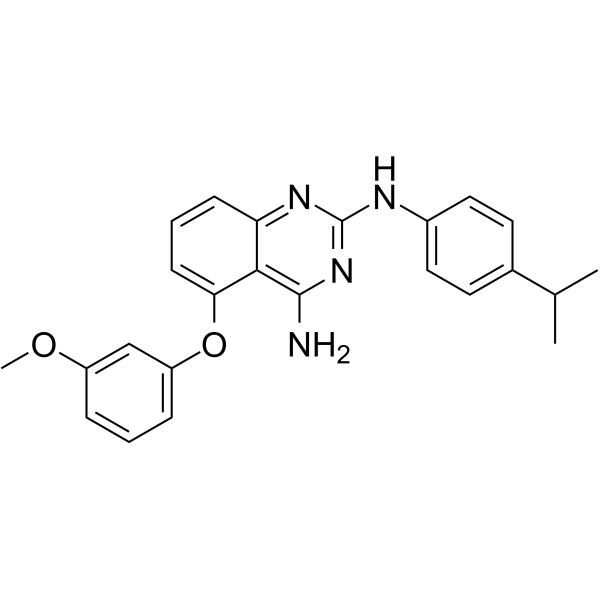
    Yhhu-3792
    2 Publications Verification

    Notch Neurological Disease
    Yhhu-3792 is a Notch activator. Yhhu-3792 enhances the self-renewal capability of neural stem cells (NSCs). Yhhu-3792 promotes the expression of Hes3 and Hes5. Yhhu-3792 increases the spatial and episodic memory abilities of mice. Yhhu-3792 can be used for the study of neurodegenerative diseases (such as Alzheimer's disease) or for neural regeneration after brain injury .
    Yhhu-3792
  • HY-103430A
    SKF-83566
    2 Publications Verification

    Dopamine Receptor 5-HT Receptor Adenylate Cyclase Neurological Disease
    SKF-83566 is a potent, blood-brain permeable and orally active D1-like dopamine receptor (D1DR) antagonist and a weaker competitive antagonist at the vascular 5-HT2 receptor (Ki=11 nM) . SKF-83566 is a competitive DAT (dopamine transporter) inhibitor with an IC50 of 5.7 μM . SKF-83566 also shows selective inhibition for adenylyl cyclase 2 (AC2) over AC1 and AC5 in the isolated rabbit thoracic aorta . SKF-83566 can be used for research of parkinson’s disease and nicotine craving alleviation .
    SKF-83566
  • HY-P2497
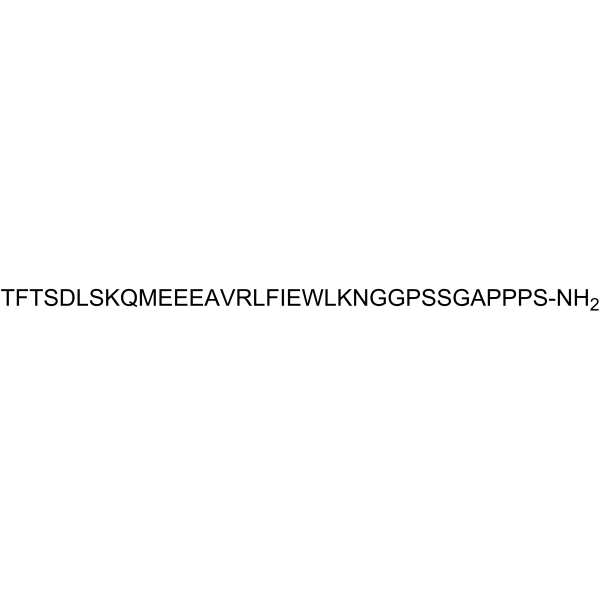
    Exendin (5-39)
    1 Publications Verification

    GCGR Neurological Disease
    Exendin (5-39) is a potent glucagon-like peptide 1 (GLP-1) receptor antagonist. Exendin (5-39) improves memory impairment in β-amyloid protein-treated rats .
    Exendin (5-39)
  • HY-W743398

    CS-386

    GABA Receptor Neurological Disease
    Mexazolam (CS-386) is an orally active benzodiazepine and anxiolytic. Benzodiazepines bind to specific BZD-type receptors on the GABA-chloride complex and potentiate the inhibitory effects of GABA .
    Mexazolam
  • HY-P1426

    Potassium Channel Neurological Disease
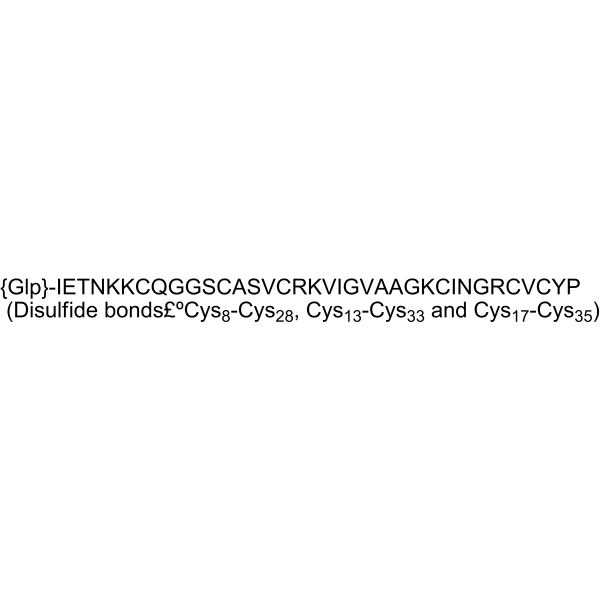
    AmmTX3 is a peptide toxin identified from the venom of the scorpion Androctonus mauretanicus. AmmTX3 is a highly specific blocker of Kv4 channels, which selectively and almost completely blocks transient A-type K + currents with a Ki of 131 nM. AmmTX3 induces epileptiform behaviors and causes death in mice receiving intracerebroventricular injection. AmmTX3 increases the excitability of dentate gyrus granule cells, reduces GABAergic inhibition, enhances and stabilizes the EPSP-spike component of long-term potentiation, and impairs reference memory. AmmTX3 can be used in research related to pain, epilepsy, and autism spectrum disorder .
    AmmTX3
  • HY-102091

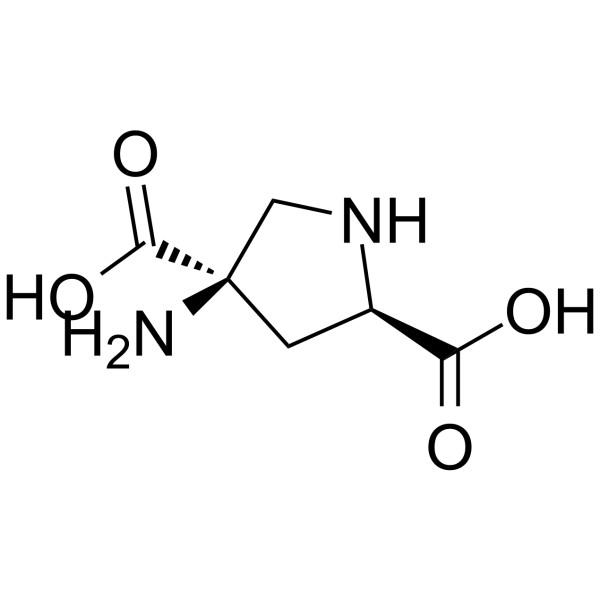
    (2R,4R)-4-Aminopyrrolidine-2,4-dicarboxylic acid

    mGluR Neurological Disease
    (2R,4R)-APDC is a group II metabotropic glutamate receptor (mGluR) agonist. (2R,4R)-APDC affects cell proliferation by inhibiting glutamate release, enhancing motor responses produced by D1 receptor activation, or reducing brain-derived neurotrophic factor (BDNF) levels. (2R,4R)-APDC can be used in the study of epilepsy and other neurological diseases .
    (2R,4R)-APDC
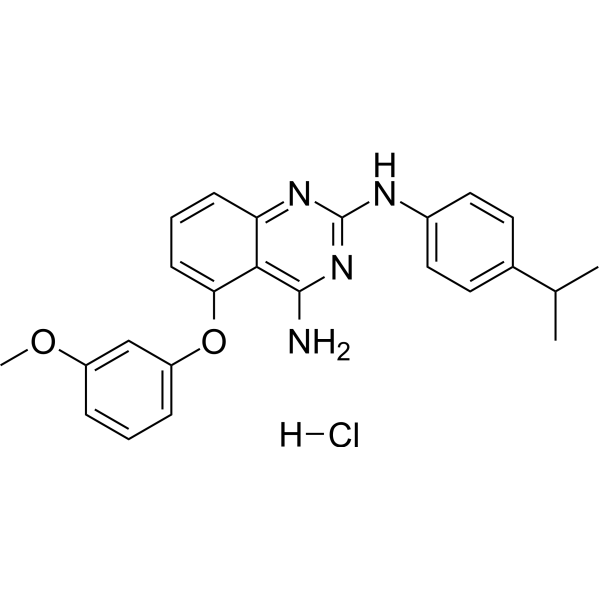
  • HY-120782A

    Notch Neurological Disease
    Yhhu-3792 hydrochloride is a Notch activator. Yhhu-3792 hydrochloride enhances the self-renewal capability of neural stem cells (NSCs). Yhhu-3792 hydrochloride promotes the expression of Hes3 and Hes5. Yhhu-3792 hydrochloride increases the spatial and episodic memory abilities of mice. Yhhu-3792 hydrochloride can be used for the study of neurodegenerative diseases (such as Alzheimer's disease) or for neural regeneration after brain injury .
    Yhhu-3792 hydrochloride
  • HY-111528

    iGluR Neurological Disease
    CGP 43487 is a NMDA receptor antagonist. CGP 43487 significantly affects the gross structural characteristics of the developing dentate gyrus .
    CGP 43487
  • HY-12153

    Cholinesterase (ChE) Neurological Disease
    JNJ-1930942 is a selective and blood-brain barrier (BBB) penetrant α(7) nAChR positive allosteric modulator.JNJ-1930942 enhances the Choline (HY-B0282)-evoked rise in intracellular Ca 2+ levels and neurotransmission at hippocampal dentate gyrus synapses. JNJ-1930942 reverses the naturally occurring sensory gating deficit in DBA/2 mice .
    JNJ-1930942
  • HY-P10824

    Amyloid-β Neurological Disease
    RI-OR2-TAT is a brain-penetrant inhibitor of β-Amyloid oligomerization, which is produced by adding the HIV protein transduction domain TAT to RI-OR2. RI-OR2-TAT binds to Aβ42 fibrils with a Kd value of 58-125 nM. RI-OR2-TAT reduces aggregation and plaque levels, reduces activation of microglia and oxidative damage, and increases the number of young neurons in the dentate gyrus .
    RI-OR2-TAT
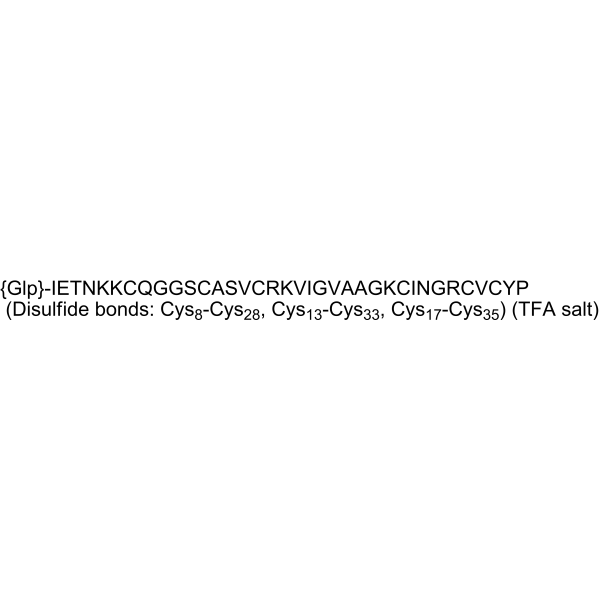
  • HY-P1426A

    Potassium Channel Neurological Disease
    AmmTX3 TFA is a peptide toxin identified from the venom of the scorpion Androctonus mauretanicus. AmmTX3 TFA is a highly specific blocker of Kv4 channels, which selectively and almost completely blocks transient A-type K + currents with a Ki of 131 nM. AmmTX3 TFA induces epileptiform behaviors and causes death in mice receiving intracerebroventricular injection. AmmTX3 TFA increases the excitability of dentate gyrus granule cells, reduces GABAergic inhibition, enhances and stabilizes the EPSP-spike component of long-term potentiation, and impairs reference memory. AmmTX3 TFA can be used in research related to pain, epilepsy, and autism spectrum disorder .
    AmmTX3 TFA
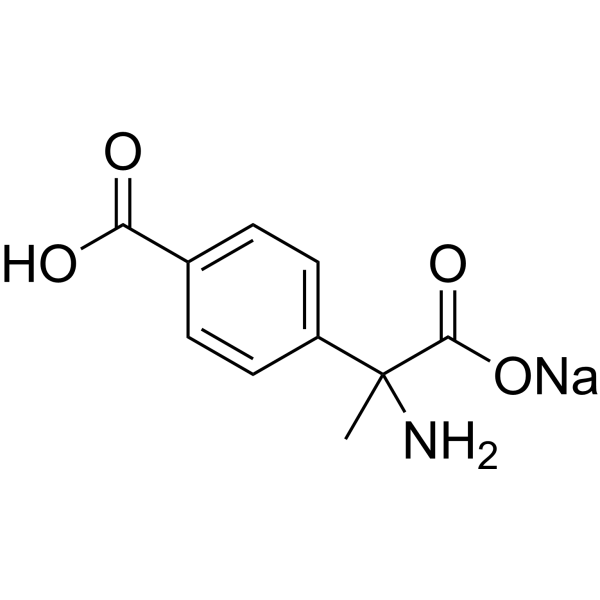
  • HY-103570

    mGluR Neurological Disease
    MCPG is a carboxylic phenyl glycine. MCPG can block metabotropic glutamate receptor (mGluR)(HY-15129) and has antagonistic activity of mGluR subtype. MCPG can be used to study the induction and maintenance of long-term potentiation (LTP) .
    MCPG sodium
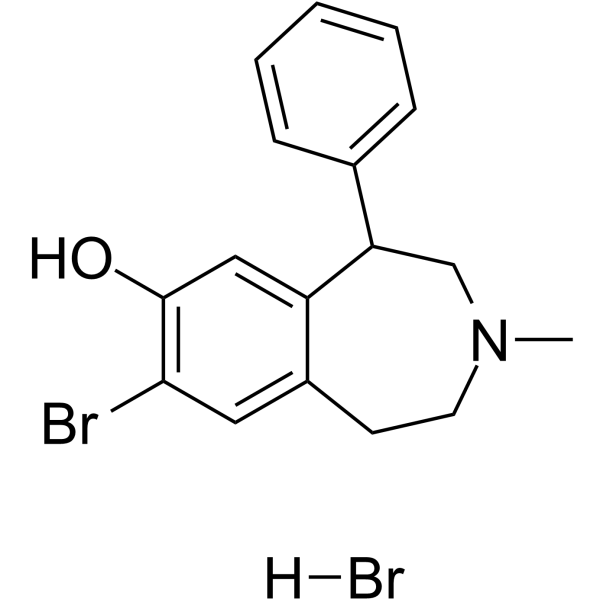
  • HY-103430

    Dopamine Receptor 5-HT Receptor Adenylate Cyclase Neurological Disease
    SKF-83566 hydrobromide is a potent, blood-brain permeable and orally active D1-like dopamine receptor (D1DR) antagonist and a weaker competitive antagonist at the vascular 5-HT2 receptor (Ki=11 nM) . SKF-83566 is a competitive DAT (dopamine transporter) inhibitor with an IC50 of 5.7 μM . SKF-83566 also shows selective inhibition for adenylyl cyclase 2 (AC2) over AC1 and AC5 in the isolated rabbit thoracic aorta . SKF-83566 can be used for the research of parkinson’s disease and nicotine craving alleviation .
    SKF-83566 hydrobromide
  • HY-103430AR

    Reference Standards Dopamine Receptor 5-HT Receptor Adenylate Cyclase Neurological Disease
    SKF-83566 (Standard) is the analytical standard of SKF-83566 (HY-103430A). This product is intended for research and analytical applications. SKF-83566 is a potent, blood-brain permeable and orally active D1-like dopamine receptor (D1DR) antagonist and a weaker competitive antagonist at the vascular 5-HT2 receptor (Ki=11 nM) . SKF-83566 is a competitive DAT (dopamine transporter) inhibitor with an IC50 of 5.7 μM . SKF-83566 also shows selective inhibition for adenylyl cyclase 2 (AC2) over AC1 and AC5 in the isolated rabbit thoracic aorta . SKF-83566 can be used for research of parkinson’s disease and nicotine craving alleviation .
    SKF-83566 (Standard)
  • HY-181167

    Cholinesterase (ChE) SOD Neurological Disease
    AChE/BChE-IN-34 is an acetylcholinesterase (AChE) and butyrylcholinesterase (BChE) inhibitor with IC50s of 5.97 μM and 4.57 μM, respectively. AChE/BChE-IN-34 functions as an antioxidant, oxidative stress inhibitor, reduces MDA levels, and elevates SOD and catalase in hippocampal tissue. AChE/BChE-IN-34 acts as a cognitive function enhancer, improves learning and memory in a Scopolamine (HY-N0296)-induced animal model. AChE/BChE-IN-34 is non-toxic in neuroblastoma cells across a specified concentration range. AChE/BChE-IN-34 can be used for the research of Alzheimer's disease .
    AChE/BChE-IN-34
  • HY-118646A

    nAChR TNF Receptor Neurological Disease Inflammation/Immunology
    NS-6740 hydrochloride is a partial agonist of α7 nicotinic acetylcholine receptor (α7 nAChR) with an IC50 of 3 nM. NS-6740 hydrochloride also acts as a potent modulator of the cholinergic anti-inflammatory pathway. NS-6740 hydrochloride alters the signaling pattern of α7 in an ion channel-independent manner, thereby reducing synaptic function. NS-6740 hydrochloride induces the desensitized state of α7 nAChR. NS-6740 hydrochloride generates robust nAChR-mediated currents. NS-6740 hydrochloride reduces LPS (HY-D1056)-induced TNF-α release from microglia. NS-6740 hydrochloride can be used in the research of neuroinflammation and neuropathic pain .
    NS-6740 hydrochloride

Inquiry Online

Your information is safe with us. * Required Fields.

Salutation


Country or Region *

Applicant Name *


Organization Name *

Department *


Email Address *


Product Name *

Cat. No.


Requested quantity *

Phone Number *


Remarks

Inquiry Online

Inquiry Information

Product Name:
Cat. No.:
Quantity:
MCE Japan Authorized Agent:

