1. Search Result
Search Result
Results for "

haemorrhage

" in MedChemExpress (MCE) Product Catalog:
Cat. No. Product Name Target Research Areas Chemical Structure
  • HY-B1060
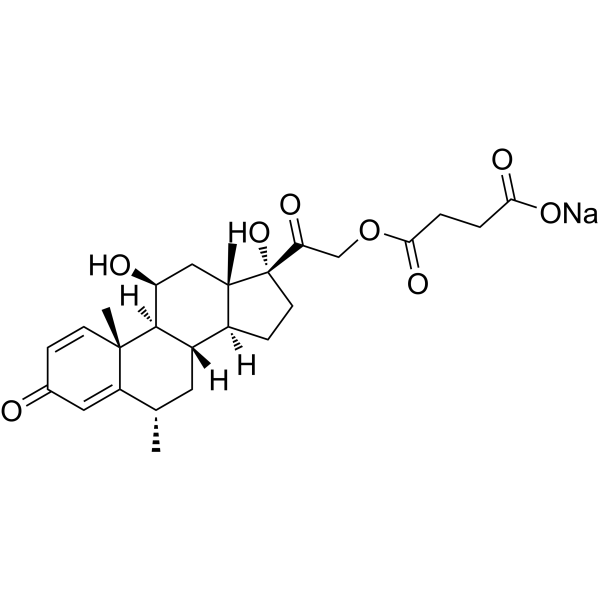
    Methylprednisolone succinate sodium
    2 Publications Verification

    Methylprednisolone hydrogen succinate sodium

    Glucocorticoid Receptor Infection Neurological Disease Inflammation/Immunology Cancer
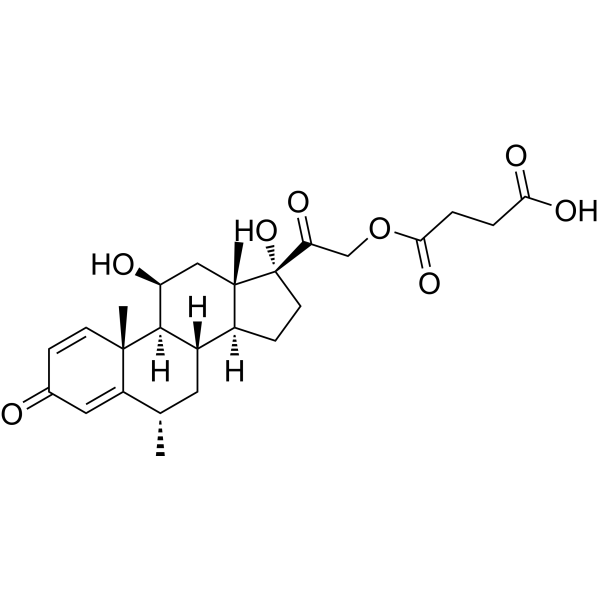
    Methylprednisolone succinate (Methylprednisolone hydrogen succinate) sodium is a prodrug of Methylprednisolone (HY-B0260) and glucocorticoid with immunosuppressant and anti-inflammatory activity. Methylprednisolone succinate sodium binds cytosolic glucocorticoid receptors, translocates to nuclei, and modulates target gene transcription. Methylprednisolone succinate sodium alters Bax, Bcl-2, occludin, and ZO-1 expression; attenuates TLR4/NF-κB signaling; suppresses proinflammatory cytokine production and immune cell activation. Methylprednisolone succinate sodium can be used for the research of intracranial haemorrhage, rheumatoid arthritis, multiple sclerosis, preterminal cancer, inflammatory conditions, shock, immediate-type hypersensitivity, acute myocardial ischemia, hypoxic heart muscle damage, and traumatic spinal cord injury .
    Methylprednisolone succinate sodium
  • HY-B1900
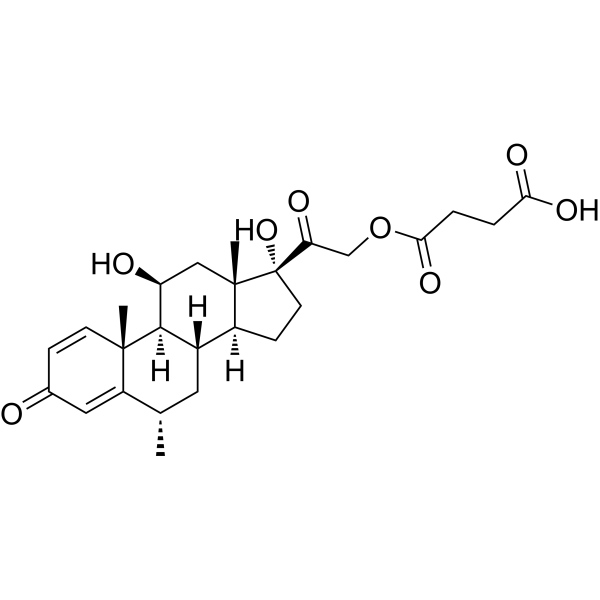
    Methylprednisolone succinate
    2 Publications Verification

    Methylprednisolone hydrogen succinate

    Glucocorticoid Receptor Bacterial Toll-like Receptor (TLR) NF-κB Infection Neurological Disease Metabolic Disease Inflammation/Immunology Cancer
    Methylprednisolone succinate (Methylprednisolone hydrogen succinate) is a prodrug of Methylprednisolone (HY-B0260) and glucocorticoid with immunosuppressant and anti-inflammatory activity. Methylprednisolone succinate binds cytosolic glucocorticoid receptors, translocates to nuclei, and modulates target gene transcription. Methylprednisolone succinate alters Bax, Bcl-2, occludin, and ZO-1 expression; attenuates TLR4/NF-κB signaling; suppresses proinflammatory cytokine production and immune cell activation. Methylprednisolone succinate can be used for the research of intracranial haemorrhage, rheumatoid arthritis, multiple sclerosis, preterminal cancer, inflammatory conditions, shock, immediate-type hypersensitivity, acute myocardial ischemia, hypoxic heart muscle damage, and traumatic spinal cord injury .
    Methylprednisolone succinate
  • HY-B0491A

    AC-17

    Adrenergic Receptor Cardiovascular Disease
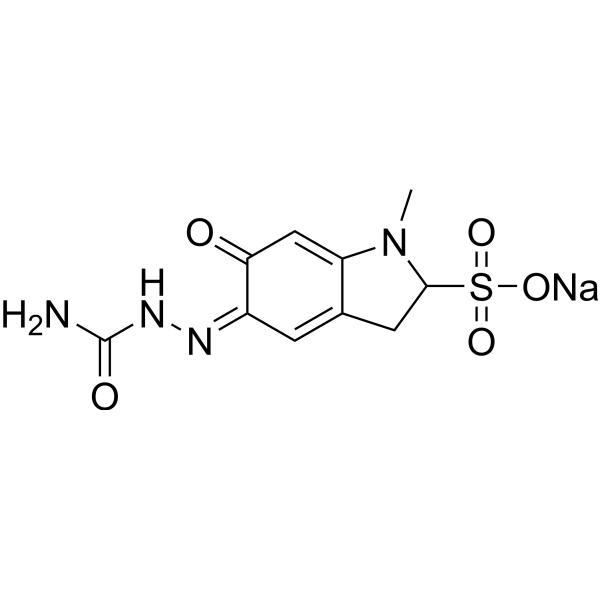
    Carbazochrome sodium sulfonate (AC-17) is a capillary stabiliser and used for the research of haemorrhage. Carbazochrome sodium sulfonate is an antihemorrhagic agent .
    Carbazochrome sodium sulfonate
  • HY-B1587

    Adrenergic Receptor Cardiovascular Disease
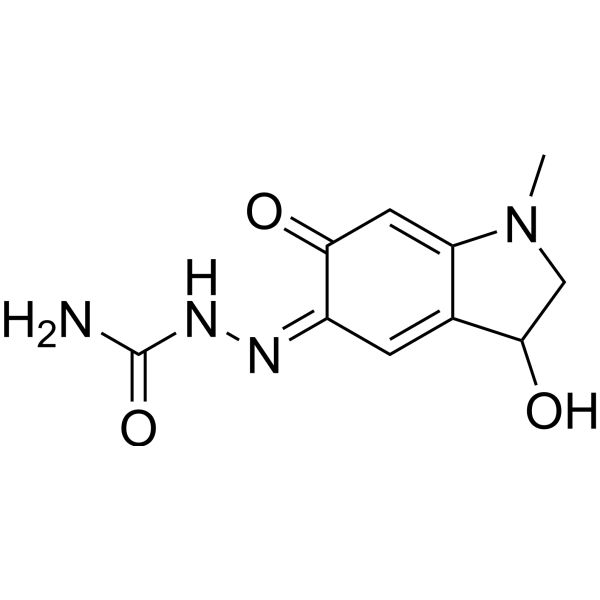
    Carbazochrome is a capillary stabiliser and used for the research of haemorrhage. Carbazochrome is an antihemorrhagic agent .
    Carbazochrome
  • HY-B1900R
    Methylprednisolone succinate (Standard)
    1 Publications Verification

    Methylprednisolone hydrogen succinate (Standard)

    Reference Standards Glucocorticoid Receptor Bacterial Toll-like Receptor (TLR) NF-κB Metabolic Disease Inflammation/Immunology Cancer
    Methylprednisolone succinate (Standard) is the analytical standard of Methylprednisolone succinate (HY-B1900). This product is intended for research and analytical applications. Methylprednisolone succinate (Methylprednisolone hydrogen succinate) is a prodrug of Methylprednisolone (HY-B0260) and glucocorticoid with immunosuppressant and anti-inflammatory activity. Methylprednisolone succinate binds cytosolic glucocorticoid receptors, translocates to nuclei, and modulates target gene transcription. Methylprednisolone succinate alters Bax, Bcl-2, occludin, and ZO-1 expression; attenuates TLR4/NF-κB signaling; suppresses proinflammatory cytokine production and immune cell activation. Methylprednisolone succinate can be used for the research of intracranial haemorrhage, rheumatoid arthritis, multiple sclerosis, preterminal cancer, inflammatory conditions, shock, immediate-type hypersensitivity, acute myocardial ischemia, hypoxic heart muscle damage, and traumatic spinal cord injury .
    Methylprednisolone succinate (Standard)
  • HY-136338

    Cimetidine sulphoxide

    Histamine Receptor Inflammation/Immunology
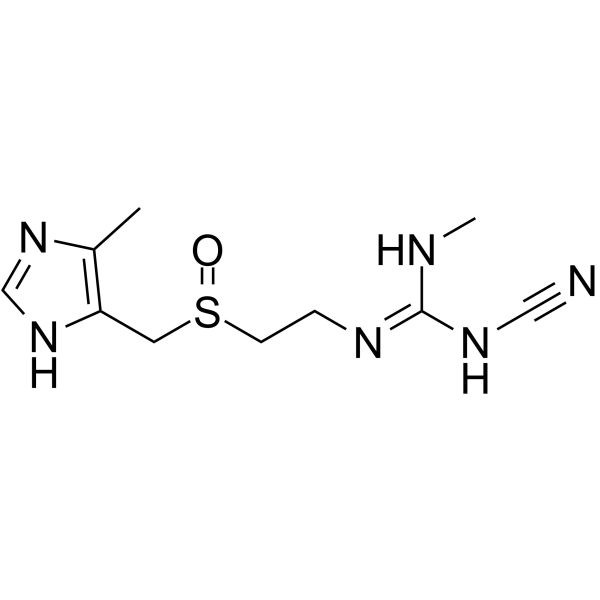
    Cimetidine sulfoxide (Cimetidine sulphoxide) is a sulfoxide metabolite of Cimetidine. Cimetidine is a histamine H2-receptor antagonist. Cimetidine has the potential for peptic ulcer disease and upper gastrointestinal haemorrhage treatment .
    Cimetidine sulfoxide
  • HY-129955

    Adrenergic Receptor Cardiovascular Disease
    Carbazochrome salicylate is a capillary stabiliser and used for the research of haemorrhage. Carbazochrome salicylate is an antihemorrhagic agent .
    Carbazochrome salicylate
  • HY-B1587R

    Reference Standards Adrenergic Receptor Cardiovascular Disease
    Carbazochrome (Standard) is the analytical standard of Carbazochrome. This product is intended for research and analytical applications. Carbazochrome is a capillary stabiliser and used for the research of haemorrhage. Carbazochrome is an antihemorrhagic agent .
    Carbazochrome (Standard)
  • HY-B0491AR

    AC-17 (Standard)

    Reference Standards Adrenergic Receptor Cardiovascular Disease
    Carbazochrome (sodium sulfonate) (Standard) is the analytical standard of Carbazochrome (sodium sulfonate). This product is intended for research and analytical applications. Carbazochrome sodium sulfonate (AC-17) is a capillary stabiliser and used for the research of haemorrhage. Carbazochrome sodium sulfonate is an antihemorrhagic agent .
    Carbazochrome sodium sulfonate (Standard)
  • HY-136338R

    Cimetidine sulphoxide (Standard)

    Reference Standards Histamine Receptor Inflammation/Immunology
    Cimetidine sulfoxide (Standard) is the analytical standard of Cimetidine sulfoxide. This product is intended for research and analytical applications. Cimetidine sulfoxide (Cimetidine sulphoxide) is a sulfoxide metabolite of Cimetidine. Cimetidine is a histamine H2-receptor antagonist. Cimetidine has the potential for peptic ulcer disease and upper gastrointestinal haemorrhage treatment .
    Cimetidine sulfoxide (Standard)
  • HY-W982689

    Biochemical Assay Reagents Metabolic Disease
    Fluindarol is a phenylindandione derivative and an orally active anticoagulant. Fluindarol acts as a toxicant that induces organ and tissue haemorrhages and liver parenchymal necrosis in rats. Fluindarol exhibits acute and cumulative preclinical toxicity in rats, rabbits, and dogs, with higher toxicity in female rats than male rats. Fluindarol lacks analgesic action, produces only minor blood pressure effects, and does not alter circulation, respiration, CNS, or cardiac activity. Fluindarol is considered too toxic for clinical use based on preclinical data .
    Fluindarol

Inquiry Online

Your information is safe with us. * Required Fields.

Salutation


Country or Region *

Applicant Name *


Organization Name *

Department *


Email Address *


Product Name *

Cat. No.


Requested quantity *

Phone Number *


Remarks

Inquiry Online

Inquiry Information

Product Name:
Cat. No.:
Quantity:
MCE Japan Authorized Agent:

