

1. Search Result
Search Result
Results for "

human primary monocytes

" in MedChemExpress (MCE) Product Catalog:

19

Inhibitors & Agonists

1

Fluorescent Dyes

3

Peptides

1

Natural
Products

1

Isotope-Labeled Compounds

2

Oligonucleotides

Cat. No. Product Name Target Research Areas Chemical Structure
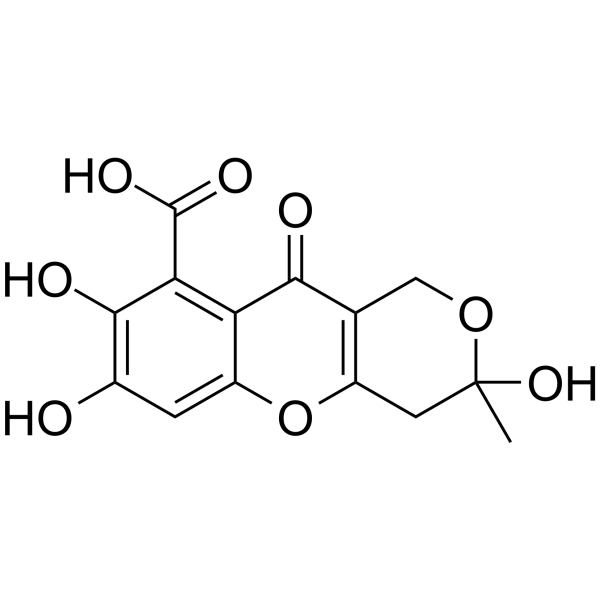
  • HY-122515
    Fulvic Acid
    1 Publications Verification

    Others Metabolic Disease Inflammation/Immunology
    Fulvic Acid is a natural product, which comes from humic substances produced by microorganisms in soil. Fulvic Acid can modulate the immune system, influence the oxidative state of cells, and improve gastrointestinal function. Fulvic Acid has the potential for researching chronic inflammatory diseases, including diabetes .
    Fulvic Acid
  • HY-P1846
    Jagged-1 (188-204)
    15+ Cited Publications

    Notch Cancer
    Jagged-1 (188-204) is a fragment of the Jagged-1 (JAG-1) protein with Notch agonist activity. JAG-1 is a Notch ligand highly expressed in cultured and primary multiple myeloma (MM) cells. JAG-1 induces maturation of monocyte-derived human dendritic cells .
    Jagged-1 (188-204)
  • HY-P1846A
    Jagged-1 (188-204) TFA
    15+ Cited Publications

    Notch Cancer
    Jagged-1 (188-204) TFA is a fragment of the Jagged-1 (JAG-1) protein with Notch agonist activity. JAG-1 is a Notch ligand highly expressed in cultured and primary multiple myeloma (MM) cells. JAG-1 induces maturation of monocyte-derived human dendritic cells .
    Jagged-1 (188-204) TFA
  • HY-168034

    STING Integrin NF-κB SARS-CoV Infection Inflammation/Immunology
    diABZI-4 is a STING activator and broad-spectrum antiviral agent with immunostimulatory activity. diABZI-4 triggers the TBK1-IRF3 and NF-κB signaling cascades by inducing STING oligomerization, thereby promoting the production of type I/III interferons and various proinflammatory cytokines. diABZI-4 exhibits broad-spectrum antiviral activity and effectively inhibits the replication of influenza A virus, SARS-CoV-2, herpes simplex virus, and other viruses. diABZI-4 also activates lymphocytes and macrophages to provide significant pre- and post-exposure protection in viral disease models. diABZI-4 can be used to study COVID-19, respiratory viral infections, and related immunopathological mechanisms .
    diABZI-4
  • HY-P11072

    Toll-like Receptor (TLR) Interleukin Related TNF Receptor Inflammation/Immunology
    IRF5-CPP5 is a cytosolic peptide that selectively targeting human IRF5 wirh a Kd of 0.53 μM. IRF5-CPP5 disrupts IRF5 homodimerization and inhibits its nuclear translocation without altering IRF5 phosphorylation levels. IRF5-CPP5 inhibits proinflammatory cytokine (IL-6, IL-1β, TNF-α) production. IRF5-CPP5 can be used for the research of systemic lupus erythematosus .
    IRF5-CPP5
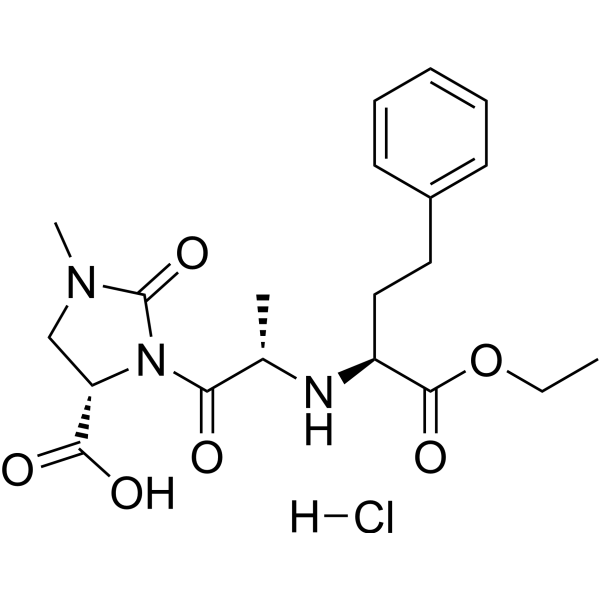
  • HY-B1451

    TA-6366

    Angiotensin-converting Enzyme (ACE) MMP JNK Cardiovascular Disease Neurological Disease Metabolic Disease Inflammation/Immunology
    Imidapril hydrochloride (TA-6366) is an orally active dual inhibitor of angiotensin-converting enzyme (ACE) and MMP-9. Imidapril hydrochloride inhibits lipopolysaccharide-induced phosphorylation of c-Jun, MKK4 and JNK in monocytes, and downregulates the production of specific inflammatory factors such as TNF-α and IP-10, thereby exerting anti-inflammatory activity. Imidapril hydrochloride also effectively ameliorates mesangial expansion and reduces urinary albumin excretion by inhibiting angiotensin AngII production, lowering glomerular pressure and oxidative stress, thus delaying disease progression. Imidapril hydrochloride can also directly bind to the active site of MMP-9 to inhibit gelatinase activity, and suppress the enlargement of cerebral aneurysms without altering systemic blood pressure. Imidapril hydrochloride is widely applicable to related studies on autoimmune glomerulonephritis, diabetic nephropathy, cerebral aneurysms and other conditions .
    Imidapril hydrochloride
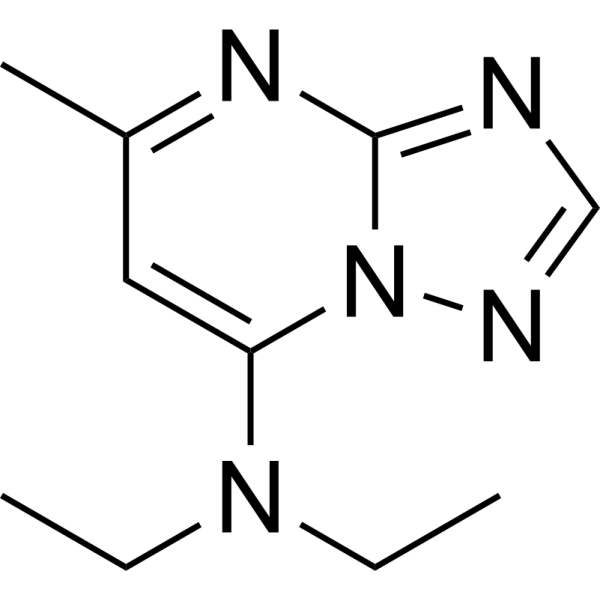
  • HY-B1016

    AR-12008

    PDGFR Phosphodiesterase (PDE) Prostaglandin Receptor Cardiovascular Disease Neurological Disease
    Trapidil (AR-12008) is an orally active vasodilator and antiplatelet agent. Trapidil antagonizes platelet-derived growth factor (PDGF), inhibits phosphodiesterase, thromboxane A2 synthesis and pro-inflammatory cytokine production. Trapidil promotes prostacyclin biosynthesis, reduces lipid peroxidation, regulates nitric oxide metabolism, and inhibits cell proliferation and migration. Trapidil exerts tissue-protective effects, regulates bone turnover, and inhibits pyroptosis via the GPX3/Nrf2 pathway. Trapidil is applicable to research related to renal ischemia-reperfusion injury, chronic stable angina, restenosis, meningioma, diabetic cardiomyopathy and peripheral nerve crush injury .
    Trapidil
  • HY-W722277A

    Interleukin Related NADH Dehydrogenase TNF Receptor JAK STAT IRAK Inflammation/Immunology
    LCC-12 (formate) is a copper (II) chelator and a derivative of the biguanide metformin (HY-B0627). LCC-12 (formate) reduces its hydrogen peroxide-dependent oxidation of NADH to NAD+. LCC-12 (formate) reduces IL-1β, IL-2, IL-6, IL-8, and TNF-α levels, as well as JAK2, STAT2, and IL-1 receptor-associated kinase 4 (IRAK4) levels in primary human cytokine-activated monocyte-derived macrophages (MDMs). LCC-12 (formate) reduces the number of CD80+ and CD86+ cytokine-activated MDMs. LCC-12 LCC-12 (formate) improves survival in a mouse model of sepsis induced by LPS or cecal ligation and puncture .
    LCC-12 formate
  • HY-173154B

    Molecular Glues NEKs NOD-like Receptor (NLR) Interleukin Related Inflammation/Immunology
    NK7-902 diTFA is a selective and orally active CRBN-dependent NEK7 molecular glue degrader with Kd values of 1.5 and 2.6 μM for hNEK7 and mNEK7. NK7-902 diTFA fully degrades NEK7 in human primary monocytes and whole blood but only partially inhibits NLRP3-dependent IL-1β production. NK7-902 diTFA shows activity in murine systems and induces a profound and long-lasting NEK7 degradation but only transiently blocks NLRP3 inflammasome activation. NK7-902 diTFA can be used for the research of inflammation, such as cryopyrin-associated periodic syndromes .
    NK7-902 diTFA
  • HY-171692

    Cyclic GMP-AMP Synthase IFNAR STING Infection
    G3-YSD is a cGAS agonist. G3-YSD directly interacts with cGAS to enhance its enzymatic activity, promote the conversion of ATP and GTP into cGAMP, and trigger STING-dependent IFN-α/β secretion. G3-YSD acts as a viral mimic to replace actual viral DNA . G3-YSD is applicable to research related to long COVID and type 1 human immunodeficiency virus infection .
    G3-YSD
  • HY-151547

    P2X Receptor Neurological Disease
    MRS4719 is a potent P2X4 receptor antagonist with an IC50 value of 0.503 μM for human P2X4 receptor. MRS4719 can reduce infarct volume and reduce brain atrophy, showing neuroprotective and neuro-rehabilitative activities in ischemic stroke model. MRS4719 also reduces ATP-induced [Ca 2+]i influx in primary human monocyte-derived macrophages. MRS4719 can be used to research ischemic stroke .
    MRS4719
  • HY-176452

    Cancer
    NLRP3 agonist 3 (Compound Payload 5) is an antibody-drug conjugate (ADC). NLRP3 agonist 3 is a NLRP3 agonist that induces IL-1β secretion in primary human monocytes. NLRP3 agonist 3 can be used in cancer research .
    NLRP3 agonist 3
  • HY-174760

    mRNA Inflammation/Immunology
    Human CCL22 mRNA encodes the human C-C motif chemokine ligand 22 (CCL22) protein, a cytokine that displays chemotactic activity for monocytes, dendritic cells, natural killer cells and for chronically activated T lymphocytes. CCL22 also displays a mild activity for primary activated T lymphocytes and has no chemoattractant activity for neutrophils, eosinophils and resting T lymphocytes.
    Human CCL22 mRNA
  • HY-113545

    9(R)-Hydroxyoctadecadienoic acid

    Endogenous Metabolite Metabolic Disease
    9(R)-HODE is a monohydroxy fatty acid and metabolite of linoleic acid. It is formed from linoleic acid by COX and lipoxygenase (LO).9(R)-HODE induces chemotaxis, increases the levels of chemokine (C-C motif) receptor 9 (CCR9) and chemokine (C-X-C motif) receptor 4 (CXCR4), and inhibits IL-6 release in primary human monocytes. It inhibits CD3α- and CD28-induced proliferation of isolated human peripheral blood lymphocytes when used at a concentration of 25 μg/mL.
    9(R)-HODE
  • HY-151547S

    Isotope-Labeled Compounds P2X Receptor Neurological Disease
    MRS4719-d3 is the deuterium labeled MRS4719 (HY-151547). MRS4719 is a potent P2X4 receptor antagonist with an IC50 value of 0.503 μM for human P2X4 receptor. MRS4719 can reduce infarct volume and reduce brain atrophy, showing neuroprotective and neuro-rehabilitative activities in ischemic stroke model. MRS4719 also reduces ATP-induced [Ca 2+]i influx in primary human monocyte-derived macrophages. MRS4719 can be used to research ischemic stroke .
    MRS4719-d3
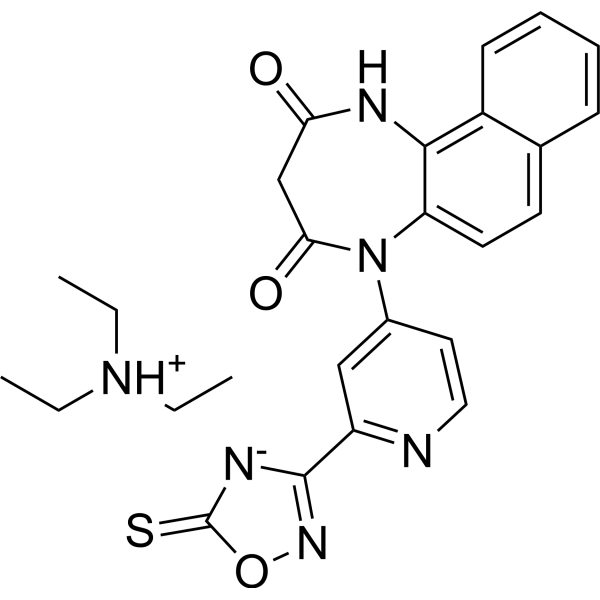
  • HY-178049A

    STING Cardiovascular Disease
    UM-259 hydrochloride is a STING inhibitor with activity against both murine and human STING (including the STING R232 mutant). UM-259 hydrochloride inhibits STING-dependent signaling pathways, blocks STING oligomerization, and acts on human primary CD14 + monocytes. UM-259 hydrochloride can be used for research on amyotrophic lateral sclerosis, lupus erythematosus, Aicardi-Goutières syndrome, and infant-onset STING-associated vasculopathy .
    UM-259 hydrochloride
  • HY-183647

    NO Synthase Inflammation/Immunology
    iNOs-IN-9 (Compound 10) is a selective inducible nitric oxide synthase (iNOS) inhibitor with an IC50 of 82 nM against hiNOS. iNOs-IN-9 reduces cytokine-induced inflammatory responses and cell necrosis in inflammatory cell models. iNOs-IN-9 can be used for research related to psoriasis .
    iNOs-IN-9
  • HY-182923

    STING Inflammation/Immunology
    UM-200 is a covalent STING inhibitor with an EC50 of 1.10 μM. UM-200 covalently modifies the cysteine residues C292 or C309 of STING, thereby blocking its oligomerization and downstream signal transduction. UM-200 inhibits STING-dependent phosphorylation of TBK1 and IRF3. UM-200 inhibits the STING signaling pathway in mouse models. UM-200 can be used for research on STING-driven inflammatory and autoimmune diseases .
    UM-200
  • HY-D3274

    Fluorescent Dye Others
    PE-Cy5 is a tandem fluorescent dye commonly used in flow cytometry, immunofluorescence, and cell biology research. It is formed by the covalent linkage of two fluorescent molecules, namely phycoerythrin and CY5. PE-Cy5 binds to human FcγRI (CD64), and this binding can be blocked by human pooled serum, anti-CD64 monoclonal antibodies targeting the ligand-binding region, or aggregated IgG. PE-Cy5 supports three-color flow cytometry analysis, and whole blood staining can partially reduce its non-specific binding (Ex/Em = 450-500 nm/665 nm) .
    PE-Cy5

Inquiry Online

Your information is safe with us. * Required Fields.

Salutation


Country or Region *

Applicant Name *


Organization Name *

Department *


Email Address *


Product Name *

Cat. No.


Requested quantity *

Phone Number *


Remarks

Inquiry Online

Inquiry Information

Product Name:
Cat. No.:
Quantity:
MCE Japan Authorized Agent:

