




Search Result
Results for "
human recombinant
" in MedChemExpress (MCE) Product Catalog:
5
Biochemical Assay Reagents
13
Isotope-Labeled Compounds
| Cat. No. |
Product Name |
Target |
Research Areas |
Chemical Structure |
-
- HY-108903
-
|
Vorhyaluronidase alfa; rHuPH 20
|
Biochemical Assay Reagents
Glycosidase
|
Metabolic Disease
|
|
Hyaluronidase (human recombinant) (Vorhyaluronidase alfa; rHuPH 20) is an enzyme that catalyzes the degradation of hyaluronic acid. Hyaluronidase (human recombinant) is used to improve the absorption and dispersal of parenteral fluids, medications, and contrast media .
|
-
-
- HY-P99329
-
|
Anti-human CD33 recombinant Antibody
|
Transmembrane Glycoprotein
|
Cancer
|
|
Vadastuximab (Anti-Human CD33 Recombinant Antibody) is a humanized monoclonal antibody targeting CD33. Vadastuximab can be used to synthesize an ADC compound, Vadastuximab talirine .
|
-
-
- HY-117639
-
|
|
Potassium Channel
|
Neurological Disease
|
|
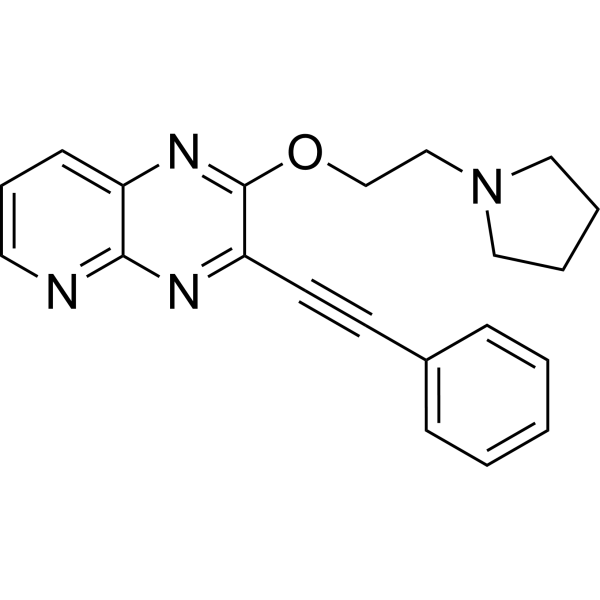
AUT1 is a recombinant human Kv3 channel modulator. AUT1 modulates Kv3.1b and Kv3.2a channels in human recombinant with pEC50 values of 5.33 and 5.31 μM, respectively. AUT1 can be used for the research of disorders associated with dysfunction of inhibitory feedback in corticolimbic circuits, such as schizophrenia .
|
-
-
- HY-150097
-
|
|
Biochemical Assay Reagents
|
Metabolic Disease
Inflammation/Immunology
Cancer
|
|
Recombinant Human Serum Albumin (rHSA) is a non-glycosylated monomeric plasma protein that acts as a core factor for maintaining plasma colloid osmotic pressure. Recombinant Human Serum Albumin (rHSA) possesses multiple physiological functions including carrier, metabolic regulation, detoxification, antioxidation and enzyme mimicking. Recombinant Human Serum Albumin (rHSA) not only scavenges reactive oxygen and nitrogen species via specific residues and binds a variety of endogenous and exogenous compounds to maintain redox homeostasis, but also serves as a biomarker for multiple diseases such as cancer and inflammation. Recombinant Human Serum Albumin (rHSA) broadly supports the development of implantable materials, surgical adhesives and ligand capture, and can be used for research on critical illnesses including hypovolemia, liver failure, severe sepsis and various types of trauma resuscitation .
|
-
-
- HY-P99288
-
FG-3019
2 Publications Verification
Pamrevlumab; Anti-human CTGF recombinant Antibody
|
Apoptosis
|
Cancer
|
|
FG-3019 (Pamrevlumab) is a recombinant human antibody that binds to connective tissue growth factor (CTGF). FG-3019 can be used for the research of idiopathic pulmonary fibrosis (IPF) .
|
-
-
- HY-P99262
-
|
BAX69; Anti-human MIF recombinant Antibody
|
Macrophage migration inhibitory factor (MIF)
|
Cancer
|
|
Imalumab (BAX69) is a recombinant, human IgG1 monoclonal antibody that targets macrophage inhibitory factor (MIF). Imalumab can be used for the research of ovarian carcinoma, recurrent malignant ascites and cancer .
|
-
-
- HY-P99274
-
|
BI 836845; Anti-human IGF1 and IGF2 recombinant Antibody
|
IGF-1R
|
Cancer
|
|
Xentuzumab (Anti-Human IGF1 and IGF2 Recombinant Antibody; BI836845) is a recombinant a human monoclonal antibody that targets IGF ligands IGF1 and IGF2. Xentuzumab inhibits both of IGF1 and IGF2 growth-promoting signalling and suppresses AKT activation .
|
-
-
- HY-P99271
-
|
Anti-human F3 recombinant Antibody
|
ADC Antibody
|
Cancer
|
|
Tisotumab (Anti-Human F3 Recombinant Antibody) is a human IgG1 monoclonal antibody and ADC antibody. Tisotumab targets tissue factor (TF). Tisotumab can be used to synthesize antibody-drug conjugates (ADCs) targeting tissue factor (TF), Tisotumab vedotin (HY-152963). Tisotumab can be used for the research of solid tumors .
|
-
-
- HY-P1068A
-
|
|
Bacterial
|
Infection
|
|
Recombinant human lysozyme (plant expression) is a conserved anti-bacterial protein that causes bacterial lysis and death by hydrolyzing bacterial cell wall peptidoglycan (PG). Recombinant human lysozyme (plant expression) can be used to study bacterial infections .
|
-
-
- HY-P99335
-
|
Anti-human IL17A recombinant Antibody; SHR-1314
|
Interleukin Related
|
Inflammation/Immunology
|
|
Vunakizumab (Anti-Human IL17A Recombinant Antibody) is a recombinant human IgGκ monoclonal antibody and an Interleukin-17A (IL-17A) inhibitor. Vunakizumab binds to IL-17A to inhibit downstream cytokines and block inflammatory signaling. Vunakizumab can be used for the research of chronic plaque psoriasis and ankylosing spondylitis .
|
-
-
- HY-P99252
-
|
Anti-human CD6 recombinant Antibody
|
CD6
|
Infection
Inflammation/Immunology
|
|
Itolizumab (Anti-Human CD6 Recombinant Antibody) is a humanized recombinant anti-CD6 monoclonal antibody (MAb) targeting the extracellular SRCR distal domain 1 of CD6. Itolizumab reduces T-cell proliferation and inhibits the production of pro-inflammatory cytokines, such as INF-γ, TNFα and IL-6. Itolizumab can be used in the research of psoriasis, rheumatoid arthritis (RA), COVID-19 .
|
-
-
- HY-P99266
-
|
Anti-human CD4 recombinant Antibody
|
Transmembrane Glycoprotein
|
Inflammation/Immunology
Cancer
|
|
Zanolimumab (Anti-Human CD4 Recombinant Antibody) is a fully human monoclonal antibody targets CD4. Zanolimumab effectively inhibits T-cell receptor (TCR) signal transduction. Zanolimumab can be used for the research of heumatoid arthritis, psoriasis, melanoma, cutaneous and peripheral T-cell lymphoma .
|
-
-
- HY-E70001
-
|
|
Others
|
Endocrinology
|
|
Recombinant Human Luteinizing Hormone is a recombinant form of Luteinizing hormone (human) (HY-P2293). Luteinizing hormone (human), a heterodimeric glycoprotein hormone produced by the pituitary gland (LH), plays key roles in human reproduction .
|
-
-
- HY-P2799D
-
|
CK-MB
|
Biochemical Assay Reagents
|
Others
|
|
Creatine Kinase MB (rCK-MB), Recombinant Human (CK-MB) is a biological material or organic compound that can be used in life science research .
|
-
-
- HY-E70805
-
|
|
SRPK
|
Cancer
|
|
SRPK2 (serine-arginine protein kinase 2) is a protein kinase that is involved in cell cycle regulation and cell apoptosis. Biotin-SRPK2 Recombinant Human Active Protein Kinase is a recombinant SRPK2 protein that can be used to study SRPK2-related functions, and is biotinylated .
|
-
-
- HY-E70833
-
|
|
Itk
|
Cancer
|
|
ITK is the Tec family tyrosine kinase that has been implicated in T cell receptor (TCR) signaling. ITK Recombinant Human Active Protein Kinase is a recombinant ITK protein that can be used to study ITK-related functions .
|
-
-
- HY-E70832
-
|
|
Insulin Receptor
|
Metabolic Disease
|
|
IRR is a member of the insulin receptor (IR) family. IRR activation by alkali is determined by its N-terminal extracellular region. IRR Recombinant Human Active Protein Kinase is a recombinant IRR protein that can be used to study IRR-related functions .
|
-
-
- HY-E70728
-
|
|
Eukaryotic Initiation Factor (eIF)
|
Inflammation/Immunology
|
|
Heme-regulated inhibitory (HRI) is an eIF2α kinase, which induces a cytosolic unfolded protein response to prevent aggregation of innate immune signalosomes. HRI Recombinant Human Active Protein Kinase is a recombinant HRI protein that can be used to study HRI-related functions .
|
-
-
- HY-E70868
-
|
|
TNK1
|
Cancer
|
|
Thirty-eight-negative kinase-1 (TNK1) is a member of the ACK family of NRTKs, which includes only two human kinases, TNK1 and TNK2 (also called ACK1). TNK1 Recombinant Human Active Protein Kinase is a recombinant TNK1 protein that can be used to study TNK1-related functions .
|
-
-
- HY-E70863
-
|
|
SRPK
|
Cancer
|
|
SRPK1 (serine-arginine protein kinase 1) is a protein kinase that specifically phosphorylates proteins containing serine-arginine-rich domains. SRPK1 Recombinant Human Active Protein Kinase is a recombinant SRPK1 protein that can be used to study SRPK1-related functions .
|
-
-
- HY-E70852
-
|
|
PKC
|
Cancer
|
|
PKC is a family of serine/threonine kinases involved in several processes including proliferation, differentiation, apoptosis, and migration. PKCα is a classical PKC isoform that contains a C1 domain that binds to diacylglycerol (DAG). PKCα Recombinant Human Active Protein Kinase is a recombinant PKCα protein that can be used to study PKCα-related functions .
|
-
-
- HY-E70856
-
|
|
PKC
|
Inflammation/Immunology
|
|
PKCθ is a member of the Ca 2+-independent PKC subfamily. PKCθ plays an important role in T cell activation. PKCθ is also required for the survival of activated peripheral T lymphocytes. PKCθ Recombinant Human Active Protein Kinase is a recombinant PKCθ protein that can be used to study PKCθ-related functions .
|
-
-
- HY-E70743
-
|
|
MASTL
|
Cancer
|
|
MASTL kinase is a master regulator of mitosis, essential for ensuring that mitotic substrate phosphorylation is correctly maintained. It achieves this through the phosphorylation of alpha-endosulfine and subsequent inhibition of the tumor suppressor PP2A-B55 phosphatase. MASTL Recombinant Human Active Protein Kinase is a recombinant MASTL protein that can be used to study MASTL-related functions .
|
-
-
- HY-E70871
-
|
|
Tau Protein
|
Neurological Disease
|
|
TTBK2 is a tau tubulin kinase. Mutations in TTBK2 cause spinocerebellar ataxia type 11, a disorder exhibiting both loss of Purkinje cells and widespread deposition of tau. TTBK2 Recombinant Human Active Protein Kinase is a recombinant TTBK2 protein that can be used to study TTBK2-related functions .
|
-
-
- HY-E70861
-
|
|
Salt-inducible Kinase (SIK)
|
Inflammation/Immunology
|
|
SIK1 is a MAP4 kinase. The SIK1 MAP4K regulates cell proliferation and cell expansion. SIK1 phosphorylates BIK1 and stabilizes it in a kinase activity-dependent manner. SIK1 Recombinant Human Active Protein Kinase is a recombinant SIK1 protein that can be used to study SIK1-related functions .
|
-
-
- HY-P99324
-
|
Anti-human EGFR recombinant Antibody; CetuxiMab-GEX, GEXMab52201
|
EGFR
Apoptosis
|
Cancer
|
|
Tomuzotuximab (Anti-Human EGFR Recombinant Antibody) is a fully human glycoengineered IgG1 monoclonal antibody against EGFR. Tomuzotuximab has anticancer effects .
|
-
-
- HY-E70730
-
|
|
IGF-1R
|
Metabolic Disease
|
|
The whole IGF axis constitutes an interactive network composed of the peptide-ligands IGF1, IGF2 and insulin, and the receptors IGF1R, IGF2R and insulin receptor (INSR) as IGF binding proteins (IGFBPs). The INSR itself appears in two isoforms, INSRA and INSRB differing in 12 amino acids encoded by exon 11. INSR Recombinant Human Active Protein Kinase is a recombinant INSR protein that can be used to study INSR-related functions .
|
-
-
- HY-E70830
-
|
|
DYRK
|
Cancer
|
|
Homeodomain interacting protein kinase 2 (HIPK2) is an evolutionary conserved serine/threonine kinase that regulates gene expression by phosphorylation of transcription factors and accessory components of the transcription machinery. HIPK2 is activated in response to DNA-damaging agents or morphogenic signals. HIPK2 Recombinant Human Active Protein Kinase is a recombinant HIPK2 protein that can be used to study HIPK2-related functions .
|
-
-
- HY-E70746
-
|
|
MEK
|
Cancer
|
|
MEK1 is the MAP/ERK kinase. The MEK1 kinase directly phosphorylates ERK2, after the activation loop of MEK1 is itself phosphorylated by Raf. MEK1 SESE is a mutant of MEK1. MEK1 SESE Recombinant Human Active Protein Kinase is a recombinant MEK1 SESE protein that can be used to study MEK1 SESE-related functions .
|
-
-
- HY-E70839
-
|
|
Ser/Thr Kinase
|
Cancer
|
|
MAP4K5 (KHS1) belongs to the mammalian Ste20-like serine/threonine kinase family. MAP4K5 plays an important role in regulating a range of cellular responses and is involved in Wnt signaling in hematopoietic cells. KHS1 Recombinant Human Active Protein Kinase is a recombinant KHS1 protein that can be used to study KHS1-related functions .
|
-
-
- HY-E70823
-
|
|
FGFR
|
Cancer
|
|
FGFR2 is a receptor tyrosine kinase that is involved in many human cancers such as intrahepatic cholangiocarcinomas and hepatocellular carcinomas. FGFR2 N549K is a mutant of FGFR3. FGFR2 N549K Recombinant Human Active Protein Kinase is a recombinant FGFR4 N535K protein that can be used to study FGFR4 N535K-related functions .
|
-
-
- HY-E70870
-
|
|
Trk Receptor
|
Neurological Disease
|
|
TRKB(NTRK2) is a member of tyrosine kinase gene family. TRKB is the primary receptor for brain-derived nerve growth factor (BDNF) and neurotrophin 4/5 (NT4/5). TRKB(NTRK2) Recombinant Human Active Protein Kinase is a recombinant TRKB(NTRK2) protein that can be used to study TRKB(NTRK2)-related functions .
|
-
-
- HY-E70649
-
|
|
Raf
|
Cancer
|
|
BRAF is a member of the Raf kinase family of growth signal transduction protein kinases. BRAF has multiple mutants. BRAF V600E is commonly found in melanoma. BRAF V600E Recombinant Human Active Protein Kinase is a recombinant BRAF V600E protein that can be used to study BRAF V600E-related functions .
|
-
-
- HY-P2883A
-
|
|
Biochemical Assay Reagents
|
Others
|
|
Recombinant Human Keratin2 is a type II or neutral basic keratin intermediate filament protein that protects against collagen loss .
|
-
-
- HY-E70858
-
|
|
AMPK
|
Cancer
|
|
QIK belongs to the AMPK/SNF1 kinase family. It is a ubiquitously expressed protein and is upregulated rapidly after a hormone-regulated form of Qin is activated. QIK Recombinant Human Active Protein Kinase is a recombinant QIK protein that can be used to study QIK-related functions .
|
-
-
- HY-E70729
-
|
|
Ser/Thr Kinase
|
Metabolic Disease
|
|
The intestinal cell kinase (ICK) protein belongs to the ros-cross hybridizing kinase (RCK) family. ICK is a ciliary protein, involved in ciliogenesis and regulation of intraflagellar transport (IFT). ICK Recombinant Human Active Protein Kinase is a recombinant ICK protein that can be used to study ICK-related functions .
|
-
-
- HY-E70712
-
|
|
Eukaryotic Initiation Factor (eIF)
|
Cancer
|
|
EIF2AK4 Recombinant Human Active Protein Kinase belongs to a family of kinases that regulate angiogenesis in response to cellular stress. EIF2AK4 Recombinant Human Active Protein Kinase can be used for the study of pulmonary capillary hemangiomatosis (PCH) .
|
-
-
- HY-E70840
-
|
|
c-Kit
|
Cancer
|
|
Kit is a type III receptor protein-tyrosine kinase. Signaling by stem cell factor and Kit, its receptor, play important roles in gametogenesis, hematopoiesis, mast cell development and function, and melanogenesis. KIT Recombinant Human Active Protein Kinase is a recombinant KIT protein that can be used to study KIT-related functions .
|
-
-
- HY-E70692
-
|
|
CDK
|
Cancer
|
|
CLK3 is a nuclear dual-specificity kinase has been shown to undergo conserved alternative splicing to generate catalytically active (Clk) and inactive (ClkT) isoforms. CLK3 Recombinant Human Active Protein Kinase is a recombinant CLK3 protein that can be used to study CLK3-related functions .
|
-
-
- HY-E70803
-
|
|
PDGFR
|
Cancer
|
|
PDGF-BB/PDGFRβ signaling plays an important role during vascularization by mediating pericyte recruitment to the vasculature, promoting the integrity and function of vessels. Biotin-PDGFRβ Recombinant Human Active Protein Kinase is a recombinant PDGFRβ protein that can be used to study PDGFRβ-related functions, and is biotinylated .
|
-
-
- HY-E70864
-
|
|
CaMK
|
Metabolic Disease
|
|
STK33 is clearly related to the canonical kinases from the CAMK group. STK33 could be involved in the normal development of heart and other organs in embryonic and fetal stages. STK33 Recombinant Human Active Protein Kinase is a recombinant STK33 protein that can be used to study STK33-related functions .
|
-
-
- HY-E70837
-
|
|
JNK
|
Cancer
|
|
JNK2 is a neuronal-specific isoform of JNK. JNK2 deficiency leads to reduced c-Jun degradation, thereby augmenting c-Jun levels and cellular proliferation. JNK2 Recombinant Human Active Protein Kinase is a recombinant JNK2 protein that can be used to study JNK2-related functions .
|
-
-
- HY-E70725
-
|
|
Src
|
Cancer
|
|
FRK Recombinant Human Active Protein Kinase, a non-receptor tyrosine kinase Fyn-related kinase, is a member of the BRK family kinases (BFKs). FRK may be involved in tumor progression .
|
-
-
- HY-E70804
-
|
|
SRPK
|
Cancer
|
|
SRPK1 (serine-arginine protein kinase 1) is a protein kinase that specifically phosphorylates proteins containing serine-arginine-rich domains. Biotin-SRPK1 Recombinant Human Active Protein Kinase is a recombinant SRPK1 protein that can be used to study SRPK1-related functions, and is biotinylated .
|
-
-
- HY-E70860
-
|
|
SGK
|
Cancer
|
|
SGK2 belongs to the SGK family of AGC kinases, which includes SGK1, SGK2, and SGK3 gene. SGK2 upregulation promotes the progression of metastasis in bladder, kidney, and colon cancers. SGK2 Recombinant Human Active Protein Kinase is a recombinant SGK2 protein that can be used to study SGK2-related functions .
|
-
-
- HY-E70633
-
|
|
PI4P5K
|
Neurological Disease
|
|
PIP5K1C Recombinant Human Active Lipid Kinase is a phosphatidylinositol 4-phosphate 5-kinase (PIP5K) with nociceptive sensitization. PIP5K1C Recombinant Human Active Lipid Kinase can be used to study the role of PIP5K1C in nociceptive signaling and sensitization .
|
-
-
- HY-E70788
-
|
|
Ser/Thr Kinase
|
Others
|
|
BARK1 Recombinant Human Active Protein Kinase is a membrane LRR-RLK (leucine-rich repeat receptor-like kinase) protein that specifically binds to BAK1 and its homologs .
|
-
-
- HY-E70801
-
|
|
Hippo (MST)
|
Cancer
|
|
MST2 is a class of serine/threonine protein kinases, which plays the central roles in the Hippo pathway controlling the cell proliferation, differentiation, and apoptosis during development. Biotin-MST2 Recombinant Human Active Protein Kinase is a recombinant MST2 protein that can be used to study MST2-related functions, and is biotinylated .
|
-
-
- HY-E70827
-
|
|
FGFR
|
Cancer
|
|
FGFR2 is a receptor tyrosine kinase that is involved in many human cancers such as intrahepatic cholangiocarcinomas and hepatocellular carcinomas. FGFR2 V564L is a mutant of FGFR3. FGFR2 V564L Recombinant Human Active Protein Kinase is a recombinant FGFR2 V564L protein that can be used to study FGFR2 V564L-related functions .
|
-
-
- HY-E70851
-
|
|
AMPK
|
Cancer
|
|
NUAK2 is a member of the SNF1/AMP kinase (AMPK) family (serine/threonine kinases) that is regulated by the putative tumor suppressor LKB1 (20-23) and also by death receptor signaling through NF-κB. Nuak2 Recombinant Human Active Protein Kinase is a recombinant Nuak2 protein that can be used to study Nuak2-related functions .
|
-
- HY-E70841
-
|
|
LIM Kinase (LIMK)
|
Cancer
|
|
LIM kinase 2 (LIMK2) is a serine/threonine and tyrosine kinases. LIMK2 plays a crucial role in the regulation of cytoskeleton dynamics by controlling actin filaments and microtubule turnover, especially through the phosphorylation of cofilin, an actin depolymerising factor. LIMK2 Recombinant Human Active Protein Kinase is a recombinant LIMK2 protein that can be used to study LIMK2-related functions .
|
-
- HY-E70657
-
|
|
CDK
|
Neurological Disease
Cancer
|
|
CDK10/CycQ Recombinant Human Active Protein Kinase is a cyclin-dependent kinase, which is important for neural development and can act as a tumour suppressor .
|
-
- HY-E70674
-
|
|
CDK
|
Cancer
|
|
CDK2 is a cyclin-dependent kinase involved in the control of the cell cycle. CDK2/CycO Recombinant Human Active Protein Kinase is an ortholog of CDK2 .
|
-
- HY-E70812
-
|
|
CaMK
|
Cardiovascular Disease
|
|
CAMK2 is involved in the regulation of cellular processes in a variety of tissues. CaMK2β Recombinant Human Active Protein Kinase is obtained by expressing CaMK2β proteins .
|
-
- HY-E70811
-
|
|
CaMK
|
Cardiovascular Disease
|
|
CAMK2 is involved in the regulation of cellular processes in a variety of tissues. CaMK2α Recombinant Human Active Protein Kinase is obtained by expressing CaMK2α proteins .
|
-
- HY-E70650
-
|
|
CDK
|
Cancer
|
|
CDC7/DBF4 Recombinant Human Active Protein Kinaseis a protein kinase that is required for the initiation of DNA replication in eukaryotes .
|
-
- HY-E70818
-
|
|
FGFR
|
Cancer
|
|
FGFR2 is a receptor tyrosine kinase that is involved in many human cancers such as intrahepatic cholangiocarcinomas and hepatocellular carcinomas. FGFR2 K659M is a mutant of FGFR3. FGFR2 K659M Recombinant Human Active Protein Kinase is a recombinant FGFR2 K659M protein that can be used to study FGFR2 K659M-related functions .
|
-
- HY-E70815
-
|
|
FGFR
|
Cancer
|
|
FGFR2 is a receptor tyrosine kinase that is involved in many human cancers such as intrahepatic cholangiocarcinomas and hepatocellular carcinomas. FGFR2 K526E is a mutant of FGFR3. FGFR2 K526E Recombinant Human Active Protein Kinase is a recombinant FGFR2 K526E protein that can be used to study FGFR2 K526E-related functions .
|
-
- HY-E70825
-
|
|
FGFR
|
Cancer
|
|
FGFR2 is a receptor tyrosine kinase that is involved in many human cancers such as intrahepatic cholangiocarcinomas and hepatocellular carcinomas. FGFR2 V564F is a mutant of FGFR3. FGFR2 V564F Recombinant Human Active Protein Kinase is a recombinant FGFR2 V564F protein that can be used to study FGFR2 V564F-related functions .
|
-
- HY-E70826
-
|
|
FGFR
|
Cancer
|
|
FGFR2 is a receptor tyrosine kinase that is involved in many human cancers such as intrahepatic cholangiocarcinomas and hepatocellular carcinomas. FGFR2 V564I is a mutant of FGFR3. FGFR2 V564I Recombinant Human Active Protein Kinase is a recombinant FGFR2 V564I protein that can be used to study FGFR2 V564I-related functions .
|
-
- HY-E70814
-
|
|
FGFR
|
Cancer
|
|
FGFR2 is a receptor tyrosine kinase that is involved in many human cancers such as intrahepatic cholangiocarcinomas and hepatocellular carcinomas. FGFR2 C491S is a mutant of FGFR3. FGFR2 C491S Recombinant Human Active Protein Kinase is a recombinant FGFR2 C491S protein that can be used to study FGFR2 C491S-related functions .
|
-
- HY-E70822
-
|
|
FGFR
|
Cancer
|
|
FGFR2 is a receptor tyrosine kinase that is involved in many human cancers such as intrahepatic cholangiocarcinomas and hepatocellular carcinomas. FGFR2 N549H is a mutant of FGFR3. FGFR2 N549H Recombinant Human Active Protein Kinase is a recombinant FGFR4 N535H protein that can be used to study FGFR4 N535H-related functions .
|
-
- HY-E70821
-
|
|
FGFR
|
Cancer
|
|
FGFR2 is a receptor tyrosine kinase that is involved in many human cancers such as intrahepatic cholangiocarcinomas and hepatocellular carcinomas. FGFR2 M537I is a mutant of FGFR3. FGFR2 M537I Recombinant Human Active Protein Kinase is a recombinant FGFR2 M537I protein that can be used to study FGFR2 M537I-related functions .
|
-
- HY-E70819
-
|
|
FGFR
|
Cancer
|
|
FGFR2 is a receptor tyrosine kinase that is involved in many human cancers such as intrahepatic cholangiocarcinomas and hepatocellular carcinomas. FGFR2 K659N is a mutant of FGFR3. FGFR2 K659N Recombinant Human Active Protein Kinase is a recombinant FGFR2 K659N protein that can be used to study FGFR2 K659N-related functions .
|
-
- HY-E70816
-
|
|
FGFR
|
Cancer
|
|
FGFR2 is a receptor tyrosine kinase that is involved in many human cancers such as intrahepatic cholangiocarcinomas and hepatocellular carcinomas. FGFR2 K641N is a mutant of FGFR3. FGFR2 K641N Recombinant Human Active Protein Kinase is a recombinant FGFR2 K641N protein that can be used to study FGFR2 K641N-related functions .
|
-
- HY-E70727
-
|
|
Haspin Kinase
|
Cancer
|
|
GSG2 Recombinant Human Active Protein Kinase is essential for proper chromosome congression during mitosis. The mRNA expression level of GSG2 in breast cancer tissues is much higher than that in adjacent normal tissues .
|
-
- HY-E70720
-
|
|
FGFR
|
Cancer
|
|
FGFR3 activating mutations are drivers of malignancy in several human tissues, including bladder, lung, cervix, and blood. FGFR3 K650M is a mutant of FGFR3. FGFR3 K650M Recombinant Human Active Protein Kinase is a recombinant FGFR3 K650M protein that can be used to study FGFR3 K650M-related functions .
|
-
- HY-E70713
-
|
|
Anaplastic lymphoma kinase (ALK)
|
Cancer
|
|
EML4-ALK is a fusion-type protein tyrosine kinase produced through gene rearrangement. EML4-ALK is a potential molecular target in non-small cell lung carcinoma (NSCLC). EML4 ALK Recombinant Human Active Protein Kinase is a recombinant EML4 ALK protein that can be used to study EML4 ALK-related functions .
|
-
- HY-E70760
-
|
|
Anaplastic lymphoma kinase (ALK)
|
Cancer
|
|
The NPM1-ALK protein contains the NPM1 oligomerization motif and the ALK catalytic domain, is constitutively activated through autophosphorylation, and mediates malignant cell transformation by activating downstream effectors including STAT3. NPM1 ALK Recombinant Human Active Protein Kinase is a recombinant NPM1 ALK protein that can be used to study NPM1 ALK-related functions .
|
-
- HY-E70806
-
|
|
WNK Kinase
|
Cancer
|
|
WNK1 is a WNK kinase that is involved in embryonic angiogenesis and tumor-induced angiogenesis. Biotin-WNK1 Recombinant Human Active Protein Kinase is obtained by expressing WNK1 proteins and is biotinylated .
|
-
- HY-E70828
-
|
|
FGFR
|
Cancer
|
|
FGFR3 kinase mutations are associated with a variety of malignancies. FGFR3 V555L mutation leads to resistance to FGFR inhibitors. FGFR3 V555L Recombinant Human Active Protein Kinase is a recombinant FGFR3 V555L protein that can be used to study FGFR3 V555L-related functions .
|
-
- HY-E70691
-
|
|
CDK
|
Cancer
|
|
CLK1 is one of the dual specificity kinases and is the founding member of the 'LAMMER' family of kinases. CLK1 activity is positively regulated by phosphorylation on either tyrosine residues or serine/threonine residues, and is negatively regulated by steric constraints mediated by the N-terminal domain, as well as, by phosphorylation on a subset of serine/threonine residues within the catalytic domain. CLK1 Recombinant Human Active Protein Kinase is a recombinant CLK1 protein that can be used to study CLK1-related functions .
|
-
- HY-E70850
-
|
|
AMPK
|
Cancer
|
|
NuaK1 (ARK5) is a downstream effector of Akt and is activated in response to cellular hypoxia and nutrient starvation. NuaK1(ARK5) Recombinant Human Active Protein Kinase is a recombinant NuaK1(ARK5) protein that can be used to study NuaK1(ARK5)-related functions .
|
-
- HY-E70785
-
|
|
Trk Receptor
|
Cancer
|
|
TRKA is a member of the tropomyosin receptor kinase (TRK) family, and its primary binding ligand is nerve growth factor (NGF). TRKA G667C is a mutant of TRKA. TRKA G667C Recombinant Human Active Protein Kinase is a recombinant TRKA G667C protein that can be used to study TRKA G667C-related functions .
|
-
- HY-E70647
-
|
|
Anaplastic lymphoma kinase (ALK)
|
Cancer
|
|
Anaplastic lymphoma kinase (ALK) is a receptor tyrosine kinase in the insulin receptor superfamily. ALK has multiple mutants. ALK R1275Q is commonly found in neuroblastoma (NB). ALK R1275Q Recombinant Human Active Protein Kinase is a recombinant ALK R1275Q protein that can be used to study ALK R1275Q-related functions .
|
-
- HY-E70719
-
|
|
FGFR
|
Cancer
|
|
FGFR3 activating mutations are drivers of malignancy in several human tissues, including bladder, lung, cervix, and blood. FGFR3 K650E is a mutant of FGFR3 that may be present in multiple myeloma cell lines. FGFR3 K650E Recombinant Human Active Protein Kinase is a recombinant FGFR3 K650E protein that can be used to study FGFR3 K650E-related functions .
|
-
- HY-E70665
-
|
|
CDK
|
Neurological Disease
|
|
CDK17 is highly expressed in terminally differentiated neurons, particularly those found in hippocampal regions and olfactory bulbs. CDK17/CycY Recombinant Human Active Protein Kinase is an ortholog of CDK17 .
|
-
- HY-E70643
-
|
|
Anaplastic lymphoma kinase (ALK)
|
Cancer
|
|
Anaplastic lymphoma kinase (ALK) is a receptor tyrosine kinase in the insulin receptor superfamily. ALK has multiple mutants. ALK-F1174L is commonly found in neuroblastoma (NB). ALK-F1174L Recombinant Human Active Protein Kinase is a recombinant ALK-F1174L protein that can be used to study ALK-F1174L-related functions .
|
-
- HY-E70644
-
|
|
Anaplastic lymphoma kinase (ALK)
|
Cancer
|
|
Anaplastic lymphoma kinase (ALK) is a receptor tyrosine kinase in the insulin receptor superfamily. ALK can be used for the study of non-small cell lung carcinoma (NSCLC). ALK has multiple mutants. ALK F1174S Recombinant Human Active Protein Kinase is a recombinant ALK F1174S protein that can be used to study ALK F1174S-related functions .
|
-
- HY-E70642
-
|
|
Anaplastic lymphoma kinase (ALK)
|
Cancer
|
|
Anaplastic lymphoma kinase (ALK) is a receptor tyrosine kinase in the insulin receptor superfamily. ALK can be used for the study of non-small cell lung carcinoma (NSCLC). ALK has multiple mutants. ALK C1156Y Recombinant Human Active Protein Kinase is a recombinant ALK C1156Y protein that can be used to study ALK C1156Y-related functions .
|
-
- HY-E70646
-
|
|
Anaplastic lymphoma kinase (ALK)
|
Cancer
|
|
Anaplastic lymphoma kinase (ALK) is a receptor tyrosine kinase in the insulin receptor superfamily. ALK can be used for the study of non-small cell lung carcinoma (NSCLC). ALK has multiple mutants. ALK L1196M Recombinant Human Active Protein Kinase is a recombinant ALK L1196M protein that can be used to study ALK L1196M-related functions .
|
-
- HY-E70645
-
|
|
Anaplastic lymphoma kinase (ALK)
|
Cancer
|
|
Anaplastic lymphoma kinase (ALK) is a receptor tyrosine kinase in the insulin receptor superfamily. ALK can be used for the study of non-small cell lung carcinoma (NSCLC). ALK has multiple mutants. ALK G1202R Recombinant Human Active Protein Kinase is a recombinant ALK G1202R protein that can be used to study ALK G1202R-related functions .
|
-
- HY-E70809
-
|
|
Btk
|
Inflammation/Immunology
Cancer
|
|
Bruton's tyrosine kinase (BTK) plays a vital role in B-cell antigen receptor (BCR) signalling transduction pathway. BTK can be used for the study of lymphomas and autoimmune diseases. BTK has multiple mutants. BTK V416L Recombinant Human Active Protein Kinase is a recombinant BTK V416L protein that can be used to study BTK V416L-related functions .
|
-
- HY-E70759
-
|
|
p38 MAPK
|
Cancer
|
|
The mitogen-activated protein kinase kinase 6 (MKK6) is one of the upstream activators of p38 MAPK. MKK6 activates myocardial cell NF-κB and inhibits apoptosis in a p38 MAPK-dependent manner. MKK6 SDTD is a mutant of MKK6. MKK6 SDTD Recombinant Human Active Protein Kinase is a recombinant MKK6 SDTD protein that can be used to study MKK6 SDTD-related functions .
|
-
- HY-E70673
-
|
|
CDK
|
Cancer
|
|
CDK2 is a cyclin-dependent kinase involved in the control of the cell cycle. CDK2/CycE2 Recombinant Human Active Protein Kinase is an ortholog of CDK2 .
|
-
- HY-E71034
-
|
|
Thrombin
|
Others
|
|
Biotinylated-recombinant human thrombin (EC 3.4.21.5) enables on-column cleavage of fusion proteins with a thrombin cleavage site.
|
-
- HY-E70862
-
|
|
Src
|
Cancer
|
|
Src-ZAP70 Recombinant Human Active Protein Kinase is a recombinant Src-ZAP70 protein that can be used to study Src-ZAP70-related functions .
|
-
- HY-E70875
-
|
|
ULK
|
Cancer
|
|
ULK1 (unc-51 like autophagy activating kinase 1), one of the core human autophagy-related genes, encodes a serine-threonine kinase and the mammalian ortholog of the yeast ATG1 gene. ULK1 Recombinant Human Active Protein Kinase is a recombinant ULK1 protein that can be used to study ULK1-related functions .
|
-
- HY-E70831
-
|
|
IKK
|
Cancer
|
|
IκB kinase α (IKKα), one of the two catalytic subunits of the IKK complex involved in NF-κB activation, also functions as a molecular switch that controls epidermal differentiation. IKKα Recombinant Human Active Protein Kinase is a recombinant IKKα protein that can be used to study IKKα-related functions .
|
-
- HY-E70866
-
|
|
TGF-β Receptor
|
Cancer
|
|
TGFβR1 plays an important role in TGF-β signaling transduction and serves as a tumor suppressor. TGFβR1 Recombinant Human Active Protein Kinase is a recombinant TGFβR1 protein that can be used to study TGFβR1-related functions .
|
-
- HY-E70865
-
|
|
IKK
|
Inflammation/Immunology
|
|
TBK1 is a member of the IκB kinase (IKK) family and shows ubiquitous expression. TBK1 plays an important role in the regulation of the immune response to bacterial and viral challenges. TBK1 Recombinant Human Active Protein Kinase is a recombinant TBK1 protein that can be used to study TBK1-related functions .
|
-
- HY-E70854
-
|
|
PKC
|
Cardiovascular Disease
|
|
PKCε is an isoform of the large PKC family of protein kinases. In cardiac muscle cells, PKCε regulates muscle contraction through its actions at sarcomeric proteins, and PKCε modulates cardiac cell metabolism through its actions at mitochondria. PKCε Recombinant Human Active Protein Kinase is a recombinant PKCε protein that can be used to study PKCε-related functions .
|
-
- HY-E70853
-
|
|
PKC
|
Cancer
|
|
PKCδ is a PKC isoform. PKCδ is expressed ubiquitously among cells and tissues. It is activated by diacylglycerol produced by receptor-mediated hydrolysis of membrane inositol phospholipids as well as by tumor-promoting phorbol ester through the binding of these compounds to the C1 region in its regulatory domain. PKCδ Recombinant Human Active Protein Kinase is a recombinant PKCδ protein that can be used to study PKCδ-related functions .
|
-
- HY-E70855
-
|
|
PKC
|
Cancer
|
|
PKCζ is a member of the atypical PKC subfamily and has been widely implicated in the regulation of cellular functions. The major activation pathway of PKCζ depends on phosphatidylinositol (PI)-3,4,5-trisphosphate (PIP(3)), which is mainly produced by PI-3 kinase. PKCζ Recombinant Human Active Protein Kinase is a recombinant PKCζ protein that can be used to study PKCζ-related functions .
|
-
- HY-E70817
-
|
|
FGFR
|
Cancer
|
|
FGFR2 is a receptor tyrosine kinase that is involved in many human cancers such as intrahepatic cholangiocarcinomas and hepatocellular carcinomas. FGFR2 K641R is a mutant of FGFR3. FGFR2 K641R Recombinant Human Active Protein Kinase is a recombinant FGFR2 K641R protein that can be used to study FGFR2 K641R-related functions .
|
-
- HY-E70820
-
|
|
FGFR
|
Cancer
|
|
FGFR2 is a receptor tyrosine kinase that is involved in many human cancers such as intrahepatic cholangiocarcinomas and hepatocellular carcinomas. FGFR2 L617V is a mutant of FGFR3. FGFR2 L617V Recombinant Human Active Protein Kinase is a recombinant FGFR2 L617V protein that can be used to study FGFR2 L617V-related functions .
|
-
- HY-E70824
-
|
|
FGFR
|
Cancer
|
|
FGFR2 is a receptor tyrosine kinase that is involved in many human cancers such as intrahepatic cholangiocarcinomas and hepatocellular carcinomas. FGFR2 R612T is a mutant of FGFR3. FGFR2 R612T Recombinant Human Active Protein Kinase is a recombinant FGFR2 R612T protein that can be used to study FGFR2 R612T-related functions .
|
-
- HY-E70664
-
|
|
CDK
|
Cancer
|
|
CDK16/CycY Recombinant Human Active Protein Kinase is a PCTAIRE kinase and its activity is dependent on the Cyclin Y (CCNY) family. CCNY is an oncoprotein in various cancers .
|
-
- HY-E70802
-
|
|
AMPK
|
Cancer
|
|
NUAK2 is a member of the SNF1/AMP kinase (AMPK) family (serine/threonine kinases) that is regulated by the putative tumor suppressor LKB1 (20-23) and also by death receptor signaling through NF-κB. Biotin-Nuak2 Recombinant Human Active Protein Kinase is a recombinant Nuak2 protein that can be used to study Nuak2-related functions, and is biotinylated .
|
-
- HY-E71059
-
-
- HY-E70671
-
|
|
CDK
|
Cancer
|
|
CDK2 is a cyclin-dependent kinase involved in the control of the cell cycle. CDK2/CycD1 Recombinant Human Active Protein Kinase is an ortholog of CDK2 .
|
-
- HY-E70669
-
|
|
CDK
|
Cancer
|
|
CDK2 is a cyclin-dependent kinase involved in the control of the cell cycle. CDK2/CycA1 Recombinant Human Active Protein Kinase is an ortholog of CDK2 .
|
-
- HY-E70663
-
|
|
CDK
|
Cancer
|
|
CDK15 is a cell cycle-dependent kinase that is involved in tumor progression. CDK15/CycB1 Recombinant Human Active Protein Kinase is an ortholog of CDK15 .
|
-
- HY-E70672
-
|
|
CDK
|
Cancer
|
|
CDK2 is a cyclin-dependent kinase involved in the control of the cell cycle. CDK2/CycE1 Recombinant Human Active Protein Kinase is an ortholog of CDK2 .
|
-
- HY-E70662
-
|
|
CDK
|
Cancer
|
|
CDK15 is a cell cycle-dependent kinase that is involved in tumor progression. CDK15/CycA2 Recombinant Human Active Protein Kinase is an ortholog of CDK15 .
|
-
- HY-E70670
-
|
|
CDK
|
Cancer
|
|
CDK2 is a cyclin-dependent kinase involved in the control of the cell cycle. CDK2/CycA2 Recombinant Human Active Protein Kinase is an ortholog of CDK2 .
|
-
- HY-E70829
-
|
|
FGFR
|
Cancer
|
|
FGFR3 kinase mutations are associated with a variety of malignancies. FGFR3 V555M mutation leads to resistance to FGFR inhibitors. FGFR3 V555M Recombinant Human Active Protein Kinase is a recombinant FGFR3 V555M protein that can be used to study FGFR3 V555M-related functions .
|
-
- HY-E70656
-
|
|
CDK
|
Cancer
|
|
CDK1 is a cyclin-dependent kinase that functions as a serine/threonine protein kinase, and is a key player in cell cycle regulation. CDK1/CycO Recombinant Human Active Protein Kinase is an ortholog of CDK1 .
|
-
- HY-E70660
-
|
|
CDK
|
Cancer
|
|
CDK13/CycK Recombinant Human Active Protein Kinase is a RNA polymerase II C-terminal domain kinases. CDK13 interacts with the splicing factor SRSF1 and to regulate alternative splicing of HIV .
|
-
- HY-E70808
-
|
|
Btk
|
Inflammation/Immunology
Cancer
|
|
Bruton's tyrosine kinase (BTK) plays a vital role in B-cell antigen receptor (BCR) signalling transduction pathway. BTK can be used for the study of lymphomas and autoimmune diseases. BTK has multiple mutants. BTK C481R Recombinant Human Active Protein Kinase is a recombinant BTK C481R protein that can be used to study BTK C481R-related functions .
|
-
- HY-E70789
-
|
|
RET
|
Others
|
|
BCR-RET Recombinant Human Active Protein Kinase is a BCR-RET fusion protein in hematopoietic malignancies. BCR-RET overactivates the Ras-ERK pathway, in addition to JAK/STAT3 and PI3K/AKT pathways .
|
-
- HY-E70798
-
|
|
ERK
|
Cancer
|
|
ERK2 is a serine/threonine-specific protein kinase capable of phosphorylating multiple protein substrates within a cell. Biotin-ERK2 Recombinant Human Active Protein Kinase is obtained by expressing ERK2 proteins and is biotinylated .
|
-
- HY-E70667
-
|
|
CDK
|
Neurological Disease
|
|
CDK18 is a neuronal kinase that phosphorylates TAU protein when overexpressed in human brain. CDK18 shares a conserved PCTAIRE amino acid sequence in the helical α-C region of the kinase N-lobe. CDK18/CycY Recombinant Human Active Protein Kinase is an ortholog of CDK18 .
|
-
- HY-E70869
-
|
|
Trk Receptor
|
Neurological Disease
|
|
TRKA (also named NTRK1) is a potential new member of the tyrosine kinase gene family. TRKA is a receptor tyrosine kinase that is phosphorylated in response to NGF. A single transmembrane domain divides TRKA into an extracellular domain, important for NGF binding, and an intracellular tyrosine kinase domain, important for signal transduction. TRKA(NTRK1) Recombinant Human Active Protein Kinase is a recombinant TRKA(NTRK1) protein that can be used to study TRKA(NTRK1)-related functions .
|
-
- HY-E70763
-
|
|
PDGFR
|
Cancer
|
|
PDGFRalpha is a receptor tyrosine kinases that stimulate cell survival, proliferation and motility. Upon PDGF binding, the receptor dimerizes and undergoes a conformational change, which activates the kinase domain. PDGFRalpha T674I is a mutant of PDGFRalpha. PDGFRalpha T674I Recombinant Human Active Protein Kinase is a recombinant PDGFRalpha T674I protein that can be used to study PDGFRalpha T674I-related functions .
|
-
- HY-E70762
-
|
|
PDGFR
|
Cancer
|
|
PDGFRalpha is a receptor tyrosine kinases that stimulate cell survival, proliferation and motility. Upon PDGF binding, the receptor dimerizes and undergoes a conformational change, which activates the kinase domain. PDGFRalpha D842V is a mutant of PDGFRalpha. PDGFRalpha D842V Recombinant Human Active Protein Kinase is a recombinant PDGFRalpha D842V protein that can be used to study PDGFRalpha D842V-related functions .
|
-
- HY-E70764
-
|
|
PDGFR
|
Cancer
|
|
PDGFRalpha is a receptor tyrosine kinases that stimulate cell survival, proliferation and motility. Upon PDGF binding, the receptor dimerizes and undergoes a conformational change, which activates the kinase domain. PDGFRalpha V561D is a mutant of PDGFRalpha. PDGFRalpha V561D Recombinant Human Active Protein Kinase is a recombinant PDGFRalpha V561D protein that can be used to study PDGFRalpha V561D-related functions .
|
-
- HY-P99263
-
|
Anti-human selectin P recombinant Antibody
|
P-selectin
|
Cardiovascular Disease
|
|
Inclacumab (Anti-Human selectin P Recombinant Antibody) is a human monoclonal IgG4 antibody selectively targets P-selectin with a Kd value of 9.9 nM. Inclacumab inhibits P-selectin glycoprotein ligand 1 (PSGL-1) mimetic peptide bind with P-selectin with an IC50 value of 1.9 μg/mL and strongly inhibits cell adhesion .
|
-
- HY-E70776
-
|
|
RET
|
Cancer
|
|
Rearranged during transfection (RET) is a transmembrane receptor protein tyrosine kinase (PTK) activated normally by forming ternary complexes with its cognate ligands and co-receptors. RET alterations by point mutations and gene fusions were found in diverse cancers. RET S891A is a mutant of RET. RET S891A Recombinant Human Active Protein Kinase is a recombinant RET S891A protein that can be used to study RET S891A-related functions .
|
-
- HY-E70778
-
|
|
RET
|
Cancer
|
|
Rearranged during transfection (RET) is a transmembrane receptor protein tyrosine kinase (PTK) activated normally by forming ternary complexes with its cognate ligands and co-receptors. RET alterations by point mutations and gene fusions were found in diverse cancers. RET V804L is a mutant of RET. RET V804L Recombinant Human Active Protein Kinase is a recombinant RET V804L protein that can be used to study RET V804L-related functions .
|
-
- HY-P99326
-
|
Anti-human CD20 recombinant Antibody; V10XA53
|
CD20
|
Cancer
|
|
Tositumomab (Anti-Human CD20 Recombinant Antibody) is a mouse-derived IgG2a monoclonal antibody, targeting to human CD20. Tositumomab can deplete B cells. Tositumomab can be used for the research of cancer, such as lymphoma .
|
-
- HY-E70694
-
|
|
Discoidin Domain Receptor
|
Cancer
|
|
Discoidin domain receptor 2 (DDR2) is a sensor for collagen and by participating in migration, proliferation, and extracellular matrix remodeling. DDR2 T654M is a DDR2 mutation. DDR2 T654M Recombinant Human Active Protein Kinase is a recombinant DDR2 T654M protein that can be used to study DDR2 T654M-related functions .
|
-
- HY-E70867
-
|
|
TGF-β Receptor
|
Metabolic Disease
|
|
TGF-β is a pleiotropic multifunctional cytokine that regulates many cellular processes, such as cell growth, differentiation, apoptosis and cellular homeostasis. Before exerting the biological effects within cells, TGF-β first requires extracellular activation, namely binds to its type II receptor (TGFβR2) and promotes the phosphorylation. TGFβR1 plays an important role in TGF-β signaling transduction and serves as a tumor suppressor. TGFβR2 Recombinant Human Active Protein Kinase is a recombinant TGFβR2 protein that can be used to study TGFβR2-related functions .
|
-
- HY-E70807
-
|
|
WNK Kinase
|
Neurological Disease
|
|
WNK3 is a WNK kinase that associates with and activate SPAK/OSR1 by phosphorylation of its T-loop at Thr233 and Thr185. Biotin-WNK3 Recombinant Human Active Protein Kinase is obtained by expressing WNK3 proteins and is biotinylated .
|
-
- HY-E70718
-
|
|
FGFR
|
Cancer
|
|
FGFR3 activating mutations are drivers of malignancy in several human tissues, including bladder, lung, cervix, and blood. FGFR3 G697C is a mutant of FGFR3 that may be present in oral squamous cell carcinoma. FGFR3 G697C increases FGFR3 auto-phosphorylation. FGFR3 G697C Recombinant Human Active Protein Kinase is a recombinant FGFR3 G697C protein that can be used to study FGFR3 G697C-related functions .
|
-
- HY-P99323
-
|
BTT 1023; Anti-human AOC3 recombinant Antibody
|
VAP-1
|
Inflammation/Immunology
|
|
Timolumab (BTT1023 ), a recombinant fully human monoclonal antibody that specifically binds VAP-1. Timolumab (BTT1023 ) could be used in the study of chronic inflammatory diseases .
|
-
- HY-P99313
-
|
Anti-human IGHE recombinant Antibody
|
Apoptosis
|
Inflammation/Immunology
|
|
Quilizumab (Anti-Human IGHE Recombinant Antibody) is a humanized IgG1κ monoclonal antibody targeting immunoglobulin epsilon (also konwn as: IGHE, IgE). Quilizumab targets the M1-prime fragment of membrane-expressed IGHE/IgE, leading to IGHE/IgE switching and memory B cell depletion. Quilizumab has potential in asthma research .
|
-
- HY-E70744
-
|
|
MEK
|
Cancer
|
|
MEK1 is the MAP/ERK kinase. The MEK1 kinase directly phosphorylates ERK2, after the activation loop of MEK1 is itself phosphorylated by Raf. MEK1 F53L is a mutant of MEK1. MEK1 F53L Recombinant Human Active Protein Kinase is a recombinant MEK1 F53L protein that can be used to study MEK1 F53L-related functions .
|
-
- HY-E70745
-
|
|
MEK
|
Cancer
|
|
MEK1 is the MAP/ERK kinase. The MEK1 kinase directly phosphorylates ERK2, after the activation loop of MEK1 is itself phosphorylated by Raf. MEK1 P124L is a mutant of MEK1. MEK1 P124L Recombinant Human Active Protein Kinase is a recombinant MEK1 P124L protein that can be used to study MEK1 P124L-related functions .
|
-
- HY-E70813
-
|
|
CaMK
|
Neurological Disease
|
|
CaMKK2 is a serine/threonine protein kinase and the central component of a Ca 2+-calmodulin activated signalling pathway. CaMKK2 is highly enriched in brain neurons and regulates energy metabolism and neuronal processes. CAMKK2 Recombinant Human Active Protein Kinase is obtained by expressing CAMKK2 proteins .
|
-
- HY-E70777
-
|
|
RET
|
Cancer
|
|
Rearranged during transfection (RET) is a transmembrane receptor protein tyrosine kinase (PTK) activated normally by forming ternary complexes with its cognate ligands and co-receptors. RET alterations by point mutations and gene fusions were found in diverse cancers. RET V804E is a mutant of RET. RET V804E Recombinant Human Active Protein Kinase is a recombinant RET V804E protein that can be used to study RET V804E-related functions .
|
-
- HY-E70859
-
|
|
RET
|
Cancer
|
|
Rearranged during transfection (RET) is a transmembrane receptor protein tyrosine kinase (PTK) activated normally by forming ternary complexes with its cognate ligands and co-receptors. RET alterations by point mutations and gene fusions were found in diverse cancers. RET L790F is a mutant of RET. RET L790F Recombinant Human Active Protein Kinase is a recombinant RET L790F protein that can be used to study RET L790F-related functions .
|
-
- HY-E70771
-
|
|
RET
|
Cancer
|
|
Rearranged during transfection (RET) is a transmembrane receptor protein tyrosine kinase (PTK) activated normally by forming ternary complexes with its cognate ligands and co-receptors. RET alterations by point mutations and gene fusions were found in diverse cancers. RET L730I is a mutant of RET. RET L730I Recombinant Human Active Protein Kinase is a recombinant RET L730I protein that can be used to study RET L730I-related functions .
|
-
- HY-E70775
-
|
|
RET
|
Cancer
|
|
Rearranged during transfection (RET) is a transmembrane receptor protein tyrosine kinase (PTK) activated normally by forming ternary complexes with its cognate ligands and co-receptors. RET alterations by point mutations and gene fusions were found in diverse cancers. RET R813Q is a mutant of RET. RET R813Q Recombinant Human Active Protein Kinase is a recombinant RET R813Q protein that can be used to study RET R813Q-related functions .
|
-
- HY-E70834
-
|
|
JAK
|
Cancer
|
|
JAK1 is a non-receptor tyrosine kinase that plays a critical role in cell signaling via type I/II cytokines and interferons (IFNs). JAK1(JH1) is a kinase domain. JAK1(JH1) Recombinant Human Active Protein Kinase is a recombinant JAK1(JH1) protein that can be used to study JAK1(JH1)-related functions .
|
-
- HY-E70772
-
|
|
RET
|
Cancer
|
|
Rearranged during transfection (RET) is a transmembrane receptor protein tyrosine kinase (PTK) activated normally by forming ternary complexes with its cognate ligands and co-receptors. RET alterations by point mutations and gene fusions were found in diverse cancers. RET L730M is a mutant of RET. RET L730M Recombinant Human Active Protein Kinase is a recombinant RET L730M protein that can be used to study RET L730M-related functions .
|
-
- HY-E70774
-
|
|
RET
|
Cancer
|
|
Rearranged during transfection (RET) is a transmembrane receptor protein tyrosine kinase (PTK) activated normally by forming ternary complexes with its cognate ligands and co-receptors. RET alterations by point mutations and gene fusions were found in diverse cancers. RET R749T is a mutant of RET. RET R749T Recombinant Human Active Protein Kinase is a recombinant RET R749T protein that can be used to study RET R749T-related functions .
|
-
- HY-E70769
-
|
|
RET
|
Cancer
|
|
Rearranged during transfection (RET) is a transmembrane receptor protein tyrosine kinase (PTK) activated normally by forming ternary complexes with its cognate ligands and co-receptors. RET alterations by point mutations and gene fusions were found in diverse cancers. RET G810R is a mutant of RET. RET G810R Recombinant Human Active Protein Kinase is a recombinant RET G810R protein that can be used to study RET G810R-related functions .
|
-
- HY-E70766
-
|
|
RET
|
Cancer
|
|
Rearranged during transfection (RET) is a transmembrane receptor protein tyrosine kinase (PTK) activated normally by forming ternary complexes with its cognate ligands and co-receptors. RET alterations by point mutations and gene fusions were found in diverse cancers. RET E762Q is a mutant of RET. RET E762Q Recombinant Human Active Protein Kinase is a recombinant RET E762Q protein that can be used to study RET E762Q-related functions .
|
-
- HY-E70780
-
|
|
RET
|
Cancer
|
|
Rearranged during transfection (RET) is a transmembrane receptor protein tyrosine kinase (PTK) activated normally by forming ternary complexes with its cognate ligands and co-receptors. RET alterations by point mutations and gene fusions were found in diverse cancers. RET Y791F is a mutant of RET. RET Y791F Recombinant Human Active Protein Kinase is a recombinant RET Y791F protein that can be used to study RET Y791F-related functions .
|
-
- HY-E70779
-
|
|
RET
|
Cancer
|
|
Rearranged during transfection (RET) is a transmembrane receptor protein tyrosine kinase (PTK) activated normally by forming ternary complexes with its cognate ligands and co-receptors. RET alterations by point mutations and gene fusions were found in diverse cancers. RET V804M is a mutant of RET. RET V804M Recombinant Human Active Protein Kinase is a recombinant RET V804M protein that can be used to study RET V804M-related functions .
|
-
- HY-E70767
-
|
|
RET
|
Cancer
|
|
Rearranged during transfection (RET) is a transmembrane receptor protein tyrosine kinase (PTK) activated normally by forming ternary complexes with its cognate ligands and co-receptors. RET alterations by point mutations and gene fusions were found in diverse cancers. RET G691S is a mutant of RET. RET G691S Recombinant Human Active Protein Kinase is a recombinant RET G691S protein that can be used to study RET G691S-related functions .
|
-
- HY-E70768
-
|
|
RET
|
Cancer
|
|
Rearranged during transfection (RET) is a transmembrane receptor protein tyrosine kinase (PTK) activated normally by forming ternary complexes with its cognate ligands and co-receptors. RET alterations by point mutations and gene fusions were found in diverse cancers. RET G810C is a mutant of RET. RET G810C Recombinant Human Active Protein Kinase is a recombinant RET G810C protein that can be used to study RET G810C-related functions .
|
-
- HY-E70716
-
|
|
FAK
|
Cancer
|
|
Focal adhesion kinase (FAK), a non-receptor tyrosine kinase in the cytoplasm, couples with integrins and growth factor receptors to regulate cell adhesion, proliferation, migration, invasion, and metastasis. FAK is overexpressed and aberrantly activated in many cancer types, including triple negative breast cancer (TNBC). FAK aa411-686 Recombinant Human Active Protein Kinase is a recombinant FAK aa411-686 protein that can be used to study FAK aa411-686-related functions .
|
-
- HY-E70773
-
|
|
RET
|
Cancer
|
|
Rearranged during transfection (RET) is a transmembrane receptor protein tyrosine kinase (PTK) activated normally by forming ternary complexes with its cognate ligands and co-receptors. RET alterations by point mutations and gene fusions were found in diverse cancers. RET M918T is a mutant of RET. RET M918T Recombinant Human Active Protein Kinase is a recombinant RET M918T protein that can be used to study RET M918T-related functions .
|
-
- HY-E70781
-
|
|
RET
|
Cancer
|
|
Rearranged during transfection (RET) is a transmembrane receptor protein tyrosine kinase (PTK) activated normally by forming ternary complexes with its cognate ligands and co-receptors. RET alterations by point mutations and gene fusions were found in diverse cancers. RET Y806H is a mutant of RET. RET Y806H Recombinant Human Active Protein Kinase is a recombinant RET Y806H protein that can be used to study RET Y806H-related functions .
|
-
- HY-E70836
-
|
|
JAK
|
Cancer
|
|
JAK3(JH1) is a kinase domain of JAK3. JAK3 is predominantly expressed in haematopoietic cell lineages such as lymphoid cells and mediates receptor-mediated cytokine signalling. JAK3(JH1) Recombinant Human Active Protein Kinase is a recombinant JAK3(JH1) protein that can be used to study JAK3(JH1)-related functions .
|
-
- HY-E70770
-
|
|
RET
|
Cancer
|
|
Rearranged during transfection (RET) is a transmembrane receptor protein tyrosine kinase (PTK) activated normally by forming ternary complexes with its cognate ligands and co-receptors. RET alterations by point mutations and gene fusions were found in diverse cancers. RET G810S is a mutant of RET. RET G810S Recombinant Human Active Protein Kinase is a recombinant RET G810S protein that can be used to study RET G810S-related functions .
|
-
- HY-E70655
-
|
|
CDK
|
Cancer
|
|
CDK1 is a cyclin-dependent kinase that functions as a serine/threonine protein kinase, and is a key player in cell cycle regulation. CDK1/CycE2 Recombinant Human Active Protein Kinase is an ortholog of CDK1 .
|
-
- HY-E70652
-
|
|
CDK
|
Cancer
|
|
CDK1 is a cyclin-dependent kinase that functions as a serine/threonine protein kinase, and is a key player in cell cycle regulation. CDK4/CycD2 Recombinant Human Active Protein Kinase is an ortholog of CDK1 .
|
-
- HY-E70651
-
|
|
CDK
|
Cancer
|
|
CDK1 is a cyclin-dependent kinase that functions as a serine/threonine protein kinase, and is a key player in cell cycle regulation. CDK1/CycA1 Recombinant Human Active Protein Kinase is an ortholog of CDK1 .
|
-
- HY-E70654
-
|
|
CDK
|
Cancer
|
|
CDK1 is a cyclin-dependent kinase that functions as a serine/threonine protein kinase, and is a key player in cell cycle regulation. CDK1/CycA1 Recombinant Human Active Protein Kinase is an ortholog of CDK1 .
|
-
- HY-E70810
-
|
|
CaMK
|
Cardiovascular Disease
|
|
CaMK1 is present in several cell types and may be involved in various cellular processes. CaMK1 exists as different isoforms (α, β, γ and δ). CaMK1β Recombinant Human Active Protein Kinase is obtained by expressing CaMK1β proteins .
|
-
- HY-E70659
-
|
|
CDK
|
Cancer
|
|
CDK12/CycK Recombinant Human Active Protein Kinase is a cyclin-dependent kinase that phosphorylates the C-terminal domain (CTD) of RNA polymerase II (Pol II), thereby regulating different phases of the transcription cycle from transcription initiation to elongation and termination .
|
-
- HY-E70724
-
|
|
FLT3
|
Cancer
|
|
FLT3 (FMS-like tyrosine kinase 3, CD135) is a type 3 receptor tyrosine kinase that plays important roles in cell survival, proliferation, and differentiation during normal hematopoiesis. FLT3 is one of the most frequently mutated genes in acute myeloid leukemia (AML). FLT3 ITD is a internal tandem duplication (ITD) mutation of FLT3 that may be present in AML cells. FLT3 ITD Recombinant Human Active Protein Kinase is a recombinant FLT3 ITD protein that can be used to study FLT3 ITD-related functions .
|
-
- HY-E70693
-
|
|
Discoidin Domain Receptor
|
Cancer
|
|
Discoidin domain receptor 2 (DDR2) is a sensor for collagen and by participating in migration, proliferation, and extracellular matrix remodeling. DDR2 N456S is a DDR2 mutation that may be present in non-small cell lung cancer. DDR2 N456S Recombinant Human Active Protein Kinase is a recombinant DDR2 N456S protein that can be used to study DDR2 N456S-related functions .
|
-
- HY-E70800
-
|
|
Mixed Lineage Kinase
|
Cancer
|
|
MLK2 is a kinase for phosphorylation of H3 at threonine 3 and is associated with the osmotic stress response. MLK2 is involved in multiple signaling pathways in the developmental process. Biotin-MLK2 Recombinant Human Active Protein Kinase is obtained by expressing MLK2 proteins and is biotinylated .
|
-
- HY-E70668
-
|
|
CDK
|
Cancer
|
|
CDK19 is a kinase that controls the dynamic transcription of specific genes in response to various signals. CDK19 is hijacked by various solid and liquid tumors to maintain excessive cell proliferation. CDK19/CycC Recombinant Human Active Protein Kinase is an ortholog of CDK19 .
|
-
- HY-E70799
-
|
|
Mixed Lineage Kinase
|
Cancer
|
|
MLK1 is a kinase for phosphorylation of H3 at threonine 3 and is associated with the osmotic stress response. MLK1 is involved in multiple signaling pathways in the developmental process. Biotin-MLK1 Recombinant Human Active Protein Kinase is obtained by expressing MLK1 proteins and is biotinylated .
|
-
- HY-E70787
-
|
|
AMPK
|
Cancer
|
|
AMPK is an αβγ heterotrimeric serinethreonine kinase activated by decreasing concentrations of adenosine triphosphate (ATP) and increasing AMP concentrations. AMPK α1β1γ1 Recombinant Human Active Protein Kinase is an ortholog of AMPK. AMPK α1β1γ1 Recombinant Human Active Protein Kinase is obtained by co-expressing AMPKα1, AMPKβ1, and AMPKγ1 proteins .
|
-
- HY-141699
-
|
|
FATP
|
Metabolic Disease
|
|
FATP1-IN-1 (compound 5k) is a fatty acid transport protein 1 (FATP1) inhibitor. FATP1-IN-1 is an inhibition of recombinant human or mouse acyl-CoA synthetase activity of FATP1, with the IC50 values of 0.046 μM or 0.60 μM, respectively .
|
-
- HY-E70704
-
|
|
EGFR
|
Cancer
|
|
EGFR is a driver of tumorigenesis. EGFR is mainly found in an auto-inhibited, dimerization-incompetent, state at the plasma membrane (PM). Ligand binding promotes receptor dimerization, which determines a series of structural rearrangements that are conveyed to the cytoplasmic domain allowing the formation of asymmetric dimers between the two juxtaposed catalytic domains. EGFR has multiple mutants. EGFR G719C Recombinant Human Active Protein Kinase is a recombinant EGFR G719C protein that can be used to study EGFR G719C-related functions .
|
-
- HY-E70695
-
|
|
EGFR
|
Cancer
|
|
EGFR is a driver of tumorigenesis. EGFR is mainly found in an auto-inhibited, dimerization-incompetent, state at the plasma membrane (PM). Ligand binding promotes receptor dimerization, which determines a series of structural rearrangements that are conveyed to the cytoplasmic domain allowing the formation of asymmetric dimers between the two juxtaposed catalytic domains. EGFR has multiple mutants. EGFR C797S Recombinant Human Active Protein Kinase is a recombinant EGFR C797S protein that can be used to study EGFR C797S-related functions .
|
-
- HY-E70707
-
|
|
EGFR
|
Cancer
|
|
EGFR is a driver of tumorigenesis. EGFR is mainly found in an auto-inhibited, dimerization-incompetent, state at the plasma membrane (PM). Ligand binding promotes receptor dimerization, which determines a series of structural rearrangements that are conveyed to the cytoplasmic domain allowing the formation of asymmetric dimers between the two juxtaposed catalytic domains. EGFR has multiple mutants. EGFR L858R Recombinant Human Active Protein Kinase is a recombinant EGFR L858R protein that can be used to study EGFR L858R-related functions .
|
-
- HY-E70708
-
|
|
EGFR
|
Cancer
|
|
EGFR is a driver of tumorigenesis. EGFR is mainly found in an auto-inhibited, dimerization-incompetent, state at the plasma membrane (PM). Ligand binding promotes receptor dimerization, which determines a series of structural rearrangements that are conveyed to the cytoplasmic domain allowing the formation of asymmetric dimers between the two juxtaposed catalytic domains. EGFR has multiple mutants. EGFR L861Q Recombinant Human Active Protein Kinase is a recombinant EGFR L861Q protein that can be used to study EGFR L861Q-related functions .
|
-
- HY-E70706
-
|
|
EGFR
|
Cancer
|
|
EGFR is a driver of tumorigenesis. EGFR is mainly found in an auto-inhibited, dimerization-incompetent, state at the plasma membrane (PM). Ligand binding promotes receptor dimerization, which determines a series of structural rearrangements that are conveyed to the cytoplasmic domain allowing the formation of asymmetric dimers between the two juxtaposed catalytic domains. EGFR has multiple mutants. EGFR L718Q Recombinant Human Active Protein Kinase is a recombinant EGFR L718Q protein that can be used to study EGFR L718Q-related functions .
|
-
- HY-E70742
-
|
|
c-Kit
|
Cancer
|
|
KIT (CD117) is an important cell surface marker used to identify certain types of hematopoietic(blood) progenitors in the bone marrow. KIT is a cytokine receptor expressed on the surface of hematopoietic stem cells as well as other cell types. Altered forms of this receptor may be associated with some types of cancer. KIT V654A is a mutant of KIT. KIT V654A Recombinant Human Active Protein Kinase is a recombinant KIT V654A protein that can be used to study KIT V654A-related functions .
|
-
- HY-E70705
-
|
|
EGFR
|
Cancer
|
|
EGFR is a driver of tumorigenesis. EGFR is mainly found in an auto-inhibited, dimerization-incompetent, state at the plasma membrane (PM). Ligand binding promotes receptor dimerization, which determines a series of structural rearrangements that are conveyed to the cytoplasmic domain allowing the formation of asymmetric dimers between the two juxtaposed catalytic domains. EGFR has multiple mutants. EGFR G719S Recombinant Human Active Protein Kinase is a recombinant EGFR G719S protein that can be used to study EGFR G719S-related functions .
|
-
- HY-E70709
-
|
|
EGFR
|
Cancer
|
|
EGFR is a driver of tumorigenesis. EGFR is mainly found in an auto-inhibited, dimerization-incompetent, state at the plasma membrane (PM). Ligand binding promotes receptor dimerization, which determines a series of structural rearrangements that are conveyed to the cytoplasmic domain allowing the formation of asymmetric dimers between the two juxtaposed catalytic domains. EGFR has multiple mutants. EGFR T790M Recombinant Human Active Protein Kinase is a recombinant EEGFR T790M protein that can be used to study EGFR T790M-related functions .
|
-
- HY-P99332
-
|
Anti-human CD3E recombinant Antibody; HuM291
|
Apoptosis
|
Inflammation/Immunology
Cancer
|
|
Visilizumab (Anti-Human CD3E Recombinant Antibody) is a humanized low-Fc receptor binding anti-CD3 monoclonal IgG2 antibody. Visilizumab can be used for ulcerative colitis and Crohn's disease research .
|
-
- HY-E70658
-
|
|
CDK
|
Cancer
|
|
CDK12 R722C/CycK Recombinant Human Active Protein Kinase is a cyclin-dependent kinase and regulates the expression of genes involved in DNA repair and is required for the maintenance of genomic stability .
|
-
- HY-E70726
-
|
|
Src
|
Cancer
|
|
FYN Y531F Recombinant Human Active Protein Kinase is an oncogene that directly activated YANK2 through phosphorylation its Y110, and Fyn-mediated YANK2 phosphorylation at Y110 site promotes glioma growth by increasing its stability .
|
-
- HY-E70681
-
|
|
CDK
|
Cancer
|
|
CDK4 has a well-established role in cell-cycle controland CDK4-cyclin complexes are commonly deregulated in tumorigenesis. CDK4/CycD1 Recombinant Human Active Protein Kinase is an ortholog of CDK4 .
|
-
- HY-E70683
-
|
|
CDK
|
Cancer
|
|
CDK4 has a well-established role in cell-cycle controland CDK4-cyclin complexes are commonly deregulated in tumorigenesis. CDK4/CycD3 Recombinant Human Active Protein Kinase is an ortholog of CDK4 .
|
-
- HY-E70682
-
|
|
CDK
|
Cancer
|
|
CDK4 has a well-established role in cell-cycle controland CDK4-cyclin complexes are commonly deregulated in tumorigenesis. CDK4/CycD2 Recombinant Human Active Protein Kinase is an ortholog of CDK4 .
|
-
- HY-E70639
-
|
|
Bcr-Abl
|
Cancer
|
|
The emergence of mutations in the BCR::ABL1 kinase domain (KD) impairs Imatinib Mesylate (HY-50946) binding capacity, thus contributing to Imatinib Mesylate resistance. Identification of these mutations is important for treatment decisions and precision medicine in chronic myeloid leukaemia (CML). ABL1 Q252H Recombinant Human Active Protein Kinase is a recombinant ABL1 Q252H protein that can be used to study ABL1 Q252H-related functions .
|
-
- HY-E70722
-
|
|
FGFR
|
Cancer
|
|
FGFR4 is a transcriptional target of the PAX3-FOXO1 fusion gene. FGFR4 expression is significantly higher in rhabdomyosarcoma. FGFR4 V550E is a mutant of FGFR3 that may be present in rhabdomyosarcoma. FGFR4 V550E Recombinant Human Active Protein Kinase is a recombinant FGFR4 V550E protein that can be used to study FGFR4 V550EK-related functions .
|
-
- HY-E70784
-
|
|
Tie
|
Cardiovascular Disease
|
|
TIE2 plays an important role in vascular formation and maintenance. Mutations in TIE2 lead to vascular malformations, which are painful vascular lesions that cause disfigurement, bleeding, and thrombosis. TIE2 Y897S is the most mutation of TIE2. TIE2 Y897S Recombinant Human Active Protein Kinase is a recombinant TIE2 Y897S protein that can be used to study TIE2 Y897S-related functions .
|
-
- HY-E70635
-
|
|
Bcr-Abl
|
Cancer
|
|
The emergence of mutations in the BCR::ABL1 kinase domain (KD) impairs Imatinib Mesylate (HY-50946) binding capacity, thus contributing to Imatinib Mesylate resistance. Identification of these mutations is important for treatment decisions and precision medicine in chronic myeloid leukaemia (CML). ABL1 F317I Recombinant Human Active Protein Kinase is a recombinant ABL1 F317I protein that can be used to study ABL1 F317I-related functions .
|
-
- HY-E70641
-
|
|
Bcr-Abl
|
Cancer
|
|
The emergence of mutations in the BCR::ABL1 kinase domain (KD) impairs Imatinib Mesylate (HY-50946) binding capacity, thus contributing to Imatinib Mesylate resistance. Identification of these mutations is important for treatment decisions and precision medicine in chronic myeloid leukaemia (CML). ABL1 Y253F Recombinant Human Active Protein Kinase is a recombinant ABL1 Y253F protein that can be used to study ABL1 Y253F-related functions .
|
-
- HY-E70783
-
|
|
Tie
|
Cardiovascular Disease
|
|
TIE2 plays an important role in vascular formation and maintenance. Mutations in TIE2 lead to vascular malformations, which are painful vascular lesions that cause disfigurement, bleeding, and thrombosis. TIE2 Y1108F is the most mutation of TIE2. TIE2 Y1108F Recombinant Human Active Protein Kinase is a recombinant TIE2 Y1108F protein that can be used to study TIE2 Y1108F-related functions .
|
-
- HY-E70715
-
|
|
EGFR
|
Cancer
|
|
The erbB family comprises 4 structurally related receptors: ErbB1 (EGFR), ErbB2 (HER2-neu), ErbB3 and ErbB4. On ligand stimulation, the receptor forms either homodimers or heterodimers, which activate their cytoplasmic domain. ERBB2 775YVMA776 Recombinant Human Active Protein Kinase is a recombinant ERBB2 775YVMA776 protein that can be used to study ERBB2 775YVMA776-related functions .
|
-
- HY-E70640
-
|
|
Bcr-Abl
|
Cancer
|
|
The emergence of mutations in the BCR::ABL1 kinase domain (KD) impairs Imatinib Mesylate (HY-50946) binding capacity, thus contributing to Imatinib Mesylate resistance. Identification of these mutations is important for treatment decisions and precision medicine in chronic myeloid leukaemia (CML). ABL1 T315I Recombinant Human Active Protein Kinase is a recombinant ABL1 T315I protein that can be used to study ABL1 T315I-related functions .
|
-
- HY-E70638
-
|
|
Bcr-Abl
|
Cancer
|
|
The emergence of mutations in the BCR::ABL1 kinase domain (KD) impairs Imatinib Mesylate (HY-50946) binding capacity, thus contributing to Imatinib Mesylate resistance. Identification of these mutations is important for treatment decisions and precision medicine in chronic myeloid leukaemia (CML). ABL1 M351T Recombinant Human Active Protein Kinase is a recombinant ABL1 M351T protein that can be used to study ABL1 M351T-related functions .
|
-
- HY-E70636
-
|
|
Bcr-Abl
|
Cancer
|
|
The emergence of mutations in the BCR::ABL1 kinase domain (KD) impairs Imatinib Mesylate (HY-50946) binding capacity, thus contributing to Imatinib Mesylate resistance. Identification of these mutations is important for treatment decisions and precision medicine in chronic myeloid leukaemia (CML). ABL1 G250E Recombinant Human Active Protein Kinase is a recombinant ABL1 G250E protein that can be used to study ABL1 G250E-related functions .
|
-
- HY-E70637
-
|
|
Bcr-Abl
|
Cancer
|
|
The emergence of mutations in the BCR::ABL1 kinase domain (KD) impairs Imatinib Mesylate (HY-50946) binding capacity, thus contributing to Imatinib Mesylate resistance. Identification of these mutations is important for treatment decisions and precision medicine in chronic myeloid leukaemia (CML). ABL1 H396P Recombinant Human Active Protein Kinase is a recombinant ABL1 H396P protein that can be used to study ABL1 H396P-related functions .
|
-
- HY-E70721
-
|
|
FGFR
|
Cancer
|
|
FGFR4 is a transcriptional target of the PAX3-FOXO1 fusion gene. FGFR4 expression is significantly higher in rhabdomyosarcoma. FGFR3 K650E is a mutant of FGFR3 that may be present in rhabdomyosarcoma. FGFR4 N535K Recombinant Human Active Protein Kinase is a recombinant FGFR4 N535K protein that can be used to study FGFR4 N535K-related functions .
|
-
- HY-E70634
-
|
|
Bcr-Abl
|
Cancer
|
|
The emergence of mutations in the BCR::ABL1 kinase domain (KD) impairs Imatinib Mesylate (HY-50946) binding capacity, thus contributing to Imatinib Mesylate resistance. Identification of these mutations is important for treatment decisions and precision medicine in chronic myeloid leukaemia (CML). ABL1 E255K Recombinant Human Active Protein Kinase is a recombinant ABL1 E255K protein that can be used to study ABL1 E255K-related functions .
|
-
- HY-E70661
-
|
|
CDK
|
Cancer
|
|
CDK14 is a member of the TAIRE subfamily. CDK14/CycY Recombinant Human Active Protein Kinase is an ortholog of CDK14. CDK14/CycY phosphorylates S1490 of LRP6 during the G2/M transition in a Wnt-independent manner .
|
-
- HY-E70761
-
|
|
Anaplastic lymphoma kinase (ALK)
|
Cancer
|
|
The NPM1-ALK protein contains the NPM1 oligomerization motif and the ALK catalytic domain, is constitutively activated through autophosphorylation, and mediates malignant cell transformation by activating downstream effectors including STAT3. NPM1 ALK F1174L Recombinant Human Active Protein Kinase is a recombinant NPM1 ALK F1174L protein that can be used to study NPM1 ALK F1174L-related functions .
|
-
- HY-E70737
-
|
|
c-Kit
|
Cancer
|
|
KIT (CD117) is an important cell surface marker used to identify certain types of hematopoietic(blood) progenitors in the bone marrow. KIT is a cytokine receptor expressed on the surface of hematopoietic stem cells as well as other cell types. Altered forms of this receptor may be associated with some types of cancer. KIT T670I is a mutant of KIT. KIT T670I Recombinant Human Active Protein Kinase is a recombinant KIT T670I protein that can be used to study KIT T670I-related functions .
|
-
- HY-E70697
-
|
|
EGFR
|
Cancer
|
|
EGFR is a driver of tumorigenesis. EGFR is mainly found in an auto-inhibited, dimerization-incompetent, state at the plasma membrane (PM). Ligand binding promotes receptor dimerization, which determines a series of structural rearrangements that are conveyed to the cytoplasmic domain allowing the formation of asymmetric dimers between the two juxtaposed catalytic domains. EGFR has multiple mutants. EGFR d746-750 Recombinant Human Active Protein Kinase is a recombinant EGFR d746-750 protein that can be used to study EGFR d746-750-related functions .
|
-
- HY-E70738
-
|
|
c-Kit
|
Cancer
|
|
KIT (CD117) is an important cell surface marker used to identify certain types of hematopoietic(blood) progenitors in the bone marrow. KIT is a cytokine receptor expressed on the surface of hematopoietic stem cells as well as other cell types. Altered forms of this receptor may be associated with some types of cancer. KIT V559D is a mutant of KIT. KIT V559D Recombinant Human Active Protein Kinase is a recombinant KIT V559D protein that can be used to study KIT V559D-related functions .
|
-
- HY-E70741
-
|
|
c-Kit
|
Cancer
|
|
KIT (CD117) is an important cell surface marker used to identify certain types of hematopoietic(blood) progenitors in the bone marrow. KIT is a cytokine receptor expressed on the surface of hematopoietic stem cells as well as other cell types. Altered forms of this receptor may be associated with some types of cancer. KIT V560G is a mutant of KIT. KIT V560G Recombinant Human Active Protein Kinase is a recombinant KIT V560G protein that can be used to study KIT V560G-related functions .
|
-
- HY-E70736
-
|
|
c-Kit
|
Cancer
|
|
KIT (CD117) is an important cell surface marker used to identify certain types of hematopoietic(blood) progenitors in the bone marrow. KIT is a cytokine receptor expressed on the surface of hematopoietic stem cells as well as other cell types. Altered forms of this receptor may be associated with some types of cancer. KIT D816V is a mutant of KIT. KIT D816V Recombinant Human Active Protein Kinase is a recombinant KIT D816V protein that can be used to study KIT D816V-related functions .
|
-
- HY-E70872
-
|
|
JAK
|
Cancer
|
|
TYK2 is a member of the JAK family of non-receptor tyrosine kinases that act together with signal transducer and activator of transcription (STAT) factors in mediating intracellular signal transduction. JAKs are characterized by dual kinase domain: a tyrosine kinase domain (JH1) that is preceded by a pseudokinase domain (JH2). TYK2(JH1) Recombinant Human Active Protein Kinase is a recombinant TYK2(JH1) protein that can be used to study TYK2(JH1)-related functions .
|
-
- HY-E70735
-
|
|
c-Kit
|
Cancer
|
|
KIT (CD117) is an important cell surface marker used to identify certain types of hematopoietic(blood) progenitors in the bone marrow. KIT is a cytokine receptor expressed on the surface of hematopoietic stem cells as well as other cell types. Altered forms of this receptor may be associated with some types of cancer. KIT D816H is a mutant of KIT. KIT D816H Recombinant Human Active Protein Kinase is a recombinant KIT D816H protein that can be used to study KIT D816H-related functions .
|
-
- HY-E70874
-
|
|
JAK
|
Cancer
|
|
TYK2 is a member of the JAK family of non-receptor tyrosine kinases that act together with signal transducer and activator of transcription (STAT) factors in mediating intracellular signal transduction. JAKs are characterized by dual kinase domain: a tyrosine kinase domain (JH1) that is preceded by a pseudokinase domain (JH2). TYK2(JH2) Recombinant Human Active Protein Kinase is a recombinant TYK2(JH2) protein that can be used to study TYK2(JH2)-related functions .
|
-
- HY-E70703
-
|
|
EGFR
|
Cancer
|
|
EGFR is a driver of tumorigenesis. EGFR is mainly found in an auto-inhibited, dimerization-incompetent, state at the plasma membrane (PM). Ligand binding promotes receptor dimerization, which determines a series of structural rearrangements that are conveyed to the cytoplasmic domain allowing the formation of asymmetric dimers between the two juxtaposed catalytic domains. EGFR has multiple mutants. EGFR d752-759 Recombinant Human Active Protein Kinase is a recombinant EGFR d752-759 protein that can be used to study EGFR d752-759-related functions .
|
-
- HY-E70734
-
|
|
c-Kit
|
Cancer
|
|
KIT (CD117) is an important cell surface marker used to identify certain types of hematopoietic(blood) progenitors in the bone marrow. KIT is a cytokine receptor expressed on the surface of hematopoietic stem cells as well as other cell types. Altered forms of this receptor may be associated with some types of cancer. KIT A829P is a mutant of KIT. KIT A829P Recombinant Human Active Protein Kinase is a recombinant KIT A829P protein that can be used to study KIT A829P-related functions .
|
-
- HY-E70666
-
|
|
CDK
|
Neurological Disease
|
|
CDK17 is highly expressed in terminally differentiated neurons, particularly those found in hippocampal regions and olfactory bulbs. CDK17/p35NCK Recombinant Human Active Protein Kinase is an ortholog of CDK17 .
|
-
- HY-E70765
-
|
|
Raf
|
Cancer
|
|
Ras-associated factor -1 (RAF1) belongs to the RAF protein kinases family, also known as C-Raf. RAF1 participates in Ras-RAF-MEK-ERk signaling pathway (MAPK signaling pathway), and transmits extracellular signals into the nucleus through cell membrane receptors, thereby mediating the expression of intracellular specific proteins and participating in the regulation of cell proliferation, differentiation, apoptosis, autophagy and other functions. RAF1 YDYD is a mutant of RAF1. RAF1 YDYD Recombinant Human Active Protein Kinase is a recombinant RAF1 YDYD protein that can be used to study RAF1 YDYD-related functions .
|
-
- HY-E70782
-
|
|
Tie
|
Cardiovascular Disease
|
|
TIE2 plays an important role in vascular formation and maintenance. Mutations in TIE2 lead to vascular malformations, which are painful vascular lesions that cause disfigurement, bleeding, and thrombosis. TIE2 R849W is the most common mutation implicated in an inherited form of vascular malformations. TIE2 R849W Recombinant Human Active Protein Kinase is a recombinant TIE2 R849W protein that can be used to study TIE2 R849W-related functions .
|
-
- HY-E70733
-
|
|
JAK
|
Cancer
|
|
JAK1 belongs to Janus family kinases (JAK) family. JAK mediates the Stat activation by cytokines. Jak1 is involved in IL-6-stimulated Stat3 activity. JAK1S729C mutations is proved to be activating mutations in vitro. JAK1 S729C Recombinant Human Active Protein Kinase is a recombinant JAK1 S729C protein that can be used to study JAK1 S729C-related functions .
|
-
- HY-E70731
-
|
|
IRAK
|
Inflammation/Immunology
|
|
The IRAK4 protein is a serine/threonine protein kinase that is critical for initiating the innate immune response through the Toll-like receptor (TLR) and IL-1R signaling pathways. After TLR is activated, it rapidly forms the Myddosome with IRAK2. IRAK4 aa104-460 Recombinant Human Active Protein Kinase is a recombinant IRAK4 aa104-460 protein that can be used to study IRAK4 aa104-460-related functions .
|
-
- HY-P99271A
-
|
Anti-human F3 recombinant Antibody (powder)
|
ADC Antibody
|
Cancer
|
|
Tisotumab (Anti-Human F3 Recombinant Antibody) (powder) is a human IgG1 monoclonal antibody and ADC antibody. Tisotumab (powder) targets tissue factor (TF). Tisotumab (powder) can be used to synthesize antibody-drug conjugates (ADCs) targeting tissue factor (TF), Tisotumab vedotin (HY-152963). Tisotumab (powder) can be used for the research of solid tumors .
|
-
- HY-E70791
-
|
|
Akt
|
Cancer
|
|
AKT is the oncogenic protein kinase that regulates essential cellular functions such as migration, proliferation, differentiation, apoptosis, and metabolism. Mammalian cells are characterized by the expression of three different Akt isoforms, Akt1, Akt2, and Akt3. Biotin-AKT2 Recombinant Human Active Protein Kinase is obtained by expressing AKT2 proteins and is biotinylated .
|
-
- HY-E70792
-
|
|
Akt
|
Cancer
|
|
AKT is the oncogenic protein kinase that regulates essential cellular functions such as migration, proliferation, differentiation, apoptosis, and metabolism. Mammalian cells are characterized by the expression of three different Akt isoforms, Akt1, Akt2, and Akt3. Biotin-AKT3 Recombinant Human Active Protein Kinase is obtained by expressing AKT3 proteins and is biotinylated .
|
-
- HY-E70790
-
|
|
Akt
|
Cancer
|
|
AKT is the oncogenic protein kinase that regulates essential cellular functions such as migration, proliferation, differentiation, apoptosis, and metabolism. Mammalian cells are characterized by the expression of three different Akt isoforms, Akt1, Akt2, and Akt3. Biotin-AKT1 Recombinant Human Active Protein Kinase is obtained by expressing AKT1 proteins and is biotinylated .
|
-
- HY-E70754
-
|
|
c-Met/HGFR
|
Cancer
|
|
Mesenchymal-to-epithelial transition (MET) is a receptor tyrosine kinase for hepatocyte growth factor (HGF). MET overactivation is strongly associated with angiogenesis, cellular motility, growth, and invasion. Aberrant MET signaling can drive tumorigenesis in several cancer types through various molecular mechanisms, including MET amplification, MET exon 14 skipping mutation, MET overexpression, and MET fusions. MET Y1230A is a mutant of MET. MET Y1230A Recombinant Human Active Protein Kinase is a recombinant MET Y1230A protein that can be used to study MET Y1230A-related functions .
|
-
- HY-E70844
-
|
|
MEK
|
Cancer
|
|
MAP2K2 (MEK2) is a dual specificity protein kinase that belongs to the MAP kinase kinase family. This kinase is known to play a critical role in mitogen growth factor signal transduction. MAP2K2 phosphorylates and thus activates MAPK1/ERK2 and MAPK3/ERK1. MAP2K2 Recombinant Human Active Protein Kinase is a recombinant MAP2K2 protein that can be used to study MAP2K2-related functions .
|
-
- HY-E70648
-
|
|
AMPK
|
Cancer
|
|
AMPK is an αβγ heterotrimeric serinethreonine kinase activated by decreasing concentrations of adenosine triphosphate (ATP) and increasing AMP concentrations. AMPK alpha 1 Recombinant Human Active Protein Kinase is obtained by co-expressing AMPKα1 proteins .
|
-
- HY-E70687
-
|
|
CDK
|
Cancer
|
|
CDK6 is a cell-cycle kinases that regulate exit from the G1 phase of the cell cycle. CDK6 is directly involved in transcription in tumor cells and in hematopoietic stem cells. CDK6/CycD2 Recombinant Human Active Protein Kinase is an ortholog of CDK6 .
|
-
- HY-E70686
-
|
|
CDK
|
Cancer
|
|
CDK6 is a cell-cycle kinases that regulate exit from the G1 phase of the cell cycle. CDK6 is directly involved in transcription in tumor cells and in hematopoietic stem cells. CDK6/CycD1 Recombinant Human Active Protein Kinase is an ortholog of CDK6 .
|
-
- HY-E70688
-
|
|
CDK
|
Cancer
|
|
CDK6 is a cell-cycle kinases that regulate exit from the G1 phase of the cell cycle. CDK6 is directly involved in transcription in tumor cells and in hematopoietic stem cells. CDK6/CycD3 Recombinant Human Active Protein Kinase is an ortholog of CDK6 .
|
-
- HY-E70749
-
|
|
c-Met/HGFR
|
Cancer
|
|
Mesenchymal-to-epithelial transition (MET) is a receptor tyrosine kinase for hepatocyte growth factor (HGF). MET overactivation is strongly associated with angiogenesis, cellular motility, growth, and invasion. Aberrant MET signaling can drive tumorigenesis in several cancer types through various molecular mechanisms, including MET amplification, MET exon 14 skipping mutation, MET overexpression, and MET fusions. MET D1228N is a mutant of MET. MET D1228N Recombinant Human Active Protein Kinase is a recombinant MET D1228N protein that can be used to study MET D1228N-related functions .
|
-
- HY-E70748
-
|
|
c-Met/HGFR
|
Cancer
|
|
Mesenchymal-to-epithelial transition (MET) is a receptor tyrosine kinase for hepatocyte growth factor (HGF). MET overactivation is strongly associated with angiogenesis, cellular motility, growth, and invasion. Aberrant MET signaling can drive tumorigenesis in several cancer types through various molecular mechanisms, including MET amplification, MET exon 14 skipping mutation, MET overexpression, and MET fusions. MET D1228H is a mutant of MET. MET D1228H Recombinant Human Active Protein Kinase is a recombinant MET D1228H protein that can be used to study MET D1228H-related functions .
|
-
- HY-E70755
-
|
|
c-Met/HGFR
|
Cancer
|
|
Mesenchymal-to-epithelial transition (MET) is a receptor tyrosine kinase for hepatocyte growth factor (HGF). MET overactivation is strongly associated with angiogenesis, cellular motility, growth, and invasion. Aberrant MET signaling can drive tumorigenesis in several cancer types through various molecular mechanisms, including MET amplification, MET exon 14 skipping mutation, MET overexpression, and MET fusions. MET Y1230C is a mutant of MET. MET Y1230C Recombinant Human Active Protein Kinase is a recombinant MET Y1230C protein that can be used to study MET Y1230C-related functions .
|
-
- HY-E70752
-
|
|
c-Met/HGFR
|
Cancer
|
|
Mesenchymal-to-epithelial transition (MET) is a receptor tyrosine kinase for hepatocyte growth factor (HGF). MET overactivation is strongly associated with angiogenesis, cellular motility, growth, and invasion. Aberrant MET signaling can drive tumorigenesis in several cancer types through various molecular mechanisms, including MET amplification, MET exon 14 skipping mutation, MET overexpression, and MET fusions. MET L1195V is a mutant of MET. MET L1195V Recombinant Human Active Protein Kinase is a recombinant MET L1195V protein that can be used to study MET L1195V-related functions .
|
-
- HY-E70756
-
|
|
c-Met/HGFR
|
Cancer
|
|
Mesenchymal-to-epithelial transition (MET) is a receptor tyrosine kinase for hepatocyte growth factor (HGF). MET overactivation is strongly associated with angiogenesis, cellular motility, growth, and invasion. Aberrant MET signaling can drive tumorigenesis in several cancer types through various molecular mechanisms, including MET amplification, MET exon 14 skipping mutation, MET overexpression, and MET fusions. MET Y1230D is a mutant of MET. MET Y1230D Recombinant Human Active Protein Kinase is a recombinant MET Y1230D protein that can be used to study MET Y1230D-related functions .
|
-
- HY-E70758
-
|
|
c-Met/HGFR
|
Cancer
|
|
Mesenchymal-to-epithelial transition (MET) is a receptor tyrosine kinase for hepatocyte growth factor (HGF). MET overactivation is strongly associated with angiogenesis, cellular motility, growth, and invasion. Aberrant MET signaling can drive tumorigenesis in several cancer types through various molecular mechanisms, including MET amplification, MET exon 14 skipping mutation, MET overexpression, and MET fusions. MET Y1235D is a mutant of MET. MET Y1235D Recombinant Human Active Protein Kinase is a recombinant MET Y1235D protein that can be used to study MET Y1235D-related functions .
|
-
- HY-E70757
-
|
|
c-Met/HGFR
|
Cancer
|
|
Mesenchymal-to-epithelial transition (MET) is a receptor tyrosine kinase for hepatocyte growth factor (HGF). MET overactivation is strongly associated with angiogenesis, cellular motility, growth, and invasion. Aberrant MET signaling can drive tumorigenesis in several cancer types through various molecular mechanisms, including MET amplification, MET exon 14 skipping mutation, MET overexpression, and MET fusions. MET Y1230H is a mutant of MET. MET Y1230H Recombinant Human Active Protein Kinase is a recombinant MET Y1230H protein that can be used to study MET Y1230H-related functions .
|
-
- HY-E70751
-
|
|
c-Met/HGFR
|
Cancer
|
|
Mesenchymal-to-epithelial transition (MET) is a receptor tyrosine kinase for hepatocyte growth factor (HGF). MET overactivation is strongly associated with angiogenesis, cellular motility, growth, and invasion. Aberrant MET signaling can drive tumorigenesis in several cancer types through various molecular mechanisms, including MET amplification, MET exon 14 skipping mutation, MET overexpression, and MET fusions. MET G1163R is a mutant of MET. MET G1163R Recombinant Human Active Protein Kinase is a recombinant MET G1163R protein that can be used to study MET G1163R-related functions .
|
-
- HY-E70753
-
|
|
c-Met/HGFR
|
Cancer
|
|
Mesenchymal-to-epithelial transition (MET) is a receptor tyrosine kinase for hepatocyte growth factor (HGF). MET overactivation is strongly associated with angiogenesis, cellular motility, growth, and invasion. Aberrant MET signaling can drive tumorigenesis in several cancer types through various molecular mechanisms, including MET amplification, MET exon 14 skipping mutation, MET overexpression, and MET fusions. MET M1250T is a mutant of MET. MET M1250T Recombinant Human Active Protein Kinase is a recombinant MET M1250T protein that can be used to study MET M1250T-related functions .
|
-
- HY-E70750
-
|
|
c-Met/HGFR
|
Cancer
|
|
Mesenchymal-to-epithelial transition (MET) is a receptor tyrosine kinase for hepatocyte growth factor (HGF). MET overactivation is strongly associated with angiogenesis, cellular motility, growth, and invasion. Aberrant MET signaling can drive tumorigenesis in several cancer types through various molecular mechanisms, including MET amplification, MET exon 14 skipping mutation, MET overexpression, and MET fusions. MET F1200I is a mutant of MET. MET F1200I Recombinant Human Active Protein Kinase is a recombinant MET F1200I protein that can be used to study MET F1200I-related functions .
|
-
- HY-E70747
-
|
|
MEK
|
Cancer
|
|
MEK5 Recombinant Human Active Protein Kinase is a MAP/ERK kinase. MEK5 is thought to lie in an uncharacterized MAP kinase pathway, because MEK5 does not phosphorylate the ERK/MAP kinase family members ERK1, ERK2, ERK3, JNK/SAPK, or p38/HOG1, nor will Raf-1, c-Mos, or MEKK1 highly phosphorylate it .
|
-
- HY-E70714
-
|
|
Anaplastic lymphoma kinase (ALK)
|
Cancer
|
|
EML4-ALK is a fusion-type protein tyrosine kinase produced through gene rearrangement. EML4-ALK can be used for the study of non-small cell lung carcinoma (NSCLC) and neuroblastoma (NB). EML4-ALK has multiple mutants. EML4 ALK F1174L Recombinant Human Active Protein Kinase is a recombinant EML4 ALK F1174L protein that can be used to study EML4 ALK F1174L-related functions .
|
-
- HY-108905
-
|
human IGF-I; FK 780
|
IGF-1R
|
Metabolic Disease
|
|
Mecasermin (Human IGF-I; FK 780) is a recombinant human insulin-like growth factor I (IGF-I). Mecasermin has the potential for the study of the growth failure of growth hormone (GH) insensitivity caused by GH receptor defects or GH-inhibiting antibodies .
|
-
- HY-E70723
-
|
|
FLT3
|
Cancer
|
|
FLT3 (FMS-like tyrosine kinase 3, CD135) is a type 3 receptor tyrosine kinase that plays important roles in cell survival, proliferation, and differentiation during normal hematopoiesis. FLT3 is one of the most frequently mutated genes in acute myeloid leukemia (AML). FLT3 D835Y is the most frequent kinase domain mutation, converting aspartic acid to tyrosine. FLT3 D835Y Recombinant Human Active Protein Kinase is a recombinant FLT3 D835Y protein that can be used to study FLT3 D835Y-related functions .
|
-
- HY-E70835
-
|
|
JAK
|
Cancer
|
|
Janus kinase 2 (JAK2) initiates signaling from several cytokine receptors and is required for biological responses such as erythropoiesis. JAK2 contains the kinase (JH1) and pseudokinase domains (JH2). JAK2(JH1/JH2) Recombinant Human Active Protein Kinase is a recombinant JAK2(JH1/JH2) protein that can be used to study JAK2(JH1/JH2)-related functions .
|
-
- HY-E70677
-
|
|
CDK
|
Cancer
|
|
CDK3 is a major player driving retinoblastoma (Rb) phosphorylation during the G0/G1 transition and in the early G1 phase of the cell cycle. CDK3 interacts with various transcription factors involved in cell proliferation, differentiation, and transformation driven by the EGFR/Ras signaling pathway. CDK3/CycC Recombinant Human Active Protein Kinase is an ortholog of CDK3 .
|
-
- HY-E70675
-
|
|
CDK
|
Cancer
|
|
CDK20 is a major controller of cell cycle checkpoints, which regulate cell growth and proliferation and perform a role in the development of many malignancies. CDK20 is thought to have Cyclin-dependent activating kinase (CAK) activity for CDK2 when it is complexed with Cyclin H. CDK20/CycH Recombinant Human Active Protein Kinase can be used to study the function of CDK20/CycH .
|
-
- HY-E70680
-
|
|
CDK
|
Cancer
|
|
CDK3 is a major player driving retinoblastoma (Rb) phosphorylation during the G0/G1 transition and in the early G1 phase of the cell cycle. CDK3 interacts with various transcription factors involved in cell proliferation, differentiation, and transformation driven by the EGFR/Ras signaling pathway. CDK3/CycO Recombinant Human Active Protein Kinase is an ortholog of CDK3 .
|
-
- HY-E70717
-
|
|
FGFR
|
Cancer
|
|
FGFR1 has been implicated in numerous cancer types including non-small cell lung cancer (NSCLC). FGFR1 is activated upon FGF binding to its extracellular domain, resulting in protein dimerization and transautophosphorylation of the intracellular tyrosine kinase domains. FGFR1 V561M gatekeeper mutation drives Fexagratinib (AZD4547) (HY-13330) resistance through STAT3 Activation and EMT. FGFR1 V561M Recombinant Human Active Protein Kinase is a recombinant FGFR1 V561M protein that can be used to study FGFR1 V561M-related functions .
|
-
- HY-E70843
-
|
|
MEK
|
Cancer
|
|
MAP2K1 encodes mitogen-activated protein kinase 1 (MEK1), which is a key component in the RAS-mitogen-activated protein kinase kinase (RAS/MAPK) signal transduction pathway. MAP2K1 P124L mutation is a mild mutation. MAP2K1 P124L Recombinant Human Active Protein Kinase is a recombinant MAP2K1 P124L protein that can be used to study MAP2K1 P124L-related functions .
|
-
- HY-P99294
-
|
AMG 479; human Anti-IGF1R recombinant Antibody
|
IGF-1R
|
Cancer
|
|
Ganitumab (AMG 479) is a recombinant human monoclonal antibody to the human type 1 insulin-like growth factor receptor (IGF1R). Ganitumab recognizes murine IGF1R with sub-nanomolar affinity (KD=0.22 nM) and inhibits the interaction of murine IGF1R with IGF1 and IGF2. Ganitumab can be used in research of cancer .
|
-
- HY-E70676
-
|
|
CDK
|
Cancer
|
|
CDK20 is a major controller of cell cycle checkpoints, which regulate cell growth and proliferation and perform a role in the development of many malignancies. CDK20 is thought to have Cyclin-dependent activating kinase (CAK) activity for CDK2 when it is complexed with Cyclin H. CDK20/CycT1 Recombinant Human Active Protein Kinase is an ortholog of CDK20 .
|
-
- HY-151807
-
|
|
15-PGDH
|
Metabolic Disease
|
|
15-PGDH-IN-1 is a potent and orally active 15-PGDH inhibitior. 15-PGDH-IN-1 has inhibition activity against recombinant human 15-PGDH with an IC50 value of 3 nM. 15-PGDH-IN-1 can be used for the research of tissue repair and regeneration .
|
-
- HY-E70609
-
|
|
PI3K
|
Inflammation/Immunology
Cancer
|
|
PIK3CG Recombinant Human Active Lipid Kinase belongs to PI3K enzyme family that is directly regulated by Gβγ and Ras in the G protein coupled receptor (GPCR) pathway. PIK3CG has the function of regulating cellular inflammation and immunity. PIK3CG is also a potential target for the treatment of a few malignant tumors such as acute lymphoblastic leukemia, medulloblastoma, claudin-low breast cancer (CLBC) and Kaposi sarcoma .
|
-
- HY-E70873
-
|
|
JAK
|
Cancer
|
|
TYK2 is a member of the JAK family of non-receptor tyrosine kinases that act together with signal transducer and activator of transcription (STAT) factors in mediating intracellular signal transduction. JAKs are characterized by dual kinase domain: a tyrosine kinase domain (JH1) that is preceded by a pseudokinase domain (JH2). Tyk2(JH1/JH2) Recombinant Human Active Protein Kinase is a recombinant Tyk2(JH1/JH2) protein that can be used to study Tyk2(JH1/JH2)-related functions .
|
-
- HY-E70631
-
|
|
PI3K
|
Cancer
|
|
PIP5K1A phosphorylates PI4P to synthesize the important signalling phospholipid PI(4,5)P2. This phospholipid also serves as the substrate for PI3K for conversion into PI(3,4,5)P3 to stimulate cell growth and survival. PIP5K1A has been directly implicated in breast cancer and prostate cancer. PIP5K1A Recombinant Human Active Lipid Kinase is a recombinant PIP5K1A protein that can be used to study PIP5K1A-related functions .
|
-
- HY-E70690
-
|
|
CDK
|
Cancer
|
|
CDK8 modulates the transcriptional output from distinct transcription factors involved in oncogenic control, including the Wnt/β-catenin pathway, Notch, p53, and transforming growth factor β. Abnormal activity ofCDK8 along with its partner protein cyclin C (CycC) is a common feature of many diseases including colorectal cancer. CDK8/CycC Recombinant Human Active Protein Kinase can be used to study the function of CDK8/CycC .
|
-
- HY-E70678
-
|
|
CDK
|
Cancer
|
|
CDK3 is a major player driving retinoblastoma (Rb) phosphorylation during the G0/G1 transition and in the early G1 phase of the cell cycle. CDK3 interacts with various transcription factors involved in cell proliferation, differentiation, and transformation driven by the EGFR/Ras signaling pathway. CDK3/CycE1 Recombinant Human Active Protein Kinase is an ortholog of CDK3 .
|
-
- HY-E70679
-
|
|
CDK
|
Cancer
|
|
CDK3 is a major player driving retinoblastoma (Rb) phosphorylation during the G0/G1 transition and in the early G1 phase of the cell cycle. CDK3 interacts with various transcription factors involved in cell proliferation, differentiation, and transformation driven by the EGFR/Ras signaling pathway. CDK3/CycE2 Recombinant Human Active Protein Kinase is an ortholog of CDK3 .
|
-
- HY-P99304
-
|
Anti-human ERBB3 recombinant Antibody
|
EGFR
PI3K
Akt
p38 MAPK
|
Cancer
|
|
Lumretuzumab (Anti-Human ERBB3 Recombinant Antibody) is a humanized anti-HER3 (ERBB3) monoclonal antibody. Lumretuzumab effectively inhibits the activity of key oncogenic signaling pathways such as PI3K/AKT and MAPK. Lumretuzumab has been optimized through glycosyl engineering to enhance antibody-dependent cell-mediated cytotoxicity (ADCC). Lumretuzumab can be used to study HER3-positive, HER2-low-expressing solid tumors, especially breast cancer .
|
-
- HY-108810
-
|
Ilaris; ACZ 885
|
Interleukin Related
|
Inflammation/Immunology
Cancer
|
|
Canakinumab (ACZ885) is a recombinant human anti-IL-1β monoclonal antibody. Canakinumab shows IC50 values of 43.6 and 40.8 pM for human and marmoset IL-1β, respectively. The mode of action of canakinumab is based on the neutralization of IL-1β signaling, resulting in suppression of inflammation related to disorders of autoimmune origin .
|
-
- HY-E70653
-
|
|
CDK
|
Cancer
|
|
CDK1 is a cyclin-dependent kinase that functions as a serine/threonine protein kinase, and is a key player in cell cycle regulation. CDK1/CycB1 Recombinant Human Active Protein Kinase is an ortholog of CDK1. CDK1/cyclin B1 complexes initiates mitotic entry by phosphorylating a multitude of proteins to condense chromosomes, disrupt the nuclear envelope, and enable microtubules polymerization to attach and to segregate the chromosomes .
|
-
- HY-E70711
-
|
|
EGFR
|
Cancer
|
|
EGFR is a driver of tumorigenesis. EGFR is mainly found in an auto-inhibited, dimerization-incompetent, state at the plasma membrane (PM). Ligand binding promotes receptor dimerization, which determines a series of structural rearrangements that are conveyed to the cytoplasmic domain allowing the formation of asymmetric dimers between the two juxtaposed catalytic domains. EGFR has multiple mutants. EGFR T790M/L858R Recombinant Human Active Protein Kinase is a recombinant EGFR T790M/L858R protein that can be used to study EGFR T790M/L858R-related functions .
|
-
- HY-E70701
-
|
|
EGFR
|
Cancer
|
|
EGFR is a driver of tumorigenesis. EGFR is mainly found in an auto-inhibited, dimerization-incompetent, state at the plasma membrane (PM). Ligand binding promotes receptor dimerization, which determines a series of structural rearrangements that are conveyed to the cytoplasmic domain allowing the formation of asymmetric dimers between the two juxtaposed catalytic domains. EGFR has multiple mutants. EGFR d747-749/A750P Recombinant Human Active Protein Kinase is a recombinant EGFR d747-749/A750P protein that can be used to study EGFR d747-749/A750P-related functions .
|
-
- HY-E70842
-
|
|
MEK
|
Cancer
|
|
MAP2K1 (also known as MEK1) is downstream of the RAF family and activation results in ERK1/2 activation. Activating mutations in MAP2K1 have been reported almost exclusively in exons 1 and 2 in both hematologic malignancies. MAP2K1 L115P is a mutant of MAP2K1. MAP2K1 L115P Recombinant Human Active Protein Kinase is a recombinant MAP2K1 L115P protein that can be used to study MAP2K1 L115P-related functions .
|
-
- HY-E70786
-
|
|
Akt
|
Cancer
|
|
AKT is the oncogenic protein kinase that regulates essential cellular functions such as migration, proliferation, differentiation, apoptosis, and metabolism. Mammalian cells are characterized by the expression of three different Akt isoforms, Akt1, Akt2, and Akt3. AKT1 E17K is a mutant of AKT1. AKT1 E17K Recombinant Human Active Protein Kinase is obtained by expressing AKT1 E17K proteins .
|
-
- HY-E70696
-
|
|
EGFR
|
Cancer
|
|
EGFR is a driver of tumorigenesis. EGFR is mainly found in an auto-inhibited, dimerization-incompetent, state at the plasma membrane (PM). Ligand binding promotes receptor dimerization, which determines a series of structural rearrangements that are conveyed to the cytoplasmic domain allowing the formation of asymmetric dimers between the two juxtaposed catalytic domains. EGFR has multiple mutants. EGFR C797S/L858R Recombinant Human Active Protein Kinase is a recombinant EGFR C797S/L858R protein that can be used to study EGFR C797S/L858R-related functions .
|
-
- HY-E70698
-
|
|
EGFR
|
Cancer
|
|
EGFR is a driver of tumorigenesis. EGFR is mainly found in an auto-inhibited, dimerization-incompetent, state at the plasma membrane (PM). Ligand binding promotes receptor dimerization, which determines a series of structural rearrangements that are conveyed to the cytoplasmic domain allowing the formation of asymmetric dimers between the two juxtaposed catalytic domains. EGFR has multiple mutants. EGFR d746-750/C797S Recombinant Human Active Protein Kinase is a recombinant EGFR d746-750/C797S protein that can be used to study EGFR d746-750/C797S-related functions .
|
-
- HY-E70702
-
|
|
EGFR
|
Cancer
|
|
EGFR is a driver of tumorigenesis. EGFR is mainly found in an auto-inhibited, dimerization-incompetent, state at the plasma membrane (PM). Ligand binding promotes receptor dimerization, which determines a series of structural rearrangements that are conveyed to the cytoplasmic domain allowing the formation of asymmetric dimers between the two juxtaposed catalytic domains. EGFR has multiple mutants. EGFR d747-752/P753S Recombinant Human Active Protein Kinase is a recombinant EGFR d747-752/P753S protein that can be used to study EGFR d747-752/P753S-related functions .
|
-
- HY-179369
-
|
4-HTP
|
Drug Metabolite
|
Others
|
|
4-Hydroxytryptophol is an in vitro metabolite of psilocin, can be found in human liver microsomes and recombinant monoamine oxidase A systems. 4-Hydroxytryptophol is not detected in in vivo samples from mice or humans .
|
-
- HY-E70796
-
|
|
AMPK
|
Cancer
|
|
AMPK is an αβγ heterotrimeric serinethreonine kinase activated by decreasing concentrations of adenosine triphosphate (ATP) and increasing AMP concentrations. Biotin-AMPKα2β1γ1 Recombinant Human Active Protein Kinase is obtained by co-expressing AMPKα2, AMPKβ1, and AMPKγ1 proteins and is biotinylated .
|
-
- HY-E70795
-
|
|
AMPK
|
Cancer
|
|
AMPK is an αβγ heterotrimeric serinethreonine kinase activated by decreasing concentrations of adenosine triphosphate (ATP) and increasing AMP concentrations. Biotin-AMPKα1β2γ1 Recombinant Human Active Protein Kinase is obtained by co-expressing AMPKα1, AMPKβ2, and AMPKγ1 proteins and is biotinylated .
|
-
- HY-E70793
-
|
|
AMPK
|
Cancer
|
|
AMPK is an αβγ heterotrimeric serinethreonine kinase activated by decreasing concentrations of adenosine triphosphate (ATP) and increasing AMP concentrations. Biotin-AMPKα1β1γ1 Recombinant Human Active Protein Kinase is obtained by co-expressing AMPKα1, AMPKβ1, and AMPKγ1 proteins and is biotinylated .
|
-
- HY-E70794
-
|
|
AMPK
|
Cancer
|
|
AMPK is an αβγ heterotrimeric serinethreonine kinase activated by decreasing concentrations of adenosine triphosphate (ATP) and increasing AMP concentrations. Biotin-AMPKα1β1γ2 Recombinant Human Active Protein Kinase is obtained by co-expressing AMPKα1, AMPKβ1, and AMPKγ2 proteins and is biotinylated .
|
-
- HY-E70689
-
|
|
CDK
|
Cancer
|
|
CDK7/CycH/MAT1 Recombinant Human Active Protein Kinase acts as a cyclin-dependent kinase activating kinase. CDK7 exists in several forms including a core tri-partite CDK7/CycH/MAT1 complex known as CAK (cyclin-dependent kinase activating kinase), as a component in the general transcription factor TFIIH and as a component of larger complexes containing pol II and other transcription factors .
|
-
- HY-E70632
-
|
|
Biochemical Assay Reagents
|
Neurological Disease
|
|
PIP5K1B participates in the biosynthesis of PI(4,5)P2. PIP5K1B is at the crossroad of different signaling pathways, mediating RAC1-dependent reorganization of actin filaments and contributing to the activation of phospholipase D2. PIP5K1B Recombinant Human Active Lipid Kinase can be used for the study of Friedreich’s ataxia (FRDA) .
|
-
- HY-E70740
-
|
|
c-Kit
|
Cancer
|
|
KIT (CD117) is an important cell surface marker used to identify certain types of hematopoietic(blood) progenitors in the bone marrow. KIT is a cytokine receptor expressed on the surface of hematopoietic stem cells as well as other cell types. Altered forms of this receptor may be associated with some types of cancer. KIT V559D/V654A is a mutant of KIT. KIT V559D/V654A Recombinant Human Active Protein Kinase is a recombinant KIT V559D/V654A protein that can be used to study KIT V559D/V654A-related functions .
|
-
- HY-E70739
-
|
|
c-Kit
|
Cancer
|
|
KIT (CD117) is an important cell surface marker used to identify certain types of hematopoietic(blood) progenitors in the bone marrow. KIT is a cytokine receptor expressed on the surface of hematopoietic stem cells as well as other cell types. Altered forms of this receptor may be associated with some types of cancer. KIT V559D/T670I is a mutant of KIT. KIT V559D/T670I Recombinant Human Active Protein Kinase is a recombinant KIT V559D/T670I protein that can be used to study KIT V559D/T670I-related functions .
|
-
- HY-N18048
-
|
|
Sirtuin
|
Others
|
|
Gypenoside CII is a dammarane-type triterpene saponin that can be isolated from Gynostemma pentaphyllum. Gypenoside CII exerts no significant activating effect on recombinant human Sirt1, while its congeners are potent Sirt1 agonists .
|
-
- HY-E70684
-
|
|
CDK
|
Neurological Disease
Cancer
|
|
CDK5 can be mapped to chromosome 7q36 and its expression is upregulated by the transcription factors Fos and CREB through the MEK/ERK pathway and by δFosB. CDK5 plays a vital role in the central nervous system but has functions in other cell types. CDK5 has recently been implicated in diseases, including the development and progression of cancer and neurodegenerative diseases. CDK5/p25NCK Recombinant Human Active Protein Kinase is an ortholog of CDK5 .
|
-
- HY-E70685
-
|
|
CDK
|
Neurological Disease
Cancer
|
|
CDK5 can be mapped to chromosome 7q36 and its expression is upregulated by the transcription factors Fos and CREB through the MEK/ERK pathway and by δFosB. CDK5 plays a vital role in the central nervous system but has functions in other cell types. CDK5 has recently been implicated in diseases, including the development and progression of cancer and neurodegenerative diseases. CDK5/p35NCK Recombinant Human Active Protein Kinase is an ortholog of CDK5 .
|
-
- HY-P99272
-
|
BMS 936564; MDX 1338; Anti-human CXCR4 recombinant Antibody
|
CXCR
|
Cancer
|
|
Ulocuplumab (Anti-Human CXCR4 Recombinant Antibody/BMS-936564/MDX1338) is a fully human IgG4 anti-CXCR4 antibody. Ulocuplumab induces apoptosis and inhibits CXCL12 mediated CXCR4 activation-migration of chronic lymphocytic leukemia (CLL). Ulocuplumab exhibits antitumor activity in established tumors including acute myeloid leukemia (AML), non-Hodgkin lymphoma (NHL), and multiple myeloma xenograft models .
|
-
- HY-E70797
-
|
|
CaMK
|
Cardiovascular Disease
|
|
CAMK2 is involved in the regulation of cellular processes in a variety of tissues. One member, CAMK2δ CAMK2D is involved in vasopressin signaling in the renal collecting duct, which controls water excretion through regulation of the water channel aquaporin-2 (AQP2). Biotin-CaMK2δ CAMK2D Recombinant Human Active Protein Kinase is obtained by expressing CaMK2δ CAMK2D proteins and is biotinylated .
|
-
- HY-N13388
-
|
UGT1A6
|
Biochemical Assay Reagents
UGT
|
Others
|
|
5-Hydroxytryptophol-O-glucuronide (UGT1A6) is an authentic glucuronide standard and probe metabolite. 5-Hydroxytryptophol-O-glucuronide is used to detect the activity of human UGT1A6 in in vitro systems including human liver microsomes and recombinant UGT1A6 .
|
-
- HY-E70699
-
|
|
EGFR
|
Cancer
|
|
EGFR is a driver of tumorigenesis. EGFR is mainly found in an auto-inhibited, dimerization-incompetent, state at the plasma membrane (PM). Ligand binding promotes receptor dimerization, which determines a series of structural rearrangements that are conveyed to the cytoplasmic domain allowing the formation of asymmetric dimers between the two juxtaposed catalytic domains. EGFR has multiple mutants. EGFR d746-750/T790M/C797S Recombinant Human Active Protein Kinase is a recombinant EGFR d746-750/T790M/C797S protein that can be used to study EGFR d746-750/T790M/C797S-related functions .
|
-
- HY-183978
-
|
|
Renin
|
Cardiovascular Disease
|
|
KRI-1314 is an orally active human renin inhibitor with selectivity for primate renin over non-primate renin. KRI-1314 competitively inhibits the binding of recombinant human renin to its substrate, reduces plasma renin activity, lowers blood pressure, and exhibits high stability in tissue homogenates. KRI-1314 is applicable to research on renin-dependent hypertension and hypertension-related studies .
|
-
- HY-E70700
-
|
|
EGFR
|
Cancer
|
|
EGFR is a driver of tumorigenesis. EGFR is mainly found in an auto-inhibited, dimerization-incompetent, state at the plasma membrane (PM). Ligand binding promotes receptor dimerization, which determines a series of structural rearrangements that are conveyed to the cytoplasmic domain allowing the formation of asymmetric dimers between the two juxtaposed catalytic domains. EGFR has multiple mutants. EGFR d746-750/T790M/C797S/L858R Recombinant Human Active Protein Kinase is a recombinant EGFR d746-750/T790M/C797S/L858R protein that can be used to study EGFR d746-750/T790M/C797S/L858R-related functions .
|
-
- HY-34005
-
|
|
Glyoxalase (GLO)
|
Others
|
|
2-Dimethylaminophenol is an inhibitor of human glyoxalase 1 (GLO1). 2-Dimethylaminophenol disrupts metal binding by substituting the pyridine nitrogen donor with a dimethylamino group .
|
-
- HY-148336
-
|
|
Drug Isomer
|
Others
|
|
(E)-IDO1/TDO-IN-5 is the E configuration of IDO1/TDO-IN-5 (HY-148336A). IDO1/TDO-IN-5 is a dual IDO1/TDO inhibitor with IC50 values of 0.018 and 0.025 μM, respectively .
|
-
- HY-114620
-
|
|
Monoamine Oxidase
|
Neurological Disease
|
|
MAO-B-IN-55 (Compound 5c) is a reversible competitive MAO-B inhibitor with an IC50 of 2.9 nM, and it exhibits approximately 2750-fold higher selectivity for MAO-B over MAO-A. MAO-B-IN-55 can be used for the research of Parkinson's disease .
|
-
- HY-101979
-
|
CB-1158; INCB01158
|
Arginase
|
Cancer
|
|
Numidargistat (CB-1158) is a potent and orally active inhibitor of arginase, with IC50s of 86 nM and 296 nM for recombinant human arginase 1 and recombinant human arginase 2, respectively. Immuno-oncology agent .
|
-
- HY-101979A
-
|
CB-1158 dihydrochloride; INCB01158 dihydrochloride
|
Arginase
|
Cancer
|
|
Numidargistat (CB-1158) dihydrochloride is a potent and orally active inhibitor of arginase, with IC50s of 86 nM and 296 nM for recombinant human arginase 1 and recombinant human arginase 2, respectively. Immuno-oncology agent .
|
-
- HY-P99292
-
|
HuZAF; Anti-human IFNG recombinant Antibody
|
IFNAR
|
Inflammation/Immunology
|
|
Fontolizumab (HuZAF) is a humanized monoclonal anti-IFN-gamma antibody. Fontolizumab is an immunosuppressive agent. Fontolizumab can be used in research of Crohn’s disease .
|
-
- HY-N0134
-
-
- HY-P990721
-
|
|
GHR
|
Endocrinology
|
|
Inpegsomatropin is a pegylated long-acting recombinant human growth hormone .
|
-
- HY-P11764
-
-
- HY-P99330
-
|
Anti-human VEGFA recombinant Antibody; RO5520985
|
VEGFR
Tie
|
Cancer
|
|
Vanucizumab is a first-in-class, bispecific IgG1-like monoclonal antibody that simultaneously blocks VEGF-A and angiopoietin-2 (Ang-2) from interacting with their receptors. Vanucizumab has antiangiogenic and anticancer effects .
|
-
- HY-184104
-
|
|
Indoleamine 2,3-Dioxygenase (IDO)
|
Cancer
|
|
IDO1/TDO-IN-17 is an IDO1/TDO inhibitor with human IDO1 IC50 ~280 μmol/L and human TDO IC50 204 μmol/L. IDO1/TDO-IN-17 binds to the heme-iron of IDO1. IDO1/TDO-IN-17 can be used for the research of cancer .
|
-
- HY-151193
-
|
|
Amine N-methyltransferase
|
Metabolic Disease
Cancer
|
|
NNMT-IN-3 (Compound 14) is a potent and selective nicotinamide N-methyltransferase (NNMT) inhibitor, with IC50 values of 1.1 nM and 0.4 μM in cell-free and cell-based assays, respectively. NNMT-IN-3 can be used in the research of diseases such as obesity, type 2 diabetes and cancer .
|
-
- HY-N18267
-
|
|
Lipase
|
Metabolic Disease
|
|
(3Z,5E,11E)-3,5,11-Tridecatriene-7,9-diyn-1-ol, 1-acetate is a polyacetylene found in Atractylodes lancea rhizome. (3Z,5E,11E)-3,5,11-Tridecatriene-7,9-diyn-1-ol, 1-acetate inhibits human pancreatic lipase inhibitor with an IC50 of 39.91 μM. (3Z,5E,11E)-3,5,11-Tridecatriene-7,9-diyn-1-ol, 1-acetate can be used for the research of obesity .
|
-
- HY-101979R
-
|
CB-1158 (Standard); INCB01158 (Standard)
|
Reference Standards
Arginase
|
Cancer
|
|
Numidargistat (Standard) is the analytical standard of Numidargistat (HY-101979). This product is intended for research and analytical applications. Numidargistat (CB-1158) is a potent and orally active inhibitor of arginase, with IC50s of 86 nM and 296 nM for recombinant human arginase 1 and recombinant human arginase 2, respectively. Immuno-oncology agent .
|
-
- HY-P99307
-
|
AMG-203; Anti-human CSF2 recombinant Antibody
|
c-Fms
|
Inflammation/Immunology
|
|
Namilumab (AMG203) is a human IgG1 monoclonal antibody that binds with high affinity to the GM-CSF ligand, potently neutralizing GM-CSF. Namilumab can be used for the research of rheumatoid arthritis .
|
-
- HY-P99322
-
|
LFG316; Anti-human C5 recombinant Antibody
|
Complement System
|
Inflammation/Immunology
|
|
Tesidolumab (LFG316) is a fully-human IgG1/λ anti-C5 monoclonal antibody of 143 kDa (without glycosylation). Tesidolumab (LFG316) blocks cleavage of C5 and prevents subsequent formation of the membrane attack complex .
|
-
- HY-15314
-
|
AS-3201
|
Aldose Reductase
|
Neurological Disease
Metabolic Disease
|
|
Ranirestat (AS-3201) potent and orally active aldose reductase (AR) inhibitor with IC50s of 11 nM and 15 nM for rat lens AR and recombinant human AR, respectively, and a Ki of 0.38 nM for recombinant human AR. Ranirestat has the potential for diabetic sensorimotor polyneuropathy treatment. Ranirestat also has a neuroprotective effect on diabetic retinas .
|
-
- HY-12337
-
|
|
Glutaminase
|
Cancer
|
|
GK921 is a transglutaminase 2 (TGase) inhibitor with an IC50 of 7.71 μM for human recombinant TGase 2.
|
-
- HY-103189
-
-
- HY-112935
-
|
BAX326; Coagulation Factor IX [recombinant]; BeneFIX
|
Ser/Thr Protease
|
Others
|
|
Nonacog alfa (BAX326) is a recombinant human factor IX that can be used for the research of haemophilia B .
|
-
- HY-P99458
-
|
CG 10639
|
c-Fms
|
Cancer
|
|
Balugrastim (CG 10639) is a novel long-acting recombinant granulocyte colony-stimulating factor (G-CSF) obtained by means of a genetic fusion between recombinant human serum albumin and granulocyte colony-stimulating factor. Balugrastim can be used for the research of breast cancer .
|
-
- HY-171612
-
|
|
Estrogen Receptor/ERR
|
Endocrinology
|
|
Follitropin alfa, Lutropin alfa (2:1) is a combination of recombinant human follicle-stimulating hormone (Follitropin alfa, FSH) and recombinant human luteinizing hormone (Lutropin alfa, LH) in a 2:1 ratio. Follitropin alfa, Lutropin alfa (2:1) is a gonadotropin preparation used in assisted reproductive technology (ART) that is effective in achieving pregnancy with a good safety profile .
|
-
- HY-13327
-
|
LY2484595
|
CETP
|
Cardiovascular Disease
|
|
Evacetrapib is a potent and selective of CETP inhibitor, which inhibits human recombinant CETP protein (IC50 5.5 nM) and CETP activity in human plasma (IC50 36 nM) in vitro.
|
-
- HY-P99325
-
|
IDEC-131; Anti-human CD40 ligand recombinant Antibody
|
TNF Receptor
|
Inflammation/Immunology
|
|
Toralizumab (IDEC-131) is a humanized monoclonal antibody (mAb) against CD40L (CD154) comprised of human gamma 1 heavy chains and human kappa light chains. Toralizumab binds specifically to human CD40L on T cells, thereby preventing CD40 signaling. Toralizumab is an immunosuppressive agent. Toralizumab can lead to increased thrombosis. Toralizumab can be studied in research for diseases such as multiple sclerosis, systemic lupus erythematosus (SLE), and Crohn’s disease .
|
-
- HY-P99334
-
|
Anti-human CD70 recombinant Antibody; SGN-75
|
Antibody-Drug Conjugates (ADCs)
Microtubule/Tubulin
|
Cancer
|
|
Vorsetuzumab mafodotin (SGN-75) is an Auristatin-based anti-CD70 antibody-drug conjugate (ADC). Vorsetuzumab mafodotin consists of a humanized monoclonal antibody, Vorsetuzumab and an ADC cytotoxin MMAF. Vorsetuzumab mafodotin has antineoplastic activity .
|
-
- HY-P99270
-
|
CS-1008; Anti-human TRAIL-R2 recombinant Antibody
|
Apoptosis
|
Cancer
|
|
Tigatuzumab (CS-1008) is a humanized IgG1 monoclonal antibody targets death receptor 5 (DR5). Tigatuzumab induces cell apoptosis of cancer cells and inhibits tumor growth in vivo. Tigatuzumab can be used for the research of cancer .
|
-
- HY-P99269
-
|
BIBH 1; Anti-human FAP recombinant Antibody
|
FAP
|
Cancer
|
|
Sibrotuzumab (BIBH 1) is a humanized IgG1 monoclonal antibody targets fibroblast activation protein (FAP). Sibrotuzumab can be used for the research of colorectal cancer and non-small cell lung cancer (NSCLC) .
|
-
- HY-N0134R
-
|
Tanshinone A (Standard)
|
Reference Standards
Phospholipase
|
Cardiovascular Disease
Cancer
|
|
Tanshinone I (Standard) is the analytical standard of Tanshinone I. This product is intended for research and analytical applications. Tanshinone I is an inhibitor of type IIA human recombinant sPLA2 (IC50=11 μM) and rabbit recombinant cPLA2 (IC50=82 μM).
|
-
- HY-P99347
-
-
- HY-12199
-
-
- HY-12199B
-
-
- HY-N0919
-
-
- HY-N14741
-
|
|
Others
|
Infection
|
|
Lanopylin A2 can inhibit recombinant human lanosterol synthase (EC 5.4.99.7) with an IC50 of 18 μM .
|
-
- HY-P990959
-
-
- HY-N14743
-
|
|
Others
|
Infection
|
|
Lanopylin B1 can inhibit recombinant human lanosterol synthase (EC 5.4.99.7) with an IC50 of 33 μM .
|
-
- HY-P990731
-
-
- HY-P990763
-
-
- HY-12199A
-
-
- HY-101601
-
-
- HY-N14744
-
|
|
Others
|
Infection
|
|
Lanopylin B2 can inhibit recombinant human lanosterol synthase (EC 5.4.99.7) with an IC50 of 41 μM .
|
-
- HY-N14740
-
|
|
Others
|
Infection
|
|
Lanopylin A1 can inhibit recombinant human lanosterol synthase (EC 5.4.99.7) with an IC50 of 15 μM .
|
-
- HY-148336A
-
-
- HY-170817
-
|
|
Ligands for Target Protein for PROTAC
SWI/SNF Complex
|
Cancer
|
|
SMI-1074, a SMARCA bromodomain inhibitor, is a PROTAC target protein ligand (Ligand for Target Protein for PROTAC). SMI-1074 can be used for synthesis SMD-3236 (HY-170824) and SMD-1087 (HY-170828). SMI-1074 can be used for the research of smarca4-deficient cancers .
|
-
- HY-P99293
-
|
IDEC 114; Anti-human CD80 recombinant Antibody
|
CD28
Apoptosis
|
Cancer
|
|
Galiximab (IDEC-114) is a primatized monoclonal IgG1 antibody targeting CD80. Galiximab variable regions are primatized, and the constant regions are humanized. Galiximab induces antibody-dependent cellular cytotoxicity by blocking CD80-CD28 binding. Galiximab has antitumor activity and can induce apoptosis in tumor cells. Galiximab can be used in the research of relapsed Hodgkin lymphoma and solid tumors .
|
-
- HY-P99258
-
|
OMP 52M51; Anti-human NOTCH1 recombinant Antibody
|
Notch
|
Cancer
|
|
Brontictuzumab (OMP 52M51) is a monoclonal antibody (MAb) that inhibits Notch1 signal. Brontictuzumab selectively binds the negative regulatory region of the Notch1. Brontictuzumab inhibits tumor cell proliferation. Brontictuzumab can be used in the research of leukemia and lymphoma .
|
-
- HY-P99320
-
|
OMP 59R5; Anti-human NOTCH2 recombinant Antibody
|
Notch
|
Cancer
|
|
Tarextumab (OMP-59R5) is a cross-reactive, fully human IgG2 antibody that selectively inhibits Notch2 and Notch3 signaling. Tarextumab demonstrates broad-spectrum antitumor efficacy in xenograft models of epithelial tumors. Tarextumab can be used for the study of pancreatic cancer .
|
-
- HY-P99296
-
|
CNTO 95; Anti-human CD51 recombinant Antibody
|
Integrin
Apoptosis
|
Cancer
|
|
Intetumumab (CNTO 95) is a human monoclonal antibody targeting αv integrin, with a Kd value of 1-24 nM. Through high-affinity binding to αv integrin, Intetumumab inhibits its interaction with extracellular matrix proteins (such as vitronectin and fibronectin), thereby blocking the downstream focal adhesion kinase signaling pathway. This further inhibits the adhesion, migration and invasion of tumor cells as well as the proliferation of vascular endothelial cells, promotes cell apoptosis, and exerts anti-tumor and anti-angiogenic effects. Intetumumab can be used in research related to head and neck cancer, non-small cell lung cancer and uterine serous papillary carcinoma .
|
-
- HY-W614583
-
|
|
Histone Acetyltransferase
|
Others
|
|
4-Aminonaphthalen-1-yl acetate is a 4-amino-1-naphthol derivative and a negative control reagent for lysine (K) acetyltransferase KAT8. 4-Aminonaphthalen-1-yl acetate shows no activity against KAT8 .
|
-
- HY-19303B
-
-
- HY-19303A
-
-
- HY-19303
-
-
- HY-181238
-
|
|
Carbonic Anhydrase
|
Others
|
|
CAII-IN-13 is a human carbonic anhydrase inhibitor, with a Ki of 65.9 nM against human carbonic anhydrase II and a Ki of 968.4 nM against human carbonic anhydrase I. CAII-IN-13 functionally inhibits the catalytic activities of human carbonic anhydrase II and human carbonic anhydrase I. CAII-IN-13 satisfies the Lipinski's rule of five and may possess physicochemical properties and pharmacokinetic profiles associated with in vivo bioavailability .
|
-
- HY-184028
-
-
- HY-N7988
-
|
|
Lipase
|
Metabolic Disease
|
|
4,6,12-Tetradecatriene8,10-diyne-1,3-diacetate is a polyacetylene compound found in the rhizomes of Atractylodes lancea. 4,6,12-Tetradecatriene8,10-diyne-1,3-diacetate inhibits human pancreatic lipase, with an IC50 of 55.67 μM and 16.7 μg/mL. 4,6,12-Tetradecatriene8,10-diyne-1,3-diacetate can block the digestion of triglycerides by inhibiting the activity of human pancreatic lipase. 4,6,12-Tetradecatriene8,10-diyne-1,3-diacetate can be used in research on obesity .
|
-
- HY-P99692
-
|
p55TNF-R:Ig; Ro 45-2081; TNFR55-IgG1
|
TNF Receptor
|
Inflammation/Immunology
|
|
Lenercept (Ro 45-2081) is a recombinant fusion protein that consists of the soluble TNF-receptor (p55) linked to the Fc portion of human IgG1 .
|
-
- HY-103483
-
-
- HY-108828
-
|
rhGAA
|
Glycosidase
|
Metabolic Disease
|
|
Alglucosidase alfa (rhGAA) is a hydrolytic lysosomal glycogen-specific recombinant human α-glucosidase. Alglucosidase alfa can be used for Pompe disease research .
|
-
- HY-119540
-
|
|
Fungal
|
Infection
|
|
Furametpyr is a fungicide used to control rice sheath blight. Furametpyr exhibits a wide variety of metabolites in rats, through recombinant human cytochrome P450 .
|
-
- HY-P99318
-
|
LT 1009; Anti-human S1P recombinant Antibody
|
LPL Receptor
|
Cancer
|
|
Sonepcizumab (LT 1009) is a fully human anti-S1P monoclonal antibody. Sonepcizumab has the potential for the research of metastatic renal cell carcinoma (mRCC) .
|
-
- HY-P99259
-
|
FPA 008; Anti-human CSF1R recombinant Antibody
|
c-Fms
|
Inflammation/Immunology
Cancer
|
|
Cabiralizumab (FPA 008) is an anti-CSF1R monoclonal antibody (MAb). Cabiralizumab enhances T cell infiltration and antitumor T cell immune responses. Cabiralizumab inhibits the activation of osteoclasts and blocks bone destruction, and can be used in the research of rheumatoid arthritis (RA). Cabiralizumab can combine with Nivolumab (HY-P9903) for lung cancer research .
|
-
- HY-128787
-
-
- HY-10437A
-
|
MK-0633 tosylate
|
Lipoxygenase
|
Inflammation/Immunology
|
|
Setileuton tosylate is an inhibitor for 5-lipoxygenase, that inhibits the oxidation of arachidonic acid by recombinant human 5-LO, and the production of LTB4 in calcium ionophore-stimulated human whole blood, with IC50 of 3.9 and 52 nM, respectively .
|
-
- HY-113070
-
-
- HY-123743
-
-
- HY-101383
-
|
|
Sodium Channel
|
Neurological Disease
|
|
PF-01247324 is a selective and orally bioavailable Nav1.8 channel blocker with an IC50 of 196 nM for recombinant human Nav1.8 channel.
|
-
- HY-16040
-
|
|
LPL Receptor
|
Inflammation/Immunology
|
|
AM095 (free acid) is a potent LPA1 receptor antagonist with IC50 values of 0.98 and 0.73 μM for recombinant human or mouse LPA1 respectively.
|
-
- HY-184134
-
-
- HY-181239
-
|
|
Phosphatase
|
Inflammation/Immunology
Cancer
|
|
PTP1B-IN-33 is a PTP1B inhibitor with a human IC50 of 2.45 μM and over 20-fold selectivity for PTP1B over SHP2. PTP1B-IN-33 enhances π-Alkyl interaction with PTP1B to increase WPD loop closure degree. PTP1B-IN-33 can be used for the research of cancer, diabetes, autoimmune deficiency diseases .
|
-
- HY-P99273
-
|
|
TNF Receptor
|
Cancer
|
|
Vorsetuzumab (Anti-Human CD70 Recombinant Antibody) is a human anti-CD70 antibody. Vorsetuzumab enhances macrophage-related phagocytosis of renal carcinoma cells, shows inhibitory efficacy against Burkitt’s lymphoma .
|
-
- HY-14950
-
|
JTT-705; RO4607381
|
CETP
|
Cardiovascular Disease
Cancer
|
|
Dalcetrapib (JTT-705) is an orally active cholesteryl ester transfer protein (CETP) inhibitor with IC50s of 204.6 nM and 6 μM against recombinant human (rh) CETP and human plasma CETP, respectively .
|
-
- HY-109530
-
|
|
Insulin Receptor
|
Metabolic Disease
|
|
Insulin lispro is a recombinant human insulin analogue and is one of three rapid-acting insulin analogues available. Insulin lispro can be used for the research of hyperglycaemia in diabetes mellitus .
|
-
- HY-109514
-
|
recombinant GCase (glucocerebrosidase)
|
Glycosidase
|
Neurological Disease
Metabolic Disease
|
|
Imiglucerase is a recombinant human glucocerebrosidase that glucosylceramide to glucose and ceramide. Imiglucerase can be used for the study of type 1 (non-neuronopathic) and type 3 (chronic neuronopathic) Gaucher's disease .
|
-
- HY-10397A
-
MX1013
1 Publications Verification
CV1013; Z-VD-FMK
|
Caspase
|
Cancer
|
|
MX1013 is a potent, irreversible dipeptide caspase inhibitor vith antiapoptotic activity. MX1013 inhibits recombinant human caspase 3 with an IC50 of 30 nM .
|
-
- HY-15418
-
|
|
CCR
|
Inflammation/Immunology
Endocrinology
|
|
RS 504393 is a selective CCR2 chemokine receptor antagonist (IC50 values are 89 nM and > 100 μM for inhibition of human recombinant CCR2 and CCR1 receptors respectively).
|
-
- HY-16765A
-
|
TD-1211 sulfate
|
Opioid Receptor
|
Neurological Disease
|
|
Axelopran sulfate is an opioid receptor antagonist with pKi values of 9.8, 8.8 and 9.9 for human recombinant μ and δ receptors and guinea pig κ receptor, respectively.
|
-
- HY-P2807O
-
|
|
Lactate Dehydrogenase
|
Others
|
|
Lactate Dehydrogenase, Human (E. coli) is a recombinant human lactate dehydrogenase (LDH) protein—a redox enzyme that catalyzes the reversible interconversion between lactate and pyruvate. Lactate Dehydrogenase, Human (E. coli) is primarily utilized in life science research, the diagnosis of tissue injury, and as an enzymatic marker.
|
-
- HY-P99336
-
|
BI-RR 0001; Anti-human IL6 recombinant Antibody
|
Integrin
|
Neurological Disease
Inflammation/Immunology
|
|
Enlimomab (BI-RR 0001), a murine IgG2a monoclonal antibody to the human ICAM-1, inhibits leukocyte adhesion to the vascular endothelium, thereby decreasing leukocyte extravasation and inflammatory tissue injury. Enlimomab has anti-inflammatory effects, and can be used for stroke research .
|
-
- HY-15342A
-
|
OC000459 sodium
|
Prostaglandin Receptor
|
Inflammation/Immunology
Endocrinology
|
|
Timapiprant sodium (OC000459 sodium) is a potent, selective, and orally active D prostanoid receptor 2 (DP2, also known as CRTH2) antagonist. Timapiprant sodium (OC000459 sodium) potently displaces [ 3H] PGD2 from human recombinant DP2 (Ki=13 nM), rat recombinant DP2 (Ki=3 nM), and human native DP2 (Ki=4 nM). Timapiprant sodium (OC000459 sodium) inhibits mast cell activation of Th2 lymphocytes and eosinophils .
|
-
- HY-15342
-
|
OC000459
|
Prostaglandin Receptor
|
Inflammation/Immunology
Endocrinology
|
|
Timapiprant (OC000459) is a potent, selective, and orally active D prostanoid receptor 2 (DP2, also known as CRTH2) antagonist. Timapiprant (OC000459) potently displaces [ 3H] PGD2 from human recombinant DP2 (Ki=13 nM), rat recombinant DP2 (Ki=3 nM), and human native DP2 (Ki=4 nM). Timapiprant (OC000459) inhibits mast cell activation of Th2 lymphocytes and eosinophils .
|
-
- HY-125515
-
|
Leptaflorine
|
Monoamine Oxidase
|
Neurological Disease
|
|
Tetrahydroharmine (Leptaflorine) is a selective reversible monoamine oxidase A (MAO-A) inhibitor with an IC50 of 74 nM. Tetrahydroharmine can be used for the research of parkinson’s disease .
|
-
- HY-P99693
-
|
GC1102
|
HBV
|
Infection
|
|
Lenvervimab (GC1102) is a IgG1-type recombinant human hepatitis B Immunoglobulin. Lenvervimab can be used for research of hepatitis B virus infection .
|
-
- HY-N0518
-
|
|
PAI-1
|
Cardiovascular Disease
|
|
Toddalolactone, a main component of Toddalia asiatica, inhibits the activity of recombinant human plasminogen activator inhibitor-1 (PAI-1), with an IC50 value of 37.31 μM .
|
-
- HY-122154
-
|
|
Adenosine Deaminase
|
Inflammation/Immunology
|
|
FR234938 is a non-nucleoside adenosine deaminase inhibitor with an IC50 of 17 nM for recombinant human adenosine deaminase enzyme. FR234938 has anti-rheumatic and anti-inflammatory effects .
|
-
- HY-17378
-
|
|
Thrombin
|
Cardiovascular Disease
|
|
Dabigatran ethyl ester is an inhibitor of ribosyldihydronicotinamide dehydrogenase (NQO2) and thrombin. Dabigatran ethyl ester inhibits NADH-dependent metabolism of mitomycin C mediated by purified recombinant human NQO2 .
|
-
- HY-129092
-
|
8-SPT; 8-pSPT
|
Adenosine Receptor
|
Others
|
|
8-(p-Sulfophenyl)theophylline (8-SPT) (compound 2) is an adenosine A2B receptor antagonist, with a Ki of 1330 nM for A2B human recombinant .
|
-
- HY-108852
-
|
CHI 621
|
Interleukin Related
|
Inflammation/Immunology
Cancer
|
|
Basiliximab (CHI 621) is a recombinant chimeric murine/human IgG1 monoclonal anti-interleukin-2 receptor antibody. Basiliximab can be used for the research of renal transplantation .
|
-
- HY-10437
-
|
MK-0633
|
Lipoxygenase
|
Inflammation/Immunology
|
|
Setileuton (MK-0633) is an inhibitor for 5-lipoxygenase, that inhibits the oxidation of arachidonic acid by recombinant human 5-LO, and the production of LTB4 in calcium ionophore-stimulated human whole blood, with IC50 of 3.9 and 52 nM, respectively .
|
-
- HY-13327R
-
|
LY2484595 (Standard)
|
CETP
Reference Standards
|
Cardiovascular Disease
|
|
Evacetrapib (Standard) is the analytical standard of Evacetrapib. This product is intended for research and analytical applications. Evacetrapib is a potent and selective of CETP inhibitor, which inhibits human recombinant CETP protein (IC50 5.5 nM) and CETP activity in human plasma (IC50 36 nM) in vitro.
|
-
- HY-108830
-
|
Aryplase; BM-102
|
Biochemical Assay Reagents
|
Metabolic Disease
|
|
Galsulfase (Aryplase, BM-102) is recombinant human N-acetylgalactosamine-4-sulfatase. Galsulfase (Aryplase, BM-102) can be used for mucopolysaccharidosis (MPS) research .
|
-
- HY-18205
-
-
- HY-16765
-
|
TD-1211
|
Opioid Receptor
|
Neurological Disease
|
|
Axelopran (TD-1211) is an opioid receptor antagonist with pKi values of 9.8, 8.8 and 9.9 for human recombinant μ and δ receptors and guinea pig κ receptor, respectively.
|
-
- HY-P99908
-
|
NT-17
|
Interleukin Related
|
Cancer
|
|
Efineptakin alfa (NT-17) is a long-acting recombinant human IL-7. Efineptakin alfa supports the proliferation and survival CD4 + and CD8 + cells in both human and mice. Efineptakin alfa can be used for glioblastoma research .
|
-
- HY-100405
-
|
|
mGluR
|
Neurological Disease
|
|
FTIDC is an orally active, noncompetitive, selective allosteric metabotropic glutamate receptor (mGluR) 1 antagonist with an IC50 of 5.8 nM for human mGluR1a. FTIDC has no species differences in its antagonistic activity on recombinant human, mouse, and rat mGluR1 .
|
-
- HY-16373
-
|
LNK-754; OSI-754
|
Farnesyl Transferase
|
Cancer
|
|
CP-609754 (LNK-754) is a potent and reversible farnesyltransferase inhibitor with potential anticancer activity.The IC50 for inhibiting farnesylation of recombinant human H-Ras is 0.57 ng/mL and recombinant K-Ras is 46 ng/mL . CP-609754 is a click chemistry reagent, it contains an Alkyne group and can undergo copper-catalyzed azide-alkyne cycloaddition (CuAAc) with molecules containing Azide groups.
|
-
- HY-E70600
-
|
|
Carboxylesterase (CES)
|
Others
|
|
Human CES1 Enzyme is a recombinantly expressed CES1 enzyme. Human CES1 Enzyme, an enzyme responsible for the hydrolysis of ester- and amide-containing molecules, is mainly expressed in the liver where it is crucial for the processing of active metabolites and is also involved in trans-esterification reactions .
|
-
- HY-B0942S
-
-
- HY-112431
-
|
SAN9812
|
Carnosine-cleaving Enzyme
|
Metabolic Disease
|
|
Carnostatine (SAN9812) is a potent and selective carnosinase 1 (CN1) inhibitor with a Ki of 11 nM for human recombinant CN1. Carnostatine (SAN9812) can be used for the treatment of diabetic nephropathy (DN) .
|
-
- HY-108446
-
|
|
Urotensin Receptor
|
Cardiovascular Disease
|
|
GSK 1562590 hydrochloride is a high affinity and selective antagonist of urotensin-II receptor (UT), with pKis of 9.14-9.66 for mammalian recombinant (mouse, rat, cat, monkey, human) and native UT .
|
-
- HY-121422
-
|
|
MAGL
Histamine Receptor
|
Inflammation/Immunology
|
|
JZP-361 is a potent, reversible and selective inhibitor of human recombinant MAGL (hMAGL) with an IC50 of 46 nM. JZP-361 also shows antihistaminergic activities and can be used for asthma research .
|
-
- HY-19255
-
|
|
Prostaglandin Receptor
|
Others
|
|
FK-788 is a PGI(2) and IP agonist with a strong anti-aggregation effect, with an IC50 of 18 nM and a high binding affinity for the human recombinant IP receptor, with a Ki value of 20 nM .
|
-
- HY-P99321
-
|
BMS 224819; Chi220; Anti-human CD40 recombinant Antibody
|
TNF Receptor
|
Inflammation/Immunology
Cancer
|
|
Teneliximab (BMS-224819) is a chimeric monoclonal antibody, blocks the CD40-CD40L interaction. Teneliximab (BMS-224819) has partial agonist activity resulting in some signaling through CD40 and peripheral B cell depletion .
|
-
- HY-P99337
-
|
Ansuvimab-zyk; mAb114
|
Filovirus
|
Infection
|
|
Ansuvimab (Ansuvimab-zyk) is a recombinant human monoclonal IgG1 antibody that exhibits antiviral activity against Zaire ebolavirus. Ansuvimab binds to the glycoprotein on Zaire ebolavirus to block its entry into host cells .
|
-
- HY-P99889
-
|
BRII-198
|
SARS-CoV
|
Infection
|
|
Romlusevimab (BRII-198) is a neutralizing recombinant human IgG1 monoclonal antibody against the spike protein of severe acute respiratory syndrome coronavirus 2 (SARS-CoV-2) .
|
-
- HY-12199BR
-
|
Ciproxidine (Standard); BF 2649 (Standard)
|
Histamine Receptor
Reference Standards
|
Neurological Disease
Endocrinology
|
|
Pitolisant (hydrochloride) (Standard) is the analytical standard of Pitolisant (hydrochloride). This product is intended for research and analytical applications. Pitolisant hydrochloride is a potent and selective nonimidazole inverse agonist at the recombinant human histamine H3 receptor (Ki=0.16 nM).
|
-
- HY-P99695
-
|
CAT-152
|
TGF-beta/Smad
|
Neurological Disease
|
|
Lerdelimumab (CAT-152) is an IgG4 human anti-TGF-β2 recombinant monoclonal antibody. Lerdelimumab can be used as an anti-scarring agent for glaucoma research .
|
-
- HY-12199R
-
|
Tiprolisant (Standard)
|
Histamine Receptor
Reference Standards
|
Neurological Disease
Endocrinology
|
|
Pitolisant (Standard) is the analytical standard of Pitolisant. This product is intended for research and analytical applications. Pitolisant is a potent and selective nonimidazole inverse agonist at the recombinant human histamine H3 receptor (Ki=0.16 nM).
|
-
- HY-109060
-
|
ZYDPLA1
|
Dipeptidyl Peptidase
|
Metabolic Disease
|
|
Garvagliptin (ZYDPLA1) is an orally active, competitive and long acting DPP4 Inhibitor, with an IC50 of 2.99 nM against human recombinant DPP IV. Garvagliptin (ZYDPLA1) exhibits antihyperglycemic effect .
|
-
- HY-13402
-
|
LY315920
|
Phospholipase
|
Inflammation/Immunology
|
|
Varespladib (LY315920) is a potent and selective group IIA, secretory phospholipase A2 (sPLA2) inhibitor with an IC50 of 9 nM. Varespladib exhibits the significant inhibitory effect on sPLA2 activity in serum from various species including rat, rabbit, guinea pig and human with IC50s of 8.1 nM, 5.0 nM, 3.2 nM and 6.2 nM, respectively .
|
-
- HY-13402R
-
|
LY315920 (Standard)
|
Phospholipase
Reference Standards
|
Inflammation/Immunology
|
|
Varespladib (Standard) is the analytical standard of Varespladib. This product is intended for research and analytical applications. Varespladib (LY315920) is a potent and selective group IIA, secretory phospholipase A2 (sPLA2) inhibitor with an IC50 of 9 nM. Varespladib exhibits the significant inhibitory effect on sPLA2 activity in serum from various species including rat, rabbit, guinea pig and human with IC50s of 8.1 nM, 5.0 nM, 3.2 nM and 6.2 nM, respectively .
|
-
- HY-103030
-
|
|
PI3K
|
Cancer
|
|
PI3K-IN-32 is an imidazopyridine derivative with a 3-NH2 substituent, and also a PI3K p110α inhibitor. PI3K-IN-32 is applicable for cancer research .
|
-
- HY-13402AR
-
|
LY315920 sodium (Standard)
|
Phospholipase
Reference Standards
|
Inflammation/Immunology
|
|
Varespladib (sodium) (Standard) is the analytical standard of Varespladib (sodium). This product is intended for research and analytical applications. Varespladib sodium (LY315920 sodium) is a potent and selective group IIA, secretory phospholipase A2 (sPLA2) inhibitor with an IC50 of 9 nM. Varespladib sodium exhibits the significant inhibitory effect on sPLA2 activity in serum from various species including rat, rabbit, guinea pig and human with IC50s of 8.1 nM, 5.0 nM, 3.2 nM and 6.2 nM, respectively .
|
-
- HY-181719
-
-
- HY-13402A
-
|
LY315920 sodium
|
Phospholipase
|
Inflammation/Immunology
|
|
Varespladib sodium (LY315920 sodium) is a potent and selective group IIA, secretory phospholipase A2 (sPLA2) inhibitor with an IC50 of 9 nM. Varespladib sodium exhibits the significant inhibitory effect on sPLA2 activity in serum from various species including rat, rabbit, guinea pig and human with IC50s of 8.1 nM, 5.0 nM, 3.2 nM and 6.2 nM, respectively .
|
-
- HY-N17532
-
|
|
Dipeptidyl Peptidase
|
Others
|
|
(Rac)-Regaloside D is a phenylpropanoid. (Rac)-Regaloside D can be found in the scaly bulbs of Lilium longiflorum. (Rac)-Regaloside D does not exhibit dipeptidyl peptidase IV (DPP-IV) inhibitory activity in vitro .
|
-
- HY-202191
-
-
- HY-W014134
-
|
p-Amidinophenylmethylsulfonylfluoride hydrochloride
|
Ser/Thr Protease
|
Inflammation/Immunology
|
|
p-APMSF (p-Amidinophenylmethylsulfonylfluoride) hydrochloride is a serine protease and trypsin inhibitor with the characteristic of rapid onset of action. p-APMSF hydrochloride reduces the enzymatic hydrolysis of recombinant human G-CSF in rat pulmonary mucosa. Combined intratracheal treatment with p-APMSF hydrochloride and Laureth-9 significantly enhances its absorption efficiency in rat lungs. Following intranasal administration, p-APMSF hydrochloride does not increase the concentration of recombinant human G-CSF in rat plasma, nor does it alter the effect of G-CSF on inducing an increase in total white blood cell count .
|
-
- HY-135081
-
|
N-4AIA
|
COX
|
Others
|
|
N-(4-acetamidophenyl)-indomethacin amide (N-4-AIA) is one of several aromatic amides of indomethacin reported to be potent and selective reversible inhibitors of COX-2.1 N-4-AIA inhibits human recombinant and ovine COX-2 with IC50 values of 0.12 and 0.625 μM, respectively. It is about 400 times less potent as an inhibitor of human recombinant COX-1 and 80 times less potent as an inhibitor of ovine COX-1 than ovine COX-2.
|
-
- HY-N0919R
-
-
- HY-12199S1
-
-
- HY-164580
-
-
- HY-13862
-
AZD1080
5 Publications Verification
|
GSK-3
|
Neurological Disease
|
|
AZD1080 is a potent and selective GSK3 inhibitor. AZD1080 inhibits recombinant human GSK3α and GSK3β with pKi (IC50) of 8.2 (6.9 nM) and 7.5 (31 nM), respectively.
|
-
- HY-P3533
-
|
|
Integrin
|
Cardiovascular Disease
|
|
EILEVPST is a recombinant human fibronectinderived low-molecular-weight peptide fragment. EILEVPST can promote cell type-specific α4 integrin-mediated adhesion. EILEVPST can be used for the research of thrombogenesis .
|
-
- HY-P99256
-
|
SCH 900222; MK 3222; Anti-human IL23 recombinant Antibody
|
Interleukin Related
|
Inflammation/Immunology
Cancer
|
|
Tildrakizumab (SCH 900222) is a humanized anti-IL-23 (p19 subunit) monoclonal antibody. IL-23 is a critical cytokine to maintain the Th17 cell phenotype. Tildrakizumab has high-affinity for single-chain IL-23 (Kd: 136 pM). Tildrakizumab is effective against moderate to severe plaque psoriasis .
|
-
- HY-206735
-
|
|
Phosphatase
|
Cancer
|
|
CDC14A/B-IN-2, phosphotyrosine mimetic, is a competitive human CDC14A/B phosphatase inhibitor with IC50 values of 10.4 and 11.2 μM, and Ki values of 5.8 and 7.3 μM. CDC14A/B-IN-2 shows at least 20-fold selectivity over other protein tyrosine phosphatases. CDC14A/B-IN-2 can be used for the research of cancer .
|
-
- HY-15556A
-
|
GSK 269962 hydrochloride
|
ROCK
|
Cardiovascular Disease
Inflammation/Immunology
|
|
GSK269962A hydrochloride (GSK 269962 hydrochloride) is a potent ROCK inhibitor with IC50s of 1.6 and 4 nM for recombinant human ROCK1 and ROCK2 respectively. GSK269962A hydrochloride has anti-inflammatory and vasodilatory activities .
|
-
- HY-15441
-
|
PF-04447943
|
Phosphodiesterase (PDE)
|
Neurological Disease
|
|
Edelinontrine (PF-04447943) is a potent inhibitor of human recombinant PDE9A (IC50=12 nM) with >78-fold selectivity, respectively, over other PDE family members (IC50>1000 nM).
|
-
- HY-P99696
-
|
LIB003
|
PCSK9
|
Cardiovascular Disease
Metabolic Disease
|
|
Lerodalcibep (LIB003) is a recombinant fusion protein of a PCSK9-binding domain (adnectin) and human serum albumin. Lerodalcibep is a Lipid-lowering agent. Lerodalcibep can be used for the research of hypercholesterolemia and cardiovascular diseases .
|
-
- HY-P99792
-
|
NM57; rhRIG
|
RABV
|
Infection
|
|
Ormutivimab (rhRIG) is a recombinant human monoclonal antibody, targeting rabies virus. Ormutivimab neutralizes a variety of rabies virus strains. Ormutivimab exhibits potent potency against rabies post-exposure prophylaxis (PEP) model .
|
-
- HY-W011926
-
|
DiPP
|
Estrogen Receptor/ERR
|
Others
|
|
Diisopropyl phthalate (DiPP) is a phthalate diester, which is widely used as an additive in plastics and consumer products. Diisopropyl phthalate has a weak binding ability to the recombinant human estrogen receptor, with an IC50 of 41000 μM .
|
-
- HY-P990736
-
|
|
Interleukin Related
|
Inflammation/Immunology
|
|
Efercoleukin alfa is a recombinant fusion protein comprising an IL-2 fused to a human IgG1 Fc. Efercoleukin alfa binds the high-affinity IL-2 receptor alpha chain (CD25) .
|
-
- HY-15556
-
|
GSK 269962
|
ROCK
|
Cardiovascular Disease
Inflammation/Immunology
|
|
GSK269962A (GSK 269962) is a potent ROCK inhibitor with IC50s of 1.6 and 4 nM for recombinant human ROCK1 and ROCK2 respectively. GSK269962A has anti-inflammatory and vasodilatory activities .
|
-
- HY-W705168
-
-
- HY-12199S
-
-
- HY-N9892
-
|
|
Sirtuin
|
Others
|
|
Guttiferone G inhibits recombinant human SIRT1 and SIRT2 (IC50: 9 and 22 μM, respectively). Guttiferone G is weakly cytotoxic in A2780 human ovarian cell line (IC50: 8.0 μg/mL). Guttiferone G can be isolated from Garcinia macrophylla .
|
-
- HY-122168
-
|
|
Prostaglandin Receptor
|
Inflammation/Immunology
Cancer
|
|
AAT-008 is a potent, selective, and orally active prostaglandin EP4 receptor antagonist with Kis of 0.97 and 6.1 nM for recombinant human EP4 and recombinant rat EP4, respectively. AAT-008 exerts tumor growth delay in mice bearing CT26WT colon tumors when combined with radiotherapy. AAT-008 can be used for the study of acute and chronic inflammatory pain and cancer
.
|
-
- HY-P99764
-
|
REGN-3471
|
Filovirus
|
Infection
|
|
Odesivimab is a human monoclonal antibody, targeting Ebola virus glycoprotein with a KD value of 7.74 nM for recombinant histidine-tagged Makona strain Ebola virus glycoprotein ectodomain protein. Odesivimab can be used in research of Ebola virus infection .
|
-
- HY-B0942R
-
|
|
Reference Standards
nAChR
Bacterial
|
Neurological Disease
|
|
Benzethonium (chloride) (Standard) is the analytical standard of Benzethonium (chloride). This product is intended for research and analytical applications. Benzethonium chloride inhibits nicotinic acetylcholine receptors in human recombinant α7 and α4β2 neurons in Xenopus laevis oocytes.
|
-
- HY-133148
-
|
|
Phospholipase
|
Inflammation/Immunology
|
|
Lp-PLA2-IN-2 is a potent and selective lipoprotein-associated phospholipase A2 (Lp-PLA2) inhibitor, with an IC50 0f 120 nM for recombinant human Lp-PLA2 .
|
-
- HY-108912
-
-
- HY-P991060
-
|
|
Transmembrane Glycoprotein
|
Cancer
|
|
Cergutuzumab is a fully human IgG1 antibody that targets carcinoembryonic antigen (CEA, CEACAM5, CD66e). Cergutuzumab can be used to form the recombinant protein Cergutuzumab amunaleukin (HY-P99498) .
|
-
- HY-P99178
-
|
|
Interleukin Related
|
Inflammation/Immunology
Cancer
|
|
CTX-471 is a fully human monoclonal antibody of CD137. CTX-471 has bind affinity for recombinant human, cynomolgus macaque CD137 and mouse CD137 with Kd values of 50 nM, 61 nM and 748 nM, respectively. CTX-471 can be used for the research of immunomodulation and cancer .
|
-
- HY-129035
-
|
Vanin-1-IN-1
|
Pantetheinase
|
Metabolic Disease
Inflammation/Immunology
|
|
PFI-653 (Vanin-1-IN-1, compound 3), a chemical probe, is a vanin-1 inhibitor that binds to plasma vanin-1 from mouse, rat, dog, and human. Vanin-1 is a cell surface-associated inositol (GPi) -anchored protein that plays important roles in metabolism and inflammation. PFI-653 inhibits vanin-1 from different species with IC50s of 6.85 nM (human recombinant plasma vanin-1), 9.0 nM (human plasma vanin-1), 24.5 nM (mouse recombinant vanin-1), and 53.4 nM (mouse plasma vanin-1) .
|
-
- HY-14950R
-
|
JTT-705 (Standard); RO4607381 (Standard)
|
CETP
Reference Standards
|
Cardiovascular Disease
Cancer
|
|
Dalcetrapib (Standard) is the analytical standard of Dalcetrapib. This product is intended for research and analytical applications. Dalcetrapib (JTT-705) is an orally active cholesteryl ester transfer protein (CETP) inhibitor with IC50s of 204.6 nM and 6 μM against recombinant human (rh) CETP and human plasma CETP, respectively .
|
-
- HY-P99315
-
|
BG 9588; Anti-human CD40L recombinant Antibody; Hu5c8
|
TNF Receptor
|
Inflammation/Immunology
|
|
Ruplizumab (BG 9588) is a humanized anti-CD40L IgG1κ monoclonal antibody. By binding to CD40L, Ruplizumab blocks its interaction with the CD40 receptor, inhibits T-B cell costimulatory signals, and mediates the depletion of activated T cells via the Fc segment. Ruplizumab has immunosuppressive effects. Ruplizumab can be used in the study of systemic lupus erythematosus, organ transplant rejection, and autoimmune diseases. Recommend Isotype Controls: Human IgG1 kappa, Isotype Control (HY-P99001) .
|
-
- HY-P99260
-
|
AMG 655; TRAIL-R2 mAb; human Anti-TNFRSF10B recombinant Antibody
|
TNF Receptor
|
Cancer
|
|
Conatumumab (AMG 655) is a human monoclonal agonist antibody against human death receptor 5 (DR5, TRAILR2) (Kd: 1 nM for the long form of DR5, 0.8 nM for the short form of DR5). Conatumumab induces apoptosis via caspase activation. Conatumumab can be used in the research of cancers.
.
|
-
- HY-133149
-
|
|
Phospholipase
|
Cardiovascular Disease
|
|
Lp-PLA2-IN-3 is a potent and orally bioavailable lipoprotein-associated phospholipase A2 (Lp-PLA2) inhibitor, with an IC50 of 14 nM for recombinant human Lp-PLA2 (rhLpPLA2) .
|
-
- HY-19958
-
|
|
Sodium Channel
|
Neurological Disease
|
|
XEN907 is a potent and spirooxindole blocker of NaV1.7, with an IC50 of 3 nM. XEN907 also inhibits CYP3A4 in a recombinant human enzyme assay. XEN907 can be used for the research of pain .
|
-
- HY-P992149
-
|
|
GnRH Receptor
|
Endocrinology
|
|
Lutropin alfa is a recombinant human luteinizing hormone (LH). Lutropin alfa consists of non-covalently linked α and β subunits, and its activity is similar to that of natural luteinizing hormone. Lutropin alfa is used to stimulate follicular development in infertility .
|
-
- HY-P99782
-
|
|
TNF Receptor
|
Inflammation/Immunology
|
|
Opinercept is a recombinant fusion protein comprising an TNFRSF1B fused to a human IgG1 Fc . Opinercept is a tumor necrosis factor-alpha (TNF-alpha) inhibitor. Opinercept can be used for the research of rheumatoid arthritis (RA) .
|
-
- HY-N7740
-
|
|
P2Y Receptor
Endogenous Metabolite
|
Others
|
|
Adenosine 2',5'-diphosphate sodium is a competitive P2Y1 antagonist. Adenosine 2',5'-diphosphate sodium exhibits non-selective antagonism at recombinant and human platelet P2X1 receptors .
|
-
- HY-176836
-
|
|
Endonuclease
|
Cancer
|
|
PNR-3-82 is a highly selective inhibitor of endonuclease G (EndoG) with an IC50 value of 0.61 μM against EndoG. As a non-competitive inhibitor, PNR-3-82 blocks EndoG-mediated DNA fragmentation. PNR-3-82 enhances the in vivo delivery efficiency of plasmid DNA and exhibits bioprotective effects against drug-related injuries and other cell/tissue damages. PNR-3-82 can be used in studies related to prostate cancer .
|
-
- HY-P991657
-
|
|
Complement System
|
Cardiovascular Disease
|
|
MEDI7814 is a humanized monoclonal antibody inhibitor targeting C5a and C5adesArg. MEDI7814 binds to recombinant human C5a and serum purified human C5a with affinities of 14 pM and 8 pM, respectively. MEDI7814 is acute inflammatory diseases such as sepsis and renal ischemia-reperfusion injury .
|
-
- HY-108658
-
|
|
P2Y Receptor
|
Cardiovascular Disease
|
|
MRS2500 tetraammonium is a potent, selective and stable antagonist of the P2Y1 receptor (Ki=0.78 nM for recombinant human P2Y1 receptor). MRS2500 tetraammonium inhibits the ADP-induced aggregation of human platelets with an IC50 value of 0.95 nM. Antithrombotic activity .
|
-
- HY-14806S1
-
|
MP-513-d4
|
Isotope-Labeled Compounds
Dipeptidyl Peptidase
|
Metabolic Disease
|
|
Teneligliptin-d4 is deuterium labeled Teneligliptin. Teneligliptin (MP-513) is a potent, orally available, competitive, and long-lasting DPP-4 inhibitor. Teneligliptin competitively inhibits human plasma, rat plasma, and human recombinant DPP-4 in vitro, with IC50s of approximately 1 nM .
|
-
- HY-151111
-
|
|
Renin
|
Cardiovascular Disease
|
|
SPH3127 (DRI 18) is a novel, highly potent, and orally active direct renin inhibitor (recombinant human-renin IC50=0.4 nM, human plasma renin activity IC50=0.45 nM). SPH3127 shows antihypertensive effect and can be used in essential hypertension research .
|
-
- HY-125770
-
|
|
Endogenous Metabolite
|
Inflammation/Immunology
|
|
5(S)-HPETE is a 5-lipoxygenase substrate and Arachidonic acid (HY-109590) metabolite. 5(S)-HPETE forms via 5-LOX-catalyzed hydroperoxidation of arachidonic acid. 5(S)-HPETE undergoes 5-LOX-catalyzed epoxidation (dehydration) to form leukotriene A4. 5(S)-HPETE can be used for the research of asthma, rheumatoid arthritis .
|
-
- HY-P990720
-
|
KER-050
|
TGF-beta/Smad
|
Inflammation/Immunology
|
|
Elritercept (KER-050) is a recombinant fusion protein comprising a modified activin receptor type IIA extracellular domain fused to a human IgG1 Fc. Elritercept inhibits activin A and other select TGF-β superfamily ligands .
|
-
- HY-10828
-
|
|
Aminopeptidase
|
Inflammation/Immunology
|
|
SC-57461 is a potent, orally active, nonpeptide, and selective inhibitor of Leukotriene A4 (LTA4) hydrolase with IC50s of 2.5 nM, 3 nM, and 23 nM for recombinant human, mouse, and rat LTA4 hydrolase, respectively .
|
-
- HY-117068
-
|
(R,E)-Bromoenol lactone
|
Phospholipase
|
Others
|
|
(R)-Bromoenol lactone ((R)-BEL) is an irreversible, chiral, mechanism-based inhibitor of calcium-independent phospholipase γ (iPLA2γ). (R)-BEL inhibits human recombinant iPLA2γ with an IC50 of approximately 0.6 µM .
|
-
- HY-P99328
-
|
|
Interleukin Related
|
Inflammation/Immunology
Cancer
|
|
Tucotuzumab (Anti-EPCAM Recombinant Antibody) is an antigen-specific IgG1 monoclonal antibody that targets human epithelial cell adhesion molecule (EpCAM). Tucotuzumab links two IL-2 molecules and is an immunosuppressant and anti-tumor active molecule .
|
-
- HY-161449
-
|
|
11β-HSD
|
Metabolic Disease
|
|
JTT-654 is an orally active, potent and selective11β-Hydroxysteroid dehydrogenase type 1 (11β-HSD1) inhibitor. The IC50 of JTT-654 for 11β-HSD1 is 4.65, 0.97, and 0.74 nM in human, rat, and mouse recombinant enzymes, respectively. JTT-654 showed competitive inhibition against human recombinant enzyme. The IC50 value for human 11β-HSD2 is > 30 μM (human 11β-HSD2 is responsible for the reverse reaction against human 11β-HSD1). JTT-654 ameliorates insulin resistance and non-obese type 2 diabetes by inhibiting adipose tissue and liver 11β-HSD1 .
|
-
- HY-103226
-
|
|
Aminopeptidase
|
Inflammation/Immunology
|
|
SC-57461A is a potent, orally active, nonpeptide, and selective inhibitor of Leukotriene A4 (LTA4) hydrolase with IC50s of 2.5 nM, 3 nM, and 23 nM for recombinant human, mouse, and rat LTA4 hydrolase, respectively .
|
-
- HY-104001
-
BAY-524
1 Publications Verification
|
Ser/Thr Kinase
|
Cancer
|
|
BAY-524 is a potent Bub1 kinase inhibitor. BAY-524 inhibits the recombinant catalytic domain of human Bub1 with an IC50 of 450 nM. BAY-524 can be used for the research of anti-cancer in combination with other agents .
|
-
- HY-10655
-
|
ACT-058362
|
Urotensin Receptor
|
Cardiovascular Disease
|
|
Palosuran (ACT-058362) is a potent, selective, and orally active antagonist of urotensin II receptor, with an IC50 of 3.6 nM for CHO cell membranes expressing human recombinant receptors. Palosuran can improves pancreatic and renal function in diabetic rats .
|
-
- HY-P10894
-
|
|
Epigenetic Reader Domain
|
Cancer
|
|
mUNO is a tumor-homing peptide (mUNO, sequence: "CSPGAK") that specifically binds to mouse CD206, targeting tumor-associated macrophages that express CD206/MRC1. mUNO can interact with human recombinant CD206 .
|
-
- HY-10655A
-
|
ACT-058362 hydrochloride
|
Urotensin Receptor
|
Cardiovascular Disease
|
|
Palosuran hydrochloride (ACT-058362 hydrochloride) is a potent, selective, and orally active antagonist of urotensin II receptor, with an IC50 of 3.6 nM for CHO cell membranes expressing human recombinant receptors. Palosuran hydrochloride can improves pancreatic and renal function in diabetic rats .
|
-
- HY-P99286
-
|
PRO 95780; rhuMAb-DR 5; Anti-human DR5 recombinant Antibody
|
Apoptosis
|
Cancer
|
|
Drozitumab (PRO 95780) is a human agonistic monoclonal antibody which binds the death receptor DR5. Drozitumab has potent antitumor activity against rhabdomyosarcoma .
|
-
- HY-101075
-
|
|
Phosphatase
|
Others
|
|
L-690330 is a competitive inhibitor of inositol monophosphatase (IMPase) with Kis of 0.27 and 0.19 μM for recombinant human and bovine IMPase, 0.30 and 0.42 μM for human and bovine frontal cortex IMPase, respectively. L-690330 exhibits 10-fold more sensitive than mouse and rat IMPase .
|
-
- HY-P9950
-
|
Olizumab; rhuMab-E25; IGE25; RG-3648
|
Interleukin Related
|
Inflammation/Immunology
Cancer
|
|
Omalizumab is a recombinant, humanized, monoclonal antibody against human immunoglobulin E (IgE) with a KD of 0.393 nM. Omalizumab binds to the human FcγRIIb receptors with a KD of 6.37 uM. Omalizumab has the potential for persistent allergic asthma research . The component ratio of this product is Active ingredient : Excipients = 1:1.3-1:1.5.
|
-
- HY-101075A
-
|
|
Phosphatase
|
Others
|
|
L-690330 hydrate is a competitive inhibitor of inositol monophosphatase (IMPase) with Kis of 0.27 and 0.19 μM for recombinant human and bovine IMPase, 0.30 and 0.42 μM for human and bovine frontal cortex IMPase, respectively. L-690330 hydrate exhibits 10-fold more sensitive than mouse and rat IMPase .
|
-
- HY-B1836S
-
-
- HY-14806R
-
|
MP-513 (Standard)
|
Reference Standards
Dipeptidyl Peptidase
|
Metabolic Disease
|
|
Teneligliptin (Standard) is the analytical standard of Teneligliptin. This product is intended for research and analytical applications. Teneligliptin (MP-513) is a potent, orally available, competitive, and long-lasting DPP-4 inhibitor. Teneligliptin competitively inhibits human plasma, rat plasma, and human recombinant DPP-4 in vitro, with IC50s of approximately 1 nM .
|
-
- HY-117778
-
|
|
Enolase
Bacterial
Antibiotic
|
Infection
Cancer
|
|
SF2312, a natural phosphonate antibiotic (Antibiotic), is a highly potent Enolase inhibitor with IC50s of 37.9 nM and 42.5 nM for human recombinant ENO1 and ENO2, respectively. SF2312 is active against bacteria under anaerobic conditions .
|
-
- HY-18780
-
RR6
3 Publications Verification
|
Pantetheinase
|
Cancer
|
|
RR6 is a potent, selective, reversible, competitive and orally active vanin inhibitor with an IC50 of 540 nM for recombinant vanin-1. RR6 also potently inhibits human, bovine and rat serum pantetheinase with IC50 values of 40 nM, 41 nM and 87 nM, respectively .
|
-
- HY-103194
-
|
|
Adenylate Cyclase
|
Others
|
|
KH7 is a soluble adenylyl cyclase (sAC)-specific inhibitor, with IC50s of 3-10 μM toward both recombinant purified human sACt protein and heterologously expressed sACt in cellular assays . KH7 is also a cAMP inhibitor .
|
-
- HY-111294
-
|
|
Dipeptidyl Peptidase
|
Metabolic Disease
|
|
ASP4000 hydrochloride is a potent, competitive, selective, orally active DPP4 inhibitor with an IC50 value of 2.25 nM against human recombinant DPP4. ASP4000 hydrochloride shows antihyperglycemic activity. ASP4000 hydrochloride can be used in the research of type 2 diabetes .
|
-
- HY-12199BS
-
|
Ciproxidine-d5 hydrochloride; BF 2649-d5 hydrochloride
|
Histamine Receptor
Isotope-Labeled Compounds
|
Neurological Disease
Endocrinology
|
|
Pitolisant-d5 hydrochloride (Ciproxidine-d5 hydrochloride) is the deuterium labeled Pitolisant hydrochloride (HY-12199B). Pitolisant hydrochloride is a potent and selective nonimidazole inverse agonist at the recombinant human histamine H3 receptor (Ki=0.16 nM) .
|
-
- HY-N0518R
-
|
|
Reference Standards
PAI-1
|
Cardiovascular Disease
|
|
Toddalolactone (Standard) is the analytical standard of Toddalolactone. This product is intended for research and analytical applications. Toddalolactone, a main component of Toddalia asiatica, inhibits the activity of recombinant human plasminogen activator inhibitor-1 (PAI-1), with an IC50 value of 37.31 μM .
|
-
- HY-155938
-
|
|
Acyltransferase
|
Neurological Disease
Inflammation/Immunology
Cancer
|
|
Cyano-myracrylamide is an inhibitor of zinc finger DHHC domain-containing palmitoyltransferase 20 (zDHHC20) with an IC50 value of 1.35 µM. Cyano-myracrylamide also inhibits the S-Acylation of EGFR and CD36. Cyano-myracrylamide also inhibits S-acylation of Legionella E3 ligase GobX, MyD88, and Ras, which are substrates of zDHHC20, zDHHC9, and zDHHC6, respectively, in HEK293T cells expressing recombinant Legionella GobX, recombinant human MyD88, or endogenous Ras .
|
-
- HY-P99879
-
|
Benegrastim; Bineuta; F 627
|
STAT
|
Inflammation/Immunology
|
|
Efbemalenograstim alfa (F 627) is a recombinant fusion protein. Efbemalenograstim alfa is a long acting dimeric granulocyte colony-stimulating factor (G-CSF) that contains two human G-CSF fused to a human immunoglobulin G2 (hIgG2)-Fc fragment with a peptide linker. Efbemalenograstim alfa induces the production of white blood cells .
|
-
- HY-B1836
-
|
MET-88; Quaterin
|
Mitochondrial Metabolism
|
Cardiovascular Disease
Metabolic Disease
|
|
Meldonium (MET-88) functions as a cardioprotective agent by cpmpetetively inhibiting γ-butyrobetaine hydroxylase (BBOX) and carnitine/organic cation transporter type 2 (OCTN2). Meldonium exhibits IC50 values of 34-62 μM for human recombinant BBOX and an EC50 of 21 μM for human OCTN2. Meldonium is a fatty acid oxidation inhibitor .
|
-
- HY-P992154
-
|
KJ-103
|
Human leukocyte immunoglobulin (Ig)-like receptors (LILR)
|
Infection
Inflammation/Immunology
|
|
Ricefidase (KJ-103) is a recombinant human immunoglobulin G-degrading enzyme. Ricefidase efficiently cleaves human IgG at the hinge region. Ricefidase rapidly reduces IgG levels. Ricefidase has low immunogenicity and clears AAV neutralizing antibodies. Ricefidase is applicable to research related to desensitization of all IgG subclasses and improvement of the suitability of AAV-based gene therapy .
|
-
- HY-P9920A
-
|
|
VEGFR
|
Cancer
|
|
Ramucirumab (anti-VEGFR) is a human VEGFR-2 antagonist for the treatment of solid tumors. Ramucirumab (anti-VEGFR) is a recombinant human immunoglobulin G1 monoclonal antibody that binds to the extracellular binding domain of VEGFR-2 and prevents the binding of VEGFR ligands: VEGF-A, VEGF-C, and VEGF-D. Ramucirumab (anti-VEGFR) is also an angiogenesis inhibitor .
|
-
- HY-182419
-
|
|
MetAP
|
Cancer
|
|
A-849519 is a reversible methionine aminopeptidase-2 (MetAP-2) inhibitor with an IC50 of 19 nM. A-849519 binds to the active site of the Mn 2+ form of human MetAP-2, where the oxygen atom of one acidic functional group interacts with the manganese ion, and another heteroatom binds to the water molecule above the two manganese ions, thereby functionally inhibiting enzyme activity. A-849519 inhibits the methionine processing activity of MetAP-2 as well as the proliferation of fibrosarcoma cells. A-849519 can be used in studies related to fibrosarcoma .
|
-
- HY-108845
-
|
TNK-tPA
|
Ser/Thr Protease
|
Cardiovascular Disease
|
|
Tenecteplase (TNK-tPA) is a modified tissue plasminogen activator. Tenecteplase is a recombinant human tissue plasminogen activator (rt-PA) that has been bioengineered to produce mutations in three gene loci. Tenecteplase (TNK-tPA) can be used in the study of acute ischemic stroke .
|
-
- HY-15418R
-
|
|
CCR
|
Inflammation/Immunology
Endocrinology
|
|
RS 504393 (Standard) is the analytical standard of RS 504393. This product is intended for research and analytical applications. RS 504393 is a selective CCR2 chemokine receptor antagonist (IC50 values are 89 nM and > 100 μM for inhibition of human recombinant CCR2 and CCR1 receptors respectively).
|
-
- HY-113482
-
|
1β-OH-DCA
|
Endogenous Metabolite
Cytochrome P450
|
Metabolic Disease
|
|
1β-Hydroxydeoxycholic acid (1β-OH-DCA), a secondary bile acid, is a CYP3A biomarker. Deoxycholic acid is specifically metabolized into 1β-Hydroxydeoxycholic acid by CYP3A4 and CYP3A7 using recombinant human CYP450 enzymes .
|
-
- HY-P991212
-
|
ALT-B4
|
Glycosidase
|
Cancer
|
|
Berahyaluronidase alfa (ALT-B4) is a recombinant hyaluronidase engineered from human hyaluronidase PH20. Berahyaluronidase alfa features favorable structural stability and enzymatic activity, and can be used to enhance drug absorption and dispersion in subcutaneous or intradermal administration .
|
-
- HY-147389
-
|
|
Phosphodiesterase (PDE)
|
Cancer
|
|
Enpp-1-IN-14 (Compound 015) is a potent Ectonucleotide Pyrophosphatase/Phosphodiesterase-1 (ENPP1) inhibitor with an IC50 value of 32.38 nM for recombinant human ENPP-1. Enpp-1-IN-14 has anti-tumor activity .
|
-
- HY-109150
-
|
IRL790
|
Dopamine Receptor
|
Neurological Disease
|
|
Mesdopetam (IRL790) is a dopamine D3 receptor antagonist (Ki=90 nM; IC50=9.8 μM for human recombinant D3 receptor) with psychomotor stabilizing properties. Mesdopetam is used for the research of motor and psychiatric complications in Parkinson disease .
|
-
- HY-P3385
-
|
SCB-313
|
Drug Derivative
Apoptosis
|
Cancer
|
|
Rilunermin alfa (SCB-313) is a recombinant fusion protein composed of the human C-propeptide of alpha1(I) collagen (Trimer-Tag) to the C-terminus of the mature human tumor necrosis factor (TNF)-related apoptosis-inducing ligand (TRAIL; Apo2L). Rilunermin alfa has potential pro-apoptotic and antineoplastic activities .
|
-
- HY-B1836A
-
|
MET-88 dihydrate; Quaterin dihydrate
|
Mitochondrial Metabolism
|
Cardiovascular Disease
Neurological Disease
Metabolic Disease
|
|
Meldonium (MET-88) dihydrate functions as a cardioprotective agent by cpmpetetively inhibiting γ-butyrobetaine hydroxylase (BBOX) and carnitine/organic cation transporter type 2 (OCTN2). Mildronate dihydrate exhibits IC50 values of 34-62 μM for human recombinant BBOX and an EC50 of 21 μM for human OCTN2. Meldonium dihydrate is a fatty acid oxidation inhibitor .
|
-
- HY-151574
-
|
|
Ser/Thr Kinase
Parasite
GSK-3
|
Infection
|
|
PfGSK3/PfPK6-IN-1 is a dual Plasmodium serine/threonine kinase inhibitor, with an IC50 of 97 nM against PfGSK3 and 8 nM against PfPK6 of Plasmodium falciparum. PfGSK3/PfPK6-IN-1 inhibits the proliferation of blood-stage parasites of Plasmodium falciparum 3D7. PfGSK3/PfPK6-IN-1 shows low cytotoxicity to hepatocytes at a concentration of 200 nM, and reduces cell viability at a concentration of 2 μM. PfGSK3/PfPK6-IN-1 is applicable to malaria-related research .
|
-
- HY-G0002
-
|
|
Drug Metabolite
Dopamine Receptor
5-HT Receptor
|
Neurological Disease
|
|
Lurasidone metabolite 14326 is a minor active metabolite of Lurasidone (HY-B0032A) generated via metabolism by CYP3A4. Lurasidone metabolite 14326 shares similar receptor-binding properties with Lurasidone, acting as an antagonist of the dopamine D2 receptor (dopamine D2 receptor), an antagonist of the serotonin 5-HT2A and 5-HT7 receptors (5-HT2A and 5-HT7 receptor), and a partial agonist of the serotonin 5-HT1A receptor. Lurasidone metabolite 14326 can be used in the research of schizophrenia and bipolar depression .
|
-
- HY-123417
-
|
|
Phosphatase
|
Cancer
|
|
IRC-083864 is an inhibitor of CDC25 phosphatase. IRC-083864 inhibits the activity of recombinant human full-length CDC25 phosphatase with an IC50 value of 23 nM. IRC-083864 inhibits cell viability with an IC50 value of 47 nM on the HL60 cell line .
|
-
- HY-105896
-
|
|
5-HT Receptor
|
Neurological Disease
|
|
SB399885 is a potent, selective, brain penetrant and orally active 5-HT6 receptor antagonist with pKi values 9.11 and 9.02 for human recombinant and native 5-HT6 receptors, respectively. SB399885 has cognitive enhancing properties .
|
-
- HY-10397AR
-
|
CV1013 (Standard); Z-VD-FMK (Standard)
|
Reference Standards
Caspase
|
Cancer
|
|
MX1013 (Standard) is the analytical standard of MX1013 (HY-10397A). This product is intended for research and analytical applications. MX1013 is a potent, irreversible dipeptide caspase inhibitor vith antiapoptotic activity. MX1013 inhibits recombinant human caspase 3 with an IC50 of 30 nM .
|
-
- HY-109150A
-
|
IRL790 hemitartrate
|
Dopamine Receptor
|
Neurological Disease
|
|
Mesdopetam (IRL790) hemitartrate is a dopamine D3 receptor antagonist (Ki=90 nM; IC50=9.8 μM for human recombinant D3 receptor) with psychomotor stabilizing properties. Mesdopetam hemitartrate is used for the research of motor and psychiatric complications in Parkinson disease .
|
-
- HY-P992424
-
|
|
TNF Receptor
|
Inflammation/Immunology
|
|
NMB04 is a recombinant anti-Human CD257 (BAFF) (BLyS) antibody. NMB04 binds with specificity and high affinity to soluble and membrane-bound Blys, and blocks Blys binding to receptors TACI, BCMA, and BR-3. NMB04 can be used for the research of autoimmune diseases .
|
-
- HY-P9931
-
|
CNTO 1959
|
Interleukin Related
|
Inflammation/Immunology
|
|
Guselkumab is a recombinant human IgG1 monoclonal antibody against the IL-23p19 subunit. Guselkumab binds to human and cynomolgus monkey IL-23 with Kd values of 3.3 and 1.9 pmol/L, respectively. Guselkumab inhibits production of cytokines lying downstream of the IL-23 signaling pathway and can be used for psoriatic arthritis research .
|
-
- HY-P99280
-
|
CDP4940; UCB-4940
|
Interleukin Related
|
Inflammation/Immunology
|
|
Bimekizumab (Anti-Human IL17A/IL-17F Recombinant Antibody) is a humanised monoclonal antibody, can selectively neutralises IL-17A and IL-17F. Both of them are pro-osteogenic with respect to human periosteum-derived cell (hPDC) differentiation. Thus Bimekizumab blocks the inflammation-driven osteogenic differentiation .
|
-
- HY-181237
-
-
- HY-172115
-
|
|
TrxR
Apoptosis
|
Cancer
|
|
BGC4 is a biphenyl-based gold(III) complex. BGC4 inhibits human recombinant thioredoxin reductase (TrxR) with an IC50 of 10.7 μM, exhibits cytotoxicity (IC50 for MDA-MB-231 is 5.4 μM), and induces apoptosis. BGC4 exhibits antitumor efficacy in mouse models .
|
-
- HY-E70566
-
|
|
Ser/Thr Protease
|
Others
|
|
Protease (Fab Cleaving) is a serine protease expressed recombinantly in E.coli with a 6×His tag at the C-terminus. Protease (Fab Cleaving) specifically digests human IgG1 at a single site above the hinge, generating intact Fab and Fc fragments within two hours without reducing conditions.
|
-
- HY-P990038
-
|
ES002023
|
NTPDase
|
Neurological Disease
|
|
Eurestobart (ES002023) is a recombinant human IgG1 antibody against CD39. Eurestobart restores antitumor immunity by stabilizing the pro-inflammatory extracellular ATP (eATP) and interfering with synthesis of the immunosuppressive adenosine within the tumor microenvironment (TME). Eurestobart is used in the research of locally advanced and metastatic solid tumors .
|
-
- HY-119744
-
|
|
Cannabinoid Receptor
|
Neurological Disease
|
|
BAY 38-7271 is selective and highly potent and cannabinoid CB1/CB2 receptor agonist, with Kis of 1.85 nM and 5.96 nM for recombinant human CB1 receptor and CB2 receptor, respectively. BAY 38-7271 has strong neuroprotective properties .
|
-
- HY-P99756
-
|
MEDI8897
|
RSV
|
Infection
|
|
Nirsevimab (MEDI8897) is a recombinant monoclonal antibody against human respiratory syncytial virus (RSV). Nirsevimab has neutralizing activity against RSV A and RSV B viruses, with IC50 values of 5.42 ng/mL and 9.71 ng/mL, respectively. Nirsevimab can be used for research on respiratory infections .
|
-
- HY-P992008
-
|
|
TGF-β Receptor
|
Cardiovascular Disease
|
|
PF-07868489 is a recombinant monoclonal antibody targeting GDF2/BMP-9. PF-07868489 can be used for the research of pulmonary arterial hypertension (PAH). Recommend Isotype Controls: Human IgG1 kappa, Isotype Control (HY-P99001) .
|
-
- HY-N16471A
-
|
|
Cytochrome P450
5-HT Receptor
|
Neurological Disease
|
|
Escholtzine perchlorate is an Alkaloid. Escholtzine perchlorate can be isolated from Eschscholzia californica. Escholtzine perchlorate is a CYP3A4 inhibitor, 5-HT1A receptor inhibitor with a CYP3A4 IC50 of 13.4 μM, 5-HT1A EC50 of 11 μM. Escholtzine perchlorate can be used for the research of anxiety, depression .
|
-
- HY-P3160
-
|
|
Integrin
|
Cardiovascular Disease
Inflammation/Immunology
|
Fibronectin, a glycoprotein present in blood as well as in cells, is a biomarker of tissue injury. Fibronectin binds to membrane-spanning receptor proteins called integrins. Fibronectin also binds to other extracellular matrix proteins such as collagen, fibrin, and heparan sulfate proteoglycans . This product is a human Fibronectin obtained by recombinant expression in a rice expression system.
|
-
- HY-P99487
-
|
BR 3FC
|
ADC Antibody
|
Inflammation/Immunology
|
|
Briobacept (BR 3FC) is a recombinant glucoprotein, consists of 2 molecules from the BLyS receptor (BR3)and a Fc domain of human IgG1. Briobacept selectively targets to BLyS (BAFF), induces B cells apoptosis. Briobacept can be used in studies of rheumatoid arthritis (RA) .
|
-
- HY-P99688
-
|
AL001
|
Neurotensin Receptor
|
Neurological Disease
Cancer
|
|
Latozinemab (AL001) is a recombinant human anti-Sortilin monoclonal antibody. Latozinemab effectively binds Sortilin with a high affinity and blocks the interaction between progranulin protein (PGRN) and Sortilin receptor. Latozinemab has the potential for progranulin gene (GRN) mutations causative of Frontotemporal dementia (FTD) (FTD-GRN) research .
|
-
- HY-P99446
-
|
TACI-Ig; TACI-Fc 5
|
TNF Receptor
|
Inflammation/Immunology
|
|
Atacicept (TACI-Ig) is a is a recombinant fusion protein containing the extracellular, ligand-binding portion of the TACI receptor and the Fc portion of human IgG. Atacicept inhibits B cell stimulation by binding to B lymphocyte stimulator and a proliferation-inducing ligand. Atacicept can be used in research of B-cell autoimmune disease .
|
-
- HY-P1202A
-
|
|
Somatostatin Receptor
|
Endocrinology
|
|
CYN 154806 TFA, a cyclic octapeptide, is a potent and selective somatostatin sst2 receptor antagonist, with pIC50 values of 8.58, 5.41, 6.07, 5.76 and 6.48 for human recombinant sst2, sst1, sst3, sst4 and sst5 receptors respectively .
|
-
- HY-173642
-
|
|
Galactokinase
|
Metabolic Disease
|
|
NCGC00238624 is a selective galactokinase (GALK1) inhibitor with IC50s of 7.69 μM and 13.67 μM against the human and mouse recombinant GALK1, respectively. NCGC00238624 is inactive against GALK2 and other kinases at 10 μM. NCGC00238624 can be used for the study of classic galactosemia .
|
-
- HY-112812
-
|
|
Stearoyl-CoA Desaturase (SCD)
|
Metabolic Disease
|
|
SCD1 inhibitor-1 (Compound 48) is an orally active and liver-selective inhibitor of stearoyl-CoA desaturase 1 (SCD1) with an IC50 of 8.8 nM for recombinant human SCD1 enzyme. SCD1 inhibitor-1 can be used in the study of diseases such as diabetes, hepatic steatosis and obesity .
|
-
- HY-108912R
-
|
CAY10441 (Standard)
|
Prostaglandin Receptor
Reference Standards
|
Inflammation/Immunology
Endocrinology
|
|
RO1138452 (Standard) is the analytical standard of RO1138452. This product is intended for research and analytical applications. RO1138452 is a potent and selective IP (prostacyclin) receptor antagonist. RO1138452 displays high affinity for IP receptors. In human platelets, pKi is 9.3±0.1; in a recombinant IP receptor system, pKi is 8.7±0.06.
|
-
- HY-P99529
-
|
BAX1810; TAK-752; SM101
|
Fc Receptor (FcR)
|
Inflammation/Immunology
|
|
Valziflocept (BAX1810) is a recombinant soluble human FcγRIIb receptor that targets Fc and FcγR. FcγRs bind to and neutralize pathogenic IgG, thereby acting as a "decoy" or "scavenger" receptor that reduces the severity of autoimmune diseases. Valziflocept is used in research on autoimmune diseases such as systemic lupus erythematosus (SLE) .
|
-
- HY-122147
-
|
|
Prostaglandin Receptor
|
Metabolic Disease
|
|
L-644698 is a potent and selective human recombinant prostaglandin D2 (PGD2) receptor (hDP) agonist with Ki values of 0.9, 267, 3730, 9280 nM for hDP, hEP2, hEP3, hEP4, respectively. L-644698 induces cyclic AMP production with an EC50 value of 0.5 nM .
|
-
- HY-P1202
-
|
|
Somatostatin Receptor
|
Endocrinology
|
|
CYN 154806, a cyclic octapeptide, is a potent and selective somatostatin sst2 receptor antagonist, with pIC50 values of 8.58, 5.41, 6.07, 5.76 and 6.48 for human recombinant sst2, sst1, sst3, sst4 and sst5 receptors respectively .
|
-
- HY-105330
-
|
|
nAChR
|
Neurological Disease
|
|
SIB 1663 is a conformationally restricted analog of nicotine. SIB-1663 selectively activatedα2β4 and α4β4 human recombinant neuronal nAChRs. SIB 1663 can increase DA and NE release. SIB 1663 can be used for the research of neurological disease .
|
-
- HY-103483R
-
|
|
Reference Standards
Toll-like Receptor (TLR)
|
Inflammation/Immunology
|
|
MD2-IN-1 (Standard) is the analytical standard of MD2-IN-1 (HY-103483). This product is intended for research and analytical applications. MD2-IN-1 is an inhibitor of Myeloid differentiation protein 2 (MD2) with a Kd of 189 μM for the recombinant human MD2 (rhMD2).
|
-
- HY-123663
-
|
PNU-101958 maleate
|
Dopamine Receptor
|
Neurological Disease
|
|
U-101958 (PNU-101958) maleate is a highly selective ligand and antagonist for dopamine D4 receptor, with an IC50 of 2.7 nM. U-101958 maleate behaves as an agonist in HEK-293 cells expressing the human recombinant D4.4 receptor. U-101958 maleate is an antipsychotic .
|
-
- HY-101144
-
|
TCD-717
|
Choline Kinase
|
Cancer
|
|
RSM-932A (TCD-717) is a specific ChoKα inhibitor with IC50s of 1 and 33 μM for human recombinant ChoKα and ChoKβ enzymes, respectively. RSM-932A acts as the “first in humans” compound targeting ChoKα. RSM-932A is potent in vitro anti-proliferative and in vivo anti-tumoral activity against human xenografts in mice, showing high efficacy with low toxicity profiles .
|
-
- HY-B1836R
-
|
MET-88 (Standard); Quaterin (Standard)
|
Mitochondrial Metabolism
Reference Standards
|
Cardiovascular Disease
Metabolic Disease
|
|
Meldonium (Standard) is the analytical standard of Meldonium. This product is intended for research and analytical applications. Meldonium (MET-88) functions as a cardioprotective agent by cpmpetetively inhibiting γ-butyrobetaine hydroxylase (BBOX) and carnitine/organic cation transporter type 2 (OCTN2). Mildronate (Meldonium) exhibits IC50 values of 34-62 μM for human recombinant BBOX and an EC50 of 21 μM for human OCTN2. Meldonium is a fatty acid oxidation inhibitor .
|
-
- HY-145933
-
|
|
Glutaminase
|
Inflammation/Immunology
|
|
BJJF078 is an aminopiperidine derivative. BJJF078 is a potent inhibitor of recombinant human and mouse Transglutaminase enzyme (TG2) activity, IC50 values of 41 and 54 nM, respectively. BJJF078 also inhibits the close related enzyme TG1, with an IC50 of 0.16 μM. BJJF078 can be used for Multiple sclerosis (MS) research .
|
-
- HY-W011926S
-
|
DiPP-d4
|
Isotope-Labeled Compounds
Estrogen Receptor/ERR
|
Others
|
|
Diisopropyl phthalate-d4 (DiPP-d4) is the deuterium labeled Diisopropyl Phthalate (HY-W011926). Diisopropyl phthalate (DiPP) is a phthalate diester, which is widely used as an additive in plastics and consumer products. Diisopropyl phthalate has a weak binding ability to the recombinant human estrogen receptor, with an IC50 of 41000 μM .
|
-
- HY-50906
-
|
|
mGluR
|
Neurological Disease
|
|
LY404039 is a potent, selective and orally active mGluR2 and mGluR3 agonist with Kis of 149 nM and 92 nM for recombinant human mGluR2 and mGluR3, respectively. LY404039 shows >100-fold selectivity for mGluR2/3 over other receptors/transproters. LY404039 has antipsychotic and anxiolytic effects .
|
-
- HY-142032
-
|
|
LPL Receptor
|
Inflammation/Immunology
|
|
RBM10-8 is irreversible inhibitor of recombinant human sphingosine-1-phosphate lyase (hS1PL) . Sphingosine-1-phosphate (S1P) is a sphingolipid (SL) that acts as a signaling molecule regulating diverse cellular processes such as cell proliferation and differentiation, angiogenesis, immune function, inflammation, and development .
|
-
- HY-P992130
-
|
TQB2102 Antibody
|
ADC Antibody
EGFR
|
Cancer
|
|
Rolditamig (TQB2102 Antibody) is a recombinant humanized anti-human epidermal growth factor receptor 2 (HER2) antibody. Rolditamig can be conjugated with an enzyme-cleavable linker and a topoisomerase I inhibitor to form the ADC TQB2102. Rolditamig is applicable to research on solid tumors such as HER2-positive breast cancer .
|
-
- HY-100369A
-
|
|
GABA Receptor
|
Neurological Disease
|
|
DMCM hydrochloride is a nonselective full inverse agonist of benzodiazepine. DMCM shows bnding afinity at human recombinant GABAA αxβ3γ2 receptor subtypes with Kis of 10 nM, 13 nM, 7.5 nM, 2.2 nM for α1, α2, α3, and α5 receptors, respectively .
|
-
- HY-128020
-
|
|
Phospholipase
|
Neurological Disease
Cancer
|
|
ML114 is a specific inhibitor of RBBP9 serine hydrolase, with an IC50 of 0.63 μM against recombinant RBBP9. ML114 can inhibit the proliferation of human pluripotent stem cells (hPSCs) by regulating the expression of NFYA and other factors, but does not induce differentiation. ML114 can be used in the research of diseases such as retinoblastoma .
|
-
- HY-13765
-
-
- HY-10655AR
-
|
ACT-058362 hydrochloride (Standard)
|
Reference Standards
Urotensin Receptor
|
Cardiovascular Disease
|
|
Palosuran (hydrochloride) (Standard) is the analytical standard of Palosuran (hydrochloride). This product is intended for research and analytical applications. Palosuran hydrochloride (ACT-058362 hydrochloride) is a potent, selective, and orally active antagonist of urotensin II receptor, with an IC50 of 3.6 nM for CHO cell membranes expressing human recombinant receptors. Palosuran hydrochloride can improves pancreatic and renal function in diabetic rats .
|
-
- HY-19843A
-
|
|
Glucokinase
|
Metabolic Disease
|
|
MK-0941 free base is an orally active glucokinase activator, with EC50s of 240 and 65 nM for recombinant human glucokinase in the presence of 2.5 and 10 mM glucose, respectively. MK-0941 free base exhibits strong glucose-lowering activity and is a potential therapeutic agent for treatment of type 2 diabetes .
|
-
- HY-10655R
-
|
ACT-058362 (Standard)
|
Reference Standards
Urotensin Receptor
|
Cardiovascular Disease
|
|
Palosuran (Standard) is the analytical standard of Palosuran. This product is intended for research and analytical applications. Palosuran (ACT-058362) is a potent, selective, and orally active antagonist of urotensin II receptor, with an IC50 of 3.6 nM for CHO cell membranes expressing human recombinant receptors. Palosuran can improves pancreatic and renal function in diabetic rats .
|
-
- HY-183119
-
|
|
Legumain
|
Cancer
|
|
Legumain-IN-2 is a selective legumain inhibitor with a human legumain IC50 of 0.9 nM. Legumain-IN-2 can be used for the research of breast cancer .
|
-
- HY-146035
-
|
|
Cholinesterase (ChE)
Histamine Receptor
|
Neurological Disease
|
|
AChE-IN-14 (compound 5) is a potent cholinesterase inhibitor with IC50s of 0.46 , 0.48, and 0.44 μM for electric eel acetylcholinesterase (eeAChE), human recombinant acetylcholinesterase (hAChE), and equine serum butyrylcholinesterase (eqBuChE), respectively. AChE-IN-14 exhibits high affinity toward human H3 receptor (H3R; Ki= 159.8 nM). AChE-IN-14 can be used for the research of Alzheimer’s disease .
|
-
- HY-P99156
-
|
BMS-986016
|
LAG-3
|
Cancer
|
|
Relatlimab (BMS-986016) is a human monoclonal antibody anti-LAG-3 antibody generated by immunization of transgenic mice bearing human immunoglobulin miniloci with recombinant LAG-3 protein. Relatlimab blocks LAG-3/MHC II interaction with an IC50 value of 0.67 nM and LAG-3/FGL1 interaction with an IC50 value of 0.019 nM. Relatlimab can be used in research of cancer .
|
-
- HY-W015892
-
|
γ-Caprolactone
|
Interleukin Related
TNF Receptor
Insecticide
|
Infection
|
|
γ-Hexalactone (γ-Caprolactone) is a gamma-lactone found in ripe fruits. γ-Hexalactone induces DNA damage in human lymphocytes and HepG2 cells, modulates cytokine secretion in human lymphocytes, and reduces recombinant PON1 activity. γ-Hexalactone serves as a dose-dependent oviposition inhibitor against Bactrocera oleae. γ-Hexalactone can be used for the research of Bactrocera oleae pest management .
|
-
- HY-P99917
-
|
F-652; rhIL-22 dimer
|
STAT
|
Infection
Inflammation/Immunology
|
|
Eflepedocokin alfa is a recombinant fusion protein. Eflepedocokin alfa consists of human IL-22 fused to human IgG2-Fc domain. Eflepedocokin alfa leads to the activation of IL-22/IL-22R-mediated signal transduction pathways as well as STAT3. Eflepedocokin alfa plays a role in immune response and bacterial infection, enhancing intestinal barrier function, intestinal immunity, and tissue repair .
|
-
- HY-B1836AR
-
|
MET-88 dihydrate (Standard); Quaterin dihydrate (Standard)
|
Reference Standards
Mitochondrial Metabolism
|
Cardiovascular Disease
Neurological Disease
Metabolic Disease
|
|
Meldonium (dihydrate) (Standard) is the analytical standard of Meldonium (dihydrate). This product is intended for research and analytical applications. Meldonium (MET-88) dihydrate functions as a cardioprotective agent by cpmpetetively inhibiting γ-butyrobetaine hydroxylase (BBOX) and carnitine/organic cation transporter type 2 (OCTN2). Mildronate dihydrate exhibits IC50 values of 34-62 μM for human recombinant BBOX and an EC50 of 21 μM for human OCTN2. Meldonium dihydrate is a fatty acid oxidation inhibitor .
|
-
- HY-N1483
-
|
|
Potassium Channel
|
Cardiovascular Disease
|
|
Guanfu base A is an antiarrhythmic alkaloid isolated from Aconitum coreanum and is a potent noncompetitive CYP2D6 inhibitor, with a Ki of 1.20 μM in human liver microsomes (HLMs) and a Ki of 0.37 μM for the human recombinant form (rCYP2D6). Guanfu base A is also a potent competitive inhibitor of CYP2D in monkey (Ki of 0.38 μM) and dog (Ki of 2.4 μM) microsomes . Guanfu base A also inhibits HERG channel current .
|
-
- HY-14892
-
|
LC15-0444
|
Dipeptidyl Peptidase
|
Metabolic Disease
Cancer
|
|
Gemigliptin (LC15-0444 ) is a highly selective, reversible and competitive dipeptidyl peptidase-4 (DPP-4) inhibitor, with an IC50 of 10.3 nM for human recombinant DPP-4. Gemigliptin exhibits potent anti-glycation properties. Gemigliptin can be used for the research of advanced glycation end products (AGE)-related diabetic complications .
|
-
- HY-P5201S
-
|
|
Isotope-Labeled Compounds
|
Others
|
|
VTSEGAGLQLQK-13C6,15N2 is the 13C and 15N labeled VTSEGAGLQLQK. VTSEGAGLQLQK is an amino acid sequence in the C-terminal region of recombinant human alpha-acid glucosidase (rhGAA). VTSEGAGLQLQK can be used to bind anti-drug antibodies (ADA) in plasma and quantitatively analyze the therapeutic effect .
|
-
- HY-W011926R
-
|
DiPP (Standard)
|
Reference Standards
Estrogen Receptor/ERR
|
Others
|
|
Diisopropyl phthalate (Standard) (DiPP (Standard)) is the analytical standard of Diisopropyl phthalate (HY-W011926). This product is intended for research and analytical applications. Diisopropyl phthalate (DiPP) is a phthalate diester, which is widely used as an additive in plastics and consumer products. Diisopropyl phthalate has a weak binding ability to the recombinant human estrogen receptor, with an IC50 of 41000 μM .
|
-
- HY-109183
-
|
TAK-831
|
Xanthine Oxidase
|
Others
|
|
Luvadaxistat (TAK-831) is an orally active, highly selective, potent D-amino acid oxidase (DAAO) inhibitor. Luvadaxistat inhibits oxidative deamination of D-serine via the human recombinant DAAO enzyme with an IC50 of 14 nM. Luvadaxistat significantly increases D-serine levels in the rodent brain, plasma, and cerebrospinal fluid. Luvadaxistat has the potential for schizophrenia research .
|
-
- HY-P991532
-
|
MEMD; EJ212/007-Cl2-5
|
ALCAM/CD166
|
Inflammation/Immunology
Cancer
|
|
AT002 (CBAS-173, EJ212/007-Cl2-5) is a recombinant human IgG1 monoclonal antibody. AT002 targets the cell surface protein activated leukocyte adhesion molecule (ALCAM)/CD166. AT002 can be used in the research of cancer, autoimmune diseases and inflammatory diseases.
|
-
- HY-111551
-
FT113
3 Publications Verification
|
Fatty Acid Synthase (FASN)
|
Cancer
|
|
FT113 is a potent and orally active fatty acid synthase (FASN) inhibitor, with an IC50 of 213 nM for full-length recombinant human FASN enzyme. In cell-based assay, FT113 blocks FASN activity in BT474 cells (IC50, 90 nM). FT113 shows anti-proliferative activity, and exhibits anti-cancer activity both in vitro and in vivo .
|
-
- HY-103141
-
|
|
5-HT Receptor
|
Neurological Disease
|
|
SB-258585 is a high affinity ligand for the 5-HT6 receptor. SB-258585 binds highly to a single receptor population in a human cell line that recombines 5-HT6 receptors. SB-258585 can be used to label recombinant and natural 5-HT6 receptor .
|
-
- HY-19644
-
|
GSK 2256294
|
Epoxide Hydrolase
|
Cardiovascular Disease
|
|
GSK2256294A (GSK 2256294) is a selective and orally active inhibitor of soluble epoxide hydrolase (sEH). GSK2256294A inhibits recombinant human sEH, rat sEH orthologs and murine sEH orthologs with IC50s of 27, 61 and 189 pM, respectively. GSK2256294A can be used for the research of chronic obstructive pulmonary disease (COPD) and cardiovascular disease .
|
-
- HY-153627
-
|
|
Deubiquitinase
|
Cancer
|
|
GK13S is a deubiquitinase UCHL1 ligand and inhibitor. GK13S inhibits recombinant and cellular UCHL1. GK13S reduces levels of monoubiquitin in human glioblastoma cells . GK13S is a click chemistry reagent, it contains an Alkyne group and can undergo copper-catalyzed azide-alkyne cycloaddition (CuAAc) with molecules containing Azide groups.
|
-
- HY-P5201S1
-
|
|
Isotope-Labeled Compounds
|
Others
|
|
VTSEGAGLQLQK-13C6,15N2 (TFA) is the 13C- and 15N-labeled VTSEGAGLQLQK. VTSEGAGLQLQK is an amino acid sequence in the C-terminal region of recombinant human alpha-acid glucosidase (rhGAA), which can be used to bind anti-drug antibodies in plasma and quantitatively analyze the therapeutic effect .
|
-
- HY-14892C
-
|
LC15-0444 hydrochloride
|
Dipeptidyl Peptidase
|
Metabolic Disease
Cancer
|
|
Gemigliptin hydrochloride is the hydrochloride salt of Gemigliptin (HY-14892). Gemigliptin hydrochloride is a highly selective, reversible and competitive dipeptidyl peptidase-4 (DPP-4) inhibitor, with an IC50 of 10.3 nM for human recombinant DPP-4. Gemigliptin hydrochloride exhibits potent anti-glycation properties. Gemigliptin hydrochloride can be used for the research of advanced glycation end products (AGE)-related diabetic complications .
|
-
- HY-14892B
-
|
LC15-0444 tartrate hydrate
|
Dipeptidyl Peptidase
|
Metabolic Disease
|
|
Gemigliptin (LC15-0444 ) tartrate hydrate is a selective, reversible and competitive dipeptidyl peptidase-4 (DPP-4) inhibitor, with an IC50 of 10.3 nM for human recombinant DPP-4. Gemigliptin tartrate hydrate exhibits potent anti-glycation properties. Gemigliptin tartrate hydrate can be used for the research of advanced glycation end products (AGE)-related diabetic complications .
|
-
- HY-10295A
-
|
|
Organoid
p38 MAPK
Autophagy
Apoptosis
|
Neurological Disease
Cancer
|
|
SB 202190 hydrochloride is a selective p38 MAP kinase inhibitor with IC50s of 50 nM and 100 nM for p38α and p38β2, respectively. SB 202190 hydrochloride binds to the ATP pocket of the active recombinant human p38 kinase with a Kd of 38 nM. SB 202190 hydrochloride has anti-cancer activity . SB202190 hydrochloride induces autophagy .
|
-
- HY-13100
-
|
|
Proton Pump
|
Metabolic Disease
|
|
PF 03716556 is a potent, selective, competitive and reversible acid pump (H +,K +-ATPase) antagonist with pIC50s of 6.026, 6.038 and 6.009 for porcine, canine, and human recombinant gastric H +,K +-ATPase, respectively. PF 03716556 is inactive against other receptors, ion channels, and enzymes. PF 03716556 has the potential for gastroesophageal reflux disease research .
|
-
- HY-P99264
-
|
humanized Anti-CD22 recombinant Antibody
|
ADC Antibody
CD22
Apoptosis
|
Cancer
|
|
Inotuzumab (Humanized Anti-CD22 Recombinant Antibody) is a humanized IgG4κ antibody that targets human CD22. Inotuzumab can be linked to a toxic agent Ozogamicin as an antibody-drug conjugate (ADC), Inotuzumab ozogamicin (HY-P9959). Inotuzumab can be used for the research of acute lymphoblastic leukemia and non-Hodgkin lymphoma .
|
-
- HY-120502
-
|
|
Lipoxygenase
Leukotriene Receptor
|
Inflammation/Immunology
|
|
5-LOX-IN-6 (compound 11a) is a direct and reversible inhibitor of 5-lipoxygenase (5-LO). 5-LOX-IN-6 inhibits 5-LO activity in human neutrophils and recombinant human 5-LO with IC50 values of 0.23 and 0.086 µM, respectively. 5-LOX-IN-6 prevents leukotriene biosynthesis. 5-LOX-IN-6 can be used for inflammatory and allergic disorders research .
|
-
- HY-P0003A
-
|
Brain Natriuretic Peptide-32 human acetate; BNP-32 acetate
|
Natriuretic Peptide Receptor (NPR)
Calcium Channel
|
Cardiovascular Disease
|
|
Nesiritide (Brain Natriuretic Peptide-32 human) acetate is a recombinant human B-type natriuretic peptide. Nesiritide acetate is a NPRs agonist, with Kd values of 7.3 and 13 pM for NPR-A and NPR-C, respectively. Nesiritide acetate regulates V1/2 activation/inactivation of the L-type calcium channel. Nesiritide acetate shows vasodilatory, diuretic, and natriuretic activities. Nesiritide acetate is used in cardiovascular diseases such as heart failure and vascular remodeling after arterial injury .
|
-
- HY-P0003
-
|
Brain Natriuretic Peptide-32 human; BNP-32
|
Natriuretic Peptide Receptor (NPR)
Calcium Channel
|
Cardiovascular Disease
|
|
Nesiritide (Brain Natriuretic Peptide-32 human) is a recombinant human B-type natriuretic peptide. Nesiritide is a NPRs agonist, with Kd values of 7.3 and 13 pM for NPR-A and NPR-C, respectively. Nesiritide regulates V1/2 activation/inactivation of the L-type calcium channel. Nesiritide shows vasodilatory, diuretic, and natriuretic activities. Nesiritide is used in cardiovascular diseases such as heart failure and vascular remodeling after arterial injury .
|
-
- HY-181827
-
-
- HY-P1956
-
|
HSA
|
NF-κB
NO Synthase
|
Cardiovascular Disease
Inflammation/Immunology
Cancer
|
Human serum albumin (HSA) is the most abundant protein in plasma and is a major determinant of plasma oncotic pressure. Human serum albumin exhibits antioxidant, anticoagulant, anti-inflammatory, anti-platelet aggregation activities as well as colloid osmotic action. Human serum albumin can block the inhibitory effect of GML on human T cells, providing protective function for T cells. Human serum albumin is also associated with cardiovascular diseases and can partially prevent the LPS (HY-D1056) induced oxidative stress, as well as the upregulation of NF-κB, NF-κB, and peroxynitrite (ONOO −) in the vascular wall, contributing to the reduction of blood pressure . This product is recombinant Human Serum Albumin expressed in a microbial expression system.
|
-
- HY-103194R
-
|
|
Reference Standards
Adenylate Cyclase
|
Others
|
|
KH7 (Standard) is the analytical standard of KH7 (HY-103194). This product is intended for research and analytical applications. KH7 is a soluble adenylyl cyclase (sAC)-specific inhibitor, with IC50s of 3-10 μM toward both recombinant purified human sACt protein and heterologously expressed sACt in cellular assays . KH7 is also a cAMP inhibitor .
|
-
- HY-103291
-
|
|
Bradykinin Receptor
|
Inflammation/Immunology
Endocrinology
|
|
Sar-[D-Phe8]-des-Arg9-Bradykinin is a agonist of B1 receptor. Sar-[D-Phe8]-des-Arg9-Bradykinin selectively amplifies the contractile response when incubation with human recombinant interleukin-1 β (IL-1 β) in rabbit aortic rings .
|
-
- HY-127170
-
|
|
Lipoxygenase
Tyrosinase
|
Metabolic Disease
Inflammation/Immunology
|
|
3-Hydroxycoumarin is an inhibitor of tyrosinase and lipoxygenase with an IC50 for recombinant human tyrosinase (rHT) of 26 μM, and a Ki of 3.39 μM; its IC50 for LOX is 9.5 μM. 3-Hydroxycoumarin has DPPH free radical scavenging activity (IC50 = 31.2 μM). 3-Hydroxycoumarin has photoprotective effects on sea urchin zygotes and embryos .
|
-
- HY-P99302
-
|
BMS-931699
Antibody
|
CD28
|
Inflammation/Immunology
|
|
Lulizumab (Humanized Anti-CD28 Recombinant Antibody) is an anti-CD28 domain antibody antagonist. Lulizumab inhibits T-cell activation by selectively targeting the CD28 signal. In a sensitized non-human primate kidney transplantation model, when combined with Carfilzomib (HY-10455), Lulizumab can regulate immune cells and prolong the survival time of the graft .
|
-
- HY-10295
-
SB 202190
Maximum Cited Publications
134 Publications Verification
|
Organoid
p38 MAPK
Autophagy
Apoptosis
|
Neurological Disease
Cancer
|
|
SB 202190 is a selective p38 MAP kinase inhibitor with IC50s of 50 nM and 100 nM for p38α and p38β2, respectively. SB 202190 binds to the ATP pocket of the active recombinant human p38 kinase with a Kd of 38 nM. SB 202190 has anti-cancer activity and rescued memory deficits . SB202190 induces autophagy .
|
-
- HY-P99275
-
|
AMG-888; U3-1287
|
EGFR
Akt
ERK
PARP
Survivin
|
Cancer
|
|
Patritumab (Human Anti-ERBB3 Recombinant Antibody) is a neutralizing monoclonal antibody to ERBB3. Patritumab shows a synergy with Cetuximab (HY-P9905), potently inhibits the phosphorylation of EGFR, HER2, HER3, ERK, and AKT. Patritumab also induces cell apoptosis and suppresses the growth of pancreatic, non-small cell lung cancer, and colorectal cancer xenograft tumors .
|
-
- HY-121156
-
|
LF 16-0687; XY-2405
|
Bradykinin Receptor
|
Neurological Disease
|
|
Anatibant (LF 16-0687; XY-2405) is a selective non-peptide bradykinin B2 receptor antagonist. Anatibant binds to the human, rat and guinea-pig recombinant B2 receptor with Ki values of 0.67 nM, 1.74 nM and 1.37 nM, respectively. Anatibant crosses the blood-brain barrier (BBB). Anatibant can be used in research on brain damage diseases .
|
-
- HY-D0004
-
|
Azure B chloride
|
Monoamine Oxidase
|
Neurological Disease
|
|
Azure B is a cationic dye and the major metabolite of Methylene blue. Azure B is used in making Azure eosin stains for blood smear staining. Azure B is a high-potency, selective and reversible inhibitor of monoamine oxidases (MAO)-A, with IC50s of 11 and 968 nM for recombinant human MAO-A and MAO-B, respectively. Azure B possesses significant antidepressant-like effects .
|
-
- HY-121156A
-
|
LF 16-0687 hydrochloride; XY-2405 hydrochloride
|
Bradykinin Receptor
|
Neurological Disease
|
|
Anatibant (LF 16-0687; XY-2405) hydrochloride is a selective non-peptide bradykinin B2 receptor antagonist. Anatibant hydrochloride binds to the human, rat and guinea-pig recombinant B2 receptor with Ki values of 0.67 nM, 1.74 nM and 1.37 nM, respectively. Anatibant hydrochloride crosses the blood-brain barrier (BBB). Anatibant hydrochloride can be used in research on brain damage diseases .
|
-
- HY-104001R
-
|
|
Ser/Thr Kinase
Reference Standards
|
Cancer
|
|
BAY-524 (Standard) is the analytical standard of BAY-524 (HY-104001). This product is intended for research and analytical applications. BAY-524 is a potent Bub1 kinase inhibitor. BAY-524 inhibits the recombinant catalytic domain of human Bub1 with an IC50 of 450 nM. BAY-524 can be used for the research of anti-cancer in combination with other agents .
|
-
- HY-P99588
-
|
MYO-029
|
TGF-β Receptor
|
Metabolic Disease
|
|
Stamulumab (MYO-029) is a recombinant human IgG1λ antibody that binds to myostatin and neutralizes its activity by preventing binding to its endogenous high-affinity receptor ActRIIB. Stamulumab leads to muscle fiber hypertrophy and not hyperplasia in SCID mice. Stamulumab has the potential for Becker muscular dystrophy (BMD), facioscapulohumeral dystrophy (FSHD), and limb-girdle muscular dystrophy (LGMD) research .
|
-
- HY-14892A
-
|
LC15-0444 tartrate
|
Dipeptidyl Peptidase
|
Metabolic Disease
|
|
Gemigliptin tartrate (LC15-0444 tartrate) is a highly selective, reversible and competitive dipeptidyl peptidase-4 (DPP-4) inhibitor, with an IC50 of 10.3 nM for human recombinant DPP-4. Gemigliptin tartrate exhibits potent anti-glycation properties. Gemigliptin tartrate can be used for the research of advanced glycation end products (AGE)-related diabetic complications .
|
-
- HY-P5311
-
|
GSK-716155
|
GLP Receptor
|
Metabolic Disease
|
|
Albiglutide is a long acting GLP-1 receptor agonist. Albiglutide is a recombinant fusion protein consisting of two copies of a 30-amino-acid sequence of modified human GLP-1 (fragment 7-36), modified with a glycine substituted for the naturally occurring alanine at position 8 in order to augment resistance to DPP-4. Albiglutide can be used for research of Type 2 diabetes .
|
-
- HY-B0942
-
|
|
Environmental Pollutants
nAChR
Bacterial
Apoptosis
Caspase
|
Infection
Neurological Disease
Cancer
|
|
Benzethonium chloride inhibits nicotinic acetylcholine receptors in human recombinant α7 and α4β2 neurons in Xenopus laevis oocytes, which has antibacterial, anticancer, antisepsis and disinfection activity. Benzethonium chloride induced Apoptosis and activated caspases in cancer cell lines. Benzethonium chloride ablates the tumor-forming ability of FaDu cells, delays the growth of xenograft tumors in vivo .
|
-
- HY-148547
-
|
|
Amyloid-β
|
Neurological Disease
|
|
q-FTAA is an oligothiophene. q-FTAA competes for binding to the X-34 binding site on Aβ fibrils. q-FTAA is applicable to research related to Alzheimer's disease .
|
-
- HY-160250
-
|
|
Fluorescent Dye
UGT
|
Metabolic Disease
|
|
UGT1A1-IN-1 is a UGT1A1 inhibitor and fluorescent probe (Ex=370 nm, Em=520 nm), with an IC50 of 1.33 μM and a Ki of 5.02 μM. UGT1A1-IN-1 is selectively glucuronidated by UGT1A1 at the bilirubin homologous binding site, and its PET effect is blocked along with this reaction, triggering fluorescence changes. UGT1A1-IN-1 can serve as a substitute for bilirubin to detect UGT1A1 activity and perform high-throughput screening of UGT1A1 modulators .
|
-
- HY-P992152
-
|
|
Factor VIIa
Drug Derivative
|
Cardiovascular Disease
|
|
Vatreptacog alfa is a recombinant hFVIIa analog, differing from native FVIIa by three amino acid substitutions (V158D, E296V and M298Q) in the protease domain. Vatreptacog alfa exhibits enhanced tissue factor-independent enzymatic activity toward activated platelets. Vatreptacog alfa can be used in the research of hemophilia .
|
-
- HY-162495
-
|
|
CCR
Calcium Channel
Arrestin
P-glycoprotein
|
Inflammation/Immunology
Cancer
|
|
IDOR-1117-2520 is an orally active, potent, selective and reversible CCR6 antagonist. IDOR-1117-2520 antagonizes the CCL20-mediated calcium flow (IC50 = 63 nM) and inhibits β-arrestin recruitment to human CCR6 (IC50 = 30 nM) in cells expressing recombinant human CCR6. IDOR-1117-2520 is found to be a substrate of P-gp/MDR1. IDOR-1117-2520 can be used in the research of autoimmune diseases and skin inflammation .
|
-
- HY-13954
-
|
|
P2X Receptor
|
Neurological Disease
Inflammation/Immunology
|
|
A 839977 is a P2X7 selective antagonist; it blocks BzATP-evoked calcium influx at recombinant human, rat and mouse P2X7 receptors (IC50 values are 20 nM, 42 nM and 150 nM respectively) and reduces inflammatory and neuropathic pain in animal models; the antihyperalgesic effects of P2X7 receptor blockade are mediated by blocking the release of IL-1beta .
|
-
- HY-P99264A
-
|
humanized Anti-CD22 recombinant Antibody (powder)
|
ADC Antibody
CD22
Apoptosis
|
Cancer
|
|
Inotuzumab (Humanized Anti-CD22 Recombinant Antibody) (powder) is a humanized IgG4κ antibody that targets human CD22. Inotuzumab (powder) can be linked to a toxic agent Ozogamicin as an antibody-drug conjugate (ADC), Inotuzumab ozogamicin (HY-P9959). Inotuzumab (powder) can be used for the research of acute lymphoblastic leukemia and non-Hodgkin lymphoma .
x
|
-
- HY-P991508
-
|
|
EGFR
|
Cancer
|
|
Sym004 is a 1:1 mixture of two recombinant, human-mouse chimeric mAbs directed against nonoverlapping EGFR epitopes (mAb992 and mAb1024). Sym004 is ability to mediate rapid EGFR internalization and subsequent degradation of internalized receptors via EGFR cross-linking. Sym004 can be used for the study of metastatic colorectal cancer, head and neck (H&N) and lung cancer .
|
-
- HY-113031
-
|
16α-Hydroxy-DHEA; 16α-OH-DHEA; 16α-hydroxy DHEA
|
Cytochrome P450
|
Endocrinology
|
|
16a-Hydroxydehydroisoandrosterone (16α-Hydroxy-DHEA) is a metabolite of the endogenous steroid hormone dehydroepiandrosterone. 16α-hydroxy Dehydroepiandrosterone is formed from dehydroepiandrosterone via 16-hydroxylation by the cytochrome P450 (CYP) isoforms CYP3A4 and CYP3A5 in adult human liver microsomes, as well as by fetal recombinant CYP3A7. It is a precursor to fetal estrogens, including estriol.
|
-
- HY-108632
-
|
|
PARP
|
Cancer
|
|
BYK204165 is a potent and selective PARP1 inhibitor. BYK204165 inhibits cell-free recombinant human PARP-1 (hPARP-1) with a pIC50 of 7.35 (pKi=7.05), and murine PARP-2 (mPARP-2) with a pIC50 of 5.38, respectively. BYK204165 displays 100-fold selectivity for PARP-1 .
|
-
- HY-103226R
-
|
|
Reference Standards
Aminopeptidase
|
Inflammation/Immunology
|
|
SC-57461A (Standard) is the analytical standard of SC-57461A (HY-103226). This product is intended for research and analytical applications. SC-57461A is a potent, orally active, nonpeptide, and selective inhibitor of Leukotriene A4 (LTA4) hydrolase with IC50s of 2.5 nM, 3 nM, and 23 nM for recombinant human, mouse, and rat LTA4 hydrolase, respectively .
|
-
- HY-107384
-
|
EMD-61753
|
Opioid Receptor
|
Neurological Disease
Metabolic Disease
Inflammation/Immunology
|
|
Asimadoline (EMD-61753) is an orally active, selective and peripherally active κ-opioid agonist with IC50s of 5.6 nM (guinea pig) and 1.2 nM (human recombinant). Asimadoline has low permeability across the blood brain barrier and has peripheral anti-inflammatory actions. Asimadoline ameliorates allodynia in diabetic rats and has the potential for irritable bowel syndrome (IBS) .
|
-
- HY-107384A
-
|
EMD-61753 hydrochloride
|
Opioid Receptor
|
Neurological Disease
Metabolic Disease
Inflammation/Immunology
|
|
Asimadoline (EMD-61753) hydrochloride is an orally active, selective and peripherally active κ-opioid agonist with IC50s of 5.6 nM (guinea pig) and 1.2 nM (human recombinant). Asimadoline hydrochloride has low permeability across the blood brain barrier and has peripheral anti-inflammatory actions. Asimadoline hydrochloride ameliorates allodynia in diabetic rats and has the potential for irritable bowel syndrome (IBS) .
|
-
- HY-10061
-
|
AZD-3355
|
GABA Receptor
|
Metabolic Disease
|
|
Lesogaberan (AZD-3355) is a potent and selective GABAB receptor agonist with an EC50 of 8.6 nM for human recombinant GABAB receptors. The affinity (Kis) of Lesogaberan for rat GABAB and GABAA receptors, as measured by displacement of [ 3H]GABA binding in brain membranes: 5.1 nM and 1.4 μM, respectively. Lesogaberan inhibits transient lower esophageal sphincter relaxation through a peripheral mode of action .
|
-
- HY-16673
-
|
|
GPR119
|
Metabolic Disease
|
|
PSN632408, a selective, orally active GPR119 agonist, shows similar potency to OEA at both recombinant mouse and human GPR119 receptors (EC50=5.6 and 7.9 uM, respectively). PSN632408 can stimulate β-cell replication and improve islet graft function. PSN632408 has the potential for the research of obesity and related metabolic disorders .
|
-
- HY-19843
-
|
|
Glucokinase
|
Metabolic Disease
|
|
MK-0941 is a selective, orally active, and allosteric glucokinase activator with EC50s of 240 and 65 nM for recombinant human glucokinase in the presence of 2.5 and 10 mM glucose, respectively. MK-0941 activates hexokinase subtype IV. MK-0941 can increase insulin secretion and glucose uptake. MK-0941 can be studied in research for type 2 diabetes .
|
-
- HY-10061B
-
|
AZD-3355 hydrochloride
|
GABA Receptor
|
Metabolic Disease
|
|
Lesogaberan (AZD-3355) hydrochloride is a potent and selective GABAB receptor agonist with an EC50 of 8.6 nM for human recombinant GABAB receptor. The affinity (Kis) of Lesogaberan hydrochloride for rat GABAB and GABAA receptors, as measured by displacement of [ 3H]GABA binding in brain membranes: 5.1 nM and 1.4 μM, respectively. Lesogaberan hydrochloride inhibits transient lower esophageal sphincter relaxation through a peripheral mode of action .
|
-
- HY-117068S
-
|
(R,E)-Bromoenol lactone-d7
|
Isotope-Labeled Compounds
Phospholipase
|
Others
|
|
(R)-Bromoenol lactone-d7 ((R,E)-Bromoenol lactone-d7) is deuterium labeled (R)-Bromoenol lactone. (R)-Bromoenol lactone ((R)-BEL) is an irreversible, chiral, mechanism-based inhibitor of calcium-independent phospholipase γ (iPLA2γ). (R)-BEL inhibits human recombinant iPLA2γ with an IC50 of approximately 0.6 μM .
|
-
- HY-116723
-
|
|
mGluR
|
Neurological Disease
|
|
CFMMC is a selective allosteric metabotropic glutamate receptor 1 (mGluR1) antagonist. CFMMC inhibits L-glutamate-induced intracellular Ca 2+ mobilization ([Ca 2+]i) in Chinese hamster ovary cells expressing recombinant human mGluR1a with an IC50 value of 50 nM. CFMMC is promising for research of various central nervous system disorders, such as schizophrenia, epilepsy, anxiety, pain, cognitive dysfunction and drug abuse .
|
-
- HY-102043
-
|
|
Phosphodiesterase (PDE)
|
Neurological Disease
|
|
PDM-631 is a selective and orally active PDE2A inhibitor with blood-brain barrier penetration. PDM-631 exhibits potent inhibitory activity against human and rat recombinant PDE2A with IC50 values of 1.5 nM and 4.2 nM, respectively. PDM-631 increases cGMP levels in the rat cerebral cortex. PDM-631 can be used for the study of schizophrenia and neurodegenerative disorders .
|
-
- HY-120847
-
|
|
MCHR1 (GPR24)
|
Neurological Disease
Metabolic Disease
|
|
BI 186908 is a selective and orally active MCH receptor 1 antagonist with an IC50 of 22 nM and a Ki of 14 nM. BI 186908 binds with comparably high affinity to the recombinant human, cynomolgus monkey (IC50 of 18 nM), dog (IC50 of 23 nM) and rat (IC50 of 18 nM) MCH-R1. BI 186908 can significantly reduce the body weight of diet-induced obese rats. BI 186908 can be used for the study of obesity .
|
-
- HY-101478
-
|
|
mGluR
Apoptosis
|
Neurological Disease
Cancer
|
|
Fenobam is a selective and orally active mGluR5 antagonist (IC50=84 nM) that can penetrate the blood-brain barrier. Fenobam shows the Kd values of 54 nM and 31 nM on rat and human recombinant mGlu5 receptors, respectively. Fenobam has anxiolytic activity, inhibits self-administration behavior in mice, and induces apoptosis in cancer cells. Fenobam can be used for research on neurological diseases, cancer and drug addiction .
|
-
- HY-101478A
-
|
|
mGluR
Apoptosis
|
Neurological Disease
Cancer
|
|
Fenobam hydrate is a selective and orally active mGluR5 antagonist (IC50=84 nM) that can penetrate the blood-brain barrier. Fenobam hydrate shows the Kd values of 54 nM and 31 nM on rat and human recombinant mGlu5 receptors, respectively. Fenobam hydrate has anxiolytic activity, inhibits self-administration behavior in rat, and induces apoptosis in cancer cells. Fenobam hydrate can be used for research on neurological diseases, cancer and drug addiction .
|
-
- HY-105896R
-
|
|
Reference Standards
5-HT Receptor
|
Neurological Disease
|
|
SB399885 (Standard) is the analytical standard of SB399885 (HY-105896). This product is intended for research and analytical applications. SB399885 is a potent, selective, brain penetrant and orally active 5-HT6 receptor antagonist with pKi values 9.11 and 9.02 for human recombinant and native 5-HT6 receptors, respectively. SB399885 has cognitive enhancing properties .
|
-
- HY-10061A
-
|
AZD-3355 napadisylate
|
GABA Receptor
|
Metabolic Disease
|
|
Lesogaberan (AZD-3355) napadisylate is a potent and selective GABAB receptor agonist with an EC50 of 8.6 nM for human recombinant GABAB receptors. The affinity (Kis) of Lesogaberan napadisylate for rat GABAB and GABAA receptors, as measured by displacement of [ 3H]GABA binding in brain membranes: 5.1 nM and 1.4 μM, respectively. Lesogaberan napadisylate inhibits transient lower esophageal sphincter relaxation through a peripheral mode of action .
|
-
- HY-100369AR
-
|
|
Reference Standards
GABA Receptor
|
Neurological Disease
|
|
DMCM (hydrochloride) (Standard) is the analytical standard of DMCM (hydrochloride). This product is intended for research and analytical applications. DMCM hydrochloride is a nonselective full inverse agonist of benzodiazepine. DMCM shows bnding afinity at human recombinant GABAA αxβ3γ2 receptor subtypes with Kis of 10 nM, 13 nM, 7.5 nM, 2.2 nM for α1, α2, α3, and α5 ?receptors, respectively .
|
-
- HY-107302
-
|
Soyasaponin Bd
|
Endogenous Metabolite
|
Others
|
|
Sandosaponin A (Soyasaponin Bd) is a saponin with inhibitory activity against human recombinant aldehyde reductase (hAKR1B1). Sandosaponin A can inhibit the reduction of l-idose and 4-hydroxynonenal to varying degrees. The presence of Sandosaponin A reveals the challenges posed by the masking effect of conventional aldehyde reductase inhibitors in mixtures when exploring differential aldehyde reductase inhibitors. The inhibitory mechanism of Sandosaponin A may be related to its mode of action on different substrates .
|
-
- HY-N2692
-
|
|
Bacterial
|
Cancer
|
|
6,8-Diprenylgenistein is an isoflavone compound isolated from Cudrania tricuspidata. 6,8-Diprenylgenistein has antimicrobial and anti-obesity activity. 6,8-Diprenylgenistein inhibits the proliferation, migration and tubular formation of HLMEC induced by recombinant human vascular endothelial growth factor-A. 6,8-Diprenylgenistein can be used to study new therapeutic drugs for the prevention and treatment of oral cancer metastasis .
|
-
- HY-182272
-
|
|
FAP
|
Cancer
|
|
FAP-IN-9 (compound P12) is a fibroblast activation protein (FAP) inhibitor with an IC50 of 0.38 nM against human FAP. FAP-IN-9 functionally inhibits FAP activity, and its specific binding is verified by in vitro and in vivo blocking assays. FAP-IN-9 forms stable complexes and acts as a tumor-targeting agent. When labeled with 99mTc, FAP-IN-9 serves as a SPECT probe and is applicable to research related to glioblastoma .
|
-
- HY-138993A
-
|
|
Amine N-methyltransferase
|
Cancer
|
|
NNMT-IN-6 hydrochloride is a selective nicotinamide N-methyltransferase (NNMT) inhibitor with an IC50 of 1.41 μM and a Kd of 5.55 μM. NNMT-IN-6 hydrochloride exhibits selectivity over PRMT1 and NSD2. NNMT-IN-6 hydrochloride inhibits cancer cell proliferation and reduces cellular N-methylnicotinamide (MNA) production. NNMT-IN-6 hydrochloride can be used for the research of oral cancer .
|
-
- HY-181698
-
|
|
MMP
|
Inflammation/Immunology
|
|
MMP13-IN-6 (Compound 10a) is a MMP-13 inhibitor with a Ki value of 40 nM against hMMP-13. MMP13-IN-6 can be used in the research of osteoarthritis and rheumatoid arthritis .
|
-
- HY-15101
-
|
|
Cathepsin
|
Metabolic Disease
|
|
MV061194 is a selective cathepsin K inhibitor with a human Ki of 2.5 nM. MV061194 can be used for the research of osteoporosis .
|
-
- HY-177122
-
|
|
Dopamine Receptor
|
Neurological Disease
|
|
Raxlaprazine etomoxil is a small molecule compound with dopamine D2 and D3 receptor modulating activity, which has potential application value in research related to mental illnesses. Raxlaprazine etomoxil exhibits high affinity for human recombinant D2L receptors, with an inhibition constant (Ki) of 1.95 nM. Raxlaprazine etomoxil effectively inhibits forskolin-stimulated cAMP accumulation, with an half maximal effective concentration (EC50) of 3.72 nM in functional activity experiments .
|
-
- HY-13240A
-
|
|
Beta-secretase
|
Neurological Disease
|
|
LY2886721 hydrochloride is a potent, selective and orally active beta-site amyloid precursor protein cleaving enzyme 1 (BACE1) inhibitor with an IC50 of 20.3 nM for recombinant human BACE1. LY2886721 hydrochloride is selectivity against cathepsin D, pepsin, and renin, but lacking selectivity against BACE2 (IC50 of 10.2 nM). LY2886721 hydrochloride can across blood-brain barrier and has the potential for Alzheimer's disease treatment .
|
-
- HY-P99115
-
|
ASC 22; KN 035
|
PD-1/PD-L1
|
Cancer
|
|
Envafolimab (ASC 22; KN 035) is a recombinant protein of a humanized single-domain anti- PD-L1 antibody. Envafolimab is created by a fusion of the of anti-PD-L1 domain with Fc fragment of human IgG1 antibody. Envafolimab blocks interaction between PD-L1 and PD-1 with an IC50 value of 5.25 nM. Envafolimab has the potential for the research of solid tumors .
|
-
- HY-108841
-
Raleukin
Maximum Cited Publications
52 Publications Verification
Kineret; Anakinra
|
Interleukin Related
|
Inflammation/Immunology
Cancer
|
|
Raleukin (AMG-719) is a recombinant, nonglycosylated human interleukin-1 receptor (IL-1R) antagonist. Raleukin significantly reduces neutrophil accumulation in blood vessels and brain infarct volume as well as improves motor coordination performance in ischemic stroke mice model. Anakinra can be used to study chronic inflammatory disorders like rheumatoid arthritis and cardiovascular recurrence post-myocardial infarction .
|
-
- HY-13240
-
|
|
Beta-secretase
|
Neurological Disease
|
|
LY2886721 is a potent, selective and orally active beta-site amyloid precursor protein cleaving enzyme 1 (BACE1) inhibitor with an IC50 of 20.3 nM for recombinant human BACE1. LY2886721 is selectivity against cathepsin D, pepsin, and renin, but lacking selectivity against BACE2 (IC50 of 10.2 nM). LY2886721 can across blood-brain barrier and has the potential for Alzheimer's disease treatment .
|
-
- HY-P990995A
-
|
7G6 Antibody; 7G6-IgG2a
|
Tau Protein
|
Neurological Disease
|
|
Etalanetug (Mouse IgG2a) (7G6 Antibody) is a mouse monoclonal antibody targeting the HVPGG motif in the microtubule-binding domain of tau protein. Etalanetug (Mouse IgG2a) reduces the levels of insoluble tau protein in multiple brain regions and inhibits the seeding and spread of pathological tau protein. Etalanetug (Mouse IgG2a) is applicable to research related to Alzheimer's disease .
|
-
- HY-182413
-
|
|
Phospholipase
|
Infection
|
|
SMases D-IN-1 is an inhibitor of SMase D (sphingomyelinase D) from Loxosceles (brown recluse spider), with a Ki value of 0.54 μM. SMases D-IN-1 inhibits the hydrolysis of sphingomyelin substrates by recombinant and native SMases D, reduces the binding ability of SMases D to human red blood cells, and prevents the shedding of glycophorin C from the surface of human red blood cells. SMases D-IN-1 partially inhibits Loxosceles venom-induced death of human keratinocytes and also suppresses systemic reactions triggered by Loxosceles venom. SMases D-IN-1 can be used in studies related to recluse spider envenomation .
|
-
- HY-101144R
-
|
TCD-717 (Standard)
|
Choline Kinase
Reference Standards
|
Cancer
|
|
RSM-932A (Standard) is the analytical standard of RSM-932A (HY-101144). This product is intended for research and analytical applications. RSM-932A (TCD-717) is a specific ChoKα inhibitor with IC50s of 1 and 33 μM for human recombinant ChoKα and ChoKβ enzymes, respectively. RSM-932A acts as the “first in humans” compound targeting ChoKα. RSM-932A is potent in vitro anti-proliferative and in vivo anti-tumoral activity against human xenografts in mice, showing high efficacy with low toxicity profiles .
|
-
- HY-149300
-
|
|
Cholinesterase (ChE)
|
Neurological Disease
|
|
SB-1436 is an Cholinesterase (ChE) inhibitor, inhibits acetylcholinesterase (AChE), butyrylcholinesterase (BChE) and recombinant human acetylcholinesterase (rHuAChE) with IC50s of 0.176, 0.37 and 0.08 μM, respectively. SB-1436 inhibits AChE and BChE in a non-competitive manner with Kis of 0.046 and 0.115 μM, respectively. SB-1436 significantly stops the self-aggregation of Aβ, and can be used for neurological disease research .
|
-
- HY-101145
-
|
|
Choline Kinase
p38 MAPK
PI3K
Akt
Arp2/3 Complex
PERK
|
Cancer
|
|
CK37 is a competitive choline kinase-α inhibitor. CK37 inhibits purified recombinant human choline kinase-α activity. CK37 suppresses MAPK and PI3K/AKT signaling, disrupts actin cytoskeletal organization. CK37 diminishs activating phosphorylations of ERK. CK37 exhibits anticancer activity against cervical cancer, melanoma, Lewis lung carcinoma, lung adenocarcinoma, breast cancer, and leukemia .
|
-
- HY-10209A
-
|
AB-1010 mesylate
|
c-Kit
PDGFR
Src
FGFR
Apoptosis
|
Cancer
|
|
Masitinib mesylate (AB-1010 mesylate) is a potent, orally bioavailable, and selective inhibitor of c-Kit (IC50=200 nM for human recombinant c-Kit). It also inhibits PDGFRα/β (IC50s=540/800 nM), Lyn (IC50= 510 nM for LynB), Lck, and, to a lesser extent, FGFR3 and FAK. Masitinib mesylate (AB-1010 mesylate) has anti-proliferative, pro-apoptotic activity and low toxicity .
|
-
- HY-175035
-
|
|
Hexokinase
|
Inflammation/Immunology
Cancer
|
|
HK-2-IN-1 is a Hexokinase 2 (HK-2) inhibitor. HK-2-IN-1 exhibits a non-activating effect on human recombinant HK-2 enzyme. HK-2-IN-1 has anti-tumor activity, affecting immune cells in the tumor microenvironment. HK-2-IN-1 has immunomodulatory effects and is potentially useful in the study of cancers such as colon cancer, liver cancer, and breast cancer .
|
-
- HY-13765R
-
-
- HY-141555
-
|
|
Phosphodiesterase (PDE)
Tyrosinase
|
Others
|
|
5,5′-(1,3-Propanediyl)bis-1,3,4-oxadiazole-2(3H)-thione is a weak inhibitor for snake venom and human recombinant phosphodiesterase 1 with IC50 of 429 and 467 μM. 5,5′-(1,3-Propanediyl)bis-1,3,4-oxadiazole-2(3H)-thione inhibits mushroom tyrosinase weakly, with Ki of 1.9 μM .
|
-
- HY-101358
-
|
AH-002
|
Melatonin Receptor
|
Neurological Disease
|
|
8-M-PDOT (AH-002) is a selective melatonin MT2 receptor agonist. 8-M-PDOT is 5.2-fold selective for MT2 over MT1 receptors. 8-M-PDOT binds human recombinant MT2 and MT2 receptors with pKi values of 8.23 and 8.95 respectively. 8-M-PDOT has anxiolytic-like activity .
|
-
- HY-13478
-
|
|
p38 MAPK
TNF Receptor
Interleukin Related
|
Inflammation/Immunology
|
|
AS1940477 (Compound 3f) is an orally active p38 MAPK inhibitor. AS1940477 inhibits the enzymatic activity of recombinant p38α and β isoforms. AS1940477 inhibits the production of pro-inflammatory cytokines (including TNFα, IL-1β, and IL-6) in human synovial interstitial cells and animal models of inflammation. AS1940477 can be used in research on inflammatory diseases .
|
-
- HY-19490
-
|
AQW-051
|
nAChR
|
Neurological Disease
|
|
VQW-765 (AQW-051) is a selective and orally active alpha-7 nicotinic acetylcholine receptor (α7-nAChR) agonist with a pKD value of 7.56 to recombinantly expressed human α7-nAChR. VQW-765 shows anxiolytic-like effect in vivo. VQW-765 can be used for the research of anxiety disorder and acute performance anxiety .
|
-
- HY-10295AR
-
|
|
Organoid
Reference Standards
p38 MAPK
Autophagy
Apoptosis
|
Neurological Disease
Cancer
|
|
SB 202190 (hydrochloride) (Standard) is the analytical standard of SB 202190 (hydrochloride). This product is intended for research and analytical applications. SB 202190 hydrochloride is a selective p38 MAP kinase inhibitor with IC50s of 50 nM and 100 nM for p38α and p38β2, respectively. SB 202190 hydrochloride binds to the ATP pocket of the active recombinant human p38 kinase with a Kd of 38 nM. SB 202190 hydrochloride has anti-cancer activity . SB202190 hydrochloride induces autophagy .
|
-
- HY-10209
-
|
AB1010
|
c-Kit
PDGFR
Src
FGFR
FAK
Apoptosis
|
Cancer
|
|
Masitinib (AB1010) is a potent, orally bioavailable, and selective inhibitor of c-Kit (IC50=200 nM for human recombinant c-Kit). It also inhibits PDGFRα/β (IC50s=540/800 nM), Lyn (IC50= 510 nM for LynB), Lck, and, to a lesser extent, FGFR3 and FAK. Masitinib (AB1010) has anti-proliferative, pro-apoptotic activity and low toxicity .
|
-
- HY-P99803
-
|
VAL-1221
|
Glycosidase
|
Others
|
|
Clervonafusp alfa (VAL-1221) is a fusion protein targeting both cytosolic and lysosomal glycogen. Clervonafusp alfa is comprised of the Fab portion of a cell-penetrating antibody and recombinant human acid alpha glucosidase (rhGAA), the former utilizing the nucleoside transporter ENT-2 to gain access to the cytosol, and the latter enters lysosomes via mannose-6-phosphate receptors (M6PRs). Clervonafusp alfa can be used for late-onset Pompe disease research .
|
-
- HY-101284A
-
|
|
Cytochrome P450
|
Cancer
|
|
(E/Z)-DMU2105 (Compound 7k) is a potent and highly selective CYP1B1 inhibitor. (E/Z)-DMU2105 inhibits human CYP1B1 enzyme bound to yeast-derived microsomes with an IC50 value of 10 nM. (E/Z)-DMU2105 also potently inhibits CYP1B1 expressed within ‘live’ recombinant yeast and human HEK293 kidney cells with an IC50 value of 63.65 nM. (E/Z)-DMU2105 can be used for the research of cancer, glaucoma, ischemia and obesity .
|
-
- HY-P99667
-
|
OMP-54F28; FZD8-Fc
|
Wnt
|
Cancer
|
|
Ipafricept (OMP-54F28; FZD8-Fc) is a first class recombinant fusion protein with the extracellular part of the human frizzled-8 receptor fused to a human IgG1 Fc fragment that binds Wnt ligands, which blocks Wnt signaling. Ipafricept reduces tumor growth and results in a decrease in both liver and lung metastases combined with Gemcitabine (HY-17026) in pancreatic cancer mouse models. Ipafricept shows solid tumor inhibition activity with well tolerance, such as desmoid tumor, germ cell cancer, ovarian cancer .
|
-
- HY-186116
-
|
|
Histone Demethylase
|
Others
|
|
LSD1-IN-49 is a Lysine-specific demethylase 1 (LSD1/KDM1A) inhibitor with a human IC50 of 29 nM. LSD1-IN-49 irreversibly inhibits LSD1 enzyme activity by forming an adduct with the flavin adenine dinucleotide (FAD) cofactor of LSD1. LSD1-IN-49 can be used as a lead compound for the development of LSD1-targeted PET imaging agents for the brain .
|
-
- HY-175023
-
|
|
Phosphatase
|
Cancer
|
|
OncoACP3 is a small-molecule ligand of prostatic acid phosphatase (ACP3) with an IC50 of 0.30 nM. OncoACP3 has a modular structure that supports flexible payload delivery. After radiolabeling with Lu-177 it selectively accumulates in ACP3-expressing tumors with a long retention time, enabling targeted radiation delivery. OncoACP3 is applicable to research related to prostate cancer .
|
-
- HY-134393
-
|
N6-Methyl-ATP
|
GSK-3
|
Neurological Disease
|
|
6-Me-ATP (N6-Methyl-ATP) is an N 6-modified ATP derivative. 6-Me-ATP exhibits excellent binding affinity for GSK3 and acts as a phosphate group donor for GSK3β-catalyzed phosphorylation of its substrate peptides. 6-Me-ATP is applicable to research related to Alzheimer's disease .
|
-
- HY-184077
-
|
|
Indoleamine 2,3-Dioxygenase (IDO)
|
Infection
|
|
IDO1-IN-35 (Compound 16) is an inhibitor of the IDO1 mutant IDO1 F164A. IDO1-IN-35 inhibits the IDO1-mediated conversion of L-tryptophan to N-formyl-L-kynurenine. IDO1-IN-35 can be used in studies of viral and bacterial infections .
|
-
- HY-177440
-
|
|
Prostaglandin Receptor
COX
PGE synthase
|
Metabolic Disease
|
|
T26A is a highly selective prostaglandin transporter (PGT) inhibitor.T26A does not interact with the PGT homolog OATPc, blocks PGT-mediated PGE2 influx, and blocks PGE2 metabolism.T26A retains PGE2 in the extracellular compartment and reduces intracellular PGE2 metabolites.T26A elevates circulating endogenous PGE2 levels, reduces circulating endogenous PGE2 metabolite levels, and slows metabolism of exogenously injected PGE2 in Rattus norvegicus via intravenous injection.T26A does not affect PGE2 synthesis.T26A can be used for the research of PGT function in adult animals .
|
-
- HY-P10775A
-
|
|
MMP
|
Cancer
|
|
BT1769 acetate is a conjugate and antitumor agent targeting MT1-MMP, with a Kd value of 3.35 nM against human targets. BT1769 acetate exhibits favorable pharmacokinetic properties. BT1769 acetate specifically binds to MT1-MMP via its bicyclic peptide component, delivering the cytotoxic agent MMAE (HY-15162) to antigen-expressing cells. It effectively inhibits tumor growth, induces complete responses, and significantly prolongs event-free survival in osteosarcoma patient-derived xenograft models. BT1769 acetate shows extremely low activity in Ewing sarcoma models and can be used in osteosarcoma-related research .
|
-
- HY-W015892R
-
|
γ-Caprolactone (Standard)
|
Reference Standards
Interleukin Related
TNF Receptor
Insecticide
|
Infection
|
|
γ-Hexalactone (Standard) is the analytical standard of γ-Hexalactone (γ-Caprolactone) (HY-W015892). This product is intended for research and analytical applications. γ-Hexalactone is a gamma-lactone found in ripe fruits. γ-Hexalactone induces DNA damage in human lymphocytes and HepG2 cells, modulates cytokine secretion in human lymphocytes, and reduces recombinant PON1 activity. γ-Hexalactone serves as a dose-dependent oviposition inhibitor against Bactrocera oleae. γ-Hexalactone can be used for the research of Bactrocera oleae pest management .
|
-
- HY-P99605
-
|
PRS 343
|
EGFR
TNF Receptor
|
Cancer
|
|
Cinrebafusp alfa (PRS 343) is a high affinity CD137/HER2 bispecfic anticalin-based drug. Cinrebafusp alfa binds to recombinant human HER2 (Kd=0.3 nM) and human monomeric CD137 (4-1BB; Kd=5 nM). Cinrebafusp alfa facilitates T-cell costimulation by tumor-localized, HER2-dependent 4-1BB clustering and activation, further enhancing T-cell receptor-mediated activity and leading to tumor destruction. Cinrebafusp alfa has the potential for HER2+ solid tumors research .
|
-
- HY-101478R
-
|
|
Reference Standards
mGluR
Apoptosis
|
Neurological Disease
Cancer
|
|
Fenobam (Standard) is the analytical standard of Fenobam. This product is intended for research and analytical applications. Fenobam is a selective and orally active mGluR5 antagonist (IC50=84 nM) that can penetrate the blood-brain barrier. Fenobam shows the Kd values of 54 nM and 31 nM on rat and human recombinant mGlu5 receptors, respectively. Fenobam has anxiolytic activity, inhibits self-administration behavior in mice, and induces apoptosis in cancer cells. Fenobam can be used for research on neurological diseases, cancer and drug addiction .
|
-
- HY-P11260
-
|
|
Ser/Thr Protease
Thrombin
|
Metabolic Disease
|
MD5 is a selective TMPRSS6 mimetic peptide inhibitor with an IC50 for recombinant human TMPRSS6 protein of 22 nM and a Ki of 3.4 nM. MD5 exhibits the significantly reduced inhibitory effect on Matriptase, with an IC50 of 352 nM and a Ki of 99.2 nM. MD5 exhibits good target specificity and only has a weak inhibitory effect on thrombin (Thrombin), with Ki of 120 nM. MD5 demonstrates good initial drugability and can be used for the study of iron overload diseases (such as hereditary hemochromatosis, β-thalassemia) .
|
-
- HY-D0004R
-
|
Azure B chloride (Standard)
|
Reference Standards
Monoamine Oxidase
|
Neurological Disease
|
|
Azure B (Standard) is the analytical standard of Azure B. This product is intended for research and analytical applications. Azure B is a cationic dye and the major metabolite of Methylene blue. Azure B is used in making Azure eosin stains for blood smear staining. Azure B is a high-potency, selective and reversible inhibitor of monoamine oxidases (MAO)-A, with IC50s of 11 and 968 nM for recombinant human MAO-A and MAO-B, respectively. Azure B possesses significant antidepressant-like effects .
|
-
- HY-P992439
-
|
|
CXCR
|
Cancer
|
|
PF-06747143 is recombinant anti-human antibody targeting CXCR4. PF-06747143 blocks CXCL12-induced calcium flux, F-actin polymerization, chemotaxis, cell migration, and leukemic cell bone marrow homing. PF-06747143 reduces tumor burden and improves survival in mouse models of hematologic malignancies. PF-06747143 can be used for the research of chronic lymphocytic leukemia, acute myeloid leukemia, and hematologic malignancies .
|
-
- HY-10295R
-
|
|
Organoid
Reference Standards
p38 MAPK
Autophagy
Apoptosis
|
Neurological Disease
Cancer
|
|
SB 202190 (Standard) is the analytical standard of SB 202190. This product is intended for research and analytical applications. SB 202190 is a selective p38 MAP kinase inhibitor with IC50s of 50 nM and 100 nM for p38α and p38β2, respectively. SB 202190 binds to the ATP pocket of the active recombinant human p38 kinase with a Kd of 38 nM. SB 202190 has anti-cancer activity and rescued memory deficits . SB202190 induces autophagy .
|
-
- HY-182486
-
|
|
Histone Methyltransferase
|
Cancer
|
|
LEM-06 is an NSD2 inhibitor with a human IC50 of 890 μM and 0.8 mM. LEM-06 binds to the histone-tail binding groove of NSD2-SET, inhibiting NSD2-mediated H3K36 histone methyltransferase activity and H3K36 mono-methylation. LEM-06 serves as a hit molecule for further optimization or derivation to explore NSD2 biology. LEM-06 can be used for the research of multiple myeloma .
|
-
- HY-10672
-
|
|
Urotensin Receptor
Cytochrome P450
Sodium Channel
Opioid Receptor
|
Cardiovascular Disease
|
|
Urotensin-II receptor antagonist-1 (compound 1) is a low oral bioavailability (F=0-3%, rat) selective human Urotensin II receptor antagonist, Ki=16 nM (test on HEK293 cells expressing recombinant human UT receptor). Urotensin-II receptor antagonist-1 inhibits cytochrome P450 (IC50=0.75 μM, CYP2D6; 1.4 μM, CYP3A4), inhibits κ-opioid receptor (EC50=3.2 μM), targets cardiac sodium channels (Ki=2.5 μM) .
|
-
- HY-162495A
-
|
|
Drug Isomer
CCR
Calcium Channel
Arrestin
P-glycoprotein
|
Inflammation/Immunology
|
|
(S)-IDOR-1117-2520 is the S-isomer of IDOR-1117-2520 (HY-162495). IDOR-1117-2520 is an orally active, potent, selective and reversible CCR6 antagonist. IDOR-1117-2520 antagonizes the CCL20-mediated calcium flow (IC50 = 63 nM) and inhibits β-arrestin recruitment to human CCR6 (IC50 = 30 nM) in cells expressing recombinant human CCR6. IDOR-1117-2520 is found to be a substrate of P-gp/MDR1. IDOR-1117-2520 can be used in the research of autoimmune diseases and skin inflammation .
|
-
- HY-16676
-
|
4-epi-Docetaxel; 7-Epidocetaxel; 7-Epitaxotere
|
Drug Metabolite
Cytochrome P450
|
Cancer
|
|
7-Epi-docetaxel (4-epi-Docetaxel; 7-Epidocetaxel; 7-Epitaxotere) is the major C7 epimeric impurity/in vivo metabolite of Docetaxel (HY-B0011). 7-Epi-docetaxel acts as a potent allosteric activator of rhCYP1B1. 7-Epi-docetaxel exhibits certain cell line-specific anti-migratory activity . 7-Epi-docetaxel can be used in research related to melanoma and lung adenocarcinoma .
|
-
- HY-P99952
-
|
SCT400
|
CD20
|
Cardiovascular Disease
Inflammation/Immunology
Endocrinology
Cancer
|
|
Ripertamab (SCT400) is a recombinant human-mouse chimeric anti-CD20 IgG1κ monoclonal antibody. As an immunomodulator, ripertamab reduces the levels of pathogenic autoantibodies, alleviates immune complex deposition, and blocks the antigen-presenting function of cells. Ripertamab depletes CD20-positive cells. Ripertamab can induce infusion-related reactions, pulmonary toxicity, neutropenia and thrombocytopenia. Ripertamab is applicable to research related to non-Hodgkin's lymphoma, primary membranous nephropathy and idiopathic membranous nephropathy .
|
-
- HY-P5982
-
|
|
Phosphatase
|
Neurological Disease
|
|
PTPσ Inhibitor, ISP can bind to recombinant human PTPs and inhibits PTPσ signaling. PTPσ Inhibitor, ISP can penetrate the membrane and relieves the chondroitin sulfate proteoglycan (CSPG)-mediated axonal sprouting inhibition in spinal cord injury model. PTPσ Inhibitor, ISP enhances remyelination in LPC-induced demyelinated spinal cord. PTPσ Inhibitor, ISP also promotes oligodendrocyte progenitor cells (OPCs) migration, maturation, remyelination, and functional recovery in animal models of Multiple Sclerosis (MS) .
|
-
- HY-11068
-
|
|
p38 MAPK
Autophagy
|
Neurological Disease
Metabolic Disease
Inflammation/Immunology
Cancer
|
|
SB 239063 is a potent, selective and orally active p38 MAPK inhibitor, exhibits an IC50 of 44 nM for recombinant purified human p38α, with equipotent inhibitory activity against p38α and p38β. SB 239063 has no effect on p38γ or p38δ. With anti-asthma activity and also be used to enhance memory which is impaired due to aging or medical conditions, such as, AD. SB 239063 can penetrate the blood brain barrier (BBB) .
|
-
- HY-10061BR
-
|
AZD-3355 hydrochloride (Standard)
|
GABA Receptor
Reference Standards
|
Metabolic Disease
|
|
Lesogaberan (hydrochloride) (Standard) is the analytical standard of Lesogaberan (hydrochloride) (HY-10061B). This product is intended for research and analytical applications. Lesogaberan (AZD-3355) hydrochloride is a potent and selective GABAB receptor agonist with an EC50 of 8.6 nM for human recombinant GABAB receptor. The affinity (Kis) of Lesogaberan hydrochloride for rat GABAB and GABAA receptors, as measured by displacement of [3H]GABA binding in brain membranes: 5.1 nM and 1.4 μM, respectively. Lesogaberan hydrochloride inhibits transient lower esophageal sphincter relaxation through a peripheral mode of action .
|
-
- HY-D0967
-
|
|
Fluorescent Dye
|
Others
|
|
Cy5-bifunctional dye is a bifunctional dye used for covalent labeling of primary amines on proteins or oligonucleotides (Ex/Em = 649 nm/670 nm). Cy5-bifunctional dye can label recombinant annexin-V to assess phosphatidylserine exposure on the cell surface via flow cytometry. Cy5-bifunctional dye can label anti-human IgG (H + L) secondary antibodies. Cy5-bifunctional dye is applicable to studies of glanders and melioidosis .
|
-
- HY-122980
-
|
(S)-Myxochelin A
|
Lipoxygenase
|
Infection
|
|
Myxochelin A is a microbial metabolite that has been found in A. disciformis and has diverse biological activities. It is active against Gram-positive bacteria, including B. cereus, S. aureus, and M. luteus, but not Gram-negative bacteria or fungi in an agar diffusion assay when used at a concentration of 80 μg/disc. Myxochelin A inhibits 5-lipoxygenase (5-LO) activity with an IC50 value of 1.9 μM for the recombinant human enzyme. It is cytotoxic to 26-L5 colon cancer cells when used at a concentration of 3 μg/mL.
|
-
- HY-108632R
-
|
|
Reference Standards
PARP
|
Cancer
|
|
BYK204165 (Standard) is the analytical standard of BYK204165 (HY-108632). This product is intended for research and analytical applications. BYK204165 is a potent and selective PARP1 inhibitor. BYK204165 inhibits cell-free recombinant human PARP-1 (hPARP-1) with a pIC50 of 7.35 (pKi=7.05), and murine PARP-2 (mPARP-2) with a pIC50 of 5.38, respectively. BYK204165 displays 100-fold selectivity for PARP-1 .
|
-
- HY-10209R
-
|
AB1010 (Standard)
|
Reference Standards
c-Kit
PDGFR
Src
FGFR
FAK
Apoptosis
|
Cancer
|
|
Masitinib (Standard) is the analytical standard of Masitinib. This product is intended for research and analytical applications. Masitinib (AB1010) is a potent, orally bioavailable, and selective inhibitor of c-Kit (IC50=200 nM for human recombinant c-Kit). It also inhibits PDGFRα/β (IC50s=540/800 nM), Lyn (IC50= 510 nM for LynB), Lck, and, to a lesser extent, FGFR3 and FAK. Masitinib (AB1010) has anti-proliferative, pro-apoptotic activity and low toxicity .
|
-
- HY-12501A
-
ITI-214
3 Publications Verification
|
Phosphodiesterase (PDE)
|
Neurological Disease
|
|
ITI-214 is a potent, CNS-active, orally bioavailable PDE1 inhibitor (Ki of 58 pM) with excellent selectivity against other PDE family members and against a panel of enzymes, receptors, transporters and ion channels. ITI-214 inhibits recombinant full-length human PDE1A, PDE1B and PDE1C with Kis of 33 pM, 380 pM and 35 pM, respectively. ITI-214 shows efficacy in various animal models of motor and cognitive functions .
|
-
- HY-12709A
-
|
|
Adrenergic Receptor
|
Cardiovascular Disease
Inflammation/Immunology
|
|
ARC 239 dihydrochloride is a selective α2B/2C adrenoceptor antagonist (pKd values are 5.95, 7.41 and 7.56 at α2A, α2B, and α2C receptors respectively). ARC 239 dihydrochloride binds to CHO cell membranes expressing human recombinant a2A-, a2B- or a2C-adrenoceptor subtypes with pKis of 5.6, 8.4, and 7.08, respectively .
|
-
- HY-136783
-
|
|
Parasite
|
Infection
|
|
G6PD-IN-2 is a Plasmodium falciparum glucose-6-phosphate dehydrogenase (G6PD) inhibitor with an IC50 value of 0.2 μM. G6PD-IN-2 exerts weak inhibitory activity on Plasmodium falciparum glucose-6-phosphate dehydrogenase-6-phosphogluconolactonase (PfGluPho) with an IC50 value of 22.0 μM. G6PD-IN-2 inhibits growth of Plasmodium falciparum 3D7 strain and exhibits low cytotoxicity in hepatocytes. G6PD-IN-2 can be used for the research of malaria .
|
-
- HY-156140
-
|
|
Histone Acetyltransferase
|
Others
|
|
Naa50-IN-1 is an N-alpha-acetyltransferase 50 (Naa50) inhibitor with an IC50 of 7 nM against the human protein. Naa50-IN-1 exhibits selectivity toward the related enzymes Naa10 and Naa60. Naa50-IN-1 binds to the substrate-binding pocket of Naa50, and its binding affinity is enhanced by AcCoA .
|
-
- HY-P992150
-
|
|
Interleukin Related
|
Inflammation/Immunology
|
|
Altrakincept is a recombinant hIL-4 receptor and IL-4 neutralizer. Altrakincept neutralizes endogenous IL-4, and prevents the decline of pulmonary function and acute asthma exacerbations after abrupt withdrawal of inhaled glucocorticoids .
|
-
- HY-180453
-
|
|
Drug Intermediate
|
Endocrinology
|
|
Transient pfp-activated mPEG-linker reagent (Compound 17b) is a kind of transient pfp-activated mPEG linker agent. Transient pfp-activated mPEG-linker reagent can be used for the study of growth hormone deficiency .
|
-
- HY-182536
-
|
|
Phosphatase
|
Metabolic Disease
|
|
LMPTP IN-2 is a selective protein tyrosine phosphatase (LMPTP) inhibitor with an IC50 of 0.020 μM. LMPTP IN-2 exerts inhibitory effects through a non-competitive mechanism. LMPTP IN-2 can be used for research on obesity-related insulin resistance and type 2 diabetes .
|
-
- HY-131827
-
|
|
DNA/RNA Synthesis
|
Inflammation/Immunology
|
|
5-Chlorouridine, a ribonucleoside, is an inhibitor of RNase A (Ki = 44.5 μM) and eosinophil derived neurotoxin (EDN) (Ki = 1080.1 μM; IC50 = 1462.8 μM). 5-Chlorouridine can be used for the researches of inflammatory disorders and hypereosinophilic syndromes .
|
-
- HY-10209AR
-
|
AB-1010 mesylate (Standard)
|
Reference Standards
c-Kit
PDGFR
Src
FGFR
Apoptosis
|
Cancer
|
|
Masitinib (mesylate) (Standard) is the analytical standard of Masitinib (mesylate). This product is intended for research and analytical applications. Masitinib mesylate (AB-1010 mesylate) is a potent, orally bioavailable, and selective inhibitor of c-Kit (IC50=200 nM for human recombinant c-Kit). It also inhibits PDGFRα/β (IC50s=540/800 nM), Lyn (IC50= 510 nM for LynB), Lck, and, to a lesser extent, FGFR3 and FAK. Masitinib mesylate (AB-1010 mesylate) has anti-proliferative, pro-apoptotic activity and low toxicity .
|
-
- HY-19627A
-
|
S-297995 tosylate
|
Opioid Receptor
|
Neurological Disease
Metabolic Disease
|
|
Naldemedine (S-297995) tosylate is an orally active μ-opioid receptor antagonist (PAMORA) . Naldemedine tosylate shows potent binding affinities (Ki=0.34, 0.43, 0.94 nM, respectively) and antagonist activities (IC50=25.57, 7.09, 16.1 nM, respectively) for recombinant human μ-, δ-, and κ- opioid receptors . Naldemedine can be used in opioid-induced constipation (OIC) research . Naldemedine tosylate is predicted to bind to 3CL pro encoded by SARS-CoV2 genome .
|
-
- HY-W653745
-
|
Thioguanine-13C2,15N; 2-Amino-6-purinethiol-13C2,15N
|
Isotope-Labeled Compounds
|
Others
|
|
6-Thioguanine-13C2,15N (Thioguanine-13C2,15N) is the 13C and 15N labeled 6-Thioguanine (HY-13765).
6-Thioguanine is an anti-leukemia and immunosuppressant agent, acts as an inhibitor of SARS and MERS coronavirus papain-like proteases (PLpros) and also potently inhibits USP2 activity, with IC50s of 25 μM and 40 μM for Plpros and recombinant human USP2, respectively.
|
-
- HY-19627
-
|
S-297995
|
Opioid Receptor
|
Neurological Disease
Metabolic Disease
|
|
Naldemedine (S-297995) is an orally active μ-opioid receptor antagonist (PAMORA) . Naldemedine shows potent binding affinities (Ki=0.34, 0.43, 0.94 nM, respectively) and antagonist activities (IC50=25.57, 7.09, 16.1 nM, respectively) for recombinant human μ-, δ-, and κ- opioid receptors . Naldemedine can be used in opioid-induced constipation (OIC) research . Naldemedine is predicted to bind to 3CL pro encoded by SARS-CoV2 genome .
|
-
- HY-179690
-
|
|
Parasite
Adenosine Kinase
|
Infection
|
|
Antiparasitic agent-30 is a potent adenosine kinase TbrAK modulator and antitrypanosomal agent. Antiparasitic agent-30 exhibits significant inhibitory activity against Trypanosoma brucei rhodesiense, while enhancing the activity of recombinant TbrAK(EC50=38 nM, Ka=75 nM-497 nM). Antiparasitic agent-30 exerts its pharmacological effects by eliminating intrinsic substrate inhibition and hyperactivating TbrAK in Trypanosoma brucei rhodesiense. Antiparasitic agent-30 serves as a valuable tool molecule for studying acute African human trypanosomiasis (sleeping sickness) .
|
-
- HY-12501
-
|
|
Phosphodiesterase (PDE)
|
Neurological Disease
|
|
ITI-214 free base is a potent, CNS-active, orally bioavailable PDE1 inhibitor (Ki of 58 pM) with excellent selectivity against other PDE family members and against a panel of enzymes, receptors, transporters and ion channels. ITI-214 free base inhibits recombinant full-length human PDE1A, PDE1B and PDE1C with Kis of 33 pM, 380 pM and 35 pM, respectively. ITI-214 free base shows efficacy in various animal models of motor and cognitive functions .
|
-
- HY-W012817
-
|
|
Environmental Pollutants
COX
|
Inflammation/Immunology
|
|
Methylhydroquinone is an orally active COX inhibitor with IC50s of 480.7 μM and 52.2 μM for ovine COX-1 and human recombinant COX-2, respectively. Methylhydroquinone has potential DNA damaging effects: 1) inhibiting COX-1 to reduce prostaglandin synthesis and exert anti-inflammatory activity; 2) inducing DNA single-strand breaks. Methylhydroquinone exerts its effects by competitively binding to the active sites of COX-1 (such as Tyr385, Met522) and non-covalent interactions .
|
-
- HY-107384AR
-
|
EMD-61753 hydrochloride (Standard)
|
Reference Standards
Opioid Receptor
|
Neurological Disease
Metabolic Disease
Inflammation/Immunology
|
|
Asimadoline hydrochloride (Standard) (EMD-61753 hydrochloride (Standard)) is the analytical standard of Asimadoline (hydrochloride) (HY-107384A). This product is intended for research and analytical applications. Asimadoline (EMD-61753) hydrochloride is an orally active, selective and peripherally active κ-opioid agonist with IC50s of 5.6 nM (guinea pig) and 1.2 nM (human recombinant). Asimadoline hydrochloride has low permeability across the blood brain barrier and has peripheral anti-inflammatory actions. Asimadoline hydrochloride ameliorates allodynia in diabetic rats and has the potential for irritable bowel syndrome (IBS) .
|
-
- HY-161916
-
|
|
DNA/RNA Synthesis
|
Cancer
|
|
Polθ-IN-4 is an orally active prodrug of a DNA polymerase θ (Polθ) inhibitor with Kms of 3.7, 3.7 and 5.2 μM in human, mouse and rat recombinant alkaline phosphatases. Polθ-IN-4 that inhibits Polθ activity by targeting its ATP-dependent helicase domain. Polθ-IN-4 demonstrates significant anti-tumor activity in multiple animal experiments. Polθ-IN-4 can be used for the studies of breast cancer and ovarian cancer .
|
-
- HY-182916
-
|
|
HIV
Reverse Transcriptase
|
Infection
|
|
NNRT-IN-16, Rilpivirin (HY-10574) analogue, is a non-nucleoside reverse transcriptase inhibitor (NNRTI). NNRT-IN-16 inhibits recombinant WT HIV-1 RT with an IC50 of 0.07 μM. NNRT-IN-16 exerts antiviral activity against wild-type and drug-resistant HIV-1 mutants, shows attenuated CYP isoenzyme and hERG inhibition, reduced cytotoxicity, and improved metabolic stability in human liver microsomes. NNRT-IN-16 can be used for the research of HIV-1 infection .
|
-
- HY-P1956A
-
|
HSA (Cell culture grade, Endotoxin<0.125 EU/mg)
|
NF-κB
NO Synthase
|
Cardiovascular Disease
Inflammation/Immunology
|
Human serum albumin (Cell culture grade, Endotoxin<0.125 EU/mg) (HSA) is the most abundant protein in plasma and is a major determinant of plasma oncotic pressure. Human serum albumin (Cell culture grade, Endotoxin<0.125 EU/mg) exhibits antioxidant, anticoagulant, anti-inflammatory, anti-platelet aggregation activities as well as colloid osmotic action. Human serum albumin (Cell culture grade, Endotoxin<0.125 EU/mg) can block the inhibitory effect of GML on human T cells, providing protective function for T cells. Human serum albumin (Cell culture grade, Endotoxin<0.125 EU/mg) is also associated with cardiovascular diseases and can partially prevent the LPS (HY-D1056) induced oxidative stress, as well as the upregulation of NF-κB, iNOS, and peroxynitrite (ONOO −) in the vascular wall, contributing to the reduction of blood pressure. Human serum albumin (Cell culture grade, Endotoxin<0.125 EU/mg) can be used for in vitro cell culture . This product is human serum albumin recombinantly expressed in an Escherichia coli expression system.
|
-
- HY-D3157
-
|
|
Fluorescent Dye
|
Others
|
|
Photoactive esterase probe is a photoactivatable fluorescent probe for esterase. Photoactive esterase probe is used for the detection and imaging of esterase activity in living cells .
|
-
- HY-185463
-
|
|
Ser/Thr Protease
|
Inflammation/Immunology
|
|
β-Tryptase-IN-1 is a selective β-tryptase inhibitor with a Ki of 10 nM. β-Tryptase-IN-1 binds to the inducible S4 + pocket unique to β-tryptase. β-Tryptase-IN-1 can be used for the researches of asthma and chronic obstructive pulmonary disease (COPD) .
|
-
- HY-W142795
-
|
4-sec-BP
|
Androgen Receptor
Estrogen Receptor/ERR
|
Metabolic Disease
|
|
4-sec-Butylphenol (4-sec-BP) is an androgen receptor ligand that binds to the androgen receptor with a pIC50 of 4.07 . 4-sec-Butylphenol is an estrogen receptor agonist. 4-sec-Butylphenol can be found in industrial effluents, in production water of oil and gas platforms, as well as in river water samples .
|
-
- HY-101358R
-
|
AH-002 (Standard)
|
Melatonin Receptor
Reference Standards
|
Neurological Disease
|
|
8-M-PDOT (Standard) is the analytical standard of 8-M-PDOT (HY-101358). This product is intended for research and analytical applications. 8-M-PDOT (AH-002) is a selective melatonin MT2 receptor agonist. 8-M-PDOT is 5.2-fold selective for MT2 over MT1 receptors. 8-M-PDOT binds human recombinant MT2 and MT2 receptors with pKi values of 8.23 and 8.95 respectively. 8-M-PDOT has anxiolytic-like activity .
|
-
- HY-122026
-
|
PF-367
|
GSK-3
|
Neurological Disease
|
|
PF-04802367 (PF-367) is a highly selective GSK-3 inhibitor with an IC50 of 2.1 nM based on a recombinant human GSK-3β enzyme assay and 1.1 nM based on ADP-Glo assay. PF-04802367 shows desirable central nervous system (CNS) properties and potency. PF-04802367 is equally effective at inhibition of the two known GSK-3 isoforms (GSK-3α and GSK-3β) with IC50 values of 10.0 and 9.0 nM in mobility shift assays, respectively .
|
-
- HY-P992244
-
|
|
Interleukin Related
|
Inflammation/Immunology
|
|
Anti-IL25/IL17E Antibody (ABM109.2) is an antibody targeting IL-25/IL17E, with a Kd of 24 pM for hIL-25 and a Kd of 28 pM for recombinant mouse IL-25. Anti-IL25/IL17E Antibody (ABM109.2) is applicable to research related to inflammatory and immune diseases. The isotype control is Human IgG1 kappa, Isotype Control (HY-P99001) .
|
-
- HY-116908
-
|
|
5-HT Receptor
|
Neurological Disease
|
|
SB-272183 is a selective 5-HT1A, 5-HT1B and 5-HT1D receptor antagonist. In addition, SB-272183 is also a potent and selective ligand for 5-HT1A, 5-HT1B and 5-HT1D receptors in human recombinant and native tissues with pKi values of 8.0, 8.1 and 8.7, respectively. SB-272183 can be used in antidepressant research .
|
-
- HY-116268
-
|
|
Neurokinin Receptor
|
Neurological Disease
|
|
GSK256471 is a non-peptide tachykinin NK3 receptor antagonist with a pKi of 8.9 for the human recombinant NK3 receptor and 8.4 for the guinea pig native receptor. GSK256471 exhibits >100-fold selectivity for NK1 (pKi = 5.2) and NK2 (pKi = 7.3) receptors. GSK256471 noncompetitively inhibits neurokinin B (NKB) (HY-P0242)-induced inositol phosphate accumulation, and this inhibition is irreversible. GSK256471 inhibits wet dog shaking behavior and suppresses dopamine release. GSK256471 could be used to study schizophrenia .
|
-
- HY-182426
-
|
|
Carbonic Anhydrase
|
Neurological Disease
|
|
NCX-278 is a human carbonic anhydrase inhibitor with a 13 nM Ki for hCA II, 410 nM Ki for hCA I, 181 nM Ki for hCA IV, and selective inhibition of hCA II over hCA IV. NCX-278 is a potent and effective stimulator of NO/sGC/cGMP signaling with an EC50 of 2.05 lM. NCX-278 exerts NO-mediated vascular relaxant effects. NCX-278 lowers intraocular pressure in normotensive rabbits. NCX-278 can be used for the research of open-angle glaucoma .
|
-
- HY-185600
-
-
- HY-P11837
-
|
|
Biochemical Assay Reagents
|
Cancer
|
|
NECT-224 is a bifunctional chelator and a nectin-4 targeting peptide conjugate. NECT-224 can be used as a PET imaging agent when labeled with 64Cu or 68Ga .
|
-
- HY-P11770
-
|
|
Microtubule/Tubulin
|
Others
|
|
α-Tubulin (residues 440-451) (α-Tubulin Tail) is a Microtubule growth inhibitor. α-Tubulin (residues 440-451) transiently interacts with the longitudinal polymerization interface of α-tubulin, regulating the apparent association and dissociation rates of tubulin at the microtubule growing end. α-Tubulin (residues 440-451) inhibits microtubule growth .
|
-
- HY-P99496
-
|
RPC 4046; ABT 308; CC-93538
|
Interleukin Related
|
Inflammation/Immunology
|
|
Cendakimab (RPC4046; ABT 308; CC-93538) is a selective, humanized, recombinant monoclonal antibody against the IL-13 molecule. Cendakimab has a high affinity and potency for both human wild-type and variant IL-13 and blocks binding of IL-13 to both IL-13Rα1 and IL-13Rα2 with IC50s of 352 pM and 631 pM by ELISA, respectively. Cendakimab recognizes both wild-type human IL-13 and the common polymorphic variant R110Q, with binding affinities of 52 and 50 pM, respectively. Cendakimab has the potential for IL-13-related allergic/inflammatory diseases (e.g., asthma and eosinophilic esophagitis) .
|
-
- HY-W012817R
-
|
|
COX
Reference Standards
|
Others
|
|
Methylhydroquinone (Standard) is the analytical standard of Methylhydroquinone. This product is intended for research and analytical applications. Methylhydroquinone is an orally active COX inhibitor with IC50s of 480.7 μM and 52.2 μM for ovine COX-1 and human recombinant COX-2, respectively. Methylhydroquinone has potential DNA damaging effects: 1) inhibiting COX-1 to reduce prostaglandin synthesis and exert anti-inflammatory activity; 2) inducing DNA single-strand breaks. Methylhydroquinone exerts its effects by competitively binding to the active sites of COX-1 (such as Tyr385, Met522) and non-covalent interactions[1][2].
|
-
- HY-13438A
-
|
|
Beta-secretase
|
Cancer
|
|
AZD3839 fumarate is an orally available, selective, reversible inhibitor of the β-site amyloid precursor protein cleaving enzyme BACE1 that can cross the blood-brain barrier. AZD3839 fumarate inhibits recombinant human BACE1 with a Ki=26.1 nM. AZD3839 fumarate inhibits A40 production in SH-SY5Y cells with an IC50 of 4.8 nM. AZD3839 fumarate binds to BACE1 and reduces the Aβ amyloid produced by the cleavage of amyloid precursor protein (APP) by BACE1 and γ-secretase. AZD3839 fumarate can be used in the field of Alzheimer's disease research .
|
-
- HY-13438
-
|
|
Beta-secretase
|
Neurological Disease
|
|
AZD3839 is an orally available, selective, reversible inhibitor of the β-site amyloid precursor protein cleaving enzyme BACE1 that can cross the blood-brain barrier. AZD3839 inhibits recombinant human BACE1 with a Ki=26.1 nM. AZD3839 inhibits A40 production in SH-SY5Y cells with an IC50 of 4.8 nM. AZD3839 binds to BACE1 and reduces the Aβ amyloid produced by the cleavage of amyloid precursor protein (APP) by BACE1 and γ-secretase. AZD3839 can be used in the field of Alzheimer's disease research .
|
-
- HY-P991225
-
|
|
Fc Receptor (FcR)
CD20
|
Inflammation/Immunology
Cancer
|
|
BI-1206 is a recombinant and antagonistic human monoclonal antibody targeting FcγRIIB (CD32B). BI-1206 can block CD20 internalization induced by Rituximab (HY-P9913) itself or combined with others including Ibrutinib (HY-10997), Venetoclax (HY-15531), and CHOP. BI-1206 can enhance or recover the activity of Rituximab or other anti-CD20 monoclonal antibodies. BI-1206 has cytolytic activity against malignant B cells. BI-1206 can be studied for cancer research such as mantle cell lymphoma (MCL) .
|
-
- HY-123599
-
|
|
DNA/RNA Synthesis
|
Cancer
|
|
IACS-4619 (compound 4) is a highly selective 2-aminopyrimidine-based MTH1 (MutT homolog 1) inhibitor (IC50=0.2 nM). IACS-4619 inhibits MTH1 by blocking its hydrolysis of oxidized purine nucleotides such as 8-oxo-dGTP, thereby preventing MTH1 from inhibiting the incorporation of oxidized nucleotides into DNA. IACS-4619 significantly inhibits endogenous MTH1 activity in MTH1-overexpressing U2OS cells, but without antiproliferative or cytotoxic effects on various human cancer and normal cell lines. IACS-4619 can be used in oncology research related to the MTH1 target .
|
-
- HY-181580
-
|
|
FAP
|
Cancer
|
|
FAP Ligand 3 is a FAP ligand with a Ki value of 0.092 nM. FAP Ligand 3 acts as a tumor-retaining agent and serves as a FAP-targeted positron emission tomography (PET) tracer for tumor imaging. FAP Ligand 3 is applicable to studies related to glioma .
|
-
- HY-132225
-
|
|
5-HT Receptor
|
Inflammation/Immunology
|
|
SB 206553 is a 5-HT2C inverse agonist. SB 206553 can attenuate methamphetamine-seeking in rats. SB 206553 has activity for 5-HT2 receptor ligands in HEK-293 or CHO-K1 cells expressing human recombinant 5-HT2 receptors with pKi values of 5.6 nM (5-HT2A), 7.7 nM (5-HT2B) and 7.8 nM (5-HT2C), respectively. SB 206553 can be used for the research of psychostimulant abuse disorders .
|
-
- HY-108858
-
|
rhDNase
|
DNA/RNA Synthesis
Endonuclease
|
Inflammation/Immunology
|
|
Dornase alfa (rhDNase) is a recombinant human deoxyribonuclease I (rhDNase) that can specifically degrade extracellular DNA. Dornase alfa catalyzes the cleavage of DNA released by neutrophils in respiratory mucus, reduces sputum viscosity, thereby improving mucus clearance efficiency, reducing airway obstruction and alleviating inflammatory responses. Dornase alfa can be used to improve lung function (such as FEV_1) in cystic fibrosis (CF), reduce the risk of acute pulmonary exacerbations, and has good in vivo tolerability. Dornase alfa acts locally on the respiratory tract through aerosol inhalation, specifically improving the high viscosity of mucus caused by DNA accumulation and related respiratory symptoms .
|
-
- HY-182746
-
|
|
MDM-2/p53
Drug Derivative
|
Cancer
|
|
RG7388-PEG3-Click-F is a fluorinated analog of the MDM2 inhibitor RG7388 (HY-15676), with an IC50 of 16.8 nM against MDM2. [ 18F]RG7388-PEG3-Click-F exhibits high uptake and specificity in MDM2-expressing myeloma cells, and can be used for non-invasive assessment of MDM2 protein expression levels in tumors .
|
-
- HY-160066
-
|
|
Transmembrane Glycoprotein
|
Cancer
|
|
SYL3C aptamer sodium is a DNA aptamer that targets epithelial cell adhesion molecule (EpCAM) on the surface of cancer cells. SYL3C aptamer sodium targets a variety of human cancer cell lines including MDA-MB-231, Kato III, HT-29, T47D and SW480. The Kd values of SYL3C aptamer sodium against breast cancer cell line MDA-MB-231 and gastric cancer cell line Kato III are 38 nM and 67 nM, respectively. SYL3C aptamer sodium possesses stability, high binding affinity and selectivity, and can be used for targeted cancer cell imaging and circulating tumor cell detection .
|
-
- HY-P4202
-
|
Suc-AEPF-pNA
|
Biochemical Assay Reagents
|
Others
|
|
Suc-Ala-Glu-Pro-Phe-pNA (Suc-AEPF-pNA) is a chromogenic substrate for the peptidyl-prolyl isomerase Pin1. Suc-Ala-Glu-Pro-Phe-pNA is used to evaluate the inhibitory effect of target compounds on Pin1, the catalytic activity of Pin1, and other related assays .
|
-
- HY-N8852
-
|
6-MeOF
|
GABA Receptor
Taste Receptor
|
Neurological Disease
Metabolic Disease
|
|
6-Methoxyflavanone (6-MeOF) is a flavonoid compound that can cross the blood-brain barrier. 6-Methoxyflavanone is a positive allosteric modulator of GABAA receptors. 6-Methoxyflavanone exhibits positive allosteric regulatory effects on human recombinant α1β2γ2L and α2β2γ2L GABAA receptors, and is relatively inactive on the α1β2 GABAA receptor. 6-Methoxyflavanone showes inhibitory behavior towards the activation of bitter receptor hTAS2R39 and hTAS2R14, demonstrating a reversible and non-overcome antagonistic effect. 6-Methoxyflavanone has the effects of anti-anxiety, analgesia and relief of neuropathic pain .
|
-
- HY-117085
-
|
|
Phosphatase
TMV
Lipoxygenase
|
Cancer
|
|
Lobaric acid is a depsipeptide metabolite isolated from Stereocaulon lichen with antioxidant, antiproliferative, antiviral and enzyme inhibitory activities. Lobaric acid scavenges superoxide free radicals (IC50=97.9 μM) and inhibits cancer cell proliferation (EC50 of 15.2-63.9 μg/mL against leukemia, colorectal, gastric, breast, ovarian, prostate, pancreatic and lung cancer cell lines). Lobaric acid inhibits protein tyrosine phosphatase 1B (PTP1B; IC50=0.87 μM for human recombinant enzyme) and 12(S)-HETE produced by 12(S)-lipoxygenase (IC50=28.5 μM). Lobaric acid (250 μM) also reduced pathological changes in tobacco leaves infected with tobacco mosaic virus (TMV).
|
-
- HY-14153
-
|
|
5-HT Receptor
Apoptosis
|
Metabolic Disease
Cancer
|
|
Tegaserod is an orally active serotonin receptor 4 (HTR4; 5-HT4R) agonist and a 5-HT2B receptor antagonist. Tegaserod has pKis of 7.5, 8.4 and 7.0 for human recombinant 5-HT2A, 5-HT2B and 5-HT2C receptors, respectively. Tegaserod causes tumor cell apoptosis, blunts PI3K/Akt/mTOR signaling and decreases S6 phosphorylation. Tegaserod has anti-tumor activity and has the potential for irritable bowel syndrome (IBS) research .
|
-
- HY-P99911
-
|
MEDI-6383
|
Orexin Receptor (OX Receptor)
|
Inflammation/Immunology
Cancer
|
|
Efizonerimod alfa (MEDI-6383) is a recombinant human OX40L IgG4P Fc fusion protein that assembles into a hexameric structure and exerts potent agonist activity upon binding to OX40. The activity of Efizonerimod alfa is enhanced by Fcγ receptor-mediated aggregation. Efizonerimod alfa binds to OX40 on the surface of activated T cells, induces NF-κB promoter activity in OX40-expressing T cells, and triggers the production of Th1-type cytokines, T cell proliferation, and resistance to regulatory T cell (Treg)-mediated suppression. Efizonerimod alfa enhances the cytolytic activity of tumor-reactive T cells and slows tumor growth in immunodeficient mice. Efizonerimod alfa induces the proliferation of CD4, CD8, and B cells in the peripheral blood of healthy non-human primates. Efizonerimod alfa can be used in the research of advanced solid malignancies and melanoma .
|
-
- HY-175023A
-
|
|
Phosphatase
|
Cancer
|
|
OncoACP3 TFA is a small-molecule ligand of prostatic acid phosphatase (ACP3) with an IC50 of 0.30 nM. OncoACP3 TFA has a modular structure that supports flexible payload delivery. After radiolabeling with Lu-177 it selectively accumulates in ACP3-expressing tumors with a long retention time, enabling targeted radiation delivery. OncoACP3 TFA is applicable to research related to prostate cancer .
|
-
- HY-149043
-
|
|
NF-κB
|
Metabolic Disease
|
|
NIK-IN-1 (Compound 2) is an inhibitor of NF-κB-inducing kinase (NIK). NIK-IN-1 is used for research on hepatic inflammatory diseases and acute liver injury .
|
-
- HY-181980
-
|
|
Glyoxalase (GLO)
|
Cancer
|
|
SPB07393SC is a glyoxalase-I (Glo-I) inhibitor with an IC50 of 11.1 μM. SPB07393SC is applicable for cancer research .
|
-
- HY-W008235
-
|
|
Amino Acid Derivatives
Drug Intermediate
|
Cancer
|
|
Fmoc-N-Me-Ala-OH is an Fmoc-protected N-methyl-L-alanine and also a building block for solid-phase peptide synthesis. As a building block, Fmoc-N-Me-Ala-OH is used to synthesize peptidomimetic antagonists of XIAP BIR3 derived from Smac/DIABLO .
|
-
- HY-P11618
-
|
|
Glycoprotein VI
|
Cancer
|
|
10P3Me is a Glypican-3 (GPC3)-targeting probe with a Ka of 93.8 nM for the human target. 10P3Me exhibits high binding affinity to GPC3, targets GPC3-positive cells, and serves as an agent for PET imaging. 10P3Me selectively accumulates in GPC3-positive tumor tissues, including subcutaneous xenograft models and orthotopic HepG2-LUC liver cancer models, to achieve precise localization of lesions .
|
-
- HY-186214
-
-
- HY-184000
-
|
|
Sirtuin
JAK
STAT
Interleukin Related
|
Endocrinology
|
|
SIRT5-IN-10 is a competitive SIRT5 inhibitor. SIRT5-IN-10 improves renal function and reduces histopathological damage in septic acute kidney injury (AKI) mice. SIRT5-IN-10 can be used for the research of sepsis-associated AKI .
|
-
- HY-14153S
-
|
|
5-HT Receptor
Apoptosis
Isotope-Labeled Compounds
|
Metabolic Disease
Cancer
|
|
Tegaserod-d11 is deuterated labeled Tegaserod (HY-14153). Tegaserod is an orally active serotonin receptor 4 (HTR4; 5-HT4R) agonist and a 5-HT2B receptor antagonist. Tegaserod has pKis of 7.5, 8.4 and 7.0 for human recombinant 5-HT2A, 5-HT2B and 5-HT2C receptors, respectively. Tegaserod causes tumor cell apoptosis, blunts PI3K/Akt/mTOR signaling and decreases S6 phosphorylation. Tegaserod has anti-tumor activity and has the potential for irritable bowel syndrome (IBS) research .
|
-
- HY-174428
-
|
|
PROTACs
JAK
STAT
Apoptosis
|
Cancer
|
|
PROTAC JAK2 degrader-1 is a JAK2 PROTAC degrader, with a DC50 of 27.35 nM. PROTAC JAK2 degrader-1 induces JAK2 degradation via the ubiquitin-proteasome pathway. PROTAC JAK2 degrader-1 inhibits the JAK2-STAT signaling pathway. PROTAC JAK2 degrader-1 induces G2/M phase arrest and apoptosis in cancer cells. PROTAC JAK2 degrader-1 exhibits antiproliferative activity against cancer cells. PROTAC JAK2 degrader-1 inhibits recombinant human erythropoietin (rhEPO)-mediated polycythemia and splenomegaly in mice. PROTAC JAK2 degrader-1 can be used for research on myeloproliferative neoplasms, including polycythemia vera .
|
-
- HY-142021
-
|
|
Cathepsin
Parasite
|
Infection
Inflammation/Immunology
|
|
Z-Leu-Arg-AMC is a fluorogenic peptide substrate for cysteine proteases (e.g., Cathepsin) (Ex=350 nm,Em=460 nm). Z-Leu-Arg-AMC is preferentially cleaved by Cathepsin K and S under weakly acidic conditions, while its hydrolysis relies on residual Cathepsin S activity at neutral pH. Z-Leu-Arg-AMC serves as a substrate for recombinant Sphenophorus levis Cathepsin L, falcipain-2, falcipain-3, berghepain-2, knowlepain-2, vivapain-2, as well as falcipain-2 chimeras and constructs. It enables quantitative detection of cysteine protease activity in human inflammatory bronchoalveolar lavage fluid via fluorescence generation. Z-Leu-Arg-AMC can be used in research related to pulmonary inflammatory diseases and malaria .
|
-
- HY-137952
-
|
|
Potassium Channel
TRP Channel
|
Neurological Disease
|
|
NS8593 is an SK channel (small conductance Ca 2+-activated K+ channels) inhibitor. NS8593 reversibly inhibited recombinant SK3-mediated currents (human SK3 and rat SK3). NS8593 inhibits all the SK1-3 subtypes Ca 2+-dependently (Kd = 0.42, 0.60, and 0.73 μM, respectively, at 0.5 μM Ca 2+). NS8593 does not affect the Ca 2+-activated K channels of intermediate and large conductance (hlk and hBK channels, respectively). NS8593 can also inhibit TRPM7 (melastatin-related TRP cation channel 7) (IC50 = 1.6 mM). NS8593 can be used for the study of central nervous system (CNS) related diseases .
|
-
- HY-14153A
-
|
SDZ-HTF-919; HTF-919
|
5-HT Receptor
Apoptosis
|
Neurological Disease
Metabolic Disease
Cancer
|
|
Tegaserod maleate (SDZ-HTF-919) is an orally active serotonin receptor 4 (HTR4; 5-HT4R) agonist and a 5-HT2B receptor antagonist. Tegaserod maleate has pKis of 7.5, 8.4 and 7.0 for human recombinant 5-HT2A, 5-HT2B and 5-HT2C receptors, respectively. Tegaserod maleate causes tumor cell apoptosis, blunts PI3K/Akt/mTOR signaling and decreases S6 phosphorylation. Tegaserod maleate has anti-tumor activity and has the potential for irritable bowel syndrome (IBS) research .
|
-
- HY-P99830
-
|
KH902
|
VEGFR
TNF Receptor
Interleukin Related
|
Cardiovascular Disease
Inflammation/Immunology
Cancer
|
|
Conbercept (KH902) is a recombinant fusion protein composed of VEGFR-1 (second domain) and VEGFR-2 (third and fourth domains) regions fused to human IgG1 Fc. Conbercept is a VEGF inhibitor (IC50 = 8.8 pM) and is a soluble receptor decoy that blocks all isoforms of VEGF-A (Kd = 0.5 pM), VEGF-B (Kd = 8 pM), VEGF-C, and PlGF (Kd = 5 pM). Conbercept has anti-inflammatory effects, can lower the levels of VEGF, TNF-α and IL-6, and reduce the infiltration of inflammatory cells. Conbercept decreases tumor growth in several oncology studies. Conbercept can be used for various eye diseases such as polypoidal choroidal vasculopathy (PCV), diabetic macular edema (DME) and pathologic myopia choroidal neovascularization (pmCNV) .
|
-
- HY-P992484
-
|
|
Tau Protein
|
Neurological Disease
|
|
VY7523 is a monoclonal antibody and a selective inhibitor of pathological Tau. VY7523 reduces the propagation of pathogenic Tau in transgenic mouse models. VY7523 can be used in the research of Alzheimer's disease. The isotype control is Human IgG4 (S228P) kappa, Isotype Control (HY-P99003) .
|
-
- HY-D3189
-
|
|
Fluorescent Dye
PSMA
|
Cancer
|
|
5GluAF-2MeTG is an activatable fluorescent probe targeting the glutamate carboxypeptidase (CP) activity of PSMA (Ex/Em=490/500-600 nm). After being hydrolyzed by PSMA, 5GluAF-2MeTG releases a cell membrane-permeable fluorescent product, and achieves fluorescence activation by disrupting donor-excited photoinduced electron transfer (d-PeT). 5GluAF-2MeTG enables fluorescence imaging of live PSMA-expressing prostate cancer cells in vitro and visualizes the carboxypeptidase activity of PSMA. 5GluAF-2MeTG can be used to detect prostate cancer regions in preclinical excised tissue specimens .
|
-
- HY-133202
-
|
|
Endogenous Metabolite
|
Metabolic Disease
|
|
Trehalulose is a microbial metabolite and a beneficial structural isomer of Sucrose (HY-B1779). Trehalulose attenuates blood glucose and insulin response. Trehalulose exhibits antioxidant activity to support oxidative stability. Trehalulose can be used for food and beverage applications, and can be used for the research of dental caries, diabetes, obesity .
|
-
- HY-134858
-
|
A1AT modulator 1
|
Serpin
Ser/Thr Protease
|
Metabolic Disease
|
|
GSK716 (A1AT modulator 1) is an orally active Z α1-antitrypsin (Z-A1AT) inhibitor with a pIC50 of 8.3. GSK716 binds a cryptic Z α1-antitrypsin pocket, stabilizes monomeric folding intermediates, blocks polymerization, and increases monomer secretion. GSK716 acts on select sensitive α1-antitrypsin variants but fails to affect resistant variants. GSK716 can be used for the research of α1-antitrypsin deficiency and α1-antitrypsin deficiency-associated liver disease .
|
-
- HY-183831
-
|
|
MDM-2/p53
PARP
Caspase
Apoptosis
|
Cancer
|
|
GPS167 is a CLK kinase inhibitor that potently and selectively inhibits recombinant human CLK1, CLK2 and CLK4. By inhibiting CLK-mediated phosphorylation of SRSF10, GPS167 upregulates the protein-binding ability of CLK1 and CLK4 with SRSF10, downregulates oncogenic BCLAF1-L and upregulates tumor-suppressive BCLAF1-S, regulates alternative splicing of genes such as MDM2 and MDM4, stabilizes p53 protein and induces DNA damage, ultimately triggering tumor cell apoptosis. GPS167 can block the epithelial-mesenchymal transition process of tumors, activate intracellular double-stranded RNA-mediated antiviral immune responses, and produce synergistic cytotoxicity when combined with microtubule-targeting drugs. GPS167 can be used in research related to various cancers including colorectal cancer .
|
-
- HY-131498
-
|
Mca-Pro-Leu-Gly-Leu-Dpa-Ala-Arg-NH2
|
Fluorescent Dye
MMP
|
Cancer
|
MOCAc-PLGL (Dpa) AR (Mca-Pro-Leu-Gly-Leu-Dpa-Ala-Arg-NH2) is a synthetic fluorescent substrate mainly used for in vitro enzymatic activity assays of MMP-7 (detection at 393 nm after excitation at 328 nm). MOCAc-PLGL (Dpa) AR is specifically cleaved and hydrolyzed by MMP-7 at the Gly-Leu peptide bond, allowing enzymatic activity to be monitored via fluorometry or HPLC (DMSO is usually added to ensure sufficient dissolution when determining kinetic parameters). MOCAc-PLGL (Dpa) AR is used to accurately evaluate the catalytic activity and pH dependence of recombinant mature human MMP-7 in vitro. MOCAc-PLGL (Dpa) AR is suitable for research on the mechanisms of tumor metastasis and invasion, particularly in fields such as prostate cancer, colon cancer, lung cancer and breast cancer .\n
|
-
- HY-P1907
-
|
|
HPV
|
Cancer
|
|
Human Papillomavirus (HPV) E7 protein (49-57) is a cytotoxic T lymphocyte (CTL) epitope peptide derived from HPV16 E7 protein (sequence: RAHYNIVTF). Human Papillomavirus (HPV) E7 protein (49-57) induces E749-57-specific CTL responses. Human Papillomavirus (HPV) E7 protein (49-57) can be used for the research of cervical cancer .
|
-
- HY-139090
-
|
28-O-Acetyl-3-Oxobetulin; 3-oxo-28-O-Acetylbetulin
|
Bacterial
HIV
Drug Derivative
|
Cancer
|
|
3-Oxobetulin acetate (28-O-Acetyl-3-Oxobetulin; 3-oxo-28-O-Acetylbetulin) is a derivative of betulin (HY-N0083), a cholesterol biosynthesis inhibitor. 3-Oxobetulin acetate inhibits the growth of P388 murine lymphocytic leukemia cells (EC50=0.12 μg/mL) and human MCF-7 breast cancer, SF-268 CNS cancer, H460 lung cancer, and KM20L2 colon cancer cells (GI50s=8, 10.6, 5.2, and 12.7 μg/mL), but not BxPC-3 pancreatic cancer cells or DU145 prostate cancer cells (GI50s=>10 μg/mL for both). 3-Oxobetulin acetate inhibits the replication of X4-tropic recombinant HIV (NL4.3-Ren) in MT-2 lymphoblastoid cells (IC50=13.4 μM). 3-Oxobetulin acetate is also effective against Listeria donovani amastigotes.
|
-
- HY-P5415
-
|
|
HIV
|
Others
|
|
DABCYL-GABA-Ser-Gln-Asn-Tyr-Pro-Ile-Val-Gln-EDANS is a biological active peptide. (DABCYL-GABA-Ser-Gln-Asn-Tyr-Pro-Ile-Val-Gln-EDANS is also called HIV protease substrate I in some literature. It is widely used for the continuous assay for HIV protease activity. The 11-Kd protease (PR) encoded by the human immunodeficiency virus 1 (HIV-1) is essential for the correct processing of viral polyproteins and the maturation of infectious virus, and is therefore a target for the design of selective acquired immunodeficiency syndrome (AIDS) therapeutics. The FRET-based fluorogenic substrate is derived from a natural processing site for HIV-1 PR. Incubation of recombinant HIV-1 PR with the fluorogenic substrate resulted in specific cleavage at the Tyr-Pro bond and a time-dependent increase in fluorescence intensity that is linearly related to the extent of substrate hydrolysis. The fluorescence quantum yields of the HIV-1 PR substrate in the FRET assay increased by 40.0- and 34.4-fold, respectively, per mole of substrate cleaved. Because of its simplicity and precision in the determination of reaction rates required for kinetic analysis, this substrate offers many advantages over the commonly used HPLC or electrophoresis-based assays for peptide substrate hydrolysis by retroviral PRs. Abs/Em = 340nm/490nm.)
|
-
- HY-W097625R
-
|
|
Toll-like Receptor (TLR)
MyD88
p38 MAPK
NF-κB
Heme Oxygenase (HO)
Reference Standards
PERK
|
Neurological Disease
Metabolic Disease
Inflammation/Immunology
Cancer
|
|
6-Methoxyflavone (Standard) is the analytical standard of 6-Methoxyflavone (HY-W097625). This product is intended for research and analytical applications. 6-Methoxyflavone is an orally active methoxyflavone. 6-Methoxyflavone suppresses neuroinflammation in microglia through the inhibition of TLR4/MyD88/p38 MAPK/NF-κB dependent pathways and the activation of HO-1/NQO-1 signaling. 6-Methoxyflavone induces S-phase arrest through the CCNA2/CDK2/p21CIP1 signaling pathway and activates the PERK/EIF2a/ATF4/CHOP pathway in HeLa cells. 6-Methoxyflavone acts as a Flumazenil (HY-B0009)-insensitive positive allosteric modulator at human recombinant α1β2γ2L and α2β2γ2L GABAα receptors. 6-Methoxyflavone inhibits NFAT Translocation into the nucleus and suppresses T cell activation. 6-Methoxyflavone partially restores chronic ethanol-induced behavioral deficits in mice. 6-Methoxyflavone antagonizes chronic constriction injury and diabetes associated neuropathic nociception expression. 6-Methoxyflavone can be used for the study of cancer, inflammation and neurological diseases .
|
-
| Cat. No. |
Product Name |
Type |
-
- HY-D0004
-
|
Azure B chloride
|
Fluorescent Dyes
|
|
Azure B is a cationic dye and the major metabolite of Methylene blue. Azure B is used in making Azure eosin stains for blood smear staining. Azure B is a high-potency, selective and reversible inhibitor of monoamine oxidases (MAO)-A, with IC50s of 11 and 968 nM for recombinant human MAO-A and MAO-B, respectively. Azure B possesses significant antidepressant-like effects .
|
-
- HY-131498
-
|
Mca-Pro-Leu-Gly-Leu-Dpa-Ala-Arg-NH2
|
Fluorescent Dyes
|
MOCAc-PLGL (Dpa) AR (Mca-Pro-Leu-Gly-Leu-Dpa-Ala-Arg-NH2) is a synthetic fluorescent substrate mainly used for in vitro enzymatic activity assays of MMP-7 (detection at 393 nm after excitation at 328 nm). MOCAc-PLGL (Dpa) AR is specifically cleaved and hydrolyzed by MMP-7 at the Gly-Leu peptide bond, allowing enzymatic activity to be monitored via fluorometry or HPLC (DMSO is usually added to ensure sufficient dissolution when determining kinetic parameters). MOCAc-PLGL (Dpa) AR is used to accurately evaluate the catalytic activity and pH dependence of recombinant mature human MMP-7 in vitro. MOCAc-PLGL (Dpa) AR is suitable for research on the mechanisms of tumor metastasis and invasion, particularly in fields such as prostate cancer, colon cancer, lung cancer and breast cancer .\n
|
-
- HY-P4202
-
|
Suc-AEPF-pNA
|
Fluorescent Dyes
|
|
Suc-Ala-Glu-Pro-Phe-pNA (Suc-AEPF-pNA) is a chromogenic substrate for the peptidyl-prolyl isomerase Pin1. Suc-Ala-Glu-Pro-Phe-pNA is used to evaluate the inhibitory effect of target compounds on Pin1, the catalytic activity of Pin1, and other related assays .
|
-
- HY-D0967
-
|
|
Fluorescent Dyes
|
|
Cy5-bifunctional dye is a bifunctional dye used for covalent labeling of primary amines on proteins or oligonucleotides (Ex/Em = 649 nm/670 nm). Cy5-bifunctional dye can label recombinant annexin-V to assess phosphatidylserine exposure on the cell surface via flow cytometry. Cy5-bifunctional dye can label anti-human IgG (H + L) secondary antibodies. Cy5-bifunctional dye is applicable to studies of glanders and melioidosis .
|
-
- HY-D0004R
-
|
Azure B chloride (Standard)
|
Fluorescent Dyes
|
|
Azure B (Standard) is the analytical standard of Azure B. This product is intended for research and analytical applications. Azure B is a cationic dye and the major metabolite of Methylene blue. Azure B is used in making Azure eosin stains for blood smear staining. Azure B is a high-potency, selective and reversible inhibitor of monoamine oxidases (MAO)-A, with IC50s of 11 and 968 nM for recombinant human MAO-A and MAO-B, respectively. Azure B possesses significant antidepressant-like effects .
|
-
- HY-D3157
-
|
|
Fluorescent Dyes
|
|
Photoactive esterase probe is a photoactivatable fluorescent probe for esterase. Photoactive esterase probe is used for the detection and imaging of esterase activity in living cells .
|
-
- HY-185600
-
|
|
Fluorescent Dyes
|
|
CD63 aptamer sodium is an aptamer targeting CD63. CD63 aptamer sodium is applicable to breast cancer-related research .
|
-
- HY-D3189
-
|
|
Fluorescent Dyes
|
|
5GluAF-2MeTG is an activatable fluorescent probe targeting the glutamate carboxypeptidase (CP) activity of PSMA (Ex/Em=490/500-600 nm). After being hydrolyzed by PSMA, 5GluAF-2MeTG releases a cell membrane-permeable fluorescent product, and achieves fluorescence activation by disrupting donor-excited photoinduced electron transfer (d-PeT). 5GluAF-2MeTG enables fluorescence imaging of live PSMA-expressing prostate cancer cells in vitro and visualizes the carboxypeptidase activity of PSMA. 5GluAF-2MeTG can be used to detect prostate cancer regions in preclinical excised tissue specimens .
|
| Cat. No. |
Product Name |
Type |
-
- HY-P1956
-
|
HSA
|
Biochemical Assay Reagents
|
Human serum albumin (HSA) is the most abundant protein in plasma and is a major determinant of plasma oncotic pressure. Human serum albumin exhibits antioxidant, anticoagulant, anti-inflammatory, anti-platelet aggregation activities as well as colloid osmotic action. Human serum albumin can block the inhibitory effect of GML on human T cells, providing protective function for T cells. Human serum albumin is also associated with cardiovascular diseases and can partially prevent the LPS (HY-D1056) induced oxidative stress, as well as the upregulation of NF-κB, NF-κB, and peroxynitrite (ONOO −) in the vascular wall, contributing to the reduction of blood pressure . This product is recombinant Human Serum Albumin expressed in a microbial expression system.
|
-
- HY-P3160
-
|
|
Biochemical Assay Reagents
|
Fibronectin, a glycoprotein present in blood as well as in cells, is a biomarker of tissue injury. Fibronectin binds to membrane-spanning receptor proteins called integrins. Fibronectin also binds to other extracellular matrix proteins such as collagen, fibrin, and heparan sulfate proteoglycans . This product is a human Fibronectin obtained by recombinant expression in a rice expression system.
|
-
- HY-P1956A
-
|
HSA (Cell culture grade, Endotoxin<0.125 EU/mg)
|
Biochemical Assay Reagents
|
Human serum albumin (Cell culture grade, Endotoxin<0.125 EU/mg) (HSA) is the most abundant protein in plasma and is a major determinant of plasma oncotic pressure. Human serum albumin (Cell culture grade, Endotoxin<0.125 EU/mg) exhibits antioxidant, anticoagulant, anti-inflammatory, anti-platelet aggregation activities as well as colloid osmotic action. Human serum albumin (Cell culture grade, Endotoxin<0.125 EU/mg) can block the inhibitory effect of GML on human T cells, providing protective function for T cells. Human serum albumin (Cell culture grade, Endotoxin<0.125 EU/mg) is also associated with cardiovascular diseases and can partially prevent the LPS (HY-D1056) induced oxidative stress, as well as the upregulation of NF-κB, iNOS, and peroxynitrite (ONOO −) in the vascular wall, contributing to the reduction of blood pressure. Human serum albumin (Cell culture grade, Endotoxin<0.125 EU/mg) can be used for in vitro cell culture . This product is human serum albumin recombinantly expressed in an Escherichia coli expression system.
|
-
- HY-150097
-
|
|
Biochemical Assay Reagents
|
|
Recombinant Human Serum Albumin (rHSA) is a non-glycosylated monomeric plasma protein that acts as a core factor for maintaining plasma colloid osmotic pressure. Recombinant Human Serum Albumin (rHSA) possesses multiple physiological functions including carrier, metabolic regulation, detoxification, antioxidation and enzyme mimicking. Recombinant Human Serum Albumin (rHSA) not only scavenges reactive oxygen and nitrogen species via specific residues and binds a variety of endogenous and exogenous compounds to maintain redox homeostasis, but also serves as a biomarker for multiple diseases such as cancer and inflammation. Recombinant Human Serum Albumin (rHSA) broadly supports the development of implantable materials, surgical adhesives and ligand capture, and can be used for research on critical illnesses including hypovolemia, liver failure, severe sepsis and various types of trauma resuscitation .
|
-
- HY-P2883A
-
|
|
Biochemical Assay Reagents
|
|
Recombinant Human Keratin2 is a type II or neutral basic keratin intermediate filament protein that protects against collagen loss .
|
| Cat. No. |
Product Name |
Target |
Research Area |
-
- HY-P0003
-
|
Brain Natriuretic Peptide-32 human; BNP-32
|
Natriuretic Peptide Receptor (NPR)
Calcium Channel
|
Cardiovascular Disease
|
|
Nesiritide (Brain Natriuretic Peptide-32 human) is a recombinant human B-type natriuretic peptide. Nesiritide is a NPRs agonist, with Kd values of 7.3 and 13 pM for NPR-A and NPR-C, respectively. Nesiritide regulates V1/2 activation/inactivation of the L-type calcium channel. Nesiritide shows vasodilatory, diuretic, and natriuretic activities. Nesiritide is used in cardiovascular diseases such as heart failure and vascular remodeling after arterial injury .
|
-
- HY-108905
-
|
human IGF-I; FK 780
|
IGF-1R
|
Metabolic Disease
|
|
Mecasermin (Human IGF-I; FK 780) is a recombinant human insulin-like growth factor I (IGF-I). Mecasermin has the potential for the study of the growth failure of growth hormone (GH) insensitivity caused by GH receptor defects or GH-inhibiting antibodies .
|
-
- HY-P1202
-
|
|
Somatostatin Receptor
|
Endocrinology
|
|
CYN 154806, a cyclic octapeptide, is a potent and selective somatostatin sst2 receptor antagonist, with pIC50 values of 8.58, 5.41, 6.07, 5.76 and 6.48 for human recombinant sst2, sst1, sst3, sst4 and sst5 receptors respectively .
|
-
- HY-P1202A
-
|
|
Somatostatin Receptor
|
Endocrinology
|
|
CYN 154806 TFA, a cyclic octapeptide, is a potent and selective somatostatin sst2 receptor antagonist, with pIC50 values of 8.58, 5.41, 6.07, 5.76 and 6.48 for human recombinant sst2, sst1, sst3, sst4 and sst5 receptors respectively .
|
-
- HY-P4202
-
|
Suc-AEPF-pNA
|
Biochemical Assay Reagents
|
Others
|
|
Suc-Ala-Glu-Pro-Phe-pNA (Suc-AEPF-pNA) is a chromogenic substrate for the peptidyl-prolyl isomerase Pin1. Suc-Ala-Glu-Pro-Phe-pNA is used to evaluate the inhibitory effect of target compounds on Pin1, the catalytic activity of Pin1, and other related assays .
|
-
- HY-P1907
-
|
|
HPV
|
Cancer
|
|
Human Papillomavirus (HPV) E7 protein (49-57) is a cytotoxic T lymphocyte (CTL) epitope peptide derived from HPV16 E7 protein (sequence: RAHYNIVTF). Human Papillomavirus (HPV) E7 protein (49-57) induces E749-57-specific CTL responses. Human Papillomavirus (HPV) E7 protein (49-57) can be used for the research of cervical cancer .
|
-
- HY-112431A
-
|
SAN9812 hydrochloride
|
Peptides
|
Metabolic Disease
|
|
Carnostatine hydrochloride (SAN9812 hydrochloride) is a potent and selective carnosinase 1 (CN1) inhibitor with a Ki of 11 nM for human recombinant CN1. Carnostatine hydrochloride can be used for the treatment of diabetic nephropathy (DN) .
|
-
- HY-P5982
-
|
|
Phosphatase
|
Neurological Disease
|
|
PTPσ Inhibitor, ISP can bind to recombinant human PTPs and inhibits PTPσ signaling. PTPσ Inhibitor, ISP can penetrate the membrane and relieves the chondroitin sulfate proteoglycan (CSPG)-mediated axonal sprouting inhibition in spinal cord injury model. PTPσ Inhibitor, ISP enhances remyelination in LPC-induced demyelinated spinal cord. PTPσ Inhibitor, ISP also promotes oligodendrocyte progenitor cells (OPCs) migration, maturation, remyelination, and functional recovery in animal models of Multiple Sclerosis (MS) .
|
-
- HY-103291
-
|
|
Bradykinin Receptor
|
Inflammation/Immunology
Endocrinology
|
|
Sar-[D-Phe8]-des-Arg9-Bradykinin is a agonist of B1 receptor. Sar-[D-Phe8]-des-Arg9-Bradykinin selectively amplifies the contractile response when incubation with human recombinant interleukin-1 β (IL-1 β) in rabbit aortic rings .
|
-
- HY-P10894
-
|
|
Epigenetic Reader Domain
|
Cancer
|
|
mUNO is a tumor-homing peptide (mUNO, sequence: "CSPGAK") that specifically binds to mouse CD206, targeting tumor-associated macrophages that express CD206/MRC1. mUNO can interact with human recombinant CD206 .
|
-
- HY-P3385
-
|
SCB-313
|
Drug Derivative
Apoptosis
|
Cancer
|
|
Rilunermin alfa (SCB-313) is a recombinant fusion protein composed of the human C-propeptide of alpha1(I) collagen (Trimer-Tag) to the C-terminus of the mature human tumor necrosis factor (TNF)-related apoptosis-inducing ligand (TRAIL; Apo2L). Rilunermin alfa has potential pro-apoptotic and antineoplastic activities .
|
-
- HY-P11260
-
|
|
Ser/Thr Protease
Thrombin
|
Metabolic Disease
|
MD5 is a selective TMPRSS6 mimetic peptide inhibitor with an IC50 for recombinant human TMPRSS6 protein of 22 nM and a Ki of 3.4 nM. MD5 exhibits the significantly reduced inhibitory effect on Matriptase, with an IC50 of 352 nM and a Ki of 99.2 nM. MD5 exhibits good target specificity and only has a weak inhibitory effect on thrombin (Thrombin), with Ki of 120 nM. MD5 demonstrates good initial drugability and can be used for the study of iron overload diseases (such as hereditary hemochromatosis, β-thalassemia) .
|
-
- HY-P10775A
-
|
|
MMP
|
Cancer
|
|
BT1769 acetate is a conjugate and antitumor agent targeting MT1-MMP, with a Kd value of 3.35 nM against human targets. BT1769 acetate exhibits favorable pharmacokinetic properties. BT1769 acetate specifically binds to MT1-MMP via its bicyclic peptide component, delivering the cytotoxic agent MMAE (HY-15162) to antigen-expressing cells. It effectively inhibits tumor growth, induces complete responses, and significantly prolongs event-free survival in osteosarcoma patient-derived xenograft models. BT1769 acetate shows extremely low activity in Ewing sarcoma models and can be used in osteosarcoma-related research .
|
-
- HY-112431
-
|
SAN9812
|
Carnosine-cleaving Enzyme
|
Metabolic Disease
|
|
Carnostatine (SAN9812) is a potent and selective carnosinase 1 (CN1) inhibitor with a Ki of 11 nM for human recombinant CN1. Carnostatine (SAN9812) can be used for the treatment of diabetic nephropathy (DN) .
|
-
- HY-P3533
-
|
|
Integrin
|
Cardiovascular Disease
|
|
EILEVPST is a recombinant human fibronectinderived low-molecular-weight peptide fragment. EILEVPST can promote cell type-specific α4 integrin-mediated adhesion. EILEVPST can be used for the research of thrombogenesis .
|
-
- HY-P5201S1
-
|
|
Isotope-Labeled Compounds
|
Others
|
|
VTSEGAGLQLQK-13C6,15N2 (TFA) is the 13C- and 15N-labeled VTSEGAGLQLQK. VTSEGAGLQLQK is an amino acid sequence in the C-terminal region of recombinant human alpha-acid glucosidase (rhGAA), which can be used to bind anti-drug antibodies in plasma and quantitatively analyze the therapeutic effect .
|
-
- HY-P0003A
-
|
Brain Natriuretic Peptide-32 human acetate; BNP-32 acetate
|
Natriuretic Peptide Receptor (NPR)
Calcium Channel
|
Cardiovascular Disease
|
|
Nesiritide (Brain Natriuretic Peptide-32 human) acetate is a recombinant human B-type natriuretic peptide. Nesiritide acetate is a NPRs agonist, with Kd values of 7.3 and 13 pM for NPR-A and NPR-C, respectively. Nesiritide acetate regulates V1/2 activation/inactivation of the L-type calcium channel. Nesiritide acetate shows vasodilatory, diuretic, and natriuretic activities. Nesiritide acetate is used in cardiovascular diseases such as heart failure and vascular remodeling after arterial injury .
|
-
- HY-P5415
-
|
|
HIV
|
Others
|
|
DABCYL-GABA-Ser-Gln-Asn-Tyr-Pro-Ile-Val-Gln-EDANS is a biological active peptide. (DABCYL-GABA-Ser-Gln-Asn-Tyr-Pro-Ile-Val-Gln-EDANS is also called HIV protease substrate I in some literature. It is widely used for the continuous assay for HIV protease activity. The 11-Kd protease (PR) encoded by the human immunodeficiency virus 1 (HIV-1) is essential for the correct processing of viral polyproteins and the maturation of infectious virus, and is therefore a target for the design of selective acquired immunodeficiency syndrome (AIDS) therapeutics. The FRET-based fluorogenic substrate is derived from a natural processing site for HIV-1 PR. Incubation of recombinant HIV-1 PR with the fluorogenic substrate resulted in specific cleavage at the Tyr-Pro bond and a time-dependent increase in fluorescence intensity that is linearly related to the extent of substrate hydrolysis. The fluorescence quantum yields of the HIV-1 PR substrate in the FRET assay increased by 40.0- and 34.4-fold, respectively, per mole of substrate cleaved. Because of its simplicity and precision in the determination of reaction rates required for kinetic analysis, this substrate offers many advantages over the commonly used HPLC or electrophoresis-based assays for peptide substrate hydrolysis by retroviral PRs. Abs/Em = 340nm/490nm.)
|
-
- HY-P11764
-
-
- HY-P11837
-
|
|
Biochemical Assay Reagents
|
Cancer
|
|
NECT-224 is a bifunctional chelator and a nectin-4 targeting peptide conjugate. NECT-224 can be used as a PET imaging agent when labeled with 64Cu or 68Ga .
|
-
- HY-P11770
-
|
|
Microtubule/Tubulin
|
Others
|
|
α-Tubulin (residues 440-451) (α-Tubulin Tail) is a Microtubule growth inhibitor. α-Tubulin (residues 440-451) transiently interacts with the longitudinal polymerization interface of α-tubulin, regulating the apparent association and dissociation rates of tubulin at the microtubule growing end. α-Tubulin (residues 440-451) inhibits microtubule growth .
|
-
- HY-P11618
-
|
|
Glycoprotein VI
|
Cancer
|
|
10P3Me is a Glypican-3 (GPC3)-targeting probe with a Ka of 93.8 nM for the human target. 10P3Me exhibits high binding affinity to GPC3, targets GPC3-positive cells, and serves as an agent for PET imaging. 10P3Me selectively accumulates in GPC3-positive tumor tissues, including subcutaneous xenograft models and orthotopic HepG2-LUC liver cancer models, to achieve precise localization of lesions .
|
-
- HY-K0213
-
5 Publications Verification
|
|
MCE Protein A Agarose, a 4% highly cross-linked agarose reagent coupled with recombinant Protein A, effectively purifies mammalian monoclonal and polyclonal antibodies, such as human IgG, IgE, IgM.
|
-
- HY-K0214
-
Maximum Cited Publications
6 Publications Verification
|
|
MCE Protein G Agarose, a 4% highly cross-linked agarose reagent coupled with recombinant Protein G, effectively purifies mammalian monoclonal and polyclonal antibodies, such as human IgG3 and rat IgG2a.
|
-
- HY-K3022
-
|
|
|
MCE Recombinant Human Serum Albumin Solution (rHSA, 20%) can be widely used in various cell culture systems and is particularly suitable for maintaining the undifferentiated growth and expansion of human embryonic stem cells (hESC) and induced pluripotent stem cells (hiPSC) under both feeder-dependent and feeder-free conditions.
|
-
- HY-K1099
-
3 Publications Verification
|
|
MCE Endotoxin Detection Kit (Recombinant Factor C) is suitable for the detection of endotoxins in therapeutic injectable drugs for human use (such as chemical drugs, antibiotics, and biologics), as well as in medical devices including dialysis fluids and implantable devices. It can be applied throughout raw material screening, process development, manufacturing, and commercialization stages.
|
| Cat. No. |
Product Name |
Target |
Research Area |
Image |
-
- HY-108810
-
|
Ilaris; ACZ 885
|
Interleukin Related
|
Inflammation/Immunology
Cancer
|
|
Canakinumab (ACZ885) is a recombinant human anti-IL-1β monoclonal antibody. Canakinumab shows IC50 values of 43.6 and 40.8 pM for human and marmoset IL-1β, respectively. The mode of action of canakinumab is based on the neutralization of IL-1β signaling, resulting in suppression of inflammation related to disorders of autoimmune origin .
|
-
(5)
-
- HY-P99280
-
|
CDP4940; UCB-4940
|
Interleukin Related
|
Inflammation/Immunology
|
|
Bimekizumab (Anti-Human IL17A/IL-17F Recombinant Antibody) is a humanised monoclonal antibody, can selectively neutralises IL-17A and IL-17F. Both of them are pro-osteogenic with respect to human periosteum-derived cell (hPDC) differentiation. Thus Bimekizumab blocks the inflammation-driven osteogenic differentiation .
|
-
(5)
-
- HY-P99156
-
|
BMS-986016
|
LAG-3
|
Cancer
|
|
Relatlimab (BMS-986016) is a human monoclonal antibody anti-LAG-3 antibody generated by immunization of transgenic mice bearing human immunoglobulin miniloci with recombinant LAG-3 protein. Relatlimab blocks LAG-3/MHC II interaction with an IC50 value of 0.67 nM and LAG-3/FGL1 interaction with an IC50 value of 0.019 nM. Relatlimab can be used in research of cancer .
|
-
(5)
-
- HY-P9950
-
|
Olizumab; rhuMab-E25; IGE25; RG-3648
|
Interleukin Related
|
Inflammation/Immunology
Cancer
|
|
Omalizumab is a recombinant, humanized, monoclonal antibody against human immunoglobulin E (IgE) with a KD of 0.393 nM. Omalizumab binds to the human FcγRIIb receptors with a KD of 6.37 uM. Omalizumab has the potential for persistent allergic asthma research . The component ratio of this product is Active ingredient : Excipients = 1:1.3-1:1.5.
|
-
(5)
-
- HY-P9931
-
|
CNTO 1959
|
Interleukin Related
|
Inflammation/Immunology
|
|
Guselkumab is a recombinant human IgG1 monoclonal antibody against the IL-23p19 subunit. Guselkumab binds to human and cynomolgus monkey IL-23 with Kd values of 3.3 and 1.9 pmol/L, respectively. Guselkumab inhibits production of cytokines lying downstream of the IL-23 signaling pathway and can be used for psoriatic arthritis research .
|
-
(5)
-
- HY-P99756
-
|
MEDI8897
|
RSV
|
Infection
|
|
Nirsevimab (MEDI8897) is a recombinant monoclonal antibody against human respiratory syncytial virus (RSV). Nirsevimab has neutralizing activity against RSV A and RSV B viruses, with IC50 values of 5.42 ng/mL and 9.71 ng/mL, respectively. Nirsevimab can be used for research on respiratory infections .
|
-
(5)
-
- HY-P99264
-
|
humanized Anti-CD22 recombinant Antibody
|
ADC Antibody
CD22
Apoptosis
|
Cancer
|
|
Inotuzumab (Humanized Anti-CD22 Recombinant Antibody) is a humanized IgG4κ antibody that targets human CD22. Inotuzumab can be linked to a toxic agent Ozogamicin as an antibody-drug conjugate (ADC), Inotuzumab ozogamicin (HY-P9959). Inotuzumab can be used for the research of acute lymphoblastic leukemia and non-Hodgkin lymphoma .
|
-
(5)
-
- HY-P99275
-
|
AMG-888; U3-1287
|
EGFR
Akt
ERK
PARP
Survivin
|
Cancer
|
|
Patritumab (Human Anti-ERBB3 Recombinant Antibody) is a neutralizing monoclonal antibody to ERBB3. Patritumab shows a synergy with Cetuximab (HY-P9905), potently inhibits the phosphorylation of EGFR, HER2, HER3, ERK, and AKT. Patritumab also induces cell apoptosis and suppresses the growth of pancreatic, non-small cell lung cancer, and colorectal cancer xenograft tumors .
|
-
(5)
-
- HY-P99269
-
|
BIBH 1; Anti-human FAP recombinant Antibody
|
FAP
|
Cancer
|
|
Sibrotuzumab (BIBH 1) is a humanized IgG1 monoclonal antibody targets fibroblast activation protein (FAP). Sibrotuzumab can be used for the research of colorectal cancer and non-small cell lung cancer (NSCLC) .
|
-
(5)
-
- HY-P99260
-
|
AMG 655; TRAIL-R2 mAb; human Anti-TNFRSF10B recombinant Antibody
|
TNF Receptor
|
Cancer
|
|
Conatumumab (AMG 655) is a human monoclonal agonist antibody against human death receptor 5 (DR5, TRAILR2) (Kd: 1 nM for the long form of DR5, 0.8 nM for the short form of DR5). Conatumumab induces apoptosis via caspase activation. Conatumumab can be used in the research of cancers.
.
|
-
(5)
-
- HY-P99329
-
|
Anti-human CD33 recombinant Antibody
|
Transmembrane Glycoprotein
|
Cancer
|
|
Vadastuximab (Anti-Human CD33 Recombinant Antibody) is a humanized monoclonal antibody targeting CD33. Vadastuximab can be used to synthesize an ADC compound, Vadastuximab talirine .
|
-
(5)
-
- HY-P99278
-
|
MT 201; Anti-human EPCAM recombinant Antibody
|
Inhibitory Antibodies
|
Cancer
|
|
Adecatumumab (Anti-Human EPCAM Recombinant Antibody; MT201) is a full human monoclonal antibody of the IgG1 isotype, targeting human EpCAM. Adecatumumab is expressed in almost all adenocarcinomas, and its activity is not dependent of K-Ras status .
|
-
(5)
-
- HY-P9920A
-
|
|
VEGFR
|
Cancer
|
|
Ramucirumab (anti-VEGFR) is a human VEGFR-2 antagonist for the treatment of solid tumors. Ramucirumab (anti-VEGFR) is a recombinant human immunoglobulin G1 monoclonal antibody that binds to the extracellular binding domain of VEGFR-2 and prevents the binding of VEGFR ligands: VEGF-A, VEGF-C, and VEGF-D. Ramucirumab (anti-VEGFR) is also an angiogenesis inhibitor .
|
-
(5)
-
- HY-P99294
-
|
AMG 479; human Anti-IGF1R recombinant Antibody
|
IGF-1R
|
Cancer
|
|
Ganitumab (AMG 479) is a recombinant human monoclonal antibody to the human type 1 insulin-like growth factor receptor (IGF1R). Ganitumab recognizes murine IGF1R with sub-nanomolar affinity (KD=0.22 nM) and inhibits the interaction of murine IGF1R with IGF1 and IGF2. Ganitumab can be used in research of cancer .
|
-
(5)
-
- HY-P99330
-
|
Anti-human VEGFA recombinant Antibody; RO5520985
|
VEGFR
Tie
|
Cancer
|
|
Vanucizumab is a first-in-class, bispecific IgG1-like monoclonal antibody that simultaneously blocks VEGF-A and angiopoietin-2 (Ang-2) from interacting with their receptors. Vanucizumab has antiangiogenic and anticancer effects .
|
-
(5)
-
- HY-P99908
-
|
NT-17
|
Interleukin Related
|
Cancer
|
|
Efineptakin alfa (NT-17) is a long-acting recombinant human IL-7. Efineptakin alfa supports the proliferation and survival CD4 + and CD8 + cells in both human and mice. Efineptakin alfa can be used for glioblastoma research .
|
-
(5)
-
- HY-P99288
-
FG-3019
2 Publications Verification
Pamrevlumab; Anti-human CTGF recombinant Antibody
|
Apoptosis
|
Cancer
|
|
FG-3019 (Pamrevlumab) is a recombinant human antibody that binds to connective tissue growth factor (CTGF). FG-3019 can be used for the research of idiopathic pulmonary fibrosis (IPF) .
|
-
(5)
-
- HY-P99279
-
|
Anti-human Phosphatidylserine recombinant Antibody; PGN-401; CH3G4
|
Inhibitory Antibodies
|
Cancer
|
|
Bavituximab (Anti-Human Phosphatidylserine Recombinant Antibody) is a phosphatidylserine (PS)-targeting monoclonal antibody, suppresses tumor growth by targeting tumor vasculature and reactivating antitumor immunity. Bavituximab plus Paclitaxel (HY-B0015) and Carboplatin (HY-17393), have enhanced inhibition on non-small-cell lung cancer .
|
-
(5)
-
- HY-108852
-
|
CHI 621
|
Interleukin Related
|
Inflammation/Immunology
Cancer
|
|
Basiliximab (CHI 621) is a recombinant chimeric murine/human IgG1 monoclonal anti-interleukin-2 receptor antibody. Basiliximab can be used for the research of renal transplantation .
|
-
(5)
-
- HY-P99256
-
|
SCH 900222; MK 3222; Anti-human IL23 recombinant Antibody
|
Interleukin Related
|
Inflammation/Immunology
Cancer
|
|
Tildrakizumab (SCH 900222) is a humanized anti-IL-23 (p19 subunit) monoclonal antibody. IL-23 is a critical cytokine to maintain the Th17 cell phenotype. Tildrakizumab has high-affinity for single-chain IL-23 (Kd: 136 pM). Tildrakizumab is effective against moderate to severe plaque psoriasis .
|
-
(5)
-
- HY-P99262
-
|
BAX69; Anti-human MIF recombinant Antibody
|
Macrophage migration inhibitory factor (MIF)
|
Cancer
|
|
Imalumab (BAX69) is a recombinant, human IgG1 monoclonal antibody that targets macrophage inhibitory factor (MIF). Imalumab can be used for the research of ovarian carcinoma, recurrent malignant ascites and cancer .
|
-
(5)
-
- HY-P99274
-
|
BI 836845; Anti-human IGF1 and IGF2 recombinant Antibody
|
IGF-1R
|
Cancer
|
|
Xentuzumab (Anti-Human IGF1 and IGF2 Recombinant Antibody; BI836845) is a recombinant a human monoclonal antibody that targets IGF ligands IGF1 and IGF2. Xentuzumab inhibits both of IGF1 and IGF2 growth-promoting signalling and suppresses AKT activation .
|
-
(5)
-
- HY-P99271
-
|
Anti-human F3 recombinant Antibody
|
ADC Antibody
|
Cancer
|
|
Tisotumab (Anti-Human F3 Recombinant Antibody) is a human IgG1 monoclonal antibody and ADC antibody. Tisotumab targets tissue factor (TF). Tisotumab can be used to synthesize antibody-drug conjugates (ADCs) targeting tissue factor (TF), Tisotumab vedotin (HY-152963). Tisotumab can be used for the research of solid tumors .
|
-
(5)
-
- HY-P99332
-
|
Anti-human CD3E recombinant Antibody; HuM291
|
Apoptosis
|
Inflammation/Immunology
Cancer
|
|
Visilizumab (Anti-Human CD3E Recombinant Antibody) is a humanized low-Fc receptor binding anti-CD3 monoclonal IgG2 antibody. Visilizumab can be used for ulcerative colitis and Crohn's disease research .
|
-
(5)
-
- HY-P99270
-
|
CS-1008; Anti-human TRAIL-R2 recombinant Antibody
|
Apoptosis
|
Cancer
|
|
Tigatuzumab (CS-1008) is a humanized IgG1 monoclonal antibody targets death receptor 5 (DR5). Tigatuzumab induces cell apoptosis of cancer cells and inhibits tumor growth in vivo. Tigatuzumab can be used for the research of cancer .
|
-
(5)
-
- HY-P99259
-
|
FPA 008; Anti-human CSF1R recombinant Antibody
|
c-Fms
|
Inflammation/Immunology
Cancer
|
|
Cabiralizumab (FPA 008) is an anti-CSF1R monoclonal antibody (MAb). Cabiralizumab enhances T cell infiltration and antitumor T cell immune responses. Cabiralizumab inhibits the activation of osteoclasts and blocks bone destruction, and can be used in the research of rheumatoid arthritis (RA). Cabiralizumab can combine with Nivolumab (HY-P9903) for lung cancer research .
|
-
(5)
-
- HY-P99315
-
|
BG 9588; Anti-human CD40L recombinant Antibody; Hu5c8
|
TNF Receptor
|
Inflammation/Immunology
|
|
Ruplizumab (BG 9588) is a humanized anti-CD40L IgG1κ monoclonal antibody. By binding to CD40L, Ruplizumab blocks its interaction with the CD40 receptor, inhibits T-B cell costimulatory signals, and mediates the depletion of activated T cells via the Fc segment. Ruplizumab has immunosuppressive effects. Ruplizumab can be used in the study of systemic lupus erythematosus, organ transplant rejection, and autoimmune diseases. Recommend Isotype Controls: Human IgG1 kappa, Isotype Control (HY-P99001) .
|
-
(5)
-
- HY-P99328
-
|
|
Interleukin Related
|
Inflammation/Immunology
Cancer
|
|
Tucotuzumab (Anti-EPCAM Recombinant Antibody) is an antigen-specific IgG1 monoclonal antibody that targets human epithelial cell adhesion molecule (EpCAM). Tucotuzumab links two IL-2 molecules and is an immunosuppressant and anti-tumor active molecule .
|
-
(5)
-
- HY-P99286
-
|
PRO 95780; rhuMAb-DR 5; Anti-human DR5 recombinant Antibody
|
Apoptosis
|
Cancer
|
|
Drozitumab (PRO 95780) is a human agonistic monoclonal antibody which binds the death receptor DR5. Drozitumab has potent antitumor activity against rhabdomyosarcoma .
|
-
(5)
-
- HY-P99446
-
|
TACI-Ig; TACI-Fc 5
|
TNF Receptor
|
Inflammation/Immunology
|
|
Atacicept (TACI-Ig) is a is a recombinant fusion protein containing the extracellular, ligand-binding portion of the TACI receptor and the Fc portion of human IgG. Atacicept inhibits B cell stimulation by binding to B lymphocyte stimulator and a proliferation-inducing ligand. Atacicept can be used in research of B-cell autoimmune disease .
|
-
(5)
-
- HY-P99276
-
|
Anti-human CA-125 recombinant Antibody
|
Inhibitory Antibodies
|
Cancer
|
|
Abagovomab (Anti-Human CA-125 Recombinant Antibody) is a mouse monoclonal anti-idiotypic antibody that targets the tumor-associated antigen CA-125. Produced by mouse hybridoma cells, Abagovomab mimics the human TAA, CA-125. Abagovomab also induces humoral and cellular immune responses against ovarian cancer (OC) .
|
-
(5)
-
- HY-P99313
-
|
Anti-human IGHE recombinant Antibody
|
Apoptosis
|
Inflammation/Immunology
|
|
Quilizumab (Anti-Human IGHE Recombinant Antibody) is a humanized IgG1κ monoclonal antibody targeting immunoglobulin epsilon (also konwn as: IGHE, IgE). Quilizumab targets the M1-prime fragment of membrane-expressed IGHE/IgE, leading to IGHE/IgE switching and memory B cell depletion. Quilizumab has potential in asthma research .
|
-
(5)
-
- HY-P99304
-
|
Anti-human ERBB3 recombinant Antibody
|
EGFR
PI3K
Akt
p38 MAPK
|
Cancer
|
|
Lumretuzumab (Anti-Human ERBB3 Recombinant Antibody) is a humanized anti-HER3 (ERBB3) monoclonal antibody. Lumretuzumab effectively inhibits the activity of key oncogenic signaling pathways such as PI3K/AKT and MAPK. Lumretuzumab has been optimized through glycosyl engineering to enhance antibody-dependent cell-mediated cytotoxicity (ADCC). Lumretuzumab can be used to study HER3-positive, HER2-low-expressing solid tumors, especially breast cancer .
|
-
(5)
-
- HY-P99272
-
|
BMS 936564; MDX 1338; Anti-human CXCR4 recombinant Antibody
|
CXCR
|
Cancer
|
|
Ulocuplumab (Anti-Human CXCR4 Recombinant Antibody/BMS-936564/MDX1338) is a fully human IgG4 anti-CXCR4 antibody. Ulocuplumab induces apoptosis and inhibits CXCL12 mediated CXCR4 activation-migration of chronic lymphocytic leukemia (CLL). Ulocuplumab exhibits antitumor activity in established tumors including acute myeloid leukemia (AML), non-Hodgkin lymphoma (NHL), and multiple myeloma xenograft models .
|
-
(5)
-
- HY-P99322
-
|
LFG316; Anti-human C5 recombinant Antibody
|
Complement System
|
Inflammation/Immunology
|
|
Tesidolumab (LFG316) is a fully-human IgG1/λ anti-C5 monoclonal antibody of 143 kDa (without glycosylation). Tesidolumab (LFG316) blocks cleavage of C5 and prevents subsequent formation of the membrane attack complex .
|
-
(5)
-
- HY-P99325
-
|
IDEC-131; Anti-human CD40 ligand recombinant Antibody
|
TNF Receptor
|
Inflammation/Immunology
|
|
Toralizumab (IDEC-131) is a humanized monoclonal antibody (mAb) against CD40L (CD154) comprised of human gamma 1 heavy chains and human kappa light chains. Toralizumab binds specifically to human CD40L on T cells, thereby preventing CD40 signaling. Toralizumab is an immunosuppressive agent. Toralizumab can lead to increased thrombosis. Toralizumab can be studied in research for diseases such as multiple sclerosis, systemic lupus erythematosus (SLE), and Crohn’s disease .
|
-
(5)
-
- HY-P99258
-
|
OMP 52M51; Anti-human NOTCH1 recombinant Antibody
|
Notch
|
Cancer
|
|
Brontictuzumab (OMP 52M51) is a monoclonal antibody (MAb) that inhibits Notch1 signal. Brontictuzumab selectively binds the negative regulatory region of the Notch1. Brontictuzumab inhibits tumor cell proliferation. Brontictuzumab can be used in the research of leukemia and lymphoma .
|
-
(5)
-
- HY-P99296
-
|
CNTO 95; Anti-human CD51 recombinant Antibody
|
Integrin
Apoptosis
|
Cancer
|
|
Intetumumab (CNTO 95) is a human monoclonal antibody targeting αv integrin, with a Kd value of 1-24 nM. Through high-affinity binding to αv integrin, Intetumumab inhibits its interaction with extracellular matrix proteins (such as vitronectin and fibronectin), thereby blocking the downstream focal adhesion kinase signaling pathway. This further inhibits the adhesion, migration and invasion of tumor cells as well as the proliferation of vascular endothelial cells, promotes cell apoptosis, and exerts anti-tumor and anti-angiogenic effects. Intetumumab can be used in research related to head and neck cancer, non-small cell lung cancer and uterine serous papillary carcinoma .
|
-
(5)
-
- HY-P99273
-
|
|
TNF Receptor
|
Cancer
|
|
Vorsetuzumab (Anti-Human CD70 Recombinant Antibody) is a human anti-CD70 antibody. Vorsetuzumab enhances macrophage-related phagocytosis of renal carcinoma cells, shows inhibitory efficacy against Burkitt’s lymphoma .
|
-
(5)
-
- HY-P99336
-
|
BI-RR 0001; Anti-human IL6 recombinant Antibody
|
Integrin
|
Neurological Disease
Inflammation/Immunology
|
|
Enlimomab (BI-RR 0001), a murine IgG2a monoclonal antibody to the human ICAM-1, inhibits leukocyte adhesion to the vascular endothelium, thereby decreasing leukocyte extravasation and inflammatory tissue injury. Enlimomab has anti-inflammatory effects, and can be used for stroke research .
|
-
(5)
-
- HY-P991212
-
|
ALT-B4
|
Glycosidase
|
Cancer
|
|
Berahyaluronidase alfa (ALT-B4) is a recombinant hyaluronidase engineered from human hyaluronidase PH20. Berahyaluronidase alfa features favorable structural stability and enzymatic activity, and can be used to enhance drug absorption and dispersion in subcutaneous or intradermal administration .
|
-
(5)
-
- HY-P99688
-
|
AL001
|
Neurotensin Receptor
|
Neurological Disease
Cancer
|
|
Latozinemab (AL001) is a recombinant human anti-Sortilin monoclonal antibody. Latozinemab effectively binds Sortilin with a high affinity and blocks the interaction between progranulin protein (PGRN) and Sortilin receptor. Latozinemab has the potential for progranulin gene (GRN) mutations causative of Frontotemporal dementia (FTD) (FTD-GRN) research .
|
-
(5)
-
- HY-P99917
-
|
F-652; rhIL-22 dimer
|
STAT
|
Infection
Inflammation/Immunology
|
|
Eflepedocokin alfa is a recombinant fusion protein. Eflepedocokin alfa consists of human IL-22 fused to human IgG2-Fc domain. Eflepedocokin alfa leads to the activation of IL-22/IL-22R-mediated signal transduction pathways as well as STAT3. Eflepedocokin alfa plays a role in immune response and bacterial infection, enhancing intestinal barrier function, intestinal immunity, and tissue repair .
|
-
(5)
-
- HY-P99302
-
|
BMS-931699
Antibody
|
CD28
|
Inflammation/Immunology
|
|
Lulizumab (Humanized Anti-CD28 Recombinant Antibody) is an anti-CD28 domain antibody antagonist. Lulizumab inhibits T-cell activation by selectively targeting the CD28 signal. In a sensitized non-human primate kidney transplantation model, when combined with Carfilzomib (HY-10455), Lulizumab can regulate immune cells and prolong the survival time of the graft .
|
-
(5)
-
- HY-P99335
-
|
Anti-human IL17A recombinant Antibody; SHR-1314
|
Interleukin Related
|
Inflammation/Immunology
|
|
Vunakizumab (Anti-Human IL17A Recombinant Antibody) is a recombinant human IgGκ monoclonal antibody and an Interleukin-17A (IL-17A) inhibitor. Vunakizumab binds to IL-17A to inhibit downstream cytokines and block inflammatory signaling. Vunakizumab can be used for the research of chronic plaque psoriasis and ankylosing spondylitis .
|
-
(5)
-
- HY-P99252
-
|
Anti-human CD6 recombinant Antibody
|
CD6
|
Infection
Inflammation/Immunology
|
|
Itolizumab (Anti-Human CD6 Recombinant Antibody) is a humanized recombinant anti-CD6 monoclonal antibody (MAb) targeting the extracellular SRCR distal domain 1 of CD6. Itolizumab reduces T-cell proliferation and inhibits the production of pro-inflammatory cytokines, such as INF-γ, TNFα and IL-6. Itolizumab can be used in the research of psoriasis, rheumatoid arthritis (RA), COVID-19 .
|
-
(5)
-
- HY-P99326
-
|
Anti-human CD20 recombinant Antibody; V10XA53
|
CD20
|
Cancer
|
|
Tositumomab (Anti-Human CD20 Recombinant Antibody) is a mouse-derived IgG2a monoclonal antibody, targeting to human CD20. Tositumomab can deplete B cells. Tositumomab can be used for the research of cancer, such as lymphoma .
|
-
(5)
-
- HY-P99292
-
|
HuZAF; Anti-human IFNG recombinant Antibody
|
IFNAR
|
Inflammation/Immunology
|
|
Fontolizumab (HuZAF) is a humanized monoclonal anti-IFN-gamma antibody. Fontolizumab is an immunosuppressive agent. Fontolizumab can be used in research of Crohn’s disease .
|
-
(5)
-
- HY-P99265
-
|
HGS-ETR1; Anti-human TNFRSF10A recombinant Antibody
|
Inhibitory Antibodies
|
Cancer
|
|
Mapatumumab (HGS-ETR1) is a fully human IgG1 agonistic monoclonal antibody that targets tumor necrosis factor-related apoptosis-inducing ligand receptor 1 (TRAIL-R1). Mapatumumab can be used for the research of cancer .
|
-
(5)
-
- HY-P99293
-
|
IDEC 114; Anti-human CD80 recombinant Antibody
|
CD28
Apoptosis
|
Cancer
|
|
Galiximab (IDEC-114) is a primatized monoclonal IgG1 antibody targeting CD80. Galiximab variable regions are primatized, and the constant regions are humanized. Galiximab induces antibody-dependent cellular cytotoxicity by blocking CD80-CD28 binding. Galiximab has antitumor activity and can induce apoptosis in tumor cells. Galiximab can be used in the research of relapsed Hodgkin lymphoma and solid tumors .
|
-
(5)
- HY-P99320
-
|
OMP 59R5; Anti-human NOTCH2 recombinant Antibody
|
Notch
|
Cancer
|
|
Tarextumab (OMP-59R5) is a cross-reactive, fully human IgG2 antibody that selectively inhibits Notch2 and Notch3 signaling. Tarextumab demonstrates broad-spectrum antitumor efficacy in xenograft models of epithelial tumors. Tarextumab can be used for the study of pancreatic cancer .
|
-
(5)
- HY-P99693
-
|
GC1102
|
HBV
|
Infection
|
|
Lenvervimab (GC1102) is a IgG1-type recombinant human hepatitis B Immunoglobulin. Lenvervimab can be used for research of hepatitis B virus infection .
|
-
(5)
- HY-P99321
-
|
BMS 224819; Chi220; Anti-human CD40 recombinant Antibody
|
TNF Receptor
|
Inflammation/Immunology
Cancer
|
|
Teneliximab (BMS-224819) is a chimeric monoclonal antibody, blocks the CD40-CD40L interaction. Teneliximab (BMS-224819) has partial agonist activity resulting in some signaling through CD40 and peripheral B cell depletion .
|
-
(5)
- HY-P99764
-
|
REGN-3471
|
Filovirus
|
Infection
|
|
Odesivimab is a human monoclonal antibody, targeting Ebola virus glycoprotein with a KD value of 7.74 nM for recombinant histidine-tagged Makona strain Ebola virus glycoprotein ectodomain protein. Odesivimab can be used in research of Ebola virus infection .
|
-
(5)
- HY-P991060
-
|
|
Transmembrane Glycoprotein
|
Cancer
|
|
Cergutuzumab is a fully human IgG1 antibody that targets carcinoembryonic antigen (CEA, CEACAM5, CD66e). Cergutuzumab can be used to form the recombinant protein Cergutuzumab amunaleukin (HY-P99498) .
|
-
(5)
- HY-P99254
-
|
1E10
|
Inhibitory Antibodies
|
Inflammation/Immunology
Cancer
|
|
Racotumomab (Anti-Human NGcGM3 Recombinant Antibody) is an anti-idiotype monoclonal antibody (MAb). Racotumomab reacts to Neu-glycolyl (NeuGc)-containing gangliosides, sulfatides, and other antigens expressed in tumors. Racotumomab is an active anticancer agent for lung cancer .
|
-
(5)
- HY-P99879
-
|
Benegrastim; Bineuta; F 627
|
STAT
|
Inflammation/Immunology
|
|
Efbemalenograstim alfa (F 627) is a recombinant fusion protein. Efbemalenograstim alfa is a long acting dimeric granulocyte colony-stimulating factor (G-CSF) that contains two human G-CSF fused to a human immunoglobulin G2 (hIgG2)-Fc fragment with a peptide linker. Efbemalenograstim alfa induces the production of white blood cells .
|
-
(5)
- HY-P99529
-
|
BAX1810; TAK-752; SM101
|
Fc Receptor (FcR)
|
Inflammation/Immunology
|
|
Valziflocept (BAX1810) is a recombinant soluble human FcγRIIb receptor that targets Fc and FcγR. FcγRs bind to and neutralize pathogenic IgG, thereby acting as a "decoy" or "scavenger" receptor that reduces the severity of autoimmune diseases. Valziflocept is used in research on autoimmune diseases such as systemic lupus erythematosus (SLE) .
|
-
(5)
- HY-P99588
-
|
MYO-029
|
TGF-β Receptor
|
Metabolic Disease
|
|
Stamulumab (MYO-029) is a recombinant human IgG1λ antibody that binds to myostatin and neutralizes its activity by preventing binding to its endogenous high-affinity receptor ActRIIB. Stamulumab leads to muscle fiber hypertrophy and not hyperplasia in SCID mice. Stamulumab has the potential for Becker muscular dystrophy (BMD), facioscapulohumeral dystrophy (FSHD), and limb-girdle muscular dystrophy (LGMD) research .
|
-
(5)
- HY-P99266
-
|
Anti-human CD4 recombinant Antibody
|
Transmembrane Glycoprotein
|
Inflammation/Immunology
Cancer
|
|
Zanolimumab (Anti-Human CD4 Recombinant Antibody) is a fully human monoclonal antibody targets CD4. Zanolimumab effectively inhibits T-cell receptor (TCR) signal transduction. Zanolimumab can be used for the research of heumatoid arthritis, psoriasis, melanoma, cutaneous and peripheral T-cell lymphoma .
|
-
(5)
- HY-P99263
-
|
Anti-human selectin P recombinant Antibody
|
P-selectin
|
Cardiovascular Disease
|
|
Inclacumab (Anti-Human selectin P Recombinant Antibody) is a human monoclonal IgG4 antibody selectively targets P-selectin with a Kd value of 9.9 nM. Inclacumab inhibits P-selectin glycoprotein ligand 1 (PSGL-1) mimetic peptide bind with P-selectin with an IC50 value of 1.9 μg/mL and strongly inhibits cell adhesion .
|
-
(5)
- HY-P99347
-
-
(5)
- HY-P99318
-
|
LT 1009; Anti-human S1P recombinant Antibody
|
LPL Receptor
|
Cancer
|
|
Sonepcizumab (LT 1009) is a fully human anti-S1P monoclonal antibody. Sonepcizumab has the potential for the research of metastatic renal cell carcinoma (mRCC) .
|
-
(5)
- HY-P99337
-
|
Ansuvimab-zyk; mAb114
|
Filovirus
|
Infection
|
|
Ansuvimab (Ansuvimab-zyk) is a recombinant human monoclonal IgG1 antibody that exhibits antiviral activity against Zaire ebolavirus. Ansuvimab binds to the glycoprotein on Zaire ebolavirus to block its entry into host cells .
|
-
(5)
- HY-P99267
-
|
RhuMab IFNalpha; Anti-human IFN alpha recombinant Antibody
|
Inhibitory Antibodies
|
Inflammation/Immunology
|
|
Rontalizumab is a humanized IgG1 monoclonal antibody targets IFN-α. Rontalizumab can be used for the research of systemic lupus erythematosus[1].
|
-
(5)
- HY-P99334
-
|
Anti-human CD70 recombinant Antibody; SGN-75
|
Antibody-Drug Conjugates (ADCs)
Microtubule/Tubulin
|
Cancer
|
|
Vorsetuzumab mafodotin (SGN-75) is an Auristatin-based anti-CD70 antibody-drug conjugate (ADC). Vorsetuzumab mafodotin consists of a humanized monoclonal antibody, Vorsetuzumab and an ADC cytotoxin MMAF. Vorsetuzumab mafodotin has antineoplastic activity .
|
-
(5)
- HY-P99792
-
|
NM57; rhRIG
|
RABV
|
Infection
|
|
Ormutivimab (rhRIG) is a recombinant human monoclonal antibody, targeting rabies virus. Ormutivimab neutralizes a variety of rabies virus strains. Ormutivimab exhibits potent potency against rabies post-exposure prophylaxis (PEP) model .
|
-
(5)
- HY-P99178
-
|
|
Interleukin Related
|
Inflammation/Immunology
Cancer
|
|
CTX-471 is a fully human monoclonal antibody of CD137. CTX-471 has bind affinity for recombinant human, cynomolgus macaque CD137 and mouse CD137 with Kd values of 50 nM, 61 nM and 748 nM, respectively. CTX-471 can be used for the research of immunomodulation and cancer .
|
-
(5)
- HY-P99695
-
|
CAT-152
|
TGF-beta/Smad
|
Neurological Disease
|
|
Lerdelimumab (CAT-152) is an IgG4 human anti-TGF-β2 recombinant monoclonal antibody. Lerdelimumab can be used as an anti-scarring agent for glaucoma research .
|
-
(5)
- HY-P99696
-
|
LIB003
|
PCSK9
|
Cardiovascular Disease
Metabolic Disease
|
|
Lerodalcibep (LIB003) is a recombinant fusion protein of a PCSK9-binding domain (adnectin) and human serum albumin. Lerodalcibep is a Lipid-lowering agent. Lerodalcibep can be used for the research of hypercholesterolemia and cardiovascular diseases .
|
-
(5)
- HY-P3385
-
|
SCB-313
|
Drug Derivative
Apoptosis
|
Cancer
|
|
Rilunermin alfa (SCB-313) is a recombinant fusion protein composed of the human C-propeptide of alpha1(I) collagen (Trimer-Tag) to the C-terminus of the mature human tumor necrosis factor (TNF)-related apoptosis-inducing ligand (TRAIL; Apo2L). Rilunermin alfa has potential pro-apoptotic and antineoplastic activities .
|
-
(5)
- HY-P991532
-
|
MEMD; EJ212/007-Cl2-5
|
ALCAM/CD166
|
Inflammation/Immunology
Cancer
|
|
AT002 (CBAS-173, EJ212/007-Cl2-5) is a recombinant human IgG1 monoclonal antibody. AT002 targets the cell surface protein activated leukocyte adhesion molecule (ALCAM)/CD166. AT002 can be used in the research of cancer, autoimmune diseases and inflammatory diseases.
|
-
(5)
- HY-P99307
-
|
AMG-203; Anti-human CSF2 recombinant Antibody
|
c-Fms
|
Inflammation/Immunology
|
|
Namilumab (AMG203) is a human IgG1 monoclonal antibody that binds with high affinity to the GM-CSF ligand, potently neutralizing GM-CSF. Namilumab can be used for the research of rheumatoid arthritis .
|
-
(5)
- HY-P990720
-
|
KER-050
|
TGF-beta/Smad
|
Inflammation/Immunology
|
|
Elritercept (KER-050) is a recombinant fusion protein comprising a modified activin receptor type IIA extracellular domain fused to a human IgG1 Fc. Elritercept inhibits activin A and other select TGF-β superfamily ligands .
|
-
(5)
- HY-P99487
-
|
BR 3FC
|
ADC Antibody
|
Inflammation/Immunology
|
|
Briobacept (BR 3FC) is a recombinant glucoprotein, consists of 2 molecules from the BLyS receptor (BR3)and a Fc domain of human IgG1. Briobacept selectively targets to BLyS (BAFF), induces B cells apoptosis. Briobacept can be used in studies of rheumatoid arthritis (RA) .
|
-
(5)
- HY-P99324
-
|
Anti-human EGFR recombinant Antibody; CetuxiMab-GEX, GEXMab52201
|
EGFR
Apoptosis
|
Cancer
|
|
Tomuzotuximab (Anti-Human EGFR Recombinant Antibody) is a fully human glycoengineered IgG1 monoclonal antibody against EGFR. Tomuzotuximab has anticancer effects .
|
-
(5)
- HY-P99323
-
|
BTT 1023; Anti-human AOC3 recombinant Antibody
|
VAP-1
|
Inflammation/Immunology
|
|
Timolumab (BTT1023 ), a recombinant fully human monoclonal antibody that specifically binds VAP-1. Timolumab (BTT1023 ) could be used in the study of chronic inflammatory diseases .
|
-
(5)
- HY-P99271A
-
|
Anti-human F3 recombinant Antibody (powder)
|
ADC Antibody
|
Cancer
|
|
Tisotumab (Anti-Human F3 Recombinant Antibody) (powder) is a human IgG1 monoclonal antibody and ADC antibody. Tisotumab (powder) targets tissue factor (TF). Tisotumab (powder) can be used to synthesize antibody-drug conjugates (ADCs) targeting tissue factor (TF), Tisotumab vedotin (HY-152963). Tisotumab (powder) can be used for the research of solid tumors .
|
-
(5)
- HY-P990959
-
-
(5)
- HY-P99692
-
|
p55TNF-R:Ig; Ro 45-2081; TNFR55-IgG1
|
TNF Receptor
|
Inflammation/Immunology
|
|
Lenercept (Ro 45-2081) is a recombinant fusion protein that consists of the soluble TNF-receptor (p55) linked to the Fc portion of human IgG1 .
|
-
(5)
- HY-P99889
-
|
BRII-198
|
SARS-CoV
|
Infection
|
|
Romlusevimab (BRII-198) is a neutralizing recombinant human IgG1 monoclonal antibody against the spike protein of severe acute respiratory syndrome coronavirus 2 (SARS-CoV-2) .
|
-
(5)
- HY-P99782
-
|
|
TNF Receptor
|
Inflammation/Immunology
|
|
Opinercept is a recombinant fusion protein comprising an TNFRSF1B fused to a human IgG1 Fc . Opinercept is a tumor necrosis factor-alpha (TNF-alpha) inhibitor. Opinercept can be used for the research of rheumatoid arthritis (RA) .
|
-
(5)
- HY-P990721
-
|
|
GHR
|
Endocrinology
|
|
Inpegsomatropin is a pegylated long-acting recombinant human growth hormone .
|
-
(5)
- HY-112935
-
|
BAX326; Coagulation Factor IX [recombinant]; BeneFIX
|
Ser/Thr Protease
|
Others
|
|
Nonacog alfa (BAX326) is a recombinant human factor IX that can be used for the research of haemophilia B .
|
-
(5)
- HY-P99458
-
|
CG 10639
|
c-Fms
|
Cancer
|
|
Balugrastim (CG 10639) is a novel long-acting recombinant granulocyte colony-stimulating factor (G-CSF) obtained by means of a genetic fusion between recombinant human serum albumin and granulocyte colony-stimulating factor. Balugrastim can be used for the research of breast cancer .
|
-
(5)
- HY-P99771
-
-
(5)
- HY-P990763
-
-
(5)
- HY-P990731
-
-
(5)
- HY-P99319
-
-
(5)
- HY-P990736
-
|
|
Interleukin Related
|
Inflammation/Immunology
|
|
Efercoleukin alfa is a recombinant fusion protein comprising an IL-2 fused to a human IgG1 Fc. Efercoleukin alfa binds the high-affinity IL-2 receptor alpha chain (CD25) .
|
-
(5)
- HY-P991657
-
|
|
Complement System
|
Cardiovascular Disease
|
|
MEDI7814 is a humanized monoclonal antibody inhibitor targeting C5a and C5adesArg. MEDI7814 binds to recombinant human C5a and serum purified human C5a with affinities of 14 pM and 8 pM, respectively. MEDI7814 is acute inflammatory diseases such as sepsis and renal ischemia-reperfusion injury .
|
-
(5)
- HY-P990038
-
|
ES002023
|
NTPDase
|
Neurological Disease
|
|
Eurestobart (ES002023) is a recombinant human IgG1 antibody against CD39. Eurestobart restores antitumor immunity by stabilizing the pro-inflammatory extracellular ATP (eATP) and interfering with synthesis of the immunosuppressive adenosine within the tumor microenvironment (TME). Eurestobart is used in the research of locally advanced and metastatic solid tumors .
|
-
(5)
- HY-P990963
-
|
|
Inhibitory Antibodies
|
Inflammation/Immunology
Cancer
|
|
Albipagrastim alfa is a long-acting granulocyte colony-stimulating factor (G-CSF), which is formed by the fusion of highly active recombinant G-CSF and human serum albumin (HSA). Albipagrastim alfa can significantly inhibit the clearance pathway mediated by the G-CSF receptor. Albipagrastim alfa can be used in tumor-related research .
|
-
(5)
- HY-P992149
-
|
|
GnRH Receptor
|
Endocrinology
|
|
Lutropin alfa is a recombinant human luteinizing hormone (LH). Lutropin alfa consists of non-covalently linked α and β subunits, and its activity is similar to that of natural luteinizing hormone. Lutropin alfa is used to stimulate follicular development in infertility .
|
-
(5)
- HY-P992154
-
|
KJ-103
|
Human leukocyte immunoglobulin (Ig)-like receptors (LILR)
|
Infection
Inflammation/Immunology
|
|
Ricefidase (KJ-103) is a recombinant human immunoglobulin G-degrading enzyme. Ricefidase efficiently cleaves human IgG at the hinge region. Ricefidase rapidly reduces IgG levels. Ricefidase has low immunogenicity and clears AAV neutralizing antibodies. Ricefidase is applicable to research related to desensitization of all IgG subclasses and improvement of the suitability of AAV-based gene therapy .
|
-
(5)
- HY-P990484
-
|
|
Inhibitory Antibodies
|
Inflammation/Immunology
|
|
The Anti-PCLA Antibody is a recombinant human antibody expressed in CHO cells, targeting PCLA. The Anti-PCLA Antibody is equipped with huIgG1 heavy chain and huκ light chain, with a predicted molecular weight (MW) of 150 kDa. The isotype control for the Anti-PCLA Antibody can be referred to as Human IgG1 kappa, Isotype Control (HY-P99001).
|
-
(5)
- HY-P992424
-
|
|
TNF Receptor
|
Inflammation/Immunology
|
|
NMB04 is a recombinant anti-Human CD257 (BAFF) (BLyS) antibody. NMB04 binds with specificity and high affinity to soluble and membrane-bound Blys, and blocks Blys binding to receptors TACI, BCMA, and BR-3. NMB04 can be used for the research of autoimmune diseases .
|
-
(5)
- HY-P992008
-
|
|
TGF-β Receptor
|
Cardiovascular Disease
|
|
PF-07868489 is a recombinant monoclonal antibody targeting GDF2/BMP-9. PF-07868489 can be used for the research of pulmonary arterial hypertension (PAH). Recommend Isotype Controls: Human IgG1 kappa, Isotype Control (HY-P99001) .
|
-
(5)
- HY-P992130
-
|
TQB2102 Antibody
|
ADC Antibody
EGFR
|
Cancer
|
|
Rolditamig (TQB2102 Antibody) is a recombinant humanized anti-human epidermal growth factor receptor 2 (HER2) antibody. Rolditamig can be conjugated with an enzyme-cleavable linker and a topoisomerase I inhibitor to form the ADC TQB2102. Rolditamig is applicable to research on solid tumors such as HER2-positive breast cancer .
|
-
(5)
- HY-P5311
-
|
GSK-716155
|
GLP Receptor
|
Metabolic Disease
|
|
Albiglutide is a long acting GLP-1 receptor agonist. Albiglutide is a recombinant fusion protein consisting of two copies of a 30-amino-acid sequence of modified human GLP-1 (fragment 7-36), modified with a glycine substituted for the naturally occurring alanine at position 8 in order to augment resistance to DPP-4. Albiglutide can be used for research of Type 2 diabetes .
|
-
(5)
- HY-P992152
-
|
|
Factor VIIa
Drug Derivative
|
Cardiovascular Disease
|
|
Vatreptacog alfa is a recombinant hFVIIa analog, differing from native FVIIa by three amino acid substitutions (V158D, E296V and M298Q) in the protease domain. Vatreptacog alfa exhibits enhanced tissue factor-independent enzymatic activity toward activated platelets. Vatreptacog alfa can be used in the research of hemophilia .
|
-
(5)
- HY-P99264A
-
|
humanized Anti-CD22 recombinant Antibody (powder)
|
ADC Antibody
CD22
Apoptosis
|
Cancer
|
|
Inotuzumab (Humanized Anti-CD22 Recombinant Antibody) (powder) is a humanized IgG4κ antibody that targets human CD22. Inotuzumab (powder) can be linked to a toxic agent Ozogamicin as an antibody-drug conjugate (ADC), Inotuzumab ozogamicin (HY-P9959). Inotuzumab (powder) can be used for the research of acute lymphoblastic leukemia and non-Hodgkin lymphoma .
x
|
-
(5)
- HY-P991508
-
|
|
EGFR
|
Cancer
|
|
Sym004 is a 1:1 mixture of two recombinant, human-mouse chimeric mAbs directed against nonoverlapping EGFR epitopes (mAb992 and mAb1024). Sym004 is ability to mediate rapid EGFR internalization and subsequent degradation of internalized receptors via EGFR cross-linking. Sym004 can be used for the study of metastatic colorectal cancer, head and neck (H&N) and lung cancer .
|
-
(5)
- HY-P99115
-
|
ASC 22; KN 035
|
PD-1/PD-L1
|
Cancer
|
|
Envafolimab (ASC 22; KN 035) is a recombinant protein of a humanized single-domain anti- PD-L1 antibody. Envafolimab is created by a fusion of the of anti-PD-L1 domain with Fc fragment of human IgG1 antibody. Envafolimab blocks interaction between PD-L1 and PD-1 with an IC50 value of 5.25 nM. Envafolimab has the potential for the research of solid tumors .
|
-
(5)
- HY-108841
-
Raleukin
Maximum Cited Publications
52 Publications Verification
Kineret; Anakinra
|
Interleukin Related
|
Inflammation/Immunology
Cancer
|
|
Raleukin (AMG-719) is a recombinant, nonglycosylated human interleukin-1 receptor (IL-1R) antagonist. Raleukin significantly reduces neutrophil accumulation in blood vessels and brain infarct volume as well as improves motor coordination performance in ischemic stroke mice model. Anakinra can be used to study chronic inflammatory disorders like rheumatoid arthritis and cardiovascular recurrence post-myocardial infarction .
|
-
(5)
- HY-P990995A
-
|
7G6 Antibody; 7G6-IgG2a
|
Tau Protein
|
Neurological Disease
|
|
Etalanetug (Mouse IgG2a) (7G6 Antibody) is a mouse monoclonal antibody targeting the HVPGG motif in the microtubule-binding domain of tau protein. Etalanetug (Mouse IgG2a) reduces the levels of insoluble tau protein in multiple brain regions and inhibits the seeding and spread of pathological tau protein. Etalanetug (Mouse IgG2a) is applicable to research related to Alzheimer's disease .
|
-
(5)
- HY-P99803
-
|
VAL-1221
|
Glycosidase
|
Others
|
|
Clervonafusp alfa (VAL-1221) is a fusion protein targeting both cytosolic and lysosomal glycogen. Clervonafusp alfa is comprised of the Fab portion of a cell-penetrating antibody and recombinant human acid alpha glucosidase (rhGAA), the former utilizing the nucleoside transporter ENT-2 to gain access to the cytosol, and the latter enters lysosomes via mannose-6-phosphate receptors (M6PRs). Clervonafusp alfa can be used for late-onset Pompe disease research .
|
-
(5)
- HY-P99667
-
|
OMP-54F28; FZD8-Fc
|
Wnt
|
Cancer
|
|
Ipafricept (OMP-54F28; FZD8-Fc) is a first class recombinant fusion protein with the extracellular part of the human frizzled-8 receptor fused to a human IgG1 Fc fragment that binds Wnt ligands, which blocks Wnt signaling. Ipafricept reduces tumor growth and results in a decrease in both liver and lung metastases combined with Gemcitabine (HY-17026) in pancreatic cancer mouse models. Ipafricept shows solid tumor inhibition activity with well tolerance, such as desmoid tumor, germ cell cancer, ovarian cancer .
|
-
(5)
- HY-P99605
-
|
PRS 343
|
EGFR
TNF Receptor
|
Cancer
|
|
Cinrebafusp alfa (PRS 343) is a high affinity CD137/HER2 bispecfic anticalin-based drug. Cinrebafusp alfa binds to recombinant human HER2 (Kd=0.3 nM) and human monomeric CD137 (4-1BB; Kd=5 nM). Cinrebafusp alfa facilitates T-cell costimulation by tumor-localized, HER2-dependent 4-1BB clustering and activation, further enhancing T-cell receptor-mediated activity and leading to tumor destruction. Cinrebafusp alfa has the potential for HER2+ solid tumors research .
|
-
(5)
- HY-P990376
-
|
|
Inhibitory Antibodies
|
Inflammation/Immunology
|
|
Anti-Complement C5aR1 Antibody is a human recombinant antibody expressed in CHO cells, targeting C5AR/C5AR1 /C5R1. Anti-Complement C5aR1 Antibody has a huIgG4SP type heavy chain and a huκ type light chain, with a predicted molecular weight (MW) of 146.4 kDa. The isotype control for Anti-Complement C5aR1 Antibody can be referenced as Human IgG1 kappa, Isotype Control (HY-P99001).
|
-
(5)
- HY-P992439
-
|
|
CXCR
|
Cancer
|
|
PF-06747143 is recombinant anti-human antibody targeting CXCR4. PF-06747143 blocks CXCL12-induced calcium flux, F-actin polymerization, chemotaxis, cell migration, and leukemic cell bone marrow homing. PF-06747143 reduces tumor burden and improves survival in mouse models of hematologic malignancies. PF-06747143 can be used for the research of chronic lymphocytic leukemia, acute myeloid leukemia, and hematologic malignancies .
|
-
(5)
- HY-P99952
-
|
SCT400
|
CD20
|
Cardiovascular Disease
Inflammation/Immunology
Endocrinology
Cancer
|
|
Ripertamab (SCT400) is a recombinant human-mouse chimeric anti-CD20 IgG1κ monoclonal antibody. As an immunomodulator, ripertamab reduces the levels of pathogenic autoantibodies, alleviates immune complex deposition, and blocks the antigen-presenting function of cells. Ripertamab depletes CD20-positive cells. Ripertamab can induce infusion-related reactions, pulmonary toxicity, neutropenia and thrombocytopenia. Ripertamab is applicable to research related to non-Hodgkin's lymphoma, primary membranous nephropathy and idiopathic membranous nephropathy .
|
-
(5)
- HY-P992150
-
|
|
Interleukin Related
|
Inflammation/Immunology
|
|
Altrakincept is a recombinant hIL-4 receptor and IL-4 neutralizer. Altrakincept neutralizes endogenous IL-4, and prevents the decline of pulmonary function and acute asthma exacerbations after abrupt withdrawal of inhaled glucocorticoids .
|
-
(5)
- HY-P992244
-
|
|
Interleukin Related
|
Inflammation/Immunology
|
|
Anti-IL25/IL17E Antibody (ABM109.2) is an antibody targeting IL-25/IL17E, with a Kd of 24 pM for hIL-25 and a Kd of 28 pM for recombinant mouse IL-25. Anti-IL25/IL17E Antibody (ABM109.2) is applicable to research related to inflammatory and immune diseases. The isotype control is Human IgG1 kappa, Isotype Control (HY-P99001) .
|
-
(5)
- HY-P99496
-
|
RPC 4046; ABT 308; CC-93538
|
Interleukin Related
|
Inflammation/Immunology
|
|
Cendakimab (RPC4046; ABT 308; CC-93538) is a selective, humanized, recombinant monoclonal antibody against the IL-13 molecule. Cendakimab has a high affinity and potency for both human wild-type and variant IL-13 and blocks binding of IL-13 to both IL-13Rα1 and IL-13Rα2 with IC50s of 352 pM and 631 pM by ELISA, respectively. Cendakimab recognizes both wild-type human IL-13 and the common polymorphic variant R110Q, with binding affinities of 52 and 50 pM, respectively. Cendakimab has the potential for IL-13-related allergic/inflammatory diseases (e.g., asthma and eosinophilic esophagitis) .
|
-
(5)
- HY-P991225
-
|
|
Fc Receptor (FcR)
CD20
|
Inflammation/Immunology
Cancer
|
|
BI-1206 is a recombinant and antagonistic human monoclonal antibody targeting FcγRIIB (CD32B). BI-1206 can block CD20 internalization induced by Rituximab (HY-P9913) itself or combined with others including Ibrutinib (HY-10997), Venetoclax (HY-15531), and CHOP. BI-1206 can enhance or recover the activity of Rituximab or other anti-CD20 monoclonal antibodies. BI-1206 has cytolytic activity against malignant B cells. BI-1206 can be studied for cancer research such as mantle cell lymphoma (MCL) .
|
-
(5)
- HY-P99911
-
|
MEDI-6383
|
Orexin Receptor (OX Receptor)
|
Inflammation/Immunology
Cancer
|
|
Efizonerimod alfa (MEDI-6383) is a recombinant human OX40L IgG4P Fc fusion protein that assembles into a hexameric structure and exerts potent agonist activity upon binding to OX40. The activity of Efizonerimod alfa is enhanced by Fcγ receptor-mediated aggregation. Efizonerimod alfa binds to OX40 on the surface of activated T cells, induces NF-κB promoter activity in OX40-expressing T cells, and triggers the production of Th1-type cytokines, T cell proliferation, and resistance to regulatory T cell (Treg)-mediated suppression. Efizonerimod alfa enhances the cytolytic activity of tumor-reactive T cells and slows tumor growth in immunodeficient mice. Efizonerimod alfa induces the proliferation of CD4, CD8, and B cells in the peripheral blood of healthy non-human primates. Efizonerimod alfa can be used in the research of advanced solid malignancies and melanoma .
|
-
(5)
- HY-P99830
-
|
KH902
|
VEGFR
TNF Receptor
Interleukin Related
|
Cardiovascular Disease
Inflammation/Immunology
Cancer
|
|
Conbercept (KH902) is a recombinant fusion protein composed of VEGFR-1 (second domain) and VEGFR-2 (third and fourth domains) regions fused to human IgG1 Fc. Conbercept is a VEGF inhibitor (IC50 = 8.8 pM) and is a soluble receptor decoy that blocks all isoforms of VEGF-A (Kd = 0.5 pM), VEGF-B (Kd = 8 pM), VEGF-C, and PlGF (Kd = 5 pM). Conbercept has anti-inflammatory effects, can lower the levels of VEGF, TNF-α and IL-6, and reduce the infiltration of inflammatory cells. Conbercept decreases tumor growth in several oncology studies. Conbercept can be used for various eye diseases such as polypoidal choroidal vasculopathy (PCV), diabetic macular edema (DME) and pathologic myopia choroidal neovascularization (pmCNV) .
|
-
(5)
- HY-P992484
-
|
|
Tau Protein
|
Neurological Disease
|
|
VY7523 is a monoclonal antibody and a selective inhibitor of pathological Tau. VY7523 reduces the propagation of pathogenic Tau in transgenic mouse models. VY7523 can be used in the research of Alzheimer's disease. The isotype control is Human IgG4 (S228P) kappa, Isotype Control (HY-P99003) .
|
-
(5)
| Cat. No. |
Product Name |
Category |
Target |
Chemical Structure |
-
- HY-P3160
-
-
-
- HY-13765
-
-
-
- HY-N0134
-
-
-
- HY-117778
-
-
-
- HY-N0919
-
-
-
- HY-W015892
-
-
-
- HY-127170
-
-
-
- HY-W012817
-
-
-
- HY-125515
-
-
-
- HY-113482
-
-
-
- HY-113070
-
-
-
- HY-N0518
-
-
-
- HY-13765R
-
-
-
- HY-N1483
-
-
-
- HY-N7740
-
-
-
- HY-N13388
-
-
-
- HY-125770
-
-
-
- HY-N0134R
-
-
-
- HY-N14744
-
-
-
- HY-N14740
-
-
-
- HY-N0919R
-
-
-
- HY-N9892
-
-
-
- HY-N0518R
-
-
-
- HY-107302
-
|
Soyasaponin Bd
|
Triterpenes
Leguminosae
Terpenoids
Plants
Phaseolus vulgaris Linn.
Source Classification
|
Endogenous Metabolite
|
|
Sandosaponin A (Soyasaponin Bd) is a saponin with inhibitory activity against human recombinant aldehyde reductase (hAKR1B1). Sandosaponin A can inhibit the reduction of l-idose and 4-hydroxynonenal to varying degrees. The presence of Sandosaponin A reveals the challenges posed by the masking effect of conventional aldehyde reductase inhibitors in mixtures when exploring differential aldehyde reductase inhibitors. The inhibitory mechanism of Sandosaponin A may be related to its mode of action on different substrates .
|
-
-
- HY-N2692
-
-
-
- HY-W015892R
-
|
γ-Caprolactone (Standard)
|
Structural Classification
Natural Products
other families
Plants
Source Classification
|
Reference Standards
Interleukin Related
TNF Receptor
Insecticide
|
|
γ-Hexalactone (Standard) is the analytical standard of γ-Hexalactone (γ-Caprolactone) (HY-W015892). This product is intended for research and analytical applications. γ-Hexalactone is a gamma-lactone found in ripe fruits. γ-Hexalactone induces DNA damage in human lymphocytes and HepG2 cells, modulates cytokine secretion in human lymphocytes, and reduces recombinant PON1 activity. γ-Hexalactone serves as a dose-dependent oviposition inhibitor against Bactrocera oleae. γ-Hexalactone can be used for the research of Bactrocera oleae pest management .
|
-
-
- HY-W012817R
-
|
|
Natural Products
Microorganisms
Source Classification
|
COX
Reference Standards
|
|
Methylhydroquinone (Standard) is the analytical standard of Methylhydroquinone. This product is intended for research and analytical applications. Methylhydroquinone is an orally active COX inhibitor with IC50s of 480.7 μM and 52.2 μM for ovine COX-1 and human recombinant COX-2, respectively. Methylhydroquinone has potential DNA damaging effects: 1) inhibiting COX-1 to reduce prostaglandin synthesis and exert anti-inflammatory activity; 2) inducing DNA single-strand breaks. Methylhydroquinone exerts its effects by competitively binding to the active sites of COX-1 (such as Tyr385, Met522) and non-covalent interactions[1][2].
|
-
-
- HY-N18048
-
-
-
- HY-N18267
-
|
|
Structural Classification
Natural Products
Plants
Compositae
Source Classification
Erythrina sigmoidea Hua
|
Lipase
|
|
(3Z,5E,11E)-3,5,11-Tridecatriene-7,9-diyn-1-ol, 1-acetate is a polyacetylene found in Atractylodes lancea rhizome. (3Z,5E,11E)-3,5,11-Tridecatriene-7,9-diyn-1-ol, 1-acetate inhibits human pancreatic lipase inhibitor with an IC50 of 39.91 μM. (3Z,5E,11E)-3,5,11-Tridecatriene-7,9-diyn-1-ol, 1-acetate can be used for the research of obesity .
|
-
-
- HY-N14741
-
-
-
- HY-N14743
-
-
-
- HY-N7988
-
|
|
Structural Classification
Plants
Compositae
Lipid
Source Classification
Erythrina sigmoidea Hua
|
Lipase
|
|
4,6,12-Tetradecatriene8,10-diyne-1,3-diacetate is a polyacetylene compound found in the rhizomes of Atractylodes lancea. 4,6,12-Tetradecatriene8,10-diyne-1,3-diacetate inhibits human pancreatic lipase, with an IC50 of 55.67 μM and 16.7 μg/mL. 4,6,12-Tetradecatriene8,10-diyne-1,3-diacetate can block the digestion of triglycerides by inhibiting the activity of human pancreatic lipase. 4,6,12-Tetradecatriene8,10-diyne-1,3-diacetate can be used in research on obesity .
|
-
-
- HY-N17532
-
-
-
- HY-133202
-
-
-
- HY-W097625R
-
|
|
Structural Classification
Flavonoids
Flavones
Thymelaeaceae
Plants
Pimelea simplex F.Muell.
Source Classification
|
Toll-like Receptor (TLR)
MyD88
p38 MAPK
NF-κB
Heme Oxygenase (HO)
Reference Standards
PERK
|
|
6-Methoxyflavone (Standard) is the analytical standard of 6-Methoxyflavone (HY-W097625). This product is intended for research and analytical applications. 6-Methoxyflavone is an orally active methoxyflavone. 6-Methoxyflavone suppresses neuroinflammation in microglia through the inhibition of TLR4/MyD88/p38 MAPK/NF-κB dependent pathways and the activation of HO-1/NQO-1 signaling. 6-Methoxyflavone induces S-phase arrest through the CCNA2/CDK2/p21CIP1 signaling pathway and activates the PERK/EIF2a/ATF4/CHOP pathway in HeLa cells. 6-Methoxyflavone acts as a Flumazenil (HY-B0009)-insensitive positive allosteric modulator at human recombinant α1β2γ2L and α2β2γ2L GABAα receptors. 6-Methoxyflavone inhibits NFAT Translocation into the nucleus and suppresses T cell activation. 6-Methoxyflavone partially restores chronic ethanol-induced behavioral deficits in mice. 6-Methoxyflavone antagonizes chronic constriction injury and diabetes associated neuropathic nociception expression. 6-Methoxyflavone can be used for the study of cancer, inflammation and neurological diseases .
|
-
| Cat. No. |
Product Name |
Chemical Structure |
-
- HY-W011926S
-
|
|
|
Diisopropyl phthalate-d4 (DiPP-d4) is the deuterium labeled Diisopropyl Phthalate (HY-W011926). Diisopropyl phthalate (DiPP) is a phthalate diester, which is widely used as an additive in plastics and consumer products. Diisopropyl phthalate has a weak binding ability to the recombinant human estrogen receptor, with an IC50 of 41000 μM .
|
-
-
- HY-B0942S
-
|
|
|
Benzethonium-d7 chloride is the deuterium labeled Benzethonium chloride. Benzethonium chloride inhibit human recombinant α7 and α4β2 neuronal nicotinic acetylcholine receptors in Xenopus oocytes.
|
-
-
- HY-12199S1
-
|
|
|
Pitolisant-d6 (Tiprolisant-d6) is deuterium labeled Pitolisant. Pitolisant is a potent and selective nonimidazole inverse agonist at the recombinant human histamine H3 receptor (Ki=0.16 nM).
|
-
-
- HY-W705168
-
|
|
|
Yangonin-d3 is the deuterium labeled Yangonin (HY-N0919). Yangonin exhibits affinity for the human recombinant cannabinoid CB1 receptor with an IC50 and a Ki of 1.79 μM and 0.72 μM, respectively.
|
-
-
- HY-12199S
-
|
|
|
Pitolisant-d10 (Tiprolisant-d10) is deuterium labeled Pitolisant. Pitolisant is a potent and selective nonimidazole inverse agonist at the recombinant human histamine H3 receptor (Ki=0.16 nM) .
|
-
-
- HY-14806S1
-
|
|
|
Teneligliptin-d4 is deuterium labeled Teneligliptin. Teneligliptin (MP-513) is a potent, orally available, competitive, and long-lasting DPP-4 inhibitor. Teneligliptin competitively inhibits human plasma, rat plasma, and human recombinant DPP-4 in vitro, with IC50s of approximately 1 nM .
|
-
-
- HY-B1836S
-
|
|
|
Meldonium-d3 is the deuterated form of Meldonium. Meldonium is a cardiovascular protective agent that competitively inhibits BBOX1 and OCTN2. The IC50 value of Mildronate against human recombinant BBOX is 34-62 μM, and the EC50 value against human OCTN2 is 21 μM. Meldonium is a fatty acid oxidation inhibitor .
|
-
-
- HY-12199BS
-
|
|
|
Pitolisant-d5 hydrochloride (Ciproxidine-d5 hydrochloride) is the deuterium labeled Pitolisant hydrochloride (HY-12199B). Pitolisant hydrochloride is a potent and selective nonimidazole inverse agonist at the recombinant human histamine H3 receptor (Ki=0.16 nM) .
|
-
-
- HY-P5201S
-
|
|
|
VTSEGAGLQLQK-13C6,15N2 is the 13C and 15N labeled VTSEGAGLQLQK. VTSEGAGLQLQK is an amino acid sequence in the C-terminal region of recombinant human alpha-acid glucosidase (rhGAA). VTSEGAGLQLQK can be used to bind anti-drug antibodies (ADA) in plasma and quantitatively analyze the therapeutic effect .
|
-
-
- HY-P5201S1
-
|
|
|
VTSEGAGLQLQK-13C6,15N2 (TFA) is the 13C- and 15N-labeled VTSEGAGLQLQK. VTSEGAGLQLQK is an amino acid sequence in the C-terminal region of recombinant human alpha-acid glucosidase (rhGAA), which can be used to bind anti-drug antibodies in plasma and quantitatively analyze the therapeutic effect .
|
-
-
- HY-117068S
-
|
|
|
(R)-Bromoenol lactone-d7 ((R,E)-Bromoenol lactone-d7) is deuterium labeled (R)-Bromoenol lactone. (R)-Bromoenol lactone ((R)-BEL) is an irreversible, chiral, mechanism-based inhibitor of calcium-independent phospholipase γ (iPLA2γ). (R)-BEL inhibits human recombinant iPLA2γ with an IC50 of approximately 0.6 μM .
|
-
-
- HY-14153S
-
|
|
|
Tegaserod-d11 is deuterated labeled Tegaserod (HY-14153). Tegaserod is an orally active serotonin receptor 4 (HTR4; 5-HT4R) agonist and a 5-HT2B receptor antagonist. Tegaserod has pKis of 7.5, 8.4 and 7.0 for human recombinant 5-HT2A, 5-HT2B and 5-HT2C receptors, respectively. Tegaserod causes tumor cell apoptosis, blunts PI3K/Akt/mTOR signaling and decreases S6 phosphorylation. Tegaserod has anti-tumor activity and has the potential for irritable bowel syndrome (IBS) research .
|
-
-
- HY-W653745
-
|
|
|
6-Thioguanine-13C2,15N (Thioguanine-13C2,15N) is the 13C and 15N labeled 6-Thioguanine (HY-13765).
6-Thioguanine is an anti-leukemia and immunosuppressant agent, acts as an inhibitor of SARS and MERS coronavirus papain-like proteases (PLpros) and also potently inhibits USP2 activity, with IC50s of 25 μM and 40 μM for Plpros and recombinant human USP2, respectively.
|
-
| Cat. No. |
Product Name |
|
Classification |
-
- HY-16373
-
|
LNK-754; OSI-754
|
|
Alkynes
|
|
CP-609754 (LNK-754) is a potent and reversible farnesyltransferase inhibitor with potential anticancer activity.The IC50 for inhibiting farnesylation of recombinant human H-Ras is 0.57 ng/mL and recombinant K-Ras is 46 ng/mL . CP-609754 is a click chemistry reagent, it contains an Alkyne group and can undergo copper-catalyzed azide-alkyne cycloaddition (CuAAc) with molecules containing Azide groups.
|
-
- HY-153627
-
|
|
|
Alkynes
|
|
GK13S is a deubiquitinase UCHL1 ligand and inhibitor. GK13S inhibits recombinant and cellular UCHL1. GK13S reduces levels of monoubiquitin in human glioblastoma cells . GK13S is a click chemistry reagent, it contains an Alkyne group and can undergo copper-catalyzed azide-alkyne cycloaddition (CuAAc) with molecules containing Azide groups.
|
| Cat. No. |
Product Name |
|
Classification |
-
- HY-160066
-
|
|
|
Aptamers
|
|
SYL3C aptamer sodium is a DNA aptamer that targets epithelial cell adhesion molecule (EpCAM) on the surface of cancer cells. SYL3C aptamer sodium targets a variety of human cancer cell lines including MDA-MB-231, Kato III, HT-29, T47D and SW480. The Kd values of SYL3C aptamer sodium against breast cancer cell line MDA-MB-231 and gastric cancer cell line Kato III are 38 nM and 67 nM, respectively. SYL3C aptamer sodium possesses stability, high binding affinity and selectivity, and can be used for targeted cancer cell imaging and circulating tumor cell detection .
|
-
- HY-185600
-
|
|
|
siRNAs
Aptamers
|
|
CD63 aptamer sodium is an aptamer targeting CD63. CD63 aptamer sodium is applicable to breast cancer-related research .
|
Your information is safe with us. * Required Fields.
Inquiry Information
- Product Name:
- Cat. No.:
- Quantity:
- MCE Japan Authorized Agent:

