



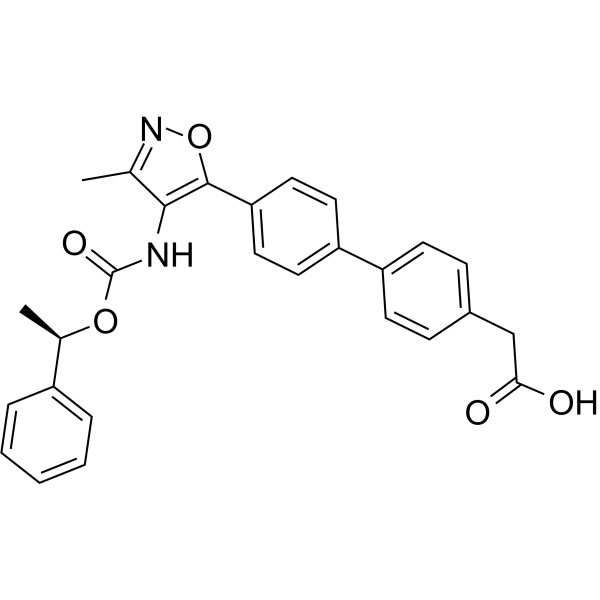
AM095 free acid
Based on 13 publication(s) in Google Scholar
AM095 (free acid) is a potent LPA1 receptor antagonist with IC50 values of 0.98 and 0.73 μM for recombinant human or mouse LPA1 respectively.
For research use only. We do not sell to patients.
- Purity : 99.02%
- CAS No.: 1228690-36-5
- Formula: C27H24N2O5
- Molecular Weight:456.49
-
Storage:Powder -20°C, 3 years , 4°C, 2 years ; In solvent -80°C, 2 years , -20°C, 1 year

To place orders, for customer services and technical support, please contact: MedChemExpress USA
Tel: 609-228-6898 E-mail: [email protected] [email protected]


-
 Biological Activity
-
Chemical Information
-
Solvent & Solubility
- Purity & Documentation
- References
-
 Help & FAQs


-
HY-107455
A-485p300/CBP Inhibitor -
HY-139664
GSK-3685032DNMT1 Inhibitor -
HY-141644
PY-60YAP Activator -
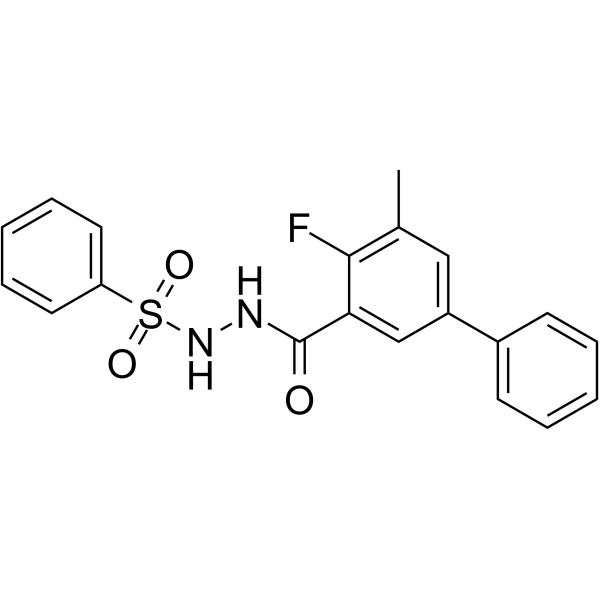
HY-102060
WM-8014MOZ Inhibitor -
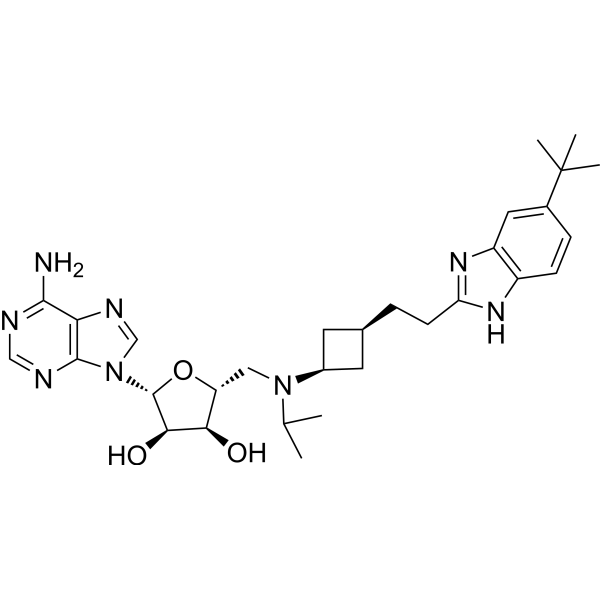
HY-15593
PinometostatDOT1L Inhibitor -
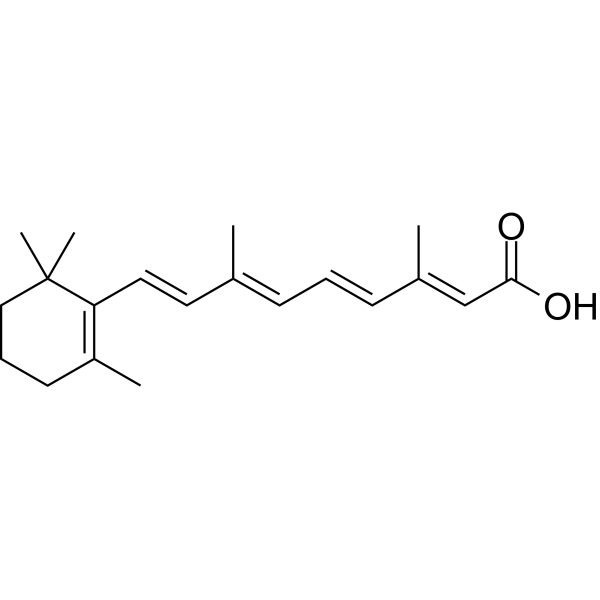
HY-14649
Retinoic acidRAR Agonist -
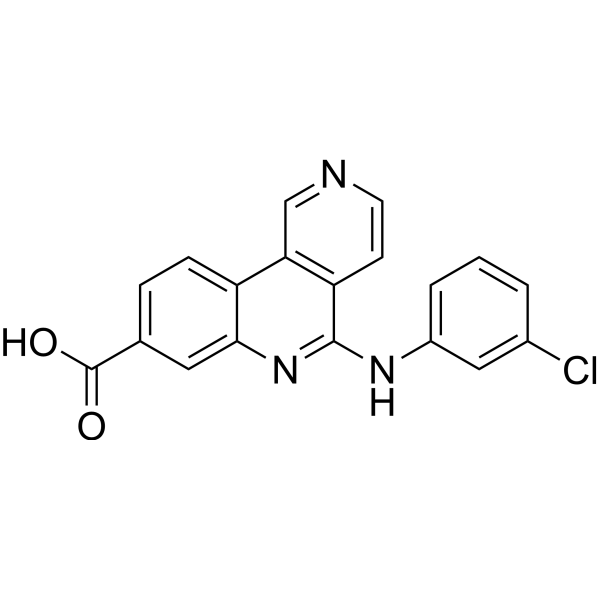
HY-50855
SilmitasertibCasein Kinase 2 Inhibitor -
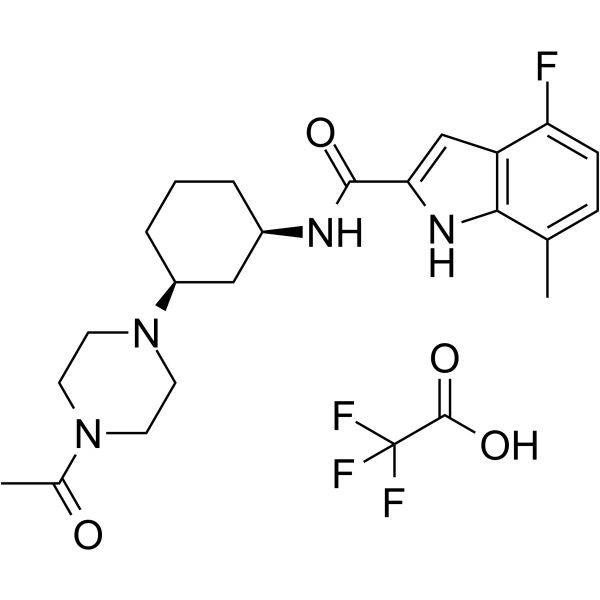
HY-136328
EZM0414 TFASETD2 Inhibitor -
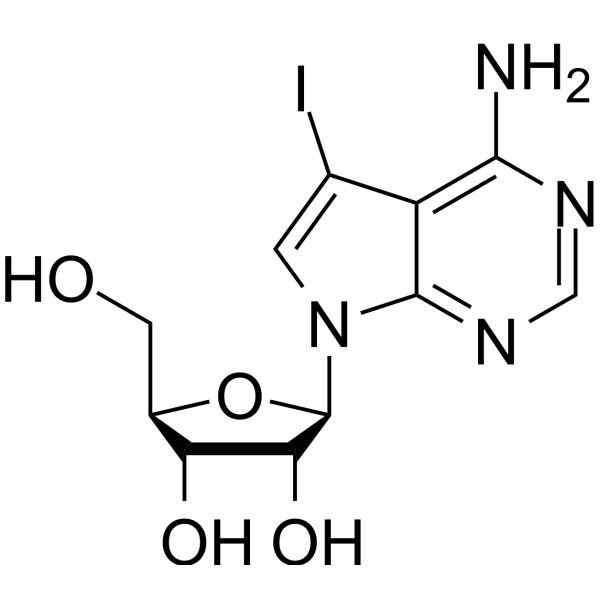
HY-15424
5-IodotubercidinAdenosine Kinase Inhibitor -
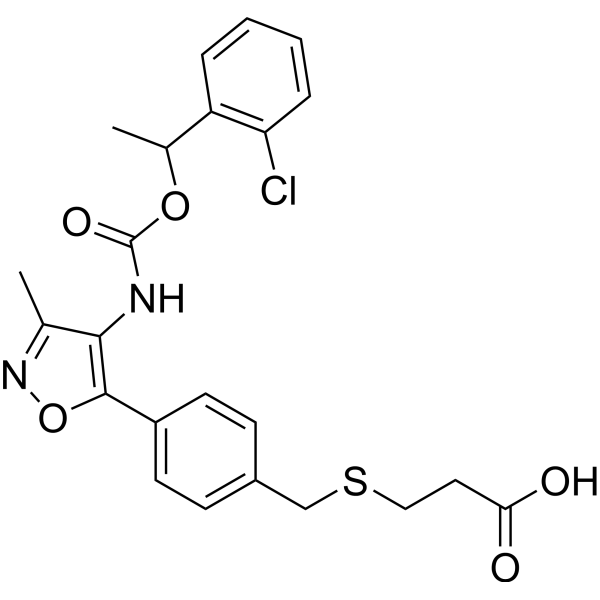
HY-13285
Ki16425LPA1/3 Antagonist -
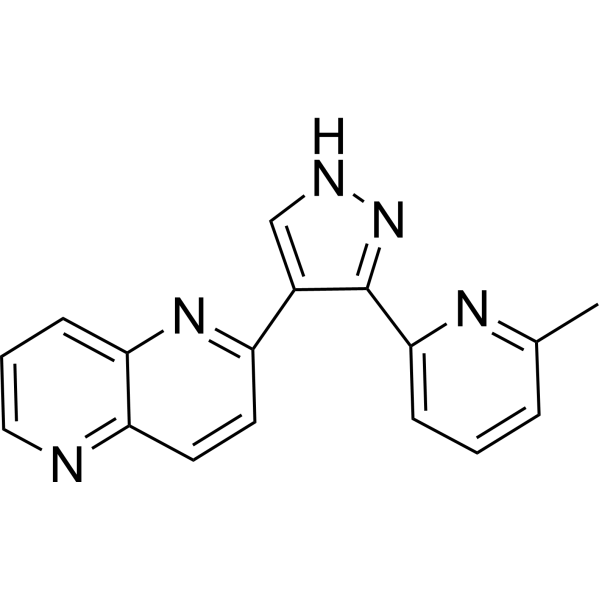
HY-13012
RepSoxTGFβR-1/ALK5 Inhibitor -
HY-50856
RuxolitinibJAK1/2 Inhibitor
Publications Citing Use of MedChemExpress (MCE) AM095 free acid
More- Cell Commun Signal. 2023 Sep 25;21(1):257. [Abstract]
- EBioMedicine. 2020 Feb:52:102652. [Abstract]
- Mol Metab. 2023 Jun:72:101713. [Abstract]
- Front Aging Neurosci. 2022 Nov 16:14:1004002. [Abstract]
- Mol Pharm. 2023 Nov 6;20(11):5500-5514. [Abstract]
- Biomol Ther (Seoul). 2017 Mar 1;25(2):194-201. [Abstract]
- Biomol Ther (Seoul). 2014 Feb;22(2):129-35. [Abstract]
- Placenta. 2025 Aug:168:219-231. [Abstract]
- Vet Microbiol. 2021 Oct:261:109177. [Abstract]
- Biochem Biophys Res Commun. 2015 May 29;461(2):378-82. [Abstract]
- The Ohio State University. 2025.
- Seoul National University. 2024 Feb.
- Research Square Preprint. 2021 Aug.
 Customer Validation & Images

-
Cell Proliferation/Viability Assay


Biological Activity
Description
IC50 & Target
IC50: 0.98 μM (human LPA1), 0.73 μM (mouse LPA1)
Cellular Effect
|
Cell Line

|
Type | Value | Description | References |
|---|---|---|---|---|
| CHO | IC50 |
25 nM
Compound: 30
|
Antagonist activity at human LPA1 receptor expressed in CHO cells assessed as inhibition of LPA-induced calcium mobilization preincubated for 30 mins followed by LPA induction by FLIPR Calcium 4 dye-based fluorometric analysis
Antagonist activity at human LPA1 receptor expressed in CHO cells assessed as inhibition of LPA-induced calcium mobilization preincubated for 30 mins followed by LPA induction by FLIPR Calcium 4 dye-based fluorometric analysis
|
10.1039/C4MD00333K |
| CHO | IC50 |
>8000 nM
Compound: 30
|
Antagonist activity at human LPA3 receptor expressed in CHO cells assessed as inhibition of LPA-induced calcium mobilization preincubated for 30 mins followed by LPA induction by FLIPR Calcium 4 dye-based fluorometric analysis
Antagonist activity at human LPA3 receptor expressed in CHO cells assessed as inhibition of LPA-induced calcium mobilization preincubated for 30 mins followed by LPA induction by FLIPR Calcium 4 dye-based fluorometric analysis
|
10.1039/C4MD00333K |
In Vitro
AM095 inhibits the LPA-induced calcium flux of CHO cells stably transfected with human or mouse LPA1. The IC50 for AM095 antagonism of LPA-induced calcium flux of human or mouse LPA1-transfected CHO cells is 0.025 and 0.023 μM, respectively[1]. AM095 reduces LPA-induced vasorelaxation by appr 90% at 10 μM as compared to vehicle control[2]. AM095 inhibits LPA-driven chemotaxis of CHO cells overexpressing mouse LPA1 (IC50=778 nM) and human A2058 melanoma cells (IC50=233 nM)[3].
MedChemExpress (MCE) has not independently confirmed the accuracy of these methods. They are for reference only.
In Vivo
MedChemExpress (MCE) has not independently confirmed the accuracy of these methods. They are for reference only.


Chemical Information
-
CAS No. 1228690-36-5
-
Appearance Solid
-
Molecular Weight 456.49
-
Formula C27H24N2O5
-
Color White to off-white
-
SMILES
O=C(O)CC1=CC=C(C2=CC=C(C3=C(NC(O[C@@H](C4=CC=CC=C4)C)=O)C(C)=NO3)C=C2)C=C1
-
Shipping
Room temperature in continental US; may vary elsewhere.
-
Storage
Powder -20°C 3 years 4°C 2 years In solvent -80°C 2 years -20°C 1 year


Publications (13)
-
Journal Impact Factor
-
Most Recent
-
Cell Commun Signal
LPA1-mediated inhibition of CXCR4 attenuates CXCL12-induced signaling and cell migration. [Abstract]2023 Sep 25;21(1):257. PMID: 37749552 -
EBioMedicine
A SNP of bacterial blc disturbs gut lysophospholipid homeostasis and induces inflammation through epithelial barrier disruption. [Abstract]2020 Feb:52:102652. PMID: 32058942 -
Mol Metab
Orexin induces the production of an endocannabinoid-derived lysophosphatidic acid eliciting hypothalamic synaptic loss in obesity. [Abstract]2023 Jun:72:101713. PMID: 36977433 -
Front Aging Neurosci
Positive association between plasmatic levels of orexin A and the endocannabinoid-derived 2-arachidonoyl lysophosphatidic acid in Alzheimer's disease. [Abstract]2022 Nov 16:14:1004002. PMID: 36466600 -
Mol Pharm
Integration of an LPAR1 Antagonist into Liposomes Enhances Their Internalization and Tumor Accumulation in an Animal Model of Human Metastatic Breast Cancer. [Abstract]2023 Nov 6;20(11):5500-5514. PMID: 37844135 -
Biomol Ther (Seoul)
Calcium Signaling of Lysophosphatidylethanolamine through LPA1 in Human SH-SY5Y Neuroblastoma Cells. [Abstract]2017 Mar 1;25(2):194-201. PMID: 27302965 -
Biomol Ther (Seoul)
2014 Feb;22(2):129-35. PMID: 24753818
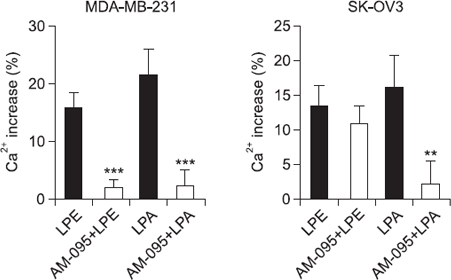
AM095 free acid purchased from MedChemExpress. Usage Cited in: Biomol Ther (Seoul). 2014 Feb;22(2):129-35. [Abstract]
Efficacies of LPE- and LPA-induced Ca2+ responses as compared to digitonin in MDA-MB-231 and SK-OV3 cells are shown as histograms.
-
Placenta
Upregulation of PLAAT3 in syncytiotrophoblast induces activation of neutrophils via LPA-LPAR5 axis in preeclampsia. [Abstract]2025 Aug:168:219-231. PMID: 40623340 -
Vet Microbiol
Lipid metabolism is a novel and practical source of potential targets for antiviral discovery against porcine parvovirus. [Abstract]2021 Oct:261:109177. PMID: 34391196 -
Biochem Biophys Res Commun
Lysophosphatidylethanolamine increases intracellular Ca(2+) through LPA(1) in PC-12 neuronal cells. [Abstract]2015 May 29;461(2):378-82. PMID: 25888792 -
-
-


Solvent & Solubility
In Vitro:
DMSO : 67.3 mg/mL (147.43 mM; Need ultrasonic and warming; Hygroscopic DMSO has a significant impact on the solubility of product, please use newly opened DMSO)
Please refer to the solubility information to select the appropriate solvent. Once prepared, please aliquot and store the solution to prevent product inactivation from repeated freeze-thaw cycles.
Storage method and period of stock solution: -80°C, 2 years; -20°C, 1 year. When stored at -80°C, please use it within 2 years. When stored at -20°C, please use it within 1 year.
Please refer to the solubility information to select the appropriate solvent. Once prepared, please aliquot and store the solution to prevent product inactivation from repeated freeze-thaw cycles.
Storage method and period of stock solution: -80°C, 2 years; -20°C, 1 year. When stored at -80°C, please use it within 2 years. When stored at -20°C, please use it within 1 year.
Concentration (start) × Volume (start) = Concentration (final) × Volume (final)
In Vivo:
Select the appropriate dissolution method based on your experimental animal and administration route.
- For the following dissolution methods, please ensure to first prepare a clear stock solution using an In Vitro approach and then sequentially add co-solvents:
- To ensure reliable experimental results, the clarified stock solution can be appropriately stored based on storage conditions. As for the working solution for In Vivo experiments, it is recommended to prepare freshly and use it on the same day.
- The percentages shown for the solvents indicate their volumetric ratio in the final prepared solution. If precipitation or phase separation occurs during preparation, heat and/or sonication can be used to aid dissolution.
In Vivo Dissolution Calculator
Please enter the basic information of animal experiments:
-
-
-
-
Recommended: Prepare an additional quantity of animals to account for potential losses during experiments.
Please enter your animal formula composition:
-
%DMSO +
Recommended: Keep the proportion of DMSO in working solution below 2% if your animal is weak.
-
%+
-
+%Tween-80 + +
-
%Saline +
The co-solvents required include: DMSO, . All of co-solvents are available by MedChemExpress (MCE). , Tween 80. All of co-solvents are available by MedChemExpress (MCE).
Working solution concentration: 0.22 mg/mL
Method for preparing stock solution: mg drug dissolved in μL DMSO. Stock solution concentration: mg/mL.
1. Take μL DMSO stock solution;
2. Add μL .
μL , mix evenly;
3. Then add μL Tween 80, mix evenly;
4. Then add μL
Please ensure that the stock solution in the first step is dissolved to a clear state, and add co-solvents in sequence. You can use ultrasonic heating (ultrasonic cleaner, recommended frequency 20-40 kHz), vortexing, etc. to assist dissolution.


Purity & Documentation
-
Data Sheet (283 KB)
-
SDS (393 KB)
- English - EN (393 KB)
- Français - FR (393 KB)
- Deutsch - DE (393 KB)
- Norwegian - NO (393 KB)
- Español - ES (393 KB)
- Swedish - SV (393 KB)
- Italian - IT (393 KB)
- Korean - KR (393 KB)
- Portuguese - PT (393 KB)
-
Handling Instructions (2659 KB)
References
[1]. Castelino FV, et al. Amelioration of dermal fibrosis by genetic deletion or pharmacologic antagonism of lysophosphatidic acid receptor 1 in a mouse model of scleroderma. Arthritis Rheum. 2011 May;63(5):1405-15 [Content Brief]
[2]. Ruisanchez E, et al. Lysophosphatidic acid induces vasodilation mediated by LPA1 receptors, phospholipase C, and endothelial nitric oxide synthase. FASEB J. 2014 Feb;28(2):880-90 [Content Brief]
[3]. Swaney, J. S., et al. Pharmacokinetic and pharmacodynamic characterization of an oral lysophosphatidic acid type 1 receptor-selective antagonist. Journal of Pharmacology and Experimental Therapeutics (2011), 336(3), 693-700. [Content Brief]


Complete Stock Solution Preparation Table
Please refer to the solubility information to select the appropriate solvent. Once prepared, please aliquot and store the solution to prevent product inactivation from repeated freeze-thaw cycles.
Storage method and period of stock solution: -80°C, 2 years; -20°C, 1 year. When stored at -80°C, please use it within 2 years. When stored at -20°C, please use it within 1 year.
| Optional Solvent | Concentration Solvent Mass | 1 mg | 5 mg | 10 mg | 25 mg |
|---|---|---|---|---|---|
| DMSO | 1 mM | 2.1906 mL | 10.9531 mL | 21.9063 mL | 54.7657 mL |
| 5 mM | 0.4381 mL | 2.1906 mL | 4.3813 mL | 10.9531 mL | |
| 10 mM | 0.2191 mL | 1.0953 mL | 2.1906 mL | 5.4766 mL | |
| 15 mM | 0.1460 mL | 0.7302 mL | 1.4604 mL | 3.6510 mL | |
| 20 mM | 0.1095 mL | 0.5477 mL | 1.0953 mL | 2.7383 mL | |
| 25 mM | 0.0876 mL | 0.4381 mL | 0.8763 mL | 2.1906 mL | |
| 30 mM | 0.0730 mL | 0.3651 mL | 0.7302 mL | 1.8255 mL | |
| 40 mM | 0.0548 mL | 0.2738 mL | 0.5477 mL | 1.3691 mL | |
| 50 mM | 0.0438 mL | 0.2191 mL | 0.4381 mL | 1.0953 mL | |
| 60 mM | 0.0365 mL | 0.1826 mL | 0.3651 mL | 0.9128 mL | |
| 80 mM | 0.0274 mL | 0.1369 mL | 0.2738 mL | 0.6846 mL | |
| 100 mM | 0.0219 mL | 0.1095 mL | 0.2191 mL | 0.5477 mL |


AM095 free acid Related Classifications
HY-16040 Related Classifications
 Powered by Bioz