





1. Search Result
Search Result
Results for "

immunogenicity

" in MedChemExpress (MCE) Product Catalog:

184

Inhibitors & Agonists

3

Screening Libraries

1

Fluorescent Dye

67

Biochemical Assay Reagents

35

Peptides

5

Inhibitory Antibodies

6

Natural
Products

15

Click Chemistry

20

Oligonucleotides

Cat. No. Product Name Target Research Areas Chemical Structure
  • HY-Y0873
    PEG300
    Maximum Cited Publications
    178 Publications Verification

    Polyethylene glycol 300

    Environmental Pollutants Biochemical Assay Reagents Others
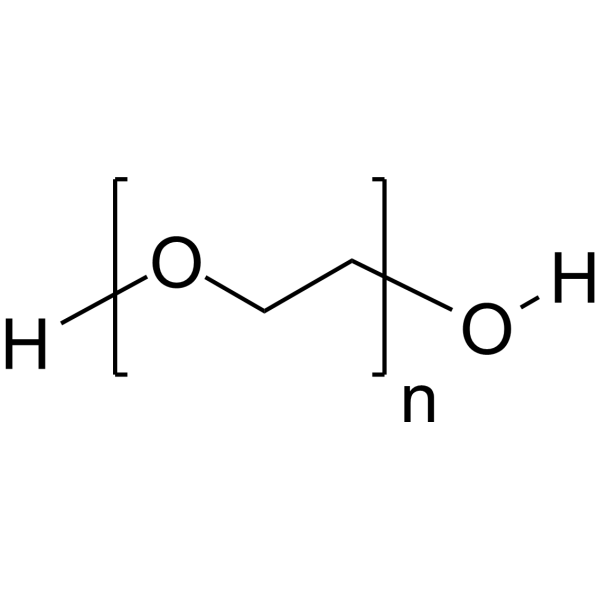
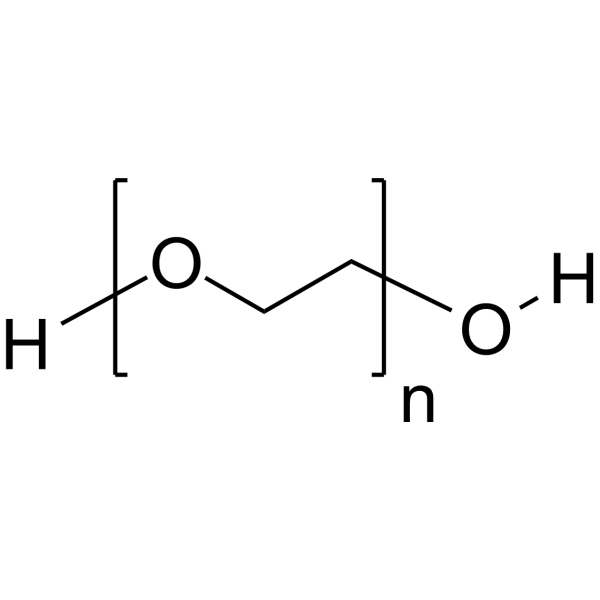
    PEG300 (Polyethylene glycol 300), a neutral polymer of molecular weight 300, is a water-soluble, low immunogenic and biocompatible polymer formed by repeating units of ethylene glycol .
    PEG300
  • HY-109506
    DPPC
    5+ Cited Publications

    129Y83

    Liposome Endogenous Metabolite Others
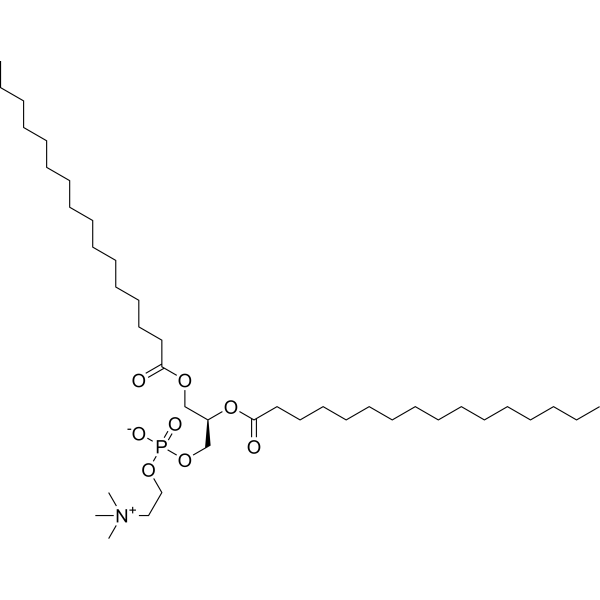
    DPPC (129Y83) is a phosphoglyceride that can be used to prepare lipid monolayers, bilayers, and liposomes. DPPC is the main lipid component of pulmonary surfactant. Dppc-liposome can be effectively used as a delivery vector to induce an immune response against GSL antigen in mice .
    DPPC
  • HY-B1521
    Aluminum Hydroxide
    5+ Cited Publications

    Environmental Pollutants NOD-like Receptor (NLR) Cardiovascular Disease Inflammation/Immunology
    Aluminum Hydroxide is an orally active main form of aluminum used as adjuvant. Aluminum hydroxide-based adjuvant researches include the repository effect, pro-phagocytic effect, and activation of the pro-inflammatory NLRP3 pathway. Aluminum Hydroxide also acts as adjuvant to compensate low inherent immunogenicity of subunit vaccines .
    Aluminum Hydroxide
  • HY-P3719
    MOG(35-55) amide, mouse, rat
    1 Publications Verification

    CCR Inflammation/Immunology
    MOG (35-55) amide, mouse, rat the terminal amidation form of the 35-55 fragment of the myelin oligodendrocyte glycoprotein (MOG) immunogenic peptide (MOG (35-55) (HY-P1240)). MOG(35-55) amide, mouse, rat can be used for experimental autoimmune encephalomyelitis (EAE) modeling .
    MOG(35-55) amide, mouse, rat
  • HY-115670
    GW280264X
    5+ Cited Publications

    MMP Inflammation/Immunology Cancer
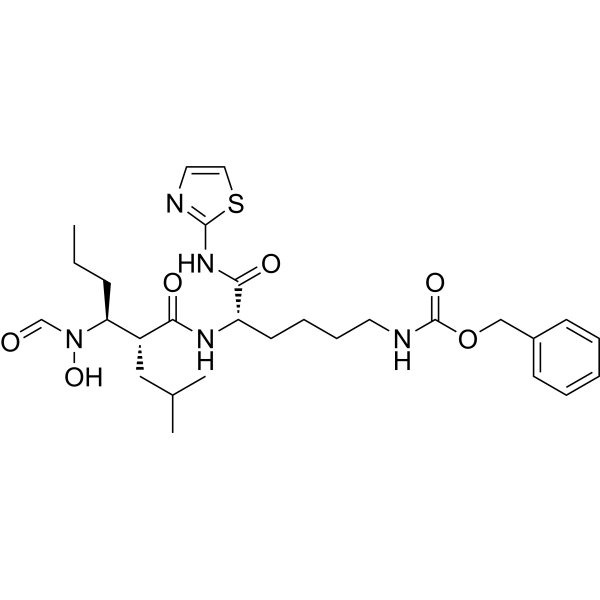
    GW280264X is the mixed ADAM10/TACE (ADAM17) metalloproteinases inhibitor. GW280264X potently blocks TACE (ADAM17) and ADAM10 with IC50s of 8.0 nM and 11.5 nM, respectively . ADAM10 and 17 modulate the immunogenicity of glioblastoma-initiating cells .
    GW280264X
  • HY-Y0873K

    Polyethylene glycol 200

    Environmental Pollutants Biochemical Assay Reagents Others
    PEG200 (Polyethylene glycol 200), a neutral polymer of molecular weight 200, is a water-soluble, low immunogenic and biocompatible polymer formed by repeating units of ethylene glycol .
    PEG200
  • HY-Y0498

    Environmental Pollutants Biochemical Assay Reagents Others
    Aluminum oxide is a nanoparticulate carrier and adjuvant.Aluminum oxide elicits antibody production against non-immunogenic haptens when coupled to them in mice and rabbits. Aluminum oxide functions in eliciting antibodies from non-immunogenic haptens .
    Aluminum oxide
  • HY-112582A

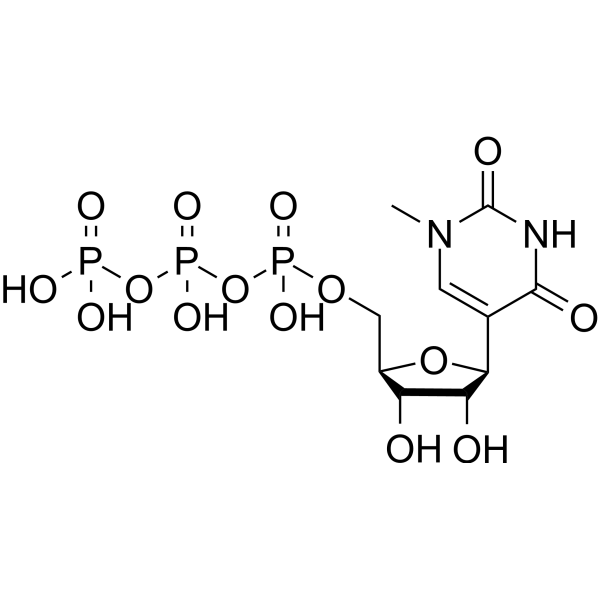
    1-Methylpseudouridine-5′-triphosphate

    Nucleoside Antimetabolite/Analog DNA/RNA Synthesis Cardiovascular Disease Others
    N1-Methylpseudouridine-5′-triphosphate (1-Methylpseudouridine-5′-triphosphate) is a nucleobase-modified nucleotide, used for synthesizing mRNA with reduced immunogenicity and improved stability.
    N1-Methylpseudouridine-5′-triphosphate solution (100 mM)
  • HY-101925
    CM-272
    3 Publications Verification

    Histone Methyltransferase DNA Methyltransferase Apoptosis Cancer
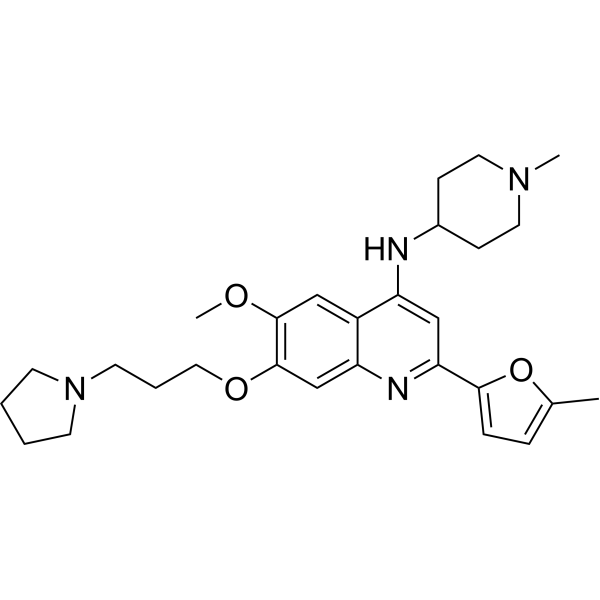
    CM-272 is a first-in-class, potent, selective, substrate-competitive and reversible dual G9a/DNA methyltransferases (DNMTs) inhibitor with antitumor activities. CM-272 inhibits G9a, DNMT1, DNMT3A, DNMT3B and GLP with IC50s of 8 nM, 382 nM, 85 nM, 1200 nM and 2 nM, respectively. CM-272 inhibits cell proliferation and promotes apoptosis, inducing IFN-stimulated genes and immunogenic cell death .
    CM-272
  • HY-163099

    Drug-Linker Conjugates for ADC Topoisomerase Apoptosis Cancer
    P5 (PEG24)-VC-PAB-Exatecan is a TOP1 inhibitor payload with antibody-conjugation-dependent activity. Conjugation of P5 (PEG24)-VC-PAB-Exatecan with Trastuzumab (HY-P9907) generates a DAR8 antibody-drug conjugate (ADCs) with antibody-like pharmacokinetic properties. P5 (PEG24)-VC-PAB-Exatecan induces S-phase and G2-M-phase cell cycle arrest, DNA damage and apoptosis in target-positive tumor cells, and releases damage-associated molecular patterns (DAMP) related to immunogenic cell death (ICD). The ADCs prepared from it exert bystander killing effects on non-target tumor cells. ADCs based on P5 (PEG24)-VC-PAB-Exatecan exhibit linker stability in vitro and in vivo, show in vivo efficacy, and can be used in research related to HER2-positive cancers .
    P5(PEG24)-VC-PAB-Exatecan
  • HY-160429

    Drug Derivative Others
    PSAR18-COOH is a derivative of PSAR extracted from patent WO2009064913A1. PSAR is a highly hydrophilic, biodegradable, non-immunogenic and water-soluble polymer that has been employed in several delivery systems for drugs or diagnostics.
    PSAR18-COOH
  • HY-P6312

    MHC Inflammation/Immunology
    ESAT6 Epitope is a ESAT6 CD4 + T cell epitope. ESAT6 Epitope binds to MHC class I molecules with an IC50 value of approximately 180 nM. ESAT6 Epitope has weak immunogenicity. ESAT6 Epitope can be used in studies related to pulmonary tuberculosis .
    ESAT6 Epitope
  • HY-141514
    MSA-2 dimer
    1 Publications Verification

    STING Inflammation/Immunology Cancer
    MSA-2 dimer is a selective, orally active non-nucleotide STING agonist (Kd=145 μM) with long-term antitumor and immunogenic activity. MSA-2 dimer is bound to STING as a non-covalent dimer exhibiting higher permeability than cyclic dinucleotide .
    MSA-2 dimer
  • HY-N15936

    Toll-like Receptor (TLR) Interleukin Related Inflammation/Immunology
    a15:0-i15:0 PE is a diacyl phosphatidylethanolamine with two branched chains. a15:0-i15:0 PE is a non-canonical TLR2-TLR1 heterodimer agonist and has immunogenic activity. a15:0-i15:0 PE activates T cells and DC signaling and shows anti-inflammatory activity. a15:0-i15:0 PE induces TNFα and IL-6 production. a15:0-i15:0 PE is a the major component (approximately 50%) of A. muciniphila’s lipid membrane .
    a15:0-i15:0 PE
  • HY-W782032

    3D-MPLA-5

    Toll-like Receptor (TLR) Others Inflammation/Immunology
    3D-Monophosphoryl Lipid A-5 (3D-MPLA-5) is a TLR agonist that can be used as an adjuvant for vaccines to enhance their immunogenicity .
    3D-Monophosphoryl Lipid A-5
  • HY-155909A

    mPEG1000-SC; mPEG1000-Succinimidyl ester

    Biochemical Assay Reagents Others
    m-PEG1000-NHS ester can be used to modify active molecules and improve their antigenicity, immunogenicity, and help prepare injection preparations. The modification of serine protease lumbrokinase (LK) by m-PEG-NHS ester does not affect its strong fibrinolytic and thrombolytic activities, and has good application prospects.
    m-PEG1000-NHS ester
  • HY-159700

    Liposome Infection
    AA3-DLin is an ionizable cationic lipid with a pKa value of 5.8. AA3-DLin is used to delivery mRNA combined with lipid nanoparticles (LNPs). AA3-DLin LNP COVID-19 vaccines encapsulating SARS CoV-2 spike mRNAs successfully induces strong immunogenicity in a BALB/c mouse model .
    AA3-DLin
  • HY-P9932

    ETI 204

    Bacterial Infection Cardiovascular Disease
    Obiltoxaximab (ETI 204) is the second and potent anti-protective antigen (PA) monoclonal antibody with immunogenicity. Obiltoxaximab plays a central role in anthrax toxin assembly and target cell intoxication, promoting survival, and inhibiting bacterial spread to the periphery in animal models. Obiltoxaximab can be used in the research of inhalational anthrax, bacteremia and toxemia .
    Obiltoxaximab
  • HY-16129

    Calmodulin Checkpoint Kinase (Chk) MAPKAPK2 (MK2) MAP3K Cancer
    CBP-501, a cell-permeable calmodulin-binding peptide and a G2-abrogating drug candidate, inhibits the activity of multiple Ser 216-specific kinases, such as MAPKAP-K2, C-Tak1, CHK1 and CHK2, with IC50 values of 0.9 μM, 1.4 μM 3.4 μM and 6.5 μM, respectively. CBP-501 is used for various types of cancer .
    CBP-501
  • HY-153377

    Liposome SARS-CoV Bacterial Infection Inflammation/Immunology
    Lipid 14 is an ionizable amino lipid. Lipid 14 delivers mRNA into target cells, significantly enhancing the in vivo expression efficiency and immunogenicity of mRNA. Lipid 14 can be used to synthesize lipid nanoparticles (LNPs). Lipid 14 can be used for studies of SARS-CoV-2 and Yersinia pestis .
    Lipid 14
  • HY-17663

    PARP STAT STING IFNAR Cancer
    KMR-206 is a PARP7 inhibitor with an IC50 of 13.7 nM. KMR-206 relieves AHR-mediated transcriptional repression and enhances CYP1A1 expression in the presence of TCDD. KMR-206 induces the STING-dependent IFN-β signaling pathway and increases the levels of STAT1, pSTAT1 and nuclear PARP7 in cancer cells. KMR-206 reduces the viability of lung adenocarcinoma cells, enhances radiation-induced immunogenic signals, and induces the production of immunogenic signals in glioblastoma cancer stem cells. KMR-206 destabilizes FRA1 to increase IRF1 levels and promotes the IRF3-CBP/p300 interaction. KMR-206 can be used in studies related to lung adenocarcinoma and glioblastoma .
    KMR-206
  • HY-157745

    mPEG40000-SC; mPEG40000-Succinimidyl ester

    Biochemical Assay Reagents Others
    m-PEG-NHS ester (mPEG-SC; mPEG-Succinimidyl ester) (MW 40000) is a polyethylene glycol derivative. m-PEG-NHS ester serves as a modifying agent that reacts with free amino groups on the surface of protein or polypeptide molecules to form stable amide bonds, thereby covalently linking PEG chains to biomacromolecules, improving their antigenicity and immunogenicity, and facilitating the preparation of injectable formulations .
    m-PEG40000-NHS ester
  • HY-P1778A

    HPV Infection
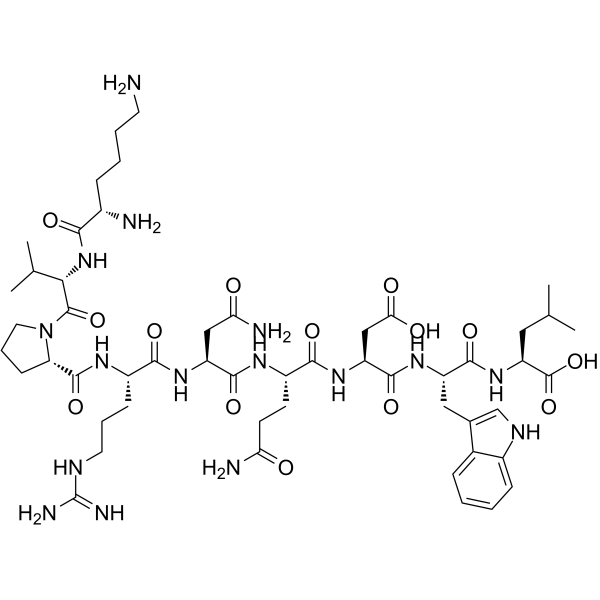
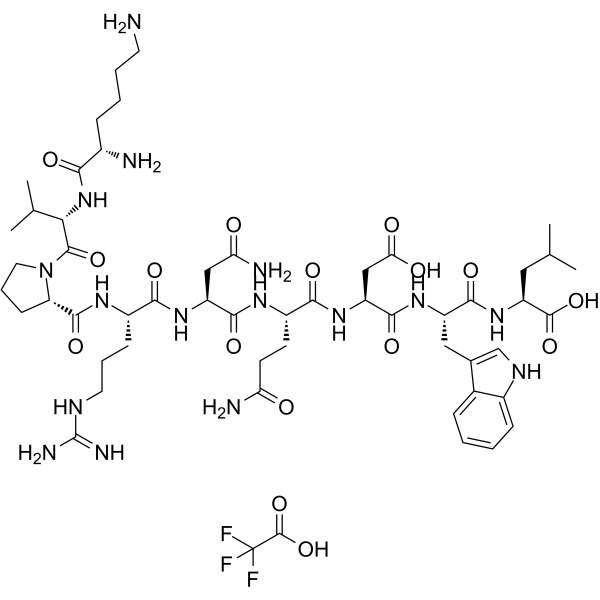
    HPV16 E7 (86-93) TFA is a human leukocyte antigen (HLA)-A2.1 restricted HPV16 E7-derived peptide. HPV16 E7 (86-93) TFA is immunogenic in cervical carcinomas .
    HPV16 E7 (86-93) TFA
  • HY-158189

    Photosensitizer Reactive Oxygen Species (ROS) Apoptosis Neurological Disease Cancer
    TPP-Ce6 is a mitochondria-targeted photosensitizer formed by the ester bond conjugation of chlorophyll e6 (Ce6) with triphenylphosphine (TPP). Under light irradiation or ultrasound exposure, TPP-Ce6 generates reactive oxygen species, induces cell apoptosis, and triggers immunogenic cell death. TPP-Ce6 can serve as a component of carrier-free co-delivery systems, undergo enzyme-induced self-assembly within tumors, and modulate tumor hypoxia. TPP-Ce6 is applicable to research on breast cancer and glioblastoma .
    TPP-Ce6
  • HY-155909C

    mPEG350-SC; mPEG350-Succinimidyl ester

    Biochemical Assay Reagents Others
    m-PEG350-NHS ester can be used to modify active molecules and improve their antigenicity, immunogenicity, and help prepare injection preparations. The modification of serine protease lumbrokinase (LK) by m-PEG-NHS ester does not affect its strong fibrinolytic and thrombolytic activities, and has good application prospects.
    m-PEG350-NHS ester
  • HY-W587780

    SMX-NO

    Biochemical Assay Reagents Inflammation/Immunology
    Sulfamethoxazole-NO (SMX-NO) is the major immunogen in sulfonamide allergy, producing modest ascorbic acid depletion and hemoglobin adduct formation. Sulfamethoxazole-NO haptens tissue proteins and is immunogenic in rodents .
    Sulfamethoxazole-NO
  • HY-W087907

    Drug Intermediate Inflammation/Immunology
    Acetylsalicylsalicylic acid exhibits immunogenicity that induces contact sensitivity and causes skin erythema and slight edema in guinea pigs .
    Acetylsalicylsalicylic acid
  • HY-109506R

    129Y83 (Standard)

    Liposome Reference Standards Endogenous Metabolite Others
    DPPC (Standard) is the analytical standard of DPPC. This product is intended for research and analytical applications. DPPC (129Y83) is a phosphoglyceride that can be used to prepare lipid monolayers, bilayers, and liposomes. DPPC is the main lipid component of pulmonary surfactant. Dppc-liposome can be effectively used as a delivery vector to induce an immune response against GSL antigen in mice .
    DPPC (Standard)
  • HY-170884

    ER-phagy Cancer
    ICD inducer-1 (Compound Re1) is an effective immunogenic cell death (ICD) inducer that can target the endoplasmic reticulum (ER) and block ER-phagy at the late stages. ICD inducer-1 is promising for research of cancers .
    ICD inducer-1
  • HY-107634

    Avridine

    IFNAR Infection Inflammation/Immunology
    CP-20961 is an interferon inducer. CP-20961 is a potent synthetic non-immunogenic adjuvant that induces arthritis .
    CP-20961
  • HY-155909

    mPEG3400-SC; mPEG3400-Succinimidyl ester

    Biochemical Assay Reagents Others
    m-PEG3400-NHS ester can be used to modify active molecules and improve their antigenicity, immunogenicity, and help prepare injection preparations. The modification of serine protease lumbrokinase (LK) by m-PEG-NHS ester does not affect its strong fibrinolytic and thrombolytic activities, and has good application prospects.
    m-PEG3400-NHS ester
  • HY-149631

    HDAC Cancer
    HFY-4A is a HDAC inhibitor. HFY-4A inhibits breast cancer cell proliferation, migration, and invasion, and induces cell apoptosis. HFY-4A induces immunogenic cell death (ICD). HFY-4A inhibits tumor growth in breast cancer xenograft mouse models .
    HFY-4A
  • HY-159671

    3D-MPL (14)

    Toll-like Receptor (TLR) Inflammation/Immunology
    3D-Monophosphoryl Lipid (14) (3D-Monophosphoryl Lipid (14)) is a TLR4 agonist that can be used as a vaccine adjuvant to enhance the immunogenicity of vaccines .
    3D-Monophosphoryl Lipid (14)
  • HY-P1778

    HPV Infection
    HPV16 E7 (86-93) is a human leukocyte antigen (HLA)-A2.1 restricted HPV16 E7-derived peptide. HPV16 E7 (86-93) is immunogenic in cervical carcinomas .
    HPV16 E7 (86-93)
  • HY-P1610

    PD-1/PD-L1 Cancer
    Asudemotide (S-588410) is a peptide of human DEP domain-containing protein 1A. Asudemotide is an immunostimulant. Asudemotide has a sequence of H-Glu-Tyr-Tyr-Glu-Leu-Phe-Val-Asn-Ile-OH. Asudemotide induces a tumor immune response in esophageal cancer. .
    Asudemotide
  • HY-177414

    Antibody-Drug Conjugates (ADCs) EGFR Inflammation/Immunology Cancer
    BB-1701 is an anti-HER2 antibody-drug conjugate (ADC). BB-1701 is composed of a humanized anti-HER2 antibody (Trastuzumab) (HY-P9907), a linker (Mal-PEG2-VCP), a microtubule inhibitor (Eribulin) (HY-13442), and the drug-linker conjugate for ADC is Mal-PEG2-VCP-Eribulin (HY-128870). BB-1701 has a potent cytotoxicity and bystander effects on tumors with heterogeneous target expression. BB-1701 significantly induces immunogenic cell death and the activation of the immune .
    BB-1701
  • HY-159670B

    MPLA-12 triethylamine

    Toll-like Receptor (TLR) Inflammation/Immunology
    Monophosphoryl Lipid A-12 (triethylamine) is a toll-like receptor 4 agonist. Monophosphoryl Lipid A-12 (triethylamine) can be used for the research of immunization and vaccine .
    Monophosphoryl Lipid A-12 triethylamine
  • HY-112582B

    1-Methylpseudouridine-5′-triphosphate tetralithium

    DNA/RNA Synthesis Nucleoside Antimetabolite/Analog Others
    N1-Methylpseudouridine-5′-triphosphate (1-Methylpseudouridine-5′-triphosphate) tetralithium is a nucleobase-modified nucleotide, used for synthesizing mRNA with reduced immunogenicity and improved stability .
    N1-Methylpseudouridine-5′-triphosphate tetralithium
  • HY-16129A

    Calmodulin MAP3K MAPKAPK2 (MK2) Checkpoint Kinase (Chk) Cancer
    CBP-501 acetate, a cell-permeable calmodulin-binding peptide and a G2-abrogating drug candidate, inhibits the activity of multiple Ser 216-specific kinases, such as MAPKAP-K2, C-Tak1, CHK1 and CHK2, with IC50 values of 0.9 μM, 1.4 μM 3.4 μM and 6.5 μM, respectively. CBP-501 acetate is used for various types of cancer .
    CBP-501 acetate
  • HY-W1049105

    Biochemical Assay Reagents Others
    mPEG2000-Alkyne is a PEG derivative. The alkynyl group can react with azide in aqueous solution under the catalysis of monovalent copper. Polyethylene glycol derivatives can increase the solubility and stability of drugs, reduce the immunogenicity of peptides, and have good biocompatibility .
    mPEG2000-Alkyne
  • HY-155909B

    mPEG550-SC; mPEG550-Succinimidyl ester

    Biochemical Assay Reagents Others
    m-PEG550-NHS ester can be used to modify active molecules and improve their antigenicity, immunogenicity, and help prepare injection preparations. The modification of serine protease lumbrokinase (LK) by m-PEG-NHS ester does not affect its strong fibrinolytic and thrombolytic activities, and has good application prospects.
    m-PEG550-NHS ester
  • HY-161693

    G-quadruplex DNA/RNA Synthesis Apoptosis Cancer
    Telomeric G4s ligand 1 is a telomeric G-quadruplex ligand that stabilizes telomeric G4 and induces R-loop formation, leading to DNA damage responses. Telomeric G4s ligand 1 induces apoptosis and evokes immunogenic cell death (ICD) in tumor cells .
    Telomeric G4s ligand 1
  • HY-174359C

    Biochemical Assay Reagents Others
    Alkyne-PEG5000-NH2 is an alkyne-functionalized bifunctional PEG derivative that can be used to modify proteins, peptides, and other materials. The alkyne group reacts with azides in aqueous solution in a copper-catalyzed manner. PEGylation can increase solubility and stability and reduce the immunogenicity of peptides and proteins .
    Alkyne-PEG5000-NH2
  • HY-W591465

    4-Arm-PEG2000-Mal

    Biochemical Assay Reagents Others
    4-Arm-PEG2000-Maleimide (4-Arm-PEG2000-Mal) is a PEG derivative modified with Maleimide (HY-W007324), which forms a stable thioether bond with sulfhydryl (-SH). PEG modification can improve solubility and stability and reduce the immunogenicity of proteins and peptides .
    4-Arm-PEG2000-Maleimide
  • HY-174793

    mRNA Others
    The Cas9-T2A-GFP mRNA encodes a Cas9 nuclease gene with two nuclear localization signals (NLS) and a green fluorescent protein (GFP), which could be used in genome engineering experiments. The incorporation of N1-Methylpseudo-UTP can reduce the immunogenicity of the resulting mRNA.
    Cas9-T2A-GFP mRNA (N1-Methylpseudo-UTP)
  • HY-157174

    Others Inflammation/Immunology
    Mannosamine-desthiobiotin adduct (compound MDTBA) is a carrier immunogenicity-reducing hapten that reduces the immunogenicity of protein carriers upon conjugation to available free amines on the carrier protein surface. Conjugation of Mannosamine-desthiobiotin adduct to hsIgG significantly (>1-fold) reduced the immunogenicity of hsIgG. Mannosamine-desthiobiotin adduct can be used in antigen design research .
    Mannosamine–desthiobiotin adduct
  • HY-W782032A

    3D-MPLA-5 free acid

    Toll-like Receptor (TLR) Inflammation/Immunology
    3D-Monophosphoryl Lipid A-5 (free acid) is a TLR agonist that can be used as a vaccine adjuvant to enhance the immunogenicity of vaccines .
    3D-Monophosphoryl Lipid A-5 free acid
  • HY-159671B

    3D-MPL (14) ammonium

    Toll-like Receptor (TLR) Inflammation/Immunology
    3D-Monophosphoryl Lipid (14) (3D-MPL (14)) ammonium is a TLR agonist that can be used as a vaccine adjuvant to enhance the immunogenicity of vaccines .
    3D-Monophosphoryl Lipid (14) ammonium
  • HY-159671A

    3D-MPL (14) triethylamine

    Toll-like Receptor (TLR) Inflammation/Immunology
    3D-Monophosphoryl Lipid (14) (3D-Monophosphoryl Lipid (14)) triethylamine is a TLR4 agonist that can be used as a vaccine adjuvant to enhance the immunogenicity of vaccines .
    3D-Monophosphoryl Lipid (14) triethylamine
  • HY-159672B

    3D-MPL (12,16) triethylamine

    Toll-like Receptor (TLR) Inflammation/Immunology
    3D-Monophosphoryl Lipid (12,16) (3D-MPL (12,16)) triethylamine is a TLR4 agonist that can be used as a vaccine adjuvant to enhance the immunogenicity of vaccines .
    3D-Monophosphoryl Lipid (12,16) triethylamine

Inquiry Online

Your information is safe with us. * Required Fields.

Salutation


Country or Region *

Applicant Name *


Organization Name *

Department *


Email Address *


Product Name *

Cat. No.


Requested quantity *

Phone Number *


Remarks

Inquiry Online

Inquiry Information

Product Name:
Cat. No.:
Quantity:
MCE Japan Authorized Agent:

