Search Result
Results for "
inactive control
" in MedChemExpress (MCE) Product Catalog:
4
Biochemical Assay Reagents
| Cat. No. |
Product Name |
Target |
Research Areas |
Chemical Structure |
-
- HY-112306
-
|
DCC-2618
|
c-Kit
PDGFR
FLT3
VEGFR
Apoptosis
|
Cancer
|
|
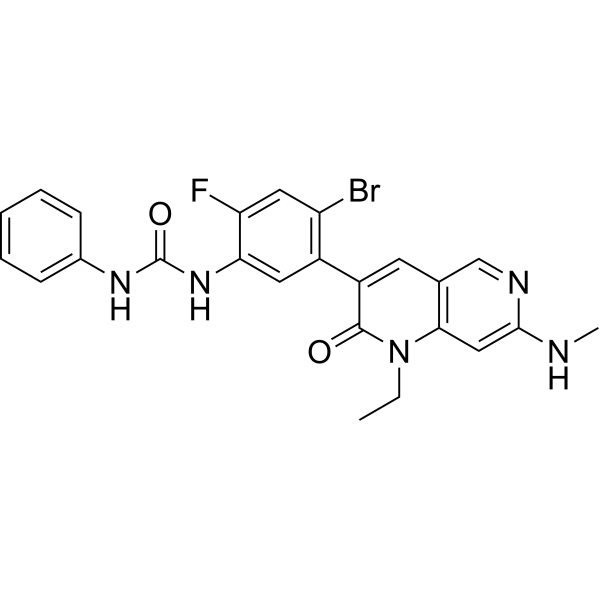
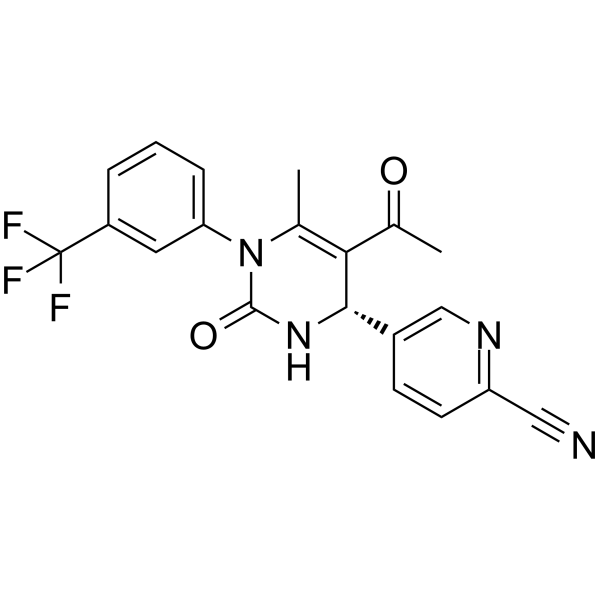
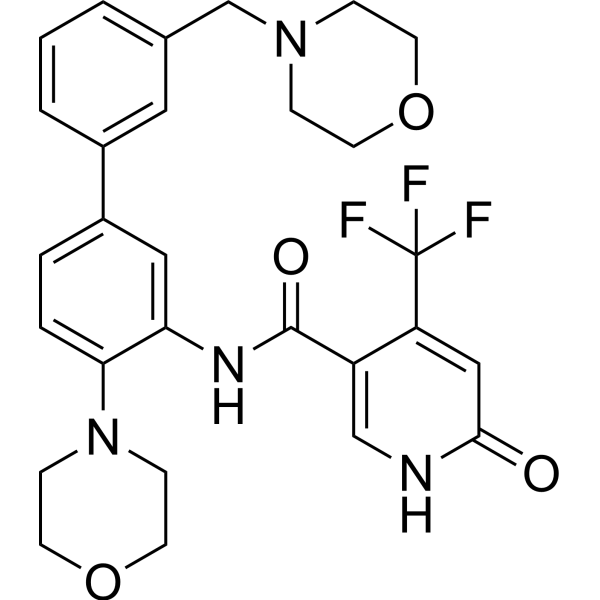
Ripretinib (DCC-2618) is an orally bioavailable, selective KIT and PDGFRA switch-control inhibitor. Ripretinib (DCC-2618) targets and binds to both wild-type and mutant forms of KIT and PDGFRA specifically at their switch pocket binding sites, thereby preventing the switch from inactive to active conformations of these kinases and inactivating their wild-type and mutant forms. Ripretinib (DCC-2618) also inhibits multiple other kinase targets, such as FLT3 and KDR (or VEGFR-2) . DCC-2618 exerts antineoplastic effect and induces apoptosis .
|
-
-
- HY-135416
-
|
|
Endogenous Metabolite
|
Infection
|
|
Streptolysin O, a group A streptococcal toxin, is a well-characterized oxygen-labile prototype of a cholesterol-binding bacterial exotoxin. Streptolysin O causes both lysis of cells and cardiotoxicity. Streptolysin O is widely used for the controlled permeabilization of cell membranes. Streptolysin O exists in two forms, a reduced active state and an oxidized reversibly inactive state .
|
-
-
- HY-15517
-
KN-92
Maximum Cited Publications
9 Publications Verification
|
CaMK
|
Cancer
|
|
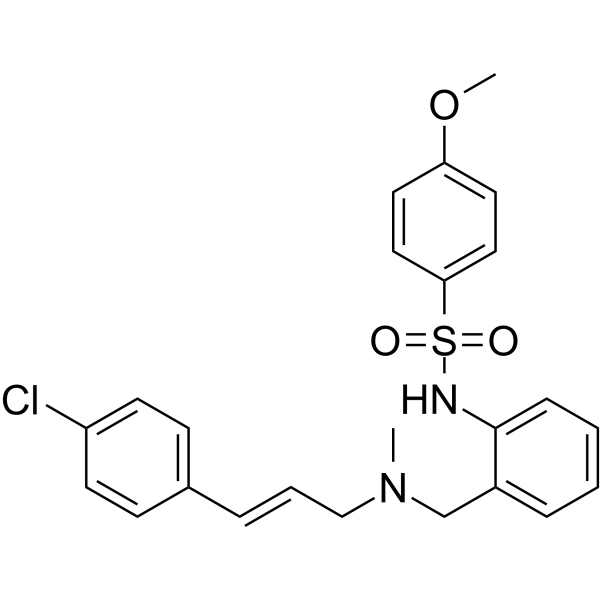
KN-92 is an inactive derivative of KN-93, without CaM kinase inhibitory activity. KN-92 is intended to be used as a control compound in studies designed to elucidate the antagonist activities of KN-93. KN-93 is a cell-permeable, reversible and competitive CaMKII inhibitor .
|
-
-
- HY-W007432
-
|
|
Biochemical Assay Reagents
|
Others
|
|
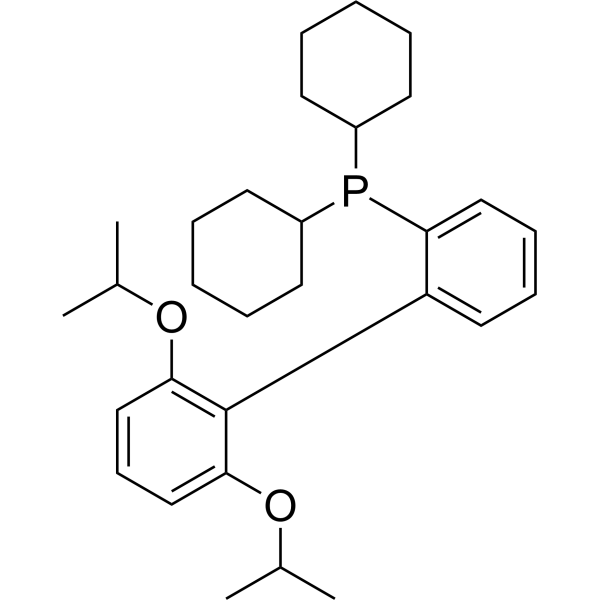
RuPhos is a Buchwald ligand. In aqueous Suzuki-Miyaura catalytic transfer polymerization, RuPhos forms inactive Pd (RuPhos)2 with palladium and inhibits diffusion to improve polymerization controllability. RuPhos additional addition in anhydrous Kumada polymerization exacerbates catalyst deactivation and chain transfer, significantly impairing polymerization control .
|
-
-
- HY-108630
-
|
|
Phospholipase
|
Others
|
|
U-73343, works as a protonophore, is an inactive analog of U-73122 and can be used as a negative control. U-73343 dose-dependently inhibits acid secretion irrespective of the stimulant. U-73122 is a phospholipase C (PLC) and 5-LO (5-lipoxygenase) inhibitor with an IC50 of 1-2.1 μM for PLC .
|
-
-
- HY-W011426
-
|
Propan-2-yl hexadecanoate
|
Environmental Pollutants
Biochemical Assay Reagents
Liposome
|
Others
|
|
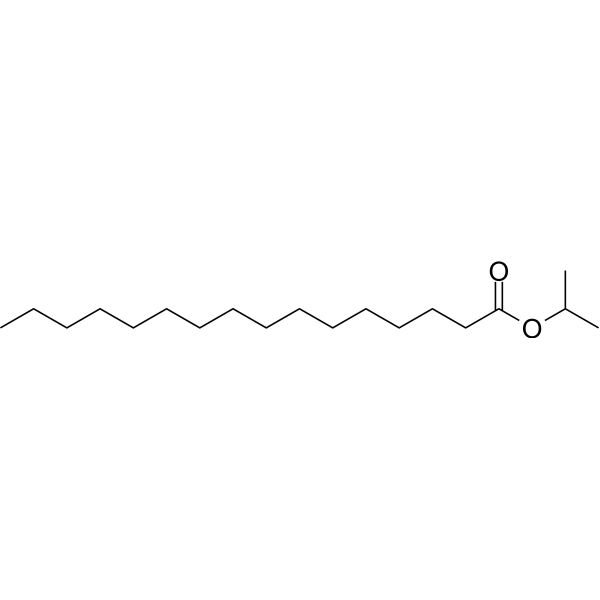
Isopropyl palmitate is an fatty acid ester. Isopropyl palmitate can be used for design and characterization of bioactive bilayer films. The bilayer membrane not only has the ability to scavenge free radicals and inhibit lipid peroxidation, but also can inhibit the growth of known foodborne pathogens. Isopropyl palmitate can be used as an excipient, such as lubricant, oily carrier, solvent, controlled-release transdermal film. Pharmaceutical excipients, or pharmaceutical auxiliaries, refer to other chemical substances used in the pharmaceutical process other than pharmaceutical ingredients. Pharmaceutical excipients generally refer to inactive ingredients in pharmaceutical preparations, which can improve the stability, solubility and processability of pharmaceutical preparations. Pharmaceutical excipients also affect the absorption, distribution, metabolism, and elimination (ADME) processes of co-administered drugs .
|
-
-
- HY-15517B
-
|
|
CaMK
|
Cancer
|
|
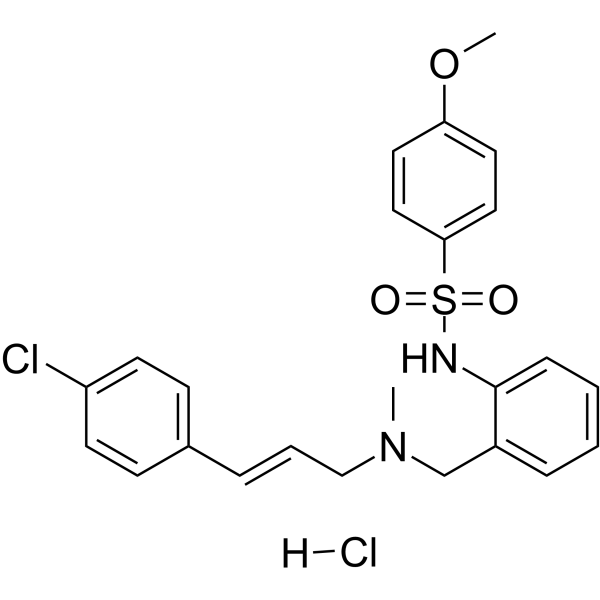
KN-92 hydrochloride is an inactive derivative of KN-93, without CaM kinase inhibitory activity. KN-92 hydrochloride is intended to be used as a control compound in studies designed to elucidate the antagonist activities of KN-93 .
|
-
-
- HY-121733
-
-
-
- HY-107477
-
|
|
Epigenetic Reader Domain
|
Cancer
|
|
GSK8573 is an inactive control compound for GSK2801 (acetyl-lysine competitive inhibitor of BAZ2A and BAZ2B bromodomains). GSK8573 has binding activity to BRD9 with a Kd value of 1.04 μM and is inactive against BAZ2A/B and other bromodomain familiy. GSK8573 can be used as a structurally related negative control compound in biological experiments .
|
-
-
- HY-15517A
-
|
|
CaMK
Autophagy
|
Cancer
|
|
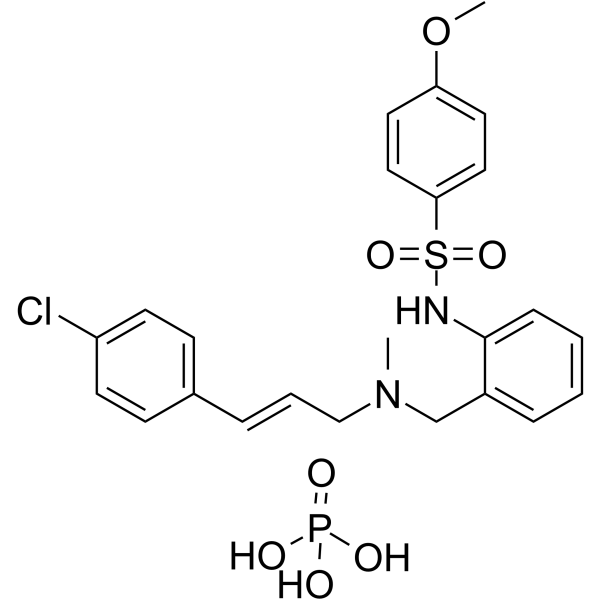
KN-92 phosphate is an inactive derivative of KN-93, without CaM kinase inhibitory activity. KN-92 phosphate is intended to be used as a control compound in studies designed to elucidate the antagonist activities of KN-93. KN-93 is a cell-permeable, reversible and competitive CaMKII inhibitor .
|
-
-
- HY-164642
-
|
RuBP
|
Endogenous Metabolite
|
Metabolic Disease
|
|
Ribulose 1,5-bisphosphate (RUBP) is a vital photosynthetic intermediate and substrate. Ribulose 1,5-bisphosphate acts as both product and substrate for Thermococcus kodakarensis KOD1 R15Pi. Ribulose 1,5-bisphosphate tightly binds to inactive RuBP carboxylase sites in plant leaves.Ribulose 1,5-bisphosphate serves as the key substrate for CO2 fixation in photosynthesis. Ribulose 1,5-bisphosphate supports carboxylation and regeneration processes in photosynthesis. Ribulose 1,5-bisphosphate determines the dynamic transition temperature of photosynthetic control. Ribulose 1,5-bisphosphate can be used for photosynthesis and enzyme mechanism research .
|
-
-
- HY-16994
-
|
|
WDR5
|
Cancer
|
|
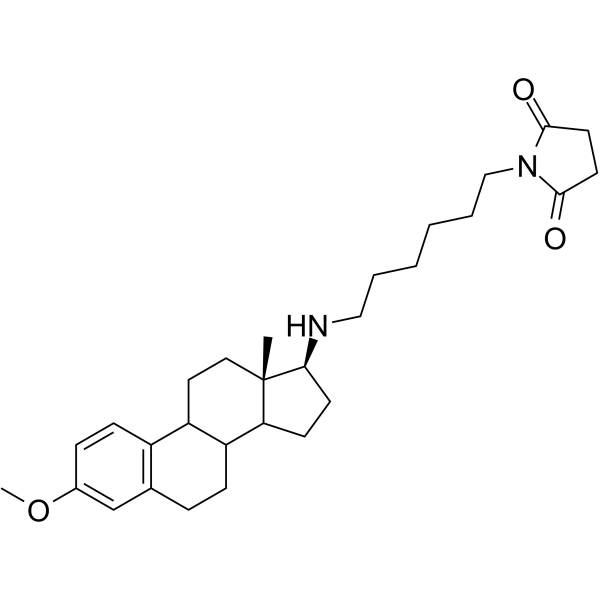
OICR-0547 is a negative control, closely related derivative of OICR-9429 (HY-16993). OICR-9429 is a novel small-molecule antagonist of the Wdr5-MLL interaction. OICR-0547 is an inactive control compound that no longer binds to WDR5 .
|
-
-
- HY-153918A
-
-
-
- HY-121954
-
|
Nec-1 (inactive control)
|
Necroptosis
|
Cancer
|
|
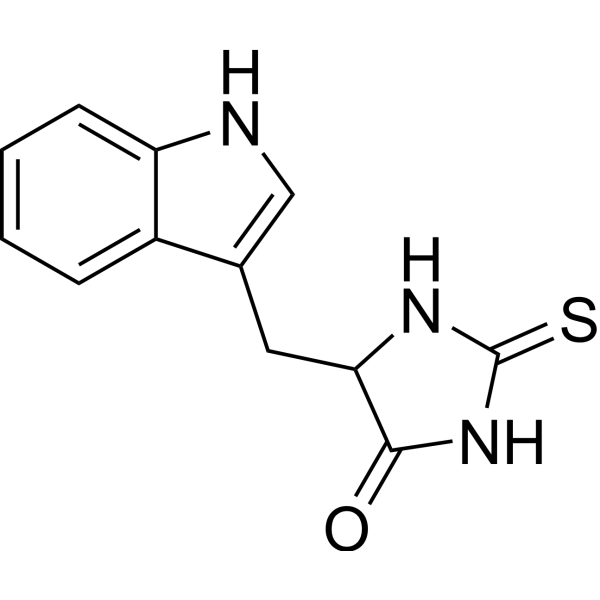
Necrostatin-1 (Nec-1) (inactive control) is an inactive analog of Necrostatin-1 (HY-15760). Necrostatin-1 is a potent necroptosis inhibitor .
|
-
-
- HY-135416A
-
|
|
Endogenous Metabolite
|
Infection
|
|
Streptolysin O (≥1000000 units/mg) is a ≥1000000 units/mg Streptolysin O (HY-135416). Streptolysin O, a group A streptococcal toxin, is a well-characterized oxygen-labile prototype of a cholesterol-binding bacterial exotoxin. Streptolysin O causes both lysis of cells and cardiotoxicity. Streptolysin O is widely used for the controlled permeabilization of cell membranes. Streptolysin O exists in two forms, a reduced active state and an oxidized reversibly inactive state .
|
-
-
- HY-120343
-
-
-
- HY-13851
-
|
|
PDK-1
|
Others
|
|
PS47 is an inactive E-isomer of PS48. PS48 is an activator of PDK1. PS47 can be used as a negative control for PS48 .
|
-
-
- HY-145056
-
|
|
DNA/RNA Synthesis
|
Cancer
|
|
ART615 is the related isomer of ART558. ART615, the inactive of ART558, elicits <10% Polθ inhibition at 12 µM, thus serving as a control for ART558 (IC50=7.9 nM) .
|
-
-
- HY-108437
-
|
|
Wnt
|
Infection
Cancer
|
|
exo-IWR-1, an inactive stereoisomer of Endo-IWR-1, is a negative control of IWR-1 (HY-12238). IWR-1 is a tankyrase inhibitor which inhibits Wnt/β-catenin signaling pathway .
|
-
-
- HY-161408A
-
|
|
PhosTACs
Phosphatase
|
Others
|
|
iGePhos1 is an inactive GePhos1 (HY-161408) epimer used as a nonbinding negative control. iGephos1 lacks the phosphatase recruiting possibility .
|
-
-
- HY-145081
-
|
|
Drug Derivative
|
Infection
|
|
Pitnot-2 is an inactive analog of clathrin inhibitor Pitstop 2. Pitnot-2 can be used as negative control .
|
-
-
- HY-148745
-
|
|
HSP
|
Cancer
|
|
JG-258 is an inactive negative control for Hsp70 inhibitors .
|
-
-
- HY-P3970D
-
|
|
TGF-β Receptor
|
Inflammation/Immunology
|
|
KQFK TFA is the TFA salt form of KQFK (HY-P3970C). KQFK TFA is an inactive control of KRFK (HY-P3970). KRFK is a peptide derived from TSP-1 that can activate TGF-β .
|
-
-
- HY-115682
-
|
|
Mas-related G-protein-coupled Receptor (MRGPR)
|
Others
|
|
(S)-ZINC-3573 is an inactive enantiomer of ZINC-3573. (R)-ZINC-3573 is a selective MRGPRX2 agonist. (S)-ZINC-3573 and (R)-ZINC3573 are effective and internally controlled probe-pairs for investigating the biology of primate-exclusive receptor .
|
-
-
- HY-W008003
-
|
|
Cytochrome P450
|
Others
|
|
2-Hydroxybenzimidazole is an inactive compound targeting CYP1A1 and is mainly used as a control compound in the structure-activity relationship study of benzimidazole derivatives. 2-Hydroxybenzimidazole does not have the ability to induce CYP1A1 expression like its thiol or amino substituted derivatives .
|
-
-
- HY-P1402
-
|
|
PKC
|
Others
|
|
[Glu27]-PKC (19-36) is an inactive control for protein kinase C (PKC) (19-36). PKC (19-36) is a pseudosubstrate peptide inhibitor of protein kinase C, it may be responsible for maintaining the enzyme in the inactive form in the absence of allosteric activators such as phospholipids .
|
-
-
- HY-P1849A
-
|
scJag-1 TFA
|
Notch
|
Cardiovascular Disease
|
|
JAG-1, scrambled (scJag-1) TFA is a scrambled sequence of JAG-1 (Jagged-1 protein). JAG-1, scrambled TFA has a random sequence of the amino acids that are the same as the active fragment. JAG-1, scrambled TFA is usually used as a negative control .
|
-
-
- HY-124479A
-
|
|
Drug Derivative
|
Cancer
|
|
γ-Lumicolchicine is an inactive analogue of Colchicine (HY-16569) that can be used as an experimental control for Colchicine action .
|
-
-
- HY-P10168
-
|
|
Phosphatase
|
Others
|
|
11R-CaN-CON is a control inactive peptide and can be used as a negative control for 11R-CaN-AID (HY-P10167) .
|
-
-
- HY-125143
-
|
|
MAGL
|
Metabolic Disease
|
|
ABC34 is an inactive control compound of JJH260. ABC34 does not inhibit the fluorophosphonate reactivity or fatty acid esters of hydroxy fatty acid (FAHFA) hydrolysis activity of AIG1. ABC34 can inhibit both ABHD6 and PPT122 .
|
-
-
- HY-78931A
-
|
|
Drug Intermediate
|
Cancer
|
|
(R,S,S,R,S)-Boc-Dap-NE is the inactive isomer of Boc-Dap-NE (HY-78931), and can be used as an experimental control. Boc-Dap-NE, is an intermediate in the synthesis of Monomethyl auristatin E (HY-15162), which is an inhibitor of tubulin polymerization. Monomethyl auristatin E can be used to synthesize Antibody-Drug Conjugates (ADCs) as ADC Cytotoxin.
|
-
-
- HY-118421
-
|
|
Parasite
HDAC
|
Infection
|
|
Nullscript is a negative control for Scriptaid. Nullscript is a known inactive analog of Scriptaid . Scriptaid is a representative HDAC inhibitor . Nullscript inhibits Cryptosporidium (C. parvum) growth with the IC50 value of 2.1 μM .
|
-
-
- HY-177662B
-
|
|
Drug Derivative
|
Metabolic Disease
|
|
Scrambled Sapablursen is a sequence disorder of Sapablursen (HY-177662). Scrambled Sapablursen is inactive and can be used as a negative control for Sapablursen.
|
-
-
- HY-135843
-
|
|
LIM Kinase (LIMK)
|
Cancer
|
|
TH-263, a diaryl sulfonamide derivative, is inactive toward both LIMK1 and LIMK2 and thus can be used as negative control for TH-257 .
|
-
-
- HY-P2243
-
|
|
JNK
|
Neurological Disease
|
|
D-JBD19 is an impermeable peptide that serves as an inactive control for the JNK inhibitor D-JNKI1 (HY-P0069). D-JNKI1 has neuroprotective effects .
|
-
-
- HY-111457
-
BAY-677
1 Publications Verification
|
Elastase
|
Inflammation/Immunology
|
|
BAY-677 is an inactive control for BAY-678. BAY-678 is an orally bioavailable, highly potent, selective and cell-permeable inhibitor of human neutrophil elastase (HNE), with an IC50 of 20 nM . BAY-678 is also nominated as a chemical probe to the public via the Structural Genomics Consortium (SGC) .
|
-
-
- HY-118914
-
|
|
GCGR
|
|
|
Glucagon receptor antagonist inactive control (Compound 2) is a compound structurally similar to the glucagon receptor (GCGR) antagonist Glucagon receptor antagonist (Compound 1) but lacks antagonistic activity against glucagon receptor (GCGR). Glucagon receptor antagonist inactive control can be used as a negative control to study mechanisms related to glucagon receptor-mediated signaling pathways .
|
-
-
- HY-170859A
-
|
|
PROTACs
Casein Kinase
|
Cancer
|
|
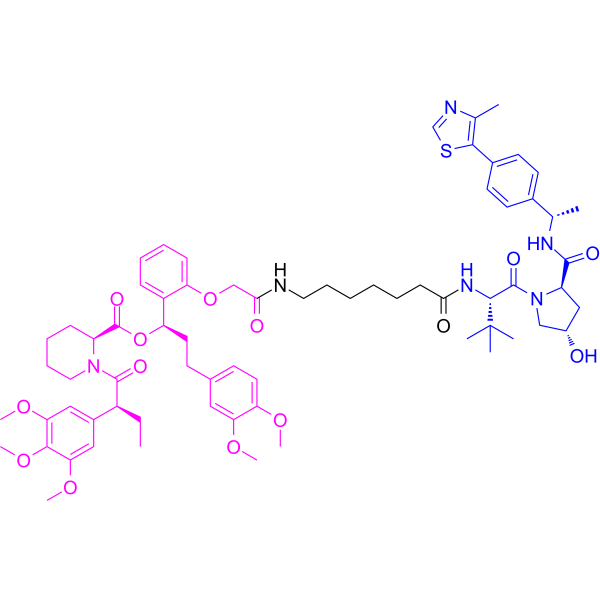
AH081 (Compound 38) is a CK1δ/ε PROTAC degrader. AH081 is the negative control compound of AH078 (HY-170859). AH081 has inhibitory but no degradation activity for CK1δ/ε by using an inactive stereoisomer of the VHL ligand . Pink: CK1δ/ε ligand (HY-148251); Blue: VHL ligase ligand (HY-125845B); Black: linker
|
-
-
- HY-112306R
-
|
DCC-2618 (Standard)
|
c-Kit
PDGFR
FLT3
VEGFR
Apoptosis
Reference Standards
|
Cancer
|
|
Ripretinib (Standard) is the analytical standard of Ripretinib. This product is intended for research and analytical applications. Ripretinib (DCC-2618) is an orally bioavailable, selective KIT and PDGFRA switch-control inhibitor. Ripretinib (DCC-2618) targets and binds to both wild-type and mutant forms of KIT and PDGFRA specifically at their switch pocket binding sites, thereby preventing the switch from inactive to active conformations of these kinases and inactivating their wild-type and mutant forms. Ripretinib (DCC-2618) also inhibits multiple other kinase targets, such as FLT3 and KDR (or VEGFR-2) . DCC-2618 exerts antineoplastic effect and induces apoptosis .
|
-
-
- HY-113894
-
|
|
Aurora Kinase
|
Cancer
|
|
Retreversine is an inactive control for Reversine. Reversine is a novel class of ATP-competitive Aurora kinase inhibitor .
|
-
-
- HY-136453A
-
|
|
Mucin
Drug Isomer
|
Cancer
|
|
CR-1-30-B is an inactive enantiomer of CR-1-31-B. CR-1-30-B, as a control, is inactive against eIF4A and has no apparent effect on the induction of MUC1-C translation .
|
-
-
- HY-129253
-
|
|
HPV
|
Infection
|
|
GSK984 is an inactive control probe for GSK983 (HY-119098), a dihydroorotate dehydrogenase (DHODH) inhibitor with antiviral activity .
|
-
-
- HY-P2670
-
|
|
NF-κB
|
Others
|
|
SN50M, a mutant peptide of SN50 (HY-P0151), is a cell membrane-permeable inactive control peptide .
|
-
-
- HY-P3970C
-
|
|
TGF-β Receptor
|
Others
|
|
KQFK is an inactive control of KRFK (HY-P3970). KRFK is a peptide derived from TSP-1 that can activate TGF-β .
|
-
-
- HY-101125B
-
|
D-45
|
Epigenetic Reader Domain
|
Cancer
|
|
D-Moses (D-45) is an enantiomer of L-Moses (HY-101125). L-Moses (L-45) is a potent and selective p300/CBP-associated factor (PCAF) bromodomain (Brd) inhibitor. D-Moses shows no observable binding for PCAF Brd. D-Moses can be used as an inactive control compound to L-Moses .
|
-
-
- HY-119857
-
|
SIRT2 Inhibitor,inactive control
|
Sirtuin
|
Neurological Disease
|
|
AGK7 is a potent inhibitor of sirtuin 2 (SIRT2). AGK7 rescues alpha-synuclein toxicity and modified inclusion morphology in a cellular model of Parkinson's disease. AGK7 protects against dopaminergic cell death both in vitro and in a Drosophila model of Parkinson's disease .
|
-
-
- HY-126300A
-
|
|
Histone Methyltransferase
|
Cancer
|
|
SGC6870N is inactive against PRMT6 and can be utilized as a negative control. SGC6870N is an inactive enantiomer of SGC6870 (HY-126300) .
|
-
-
- HY-P1312
-
-
-
- HY-P1312A
-
-
-
- HY-106029
-
|
α-TPA
|
PKC
SphK
NF-κB
|
Cancer
|
|
4α-TPA is an inactive form of TPA, and is used as a negative control for TPA-activated events .
|
-
- HY-154843
-
|
|
TrxR
|
Cancer
|
|
C-Gem is a control molecule of S-Gem (HY-154842). C-Gem is completely inactive under experimental conditions .
|
-
- HY-155221
-
|
|
Histone Methyltransferase
|
Cancer
|
|
UNC7145 is an inactive derivative of UNC6934 (HY-145103) that can be used as a negative control for the protein-protein inhibition activity of UNC6934.
|
-
- HY-P2250
-
|
ELA-32 negative control
|
Apelin Receptor (APJ)
|
Others
|
|
ELA RR>GG (ELA-32 negative control), an ELABELA (ELA-32 human) mutant peptide, is inactive. ELA RR>GG is a negative control for ELABELA (HY-P2196) .
|
-
- HY-153887
-
|
|
EGFR
|
Others
|
|
HyT36(-Cl) is the inactive control compound of HyT36, a small molecule hydrophobic tag compound that can be used in protein folding research .
|
-
- HY-112464
-
|
|
Pyruvate Kinase
|
Neurological Disease
|
|
PKR Inhibitor, negative control is an inactive structural analog of RNA-dependent protein kinase (PKR) inhibitor, which can be used as a negative control. PKR Inhibitor, negative control can also inhibit LK-induced neuronal death, exhibiting significant neuroprotective effects .
|
-
- HY-176821
-
|
|
Biochemical Assay Reagents
|
Cancer
|
|
PFI-6N is a negative control compound of PFI-6 (HY-155412). PFI-6N is completely inactive against YEATS domain (MLLT1/3 and YEATS2/4) by methylating the amide of PFI-6 .
|
-
- HY-P3882
-
|
|
Amino Acid Derivatives
|
Neurological Disease
|
|
Fmoc-Ala-Glu-Gln-Lys-NH2 (AEQK) is a tetrapeptide. Fmoc-Ala-Glu-Gln-Lys-NH2 is the inactive control for Fmoc-Ala-Glu-Asn-Lys-NH2 (AENK) peptide inhibitor. AENK blocks proteolysis of UNC5C protein .
|
-
- HY-116429A
-
|
|
Reactive Oxygen Species (ROS)
|
Inflammation/Immunology
|
|
7(S)-Maresin 1 is an inactive 7(S) exomer of Maresin 1, containing a 7(R) hydroxyl group. It can be used as a negative control. Maresin 1 is a specific regulator of endogenous DHA production in the human body, which can stimulate the production and secretion of intracellular Ca 2+ .
|
-
- HY-78931B
-
|
|
Drug Intermediate
|
Cancer
|
|
(S,S,S,S,R)-Boc-Dap-NE is the inactive isomer of Boc-Dap-NE (HY-78931), and can be used as an experimental control. Boc-Dap-NE, is an intermediate in the synthesis of Monomethyl auristatin E (HY-15162), which is an inhibitor of tubulin polymerization. Monomethyl auristatin E can be used to synthesize Antibody-Drug Conjugates (ADCs) as ADC Cytotoxin.
|
-
- HY-145082
-
|
|
Drug Derivative
|
Others
|
|
4-Sulfo-N-(4-aminobenzyl)-1,8-naphthalimide potassium is an inactive 1,8-Naphthalimide derivative. 4-Sulfo-N-(4-aminobenzyl)-1,8-naphthalimide potassium can be used as a negative control for the clathrin inhibitor 3-Sulfo-N-benzyl-1,8-naphthalimide, potassium salt .
|
-
- HY-P1057
-
|
|
iGluR
|
Neurological Disease
|
|
Pep4c is an inactive control peptide for Pep2m (HY-P1058). Pep4c lacks functional activity to disrupt Protein Interacting with C Kinase 1 (PICK1)-AMPA receptor (GluA2) or N-ethylmaleimide-sensitive factor (NSF)-GluA2 interactions. Pep4c is used as a negative control in experiments to validate the specificity of Pep2m's effects on AMPA receptor trafficking and synaptic plasticity [1] [2] [3] [4] [5] [6].
|
-
- HY-P5395
-
|
|
HIV
|
Others
|
|
TAT-GluR23A Fusion Peptide is a biological active peptide. (This is the GluR23A sequence, a control inactive peptide used as a mutant counterpart to glutamate receptor endocytosis inhibitor (GluR23Y), connected to an 11 amino acid cell permeable HIV Trans-Activator of Transcription (TAT) protein transduction domain (PTD). GluR23A is derived from GluR23Y amino acids 869 to 877, with Ala substituted for Tyr, and thus lacking essential phosphorylation sites.Control peptide of HY-P2259)
|
-
- HY-P1055
-
|
|
iGluR
|
Neurological Disease
|
|
Pep2-SVKE is an inactive control peptide for pep2-SVKI (HY-P1056). Pep2-SVKE is an inhibitory peptide corresponding to the last 10 amino acids of the C-terminus of the GluR2 AMPA receptor subunit. Pep2-SVKE does not block AMPA-mediated [ 3H]DA exocytosis. Pep2-SVKE does not bind to GRIP or PICK43 and does not block retention of PICK1 by GST-GluR2 and LTD [1] [2] [3] [4] [5].
|
-
- HY-P2307
-
|
|
iGluR
NO Synthase
|
Neurological Disease
|
|
Tat-NR2BAA is the control peptide of Tat-NR2B9c (HY-P0117), inactive. The sequence of Tat-NR2BAA is similar to Tat-NR2B9c, but it has a double-point mutation in the COOH terminal tSXV motif, making it incapable of binding PSD-95. Tat-NR2B9c is a membrane-permeant peptide and disrupts PSD-95/NMDAR binding, correlate with uncoupling NR2B- and/or NR2A-type NMDARs from PSD-95 .
|
-
- HY-P2307A
-
|
|
iGluR
NO Synthase
|
Neurological Disease
|
|
Tat-NR2BAA TFA is the control peptide of Tat-NR2B9c (HY-P0117), inactive. The sequence of Tat-NR2BAA TFA is similar to Tat-NR2B9c, but it has a double-point mutation in the COOH terminal tSXV motif, making it incapable of binding PSD-95. Tat-NR2B9c is a membrane-permeant peptide and disrupts PSD-95/NMDAR binding, correlate with uncoupling NR2B- and/or NR2A-type NMDARs from PSD-95 .
|
-
- HY-W011426R
-
|
Propan-2-yl hexadecanoate (Standard)
|
Biochemical Assay Reagents
Liposome
Reference Standards
|
Others
|
|
Isopropyl palmitate (Standard) is the analytical standard of Isopropyl palmitate. This product is intended for research and analytical applications. Isopropyl palmitate is an fatty acid ester. Isopropyl palmitate can be used for design and characterization of bioactive bilayer films. The bilayer membrane not only has the ability to scavenge free radicals and inhibit lipid peroxidation, but also can inhibit the growth of known foodborne pathogens. Isopropyl palmitate can be used as an excipient, such as lubricant, oily carrier, solvent, controlled-release transdermal film. Pharmaceutical excipients, or pharmaceutical auxiliaries, refer to other chemical substances used in the pharmaceutical process other than pharmaceutical ingredients. Pharmaceutical excipients generally refer to inactive ingredients in pharmaceutical preparations, which can improve the stability, solubility and processability of pharmaceutical preparations. Pharmaceutical excipients also affect the absorption, distribution, metabolism, and elimination (ADME) processes of co-administered drugs .
|
-
- HY-W012618R
-
|
|
Drug Intermediate
Reference Standards
|
Others
|
|
Isopropyl palmitate (Standard) is the analytical standard of Isopropyl palmitate. This product is intended for research and analytical applications. Isopropyl palmitate is an fatty acid ester. Isopropyl palmitate can be used for design and characterization of bioactive bilayer films. The bilayer membrane not only has the ability to scavenge free radicals and inhibit lipid peroxidation, but also can inhibit the growth of known foodborne pathogens. Isopropyl palmitate can be used as an excipient, such as lubricant, oily carrier, solvent, controlled-release transdermal film. Pharmaceutical excipients, or pharmaceutical auxiliaries, refer to other chemical substances used in the pharmaceutical process other than pharmaceutical ingredients. Pharmaceutical excipients generally refer to inactive ingredients in pharmaceutical preparations, which can improve the stability, solubility and processability of pharmaceutical preparations. Pharmaceutical excipients also affect the absorption, distribution, metabolism, and elimination (ADME) processes of co-administered drugs .
|
-
- HY-123153
-
|
|
Isocitrate Dehydrogenase (IDH)
|
Cancer
|
|
GSK990 is an inactive mutant IDH1 inhibitor with no significant inhibitory activity against wild-type or mutant IDH1/IDH2 enzymes. In experiments, GSK990 can serve as an inactive negative control for the IDH1 inhibitor GSK321 (HY-18948). GSK990 is applicable to the research of acute myeloid leukemia .
|
-
- HY-107477R
-
|
|
Reference Standards
Epigenetic Reader Domain
|
Cancer
|
|
GSK8573 (Standard) is the analytical standard of GSK8573 (HY-107477). This product is intended for research and analytical applications. GSK8573 is an inactive control compound for GSK2801 (acetyl-lysine competitive inhibitor of BAZ2A and BAZ2B bromodomains). GSK8573 has binding activity to BRD9 with a Kd value of 1.04 μM and is inactive against BAZ2A/B and other bromodomain familiy. GSK8573 can be used as a structurally related negative control compound in biological experiments .
|
-
- HY-138794B
-
|
(R)-XL177A
|
Drug Isomer
|
Cancer
|
|
XL177B is an inactive (R) enantiomer of XL177A (HY-138794). XL177B has no effect on CD86 or HLA-DR expression on pDCs. XL177B serves as a negative control. XL177B can be used in the research of multiple myeloma .
|
-
- HY-108437R
-
|
|
Reference Standards
Wnt
|
Infection
Cancer
|
|
exo-IWR-1 (Standard) is the analytical standard of exo-IWR-1 (HY-108437). This product is intended for research and analytical applications. exo-IWR-1, an inactive stereoisomer of Endo-IWR-1, is a negative control of IWR-1 (HY-12238). IWR-1 is a tankyrase inhibitor which inhibits Wnt/β-catenin signaling pathway .
|
-
- HY-108630R
-
|
|
Reference Standards
Phospholipase
|
Others
|
|
U-73343 (Standard) is the analytical standard of U-73343 (HY-108630). This product is intended for research and analytical applications. U-73343, works as a protonophore, is an inactive analog of U-73122 and can be used as a negative control. U-73343 dose-dependently inhibits acid secretion irrespective of the stimulant. U-73122 is a phospholipase C (PLC) and 5-LO (5-lipoxygenase) inhibitor with an IC50 of 1-2.1 μM for PLC .
|
-
- HY-117387
-
|
|
Endogenous Metabolite
|
Infection
|
|
BFE-37 is a yeast introduction with heat resistance activity. The survival rate change of BFE-37 after heating at 55 °C for 5 minutes was 6.53 log CFU/mL, showing its strong heat resistance in acidic orange juice. The dynamic behavior of BFE-37 at different temperatures showed a first-order logarithmic linear inactivation characteristic, which indicates its stability in heat treatment. The study of BFE-37 helps to understand the effect of mild heat treatment on juice and provide guidance for microbial control in the food industry .
|
-
- HY-179569
-
|
|
TMV
|
Infection
|
|
Antiviral agent 73 (compound D13) is a potent intercellular movement inhibitor with antiviral activity. Antiviral agent 73 shows inactivation activity against potato virus Y (PVY) with an EC50 of 79.5 μg/mL. Antiviral agent 73 effectively inhibits virus infection by forming stable hydrogen bonds with Pro154 of PVY coat protein. Antiviral agent 73 can interfere with the process of Pro154-mediated viral intercellular trafficking in plasmodesmata. Antiviral agent 73 can be used for plant virus prevention and control .
|
-
| Cat. No. |
Product Name |
Type |
-
- HY-W007432
-
|
|
Biochemical Assay Reagents
|
|
RuPhos is a Buchwald ligand. In aqueous Suzuki-Miyaura catalytic transfer polymerization, RuPhos forms inactive Pd (RuPhos)2 with palladium and inhibits diffusion to improve polymerization controllability. RuPhos additional addition in anhydrous Kumada polymerization exacerbates catalyst deactivation and chain transfer, significantly impairing polymerization control .
|
-
- HY-W011426
-
|
Propan-2-yl hexadecanoate
|
Biochemical Assay Reagents
|
|
Isopropyl palmitate is an fatty acid ester. Isopropyl palmitate can be used for design and characterization of bioactive bilayer films. The bilayer membrane not only has the ability to scavenge free radicals and inhibit lipid peroxidation, but also can inhibit the growth of known foodborne pathogens. Isopropyl palmitate can be used as an excipient, such as lubricant, oily carrier, solvent, controlled-release transdermal film. Pharmaceutical excipients, or pharmaceutical auxiliaries, refer to other chemical substances used in the pharmaceutical process other than pharmaceutical ingredients. Pharmaceutical excipients generally refer to inactive ingredients in pharmaceutical preparations, which can improve the stability, solubility and processability of pharmaceutical preparations. Pharmaceutical excipients also affect the absorption, distribution, metabolism, and elimination (ADME) processes of co-administered drugs .
|
-
- HY-W008003
-
|
|
Biochemical Assay Reagents
|
|
2-Hydroxybenzimidazole is an inactive compound targeting CYP1A1 and is mainly used as a control compound in the structure-activity relationship study of benzimidazole derivatives. 2-Hydroxybenzimidazole does not have the ability to induce CYP1A1 expression like its thiol or amino substituted derivatives .
|
-
- HY-W011426R
-
|
Propan-2-yl hexadecanoate (Standard)
|
Biochemical Assay Reagents
|
|
Isopropyl palmitate (Standard) is the analytical standard of Isopropyl palmitate. This product is intended for research and analytical applications. Isopropyl palmitate is an fatty acid ester. Isopropyl palmitate can be used for design and characterization of bioactive bilayer films. The bilayer membrane not only has the ability to scavenge free radicals and inhibit lipid peroxidation, but also can inhibit the growth of known foodborne pathogens. Isopropyl palmitate can be used as an excipient, such as lubricant, oily carrier, solvent, controlled-release transdermal film. Pharmaceutical excipients, or pharmaceutical auxiliaries, refer to other chemical substances used in the pharmaceutical process other than pharmaceutical ingredients. Pharmaceutical excipients generally refer to inactive ingredients in pharmaceutical preparations, which can improve the stability, solubility and processability of pharmaceutical preparations. Pharmaceutical excipients also affect the absorption, distribution, metabolism, and elimination (ADME) processes of co-administered drugs .
|
| Cat. No. |
Product Name |
Target |
Research Area |
-
- HY-P3970D
-
|
|
TGF-β Receptor
|
Inflammation/Immunology
|
|
KQFK TFA is the TFA salt form of KQFK (HY-P3970C). KQFK TFA is an inactive control of KRFK (HY-P3970). KRFK is a peptide derived from TSP-1 that can activate TGF-β .
|
-
- HY-P1402
-
|
|
PKC
|
Others
|
|
[Glu27]-PKC (19-36) is an inactive control for protein kinase C (PKC) (19-36). PKC (19-36) is a pseudosubstrate peptide inhibitor of protein kinase C, it may be responsible for maintaining the enzyme in the inactive form in the absence of allosteric activators such as phospholipids .
|
-
- HY-P1849A
-
|
scJag-1 TFA
|
Notch
|
Cardiovascular Disease
|
|
JAG-1, scrambled (scJag-1) TFA is a scrambled sequence of JAG-1 (Jagged-1 protein). JAG-1, scrambled TFA has a random sequence of the amino acids that are the same as the active fragment. JAG-1, scrambled TFA is usually used as a negative control .
|
-
- HY-P10168
-
|
|
Phosphatase
|
Others
|
|
11R-CaN-CON is a control inactive peptide and can be used as a negative control for 11R-CaN-AID (HY-P10167) .
|
-
- HY-P2243
-
|
|
JNK
|
Neurological Disease
|
|
D-JBD19 is an impermeable peptide that serves as an inactive control for the JNK inhibitor D-JNKI1 (HY-P0069). D-JNKI1 has neuroprotective effects .
|
-
- HY-P2670
-
|
|
NF-κB
|
Others
|
|
SN50M, a mutant peptide of SN50 (HY-P0151), is a cell membrane-permeable inactive control peptide .
|
-
- HY-P3970C
-
|
|
TGF-β Receptor
|
Others
|
|
KQFK is an inactive control of KRFK (HY-P3970). KRFK is a peptide derived from TSP-1 that can activate TGF-β .
|
-
- HY-P1849
-
|
scJag-1
|
Peptides
|
Cardiovascular Disease
|
|
JAG-1, scrambled (scJag-1) is a scrambled sequence of JAG-1 (Jagged-1 protein). JAG-1, scrambled has a random sequence of the amino acids that are the same as the active fragment. JAG-1, scrambled is usually used as a negative control .
|
-
- HY-P2248
-
|
|
Peptides
|
Others
|
|
ELA-14 negative control, a peptide, is inactive. ELA-14 negative control is a negative control for ELA-14 .
|
-
- HY-P1312
-
-
- HY-P1312A
-
-
- HY-P2250
-
|
ELA-32 negative control
|
Apelin Receptor (APJ)
|
Others
|
|
ELA RR>GG (ELA-32 negative control), an ELABELA (ELA-32 human) mutant peptide, is inactive. ELA RR>GG is a negative control for ELABELA (HY-P2196) .
|
-
- HY-P3882
-
|
|
Amino Acid Derivatives
|
Neurological Disease
|
|
Fmoc-Ala-Glu-Gln-Lys-NH2 (AEQK) is a tetrapeptide. Fmoc-Ala-Glu-Gln-Lys-NH2 is the inactive control for Fmoc-Ala-Glu-Asn-Lys-NH2 (AENK) peptide inhibitor. AENK blocks proteolysis of UNC5C protein .
|
-
- HY-P1057
-
|
|
iGluR
|
Neurological Disease
|
|
Pep4c is an inactive control peptide for Pep2m (HY-P1058). Pep4c lacks functional activity to disrupt Protein Interacting with C Kinase 1 (PICK1)-AMPA receptor (GluA2) or N-ethylmaleimide-sensitive factor (NSF)-GluA2 interactions. Pep4c is used as a negative control in experiments to validate the specificity of Pep2m's effects on AMPA receptor trafficking and synaptic plasticity [1] [2] [3] [4] [5] [6].
|
-
- HY-P5395
-
|
|
HIV
|
Others
|
|
TAT-GluR23A Fusion Peptide is a biological active peptide. (This is the GluR23A sequence, a control inactive peptide used as a mutant counterpart to glutamate receptor endocytosis inhibitor (GluR23Y), connected to an 11 amino acid cell permeable HIV Trans-Activator of Transcription (TAT) protein transduction domain (PTD). GluR23A is derived from GluR23Y amino acids 869 to 877, with Ala substituted for Tyr, and thus lacking essential phosphorylation sites.Control peptide of HY-P2259)
|
-
- HY-P1055
-
|
|
iGluR
|
Neurological Disease
|
|
Pep2-SVKE is an inactive control peptide for pep2-SVKI (HY-P1056). Pep2-SVKE is an inhibitory peptide corresponding to the last 10 amino acids of the C-terminus of the GluR2 AMPA receptor subunit. Pep2-SVKE does not block AMPA-mediated [ 3H]DA exocytosis. Pep2-SVKE does not bind to GRIP or PICK43 and does not block retention of PICK1 by GST-GluR2 and LTD [1] [2] [3] [4] [5].
|
-
- HY-P2307
-
|
|
iGluR
NO Synthase
|
Neurological Disease
|
|
Tat-NR2BAA is the control peptide of Tat-NR2B9c (HY-P0117), inactive. The sequence of Tat-NR2BAA is similar to Tat-NR2B9c, but it has a double-point mutation in the COOH terminal tSXV motif, making it incapable of binding PSD-95. Tat-NR2B9c is a membrane-permeant peptide and disrupts PSD-95/NMDAR binding, correlate with uncoupling NR2B- and/or NR2A-type NMDARs from PSD-95 .
|
-
- HY-P2307A
-
|
|
iGluR
NO Synthase
|
Neurological Disease
|
|
Tat-NR2BAA TFA is the control peptide of Tat-NR2B9c (HY-P0117), inactive. The sequence of Tat-NR2BAA TFA is similar to Tat-NR2B9c, but it has a double-point mutation in the COOH terminal tSXV motif, making it incapable of binding PSD-95. Tat-NR2B9c is a membrane-permeant peptide and disrupts PSD-95/NMDAR binding, correlate with uncoupling NR2B- and/or NR2A-type NMDARs from PSD-95 .
|
| Cat. No. |
Product Name |
Target |
Research Area |
Image |
| Cat. No. |
Product Name |
Category |
Target |
Chemical Structure |
-
- HY-135416
-
-
-
- HY-164642
-
|
RuBP
|
Structural Classification
Natural Products
Endogenous metabolite
Source Classification
|
Endogenous Metabolite
|
|
Ribulose 1,5-bisphosphate (RUBP) is a vital photosynthetic intermediate and substrate. Ribulose 1,5-bisphosphate acts as both product and substrate for Thermococcus kodakarensis KOD1 R15Pi. Ribulose 1,5-bisphosphate tightly binds to inactive RuBP carboxylase sites in plant leaves.Ribulose 1,5-bisphosphate serves as the key substrate for CO2 fixation in photosynthesis. Ribulose 1,5-bisphosphate supports carboxylation and regeneration processes in photosynthesis. Ribulose 1,5-bisphosphate determines the dynamic transition temperature of photosynthetic control. Ribulose 1,5-bisphosphate can be used for photosynthesis and enzyme mechanism research .
|
-
-
- HY-135416A
-
-
| Cat. No. |
Product Name |
|
Classification |
-
- HY-W011426
-
|
Propan-2-yl hexadecanoate
|
|
Solvents
|
|
Isopropyl palmitate is an fatty acid ester. Isopropyl palmitate can be used for design and characterization of bioactive bilayer films. The bilayer membrane not only has the ability to scavenge free radicals and inhibit lipid peroxidation, but also can inhibit the growth of known foodborne pathogens. Isopropyl palmitate can be used as an excipient, such as lubricant, oily carrier, solvent, controlled-release transdermal film. Pharmaceutical excipients, or pharmaceutical auxiliaries, refer to other chemical substances used in the pharmaceutical process other than pharmaceutical ingredients. Pharmaceutical excipients generally refer to inactive ingredients in pharmaceutical preparations, which can improve the stability, solubility and processability of pharmaceutical preparations. Pharmaceutical excipients also affect the absorption, distribution, metabolism, and elimination (ADME) processes of co-administered drugs .
|
-
- HY-153734
-
|
|
|
Antisense Oligonucleotides
|
|
Inactive ASO (in vivo) sodium is an inactive Antisense Oligonucleotide. ASO is a class of oligonucleotide molecules, usually composed of 20-30 bases, used to interfere with or regulate gene expression. Inactive ASO (in vivo) sodium is not targeted in the rodent genome and can be used as a negative control for Tofersen. Inactive ASO (in vivo) sodium contains thiophosphate skeleton modification and MOE modification. Cytosine in Inactive ASO (in vivo) is 5' methylcytosine. See References for the location of chemical modifications
|
-
- HY-177662B
-
|
|
|
Antisense Oligonucleotides
|
|
Scrambled Sapablursen is a sequence disorder of Sapablursen (HY-177662). Scrambled Sapablursen is inactive and can be used as a negative control for Sapablursen.
|
Your information is safe with us. * Required Fields.
Inquiry Information
- Product Name:
- Cat. No.:
- Quantity:
- MCE Japan Authorized Agent:

