


Search Result
Results for "
inherited
" in MedChemExpress (MCE) Product Catalog:
1
Biochemical Assay Reagents
| Cat. No. |
Product Name |
Target |
Research Areas |
Chemical Structure |
-
- HY-D0938
-
|
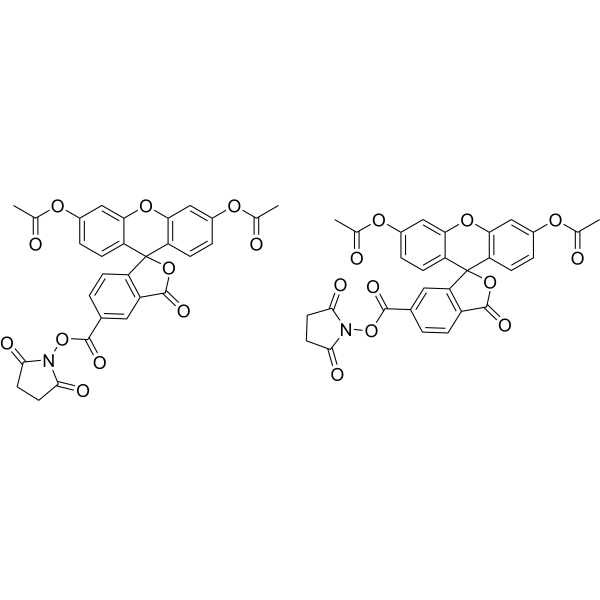
CFSE; 5(6)-Carboxyfluorescein diacetate succinimidyl ester; 5(6)-CFDA N-succinmidyl ester
|
Fluorescent Dye
|
Others
|
|
CFDA-SE is a fluorescent dye that can penetrate the cell membrane. It can react with the free amine group in the cytoskeleton protein inside the cell, and finally form a protein complex with fluorescence. After entering the cell, CFDA-SE locates in the cell membrane, cytoplasm and nucleus, and the fluorescence staining is strongest in the nucleus .
CFDA-SE dye can be uniformly inherited by the cells with cell division and proliferation, and its attenuation is proportional to the number of cell divisions. This phenomenon can be detected and analyzed by flow cytometry under the excitation light of 488 nm, and can be used to detect the proliferation of cells .
|
-
-
- HY-140739
-
|
|
Liposome
|
Neurological Disease
Cancer
|
|
DSPE-PEG2000-Maleimide sodium (purity>95%) is a phospholipid-PEG conjugate. DSPE-PEG2000-Maleimide utilizes the amphiphilicity of DSPE to insert into the lipid bilayer of liposomes or nanoparticles. DSPE-PEG2000-Maleimide covalently couples to the sulfhydryl (-SH) of ligands (such as antibodies, peptides, or proteins) via thiol-maleimide click chemistry, giving the particles targeting capabilities. DSPE-PEG2000-Maleimide sodium (purity>95%) can be used in the researches of breast cancer, lymphoma, and inherited retinal degeneration .
|
-
-
- HY-161111
-
|
|
Ser/Thr Kinase
|
Cancer
|
|
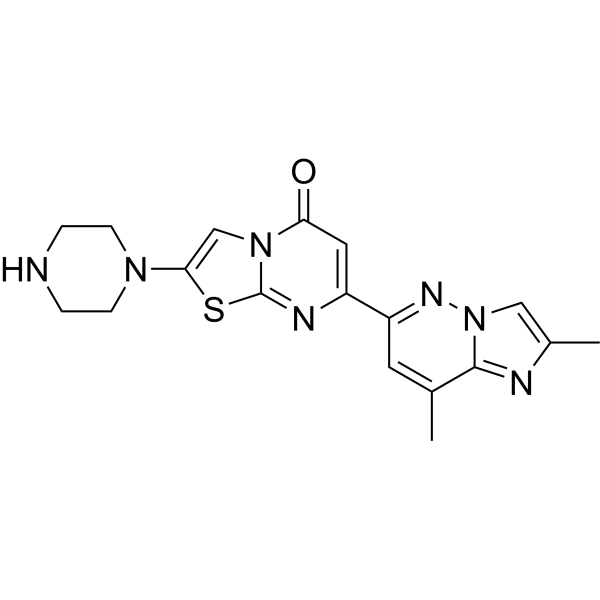
KVS0001 is a selective SMG1 inhibitor. KVS0001 elevates the expression of transcripts and proteins resulting from truncating mutations. KVS0001 increased the presentation of immune-targetable HLA class I-associated peptides from nonsense-mediated decay (NMD)-downregulated proteins on the surface of cancer cells. KVS0001 exerts anti-tumor properties and can be studied in research for NMD-related diseases, including cancer and inherited diseases .
|
-
-
- HY-W013136
-
|
UX007
|
Biochemical Assay Reagents
|
Neurological Disease
|
|
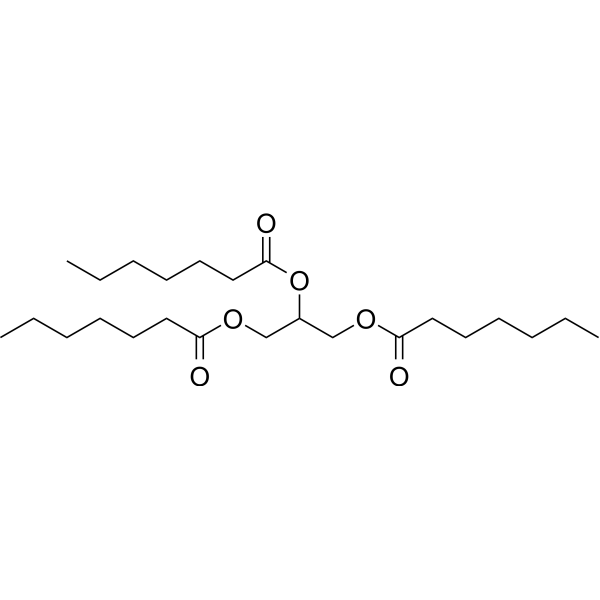
Triheptanoin (Propane-1,2,3-triyl triheptanoate) is a synthetic medium-chain triglyceride (MCT) consisting of three odd-chain 7-carbon (heptanoate) fatty acids on a glycerol backbone. Triheptanoin can be used for the research of inherited metabolic disorders .
|
-
-
- HY-W012734
-
|
H-HoPro-OH
|
Endogenous Metabolite
|
Metabolic Disease
|
|
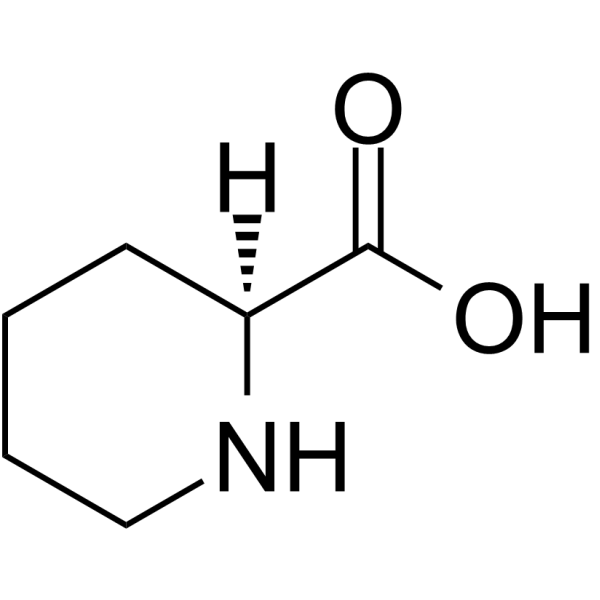
L-Pipecolic acid (H-HoPro-OH) is an oral active metabolite of Lysine and can accumulate in the bodily fluids of infants with autosomal inherited diseases, such as Zellweger syndrome and neonatal adrenal insufficiency. L-Pipecolic acid can promote muscle cell health and growth by enhancing protein synthesis, and plays a role in promoting gut health. L-Pipecolic acid holds promise for research in the fields of metabolic disorders, muscle growth disorders, and intestinal diseases .
|
-
-
- HY-148794
-
|
IkT-148009
|
c-Met/HGFR
Bcr-Abl
|
Neurological Disease
Cancer
|
|
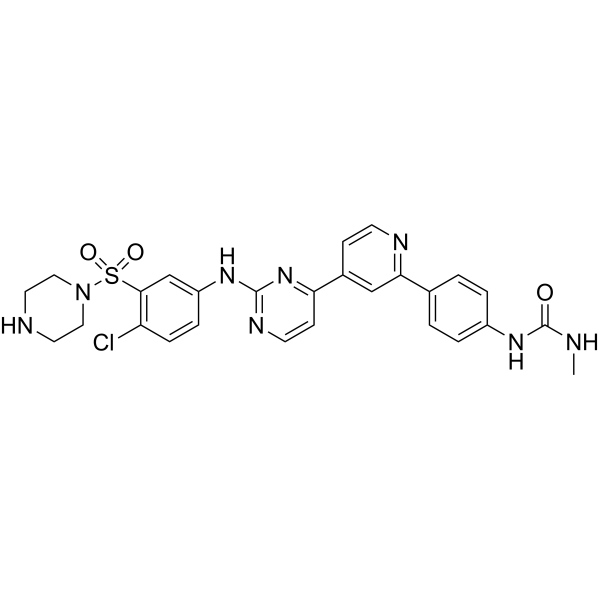
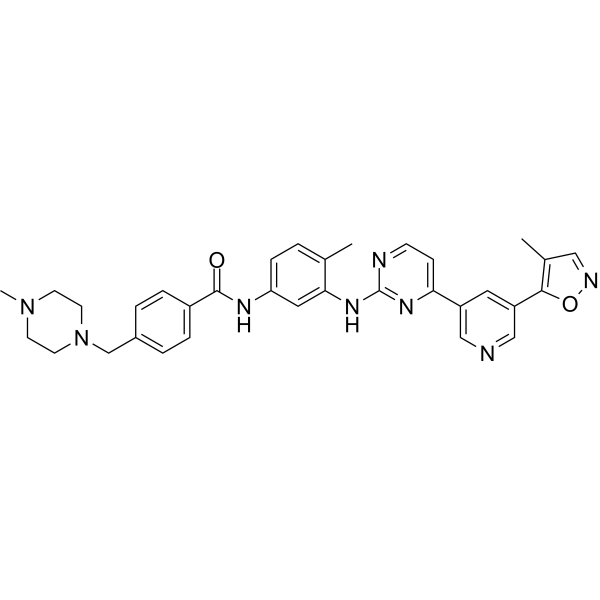
Risvodetinib (IkT-148009) is an orally active, selective and brain-penetrant protein tyrosine kinase inhibitor, displaying excellent target efficacy against c-Abl1, c-Abl2/Arg with IC50 values of 33 nM, 14 nM, respectively. Risvodetinib suppresses c-Abl activation and substantially protects dopaminergic neurons from degeneration in mouse models of both inherited and sporadic Parkinson’s disease (PD), which is promising for research in the field of PD .
|
-
-
- HY-DY1009
-
|
|
Fluorescent Dye
|
Others
|
CFDA-SE (solution) is a fluorescent dye that can penetrate the cell membrane. It can react with the free amine group in the cytoskeleton protein inside the cell, and finally form a protein complex with fluorescence. After entering the cell, CFDA-SE locates in the cell membrane, cytoplasm and nucleus, and the fluorescence staining is strongest in the nucleus . CFDA-SE dye can be uniformly inherited by the cells with cell division and proliferation, and its attenuation is proportional to the number of cell divisions. This phenomenon can be detected and analyzed by flow cytometry under the excitation light of 488 nm, and can be used to detect the proliferation of cells . Solvent and concentration: DMSO: 5 mM
|
-
-
- HY-P2950
-
|
|
Glycosidase
|
Metabolic Disease
|
|
α-Mannosidase is a hydrolytic enzyme targeting mannose-containing glycoproteins or glycolipids. α-Mannosidase is promising for research of inherited α-mannosidosis .
|
-
-
- HY-N16119
-
|
|
Others
|
Metabolic Disease
|
|
Phytyl palmitate is a phytyl ester. Phytyl palmitate can be isolated from the leaves Fatsia japonica. Phytyl palmitate can be used for inherited disorder of the lipid metabolism like Refsum’s disease research .
|
-
-
- HY-113377
-
|
|
Endogenous Metabolite
|
Metabolic Disease
|
|
L-Glyceric acid is a mainly urinary metabolite accumulating in rare inherited metabolic disease L-glyceric aciduria. L-Glyceric acid can be used to diagnose primary hyperoxaluria type 2 (PH2). L-Glyceric acid excretion to distinguish PH1 from PH2 .
|
-
-
- HY-W012734R
-
|
H-HoPro-OH (Standard)
|
Reference Standards
Endogenous Metabolite
|
Metabolic Disease
|
|
L-Pipecolic acid (Standard) is an analytical standard of L-Pipecolic acid. This product is used for research and analytical applications. L-Pipecolic acid (H-HoPro-OH) is an oral active metabolite of Lysine and can accumulate in the bodily fluids of infants with autosomal inherited diseases, such as Zellweger syndrome and neonatal adrenal insufficiency. L-Pipecolic acid can promote muscle cell health and growth by enhancing protein synthesis, and plays a role in promoting gut health. L-Pipecolic acid holds promise for research in the fields of metabolic disorders, muscle growth disorders, and intestinal diseases .
|
-
-
- HY-W141374
-
|
|
DNA/RNA Synthesis
|
Neurological Disease
|
|
CB096 is an r(G4C2) exp RNA binder with EC50 values of 19 μM, 20 μM and 33 μM. CB096 selectively interacts with the 5′CGG/3′GGC 1×1 GG internal loop motif of folded r(G4C2) exp RNA, alters motif dynamics and closed base pairs, and rescues disease-related pathways. CB096 can be used for research on inherited amyotrophic lateral sclerosis/frontotemporal dementia (c9ALS/FTD) .
|
-
-
- HY-177615A
-
|
GTX-102 sodium
|
E1/E2/E3 Enzyme
|
Others
|
|
Apazunersen sodium is an antisense oligonucleotide (ASO) that targets and inhibits expression of the UBE3A antisense transcript (UBE3A-AS) to prevent silencing of the paternally inherited allele of the UBE3A gene and reactivate expression of the deficient
|
-
-
- HY-177615
-
|
GTX-102
|
E1/E2/E3 Enzyme
|
Others
|
|
Apazunersen is an antisense oligonucleotide (ASO) that targets and inhibits expression of the UBE3A antisense transcript (UBE3A-AS) to prevent silencing of the paternally inherited allele of the UBE3A gene and reactivate expression of the deficient protei
|
-
-
- HY-106509
-
|
BW 12C; 12C79; BW 12C79
|
Hemoglobin
|
Others
|
|
Velaresol (BW 12C) is a potent left-shifting anti-sickling compound in vitro . Sickle cell disease is an inherited disorder of the hemoglobin molecule. When hemoglobin molecules are exposed to a variety of environments, the red blood cell hemoglobin polymerizes, twists, and morphs into a sickle shape.
|
-
-
- HY-140739A
-
|
|
Liposome
|
Neurological Disease
Cancer
|
|
DSPE-PEG2000-Maleimide free acid is a phospholipid-PEG conjugate. DSPE-PEG2000-Maleimide free acid utilizes the amphiphilicity of DSPE to insert into the lipid bilayer of liposomes or nanoparticles. DSPE-PEG2000-Maleimide free acid covalently couples to the sulfhydryl (-SH) of ligands (such as antibodies, peptides, or proteins) via thiol-maleimide click chemistry, giving the particles targeting capabilities. DSPE-PEG2000-Maleimide free acid can be used in the researches of breast cancer, lymphoma, and inherited retinal degeneration .
|
-
-
- HY-150245
-
|
|
Huntingtin
|
Neurological Disease
|
|
mHTT-IN-1 (Example 1) is a potent mutant huntingtin (mHTT) inhibitor. mHTT is toxic and a major cause of the inherited autosomal dominant neurodegenerative disorder, Huntington's disease (HD). mHTT-IN-1 conducts the reduction of mHTT with an EC50 value of 46 nM .
|
-
-
- HY-108433
-
|
Carnitine palmitoyltransferase 2
|
Apoptosis
MDM-2/p53
|
Metabolic Disease
Cancer
|
|
CPT2 (Carnitine palmitoyltransferase 2), an enzyme that participates in fatty acid oxidation, also is a colorectal cancer (CRC) prognostic biomarker. CPT2 overexpression can activate p-p53 to increase p53 expression, thereby inhibiting tumor proliferation and promoting apoptosis. CPT2 deficiency results in the most common inherited disorder of long-chain fatty acid oxidation affecting skeletal muscle. Downregulation of CPT2 is also highly correlated with the progression of various cancers and has potential for cancer research .
|
-
-
- HY-175671
-
|
|
HDAC
Histone Demethylase
|
Neurological Disease
|
|
LSD1/HDAC-IN-3 is a inhibitor targeting class I HDAC and LSD1 enzymes. LSD1/HDAC-IN-3 inhibits HDAC1, HDAC2, HDAC3, and LSD1 with IC50 values of 1702 nM, 842 nM, 358 nM, and 1074 nM, respectively. LSD1/HDAC-IN-3 exhibits antioxidant effects in H2O2-stressed ARPE-19 and 661W retinal cells, increasing levels of acetylated and methylated histone H3. LSD1/HDAC-IN-3 enhances photoreceptor survival in the rd10 mouse model of retinitis pigmentosa. LSD1/HDAC-IN-3 can be used for the study of inherited retinal diseases such as retinitis pigmentosa (RP) .
|
-
-
- HY-113377A
-
|
|
Endogenous Metabolite
|
Metabolic Disease
|
|
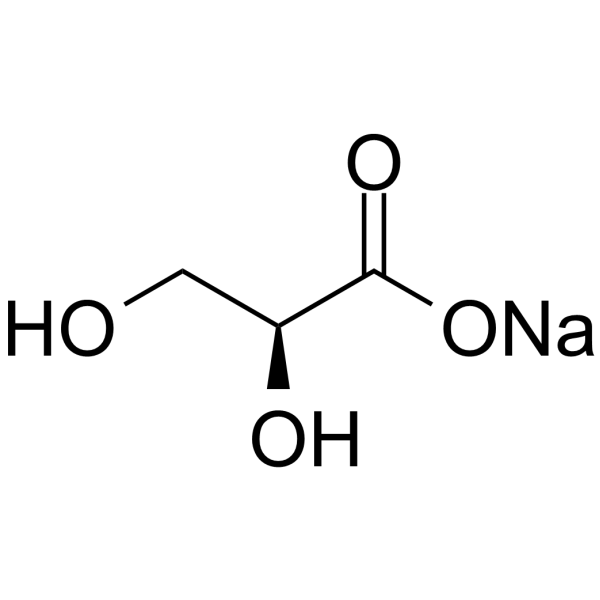
L-Glyceric acid sodium is a mainly urinary metabolite accumulating in rare inherited metabolic disease L-glyceric aciduria. L-Glyceric acid sodium can be used to diagnose primary hyperoxaluria type 2 (PH2). L-Glyceric acid sodium excretion to distinguish PH1 from PH2 .
|
-
-
- HY-163818
-
|
|
Histone Methyltransferase
|
Others
|
|
WIZ degrader 2 (Compound 142) is a degrader for widely interspaced zinc finger motifs with an AC50 of 0.011 μM. WIZ degrader 2 induces the expression of fetal hemoglobin (HbF) with an EC50 of 0.038 μM. WIZ degrader 2 can be used in research about inherited blood disorders .
|
-
-
- HY-169421
-
|
|
Sodium Channel
|
Cancer
|
|
Nav1.7-IN-18 (Compound 31) is a Nav1.7 inhibitor with a Ki value of 4.9 nM and an IC50 of 13 nM, showing analgesic effects in transgenic mice with inherited erythromelalgia (IEM) .
|
-
-
- HY-162665
-
|
|
Histone Methyltransferase
|
Others
|
|
WIZ degrader 1 (Compound 141) is a degrader for widely interspaced zinc finger motifs (WIZ) with an AC50 of 2 nM. WIZ degrader 1 induces the expression of fetal hemoglobin (HbF) with an EC50 of 6 mM. WIZ degrader 1 is used in research of inherited blood disorders .
|
-
-
- HY-169761
-
|
|
Histone Methyltransferase
|
Cardiovascular Disease
|
|
WIZ-IN-1 (Example 2) is a Wiz inhibitor (DC50: 0.36 μM). WIZ-IN-1 can be used for research of inherited blood disorders (e.g., hemoglobinopathies, e.g., beta- hemoglobinopathies), such as sickle cell disease and beta-thalassemia .
|
-
-
- HY-W013136R
-
|
UX007 (Standard)
|
Biochemical Assay Reagents
Reference Standards
|
Neurological Disease
|
|
Triheptanoin (Standard) is the analytical standard of Triheptanoin. This product is intended for research and analytical applications. Triheptanoin (Propane-1,2,3-triyl triheptanoate) is a synthetic medium-chain triglyceride (MCT) consisting of three odd-chain 7-carbon (heptanoate) fatty acids on a glycerol backbone. Triheptanoin can be used for the research of inherited metabolic disorders .
|
-
-
- HY-117051
-
|
|
HSP
|
Cancer
|
|
STA-2842 is an inhibitor of heat shock protein HSP90 with potential to inhibit autosomal dominant polycystic kidney disease (ADPKD). ADPKD is caused by inherited mutations in the PKD1 or PKD2 genes that abnormally activate multiple signaling proteins and pathways that regulate cell proliferation. STA-2842 can significantly reduce initial renal cyst formation and kidney growth in mice, and slow disease progression in mice with existing cysts.
|
-
-
- HY-E70782
-
|
|
Tie
|
Cardiovascular Disease
|
|
TIE2 plays an important role in vascular formation and maintenance. Mutations in TIE2 lead to vascular malformations, which are painful vascular lesions that cause disfigurement, bleeding, and thrombosis. TIE2 R849W is the most common mutation implicated in an inherited form of vascular malformations. TIE2 R849W Recombinant Human Active Protein Kinase is a recombinant TIE2 R849W protein that can be used to study TIE2 R849W-related functions .
|
-
-
- HY-117947
-
|
|
Histone Methyltransferase
|
Cancer
|
|
(R)-OR-S1 is an isomer of OR-S1. The dual ZH1/2 inhibitors OR-S1 and OR-S2 exhibit strong inhibitory activity against both EZH1 and EZH2. OR-S1 and OR-S2 are highly selective methyltransferase inhibitors against EZH1 and EZH2, and they have very similar molecular features. Therefore, we investigated the effect of OR-S1 on acute myeloid leukemia (AML). We found that OR-S1 was able to induce cell differentiation and apoptosis in AML cells. These findings encouraged us to investigate whether functional LT-HSCs could survive PRC2-targeted therapy with OR-S1 or OR-S1 combined with cytarabine. The results showed that OR-S1 did not cause significant myelosuppression, and BM cells treated with the combination therapy were able to undergo normal hematopoiesis even 4 months after treatment. Therefore, temporary inhibition of EZH1 and EZH2 is clinically tolerable, making this combination therapy suitable for AML patients. AML is generally believed to originate from myeloid progenitor cells that inherit a large number of biological properties.
|
-
-
- HY-106509R
-
|
BW 12C (Standard); 12C79 (Standard); BW 12C79 (Standard)
|
Reference Standards
Others
|
Others
|
|
Velaresol (Standard) is the analytical standard of Velaresol. This product is intended for research and analytical applications. Velaresol (BW 12C) is a potent left-shifting anti-sickling compound in vitro . Sickle cell disease is an inherited disorder of the hemoglobin molecule. When hemoglobin molecules are exposed to a variety of environments, the red blood cell hemoglobin polymerizes, twists, and morphs into a sickle shape.
|
-
-
- HY-183552
-
|
|
HIF/HIF Prolyl-Hydroxylase
EBV
Drug Intermediate
|
Infection
Cancer
|
|
mCPX is a prodrug of the antifungal agent Ciclopirox olamine (CPX) (HY-B0450A). CPX exhibits bacteriostatic and iron-chelating activities, while mCPX enhances the iron stability of CPX. mCPX inherits the core mechanism pathway of CPX and can induce EBV lytic reactivation in EBV + gastric cancer cells via the hypoxia pathway (HIF‑1α). mCPX is applicable to research related to EBV-positive gastric cancer .
|
-
-
- HY-141489
-
|
|
Biochemical Assay Reagents
Liposome
|
Neurological Disease
|
|
DSPE-PEG2000-Carboxy NHS sodium is a linker. DSPE-PEG2000-Carboxy NHS sodium enables conjugation of targeting peptides to lipid nanoparticles after their preparation. DSPE-PEG2000-Carboxy NHS (sodium) is applicable to the research of hereditary retinal degeneration .
|
-
-
-
HY-L245
-
|
|
2,283 compounds
|
|
At the forefront of innovative drug discovery, every medicinal chemist faces the challenge of rapidly identifying high-quality hit compounds from vast repositories of chemical resources.
The MCE Natural Product Diversity Scaffold Library is the result of a streamlined optimization process built upon our existing natural product collection. Adhering to the rigorous selection principle of "retaining only one representative compound per BMS scaffold", we have concentrated the diversity of thousands of compounds into a high-value, low-redundancy core set containing 2,283 compounds. All compounds are derived from natural sources, inheriting their inherent advantages of structural complexity and drug-likeness. By eliminating redundancy, the library size is significantly reduced without any compromise to chemical diversity. This approach effectively lowers the cost and time required for primary screening while simplifying downstream data analysis and structure-activity relationship (SAR) studies.
|
| Cat. No. |
Product Name |
Type |
-
- HY-D0938
-
|
CFSE; 5(6)-Carboxyfluorescein diacetate succinimidyl ester; 5(6)-CFDA N-succinmidyl ester
|
Fluorescent Dyes
|
|
CFDA-SE is a fluorescent dye that can penetrate the cell membrane. It can react with the free amine group in the cytoskeleton protein inside the cell, and finally form a protein complex with fluorescence. After entering the cell, CFDA-SE locates in the cell membrane, cytoplasm and nucleus, and the fluorescence staining is strongest in the nucleus .
CFDA-SE dye can be uniformly inherited by the cells with cell division and proliferation, and its attenuation is proportional to the number of cell divisions. This phenomenon can be detected and analyzed by flow cytometry under the excitation light of 488 nm, and can be used to detect the proliferation of cells .
|
-
- HY-DY1009
-
|
|
Fluorescent Dyes
|
CFDA-SE (solution) is a fluorescent dye that can penetrate the cell membrane. It can react with the free amine group in the cytoskeleton protein inside the cell, and finally form a protein complex with fluorescence. After entering the cell, CFDA-SE locates in the cell membrane, cytoplasm and nucleus, and the fluorescence staining is strongest in the nucleus . CFDA-SE dye can be uniformly inherited by the cells with cell division and proliferation, and its attenuation is proportional to the number of cell divisions. This phenomenon can be detected and analyzed by flow cytometry under the excitation light of 488 nm, and can be used to detect the proliferation of cells . Solvent and concentration: DMSO: 5 mM
|
| Cat. No. |
Product Name |
Type |
-
- HY-140739
-
|
|
Biochemical Assay Reagents
|
|
DSPE-PEG2000-Maleimide sodium (purity>95%) is a phospholipid-PEG conjugate. DSPE-PEG2000-Maleimide utilizes the amphiphilicity of DSPE to insert into the lipid bilayer of liposomes or nanoparticles. DSPE-PEG2000-Maleimide covalently couples to the sulfhydryl (-SH) of ligands (such as antibodies, peptides, or proteins) via thiol-maleimide click chemistry, giving the particles targeting capabilities. DSPE-PEG2000-Maleimide sodium (purity>95%) can be used in the researches of breast cancer, lymphoma, and inherited retinal degeneration .
|
| Cat. No. |
Product Name |
Target |
Research Area |
Image |
-
- HY-P99875
-
|
BIVV-001; Altuvoct
|
Inhibitory Antibodies
|
Cardiovascular Disease
|
|
Efanesoctocog alfa is a B domain-deleted single-chain Factor VIII (FVIII) connected to D'D3 domain of von Willebrand Factor (vWF). Efanesoctocog alfa has an extended half-life. Efanesoctocog alfa can be used for the study of inherited hemophilia A .
|
-
(5)
| Cat. No. |
Product Name |
Category |
Target |
Chemical Structure |
| Cat. No. |
Product Name |
|
Classification |
-
- HY-140739
-
|
|
|
Pegylated Lipids
|
|
DSPE-PEG2000-Maleimide sodium (purity>95%) is a phospholipid-PEG conjugate. DSPE-PEG2000-Maleimide utilizes the amphiphilicity of DSPE to insert into the lipid bilayer of liposomes or nanoparticles. DSPE-PEG2000-Maleimide covalently couples to the sulfhydryl (-SH) of ligands (such as antibodies, peptides, or proteins) via thiol-maleimide click chemistry, giving the particles targeting capabilities. DSPE-PEG2000-Maleimide sodium (purity>95%) can be used in the researches of breast cancer, lymphoma, and inherited retinal degeneration .
|
-
- HY-177615A
-
|
GTX-102 sodium
|
|
Antisense Oligonucleotides
|
|
Apazunersen sodium is an antisense oligonucleotide (ASO) that targets and inhibits expression of the UBE3A antisense transcript (UBE3A-AS) to prevent silencing of the paternally inherited allele of the UBE3A gene and reactivate expression of the deficient
|
-
- HY-177615
-
|
GTX-102
|
|
Antisense Oligonucleotides
|
|
Apazunersen is an antisense oligonucleotide (ASO) that targets and inhibits expression of the UBE3A antisense transcript (UBE3A-AS) to prevent silencing of the paternally inherited allele of the UBE3A gene and reactivate expression of the deficient protei
|
-
- HY-140739A
-
|
|
|
Pegylated Lipids
|
|
DSPE-PEG2000-Maleimide free acid is a phospholipid-PEG conjugate. DSPE-PEG2000-Maleimide free acid utilizes the amphiphilicity of DSPE to insert into the lipid bilayer of liposomes or nanoparticles. DSPE-PEG2000-Maleimide free acid covalently couples to the sulfhydryl (-SH) of ligands (such as antibodies, peptides, or proteins) via thiol-maleimide click chemistry, giving the particles targeting capabilities. DSPE-PEG2000-Maleimide free acid can be used in the researches of breast cancer, lymphoma, and inherited retinal degeneration .
|
Your information is safe with us. * Required Fields.
Inquiry Information
- Product Name:
- Cat. No.:
- Quantity:
- MCE Japan Authorized Agent:

