



Triheptanoin

Based on 1 Customer Validation
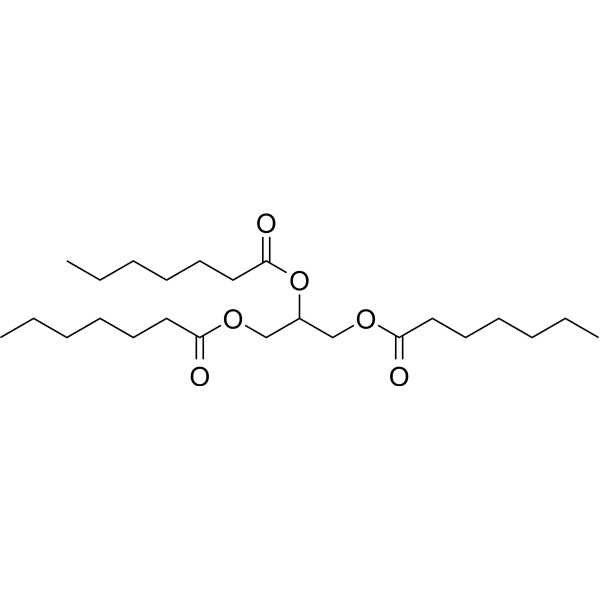
Triheptanoin (Propane-1,2,3-triyl triheptanoate) is a synthetic medium-chain triglyceride (MCT) consisting of three odd-chain 7-carbon (heptanoate) fatty acids on a glycerol backbone. Triheptanoin can be used for the research of inherited metabolic disorders.
For research use only. We do not sell to patients.
- Purity : 99.69%
- CAS No.: 620-67-7
- Formula: C24H44O6
- Molecular Weight:428.61
-
Storage:
4°C, protect from light
* In solvent : -80°C, 6 months; -20°C, 1 month (protect from light)

To place orders, for customer services and technical support, please contact: MedChemExpress USA
Tel: 609-228-6898 E-mail: [email protected] [email protected]


-
 Biological Activity
-
Chemical Information
-
Solvent & Solubility
- Purity & Documentation
- References
-
 Help & FAQs


-
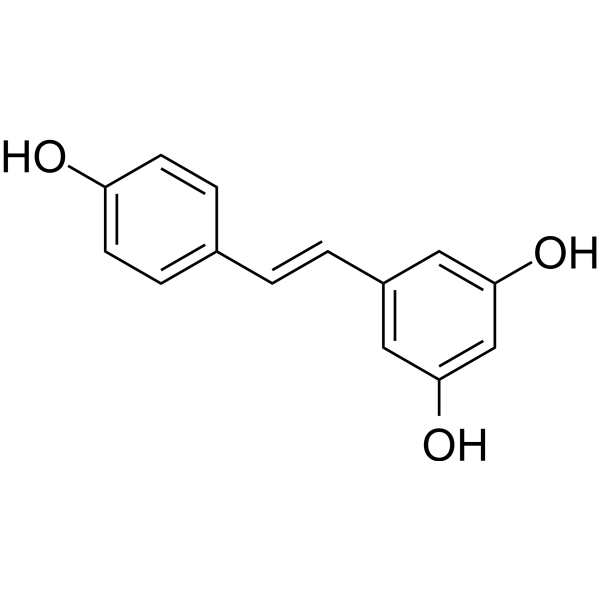
HY-16561
ResveratrolPolyphenolic Phytoalexin -

HY-N6660
TrisdecanoinDA Precursor -

HY-W013136R
Triheptanoin (Standard)Nutritional Supplement/Anaplerotic Agent -
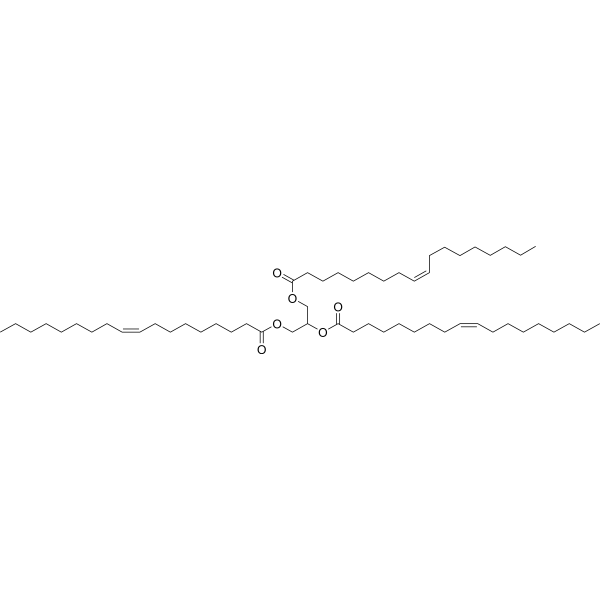
HY-N1981
TrioleinMonoacid Triglyceride -

HY-121389
HexadecanamideAnti-inflammatory Agent -
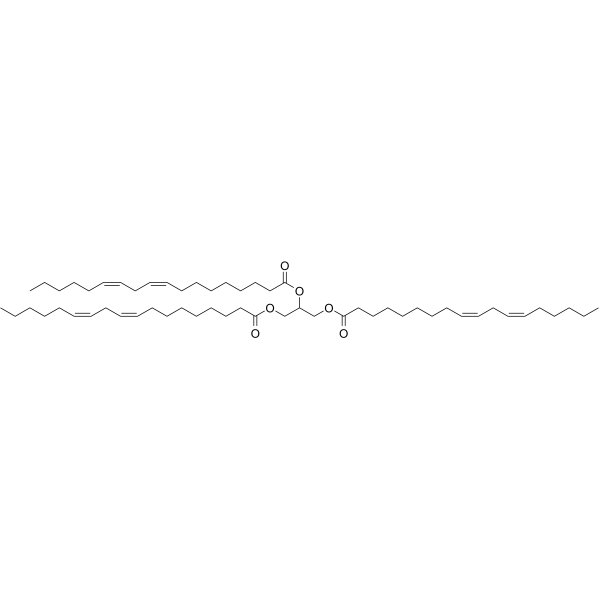
HY-128393
TrilinoleinAnticancer Agent -
HY-W013061
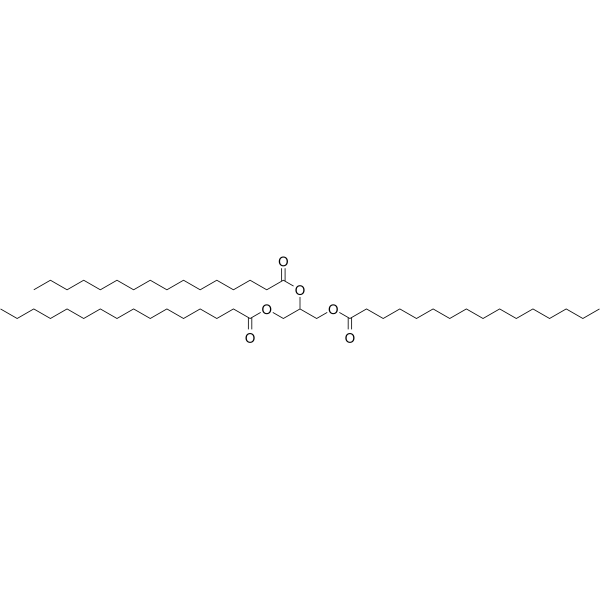
Propane-1,2,3-triyl tripalmitateGlycerol Tristearate Lymphatic Transport Promoter -

HY-N1981R
Triolein (Standard)Monoacid Triglyceride -
HY-111052
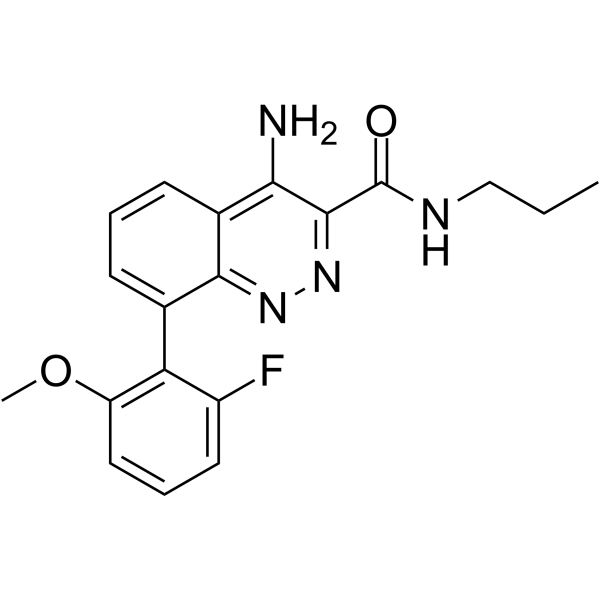
AZD7325GABAA Receptor Modulator -
HY-N2511
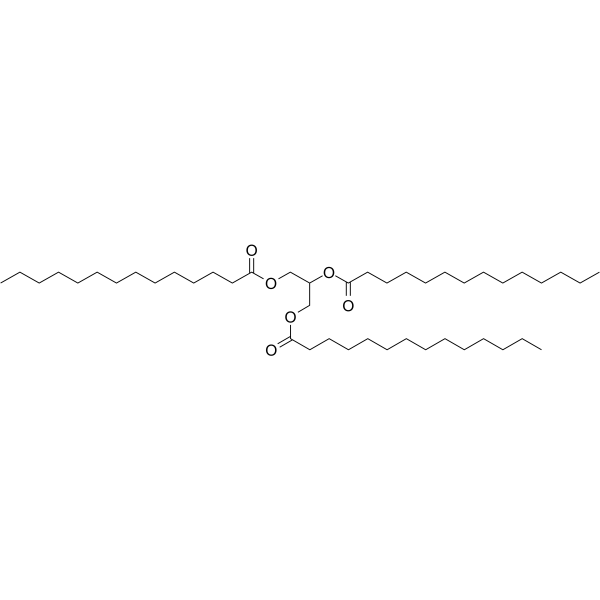
Trimyristinacetylcholinesterase Inhibitor, acid phosphatase Inhibitor, alkaline phosphatase Inhibitor -
HY-N7055
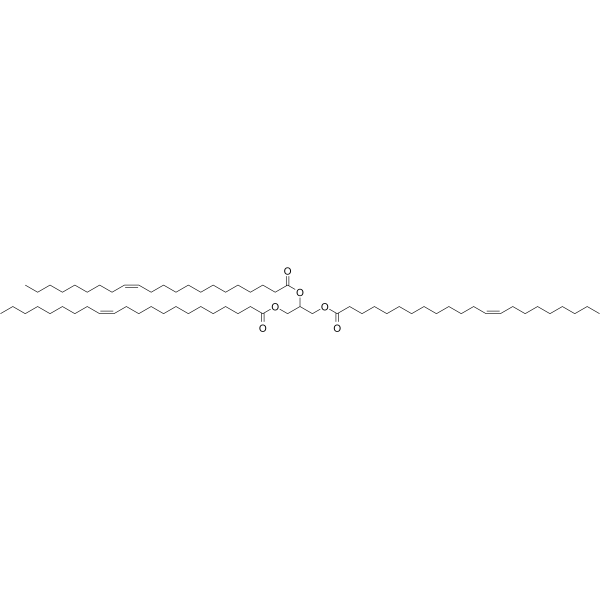
TrierucinTriester -
HY-122114
ICA-27243KCNQ2/Q3 Opener


Biological Activity
Description
In Vivo
Triheptanoin can be used for the research of ataxia-telangiectasia (A-T)[2].
Triheptanoin functions as an anaplerotic agent replenishing tricarboxylic acid (TCA) cycle intermediates by metabolism to heptanoate (C7) and subsequently acetyl-CoA and propionyl-CoA that feed into the TCA cycle to supply energy[2].
Triheptanoin mitigates brain ATP depletion and mitochondrial dysfunction, including respiration and redox balance in a mouse model of Alzheimer's disease, supporting the energy failure hypothesis for that disorder[2].
Triheptanoin (Mice were treated with Triheptanoin (35E%) for 10 days prior to pilocarpine injection to induce status epilepticus) preserved mitochondrial functions in the hippocampal formations of pilocarpine-induced status epilepticus (SE) mice[3].
MedChemExpress (MCE) has not independently confirmed the accuracy of these methods. They are for reference only.
-
Animal Model:7-8 week old male CD1 (35-40 g)[3]
-
Dosage:35E% oral Triheptanoin was mixed into mouse chow
-
Administration:Given 35E% Triheptanoin treatment 10 days prior to SE induction
-
Result:Preserved mitochondrial functions in SE mice.
Clinical Trial
| NCT Number | Sponsor | Condition | Start Date |
Phase

|
|---|---|---|---|---|
| NCT01329991 | Plexxikon| | 2011-05 | PHASE1 |


Chemical Information
-
CAS No. 620-67-7
-
Appearance Liquid (Density: 0.904 g/cm3)
-
Molecular Weight 428.61
-
Formula C24H44O6
-
Color Colorless to light yellow
-
SMILES
CCCCCCC(OCC(OC(CCCCCC)=O)COC(CCCCCC)=O)=O
-
Synonyms
UX007
-
Shipping
Room temperature in continental US; may vary elsewhere.
-
Storage
4°C, protect from light
* In solvent : -80°C, 6 months; -20°C, 1 month (protect from light)


Solvent & Solubility
In Vitro:
DMSO : 50 mg/mL (116.66 mM; Need ultrasonic; Hygroscopic DMSO has a significant impact on the solubility of product, please use newly opened DMSO)
Please refer to the solubility information to select the appropriate solvent. Once prepared, please aliquot and store the solution to prevent product inactivation from repeated freeze-thaw cycles.
Storage method and period of stock solution: -80°C, 6 months; -20°C, 1 month (protect from light). When stored at -80°C, please use it within 6 months. When stored at -20°C, please use it within 1 month.
Please refer to the solubility information to select the appropriate solvent. Once prepared, please aliquot and store the solution to prevent product inactivation from repeated freeze-thaw cycles.
Storage method and period of stock solution: -80°C, 6 months; -20°C, 1 month (protect from light). When stored at -80°C, please use it within 6 months. When stored at -20°C, please use it within 1 month.
Concentration (start) × Volume (start) = Concentration (final) × Volume (final)
In Vivo:
Select the appropriate dissolution method based on your experimental animal and administration route.
- For the following dissolution methods, please ensure to first prepare a clear stock solution using an In Vitro approach and then sequentially add co-solvents:
- To ensure reliable experimental results, the clarified stock solution can be appropriately stored based on storage conditions. As for the working solution for In Vivo experiments, it is recommended to prepare freshly and use it on the same day.
- The percentages shown for the solvents indicate their volumetric ratio in the final prepared solution. If precipitation or phase separation occurs during preparation, heat and/or sonication can be used to aid dissolution.
Add each solvent one by one: 10% DMSO 40% PEG300 5% Tween-80 45% Saline
Solubility: ≥ 2.5 mg/mL (5.83 mM); Clear solution
This protocol yields a clear solution of ≥ 2.5 mg/mL (saturation unknown).
Taking 1 mL working solution as an example, add 100 μL DMSO stock solution (25.0 mg/mL) to 400 μL PEG300, and mix evenly; then add 50 μL Tween-80 and mix evenly; then add 450 μL Saline to adjust the volume to 1 mL.
Preparation of Saline: Dissolve 0.9 g sodium chloride in ddH₂O and dilute to 100 mL to obtain a clear Saline solution.
Add each solvent one by one: 10% DMSO 90% (20% SBE-β-CD in Saline)
Solubility: ≥ 2.5 mg/mL (5.83 mM); Clear solution
This protocol yields a clear solution of ≥ 2.5 mg/mL (saturation unknown).
Taking 1 mL working solution as an example, add 100 μL DMSO stock solution (25.0 mg/mL) to 900 μL 20% SBE-β-CD in Saline, and mix evenly.
Preparation of 20% SBE-β-CD in Saline (4°C, storage for one week): 2 g SBE-β-CD powder is dissolved in 10 mL Saline, completely dissolve until clear.
In Vivo Dissolution Calculator
Please enter the basic information of animal experiments:
-
-
-
-
Recommended: Prepare an additional quantity of animals to account for potential losses during experiments.
Please enter your animal formula composition:
-
%DMSO +
Recommended: Keep the proportion of DMSO in working solution below 2% if your animal is weak.
-
%+
-
+%Tween-80 + +
-
%Saline +
The co-solvents required include: DMSO, . All of co-solvents are available by MedChemExpress (MCE). , Tween 80. All of co-solvents are available by MedChemExpress (MCE).
Working solution concentration: 0.22 mg/mL
Method for preparing stock solution: mg drug dissolved in μL DMSO. Stock solution concentration: mg/mL. * In solvent : -80°C, 6 months; -20°C, 1 month (protect from light)
1. Take μL DMSO stock solution;
2. Add μL .
μL , mix evenly;
3. Then add μL Tween 80, mix evenly;
4. Then add μL
Please ensure that the stock solution in the first step is dissolved to a clear state, and add co-solvents in sequence. You can use ultrasonic heating (ultrasonic cleaner, recommended frequency 20-40 kHz), vortexing, etc. to assist dissolution.


Purity & Documentation
-
Data Sheet (274 KB)
-
SDS (761 KB)
- English - EN (761 KB)
- Français - FR (761 KB)
- Deutsch - DE (761 KB)
- Norwegian - NO (761 KB)
- Español - ES (761 KB)
- Swedish - SV (761 KB)
- Italian - IT (761 KB)
- Korean - KR (761 KB)
- Portuguese - PT (761 KB)
-
Handling Instructions (2659 KB)
References
[1]. Matt Shirley. Triheptanoin: First Approval. Drugs. 2020 Oct;80(15):1595-1600. [Content Brief]
[2]. A J Yeo, et al. An anaplerotic approach to correct the mitochondrial dysfunction in ataxia-telangiectasia (A-T). Mol Metab. 2021 Dec;54:101354. [Content Brief]
[3]. Kah Ni Tan, et al. Triheptanoin protects against status epilepticus-induced hippocampal mitochondrial dysfunctions, oxidative stress and neuronal degeneration. J Neurochem. 2018 Feb;144(4):431-442. [Content Brief]


Complete Stock Solution Preparation Table
Please refer to the solubility information to select the appropriate solvent. Once prepared, please aliquot and store the solution to prevent product inactivation from repeated freeze-thaw cycles.
Storage method and period of stock solution: -80°C, 6 months; -20°C, 1 month (protect from light). When stored at -80°C, please use it within 6 months. When stored at -20°C, please use it within 1 month.
| Optional Solvent | Concentration Solvent Mass | 1 mg | 5 mg | 10 mg | 25 mg |
|---|---|---|---|---|---|
| DMSO | 1 mM | 2.3331 mL | 11.6656 mL | 23.3312 mL | 58.3281 mL |
| 5 mM | 0.4666 mL | 2.3331 mL | 4.6662 mL | 11.6656 mL | |
| 10 mM | 0.2333 mL | 1.1666 mL | 2.3331 mL | 5.8328 mL | |
| 15 mM | 0.1555 mL | 0.7777 mL | 1.5554 mL | 3.8885 mL | |
| 20 mM | 0.1167 mL | 0.5833 mL | 1.1666 mL | 2.9164 mL | |
| 25 mM | 0.0933 mL | 0.4666 mL | 0.9332 mL | 2.3331 mL | |
| 30 mM | 0.0778 mL | 0.3889 mL | 0.7777 mL | 1.9443 mL | |
| 40 mM | 0.0583 mL | 0.2916 mL | 0.5833 mL | 1.4582 mL | |
| 50 mM | 0.0467 mL | 0.2333 mL | 0.4666 mL | 1.1666 mL | |
| 60 mM | 0.0389 mL | 0.1944 mL | 0.3889 mL | 0.9721 mL | |
| 80 mM | 0.0292 mL | 0.1458 mL | 0.2916 mL | 0.7291 mL | |
| 100 mM | 0.0233 mL | 0.1167 mL | 0.2333 mL | 0.5833 mL |


Triheptanoin Related Classifications
HY-W013136 Related Classifications
 Powered by Bioz