Search Result
Results for "
moderate activity
" in MedChemExpress (MCE) Product Catalog:
1
Biochemical Assay Reagents
9
Isotope-Labeled Compounds
| Cat. No. |
Product Name |
Target |
Research Areas |
Chemical Structure |
-
- HY-19937
-
|
|
PPAR
|
Metabolic Disease
|
|
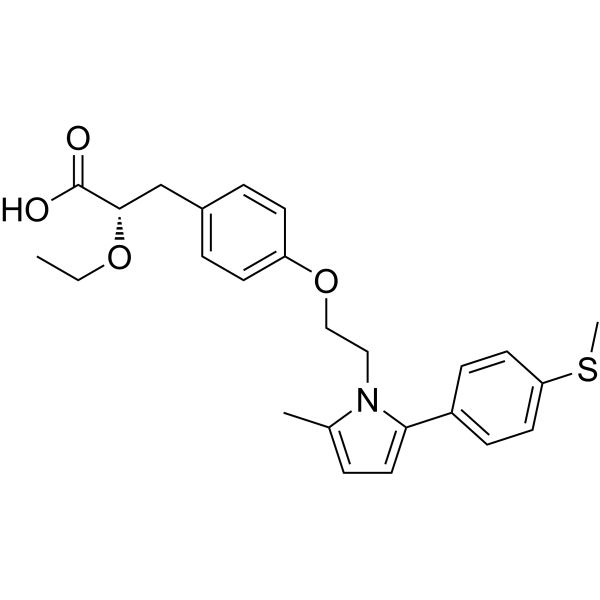
Saroglitazar is a novel peroxisome proliferator-activated receptor (PPAR) agonist with predominant PPARα and moderate PPARγ activity with EC50 values of 0.65 pM and 3 nM in HepG2 cells, respectively.
|
-
-
- HY-14273
-
|
BAL-4815; RO-0094815
|
Fungal
Cytochrome P450
Antibiotic
|
Infection
Cancer
|
|
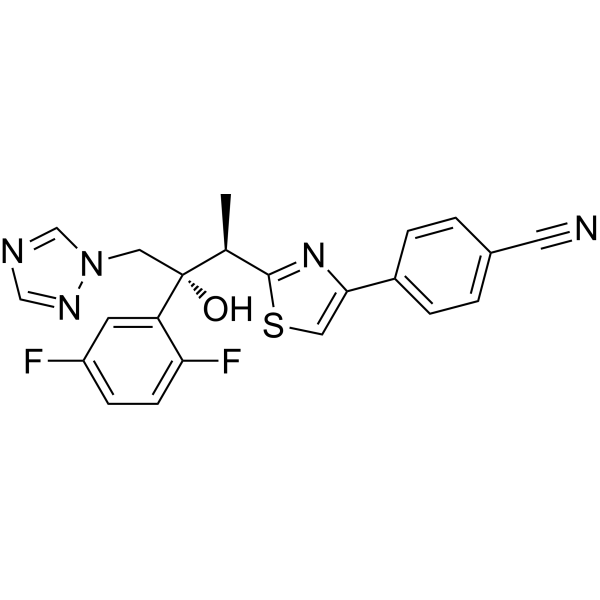
Isavuconazole (BAL-4815) is a triazole proagent with antifungal activity against yeasts, molds, and dimorphic fungi. Isavuconazole inhibits ergosterol biosynthesis and results in the disruption of fungal membrane structure and function. Isavuconazole is a moderate inhibitor of CYP3A4.
|
-
-
- HY-19937A
-
|
|
PPAR
|
Metabolic Disease
|
|
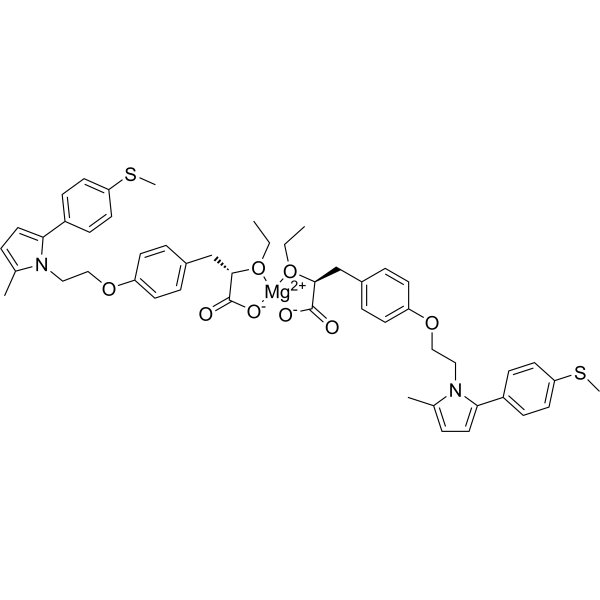
Saroglitazar magnesium is a novel peroxisome proliferator-activated receptor (PPAR) agonist with predominant PPARα and moderate PPARγ activity with EC50 values of 0.65 pM and 3 nM in HepG2 cells, respectively.
|
-
-
- HY-A0021
-
|
|
5-HT Receptor
Flavivirus
|
Infection
Cardiovascular Disease
Neurological Disease
|
|
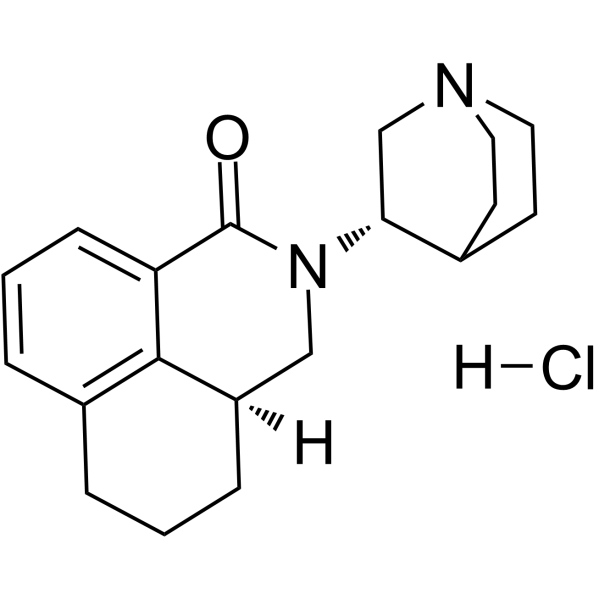
Palonosetron hydrochloride is a 5-HT3 antagonist primarily used to prevent acute, delayed, and overall chemotherapy-induced nausea and vomiting. In addition, Palonosetron hydrochloride exhibits moderate anti-flavivirus activity and potent anti-Zika virus activity in mammalian cells. Palonosetron hydrochloride also possesses antidepressant activity .
|
-
-
- HY-B1299A
-
-
-
- HY-101298
-
|
|
Kinesin
|
Neurological Disease
|
|
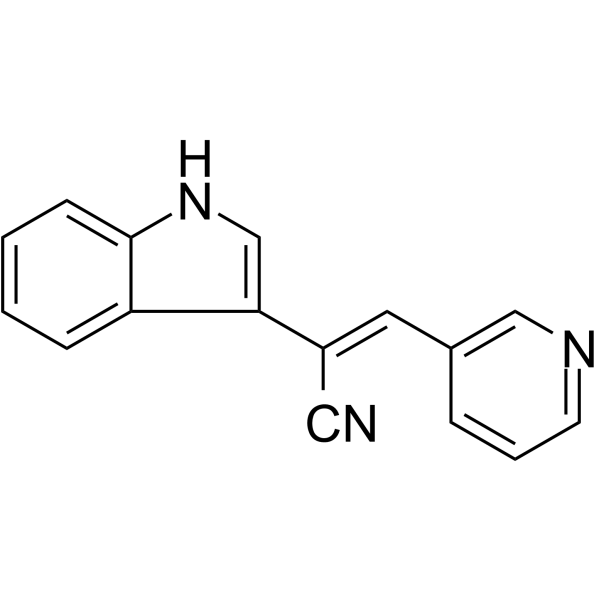
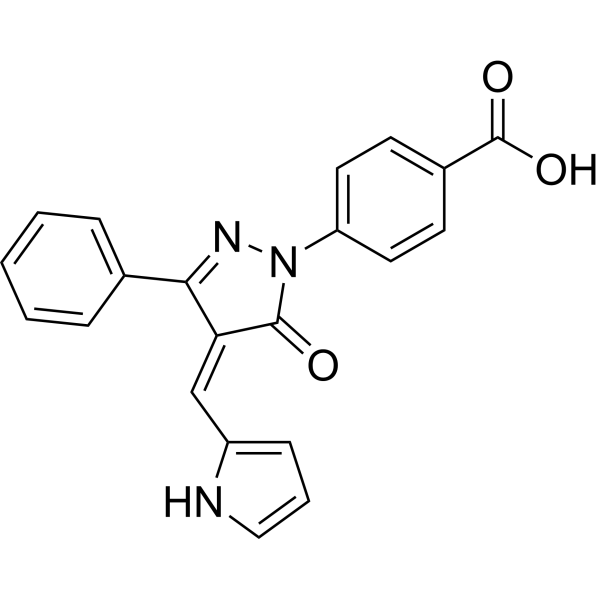
Paprotrain is a cell-permeable inhibitor of the kinesin MKLP-2, inhibits the ATPase activity of MKLP-2 with an IC50 of 1.35 μM and a Ki of 3.36 μM and shows a moderate inhibition activity on DYRK1A with an IC50 of 5.5 μM.
|
-
-
- HY-N5009
-
|
|
Bacterial
|
Infection
|
|
Thermopsine is a quinolone-type alkaloid. Thermopsine exhibits low to moderate anti-E. faecalis activity .
|
-
-
- HY-N10420
-
|
|
HIV Protease
|
Infection
|
|
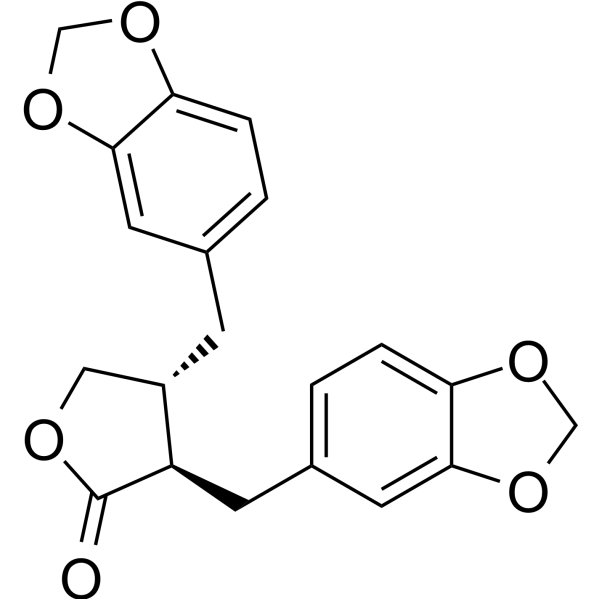
Hinokinin (Compound 1) is a compound isolated from the stems of Hypoestes aristate. Hinokinin exhibits moderate activity of HIV-1 protease enzyme .
|
-
-
- HY-N2198
-
|
|
Topoisomerase
Apoptosis
|
Cancer
|
|
Podocarpusflavone A is a DNA topoisomerase I inhibitor. Podocarpusflavone A has moderated anti-proliferative activity and induces cell apoptosis in MCF-7. Podocarpusflavone A is developing anti-tumor agents .
|
-
-
- HY-N1633
-
|
|
Fungal
|
Infection
|
|
1-Methoxycarbonyl-β-carboline is a phytopathogenic fungal growth inhibitor with moderate to weak in vitro antifungal activity. 1-Methoxycarbonyl-β-carboline can be used for the research of phytopathogenic fungal infections .
|
-
-
- HY-N8167
-
|
Kaempferol 3-O-rhamnosylgentiobioside
|
COX
|
Inflammation/Immunology
|
|
Plantanone B is a moderate antioxidant-agent with an IC50 of 169.8±5.2 μM. Plantanone B shows significant ovine COX-1 and moderate COX-2 inhibitory activities. Plantanone B has the potential for inflammation-related diseases research .
|
-
-
- HY-N2395
-
|
|
Elastase
|
Cancer
|
|
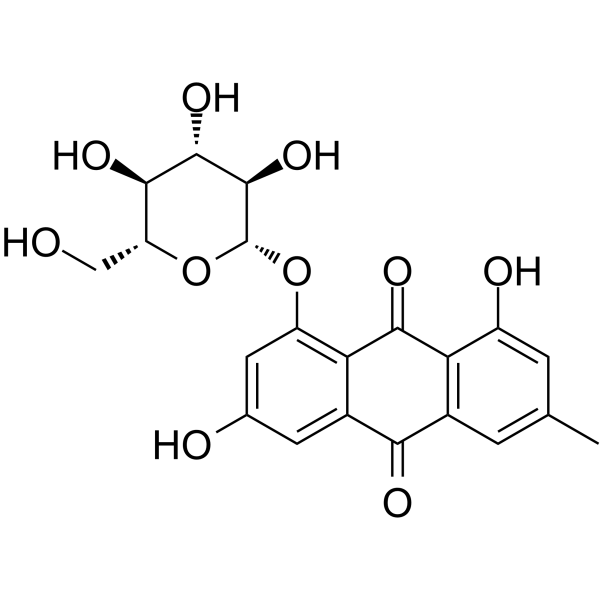
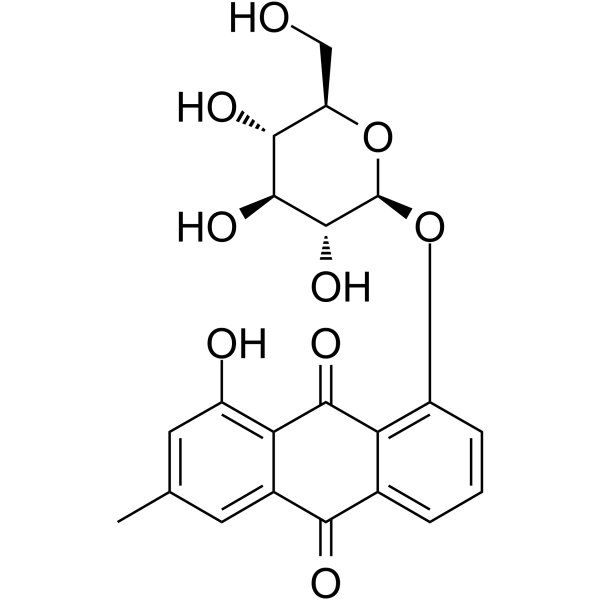
Chrysophanol 8-O-glucoside, from the roots of Rumex acetosa, shows moderate elastase inhibition activity .
|
-
-
- HY-N0495
-
Aloenin
1 Publications Verification
Aloenin A
|
Beta-secretase
|
Neurological Disease
|
|
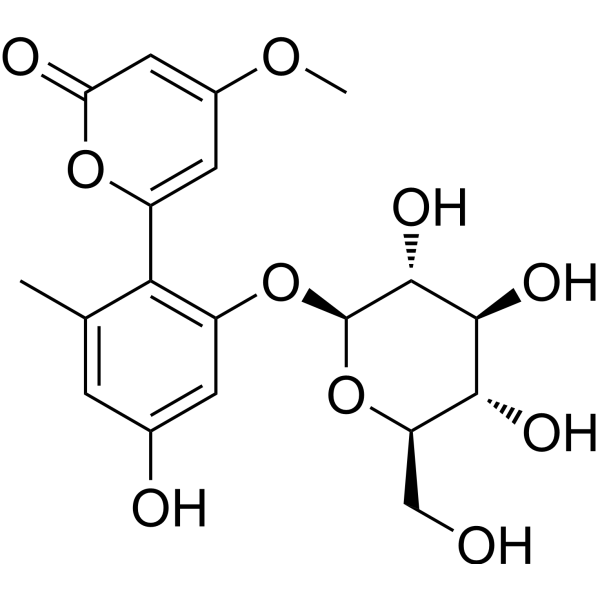
Aloenin (Aloenin A) is a kind of natural product, has effective clearing and free radical activity, and has moderate inhibitory activity on β-secretion (BACE) (IC50=14.95 μg/mL). Aloenin suppresses peritoneal hypertrophy in large rats and suppresses its release.
|
-
-
- HY-N4151
-
|
|
Others
|
Cancer
|
|
Chrysophanein is a chrysophanol glycoside from leaves and roots of Aloe hijazensis. Chrysophanein shows a moderate cytotoxic activity against several carcinoma cells lines .
|
-
-
- HY-N1077
-
|
|
Cholinesterase (ChE)
Endogenous Metabolite
|
Others
|
|
Vomifoliol, a compound related to abscisie acid (ABA), has a modified 2,4-pentadiene side chain and has activity equal to that displayed by ABA. Vomifoliol exhibits antiacetylcholinesterase activity and displays moderate antileishmanial activity .
|
-
-
- HY-129671
-
|
5β-Hydroxyecdysterone
|
Parasite
Fungal
|
Infection
|
|
Polypodine B is a natural ecdysone ester isolated from the bark of Dacrydium intermedium. Polypodine B significantly inhibits the activity of Acanthamoeba castellani. Polypodine B has moderate antifungal activity. Polypodine B can be used for research on parasitic diseases and fungal infections .
|
-
-
- HY-N6007
-
|
|
Apoptosis
|
Infection
Inflammation/Immunology
Cancer
|
|
Chrysosplenol D is a methoxy flavonoid that induces ERK1/2-mediated apoptosis in triple negative human breast cancer cells. Chrysosplenol D also exhibits anti-inflammatory and moderate antitrypanosomal activities .
|
-
-
- HY-N9447
-
-
-
- HY-121069
-
|
Dichlorophenyl imidazoldioxolan
|
Fungal
|
Others
|
|
Elubiol (Dichlorophenyl imidazoldioxolan) has moderate sebum-inhibiting activity and can be used in the treatment of oily skin or dandruff .
|
-
-
- HY-N10912
-
|
|
Others
|
Infection
|
|
Shizukanolide, a sesquiterpene lactone, can be isolated from Chloranthus japonicus (Chloranthaceae). The dehydro-compound of Shizukanolide, shows moderate antifungal activity .
|
-
-
- HY-W008864
-
|
β-Octaacetyllactose
|
Fungal
|
Infection
|
|
Lactose octaacetate shows mild to moderate antifungal activity against some fungi, but it has low or no activity against bacteria and yeast. Lactose octaacetate shows low cytotoxicity to MDBK cells, Hep-2 and MDCK cells. Lactose octaacetate has antiviral activity against PV-1 .
|
-
-
- HY-N10420R
-
|
(-)-Hinokinin (Standard)
|
Reference Standards
HIV Protease
|
Infection
|
|
Hinokinin (Standard) is the analytical standard of Hinokinin. This product is intended for research and analytical applications. Hinokinin (Compound 1) is a compound isolated from the stems of Hypoestes aristate. Hinokinin exhibits moderate activity of HIV-1 protease enzyme .
|
-
-
- HY-77195
-
|
|
Polo-like Kinase (PLK)
|
Cancer
|
|
Poloxime, a hydrolysis product of poloxin, is a non-ATP-competitive Plk1 inhibitor, with moderate Plk1 inhibitory activity.
|
-
-
- HY-N11949
-
|
|
HIV
|
Infection
|
|
Interiorin can be isolated from Kadsura heteroclita and has moderate anti-HIV activity with an EC50 value of 1.6 lg/mL .
|
-
-
- HY-N7990
-
|
|
Others
|
Neurological Disease
|
|
Scheffoleoside A is a neuroprotective agent can be derived from Centella asiatica. Scheffoleoside A exhibits moderate activity in inhibiting 6-OHDA-induced cytotoxicity .
|
-
-
- HY-105634
-
|
|
Progesterone Receptor
|
Endocrinology
Cancer
|
|
Nomegestrol is a potent and orally available progestin, acts as a selective full progesterone receptor agonist, with a Kd of 5.44 nM for rat uterine progesterone receptor, and has moderate antiandrogenic activity and strong antiestrogenic activity.
|
-
-
- HY-W660701
-
-
-
- HY-N13075
-
|
|
Antibiotic
Bacterial
|
Infection
|
|
Mycoplanecin A is a cyclic peptide antibiotic. Mycoplanecin A has strong anti-mycobacterial, luteus, and Hypococcus activity. Mycoplanecin A also has moderate anti-Xanthomonas oryzae activity. Mycoplanecin A also has antibacterial effect on some strains of Actinomycetes .
|
-
-
- HY-W019829
-
|
|
Tyrosinase
Parasite
|
Infection
|
|
Polyphyllin C (compound 2) is a spirostanol saponin. Polyphyllin C exhibits mild (IC50=36.87 µM) activities against the tyrosinase and moderate (IC50=1.59 µg/mL) antileishmanial activities .
|
-
-
- HY-117108
-
|
|
Antibiotic
Bacterial
|
Infection
|
|
Nocardicin A is a beta-lactam antibiotic with selective antibacterial activity. Nocardicin A has moderate antibacterial activity against a broad spectrum of Gram-negative bacteria including Proteus and Pseudomonas; it has no inhibitory effect on Staphylococcus, Mycobacterium, fungi, and yeast .
|
-
-
- HY-A0018
-
|
|
5-HT Receptor
Flavivirus
|
Infection
Cardiovascular Disease
Neurological Disease
|
|
Palonosetron is a 5-HT3 antagonist primarily used to prevent acute, delayed, and overall chemotherapy-induced nausea and vomiting. Palonosetron exhibits moderate anti-flavivirus activity and potent anti-Zika virus activity in mammalian cells. Palonosetron also possesses antidepressant activity .
|
-
-
- HY-B2044
-
-
-
- HY-169507
-
-
-
- HY-N8764
-
-
-
- HY-N14791
-
|
|
Bacterial
|
Infection
|
|
Amicoumacin C shows moderate activity against bacteria, but does not exhibit any pharmacol activity .
|
-
-
- HY-145112
-
-
-
- HY-129280
-
|
|
Bacterial
|
Infection
|
|
Janthinocin A has strong activity of anti-Gram-positive bacteria and moderate anti-Gram-negative bacteria .
|
-
-
- HY-P5698
-
|
|
Bacterial
|
Infection
|
|
Cyclopetide 1 (Compound 1) is an antimicrobial peptide with moderate activity against B. subtilis, with a MIC of 25 μg/mL .
|
-
-
- HY-N14125
-
|
|
Bacterial
|
Infection
|
|
Chloroquinocin has moderate activity against Gram-positive bacteria, including methicillin-resistant Staphylococcus aureus (MRSA) .
|
-
-
- HY-P5699
-
|
|
Bacterial
|
Infection
|
|
Cyclopetide 2 (Compound 2) is an antimicrobial peptide with moderate activity against B. subtilis, with a MIC of 50 μg/mL .
|
-
-
- HY-N14310
-
|
|
Antibiotic
Bacterial
|
Infection
|
|
Hongoquercin A is a sesquiterpene antibiotic. Hongoquercin A has moderate anti-Gram-positive bacteria activity with a MIC of 4-8 μg/mL .
|
-
-
- HY-146162
-
|
|
Endogenous Metabolite
|
Cancer
|
|
Colletotrichalactones A is a polyketide that display moderate-to-potent cytotoxic activities against MCF7 cells with an IC50 of 35.06 µM .
|
-
-
- HY-N3789
-
|
|
Bacterial
|
Infection
|
|
Dunnianol is a natural sesqui-neoligan with moderate antibacterial activity. Dunnianol inhibits Staphylococcus aureus and methicillin-resistant Staphylococcus aureus (MRSA).
|
-
-
- HY-N14324
-
|
|
Antibiotic
Fungal
Herbicide
|
Infection
|
|
Hydranthomycin is an antibiotic. Hydranthomycin has moderate antifungal activity, and the MIC of Pyricularia oryzae is 25 μg/mL. Hydranthomycin inhibits the growth of Euglena gracilis and has herbicidal activity .
|
-
-
- HY-N10114
-
|
|
Others
|
Inflammation/Immunology
|
|
Hyperectumine exhibits moderate anti-inflammatory activity via suppression of LPS-activated inflammatory mediators in RAW 264.7 macrophage cells.
|
-
-
- HY-N11965
-
-
-
- HY-B2044R
-
|
|
Reference Standards
Androgen Receptor
|
Endocrinology
|
|
Bromopropylate (Standard) is the analytical standard of Bromopropylate. This product is intended for research and analytical applications. Bromopropylate is a pesticide with moderate anti-androgenic activities .
|
-
-
- HY-156359
-
|
|
Bacterial
|
Others
|
|
Tuberculosis inhibitor 10 shows moderate inhibitory effect on the enzymatic activity of MSMEG_6649. Tuberculosis inhibitor 10 enhances the inhibitory activity of PAS against mycobacteria .
|
-
-
- HY-162889
-
|
|
Tyrosinase
|
Others
|
|
Tyrosinase-IN-36 is a moderate Tyrosinase inhibitor, with an inhibition percentage of 42.75% at 100 μM compared to kojic acid, and it exhibits antioxidant activity .
|
-
-
- HY-N12538
-
|
|
Parasite
|
Infection
|
|
trans-Cinnamic anhydride is a Parasite inhibitor tnat can be isolated from Cinnamomum zeylanicum and exhibits moderate activity against Plasmodium falciparum .
|
-
- HY-N11655
-
|
|
Others
|
Others
|
|
Antioxidant agent-10 (Compound 3) is an antioxidant agent that exhibits moderate DPPH scavenging activity with an EC50 of 33.2 μg/mL .
|
-
- HY-N14509
-
|
|
Fungal
|
Infection
|
|
Queenslandon has moderate anti-streptomyces, penicillium, Penicillium, Aspergillus fumigatus, aspergillus flavus and other fungal activities. And it has no effect on bacteria .
|
-
- HY-N8355
-
|
|
Endogenous Metabolite
|
Infection
|
|
Beauveriolide I is the metabolite of Entomopathogenic Fungi Beauveria sp.. Beauveriolide I (1) exhibits moderate insecticidal activities against Spodoptera litura and Callosobruchus chinensis .
|
-
- HY-N8443
-
|
|
Bacterial
|
Infection
|
|
Isoaltenuene is an anti-bacterial agent with moderate activity against Staphylococcus aureus. Isoaltenuene can be isolated from fungus Alternaria alternate cib-137 .
|
-
- HY-B2056
-
|
CELA W 524
|
Fungal
|
Infection
Inflammation/Immunology
|
|
Triforine (CELA W 524), a systemic fungicide, was shown to display a moderate to distinct fungitoxic activity in vitro towards several pathogenic and non-pathogenic fungi .
|
-
- HY-W152146
-
|
|
Fungal
|
Others
|
|
Methylxanthoxylin is a ketone that can be isolated from the leaves and bark of Acradenia Jianklinii . Methylxanthoxylin exhibited moderate antifungal activity against Candida albicans and Penicillium expansum .
|
-
- HY-N14582
-
|
|
Antibiotic
Fungal
|
Infection
|
|
Glomosporin is a cyclic ester peptide antifungal antibiotic, and it has moderate anti-Aspergillus flavus (including Aspergillus Niger and Aspergillus Niger), yeast activity (MIC is 16 μg/mL) .
|
-
- HY-180480
-
|
|
EGFR
|
Cancer
|
|
NSC 104999 is a Grb7 SH2 domain binder with moderate affinity (Kd = 32.3 μM). NSC 104999 exhibits anticancer activity against breast cancer .
|
-
- HY-N16652
-
|
|
Others
|
Inflammation/Immunology
Cancer
|
|
Foeniculoside I is a stilbene trimer glycoside compound found in Foeniculum vulgare. Foeniculoside I has strong antioxidant activity and moderate hyaluronidase inhibitory activity. Foeniculoside I can be used for the researches of cancer, inflammation and immunology .
|
-
- HY-152091
-
|
|
Fungal
|
Infection
Cancer
|
|
Antiproliferative agent-18 (Compound 5k) is an anti-proliferative agent. Antiproliferative agent-18 also displays moderate anti-bacterial and anti-fungi activity .
|
-
- HY-N14985
-
|
|
Fungal
Bacterial
|
Infection
|
|
Dictyopanine A is found in the strain of Dictylpanus sp. Hki 0181. The antibacterial spectrum is narrow, and it has moderate antibacterial activity only against some filamentous fungi and Gram-positive bacteria .
|
-
- HY-N1859
-
-
- HY-N13949
-
|
|
Antibiotic
Bacterial
|
Infection
|
|
Seitomycin is an anthraquinone antibiotic. Seitomycin has moderate activity against Gram-positive bacteria such as Staphylococcus aureus and Bacillus subtilis, Gram-negative bacteria such as Escherichia coli and green Streptomyces chlorophyllus .
|
-
- HY-109706
-
|
|
Bacterial
Fungal
|
Infection
|
|
(Rac)-CPI-098 shows antibacterial activity. (Rac)-CPI-098 exhibits superior anti-fungal activity against Monascus ruber, better activity against Aspergillus fumigates, good activity against Aspergillus niger and Aspergillus parasites and moderate activity against Candida albicans .
|
-
- HY-P2087
-
|
|
Insecticide
Parasite
Bacterial
|
Infection
|
|
Bassianolide is a cyclooligomer depsipeptide secondary metabolite. Bassianolide is an insecticidal virulence factor of Beauveria bassiana. Bassianolide inhibits acetylcholine-induced smooth muscle contraction, and shows moderate antiplasmodial and anti-mycobacterial activities .
|
-
- HY-136828
-
|
|
Antibiotic
Bacterial
|
Infection
|
|
LL-BM123α is a basic antibiotic isolated from Nocardia sp. LL-BM123α exhibits moderate activity against Gram-negative bacteria.
|
-
- HY-19289
-
|
RWJ 54428
|
Bacterial
|
Infection
|
|
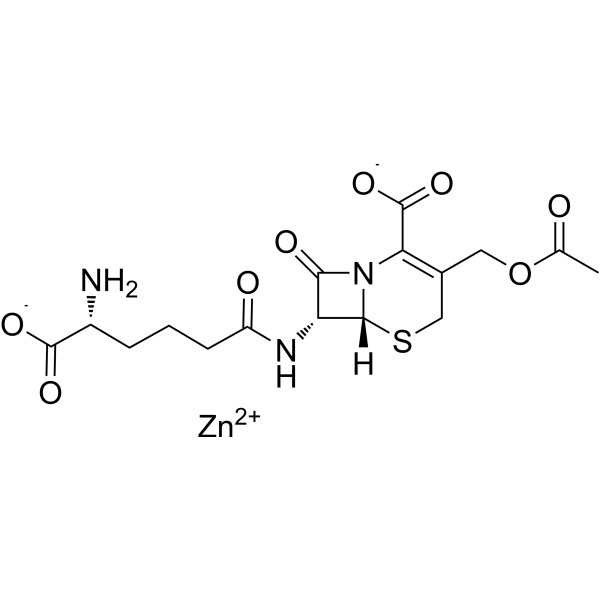
MC-02479 is a novel cephalosporin. RWJ-54428 has good activity against most of the organisms tested, including methicillin-resistant staphylococci, E. faecalis, and penicillin-resistant pneumococci, and has moderate activity against E. faecium .
|
-
- HY-N14302
-
|
|
Antibiotic
Bacterial
|
Infection
Cancer
|
|
44-HomooIigomycin A is an antitumor antibiotic. 44-Homooligomycin A has activity against fungi such as Aspergillus, Penicillium and Fusarium, but not against yeast and bacteria. 44-Homooligomycin A has moderate anti-tumor activity against Colon 26 in vivo .
|
-
- HY-126237
-
|
|
Fungal
|
Infection
|
|
Acetyllovastatin, a acetate of Lovastatin, presentes a moderate inhibitory effect against the enzyme acetylcholinesterase with an IC50 of 79 μg/mL. Lovastatin has been found to display antifungal activity, and suppresses proliferation of a number of transformed cell lines .
|
-
- HY-N11501
-
|
|
STAT
Apoptosis
|
Cancer
|
|
7-epi-Isogarcinol is a polycyclic polyprenylated acylphloroglucinol (PPAP), with moderate antiproliferative activity. 7-epi-Isogarcinol blocks STAT3 signaling pathway, to induce apoptosis and inhibit cell migration .
|
-
- HY-N12635
-
|
|
Cytochrome P450
|
Neurological Disease
|
|
Levinoid C is a Cytochrome P450-modified bacterial terpenoid. Levinoid C shows moderate neuroprotective activity against glutamate-induced excitotoxicity cell model with an EC50 of 21 μM .
|
-
- HY-N14271
-
|
Angelmicin B
|
Src
Bacterial
|
Infection
Cancer
|
|
Hibarimicin B (Angelmicin B) is a tyrosine kinase inhibitor. It selectively inhibits the activity of src tyrosine kinase without affecting protein kinase A and C. It also has moderate anti-Gram-positive bacteria activity with a MIC of 0.8-12.56 μg/mL .
|
-
- HY-129329
-
|
|
Antibiotic
Bacterial
|
Infection
|
|
Lankamycin, a macrolide antibiotic, shows moderate antimicrobial activity against several gram-positive bacteria, acting as a synergistic pair with carbocyclic antibiotic Lankacidin C (HY-121412) by binding to the ribosome exit tunnel .
|
-
- HY-155410
-
|
|
Endogenous Metabolite
|
Metabolic Disease
|
|
HPSE1-IN-1 (compound 16) is a selective inhibitor of Heparanase-1 (HPSE1) with moderate inhibitory activity against exo-β-d-glucuronidase (GUSβ) and glucocerebrosidase (GBA) .
|
-
- HY-N14305
-
|
|
Antibiotic
Bacterial
|
Infection
Cancer
|
|
44-HomooIigomycin B is an antitumor antibiotic. 44-Homooligomycin B has activity against fungi such as Aspergillus, Penicillium and Fusarium, but not against yeast and bacteria. 44-Homooligomycin B has moderate anti-tumor activity against Colon 26 in vivo .
|
-
- HY-N10267
-
|
|
Fungal
|
Infection
|
|
Carviolin is a compound isolated from the mycelia of the ascomycete Neobulgaria pura. Carviolin inhibits the formation of appressoria in germinating conidia of Magnaporthe grisea on inductive (hydrophobic) surface. Carviolin exhibits moderate cytotoxic, but no antifungal, antibacterial, or phytotoxic activities .
|
-
- HY-N15583
-
|
|
Fungal
|
Infection
|
|
Purpuride is a sesquiterpene ester found in aciduric fungi. Purpuride shows moderate antibacterial activities against Candida albicans, Enterobacter aerogenes and Pseudomonas aeruginosa with MIC values ranging from 1.2 to 3.3 μM .
|
-
- HY-N8443S
-
|
|
Isotope-Labeled Compounds
Bacterial
|
Infection
|
|
Isoaltenuene-d6 is deuterium labeled Isoaltenuene. Isoaltenuene is an anti-bacterial agent with moderate activity against Staphylococcus aureus. Isoaltenuene can be isolated from fungus Alternaria alternate cib-137 .
|
-
- HY-N5045
-
|
|
Others
|
Inflammation/Immunology
|
|
Jionoside A1 isolated from Radix Rehmanniae Praeparata displays dose dependent immune-enhancement activity and possesses moderate protective activities on H2O2-treated SH-SY5Y cells .
|
-
- HY-N3837
-
|
Isotaraxerol; 3α-Taraxerol
|
Bacterial
|
Infection
|
|
Epitaraxerol (compound 6) is a natural product isolated from the leaves of E. neriifolia. Epitaraxerol shows moderate antifungal activity against C. albicans and low antimicrobial activity against T. mentagrophytes, A. niger, S. aureus, E. coli, P. aeruginosa, and B. subtilis .
|
-
- HY-N14273
-
|
|
Src
Bacterial
|
Infection
Cancer
|
|
Hibarimicin C is a tyrosine kinase inhibitor. Hibarimicin C selectively inhibits the activity of src tyrosine kinase without affecting protein kinase A and C. Hibarimicin C also has moderate anti-Gram-positive bacteria activity with a MIC of 0.8-12.56 μg/mL .
|
-
- HY-N14689
-
|
|
Src
|
Infection
Cancer
|
|
Hibarimicin D is a tyrosine kinase inhibitor. Hibarimicin D selectively inhibits the activity of src tyrosine kinase without affecting protein kinase A and C. Hibarimicin D also has moderate anti-Gram-positive bacteria activity with a MIC of 0.8-12.56 μg/mL .
|
-
- HY-146023
-
|
|
Bacterial
Fungal
|
Infection
|
|
Antifungal agent 27 (compound 7) is a antifungal agent. Antifungal agent 27 shows moderate antibacterial and weak antifungal activities against MRSA and C. albicans SS5314, with MIC values of 8 and 32 μg/mL, respectively .
|
-
- HY-120506
-
|
|
Bradykinin Receptor
|
Others
|
|
L-366811 is a compound with bradykinin agonist activity, with activity to stimulate phosphatidylinositol turnover and induce uterine contraction. L-366811 stimulates phosphatidylinositol turnover in rat uterine slices and induces rat uterine contraction in vitro, with moderate affinity for the [3H]BK binding site.
|
-
- HY-N14685
-
|
|
Antibiotic
Fungal
|
Infection
|
|
Heptaibin is a peptaibol antifungal antibiotic. Heptaibin has the activity against Gram-positive bacteria (MIC is 8 μg/mL) such as Staphylococcus aureus and fungi (MIC is 13-32 μg/mL) such as Aspergillus, Candida albicans and cryptococcus neofordii, and it has moderate anti-Rhabditella pseudoelongata activity (MIC is 50 μg/mL) .
|
-
- HY-B2056R
-
|
CELA W 524 (Standard)
|
Reference Standards
Fungal
|
Infection
Inflammation/Immunology
|
|
Triforine (Standard) is the analytical standard of Triforine. This product is intended for research and analytical applications. Triforine (CELA W 524), a systemic fungicide, was shown to display a moderate to distinct fungitoxic activity in vitro towards several pathogenic and non-pathogenic fungi .
|
-
- HY-N16412
-
|
Citreomontanine
|
Drug Intermediate
|
Others
|
|
Citreomontanin (Citreomontanine) (Compound 3), an α‑Pyrone polyketide, is an intermediate of Citreoviripyrone A. Citreomontanin can be isolated from the mycelium of endophytic Penicillium sp. in Catharanthus roseus. Citreoviripyrone A has a moderate inhibitory activity on HCT116 cells growth .
|
-
- HY-N14267
-
|
|
Src
Bacterial
|
Infection
Cancer
|
|
Hibarimicin A is a tyrosine kinase inhibitor found in Microbispora rosea subsp. hibaria. Hibarimicin A selectively inhibits the activity of src tyrosine kinase without affecting protein kinase A and C. Hibarimicin A also has moderate anti-Gram-positive bacteria activity with a MIC of 0.8-12.56 μg/mL .
|
-
- HY-N16054
-
|
(+)-Cochliomycin A
|
Bacterial
|
Infection
|
|
Cochliomycin A ((+)-Cochliomycin A) can be isolated from Gorgonian-Derived Fungus Cochliobolus lunatus. Cochliomycin A has antifouling activity (EC50: 1.2 μg/mL). Cochliomycin A inhibits barnacle larval settlement by stimulating the NO/cGMP pathway. Cochliomycin A also has moderate antibacterial activity against S. aureus .
|
-
- HY-118118
-
|
|
Fungal
|
Infection
|
|
Phlebiakauranol aldehyde is an antifungal and cytotoxic metabolite with strong antifungal activity. Phlebiakauranol aldehyde exhibits significant antibacterial and cytotoxic activities against a variety of plant pathogens. The aldehyde group and high number of hydroxyl groups of Phlebiakauranol aldehyde are considered to be the main reasons for its biological activity. The two acetic acid derivatives of Phlebiakauranol aldehyde only exhibit very weak antifungal and antibacterial activities and moderate cytotoxic activity .
|
-
- HY-N17729
-
|
|
Reactive Oxygen Species (ROS)
|
Others
|
|
Michelenolide is an antioxidant and ferrous ion chelator. Michelenolide can be found in the stems of Michelia alba, with moderate antioxidant activity, moderate ferrous ion chelating properties .
|
-
- HY-N9754
-
-
- HY-N14108
-
|
|
Bacterial
|
Infection
|
|
Chlorocardicin is a monocyclic beta-lactam. Chlorocardicin has moderate in vitro activity against Enterobacteriaceae and Pseudomonas aeruginosa .
|
-
- HY-N14317
-
|
|
Others
|
Metabolic Disease
|
|
Feigrisolide A is a lactone found in Streptomyces griseus. Feigrisolide A has moderate inhibitory activity of 3α-hydroxysterol dehydrogenase .
|
-
- HY-N14321
-
|
|
Others
|
Metabolic Disease
|
|
Feigrisolide D is a lactone found in Streptomyces griseus. Feigrisolide D has moderate inhibitory activity of 3α-hydroxysterol dehydrogenase .
|
-
- HY-N17748
-
|
|
Others
|
Cancer
|
|
Entadoside A is an Entadoside. Entadoside A can be isolated from kernel nuts of E. phaseoloides. Entadoside A exhibits moderate cytotoxic activity against non-small cell lung cancer cells .
|
-
- HY-183792
-
|
|
Bacterial
Reactive Oxygen Species (ROS)
|
Infection
|
|
Antibacterial agent 347 (Compound 4d) is an Antibacterial agent. Antibacterial agent 347 exhibits selective antibacterial activity against Streptococcus mutans. Antibacterial agent 347 shows moderate ABTS• + free radical scavenging activity .
|
-
- HY-155862
-
|
|
Bacterial
|
Infection
|
|
Antibacterial agent 152 (Compound 19) is an antibacterial agent. Antibacterial agent 152 displays moderate activity (MIC = 8-16 μg/mL) against Mycobacterium smegmatis MC2-155 .
|
-
- HY-N14318
-
|
|
Fungal
|
Infection
|
|
Feigrisolide B is a lactone found in Streptomyces griseus. Feigrisolide B has the activity of resisting Sporobolomyces ochreata and inhibiting CoxsacKie virus B3. Feigrisolide B also has moderate inhibitory activity of 3α-hydroxysterol dehydrogenase .
|
-
- HY-148823
-
|
|
Aquaporin
|
Others
|
|
RF03176 is an aquaporin-9 (AQP-9) inhibitor, also exhibiting moderate inhibition effects on mAQP3 and mAQP7. RF03176 shows no activity against mAQP8 .
|
-
- HY-111396
-
|
|
Bacterial
|
Infection
|
|
PC58538 is a cell division inhibitor, targeting to FtsZ. PC58538 shows moderate antibacterial activity, and inhibits cell division in vegetative cells of wild-type B. subtilis. PC58538 is also known to modulate the rate of GTP hydrolysis .
|
-
- HY-146754
-
|
|
MMP
Apoptosis
|
Cancer
|
|
MMP2-IN-1 is a moderate potenet MMP2 inhibitor with IC50 of 6.8 µM. MMP2-IN-1 exhibits remarkable antiproliferative activity in certain cancer cells by arresting the cell cycle and inducing apoptosis .
|
-
- HY-113632
-
|
10Z-Debromohymenialdisine
|
Raf
MEK
|
Cancer
|
|
Debromohymenialdisine (10Z-Debromohymenialdisine) is a pyrrole alkaloid. Debromohymenialdisine has moderate inhibitory activity with an IC50 value of 881 nM in the initial Raf/MEK-1/MAPK signaling cascade assay. Debromohymenialdisine can be used for the research of proliferation and differentiation .
|
-
- HY-P10547
-
|
MAC-1 peptide
|
Bacterial
|
Infection
|
|
Macropin (MAC-1 peptide) is an antimicrobial peptide found in the venom of the solitary bee Macropis fulvipes. Macropin has antibacterial activity against both Gram-positive and Gram-negative bacteria, and also exhibits inhibitory activity against fungi and moderate hemolytic activity against human erythrocytes. Macropin can be used in research on anti-infective therapy .
|
-
- HY-N15678
-
|
1,3,6,8-THAQ
|
Bacterial
|
Infection
Cancer
|
|
Rheoemodin is an anthraquinone and antibacterial agent. Rheoemodin can be isolated from Cordyceps morakotii BCC 56811. Rheoemodin exhibits antibacterial activity against Acinetobacter baumannii (MIC: 12.5 μg/mL). Rheoemodin also exhibits weak to moderate antimycobacterial and antifungal activity. Rheoemodin also exhibits anticancer activity against breast cancer and small cell lung cancer .
|
-
- HY-N9229
-
|
|
NO Synthase
Bacterial
|
Infection
Inflammation/Immunology
|
|
Myricadenin A is an iNOS inhibitor, capable of effectively inhibiting the production of NO (EC₅₀ = 18.1 μM). Myricadenin A has moderate ABTS free radical scavenging activity (SC₅₀ = 175.4 μM) and relatively weak anti-tuberculosis activity (MIC = 80.0 μg/mL). Myricadenin A can be used in inflammation-related research .
|
-
- HY-P11132
-
|
|
Bacterial
|
Infection
|
|
RFQF4 is a nanonet-forming peptide and antibacterial agent. RFQF4 exhibits excellent bacterial capture capability coupled with moderate antibacterial activity. RFQF4 shows bactericidal activity against E. coli, S. typhimurium, S. aureus, L. monocytogenes, and S. epidermidis (IC50: 4.89-21.85 μM) .
|
-
- HY-143458
-
|
|
FAK
PROTACs
|
Cancer
|
|
FAK PROTAC B5 (Compound B5) is a FAK PROTAC degrader with an IC50 value of 14.9 nM. FAK PROTAC B5 presents strong FAK degradation activity, antiproliferative activity, outstanding plasma stability and moderate membrane permeability. FAK PROTAC B5 inhibits cell migration and invasion .
|
-
- HY-N0720
-
|
|
Apoptosis
DNA/RNA Synthesis
|
Inflammation/Immunology
Cancer
|
|
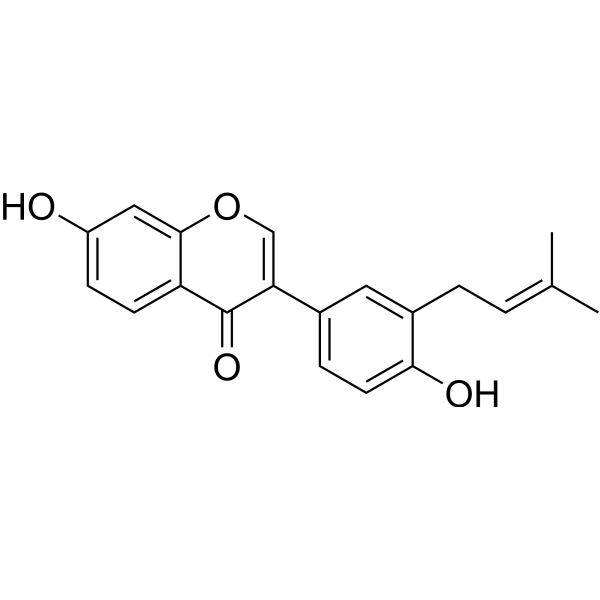
Neobavaisoflavone, a flavonoid, is isolated from the seeds of Psoralea corylifolia. Neobavaisoflavone exhibits anti-inflammatory, anti-cancer and anti-oxidation activities. Neobavaisoflavone inhibits DNA polymerase at moderate to high concentrations. Neobavaisoflavone also inhibits platelet aggregation .
|
-
- HY-N2395R
-
|
|
Reference Standards
Elastase
|
Cancer
|
|
Chrysophanol 8-O-glucoside (Standard) is the analytical standard of Chrysophanol 8-O-glucoside. This product is intended for research and analytical applications. Chrysophanol 8-O-glucoside, from the roots of Rumex acetosa, shows moderate elastase inhibition activity .
|
-
- HY-113796
-
|
|
Others
|
Cancer
|
|
Kopsoffinol, a bisindole alkaloid, shows in vitro growth inhibitory activity against human PC-3, HCT-116, MCF-7, and A549 cells and moderate effects in reversing multidrug-resistance in vincristine-resistant human KB cells .
|
-
- HY-N15199
-
|
|
Others
|
Cancer
|
|
Schisanlactone A is a natural triterpenoid compound. Schisanlactone A has moderate cytotoxicity, with its IC50 value being 63.3 μM against KB cells. Schisanlactone A does not possess antibacterial or tyrosinase inhibitory activities. Schisanlactone A can be used for the study of oral epidermoid carcinoma .
|
-
- HY-N10441
-
|
|
Parasite
|
Infection
|
|
3β-Hydroxy-hop-22(29)-ene (compound 3) is a potent antiparasitic agent. 3β-Hydroxy-hop-22(29)-ene shows moderate activity against Trypanosoma cruzi and Leishmania mexicana .
|
-
- HY-173213
-
|
|
Parasite
|
Infection
Inflammation/Immunology
|
Antileishmanial agent-33 (4e), a hybrid compound of grandisin and machilin G, shows moderate activity on promastigotes (IC50 of 38.1 μM). Antileishmanial agent-33 (4e) shows potential as an antileishmanial agent for the research of cutaneous leishmaniasis (CL) .
|
-
- HY-N4294
-
|
|
FXR
Insecticide
|
Infection
Metabolic Disease
Inflammation/Immunology
|
|
Arjungenin, a pentacyclic triterpenoid compound, is a FXR agonist. Arjungenin can improve insulin sensitivity by regulating the function of fat cells. Arjungenin exhibits moderate free radical scavenging activity. Arjungenin has growth inhibitory activity against the insect Spilarctia obliqua. Arjungenin has significant antiviral activity against a series of viruses such as chikungunya Virus (CHIKV) .
|
-
- HY-120531
-
|
|
Histamine Receptor
|
Neurological Disease
|
|
UR-PI376 is a potent and selective histamine H4 receptor (H4R) agonist with a pEC50 value of 7.47. UR-PI376 shows negligible hH1R and hH2R activities and moderate inverse agonistic activity at the hH3R .
|
-
- HY-N14111
-
|
|
Bacterial
Fungal
|
Infection
|
|
Cuevaene A can be isolated from the strain of gdmAI-disrupted Streptomyces sp. LZ35 and. Cuevaene A displays moderate activity against Gram-positive bacteria (e.g., Bacillus subtilis strain ATCC 11060) and modest activity against fungi (e.g., Fusarium verticillioides strain S68 and Rhizoctonia solani strain GXE4) .
|
-
- HY-153604
-
MC4171
2 Publications Verification
|
Histone Acetyltransferase
|
Cancer
|
|
MC4171 (compound 34) is a selective KAT8 inhibitor (IC50=8.1 µM). MC4171 has been shown to exhibit moderate micromolar antiproliferative activity in different cancer cell lines, including NSCLC and AML, with potential for studying cancer .
|
-
- HY-B1396
-
|
BMY-13754; MJ-13754-1
|
5-HT Receptor
Adrenergic Receptor
|
Neurological Disease
Endocrinology
|
|
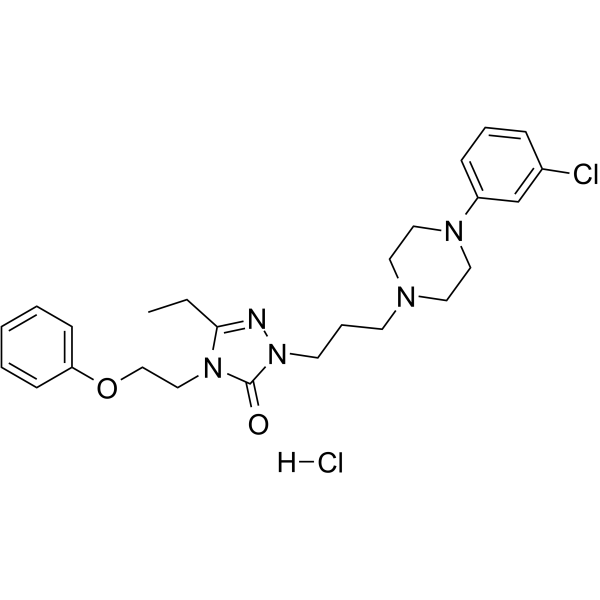
Nefazodone hydrochloride (BMY-13754) is a potent and selective 5HT2A (Ki=5.8 nM) antagonist with moderate inhibition of 5-HT and noradrenaline uptake (IC50 of 290 and 300 nM, respectively). Nefazodone hydrochloride is a phenylpiperazine antidepressant with less alpha-adrenergic blocking activity .
|
-
- HY-121053A
-
|
WY-50324 hydrochloride; SEB-324 hydrochloride
|
5-HT Receptor
|
Neurological Disease
|
|
Adatanserin hydrochloride is a high affinity, selective and partial agonist for the 5-HT1A receptor with a Ki of 1 nM. Adatanserin hydrochloride is a moderate affinity 5-HT2 receptor antagonist with a Ki of 73 nM. Adatanserin hydrochloride shows significant anxiolytic and antidepressant activity in an animal conflict model .
|
-
- HY-N16623
-
|
|
Others
|
Others
|
|
Erythro-guaiacylglycerol β-threo-syringylglycerol ether (Compound 17) is a phenylpropanoid. Erythro-guaiacylglycerol β-threo-syringylglycerol ether can be isolated from the whole plants of T. chinense. Erythro-guaiacylglycerol β-threo-syringylglycerol ether exhibits moderate antioxidant activity .
|
-
- HY-100187
-
|
(±)-[6]-Gingerol
|
Drug Isomer
|
Cancer
|
|
(Rac)-[6]-Gingerol is a natural product. (Rac)-[6]-Gingerol can be isolated from rhizomes of Z. officinale. (Rac)-[6]-Gingerol shows moderate anticancer activity against lung cancer, ovarian cancer, melanoma, and colon cancer .
|
-
- HY-101298R
-
|
|
Kinesin
Reference Standards
|
Neurological Disease
|
|
Paprotrain (Standard) is the analytical standard of Paprotrain (HY-101298). This product is intended for research and analytical applications. Paprotrain is a cell-permeable inhibitor of the kinesin MKLP-2, inhibits the ATPase activity of MKLP-2 with an IC50 of 1.35 μM and a Ki of 3.36 μM and shows a moderate inhibition activity on DYRK1A with an IC50 of 5.5 μM.
|
-
- HY-13858A
-
|
P-005672 hydrochloride
|
Antibiotic
Bacterial
DNA/RNA Synthesis
|
Infection
|
|
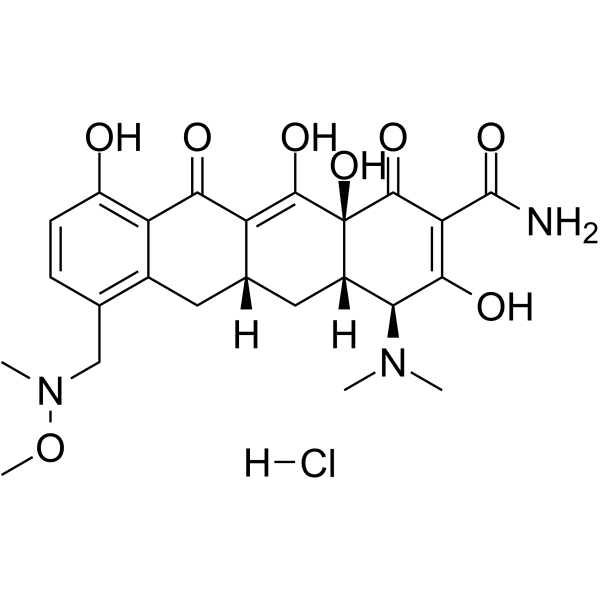
Sarecycline hydrochloride is an orally active narrow-spectrum tetracycline derivative antibiotic. Sarecycline hydrochloride has anti-inflammatory activity. Sarecycline hydrochloride inhibits the activity of Gram-positive bacteria and several types of keratobacterium acnes. Sarecycline hydrochloride interferes with tRNA accommodation and tethers mRNA to the 70S ribosome. Sarecycline hydrochloride can be used to study moderate to severe acne
.
|
-
- HY-U00092A
-
|
|
Bacterial
|
Infection
|
|
BAY-Y 3118 hydrochloride is a quinolone antibacterial agent. BAY-Y 3118 hydrochloride has a broad antibacterial spectrum in vitro. BAY-Y 3118 hydrochloride exhibits high activity against gram-positive cocci and anaerobes. BAY-Y 3118 hydrochloride shows moderate activity against Enterobacteriaceae and Pseudomonas aeruginosa. BAY-Y 3118 hydrochloride can be used in the research of infectious diseases .
|
-
- HY-N14112
-
|
|
Bacterial
Fungal
|
Infection
|
|
Cuevaene B can be isolated from the strain of gdmAI-disrupted Streptomyces sp. LZ35 and. Cuevaene B displays moderate activity against Gram-positive bacteria (e.g., Bacillus subtilis strain ATCC 11060) and modest activity against fungi (e.g., Fusarium verticillioides strain S68 and Rhizoctonia solani strain GXE4) .
|
-
- HY-16770
-
|
P-005672
|
Antibiotic
Bacterial
DNA/RNA Synthesis
|
Infection
|
|
Sarecycline is an orally effective narrow-spectrum tetracycline derivative antibiotic. Sarecycline has anti-inflammatory activity. Sarecycline inhibits the activity of Gram-positive bacteria and several types of keratobacterium acnes. Sarecycline interferes with tRNA accommodation and tethers mRNA to the 70S ribosome. Sarecycline can be used to study moderate to severe acne .
|
-
- HY-153347
-
JY-2
2 Publications Verification
|
FOXO
|
Metabolic Disease
|
|
JY-2 is a moderately selective and orally active Forkhead transcription factor forkhead box O1 (FoxO1) inhibitor that inhibits FoxO1 transcriptional activity with an IC50 of 22 μM. JY-2 shows moderate inhibition against FoxO3a and FoxO4. JY-2 shows anti-diabetic activity .
|
-
- HY-155704
-
|
|
PPAR
|
Others
|
|
DPP-IV-IN-5 is isolated from the fruits of Lycium barbarum. DPP-IV-IN-5 exerts moderate agonistic activities for peroxisome proliferator-activated receptor (PPARγ) with EC50 values of 10.09 - 44.26 μM and also presents inhibitory activity on dipeptidyl peptidase-4 (DPPIV) with an IC50 value of 47.13 μM .
|
-
- HY-N12072
-
|
|
Others
|
Others
|
|
3'-Methoxy-3,5,4'-trihydroxyflavone-7-neohesperidoside is a flavonoid that can be isolated from Cleome droserifolia. 3'-Methoxy-3,5,4'-trihydroxyflavone-7-neohesperidoside has moderate hepatoprotective activity ..
|
-
- HY-W742324
-
|
IKF-309
|
Fungal
|
Others
|
|
Pyriofenone (IKF-309) is an arylphenyl ketone fungicide used primarily to control powdery mildew on crops such as cereals, rice, fruit trees, and vegetables. Pyriofenone has moderate efficacy against rice blast. Pyriofenone acts through preventive, residual, curative, rainfast, cross-stratum, and fumigant activities .
|
-
- HY-A0021S
-
|
|
Isotope-Labeled Compounds
5-HT Receptor
Flavivirus
|
Infection
Cardiovascular Disease
Neurological Disease
|
|
Palonosetron-d3 hydrochloride is the deuterium labeled Palonosetron hydrochloride (HY-A0021). Palonosetron hydrochloride is a 5-HT3 antagonist primarily used to prevent acute, delayed, and overall chemotherapy-induced nausea and vomiting. In addition, Palonosetron hydrochloride exhibits moderate anti-flavivirus activity and potent anti-Zika virus activity in mammalian cells. Palonosetron hydrochloride also possesses antidepressant activity .
|
-
- HY-157421
-
|
|
NAMPT
|
Metabolic Disease
|
|
Nampt activator-4 is an orally active NAMPT activator, with an EC50 of 58 nM and a Ka of 85.38 nM against human NAMPT. Nampt activator-4 effectively relieves the feedback inhibition of nicotinamide and NAD +, thereby enhancing enzymatic activity and significantly increasing intracellular NAD + levels. Nampt activator-4 exhibits moderate stability in human and mouse liver microsomes. Nampt activator-4 shows low to moderate inhibitory effects on cytochrome P450 (especially CYP3A4). Nampt activator-4 can be used for the research of type 2 diabetes and related metabolic disorders .
|
-
- HY-N1839
-
|
|
Apoptosis
Glycosidase
|
Cancer
|
|
3-Hydroxybakuchiol can be isolated from Otholobium mexicanum J. W. Grimes. 3-Hydroxybakuchiol is an electron transport chain (ETC) inhibitor. 3-Hydroxybakuchiol has antitumor activity, and induces tumor cell apoptosis. 3-Hydroxybakuchiol also has moderate inhibitory activity against α-glucosidase (IC50: 345 μM) .
|
-
- HY-U00092
-
|
|
Bacterial
|
Infection
|
|
BAY-Y 3118 is a quinolone antibacterial agent. BAY-Y 3118 has a broad antibacterial spectrum in vitro. BAY-Y 3118 exhibits high activity against gram-positive cocci and anaerobes. BAY-Y 3118 shows moderate activity against Enterobacteriaceae and Pseudomonas aeruginosa. BAY-Y 3118 can be used in the research of infectious diseases .
|
-
- HY-19937S1
-
|
|
Isotope-Labeled Compounds
|
Others
|
|
Saroglitazar-d4 is the deuterium-labeled Saroglitazar (HY-19937). Saroglitazar-d4 is a novel peroxisome proliferator-activated receptor (PPAR) agonist with predominant PPARα and moderate PPARγ activity with EC50 values of 0.65 pM and 3 nM in HepG2 cells, respectively.
|
-
- HY-169065
-
|
|
Bacterial
|
Infection
|
Antibacterial agent 241 is a histidine kinase (HK) inhibitor, with IC50 values of 14 μM and 238 μM for CckA and PhoQ, respectively. Antibacterial agent 241 shows moderate antibacterial activity against E. coli DC2, Bacillus cereus, and Bacillus subtilis, with a MIC range of 12-74 μg/mL .
|
-
- HY-108510
-
|
BW 234U dihydrochloride
|
Sigma Receptor
Dopamine Receptor
|
Neurological Disease
Cancer
|
|
Rimcazole (BW 234U) dihydrochloride is a carbazole derivative that acts in part as a sigma (σ) receptor antagonist. Rimcazole dihydrochloride also binds with moderate affinity to the dopamine transporter and inhibit dopamine uptake. Rimcazole dihydrochloride can reduce locomotor activity and sensitization. Rimcazole dihydrochloride also can be used for the research of cancer .
|
-
- HY-146702
-
|
|
Bacterial
Thymidylate Synthase
|
Infection
|
|
MtTMPK-IN-8 (compound 27) is a moderate M. tuberculosis thymidylate kinase (MtbTMPK) inhibitor. MtTMPK-IN-8 has sub-micromolar activity against mycobacteria (MICs = 0.78~9.4 μM) without significant cytotoxicity. MtTMPK-IN-8 can be used for researching tuberculosis .
|
-
- HY-183306
-
|
|
mTOR
STAT
|
Neurological Disease
Inflammation/Immunology
Cancer
|
|
mTOR/STAT3-IN-1 is a dual mTOR/STAT3 inhibitor. mTOR/STAT3-IN-1 exhibits potent mTOR inhibitory activity and moderate STAT3 inhibitory activity, while exerting cell type-dependent antiproliferative and senolytic activities in human cell lines. mTOR/STAT3-IN-1 can be used in the research of glioblastoma and aging-related diseases .
|
-
- HY-N3497
-
|
|
NF-κB
DNA/RNA Synthesis
Parasite
Apoptosis
|
Infection
Cancer
|
|
Isochamaejasmin is a biflavonoid with anti-cancer, antiplasmodial and insecticidal activities. Isochamaejasmin displays a potent NF-κB (NF-κB) activation activity. Isochamaejasmin could cause DNA damage and induce apoptosis via the mitochondrial pathway in AW1 cells . Isochamaejasmin also has a moderate antiplasmodial activity (IC50 of 7.3 μM for P. falciparum) and relatively low cytotoxicity (CC50 of 29.0 μM) .
|
-
- HY-N4294R
-
|
|
Reference Standards
FXR
Insecticide
|
Infection
Metabolic Disease
Inflammation/Immunology
|
|
Arjungenin (Standard) is the analytical standard of Arjungenin. This product is intended for research and analytical applications. Arjungenin, a pentacyclic triterpenoid compound, is a FXR agonist. Arjungenin can improve insulin sensitivity by regulating the function of fat cells. Arjungenin exhibits moderate free radical scavenging activity. Arjungenin has growth inhibitory activity against the insect Spilarctia obliqua. Arjungenin has significant antiviral activity against a series of viruses such as chikungunya Virus (CHIKV).
|
-
- HY-14273R
-
|
BAL-4815 (Standard); RO-0094815 (Standard)
|
Reference Standards
Fungal
Cytochrome P450
Antibiotic
|
Infection
|
|
Isavuconazole (Standard) is the analytical standard of Isavuconazole. This product is intended for research and analytical applications. Isavuconazole (BAL-4815) is a triazole proagent with antifungal activity against yeasts, molds, and dimorphic fungi. Isavuconazole inhibits ergosterol biosynthesis and results in the disruption of fungal membrane structure and function. Isavuconazole is a moderate inhibitor of CYP3A4.
|
-
- HY-N11928
-
|
|
Others
|
Cancer
|
|
Changnanic acid (schisandrin) is a triterpene compound with potential anti-tumor effects. Changnanic acid exhibits moderate cytotoxic activity against human tumor cell lines Bel-7402, MCF-7 and HL-60, with IC50s of 100 μM, 100 μM and 50.51 μM respectively .
|
-
- HY-121053
-
|
WY-50324; SEB-324
|
5-HT Receptor
|
Neurological Disease
|
|
Adatanserin (WY-50324) is a high affinity, selective and partial agonist for the 5-HT1A receptor with a Ki of 1 nM. Adatanserin is a moderate affinity 5-HT2 receptor antagonist with a Ki of 73 nM. Adatanserin shows significant anxiolytic and antidepressant activity in an animal conflict model .
|
-
- HY-P11193
-
|
|
Bacterial
Fungal
|
Infection
|
|
Scolopin-2 is an antimicrobial peptide that can be isolated from centipede venoms. Scolopin-2 shows strong antimicrobial activities against a panel of Gram-positive/negative bacteria and fungi (MIC ≤ 7.5 μg/mL) . Scolopin-2 shows moderate hemolytic activity against both human and rabbit red cells. Scolopin-2 can be used for antimicrobial research .
|
-
- HY-N0495R
-
|
Aloenin A (Standard)
|
Reference Standards
Beta-secretase
|
Neurological Disease
|
|
Aloenin (Standard) is the analytical standard of Aloenin. This product is intended for research and analytical applications. Aloenin (Aloenin A) is a kind of natural product, has effective clearing and free radical activity, and has moderate inhibitory activity on β-secretion (BACE) (IC50=14.95 μg/mL). Aloenin suppresses peritoneal hypertrophy in large rats and suppresses its release .
|
-
- HY-N2949
-
|
|
SARS-CoV
|
Infection
Cancer
|
|
Bonducellpin D is a furanoditerpenoid lactone isolated from Caesalpinia minax. Bonducellpin D exhibits broad-spectrum inhibition potential against SARS-CoV M pro and MERS-CoV M pro, with an Ki of 467.11 and 284.86 nM, respectively. Bonducellpin D also exhibits moderate anti-cancer activity in vitro .
|
-
- HY-122076
-
|
|
Antibiotic
Bacterial
Fungal
|
Infection
|
|
A-26771B is an antibiotic can be obtained from Penicillium turbatum. A-26771B exhibits moderate antimicrobial activity against Gram-positive bacteria, mycoplasma, and fungi. A-26771B also inhibits potassium-dependent ATPase in rat liver mitochondria .
|
-
- HY-126535
-
|
|
Glycosidase
|
Metabolic Disease
Cancer
|
|
Magnoloside B is an α-glucosidase inhibitor (IC50=0.69 mM), which can be obtained from Magnolia officinalis stem bark. Magnoloside B shows moderate inhibitory activity against MGC-803 and HepG2 cells. Magnoloside B has the potential to study cancer and diabetes .
|
-
- HY-148822
-
|
|
NAMPT
|
Neurological Disease
|
|
Nampt activator-2 (compound 34) is a potent NAMPT activator, with EC50 of 0.023 μM. Nampt activator-2 shows moderate activity against CYP2C9 (0.060 μM), 2D6 (0.41 μM) and 2C19 (0.59 μM) .
|
-
- HY-A0021R
-
|
|
Reference Standards
5-HT Receptor
Flavivirus
|
Infection
Cardiovascular Disease
Neurological Disease
|
|
Palonosetron hydrochloride (Standard) is the analytical standard of Palonosetron hydrochloride (HY-A0021). This product is intended for research and analytical applications. Palonosetron hydrochloride is a 5-HT3 antagonist primarily used to prevent acute, delayed, and overall chemotherapy-induced nausea and vomiting. In addition, Palonosetron hydrochloride exhibits moderate anti-flavivirus activity and potent anti-Zika virus activity in mammalian cells. Palonosetron hydrochloride also possesses antidepressant activity .
|
-
- HY-W015338
-
|
|
Drug Metabolite
|
Inflammation/Immunology
|
|
1-(4-Methoxyphenyl)-1-propanol (Compound 2) is an orally active derivative of anethole. 1-(4-Methoxyphenyl)-1-propanol exhibits significant antioxidant activity. 1-(4-Methoxyphenyl)-1-propanol has anti-inflammatory activity and moderate gastric protective activity in mice. 1-(4-Methoxyphenyl)-1-propanol can be used for the study of gastric ulcers .
|
-
- HY-113700
-
|
|
Antibiotic
|
Cancer
|
|
PD 116779 is an Antibiotic with anticancer activity. PD 116779 demonstrates moderate cytotoxicity against L1210 lymphocytic leukemia and HCT-8 human colon adenocarcinoma cell lines with IC50 values of 3.55x10 -7 and 4.08x10 -7 M, respectively .
|
-
- HY-B1396S
-
|
BMY-13754-d6; MJ-13754-1-d6
|
Isotope-Labeled Compounds
5-HT Receptor
Adrenergic Receptor
|
Neurological Disease
Endocrinology
|
|
Nefazodone-d6 (hydrochloride) is the deuterium labeled Nefazodone hydrochloride. Nefazodone hydrochloride (BMY-13754) is a potent and selective 5HT2A (Ki=5.8 nM) antagonist with moderate inhibition of 5-HT and noradrenaline uptake (IC50 of 290 and 300 nM, respectively). Nefazodone hydrochloride is a phenylpiperazine antidepressant with less alpha-adrenergic blocking activity .
|
-
- HY-N9722
-
|
|
HSP
|
Cancer
|
|
Dehydroherbarin is a selective inhibitor targeting HSP90α with blood-brain barrier penetration. Dehydroherbarin interferes with key pathways of tumor cell survival by binding to HSP90α, while exerting moderate antibacterial and anti-hepatitis A virus activities and inhibiting tumor cell migration. Dehydroherbarin can be used in research on tumors such as breast cancer .
|
-
- HY-106684A
-
|
|
Adrenergic Receptor
|
Cardiovascular Disease
|
|
Ridazolol hydrochloride is a β-adrenergic receptor (βAR) antagonist. Ridazolol hydrochloride exhibits a high degree of selectivity for β-1 adrenergic receptor (β1AR) and possesses moderate intrinsic sympathomimetic activity (ISA). Ridazolol hydrochloride can competitively antagonize the relaxation effects induced by isoproterenol. Ridazolol hydrochloride is utilized in the research of cardiovascular diseases .
|
-
- HY-N0720R
-
|
|
Reference Standards
Apoptosis
DNA/RNA Synthesis
|
Cancer
|
|
Neobavaisoflavone (Standard) is the analytical standard of Neobavaisoflavone. This product is intended for research and analytical applications. Neobavaisoflavone, a flavonoid, is isolated from the seeds of Psoralea corylifolia. Neobavaisoflavone exhibits anti-inflammatory, anti-cancer and anti-oxidation activities. Neobavaisoflavone inhibits DNA polymerase at moderate to high concentrations. Neobavaisoflavone also inhibits platelet aggregation .
|
-
- HY-146701
-
|
|
Bacterial
Thymidylate Synthase
|
Infection
|
|
MtTMPK-IN-7 (compound 26) is a moderate M. tuberculosis thymidylate kinase (MtbTMPK) inhibitor with an IC50 value of 47 μM. MtTMPK-IN-7 has sub-micromolar activity against mycobacteria (MICs = 2.3~4.7 μM) without significant cytotoxicity. MtTMPK-IN-7 can be used for researching tuberculosis .
|
-
- HY-B1396S1
-
|
BMY-13754-d6 dihydrochloride; MJ-13754-1-d6 dihydrochloride
|
Isotope-Labeled Compounds
5-HT Receptor
Adrenergic Receptor
|
Neurological Disease
Endocrinology
|
|
Nefazodone-d6 (dihydrochloride) is deuterium labeled Nefazodone (hydrochloride). Nefazodone hydrochloride (BMY-13754) is a potent and selective 5HT2A (Ki=5.8 nM) antagonist with moderate inhibition of 5-HT and noradrenaline uptake (IC50 of 290 and 300 nM, respectively). Nefazodone hydrochloride is a phenylpiperazine antidepressant with less alpha-adrenergic blocking activity .
|
-
- HY-146703
-
|
|
Bacterial
Thymidylate Synthase
|
Infection
|
|
MtTMPK-IN-9 (compound 28) is a moderate M. tuberculosis thymidylate kinase (MtbTMPK) inhibitor with an IC50 value of 48 μM. MtTMPK-IN-9 has sub-micromolar activity against mycobacteria (MICs = 6.25~9.4 μM) without significant cytotoxicity. MtTMPK-IN-9 can be used for researching tuberculosis .
|
-
- HY-149205
-
|
|
PI3K
ERK
|
Inflammation/Immunology
|
|
CXJ-2 is a cyclic peptide, and exhibits moderate affinity toward elastin derived peptides (EDPs). CXJ-2 exhibits potent activities to inhibit the PI3K/ERK pathway and decrease hepatic stellate cell proliferation and migration. CXJ-2 possesses potent antifibrotic efficacy .
|
-
- HY-N7538
-
|
|
Bacterial
|
Infection
|
|
Dealanylalahopcin is an antimicrobial agent that can be isolated from the culture filtrate of Streptomyces leucoderma subsp. ochraceus. Dealanylalahopcin can also be synthesized by enzymatic hydrolysis of alahopcin by microbial α-amino acid ester hydrolases. Dealanylalahopcin has weak antimicrobial activity against Gram-positive and Gram-negative bacteria and exhibits moderate inhibition of collagen prolyl hydroxylase .
|
-
- HY-130120
-
|
|
Free Fatty Acid Receptor
PPAR
|
Metabolic Disease
|
|
HWL-088 is a highly potent and orally active free fatty acid receptor 1 (FFA1/GPR40) agonist (EC50 of 18.9 nM) with moderate PPARδ activity (EC50 of 570.9 nM) . HWL-088 improves glucose and lipid metabolism, and has anti-diabetic effects .
|
-
- HY-106684
-
|
|
Adrenergic Receptor
|
Cardiovascular Disease
|
|
Ridazolol is a β-adrenergic receptor (βAR) antagonist. Ridazolol exhibits a high degree of selectivity for β-1 adrenergic receptor (β1AR) and possesses moderate intrinsic sympathomimetic activity (ISA). Ridazolol can competitively antagonize the relaxation effects induced by isoproterenol. Ridazolol is utilized in the research of cardiovascular diseases .
|
-
- HY-N10440
-
|
|
Glycosidase
|
Infection
Inflammation/Immunology
|
|
3-Oxo-hop-22(29)-ene is a yeast α-glucosidase inhibitor. 3-Oxo-hop-22(29)-ene shows a moderate effect on the viability of T. cruzi and L. mexicana. 3-Oxo-hop-22(29)-ene shows marginal activity of anti-inflammatory .
|
-
- HY-144663
-
|
|
Bacterial
Thymidylate Synthase
|
Infection
|
|
MtTMPK-IN-1 (compound 3) is a potent Mycobacterium tuberculosis thymidylate kinase (MtTMPK) inhibitor with an IC50 value of 2.5 μM. MtTMPK-IN-1 has moderate to weak activity against Mtb H37Rv and low cytotoxicity in human fibroblast cells MRC-5. MtTMPK-IN-1 can be used for researching tuberculosis .
|
-
- HY-N6674
-
|
ECO-4601; TLN-4601; BU 4664L
|
Apoptosis
Bacterial
Cathepsin
Parasite
Endogenous Metabolite
|
Infection
Inflammation/Immunology
Cancer
|
|
Diazepinomicin (ECO-4601) is an anticancer and antibacterial agent. Diazepinomicin can be produced by a Micromonospora strain. Diazepinomicin induces Apoptosis. Diazepinomicin inhibits the proteases Rhodesain and Cathepsin L at an IC50 of 70-90 μM. Diazepinomicin possesses anti-inflammatory and anti-tumor activity. Diazepinomicin has demonstrated activity against hepatocellular carcinoma. Diazepinomicin shows antiparasitic activity against trypomastigote forms of Trypanosoma brucei with an IC50 of 13.5 μM. Diazepinomicin exhibits moderate antibacterial activity against specific Gram-positive bacteria, with an MIC of approximately 32 μg/mL .
|
-
- HY-P990735
-
|
|
Interleukin Related
|
Inflammation/Immunology
|
|
Donzakimig is a trispecific anti-IL-13/IL-22/HSA antibody. Donzakimig adopts a Fab-scFv-scFv structural format (without an Fc region), in which the Fab domain is linked to the scFv domains via a S (G4S)2 linker. Donzakimig binds to and inhibits the activities of IL-13 and IL-22, thereby blocking the signal transduction of these two cytokines. Donzakimig can extend its serum half-life by binding to human serum albumin, enhancing its in vivo stability and achieving long-acting efficacy. Donzakimig can be used in research on moderate-to-severe atopic dermatitis, moderate-to-severe asthma (especially eosinophilic type), psoriasis, inflammatory bowel disease, and other conditions .
|
-
- HY-13858AR
-
|
P-005672 hydrochloride (Standard)
|
Reference Standards
Antibiotic
Bacterial
DNA/RNA Synthesis
|
Infection
|
|
Sarecycline (hydrochloride) (Standard) is the analytical standard of Sarecycline (hydrochloride). This product is intended for research and analytical applications. Sarecycline hydrochloride is an orally active narrow-spectrum tetracycline derivative antibiotic. Sarecycline hydrochloride has anti-inflammatory activity. Sarecycline hydrochloride inhibits the activity of Gram-positive bacteria and several types of keratobacterium acnes. Sarecycline hydrochloride interferes with tRNA accommodation and tethers mRNA to the 70S ribosome. Sarecycline hydrochloride can be used to study moderate to severe acne .
|
-
- HY-134635R
-
|
|
Bacterial
Fungal
HIV
|
Infection
Neurological Disease
Cancer
|
|
Dehydrozingerone (Standard) is the analytical standard of Dehydrozingerone. This product is intended for research and analytical applications. Dehydrozingerone (Compound 10), a structural half analogue of Curcumin (HY-N0005), is a phenolic compound with antibacterial, anticancer, antioxidant, anti-Alzheimer’s and antifungal activity, which is isolated from ginger (Zingiber officinale) rhizomes. Dehydrozingerone shows moderate inhibitory activities on the secretion of HBsAg in HepG 2 cells with an IC50 value of 0.50 mM .
|
-
- HY-P5843
-
|
|
Enterovirus
|
Infection
|
|
Citrullinated LL-37 3cit is a citrullinated LL-37 (HY-P1222) peptide. Citrullinated LL-37 3cit lacks all antiviral activity at 10 μg/mL and retains some activity against HRV at 30 μg/mL. Citrullinated LL-37 3cit reduces the immunomodulatory activity of LL-37. Citrullinated LL-37 3cit shows a moderate loss in the ability to reduce HRV-induced CCL5 secretion .
|
-
- HY-N3017
-
|
|
Antibiotic
|
Neurological Disease
Inflammation/Immunology
|
|
Artemitin is a flavonoid neuroanesthetic agent with moderate cytotoxicity. Artemitint has selective inhibitory activity against Meth-A sarcoma cells with an ED50 of 5-10 μg/mL, and has no significant effect on LLC lung cancer cells. Artemitin exerts anticancer activity by affecting cell proliferation signaling pathways, and also has potential anti-inflammatory and neuroprotective effects. Artemitin exhibits a dose-dependent antinociceptive effect in the mouse hot plate test, with an ED50 of 1.6 μg/kg, and has analgesic activity .
|
-
- HY-179437
-
|
|
HIV
|
Infection
|
|
anti-HIV agent 1 (compound 10i) is a potent antiviral agent with anti-HIV activity (IC50 = 10.6 nM). anti-HIV agent 1 exhibits moderate to no inhibitory activity against RT mutant strains, but maintains their activity against wild-type viruses. anti-HIV agent 1 strongly shows dual inhibition of the viral attachment and reverse transcriptase phases of the viral life cycle. anti-HIV agent 1 can be used for HIV infection research .
|
-
- HY-118606
-
|
|
PAK
Parasite
|
Infection
Cancer
|
|
LDN-0044878 is a PAK3 inhibitor. LDN-0044878 inhibits the proliferation or induces the death of p53-deficient cells. LDN-0044878 exhibits moderate trypanocidal activity against Trypanosoma brucei, but does not directly inhibit the core target Rhodesain. LDN-0044878 can be used in studies related to cervical adenocarcinoma and Trypanosoma brucei infection.
|
-
- HY-181985
-
|
|
Insecticide
|
Infection
|
|
Insecticidal agent 30 is an orally active insecticidal agent. Insecticidal agent 30 induces rapid contact mortality in adult Brassicogethes aeneus, achieves 100% 24-hour contact mortality against Brassicogethes aeneus, and exhibits moderate insecticidal activity against Drosophila melanogaster. Insecticidal agent 30 can be used for the research of pollen beetle (brassicogethes aeneus) infestation .
|
-
- HY-147547
-
|
|
Amyloid-β
|
Neurological Disease
|
|
SV5 is a potent anti-Alzheimer agent. SV5 can significantly protect SHSY-5Y cells against Aβ1-42-induced death. SV5 shows moderate antioxidant and good neuroprotective activities. SV5 shows the high stability in human plasma and the best pharmacological profile .
|
-
- HY-B1396R
-
|
BMY-13754 (Standard); MJ-13754-1 (Standard)
|
Reference Standards
5-HT Receptor
Adrenergic Receptor
|
Neurological Disease
Endocrinology
|
|
Nefazodone (hydrochloride) (Standard) is the analytical standard of Nefazodone (hydrochloride). This product is intended for research and analytical applications. Nefazodone hydrochloride (BMY-13754) is a potent and selective 5HT2A (Ki=5.8 nM) antagonist with moderate inhibition of 5-HT and noradrenaline uptake (IC50 of 290 and 300 nM, respectively). Nefazodone hydrochloride is a phenylpiperazine antidepressant with less alpha-adrenergic blocking activity .
|
-
- HY-149718
-
|
|
JAK
HDAC
|
Cancer
|
|
Antitumor agent-123 (Copmound 4d) effectively inhibits multiple kinase targets with anti-cancer effects, including JAK2, JAK3, HDAC1 and HDAC6, with IC50 values of 34.6 and 2.6 μM for JAK2 and JAK3, respectively. Antitumor agent-123 exhibits moderate activity in solid tumor models .
|
-
- HY-B0717
-
|
TPGS; D-α-Tocopherol polyethylene glycol 1000 succinate; Vitamin E-TPGS
|
Drug Derivative
|
Neurological Disease
Metabolic Disease
|
|
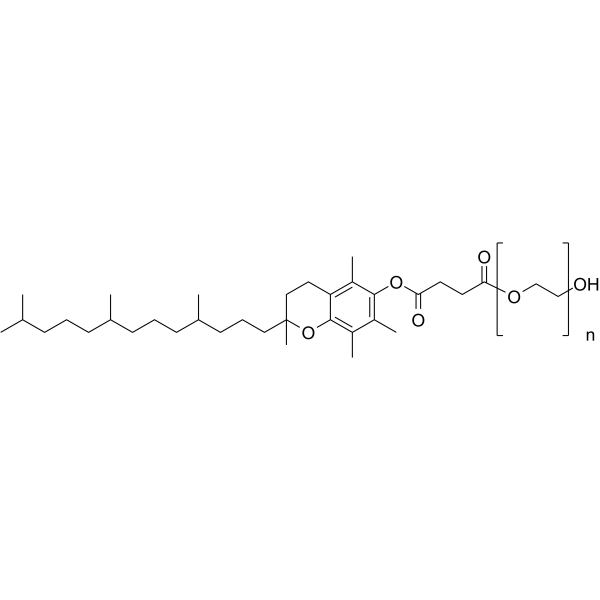
Tocofersolan is synthetic polyethylene glycol derivative of α-tocopherol. Tocofersolan is an orally active and water-soluble analog of vitamin E. Tocofersolan can reduce neurobehavioral deficits in zebrafish embryos exposed to moderate and high concentrations of BaP during early development. Tocofersolan shows antioxidant activity. Tocofersolan can be used to provide an orally bioavailable source of vitamin E .
|
-
- HY-143236
-
|
|
Bacterial
Fungal
|
Infection
|
|
DHFR-IN-1 (compound 12) is a potent and selective DHFR (dihydrofolate reductase)inhibitor, with an IC50 of 40.71 nM. DHFR-IN-1 exhibits promising antibacterial activity against gram-positive and gram-negative bacteria. DHFR-IN-1 exhibits moderate antifungal activities. DHFR-IN-1 exhibits a high synergistic effect with Levofloxacin (HY-B0330), where the FIC (fractional inhibitory concentration index) value is 0.249 .
|
-
- HY-N1192
-
|
|
NO Synthase
|
Inflammation/Immunology
|
|
Sutherlandin trans-p-coumarate is a selective γ-hydroxynitrile glycoside compound with moderate inhibitory activity on nitric oxide (NO) production in lipopolysaccharide (LPS)-stimulated RAW264.7 macrophages (56.9% inhibition at a concentration of 25 μg/mL). Sutherlandin trans-p-coumarate can be naturally extracted from the dried aerial parts of Sorbaria sorbifolia (a plant of the genus Sorbaria in the Rosaceae family) .
|
-
- HY-148706
-
|
|
STAT
|
Infection
Cancer
|
|
STAT3-IN-17 is a moderate STAT3 inhibitor (IC50=0.7 μM; HEK-Blue IL-6), with antiproliferative activity in HeLa cells. STAT3-IN-17 has good pharmacokinetic characteristics. STAT3-IN-17 also inhibits pyruvate-ferredoxin oxidoreductase (PFOR), and inhibits Helicobacter pylori .
|
-
- HY-118756
-
|
RS37326
|
Endogenous Metabolite
|
Inflammation/Immunology
|
|
Anirolac (RS37326) is a nonsteroidal anti-inflammatory agent with analgesic activity. Anirolac showed analgesic efficacy comparable to that of naproxen in suppressing moderate or severe postpartum uterine pain. Anirolac induced significantly higher analgesia scores than placebo within 6 hours, especially at the 100 mg dose. Anirolac effectively relieved pain and showed a stronger analgesic effect than placebo in every assessment .
|
-
- HY-162646
-
|
|
Thrombin
|
Cardiovascular Disease
|
|
FXIIa-IN-5 (Compound 4J) is an orally active, selective inhibitor for factor XIIa (FXIIa), with IC50 of 21 nM. FXIIa-IN-5 inhibits the intrinsic coagulation pathways, and exhibits anti-inflammatory and antithrombotic activity in Carrageenan (HY-125474)-induced mice thrombosis models. FXIIa-IN-5 exhibits moderate pharmacokinetic characteristics and slightly toxicity (at 100 mg/kg) .
|
-
- HY-180854
-
|
|
Bacterial
|
Infection
|
|
Antitubercular agent-55 (Compound 2e) is an anti-tuberculous agent. Antitubercular agent-55 exhibits significant inhibitory activity against the standard strain of Mycobacterium tuberculosis H37Rv and also has moderate inhibitory activity against multidrug-resistant TB (MDR-TB). Antitubercular agent-55 has a strong affinity for the key enzyme InhA involved in the biosynthesis of mycotic acids. Antitubercular agent-55 can be used for research on tuberculosis infection caused by Mycobacterium tuberculosis.
|
-
- HY-N16448
-
|
|
Bacterial
|
Infection
|
|
Xanthoascin (Compound 1) is a natural phenolic metabolite with strong anti plant pathogen activity. Xanthoascin can be extracted from the solid fermentation product of endophytic fungus Aspergillus sp. IFB-YXS isolated from Ginkgo biloba leaves. Xanthoascin has a MIC of 0.3125 µg/mL against Clavibacter michiganense subsp. Sepedonicus and moderate inhibitory activity against other pathogens (MIC = 5-20 µg/mL). Xanthoascin can disrupt the permeability of bacterial cell membranes, leading to nucleic acid leakage .
|
-
- HY-155780
-
|
|
COX
|
Inflammation/Immunology
|
|
Anti-inflammatory agent 52 (compound 7j) is an orally active selective COX-2 inhibitor. Anti-inflammatory agent 52 has anti-HT29 transfer activity, which leads to periodic arrest in G2/M phase. Anti-inflammatory agent 52 has safety, moderate ability to suppress inflammation. Anti-inflammatory agent 52 has a rare property of suppressing the development of tumor in mouse model, showing anti-cancer activity .
|
-
- HY-108510R
-
|
BW 234U dihydrochloride (Standard)
|
Reference Standards
Sigma Receptor
Dopamine Receptor
|
Neurological Disease
Cancer
|
|
Rimcazole dihydrochloride (Standard) is the analytical standard of Rimcazole (dihydrochloride) (HY-108510). This product is intended for research and analytical applications. Rimcazole (BW 234U) dihydrochloride is a carbazole derivative that acts in part as a sigma (σ) receptor antagonist. Rimcazole dihydrochloride also binds with moderate affinity to the dopamine transporter and inhibit dopamine uptake. Rimcazole dihydrochloride can reduce locomotor activity and sensitization. Rimcazole dihydrochloride also can be used for the research of cancer .
|
-
- HY-155114
-
|
|
HIV
|
Infection
|
|
HIV-1 inhibitor-59 (Compound I-5b) is a HIV-1 inhibitor, with EC50s of 5.62-171 nM against the wild-type (WT) and mutant HIV-1 strains. HIV-1 inhibitor-59 has moderate RT enzyme inhibitory activity (IC50: 0.094-12.0 μM) .
|
-
- HY-B1396S3
-
|
BMY-13754-d; MJ-13754-1-d
|
Isotope-Labeled Compounds
Adrenergic Receptor
5-HT Receptor
|
Neurological Disease
Endocrinology
|
|
Nefazodone-d4 (hydrochloride) (BMY-13754-d4) is deuterium labeled Nefazodone (hydrochloride). Nefazodone hydrochloride (BMY-13754) is a potent and selective 5HT2A (Ki=5.8 nM) antagonist with moderate inhibition of 5-HT and noradrenaline uptake (IC50 of 290 and 300 nM, respectively). Nefazodone hydrochloride is a phenylpiperazine antidepressant with less alpha-adrenergic blocking activity .
|
-
- HY-123934
-
|
|
P-glycoprotein
|
Neurological Disease
|
|
VU6007477 is a brain-penetrant, selective M1 positive allosteric modulator (PAM) with an EC50 value of 230 nM. VU6007477 is also a human P-glycoprotein (P-gp) substrate with moderate permeability. VU6007477 displays improved central nervous system (CNS) penetration over the hydroxylated congeners. VU6007477 a pyranyl amide derivative, which is promising for research of robust cholinergic seizure activity .
|
-
- HY-19651B
-
|
TAK-147 fumarate
|
Cholinesterase (ChE)
|
Neurological Disease
|
|
Zanapezil (TAK-147) fumarate is a potent, reversible and selective acetylcholine esterase (AChE) inhibitor. Zanapezil fumarate shows a potent and reversible inhibition of AChE activity in homogenates of the rat cerebral cortex (IC50=51.2 nM). Zanapezil fumarate shows a moderate inhibition of muscarinic M1 and M2 receptor binding with Ki values of 234 and 340 nM, respectively. Zanapezil fumarate can be used for the research of early stages of Alzheimer's disease (AD) .
|
-
- HY-19094
-
|
|
Angiotensin Receptor
|
Cardiovascular Disease
|
|
DuP-532 is an angiotensin type 1 receptor antagonist with potential activity in the suppression of hypertension and heart failure. DuP-532 can react with a range of aryl and heteroaryl halides to form perfluoroalkyl(hetero)arenes in moderate to high yields. Computational studies of DuP-532 suggest that coordination of a second phenyl ring ligand may lower the energy barrier for decarboxylation of perfluorocarboxylates, thereby promoting the perfluoroalkylation reaction .
|
-
- HY-N6846
-
|
|
Bacterial
|
Infection
|
|
10-Isobutyryloxy-8,9-epoxythymol isobutyrate is a major constituent of Inula helenium and Inula royleana root cultures. 10-Isobutyryloxy-8,9-epoxythymol isobutyrate shows moderate antimicrobial activity against Staphylococcus aureus FDA 209 P, Staphylococcus aureus, Enterococcus faecalis, Candida albicans and Pseudomonas aeruginosa with MICs of 50, 250, 250, 250, and 1000 μg/mL, respectively .
|
-
- HY-19651A
-
|
TAK-147
|
Cholinesterase (ChE)
|
Neurological Disease
|
|
Zanapezil (TAK-147) is a potent, reversible and selective acetylcholine esterase (AChE) inhibitor. Zanapezil shows a potent and reversible inhibition of AChE activity in homogenates of the rat cerebral cortex (IC50=51.2 nM). Zanapezil shows a moderate inhibition of muscarinic M1 and M2 receptor binding with Ki values of 234 and 340 nM, respectively. Zanapezil can be used for the research of early stages of Alzheimer's disease (AD) .
|
-
- HY-132866
-
|
|
P-glycoprotein
|
Cancer
|
|
YS-370 (compound 44) is a potent, high selective, and orally active inhibitor of P-glycoprotein (P-gp). YS-370 stimulates the P-gp ATPase activity and has moderate inhibition against CYP3A4. YS-370 effectively reverses multidrug resistance (MDR) to paclitaxel and colchicine in SW620/AD300 and HEK293T-ABCB1 cells. YS-370 in combination with paclitaxel achieves much stronger antitumor activity .
|
-
- HY-155781
-
|
|
COX
|
Inflammation/Immunology
|
|
Anti-inflammatory agent 53 (compound 7c) is an orally active selective COX-2 inhibitor. Anti-inflammatory agent 52 has anti-HT29 transfer activity, which leads to periodic arrest in S phase and G2/M phase. Anti-inflammatory agent 52 has safety, moderate ability to suppress inflammation. Anti-inflammatory agent 52 has a rare property of suppressing the development of tumor in mouse model, showing anti-cancer activity .
|
-
- HY-W353474
-
|
|
Drug Derivative
|
Cancer
|
|
iso-Dehydrozingerone is a dehydrozingerone analog. iso-Dehydrozingerone exhibits moderate in vitro cytotoxic activity against human tumor cells, with IC50 values of 10.0 μg/mL, 8.2 μg/mL and >10 μg/mL against human nasopharyngeal carcinoma cells, multidrug-resistant nasopharyngeal carcinoma cells and human lung cancer cells, respectively. iso-Dehydrozingerone can be used in studies related to nasopharyngeal carcinoma, multidrug-resistant nasopharyngeal carcinoma and lung cancer .
|
-
- HY-135331
-
|
|
Androgen Receptor
Cytochrome P450
|
Cancer
|
|
N-Desmethyl Apalutamide is an active metabolite of Apalutamide. N-Desmethyl Apalutamide is a less potent antagonist of the androgen receptor and is responsible for one-third of the activity of Apalutamide. The formation of N-Desmethyl Apalutamide mediated predominantly by CYP2C8 and CYP3A4. N-Desmethyl Apalutamide is moderate to strong CYP3A4 and CYP2B6 inducer and has an excellent plasma-proteins bound concentration .
|
-
- HY-146637
-
|
|
Beta-lactamase
Bacterial
|
Infection
|
|
VIM-2-IN-1 (compound 1dj) is a β-lactamase inhibitor with antibacterial activities. VIM-2-IN-1 has moderate IC50 values of 23 µM, 48 µM and 231 µM for Verona integron-encoded metallo-β-lactamase (VIM-2), German imipenemase-1 (GIM-1) and New Delhi metallo-β-lactamase (NDM-1), respectively .
|
-
- HY-174390
-
|
|
Fungal
Succinate Dehydrogenase
|
Infection
|
|
SDH-IN-29 (Compound A33) is a SDH inhibitor with an IC50 of 0.0709 μM. SDH-IN-29 has a broad spectrum of antifungal activities (EC50s of 0.356, 0.798 and 0.146 μg/mL for Fusarium graminearum, Sclerotinia sclerotiorum, and Rhizoctonia solani, respectively). SDH-IN-29 has moderate to significant protective effects against rice blast, wheat scab and cucumber powdery mildew .
|
-
- HY-W014120
-
|
|
Biochemical Assay Reagents
Parasite
|
Infection
|
|
Thianthrene is a potent and orally active inhibitor of Leishmania donovani pteridine reductase 1 (PTR1). Thianthrene is a sulfur-containing tricyclic molecule distributed widely within the macro-structure of hydrocarbon fossil fuels. Thianthrene inhibits the intracellular amastigotes of Leishmania donovani (IC50 = 23 μM). Thianthrene has a moderate anthelmintic activity. Thianthrene appears to inhibit RNA function and subsequent protein production. Thianthrene can stimulate liver regeneration in vivo .
|
-
- HY-W013330
-
|
Guanosine, 3'-deoxy-
|
Nucleoside Antimetabolite/Analog
Drug Derivative
|
Metabolic Disease
|
|
3′-Deoxyguanosine (Guanosine, 3'-deoxy-) is a derivative of Guanosine (HY-N0097). 3′-Deoxyguanosine interacts with human purine nucleoside phosphorylase via hydrogen bonding with residues such as Glu201 and Asn243. 3′-Deoxyguanosine exhibits moderate displacement activity for [ 3H]-guanosine in rat meninges. 3′-Deoxyguanosine is useful for studying the mechanism of guanosine receptors and purine metabolism .
|
-
- HY-101939
-
|
|
LPL Receptor
|
Neurological Disease
|
|
RP-001 is a picomolar short-acting S1P1 (EDG1) selective agonist, with an EC50 of 9 pM. RP-00 induces internalization and polyubiquitination of S1P1. RP-001 has little activity on S1P2-S1P4 and only moderate affinity for S1P5 .
|
-
- HY-101939A
-
|
|
LPL Receptor
|
Neurological Disease
|
|
RP-001 hydrochloride is a picomolar short-acting S1P1 (EDG1) selective agonist, with an EC50 of 9 pM. RP-00 hydrochloride induces internalization and polyubiquitination of S1P1. RP-001 hydrochloride has little activity on S1P2-S1P4 and only moderate affinity for S1P5 .
|
-
- HY-182020
-
|
|
Bacterial
|
Infection
|
|
LpxH-IN-3 is a Klebsiella pneumoniae LpxH inhibitor with an IC50 of 0.17 μM. LpxH-IN-3 binds to the L-shaped hydrophobic binding pocket of Klebsiella pneumoniae LpxH, forms hydrogen bonds and other interactions with key residues, disrupts lipid A biosynthesis, and induces bacterial death. LpxH-IN-3 exhibits moderate antibacterial activity against Klebsiella pneumoniae and Escherichia coli. LpxH-IN-3 can be used for the research of klebsiella pneumoniae infection .
|
-
- HY-117287A
-
|
BMS-986165 hydrochloride
|
Interleukin Related
JAK
IFNAR
|
Inflammation/Immunology
|
|
Deucravacitinib hydrochloride (BMS-986165 hydrochloride) is a highly selective all-site inhibitor with potent inhibitory activity against TYK2. Deucravacitinib hydrochloride can effectively block IL-12, IL-23 and type I interferon signaling. Deucravacitinib hydrochloride demonstrates significant efficacy in preclinical models of inflammatory bowel disease. Deucravacitinib hydrochloride demonstrated superiority over placebo and apremilast on multiple efficacy endpoints in moderate to severe plaque psoriasis. Deucravacitinib hydrochloride was well tolerated in inhibition .
|
-
- HY-145286
-
|
|
Bacterial
|
Infection
Cancer
|
|
IMPDH2-IN-2 is a potent inhibitor of inosine 5’-monophosphate dehydrogenase (IMPDH) with a Ki,app value of 14 μM, respectively. IMPDH2-IN-2 displays moderate antibacterial activity (MIC = 6.3 and 11 μM in minimal GAST/Fe and rich 7H9/ADC/Tween media, respectively). IMPDH2-IN-2 is a potential anti-tuberculosis agent .
|
-
- HY-N14970
-
|
|
Parasite
Bacterial
|
Infection
Cancer
|
|
Hexacyclinol has moderate anti-Gram-positive bacteria activity, 4-40 μg/mL can inhibit the production of oxidants by polymorphonuclear neutrophils (PMNL) stimulated by zymosan. Hexacyclinol inhibits the growth of L-930 and K 562 cells with IC50s of 1.4 μg/mL and 0.4 μg/mL, respectively, and the IC50 of HeLa cells is 10 μg/mL. Hexacyclinol also has an anti-Plasmodium effect, and its IC50 for Plasmodium falciparum is 2.4 μg/mL .
|
-
- HY-182440
-
|
|
5-HT Receptor
|
Neurological Disease
|
|
AZD3783 is an orally active, blood-brain barrier-penetrant 5-HT1B receptor antagonist. AZD3783 reverses agonist-induced hypothermia, inhibits separation-induced vocalizations in guinea pig pups, and acts as a moderately permeable glycoprotein substrate with moderate clearance. AZD3783 inhibits hERG channel activity. AZD3783 is applicable for research on depression, anxiety disorders, and other psychiatric diseases associated with serotonergic neurotransmission .
|
-
- HY-P10533
-
|
|
Tyrosinase
|
Others
|
|
Cysteine peptide is a tyrosinase inhibitor with skin-whitening, antioxidant and multi-regulatory activities. Cysteine peptide inhibits enzyme activity and blocks melanin transport, effectively reducing UV-B-induced skin erythema and pigmentation. Cysteine peptide synergistically maintains skin health by quenching ROS, resisting oxidative stress and promoting pheomelanin production. Cysteine peptide safely prevents daily ultraviolet damage and supports moderate sun exposure for vitamin D synthesis. Cysteine peptide also acts as a plant signaling factor to regulate vegetative growth, development and stress resistance responses .
|
-
- HY-104048
-
|
|
Histone Demethylase
|
Cancer
|
|
QC6352 is an orally active KDM4 inhibitor with anti-tumor and anti-proliferative activity. QC6352 has in vivo inhibitory effects on PDX models of breast and colon cancer and reduces the number of chemoresistant cell populations. QC6352 inhibits KDM4 different isoforms with IC50s of 104 nM (KDM4A), 56 nM (KDM4B), 35 nM (KDM4C), and 104 nM (KDM4D), respectively. QC6352 has moderate inhibitory activity against KDM5 with an IC50 of 750 nM (KDM5B) .
|
-
- HY-178330
-
|
|
Others
Topoisomerase
|
Infection
|
|
IKE16 is a fungi-selective eukaryotic topoisomerase II inhibitor, with an IC50 value of 13.68 μM. IKE16 suppresses both the DNA relaxation activity and the decatenation activity of yTOPOII selectively. IKE16 shows moderate activity against standard fungal strains (Candida albicans ATCC 10231, Saccharomyces cerevisiae ATCC 89763) with a minimum inhibitory concentration (MIC) of 2 μg/mL against S. cerevisiae ATCC 89763. IKE16 exhibits high cytotoxicity against human cells, with an EC50 of 0.07 μM in HepG2 and 0.045 μM in HEK-293. IKE16 can be used for the study of antifungal infection .
|
-
- HY-120184
-
|
AZ13713945
|
mAChR
|
Neurological Disease
|
|
VU0467485 (AZ13713945) is a potent, selective, and orally bioavailable muscarinic acetylcholine receptor 4 (M4) positive allosteric modulator (PAM). VU0467485 (AZ13713945) potentiates activity of ACh at M4 with EC50s of 26.6 nM and 78.8 nM at rat and human M4 receptors, respectively. VU0467485 (AZ13713945) shows selectivity for M4 over human and rat M1/2/3/5. VU0467485 (AZ13713945) displays moderate to high CNS penetration. VU0467485 (AZ13713945) has antipsychotic-like activity .
|
-
- HY-N0311
-
|
|
Aldose Reductase
Topoisomerase
SOD
p38 MAPK
|
Neurological Disease
Inflammation/Immunology
|
|
Emodin-8-glucoside is an anthraquinone derivative that can be isolated from Aloe vera. Emodin-8-glucoside is the inhibitor for MAPK with an inhibition constant of 430.14 pM. Emodin-8-glucoside exhibits moderate inhibitory activity against rat lens aldose reductase (ALAR) and topoisomerases II with IC50s of 14.4 μM and 66 μM. Emodin-8-glucoside exhibits antioxidant, anti-inflammatory and anti-fibrotic activities. Emodin-8-glucoside can cross the blood brain barrier .
|
-
- HY-18060A
-
|
TC-5619 hydrochloride
|
nAChR
|
Neurological Disease
|
|
Bradanicline (TC-5619) tosylate is an orally active agonist of α7 nAChR with moderate blood-brain barrier penetration. Bradanicline hydrochloride exhibits high affinity and subtype selectivity for human α7 nAChR. Bradanicline hydrochloride possesses antitussive activity that depends on sustained receptor binding and activation. Bradanicline hydrochloride requires systemic administration to dose-dependently inhibit cough induced by citric acid, bradykinin and inhaled nicotine. Bradanicline hydrochloride is well tolerated in preclinical studies and is widely used in research related to chronic refractory cough .
|
-
- HY-119101
-
|
|
CCR
Potassium Channel
P-glycoprotein
|
Inflammation/Immunology
|
|
AZD-5672 is an orally active, potent, and selective CCR5 antagonist (IC50=0.32 nM). AZD-5672 shows moderate activity against the hERG ion channel (binding IC50=7.3 μM). AZD5672 is a substrate of human P-gp, and inhibits P-gp-mediated digoxin transport (IC50=32 μM). AZD-5672 can be used for the research of rheumatoid arthritis .
|
-
- HY-18060
-
|
TC-5619
|
nAChR
|
Neurological Disease
|
|
Bradanicline (TC-5619) is an orally active agonist of α7 nAChR with moderate blood-brain barrier penetration. Bradanicline exhibits high affinity and subtype selectivity for human α7 nAChR. Bradanicline possesses antitussive activity that depends on sustained receptor binding and activation. Bradanicline requires systemic administration to dose-dependently inhibit cough induced by citric acid, bradykinin and inhaled nicotine. Bradanicline is well tolerated in preclinical studies and is widely used in research related to chronic refractory cough .
|
-
- HY-161819
-
|
|
Trk Receptor
|
Cancer
|
|
TRK-IN-29 (Compound B31) is a second-generation TRK inhibitor (IC50: 9 nM, 0.6 nM, 18 nM, 5 nM, 6 nM for TRKA G595R, TRKA F589L, TRKA G667C, TRKA and TRKC respectively). TRK-IN-29 inhibits the phosphorylation of TRKA. TRK-IN-29 has good antiproliferative activities against NTRK fusion positive cells. TRK-IN-29 has exellent plasma stability and moderate pharmacokinetic properties .
|
-
- HY-W047187
-
|
|
Xanthine Oxidase
NO Synthase
TNF Receptor
|
Others
|
|
Lavandoside is an ABTS ?+ free radical scavenger and a moderate inhibitor of xanthine oxidase (XO), with an IC50 of 71.6 μM for inhibiting NO production in LPS-induced macrophages. Lavandoside exerts its antioxidant and potential anti-inflammatory effects by directly scavenging free radicals and inhibiting XO activity, a mechanism related to the hydroxyl groups in its molecular structure. Lavandoside can be isolated from lavender and can be used in the development of natural antioxidants and in research on oxidative stress-related diseases and inflammation-related diseases .
|
-
- HY-150562
-
|
|
CDK
|
Cancer
|
|
CDK9-IN-19 is a highly potent and selective CDK9 inhibitor with an IC50 value of 2.0 nM. CDK9-IN-19 has excellent cellular antiproliferative activity, moderate pharmacokinetic property and low hERG inhibition. CDK9-IN-19 significantly induces tumour growth inhibition in an MV4-11 xenograft mice model. CDK9-IN-19 can be used for researching acute myeloid leukaemia (AML) .
|
-
- HY-176972
-
|
|
ADC Payload
DNA/RNA Synthesis
|
Cancer
|
|
Di(MMY-SJG)-Ph-prop-2-yne-1-sulfonic acid (Compound 5) is a cytotoxic pyrrolobenzodiazepine (PBD) dimer derivative. Di(MMY-SJG)-Ph-prop-2-yne-1-sulfonic acid exhibits moderate DNA alkylating activity. Di(MMY-SJG)-Ph-prop-2-yne-1-sulfonic acid can be used as the payload of ADC, thereby demonstrating strong antigen-dependent cytotoxicity .
|
-
- HY-19651
-
|
TAK-147 free base
|
Cholinesterase (ChE)
|
Neurological Disease
|
|
Zanapezil (TAK-147) free base is a potent, reversible and selective acetylcholine esterase (AChE) inhibitor. Zanapezil free base shows a potent and reversible inhibition of AChE activity in homogenates of the rat cerebral cortex (IC50=51.2 nM). Zanapezil free base shows a moderate inhibition of muscarinic M1 and M2 receptor binding with Ki values of 234 and 340 nM, respectively. Zanapezil free base can be used for the research of early stages of Alzheimer's disease (AD) .
|
-
- HY-180125A
-
|
|
Bacterial
Reactive Oxygen Species (ROS)
|
Infection
|
|
Antibacterial agent 307 hydrochloride is an antibacterial agent. Antibacterial agent 307 hydrochloride shows MICs of 1-4 μg/mL against Gram-positive bacteria, moderate activity against Gram-negative bacteria, low hemolytic toxicity, and excellent plasma stability. Antibacterial agent 307 hydrochloride compromises bacterial membrane integrity via increased permeability and depolarization, induces endogenous ROS accumulation, causes cytoplasmic protein and nucleic acid leakage, and drives rapid bacterial cell death. Antibacterial agent 307 hydrochloride can be used for the research of bacterial infection .
|
-
- HY-180125
-
|
|
Bacterial
Reactive Oxygen Species (ROS)
|
Infection
|
|
Antibacterial agent 307 is an antibacterial agent. Antibacterial agent 307 shows MICs of 1-4 μg/mL against Gram-positive bacteria, moderate activity against Gram-negative bacteria, low hemolytic toxicity, and excellent plasma stability. Antibacterial agent 307 compromises bacterial membrane integrity via increased permeability and depolarization, induces endogenous ROS accumulation, causes cytoplasmic protein and nucleic acid leakage, and drives rapid bacterial cell death. Antibacterial agent 307 can be used for the research of bacterial infection .
|
-
- HY-P99754
-
|
BCD-085
|
Interleukin Related
|
Infection
Inflammation/Immunology
|
|
Netakimab (BCD-085) is a humanized IgG1κ monoclonal anti-IL-17 antibody that binds to and blocks IL-17 and IL-17A activity, including reduction of downstream IL-6 production. Netakimab can be used for the research of moderate-to-severe plaque psoriasis, ankylosing spondylitis, and COVID-19 with cytokine release syndrome . Recommend Isotype Controls: Human IgG1 kappa, Isotype Control (HY-P99001).
|
-
- HY-18060B
-
|
TC-5619 tosylate
|
nAChR
|
Inflammation/Immunology
|
|
Bradanicline (TC-5619) tosylate is an orally active agonist of α7 nAChR with moderate blood-brain barrier penetration. Bradanicline tosylate exhibits high affinity and subtype selectivity for human α7 nAChR. Bradanicline tosylate possesses antitussive activity that depends on sustained receptor binding and activation. Bradanicline tosylate requires systemic administration to dose-dependently inhibit cough induced by citric acid, bradykinin and inhaled nicotine. Bradanicline tosylate is well tolerated in preclinical studies and is widely used in research related to chronic refractory cough .
|
-
- HY-17457
-
|
Levosalbutamol hemitartrate
|
Adrenergic Receptor
PI3K
|
Inflammation/Immunology
|
|
Levalbuterol (Levosalbutamol) hemitartrate is a β2-adrenergic receptor agonist and PI3K inhibitor. Levalbuterol hemitartrate inhibits PI3K activity, reduces NF-κB and Rb protein expression, activates the cAMP/PKA pathway, and stimulates cAMP release. Levalbuterol hemitartrate relaxes airway smooth muscle, reduces intracellular calcium levels, and inhibits spasmogen-induced contractions. Levalbuterol hemitartrate can be used for the research of moderate-to-severe asthma .
|
-
- HY-Z12208
-
|
|
Drug Derivative
|
Cancer
|
|
N1-Phenylsuberamide is an organic amide compound, and its structure can be regarded as a simplified analogue of Vorinostat (HY-10221). N1-Phenylsuberamide exhibits moderate anti-proliferative activity against MDA-MB-231 and MCF-7 cells. N1-Phenylsuberamide does not show significant HDAC inhibitory activity and can only weakly induce the expression of the p21 gene. N1-Phenylsuberamide has extremely low relative binding affinity of estrogen receptor. N1-Phenylsuberamide can be used as a control compound .
|
-
- HY-W402208
-
|
|
MAP4K
|
Neurological Disease
Cancer
|
|
MAP4K4-IN-7 (Compound 8) is a MAP4K4 inhibitor. MAP4K4-IN-7 shows moderate inhibitory activity against TNIK, MAP4K4, and MINK1 with pIC50 values of 6.8, 6.8, and 6.7 respectively. MAP4K4-IN-7 can be used for the researches of cancer and neurological disease, such as schizophrenia .
|
-
- HY-N17718
-
|
3-[8'(Z), 11'(Z), 14'-Pentadecatrienyl] catechol
|
HIV
Reverse Transcriptase
|
Infection
Cancer
|
|
Ursolic acid (15:3) (Compound 4) is a type of resiniferatoxin compound that can be found in the leaves of the tree Rhus verniciflua. Ursolic acid (15:3) exhibits moderate inhibitory activity against HIV-1 reverse transcriptase (b HIV-1 reverse transcriptase), with an IC50 value of 55.36 μM. Ursolic acid (15:3) shows strong cytotoxicity against both PC-3 and MRC-5 cells. Ursolic acid (15:3) can be used in the research of anti-HIV-1 infection and prostate cancer .
|
-
- HY-W021008
-
|
Dimethylhydroxyfuranone
|
Fungal
|
Infection
|
|
Sotolone (Dimethylhydroxyfuranone) is an activator of the human olfactory receptor OR8D1. Sotolone activates the human olfactory receptor OR8D1, with EC50 values of 84.98 μM and 167.2 μM for its S-enantiomer and R-enantiomer, respectively. Sotolone has unique aroma profiles: (R)-sotolone exhibits smoky, burnt, herbal and grassy notes; (S)-sotolone presents sweet, milky, sour and nutty notes. Sotolone also acts as an antifungal agent, showing moderate inhibitory activity against Magnaporthe oryzae in vitro .
|
-
- HY-126911
-
|
Fluprostenol Prostaglandin D2
|
Prostaglandin Receptor
|
Endocrinology
|
|
11-keto Fluprostenol is an analog of prostaglandin D2 (PGD2) with structural modifications intended to give it a prolonged half-life and greater potency. Fluprostenol is a well-studied, potent analog of PGF2α and acts primarily through the FP receptor. Oxidation at C-11 of fluprostenol yields 11-keto fluprostenol. 11-keto Fluprostenol exhibits moderate binding to the CRTH2/DP2 receptor compared to PGD2 and essentially no activity at the DP1 receptor.
|
-
- HY-134043
-
|
Chlorthalidone EP Impurity G
|
Carbonic Anhydrase
|
Cardiovascular Disease
|
|
Chlorthalidone Impurity G (Chlorthalidone EP Impurity G) is a potential impurity found in commercial preparations of chlorthalidone with moderate antihypertensive effects. Chlorthalidone is a thiazide diuretic that inhibits the Na+/Cl- cotransporter in the distal tubule of the kidney, thereby preventing sodium and chloride reabsorption, resulting in decreased plasma volume and cardiac output. It also inhibits carbonic anhydrase (CA), including isoenzymes CAVB, VII, IX, XII, and XIII (Kis=2.8-23 nM) and to a lesser extent CAI, CAII, IV, VA, and VI (Ki=138-1,347 nM), mediating vasodilatory activity.
|
-
- HY-13588A
-
|
SCE-129
|
Bacterial
Antibiotic
|
Others
|
|
Cefsulodin (SCE-129) showed potent activity against Pseudomonas aeruginosa and strains susceptible to penicillin and gentamicin, with effectiveness comparable to that of gentamicin and debendazole. However, its effectiveness was diminished against penicillin-resistant strains of P. aeruginosa, particularly strains that were also resistant to gentamicin. For P. aeruginosa maltofila, SCE-129 showed similar minimum inhibitory concentrations to penicillin, gentamicin, and debendazole. Pseudomonas cepacia strains generally showed moderate resistance to SCE-129 and penicillin, and high resistance to gentamicin and debendazole .
|
-
- HY-149418
-
|
|
HDAC
Cholinesterase (ChE)
Tau Protein
|
Neurological Disease
|
|
BChE/HDAC6-IN-2 (compound 29a) is a dual inhibitor of BChE and HDAC6 with IC50s of 1.8 nM and 71.0 nM, respectively. BChE/HDAC6-IN-2 has prominently neuroprotective effects and reactive oxygen species (ROS) scavenging activity. BChE/HDAC6-IN-2 is also an effective chelator of metal ion (Fe 2+ and Cu 2+). BChE/HDAC6-IN-2 inhibits phosphorylation of tau, and exhibits moderate immunomodulatory effect.
|
-
- HY-W014120R
-
|
|
Biochemical Assay Reagents
Reference Standards
Parasite
|
Infection
|
|
Thianthrene (Standard) is the analytical standard of Thianthrene. This product is intended for research and analytical applications. Thianthrene is a potent and orally active inhibitor of Leishmania donovani pteridine reductase 1 (PTR1). Thianthrene is a sulfur-containing tricyclic molecule distributed widely within the macro-structure of hydrocarbon fossil fuels. Thianthrene inhibits the intracellular amastigotes of Leishmania donovani (IC50 = 23 μM). Thianthrene has a moderate anthelmintic activity. Thianthrene appears to inhibit RNA function and subsequent protein production. Thianthrene can stimulate liver regeneration in vivo .
|
-
- HY-14915
-
|
|
Adrenergic Receptor
|
Endocrinology
|
|
Bedoradrine is a highly selective β2-adrenergic agonist with activity in suppressing asthma and chronic obstructive pulmonary disease (COPD). Bedoradrine is administered by intravenous infusion and is specifically indicated for the suppression of acute asthma attacks. Bedoradrine has shown good safety and preliminary efficacy in clinical trials, especially in patients with stable moderate to severe asthma. The results of Bedoradrine studies have shown that it can provide clinical benefits without increasing clinical risks, especially for patients who are unable to use inhalation or nebulization suppression .
|
-
- HY-136995
-
|
|
Sodium Channel
|
Cardiovascular Disease
|
|
AFD-21 maleate is a drug with antiarrhythmic activity. AFD-21 maleate inhibits sodium channels by binding to sodium channels in an inactive state, with both use-dependent and voltage-dependent effects. The unbinding rate of AFD-21 maleate is similar to that of Class I antiarrhythmic drugs with moderate kinetics. AFD-21 maleate can cause a slight prolongation of the action potential duration and significantly reduce the maximum rise rate of the action potential at certain concentrations. AFD-21 maleate also showed use-dependent blocking effects as stimulation frequency increased .
|
-
- HY-B2004
-
|
|
Environmental Pollutants
Fungal
Mitochondrial Metabolism
|
Infection
|
|
Thifluzamide is a fungicide that inhibits fungal respiration by blocking the ubiquinone-binding site in mitochondrial complex II. Thifluzamide exhibits significant activity against Basidiomycota pathogens (such as Rhizoctonia cerealis, Ustilago and Puccinia genera) and is commonly used in studies on wheat sharp eyespot. Thifluzamide displays a dual mechanism in regulating lipid metabolism: it reduces fatty acid synthase activity to inhibit endogenous fatty acid synthesis, and increases carnitine palmitoyltransferase-I activity to accelerate fatty acid β-oxidation, thereby reducing total cholesterol and triglyceride levels in the liver. Thifluzamide also induces hepatotoxicity in zebrafish models and carries a risk of developmental toxicity. Thifluzamide inhibition of Rhizoctonia cerealis may result in low to moderate levels of drug resistance, leading to the generation of stable drug-resistant mutants .
|
-
- HY-121120
-
|
|
Antibiotic
|
Infection
|
|
Isosulfazecin (iSZ) is a novel β-lactam antibiotic produced by Pseudomonas acidophilus sp., synthesized in a nutrient solution supplemented with glycerol and sodium thiosulfate under aerobic conditions in parallel with bacterial growth. It is purified by chromatography and crystallization from aqueous methanol. Physicochemical analysis determined its molecular formula to be C12H20N4O9S, showing a structure with a β-lactam ring, methoxyl and sulfonate groups. Acid hydrolysis yields L-alanine and D-glutamic acid. iSZ is a diastereomer of sulfadiazine and exhibits moderate activity against both gram-positive and gram-negative bacteria, but potent activity against bacteria resistant to β-lactam antibiotics .
|
-
- HY-115574
-
|
|
RSV
|
Infection
|
|
RSV L-protein-IN-1 (compound D) is a potent inhibitor of Respiratory syncytial virus (RSV) (EC50=0.021 μM). RSV L-protein-IN-1 inhibits Polymerase (IC50=0.089 μM),and blocks RSV mRNA synthesis by inhibiting guanylation of viral transcripts. RSV L-protein-IN-1 shows moderate cytotoxicity (CC50=8.4 μM,HEp-2),also exhibits activity and lowers virus titers in mouse models of RSV infection .
|
-
- HY-154968
-
|
|
RSV
|
Infection
|
|
RSV L-protein-IN-5 (compound E) is a potent inhibitor of Respiratory syncytial virus (RSV) (EC50=0.1 μM). RSV L-protein-IN-5 inhibits Polymerase (IC50=0.66 μM),and blocks RSV mRNA synthesis by inhibiting guanylation of viral transcripts. RSV L-protein-IN-5 shows moderate cytotoxicity (CC50=10.7 μM,HEp-2),also exhibits activity and lowers virus titers in mouse models of RSV infection .
|
-
- HY-W754151
-
|
|
Isotope-Labeled Compounds
|
Others
|
|
N-Desmethyl apalutamide-d4 is the deuterium-labeled N-Desmethyl-Apalutamide (HY-135331). N-Desmethyl Apalutamide is an active metabolite of Apalutamide. N-Desmethyl Apalutamide is a less potent antagonist of the androgen receptor and is responsible for one-third of the activity of Apalutamide. The formation of N-Desmethyl Apalutamide mediated predominantly by CYP2C8 and CYP3A4. N-Desmethyl Apalutamide is moderate to strong CYP3A4 and CYP2B6 inducer and has an excellent plasma-proteins bound concentration .
|
-
- HY-174435
-
|
|
P-glycoprotein
|
Cancer
|
|
ABCB1/ABCG2-IN-1 (Compound (S,Z)-4b) is an inhibitor of ABCB1 and ABCB2 transporters. ABCB1/ABCG2-IN-1 shows moderate activity in SW620M, -V, and –Mito variants (IC50 ≈ 50 μM). ABCB1/ABCG2-IN-1 affects methotrexate resistance in vitro. ABCB1/ABCG2-IN-1 can be studied in anticancer research .
|
-
- HY-131710
-
|
|
Phosphodiesterase (PDE)
EGFR
Wnt
Apoptosis
|
Cancer
|
|
PDE5-IN-3 (compound 11j) is a potent PDE5 inhibitor with an IC50 of 1.57 nM. PDE5-IN-3 shows moderate EGFR inhibition with IC50 of 5.827 µM. PDE5-IN-3 significantly inhibits the Wnt/β-catenin pathway (IC50=1286.96 ng/mL). PDE5-IN-3 induces the intrinsic apoptotic mitochondrial pathway in HepG2 cells. PDE5-IN-3 has strong antitumor activity .
|
-
- HY-175367
-
|
|
Histamine Receptor
Sigma Receptor
|
Neurological Disease
|
|
H3R antagonist 6 (Compounds 3) (H3-2406) is a Histamine receptor 3 (H3R) antagonist with an IC50 of 5.6 nM. H3R antagonist 6 labeled with 18F has high radiochemical yield, molar activity and moderate brain uptake, but with an off-target binding to the Sigma-1 receptor. H3R antagonist 6 can be used as a PET radioligand for positron emission tomography imaging for central nervous system (CNS) disorders research .
|
-
- HY-N17982
-
|
|
HIV Integrase
|
Infection
|
|
Vanillic acid 4-O-β-D-glucopyranoside is a vanillic acid glycoside with moderate antioxidant activity. Vanillic acid 4-O-β-D-glucopyranoside scavenges DPPH free radicals and superoxide anion radicals, and inhibits AAPH-induced lipid peroxidation in the linoleic acid system. The IC50 value of Vanillic acid 4-O-β-D-glucopyranoside against HIV-1 integrase is >100 μg/mL, indicating that it is not an effective HIV-1 integrase inhibitor. Vanillic acid 4-O-β-D-glucopyranoside is isolable from the ethyl acetate extract of Gardeniae Fructus.
|
-
- HY-104048R
-
|
|
Reference Standards
Histone Demethylase
|
Cancer
|
|
QC6352 (Standard) is the analytical standard of QC6352 (HY-104048). This product is intended for research and analytical applications. QC6352 is an orally active KDM4 inhibitor with anti-tumor and anti-proliferative activity. QC6352 has in vivo inhibitory effects on PDX models of breast and colon cancer and reduces the number of chemoresistant cell populations. QC6352 inhibits KDM4 different isoforms with IC50s of 104 nM (KDM4A), 56 nM (KDM4B), 35 nM (KDM4C), and 104 nM (KDM4D), respectively. QC6352 has moderate inhibitory activity against KDM5 with an IC50 of 750 nM (KDM5B) .
|
-
- HY-149388
-
|
|
Microtubule/Tubulin
|
Cancer
|
|
Anticancer agent 139 (Compound 6h) has potent anticancer activity. Anticancer agent 139 displayed a π–cationic interaction with the residue Lys352 of Tublin. Anticancer agent 139 has good anticancer activity against SNB-19, OVCAR-8, and NCI-H40 with PGIs of 86.61, 85.26, and 75.99, respectively. Anticancer agent 139 also has moderate anticancer activity against HOP-62, SNB-75, ACHN, NCI/ADR-RES, 786-O, A549/ATCC, HCT-116, and MDA-MB-231 with PGIs of 67.55, 65.46, 59.09, 59.02, 57.88, 56.88, 56.53, 56.4, and 51.88 respectively .
|
-
- HY-B2004R
-
|
|
Reference Standards
Fungal
Mitochondrial Metabolism
|
Infection
|
|
Thifluzamide (Standard) is the analytical standard of Thifluzamide. This product is intended for research and analytical applications. Thifluzamide is a fungicide that inhibits fungal respiration by blocking the ubiquinone-binding site in mitochondrial complex II. Thifluzamide exhibits significant activity against Basidiomycota pathogens (such as Rhizoctonia cerealis, Ustilago and Puccinia genera) and is commonly used in studies on wheat sharp eyespot. Thifluzamide displays a dual mechanism in regulating lipid metabolism: it reduces fatty acid synthase activity to inhibit endogenous fatty acid synthesis, and increases carnitine palmitoyltransferase-I activity to accelerate fatty acid β-oxidation, thereby reducing total cholesterol and triglyceride levels in the liver. Thifluzamide also induces hepatotoxicity in zebrafish models and carries a risk of developmental toxicity. Thifluzamide inhibition of Rhizoctonia cerealis may result in low to moderate levels of drug resistance, leading to the generation of stable drug-resistant mutants .
|
-
- HY-117593
-
|
|
P-glycoprotein
Cytochrome P450
Drug Isomer
|
Cancer
|
|
NSC 23925B is a P-glycoprotein (P-gp) inhibitor, as well as the most biologically active isomer of NSC23925 (HY-19626), which reverses and prevents P-glycoprotein-mediated multidrug resistance in cancer cells. NSC 23925B shows weak inhibition against most CYP450 enzymes (IC50 > 10 μM), and exhibits moderate inhibitory activity against CYP2B6 and CYP2D6 with IC50 values of 8.589 μM and 1.407 μM, respectively. NSC 23925B can be used for the research of multidrug-resistant cancers .
|
-
- HY-402805
-
|
|
DYRK
CDK
Tau Protein
|
Cancer
|
|
DYRK2-IN-2 (Compound C17) is a selective inhibitor of DYRK2, with its IC50 value being 40.3 nM. The inhibitory activity of DYRK2-IN-2 on DYRK1A (IC50 = 1842 nM), DYRK1B (IC50 = 1335 nM), DYRK4 (IC50 = 1931 nM), DYRK3 (IC50 = 112 nM), and CLKs (IC50 = 540-6496 NM) is relatively low. DYRK2-IN-2 inhibits the phosphorylation of Tau protein at Thr212 and shows moderate cytotoxicity in HT22 cells. DYRK2-IN-2 can be used in cancer research .
|
-
- HY-W016758
-
|
1-Butyl-3-methylimidazolium chloride
|
Bacterial
|
Infection
|
|
[BMIM]Cl (1-butyl-3-methylimidazolium chloride) is an alkyl-imidazolium chloride compound and a persistent aquatic pollutant. [BMIM]Cl exhibits antimicrobial activity against S. aureus (MIC = 25 mM), E. coli (MIC = 50 mM), and P. aeruginosa (MIC = 100 mM). It possesses moderate membrane permeability and cytotoxicity, directly affecting microorganisms and mammalian cells at high concentrations, but can inhibit the function of complex ecosystems (e.g., anaerobic digestion) even at environmentally relevant low concentrations by disrupting microbial community structures. [BMIM]Cl can be used in research related to bacterial infections .
|
-
- HY-W018143
-
|
|
Bacterial
Fungal
|
Infection
|
|
1-Methyl-4-nitroimidazole is an antibacterial agent. 1-Methyl-4-nitroimidazole is reduced by bacterial nitroreductases to form toxic derivatives, which cause DNA damage, inhibit bacterial nucleic acid synthesis, generate toxic superoxides through futile cycling of reduced radical anions, and induce bacterial cell death. 1-Methyl-4-nitroimidazole exhibits moderate in vitro activity against bacteria and fungal. 1-Methyl-4-nitroimidazole can be used in the research of skin infections, purulent infections and urinary tract infections .
|
-
- HY-18099
-
S1RA
3 Publications Verification
E-52862
|
Sigma Receptor
5-HT Receptor
|
Neurological Disease
|
|
S1RA (E-52862) is a highly selective σ1 receptor (σ1R) antagonist with Kis of 17 nM and 23.5 nM for human σ1R and guinea pig σ1R, respectively. S1RA has Moderate antagonistic activity for human 5-HT2B receptor (Ki= 328 nM). S1RA has antinociceptive effects in neuropathic pain models. S1RA prevents mechanical and cold hypersensitivity in Oxaliplatin (HY-17371)-treated mice .
|
-
- HY-135331S
-
|
|
Isotope-Labeled Compounds
Androgen Receptor
Cytochrome P450
|
Cancer
|
|
N-Desmethyl-Apalutamide-15N,d4 is the 15N and deuterium labeled isotope of N-Desmethyl-Apalutamide (HY-135331). N-Desmethyl Apalutamide is an active metabolite of Apalutamide. N-Desmethyl Apalutamide is a less potent antagonist of the androgen receptor and is responsible for one-third of the activity of Apalutamide. The formation of N-Desmethyl Apalutamide mediated predominantly by CYP2C8 and CYP3A4. N-Desmethyl Apalutamide is moderate to strong CYP3A4 and CYP2B6 inducer and has an excellent plasma-proteins bound concentration .
|
-
- HY-117710B
-
|
|
Cholinesterase (ChE)
Amyloid-β
ERK
TNF Receptor
Interleukin Related
|
Neurological Disease
|
|
AD-35 is an orally active anti-Alzheimer's disease (AD) agent with moderate AChE inhibitory activity and metal ion chelating ability. AD-35 exhibits IC50 values for AChE and BuChE of 793 nM and 31428 nM, respectively. AD-35 can form chelates with Cu²⁺ and Fe³⁺, but its chelating ability for Zn²⁺ is relatively weak. AD-35 can inhibit Aβ aggregation and disassemble the formed Aβ aggregates, and inhibit Aβ-induced ERK phosphorylation. AD-35 inhibits neuroinflammation in AD rat models and demonstrates a strong effect in improving cognitive function .
|
-
- HY-P5837
-
|
|
Interleukin Related
Enterovirus
|
Inflammation/Immunology
|
|
Citrullinated LL-37 2cit is a citrullinated LL-37 (HY-P1222) peptide. Citrullinated LL-37 2cit reduces LL-37 activity against HRV at 10 μg/mL and reduces the antibacterial effect of LL-37. Citrullinated LL-37 2cit causes a reduction in the levels of IL-8, CCL5, and IL-6 mRNA induced by RV1B. Citrullinated LL-37 2cit shows a moderate loss in the ability to reduce HRV-induced CCL5 secretion .
|
-
- HY-180817
-
|
|
CDK
Aurora Kinase
Apoptosis
|
Cancer
|
|
CDK2-IN-55 (Compound 12c) is a CDK2 inhibitor with an IC50 value of 4.7 nM. CDK2-IN-55 also has a strong inhibitory effect on CDK1 (IC50 = 26.3 nM), moderate inhibitory effects on Aurora A (IC50 = 92.0 nM) and CDK9 (IC50 = 288 nM), and very weak inhibitory activities on CDK4, CDK6, DYRK1A, and GSK3β (IC50 > 1000 nM). CDK2-IN-55 shows strong anti-proliferative activity against various cancer cell lines, inducing cell cycle arrest and apoptosis. CDK2-IN-55 can be used for research on colorectal cancer, lung cancer, and cervical cancer .
|
-
- HY-N0311R
-
|
|
Reference Standards
Aldose Reductase
Topoisomerase
SOD
p38 MAPK
|
Neurological Disease
Inflammation/Immunology
|
|
Emodin-8-glucoside (Standard) is the analytical standard of Emodin-8-glucoside. This product is intended for research and analytical applications. Emodin-8-glucoside is an anthraquinone derivative that can be isolated from Aloe vera. Emodin-8-glucoside is the inhibitor for MAPK with an inhibition constant of 430.14 pM. Emodin-8-glucoside exhibits moderate inhibitory activity against rat lens aldose reductase (ALAR) and topoisomerases II with IC50s of 14.4 μM and 66 μM. Emodin-8-glucoside exhibits antioxidant, anti-inflammatory and anti-fibrotic activities. Emodin-8-glucoside can cross the blood brain barrier .
|
-
- HY-149591
-
|
|
TGF-β Receptor
Anaplastic lymphoma kinase (ALK)
|
Cancer
|
|
M4K-2009 is an orally bioactive ALK2 inhibitor with an IC50 of 13 nM. M4K-2009 exerts comparable inhibitory potency against wild-type and mutant ALK2 G328V, ALK2 R206H, and ALK2 R258G. M4K-2009 exhibits moderate off-target inhibitory activity against hERG potassium channels. M4K-2009 can be used in studies related to diffuse intrinsic pontine glioma .
|
-
- HY-175666
-
|
|
Cannabinoid Receptor
Reactive Oxygen Species (ROS)
Caspase
p38 MAPK
Arrestin
|
Neurological Disease
Inflammation/Immunology
|
|
ISAM-CG557 is a selective CB2R agonist, with a Ki of 54.6 nM. ISAM-CG557 reduces intracellular ROS levels and caspase activity. ISAM-CG557 exhibits significant MAPK bias and moderate G-protein bias, with CB2R EC50s of 0.60 nM (cAMP), 60.9 nM (β-arrestin) and 0.03 nM (MAPK). ISAM-CG557 exerts potent anti-inflammatory effects by reducing pro-inflammatory cytokines and increasing anti-inflammatory cytokines in cells. ISAM-CG557 can be used for the study of neuroinflammatory and neurodegenerative disorders .
|
-
- HY-W021008S
-
|
Dimethylhydroxyfuranone-d2
|
Isotope-Labeled Compounds
Fungal
|
Infection
|
|
Sotolone-d2 (Dimethylhydroxyfuranone-d2) is deuterated labeled Sotolone. Sotolone is an activator of the human olfactory receptor OR8D1. Sotolone activates the human olfactory receptor OR8D1, with EC50 values of 84.98 μM and 167.2 μM for its S-enantiomer and R-enantiomer, respectively. Sotolone has unique aroma profiles: (R)-sotolone exhibits smoky, burnt, herbal and grassy notes; (S)-sotolone presents sweet, milky, sour and nutty notes. Sotolone also acts as an antifungal agent, showing moderate inhibitory activity against Magnaporthe oryzae in vitro .
|
-
- HY-N12820
-
|
|
Others
|
Cancer
|
|
3-O-6-Deoxy-3-O-methyl-β-D-allopyranosyl-(1→4)-β-D-oleandropyranosyl-tenacigenin C can be isolated from Alocasia cucullata (Lour.) G. Don. 3-O-6-Deoxy-3-O-methyl-β-D-allopyranosyl-(1→4)-β-D-oleandropyranosyl-tenacigenin C has moderate tumor cells inhibitory activity against MGC-803 and HT-29 cells with IC50 values of 45.6 and 28.4 μg/mL, respectively .
|
-
- HY-119618
-
|
|
Endogenous Metabolite
|
Cancer
|
|
R1498 is a multi-target kinase inhibitor with anti-angiogenic and anti-proliferative activities. R1498 mainly targets targets such as Aurora kinase and VEGFR2, which are associated with tumor development. R1498 showed moderate in vitro growth inhibition in a variety of tumor cells, with IC50 values in the micromolar range. R1498 showed anti-tumor efficacy superior to sorafenib in a variety of gastric cancer and hepatocellular carcinoma xenograft models, with tumor growth inhibition rates exceeding 80%, and tumor shrinkage was observed in some models. R1498 showed a 10-30% tumor shrinkage rate in three xenograft models derived from human primary gastric cancer tumors, further demonstrating its inhibitory potential. R1498 effectively inhibited Aurora A activity in vivo and reduced tumor vascularization .
|
-
- HY-N17737
-
|
|
Fatty Acid Synthase (FASN)
Cytochrome P450
|
Metabolic Disease
Inflammation/Immunology
|
|
Floramanoside F is a type of flavonol glycoside compound. Floramanoside F has a moderate free radical scavenging effect, with a SC₅₀ value of 25.1 μM. Floramanoside F has a relatively weak inhibitory activity on aldose reductase, with a IC₅₀ value greater than 100 μM. Floramanoside F has strong binding affinity with key target enzymes of type 1 diabetic nephropathy (T1DN) (Fasn, Cyp2e1, Cyp4a32), and can inhibit lipid accumulation and oxidative stress, thereby alleviating renal inflammation and fibrosis. Floramanoside F can be used to study type 1 diabetic nephropathy and diabetic complications .
|
-
- HY-181537
-
|
|
PROTACs
SNIPERs
YAP
IAP
|
Cancer
|
|
PROTAC TEAD1/IAP degrader-2 is an IAP-harnessing TEAD1 PROTAC degrader, with a DC50 of 170 nM against TEAD1 in NCI-H2052 cells. PROTAC TEAD1/IAP degrader-2 exhibits moderate antiproliferative activity in Hippo pathway-dependent mesothelioma cells. PROTAC TEAD1/IAP degrader-2 inhibits the expression of CTGF, but with a weaker effect than the TEAD inhibitor VT-107 (HY-134957). PROTAC TEAD1/IAP degrader-2 can be used in mesothelioma-related research .
|
-
- HY-W052289R
-
|
|
Endogenous Metabolite
Reference Standards
|
Cancer
|
|
Methyl 6-bromo-1H-indole-3-carboxylate (Standard) is the analytical standard of Methyl 6-bromo-1H-indole-3-carboxylate (HY-W052289). This product is intended for research and analytical applications. Methyl 6-bromo-1H-indole-3-carboxylate is a marine-derived natural product with antitumor activity. Methyl 6-bromo-1H-indole-3-carboxylate showed growth inhibition against Staphylococcus epidermidis, exhibiting weak or moderate minimum inhibitory concentrations (MICs) .
|
-
- HY-W540232
-
|
4-Methylphenyl ITC
|
Cholinesterase (ChE)
|
Neurological Disease
|
|
4-Methoxyphenyl isothiocyanate (4-Methylphenyl ITC) is an antioxidant, with a IC50 value of 1.25 mM for scavenging DPPH radicals. ORAC testing indicates its antioxidant capacity as 11.7 mM TE (indicating that the antioxidant efficacy of this compound is equivalent to 11.7 mmol of Trolox (HY-101445, a standard antioxidant) under the same conditions), and it extends the oxidation process by approximately 9180 seconds in the Briggs–Rauscher reaction. Additionally, 4-Methoxyphenyl isothiocyanate exhibits moderate cholinesterase inhibitory activity, with an inhibition rate of 30.4% against acetylcholinesterase (AChE) and 17.9% against butyrylcholinesterase (BChE). 4-Methoxyphenyl isothiocyanate holds potential for research in the fields of antioxidation and neurological disorders .
|
-
- HY-15193
-
|
|
SGK
NOD-like Receptor (NLR)
Interleukin Related
Apoptosis
|
Cardiovascular Disease
Cancer
|
|
EMD638683 is an orally active SGK1 inhibitor with an IC50 of 3 μM. EMD638683 exhibits strong inhibition against SGK1, moderate inhibition against SGK2 and SGK3, and shows excellent selectivity for other AGC kinase family members. EMD638683 has antihypertensive activity by inhibiting SGK1, and independently of the blood pressure-lowering effect, it effectively prevents heart inflammation and fibrosis caused by hypertension by inhibiting the cardiac NLRP3 inflammation body/ IL-1β axis. EMD638683 promotes apoptosis of colon cancer cells and sensitizes radiotherapy. EMD638683 (S-Form) can be used in research related to hypertension, hypertensive heart damage, and colon cancer .
|
-
- HY-178142
-
|
|
EGFR
VEGFR
Trk Receptor
CDK
FAK
Akt
GSK-3
Apoptosis
Caspase
Bcl-2 Family
|
Cancer
|
|
Multi-kinase-IN-7 is a multikinase inhibitor with IC50s of 2.19, 2.95, 3.59 and 9.31 μM against EGFR, VEGFR2, TrKA and CDK2, respectively. Multi-kinase-IN-7 shows moderate and weaker activity against FAK, AKT1, GSK3β and CDK5 with IC50 values of 6.3, 9.2, 11.7 and 23.4 μM, respectively. Multi-kinase-IN-7 displays broad spectrum antiproliferative potential against NCI cancer cell lines. Multi-kinase-IN-7 induces cell cycle arrest, apoptosis and necrosis. Multi-kinase-IN-7 Inhibitor can be used for the study of breast cancer .
|
-
- HY-W663179
-
|
|
Parasite
Cytochrome P450
|
Infection
|
|
DNDI-VL-2098 is an orally active antileishmanial agent. DNDI-VL-2098 exhibits high permeability, in vitro metabolic stability, and selective inhibition of CYP2C19 (IC50=0.47 μM). DNDI-VL-2098 does not affect the activities of other major CYP enzymes (CYP1A2, CYP2C9, CYP2D6 and CYP3A4) at concentrations up to 12.5 μM. It shows favorable pharmacokinetic properties in multiple animal models including mice, hamsters, rats and dogs. DNDI-VL-2098 is characterized by moderate to high plasma protein binding and can be used for the research of visceral leishmaniasis .
|
-
- HY-175491
-
|
|
HIV
Reverse Transcriptase
|
Infection
|
|
HIV-1-IN-85 is an orally active HIV-1 inhibitor (IC50 = 72 nM). HIV-1-IN-85 exhibits strong inhibitory activity against wild-type (WT) HIV-1 and NNRTI-resistant single mutant strains (L100I, K103N, Y181C, Y188L, E138K) and moderate efficacy against double mutant strains (F227L+V106A, RES056). HIV-1-IN-85 shows good in vivo safety in ICR mice. HIV-1-IN-85 can be used for the study of HIV-1 infection .
|
-
- HY-113273A
-
|
|
P2X Receptor
|
Neurological Disease
|
|
Diadenosine pentaphosphate pentasodium is an agonist and negative modulator of the P2X1 receptor, an endogenous vasoactive purine dinucleotide that can be isolated from platelets. Diadenosine pentaphosphate pentasodium mediates negative regulation of dendrite growth and number by activating homologous and heterologous P2X1 receptors, which triggers a transient and moderate increase in intracellular calcium levels within dendritic growth cones. Diadenosine pentaphosphate pentasodium is widely present in secretory vesicles such as platelets, chromaffin cells and brain synaptosomes, and exhibits selective activity on dendrite growth of cultured hippocampal neurons, inhibiting only dendrite growth without affecting axon growth. Diadenosine pentaphosphate pentasodium has a weaker ability to compete with RcCHAD for binding to polyP than short-chain polyPs .
|
-
- HY-15193R
-
|
|
Reference Standards
SGK
NOD-like Receptor (NLR)
Interleukin Related
Apoptosis
|
Cardiovascular Disease
Cancer
|
|
EMD638683 (Standard) is the analytical standard of EMD638683. This product is intended for research and analytical applications. EMD638683 is an orally effective SGK1 inhibitor with an IC50 of 3 μM. EMD638683 exhibits strong inhibition against SGK1, moderate inhibition against SGK2 and SGK3, and shows excellent selectivity for other AGC kinase family members. EMD638683 has antihypertensive activity by inhibiting SGK1, and independently of the blood pressure-lowering effect, it effectively prevents heart inflammation and fibrosis caused by hypertension by inhibiting the cardiac NLRP3 inflammation body/ IL-1β axis. EMD638683 promotes apoptosis of colon cancer cells and sensitizes radiotherapy. EMD638683 (S-Form) can be used in research related to hypertension, hypertensive heart damage, and colon cancer.
|
-
- HY-100603A
-
|
|
PI3K
PI4K
|
Infection
|
|
(S)-GSK-F1 (Compound 28) is an inhibitor for type III phosphatidylinositol 4-kinase α (PI4KIIIα). (S)-GSK-F1 inhibits PI4Kα, PI4Kβ, PI4Kγ, PI3Kα, PI3Kβ and PI3Kδ with pIC50 of 8.3, 6.0, 5.6, 5.6, 5.1 and 5.6, respectively. (S)-GSK-F1 exhibits anti-hepatitis C virus (HCV) activity through inhibition of HCV replication. (S)-GSK-F1 exhibits moderate pharmacokinetic characters in rat model .
|
-
- HY-159905
-
|
|
MAP4K
|
Inflammation/Immunology
|
|
HPK1-IN-54 is a potent HPK1 (Hematopoietic Progenitor Kinase 1) inhibitor that enhances T cell activation and proliferation by inhibiting HPK1 activity, thereby exhibiting antitumor effects. Its IC50 value against HPK1 is 2.67 nM, with excellent selectivity over the MAP4K family (>100-fold) and other selected kinases (>300-fold). HPK1-IN-54 displayed moderate in vivo clearance and reasonable oral exposure in mice and rats. Additionally, HPK1-IN-54 demonstrated strong antitumor efficacy in a CT26 murine colon cancer model and synergistic effects when combined with anti-PD-1 (HY-P9902A). HPK1-IN-54 shows promise for research in the field of immunotherapy .
|
-
- HY-16265A
-
|
|
Ephrin Receptor
PDGFR
VEGFR
|
Cancer
|
|
JI-101 hydrochloride is an orally active angiogenesis inhibitor and anticancer agent with 55% oral bioavailability in Sprague Dawley rats, high permeability, and no P-gp substrate activity .JI-101 hydrochloride modulates angiogenesis signaling pathways in tumor vessel beds, downregulates EphB4, targets EphB4, VEGFR-2, and PDGFR-β, and inhibits multiple stages of tumor angiogenesis .JI-101 hydrochloride exerts activity against cancer cells and xenografts, exhibits mild to moderate inhibition of CYP3A4, and shows stability in pre-clinical and human liver microsomes .JI-101 hydrochloride undergoes rapid oral absorption in Sprague Dawley rats, has extensive tissue distribution with preferred lung uptake, and is excreted via bile with mono- and di-hydroxy metabolites, with feces as the primary elimination route .JI-101 hydrochloride can be used for the research of ovarian cancer and solid tumors .
|
-
- HY-175984
-
|
|
LPL Receptor
|
Inflammation/Immunology
|
|
S1P1 agonist 7 is a potent, orally active, and β-arrestin-biased S1P1 agonist (EC50(G‑protein) = 12.7 nM and EC50(β‑arrestin) = 3.23 nM). S1P1 agonist 7 demonstrates potent immunomodulatory activity and a favorable safety profile. S1P1 agonist 7 exhibits excellent metabolic stability, minimal to moderate CYP inhibition, and S1P3-sparing selectivity. S1P1 agonist 7 shows pharmacokinetics, effectively reduces circulating lymphocytes, and significantly alleviates disease severity in experimental autoimmune encephalomyelitis (EAE) mouse models under both prophylactic and therapeutic regimens. S1P1 agonist 7 can be used for multiple sclerosis (MS) research .
|
-
- HY-15193B
-
|
|
SGK
Drug Isomer
|
Cardiovascular Disease
Cancer
|
|
EMD638683 (S-Form) (Compound 1a), the S-enantiomer of EMD638683 (HY-15193), is a SGK1 inhibitor with an IC50 value > 300 nM. EMD638683 is an orally active SGK1 inhibitor with an IC50 of 3 μM. EMD638683 exhibits strong inhibition against SGK1, moderate inhibition against SGK2 and SGK3, and shows excellent selectivity for other AGC kinase family members. EMD638683 has antihypertensive activity by inhibiting SGK1, and independently of the blood pressure-lowering effect, it effectively prevents heart inflammation and fibrosis caused by hypertension by inhibiting the cardiac NLRP3 inflammation body/ IL-1β axis. EMD638683 promotes apoptosis of colon cancer cells and sensitizes radiotherapy. EMD638683 (S-Form) can be used in research related to hypertension, hypertensive heart damage, and colon cancer .
|
-
- HY-145404
-
|
|
Opioid Receptor
|
Metabolic Disease
|
|
Mitragynine pseudoindoxyl is a potent orally active agonist of the μ-opioid receptor (MOR-1, Ki=0.8 nM) and an antagonist of the δ-opioid receptor (DOR-1, Ki=3.0 nM). Mitragynine pseudoindoxyl has moderate affinity for the κ-opioid receptor (KOR-1, Ki=24 nM) and does not recruit β-arrestin-2, acting through G protein-mediated signaling pathways without β-arrestin-2-related activation. Mitragynine pseudoindoxyl produces potent analgesic activity through a mixed μ-agonist/δ-antagonist mechanism, with low side effects such as physical dependence, respiratory depression, and constipation, and no rewarding or aversive behaviors. Mitragynine pseudoindoxyl reduces hyperactivity, inhibits GI transit, and enhances characteristics, making it a potential analgesic .
|
-
| Cat. No. |
Product Name |
Type |
-
- HY-W008864
-
|
β-Octaacetyllactose
|
Biochemical Assay Reagents
|
|
Lactose octaacetate shows mild to moderate antifungal activity against some fungi, but it has low or no activity against bacteria and yeast. Lactose octaacetate shows low cytotoxicity to MDBK cells, Hep-2 and MDCK cells. Lactose octaacetate has antiviral activity against PV-1 .
|
| Cat. No. |
Product Name |
Target |
Research Area |
-
- HY-P10533
-
|
|
Tyrosinase
|
Others
|
|
Cysteine peptide is a tyrosinase inhibitor with skin-whitening, antioxidant and multi-regulatory activities. Cysteine peptide inhibits enzyme activity and blocks melanin transport, effectively reducing UV-B-induced skin erythema and pigmentation. Cysteine peptide synergistically maintains skin health by quenching ROS, resisting oxidative stress and promoting pheomelanin production. Cysteine peptide safely prevents daily ultraviolet damage and supports moderate sun exposure for vitamin D synthesis. Cysteine peptide also acts as a plant signaling factor to regulate vegetative growth, development and stress resistance responses .
|
-
- HY-P11193
-
|
|
Bacterial
Fungal
|
Infection
|
|
Scolopin-2 is an antimicrobial peptide that can be isolated from centipede venoms. Scolopin-2 shows strong antimicrobial activities against a panel of Gram-positive/negative bacteria and fungi (MIC ≤ 7.5 μg/mL) . Scolopin-2 shows moderate hemolytic activity against both human and rabbit red cells. Scolopin-2 can be used for antimicrobial research .
|
-
- HY-P5698
-
|
|
Bacterial
|
Infection
|
|
Cyclopetide 1 (Compound 1) is an antimicrobial peptide with moderate activity against B. subtilis, with a MIC of 25 μg/mL .
|
-
- HY-P5699
-
|
|
Bacterial
|
Infection
|
|
Cyclopetide 2 (Compound 2) is an antimicrobial peptide with moderate activity against B. subtilis, with a MIC of 50 μg/mL .
|
-
- HY-P2087
-
|
|
Insecticide
Parasite
Bacterial
|
Infection
|
|
Bassianolide is a cyclooligomer depsipeptide secondary metabolite. Bassianolide is an insecticidal virulence factor of Beauveria bassiana. Bassianolide inhibits acetylcholine-induced smooth muscle contraction, and shows moderate antiplasmodial and anti-mycobacterial activities .
|
-
- HY-P10547
-
|
MAC-1 peptide
|
Bacterial
|
Infection
|
|
Macropin (MAC-1 peptide) is an antimicrobial peptide found in the venom of the solitary bee Macropis fulvipes. Macropin has antibacterial activity against both Gram-positive and Gram-negative bacteria, and also exhibits inhibitory activity against fungi and moderate hemolytic activity against human erythrocytes. Macropin can be used in research on anti-infective therapy .
|
-
- HY-149205
-
|
|
PI3K
ERK
|
Inflammation/Immunology
|
|
CXJ-2 is a cyclic peptide, and exhibits moderate affinity toward elastin derived peptides (EDPs). CXJ-2 exhibits potent activities to inhibit the PI3K/ERK pathway and decrease hepatic stellate cell proliferation and migration. CXJ-2 possesses potent antifibrotic efficacy .
|
-
- HY-P5843
-
|
|
Enterovirus
|
Infection
|
|
Citrullinated LL-37 3cit is a citrullinated LL-37 (HY-P1222) peptide. Citrullinated LL-37 3cit lacks all antiviral activity at 10 μg/mL and retains some activity against HRV at 30 μg/mL. Citrullinated LL-37 3cit reduces the immunomodulatory activity of LL-37. Citrullinated LL-37 3cit shows a moderate loss in the ability to reduce HRV-induced CCL5 secretion .
|
-
- HY-P5837
-
|
|
Interleukin Related
Enterovirus
|
Inflammation/Immunology
|
|
Citrullinated LL-37 2cit is a citrullinated LL-37 (HY-P1222) peptide. Citrullinated LL-37 2cit reduces LL-37 activity against HRV at 10 μg/mL and reduces the antibacterial effect of LL-37. Citrullinated LL-37 2cit causes a reduction in the levels of IL-8, CCL5, and IL-6 mRNA induced by RV1B. Citrullinated LL-37 2cit shows a moderate loss in the ability to reduce HRV-induced CCL5 secretion .
|
-
- HY-N9754
-
-
- HY-P11132
-
|
|
Bacterial
|
Infection
|
|
RFQF4 is a nanonet-forming peptide and antibacterial agent. RFQF4 exhibits excellent bacterial capture capability coupled with moderate antibacterial activity. RFQF4 shows bactericidal activity against E. coli, S. typhimurium, S. aureus, L. monocytogenes, and S. epidermidis (IC50: 4.89-21.85 μM) .
|
| Cat. No. |
Product Name |
Target |
Research Area |
Image |
-
- HY-P990735
-
|
|
Interleukin Related
|
Inflammation/Immunology
|
|
Donzakimig is a trispecific anti-IL-13/IL-22/HSA antibody. Donzakimig adopts a Fab-scFv-scFv structural format (without an Fc region), in which the Fab domain is linked to the scFv domains via a S (G4S)2 linker. Donzakimig binds to and inhibits the activities of IL-13 and IL-22, thereby blocking the signal transduction of these two cytokines. Donzakimig can extend its serum half-life by binding to human serum albumin, enhancing its in vivo stability and achieving long-acting efficacy. Donzakimig can be used in research on moderate-to-severe atopic dermatitis, moderate-to-severe asthma (especially eosinophilic type), psoriasis, inflammatory bowel disease, and other conditions .
|
-
(5)
-
- HY-P99754
-
|
BCD-085
|
Interleukin Related
|
Infection
Inflammation/Immunology
|
|
Netakimab (BCD-085) is a humanized IgG1κ monoclonal anti-IL-17 antibody that binds to and blocks IL-17 and IL-17A activity, including reduction of downstream IL-6 production. Netakimab can be used for the research of moderate-to-severe plaque psoriasis, ankylosing spondylitis, and COVID-19 with cytokine release syndrome . Recommend Isotype Controls: Human IgG1 kappa, Isotype Control (HY-P99001).
|
-
(5)
| Cat. No. |
Product Name |
Category |
Target |
Chemical Structure |
- HY-N1859
-
-
- HY-N13949
-
-
- HY-P2087
-
-
- HY-N14302
-
-
- HY-N11501
-
-
- HY-N12635
-
-
- HY-N14271
-
-
- HY-129329
-
-
- HY-155410
-
-
- HY-N14305
-
-
- HY-N10267
-
-
- HY-N15583
-
-
- HY-N5045
-
-
- HY-N3837
-
-
- HY-N14273
-
-
- HY-N14689
-
|
|
Natural Products
Microorganisms
Source Classification
|
Src
|
|
Hibarimicin D is a tyrosine kinase inhibitor. Hibarimicin D selectively inhibits the activity of src tyrosine kinase without affecting protein kinase A and C. Hibarimicin D also has moderate anti-Gram-positive bacteria activity with a MIC of 0.8-12.56 μg/mL .
|
-
- HY-N14685
-
|
|
Natural Products
Microorganisms
Source Classification
|
Antibiotic
Fungal
|
|
Heptaibin is a peptaibol antifungal antibiotic. Heptaibin has the activity against Gram-positive bacteria (MIC is 8 μg/mL) such as Staphylococcus aureus and fungi (MIC is 13-32 μg/mL) such as Aspergillus, Candida albicans and cryptococcus neofordii, and it has moderate anti-Rhabditella pseudoelongata activity (MIC is 50 μg/mL) .
|
-
- HY-N16412
-
|
Citreomontanine
|
Microorganisms
Ketones, Aldehydes, Acids
Source Classification
|
Drug Intermediate
|
|
Citreomontanin (Citreomontanine) (Compound 3), an α‑Pyrone polyketide, is an intermediate of Citreoviripyrone A. Citreomontanin can be isolated from the mycelium of endophytic Penicillium sp. in Catharanthus roseus. Citreoviripyrone A has a moderate inhibitory activity on HCT116 cells growth .
|
-
- HY-N14267
-
-
- HY-N16054
-
|
(+)-Cochliomycin A
|
Microorganisms
Macrolide Antibiotics
Antibiotics
Source Classification
|
Bacterial
|
|
Cochliomycin A ((+)-Cochliomycin A) can be isolated from Gorgonian-Derived Fungus Cochliobolus lunatus. Cochliomycin A has antifouling activity (EC50: 1.2 μg/mL). Cochliomycin A inhibits barnacle larval settlement by stimulating the NO/cGMP pathway. Cochliomycin A also has moderate antibacterial activity against S. aureus .
|
-
- HY-118118
-
|
|
Microorganisms
Antibiotics
Other Antibiotics
Source Classification
|
Fungal
|
|
Phlebiakauranol aldehyde is an antifungal and cytotoxic metabolite with strong antifungal activity. Phlebiakauranol aldehyde exhibits significant antibacterial and cytotoxic activities against a variety of plant pathogens. The aldehyde group and high number of hydroxyl groups of Phlebiakauranol aldehyde are considered to be the main reasons for its biological activity. The two acetic acid derivatives of Phlebiakauranol aldehyde only exhibit very weak antifungal and antibacterial activities and moderate cytotoxic activity .
|
-
- HY-N15678
-
|
1,3,6,8-THAQ
|
Quinones
Microorganisms
Antibiotics
Anthraquinones
Other Antibiotics
Source Classification
|
Bacterial
|
|
Rheoemodin is an anthraquinone and antibacterial agent. Rheoemodin can be isolated from Cordyceps morakotii BCC 56811. Rheoemodin exhibits antibacterial activity against Acinetobacter baumannii (MIC: 12.5 μg/mL). Rheoemodin also exhibits weak to moderate antimycobacterial and antifungal activity. Rheoemodin also exhibits anticancer activity against breast cancer and small cell lung cancer .
|
-
- HY-N2395R
-
-
- HY-113796
-
-
- HY-N10441
-
-
- HY-N14111
-
|
|
Microorganisms
Antibiotics
Other Antibiotics
Source Classification
|
Bacterial
Fungal
|
|
Cuevaene A can be isolated from the strain of gdmAI-disrupted Streptomyces sp. LZ35 and. Cuevaene A displays moderate activity against Gram-positive bacteria (e.g., Bacillus subtilis strain ATCC 11060) and modest activity against fungi (e.g., Fusarium verticillioides strain S68 and Rhizoctonia solani strain GXE4) .
|
-
- HY-N14112
-
|
|
Microorganisms
Antibiotics
Other Antibiotics
Source Classification
|
Bacterial
Fungal
|
|
Cuevaene B can be isolated from the strain of gdmAI-disrupted Streptomyces sp. LZ35 and. Cuevaene B displays moderate activity against Gram-positive bacteria (e.g., Bacillus subtilis strain ATCC 11060) and modest activity against fungi (e.g., Fusarium verticillioides strain S68 and Rhizoctonia solani strain GXE4) .
|
-
- HY-155704
-
|
|
Lycium barbarum L.
Phenols
Polyphenols
Solanaceae
Plants
Source Classification
|
PPAR
|
|
DPP-IV-IN-5 is isolated from the fruits of Lycium barbarum. DPP-IV-IN-5 exerts moderate agonistic activities for peroxisome proliferator-activated receptor (PPARγ) with EC50 values of 10.09 - 44.26 μM and also presents inhibitory activity on dipeptidyl peptidase-4 (DPPIV) with an IC50 value of 47.13 μM .
|
-
- HY-N12072
-
-
- HY-N1839
-
-
- HY-N3497
-
-
- HY-N4294R
-
|
|
Triterpenes
Terpenoids
Combretaceae
Terminalia chebula Retz.
Plants
Source Classification
|
Reference Standards
FXR
Insecticide
|
|
Arjungenin (Standard) is the analytical standard of Arjungenin. This product is intended for research and analytical applications. Arjungenin, a pentacyclic triterpenoid compound, is a FXR agonist. Arjungenin can improve insulin sensitivity by regulating the function of fat cells. Arjungenin exhibits moderate free radical scavenging activity. Arjungenin has growth inhibitory activity against the insect Spilarctia obliqua. Arjungenin has significant antiviral activity against a series of viruses such as chikungunya Virus (CHIKV).
|
-
- HY-N0495R
-
-
- HY-N2949
-
-
- HY-N0720R
-
-
- HY-N7538
-
|
|
Microorganisms
Ketones, Aldehydes, Acids
Source Classification
|
Bacterial
|
|
Dealanylalahopcin is an antimicrobial agent that can be isolated from the culture filtrate of Streptomyces leucoderma subsp. ochraceus. Dealanylalahopcin can also be synthesized by enzymatic hydrolysis of alahopcin by microbial α-amino acid ester hydrolases. Dealanylalahopcin has weak antimicrobial activity against Gram-positive and Gram-negative bacteria and exhibits moderate inhibition of collagen prolyl hydroxylase .
|
-
- HY-N10440
-
-
- HY-N6846
-
|
|
Infection
Natural Products
Classification of Application Fields
Inula helenium L.
Plants
Compositae
Disease Research Fields
Source Classification
|
Bacterial
|
|
10-Isobutyryloxy-8,9-epoxythymol isobutyrate is a major constituent of Inula helenium and Inula royleana root cultures. 10-Isobutyryloxy-8,9-epoxythymol isobutyrate shows moderate antimicrobial activity against Staphylococcus aureus FDA 209 P, Staphylococcus aureus, Enterococcus faecalis, Candida albicans and Pseudomonas aeruginosa with MICs of 50, 250, 250, 250, and 1000 μg/mL, respectively .
|
-
- HY-N14970
-
|
|
Microorganisms
Antibiotics
Other Antibiotics
Source Classification
|
Parasite
Bacterial
|
|
Hexacyclinol has moderate anti-Gram-positive bacteria activity, 4-40 μg/mL can inhibit the production of oxidants by polymorphonuclear neutrophils (PMNL) stimulated by zymosan. Hexacyclinol inhibits the growth of L-930 and K 562 cells with IC50s of 1.4 μg/mL and 0.4 μg/mL, respectively, and the IC50 of HeLa cells is 10 μg/mL. Hexacyclinol also has an anti-Plasmodium effect, and its IC50 for Plasmodium falciparum is 2.4 μg/mL .
|
-
- HY-N17729
-
-
- HY-N9754
-
-
- HY-N14108
-
-
- HY-N14317
-
-
- HY-N14321
-
-
- HY-N17748
-
-
- HY-N14318
-
-
- HY-N9229
-
-
- HY-N9722
-
|
|
Quinones
Structural Classification
Microorganisms
Naphthalene Quinones
Source Classification
|
HSP
|
|
Dehydroherbarin is a selective inhibitor targeting HSP90α with blood-brain barrier penetration. Dehydroherbarin interferes with key pathways of tumor cell survival by binding to HSP90α, while exerting moderate antibacterial and anti-hepatitis A virus activities and inhibiting tumor cell migration. Dehydroherbarin can be used in research on tumors such as breast cancer .
|
-
- HY-N1192
-
-
- HY-N16448
-
|
|
Monophenols
Microorganisms
Phenols
Source Classification
|
Bacterial
|
|
Xanthoascin (Compound 1) is a natural phenolic metabolite with strong anti plant pathogen activity. Xanthoascin can be extracted from the solid fermentation product of endophytic fungus Aspergillus sp. IFB-YXS isolated from Ginkgo biloba leaves. Xanthoascin has a MIC of 0.3125 µg/mL against Clavibacter michiganense subsp. Sepedonicus and moderate inhibitory activity against other pathogens (MIC = 5-20 µg/mL). Xanthoascin can disrupt the permeability of bacterial cell membranes, leading to nucleic acid leakage .
|
-
- HY-N17718
-
-
- HY-W021008
-
|
Dimethylhydroxyfuranone
|
Structural Classification
Natural Products
Grona styracifolia (Osbeck) H. Ohashi & K. Ohashi
Plants
Fabaceae
Source Classification
|
Fungal
|
|
Sotolone (Dimethylhydroxyfuranone) is an activator of the human olfactory receptor OR8D1. Sotolone activates the human olfactory receptor OR8D1, with EC50 values of 84.98 μM and 167.2 μM for its S-enantiomer and R-enantiomer, respectively. Sotolone has unique aroma profiles: (R)-sotolone exhibits smoky, burnt, herbal and grassy notes; (S)-sotolone presents sweet, milky, sour and nutty notes. Sotolone also acts as an antifungal agent, showing moderate inhibitory activity against Magnaporthe oryzae in vitro .
|
-
- HY-121120
-
|
|
Structural Classification
Microorganisms
Antibiotics
Beta-lactam Antibiotics
Source Classification
|
Antibiotic
|
|
Isosulfazecin (iSZ) is a novel β-lactam antibiotic produced by Pseudomonas acidophilus sp., synthesized in a nutrient solution supplemented with glycerol and sodium thiosulfate under aerobic conditions in parallel with bacterial growth. It is purified by chromatography and crystallization from aqueous methanol. Physicochemical analysis determined its molecular formula to be C12H20N4O9S, showing a structure with a β-lactam ring, methoxyl and sulfonate groups. Acid hydrolysis yields L-alanine and D-glutamic acid. iSZ is a diastereomer of sulfadiazine and exhibits moderate activity against both gram-positive and gram-negative bacteria, but potent activity against bacteria resistant to β-lactam antibiotics .
|
-
- HY-N17982
-
-
- HY-N0311R
-
-
- HY-N12820
-
-
- HY-N17737
-
-
- HY-W052289R
-
-
| Cat. No. |
Product Name |
Chemical Structure |
-
- HY-A0021S
-
|
|
|
Palonosetron-d3 hydrochloride is the deuterium labeled Palonosetron hydrochloride (HY-A0021). Palonosetron hydrochloride is a 5-HT3 antagonist primarily used to prevent acute, delayed, and overall chemotherapy-induced nausea and vomiting. In addition, Palonosetron hydrochloride exhibits moderate anti-flavivirus activity and potent anti-Zika virus activity in mammalian cells. Palonosetron hydrochloride also possesses antidepressant activity .
|
-
-
- HY-W754151
-
|
|
|
N-Desmethyl apalutamide-d4 is the deuterium-labeled N-Desmethyl-Apalutamide (HY-135331). N-Desmethyl Apalutamide is an active metabolite of Apalutamide. N-Desmethyl Apalutamide is a less potent antagonist of the androgen receptor and is responsible for one-third of the activity of Apalutamide. The formation of N-Desmethyl Apalutamide mediated predominantly by CYP2C8 and CYP3A4. N-Desmethyl Apalutamide is moderate to strong CYP3A4 and CYP2B6 inducer and has an excellent plasma-proteins bound concentration .
|
-
-
- HY-N8443S
-
|
|
|
Isoaltenuene-d6 is deuterium labeled Isoaltenuene. Isoaltenuene is an anti-bacterial agent with moderate activity against Staphylococcus aureus. Isoaltenuene can be isolated from fungus Alternaria alternate cib-137 .
|
-
-
- HY-19937S1
-
|
|
|
Saroglitazar-d4 is the deuterium-labeled Saroglitazar (HY-19937). Saroglitazar-d4 is a novel peroxisome proliferator-activated receptor (PPAR) agonist with predominant PPARα and moderate PPARγ activity with EC50 values of 0.65 pM and 3 nM in HepG2 cells, respectively.
|
-
-
- HY-B1396S
-
|
|
|
Nefazodone-d6 (hydrochloride) is the deuterium labeled Nefazodone hydrochloride. Nefazodone hydrochloride (BMY-13754) is a potent and selective 5HT2A (Ki=5.8 nM) antagonist with moderate inhibition of 5-HT and noradrenaline uptake (IC50 of 290 and 300 nM, respectively). Nefazodone hydrochloride is a phenylpiperazine antidepressant with less alpha-adrenergic blocking activity .
|
-
-
- HY-B1396S1
-
|
|
|
Nefazodone-d6 (dihydrochloride) is deuterium labeled Nefazodone (hydrochloride). Nefazodone hydrochloride (BMY-13754) is a potent and selective 5HT2A (Ki=5.8 nM) antagonist with moderate inhibition of 5-HT and noradrenaline uptake (IC50 of 290 and 300 nM, respectively). Nefazodone hydrochloride is a phenylpiperazine antidepressant with less alpha-adrenergic blocking activity .
|
-
-
- HY-B1396S3
-
|
|
|
Nefazodone-d4 (hydrochloride) (BMY-13754-d4) is deuterium labeled Nefazodone (hydrochloride). Nefazodone hydrochloride (BMY-13754) is a potent and selective 5HT2A (Ki=5.8 nM) antagonist with moderate inhibition of 5-HT and noradrenaline uptake (IC50 of 290 and 300 nM, respectively). Nefazodone hydrochloride is a phenylpiperazine antidepressant with less alpha-adrenergic blocking activity .
|
-
-
- HY-135331S
-
|
|
|
N-Desmethyl-Apalutamide-15N,d4 is the 15N and deuterium labeled isotope of N-Desmethyl-Apalutamide (HY-135331). N-Desmethyl Apalutamide is an active metabolite of Apalutamide. N-Desmethyl Apalutamide is a less potent antagonist of the androgen receptor and is responsible for one-third of the activity of Apalutamide. The formation of N-Desmethyl Apalutamide mediated predominantly by CYP2C8 and CYP3A4. N-Desmethyl Apalutamide is moderate to strong CYP3A4 and CYP2B6 inducer and has an excellent plasma-proteins bound concentration .
|
-
-
- HY-W021008S
-
|
|
|
Sotolone-d2 (Dimethylhydroxyfuranone-d2) is deuterated labeled Sotolone. Sotolone is an activator of the human olfactory receptor OR8D1. Sotolone activates the human olfactory receptor OR8D1, with EC50 values of 84.98 μM and 167.2 μM for its S-enantiomer and R-enantiomer, respectively. Sotolone has unique aroma profiles: (R)-sotolone exhibits smoky, burnt, herbal and grassy notes; (S)-sotolone presents sweet, milky, sour and nutty notes. Sotolone also acts as an antifungal agent, showing moderate inhibitory activity against Magnaporthe oryzae in vitro .
|
-
| Cat. No. |
Product Name |
|
Classification |
-
- HY-113273A
-
|
|
|
Nucleotide Analogs
Adenine Nucleotide
|
|
Diadenosine pentaphosphate pentasodium is an agonist and negative modulator of the P2X1 receptor, an endogenous vasoactive purine dinucleotide that can be isolated from platelets. Diadenosine pentaphosphate pentasodium mediates negative regulation of dendrite growth and number by activating homologous and heterologous P2X1 receptors, which triggers a transient and moderate increase in intracellular calcium levels within dendritic growth cones. Diadenosine pentaphosphate pentasodium is widely present in secretory vesicles such as platelets, chromaffin cells and brain synaptosomes, and exhibits selective activity on dendrite growth of cultured hippocampal neurons, inhibiting only dendrite growth without affecting axon growth. Diadenosine pentaphosphate pentasodium has a weaker ability to compete with RcCHAD for binding to polyP than short-chain polyPs .
|
-
- HY-W013330
-
|
Guanosine, 3'-deoxy-
|
|
Nucleoside Analogs
Guanosine
|
|
3′-Deoxyguanosine (Guanosine, 3'-deoxy-) is a derivative of Guanosine (HY-N0097). 3′-Deoxyguanosine interacts with human purine nucleoside phosphorylase via hydrogen bonding with residues such as Glu201 and Asn243. 3′-Deoxyguanosine exhibits moderate displacement activity for [ 3H]-guanosine in rat meninges. 3′-Deoxyguanosine is useful for studying the mechanism of guanosine receptors and purine metabolism .
|
Your information is safe with us. * Required Fields.
Inquiry Information
- Product Name:
- Cat. No.:
- Quantity:
- MCE Japan Authorized Agent:

