
682 Results for "

molecular weight

" in MedChemExpress (MCE) Product Catalog:
Products (682)

682 Results for "molecular weight" in MCE Product Catalog:

212
212 Publications Verification
Cat. No.: HY-Y0873
CAS No.: 25322-68-3
Synonyms: Polyethylene glycol 300
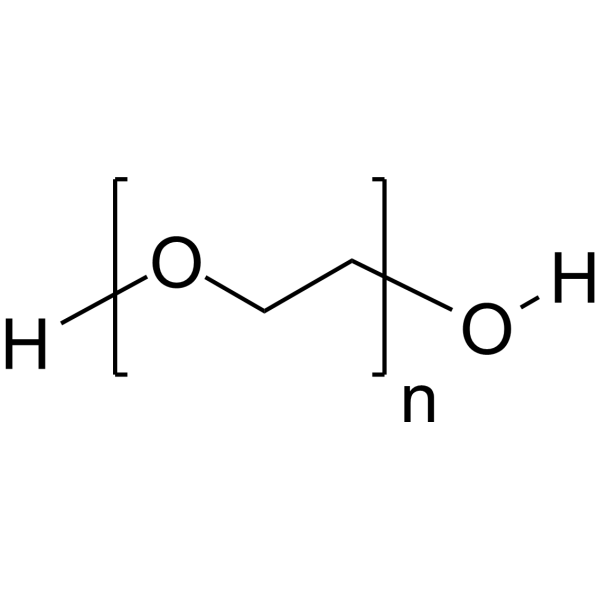
PEG300 (Polyethylene glycol 300), a neutral polymer of molecular weight 300, is a water-soluble, low immunogenic and biocompatible polymer formed by repeating units of ethylene glycol .
loading...
    loading...
32
32 Cited Publications
Cat. No.: HY-B1102
CAS No.: 314-13-6
Synonyms: Direct Blue 53; T-1824; C.I. 23860
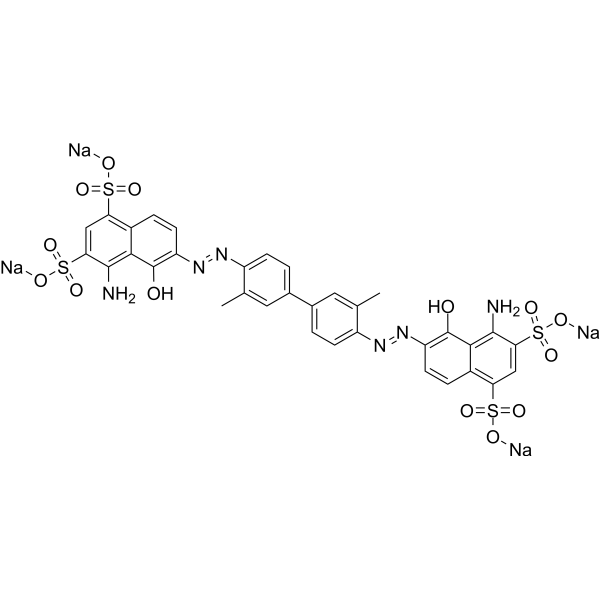
Evans Blue (Direct Blue 53) is a potent inhibitor of L-glutamate uptake via the membrane bound excitatory amino acid transporter (EAAT). Evans Blue is a L-glutamate and kainate receptor-mediated currents inhibitor. Evans Blue has a strong affinity towards serum albumin, making it a high molecular weight protein tracer. Evans Blue is also used to study BBB (blood-brain barrier) permeability .
loading...
    loading...
26
26 Cited Publications
Cat. No.: HY-12836
CAS No.: 844882-93-5
Target:  

IFNAR

Research Areas:  

Inflammation/Immunology

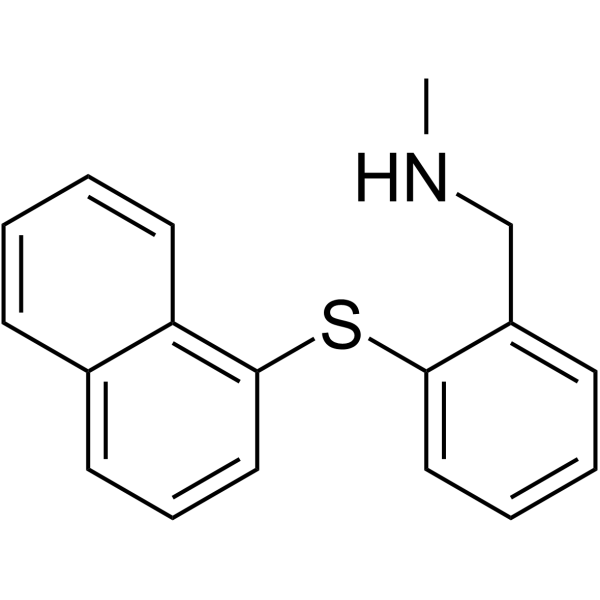
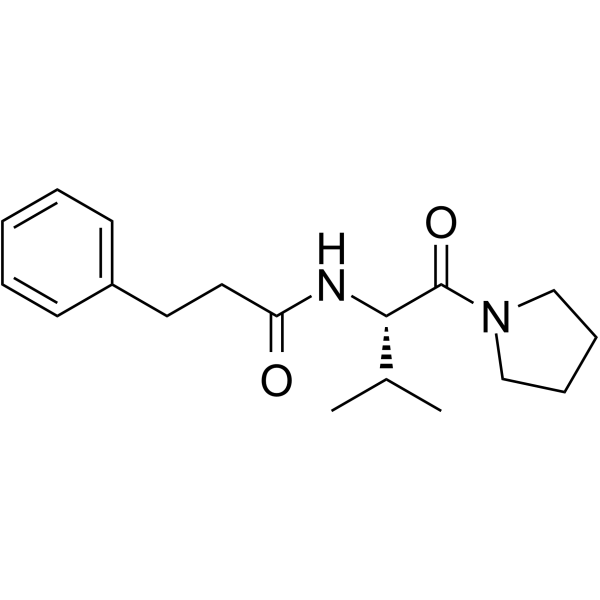
IFN alpha-IFNAR-IN-1 is a nonpeptidic, low-molecular-weight inhibitor of the interaction between IFN-α and IFNAR. IFN alpha-IFNAR-IN-1 inhibits modified Vaccinia virus ankara (MVA)-induced IFN-α responses in murine bone-marrow-derived, Flt3- L-differentiated pDC cultures (BM-pDCs) (IC50=2-8 μM) .
loading...
    loading...
26
26 Cited Publications
Cat. No.: HY-12836A
CAS No.: 2070014-98-9
Purity:  99.76%
Target:  

IFNAR

Research Areas:  

Inflammation/Immunology

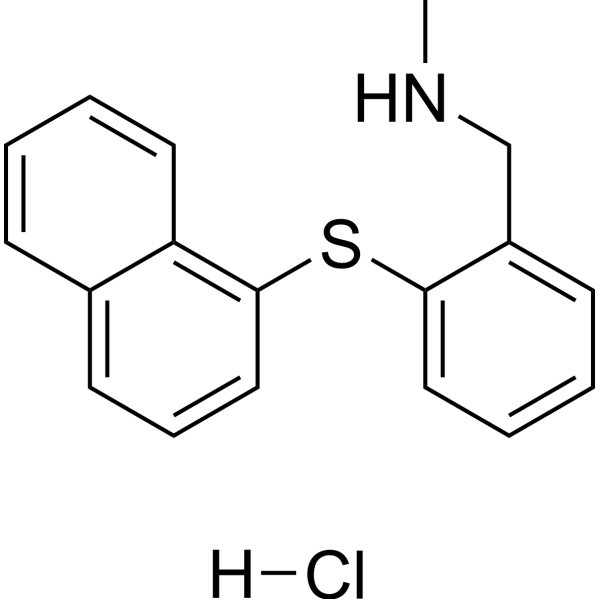
IFN alpha-IFNAR-IN-1 hydrochloride is a nonpeptidic, low-molecular-weight inhibitor of the interaction between IFN-α and IFNAR. IFN alpha-IFNAR-IN-1 hydrochloride inhibits modified Vaccinia virus ankara (MVA)-induced IFN-α responses in murine bone-marrow-derived, Flt3- L-differentiated pDC cultures (BM-pDCs) (IC50=2-8 μM) .
loading...
    loading...
17
17 Cited Publications
Cat. No.: HY-P0233
CAS No.: 20449-79-0
Target:  

Phospholipase

Research Areas:  

Inflammation/Immunology Cancer

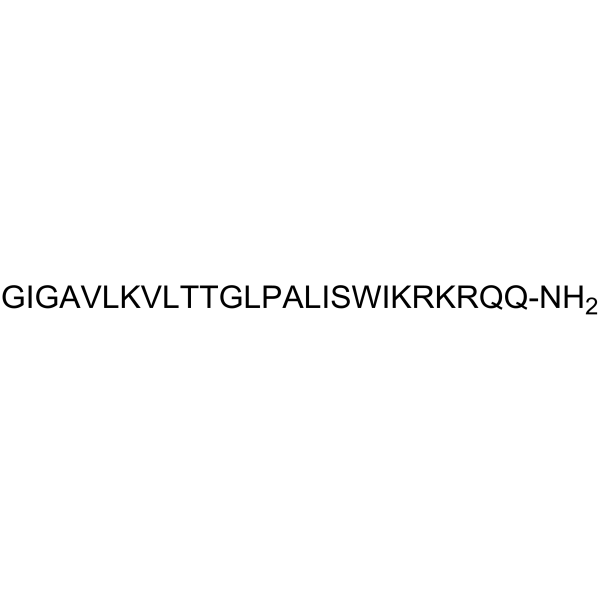
Melittin is a PLA2 activator, stimulates the activity of the low molecular weight PLA2, while it does not the increase activity of the high molecular weight PLA2 .
loading...
    loading...
17
17 Cited Publications
Cat. No.: HY-P0233A
Target:  

Phospholipase

Research Areas:  

Infection Cancer

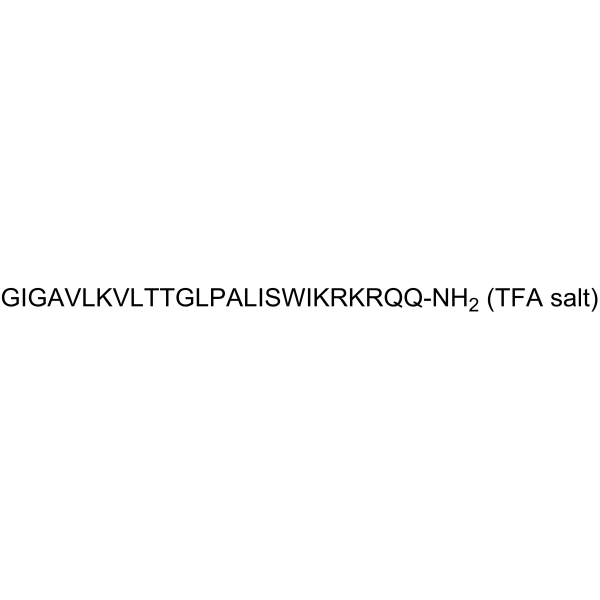
Melittin TFA is a PLA2 activator, stimulates the activity of the low molecular weight PLA2, while it does not the increase activity of the high molecular weight PLA2 .
loading...
    loading...
10
10 Cited Publications
Cat. No.: HY-116282C
CAS No.: 9011-18-1
Synonyms: DSS (MW 35000-45000); DXS (MW 35000-45000)
Target:  

Apoptosis

Dextran sulfate sodium salt (DSS) (MW 35000-45000) is a polymer of dehydrated glucose with a molecular weight of approximately 35000-45000. DSS with different molecular weights exhibits different biological activities. Dextran sulfate sodium salt (DSS) (MW 35000-45000) is a potent inducer of colitis. Dextran sulfate sodium salt (DSS) (MW 35000-45000) can be used to induce model acute colitis, chronic colitis, and colitis-related colon cancer. Dextran sulfate sodium salt (DSS) (MW 35000-45000) may be related to macrophage dysfunction, intestinal flora dysbiosis, and is particularly toxic to the colonic epithelium .
loading...
    loading...
5
5 Cited Publications
Cat. No.: HY-116282
CAS No.: 9011-18-1
Purity:  99.20%
Synonyms: DSS (MW 5000); DXS (MW 5000)
Dextran sulfate sodium salt (DSS) (MW 5000) is a polymer of dehydrated glucose with a molecular weight of approximately 5000. Dextran sulfate sodium salt (DSS) with different molecular weights exhibits different biological activities. Dextran sulfate sodium salt (MW 5000) is an inhibitor of complement and coagulation pathways, and belongs to the glycosaminoglycans (GAG) family. Dextran sulfate sodium salt (MW 5000) acts as an anticoagulant, antiviral, and anti-lipemic agent. Dextran sulfate sodium salt (DSS) stops HIV-1 virus adsorption to host cells. Dextran sulfate sodium salt (MW 5000) prevents NK cell-mediated cytotoxicity. Dextran sulfate sodium salt (MW 5000) inhibits instant blood-mediated inflammatory reaction (IBMIR) .
loading...
    loading...
5
5 Cited Publications
Cat. No.: HY-P74743
Purity:  ≥ 90%, as determined by reducing SDS-PAGE.
Synonyms: MRAP; Fat Cell-Specific Low molecular weight Protein; Prev. C21orf61; Fat Tissue-Specific Low MW Protein; FALP; Chromosome 21 Open Reading Frame 61; B27; GCCD2; MRAP1; Melanocortin 2 Receptor Accessory Protein; Melanocortin-2 Receptor Accessory Protein
Species:  
Source:  
loading...
    loading...
5
5 Cited Publications
Cat. No.: HY-P990545
CAS No.: 2065212-40-8
Synonyms: ANX005

Target:  

Complement System

Research Areas:  

Neurological Disease

Tanruprubart (ANX005) is a C1q inhibitor and C1q depleter. Tanruprubart is a human antibody expressed in CHO cells, with huIgG1 heavy chains and huκ light chains, and its predicted molecular weight (MW) is 145 kDa. For the isotype control of Tanruprubart, refer to Human IgG4 kappa, Isotype Control (HY-P99003). The IC50 of Tanruprubart is 346 ng/mL for humans and 259 ng/mL for rats; its EC50 is 3.8 ng/mL for humans, 5.2 ng/mL for rats, and 9.9 ng/mL for mice. Tanruprubart is applicable to the research of Guillain-Barré syndrome and Alzheimer's disease .
loading...
    loading...
4
4 Cited Publications
Cat. No.: HY-B2144A
CAS No.: 9012-76-4
Synonyms: Deacetylated chitin (MW 150000) (≥85% deacetylated); Poly(D-glucosamine) (MW 150000) (≥85% deacetylated)
Research Areas:  

Infection Cancer

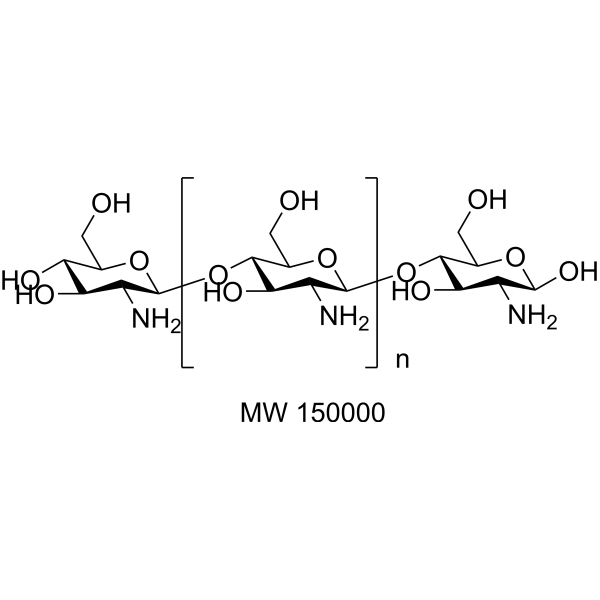
Chitosan (MW 150000) (Deacetylated chitin (MW 150000)) is a polycationic linear polysaccharide derived from chitin with the molecular weight of 150000. Chitosan is an versatile biomaterial because of its non-toxicity, low allergenicity, biocompatibility and biodegradability. Chitosan also has antitumor, antibacterial, antifungal, and antioxidant activities .
loading...
    loading...
4
4 Cited Publications
Cat. No.: HY-K1011A

MCE 3-Color Prestained Protein Marker (10-180 kDa) consists of 10 prestained recombinant proteins with an apparent molecular weight range of 10–180 kDa. This marker enables real-time monitoring of protein migration during SDS-PAGE and facilitates evaluation of protein transfer efficiency. The 250 μL is defined as the base specification. All larger sizes correspond to incremental volumes of this base.

loading...
    loading...
3
3 Cited Publications
Cat. No.: HY-W011400
CAS No.: 566914-00-9
Target:  

MyD88

Research Areas:  

Inflammation/Immunology

TLR1 (compound 4a) is a low molecular weight, cell-penetrating Toll/IL-1 receptor/resistance (TIR) domain/BB-Loop mimic. TLR1 inhibits IL-1 receptor-mediated responses .
loading...
    loading...
3
3 Cited Publications
Cat. No.: HY-17567C
CAS No.: 9041-08-1
Synonyms: Sodium heparin (MW 15kDa); Sodium heparinate (MW 15kDa)
Research Areas:  

Cardiovascular Disease

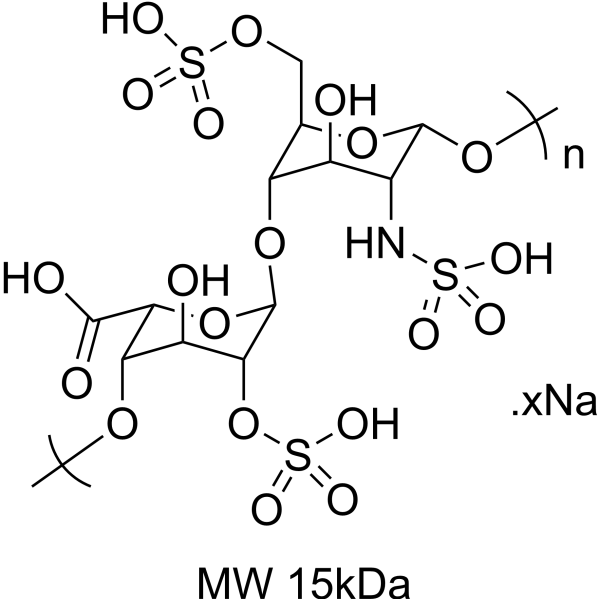
Heparin sodium salt (MW 15kDa) (Sodium heparin (MW 15kDa)) is a polymer of Heparin with the molecular weight of 15kDa. Heparin sodium salt is an anticoagulant which binds reversibly to antithrombin III (ATIII) and greatly accelerates the rate at which ATIII inactivates coagulation enzymes thrombin factor IIa and factor Xa .
loading...
    loading...
3
3 Cited Publications
Cat. No.: HY-124329
CAS No.: 82436-77-9
Purity:  99.84%
Research Areas:  

Cancer

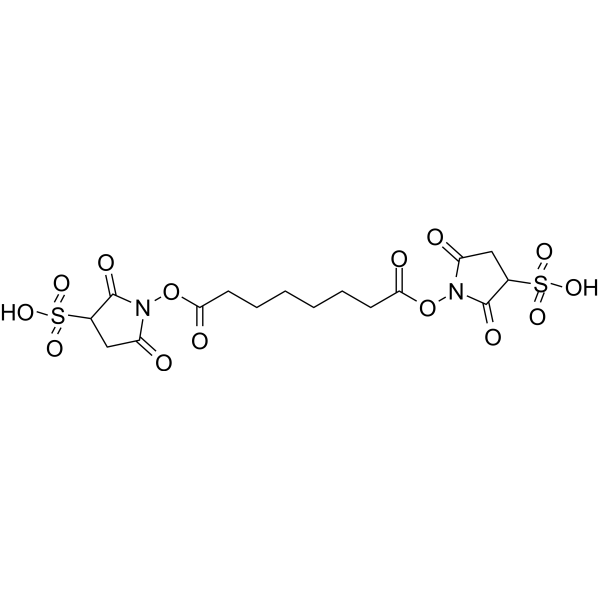
BS3 Crosslinker is a cell-impermeable NHS ester crosslinker. BS3 Crosslinker "covalently locks" two spatially adjacent proteins on the surface of living cells into a covalent complex, and the dimerization/oligomerization status is determined by observing molecular weight shifts via Western blot. BS3 Crosslinker can crosslink EGFR and c-MET to assist in detecting and evaluating their dimerization status. It can be used in research related to oral cancer and glioblastoma .
loading...
    loading...
3
3 Cited Publications
Cat. No.: HY-124329A
CAS No.: 127634-19-9
Purity:  ≥98.0%
Research Areas:  

Cancer

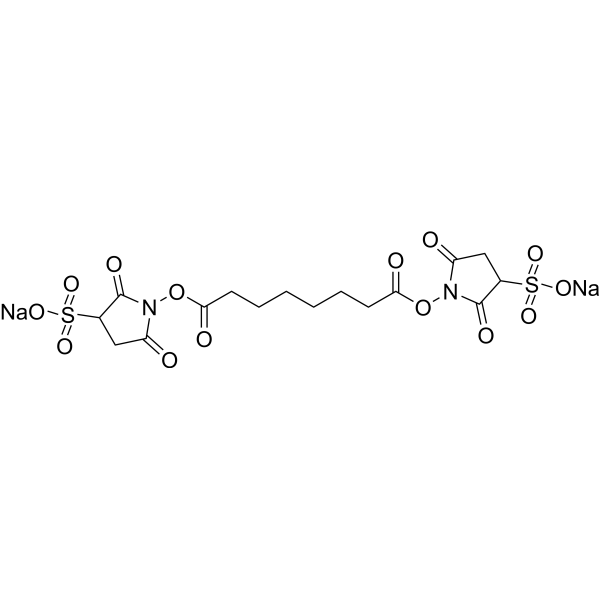
BS3 Crosslinker disodium is a cell-impermeable NHS ester crosslinker. BS3 Crosslinker disodium "covalently locks" two spatially adjacent proteins on the surface of living cells into a covalent complex, and the dimerization/oligomerization status is determined by observing molecular weight shifts via Western blot. BS3 Crosslinker disodium can crosslink EGFR and c-MET to assist in detecting and evaluating their dimerization status. It can be used in research related to oral cancer and glioblastoma .
loading...
    loading...
3
3 Cited Publications
Cat. No.: HY-Y0850L
CAS No.: 9002-89-5
Synonyms: PVA (Mw 85000-124000, 99+% hydrolyzed); Poly(Ethenol) (Mw 85000-124000, 99+% hydrolyzed)
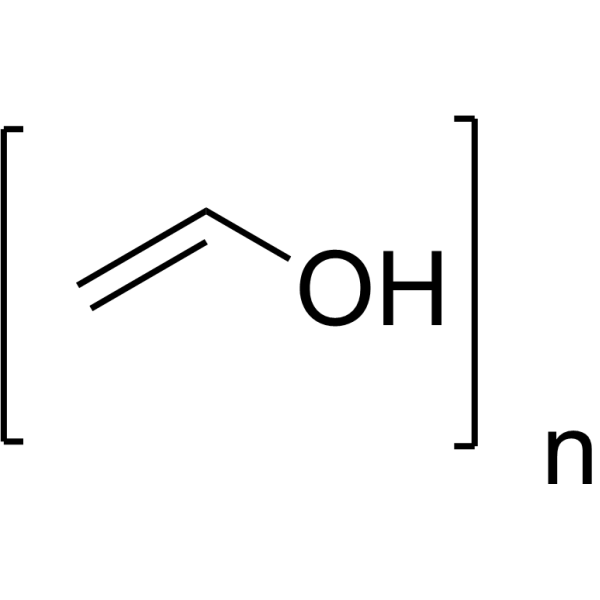
Polyvinyl alcohol (Mw 85000-124000, 99+% hydrolyzed) is a polyvinyl alcohol with a molecular weight of 85000-124000 and hydrolytic properties. Polyvinyl alcohol (Mw 85000-124000, 99+% hydrolyzed) forms hydrogels that can be used to simulate digestive organs and lesion models for the training of endoscopic ultrasound (EUS) and endoscopic ultrasound elastography (EUS-E). Polyvinyl alcohol with different degrees of hydrolysis can be used to self-crosslink to form cryogel, which can be used as biological excipients .
loading...
    loading...
3
3 Cited Publications
Cat. No.: HY-Y0850E
CAS No.: 9002-89-5
Synonyms: PVA (Mw 30000-70000, 87-90% hydrolyzed); Poly(Ethenol) (Mw 30000-70000, 87-90% hydrolyzed)
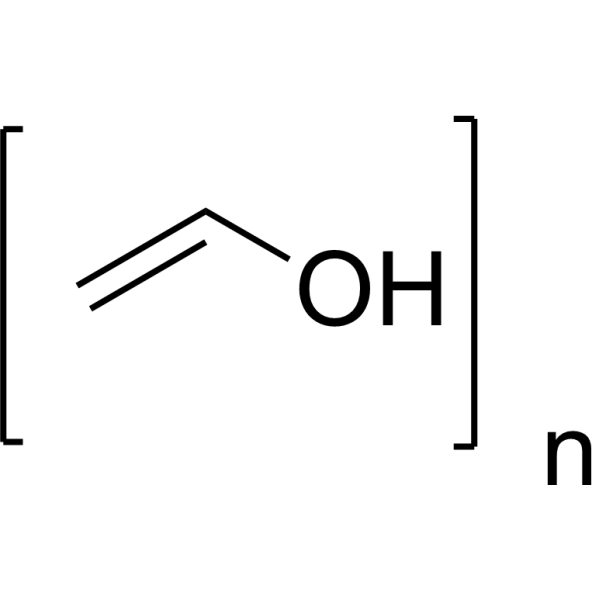
Polyvinyl alcohol (Mw 30000-70000, 87-90% hydrolyzed) is a polyvinyl alcohol with a molecular weight of 30000-70000 and hydrolytic properties. The degree of hydrolysis refers to the degree to which the acetate groups in the original polyvinyl acetate are converted into hydroxyl groups during the hydrolysis process. Polyvinyl alcohol (Mw 30000-70000, 87-90% hydrolyzed) is the hydrolysis and removal of acetate groups after the polymerization of ethylene acetate. And polyvinyl alcohol is obtained. A degree of hydrolysis of 87-90% indicates that a large part of the acetate groups have been removed, resulting in a large number of hydroxyl groups in the PVA structure. Polyvinyl alcohol with different degrees of hydrolysis can be used to self-crosslink to form cryogel, which can be used as biological excipients .
loading...
    loading...
3
3 Cited Publications
Cat. No.: HY-Y0850M
CAS No.: 9002-89-5
Synonyms: PVA (Mw 85000-124000, 87-89% hydrolyzed); Poly(Ethenol) (Mw 85000-124000, 87-89% hydrolyzed)
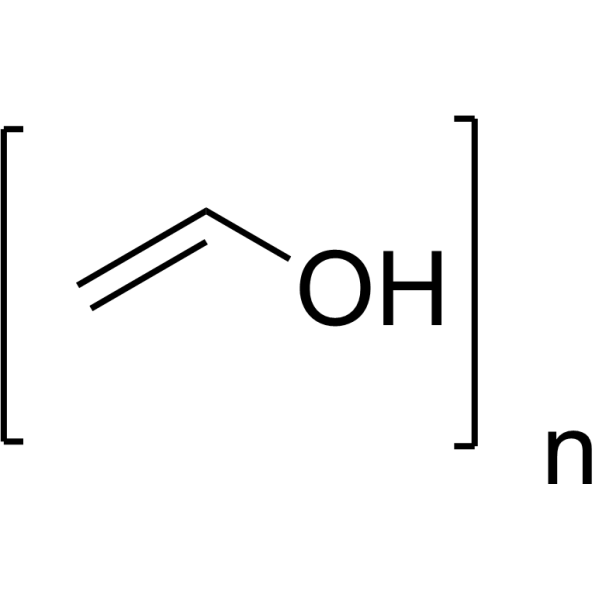
Polyvinyl alcohol (Mw 85000-124000, 87-89% hydrolyzed) is a polyvinyl alcohol with a molecular weight of 85000-124000 and hydrolytic properties. The degree of hydrolysis refers to the degree to which the acetate groups in the original polyvinyl acetate are converted into hydroxyl groups during the hydrolysis process. Polyvinyl alcohol (Mw 85000-124000, 87-89% hydrolyzed) is the hydrolysis and removal of acetate groups after the polymerization of ethylene acetate. And polyvinyl alcohol is obtained. A degree of hydrolysis of 87-89% indicates that a large part of the acetate groups have been removed, resulting in a large number of hydroxyl groups in the PVA structure. Polyvinyl alcohol with different degrees of hydrolysis can be used to self-crosslink to form cryogel, which can be used as biological excipient .
loading...
    loading...
3
3 Cited Publications
Cat. No.: HY-Y0850P
CAS No.: 9002-89-5
Synonyms: PVA (Mw 146000-186000, 87-89% hydrolyzed); Poly(Ethenol) (Mw 146000-186000, 87-89% hydrolyzed)
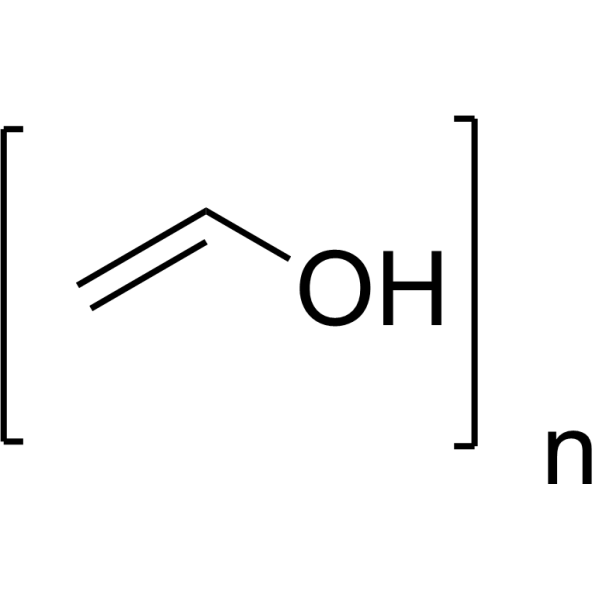
Polyvinyl alcohol (Mw 146000-186000, 87-89% hydrolyzed) is a polyvinyl alcohol with a molecular weight of 146000-186000 and hydrolytic properties. Polyvinyl alcohol (Mw 146000-186000, 87-89% hydrolyzed) is the hydrolysis and removal of acetate groups after the polymerization of ethylene acetate. And polyvinyl alcohol is obtained. Polyvinyl alcohol with different degrees of hydrolysis can be used to self-crosslink to form cryogel, which can be used as biological excipient. Polyvinyl alcohol can be used in tissue engineering by electrospinning. Polyvinyl alcohol can achieve high cellular density, infiltration, and uniform distribution, facilitating functional connections between cells. Polyvinyl alcohol can improve cell vitality through in vitro cultivation. Polyvinyl alcohol demonstrates promising inhibition of ostersarcoma cancer cells with Doxorubicin (HY-15142A) .
loading...
    loading...

